Introduction
Chickpea (Cicer arietinum L.) (Fabaceae) is an important grain legume in Asia and parts of East and North Africa, Mediterranean Europe, Australia, Canada and the USA (Kelley et al., Reference Kelley, Parthasarathy Rao, Grisko-Kelley and Knight2000). Nearly 60 insect species are known to damage chickpea, of which the black cutworm Agrotis ipsilon (Hfn.) (Lepidoptera: Noctuidae), the leafminer Liriomyza cicerina (Rondani) (Diptera: Agromyzidae), the cowpea aphid Aphis craccivora Koch (Homoptera: Aphididae), the pod borer Helicoverpa armigera (Hubner) (Lepidoptera: Noctuidae) and the bruchid Callosobruchus chinensis L. (Coleoptera: Bruchidae), are the major pests worldwide (Reed et al., Reference Reed, Cardona, Sithanantham, Lateef, Saxena and Singh1987; Sharma et al., Reference Sharma, Gowda, Stevenson, Ridsdill-Smith, Clement, Ranga Rao, Romies, Miles, El Bouhssini, Yadav, Redden, Chen and Sharma2007; Chen et al., 2011), among which the pod borer H. armigera is the major constraint to production in the Indian subcontinent (Sharma, Reference Sharma2005; Yadav et al., Reference Yadav, Kumar, Yadav, Singh, Yadav, Turner and Redden2006).
The beet armyworm Spodoptera exigua (Hubner) (Lepidoptera: Noctuidae) is emerging as an important pest of chickpea, especially in South Central India. The young larvae of S. exigua initially feed gregariously on the chickpea foliage. As the larvae grow, they become solitary and continue to feed on the foliage and produce large, irregular holes on the leaves (Ahmed et al., Reference Ahmed, Lal, Morris, Khalique, Malik, Waloby and Hall1990; Sharma et al., Reference Sharma, Gowda, Stevenson, Ridsdill-Smith, Clement, Ranga Rao, Romies, Miles, El Bouhssini, Yadav, Redden, Chen and Sharma2007). As a leaf feeder, the beet armyworm consumes much more chickpea tissues than the chickpea pod borer H. armigera, but it has not been reported as a serious pest of pods. Crop cultivars developed with resistance or tolerance to pod borers, H. armigera and S. exigua, will have a major potential for use in integrated pest management. More than 14,000 chickpea germplasm accessions have been screened for resistance to H. armigera under field conditions (Lateef and Sachan, Reference Lateef, Sachan, van Rheenen, Saxena, Walby and Hall1990), and several germplasm accessions (ICC 506 EB, ICC 10 667, ICC 10 619, ICC 4935, ICC 10 243, ICCV 95 992 and ICC 80 817) with moderate levels of resistance have been identified in the past (Lateef, Reference Lateef1985; Sharma, Reference Sharma2005). Recombinant inbred lines (RILs) developed from a cross between the cultivated chickpea C. arietinum (FLIP 84–92C – susceptible) and its closely related wild species C. reticulatum (PI 599072 – resistant) have been evaluated earlier for resistance to S. exigua, and nine lines have been identified to be resistant to this pest under greenhouse conditions (Clement et al., Reference Clement, Sharma, Muehlbauer, Elberson, Mattinson and Fellman2010). However, there is no systematic evaluation of germplasm and breeding lines for resistance to S. exigua. Therefore, this study was undertaken to standardize the no-choice cage screening technique in greenhouse conditions and the detached leaf assay and artificial diet incorporation assay under laboratory conditions to evaluate chickpea germplasm and breeding lines for resistance to S. exigua.
Materials and methods
Insect culture
The larvae of S. exigua were reared on a chickpea flour-based artificial diet that was developed for rearing H. armigera (Armes et al., Reference Armes, Bond and Cooters1992). The egg masses and larvae of S. exigua were collected from chickpea plants from farmers' fields in Andhra Pradesh, India. The insects were initially reared on chickpea leaves for one generation before being transferred to the laboratory to avoid contamination of the laboratory culture with nuclear polyhedrosis virus, bacteria and fungi. The laboratory culture was maintained under controlled environmental conditions (27 ± 2 °C, 65–75% relative humidity (RH) and 12 h photoperiod). The S. exigua neonates were reared in groups of 300–400 in 250 ml plastic cups (having a 2–3 mm layer of the artificial diet on the bottom and sides) for 7 days. After 7 days, the larvae were transferred individually to six-well cell-culture plates (each cell with a diameter of 3.5 cm and depth of 2 cm) or small plastic cups (3.5 cm diameter and 4.5 cm in depth) to avoid cannibalism. Each cell well had a sufficient quantity of the artificial diet (7 ml) to support larval development until pupation. The pupae were removed from the cell wells, sterilized with 2% sodium hypochlorite solution and kept in groups of 50 in plastic jars containing moist vermiculite. After adult emergence, 25 pairs were released inside an oviposition cage (30 × 30 × 30 cm). The adults were provided with 10% sucrose solution on a cotton swab as feed. Diaper liners, which have a rough surface, were hung inside the cage as an oviposition substrate. The adults laid eggs on the diaper liners during the night. The liners were removed daily and the eggs were sterilized with 10% formalin. The liners were then washed with tap water, dried under a fan and placed inside the plastic cups (250 ml) with the artificial diet. After egg hatching, the larvae moved to the artificial diet, and the liners were removed after 3 days.
Plants
Greenhouse conditions
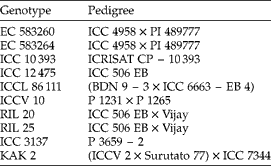
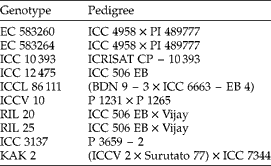
Ten chickpea genotypes were evaluated for resistance to S. exigua (Table 1). The plants were grown under greenhouse conditions (27 ± 5 °C and 65–90% RH). The seeds were sown in a sterilized mixture of black soil (Vertisols), sand and farmyard manure (2:1:1) filled in medium-sized plastic pots (30 cm in diameter and 30 cm in depth). The seeds were sown 5 cm below the soil surface and watered immediately. Thereafter, the plants were watered as and when required. Six seeds were sown in each pot, and three plants with uniform growth were retained in each pot 10 days after seedling emergence. The plants were fertilized with diammonium phosphate (DAP) granules (20 g per pot) 15 days after seedling emergence. There were six replications for each genotype in a completely randomized design (CRD).
Chickpea genotypes evaluated for resistance to Spodoptera exigua
Field conditions
The chickpea genotypes were raised in the field during the post-rainy seasons (October–March) of 2010/11 and 2011/12. The plot comprised two rows, 2 m long, and was planted at 60 × 10 cm row-to-row and plant-to-plant spacing. There were two sowings of the test material at 15-day intervals. The chickpea genotypes were evaluated for resistance to S. exigua using the detached leaf assay with the neonate larvae of S. exigua. The fertilizer (DAP at 100 kg/ha) was applied before sowing. The seeds were sown on ridges, and the field was irrigated immediately and at 30-day intervals thereafter. The experiment was conducted in a completely randomized block design with three replications for each genotype. No insecticide was applied to the experimental plots. Leaf terminals at the vegetative (30 days after seedling emergence) and flowering (50 days after seedling emergence) stages were collected for evaluating genotypic resistance to S. exigua using the detached leaf assay. For the diet incorporation assay, leaf terminals at the vegetative stage were collected at random from the experimental plots, dried in the shade and powdered for use in the artificial diet to assess the antibiosis component of resistance to S. exigua.
No-choice cage screening under greenhouse conditions
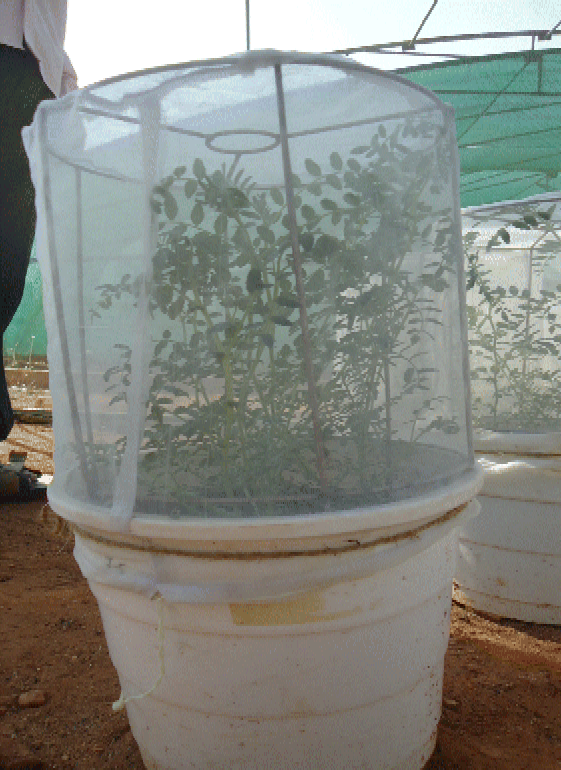
Each genotype was infested with neonate S. exigua larvae at the seedling (15 days after seedling emergence) stage. Twenty-five neonates were released onto the terminal branches of three plants in each pot, using a camel hairbrush. The plants were covered with a wire-framed cylindrical cage (25 cm in diameter and 25 cm in height) (Fig. 1; Sharma et al., Reference Sharma, Pampapathy and Kumar2005b). The lower margins of the cage were pushed to a depth of 3 cm into the soil to prevent the escape of larvae. The cage was covered with a nylon bag (60 mesh) of similar dimensions. There were five replications for each genotype. Uninfested plants grown under similar conditions served as controls. The pots were arranged in a factorial design with genotypes as the main treatment and infestation levels as the subtreatments. The experiment was terminated when >80% of the leaf area was consumed in the susceptible controls. The larvae were removed from the plants, placed individually in small plastic cups and weighed after 4 h. The plants were then rated visually for the extent of leaf damage on a 1–9 damage rating (DR) scale (1 = < 10% leaf area damaged; 2 = 11–20%; 3 = 21–30%; 4 = 31–40%; 5 = 41–50%; 6 = 51–60%; 7 = 61–70%; 8 = 71–80%; 9 = >80%). Data on larval survival and weights were also recorded.
(colour online) No-choice cage technique to screen for resistance to the beet armyworm Spodoptera exigua.

Detached leaf assay
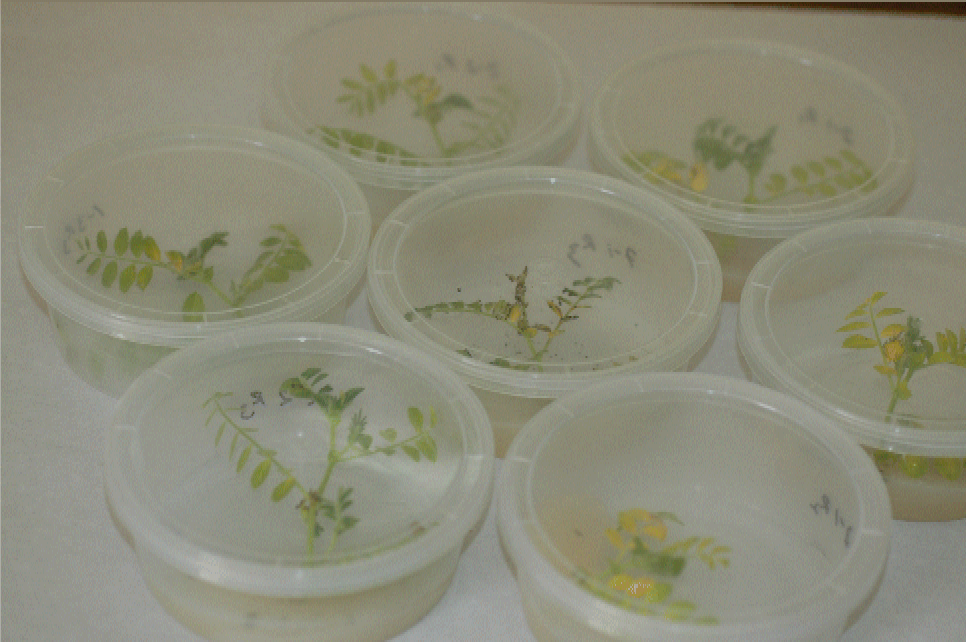
The chickpea plants grown in the field and in the greenhouse were bioassayed under controlled conditions in the laboratory (27 ± 2 °C temperature, 65–75% RH and 12 h light–12 h dark photoperiod) to screen chickpea genotypes for resistance to S. exigua. The terminal branches of chickpea plants (four fully expanded leaves and a bud) were placed into plastic cups (4.5 × 11.5 cm diameter) containing solidified agar-agar (3%) (Sharma et al., Reference Sharma, Pampapathy, Dhillon and Ridsdill-Smith2005a; Fig. 2). Agar-agar (3%) was boiled, and a 10 ml aliquot was poured into a 250 ml plastic cup kept in a slanting position. The solidified agar-agar served as a substratum for holding the chickpea branches. The terminal branches were cut with scissors and immediately placed in the agar-agar medium in a slanting position. Care was taken to ensure that the chickpea branches did not touch the inner walls of the cup. Ten neonate larvae of S. exigua were released onto the chickpea leaves in each cup and the cup was covered with a lid to keep the chickpea terminals in a turgid condition.
(colour online) Detached leaf assay to screen for resistance to the beet armyworm Spodoptera exigua.
The experiment was conducted in a CRD with five replications for each genotype. The experiment was terminated when >80% of the leaf area was consumed in the susceptible genotype or when there were maximum differences between the resistant and susceptible genotypes (generally 5 days after releasing the larvae on the leaves). The plants were scored for leaf feeding visually on a 1–9 DR scale as described above. Data on larval survival and weights were also recorded 4 h after terminating the experiment.
Artificial diet incorporation assay
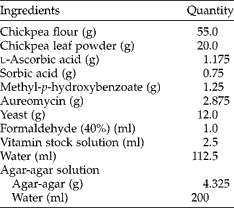
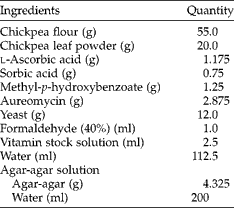
The survival and development of S. exigua were also studied by incorporating leaf powder of different chickpea genotypes into the artificial diet to assess the antibiosis component of resistance under laboratory conditions. Chickpea branches with tender green leaves were collected from the field 30 days after seedling emergence and placed in an icebox. The leaves were shade-dried and powdered in a Wiley mill (by Arthur H. Thomas Company, Philadelphia, PA), and the leaf powder was passed through a 60 mesh sieve. The leaf powder was incorporated into the artificial diet to assess the antibiosis component of resistance to S. exigua. Twenty grams of the dried leaf powder of chickpea (as a replacement for part of the chickpea flour in the artificial diet) were used in the artificial diet (Table 2) for rearing S. exigua. The artificial diet supplemented with leaf powder of different chickpea genotypes (7 ml) was poured into each cell well in a 24-cell well plate. The neonate larvae were released individually into the cell wells and kept at 27 ± 2 °C. There were three replications for each genotype, and each replication had 25 larvae.
Composition of the artificial diet for Spodoptera exigua larvae prepared using chickpea leaf powder
Data on larval weights, larval and pupal periods, percentage of pupation and adult emergence, and adult longevity and fecundity were recorded. Data on larval weights were recorded on the 10th day of the experiment on a microbalance. The larvae were removed from the cell wells, cleaned and starved for 4 h, weighed, and then placed back into the respective cell wells. Pupal weights were recorded 1 day after pupation. Pupae from each replication were placed in a 1-litre plastic jar containing moist vermiculite. The percentage of larval survival on the 10th day and the percentage of pupation and adult emergence were computed in relation to the number of neonate larvae released in each replication. Data on larval and pupal periods were also recorded. The adults were collected from the jars, and three pairs of adults emerging on the same day in a particular genotype were placed inside a plastic cage, and the numbers of egg masses/eggs laid were counted. There were three replications for each genotype, and the experiment was conducted in a CRD.
Statistical analysis
Data were subjected to ANOVA using Genstat version 14.0. The significance of differences between the genotypes was tested by F test, while the treatment means were compared by Duncan's multiple range test at P≤ 0.05.
Results
Response of chickpea genotypes to Spodoptera exigua in no-choice cage screening under greenhouse conditions
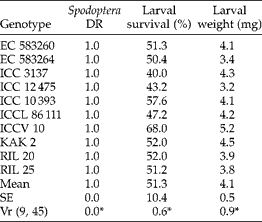
Larval survival ranged from 40.0 to 68.0%, but differences between the genotypes were not significant (Table 3). Larval survival in insects reared on the ICC 3137, ICC 12 475 and ICCL 86 111 genotypes (40.0–47.2%) was lower than that in insects reared on the ICCV 10 genotype (68.0%). Larval weights ranged from 3.2 to 5.2 mg/larva, but differences between the genotypes were not significant at P 0.05. The evaluation of chickpea genotypes for resistance to S. exigua using the no-choice cage technique did not provide a good indication of variation in the expression of genotypic resistance to S. exigua in chickpea.
Evaluation of chickpea genotypes for resistance to Spodoptera exigua using the no-choice cage technique 15 days after seedling emergence (ICRISAT, Patancheru, 2010 post-rainy season)
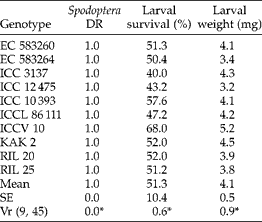
DR, damage rating (1 = < 10% leaf area damaged and 9 = >80% leaf area damaged); Vr, variance ratio. *F test non-significant at P≤ 0.05.
Evaluation of chickpea genotypes grown under greenhouse conditions for resistance to the beet armyworm Spodoptera exigua using the detached leaf assay
Vegetative stage
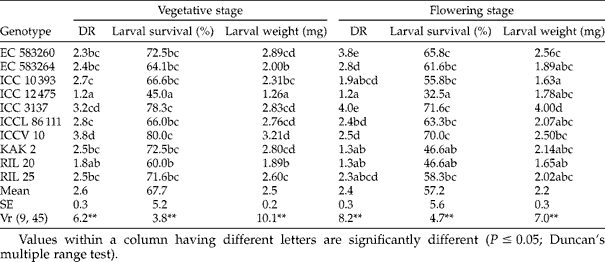
Leaf damage was significantly lower in the ICC 12 475 and RIL 20 genotypes (DR 1.2 and 1.8) than in the ICC 3137 genotype (Table 4). Larval survival was significantly lower in insects reared on the ICC 12 475, RIL 20, EC 583264, ICC 10 393 and ICCL 86 111 genotypes (45.0–66.6%) than in those reared on the ICC 3137 genotype (78.3%). Weight gain in the larvae ranged from 1.26 to 3.21 mg, and significantly lower larval weights were recorded in insects reared on the EC 583264, ICC 10 393, ICC 12 475 and RIL 20 genotypes (1.26–2.31 mg per larva) than in those reared on the ICCV 10 genotype (3.21 mg per larva).
Evaluation of chickpea genotypes for resistance to Spodoptera exigua at the vegetative and flowering stages of plants raised under greenhouse conditions using the detached leaf assay (ICRISAT, Patancheru, 2010–2012 post-rainy seasons)
DR, damage rating (1 = < 10% leaf area damaged and 9 = >80% leaf area damaged); Vr, variance ratio. **F test significant at P <0.01.
Values within a column having different letters are significantly different (P≤ 0.05; Duncan's multiple range test).
Flowering stage
At the flowering stage, leaf feeding was significantly lower in the ICC 10 393, ICC 12 475, KAK 2, RIL 20 and RIL 25 genotypes (DR 1.2–2.3) than in the ICC 3137 genotype (DR 4.0) (Table 4). Larval survival ranged from 32.5 to 71.6%, and larval survival in insects reared on the ICC 12 475, KAK 2 and RIL 20 genotypes (32.5–46.6%) was lower than that in insects reared on the ICC 3137 genotype (71.6%). Larval weights in insects reared on the ICC 10 393, ICC 12 475, EC 583264, ICCL 86 111, KAK 2, RIL 20 and RIL 25 genotypes (1.63–2.14 mg per larva) were lower than those in insects reared on the ICC 3137 genotype (4.0 mg per larva).
The detached leaf assay indicated significant differences in leaf feeding, larval survival and larval weights at the vegetative and flowering stages, suggesting that it can be used to evaluate chickpea germplasm and breeding lines for resistance to the beet armyworm S. exigua. Reduced survival and weight gain in the larvae also provided an indication of the antibiosis mechanism of resistance to S. exigua.
Response of chickpea genotypes grown under field conditions to Spodoptera exigua in the detached leaf assay
Vegetative stage
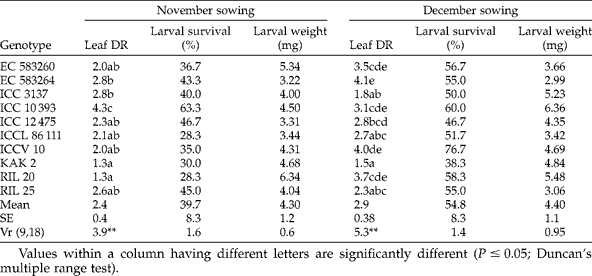
In the November sowing, the leaf DR was significantly lower in the EC 583260, ICC 12 475, ICCL 86 111, ICCV 10, KAK 2, RIL 20 and RIL 25 genotypes (DR 1.3–2.6) than in the ICC 10 393 genotype (DR 4.3) at the vegetative stage (Table 5). In the December sowing, the leaf DR was significantly lower in the KAK 2, ICC 3137, ICCL 86 111 and RIL 25 genotypes (DR 1.5–2.7) than in the EC 583264 genotype (DR 4.1). There were no significant differences in larval survival and larval weights in both November and December sowings (Table 5).
Evaluation of chickpea genotypes raised under field conditions for resistance to Spodoptera exigua using the detached leaf assay at the vegetative stage (2010 and 2011 post-rainy seasons)
DR, damage rating (1 = < 10% leaf area damaged and 9 = >80% leaf area damaged); Vr, variance ratio. ** F test significant at P <0.01.
Values within a column having different letters are significantly different (P≤ 0.05; Duncan's multiple range test).
Flowering stage
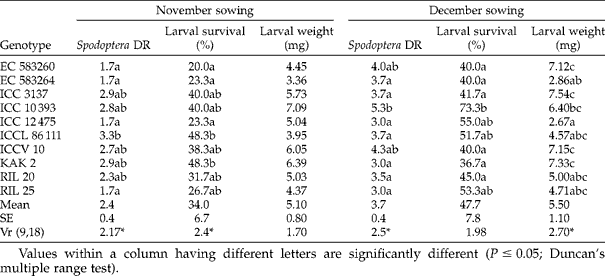
In the November sowing, there were significant differences in leaf DR between the genotypes tested (Table 6). The EC 583260, EC 583264, ICC 12 745 and RIL 25 genotypes suffered significantly lower leaf damage (DR 1.7) than the ICCL 86 111 genotype (DR 3.3), while larval survival in insects reared on the EC 583260, EC 583264 and ICC 12 745 genotypes (20.0–23.3%) was lower than that in insects reared on the KAK 2 and ICCL 8611 genotypes (48.3%). There were no significant differences in larval weights. In the December sowing, the leaf DR in the EC 583264, ICC 3137, ICC 12 475, ICCL 86 111, KAK 2, RIL 20 and RIL 25 genotypes (DR 3.0–3.7) was lower than that in the ICC 10 393 genotype (DR 5.3). Larval survival was significantly lower in insects reared on the EC 583264, EC 583260, ICC 3137, ICCV 10, KAK 2 and RIL 20 genotypes (36.7–45.0%) than in those reared on the ICC 10 393 genotype (73.3%). Larval weights were significantly lower in insects reared on the ICC 12 475, EC 583264, ICCL 86 111 and RIL 25 genotypes (2.67–4.71 mg per larva) than in those reared on the ICC 3137 genotype (7.54 mg per larva).
Evaluation of chickpea genotypes raised under field conditions for resistance to Spodoptera exigua using the detached leaf assay at the flowering stage (2010 and 2011 post-rainy seasons)
DR, damage rating (1 = < 10% leaf area damaged and 9 = >80% leaf area damaged); Vr, variance ratio. *F test significant at P <0.05.
Values within a column having different letters are significantly different (P≤ 0.05; Duncan's multiple range test).
Survival and development of Spodoptera exigua on artificial diet with leaf powder of different chickpea genotypes
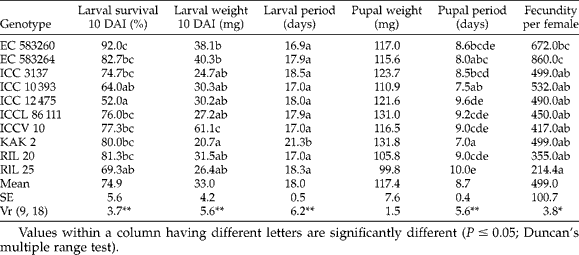
In the diet impregnation assay, larval survival 10 days after the initiation of the experiment was significantly lower in insects reared on diets with leaf powder of the ICC 12 475, ICC 10 393 and RIL 25 genotypes (52.0–69.3%) than in those reared on diets with leaf powder of the ICC 3137 genotype (74.7%) (Table 7). Larval weights were significantly lower in insects reared on diets with leaf powder of the ICC 10 393, ICC 12 475, ICCL 86 111, KAK 2, RIL 25 and ICC 3137 genotypes (20.7–30.3 mg per larva) than in those reared on diets with leaf powder of the ICCV 10 genotype (61.1 mg per larva). Larval period in insects reared on diets with leaf powder of the KAK 2 genotype (21.3 days) was significantly prolonged compared with that in insects reared on diets with leaf powder of the other genotypes tested (16.9–18.5 days). There were no significant differences in pupal weights of insects reared on diets with leaf power of different genotypes. Pupal period in insects reared on diets with leaf powder of the ICC 12 475, ICCL 86 111, ICCV 10, RIL 20 and RIL 25 genotypes was prolonged (>9.0 days) compared with that in insects reared on diets with leaf powder of the KAK 2 genotype (7.0 days). The fecundity of insects reared on diets with leaf powder of the RIL 25, RIL 20, ICCV 10, ICCL 86 111, ICC 12 475, ICC 3137, KAK 2 and ICC 10 393 genotypes (214.4–532.0 eggs/female) was significantly lower than that of insects reared on diets with leaf powder of the EC 583264 genotype (860.0 eggs/female).
Survival and development of Spodoptera exigua on the artificial diet with leaf powder of ten chickpea genotypes (ICRISAT, Patancheru, 2010 post-rainy season)
DAI, days after initiation of the experiment; Vr, variance ratio. *, ** F test significant at P≤ 0.05 and 0.01, respectively.
Values within a column having different letters are significantly different (P≤ 0.05; Duncan's multiple range test).
Discussion
Screening for resistance to insect pests under natural conditions is a long-term process because of variation in insect population in space and time. As a result, it is very difficult to find stable sources of resistance under natural infestation (Sharma et al., Reference Sharma, Gowda, Stevenson, Ridsdill-Smith, Clement, Ranga Rao, Romies, Miles, El Bouhssini, Yadav, Redden, Chen and Sharma2007). Therefore, the development and standardization of techniques to screen for resistance to insect pests are the key for an effective insect resistance breeding programme and marker-assisted selection for resistance to insects. Several techniques such as the use of field infestations, cage screening, and rearing of the test insects on artificial diets/natural hosts have been used to evaluate germplasm and breeding lines for resistance to insect pests (Sharma et al., Reference Sharma, Gowda, Stevenson, Ridsdill-Smith, Clement, Ranga Rao, Romies, Miles, El Bouhssini, Yadav, Redden, Chen and Sharma2007, Reference Sharma, Sujana and Manohar Rao2009). However, there is no information on techniques to screen for resistance to S. exigua in chickpea. There is no information on genotypic resistance/susceptibility to S. exigua in chickpea, as it has emerged as a serious pest of chickpea recently. The no-choice cage technique (Sharma et al., Reference Sharma, Pampapathy and Kumar2005b) and the detached leaf assay (Sharma et al., Reference Sharma, Pampapathy, Dhillon and Ridsdill-Smith2005a) have been reported to be effective for evaluating germplasm and breeding lines for resistance to insect pests. The detached leaf assay has been used to screen for resistance to H. armigera in different crops, and it is highly useful for rapid and large-scale screening of germplasm, breeding material and mapping populations under uniform insect pressure under laboratory conditions (Olsen and Daly, Reference Olsen and Daly2000; Sharma et al., Reference Sharma, Pampapathy, Dhillon and Ridsdill-Smith2005a).
The evaluation of chickpea genotypes for resistance to S. exigua using the no-choice cage technique did not provide a good indication of variation in the expression of genotypic resistance to S. exigua in chickpea, as the differences in leaf damage, larval survival and larval weights of S. exigua reared on different chickpea genotypes were not significant. However, there were significant differences in S. exigua leaf feeding and larval survival and weights in insects grown on different genotypes of chickpea in the detached leaf assay, suggesting that it can be used to evaluate chickpea germplasm and breeding lines for resistance to this pest. Reduced larval survival and weight gain also provided an indication of the antibiosis mechanism of resistance to S. exigua. In plants raised under greenhouse conditions, the leaf damage was significantly lower in the ICC 12 475 and RIL 20 genotypes, while larval survival was poor in insects reared on the ICC 12 475, ICCL 86 111, RIL 20, EC 583264 and ICC 10 393 genotypes at the vegetative and/or flowering stages. A significant reduction in larval weight was also recorded in insects reared on the EC 583264, ICC 10 393, ICC 12 475 and RIL 20 genotypes. In plants raised under field conditions, the leaf damage was significantly lower in the EC 583260, ICC 12 475 and RIL 25 genotypes at the vegetative and flowering stages, while larval survival was poor in insects reared on the EC 583260, EC 583264 and ICC 12 745 genotypes at the flowering stage. Larval weights were significantly lower in insects reared on the ICC 12 475, EC 583264, ICCL 86 111, RIL 20 and RIL 25 genotypes than in those reared on the ICC 3137 genotype.
Lyophilized leaves and pods can be incorporated into artificial diets to assess the antibiosis component of resistance to H. armigera in chickpea (Narayanamma et al., Reference Narayanamma, Sharma, Gowda and Sriramulu2008). In this study, the survival of S. exigua larvae was significantly lower in insects reared on diets with leaf powder of the ICC 12 475, ICC 10 393 and RIL 25 genotypes, while larval weights in insects reared on diets with leaf powder of the ICC 3137, ICCL 86 111, KAK 2 and RIL 25 genotypes were lower than those reared on diets with leaf powder of the ICCV 10 genotype. The fecundity of insects reared on diets with leaf powder of the RIL 25, RIL 20, ICCV 10, ICCL 86 111, ICC 12 475, ICC 3137, KAK 2 and ICC 10 393 genotypes was also significantly reduced compared with that of insects reared on diets with leaf powder of the EC 583264 genotype. Some of the genotypes showing a susceptible reaction in the detached leaf assay exhibited antibiosis to S. exigua in the diet incorporation assay, suggesting that the diet incorporation assay can be used to obtain additional information on the antibiosis mechanism of resistance to this insect.
Clement et al. (Reference Clement, Sharma, Muehlbauer, Elberson, Mattinson and Fellman2010) identified nine chickpea interspecific derivatives to be resistant to the beet armyworm S. exigua. The chickpea genotypes ICC 12 475, ICC 12 476, ICC 12 477, ICC 12 478, ICC 12 479, ICC 10 393, ICCL 86 111, ICCV 10 and ICC 506 EB have earlier been identified to be resistant (Sharma, Reference Sharma2005; Narayanamma et al., Reference Narayanamma, Sharma, Gowda and Sriramulu2007; Sharma et al., Reference Sharma, Gowda, Stevenson, Ridsdill-Smith, Clement, Ranga Rao, Romies, Miles, El Bouhssini, Yadav, Redden, Chen and Sharma2007), and antibiosis is an important component of resistance to H. armigera in chickpea (Yoshida et al., Reference Yoshida, Cowgill and Wightman1995; Cowgill and Lateef, Reference Cowgill and Lateef1996; Narayanamma et al., Reference Narayanamma, Sharma, Gowda and Sriramulu2007, Reference Narayanamma, Sharma, Gowda and Sriramulu2008). However, some of the genotypes that had earlier been reported to be resistant to H. armigera showed a susceptible reaction to S. exigua, suggesting that the beet armyworm is not sensitive to resistance factors such as oxalic and malic acids that confer resistance to H. armigera in chickpea (Yoshida et al., Reference Yoshida, Cowgill and Wightman1995; Narayanamma et al., Reference Narayanamma, Sharma, Vijay, Gowda and Sriramulu2013). There was a variation in the expression of resistance to this insect between the plants grown under greenhouse conditions and those grown under field conditions and in crops sown in November and December. Since most of the damage to chickpea by S. exigua is caused in the early stages of crop growth (Shankar et al., Reference Shankar, Ramesh Babu, Sridevi and Sharma2013, in press), it may be important to identify genotypes with a better ability to withstand and/or recover from S. exigua damage at the seedling stage.
The results suggest that the detached leaf assay could be used for large-scale screening of chickpea genotypes for resistance to S. exigua, while the diet incorporation assay could be used to gain additional information on the antibiosis mechanism of resistance to this insect. The EC 583260, EC 583264, ICC 12 475, RIL 20 and RIL 25 genotypes suffered lower leaf damage and also resulted in reduced survival and weight gain in larvae in the detached leaf assay. Of these, the ICC 12 475, ICC 10 393, RIL 20 and RIL 25 genotypes also resulted in poor survival and development and reduced fecundity in larvae in the diet incorporation assay. The varieties suffering lower feeding and/or exhibiting antibiosis can be used in chickpea improvement to develop varieties with less susceptibility to S. exigua.
Acknowledgements
The authors thank the Department of Agriculture and Cooperation, Ministry of Agriculture, Government of India, for providing financial support and the staff of Entomology, ICRISAT, for their help in carrying out this study.