Background
Asthma is a major chronic health problem affecting over 300 million worldwide, which causes significant social and financial burdens (Del Giacco et al. Reference Del Giacco, Cappai, Gambula, Cabras, Perra, Manconi and Pinna2016). It is a complex multifactorial illness involving interactions between neural, endocrine, immune, behavioural and psychological processes (Di Marco, Santus, & Centanni, Reference Di Marco, Santus and Centanni2011; Mrazek, Reference Mrazek2003). Anxiety is the strongest predictor of breathlessness in asthma (Spinhoven, van Peski-Oosterbaan, Van der Does, Willems, & Sterk, Reference Spinhoven, van Peski-Oosterbaan, Van der Does, Willems and Sterk1997) and has a stronger association with asthma-related health condition than does lung function (Laveneziana et al. Reference Laveneziana, Lotti, Coli, Binazzi, Chiti, Stendardi and Scano2006). Anxiety can enhance symptom perception (Thomas, Bruton, Moffat, & Cleland, Reference Thomas, Bruton, Moffat and Cleland2011; von Leupoldt et al. Reference von Leupoldt, Sommer, Kegat, Baumann, Klose, Dahme and Buchel2009) and negatively impact cognition and coping behaviour (Lavoie et al. Reference Lavoie, Bouthillier, Bacon, Lemiere, Martin, Hamid and Ernst2010). Recent reviews have demonstrated that asthma diagnoses significantly increase the risk of psychological conditions (Goodwin et al. Reference Goodwin, Olfson, Shea, Lantigua, Carrasquilo, Gameroff and Weissman2003b; Su et al. Reference Su, Ren, Li, Zhao, Kong and Kang2016). Generalized anxiety disorder, panic disorder and agoraphobia, including anxiety related to symptoms, anxiety related to asthma-triggers, and anxiety related to medical treatment (ten Thoren & Petermann, Reference ten Thoren and Petermann2000). Observational surveys show the high prevalence of anxiety in asthma patients: up to 30% in children and adolescents and 34% in adults (Katon, Richardson, Lozano, & McCauley, Reference Katon, Richardson, Lozano and McCauley2004; Weiser, Reference Weiser2007; Wong, Hunter Rowe, Douwes, & Senthilselvan, Reference Wong, Hunter Rowe, Douwes and Senthilselvan2013). Such comorbidity can cause adverse outcomes, such as poor asthma control, symptomatic exacerbation, lower quality of life and increased utilization of emergency services (McCauley, Katon, Russo, Richardson, & Lozano, Reference McCauley, Katon, Russo, Richardson and Lozano2007; Richardson et al. Reference Richardson, Lozano, Russo, McCauley, Bush and Katon2006).
However, previous research has produced highly disparate findings and little consensus. Most studies did not include a valid control group and used different sample sources and outcome measures (Arif & Korgaonkar, Reference Arif and Korgaonkar2016; Han, Forno, Marsland, Miller, & Celedon, Reference Han, Forno, Marsland, Miller and Celedon2016; Lehto, Pedersen, Almqvist, Lu, & Brew, Reference Lehto, Pedersen, Almqvist, Lu and Brew2019; Lu et al. Reference Lu, Ho, Lim, Kuan, Goh, Mahadevan and van Bever2014; Martinez-Rivera, Vennera, Canete, Bardagi, & Picado, Reference Martinez-Rivera, Vennera, Canete, Bardagi and Picado2011; Ortega, Huertas, Canino, Ramirez, & Rubio-Stipec, Reference Ortega, Huertas, Canino, Ramirez and Rubio-Stipec2002). The current study aimed to systematically evaluate current evidence and conduct a meta-analysis to provide more precise estimates of prevalence and risks of this comorbid condition. We reviewed and synthesized data from studies reporting anxiety symptoms and anxiety disorders separately.
Methods
The current review and meta-analysis were conducted following PRISMA guidelines for preferred reporting of systematic reviews and meta-analysis (Moher, Liberati, Tetzlaff, Altman, & The PRISMA Group, Reference Moher, Liberati, Tetzlaff and Altman2009; Moher et al. Reference Moher, Shamseer, Clarke, Ghersi, Liberati and Petticrew2015). The protocol was registered on PROSPERO (Ref: CRD42020176028).
Search strategy
The electronic databases of PubMed, ScienceDirect (Elsevier), PsychINFO and PsycARTICLES were used to select relevant publications before 1 December 2019. The search terms used included ‘asthma’, intersected with ‘anxiety’, ‘generalized anxiety disorder’, ‘panic disorder’, ‘phobias’, ‘social phobia’, ‘social anxiety’, ‘agoraphobia’, ‘separation anxiety disorder’, ‘posttraumatic stress disorder’ and ‘obsessive compulsive disorder’. We also examined reference lists of appropriate articles in order to identify additional relevant studies. Two investigators (GY and RH) independently assessed the literature included in the review. Any discrepancies were discussed and a consensus was reached.
Inclusion and exclusion criteria for study selection
Studies were included if they met the following criteria: (1) published in English in peer-reviewed journals; (2) used a case-controlled study design, which comprised a sample with asthma and a non-asthma control group; (3) included both cross-sectional and prospective studies, with baseline data of prospective studies extracted; (4) fulfilled the diagnostic criteria for anxiety disorders based on the Diagnostic and Statistical Manual of Mental Disorders (DSM) or International Classification of Diseases (ICD); or had symptomatology measures of anxiety; (5) provided sufficient data (including numbers in both groups) allowing the computation of an effect size. Exclusion criteria included: (1) non-English language studies; (2) review papers or full papers not accessible; (3) no valid anxiety diagnosis or anxiety symptom measures. Eligibility criteria were applied during two phases: (a) title and abstract screening and (b) full-text screening. We also scrutinized and hand-searched the reference lists of all the relevant publications identified to check for any additional studies. Disagreements were resolved by discussions between GY and RH to reach a consensus.
Data extraction
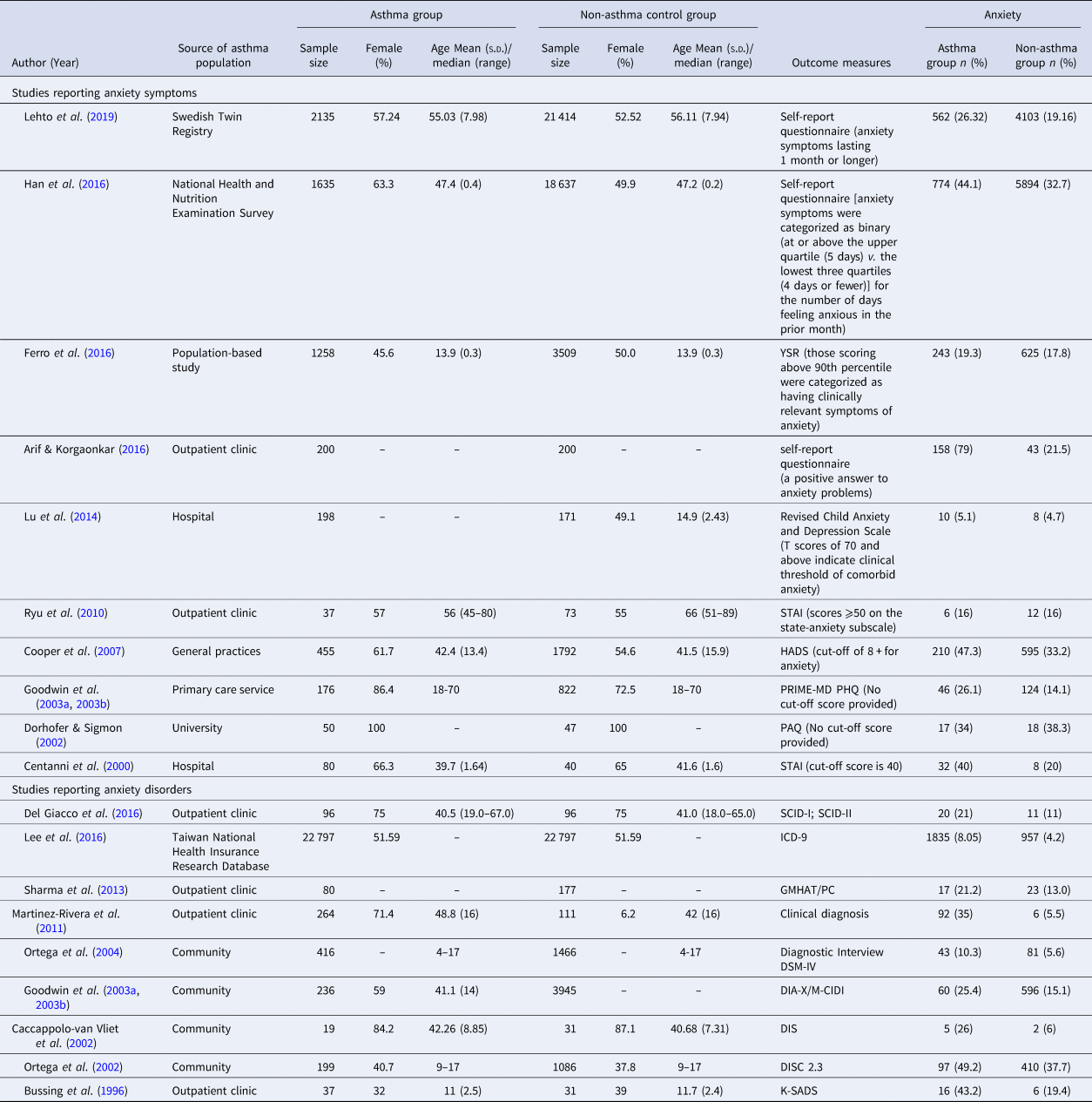
Data were extracted using a pre-piloted structured form. In addition to bibliographic information, extraction processes sought the following data: population, study design, sample size, sex (female %), age (Mean or Median or Range), outcome measures, and key results (see details in Table 1).
Characteristics of studies reporting anxiety symptoms and anxiety disorders in asthma and non-asthma controls
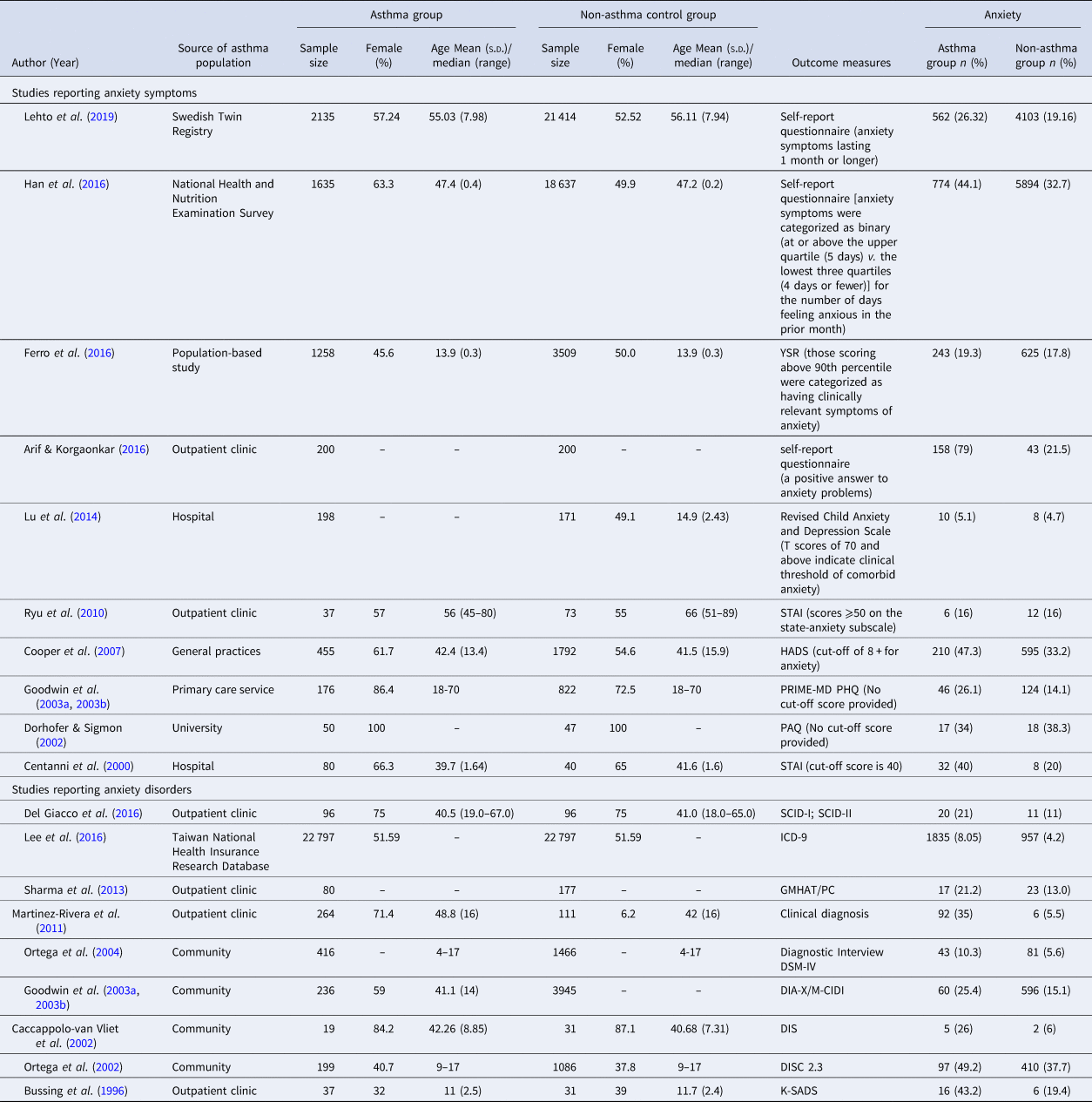
Note: −, data not reported; YSR, Youth Self-Report; STAI, State-Trait Anxiety Inventory; HADS, Hospital Anxiety and Depression Scale; PRIME-MD PHQ, PRIME-MD Patient Health Questionnaire (PHQ) (DSM-IV version); PAQ, Panic Attack Questionnaire; SCID-I, Structured Clinical Interview for DSM-IV diagnosis of Axis I disorders; SCID-II, Structured Clinical Interview for DSM-IV diagnosis of Axis II disorders; ICD-9, International Classification of Disease, Ninth revision; GMHAT/PC, Global Mental Health Assessment Tool-Primary Care and General Health version; DIA-X/M-CIDI, Munich Composite International Diagnostic Interview; DIS, Diagnostic Interview Survey from the Diagnostic and Statistical Manual of the American Psychiatric Association, 3rd Revision (DSM-III); DISC 2.3, Diagnostic Interview Schedule for Children; K-SADS, Schedule for Affective Disorders and Schizophrenia for School-Age Children.
Quality assessment
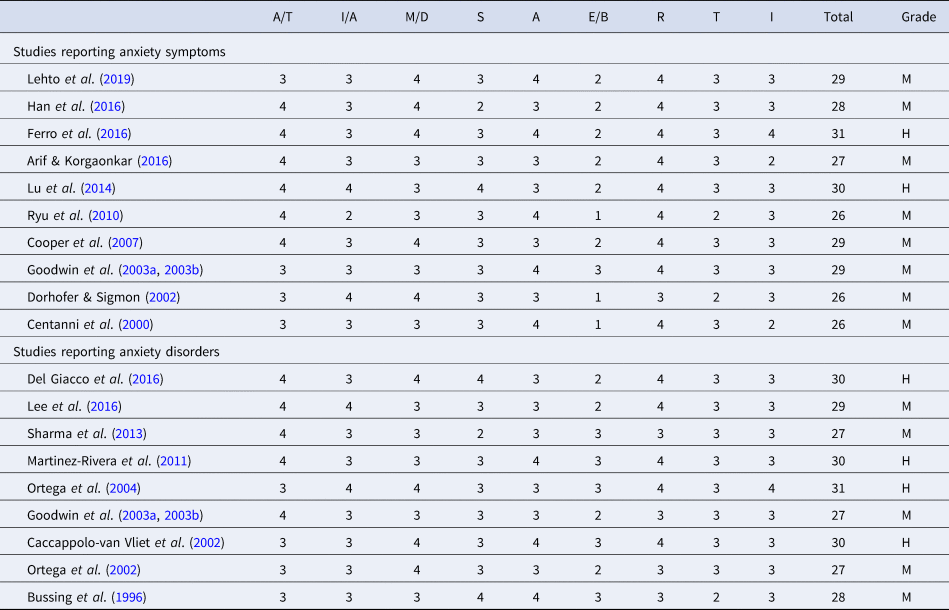
After reviewing recommendations for observational studies (Mueller et al. Reference Mueller, D'Addario, Egger, Cevallos, Dekkers, Mugglin and Scott2018), the approach developed by Hawker, Payne, Kerr, Hardey, & Powell (Reference Hawker, Payne, Kerr, Hardey and Powell2002) was adopted to assess the methodological quality of individual studies included in this review. Nine components were assessed including the title and abstract, introduction and objectives, method and data, sampling, data analysis, ethical aspects of the research process, the results, transferability or generalizability of the information that emerged, and the implications and usefulness of the study using a four-point Likert scale: from good (4) to very poor (1), thus yielding a maximum score of 36. Overall quality ratings were then assigned as follows: high quality (H), 30–36 points; medium quality (M), 24–29 points; low quality (L), 9–24 points.
Statistical analysis
Random effects meta-analysis was used to synthesize individual study effect sizes and generate an overall effect size due to the clinical and methodological variation across studies. The pooled prevalence of anxiety symptoms and anxiety disorders in patients with asthma was calculated using the random effects model via Comprehensive Meta-Analysis version 2.0. Meta-analysis of odds ratio (OR) was conducted using Review Manager 5.3 software. I2 test was used to indicate the percentage of variance in a meta-analysis that is attributable to study heterogeneity, with 25, 50, and 75% considered to indicate low, medium, and high heterogeneity, respectively. Funnel plot of standard error by Hedges'g was used to indicate any potential publication bias.
Results
Search results and study characteristics
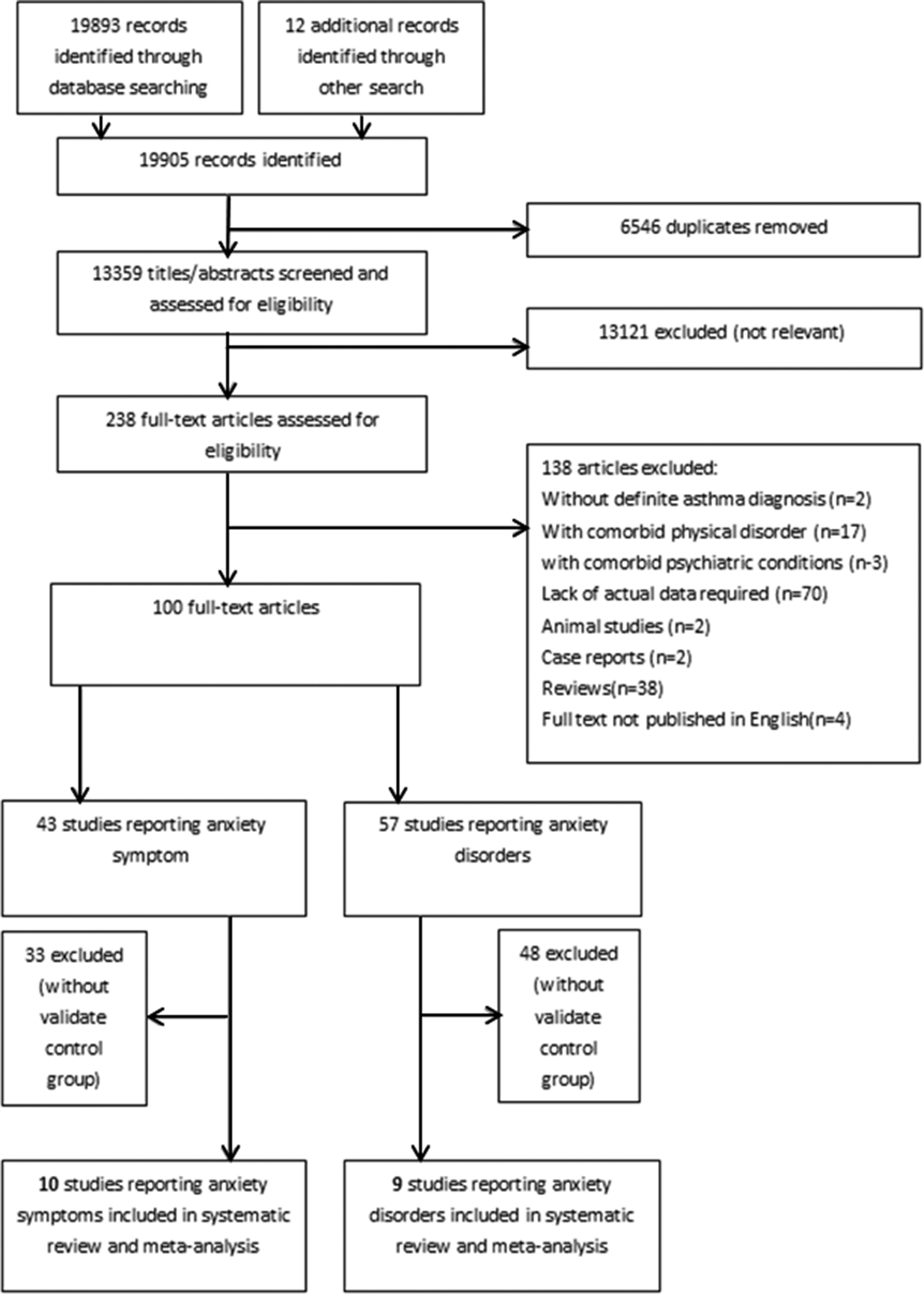
The PRISMA flow chart (see Fig. 1) illustrates how studies were selected in this review and meta-analysis. Our search strategy yielded an initial total of 19 905 articles. In total, 13 359 potentially relevant articles remained after duplicates were removed. The titles and abstracts of these articles were then screened and 13 121 articles were excluded. A total of 238 full-length articles were then reviewed. Finally, 19 articles which met both inclusion and exclusion criteria were included. Among these, 10 articles reported self-report anxiety symptoms and nine articles reported clinically diagnosed anxiety disorders; all of which had both an asthma group and a non-asthma control group.
PRISMA flow chart of study selection.

Anxiety symptoms and asthma
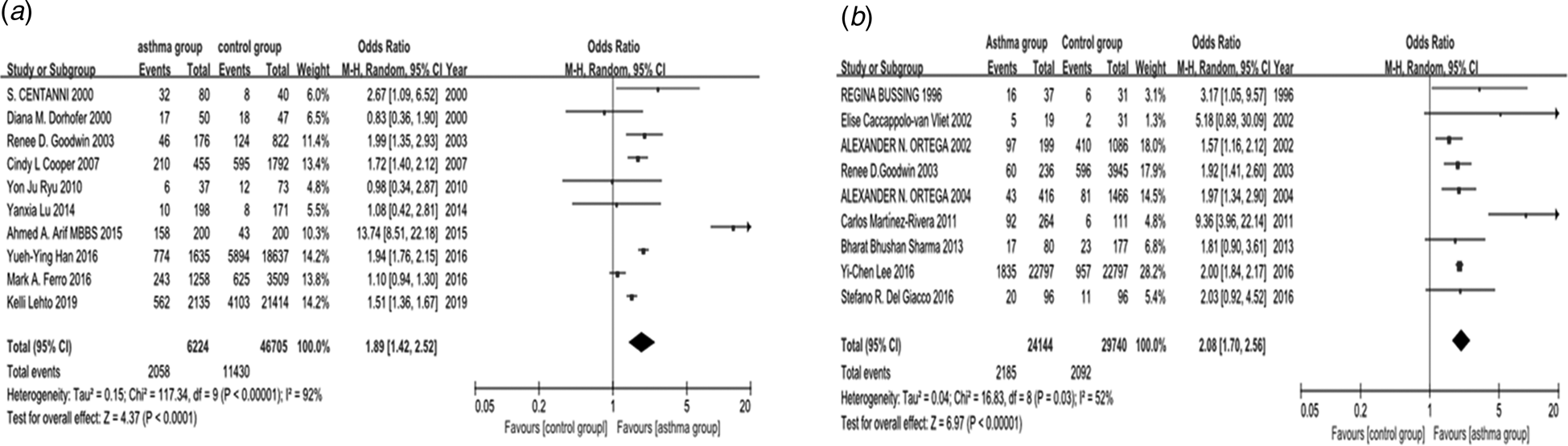
There were 10 studies involving 52 929 participants (including 6224 asthma patients) reporting anxiety symptoms included in this meta-analysis (Arif & Korgaonkar, Reference Arif and Korgaonkar2016; Centanni et al. Reference Centanni, Di Marco, Castagna, Boveri, Casanova and Piazzini2000; Cooper et al. Reference Cooper, Parry, Saul, Morice, Hutchcroft, Moore and Esmonde2007; Dorhofer & Sigmon, Reference Dorhofer and Sigmon2002; Ferro et al. Reference Ferro, Van Lieshout, Scott, Alati, Mamun and Dingle2016; Goodwin et al. Reference Goodwin, Olfson, Shea, Lantigua, Carrasquilo, Gameroff and Weissman2003b; Han et al. Reference Han, Forno, Marsland, Miller and Celedon2016; Lehto et al. Reference Lehto, Pedersen, Almqvist, Lu and Brew2019; Lu et al. Reference Lu, Ho, Lim, Kuan, Goh, Mahadevan and van Bever2014; Ryu, Chun, Lee, & Chang, Reference Ryu, Chun, Lee and Chang2010). The characteristics of these studies are presented in Table 1. The random effects model was used to calculate the pooled prevalence of anxiety symptoms in asthma patients and in non-asthma controls which were 0.32 (95% CI 0.22–0.43) and 0.21 (95% CI 0.16–0.26), respectively. Meta-analysis using Review Manager 5.3 indicated that the risk of coexisting anxiety symptoms was significantly higher in patients with asthma than that of non-asthma controls (OR 1.89; 95% CI 1.42–2.52; Z = 4.37; p < 0.001), as shown in the forest plot in Fig. 2.
Forest plot of comparison of anxiety symptoms (2a) and anxiety disorders (2b) in asthma and non-asthma controls. The black diamond at the bottom of the effect size plot represents the overall pooled odds ratio. Odds ratio>1 represents anxiety prevalence higher in the asthma group than in the non-asthma control group.
Anxiety disorders and asthma
There were nine studies involving 53 884 participants (including 24144 asthma patients) reporting anxiety disorders in asthma patients (Bussing, Burket, & Kelleher, Reference Bussing, Burket and Kelleher1996; Caccappolo-van Vliet, Kelly-McNeil, Natelson, Kipen, & Fiedler, Reference Caccappolo-van Vliet, Kelly-McNeil, Natelson, Kipen and Fiedler2002; Del Giacco et al. Reference Del Giacco, Cappai, Gambula, Cabras, Perra, Manconi and Pinna2016; Goodwin, Jacobi, & Thefeld, Reference Goodwin, Jacobi and Thefeld2003a; Lee, Lee, Lai, Chen, & Stewart, Reference Lee, Lee, Lai, Chen and Stewart2016; Martinez-Rivera et al. Reference Martinez-Rivera, Vennera, Canete, Bardagi and Picado2011; Ortega et al. Reference Ortega, Huertas, Canino, Ramirez and Rubio-Stipec2002; Ortega, McQuaid, Canino, Goodwin, & Fritz, Reference Ortega, McQuaid, Canino, Goodwin and Fritz2004; Sharma et al. Reference Sharma, Singh, Sharma, Choudhary, Singh, Lane and Copeland2013). The characteristics of these studies were extracted and shown in Table 1. The pooled prevalence of anxiety disorders in asthma patients and controls without asthma was 0.24 (95% CI 0.13–0.41) and 0.11 (95% CI 0.05–0.22), respectively. The risk of comorbid anxiety disorders was significantly higher in patients with asthma than those of non-asthma controls (OR 2.08; 95% CI 1.70–2.56; Z = 6.97; p < 0.001), as shown in the forest plot in Fig. 2.
Assessment of heterogeneity
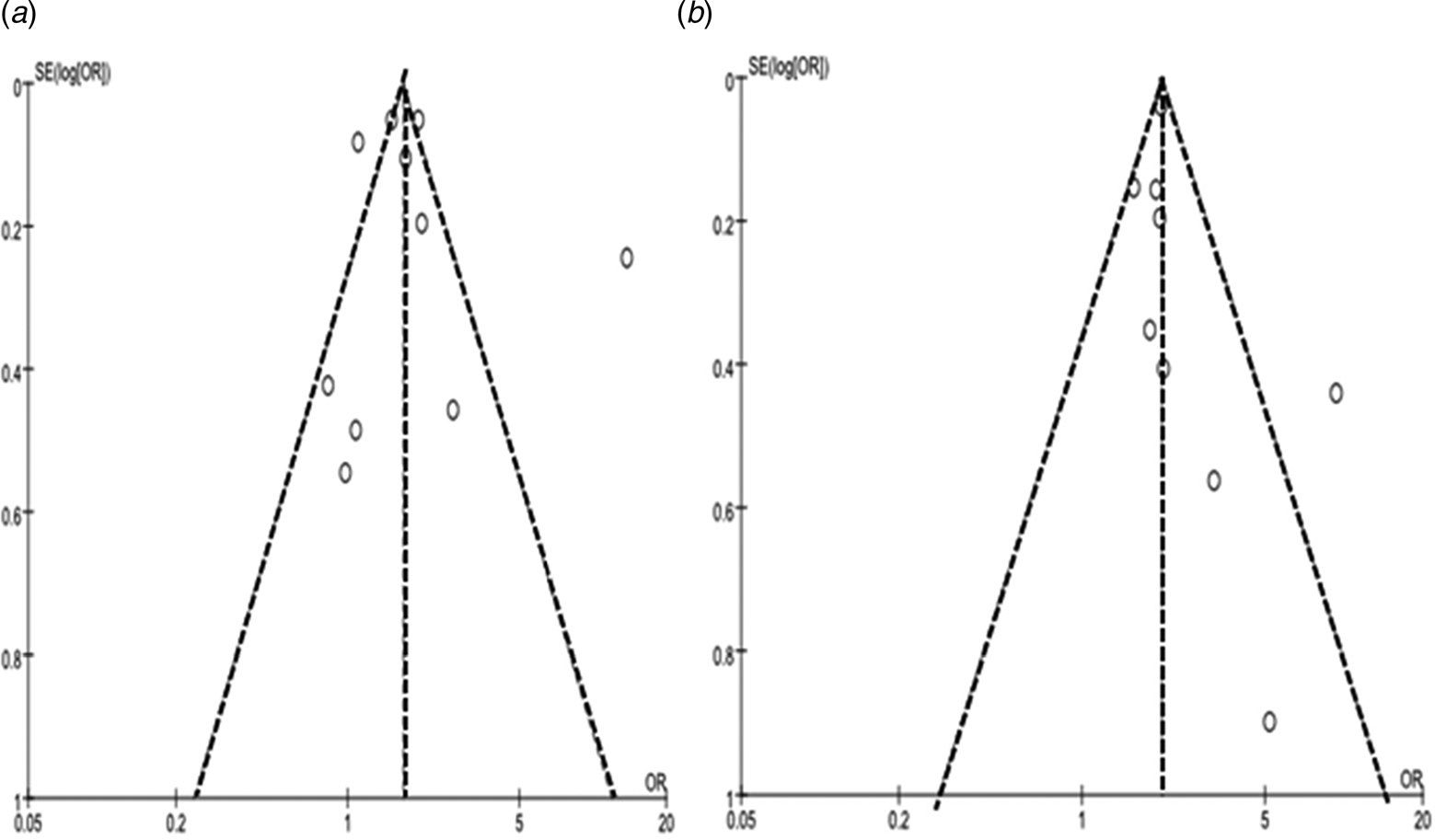
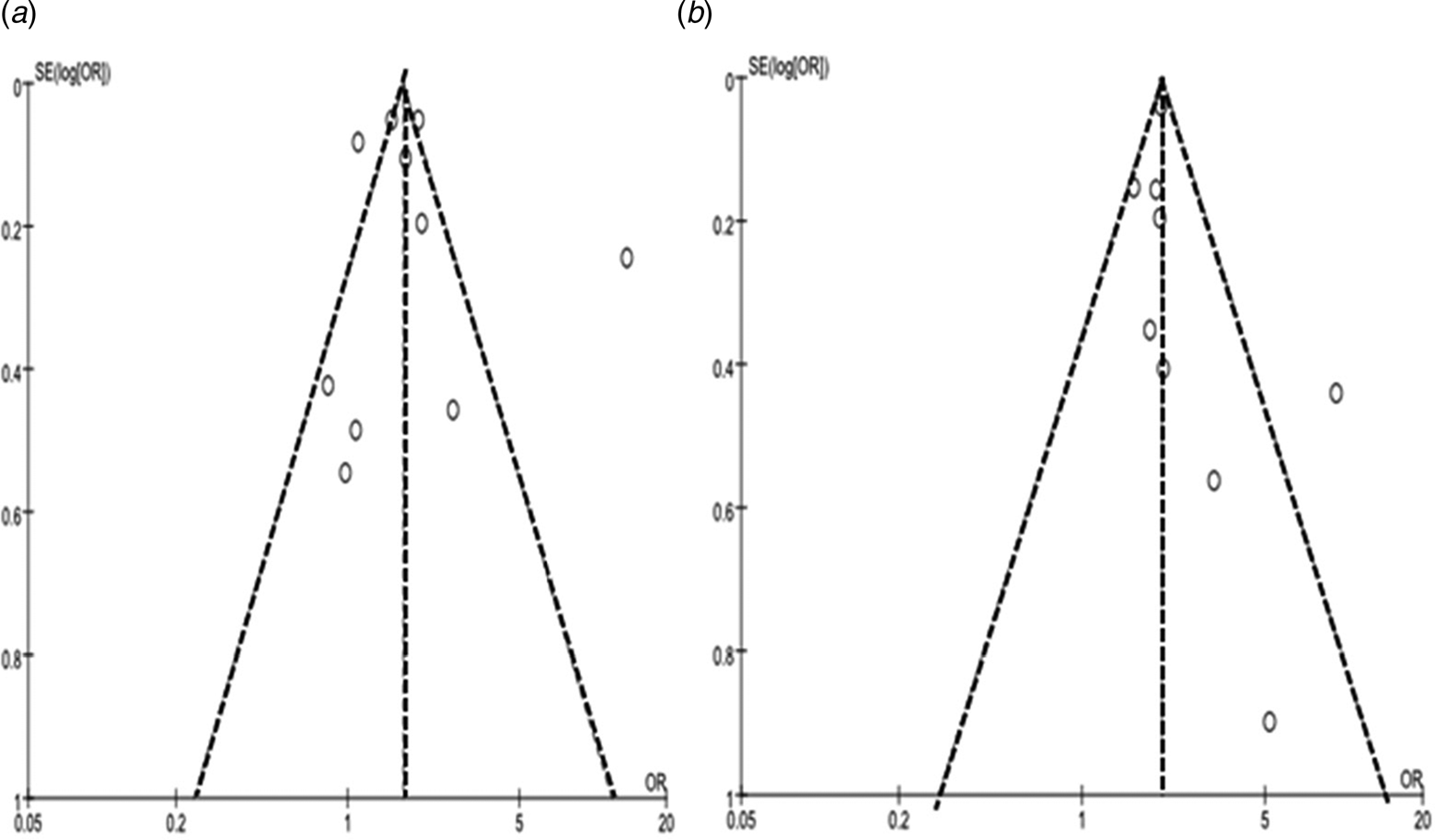
The meta-analysis revealed significantly different degrees of heterogeneity across studies reporting anxiety symptoms (τ 2 = 0.15, χ2 = 117.34, df = 9, p < 0.00001; I 2 = 92%) and anxiety disorders (τ 2 = 0.04, χ2 = 16.83, df = 8, p = 0.03; I 2 = 52%), respectively. Studies reporting anxiety symptoms had a higher degree of heterogeneity than studies reporting anxiety disorders, possibly due to larger asthma patient populations and higher quality in studies of anxiety disorders. For more details and different weighting of individual study see Table 2 and Fig. 2. Due to the high heterogeneity, random-effects model was used for analysis. The funnel plots (see Fig. 3) indicated a tendency towards reporting positive findings. The underlying causes of the asymmetry include (1) chance due to a relatively small number of studies included; (2) heterogeneity across studies such as differences in methodology including settings, types of outcome measures; and (3) a few smaller studies with higher OR seen in studies conducted by Bussing et al. (Reference Bussing, Burket and Kelleher1996) and Caccappolo-van Vliet et al. (Reference Caccappolo-van Vliet, Kelly-McNeil, Natelson, Kipen and Fiedler2002) known as ‘small study effects’ also contributing asymmetry in the funnel plot.
Funnel plot of standard error by Hedges'g for studies reporting anxiety symptoms (3a) and anxiety disorders (3b). Asymmetry indicates a potential publication bias.
Quality assessment of studies

Note: A/T, Abstract and Title; I/A, Introduction and Aims; M/D, Methods and Data; S, Sampling; A, Analysis; E/B, Ethics and Bias; R, Results; T, Transferability; I, Implications. H: high quality, 30–36 points; M: medium quality, 24–29 points; L: low quality, 9–24 points.
Discussion
This up-to-date review of evidence from 19 case-controlled studies involving 106 813 participants includes 30 368 asthma patients and systematically evaluates the association between anxiety and asthma. Prevalence rates of anxiety in asthma varied widely between studies, possibly due to methodological issues including differences in definitions and diagnostic criteria used to define anxiety and in selections of control groups. Meta-analysis provides precise estimates of the prevalence rates and the risks of anxiety symptoms and anxiety disorders, respectively, and indicates significantly elevated comorbidity when compared with the general population.
Anxiety symptoms were reviewed from 10 studies involving 6224 participants, with over one-third of asthma individuals reporting anxiety symptoms measured by psychometric questionnaires. The meta-analysis revealed a significant 1.89 times higher risk of developing anxiety symptoms in asthmatic individuals than in non-asthmatic controls. In contrast, evidence from nine studies involving 24 144 participants revealed that a quarter of asthma individuals developed anxiety disorders, with a significant 2.08 times higher risk than non-asthma controls.
An earlier meta-analysis of 15 studies involving 1494 asthmatic adults suggested that the prevalence of any anxiety disorder was 34% (Weiser, Reference Weiser2007), which is much higher than the figure of 24% reported in our meta-analysis. This is possibly due to the stricter inclusion criteria adopted in our review where only studies with a case-controlled design were selected to remove any confounding factors (most studies included in the earlier review did not include a control group). In addition, most studies in the earlier review examined participants recruited from clinical settings (such as hospitals and outpatient clinics), where comorbidity conditions are usually more burdensome. The inclusion of both clinical and non-clinical populations and matched controls in our review can limit such bias (Berkson, Reference Berkson1946). Another review of evidence across 17 countries suggested the pooled estimate of odds ratio for anxiety disorders was 1.5 (95% CI 1.4–1.7) (Scott et al. Reference Scott, Von Korff, Ormel, Zhang, Bruffaerts, Alonso and Haro2007) which is lower than the figure of 2.08 (95% CI 1.70–2.56) indicated in our meta-analysis: possibly because the earlier review examined only community populations.
It is important to consider to what extent the results of the studies are consistent. I 2 test results derived from our meta-analyses revealed substantial heterogeneity across the 10 studies reporting anxiety symptoms in asthma, and moderate heterogeneity across the nine studies reporting anxiety disorders in asthma. Reasons for heterogeneity, other than characteristics and size of study populations, include different methodological issues such as recruitment pathways, measurement tools and diagnostic criteria, asthma severity and duration, other comorbid physical conditions, settings and countries where each study was carried out, as well as publication bias as indicated in the funnel plots. It should be noted that the effects of these potential sources of heterogeneity were not examined, due to the relatively small numbers of studies included in this review, however, sub-group analysis and meta-regression should be conducted when there are adequate numbers of studies in future meta-analysis. Although the consideration of risk and protective factors linked to comorbid anxiety in asthma is not within the scope of our review, factors like gender, marital status, educational years, urbanization levels, residential areas, levels of care, other comorbid physical conditions (such as cardiovascular disease and diabetes), childhood trauma and negative life events have all been found to be associated with anxiety in asthma (Goodwin, Fergusson, & Horwood, Reference Goodwin, Fergusson and Horwood2004; Grigsby, Anderson, Freedland, Clouse, & Lustman, Reference Grigsby, Anderson, Freedland, Clouse and Lustman2002; Lu, Feng, Lim, & Ng, Reference Lu, Feng, Lim and Ng2013; Roy-Byrne et al. Reference Roy-Byrne, Davidson, Kessler, Asmundson, Goodwin, Kubzansky and Stein2008; Scott et al. Reference Scott, Von Korff, Alonso, Angermeyer, Benjet, Bruffaerts and Posada-Villa2008), whereas socioeconomic advantage, younger age and oral prednisolone usage may be protective factors (Protsiuk et al. Reference Protsiuk, Yablon, Protsiuk, Bykovska, Herasymova and Kapitan2019; Tzeng et al. Reference Tzeng, Chang, Chung, Kao, Chang, Yeh and Chien2018).
The mechanisms underlying comorbid anxiety in asthma remain unclear. One biological theory suggests that repetitive experiences with hypoxia and hypercapnia due to asthma may sensitize neural circuits that control fear responses, such as neurons in the amygdala and locus coeruleus, to overreact and to enhance fearful perceptions of conditioned stimuli such as the sensation of breathlessness (Katon et al. Reference Katon, Richardson, Lozano and McCauley2004). Evidence from adults and adolescents support this theory (Goodwin et al. Reference Goodwin, Olfson, Shea, Lantigua, Carrasquilo, Gameroff and Weissman2003b; Perna, Ieva, Caldirola, Bertani, & Bellodi, Reference Perna, Ieva, Caldirola, Bertani and Bellodi2002; Pine et al. Reference Pine, Klein, Coplan, Papp, Hoven, Martinez and Gorman2000). Another potential biological mechanism is linked to complex psycho-neuro-immunological pathways involving mainly pro-inflammatory cytokines and imbalance towards the Th2 T-cell response (Del Giacco et al. Reference Del Giacco, Cappai, Gambula, Cabras, Perra, Manconi and Pinna2016). Castillo and colleagues (Castillo, Zheng, & Yang, Reference Castillo, Zheng and Yang2018) found that pro-inflammatory cytokines played an important role in the pathogenesis of allergy-related diseases, such as asthma. Studies have shown that cytokines such as interleukin (IL)-6, tumour necrosis factor-alpha, IL-10, and monocyte chemoattractant protein-1/CCL2 might be associated with emotional disorders, including anxiety disorders (Kohler et al. Reference Kohler, Freitas, Stubbs, Maes, Solmi, Veronese and Carvalho2018; Rosenblat & McIntyre, Reference Rosenblat and McIntyre2017). Another recent study showed that pro-inflammatory cytokines, salivary cortisol and alpha-amylase were potentially implicated in the development of generalized anxiety disorder in asthma patients (Yang, Liu, Xu, Shi, & Du, Reference Yang, Liu, Xu, Shi and Du2017). Genetic studies suggest shared genes and potential causal links between asthma and anxiety disorders (Zhu et al. Reference Zhu, Zhu, Liu, Shi, Shen, Yang and Liang2019). A locus is significantly associated with both asthma and anxiety disorders (sentinel SNP: rs1709393) and the NR3C1 gene substantially modifies the level of trait anxiety in asthma sufferers (Panek, Pietras, Szemraj, & Kuna, Reference Panek, Pietras, Szemraj and Kuna2014). Cognitive theory can be used to explain the psychosocial mechanisms underlying the comorbidity of anxiety with asthma (Katon et al. Reference Katon, Richardson, Lozano and McCauley2004): it suggests that long periods and unpredictable experiences with asthma may generate fearful or uncontrollable beliefs about respiratory symptoms which can provoke panic attacks (Carr, Lehrer, Rausch, & Hochron, Reference Carr, Lehrer, Rausch and Hochron1994; Roy-Byrne & Stein, Reference Roy-Byrne and Stein2001). Some individuals may misinterpret normal occurrences of breathlessness as indicative of an asthma attack and if they then respond to these normal bodily sensations in the same way as if they were asthma symptoms, anxiety may increase. Subsequently, avoidance or escape behaviours may appear, which would lead to long-term anxiety (Dudeney, Sharpe, Jaffe, Jones, & Hunt, Reference Dudeney, Sharpe, Jaffe, Jones and Hunt2017).
A high prevalence of anxiety also occurs in a range of other physical illnesses including gastrointestinal disease, pulmonary disease, cardiovascular disease, and chronic pain (Bordoni, Marelli, Morabito, & Sacconi, Reference Bordoni, Marelli, Morabito and Sacconi2017; Celano, Daunis, Lokko, Campbell, & Huffman, Reference Celano, Daunis, Lokko, Campbell and Huffman2016; Meuret, Tunnell, & Roque, Reference Meuret, Tunnell and Roque2020; Neuendorf, Harding, Stello, Hanes, & Wahbeh, Reference Neuendorf, Harding, Stello, Hanes and Wahbeh2016; Ortego et al. Reference Ortego, Villafañe, Doménech-García, Berjano, Bertozzi and Herrero2016). While a medical condition can be sufficient enough to be a stressor for an individual to develop anxiety, some shared underlying biological mechanism may also contribute to anxiety and comorbid physical illness. Growing evidence also suggests neurotransmitter disturbances, hypothalamic-pituitaryadrenal axis dysfunction, and neuroplasticity may also contribute to these comorbid conditions. Future work is warranted to identify potential shared underlying pathological mechanisms between anxiety and asthma as this could offer novel intervention targets and optimize clinical outcome.
Conclusions
The current study provides precise comorbidity and risk estimates of coexisting anxiety symptoms and comorbid anxiety disorders in individuals with asthma. It highlights the need for early and appropriate assessment for anxiety symptoms and disorders in individuals with asthma. This could help to stratify a subgroup of patients who may benefit from interventions targeted at anxiety which might lead to better overall health and quality of life. Further research is warranted to examine underlying mechanisms and identify modifiable risk factors which may offer new intervention approaches to benefit asthma patients with comorbid anxiety.
Acknowledgements
This work was supported by an award from Jiangsu Commission of Health International Exchange Programme grant (Ref: JSH-2019-015).
Conflicts of interest
None.