Introduction
Temperature is the most important environmental factor affecting poultry production. Elevated temperatures inevitably lead to reduced productive performance in both broilers and laying hens, particularly when accompanied by high relative humidity (Yunis and Cahaner, Reference YUNIS and CAHANER1999; Mahrous et al., Reference MAHROUS, GALAL, FATHI and ZEIN EL-DEIN2003; Chen et al., Reference CHEN, GOURICHON, HUANG, LEE, BORDAS and TIXIER-BOICHARD2009). Genetic approaches that aid in reducing or altering the extent of plumage cover by taking advantages of a number of genes, such as late feathering (Galal and Younis, Reference GALAL and YOUNIS2006), frizzled (Galal and Fathi, Reference GALAL and FATHI2001; Nwachukwu et al., Reference NWACHUKWU, IBE and EJEKWU2006b; Mahrous et al., Reference MAHROUS, GALAL, FATHI and ZEIN EL-DEIN2003; Reference MAHROUS, GALAL, FATHI and ZEIN EL-DEIN2008), scale-less (Somes and Johnson, Reference SOMES and JOHNSON1982) and naked neck (Horst and Mathur, Reference HORST and MATHUR1994; Mérat, Reference MÉRAT1986; Galal and Fathi, Reference GALAL and FATHI2002; Mahrous et al., Reference MAHROUS, GALAL, FATHI and ZEIN EL-DEIN2003; Reference MAHROUS, GALAL, FATHI and ZEIN EL-DEIN2008) have been extensively studied.
The modern broiler industry continues to expand in hotter, developing countries where climatic control of broiler houses lags because of high installation and operational costs and unreliable supplies of electricity (Cahaner et al., Reference CAHANER, AJUH, SIEGMUND-SCHULTZE, AZOULAY, DRUYAN and VALLE ZÁRATE2008). In temperate-climate, developed countries, broiler production is negatively affected by heat, because broilers are selected for greater growth rate and consequently generate more heat (Sandercock et al., Reference SANDERCOCK, MITCHELL and MACLEOD1995) and thus need lower ambient temperature to maintain normal body temperature and express their genetic potential for rapid growth (Emmans and Kyriazakis, Reference EMMANS and KYRIAZAKIS2000). Fortunately, many reports have proved that the naked neck and frizzle genes have pleiotropic effects on several important quantitative productive traits (Galal, Reference GALAL2000; El-Safty, Reference EL-SAFTY2006; Mahrous, Reference MAHROUS2008). Accordingly, the utilisation of naked neck and frizzle genes in high-ambient temperatures is encouraged, and, in future, will play an important role in production of layer lines suitable for overcoming such genotype-environment interactions (Thiruvenkadan et al., Reference THIRUVENKADAN, PANNEERSELVAM and PRABAKARAN2010; Rajkumar et al., Reference RAJKUMAR, REDDY, RAMA RAO, RADHIKA and SHANMUGAM2011; Mahrous and El-Dlebshany, Reference MAHROUS and EL-DLEBSHANY2011). Their effects on quantitative characters for growth performance and egg production traits will be described in details later.
Feather coverage
naked neck gene
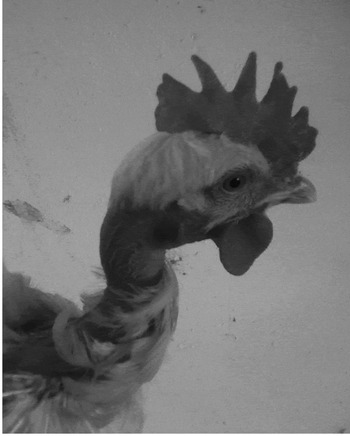
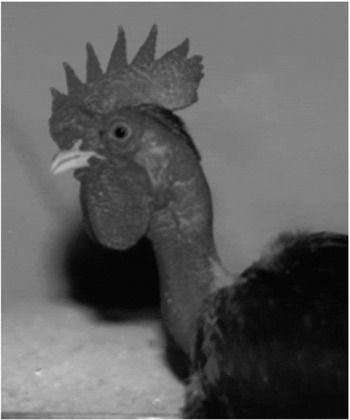
The naked neck gene (Na) is an autosomal, incompletely dominant gene. It causes bare skin on the neck which becomes reddish toward sexual maturity. The heterozygote state (Nana) can be identified by a small tuft of feathers on the ventral side of the neck above the crop (Figure 1), which is almost missing in the homozygote (Fathi, Reference FATHI1987). In the homozygous state (NaNa), there is approximately 40% reduction in feathering coverage (Figure 2) compared to the normal plumage (nana) siblings (Mérat, Reference MÉRAT1986). This reduction is approximately 20-30% in Nana (Galal, Reference GALAL2000). As described by Somes (Reference SOMES1988), the Na gene reduces all feather tracts and some are completely absent. Feather follicles are absent from the head and neck except around the comb, the anterior spinal tract and two small patches on each side above the crop (Gowe and Fairfull, Reference GOWE and FAIRFULL1995).
Heterozygous naked neck chicken with a small tuft of feathers on the neck.

Homozygous naked neck chicken.

frizzle gene
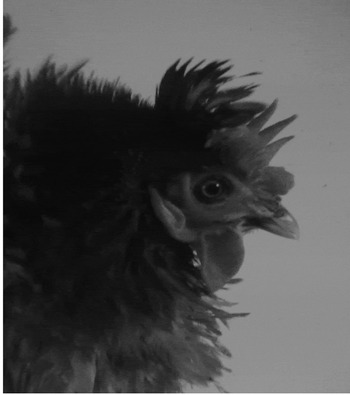
The frizzle (F) is an autosomal, incompletely dominant gene. Frizzling appearance can be identified in chicks three to four days after hatching (Galal and Fathi, Reference GALAL and FATHI2001). The shafts of the contour feathers are curved instead of being straight (Figure 3). The feathers are more delicate and the barbs eventually wear off the remiges of the outer primaries, leaving the birds unable to fly. The extent of the frizzling is so pronounced in the homozygous (FF) that the feathers break very easily, and the birds very soon lose most of their feathers (Stevens, Reference STEVENS1991). The FF state is very sensitive to unfavourable environmental conditions and birds must be kept in a protected environment. In the heterozygous (Ff) state, the feathers have less pronounced curling and are sturdier. Moreover, the effects of F genes are modified by an autosomal recessive modifier (mf) as described by Hutt (Reference HUTT1949). The action of the F gene is localised in the feather follicle. It causes a structure abnormality in the feather and abnormalities of internal organs (enlarged heart, spleen, gizzard and alimentary canal) are common.
Heterozygous frizzle chicken.

Heat tolerance
Under high environmental conditions, the bird increases body heat production due to the exposure to temperatures exceeding the thermal neutral zone. The bird dilates the blood vessels of the skin, wattles, and comb to bring internal body heat to the skin surface, to facilitate conductive, convective, and radiative heat loss. The Na allele is associated with increased tolerance for heat, which is probably due to the 30% reduction in overall plumage for heterozygotes and 40% for homozygotes. At high ambient temperatures above 30°C this effect of the Na gene is favourable, because it limits the negative effect of heat stress on growth (Mérat, Reference MÉRAT1986; Deeb and Cahaner, Reference DEEB and CAHANER2001) as well as on egg production and feed efficiency traits (Mérat, Reference MÉRAT1986; Bordas and Mérat, Reference BORDAS and MÉRAT1992; Chen et al., Reference CHEN, BORDAS, GOURICHON and TIXIER-BOICHARD2004). In contrast, at moderate temperatures, equal to or less than 20°C, the Na gene deteriorates FCR for growing chicks (Bordas et al., Reference BORDAS, MÉRAT, SERGENT and RICARD1978; Monnet et al., Reference MONNET, BORDAS and MÉRAT1979) and laying hens (Bordas et al., Reference BORDAS, MONNET and MÉRAT1980; Bordas and Mérat, Reference BORDAS and MÉRAT1984; El-Safty et al., Reference EL-SAFTY, ALI and FATHI2006). Most studies on these effects have been conducted in artificially controlled climates, mostly with constant temperature. Naturally hot climates are characterised by a diurnal cycle of ambient temperature, which varies between geographical locations and seasons. Broilers raised under these conditions, whose appetite and growth are depressed by the higher mid-day temperatures, may exhibit compensatory feed intake and weight gain during cooler night hours (Adeyinka et al., Reference ADEYINKA, ONI, NWAGU and ADEYINKA2006).
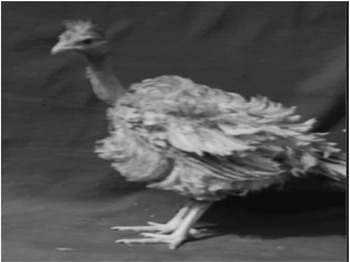
The F gene may reduce the heat insulation of feathers by curling and reducing their size. The beneficial effect of the F gene on broiler growth at high temperature is less than that of Na allele, and the effect is only significant in slow growing lines. However, there is an additive effect in the double heterozygous (Na/Na F/f) broilers (Yunis and Cahaner, Reference YUNIS and CAHANER1999; Mahrous, Reference MAHROUS2008), and it has been hypothesised that the heat tolerance of heterozygous naked neck broilers could be improved by the F gene (Figure 4).
Double segregation of naked neck frizzle chicken (NaNaFf).

Semen quality, fertility and hatchability
Naked neck cockerels have criticised for their proportionally higher semen volume, lower packed sperm volume, lower motility, higher abnormal sperms, and higher coiled tail defects. The abnormal, dead and coiled tail sperms were significantly affected by an interaction between strain and naked neck gene (Galal, Reference GALAL2000; Mahrous, Reference MAHROUS2008). Introducing the Na gene in the Fayoumi strain increased abnormal, dead and coiled tail sperms by 63.0, 62.5 and 112.9%, respectively compared to the nana genotype. However, in Dandarawi strain, the presence of the Na gene decreased abnormal and dead sperms by 5.0 and 14.3%, respectively compared to nana birds (Galal et al., Reference GALAL, EL-SAFTY and ALI2007). Moreover, there was no difference between genotypes for coiled tail deformities (El-Wardany and Zein El-Dein, Reference EL-WARDANY and ZEIN EL-DEIN1995; Fathi et al., Reference FATHI, EL-WARDANY, EL-HOMMOSANY, ALI, GAD and ZEIN EL-DEIN1998; Galal et al., Reference GALAL, ALI, GAMAL EL-DEIN, EL-MEDANY and AL-AFIFI2000).
Under humid tropical conditions, Peters et al. (Reference PETERS, SHOYEBO, IIORI, OZOJE, IKEOBI and ADEBAMBO2008) found that frizzled cockerels produced higher semen volume compared with naked neck ones, whilst their semen had the highest values for both motility and concentration of sperm compared with naked neck cockerels. They reported that the percentage of fertile eggs produced from frizzled and naked neck birds was 84.84 and 80.62%, respectively, whereas the hatchability for those genotypes was 87.46 and 82.63% respectively. In general, Crawford (Reference CRAWFORD1977); Horst (Reference HORST1980); Rauen (Reference RAUEN1985) and Mérat (Reference MÉRAT1986), reported that there was an increase in embryonic mortality (up to 10% in pure strains) among NaNa and to a lesser extent, among their Nana counterparts, which put them at a slight disadvantage to the normally feathered, control birds. Peters (Reference PETERS2005) summarised that the naked neck gene is likely to be lethal when present in a homozygotic, dominant form.
Under the hot conditions of Nigeria, Ajayi et al. (Reference AJAYI, AGAVIEZOR and AJUOGU2011) reported that semen concentration was significantly higher in naked neck, at 4.86×10⁹ ±0.03/ml (p<0.05), than in frizzle feathered at 3.26×10⁹ ±0.94/ml and normal feathered genotype at 3.33×10⁹ ±0.57/ml. Sperm motility was significantly better (p<0.05) in naked neck and frizzle birds compared to normally feathered. Semen volume from the frizzle and normally feathered cockerels were significantly higher (p<0.05) than naked neck birds. There was no significant effect (p>0.05) of genotype on semen pH, abnormal sperm and non-motile sperm. Morphological defects of the head, middle and tail was not significantly affected (p>0.05) by the genotypes.
In a comparison of Nigerian local breeds, Oke and Ihemeson (Reference OKE and IHEMESON2010) found that the normal feathered cockerels had higher (P<0.05) semen volume (0.25±0.02ml) than frizzle (0.15±0.03ml). This result agrees with the reports of Nwachukwu et al. (Reference NWACHUKWU, IBE and AMADI2006a) and varied to the reports of Ezekwe and Machebe (Reference EZEKWE and MACHEBE2004), who observed that naked-neck and frizzle cockerels produced more semen than the normal cockerels in the humid tropics. Likewise, sperm motility was significantly higher for normal (77.9%) and naked neck (65.8%) and lowest for frizzle (52.5%) cockerels. Significant difference (P<0.05) were noted between all three genotypes for sperm concentration, with frizzle having the lowest levels. The mean weight of the testis of the frizzle cockerels (7.07 g) showed a significantly lower (P<0.05) level compared to the normal (11.7 g) and naked-neck (10.1 g) cockerels, respectively.
In an attempt to determine crossbreeding effects on fertility, hatchability and embryonic mortality, Matthew et al. (Reference MATTHEW, SUNDAY, MICHAEL, CHRISTIAN, ADEYEMI and OLUFUNMILAYO2011) stated that the sire genotype significantly (P<0.05) affected fertility and dead-in-shell results. Using naked neck sires resulted in the highest dead-in-shell numbers (19.5%) with the least being 7.5% for frizzle-feathered chickens. Frizzle-feathered sire genotype had the highest fertility (90.5%) and hatchability (91.4%). Accordingly, the commercial use of the Na allele is limited due to the high embryonic mortality caused by these genes, particularly in homozygous embryos (Horst, Reference HORST1982; Mérat, Reference MÉRAT1990). Embryonic malposition, due to fewer feathers on the neck allowing the head to take faulty positions (Mérat, Reference MÉRAT1990), or metabolic disorders (Decuypere et al., Reference DECUYPERE, BUYSE, MÉRAT, ZOONS and VLOEBERGHS1993) have been shown to be responsible for this increased mortality in naked neck embryos. On the other hand, Sharifi et al. (Reference SHARIFI, HORST and SIMIANER2010a) reported that nana hens showed clear performance depressions under thermal stress (30ºC) with respect to egg production (63%), fertility (20%), hatchability, and number of live chicks (72%) in comparison with the NaNa genotype. The early embryonic mortality of eggs laid by nana hens exposed to heat stress is clearly higher than of eggs by hens kept under temperate ambient temperature. In contrast, there were no significant differences in early embryonic mortality of eggs of NaNa birds kept under high or temperate environmental temperatures, demonstrating that heat stress leads to reduced early embryonic liveability. Embryonic mortality in the late developing stage is significantly increased, and the homozygous genotype is much more affected than the heterozygous embryo. The possible reason for the Na gene-induced embryonic mortality is still not clear.
Body weight and growth rate
Heavier body weights for naked neck genotypes have been reported in several papers (Cahaner et al., Reference CAHANER, YUNIS and DEEB1994; Galal and Fathi, Reference GALAL and FATHI2001; Fathi et al., Reference FATHI, EL-ATTAR, ALI and NAZMI2008; Sharifi et al., Reference SHARIFI, HORST and SIMIANER2010a). In generally, the Na gene had a favourable effect on the growth performance of chicken reared under high temperatures (Mérat, Reference MÉRAT1986; Cahaner et al., Reference CAHANER, DEEB and GUTMAN1993; Galal and Fathi, Reference GALAL and FATHI2001; Patra et al., Reference PATRA, BAIS, PRASAD and SINGH2002; Fathi et al., Reference FATHI, EL-ATTAR, ALI and NAZMI2008; Reddy et al., Reference REDDY, SHARMA, NIRANJAN and CHATTERJEE2008; Rajkumar et al., Reference RAJKUMAR, RAJARAVINDRA, NIRANJAN, REDDY, BHATTACHARYA, CHATTERJEE and SHARMA2010). However, significantly higher performance of naked neck birds was reported in both winter and summer seasons by Singh et al. (Reference SINGH, SINGH, SINGH, CHAUDHARY and MALIK1998), El-Safty et al. (Reference EL-SAFTY, ALI and FATHI2006) and Mahrous (Reference MAHROUS2008). The higher growth rate of the Na genotype under hotter temperatures may be related to the relative high T3 (triiodothyronine) concentration (Decuypere et al., Reference DECUYPERE, BUYSE, MÉRAT, ZOONS and VLOEBERGHS1993). On the other hand, Magothe et al. (Reference MAGOTHE, MUHUYI and KAHI2010) observed lower body weights in naked neck birds from Kenya raised under free range conditions. Almeida and Zuber (Reference ALMEIDA and ZUBER2010) reported lower body weights in naked neck chickens than their normally feathered counterparts kept in low temperate conditions, which might be due to the increased cold stress experienced by naked neck birds.
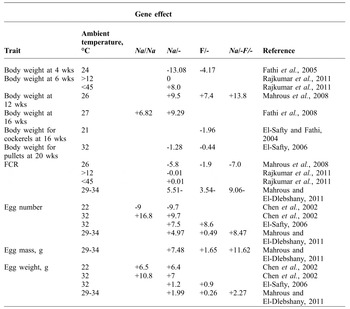
It has been shown that an increase in body temperature in birds kept in hotter conditions was higher in normally feathered than in naked neck broilers, due to the reduced feathering of the latter. Consequently, naked neck broilers exhibited higher feed intake, growth rate, and meat yield than their normally feathered counterparts (Deeb and Cahaner, Reference DEEB and CAHANER1994). Therefore, continuous selection for faster growth rate in broilers, together with the increasing proportion of broiler production in tropical and subtropical regions, may accentuate the importance of the potential use of Na and F genes. Records of growth performance according to several authors are shown in Table 1.
Egg Production
Many authors have observed that the naked neck gene had an advantage in laying performance under either hot or moderate ambient temperatures (Fathi, Reference FATHI1987; Mérat, Reference MÉRAT1990; Fathi et al., Reference FATHI, ZEIN EL-DEIN, EL-ATTAR and AYOUB1994; Galal, Reference GALAL1995; Singh et al., Reference SINGH, KUMMER and SINGH2001). However, at low ambient temperatures, the nana genotype produced higher egg mass and numbers when compared with that of Nana genotype (Galal et al., 2000; Galal and Fathi, Reference GALAL and FATHI2002). Under Bangladeshi conditions, Islam et al. (Reference ISLAM, BULBUL, SEELAND and ISLAM2001) concluded that the Desi naked neck strain produced heavier eggs than the Desi full feathered birds. Naked neck birds fed a low protein regime laid heavier eggs and yielded higher egg mass, and showed higher feed and biological efficiencies in comparison with their counterparts fed high protein diets (Garces et al., Reference GARCES, CASEY and HORST2001). Egg weight was increased by the Na gene, which is typically observed in egg-type layers (Chen et al., Reference CHEN, BORDAS, GOURICHON and TIXIER-BOICHARD2004). The presence of the Na gene in a single manner, or combined with F genes, significantly increased egg weight by about 4.0 or 4.5%, respectively compared to nanaff genotypes. However, there were no significant differences seen between frizzle and normally feathered genotypes (Galal, Reference GALAL2000).
Records of egg production traits from several authors are shown in Tables 1 and 2. Under heat stress, there was a distinct reduction in all reproductive traits, except sexual maturity for normally feathered hens compared with frizzle-feathered hens, whereas under temperate conditions, egg production and number of chicks of the FF genotype were reduced and sexual maturity was delayed (Sharifi et al., Reference SHARIFI, HORST and SIMIANER2010b).
Summarised gene effects for Na, F and their combination for growth performance and egg production traits.

FCR = Feed conversion ratio
Gene effect of naked neck genotypes = (NaNa or Nana-nana/nana)×100
Gene effect of frizzle genotypes = (Ff or NanaFf-nana/nana)×100
Blank cell means data not available.
Eggshell quality
physical and mechanical properties
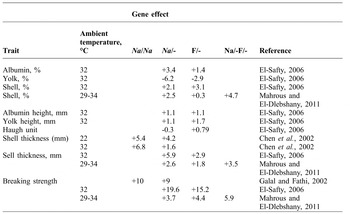
Many investigators have pointed out that the presence of Na gene, in a single manner or combined with the F gene, not only had different mechanical eggshell properties, but also good ultrastructural formation of eggshell compared to normally feathered genotypes (El-Safty, Reference EL-SAFTY2006; Mahrous, Reference MAHROUS2008; Mahrous and Galal, Reference MAHROUS and GALAL2011). Specific gravity has been recommended as a useful, indirect indicator for eggshell strength. The eggs produced from hens carrying the naked neck gene, either in a single state or combined with a frizzle gene, had the highest egg specific gravity compared to other genotypes (Mahrous, Reference MAHROUS2008). Referring to egg surface area, it was noted that the Nanaff and NanaFf genotypes had a significantly higher area compared to nanaff sibs. Also, the number of pores per egg from NanaFf genotype birds was significantly higher than other genotypes.
A similar trend was noticed in the Nanaff genotype when compared to nanaff counterparts, but there was no significant difference between frizzle and non-frizzle genotypes (El-Safty, Reference EL-SAFTY2006). Eggs produced from Nanaff and NanaFf genotypes were significantly higher in shell percentage compared to nanaff ones. However, the eggshell percentage was not significantly affected by the frizzled gene alone. Thickness and breaking strength of eggshells were significantly affected by genotype, whereby the presence of the Na gene in a single manner, or combined with an F gene, significantly increased both traits when compared to nanaff genotype. However, both traits were not significantly affected by the F gene. Less feather cover associated with the naked neck gene can allow more access to solar radiation in birds raised in open-sided houses or outdoors, which may facilitate greater vitamin D3 synthesis and, in turn, contribute to better shell quality (Barua et al., Reference BARUA, HOWLIDER and YOSHIMURA1998).
The Na gene improves shell thickness and breaking strength by a factor of 9-10 respectively (Galal and Fathi, Reference GALAL and FATHI2002). In addition El-Safty (Reference EL-SAFTY2006) concluded that laying hens carrying Na gene had a superior shell thickness and strength compared with normally feathered hens. Under heat stress conditions, Sharifi and Simianer (Reference SHARIFI and SIMIANER2007) reported that the presence of the Na gene led to significant improvements in weight of eggshell, breaking strength, thickness and egg elasticity, as assessed by deformation. On the other hand, Abdel-Rahman (Reference ABDEL-RAHMAN1990) and El-Safty (Reference EL-SAFTY2006) stated that normally feathered genotypes gave significantly thicker eggshells compared to heterozygous birds (Nana) raised under low ambient temperatures. With respect to breaking strength, the nana had a slightly stronger eggshell than Nana. Furthermore, eggs produced from nana hens had higher eggshell area comparatively to Nana when kept under winter conditions in Egypt (El-Safty et al., Reference EL-SAFTY, ALI and FATHI2006).
eggshell ultrastructure
The effect of naked neck, frizzle and double segregation genes on the characteristics of the mammillary layer of shell has been extensively examined by Mahrous and Galal (Reference MAHROUS and GALAL2011). The results showed that the presence of Na gene in a single state or combined with the F gene significantly increased the total mammillary thickness by about 16.84 and 15.30%, respectively, compared to eggs from nanaff genotypes. According to Bain (Reference BAIN1992), the palisade layer provides the stiffness of the shell, thereby imparting strength to the egg. Thus, a reduction in its relative thickness could compromise strength, leading to a higher incidence of breakage during incubation and a subsequent reduction in embryo viability. Moreover, Nanaff, nanaFf and NanaFf genotypes had significantly higher absolute and relative palisade thickness compared to eggs from nanaff birds.
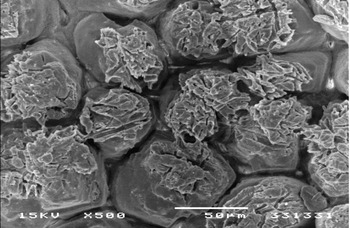
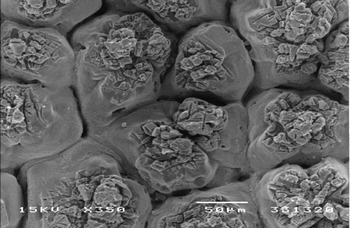
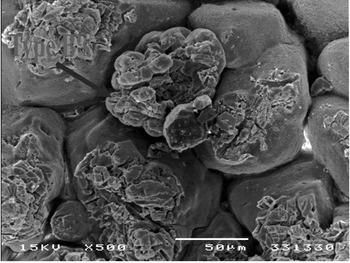
With respect to mammillary cap layer thickness, Mahrous and Galal (Reference MAHROUS and GALAL2011) declared that the presence of Na and F genes, in single or double segregation, significantly decreased the relative cap layer thickness by 18.7%, 13.0% and 20.0%, respectively compared to eggs from the nanaff genotype. That means that the amount of calcium available in this layer may not be adequate for developing embryo, and can cause the poor hatchability associated with naked neck and frizzled genotypes. According to scanning microscopic examinations, Mahrous (Reference MAHROUS2012) reported that Nanaff and NanaFf genotypes exhibited a good confluence of mammillary caps and early fusion amongst calcite columns compared to nanaff (Figures 5 and 6). Solomon (Reference SOLOMON1999) found that improved shell ultrastructure reflected good attachment with membranes and caps. Bain (Reference BAIN1990) stated that the decline in fracture toughness can be explained in terms of an increase in late fusion of adjacent mammillary columns.
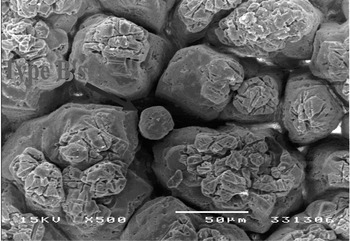
On the other hand, extensive type B bodies were clearly noticed in eggs from the nanaff genotype, meaning a weak attachment between caps and the inner shall membrane (Figures 7 and 8) (Mahrous, Reference MAHROUS2012). Nascimento et al. (Reference NASCIMENTO, CRANSTOUN and SOLOMON1992) stated that the aberrant crystal forms of type B bodies provided no meaningful contribution to the palisade layer and, like poor cap modifications, do not offer any anchorage points. Records of egg quality and eggshell characteristics according to several authors are shown in Table 2.
Good mammillary caps and confluence in Nanaff genotype.

Early fusion of mammillae in NanaFf genotype.

Type B's with no attachment to membrane in nanaff genotype.

Type B's with attachment to membrane in nanaff genotype.

Summarised gene effect for Na, F and their combination for egg and eggshell quality.

Gene effect of naked neck genotypes = (NaNa or Nana-nana/nana)×100
Gene effect of frizzle genotypes = (Ff or NanaFf-nana/nana)×100
Blank cell means the data not available.
Carcass yield and fat deposition
dressing percentage
Dressing percentage was significantly higher in two naked neck genotypes than their normal siblings, which has been attributed to higher body weights and less losses due to feathering in naked neck birds, and higher meat yield due to the presence of the Na gene is well established (El-Attar and Fathi, Reference EL-ATTAR and FATHI1995; Deeb and Cahaner, Reference DEEB and CAHANER1999; Yalcin et al., Reference YALCIN, OZKAN, ACIKGOZ and OZKAN1999; Fathi and Galal, Reference FATHI and GALAL2001; Fathi et al., Reference FATHI, EL-ATTAR, ALI and NAZMI2008). Under hot ambient conditions in Egypt, Zein El-Dein et al. (Reference ZEIN EL-DEIN and AYOUB1981) showed that the introduction of the Na gene in broilers improved not only the dressing percentage but also the meat/bone ratio. Zein El-Dein et al. (Reference ZEIN EL-DEIN, MÉRAT and BOARDS1984) reported a relatively higher percentage of muscular tissue with Nana compared to nana males at 63 days old, and naked neck males had a significantly higher eviscerated carcass percentage than their normally feathered counterparts, although the protein level x genotype interaction was not significant for such trait. The advantage of the Na gene was higher under 16% compared to 20% dietary protein levels (El-Attar et al., Reference EL-ATTAR, SHEHATA and ABDEL-RAHMAN1986).
When naked neck and normally feathered indigenous fowls were kept in free range systems, Barua and Howlider (Reference BARUA and HOWLIDER1991) found that the carcass dressing averaged 57.1% and 53.6% respectively, while total meat yield (as a percentage of live weight) was 37.2% and 29.9%, respectively, but breast meat averaged 10.7% and 10.9%, and thigh meat was 10.8% and 8.7%, respectively. A decreased amount of total fat content was seen in naked neck birds, mainly due to a decrease in carcass and subcutaneous fat, but no difference in abdominal fat was reported by Mérat (Reference MÉRAT1990). In contrast, Lou et al. (Reference LOU, QUOI and SMITH1992) found an increase in abdominal fat in Nana broilers kept at 30°C compared with nana, but this was not seen at ambient temperatures of 20°C. Decuypere et al. (Reference DECUYPERE, BUYSE, MÉRAT, ZOONS and VLOEBERGHS1993) did not observe differences in abdominal fat content between Nana and nana genotypes or between the 20°C and 30°C temperatures the birds were reared under.
The effect of the frizzle gene was tested in fully-feathered and in heterozygous naked-neck broilers at 24°C and 32°C by Cahaner et al. (Reference CAHANER, DEEB and GUTMAN1993). It was concluded that the effect of the F allele on body weight and breast yield was similar to that of the Na allele, and the two alleles exhibited additives effect on body weight at the higher ambient temperature.
In NaNa birds versus the normal (nana) genotype, reared at 20 or 30°C, Decuypere et al. (Reference DECUYPERE, BUYSE, MÉRAT, ZOONS and VLOEBERGHS1993) found that the depressing effect of high temperature on body weight was less pronounced in NaNa. They found no genotypic effect on abdominal fat pad content. In a study on Nana and nana chickens, fed a diet containing 20, 18 and 16% protein, Perez et al. (Reference PEREZ, FRAGA and FEBLES1993) found that the final live body weight was 1571 g and 1548 g, respectively. Carcass yield percentage was 66.8% and 65.3%, and thigh plus breast as a percentage of live weight was 37.0% and 36.2%. A genotype x diet interaction was found for weight of thigh muscle, with the superiority of this trait noticed in Nana chickens fed low protein diet. The thigh plus breast index, in absolute and relative terms, was greater in Nana chickens regardless of total protein level. Under Egyptian environmental conditions, Fathi et al. (Reference FATHI, ZEIN EL-DEIN, EL-ATTAR and AYOUB1993) concluded that the naked neck birds had a higher dressing percentage, more breast muscle, giblets and meat yield than normally feathered birds. It also concluded that the naked neck gene exhibited some advantage in meat production, particularly where fowls were kept in hotter environmental conditions. Buyse et al. (Reference BUYSE, SIMONS, BOSHUWERS and DECUYPERE1994) studied the effect of 15% or 20% dietary protein on body weight and carcass composition in a broiler experiment using heterozygous Kabir naked neck and normal feathered birds. They reported that abdominal fat was greater in chickens given 15% crude protein (CP). At 56 days old, body fat and abdominal fat were higher in chickens of both genotypes given 15% compared to those given 20% protein.
unsellable parts
In terms of inedible parts and internal organs, Rajkumar et al. (Reference RAJKUMAR, REDDY, RAMA RAO, RADHIKA and SHANMUGAM2011) reported that the giblets proportion was not significantly varied among genotypes. However, liver and heart weights were heavier in naked neck genotypes, while gizzard was heavier in normal birds. The larger liver and heart in naked neck genotypes may be correlated with high metabolic rate and more blood pumping from the heart to meet these metabolic needs. The significantly higher blood proportions in NaNa and Nana birds confirmed the association between heart and liver in naked neck chickens. Mahrous (Reference MAHROUS2008) reported that the presence of the Na gene significantly increased blood percentage compared to normally feathered genotypes. A similar trend (not statistically significant) was noticed for frizzle birds. Moreover, the higher relative blood weight was more pronounced in double segregation genes rather than naked neck or frizzle genes alone. This higher blood content in naked neck genotypes was probably due to greater haemoglobin concentrations and packed cell volumes associated with the naked neck gene (Luger et al., Reference LUGER, CAHANER, DOTAN, RUSAL and HURWITZ1998 and Raju et al., Reference RAJU, SUNDER, CHAWAK, RAMA RAO and SADAGOPAN2004; Galal et al., Reference GALAL, EL-SAFTY and ALI2007), as a consequence of greater oxygen demand. This also may be due to the higher blood supply to organs and muscles (Galal and Fathi, Reference GALAL and FATHI2001; Mahrous et al., Reference MAHROUS, GALAL, FATHI and ZEIN EL-DEIN2003; Galal, Reference GALAL2007). Yunis and Cahaner (Reference YUNIS and CAHANER1999) concluded that the naked neck gene had more pronounced effects on carcass traits through reducing feathering, skin coverage and total body fat (skin plus abdominal fat) as well as increasing meat yield and edible parts. The Na gene improved carcass quality measurements, especially breast, thighs and giblets (Abdel-Rahman Reference ABDEL-RAHMAN1990).
breast meat
The Na allele can increase breast meat production especially at high temperatures (Yunis and Cahaner, Reference YUNIS and CAHANER1999; Deeb and Cahaner, Reference DEEB and CAHANER1999). The advantageous effect of the Na genotype is more pronounced in broiler chickens with higher growth rates and breast meat yields, and increases with broiler size and ambient temperature (Deeb and Cahaner, Reference DEEB and CAHANER2001). A lower feather mass increases the effective surface of heat dissipation and increases the sensible heat loss from the neck (Yahav et al., Reference YAHAV, LUGER, CAHANER, DOTAN, RUSAL and HURWITZ1998). Likewise, El-Attar and Fathi (Reference EL-ATTAR and FATHI1995) observed significantly higher breast yields in naked neck genotypes kept under high ambient temperatures. Similarly, better meat yields for naked neck genotypes were reported by Yalcin et al. (Reference YALCIN, TESTIK, OZKAN, SETTAR, CELEN and CAHANER1997). The increased proportion of muscle in the pectoral region in Na genotypes might be due to the availability of higher levels dietary protein (especially certain amino acids) for muscle development, due to a lower requirement for plumage feather development (Mérat, Reference MÉRAT1990). El-Attar and Fathi (Reference EL-ATTAR and FATHI1995) found differences between Nana and nana genotypes for certain carcass composition measurements. Heterozygous naked neck males exhibited higher breast meat yields when compared with normally feathered sibs. Na gene had a favourable effect on the area and thickness of pectorals major. Absolute and relative weights of pectorals minor and residual breast meat were higher in naked neck birds than in normal plumage chickens. Additionally, Fathi and Galal (Reference FATHI and GALAL2001) reported that the Na gene significantly improved dressing percentage and breast meat muscle compared to normally feathered genotype. Under high ambient temperature in South African, Van Marle-Köster and Webb (Reference VAN MARLE-KÖSTER and WEBB2000) found that the presence of the Na gene increased breast muscle compared to normally feathered sibs. Regardless ambient temperature, Mahrous et al. (Reference MAHROUS, GALAL, FATHI and ZEIN EL-DEIN2003) observed that the Na allele improved dressing percentage and breast muscle compared to fully feathered birds.
fat content
The abdominal fat percentage, in relation to live weight, was significantly lower in both NaNa and Nana genotypes compared to the normal birds. The significant effect of the Na gene in reducing subcutaneous and intramuscular fat deposition is well documented (Cahaner et al., Reference CAHANER, DEEB and GUTMAN1993; Raju et al., Reference RAJU, SUNDER, CHAWAK, RAMA RAO and SADAGOPAN2004; Fathi et al., Reference FATHI, EL-ATTAR, ALI and NAZMI2008). Body fat is negatively correlated with heat tolerance (Macleod and Hocking, Reference MACLEOD and HOCKING1993) which substantiates the present findings of less fat in naked neck birds. Patra et al. (Reference PATRA, BAIS, PRASAD and SINGH2002) reported higher fat percentages in naked neck birds, which were not significant between the genotypes. A low level of abdominal fat observed is highly desirable for improving carcass quality and minimising the deposition of energy. The decrease in abdominal fat in naked neck chickens may be due to the combined insulation effects of less plumage cover and utilisation of a higher proportion of energy for thermoregulation (Mérat, Reference MÉRAT1986). Concurrently, resistance to heat dissipation is decreased because reduced plumage is associated with lower skin mass due to reduced fat deposition in naked neck birds (Cahaner et al., Reference CAHANER, DEEB and GUTMAN1993; Raju et al., Reference RAJU, SUNDER, CHAWAK, RAMA RAO and SADAGOPAN2004). Under summer conditions in Izmir, Turkey (27.1°C), Yalcin et al. (Reference YALCIN, BILGEN, OKTAY, AÇIKGÖZ and BILGILI1998) compared two genotypes (Nana & nana) in terms of skin characteristics. They found that naked neck birds had a lower content of skin fat and higher protein content than normally feathered birds. Furthermore, in the summer season in India, Raju et al. (Reference RAJU, SUNDER, CHAWAK, RAMA RAO and SADAGOPAN2004) reported that the relative weights of feathers and skin were lower in Nana birds than in their normal counterparts. The Nana chickens had more skin protein and less fat in breast muscle and skin than their normal sibs. Conversely, Bordas et al. (Reference BORDAS, MÉRAT, SERGENT and RICARD1978) have both reported that abdominal fat in male chickens raised at an ambient temperature of 31°C was not significantly affected by genotype at the Na locus. There was a tendency for naked neck birds to have a slightly higher value, possibly reflecting their higher growth rate at this temperature. Zein El-Dein et al. (Reference ZEIN EL-DEIN, MÉRAT and BOARDS1984) reported that abdominal fat content was not affected by genotype. Records of carcass characteristics according to several authors are shown in Table 3.
Carcass characteristics as affected by Na and F genes.

Gene effect of naked neck genotypes = (NaNa or Nana-nana/nana)×100
Gene effect of frizzle genotypes = (Ff or NanaFf-nana/nana)×100
Blank cell means data not available.
Conclusions
There is no doubt that particular maker genes, such as naked neck and frizzled plumage, have positive effects on not only heat tolerance but also productive adaptability. According to several studies, the naked neck and frizzle genes, in their single state or in combination, confer consistent superiority in body weight, feed conversion, egg production and disease resistance at moderate and high ambient temperatures. Therefore, in heavier chickens, the advantages of Na gene are more pronounced than in lighter breeds. Accordingly, many companies are exploiting the Na gene in broilers destined for tropical and semi-tropical areas. The major criticism of embryonic mortality linked with naked neck gene could be overcome by using heterozygous naked neck sires in breeding strategies. It is expected that the F gene will soon also come into consideration for breeding more suitable birds for the more tropical poultry industry. Moreover, laying hens carrying such genes could be more profitable by increasing egg production and eggshell stiffness.
Acknowledgement
This paper would not have been possible without all faculty staff of poultry breeding and genetics at Ain Shams University, Cairo, Egypt. The authors are grateful to farm workers for their efforts and support during the long period of extensive experimental work included in this review.