


As early as 1819, the polymath Alexander von Humboldt observed a massive land system change in the Lake Valencia region of present-day Venezuela. To create agricultural land for colonial commodities such as sugar, indigo, and cotton, European settlers were cutting down large areas of the nearby tropical forests, with serious detrimental consequences for water flows, soils, biodiversity, and the regional climate system (von Humboldt et al. Reference von Humboldt, Bonpland and Williams1814: 142–145). What makes Humboldt’s observation still relevant is how he linked ideology (colonialism, extractivism) and specific social practices (agriculture) to the negative effects of land system changes, including local climate change. Forests played a crucial role in his assessment.
A similar rationale drives the planetary boundary on land system change. Since the 2015 update, the control variable of this boundary is the amount of remaining forest cover (in per cent) compared to the pre-industrial Holocene state (100 per cent). In particular, this takes into account the importance of tropical forests for evapotranspiration and boreal forests for land surface albedo effects, which refers to the proportion of solar radiation reflected back into space (Steffen et al. Reference Steffen, Richardson and Rockström2015). There are two types of boundary value: a global value for all forests relative to the preindustrial Holocene base value (75 per cent), and values specific to the three major forest biomes: boreal, temperate, and tropical. In the 2023 update to the planetary boundaries framework, the current global value is 60 per cent of Holocene forest cover, exceeding the boundary value of 75 per cent. The biome-specific thresholds have also been exceeded, with deforestation continuing (Richardson et al. Reference Richardson, Steffen and Lucht2023).
As with other planetary boundaries, the control variable for land system change has changed since the concept was introduced. Originally, the variable referred to the ‘percentage of global land cover converted to cropland’. The underlying rationale was that ‘[l]and-system change, driven primarily by agricultural expansion and intensification, contributes to global environmental change, with the risk of undermining human well-being and long-term sustainability’ (Rockström et al. Reference Rockström, Steffen and Noone2009). This reference to agriculture disappeared in later updates. An interesting feature of the original definition is that it was a rare occasion when the framework mentioned a social sector as responsible for profound planetary changes. It has since been criticized for its silence on the social processes and key actors that are pushing humanity beyond a safe operating space; the framework would gain political teeth if it related the environmental changes to actual human action and social organizations (Biermann & Kim Reference Biermann and Kim2020).
An ethical discussion of land system change, therefore, needs to ‘put people on the map’ (Ellis & Ramankutty Reference Ellis and Ramankutty2008). Humans have always altered the Earth’s surface because, like almost all other creatures, they metabolize and cannot help but consume the resources grown on or extracted from the land. What is needed, however, is an ethical discussion about morally acceptable cultivation of and changes to land systems. The two chapters in this book address this issue in different ways.
In their text, Joana Castro Pereira and Carlota Houart draw on their research in the Amazon, one of the hotspots of land system change. They are critical of those who view the region as merely a bioeconomy and suggest instead the concept of ‘forestzenship’ that ‘refers to understanding human beings as one among many members of a forest community, each contributing to the preservation and development of the entire community’ (Chapter 12, Section 12.2.2). In this way, Castro Pereira and Houart argue for a multi-species ethic of land use that rejects anthropocentric arguments in favour of an inclusive and intercultural ethic that empowers local communities, respects the rights of ecosystems and animals, and embraces diverse knowledge systems for transformative change and sustainable progress. Their text underscores the relevance of governance for implementing more ethical policies.
Alice Benessia’s text is in the form of a diary. She gives the reader insights into her daily work at the Pianpicollo Selvatico Foundation in Northern Italy, which is dedicated to research at the intersection of art, deep ecology, and regenerative agriculture. Benessia talks about the conversations she and the Foundation’s guests have with the land, and what it means to physically engage with a land that has long been transformed by an agro-industrial system. Her focus is on living with the land and all that lives in and on it – rather than mastering and possessing it – and on healing the land in challenging times of climate change. With her work, Benessia explicitly suggests a different form of knowledge co-production for land system change.
12.1 Introduction
The planetary boundary for land is determined by the percentage of forested land compared to the original forest cover. To remain within the ‘safe operating space for humanity’, it is suggested that a minimum of 75 per cent of the world’s forests should remain intact. However, the current situation indicates that we have exceeded this boundary (Richardson et al. Reference Richardson, Steffen and Lucht2023). The security of the Earth system depends on the extent of the remaining rainforests in the Amazon, Congo, and Indonesia as well as northern hemisphere temperate and boreal forests.
The Amazon, the world’s largest continuous rainforest, is indeed crucial for the planet’s stability. It acts as a significant carbon reservoir, housing approximately half of all tropical forest carbon, and provides habitat for 10 per cent of known species. The region’s ecosystems are essential for natural processes such as the water cycle and climate regulation. Yet overexploitation, deforestation, and forest fragmentation are weakening the biome’s resilience. If deforestation reaches 20–25 per cent of the original forest area, most of the region could become a dry savannah, reaching a tipping point (Science Panel for the Amazon (SPA) 2021). The eastern Amazon may have already crossed this critical threshold for forest loss, and extensive deforestation in the east could impact the central and western parts of the rainforest, as the region relies on water recycling from the Atlantic Ocean (Finer & Mamani Reference Finer and Mamani2022). The potential dieback of the Amazon could yield severe consequences, for example, local populations would confront substantial hardships, significant carbon emissions would exacerbate global warming, and numerous terrestrial species would lose their natural habitats, placing them at the brink of extinction, thus precipitating an ecological disaster. At the same time, the Amazon’s critical role in regulating the planet’s climate could be disrupted. This is a cause for concern as current climatic patterns underpin agricultural production in Brazil, a significant global food exporter. The deterioration of the Amazon’s resilience could trigger a cascading effect, fundamentally altering the planet’s water cycle and climate, thereby posing a substantial threat to global food security (SPA 2021).
The preservation of the forest relies on recognizing the significance of creating a sustainable operational environment that prioritizes the welfare of ecologies, animals, and the land. This entails adopting transformative measures and sustainable land use solutions to address issues of poverty, inequalities, and injustices in the Amazon (Pereira & Terrenas Reference Pereira and Terrenas2022). This shift towards sustainability in the region extends beyond ‘environmental’ matters; it necessitates an ethical transformation.
In this chapter, we draw from our extensive research on Amazon governance and use sustainability science, political ecology, and ecological economics to discuss ethical issues related to land use, with a particular focus on the significant topic of the bioeconomy. Inspired by the alternatives of local sociobioeconomies in the Amazon and the concept of ‘forestzenship’, we advocate for a multispecies land use ethic that rejects anthropocentric reasoning and emphasizes the interconnectedness and intrinsic value of all components of nature (Leopold Reference Leopold2020); an inclusive and intercultural ethic that empowers local communities, respects the rights of ecosystems and animals, and embraces diverse knowledge systems for transformative changeFootnote 2 and sustainable progress. This is crucial for achieving socioecological justice, safeguarding our forests, and respecting the planet’s limits.
12.2 The Ethics of Land Use
In this section, we start by discussing the main ethical issues concerning land use in the Amazon. Next, we propose an ethic for land use in the region that is transformative and inclusive of multiple species.
12.2.1 A Brief Overview of Land Use Ethical Issues in the Amazon
The bioeconomy refers to the utilization of renewable biological resources from both land and sea (e.g., crops, forests, animals, fish, micro-organisms) with the purpose of generating food, materials, and energy. It is seen as a path to global sustainability, with the Amazon at the core of worldwide conversations on the topic. The term ‘bioeconomy’ can have different meanings for different groups and scientific perspectives. It may refer to either monoculture or sustainable forest management, depending on the context (Costa et al. Reference Costa, Nobre and Genin2022). The prevailing bioeconomy approaches, such as ‘biotechnology’ and ‘bioresource’, originate mainly from the Global North and focus on advanced technologies and market-driven strategies for economic growth. In the Amazon region, discussions on the bioeconomy have often aligned with the bioresource narrative,Footnote 3 associated with major industries such as sugarcane, soy, and meatpacking. A ‘forest-product-based bioeconomy’ involving wood and non-wood products has emerged in the Brazilian Amazon, but it has not yet transformed the region’s predatory economic development agenda (Bergamo et al. Reference Bergamo, Zerbini, Pinho and Moutinho2022). While the bioeconomy is presented as a solution for biodiversity protection and local development, in practice, it has become a form of ‘conservative ecological modernization’ dominated by large agribusinesses. This approach has legitimized activities that cause deforestation, put plant and animal species at risk of extinction, violate Indigenous rights, and marginalize vulnerable groups in the region (Bastos Lima Reference Bastos Lima2021).
This bioeconomy paradigm contributes to biodiversity loss by replacing natural ecosystems with capital-intensive monocultures (Bergamo et al. Reference Bergamo, Zerbini, Pinho and Moutinho2022). It also neglects the needs of rural communities. In the Amazon, subsidized agricultural credit by governments benefits large landowners in the livestock and agriculture sectors, while small farmers face exclusion from the bioeconomy and displacement due to soy plantations and cattle ranching (Bastos Lima Reference Bastos Lima2021). Influential political groups oppose family farming, considering it unproductive and against their interests, which leads to small farmers having limited political power compared to the agribusiness sector (Sabourin et al. Reference Sabourin, Craviotti and Milhorance2020). This lack of support leads to increased deforestation as small farmers resort to unsustainable practices (Pereira & Viola Reference Pereira and Viola2022). Moreover, the move to a bioeconomy based on plantation economies erodes the land-based cultures and ways of knowing, surviving, and thriving within nature of Indigenous peoples, while maintaining neocolonial relationships (Bergamo et al. Reference Bergamo, Zerbini, Pinho and Moutinho2022; Pereira & Gebara Reference Pereira and Gebara2023). The impacts of agribusiness (e.g., land dispossession, loss of food biodiversity, water resource contamination) on Indigenous peoples and traditional communities are overlooked, with no efforts towards restorative justice (Bastos Lima Reference Bastos Lima2022). Finally, although crop production and exports linked to deforestation have sometimes led to economic growth in Amazonian countries, the benefits from clearing forests have primarily been gained by foreign players and wealthy local groups. Indeed, education, innovation, and sustainable infrastructure have not received enough investment to make products from the region more valuable or to reinvest profits into healthcare and education (Garrett et al. Reference Garrett, Ferreira and Abramovay2023).
The carbon market is seen by political elites, the business sector, and some academic circles and Indigenous communities as an alternative way to promote the bioeconomy in the region. The sale of carbon credits is considered a sustainable and profitable way for Amazonian countries, particularly Brazil, to protect their forests and promote local development. These credits aid in reducing greenhouse gas emissions by financing projects to protect at-risk areas from deforestation as well as nature-based solutions such as reforestation and land restoration. In the Amazon, forest degradation is both a significant source of emissions and the main cause of impoverishment. It is estimated that one-third of the region has been degraded due to human disturbances (Lapola et al. Reference Lapola, Pinho and Barlow2023). Although carbon credits can help fund land restoration, the market lacks proper regulation and clear negotiation rules (Ferrante Reference Ferrante2023), leading to projects overlapping public lands without government authorization, lack of prior and informed consent from communities involved, and unfair negotiation conditions between companies and communities (Antunes Reference Antunes2023). Amazonian Indigenous and traditional peoples face threats from companies seeking deals in their territories. The agreements can last up to several decades and are often written in English with unclear terms that communities do not understand; consequently, these are displaced and lose access to their lands (Greenfield Reference Greenfield2023).
President Lula da Silva’s administration in Brazil prioritizes an inclusive bioeconomy and regulating the national carbon market to control deforestation (Governo Federal do Brasil 2023). However, the green agenda of the government’s most progressive members faces resistance from right-wing opposition in Congress and Amazonian state governments with agribusiness and pro-mining agendas (Vilani et al. Reference Vilani, Ferrante and Fearnside2023). The environment and Indigenous ministers, environmentalist Marina Silva, and Indigenous leader and activist Sônia Guajajara encountered political setbacks just six months into their terms when Congress voted to reduce their powers. The environment ministry lost control over a land registry system used for land grabs and the Indigenous ministry no longer has authority over demarcating Indigenous lands (Schröder Reference Schröder2023). The Lower House also passed legislation invalidating Indigenous claims to territories they could not prove physical occupation of on the day the country’s Constitution was enacted in 1988, potentially allowing road-building, mining, dam construction, agriculture, and genetically modified crops on protected Indigenous lands. Those supporting the legislation emphasized more land for farmers, economic development, and aiding Indigenous communities’ integration into mainstream society (Phillips Reference Phillips2023). A common belief in the Amazon countries is that progress entails transforming the region’s natural and societal wealth into standardized, nature destructive commodities for the market (Pereira & Gebara Reference Pereira and Gebara2023). Albeit the Supreme Court of Justice ruled against the legislation a few months later, the Indigenous movement remains concerned that the ‘ruralist’ caucus in Congress will mobilize in response to the Court’s decision and attempt to introduce a new law through an amendment to the constitution (Mori Reference Mori2023).
The problem of deforestation is often analyzed from the supply side, looking at the sectors responsible for replacing forests. Yet one should also consider the demand perspective, identifying incentives driving deforestation and empowering anti-environmentalist forces. More than 80 per cent of deforestation in the Brazilian Legal Amazon results from domestic demand outside the region and foreign trade, with livestock product demand being the primary driver (Nobre et al. Reference Nobre, Feltran-Barbieri and Costa2023). From a broader perspective, livestock production raises further ethical implications, namely about animal rights. In the Brazilian Amazon, for example, there are over 230 million cattle (Lima Filho et al. Reference Lima Filho, Bragança and Assunção2021) treated as commodities or resources for human consumption, who are denied their own subjecthood and agency as well as sentient character. Likewise, as previously seen, the large-scale farming of animals negatively impacts other animals, plants, and human communities. These land use dynamics thereby demonstrate how (global) power relations, which determine whose lives are valued, when, why, and for what purpose, cross species boundaries, and entangle human and non-human beings in shared networks of vulnerability, loss, and extinction, but potentially also of resilience and survival.
12.2.2 A Transformative Multispecies Land Use Ethic
The Amazon basin is incredibly diverse. Indigenous organizations, small farmer associations, and other grassroots movements criticize the technological and productive bioeconomy paradigm that has threatened their lands and ways of knowing and being; they advocate for a ‘sociobioeconomy’ based on a production model that prioritizes bio- and social diversity (Amazonian Socio-Biodiversity Meeting 2021). In fact, sustainable bioeconomies centred around specific locations have long been integral to the Amazon’s economy; built on the responsible use and restoration of forests and rivers, the region’s sociobioeconomies bring benefits to both regional communities and the global society. Amazonian sociobioeconomies offer an alternative to current economic models and power structures; bioeconomy plans and efforts ought to prioritize helping, gaining insights from, increasing, and generating new ideas based on current sociobioeconomies (Garrett et al. Reference Garrett, Ferreira and Abramovay2023).
A sociobioeconomy model should closely align with an inclusive, relational, and non-anthropocentric multispecies justice perspective. This perspective acknowledges the intricate connections between human and non-human beings in shaping and sustaining earthly communities, granting non-human entities the freedom to thrive and fulfil their socioecological roles (Celermajer et al. Reference Celermajer, Schlosberg and Rickards2021; Tschakert et al. Reference Tschakert, Schlosberg and Celermajer2021). Similarly, the cosmologies and ethical frameworks of many Amazonian Indigenous peoples recognize animals, plants, and ecosystems as living, agentic, and communicative beings (Inoue Reference Inoue2018), perceiving humans as part of these multispecies communities (van Dooren et al. Reference van Dooren, Kirksey and Münster2016).
In Amazonian land ethics, adopting a multispecies standpoint involves acknowledging the cohabitation of humans, animals, plants, and other entities like water on the land. This emphasizes biodiversity protection and recognizes the autonomy, agency, and lifeways of non-human beings within land and water management. Viewing a bioregion like the Amazon through a multispecies lens can shape ethical and political frameworks as well as human livelihoods. Examples include agroecological practices such as permaculture, regenerative agriculture, natural farming, and agroforestry, along with concepts like ‘forestzenship’ (Barca Reference Barca2020). The latter refers to understanding human beings as one among many members of a forest community, each contributing to the preservation and development of the entire community. Drawing from Ailton Krenak’s work on ‘extractive reserves’ in Brazil, the principle of florestania (forestzenship) is founded on the idea that ‘the forest and its peoples constitute a polis, a more-than-human community endowed with proper political subjectivity’ (Barca Reference Barca2020: 24). This principle encourages us to include non-human entities in our concept of a ‘safe operating space for humanity’ within the framework of the planetary boundaries. It emphasizes the importance of acknowledging the various ways in which those entities interact with and shape the environment, the potential consequences of disrupting their ecological roles and behaviours, and the imperative of establishing a ‘safe operating space’ for multiple species.
Barca presents an illustrative instance in the Brazilian Amazon – an agroforestry initiative known as Praialta Piranheira. Here, local nut collectors Zé Claudio Ribeiro da Silva and Maria do Espírito Santo collaborated with chestnut trees, not only to ensure their livelihoods but also to enhance the ecological sustainability of the forest region (Barca Reference Barca2020). Tragically, both were assassinated in 2011 while striving to safeguard the forest, including the chestnut trees, from illegal logging and timber trafficking – a burgeoning activity that claims human and arboreal lives alike, along with other species. Their story epitomizes these varied agroecological (and concurrently political) practices that prioritize values such as well-being, economic justice, and democracy over mere economic expansion.
Another example manifests through the environmental activism of Indigenous groups and local communities spanning Amazonian nations. Initiatives like Kawsak Sacha, the Living Forest Declaration, originated by the Kichwa people of Sarayaku, Ecuador, exemplify the defence of ancestral forests against extractive industries like oil, mining, wood extraction, and biopiracy. According to the Kichwa people’s worldview, their forest is akin to a multispecies political community preserved through interrelationships between its constituents – active participants in forest life (Houart Reference Houart2022).
The degraded pastures in the Amazon could be transformed into agroforestry systems, a multispecies land use offering benefits for both nature and people, such as carbon storage, biodiversity protection, sustainable livelihoods, and improved food security (Ollinaho & Kröger Reference Ollinaho and Kröger2023). Agroforestry can also help restore and enhance ecological connectivity in the landscape (Kremen & Merenlender Reference Kremen and Merenlender2018). The increased fragmentation of the forest as a result of deforestation activities hinders animal movement and disrupts vital ecological processes (e.g., seed dispersal, gene flow, colonization of suitable areas), posing risks to ecosystem functionality and the survival of various species, while impeding sustainable development as small forested areas lack the capacity for conservationist land management practices (SPA 2021). Agroforestry on degraded lands, despite its potential, falls short when compared to the significant expansion of pastures and plantations. This foregrounds the importance of forming and reinforcing alliances among actors who share transformative multispecies sustainability and justice principles towards the policy interventions and investments that are urgently needed to support local sociobioeconomies in the Amazon region.
First, governments in the region should implement measures to cease actions that endanger Indigenous and other local communities and their sociobioeconomies (Garrett et al. Reference Garrett, Ferreira and Abramovay2023). An Amazon bioeconomy policy should commit to strongly avoid any deforestation, including legal deforestation, and stop forest degradation and land grabbing (Bergamo et al. Reference Bergamo, Zerbini, Pinho and Moutinho2022). It is essential to enhance governance and enforcement capacities, and redirect funds from activities that directly harm existing sociobioeconomies towards agroecology practices. In addition, increasing demand, funding, and channels for promoting ecosystem services and valuable, environmentally friendly products (e.g., fruits, nuts) as well as research in collaboration with local populations and regional research institutions should be a priority. Another crucial aspect is to strengthen the land rights of Amazonian communities. This can be achieved by implementing existing legislation or reinforcing it to formally acknowledge their territorial rights, while enabling these communities to effectively oversee and prevent deforestation as well as the degradation of forest ecosystems (Bastos Lima Reference Bastos Lima2021; Garrett et al. Reference Garrett, Ferreira and Abramovay2023). There is significant evidence that Indigenous/local forest management has been more successful than other methods in reducing deforestation.
Second, a participatory ‘bottom-up’ democratic governance model that empowers Indigenous organizations, family farming associations as well as cooperatives and community enterprises (especially by women and youths) is essential for driving transformative change in the region. This model ensures that local voices are both heard and respected, alongside the preservation of the ancient socioeconomic practices and cultural diversities of Amazonian peoples. It also facilitates the equitable sharing of bioeconomy benefits and the inclusion of a wide range of ideas about the bioeconomy, encompassing both new and traditional knowledge and technologies to ensure the diversification of production methods that value biodiversity (Bastos Lima Reference Bastos Lima2021; Bergamo et al. Reference Bergamo, Zerbini, Pinho and Moutinho2022; Garrett et al. Reference Garrett, Ferreira and Abramovay2023). Moreover, legal and political representation for non-humans and combining rights of nature and animal rights approaches are necessary actions to achieve transformative bioeconomy governance. This shift aims to move away from prevailing human-centred perspectives towards a multispecies orientation (Schapper et al. Reference Schapper, Visseren-Hamakers, Humphreys, Bliss, Visseren-Hamakers and Kok2022).
Third, the establishment of interconnected networks that span across diverse scales and communities becomes essential to enhance local engagements with sociobioeconomies. This undertaking will necessitate persistent dedication, culminating in a joint political endeavour encompassing countries within the region (Garrett et al. Reference Garrett, Ferreira and Abramovay2023). The ‘Belém Declaration’, signed during the 2023 Amazon summit, reflects the consensus among member countries of the Amazon Cooperation Treaty Organisation. While specific measures were not outlined, the declaration serves as an initial step, as it emphasizes the imperative to prevent the forest from reaching a critical tipping point and enhance regional collaboration (Organização do Tratado de Cooperação Amazônica (OTCA) 2023).
Considering the case of Praialta Piranheira and the active citizenship, or ‘forestzenship’, demonstrated by individuals like nut collectors Zé Claudio and Maria prompts us to conceive of the forces of reproduction as subjects and agents that sustain humanity by caring for the biophysical environment that underpins life itself (Barca Reference Barca2020). These forces stand in contrast to the forces of production outlined in Western political-economic paradigms, founded on continuous exploitation of humans, non-humans, lands, and waters for economic growth.
Shifting our perspective to focus on forces of reproduction encourages us to reimagine bioeconomies. This reimagining aims to foster social and ecological sustainable futures in regions of diverse species, such as the Amazon. However, these forces of reproduction often preserve the world, yet their ecological agency remains largely unnoticed in prevailing narratives. This is due to their misalignment with mainstream accounts of human advancement and well-being in the global capitalist economy (Barca Reference Barca2020). Crucially, neoliberal frameworks driven by economic expansion often align with anthropocentric worldviews that regard nature as a passive backdrop for human exploitation and control; despite that, it is possible to reject neoliberalism without entirely relinquishing anthropocentrism. As an example, ecosocialist perspectives may recognize the existential threat to humanity posed by capital accumulation (Foster Reference Foster2023) while not fully considering its effects on the non-human world or acknowledging the agency and contributions of non-human entities in shaping our shared reality (Barua Reference Barua2018). This emphasizes the significance of multispecies justice perspectives, which actively challenge human exceptionalism and advocate for recognizing agency and knowledge as diverse and interconnected. Transformative multispecies land use ethics should involve acknowledging the agency and lifeways of those subjects and collectives that already participate in (social, cultural, environmental) practices that enable the survival and flourishing of multispecies communities.
12.3 Conclusion
This chapter advocated for a transformative multispecies land use ethic in the Amazon. This involves recognizing the possibility of ensuring and enhancing human livelihoods and respecting the rights of local communities. Simultaneously, it entails caring for and honouring the lives and habitats of other species and beings. Exemplified by the concept of ‘forestzenship’ and instances such as Praialta Piranheira and local environmental activism such as Kawsak Sacha, the development of reproduction and consumption systems grounded in socioecological justice, economic equity, respect for territorial sovereignty, and political inclusion that goes beyond human-centred perspectives can uphold the well-being of both nature and diverse communities.
This multispecies land use ethic is non-anthropocentric, emphasizing the interconnectivity, intrinsic value, and agency of all inhabitants of the Amazon, human and non-human alike. Moreover, it is inclusive, relational, and intercultural, embracing local, traditional, and Indigenous knowledge systems, and encompassing groups often marginalized by dominant political-economic structures. It is also reproductive, promoting practices that support ecological sustainability while concurrently preserving or even enhancing human livelihoods.
The Amazon tipping point bears global significance due to the rainforest’s vital role in the Earth system. Land use changes within the forest impact scales ranging from local to planetary, underscoring the crucial necessity of safeguarding Amazonian ecosystems for a stable planet. However, this chapter asserted that remedies for the region’s land use challenge ought to emerge from within the region itself. Despite the Amazon’s planetary importance, the emphasis should be on local solutions, avoiding the imposition of global strategies that might be driven by alarming narratives, which legitimize top-down control and neglect regional realities. The global society should contribute to enhancing sociobioeconomies in the region by promoting the value of local knowledge, practices, and institutions. This approach strives to prevent a catastrophic tipping point in the Amazon while addressing inequalities in the region, nurturing a future where all species can flourish.
Over the past decades, we have been engaging in the intricate attempt to measure our effect on the global biogeochemical equilibrium that has gently allowed us to flourish as a species, until now. We hope that robust quantification – pinning down planetary boundaries as thresholds of irreversibility into the flux of destruction we are bringing about – can make the needed change of course acceptable and desirable, thus possible. We are set to demonstrate how and when the transformation we are generating can push us out of a global ‘safe operating space’, when it can become dangerous for us.
The planetary boundary known as ‘land system change’ refers specifically to a threshold in the overall percentage of land we can irreversibly transform for our own use, most typically for food production and resource extraction. As it can be measured with some degree of accuracy, the percentage of reduction in the global forest area is taken as the main control variable for representing all ‘land system change’ – locating one endpoint in the constellation driving our risky and damaging journey.
As we proceed in this kind of modern endeavour – looking for scientific truth to induce collective good – and face its crisis, we can pause for a moment and explore a different path. What if instead of speaking the language of control variables and safe operating spaces, we could actually engage in a dialogue with land systems, listen to what they have to say, and learn how to respond? What if we could learn to collaborate with the others that surround, sustain, inhabit, and even constitute us? Not only the other (human and nonhuman) animals, but also plants, fungi, lichens, microorganisms, minerals, rocks; and, rivers, forests, mountains?
Asking these questions, inherent in many Indigenous cultures around the world, implies a change of posture from the Cartesian dream of power and control over all others, breeding separation and dominion as a way of life.
I have been experimenting with this change of posture for the past 10 years, through a daily conversationFootnote 1 with Pianpicollo Selvatico, the land that hosts and nourishes me, together with a large family of other beings.
Pianpicollo Selvatico is home to a hamlet in an isolated valley that rests on a small plateau, an anomaly in the terraced landscape of Alta Langa, in the Northern Italian region of Piedmont. It owes its name to this peculiarity. Pianpicollo was translated in recent times from the word Cianpicòl, ‘small plateau’ in the dialect of southern Piedmont. I found it written in a map from the late eighteenth century, pre-dating the stone farmhouse that was built in 1811. Shortly after settling here, I discovered in a casual conversation with some neighbours that the place name is associated with an adjective, Selvatico (‘wild’ in Italian), which distinguishes it from another Pianpicollo called Domestico (‘domestic’), a farmstead further down the valley, facing South. It is wild, I was told, because it is isolated and because the snow is slow to melt. This is because it faces northeast, another anomaly from the southwest of traditional farmsteads. I also found out that Northeast is the orientation of monasteries and Ciampicòl (the wild) is synonymous of a remote place. To go to Ciampicòl is used to mean ‘on top of the world’, ‘to the devil’s house’, and other similarly colourful expressions. Indeed, in Pianpicollo the wild is very present. Throughout the seasons, the nights are populated with a variety of sounds of forest animals. Wild boars, deer, wolves, foxes, dormice, nocturnal raptors, and much more that I cannot recognize, or that simply wanders silently around. In an environmental monitoring experience, I heard the summer presence of bats through a sensor that turns ultrasound into audible frequencies. There is a whole world of creatures that live undisturbed in the landscape at night and hide from human presence during the day. In an opposite movement, the domesticated creatures that inhabit the hamlet with me, a small group of human and nonhuman animals, venture into the landscape during the day and retreat to safety and rest at night.
The plants all around seem to be quietly witnessing as the tides of mammals, birds, insects, reptiles, and amphibians alternate. Mammals, both domesticated and wild, can be very disturbing, eating bulbs, roots, stems, and branches, gnawing barks, digging holes, compacting, and turning over soil. Domesticated plants in the vegetable garden, orchard, and tree nursery are protected by enclosures of various kinds – higher, lower, made with wood, nets, wires – partly because they are younger and more fragile, partly because they are functional to us, human mammals. We decide where and how they grow, if and where they reproduce, often even when it is the time for them to die. Meanwhile, wild plants coexist with the rest of the living, more exposed to contingency. Two types of existence separated from each other by physical barriers and genetic differences.
In the small plateau there is also a large pasture. I realized very early on that at our latitude prairies are ecological systems out of balance. They continue to exist only with constant seasonal maintenance. If you let them be – so to speak – they reclaim their equilibrium state, turning back into forests. The first colonizers are barbed shrubs, brambles, dog roses, blackthorns, and hawthorns. They say, as I read in a book, that meadows arm themselves with thorns to defend the tree seeds from animals. I see this happening in the hedges at the margin with the woodlands, occupied by thorny shrubs, cracked with precision where wild boars decide to create their paths. Plant societies, I realize, are not actually helpless, much less inert; the issue is much more complex. The margins between what we claim as domestic and wild are permeable and fuzzy, both in time and space.
Along with me, several farmstead animals are permanent residents in Pianpicollo. As of today, two donkeys and three horses, two pigs and six hens. They came here as a gift, sometimes in distress, through various encounters and often difficult circumstances. Some already old, some just born, some in the prime of their lives. They belong to species that have been domesticated for millennia and selected in more recent times with increasing, brutal precision, to fulfil specific functions. Programmed in their behaviour and genetic expression.
In Pianpicollo, they no longer have a functional life; they are not eaten or put to work. They are free to move around the valley during the day and return, at different times, to shelters of various shapes and sizes where they take refuge for the night.
Sometimes, we cross each other during the day, while busy in our own affairs, as one would meet a friend on the road. We improvise the rhythm of the days, according to weather, season, dangers, and opportunities. We make dates and we show up on time unless serious impediments occur.
Other guests take temporary refuge in the small community, at times. Especially young mammals, left alone in unknown circumstances. They find a human home where they can grow before going back to the wild.
Day after day, I conduct an experiment of mutual care and transformation with the land and herFootnote 2 inhabitants. I take the time to observe them, to be with them for no particular purpose. In that silence of intention, I feel their presence as beings in a form, somehow accessible, yet other than mine. Inner and outer landscapes merge and expand. Boundaries blur and sometime dissolve.
Other humans – artists, researchers, farmers, students – people of different age and life paths join me from time to time, from all over the world.Footnote 3 In the evening, I take note of some of the day’s thoughts and events.
13.1 Extracts from the Pianpicollo Diary
ar
Sanskrit root of the word art
‘to set things in motion’, ‘to move towards’
2022
July 16. The heat is brutal. We keep digging in the shade of a tent, guided by Andrea and Raffaella. In three small groups, finding our way into the soil. The ecological crisis is an aesthetic crisis at its root, they say, a crisis of perception. We are asked to observe everything we encounter with equanimity. Preserve life as we can and keep track of the stratigraphy so we can carefully recompose it on the final day of the workshop when we close the holes. The word aesthetic can be understood as the opposite of anaesthetic, or numbness. I remember reading it in a dialogue between Volker Harlan and Joseph Beuys. Then the art process has to do with aliveness. Digging into the woods is painful. I do not want to cut roots. I end up working with my fingers only. Could we dig like worms do? Or grow underground like roots? Older trees struggle more with drought, I am told. Their root system has grown in a different time when water was easily available. Now they cannot reach down. As we go deeper, silence expands. We are leaving Gaea, the surface, and entering Chthonia, the submersed. In the evening, a conversation emerges around the fire, while making charcoal for the drawing sessions. Young researchers are touched by the experience. Some of them measure soil routinely but none of them has ever encountered it. Out of their comfort zone, they trust the process, and they begin to trust each other. Disciplines disappear. They pay attention to inner and outer worlds. A new kind of collective awareness seems to be arising. I remember reading somewhere that truth and trust share the same root. Pursuing truth in science involves isolation and fragmentation of wholes into pieces. Disrupting integrity, ending life to measure it. It implies the breaking of trust with the world in its foundation. A sombre paradox.
July 17. In the afternoon I hear some amused cries in the distance. A badger comes out of the woods and approaches two researchers at work. Within a short while the tone of their voices changes, I hear my name from afar, and the phone rings. The badger has surrounded them in a convulsive run, then slumped at their feet. He looks sick, they tell me. Plants and animals have been asking for water for months, and I know what to do. I rush in with a water bottle, a wet towel, and a wheelbarrow full of straw. The badger is motionless on the ground, lying on his side. His breathing is short, his eyes and mouth half-closed. Our bodies hold him in the shade. He surrenders to the embrace of the cold, soggy cloth, feels water in his mouth and reflexively begins to swallow. With the help of a friend, we put him in the wheelbarrow and carry him home. In a small, silent procession, our shadows protect his body from the sun. I open the towel and we lay him down in an outdoor stone sink. His breathing is more regular. I continue to bathe and water him. I notice that he is a young male, still growing. In a few minutes he drinks more than three litres of water. I have never touched a badger. I feel his body through my gloves. I pause to look at his massive, bear-like paws, his sharp teeth and bristly, wet fur. As soon as he recovers, in terror, he tries to bite me. I feel the force of the bite, and the glove is pierced. We release him into the tree nursery enclosure, waiting for evening. He bites the net to get out. At dusk, we take him back into the woods in the wheelbarrow again, wrapped in the tarp, this time to protect us. We let him go at the margin of the forest where he came from. As soon as he can, he vanishes, without looking back. Everybody is shaken. I stay awake through the night.
July 18. The puddle at the edge of the woods is dry and cracked, like everything else. I saw it again yesterday, when releasing the badger. I remember being annoyed sometime last winter, watching a hunter drive too fast down the muddy little road, knowing that I would find an inconvenient hole, right in the bend next to the woods. Over time, I have watched that hole fill with rainwater and become a precious puddle for wild animals. My two pigs have discovered it in the late spring, and with the first warm weather I have found them soaking in it, after eating cherries in the nearby woods. With the drought I have seen it dry up, inexorably. Today all of a sudden it seems obvious that we must refill it. We wait for the night, load a large glass bowl full of water onto the wheelbarrow and go to pour it. Sixty litres are barely enough to heal the cracks. And to think that this is probably illegal – my friend whispers. I can barely see his eyes below the headlight, and we look at each other in silence. On the third lap the puddle fills up and I retreat for the night. I struggle to sleep again.
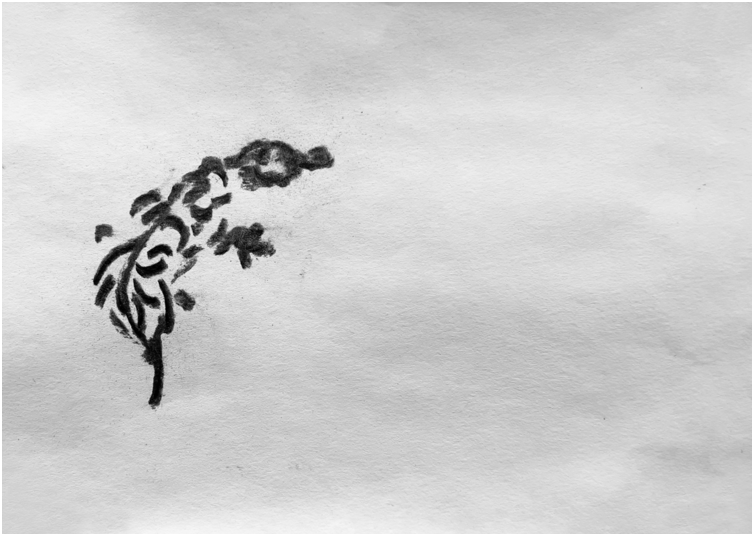
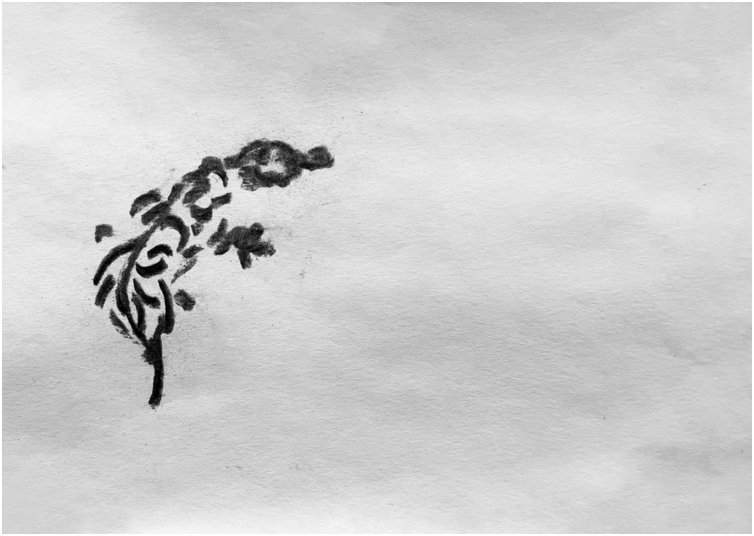
July 19. The sun is scorching. Tired and distracted, I sit in the workshop’s drawing session, next to the stone sink. Suddenly, without a thought, my hand reaches for a charcoal and starts looking for the badger on paper. When it stops, I realize that instead of bear paws there are tiny limbs, almost sprouting. In the evening at dinner, at the long group table, I pick up a fork red of gravy, resting on a napkin. I see the claws appearing in that blotting paper. The ones I could not find in my drawing. A sense of stillness invades me. After dinner we pour more water into the puddle. Maybe tonight I can get some sleep.Footnote 4
November 15. ‘How long does a “White of Saluzzo” hen live?’ I asked Achille today. He paused for a moment and then said, ‘I am not sure. They are not allowed to get old’. He breeds them in the Veterinary Department of the University of Torino. I adopt the leftovers. When Priscilla collapsed and died, she was five years old. Archimede and Isidora did not leave her body for the whole day. They stood there; their eyes closed at times.
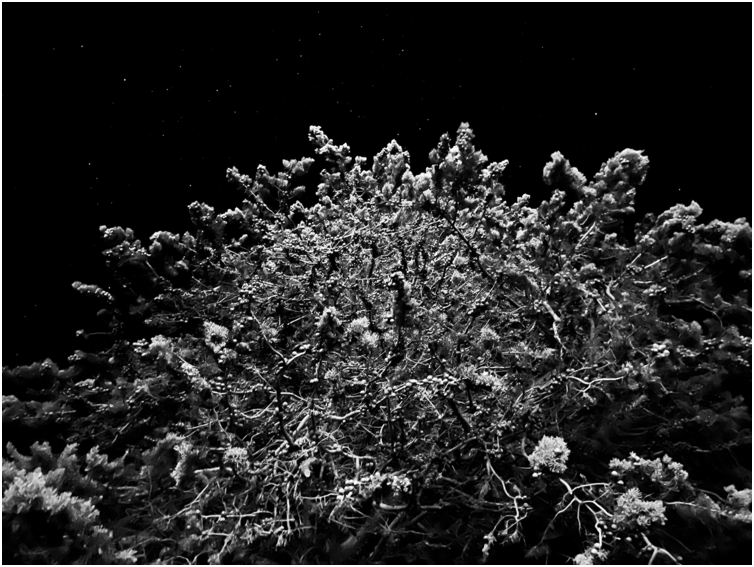
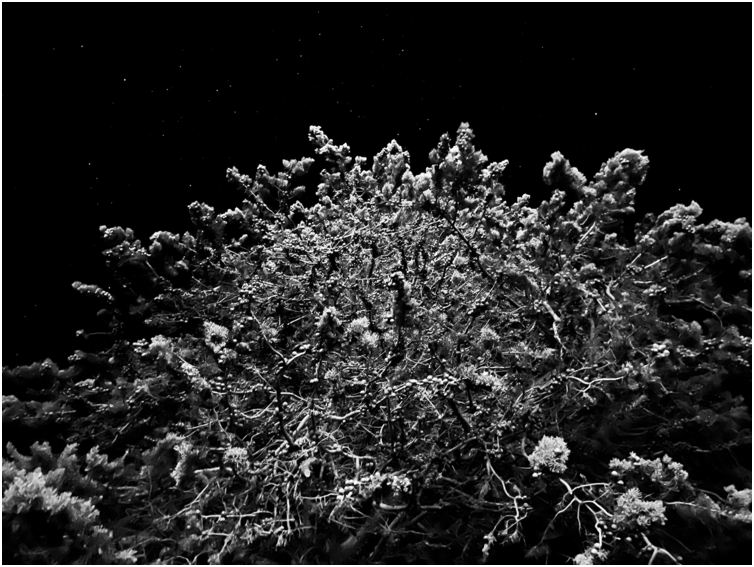
November 16. The work for AnimotFootnote 5 is advancing and in the afternoon, I go back to a dictionary, to look for the actual etymology of truth and trust. The common origin is *deru also *dreu-, a Proto-Indo-European root, meaning ‘be firm, solid, steadfast’. As I keep reading, another word comes to mind: tree. I check and yes, it comes from the same root. Actually, from the main root: the way older Sanskrit *dru. So, trust and truth are one, in a way, and they are rooted, quite literally, in tree. Around dinnertime, I walk out to feed the horses and donkeys. The air is crisp, and the sky is clear, lots of stars. On the way, I pass by the usual old cypress. He has been here way longer than me. I never pay attention to him. As I walk under his canopy, I feel the urge to pause and look up. I just stand there for a while, in gratitude. Then Zefira calls me up. Donkeys have some patience but not too much.
2023
March 12. In the morning, I walk with the donkeys to their pasture along the usual path. On my way back home a ray of sunlight shifts my attention to a distant tree. She is a fully adult oak tree, majestic and slightly isolated from the forest on the ridge. She was maybe spared to mark the margin between two properties, once separated. She has two main trunks and her position on a slight slope makes her very accessible, even to someone who is not that great at climbing trees. I find myself walking out of the path, drawn to her for a visit I never paid before. Once I reach her, I climb on her first ramification with no hesitation, on an impulse. I just sit there, taking in the view and feeling her contact, her solidity. I do not have any agenda. As silence pervades my being, water comes in. It comes as an unequivocal perception, a presence in my mind. I take it to be an empirical fact that the oak is sitting on water, and I with her. Words of intention bubble up to my conscious self, as a response to that perception: ‘The water is yours, and not mine to be taken’. I just sit there with that experience. As I climb down, I venture into the nearby woods, with the vague memory of a puddle where animals used to drink and bathe in the water surfacing from underground. Before the drought, we had a wildlife camera set there for a while, during an environmental assessment. I find it soon, and as I look down, I realize it is perfectly aligned with the oak tree downhill.
March 25. As I walk back from the pasture, I take the time to visit the oak tree again. I sit under her low branches, on the old winter grass. The perception of water comes up again, this time as a memory. I just look out and my breath slows down. The land is quiet. At some point in time, a full clear sentence pops into my mind, as in a dream: ‘Plant some trees around me and I will teach them to reach the water.’ Words surface in the form of an invitation coming from the oak tree. I smile thinking I am giving voice to a tree – or it is the tree giving voice to my being? In dreams the question is pointless. As I walk back a resolution falls into place. In the nursery, a family of very young trees is waiting to find a permanent home. When I collected them from the woods around the land, two years ago, I knew they would not have a future where they were born. But I did not know what I was saving them for. There was no why.
March 27. Silvia is at work today, helping me plan the vegetable garden for the summer. We take the time to walk to the oak tree and I tell her what happened. As I retrace the story, I hear myself telling her: ‘It feels like a call from the land, to help coping with the drought. We just have to pay attention – attend, being present – and respond.’ To which she smiles replying: ‘Well, that’s what Indigenous people do, all the time’. She is young and has been living for a few years in the Amazon of Ecuador. The experience informs her way of being and working. ‘Planting trees is planting water’, she adds. We agree to join forces in the fall. She will help to design the forestation. As we are having tea, we appreciate the irony of the whole situation. Silvia was invited as research fellow for a project on regenerative agriculture that I wrote more than a year ago.Footnote 6 The project was funded early this year and we agreed that in the fall she would design an edible forest next to the vegetable garden. We did not imagine at the time that Pianpicollo would have other priorities. ‘It looks like I have been recruited by the land herself’, she tells me with enthusiasm. At night, tree-trust-truth comes to mind again.
May 7. On my way home I see the rotten pumpkin once again, with a hint of embarrassment. I forgot her weeks ago on a stonewall, resting on a piece of newspaper. I had found her going bad in the storage space. As I was taking her to the compost pile, I was distracted by chickens walking by, asking for water. Nourished from within, her own seeds have sprouted into dozens of tiny plants. A display of renewal speaking to my disregard. After I move them into a pot, I do my best to detach the newspaper from what is left of the original pumpkin, so that it does not end up in the compost. When I decide that the effort is enough, scraps of paper are still attached to the stone surface. Detached words appear to create a sentence: Galileo abitualmente spara. Galileo habitually shoots.
June 5. I woke up today with words in my head, coming from a dream I could not remember. Senza sforzo alcuno, come l’acqua. Without any effort, like water. A few repetitions occurred before I was fully awake.
June 27. Brus has been here for five days now. As we meet for breakfast he says, ‘I had a dream’. His friend Lupe stares at me, as to prepare me for something significant. Spanish is deceptive, it creates an illusion of closeness, forced by colonization. Words do not quite mean what they seem.
Brus is the first of his community to leave the forest, he told me when we first met. His village is into the depths of the Amazon, at the boundary between Peru, Brazil, and Colombia. He has been traveling with his artwork through galleries and museums around Europe, and he is now having coffee in my kitchen, as an invited artist in residence. He travels with the help of Lupe, a filmmaker from Lima, and his teacher plant, tobacco. ‘I dreamt of a powerful spirit, a water spirit, ruling onto this land’, he says. ‘The spirit told me: Eso es lo que ay. (This is what there is)’. When I ask what the spirit meant, Brus answers by simply repeating Eso es lo que ay. Pointing to a vein in his left wrist, he adds, ‘He showed me a vein’. I dare asking if he remembers the spirit living in a specific place, and if he can take me there. He says yes, and yes. We walk out in silence and after a little while we end up in the slope above the oak tree: ‘The spirit is here, underground’. I tell him about my experience. He is unsurprised. I take him to the puddle. Looking down at the path to the oak he says: ‘This is the vein’, and adds: ‘This place is sacred, it is where all beings meet. Eso es lo que ay’. On the way home I hear his voice behind me: ‘All you have to do is what you are doing’.
August 3. The puddle near the oak has been dry for weeks. Before sunrise Juan and I take the horses and donkeys to the pasture in the shade. They have only a few hours before the heat and the flies force them back to the stable. On the way back we decide to follow the path of the wild boar into the woods downhill. They rub themselves against the trunks, marking them with mud as they move. Mud means water. We reach two puddles lower down in the valley. One of them shows only signs of humidity, the other has still some water. We spend some time in silence there, sharing relief. Juan moulds some mud into a small sculpture. Then the flies remind us that we need to move. We leave the sculpture behind, as an offering. A sacred place is where all beings meet. I keep thinking about it.
August 5. In the late afternoon we work in the vegetable garden. As the sun goes down mosquitos force us to leave. We realize that when Juan began his summer visits, only a few years ago, there were none. Change is happening fast. As we walk back home, I feel the urge to bring water to the oak puddle. Juan can help me. We fill the big glass bowl and load it onto the wheelbarrow. The puddle is far and uphill. When we get there, we are both out of breath, feeling the exhaustion of the day. As we start pouring, a wave of emotion hits me, and I end up bursting into tears. Juan stands on the other side of the puddle in silence. Then he hugs me, and we sit together until it is dark. On the way back we both feel observed by the woods.
August 6. At breakfast, Juan mentions we could invite his friends from Colombia to help with the forestation in the fall. I sense his love for them. They are family, since he made a documentary about their relationship with medicinal plants, years ago. As we speak, the forestation becomes a collective ritual of three weeks. Kamëntsá people would be powerful allies, with their deep connection to land and elements. Artists, scientists, and farmers that have been working in Pianpicollo over the years could be invited. An extended family reunion. We could plant all the three hundred trees that are waiting in the nursery. The funding could be possible with some donations to complement the grant. It could become a celebration for and with the land, sharing knowledge and experience to help bringing the water back. The plan is ambitious. As Juan makes another coffee, we decide to consult the I Ching (Figure 13.1).Footnote 7
Hexagram 48, The Well. Above K’AN THE ABYSMAL, WATER. Below SUN THE GENTLE, WIND, WOOD. Wood is below, water above. The wood goes down into the earth to bring up water. The image derives from the pole-and-bucket well of ancient China. The wood represents not the buckets, which in ancient times were made of clay, but rather the wooden poles by which the water is hauled up from the well. The image also refers to the world of plants, which lift water out of the earth by means of their fibers. The well from which water is drawn conveys the further idea of an inexhaustible dispensing of nourishment.Footnote 8
Hexagram 48, The Well.

August 7. We call Pastora in Sibundoy. I tell her the story and she is touched. ‘When the elements call, we have to answer’, she says while thanking us. She is honoured to join and will extend the invitation to another member of her family. She comes from a lineage of Kamëntsá shamans, working with yagé as teacher plant. ‘Healing the land’, she adds, ‘is healing the Earth. There is no difference.’
November 25. As I am finishing to protect the young trees with individual iron nets around their tiny trunks, I go back the incredible collective action of planting them. Everybody we wished for showed up. It was a remarkable learning and healing experience, way vaster than any of us could imagine. Dissolving boundaries in all realms and confirming that meaningful change can only be mutual. Among the many insights, a vision is taking shape within, like an inner sketch drawn in conversation with the land herself – with all her inhabitants. What if we could move western science out of its obsolete, suffocating shelter – from which ‘Galileo habitually shoots’ – and let it breathe with other ways of being in the world? What if we valued analogy over analysis, equanimity over hierarchy? What if we learned to perceive and witness correspondence, instead of struggling for causality? What if we gave up the need to predict the future, in exchange for the ability to respond to change, as it happens? What if we cherished kairós over chrónos?Footnote 9 We could experience a kind of action that knows no doubt and flows like water, without any effort (Figures 13.2 and 13.3).
Tree at night. Alice Benessia 2022, from the series ‘Ask again’. Digital color photograph. 16-11-2022 / 7:50 pm / 4°C.
Badger, Alice Benessia 2022. Charcoal drawing on paper, 20,5 x 14,5 cm 19-07-2022 / around 4 pm / 32°C.


 Open access