There seems to be a well established opinion that The Polish Peasant in Europe and America has been one of the founding works of American sociology [Blumer Reference Blumer1939; 1984; Caradec Reference Caradec1999; Guth and Schrecker Reference Guth and Schrecker2002; Haerle Reference Haerle1991; Ross Reference Ross1991; Volkart 1951; Zaretsky Reference Zaretsky, Thomas and Znaniecki1984]. This opinion has been reinforced by the widespread recognition of interpretive approaches in sociology as well as by the growing interest in the problematics of ethnicity, race, and migration. The author of the preface to the 1984 edition of the work, Eli Zaretsky, wrote that it was “the first American work to study ethnicity systematically and to value it positively” [1984: 6]. Norbert Wiley views The Polish Peasant as a book with a clearly and consistently democratic, egalitarian message and emphasizes that the work, contrary to dominant opinions, defined ethnicity as a culturo-logical, and not a biological, concept [2007: 137]. Its contribution to empirical sociology includes a systematic and methodical use of documents: letters, autobiographical accounts, journalistic stories, and official reports. Their detailed interpretations still inspire those who use qualitative research methods [Blumer Reference Blumer1939: 29-53; Stanley Reference Stanley2010]. In spite of this influence, the tradition of symbolic interactionism tends to follow the theoretical ideas of George Herbert Mead and to adopt the empirical heritage of phenomenology. The Polish Peasant remains as much a formative work as a marvel of a partly forgotten classic.
The purpose of the following paper is to reclaim the theoretical importance of the work by doing justice to the authors’ complex and partly divergent self-explications. This will be attempted through the establishment of the following theses:
(1) The Polish Peasant comprises themes and arguments from the previous works of Thomas and Znaniecki.
(2) The book may be interpreted as an attempt to reorder and reconcile their partly contradictory positions.
(3) In their dialogical cooperation, Thomas and Znaniecki used the strategy of the mutual adjustment of their original concepts by introducing them into more complex schemata and by avoiding biologistic and culturalistic reductionisms.
(4) In most general terms, The Polish Peasant depicts the genesis of social values by explaining simultaneously: a) the complex mechanisms of individual adaptations to new situations, and b) the internal readjustments of relatively stable value systems.
(5) The creative efforts of individuals, described in The Polish Peasant as prerequisites of effective adaptations, result from a reflexive self-observation which allows the inference of action principles from one’s own new practices.
(6) The resulting concept of socially induced creativity itself requires a sophisticated integration of Thomas’ adaptational approach with Znaniecki’c creativistic philosophy.
It will be argued that the original views of both authors on human nature, individual action and the role of science were not just different, but contradictory. They shared neither philosophical assumptions nor perspectives on the social world. But if it were so, how could they succeed in writing a coherent work? It seems puzzling that Znaniecki could write: “Our divergent intellectual interests never conflicted” [1948: 766]. Did they transform their previous concepts, synthesize them or rather give them up?
As I shall argue, these questions can be answered through a careful analysis of the structure of The Polish Peasant and its internal dialectics which may explain why, in general, “we tend to be influenced by dissent from, as much as acquiescence in, the systems of other persons” [Thomas Reference Thomas1973: 249]. I suggest that the monumental work should be approached simultaneously from the respective standpoints of both authors, that is, in the same way that Thomas and Znaniecki interpreted their research data. In his comment on the work, Thomas [1939: 173] stated:
In my course on social attitudes which I had been teaching six or eight years before this study was undertaken, I had been evolving psychological concepts and these were transferred to The Polish Peasant along with those of Znaniecki, with the result that, with the exception of young men who are writing text books, everybody who refers to the work pays no attention to the data—to what is going on in the process, to what is happening.
This self-interpretation may indicate that the Methodological Note, more than other parts of the book, reflects implicitly the divergence of Thomas’ and Znaniecki’s perspectives while the solution is to be sought in the evolving interpretation of data, which mirrors the dialogue that engaged the two scholars’ divergent thinking.
In the following sections, I will start with a synopsis of Thomas’ and Znaniecki’s works prior to The Polish Peasant, in order to indicate the elements and problems which played a significant role in their cooperation (2). It should be clear that the general theoretical structure of the discussed book has more in common with Znaniecki’s ideas, but also reflects Thomas’ clearly scientific, psychological, rather than philosophical, approach to social problems. Thus, the analysis of The Polish Peasant (3) will focus on the basic elements of social theory: the selection of the research object (3.1), the concepts of causality and action (3.2), the theory of action context (3.3), the theory of social order (3.4), and finally the theory of social personality which also serves as a theory of social change (3.5). Since the crucial conclusion of The Polish Peasant is a concept of individual autonomy, as a reorganizing force of social order, the work may be interpreted as a mature, pragmatic alternative to the tradition of Durkheim and Parsons. In the conclusion, two different interpretations of The Polish Peasant will be critically discussed: Abbott and Egloff’s [2008] and Blumer’s [1939].
Thomas’ and Znaniecki’s divergent perspectives
Those who take up the challenge of a comprehensive interpretation of The Polish Peasant encounter several difficulties. The most obvious problem concerns the double authorship of the book. Although both William Isaac Thomas and Florian Znaniecki figure as the authors and both clearly declared to have had equally contributed to its content [Thomas Reference Thomas1973: 249; Thomas Reference Thomas and Blumer1939: 83; Znaniecki 1948: 766], neither of them explained precisely which passages should be assigned to which of the scholars. On the one hand, we know from Znaniecki’s letter to Kimball Young [Znaniecki Archive II Pers. doc. vol. 1, No 275] that he was the one who wrote the Introduction to Part I and the Methodological Note which had been drafted three times by Znaniecki as a result of the authors’ discussions.Footnote 1 On the other hand, the idea of the work was initiated by Thomas who probably invited Znaniecki in early 1913Footnote 2 to cooperate on a work on Polish peasant society and its modernization. Thomas had been collecting letters for the book since 1909 when he obtained financial support from Helen Culver. Znaniecki, who was better acquainted with the Polish peasantry, was initially a translator and assistant, but probably encouraged Thomas to extend the original project of publishing a mere collection of letters into a theoretical work on social change.
The tendency to give Thomas more credit for the work has been criticized by Harold Orbach [1993: 145], who claims that before meeting Znaniecki, Thomas “had not developed a clear conceptual framework for analysis.” Evan A. Thomas [Reference Thomas1992] views the book as composed of relatively incommensurable contributions reflecting the authors’ different interests and origins. Norbert Wiley [2007: 139] went even further in claiming a prominent role for Znaniecki, writing that it was Znaniecki who had most contributed to the theoretical aspect of the work and created an original variant of pragmatism. In the case of the distinction between “family” and “marriage-group”, authorship has been clearly attributed by Thomas to Znaniecki [1927: 156] and we can assume that the latter also played a crucial part in elaborating many other ideas linked to Polish culture. Evan A. Thomas [1992: 73], who succeeded in indicating specific cases in which we can isolate the respective contributions of Thomas and Znaniecki, explains: “It is necessary, and worthwhile, to distinguish their separate contributions to The Polish Peasant because this leads to a more complete understanding of that work as well as the authors’ previous and subsequent writings […] In the area of social analysis, which is my subject here, Znaniecki made important contributions to the work. Several of Thomas’ social analytical concepts were refined and systematized by Znaniecki, which made the work significantly different from Thomas’ other writings; differences in the authors’ interests and motives for writing also served to make this aspect of their work distinctive.”
Whatever the exact amount of work and invention of each of the scholars, and whatever the sources of specific concepts applied in the book, the question still remains as to the roots of the general theoretical framework and methodology of the work. It is not the intention of this paper to provide a definitive answer to this question, but rather to demonstrate that The Polish Peasant may be interpreted as a continuation of the previous works of Thomas and Znaniecki and a reflection of their dialogue. In my view, it is the only interpretation that does justice to Thomas’ and Znaniecki’s own declarations, avoiding any arbitrary attributions of the work’s concepts and ideas to one of the authors while ignoring the other. It also helps to view the work as a consistent whole rather than a loose synthesis of fragmented ideas and, at the same time, to understand its internal tensions. A good example is the relationship between values and attitudes. One of the earliest reviewers of The Polish Peasant, Ellsworth Faris [1951: 876], ascribed the concept of attitudes to Thomas and that of values to Znaniecki: “Znaniecki, a philosopher, was keen on values in which Thomas had little interest; and Thomas liked the word attitude to which his colleague had objections.” Admittedly, Znaniecki [1939: 93] preferred to use the concept of tendencies instead of attitudes, but only several years after having written The Polish Peasant when he realized, perhaps in reaction to Blumer’s critique [1939: 24-25], that if “attitudes” are understood as states of consciousness, they are “vague, ambiguous, and confused.” Faris probably based his interpretation on the following words of Znaniecki [1948: 767]: “I tried to synthesize—not very successfully—his [Thomas’] theory of attitudes with my theory of values (which I had previously developed in my Polish works).” Apparently, Faris took it at face value that the synthesis was a kind of mechanical attachment. In fact, it required a sophisticated synthesis of two different theories involved in Thomas’ and Znaniecki’s ideas. However, the synthesis could not succeed if there had not been a number of parallel interests and concepts in the earlier works of both authors.
To begin with differences, which seem to be much more striking, it may be generally suggested that the two authors ask their questions from a different perspective. Thomas adopts a scientific worldview as a set of presuppositions which allow him to progress from the question about the social ramifications of natural instincts to the question of the conditions of social control and, finally, to the problem of knowledge development as the main instrument of control. Among these presuppositions are the possibility of a causal explanation of social facts, and the requirement of an empirical examination of hypotheses, even if Thomas usually used his material in an illustrative rather than falsifiable way, for example while tracing the origins of race-prejudice. Znaniecki, on the contrary, was not content with any methodological assumptions and, instead, was keen to look for the ultimate sources of such assumptions. For this reason, he proceeded in a reverse manner: the concept of the self-controlled actor was not what he arrived at, but was rather the starting point of his inquiry. He asked how a free, non-restricted action could create the realm of thought and constitute values manifested in the objects of the cultural and natural world.
William Thomas
An adequate interpretation of The Polish Peasant must account for the striking fact that Thomas’ early work does not reveal a strong interest in abstract aspects of theory-building and in the autonomy of value systems, even though both themes permeate the book written with Znaniecki. While teaching at Oberlin College, Thomas’ fascinations revolved around literature and old philologies. After taking the opportunity to teach social sciences in Chicago, he became absorbed in biology and social psychology, in particular in the biological sources of behavioral differences. His early view on culture betrays a tendency toward biologistic reductionism: “The first expressions of culture, feeble, unformulated, and unreflective in their nature, are incidental accompaniments of physiological desires and of their satisfaction through appropriate forms of activity” [1898: 754]. In the same text Thomas [1898: 754] argues, by referring to Edward Westermarck, that “the very powerful instinct of copulation-for-reproduction disappeared completely in the human species with the introduction of memory, imagination, and clothing.” Men, as interested more in making unfamiliar alliances than in active sexual behaviors, are more mobile and take advantage of their motor capacities, while women create stronger social ties with children and become more locally influential. In Thomas’ [1898: 755] words “we find society literally growing up about the woman.” He argues that the limits of the stationary social bonds, as created by women, and the potential of power specific to men’s territorial expansion, may explain the growing disproportions between the sexes. The conflict turns into a competition between the principle of achievement and the principle of descent, but as far as societies are “substituting other forms of decision for violence” [Thomas Reference Thomas1898: 776], the classes which were inferior on the motor side (women and slaves) regain their social position. The old conflict between achievement and descent turns into a conflict between violent and negotiated methods of action. As opposed to the view proposed later in The Polish Peasant, Thomas argues that social structures evolve by assuming new and more sublime forms, but cannot divest themselves of their biological roots.
In The Psychology of Modesty and Clothing [1899], the question of the genesis of shame becomes for Thomas an opportunity to develop the first relatively simple outline of his theory of action. He explicitly follows Darwin in the description of emotions as physiological preparations for conduct, and argues that human beings entertain, apart from the instinctive life, “the freedom of initiative secured through an extraordinary development of the power of inhibition and of associative memory, while, at the same time, this freedom of choice is hindered and checked by the presence of others” [Thomas Reference Thomas1899: 248]. In his consistent attempt to deduce specifically human phenomena from biological premises, Thomas differentiates between two bodily attitudes: habit, that is, an unconscious repetition of behavior, and attention––an affective condition enabling the mind to find a more adequate response to a new situation. Similarly to Dewey and Mead, with whom Thomas was in a regular intellectual dialogue at that time, he attempts to account for the fact that “the same stimulus does not produce the same reaction under all circumstances” [1899: 251] and, on the other hand, for the fact that the choices, especially in sexual interactions and mating processes, are not necessarily based on judgments but on temperamental traits that are not “clearly analyzable in consciousness” [1899: 252].
Thomas’ interest in the biological sources of behavior was gradually replaced by an interest in human control over the environment and in the emergence of cognitive novelties [Volkart, 1953: 349]. In search of an adequate concept of cultural conflict, which would later become the central topic of The Polish Peasant, Thomas turns to games and other simple forms of contest which, being rich in attention, strain and risk, seemed to indicate the source of conscious and creative type of action. In The Gaming Instinct [1901] he critically discusses the cultural theory of contest genesis and puts culture into the context of the gradual prehistoric emergence of psychic reactions to specific stimuli. In Thomas’ [1901: 751] view, as opposed to Znaniecki’s, the types of these reactions “were once for all developed and fixed.” Only the objects were still changing and creating a variety of cultural forms in which a relatively narrow range of attitudes could be exhibited: sports, wars, song contests, intellectual struggles.
Pursuing the question of how we are influenced by others, Thomas argues in The Sexual Element in Sensibility [1904a] that there are two basic sources of sensitivity to social opinion: the acquisition of food and reproduction. Again, biological desires stimulate, in Thomas’ view, the need for recognition and women’s favor, which are eventually expressed in numerous cultural forms. Sensibility to the opinion of others is experienced by individuals as a problem of adjustment and calls “for more of intelligence than emotion” [1904a: 62]. But in spite of this necessity of reason, human beings tend to develop excessive sensitivity and mania, a fact which may only be explained by the dominance of sexual pattern involving an incessant emotional engagement. Probably inspired by Mead and elaborating on his ideas, Thomas comes to the conclusion that cognitive impressionability is more connected with the struggle for food while appreciative (emotional) impressionability grows out of sexual life. Although both open up possibilities of social control over the individual, it is only the latter which constitutes the basis of an altruistic morality and, in consequence, of “the ideal sides of life” [Huebner Reference Huebner2014: 103-104].
In The Psychology of Race-Prejudice, Thomas [Reference Thomas1904b] claims, in parallel with Dewey and Mead, that at an advanced level of complexity the adaptation of the organism transforms into active control involving the anticipation of future events. Since anticipation and the subsequent choice of action cannot take place without the mental operations of memory and comparison, the ensuing costs of time and effort put a strain on conscious attention. The requirements of what Gregory Bateson later called an “economy of attention” foster the formation of fixed attitudes combining cognitive evaluations of objects with emotions. These fixed attitudes tend to be hostile to the entire outer world, except for islands of the most intimate primary group relations which become a portion of the Self, “standing with him against the world at large” [1904b: 594]. The division of the world into Self and Not-self produces biased patterns of perception resulting in cognitive selections, which may explain the emergence of the race-prejudice, group thinking syndrome and biased accumulation of knowledge [1904b: 596]. This explanation corresponds very well with the concept of the social stability of peasant groups and cultural systems, but fails to account for their constant reorganization which would become one of the main themes throughout The Polish Peasant.
One of the main obstacles to the explanation of social change in Thomas’ early works was his skepticism towards collectivistic approaches. In The Province of Social Psychology [1905], Thomas reveals an overt criticism of the idea of social consciousness by depicting the Spencerian “social organism” as a “fantastic and futile” concept [1905: 445]. For him any valid theory of the accumulation of knowledge must explain its origins in the individual mind. Obviously, the individual mind cannot be understood apart from the social environment, but it is its own way of dealing with new situations and conflicting demands that brings the necessity of invention to the forefront of consciousness. By new situations Thomas means those in which old habits are broken, confronting an individual with a choice of either sticking to the habit or readjusting it. The dilemma turns, subsequently, into a social choice, when others must either defend the old behavior or imitate the invention. The prevalence of the first strategy characterizes traditional societies and fosters stability at the cost of dysfunctionalities, while the latter indicates the growth of individualism. Thomas argues that individualistic culture is afflicted by an inevitable conflict between the growing complexity of accumulated knowledge and the growing pressure of inhibitions in larger associations of people [1905: 449].
But behind this consideration a more fundamental dilemma comes to light: how to reconcile biological determinism with cultural diversity? The tentative answer, that behavioral mechanisms are universal, but operate in different contexts, led Thomas to a long preoccupation with savage societies in which he sought to discover the exact mechanisms of the flexibility of attitudes. In the Comment to Part III of his Source Book for Social Origins [1909b] he seems to have high hopes for the human ability to control life from within, and quotes the following sentence on a Pawnee ceremony from a report of the Bureau for American Ethnology: “A man’s life is an onward movement. If one has within him a determined purpose and seeks the help of the powers his life will ‘climb up’” [1909b: 436]. In an earlier broadly discussed text The Significance of the Orient for the Occident [1907], Thomas starts with the previously observed, biologically rooted conflict between group personality and the hostile world, and demonstrates, with ethnological examples, the ways in which attitudes may be transformed over time. Three basic mechanisms described in the text are: cooperation, rational choice and a habit of change. They may all be viewed separately, but also as constituting a sequence, in which the contact of mutually hostile groups leads to cooperation, which, in turn, allows the individuals to recognize advantages and rationally seek them in further interactions. The result may be a new attitude of change-orientation, called by Thomas “a habit of change”. It may be argued that a society which adopts such an habit becomes more creative and, by experimenting in cases of crisis, partly by chance, opens the way to new social developments. But the increasing control has its price, coming into view along with the enlargement of groups and the differentiation of occupations. The instinct of solidarity loses its original power and the group personality breaks up. In consequence, the divided consciousness may become dangerous as it fails to secure social equality, individualized education and control over the direction of social process. Polish peasant society, which preserved its old habits, but at the same time has been confronted with a new individualistic culture, could provide the ideal case of contradictory developments diagnosed by Thomas.
In summary, Thomas seems to formulate the following dilemma: either the preservation of old habits maintains social solidarity at the cost of cognitive failures, or the habit of change brings about creative individualism at the cost of social disintegration. We can also conclude that Thomas’ analysis operates, in his early works, on three levels: that of natural behavior, where instinct is the principle to which all mechanisms may be reduced; social control governed by the principle of individual adaptation; and finally, social knowledge which, in order to advance, needs individual freedom from social bonds. Eventually, the levels of natural behavior and of social knowledge prove to be incompatible—not in terms of theoretical incompatibility, but because the biological principle of self-preservation inhibits, in its social consequences, the principle of creativity. It should be emphasized, however, that if the latter overcomes social obstacles, science, as its manifestation, must find new forms of social control to adapt society to the new situation.
Florian Znaniecki
Unlike Thomas, Znaniecki only gradually discovered the importance of the theory of action. It was rather the question of the nature of moral reality that defined the leitmotif of his early writings. In his first essay, Philosophical Ethics and the Science of Moral Values, published in Poland in 1909, he ponders the question of how to determine moral principles on an empirical basis and how ethics is possible as a science. The text reflects Znaniecki’s early preoccupation with French social theory, and discusses Durkheim’s, Guyau’s and Levy-Brühl’s works. Znaniecki explicitly shares Wilhelm Wundt’s ambition to explain ethics in universal psychological terms. He asserts at the outset that moral reality, understood as a set of universal principles, is not empirically accessible, even though it is logically possible. His further inquiry focuses on the form of moral principles and on the elements they necessarily involve. The first group of elements may be categorized as the psychic phenomena governed by causal laws, the other group as a realm of goals based on an act of faith. Both groups constitute internally comprehensive systems, but are mutually incommensurable. If we understand ethics as a moral craft grounded in the psychological knowledge of human motives, no subsumption of these motives under a paramount goal seems to be possible. On the other hand, by insisting on the supremacy of a goal-oriented chain of norms, we render the sphere of motives irrelevant [Znaniecki 1987 [1909]: 13]. The incommensurability of causality and teleology is the difference between the observed epistemic subjectivity of motives and the claimed objectivity of ultimate goals. There is, however, one way out of the puzzle, and that consists in acknowledging both concepts as points of view rather than realities. But what is then the uniting reality making both points of view intelligible? Znaniecki argues that we can easily combine motives and goals as parts of our experience, and look at the results of action either as determined by motives or, alternatively, as facts from which values may be derived. Although Znaniecki was not yet clear on the precise definition of value, he realized that we refer our accomplishments to ourselves and thus individually create a system of values. It would be certainly wrong to understand values as goals that can be attained once and for all. They are rather meanings we attach to results, allowing us to state new goals and to experience the world as a realm of action. Goals are not values in the abstract; they become values in the process of action, when they can start to motivate another action. In this theoretical context, the content of values cannot be determined. That is why Znaniecki concluded his text with a negative statement about the possibility of scientific ethics: values are too differentiated to find anything they could have in common.
The focus on practice and on the dualism of the causal and ideal points of view remained central throughout Znaniecki’s work, including The Polish Peasant. The relation between these two perspectives was a topic of several texts he wrote before meeting Thomas. In Thought and Reality [1987 [1911]], an article which was later included in a revised form in Znaniecki’s first book Humanism and Cognition [1912], he begins by distinguishing two approaches which might unite thought and reality: direct experience and a theory of knowledge. In the Elements of Practical Reality [1987 [1912]], a text published along with Humanism and Cognition, Znaniecki’s interest in practice comes explicitly to the fore. Coming back to the conclusions from The Philosophical Ethics, he defines the practical reality as the epistemically primary one and, pursuing the question on the essence of action, he distinguishes between two perspectives from which it can be viewed. The internal point of view describes practice as a process that starts from various systems of values embracing all experience. The external perspective objectifies practice and aims to construct its theory. Both approaches are in need of a reference point, but the internal must remain self-referential, while the external lacks such a point as it cannot reach any moral conclusion. Aware of these limits, Znaniecki introduces the concept of value. Although it has often been suggested that values are specific kinds of goals or preferences, which can be thought of in a timeless mode, Znaniecki insists on their strictly practical character, which manifests itself in an incessant change of objects. For instance, the past and the future are only derivatives of the practically established present, reflecting the magnitude and directions of the value system. Since all points of view, such as religion, science, art, and morality, emerge out of practice, they cannot define nor explain values. Therefore, values are not causal and cannot be imagined nor believed in a religious fashion. In contrast to things, they can only be defined as orders of perceptions, never as their timeless syntheses.
Obviously, values may be shared by a group of individuals and, even though they cannot be stable themselves, there can be stable relationships between them. These relationships constitute “society,” while by “consciousness” Znaniecki means the values “revolving around an individual.”
Both concepts had a bearing on the method of biographical studies in The Polish Peasant: the only method which would allow Znaniecki to trace the careers of values. The resulting methodological postulate was clearly formulated in The Elements of Practical Reality published before the meeting with Thomas: “it follows an important suggestion for the method of sociological research. Any social value must be taken in its becoming […] all ‘pictures’ of social life at a given moment, so numerous especially in the history of literature, history of art etc. have absolutely no scientific significance” [1987 [1912]: 111]. Further, Znaniecki claims to abandon “the method (especially widespread in comparative research) that takes social values as things, and takes institutions, beliefs, and laws as something unchangeable, preserving the same content over its whole existence” [1987 [1912]: 111]. As one of the possible reasons for approaching social phenomena as if they were things, Znaniecki mentions the widespread focus on savage societies dominated by habitual, unconscious mechanisms of stabilization. By indirectly criticizing Durkheim, Znaniecki also formulates a position that is at odds with Thomas’ perspective.
At the same time, Znaniecki, contrary to Thomas’ main conclusion, relativizes the difference between individual and society. He regards both as derivatives of the same reality of values. In order to defend this position, in 1913 Znaniecki wrote an article On the Development of World and Man [1987 [1913]]. In this work he outlines the shift of social theory from a deterministic to an indeterministic and processual view of man. Science is depicted as less and less adequate to the accelerating processes of self-organization. However, the release of action from the direct dependence on environmental stimuli was, in Znaniecki’s views, only the first step in a much broader emancipation of thought. As an example, Znaniecki mentions the pragmatist model of action which includes consciousness as a function of adaptation. Along with the ability to anticipate the future and to control the environment, an independent scientific perspective on the world became possible. Science emerged as a whole, as a coherent system of relations between methods, models, and concepts. Znaniecki argues that the increase of internal control in a system, followed by the decrease of external influence, produces novelty and that the process accelerates. As opposed to Thomas, Znaniecki suggests, however, that science is at odds with the creative principle in that it mostly transfers old knowledge and promotes a deterministic view of the world and human culture. In the background of this argument we may find the juxtaposition of thought and its products: ready systems of interrelated contents which will be later exemplified in The Polish Peasant. While thought as a process is creative, its products are not; and they can only be reproduced, reiterated or accumulated.
At the heart of Znaniecki’s inquiry lies the search for the locus of creativity. On the level of historical evolution we find nature as the first stage of emergence––followed by consciousness, society, culture, and ideas––but the direction of inquiry is reversed, so that nature is already mediated by the products of all the intermediary stages of evolution. As Znaniecki [1987 [1913]: 181] puts it, “we create the past anew” and we think to understand nature better than culture, because nature itself is a product of scientific elaboration, while culture is to a much larger extent a part of the creation process and imposes its demands on us. Similarly to the late George Herbert Mead, Znaniecki reverses the usually assumed direction of determination: the extent of the present, as well as the past and the future, is determined by our present action. But how do we come to the extension? Znaniecki adopts here an interpretive sociological perspective: since society consists of a variety of complex meanings, individuals who are confronted with this heritage become able to reach further and further along the trajectories provided by the growing complexity of meanings. By doing that, they connect thoughts in new ways or rarely introduce completely new thoughts. In an individualistic culture, transformations of meanings, which are not mediated by society, become much more likely and accelerate the social construction of the world by novel actions. However, these processes are at odds with the much slower formation of meanings and their objectification in socialization processes. Znaniecki’s previously formulated thesis on the unity of society and individual breaks apart. It is only thought which produces unity, but its prerequisite is a social plurality resulting in a fragmentation of the world.
In this precarious context the question of common moral values becomes more urgent. Hence, it can be no wonder that Znaniecki took up this topic in his article Forms and Principles of Moral Creativity [1987 [1914]]. As in his very first text on the problem of philosophical ethics, Znaniecki denies upfront that the content of moral norms can teach us anything about morality. He proceeds by defining action, which is the main object of moral principles, and by asking about moral creativity in the course of human conduct. He rejects both purely physical and purely psychical concepts of action, and reaffirms values as its primary reality. In other words, action is primarily a relationship between evolving empirical contents.
If we look at action from the perspective of its function in the realm of values, it creates new contents [1987 [1914]: 219]. However, the notion of creativity should be clearly distinguished from the notion of change. The former involves a replacement of old content with new––a rare case in the representational reality of values. Old content is usually still existent as a representation when the new one appears in its place. Thus, each action is located in the spectrum ranging from natural change to ideal creation. Whatever the forms in which empirical content may sustain itself, no action may be creative without dealing with previously given material, that is, without preexistent values. Each creative contribution consists in their reorganization [1987 [1914]: 221]. But why do individuals make an effort to modify the value-settings they find in their experience? Znaniecki’s point is that these settings must be flawed in some sense—deficient or incoherent. An experience of imperfection implies––logically, not causally—a production of a new value which, in turn, changes the situation of the individual. In this way, Znaniecki’s creativistic theory of action goes beyond the static picture of normative orders, and embraces the creation of norms by means of moral ideals. Since an ideal is a new norm, that is, a norm in the process of creation, it is neither known nor classifiable as good or evil. It is defined as a unity of course and goal, a pursuit of something unknown, but gradually revealing itself. In this creative process the new norm cannot be objectified nor imposed and as such it remains individual.
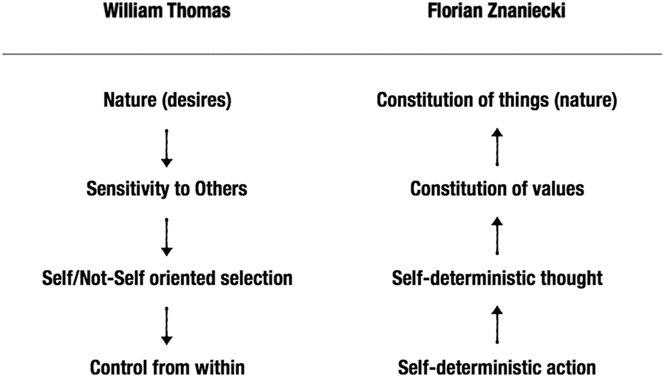
We can conclude from the synopsis of Thomas’ and Znaniecki’s works that the points of departure and resulting problems are different in their respective theories but, interestingly enough, only the directions of their reasonings are reversed (see figure 1). Even if they used different jargons, they dealt with the same entities: 1) nature as it is viewed by science, 2) a human being who is able to control its action from within, and 3) a selective thought which either redefines old meanings or invents new instruments of action in the face of disturbed habits. One could say that they described the same reality from two different perspectives, while realizing two different goals.
The order of explanation in Thomas and Znaniecki

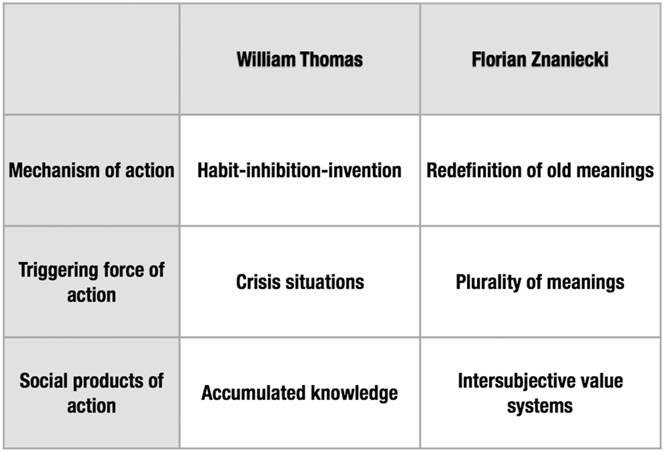
The insight into the similarity of their subjects reveals further parallels (see figure 2). In particular, each demonstrated that the accumulation of knowledge is as much a prerequisite of solidarity as an obstacle to new ideas which tend either to break old habits or to reorganize social values and meanings. Thomas sees, in the context of modernization, that social solidarity is endangered by individual creativity, so that new forms of control have to be invented. Znaniecki focuses on the acceleration of the creative process and, like Thomas, but in a different idiom, formulates the need for a new, creative morality. The essence of this morality is supposed to lie in a synthesis of goal and pursuit, a subordination to the search of a missing element of the value system. Thomas draws a similar conclusion as far as he demands an intensification of social experimentation and an elevation of science to the primary agenda of social control. At the same time, he seems to deny any universal claims of morality as much as Znaniecki remains skeptical about the creative potential of science, which, in his view, is doomed to remain enclosed in the narrow perspective of its presuppositions.
The social dimensions of action in the early works of Thomas and Znaniecki

The Polish Peasant as a theoretical compromise
The theoretical relevance of peasant society
The idea of the book initiated unquestionably with Thomas who had been collecting letters of Polish immigrants since 1909. This group seemed to be more accessible than other national communities, and Thomas found abundant materials produced by the Polish immigrants. The main reason, however, was the relative disorganization of the Polish community in America, and the ambivalent attitudes prevalent among the Poles [Thomas Reference Thomas and Blumer1939: 104-105]. It was also Thomas’ idea to use letters as a research material, but he did not intend to publish anything more than a rich and commented collection of sources. His visit to Poland certainly served this goal. Znaniecki was initially offered the position of translator, editor and assistant in this time-consuming task. He was also ready to accept Thomas’ invitation to the United States because it would open up new opportunities in his academic career. The outbreak of World War I made this decision even easier. Since Thomas wanted to become familiar with the cultural background of the Polish immigrants, Znaniecki wrote a comprehensive Introduction to Volumes I and II. After reading it, Thomas proposed that Znaniecki should co-author the entire book [Znaniecki, 1948: 766]. Znaniecki hesitated, probably because he was aware of the conceptual differences that existed between himself and Thomas. He was inclined to continue his own philosophical work instead. As we read in his short text on the collaboration with Thomas: “A year earlier I would have refused. As a philosopher trying to develop my own system, I wanted to generalize, not to become absorbed in the study of particular concrete data. Even sociology was to me then only a part of an inclusive philosophy of culture. What made me change my attitude was the fascinating influence of Thomas” [Znaniecki, 1948: 766]. In light of these statements, the Methodological Note marks probably the most difficult stage of the authors’ cooperation.
If the choice of the Polish peasants as the main topic of the study had been really a matter of “somewhat incidental reasons” [Thomas, Znaniecki, 1927: 74], there could be no more fortunate option. As already mentioned, the authors diverged considerably on what should be the focus of the social sciences. Znaniecki frequently claimed that the investigation of “lower societies” induces social scientists to “treat social facts as if they were things” [1987 [1912]: 111]; an approach which, in Znaniecki’s view, fails to conceptualize social phenomena as dynamic meanings. He put it plainly and instructively: “We should not infer from the past about the present, but from the present about the past” [1987 [1913]: 184]. In consequence, he proposed to explore modern civilizations of well-established cultural systems and institutions in order to explain social phenomena that were closest to our own lives.
In Thomas’ works, emphasis falls instead on the “savage societies” viewed as early stages of social evolution, at which most universal mechanisms of behavior are more clearly explicable on the basis of biological desires. Thomas claimed that we could better understand the immediate aspects of life by comparing them to their origins and was praised for his anthropological approach by John Dewey: “In a general way, I may say that his work represents the attempt to discover concrete laws of social growth through the application of modern psychological methods to historical material” [Huebner Reference Huebner2014: 104].
Thomas [1909a: 146] wished to model social sciences on biology, which recognizes life “as a continuum” and pays more attention “to its simpler manifestations, perhaps, than to its higher, because the beginning of the whole process is most significant.” He also did much to establish a stronger link between the social sciences and ethnology by popularizing ethnological materials and demonstrating their value for social theory. His critique of Edward Westermarck and Herbert Spencer points mostly to the inconsistencies between their theories and the ethnological evidence they provide [1909: 858], while Znaniecki criticizes Spencer for “rendering the evolution dependent on all the preceding stages” [1987 [1913]: 149].
This conspicuous discrepancy between Thomas’ and Znaniecki’s interests proved, however, to be no serious obstacle with regard to the study of Polish peasants because they constituted traditional communities that preserved a number of characteristics of a “savage society”: its life revolved around primary groups and was permeated by old naturalistic beliefs that coexisted with newer magical and Catholic mentalities. On the other hand, it was a society undergoing a transition towards modernity, more and more engaged in the national revolutionary movements and adopting modern institutions. It therefore represented the orientations which were crucial for Znaniecki. In particular, this modern drift manifested itself in the growing level of emigration to the United States. The contact of the old peasant culture with American urban life not only provided a fascinating case for sociological research, but marked the point at which Thomas’ and Znaniecki’s interests could meet [Thomas and Znaniecki Reference Thomas and Znaniecki1927: 74-75].
Causality and action
The general topic of The Polish Peasant does not betray, at first sight, any of the annoying questions which strike those who are familiar with the prior work of the authors and recognize the theoretical discepancy between them. In 1938 at a conference on the work, Thomas distanced himself from parts of the Methodological Note by saying: “We went too far in our confident assumption that we shall be able to lay bare the complete and invariable nature of this interaction [between attitudes and values] and thus determine the laws of ‘social becoming”’ [Thomas Reference Thomas and Blumer1939: 83]. In contrast, Znaniecki defended the position from the book: “I do not think there is anything essentially wrong with either of these concepts as general categories embracing the primary object and the primary forces of empirical human reality” [1939: 93]. Interestingly, he seems to deny that values or attitudes are anything different from parts of human experience, and locates them at the same––ideal rather than causal––level of reality. Later, he suggests that his American colleague was not consistent in his theoretical approach and on several occasions abandoned the perspective proposed in The Polish Peasant: “Later, in the Child in America, he apparently did not mind sharing with Dorothy some behavioristic conceptions or her use of statistical methods” [Znaniecki 1948: 767]. The sentence indicates that Znaniecki attributed to Thomas an inclination to biological reductionism. In fact, Thomas’ position has to be clearly differentiated from the Watsonian concept of “behaviorism” because Thomas, as opposed to Watson, would fully agree with Mead that “mental behavior is not reducible to non-mental behavior” [Mead 2015: 10] and, as follows from our synopsis, shared the pragmatist model of action. At the same time, however, his view on action assumes, in parallel both with Watson and Mead, that “mental behavior or phenomena can be explained in terms of non-mental behavior or phenomena” [Mead 2015: 11]. In this respect, Znaniecki’s position was reversed. According to his early texts, corresponding rather with Mead’s late indeterminist Philosophy of the Present, every statement on the nature of the world is relative to the actual social act and assumes an “unquestioned world” which itself undergoes a constant change. In Znaniecki’s words, Thomas’ theoretical approach might be best described as that of intellectual “experimentation.” This expression suggests that Znaniecki was at least not confident about Thomas’ theoretical position while Znaniecki himself claimed to represent a very systematic and clear-cut view on action.
Although the careful and humble comments of both authors are partly inconsistent and indicate persisting divergences, it may be suggested that, first, the Methodological Note, the original version of which was drafted by Znaniecki, should be interpreted as Znaniecki’s attempt to incorporate Thomas’ concept of attitudes into his own vision of cultural reality. Second, since Znaniecki was fully aware of the gap between his approach and that of Thomas, he was probably determined to focus only on those methodological points which could be shared by Thomas and were necessitated by the character of the empirical material. Thus, the Methodological Note should not be misinterpreted as a systematically constructed theory, but rather as a reduced research program that would avoid unnecessary philosophical controversies and conceal the divergences between the authors. Paradoxically, this circumstance, which was personal rather than substantial, occasioned the emancipation of the American social sciences from strong philosophical inclinations so apparent, for instance, in Albion Smalls’ earlier quasi-existential approach [Small, Reference Small1906: 28-29].
One example is the way Thomas and Znaniecki deal with the free will problem. While a number of classics, to mention only George Herbert Mead [Reference Mead1932] and Talcott Parsons [Reference Parsons1949], were preoccupied with the troublesome consequences of determinism and introduced this problem into the core of social sciences, Thomas and Znaniecki [1927: 37] declared explicitly that “the general philosophical problem of free will and determinism is negligible” because
we continually do apply the principle of causality to the social world in our activity and in our thought, and we shall always do this as long as we try to control social becoming in any form. So, instead of fruitlessly discussing the justification of this application in the abstract, social theory must simply strive to make it more methodical and perfect in the concrete [1927: 37].
To write this must have meant for Znaniecki to concede to Thomas, since in 1914 the former asserted: “We must now abolish traditional, causal as well as teleological understanding of action” [1987 [1914]: 222]. This concession means that if we want to know how Znaniecki could still defend the creativistic essence of his thought, we must turn to the way in which the concept of action is introduced in The Polish Peasant.
The Methodological Note opens with a practical question of effective social control which, as we have seen, was in the center of Thomas’ attention. The authors also take it as an opportunity to criticize social science for using unreliable methods of common sense and to demonstrate that “the individual’s knowledge of his environment can be considered as real only in the particular matters in which he does actually control it” [Thomas and Znaniecki Reference Thomas and Znaniecki1927: 6]; that is, knowledge is as much a basis as a product of control. If our practical engagement inevitably leads to selectivity, there is no way to avoid constructivism except by using the formal criteria of the determination and selection of facts. Such formalism seems, however, to have been ruled out by the authors as soon as they commenced their research with a practical problem. It is important to note that Thomas’ prior belief in the role of scientific knowledge has been, on that account, relativized at the outset of the work by a practical constitution of reality. For an inattentive reader this shift of perspective may remain obscure as it is hidden behind the critique of a “common sense sociology” which is not aware of its direct dependence on practical concerns. We can speculate that this important turn was not even evident for Thomas, although he must have been aware of an implicit critique of behaviorism [1927: 12-14].
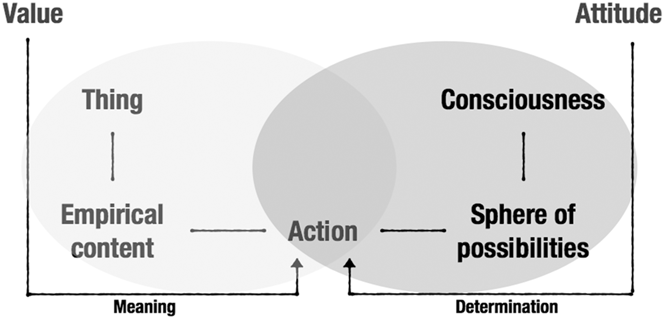
If the reorientation towards practical reality could be partly veiled by Znaniecki, its application to specific research objects must have posed a much more serious problem. Here, again, Thomas’ main interest––the interdependence of individual and society––has been brought to the fore, but in a way that is atypical of this author. The juxtaposition individual-society has been transformed into a relationship between the subjective and the objective [Thomas and Znaniecki Reference Thomas and Znaniecki1927: 20]. At first sight, one could guess that it is ontological subjectivity and objectivity that is meant here, but Thomas’ individualistic stance would rule out this interpretation. Attitudes seem to be subjective in terms of what actors take as reality and what may be corrected in their conjectures through the influence of prevalent values. This reading would mean that values are as much ontologically subjective as attitudes and that it would be more appropriate to call them inter-subjective. Further definitions confirm this interpretation and make clear where the difference between values and attitudes really lies. As already mentioned, both are defined as action-oriented: attitudes––because they determine actions by choosing them from a range of possibilities, and values––because they provide meanings to actions by referring them to potential objects of activity (see figure 3). Action is the common element of both concepts, while the difference lies in the imagination, which is an exclusively individual premise of selection as opposed to the social definition of values. Although individuals are the triggering forces of action in that they develop specific attitudes towards the world, they are not equipped with any private values, but must use and transform values provided by society. Individuals are, on the one hand, aware of their effort and responsibility but, on the other hand, are not the primary sources of meaning. Thus, the conflict of individual and society manifests itself as a contradiction of two kinds of experiences: of what is felt as the individual’s energy and freedom, and what is inherited and imposed from the outside [1927: 22].
The concept of action in The Polish Peasant
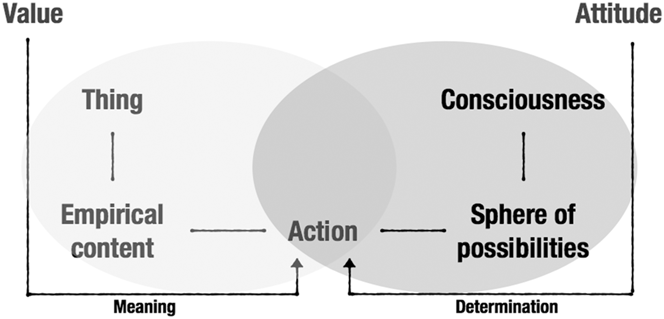
Anticipating the kind of critique which has been put forward by Blumer, Thomas and Znaniecki [1927: 24] spare no effort in differentiating values from attitudes as distinct research objects. It is precisely at this point that the question of causality, the general principle of sociological explanation, is discussed in the Methodological Note. Taken in isolation, attitudes do not have any content and can be either action- or non-action-oriented. In the real world they are constantly affected by values, and this impact consists either in the unquestionability of a dominant value system or in its provoking incoherence. The effect may be threefold: withdrawal, irrational choice, or a rational reorganization of values. But in each case, two additional factors seem to play a role: 1) the values previously acquired by the individual and 2) the action process itself. Unfortunately, only the former was emphasized by Thomas and Znaniecki in the Methodological Note as a basis of their concept of causality.
It may be argued that the concept is relatively irrelevant for the problem of causality as it has been seen in the philosophy of science and hardly serves as a basis of theoretical analysis. It contributes to rather than extends the authors’ own preliminary definition of the value-attitude unity. By virtue of the concept, Thomas and Znaniecki, instead of writing about two elements, describe the production of attitudes by values on the basis of pre-existing attitudes. Obviously, from a causal point of view, a threefold structure of explanation is much more convincing. As John Leslie Mackie [Reference Mackie1980] observed, it is usually fully satisfying for scientists to identify an insufficient, but non-redundant element of an unnecessary but sufficient conjunction of conditions, instead of looking for all conditions of a fact. Likewise, the authors of The Polish Peasant realized that it is much more convenient to formulate a counterfactual law on a combination of two conditions, instead of looking for a specific cause of a phenomenon. This approach considerably advanced Thomas’ pragmatist model of behavioral explanations. For example, instead of talking about inhibited desire as a cause of an invention, he could formulate a law on the effects of a specific modification of desires. However, this advantage does not account for the postulate of combining attitudes with values and not, for instance, with other attitudes or external conditions. Moreover, the idea of three-pronged causal laws is somewhat misleading because Thomas and Znaniecki probably had something else in mind: a specific mechanism of change that attitudes may be undergoing rather than a general law of their production. Therefore, the model better describes the reflexivity of old attitudes and the interpretive deficits of new values than their causal power.
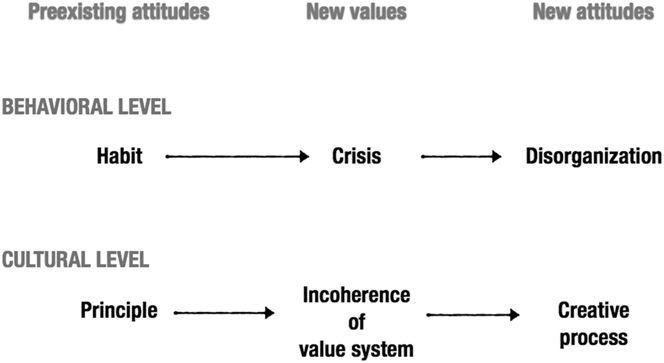
Most interesting, however, is the fact that the threefold model goes far beyond the individual level of analysis by introducing new theoretical categories: the idea of an incoherent system of values and that of cultural attitudes. The behavioral level of reality, implicit in Thomas’ modes of explanation, has not been abandoned by the authors, but supplemented by a completely independent cultural level of reality as suggested in the following passage: “As long as there is no possibility of an actual subordination or co-ordination as between the cultural and the natural attitudes, the natural attitudes have no immediate interest for social psychology” [Thomas and Znaniecki Reference Thomas and Znaniecki1927: 30].
The differentiation between natural and cultural attitudes contradicts the interpretation that the authors had mechanically combined Thomas’ concept of attitudes with Znaniecki’s notion of values. It was rather a combination which could work independently in both theoretical frameworks (figure 4). In Thomas’ model of action, inhibition of desire leads to a socially accepted behavior, while a new situation (aka crisis), after breaking up old habits, motivates individuals to inventions. The new vocabulary brings order into both processes. The inhibition may now be seen as an interference of the value system with natural attitudes leading to a habitual adaptation. Similarly, a crisis of habit may be explained as a crisis of the habituated value system, when a new attitude arises. However, the concept of the interfering value system, by replacing the residual category of external conditions, relocates the whole process of adaptation into the sphere of mental representations. As we know from the Introduction to Wladek’s life-record, by “adaptation” the authors mean “a fixed limit to which the individual has to approach” [Thomas and Znaniecki Reference Thomas and Znaniecki1927: 1876] and which is defined by the individual. In other words, adaptation is understood as an intellectual process, in the course of which the individual examines his own and social demands to achieve a certain amount of control over the environment. Hence, the behavioral level of causal explanation seems to be insufficient, even though it may adequately describe the facts to be explained. As the authors claim in the chapter on social disorganization, social theory
searches for laws of the more fundamental and general processes which are supposed to underlie those directly observable changes, and explains the latter causally only in so far as it can be shown that they are the superficial manifestations of certain deeper, causally explicable effects [1927: 1132].
The synthesis of Thomas’s and Znaniecki’s theories of social change in The Polish Peasant

As the laws one is looking for are supposed to describe relationships between thoughts rather than behaviors, their necessity is supposed to be of a logical nature. But there is no reason to believe that values were mutually commensurable and norms deducible from values. What Thomas’ and Znaniecki’s concept of causality certainly implies is that attitudes and values shape each other in the course of a mental process.
Definition of situation
While attitudes are meant as inclinations to act in a specific way and are more or less attached to certain values, definitions of situations are integrated concepts of the whole context in which action is going to take place. As Thomas and Znaniecki suggest in an example of a jealous husband, each individual has to take into account a multitude of conditions so that each decision process is extremely difficult. A number of strategies may by adopted by the actor to alleviate the strain, ranging from subordination to a specific goal or value, through weighing different reasons against each other, up to habitualization. Thomas and Znaniecki emphasize, however, that it seems necessary in the long term to form one dominant attitude or set of attitudes allowing for an exclusionary strategy, in which a majority of reasons can be ruled out immediately.Footnote 3 For example the attitude of solidarity allowed the peasants to preserve their cohesive social system in spite of external pressures. In the conclusion of the Note, the concept of the decision principle is used for a renewed formulation of the social control problem. The authors argue that control is bound to fail if it addresses outer behavior rather than attitudes. But even if it is exercised over pre-existing attitudes, it can hardly modify them by methods of repression. It should rather facilitate the individual’s own effort, since only individuals can autonomously construct their attitudes. The remaining parts of the book describe and illustrate this process.
The Introduction to Part I, far from being a mere description of the Polish peasant culture, outlines a theory of social evolution. First, it describes the structure of a society held together by the principle of solidarity––its manifestations in the form of positive reciprocity, inhibition of affections, mutual control and respect. Parallel to this description, Thomas and Znaniecki classify the main obstacles to solidarity—individualization, isolation of subgroups and changing demographic conditions––in order to indicate three modes of adaptation: 1) return to habitual action, 2) revival of solidaritous feelings, and 3) substitution resulting in a new action.
The change of the prevalent social principle is described using examples of central social institutions. For example, traditional marriage, understood as subordination to the solidarity principle, goes through the stage of being governed by two principles when liking another person is taken into account, up to the phase of individualistic, romantic love when the solidarity principle almost disappears. Another example is the transition from self-definition as a mere object of economic, political and social power through the independence of collectively shaped social opinion up to the self-assertion of individuals in multiple social groups. As Walery Wróblewski [Thomas and Znaniecki Reference Thomas and Znaniecki1927: 332] put it in one of his letters: “In a word, by favor of the monarch we have more liberty, because we are citizens of the country, not as formerly, when we were only subjects; now we are all equal in the country.” In another letter, Stanisław Jackowski [1927: 567] adds the context of family struggles: “Up to the present nobody has any right to dispose of others; everybody is his own lord […] I can do what I like.” The sentence indicates an attitude that had been unusual among the Polish peasantry, which had been permeated for a long time by a suppressed, fatalistic mentality. But even this transition is only a precondition of the formation of new attitudes and does not explain how these attitudes arise in social practice and, above all, how a new principle emerges—a principle reorganizing the old definitions of situations.
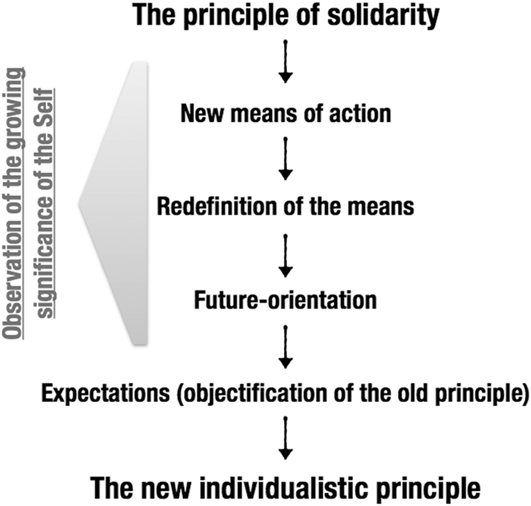
The answer may be found in Thomas and Znaniecki’s account of the mechanisms of economic change. They draw a picture of the traditional economy governed by the principle of solidarity and its transformation into the individualistic economy founded on a quantitative concept of economic value and a negative concept of reciprocity. Unlike marriage, love, and sexual relations, the individualistic economy is followed by a further stage of a new solidarism, in which the quantitative features of individualism support an organized cooperation based on solidarity. But how is the transformation of principle possible? The various mechanisms of individualization have something in common: the transformative power of the meaning that constitutes central institutions of social organization. The traditional perception of property as a symbol of social continuity undergoes a gradual evolution towards its quantitative reduction to a mere object of exchange. Money is originally understood as an object which can be exchanged for another specific object, later as a supportive income, and, in the last stage, as a measure of value opening up a wide range of action possibilities. Likewise, work for a peasant is originally a source of pleasure and a magical method of pleasing the gods, but its meaning evolves to connote an exchangeable activity securing a better standard of living. The essential mechanism of all these transitions was exposed in the example of the shift from positive to negative reciprocity. A peasant who happened to be relocated to a new social context, for instance an emigrant to a Polish or American city, while still acting on the principle of solidarity, is not only ready to help without remuneration, but also expects the same from others: “The act of help assumes an independent importance in and of itself” [1927: 181]. This expectation may likely result in disappointment and lead to a strategy of agreements based on equivalence rather than solidarity. The agreements become, over time, less and less flexible and lead to a full-fledged negative reciprocity. The change of principle results from the application of an old principle to new conditions and, thus, the establishment of a new practice. Three important changes take place on the mental level in the course of the process. First, the old principle, which has been for a long time invisible to the actor, now becomes the object of expectations. Second, the new practices, despite still being governed by the old principle, involve a redefinition of the instruments of action, like property, money or work, and, in effect, reorient the actor towards future possibilities. Third, most importantly, the systematic observation of one’s own role in the new practice leads to a new self-assertive attitude, which, after becoming prevalent, changes the structure of decision making and becomes a new exclusionary reason for the actor. The way in which one principle unconsciously governs another, has been clearly illustrated not in economic but rather social examples, as in the following letter:
Dear Mr. Wacław: I don’t know what it means. Have you forgotten about me or what? Neither letter nor even greeting. One sees at once that you are changed into an American, occupied only with calculations about your business […] But never mind, I like it. We all ought to break the stupid and simply idiotic European ice and [stop] lying, because no honest understanding can be reached by formalities, only empty lying to one another, and imbecility [1927: 1104].
Thomas and Znaniecki note on the letter:
This ideal of absolute sincerity and abandonment of formalities was developed among Polish socialists under the influence of Russian socialism, which was rather strong during the revolution of 1905-6. American life is here viewed through the prism of this ideal [1927: 1104].
It is important to note that Znaniecki focuses on the change of attitudes rather than on the change of the underlying principle. However, it is the latter, as we have inferred, that makes new definitions of situations possible. By detecting that under the surface of behavior a more fundamental evolution of thinking takes place, Znaniecki does not only go beyond the behavioral level of analysis, but also provides an empirical account of the mechanisms by which the new attitudes emerge. This insight can be won only from the structure of the described practices, in which a gradual redefinition of action instruments transforms the relationship between individual and society. Consequently, the subsequent section of the book, devoted to religious and magical attitudes, may be read as a synopsis of the general evolution of the solidarity principle with regard to the role it plays in the definition of situation. The naturalistic system of beliefs presents a world in which humans, along with all other natural and non-natural beings, act in solidarity against decay, but fail to see the all-embracing unity and its principle. In the magical system, the division into the spiritual and the natural unveils the fundamental imperfection of human knowledge, but also restricts solidarity to one side of the division, without making clear what the purpose of the division itself is. Solidarity seems to be subordinated to another uncontrollable and unknown principle. Finally, in the framework of the moral community of the church, solidarity is no longer a principle, but serves another social idea exposed in moral terms. Society becomes the purpose of the individual, who is defined as a source of evil and has to become obedient to the agencies of social control.
Social stability
If we look at the evolution of the solidarity principle more closely, it becomes clear that it leads to the problem of social control stated at the outset of the work. But the result of Thomas and Znaniecki’s analysis is not just that. They succeed in demonstrating how precarious this principle is and how much justification it needs, even if older values persist. There can be no wonder that the following chapter explains the mechanisms of individualistic disorganization and the relentless efforts to counteract it. Thomas and Znaniecki are far from describing the disorganizing processes as changes of a static system. In concert with their previous works, they emphasize from the outset that what they call “stability” is an equilibrium of disorganization and reorganization [1927: 1130]. Disorganization is a decrease of the influence of social rules on individual actors, and reorganization is their restoration in a new form. While disorganization is shown to be a natural consequence of social differentiation and plurality of life-organizations, reorganization requires much more effort and invention.
In case of family disorganization, Thomas and Znaniecki demonstrate how the preexisting “we-attitudes” are being superseded by the “I-attitudes” of persons who are separated from an organization based on solidarity. Obviously, the social milieu representing the old attitudes attempts to suppress the new ones by recourse to the natural desires for response and recognition. Here again, the new attitude may not reveal itself if the counterbalancing influence of the family or community proves to be effective. Thomas and Znaniecki claim that a number of effects of active causes may be potentially present in the form of suppressed attitudes, but a purely behavioral approach would probably fail to notice them [1927: 1168]. It is undoubtedly a point of analysis where an individualistic model of action is being abandoned in favor of a culturalist analysis of the structure of reasoning. But the authors do not measure the strength of reasons by an objective assessment of interests or even by their mutual position, but by their role in the dynamics of the definition of situation, especially by the status of the exclusionary social principle.
The culturalist approach allows Thomas and Znaniecki to interpret an act of demoralization as a manifestation of a looming new system of values. By proposing their own interpretation, they sometimes disagree with the authors of the letters. To take another example from the Wróblewski series:
The man shot with a revolver, but happily he missed. They ran. There were two of them. On the next day people found the bullet in the door. Father made a noise, and came to us and awoke us and other people, but they were not to be found. They went to Płonka, stole a horse and a wagon of grain and disappeared. So the misfortune ended. At present there are terrible thefts and robberies in our country. Highwaymen attack people on the roads and rob them, and in towns robbers come to houses, kill or threaten with revolvers, take whatever they can and usually disappear without any trace. And all this goes on since the strikes of the last year. Many factories stopped, workmen were turned out, and that is the cause of the present robberies [1927: 336].
Thomas and Znaniecki are far from explaining the action with pure external conditions and see “new ideals” at work “which for the mass of the people were not equivalent to the traditional social constraint in organizing practical life” [1927: 336].
The chapter on family disorganization is the first one where the complementarity of Thomas’ and Znaniecki’s perspectives allows for a comprehensive explanation of empirical observations. When they move to the consideration of community disorganization, the deeper level of mental processes is even more explicitly emphasized:
Disorganization of the community starts in fact as soon as its members begin to define situations exclusively as economic, intellectual, religious, hedonistic, not as social, when their need for success––success, of course, as they see it themselves––in any specific line becomes more important subjectively than the need for social recognition [1927: 1173].
When the social definitions of situations break up, an incoherence and vagueness of attitudes sets in, so that individuals cease to define situations on their own. The immediate cause of their reluctance is the lack of any principle which could be understood as an exclusionary reason. In the “area of private control” as the authors call the internal arena of the mind, a coherent opinion can no longer be restored, but the ensuing feeling of irrationality may be compensated for by an even stronger desire for response, which can only be satisfied by a community. In some cases, the representatives of the old value system appeal to the primary desire for response and to social opinion, as in one of Jackowski’s letters:
Now you wrote also that you had worked enough for us, that you must think about yourself. It is all right, but there has not been so very much of it. You earned some money in Prussia, our parents added some of their own and bought a piece of land for it, which you have still. You ought not to make reproaches to mother, for it is not proper. Mother wept more than once and said if you had a little remembrance, at least about your father, you would send at least once in a year [money] for a mass for father. Don’t think that I want to teach you. I don’t do it ever. But I can write what I hear, for I don’t know what is the opinion of anybody, I let everyone have his own opinion [1927: 566].
But even this underlying emotional solidarity must be abandoned in the face of growing factors of divergent opinions; it can hardly hinder the emancipated youth from looking for new experiences, or to stop migrations, vertical mobility and industrialization. Individuals look for response and recognition in alternative groups while still trying to justify their behaviors with reference to the old values. The new groups raise new hopes and reinforce the annoying incoherence of values, so that a demand for completely new values emerges. Initially, it takes on the negative form of revolutionary movements. Since the process cannot be stopped, there is a need for what the authors call a “social reorganization”—a positive program of cooperative institutions modeled mostly on economic cooperation. Thomas and Znaniecki, after having seen the first heralds of such spontaneous development in Poland, probably had high hopes for a broader involvement of individuals into a national community of moral character and for a popular education facilitating communication processes. They speculated that a grassroots movement could be viewed by the peasants as an opportunity for personal independence and association under the auspices of educational institutions.
The concept of reorganization smoothly combines Thomas’ rather fruitless postulates of educational reform, elaborated at length in The Unadjusted Girl [Thomas Reference Thomas1923: 216-221] with the false dawn of a Polish-American progressive leadership, much hoped for by Znaniecki [Thomas, Reference Thomas1992: 74]. The focus on economic reform and education resembles the program of “organic labor”, with which Znaniecki must have been familiar as it had been put forward in Poland after the military failure of the January uprising. The opinion that Thomas and Znaniecki’s progressive social program is “typically American” and reflects the “desire to change the world” [Guth and Schrecker Reference Guth and Schrecker2002: 282] seems to neglect its national context.
Character formation
If the chapters on social disorganization and reorganization seem to illustrate a growing convergence of Thomas’ and Znaniecki’s practical perspectives, and a growing complementarity of their theoretical views, the Introduction to the life-record of Wladek Wisniewski, a Polish immigrant in the USA, may be interpreted as the most comprehensive synthesis of the author’s views. The recurrence of the concepts and problems already elucidated in the Methodological Note might seem superfluous and rather digressive, since it does not directly contribute to the concept of social reorganization and to the central practical question of the book. However, from the perspective of Thomas and Znaniecki’s intellectual relationship, the theory of personality must have been a point of culmination, their final statement on the problem of the unity of attitudes and values. The interaction between these two elements of action assumes a more concrete shape as it is applied to human personality. A closer consideration reveals, however, that what is meant here is not a mere application, but a further analysis and sophistication of the scheme. Thomas and Znaniecki [1927: 1833] saw clearly that the definition of situation is, in reality, a stream of mental states and a methodical operation which requires a high level of selectivity and immunity from accidental influences in order to be effective as an element of large-scale social processes: “An attitude as manifested in an isolated act is always subject to misinterpretation, but this danger diminishes in the very measure of our ability to connect this act with past acts of the same individual.” This connecting ability itself must be directed by a higher structure of a partly social and partly individual genesis, called personality.
As opposed to the initial rejection of causal studies reconstructing the whole past of an individual in order to explain her attitudes, the authors claim now with regard to personality: “There is no safer and more efficient way of finding among the innumerable antecedents of a social happening the real causes of this happening than to analyze the past of the individuals through whose agency this happening occurred” [1927: 1833]. But now these concrete forms are to be synthesized from abstract elements and as such transferred into the context of individual life [1927: 1836]. These abstract forms are the previously defined attitudes and values interconnected into long chains that mark the evolution of a particular personality [1927: 1839-1940].
Although there is a variety of possible “lines of genesis”, they are usually stabilized by conventional frames of activities and dominant attitudes. Whatever the amount of stability in these structures, the main contribution of the Introduction to Part IV consists in the differentiation between two kinds of links connecting the elements of the lines of genesis. The first, temperamental links, are habitual, non-conscious and environmentally-cued. The second kind of relations, called character, is conscious, resulting from a systematization of tendencies which an individual observes in her own activity with the intention of giving them a specific direction. The process of character building involves a self-observation in the course of a goal-oriented practice and identification of conflicting attitudes which may be reconciled by means of a principle inferred from the direction of the activity (see figure 5).
The process of character formation
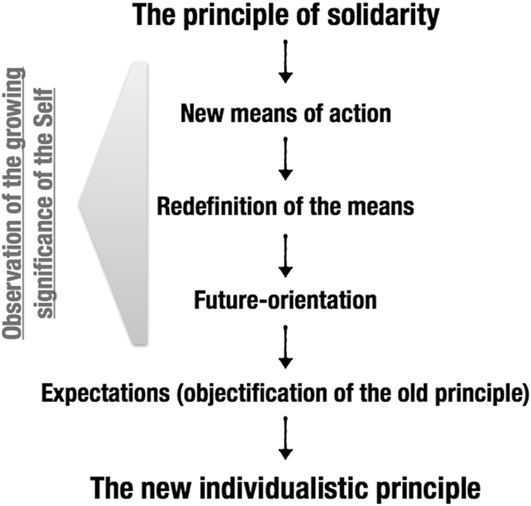
The differentiation between temperament and character, implicitly described in the economy section of the book, apart from generalizing the concept of principle formation, explains how individuals can meet complex social expectations in a world of incoherent, fragmented or vague meanings. Since modern society demands, as Znaniecki [1987 [1914]: 224] noted in his earlier works, the autonomous creation of situations, some type of reflexive flexibility that goes far beyond an external adaptation is necessary. The temperament-character model combines, thus, Thomas’ behavioral perspective with Znaniecki’s culturalist perspective into a unified concept of personality development. As far as the desire for stability and new experience reside in each attitude, the temperamental tension between them is the triggering force of character formation, making the behavioral level both indispensable and insufficient.
At the same time, however, the concept raises a new problem of personality stabilization, because the wide range of possibilities which character formation opens to the individual may evoke three different reactions. The first, called Philistinism, is a fixation of character in defense against new values. The second, called Bohemianism, involves quick adaptability to randomly chosen values and a high tolerance to inconsistency. The third, called a creative one, consists in a search for new situations and values on the basis of stable life-organization.
It seems clear enough that the transition from the Bohemian to the creative type, apart from being a realization of Znaniecki’s prior creativistic research program, marks the advance of Thomas’ concept of the habit of change. In Thomas’ earlier works this idea could only be formulated as a temperamental phenomenon and could not be clearly explained, while in The Polish Peasant it emerges from a multidimensional development of personality in response to specific progressive practices.
The theory of personality includes a concept of consciousness that is missing in both Thomas’ and Znaniecki’s earlier theories. It demonstrates how a continuous self-observation in new contexts leads to a recognition of conflicting attitudes and possibilities. In this way, the world of the individual is extended, and choice (or even action in general) becomes possible. By a subordination to a practical purpose the individual forms a new attitude and, by realizing it, unconsciously forms a new principle of decision making. The point of the argument is that it does not matter what the content of the self-defined adaptation to new conditions will be, but rather what the source of this content is. If imposed, it will be a limitation, but if deliberately chosen, creative action may follow. Although Thomas and Znaniecki did not intend to solve the problem of free will, they ended up with a concept of creative independence: a kind of freedom that cannot be produced by society, but is an achievement of the individual in favorable social conditions.
Conclusions
It seems clear enough that we would do grave injustice to Thomas or Znaniecki by denying the essential intellectual involvement of either one of them in the work on The Polish Peasant. A precise delineation of their respective contributions would make little sense both in light of their own intentions and because this unique book documents much more than a synthesis of static views; it is a record of a parallel intellectual development that eventually led to the establishment of the kind of sociology that can bring together scholars with approaches and theoretical backgrounds as different as Thomas’ and Znaniecki’s. It is worthwhile to document the dialogical process of theory formation that engaged the authors and brought both of them to a new level of reflection. It should be emphasized that their fruitful cooperation would not have been possible without the empirical material, which revealed new problems and required specific methodological concepts.
The failure to recognize the dialogical qualities of the book leads to one-dimensional or simplifying interpretations. One of the apparent difficulties of such interpretations is the fact that there seems to be no obvious theoretical continuity between Thomas’ earlier works and The Polish Peasant. Abbott and Egloff [Reference Abbott and Egloff2008] attempted to solve this puzzle by suggesting that there are parallels between the book’s ideas and Thomas’ artistic inclinations expressed in his early teaching of English literature. Thomas, who was born and raised in a peasant family and who early on became a nomad, travelled around the world and often changed his interests and views like the figure of a vagabond he later describes in The Polish Peasant. Thomas’ provoking and pioneering theory on the social genesis of crime as well as the scandal of 1918, when he was arrested under the Mann Act for being seen in a hotel together with the wife of an army officer, make this picture suggestive. But Abbott and Egloff [2008: 250-252] go even further and deny any systematic theoretical interest in Thomas’ career by declaring The Polish Peasant to be a collection of unsystematic interpretive studies, and by suggesting parallels between The Polish Peasant and Robert Browning’s novel The Ring and the Book. According to their interpretation, Thomas played with ideas rather than developed them in a systematic manner, and took the biographical-documentary approach because of his fascination for literature and psychiatric casebooks rather than because of clear theoretical reasons.
There is nothing essentially wrong in explaining someone’s work out of his life, if the earlier work does not provide any cue. However, it may be suggested that, while providing such an interpretation of a coauthored book, one should take into account the life and, especially, the work of the other author as well. Doing justice to Znaniecki’s earlier life and work is all the more advantageous the more puzzling the novelty of The Polish Peasant seems in light of Thomas’ earlier theoretical development. Interestingly enough, Znaniecki also led a vagabond life, even if not always by his own choice [Dulczewski, Reference Dulczewski1984: 21-47]. Born in 1882 into a noble family, he started his career as a poet in 1903, the same year he was fired from the Tsarist University in Warsaw for protesting against violations of academic freedom. Over the following years he travelled across Europe: Italy, Switzerland and France. During a short stay in Italy in 1904, he simulated his own death suspecting that his friend would discover Znaniecki’s close relationship with the friend’s wife. As Znaniecki later explained to his family [Dulczewski, Reference Dulczewski1984: 38], the death simulation was an ideological act of resurgence, in which he wanted to kill his own noble past and start a new life in the service of mankind. After this episode, Znaniecki signed up for service in the French Foreign Legion in Algeria, but had to return to France due to an injury. Subsequently, probably at the beginning of 1905, he worked as a journal editor on Nice Illustrée. Later, as a Russian speaking poet with good contacts in immigrant artistic circles, he became for a short time a secretary of the Association of Russian Artists in Paris. The summer and fall of 1905 he spent as a performer in a travelling theatre. In November 1905 he matriculated as a student of humanities at the University of Geneva where he stayed until 1907, moving to Zurich in the same year and to Paris at the end of 1908. After obtaining his PhD in Philosophy in Cracow in 1909, Znaniecki moved to Warsaw to start the work of a scholar and to become the editor in chief of the most important journal for Polish migrants, Wychodzca Polski. During that time he systematically collected statistical data and personal accounts of Polish emigrants all over the world [Znaniecki Reference Znaniecki1911a; Reference Znaniecki1911b]. It is an important fact, since it contradicts Abbott and Egloff’s [2008: 233] interpretation of Znaniecki as a speculative theoretician with little research interests. Even a short overview of Thomas’ and Znaniecki’s lives indicates that they were both nonconformists and artistic souls incessantly looking for new intellectual inspirations.
Abbott and Egloff’s main argument against the inclusion of Znaniecki rests on the belief that, although The Polish Peasant was not anticipated by any prior works of Thomas, some of its crucial concepts may be found in Thomas’ university course descriptions written shortly before Znaniecki’s arrival in Chicago in September 1914. This argument raises several problems. First, and most obviously, Thomas and Znaniecki’s first encounter was not in 1914 but in 1913 during Thomas’s visit to Warsaw. As Znaniecki reports, they discussed Thomas’ research plans during several conferences [Znaniecki 1948: 765]. In the letter to Kimball Young, Znaniecki wrote that it was already in Warsaw that Thomas had become interested in Znaniecki’s previous empirical work [Znaniecki Archive II Pers. doc. Vol. 1, No 275].
Second, Abbott and Egloff’s interpretation contradicts the explicit explanations of both Thomas and Znaniecki who consistently emphasized the significance of their cooperation for the qualities of the book. Abbott and Egloff [2008: 218] spare no effort in proving that Thomas’ autobiographical statement, obtained by Luther Bernard in 1927, was ironic but completely dismiss Znaniecki’s later comments on the work. They do not explain, for example, why we should ignore Znaniecki’s suggestion that everyone who wants to understand what his and Thomas’ contributions to the Methodological Note were should study their prior works [Znaniecki Archive II Pers. doc. vol. 1, No 275].
Third, Abbott and Egloff explicitly admit that the intellectual contributions to The Polish Peasant which, allegedly, had not been influenced by Znaniecki, do not include the work’s theory, but are limited to the specific formal qualities of the book, defined as crucial by Abbott and Egloff’s own account: 1) the biographical-documentary approach, 2) the interpretive cast of the work’s thinking, 3) the social psychological focus on the relationship between individual and society, and 4) the interest in temporality. With regard to the biographical method, Thomas’ inspirational role is not questionable in light of both Thomas’ and Znaniecki’s autobiographical statements. However, it is false to deny Znaniecki’s strong interest in biographies. The inclination to analyze society from the point of view of individual life trajectories followed from his philosophical thought and was clearly expressed in his early writings [Znaniecki [Reference Znaniecki1912]: 100-101, 111]. The same may be said about the origins of the interpretive approach. Although Znaniecki used rather statistical methods in his early attempts at empirical work, his idea of the individual meaning of values may be read as a program of systematic interpretive research [[1912]: 107]. In the case of the individual-society issue, the continuity between The Polish Peasant and Znaniecki’s earlier work is even more conspicuous. There can be no doubt that this problem was one of the main themes throughout Znaniecki’s writings, strongly emphasized in his critique of Durkheim’s ontologism and Wundt’s psychologism [[1912]: 108-109]. Contrary to Abbott and Egloff’s suggestion, the idea of individual’s and society’s co-constitution is clearly present in Znaniecki’s early texts: “The social and individual realities are one and the same reality in which both individual and society take shape” [[1912]: 106]. Finally, there can be no doubt about the significance of the idea of temporality in Znaniecki’s early philosophy. To its most original expressions belong: 1) the idea that the present determines the past [Znaniecki 1987 [1913]: 181]; 2) the processual concept of value [1987 [1912]: 111]; and 3) the processual concept of norm hierarchy [1987 [1914]: 241]. In Znaniecki’s view: “As an individual value is only given in its whole trajectory throughout all the moments of its actuality, so, likewise, the social value is given as a unity only in its continuance and in the extent of its influence throughout all the subsequent moments of its actuality in all individuals in whose experience it emerged” [1987 [1912]: 110]. Provided that Abbott and Egloff are right in claiming that Thomas recalled his early literary fascinations and, as a consequence, “transformed his thinking” [Abbott and Egloff, Reference Abbott and Egloff2008: 234] just before Znaniecki’s arrival in Chicago in September 1914, the coincidence of their approaches seems to be quite miraculous.
The fourth problem with Abbott and Egloff’s argument is its focus on The Polish Peasant’s keywords and idioms rather than problems and conceptual structures. The fact that we can find in Thomas’ course descriptions an interest in biographies or in the co-constitution of individual and society, does not explain what problems are considered in The Polish Peasant and what are its main theses and arguments. Moreover, the fact that some of the work’s themes and concepts originated in Thomas’ a-theoretical literary fascinations does not mean that they were irrelevant for Znaniecki’s theoretical development before and after writing The Polish Peasant, possibly in different scholarly discourses. Unfortunately, neither Thomas’ nor Znaniecki’s theories are interesting for Abbott and Egloff because they presuppose The Polish Peasant’s theory to be “adventitious” [Abbott and Egloff, Reference Abbott and Egloff2008: 224] and disregard all interpreters who, as they suppose, prefer to see the themes of The Polish Peasant “laid out in neat little theories” [2008: 252]. It may be argued that this kind of anti-theoretical prejudice necessarily results in a purely biographical and speculative explanation of the work’s hallmarks.
The opposite view, that does not take into account personal backgrounds and reads the book rather naively as a coherent unity, may be found in Herbert Blumer’s interpretation, which had a tremendous bearing on the history of the book’s reception in the American scholarly tradition through the crucial role Blumer played in the establishment of the interactionist school of social theorizing. In his critical statements, Blumer focuses on the vague relationship between the concepts of attitude and value. He finds them imprecise, too general, and, in consequence, overlapping. He recognizes “the logical difficulty of taking them as separate entities with changeable temporal and causal relations to one another” [1939: 26] and questions the claim of formulating causal laws on their basis. Although the argument is well grounded in a literal reading, it overlooks the fact that the close link between attitudes and values is deliberately emphasized by the authors, who explained that the core of both concepts was a meaningful action-orientedness [Thomas and Znaniecki, Reference Thomas and Znaniecki1927: 22-24]. At the same time, by overemphasizing the element of meaning, Blumer seems to have lost sight of the divergent roles that attitudes and values play in the determination of action. Nonetheless, Blumer’s reservations raise an implicit question about the ambiguous character of the whole attitude-value scheme, which may be interpreted both as a causal concept and as an analytical scheme. This ambiguity suggests that, by defining their crucial concept, Thomas and Znaniecki must have come to terms with their divergent methodological positions.
Although both authors made significant theoretical advances in the course of their cooperation, it is remarkable that they did not resume their cooperation on other occasions, but went their own ways in search of new scientific experiences. Thomas developed the concept of the definition of situation, but in a more biologistic fashion, as indicated in a passage from his next book, The Unadjusted Girl:
The variety of expressions of behavior is as great as the variety of situations arising in the external world, while the nervous system represents only a general mechanism for action. We can however approach the problem of behavior through the study of the forces which impel to action, namely, the wishes, and we shall see that these correspond in general with the nervous mechanism [Thomas, Reference Thomas1923: 4].
Znaniecki continued to elaborating on his idea of cultural reality, focusing on the social dynamic of the cultural processes. In his subsequent work both in Poland and in the USA, he took up the problem of innovation in science (and remained strongly influenced by his encounter with Thomas, which was the formatting experience of his entire life).
As far as the theoretical significance for sociology is concerned, The Polish Peasant may be interpreted as an attempt to found sociology on a reflexive dialogue rather than on the “convergence” claimed for the discipline by Talcott Parsons [Reference Parsons1949]. Instead of formulating a set of coherent philosophical assumptions concerning free will and the nature of social order, Thomas and Znaniecki implicitly suggest that sociological theory has to deal with contradictory assumptions and explain empirical data, simultaneously, from biological and culturalist perspectives. The theoretical pluralism of The Polish Peasant respects Kant’s dualism much more than Parsons’ work does, in that Thomas and Znaniecki acknowledge the antinomy of causality and freedom as inevitable elements of the analysis of action. Thus, they do not claim any normative unity of action but suppose that action is constituted by an incessant alternation of perspectives: from what serves as a socially provided meaning (value) to what is subjectively possible (attitude). The dualistic strategy does not mean that the two perspectives should not respect each other. Thomas and Znaniecki’s work teaches us that both are valid only insofar as they correspond to each other without being mutually reducible.
The Polish Peasant seems to contradict the opinion that great theories arise as by-products of interesting life experiences, personal conflicts or friendships, or expressions of emotional energy. Thomas and Znaniecki began their cooperation for professional reasons and together realized a specific task. They never abandoned their divergent methodological positions and interests, but in spite of those were able to come to a compromise. Their cooperation makes it clear that the focus on empirical material may lead scholars beyond the boundaries of their views, especially if the views are constantly examined in confrontation with different, even contrary approaches.