In light of abundant research attesting to the pivotal role of stress in the development of psychopathology (for a review, see Grant et al., 2003), developmental scientists have focused growing attention on the psychological and biological consequences of stress (Boyce et al., 1998; Cicchetti & Walker, 2001; Curtis & Cicchetti, 2003). Of particular concern is the potential long-term impact of stress experienced early in life on subsequent vulnerability to psychopathology (Boyce & Ellis, 2005; O'Connor, 2003). Notably, theory and research consistently implicate early adversity, particularly in the form of family disruption and parental loss, as a significant risk factor for depression (e.g., Brown & Harris, 1978; Daley, Hammen, & Rao, 2000; Goodyer & Altham, 1991; Kessler & Magee, 1993; Lizardi & Klein, 2000; for a review, see Goodman, 2002). However, minimal research explores how early adversity and recent stress jointly contribute to the onset and course of depression. Consistent with emerging models of early experience (Boyce & Ellis, 2005; O'Connor, 2003), the present research examined the hypothesis that exposure to childhood social adversity heightens youths' reactivity to subsequent stress, resulting in depression.
Theoretical Models of the Consequences of Childhood Adversity
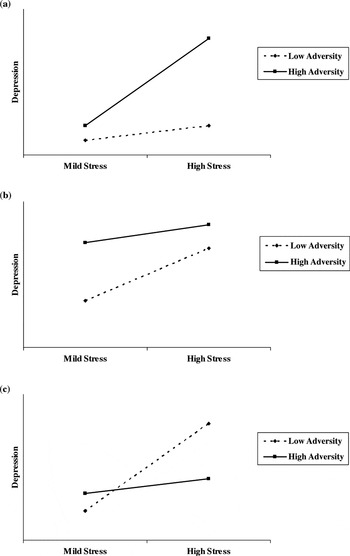
Three theoretical models might explain how childhood social adversity influences subsequent stress reactivity: stress amplification, stress sensitization, and stress inoculation (see Figure 1). These models all take a diathesis-stress form, wherein the interaction between individual susceptibility (in this case, exposure to childhood adversity) and recent stressful experiences determines risk for psychopathology (Monroe & Simons, 1991; Sameroff, 1987).

Hypothetical diathesis–stress interactions depicting (a) stress amplification (an interaction in which childhood adversity creates a stronger risk for depression in individuals exposed to high levels of stress than those exposed to mild levels of stress, (b) stress sensitization (an interaction in which lower levels of stress are necessary to precipitate depression in individuals exposed to high rather than low levels of childhood adversity), and (c) stress inoculation (an interaction in which childhood adversity buffers youth from depression in the face of stress).
Stress-amplification model
According to a stress-amplification model, childhood adversity amplifies depressive reactions to recent stress, that is, youth with a history of adversity would demonstrate higher levels of depression than those without a history of adversity when exposed to severe but not mild recent stress (see Figure 1a). Youth without a history of adversity would be expected to demonstrate low levels of depression regardless of their exposure to recent stress. Considerable theory and research implicate the role of stress-amplification processes in the onset and course of depression in youth. For example, cognitive vulnerability-stress theories of depression propose that youth with maladaptive cognitions (e.g., negative inferential styles, dysfunctional cognitions) experience depression when exposed to high levels of stress (Abramson, Metalsky, & Alloy, 1989; Alloy, Kelly, Mineka, & Clements, 1990; Hankin & Abramson, 2001). Similarly, genetic vulnerability-stress theories propose that genetic liability to depression is expressed only in the presence of heightened stress (Caspi et al., 2003; Eley et al., 2004). Consistent with these theories, a growing body of research supports the idea that youth with preexisting vulnerabilities experience depression when exposed to high levels of recent stress (Abela, 2001; Eley et al., 2004; for a review, see Hankin & Abramson, 2001).
Stress-sensitization model
According to a stress-sensitization model (see Figure 1b), childhood adversity reduces an individual's threshold for depressive reactions to recent stress, that is, youth with a history of adversity would require only mild stress to trigger depression, whereas youth without a history of adversity would require more severe stress to trigger depression. This stress-sensitization model is consistent with one of the pioneering diathesis-stress perspectives, which suggested that individuals with a preexisting vulnerability to psychopathology might require lower levels of stress (e.g., challenges encountered in daily living) to trigger the onset of symptoms than those without a preexisting vulnerability (Zubin & Spring, 1977).
Whereas a stress-amplification model has predominated in theory and research aimed at explaining the role of cognitive and genetic vulnerability to depression (Abela, 2001; Caspi et al., 2003; Eley et al., 2004; Hankin & Abramson, 2001; for exceptions, see Segal, Williams, Teasdale, & Gemar, 1996, regarding cognitive sensitization; Kendler, Thornton, & Gardner, 2001, regarding genetic sensitization), a stress-sensitization model has predominated in theory and research aimed at explaining the role of early life experience in depression vulnerability (Gold, Goodwin, & Chrousos, 1988; Hammen, Henry, & Daley, 2000; Harkness, Bruce, & Lumley, 2006; Monroe & Harkness, 2005; Pine & Charney, 2002; Post, 1992; Post, Rubinow, & Ballenger, 1984). Specifically, the stress-sensitization theory posits that stressful physiological and social experiences, either internal (e.g., prior symptoms of depression) or external (e.g., early life adversity), are encoded in the brain in the form of “memory traces” (Post, 1994, p. 31) that heighten reactivity of the stress-response system, such that lower levels of stress are necessary to trigger depression (Gold et al., 1988; Post, 1992).
Although few investigators have studied the interaction between early adversity and recent stress in the prediction of depression, two studies provide preliminary support for a stress-sensitization model. In one study, depressed adolescents who were exposed to parental abuse and neglect reported lower levels of stressful life events prior to the onset of their depression than depressed adolescents without a history of abuse (Harkness et al., 2006). In a second study, young women who were exposed to childhood adversity (e.g., parental divorce, death of a parent, parent psychopathology) were more likely to become depressed following exposure to mild stress than women without a history of adversity (Hammen et al., 2000). These findings are consistent with the idea that youth who are exposed to prior adversity are reactive to lower levels of stress than those who are not exposed to adversity.
Stress-inoculation model
According to a stress-inoculation model (see Figure 1c), childhood adversity actually buffers youth from the adverse effects of recent stress, that is, youth with a history of adversity would demonstrate reduced stress reactivity. Specifically, this model suggests that prior stress exposure exerts a “steeling” effect (Chorpita & Barlow, 1998; Garmezy, 1986), such that youth are less reactive to subsequent stress. For example, exposure to adversity might provide youth with an opportunity to develop adaptive coping skills to deal with later stress. In this case, one would expect that youth who were not exposed to adversity would demonstrate higher levels of depression in the face of stress than those who were exposed to adversity. Some research supports the occurrence of stress inoculation in the form of diminished biological stress reactivity in humans and animals exposed to adversity (for a review, see Boyce & Ellis, 2005).
Integration of the three models
Stress-amplification and stress-sensitization models are similar in their predictions that a history of adversity enhances stress reactivity; however, they differ in their predictions concerning the level of stress at which this stress reactivity is most salient. Specifically, a stress-amplification model suggests that heightened stress reactivity occurs primarily at severe levels of stress, thereby resulting in a bigger difference in depression between those with and without a history of adversity at severe than mild levels of stress. In contrast, a stress-sensitization model suggests that heightened stress reactivity occurs primarily at mild levels of stress, thereby resulting in a bigger difference in depression between those with and without a history of adversity at mild than severe levels of stress. A stress-sensitization model allows for the possibility that youth with a history of adversity also show somewhat greater reactivity to severe stress than those without a history of adversity (i.e., severe stress might be sufficient but not necessary to trigger depression in youth with a history of adversity), but it is also possible according to this model that severe stress is sufficient to precipitate equally high levels of depression even in youth with no preexisting vulnerability. A stress-inoculation model, in contrast, suggests that youth with a history of adversity actually show diminished stress reactivity, resulting in lower levels of depression in the face of stress.
All three of these models are consistent with developmental perspectives on psychopathology that capture the dynamic transactions occurring between youth and their environments over the course of development (Boyce et al., 1998; Curtis & Cicchetti, 2003; Lerner, 1978; O'Connor, 2003; Sameroff, 1975). Consistent with a developmental psychopathology perspective, earlier experiences contribute to an unfolding cycle of Person × Environment transactions and interactions across development. That is, stress creates enduring changes in maturing biological and psychological systems; these changes, in turn, heighten or reduce vulnerability to future adverse environmental forces. According to these theories, therefore, experience not only serves as a social context for development but also might actually influence the biological and psychological makeup of the developing individual, thereby influencing future vulnerability or resilience.
Although each of these models could explain the long-term effects of childhood adversity, prior theory (Gold et al., 1988; Pine & Charney, 2002; Post, 1992; Post et al., 1984) and research (Hammen et al., 2000; Harkness et al., in press) most strongly implicate stress-sensitization processes when understanding the influence of adversity on depressive reactions to subsequent stress. In the present research, therefore, we anticipated that youth with a history of adversity, reflected in exposure to disruption in close interpersonal relationships (e.g., interparental conflict, parental divorce, death of a family member or close friend, chaotic family circumstances), would demonstrate heightened stress reactivity in the form of a lower threshold for depressive reactions to recent stress than youth without a history of adversity.
Domain Specificity of Stress Reactivity
One limitation of prior theory and research on the interactive influence of childhood adversity and recent stress is a failure to distinguish among different domains of stress. However, diathesis-stress “match” models (e.g., Hammen & Goodman-Brown, 1990; Turner & Cole, 1994) suggest that risk for depression might depend on a match between the domain of vulnerability and the domain of stress. Because the present research focused on adversity in the form of disruption in interpersonal relationships, we anticipated that exposure to adversity would be particularly likely to influence future reactivity to interpersonal rather than noninterpersonal stressors.
Developmental and Gender Differences in Stress Sensitization
Although the stress-sensitization theory focuses on the role of early adversity in future stress reactivity, it expands little on the time frame across which these processes unfold. Moreover, direct supportive evidence comes exclusively from studies of adolescents (Hammen et al., 2000; Harkness et al., in press). However, it is possible that there are particular developmental stages during which youth with a history of adversity are especially likely to demonstrate a lower threshold of stress reactivity. For instance, vulnerable youth might be particularly sensitive to stress-sensitization effects during developmental periods that involve novelty and disruption, such as the transition through puberty. The pubertal transition is associated with a confluence of biological, psychological, and social developments and challenges (e.g., Ge, Lorenz, Conger, Elder, & Simons, 1994; Petersen & Hamburg, 1986; Susman & Rogol, 2004). This backdrop of change in adolescents' lives might heighten their reactivity to even mild stressors, thereby activating stress-sensitization processes in youth exposed to prior adversity. In fact, it is possible that prior to the pubertal transition, a stress-amplification or stress-inoculation model of adversity holds, such that exposure to adversity either amplifies depressive reactions only when youth are exposed to more severe stress, or even buffers youth against depressive reactions to stress. Alternatively, exposure to adversity might have little impact on depression under any circumstances prior to puberty.
The transition through puberty might be especially likely to activate stress-sensitization processes linked to depression in girls. Research reveals that adolescent girls are more sensitive than boys to the adverse effects of stress, particularly stressors that involve the disruption of interpersonal relationships (e.g., Ge et al., 1994; Rudolph, 2002). This heightened stress sensitivity and associated risk for depression might stem from a variety of female-linked characteristics that emerge or intensify during adolescence, including hormonal changes, personality attributes that involve a focus on relationships, and maladaptive coping styles (for reviews, see Hankin & Abramson, 2001; Nolen-Hoeksema & Girgus, 1994; Rose & Rudolph, 2006; Rudolph, Hammen, & Daley, 2005). In the present study, therefore, we predicted that sensitization to interpersonal stress, but not noninterpersonal stress, would be most salient in girls undergoing the transition to puberty. That is, we anticipated that pubertal girls who were exposed to social adversity would demonstrate higher levels of depression than those who were not exposed to adversity at mild levels of interpersonal stress (i.e., a lower threshold for stress reactivity). At severe levels of interpersonal stress, we expected that even the pubertal girls who were not exposed to adversity would experience heightened depression.
Overview of the Present Research
Two studies were conducted to examine the joint contribution of childhood social adversity and recent stress to depression. The first study was a short-term (6-month) prospective investigation in a sample of 399 early adolescents. Adolescents completed a series of questionnaires that assessed exposure to a significant family disruption, experience of stressful life events, and anhedonia. We focused on anhedonia in this study because contemporary models of emotional distress (Watson et al., 1995) suggest that depression is uniquely reflected in symptoms of anhedonia (e.g., inability to experience pleasure, feelings of boredom, social withdrawal). The second study was a concurrent investigation in a sample of 147 early to mid adolescents. Adolescents and their primary female caregiver completed a series of semistructured interviews that assessed exposure to childhood adversity (specifically, interpersonal disruptions), experience of stressful life events, and clinical depression. These two studies had complementary strengths: the first allowed for an examination of the direction of effect between stress and subsequent depression, adjusting for prior levels of depression, whereas the second provided in-depth multiple-informant assessments of the key study constructs. In both studies, adolescents provided reports of their pubertal status, allowing us to examine whether depressive reactions to adversity differed across maturational stages.
Study 1
Method
Participants. Participants were 399 fifth and sixth graders (185 girls, 214 boys; M = 11.66 years, SD = 0.68) from several schools in a Midwestern school district. These youth were drawn from a sample of 537 youth who participated in two waves of a longitudinal study examining the transition to adolescence. Of the eligible students in the targeted grades, 97% participated in the initial wave of the larger study, resulting in a highly representative sample. The 399 youth included in the present research were selected based on their completion of the Pubertal Development Scale (PDS; Petersen, Crockett, Richards, & Boxer, 1988) at the second wave of the study. Noncompletion of the measure was because of time constraints that prevented youth from completing the measure or to youth declining the measure. The 399 youth were diverse in ethnicity (66.2% White, 28.1% African American, 4.0% Asian American, and 1.9% other or unknown) and socioeconomic status. Based on available information for 91% of the youth, 31% received a federally subsidized school lunch.
Youth who did and did not complete the PDS did not significantly differ in their level of Wave 1 anhedonia, t (532) = 1.82, ns, Wave 1 or Wave 2 interpersonal stress, t (523) = 1.82, ns, and t (515) = 1.12, ns, Wave 1 or Wave 2 noninterpersonal stress, t (523) = 1.02, ns, and t (513) = −.35, ns, exposure to a family disruption, χ2 (1) = 1.02, ns, or receipt of a federally subsidized school lunch, χ2 (2) = 4.16, ns. The two groups did differ in gender, χ2 (1) = 12.42, p < .001, ethnicity (White vs. ethnic minority), χ2 (1) = 4.31, p < .05, age, t (535) = 4.35, p < .001, and Wave 2 anhedonia, t (528) = 3.33, p < .001. Specifically, youth who did not complete the measure were more likely to be girls, members of ethnic minority groups, older (11.94 vs. 11.66 years), and more anhedonic at Wave 2. Of the 399 youth, 94% had complete data for both waves of the study and were included in the present analyses. Youth with and without complete data did not significantly differ on the key study variables.
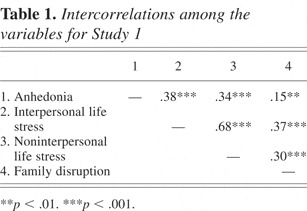
Procedures. Participants completed the measures at two waves, separated by approximately 6 months, during a classroom administration. Researchers read each item and response option aloud as participants followed along and recorded their responses. Table 1 presents intercorrelations among anhedonia, interpersonal and noninterpersonal stress, and family disruption (0 = absent, 1 = present).
Intercorrelations among the variables for Study 1

Measures.
Anhedonia. Adolescents completed the anhedonia subscale from the Youth Mood and Anxiety Symptom Questionnaire (Y-MASQ; Rudolph, Lambert, Osborne, & Gathright, 2006) to assess experiences of anhedonia during the previous 2 weeks. This subscale includes eight items (e.g., “I felt depressed.” “I did not enjoy anything.” “I felt like nothing really mattered to me.” “I did not feel like doing things that I usually like to do.”), rated on a 5-point scale (1 = not at all, 5 = very much). This subscale was derived from factor analysis of the Y-MASQ (Rudolph et al., 2006) and allowed us to distinguish depression from generalized emotional distress or negative affect. The subscale had high internal consistency in the present sample (αs = .80 and .83 at Waves 1 and 2, respectively) and was relatively stable over time (average r = .45, p < .001). The anhedonia subscale correlated with scores on the Children's Depression Inventory (CDI; Kovacs, 1980/1981; average within-wave r = .63, p < .001). Scores were computed as the average of the eight items, with higher scores reflecting more anhedonia (M = 1.65, SD = 0.66, range = 1–4.75). Although the study involved a representative community sample, a considerable number of youth experienced significant depressive symptoms. Specifically, 15% of youth had CDI scores in the moderate to severe range (i.e., 13 or above).
Life stress. Adolescents completed a modified version of the Life Events Questionnaire (Robinson, Garber, & Hilsman, 1995). Several events from the original 35-item version were omitted because they were less relevant to this age group (e.g., pregnancy, beginning or ending of jobs). A few events were added that were not widely represented in the original version (e.g., peer events and academic failure events). The final revised version included 37 stressful events across different life domains (e.g., family, peer, school, health, finances).
Adolescents first indicated whether they had experienced each of the events in the last 6 months. Then they rated the stressfulness of each experienced event on a 5-point scale (1 = not bad at all, 5 = horrible). Because ratings of stressfulness might be confounded with exposure to prior stress or symptoms of depression, a nomothetic method was used to determine the event weightings (see Caldwell, Rudolph, Troop-Gordon, & Kim, 2004; Turner & Cole, 1994). Specifically, the average impact rating across all adolescents who had experienced each event was calculated. This average rating was then used to weight the event for each adolescent. This procedure yielded information about the objective impact of the stressors. Each event was categorized as interpersonal (events that involve a significant interaction between the youth and another person or events that directly affect the relationship between the youth and another person; e.g., a close friend moved away) or noninterpersonal (e.g., failure of a class). High reliability (95% agreement) was found for event categorization. Separate interpersonal stress scores (M = 8.38, SD = 7.48, range = 0–45.68) and noninterpersonal stress scores (M = 7.93, SD = 6.61, range = 0–37.71) were calculated by summing the event weightings across relevant events experienced by each youth.
Family disruption. Adolescents completed a questionnaire assessing their exposure to family disruption involving a significant parent–child separation or loss (Rudolph, Kurlakowsky, & Conley, 2001). The adolescents responded to two general probes regarding whether they had experienced a significant separation from their mother or father. If either of these items was positively endorsed, adolescents indicated the cause of the separation or loss based on a checklist of eight possible reasons: parental divorce or separation, parental death, placement in foster care, placement with another relative, parental abandonment (i.e., never lived with parent), parental hospitalization, parent taking care of sick relative, and parent away for job. These reasons were generated based on a review of relevant research (e.g., Kessler, Davis, & Kendler, 1997; Kessler & Magee, 1993) and on prior data from an open-ended questionnaire that elicited information from youth and parents about causes for parent–child separation or loss. Adolescents also indicated the duration of the separation or loss (<1 month, >1 month, >1 year, all their life). Because the focus in the present study was on major interpersonal disruptions, the disruption group included adolescents who experienced separations of >1 year and the no disruption group included adolescents who experienced no separations or separations of <1 year.
Based on these guidelines, 251 adolescents experienced no significant disruption and 130 adolescents experienced a significant disruption involving one (82.3%) or both (17.7%) parents (data were missing from 18 adolescents). Of those adolescents who experienced a significant separation from their mother, almost 90% endorsed placement in foster care (27.6%), placement with another relative (27.6%), parental divorce or separation (20.7%), or maternal abandonment (i.e., never lived with mother; 10.3%) as the reason for the separation. A few adolescents (n = 4) endorsed maternal hospitalization (6.9%), maternal death (3.4%), and mother was away for job (3.4%).
Of those adolescents who experienced a significant separation from their father, about 90% endorsed parental divorce or separation (58.5%), paternal abandonment (17.9%), placement in foster care (6.5%), or placement with another relative (6.5%) as the reason. A few adolescents (n = 13) endorsed father was away for job (4.9%), paternal death (3.3%), father taking care of sick relative (.8%), and other (e.g., paternal imprisonment; 1.6%) as the reason. In cases where adolescents experienced more than one significant separation from their mother or father, the separation of the longest duration was used to categorize them.
Pubertal development. Youth completed the PDS (Petersen et al., 1988) to assess their level of physical maturation. The PDS is composed of five questions that assess stage of growth spurt, body hair, skin changes, voice change and facial hair (boys), and breast development and menarcheal status (girls). Each item is rated on a 4-point scale (1 = no development, 2 = development has just begun, 3 = development is definitely underway, 4 = development is complete). Onset of menarche is rated using a dichotomous response (1 = no, 4 = yes). The PDS has been well validated across several studies (Brooks-Gunn, Warren, Rosso, & Gargiulo, 1987; Petersen et al., 1988). Scores on the PDS are moderately correlated with physician ratings of the Tanner stages (Brooks-Gunn et al., 1987). This measure was added to the study at Wave 2, and thus scores are only available at this time (α = .70 for girls and .56 for boys).
Youth were divided into two groups based on their scores on this measure: youth scoring at or below a 2 (prepubertal) and youth scoring above a 2 (pubertal). This cutoff reflects a conceptually meaningful categorization of youth whose development had not yet begun or was barely underway versus those whose development was underway.
Results
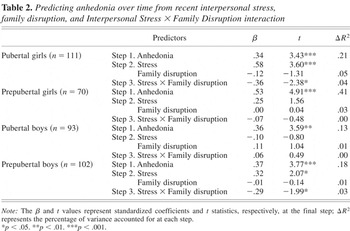
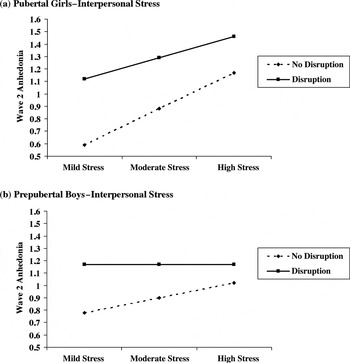
Overview of analytic approach. To examine whether the effect of childhood adversity varied at different developmental stages, separate analyses were conducted in pubertal and prepubertal youth. Specifically, a series of hierarchical multiple regression analyses was conducted to examine whether a history of family disruption moderated the effect of recent stress (interpersonal and noninterpersonal) on subsequent anhedonia. For each analysis, Wave 1 anhedonia was adjusted for in the first step, the main effects of recent stress, family disruption, and gender were entered in the second step, all two-way interactions were entered in the third step, and the three-way interactions were entered in the fourth step. The continuous predictors were mean centered. Effects for interpersonal and noninterpersonal stress were entered in the same equations to examine their independent contribution. When the effects for noninterpersonal stress were nonsignificant, follow-up regressions were conducted excluding these effects. Significant interactions were interpreted by solving the unstandardized regression equation to predict anhedonia from stress for the disruption and no disruption groups. Findings for interpersonal stress are summarized in the text, Table 2, and Figure 2. Because the findings for noninterpersonal stress were nonsignificant, these are summarized briefly in the text. The table and figure display results of the analyses for interpersonal stress that exclude the nonsignificant effects of noninterpersonal stress.
Predicting anhedonia over time from recent interpersonal stress, family disruption, and Interpersonal Stress × Family Disruption interaction


Interpersonal Stress × Family Disruption interactions in the prediction of subsequent anhedonia for (a) pubertal girls and (b) prepubertal boys. The analyses adjust for prior anhedonia.
Pubertal youth. In pubertal youth, a significant Interpersonal Stress × Family Disruption × Gender interaction was found (β = −.40, t = −1.99, p < .05). The Noninterpersonal Stress × Family Disruption × Gender interaction (β = .01, t = 0.03, ns) and the Noninterpersonal Stress × Family Disruption interaction (β = −.15, t = −0.83, ns) were nonsignificant. Thus, effects for noninterpersonal stress were excluded from follow-up analyses. To clarify the nature of the Interpersonal Stress × Family Disruption × Gender interaction, separate regressions were conducted in pubertal girls and boys. As displayed in Table 2, the two-way interaction for interpersonal stress was significant in girls but not boys. Decomposition of the interaction in girls revealed that interpersonal stress was significantly associated with subsequent anhedonia in youth who had not experienced a significant family disruption (β = .35, t = 3.39, p < .001), but not in those who had (β = .24, t = 1.24, ns). As reflected in Figure 2a, the nature of this interaction was consistent with a stress-sensitization effect. Specifically, pubertal girls who were exposed to a family disruption were more anhedonic at Wave 2, after adjusting for Wave 1 anhedonia, even following the experience of mild to moderate interpersonal stress. Pubertal girls who were not exposed to a family disruption showed low levels of Wave 2 anhedonia when they experienced mild stress, but levels more similar to those of the disruption group when they experienced high levels of stress. For pubertal boys, interpersonal stress did not significantly predict Wave 2 anhedonia.
Prepubertal youth. In prepubertal youth, the main effects, two-way interactions, and three-way interactions for both interpersonal and noninterpersonal stress were nonsignificant (|βs| ≤ .18, |ts| ≤ 1.21, ns).
Summary of Study 1 results. Results from Study 1 indicated that a history of family disruption lowered pubertal girls' threshold for reactivity to interpersonal stress, such that they displayed heightened anhedonia, adjusting for earlier anhedonia, following even mild levels of stress. In contrast, pubertal girls with no history of family disruption displayed heightened anhedonia only when they were exposed to high levels of interpersonal stress. Stress-sensitization effects did not emerge in the context of noninterpersonal stress.
Although no significant main effects or interaction effects were found in prepubertal youth in the preliminary analysis, the pattern of effects in Table 2 indicated a significant Interpersonal Stress × Family Disruption interaction in prepubertal boys. Thus, we further probed the nature of this interaction on an exploratory basis (see Figure 2b). Decomposition of the interaction revealed that interpersonal stress was associated with subsequent anhedonia in youth who had not experienced a significant family disruption (β = .22, t = 1.98, p = .05) but not in those who had (β = −.03, t = −.19, ns). As reflected in the figure, prepubertal boys who were exposed to a family disruption were more anhedonic at Wave 2, after adjusting for Wave 1 anhedonia, even following the experience of mild interpersonal stress. Prepubertal boys who were not exposed to a family disruption showed low levels of Wave 2 anhedonia when they experienced mild stress, but levels similar to those of the disruption group when they experienced high levels of stress. Although this pattern was similar to that observed in pubertal girls, it needs to be interpreted with caution because of the absence of a significant three-way interaction with gender.
Study 2
Method
Participants. Participants were 147 fourth to eighth graders (85 girls, 62 boys; M = 12.39 years, SD = 1.23; 78.9% White, 12.9% African American, and 8.2% other), and their female caregivers who participated in a study of youth depression. Families had a range of income levels ($0–14,999 [6.3%], $15–29,999 [9.2%], $30–44,999 [23.9%], $45–59,999 [25.4%], $60,000–74,999 [15.5%], $75,000–89,999 [6.3%], and over $90,000 [13.4%]). Families resided in small urban and rural Midwestern towns. Of the 147 female caregivers, 89.1% were biological mothers, 3.4% adoptive mothers, 2.7% aunts, 2.0% grandmothers, 2.0% stepmothers, and .7% other. Fifteen of the youth did not have a male caregiver in the home. The remainder of the male caregivers included 68.7% biological fathers, 13.6% stepfathers, 2.7% adoptive fathers, 1.4% uncles, 1.4% grandfathers, and 2.0% other.
These participants were a subset of 167 youth who comprised the full sample for a larger study of youth depression. The 147 youth were selected based either on their completion of the Pubertal Development Scale (n = 132) or the availability of information regarding their menarcheal status (n = 15 girls). Because menarcheal status was strongly correlated with pubertal status as measured by the remainder of the PDS items (r = .69, p < .001), these girls were included in the analyses. Furthermore, menarcheal status has been used as a sole index of puberty in prior studies of depression (Hayward, Gotlib, Schraedley, & Litt, 1999). The subset of youth who were included and excluded from the present analyses did not differ in ethnicity (White vs. minority), χ2 (1) = .81, ns, age, t (165) = .57, ns, depression, t (165) = 1.15, ns, interpersonal or noninterpersonal stress, ts (165) = .29 and 1.36, ns, or adversity, t (165) = .32, ns. They did differ in gender, χ2 (1) = 19.67, p < .001. However, the gender difference was not because of a differential completion rate of the PDS in girls versus boys, χ2 (1) = .59, ns, but rather the fact that we were able to include a small subset of girls but not boys who had not completed the PDS. Analyses were conducted with and without the girls who were included based on menarcheal status, and the pattern of results was highly similar. We chose to report results from the analyses that included these girls to maximize our inclusion of youth from the original study.
Participants for the larger study were recruited based on school-wide screenings for depressive symptoms using the CDI (Kovacs, 1980/1981). Youth with a range of CDI scores were recruited for the study, oversampling those with CDI scores above 18. Because some of the youth who participated in the schoolwide screenings also participated in Study 1, there was some overlap in the samples for the two studies (13% of the youth in Study 1 also participated in Study 2).
Procedures. Primary female caregivers were contacted by telephone to determine their interest in participating in the study. Participating families met with two interviewers for a 3- to 4-hr assessment. One interviewer conducted diagnostic interviews and the other interviewer conducted life stress interviews. Caregivers and youth were interviewed separately. Families were given a financial reimbursement and youth were given a gift certificate for their participation.
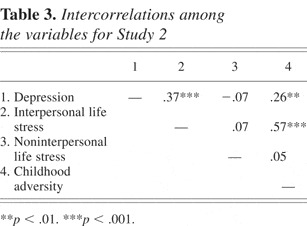
Measures. Table 3 presents intercorrelations among the measures. It is notable that noninterpersonal stress was not significantly associated with depression, interpersonal stress, or childhood adversity in this study, whereas these correlations were significant and quite a bit larger in Study 1. This discrepancy might be because of a better differentiation between interpersonal and noninterpersonal stress using interview-based measures than questionnaire-based measures.
Intercorrelations among the variables for Study 2

Depression. The Kiddie Schedule for Affective Disorders and Schizophrenia—Epidemiologic Version 5 (Orvaschel, 1995) was administered to youth and their caregivers to assess youth depression. Interviews were conducted by a faculty member in clinical psychology, a postdoctoral student in clinical psychology, several psychology graduate students, or a post-BA-level research assistant. Interviewers received intensive training in the assessment and diagnosis of psychopathology in youth, and all interviews were coded through consultation with a clinical psychology faculty member. A best-estimate approach (Klein, Ouimette, Kelly, Ferro, & Riso, 1994) was used to combine information from the caregiver and youth.
Based on Diagnostic and Statistical Manual of Mental Disorders criteria (American Psychiatric Association, 1994) regarding the number, severity, and frequency of symptoms and resulting impairment, ratings of depressive symptoms were assigned on a 5-point scale: 0 = no symptoms, 1 = mild symptoms, 2 = moderate symptoms (consistent with a minor depressive episode), 3 = diagnosis with mild to moderate impairment, 4 = diagnosis with severe impairment. Separate ratings were assigned for each category of depression (e.g., major depression, dysthymia) and each episode of depression during the year preceding the interview, including the present. These ratings were then summed to create continuous depression scores (M = .86, SD = 1.58, range = 0–9). Higher ratings reflected more severe symptoms within a single diagnostic category, the presence of symptoms from multiple categories, and/or multiple episodes of depression (see Rudolph et al., 2000). Of the 147 youth, 12.9% met diagnostic criteria for major depression or dysthymia within the past year (i.e., a rating of 3 or 4 for at least one episode of major depression or dysthymia). An additional 10.2% had moderate symptoms of major depression, dysthymia, or other depressive disorders within the past year (i.e., a rating of 2 for at least one episode of major depression, dysthmia, or other depressive diagnosis).
Reliability of these ratings was evaluated based on independent coding of 25% of the audiotaped interviews. Strong reliability was found for both continuous (one-way random-effects intraclass correlation coefficient [ICC] = .95) and categorical (Cohen weighted κ = .96) depression scores.
Life stress. Youth and their caregivers completed the Youth Life Stress Interview, an adaptation of the Child Episodic Life Stress Interview (Rudolph et al., 2000; Rudolph & Hammen, 1999). This semistructured interview assesses the nature and intensity of life stress using the contextual threat method (Brown & Harris, 1978). Specific, detailed probes were used to elicit objective information separately from youth and caregivers about youths' experience of episodic stressors across several life domains during the preceding year (e.g., school, same-, and opposite-gender peer relationships; parent–child relationships; health). First, interviewers provided a general probe to elicit information about the occurrence of stressful events in the past year. Following the general probe, interviewers probed for specific stressful events within a variety of domains (e.g., an argument with a parent, failure of a test, a friend moving away, a serious injury). Based on detailed follow-up questions concerning the timing, duration, and context of the stressors, interviewers prepared a narrative summary of each event. This information was presented to a team of coders, blind to the youth's diagnosis and subjective reaction to the events.
Consensual ratings were assigned by integrating information across youth and caregiver reports. For each life event, the team rated on a 5-point scale the objective stress or negative impact that would be associated with the event for a typical youth in the same circumstances (events that were rated “no negative stress/impact” were excluded from analyses). The team also categorized each event according to its content: interpersonal (events that involved a significant interaction between the youth and another person or events that directly affected the relationship between the youth and another person) and noninterpersonal. For example, an argument with a parent or a friend moving away would be coded as interpersonal stressors, whereas failing a test or being ill would be coded as noninterpersonal stressors. Composite scores of interpersonal stress (M = 9.05, SD = 7.06, range = 0–36) and noninterpersonal stress (M = 6.29, SD = 4.41, range = 0–21.50) were calculated by summing the impact ratings across relevant events.
For reliability purposes, information about 160 life events was presented to two independent coding teams. High reliability was found for ratings of episodic stress impact (ICC = .90) and event content (Cohen κ = .92).
Childhood adversity. The lifetime adversity section of the Youth Life Stress Interview, developed for the present study, was administered to youth and their caregivers. This interview assesses youths' exposure to severe negative life events and circumstances across their lifetime (up until 1 year prior to the interview) using the same type of contextual threat method as the assessment of recent life events. This time frame was used to ensure that reports of childhood adversity did not overlap with reports of recent stress, which were assessed in the year prior to the interview. First, a general probe was used to assess exposure to particularly stressful events and circumstances, emphasizing that the focus was on very serious rather than everyday problems. Second, specific probes were used to assess the occurrence of the following types of adversity: death of a close family member or friend, extended separation from parents, parental separation or divorce, exposure to severe marital conflict, and severe chronic illness of a close family member or friend. Follow-up questions were asked as needed to assess the context of the event. An independent rating team provided a consensual rating on a 10-point scale that reflected the overall level of adversity experienced by youth, considering the likely impact of the events for a typical child in the same circumstances (M = 3.27, SD = 2.00, range = 1–10). For reliability purposes, two independent teams of raters coded a subset of 40 interviews. High reliability was found for ratings of adversity (ICC = .99).
Pubertal development. Youth completed the PDS (Petersen et al., 1988) to assess their level of pubertal development (see description in Study 1). The measure was available for 132 youth (α = .83 for girls and .67 for boys). Youth who were missing this measure either entered the study before we began to administer the scale (n = 24) or declined completing the scale (n = 11). As noted earlier, information was available about menarcheal status for an additional 15 girls.
Results
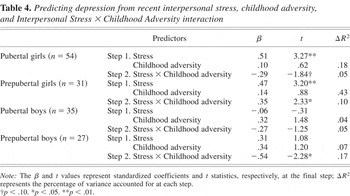
Overview of analytic approach: Continuous scores. To examine whether the effect of childhood adversity varied at different developmental stages, separate analyses were once again conducted in pubertal and prepubertal youth. Specifically, a series of hierarchical multiple regression analyses was conducted to examine whether a history of adversity moderated the association between recent stress (interpersonal and noninterpersonal) and depression. For each analysis, the main effects of recent stress and adversity were entered in the first step and the two-way interactions were entered in the second step. The predictors were mean centered. Effects for interpersonal and noninterpersonal stress were entered in the same equations to examine their independent contribution. Significant interactions were interpreted by solving the unstandardized regression equation to predict depression from stress at low (−1 SD), moderate (mean), and high (+1 SD) levels of adversity. Findings for interpersonal stress are summarized in the text, Table 4, and Figure 3. Because the findings for noninterpersonal stress were nonsignificant, these are summarized briefly in the text. The table and figure display results of the analyses for interpersonal stress that exclude the nonsignificant effects of noninterpersonal stress.
Predicting depression from recent interpersonal stress, childhood adversity, and Interpersonal Stress × Childhood Adversity interaction


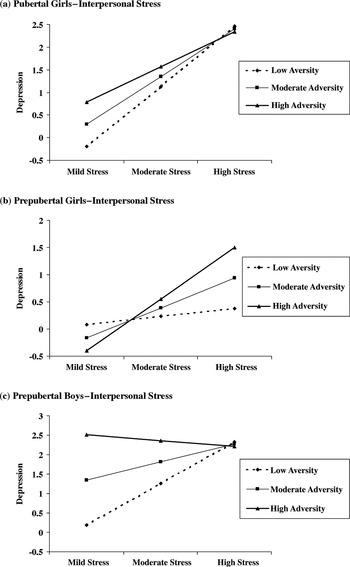
Interpersonal Stress × Childhood Adversity interactions in the prediction of depression for (a) pubertal girls, (b) prepubertal girls, and (c) prepubertal boys.
Pubertal youth. The regression analysis for pubertal girls revealed a marginally significant Interpersonal Stress × Childhood Adversity interaction (β = −.29, t = −1.76, p < .10) and a nonsignificant Noninterpersonal Stress × Childhood Adversity interaction (β = .07, t = 0.55, ns; see Table 4 for results of the analysis that excludes noninterpersonal stress). Decomposition of the Interpersonal Stress × Childhood Adversity interaction revealed that recent interpersonal stress was more strongly associated with depression in girls who were exposed to low levels of adversity (β = .67, t = 3.43, p < .001) than in those who were exposed to high levels of adversity (β = .34, t = 2.14, p < .05). Stress was moderately associated with depression in pubertal girls who were exposed to moderate levels of adversity (β = .51, t = 3.27, p < .01). As reflected in Figure 3a, the nature of this interaction was consistent with a stress-sensitization effect. Specifically, pubertal girls who were exposed to high levels of adversity showed some symptoms of depression even when they experienced mild to moderate recent interpersonal stress. Pubertal girls who were exposed to low levels of adversity showed very low levels of symptoms when they experienced mild interpersonal stress. At high levels of interpersonal stress, pubertal girls experienced symptoms of depression between those reflecting a minor and major depressive episode, regardless of their exposure to adversity.
The regression analysis for pubertal boys revealed a nonsignificant Interpersonal Stress × Childhood Adversity interaction (β = −.22, t = −0.82, ns) and a nonsignificant Noninterpersonal Stress × Childhood Adversity interaction (β = −.07, t = −0.29, ns).
Prepubertal youth. The regression analysis for prepubertal girls revealed a significant Interpersonal Stress × Childhood Adversity interaction (β = .56, t = 3.17, p < .01) and a nonsignificant Noninterpersonal Stress × Childhood Adversity interaction (β = .26, t = 1.66, ns; see Table 4 for results of the analysis that excludes noninterpersonal stress). Decomposition of the Interpersonal Stress × Childhood Adversity interaction revealed that interpersonal stress was significantly associated with depression in girls exposed to high (β = .80, t = 3.96, p < .001) and moderate (β = .47, t = 3.20, p < .01) levels of adversity, but not those exposed to low levels of adversity (β = .14, t = 0.69, ns). As reflected in Figure 3b, the nature of this interaction was consistent with a stress-amplification effect. Specifically, prepubertal girls who were exposed to high levels adversity showed heightened depression when exposed to severe but not mild levels of recent interpersonal stress. Prepubertal girls without a history of adversity showed low levels of depression regardless of their exposure to recent stress.
The regression analysis for prepubertal boys revealed a significant Interpersonal Stress × Childhood Adversity interaction (β = −.56, t = −2.18, p < .05) and a nonsignificant Noninterpersonal Stress × Childhood Adversity interaction (β = −.02, t = −.09, ns; see Table 4 for results of the analysis that excludes noninterpersonal stress). Decomposition of the Interpersonal Stress × Childhood Adversity interaction revealed that recent interpersonal stress was associated with depression in boys who were exposed to low levels of adversity (β = .66, t = 1.82, p < .10) but not those exposed to moderate (β = .31, t = 1.08, ns) or high (= −.05, t = −.16, ns) levels of adversity. As reflected in Figure 3c, the nature of this interaction was consistent with a stress-sensitization effect. Specifically, prepubertal boys who were exposed to high levels of adversity showed significant symptoms of depression even when they experienced mild to moderate recent interpersonal stress. Prepubertal boys who were exposed to low levels of adversity showed very low levels of symptoms when they experienced mild interpersonal stress. At high levels of interpersonal stress, prepubertal boys experienced symptoms of depression between those reflecting a minor and major depressive episode, regardless of their exposure to adversity.1
Because of the partial overlap in participants across Studies 1 and 2, we reanalyzed the data omitting youth who had participated in Study 1. The pattern of results was highly similar, with one exception: the Interpersonal Stress × Childhood Adversity interaction was only marginally significant in prepubertal boys because of the decrease in the sample size. Effect sizes were slightly larger in the reduced sample with the exception of a smaller effect size for the interaction in pubertal boys (which was consistent with the prediction that this effect would not be significant in pubertal boys). Specifically, the Interpersonal Stress × Childhood Adversity interaction accounted for an additional 9% of the variance in pubertal girls, 11% in prepubertal girls, 1% in pubertal boys, and 19% in prepubertal boys, beyond the main effects. Even though the effect sizes were slightly larger in these analyses, we chose to present the findings for the full sample given the relatively small numbers in each group in the reduced sample, which would preclude our ability to conduct categorical analyses.
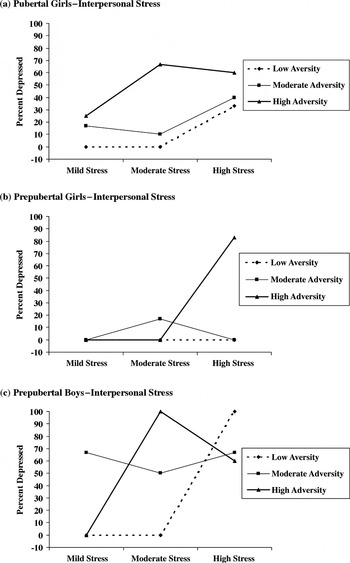
Overview of analytic approach: Categorical scores. An additional set of logistic regression analyses was conducted to examine whether a similar pattern of effects arose for interpersonal stress when predicting categorical depression scores. Because of the limited sample size of youth who met diagnostic criteria for depression, particularly when the youth were further divided by gender and pubertal status, these analyses distinguished between youth who experienced no or mild symptoms of depression versus youth who met diagnostic criteria (i.e., ratings of 3 or 4 on the 0–4 scale) or who met criteria for moderate symptoms (i.e., ratings of 2 on the 0–4 scale; e.g., youth who experienced minor depressive episodes or youth who experienced significant symptoms of dysthymia for <1 year). Parallel to the analyses for continuous scores, the main effects of recent stress and childhood adversity were entered in the first step and the two-way interaction was entered in the second step. The predictors were mean centered. The dependent variable in each equation was the presence or absence of significant depression. Figure 4 presents graphic depictions of the interactions. These graphs show the percentage of youth who met criteria for significant depression at low (bottom third of sample), moderate (middle third of sample), and high (top third of sample) levels of interpersonal stress and childhood adversity.

The percentage of youth with significant depression (moderate symptoms or diagnoses) in low, moderate, and high childhood adversity and interpersonal stress groups for (a) pubertal girls, (b) prepubertal girls, and (c) prepubertal boys.
Pubertal youth. The logistic regression analysis for pubertal girls revealed a significant main effect of interpersonal stress, B = .18, SE = .07, Δχ2 (1) = 8.57, p < .01, a nonsignificant main effect of childhood adversity, B = .51, SE = .28, Δχ2 (1) = .38, ns, and a significant Interpersonal Stress × Childhood Adversity interaction, B = −.05, SE = .02, Δχ2 (1) = 5.78, p < .05. As reflected in Figure 4a, the nature of this interaction was consistent with a stress-sensitization effect. Specifically, pubertal girls who were exposed to high levels of adversity were highly likely to experience significant depression when they experienced moderate (67%) or high (60%) stress. Even at mild stress levels, 25% of pubertal girls exposed to high adversity experienced significant depression, compared to none of the girls exposed to low adversity. Girls exposed to low and moderate levels of adversity appeared unaffected by moderate stress, but were reactive to high levels of stress, although not as reactive as girls exposed to high adversity.
The logistic regression analysis for pubertal boys revealed a nonsignificant main effect of interpersonal stress, B = .07, SE = .16, Δχ2 (1) = .01, ns, a nonsignificant main effect of childhood adversity, B = .62, SE = .45, Δχ2 (1) = 1.29, ns, and a nonsignificant Interpersonal Stress × Childhood Adversity interaction, B = −.10, SE = .10, Δχ2 (1) = 2.27, ns.
Prepubertal youth. The logistic regression analysis for prepubertal girls revealed a significant main effect of interpersonal stress, B = .46, SE = .28, Δχ2 (1) = 9.95, p < .01, a significant main effect of childhood adversity, B = .81, SE = .58, Δχ2(1) = 4.17, p < .05, and a significant Interpersonal Stress × Childhood Adversity interaction, B = .34, SE = .19, Δχ2 (1) = 4.58, p < .05. As reflected in Figure 4b, the nature of this interaction was consistent with a stress-amplification effect. Specifically, prepubertal girls exposed to high adversity were more likely to experience significant depression at high (83%) but not mild or moderate (0%) stress levels. Prepubertal girls exposed to low or moderate adversity rarely experienced significant depression regardless of their level of stress (0–17%).
The logistic regression analysis for prepubertal boys revealed a significant main effect of interpersonal stress, B = .16, SE = .09, Δχ2 (1) = 4.49, p < .05, a nonsignificant main effect of childhood adversity, B = .43, SE = .37, Δχ2 (1) = .12, ns, and a significant Interpersonal Stress × Childhood Adversity interaction, B = −.05, SE = .03, Δχ2 (1) = 5.31, p < .05. As reflected in Figure 4c, the nature of this interaction generally was consistent with a stress-sensitization effect. Specifically, prepubertal boys who were exposed to high levels of adversity were highly likely to experience significant depression when they experienced moderate (100%) or high (60%) stress but not mild stress (0%). Prepubertal boys exposed to low levels of adversity experienced significant depression only when exposed to high levels of stress. For boys exposed to moderate levels of adversity, 50–67% experienced significant depression across stress levels.
Summary of Study 2 results. Results from Study 2 indicated that a history of social adversity lowered the threshold of stress reactivity in pubertal girls and prepubertal boys. That is, these two groups demonstrated symptoms of depression even in the presence of mild to moderate levels of recent interpersonal stress. At severe levels of recent interpersonal stress, pubertal girls and prepubertal boys demonstrated heightened depression regardless of their history of adversity. In contrast, a history of social adversity amplified the adverse effect of recent interpersonal stress in prepubertal girls, such that heightened depression occurred only in prepubertal girls exposed to high levels of adversity and severe recent stress. Results were quite consistent across continuous and categorical operationalizations of depression, although results based on the categorical approach should be interpreted with some caution given some of the small sample sizes within particular groups.
Discussion
The present research examined the joint contribution of childhood social adversity and recent stress to depression in youth. Three models of risk were considered to explain the influence of adversity: stress amplification, stress sensitization, and stress inoculation. Findings yielded support for the first two models but not the third. Specifically, a history of adversity heightened reactivity to subsequent interpersonal stress. The pattern of effects differed across pubertal stage and gender.
Stress-sensitization and stress-amplification processes
Consistent with a stress-sensitization model of depression (Gold et al., 1988; Post, 1992; Post et al., 1984), pubertal girls and prepubertal boys with a history of adversity demonstrated a lower threshold of reactivity to recent interpersonal but not noninterpersonal stress than those without a history of adversity. Using a continuous approach to measuring depression, youth with a history of adversity demonstrated higher levels of depression than youth without a history of adversity when exposed to mild or moderate recent stress. At severe levels of stress, either a smaller difference emerged (in the case of pubertal girls) or youth with and without a history of adversity demonstrated similar levels of depression (in the case of prepubertal boys). This smaller gap in depression between the two groups was because of the fact that youth without a history of adversity showed significantly higher levels of depression when exposed to severe than to mild stress. Notably, this pattern was observed across two studies using different methodologies. Results were quite consistent when a categorical index of depression was used. Moreover, analyses using a categorical approach further refined the nature of the stress-sensitization effect by suggesting that the most dramatic effect (i.e., a particularly big difference between stress reactivity in youth who were and were not exposed to social adversity) occurs at moderate levels of stress, although for pubertal girls even mild stress was associated with a small heightened risk for depression.
These effects are consistent with the idea that exposure to adversity sensitizes the stress-response system, such that youth show depressive responses to even relatively mild stress. Because earlier levels of symptoms were adjusted in Study 1, these results are not due merely to the stability of depression in youth with a history of adversity. Although lower levels of stress were sufficient to produce depressive symptoms in youth with a history of adversity, severe stress was still capable of producing depression when it did occur (Monroe & Harkness, 2005), as reflected in the elevated levels of depression in vulnerable youth who experienced high levels of stress.
Evidence for a stress-sensitization effect in pubertal girls was consistent with our hypotheses concerning risk for depression in this group. Prior theory and research suggest that adolescent girls are more reactive to interpersonal stress than are adolescent boys (Ge et al., 1994; Rudolph, 2002), including certain forms of family adversity (Hetherington, 1989; Hetherington & Stanley-Hagan, 1999). Moreover, the transition through puberty has been implicated as a particularly high-risk period for depression onset in girls (Angold, Costello, & Worthman, 1998; Hayward et al., 1999; Wichstrom, 1999). Physical changes of puberty not only reflect underlying biological processes (i.e., hormonal changes) that might increase risk, but also are accompanied by changes in self-perception and social expectations that pose emotional challenges to maturing youth. Girls might face particular challenges because of their dissatisfaction with the physical changes (e.g., increase in body fat and weight; Petersen & Crockett, 1985) coupled with heightened disruption in female relationships during this period (Gore, Aseltine, & Colton, 1993; Rudolph & Hammen, 1999). This backdrop of normative changes and disruption during the pubertal transition might lead even mild interpersonal stressors to “tip the scale” toward depression in girls with a history of adversity.
Of interest, a stress-amplification effect of adversity was observed in prepubertal girls in Study 2. This contrasting pattern was because of differences in stress reactivity between prepubertal and pubertal girls at both mild and severe stress levels. At mild levels of stress, prepubertal girls with a history of adversity showed low levels of depression, in contrast to the higher levels shown by pubertal girls. Perhaps girls with a history of adversity are less reactive to mild interpersonal stress prior to, than during, puberty because their coping resources are not strained by the developmental challenges of puberty. At severe levels of stress, prepubertal girls without a history of adversity did not show heightened depression, in contrast to pubertal girls without a history of adversity. Girls without a preexisting vulnerability might only demonstrate adverse effects of interpersonal stress when they are negotiating the simultaneous challenges of puberty (Simmons & Blyth, 1987). Notably, the absolute level of depression (when measured on a continuum) observed in prepubertal girls exposed to both a history of adversity and severe stress was still lower than that of pubertal girls exposed to both risk factors, consistent with a heightened risk for depression in pubertal girls. It is noteworthy that a stress-amplification effect was not found for prepubertal girls in Study 1. This discrepancy could be because of a variety of differences in the measurement approaches across the two studies, including the use of a more comprehensive assessment of childhood adversity in Study 2, as well as the use of self-report questionnaires in Study 1 versus interview-based measures in Study 2. Additional research is needed to replicate this effect.
Evidence for a stress-sensitization effect in prepubertal boys was not consistent with our hypotheses concerning the heightened risk associated with puberty and with being a girl. Of interest, however, this effect is consistent with research suggesting that prepubertal boys might be particularly sensitive to certain types of family adversity, such as divorce and its associated risks (Hetherington, 1989). Moreover, less mature pubertal status has been linked to greater risk for internalizing symptoms and depressive disorders in boys (Angold et al., 1998; Laitinen-Krispijn, van der Ende, & Verhulst, 1999). Because some of the physical changes of puberty (e.g., increased size and muscle mass) and the social value of these changes (e.g., athleticism, status in the peer group) are desirable in boys (Siegel, Yancey, Aneshensel, & Schuler, 1999), prepubertal boys actually might be more vulnerable to depressive responses to interpersonal stress than pubertal boys. This combined sensitivity to family adversity and to recent interpersonal stress might activate the stress-sensitization process in prepubertal boys.
In sum, this research supported both stress-sensitization and stress-amplification models of childhood adversity and depression, although more consistent support was found for stress sensitization. Whereas stress-sensitization processes are consistent with a seldom-mentioned form of diathesis-stress model, wherein a diathesis lowers the level of stress necessary to precipitate psychopathology (Zubin & Spring, 1977), stress-amplification processes are consistent with a more conventional form of diathesis-stress model, wherein a diathesis is not translated into psychopathology unless youth are exposed to high levels of stress (Monroe & Simons, 1991; Sameroff, 1987).
Mechanisms underlying stress amplification and stress sensitization
Although the present research did not examine the specific mechanisms mediating stress-amplification and stress-sensitization processes, these effects are consistent with theory and research implicating early adversity as a risk factor for both biological and psychological vulnerability to stress. Research in both humans and animals suggests that early exposure to adverse environmental conditions creates changes in the biological systems underlying stress responses (for reviews, see Boyce & Ellis, 2005; Goodman, 2002; Heim & Nemeroff, 2001). For example, exposure to family adversity, such as separation from caregivers, parental loss, maltreatment, institutionalization, and maternal stress, is associated with dysregulation of the hypothalamic–pituitary–adrenal (HPA) axis (e.g., Essex, Klein, Cho, & Kalin, 2002; Gunnar, Morison, Chisolm, & Schuder, 2001; Hart, Gunnar, & Cicchetti, 1995; Sanchez, Ladd, & Plotsky, 2001; Suomi, 1991). Early adversity also contributes to the emergence of dysfunctional social–cognitive processes (e.g., Alloy et al., 2001; Garber & Flynn, 2001; Gibb et al., 2001; Rudolph et al., 2001; Hankin & Abramson, 2001; Rose & Abramson, 1992), insecure attachment (Bowlby, 1969; O'Connor, 2003), and emotion regulation difficulties (Cicchetti & Aber, 1986; Cicchetti & Toth, 1998). Collectively, these studies suggest that early adversity fosters individual differences in the neurobiological and psychological underpinnings of stress reactivity and depression.
One question that arises, however, is when stress reactivity will be expressed in the form of stress amplification versus stress sensitization. Substantial research on vulnerability-stress models of depression yields evidence for stress amplification (e.g., Abela, 2001; Caspi et al., 2003; Hankin, Abramson, & Siler, 2001; Robinson et al., 1995). Why, then, did stress-sensitization effects predominate in the present research? Notably, this pattern of effects is consistent with other research on the interaction between lifetime adversity and recent stress in the prediction of depression (Hammen et al., 2000; Harkness et al., 2006), as well as with research suggesting that severe stressful events more frequently precede episodes of depression in some individuals than in others (e.g., Frank, Anderson, Reynolds, Ritenour, & Kupfer, 1994). Perhaps a history of social adversity represents a more pervasive diathesis for depression than specific individual vulnerabilities (e.g., a negative cognitive style, poor coping skills). The development of multiple vulnerabilities resulting from a history of adversity not only might heighten youths' reactivity to severe stressors, as typically proposed, but also might foster depressive responses to minor challenges, particularly during high-risk developmental periods (e.g., the pubertal transition in girls). Consistent with the idea that stress reactivity can be expressed in different forms, recent theory and research suggest complex and multidetermined interactions between early adversity and recent stressful environments in the prediction of health and psychopathology (Boyce & Ellis, 2005). Thus, additional research is needed to determine under which circumstances stress-sensitization versus stress-amplification models hold, as well as to determine whether unique circumstances might set the stage for stress-inoculation in the form of resilience to depression in the face of stress.
Implications for developmental models of early experience
The present research contributes to emerging models of early experience (e.g., O'Connor, 2003) by providing insight into one way in which adversity alters youths' reactivity to later perturbations in their social contexts. Rather than acting in an additive way to determine risk, earlier experiences interact with recent interpersonal stress to determine risk for depression. However, this conceptualization is more dynamic than traditional diathesis-stress models in that the diathesis is presumed to be activated by early stress, rather than to reflect a stable, dispositional vulnerability.
This research also takes a first step toward understanding the developmental context of risk for depression resulting from childhood adversity. Specifically, findings for girls revealed that stress-amplification processes were activated during the prepubertal period and stress-sensitization processes were activated during the pubertal period. In contrast, findings for boys revealed that stress-sensitization processes were activated during the prepubertal period, whereas pubertal boys seemed unaffected by interpersonal stress regardless of their history of adversity. Other developmental questions await attention. For example, developmental theories suggest possible sensitive periods during which certain experiences might contribute to certain types of outcomes (Curtis & Cicchetti, 2003; O'Connor, 2003). Thus, it is important not only to identify when youth with a history of adversity are most sensitive to recent stress, but also to examine how adversity that occurs at different life stages influences subsequent stress reactivity. Relatedly, the mechanisms underlying stress-sensitization and stress-amplification processes might vary according to the stage of exposure to adversity. For example, exposure to adversity early in life might influence the attachment system and subsequent ability to engage in effective emotion-regulation efforts in the face of stress, whereas exposure during middle childhood might undermine the development of children's sense of self and the emergence of adaptive cognitive systems. Finally, effects might vary across different stages in the course of depression (Harkness et al., 2006). Overall, future research would benefit from a more explicit examination of the timing of adversity and the emergence of particular types of vulnerabilities that drive stress reactivity across development.
Limitations of the present research
The present research provides only a preliminary step toward understanding stress-sensitization and stress-amplification processes associated with social adversity. It is important to note that our assessments of adversity collapsed across varying experiences because an insufficient number of youth were exposed to each type of adversity to conduct separate analyses. In Study 1 we categorized youth according to whether or not they had experienced a family disruption. In Study 2 we created a composite index of social adversity. Composite indexes of risk can be useful because they capture naturally occurring “packages” of correlated stressors (Kazdin & Kagan, 1994, p. 39; Kessler et al., 1997). For this reason, researchers studying childhood adversity and contextual risk often create such composites (e.g., Cicchetti, Rogosch, & Toth, 1998; Dawson et al., 2003; Ellis, Essex, & Boyce, 2005; Hammen et al., 2000). However, collapsing across types of adversity did not allow us to examine whether specific disruptions were particularly potent in triggering stress-sensitization or stress-amplification processes. Because the consequences of adversity might differ according to its type and associated circumstances, additional research is necessary to unpack the various components of childhood adversity that might set into motion stress-sensitization or stress-amplification processes.
Future research also needs to track the emergence of stress reactivity over an extended time period. Theories regarding the role of early experience in vulnerability to psychopathology (O'Connor, 2003; Post, 1992; Post et al., 1984) propose a process that unfolds over time and across developmental stages. In the present study, we examined stress reactivity in youth with and without a history of adversity who differed in their stage of pubertal development, but were not able to follow youth across developmental stages. The use of a prospective design in Study 1 did provide the opportunity to track changes in depression following recent stress, which ensured that our results were not due merely to the stability of depression in youth with a history of adversity. However, longer term investigations are needed to follow ongoing interactions and transactions among youth and their environments across development. Such investigations would clarify whether a history of adversity promotes stress reactivity similarly at early and later stages of life, or whether reactivity to stress intensifies over the course of development.
Finally, it is important to note that both genetic liability and environmental experiences likely contribute to stress-reactivity profiles (Boyce & Ellis, 2005; Ellis et al., 2005). For example, Kendler and colleagues (2001) suggest that a genetic predisposition to depression might be expressed in the form of a “prekindling” effect, such that lower levels of stress are required to precipitate depression in individuals with than without a genetic liability. It is possible that the association between exposure to adversity and stress reactivity in the present study reflects a common genetic vulnerability. Future research therefore needs to investigate the intersection between genetically and environmentally mediated influences on stress reactivity. Relatedly, recent research has identified distinct components of depression that are reflected in traitlike versus statelike factors (Cole, Nolen-Hoeksema, Girgus, & Paul, 2006). It would be interesting to examine whether stress reactivity profiles linked to early adversity differ according to whether depression is operationalized as a traitlike or statelike construct.
Conclusions
The present research revealed that a history of adversity heightened youths' stress reactivity either by lowering their threshold of responsiveness to stress, in the case of pubertal girls and prepubertal boys, or by amplifying the adverse effects of severe stress, in the case of prepubertal girls. Heightened stress reactivity occurred in the context of recent interpersonal but not noninterpersonal stress. This research suggests that stress-sensitization and stress-amplification theories provide useful broad developmental frameworks for conceptualizing and studying how early experience and recent stress intersect in their contribution to psychopathology. Moreover, these findings implicate the critical importance of early intervention programs that interrupt these processes before they set the stage for a self-perpetuating course of depression across development.