Introduction
The Bay of Bengal Large Marine Ecosystem, hereinafter treated as Bay, is an embayment of the North-eastern Indian Ocean bordered by Sri Lanka, India, Bangladesh, Malaysia, Thailand, Myanmar, Indonesia, and the Maldives. It is the largest bay in the world, and is influenced by the second largest hydrologic region, the Ganges–Brahmaputra–Meghna Basin. The Bay is impacted by monsoons, storm surges and tsunamis leading to strong seasonality in water characteristics and productivity. Fisheries in the Bay are multi-specific in nature and use a plethora of gears, resulting in intense fishing pressure, habitat destruction and high bycatch levels (Heileman et al., Reference Heileman, Bianchi, Funge-Smith, Sherman and Hempel2009). Mechanized trawlers with an overall length ranging from 11–15 m operate in the coastal waters at depths of up to 150 m and one among the many non-targeted species landed in considerable amounts is the unicorn leatherjacket, Aluterus monoceros (Linnaeus, 1758), of the family Monacanthidae. The species formed a small component of the trawl fishery as by-catch prior to 2008. Thereafter, during 2008–2011, substantially higher quantities were landed, resulting in A. monoceros emerging as a significant fishery product at most major fish landing centres in the Arabian Sea and Bay of Bengal (Ghosh et al., Reference Ghosh, Thangavelu, Mohamed, Dhokia, Zala, Savaria, Polara and Ladani2011; Kanthan & Zacharia, Reference Kanthan and Zacharia2011; Saleela et al., Reference Saleela, Anil, Jasmine and Raju2011; Varghese et al., Reference Varghese, Thomas, Gandhi and Sreekumar2011; Sethi et al., Reference Sethi, Rajapackiam, Mohan, Rudramurthy and Vasu2012), a tendency continued for several years (Saleh, Reference Saleh2014; Lingappa et al., Reference Lingappa, Naik, Rajesh and Rohit2015). Of late, though catches have declined in comparison to the highs, average landings in the trawl fishery have been steady.
Monacanthids, with 28 genera and 107 species worldwide, are popularly called filefishes in the northern hemisphere, and leatherjackets in the southern hemisphere and are characterized by a deep and laterally compressed body profile. They inhabit the shallow tropical and sub-tropical waters in the continental shelf and are associated with reefs or rocky and sandy bottoms in all the major oceans (Froese & Pauly, Reference Froese and Pauly2019). In the northern Indian Ocean, encompassing the Arabian Sea in the west and the Bay of Bengal in the east, 13 monacanthid species are known to occur, of which only Aluterus monoceros has a fishery importance. The increasing demand of this species for food consumption has caused the price to range from US$1.7–2.3 kg−1 (Rajan et al., Reference Rajan, Bharadiya, Dineshbabu, Jaiswar, Shenoy, Kumar and Rahangdale2019). Aluterus monoceros is a benthopelagic species inhabiting the shelf down to 80 m depth, and it is widely distributed in the Pacific, Atlantic and Indian oceans (Froese & Pauly, Reference Froese and Pauly2019). The species is either solitary or found in pairs, and only occasionally exists in groups of five or six. Juveniles are pelagic and inhabit areas close to reefs while adults nest on sand flats adjacent to reefs in relatively deeper waters (Kuiter & Tonozuka, Reference Kuiter and Tonozuka2001). Apart from its use as a food source, A. monoceros is currently sought after for extraction of gelatin and collagen from its skin. With the skin being relatively thick, it forms an ideal raw material for gelatin and collagen (Ahmad et al., Reference Ahmad, Benjakul and Nalinanon2010; Hanjabam et al., Reference Hanjabam, Kannaiyan, Kamei, Jakhar, Chouksey and Gudipati2015). The species is also gaining importance in the global ornamental trade and is occasionally used in Chinese medicines (Eduardo et al., Reference Eduardo, Bertrand, Fredou, Lira, Lima, Ferreira, Menard and Fredou2020). With ‘Least Concern’ IUCN status, it is not subjected presently to any fishery regulations or conservation measures (IUCN, 2015).
An understanding of breeding and feeding ecology of a species is paramount for the development and application of conservation and management strategies, and is fundamental to understand the functional role within the inhabited ecosystem (Hilborn & Walters, Reference Hilborn and Walters1992). Monacanthids are a highly modified and advanced family and despite considerable non-targeted exploitation, little is known about their life-history traits. Globally, studies on reproduction and diet of monacanthids indicate enormous inter-species variability (Kawase & Nakazono, Reference Kawase and Nakazono1996). Research on their biology, worldwide, is limited to studies on a few species, mostly small, including Cantherhines pardalis (Rüppell, 1837) (Kawase & Nakazono, Reference Kawase and Nakazono1994), Monacanthus tomentosus (Linnaeus, 1758) (Peristiwady & Geistdoerfer, Reference Peristiwady and Geistdoerfer1991), Stephanolepis hispidus (Linnaeus, 1766) (Mancera-Rodríguez & Castro-Hernández, Reference Mancera-Rodríguez and Castro-Hernández2015a, Reference Mancera-Rodríguez and Castro-Hernández2015b), Stephanolepis diaspros (Fraser-Brunner, 1940) (Zouari-Ktari et al., Reference Zouari-Ktari, Bradai and Bouain2008; El-Ganainy & Sabrah, Reference El-Ganainy and Sabrah2013), Thamnaconus modestus (Günther, 1877) (Kim et al., Reference Kim, Choi and Park2013), Nelusetta ayraudi (Quoy & Gaimard, 1824) (Miller & Stewart, Reference Miller and Stewart2013) and Meuschenia scaber (Forster, 1801) (Visconti et al., Reference Visconti, Trip, Griffiths and Clements2018a, Reference Visconti, Trip, Griffiths and Clements2018b).
Notwithstanding the diversity and distribution of monacanthids in the northern Indian Ocean, apart from one study on Aluterus monoceros (Ghosh et al., Reference Ghosh, Thangavelu, Mohamed, Dhokia, Zala, Savaria, Polara and Ladani2011), no information exists on the biology for any species. In fact, the above study (Ghosh et al., Reference Ghosh, Thangavelu, Mohamed, Dhokia, Zala, Savaria, Polara and Ladani2011) was performed on a limited number of samples, and hence could not effectively capture the life-history traits for the species. In a multi-species fishery, as existent in the Bay, for effective ecosystem-based management, understanding the reproductive potential and strategies and trophic interactions is an absolute necessity. With virtually no comprehensive information available worldwide on the reproductive dynamics and trophodynamics of A. monoceros, the present study was aimed to decipher the reproductive biology and food and feeding habits of the species from the western Bay of Bengal in the northern Indian Ocean. Knowledge gained from the study would be baseline information for managing other related monacanthid species inhabiting the northern Indian Ocean. This study would also ensure evolving sustainable management and conservation measures for exploiting monacanthids in the region, more so in the context of increasing importance and demand for this family due to a plethora of uses.
Materials and methods
Sample collection and length composition
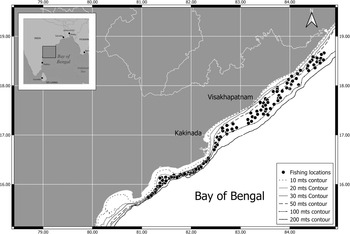
Two commercial mechanized multi-day trawlers, operating bottom trawlnets with cod-end meshes of 30 mm along the western Bay of Bengal from Visakhapatnam (17.696°N 83.301°E) and Kakinada (16.984°N 82.279°E) fishing harbours, respectively at depths ranging from 17–124 m (Figure 1), and performing 2–3 fishing voyages in a month, were provided with log-sheets for recording the fishing data; and random samples of Aluterus monoceros caught by these selected crafts were collected every month for 3 years from January 2017 to December 2019. Samples were not available in April, as a ban on mechanized trawling exists along this coast. The collected iced samples from the fishing ships (N = 1036) were once again placed in insulated ice boxes and were transported to the laboratory of Visakhapatnam Regional Centre of Central Marine Fisheries Research Institute, and analysed on the same day. Total length (TL) of individual fishes was measured to the nearest millimetre (mm) and total weight to 0.1 g precision. Annual and monthly mean TL was recorded and differences in TLs between years and months were tested using Kruskal–Wallis test, followed by Dunn's test for significant variations. Sex was identified by visual examination of the gonads after dissecting the specimens. Total lengths, for each sex, were grouped into 4.0 cm class intervals for studying the length composition. Difference in the distribution of TL between females and males was evaluated using Kolmogorov–Smirnov test. Length-weight relationship was calculated as W = aLb (Le Cren, Reference Le Cren1951) for both sexes. Significant differences in the slopes of the regression lines for males and females were ascertained by Analysis of Covariance (ANACOVA) (Snedecor & Cochran, Reference Snedecor and Cochran1967). Student's t-test was performed to check the nature of the growth, to observe whether the value of the exponent (b) differed significantly from the isometric value of 3. Relative Condition Factor (Kn), the ratio of observed weight to calculated weight using length-weight relation, was estimated as monthly mean for the combined population following Le Cren (Reference Le Cren1951).
Study area showing the sampling sites.

Sex ratio, size at sexual maturity, spawning seasonality and Gonadosomatic Index (GSI)
Sex ratio was worked out based on the numbers of females and males in the sample. Annual, month-wise and size-wise (<40.0 cm TL, 40.0–50.0 cm TL and >50.0 cm TL) homogeneity of sex ratio (1:1) was tested using χ2. A five-stage maturity scale (Immature, Developing, Spawning capable, Regressing and Regenerating) was used to classify the gonads of females and males (Brown-Peterson et al., Reference Brown-Peterson, Wyanski, Saborido-Rey, Macewicz and Lowerre-Barbieri2011). Size at sexual maturity (Lm50) for females and males was determined by logistically fitting the fraction of matured fish binned in 4.0 cm size classes using the procedure of King (Reference King1995), following the formulae P = 1/1 + exp (a + bTL), where P is the predicted mature proportion, TL is the total length and a (intercept) and b (slope) are coefficients of the logistic equation. Linearized values were used for coefficient estimation following regression using least-squares method. Spawning periodicity was estimated from the monthly proportion (percentage) of spawning capable females and males. The Gonadosomatic Index (GSI) was determined for females considering the gonad weight and total weight of the fish using the equation: GSI = (GW/SW) × 100, where GW and SW represent gonadic weight and somatic weight (eviscerated). Significant differences in GSI over years and months were estimated using Kruskal–Wallis test followed by Dunn's test.
Fecundity and egg diameter
Ripe ovaries were carefully dissected out from the abdominal cavity of 94 spawning capable females, weighed to the nearest 0.001 g and then preserved in Gilson's fluid for further studies on fecundity and egg diameter. Ovary subsamples were obtained from the anterior, middle, and posterior regions of the ripe ovaries and absolute fecundity calculated by multiplying the number of eggs in all subsamples to the total ovary weight.
Absolute fecundity = (weight of the ovary/average weight of the sample) × number of eggs in the sample
Relative fecundity was expressed in terms of number of eggs per unit weight (g) of the fish. Using the least square method (Snedecor & Cochran, Reference Snedecor and Cochran1967), regression relation was fitted between absolute fecundity and TL and weight. Egg diameter was measured in 400–500 eggs taken from each ripe ovary, using a calibrated ocular micrometer under a compound microscope.
Feeding intensity and preference
Stomachs from the individual fish were cut open and the total contents were identified to the lowest taxon possible and weighed to a precision of 0.001 g. For prey types which could not be identified macroscopically, stomach contents were diluted in saline water and aliquots, ensuring at least half of the total volume, were observed under an inverted microscope with a magnification of up to 100× for identifying the microscopic prey items. Stomach state was evaluated based on the degree of fullness and was classified on a six-point scale; empty (0% full), trace (<5% full), 25% full, 50% full, 75% full and 100% full. The states were subsequently reduced to three categories for analysis on feeding intensity: empty and trace, part-full (25% and 50% full) and full (75% and 100% full). Feeding intensity was assessed based on years, months and sizes (<40.0 cm TL, 40.0–50.0 cm TL and >50.0 cm TL) from the state of the stomach. Additionally, predator–prey weight ratio was estimated following the log-transformed equation proposed by Hahm & Langton (Reference Hahm and Langton1984), to assess the feeding intensity.
For species with higher prey diversity, a combination of relative-fullness and presence-absence (frequency of occurrence) of prey taxon is the optimal approach for studying the dietary composition (Amundsen & Hernandez, Reference Amundsen and Hernandez2019), and the same was used to assess the diet contents. Numerical and gravimetric approaches for prey quantification were not preferred as the prey types varied enormously with respect to body sizes, and under such circumstances, numerical and gravimetric estimates of dietary composition tend to overemphasize the importance of the smallest and biggest prey, respectively (Hyslop, Reference Hyslop1980; Baker et al., Reference Baker, Buckland and Sheaves2014). For determining relative-fullness, total fullness percentage as described, is visually assessed on a six-point scale and the fullness percentage contribution of each prey category is assigned a value summing up to the total stomach fullness percentage. The Index of Preponderance (IP) (Natarajan & Jhingran, Reference Natarajan and Jhingran1961), combining occurrence and bulk percentages, was used to rank prey species in order of mathematical importance within the diet. This index is globally recognized as the most suitable for measuring prey dominances (Marshall & Elliott, Reference Marshall and Elliott1997). Feeding preference was evaluated by seasons (winter: December–February, summer: March–May, monsoon: June–August and post-monsoon: September–November), and by sizes (<40.0 cm TL, 40.0–50.0 cm TL and >50.0 cm TL). IP% was square-root transformed and Bray–Curtis similarity index was estimated for measuring the prey overlap or similarity. Similarity percentage (SIMPER) was used to identify prey species that could discriminate between seasons, and sizes. One-way analysis of similarity (ANOSIM), a multivariate analysis of variance, was used to evaluate significant differences in prey similarities between seasons and between sizes. SIMPER and ANOSIM were based on Bray–Curtis similarity values and were performed using PRIMER v. 6 (Clarke & Gorley, Reference Clarke and Gorley2006).
Results
Length composition
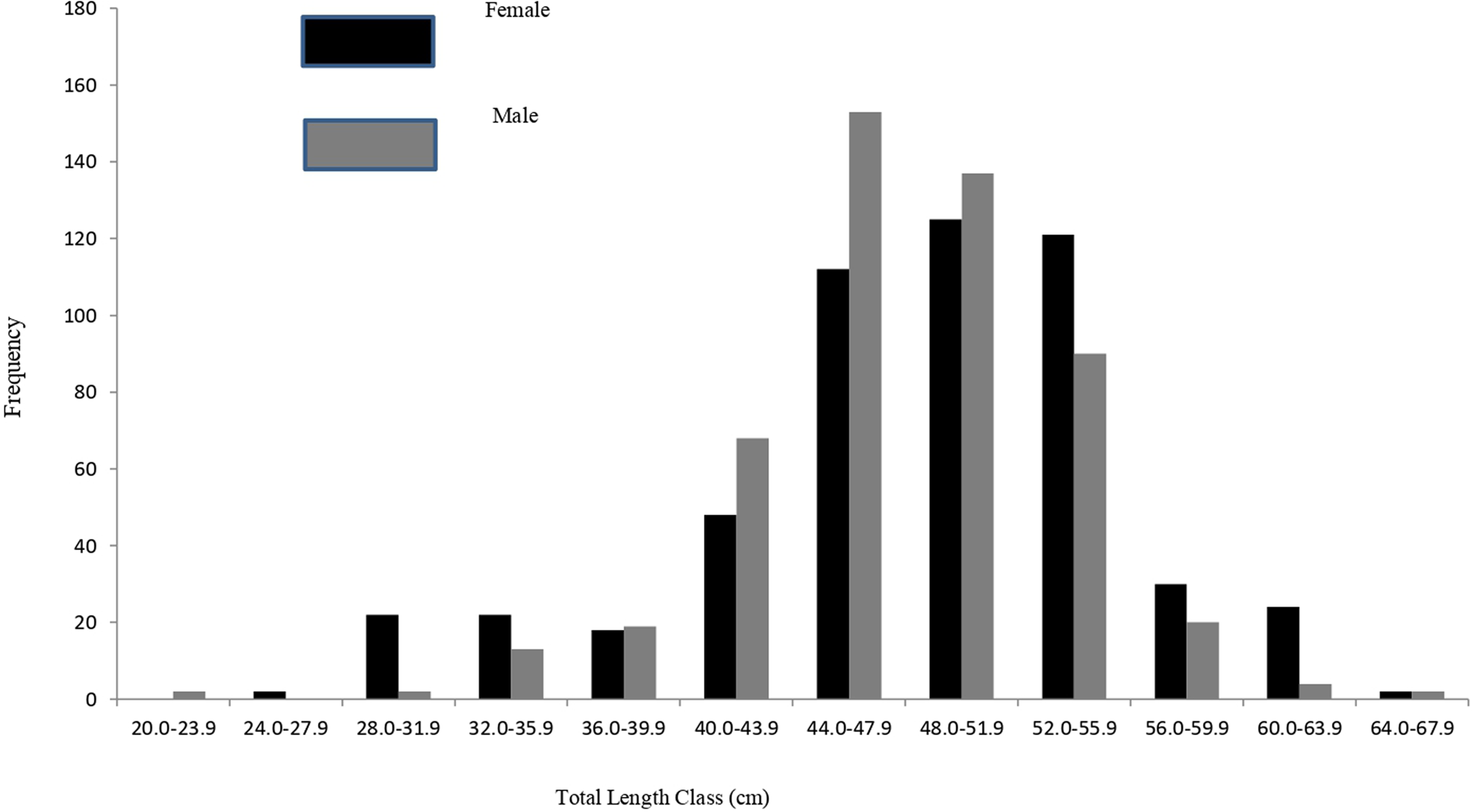
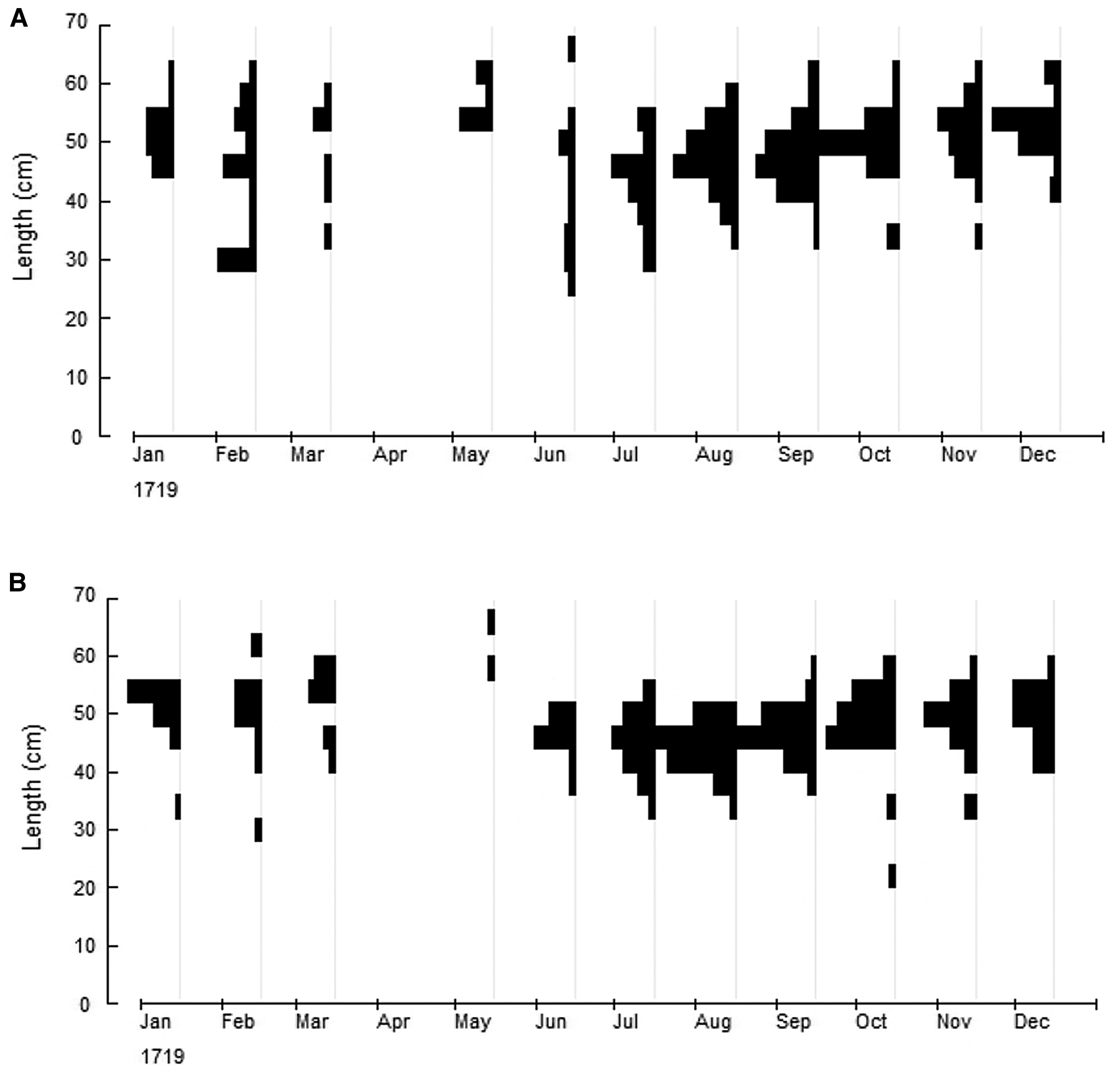
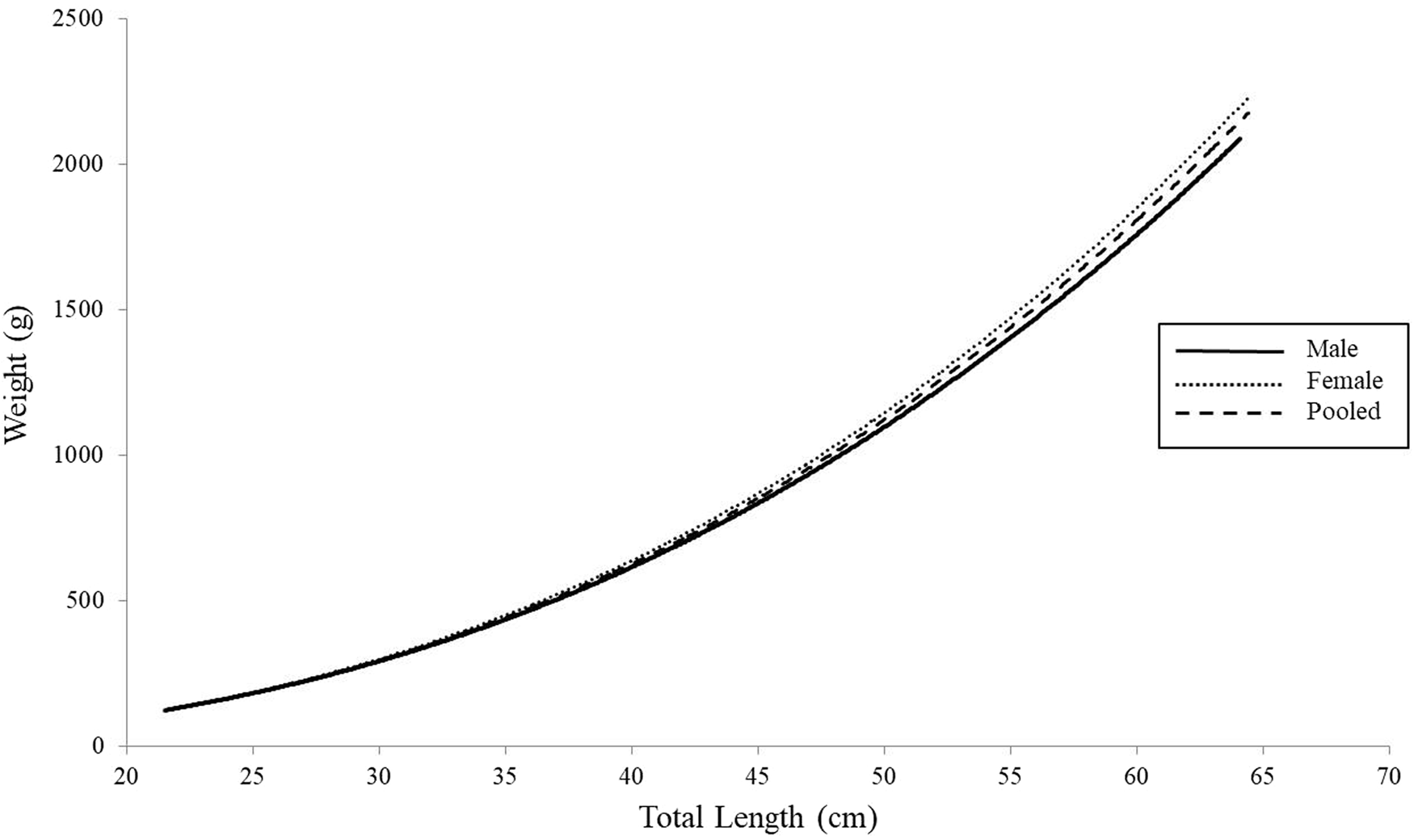
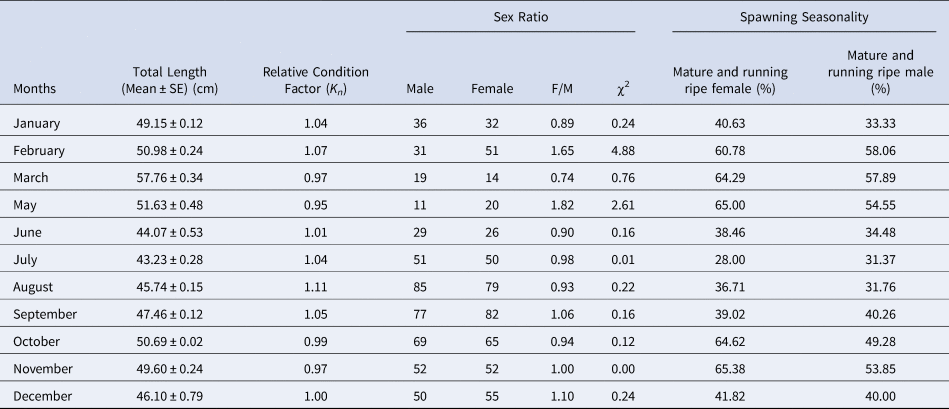
Total length of the sampled individuals ranged from 21.5–64.4 cm (mean ± SE of 48.09 ± 0.20 cm). In individual years, TL ranged from 21.5–63.3 cm in 2017 (N = 266), 25.0 to 64.4 cm in 2018 (N = 382) and 23.6–62.3 cm in 2019 (N = 388) with means and SEs of 47.56 ± 0.40 cm, 47.71 ± 0.41 cm and 47.82 ± 0.30 cm, respectively. Significant inter-annual variations in TL were not observed (Kruskal–Wallis H = 4.31, df = 2, P = 0.12). For females (N = 526), TL ranged between 25.3–64.4 cm with mean and SE of 48.34 ± 0.32 cm and for males (N = 510), it varied from 21.5–64.1 cm with mean and SE of 47.83 ± 0.24 cm. The primary and secondary modes in TL composition for females were at mid-lengths of 49.95 and 53.95 cm and for males were at mid-lengths of 45.95 and 49.95 cm (Figure 2). Total Length distribution between sexes varied significantly (Kolmogorov–Smirnov Z = 2.26, P < 0.01) and the monthly frequency with modes is presented in Figure 3. Mean TL (Kruskal–Wallis H = 19.47, df = 10, P = 0.035) in July was significantly lower from February (P = 0.025), March (P = 0.002), May (P = 0.013) and October (P = 0.035); in June and August from March (P = 0.009, P = 0.007) and May (P = 0.041, P = 0.037) and in September from March (P = 0.025) (Table 1). The length-weight relation estimated for males and females (Figure 4) are as follows:
 $$\eqalign{ &{\rm Male} \colon \,\,\,\,\,\,\, {\rm W} = 0.044 ( {{\rm TL}} ) ^{2.5884}( r^2 = 0.92, \;{\rm N} = 510) \cr & {\rm Female} \colon \,\, {\rm W} = 0.040 ( {{\rm TL}} ) ^{2.6236} ( r^2 = 0.92, \;{\rm N} = 526) .} $$
Total length distribution for females and males of Aluterus monoceros.

Monthly length frequency for females (A) and males (B) of Aluterus monoceros.

Length–weight relationship for females (N = 526), males (N = 510) and combined population (N = 1036) of Aluterus monoceros.

Seasonal dynamics of reproductive parameters in Aluterus monoceros

Growth was negatively allometric in males (t cal = 11.78, t crit = 1.96, P < 0.01) and females (t cal = 10.85, t crit = 1.96, P < 0.01). The slopes of the regression relation for males and females were not significantly different (F = 0.46, P = 0.5), and therefore, the pooled equation (Figure 4) is: W = 0.041 (TL)2.6141 (r 2 = 0.91, N = 1036). Relative Condition Factor ranged from 0.95–1.11 (Table 1), with peaks during July–September and January–February. Kn was lowest during March–May and in November.
Sex ratio, size at sexual maturity, spawning seasonality and Gonadosomatic Index
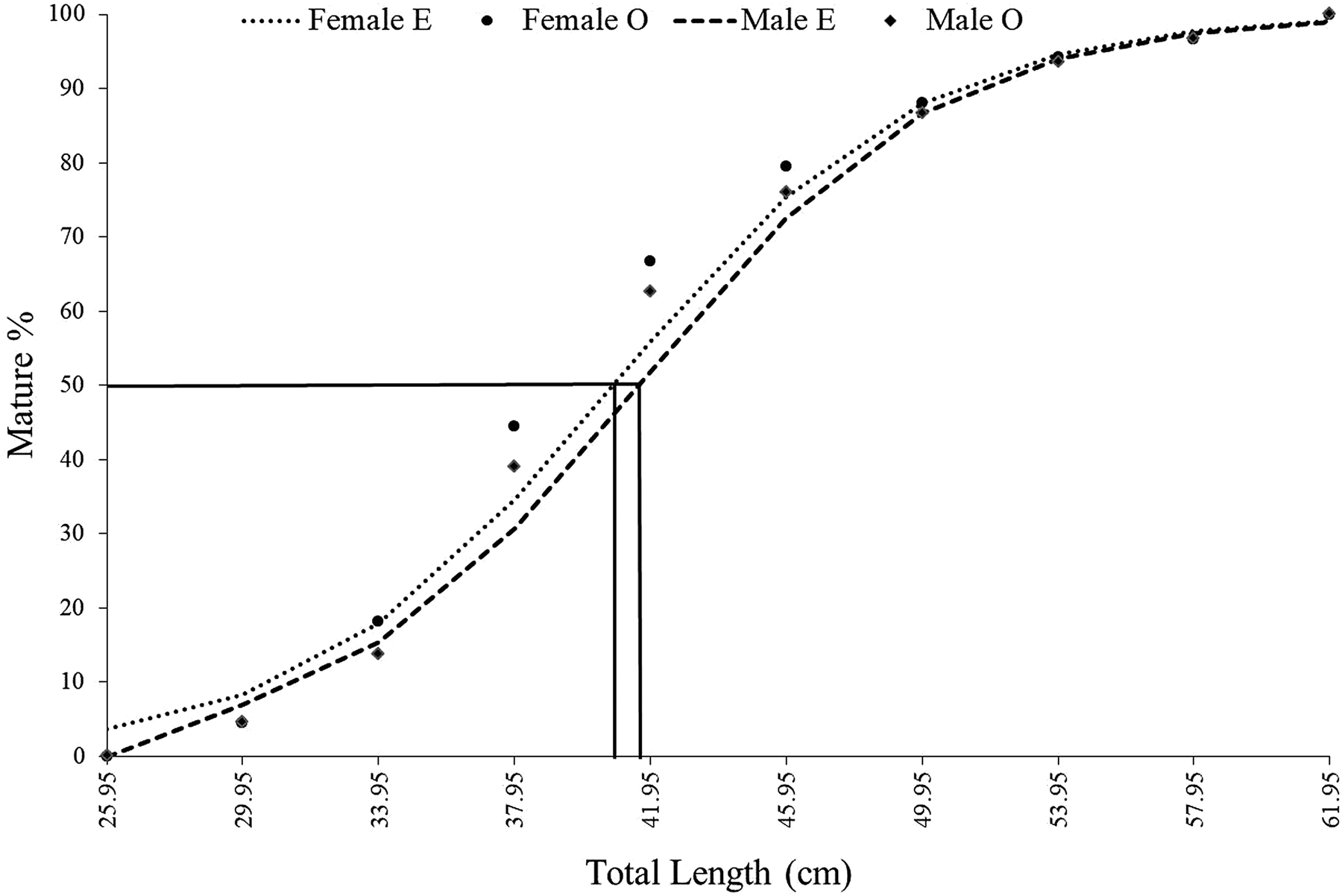
Sex ratio (F:M) for the pooled population was 1.03 (χ2 = 0.25, P = 0.62), varying yearly from 1.05 (χ2 = 0.14, P = 0.71) in 2017, 1.17 (χ2 = 2.36, P = 0.12) in 2018 to 0.90 (χ2 = 1.03, P = 0.31) in 2019. Females dominated the landings at TLs below 40.0 cm (sex ratio = 1.78, χ2 = 7.84, P = 0.005) and above 50.0 cm (sex ratio = 1.32, χ2 = 7.79, P = 0.005). Between 40.0–50.0 cm TL, there was a preponderance of males (sex ratio = 0.77, χ2 = 9.17, P = 0.002). Monthly sex ratio varied from 0.74–1.82 (Table 1), with significant dominance by females in February. Smallest mature female was recorded at 30.5 cm TL and male at 31.0 cm TL. Size at sexual maturity (Lm50) for females and males were estimated at a TL of 40.85 and 41.60 cm, respectively (Figure 5).
Size at sexual maturity (Lm50) for females and males of Aluterus monoceros (E: Estimated; O: Observed).

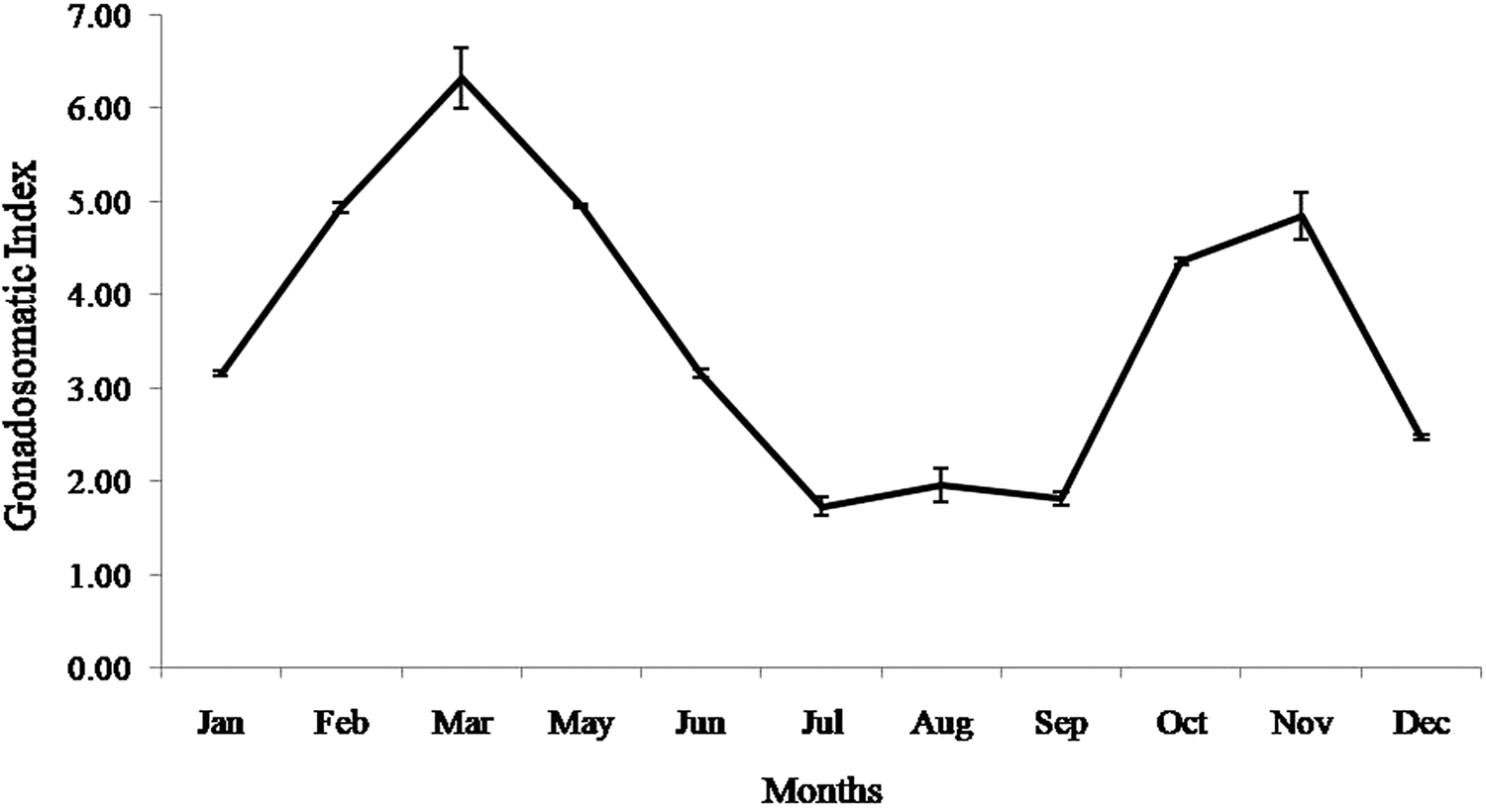
Spawning capable females and males were observed in high numbers throughout the study period with the proportions being 52.94% and 46.92% in 2017, 44.66% and 38.07% in 2018 and 46.74% and 41.67% in 2019. Mature and ripe ovaries and testes were observed in all the months, with higher proportion from February to May and again from October to November (Table 1). GSI in females differed significantly (Kruskal–Wallis H = 24.20, df = 10, P = 0.007) between months with the peaks observed from February to May and in October–November (Figure 6). GSI in February, March, May and November were significantly higher from July (P = 0.009, P = 0.003, P = 0.014, P = 0.017), August (P = 0.013, P = 0.005, P = 0.020, P = 0.025) and September (P = 0.010, P = 0.004, P = 0.016, P = 0.020). Between years, GSI did not differ (Kruskal–Wallis H = 0.67, df = 2, P = 0.72). With higher proportion of spawning individuals and higher values of GSI during February to May, this period could be inferred as the peak spawning season for the species, with a secondary peak during October–November. Nevertheless, occurrence of spawning capable individuals and moderate GSI values during the remaining months indicates spawning to happen, to an extent throughout the year.
Monthly progression of gonadosomatic index in spawning capable females for Aluterus monoceros. Monthly mean values are presented with standard error bars.

Fecundity and egg diameter
Absolute fecundity varied from 33,640 eggs to 1,239,202 eggs with a mean of 428,590 eggs. Relative fecundity (g−1) ranged from 87.60 eggs to 550.76 eggs with an average of 288.56 eggs. Absolute fecundity increased with TL and weight. The relations between fecundity and TL and fecundity and weight were: Log F = −5.4845 + 6.4185 Log TL (r 2 = 0.96, df = 93) (confidence 95% level) and Log F = −2.2339 + 2.4913 Log W (r 2 = 0.95, df = 93) (confidence 95% level). Egg diameter in the sampled ovaries ranged from 0.06–0.64 mm. Distribution peak (32.5%) was at 0.56–0.65 mm, containing mostly fully yolked oocytes, exhibiting germinal vesicle migration and breakdown, and a few hydrated oocytes and atretic oocytes with post-ovulatory follicles. At a diameter of 0.46–0.55 mm, oocytes (22.8%) were opaque and vitellogenic. Between 0.16 and 0.45 mm in diameter, oocytes were few (19.8%) and with varying stages of yolk granulation (primary, secondary and tertiary vitellogenic). Large numbers (25.0%) of previtellogenic chromatin nucleolar or perinucleolar primary growth oocytes were observed with diameters from 0.06–0.15 mm. With presence of a sizeable proportion of immature eggs in mature and ripe ovaries, the species possibly exhibits multiple spawning; however, the presence of a single dominant mode in maturing and mature eggs indicates synchronous ovarian development.
Feeding intensity and preference
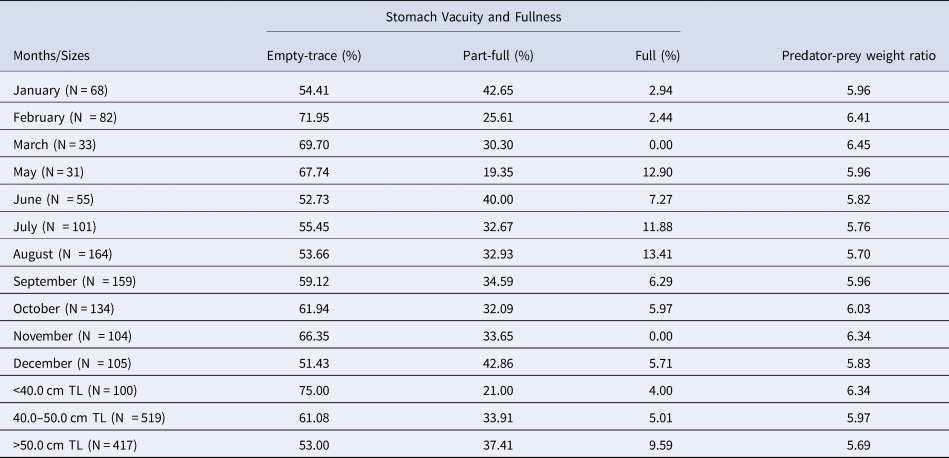
Among the samples analysed, 59.17% (N = 613) had empty stomachs or with trace food, 34.07% (N = 353) had part-full stomachs and 6.76% (N = 70) had full stomachs. Proportion of part-full and full stomachs were 33.08% and 9.02% in 2017 (N = 266), 39.01% and 7.59% in 2018 (N = 382) and 29.90% and 4.38% in 2019 (N = 388). The dynamics of stomach vacuity and fullness and predator–prey weight ratio, based on seasons and sizes is depicted in Table 2.
Seasonal and size-wise dynamics in feeding intensity of Aluterus monoceros

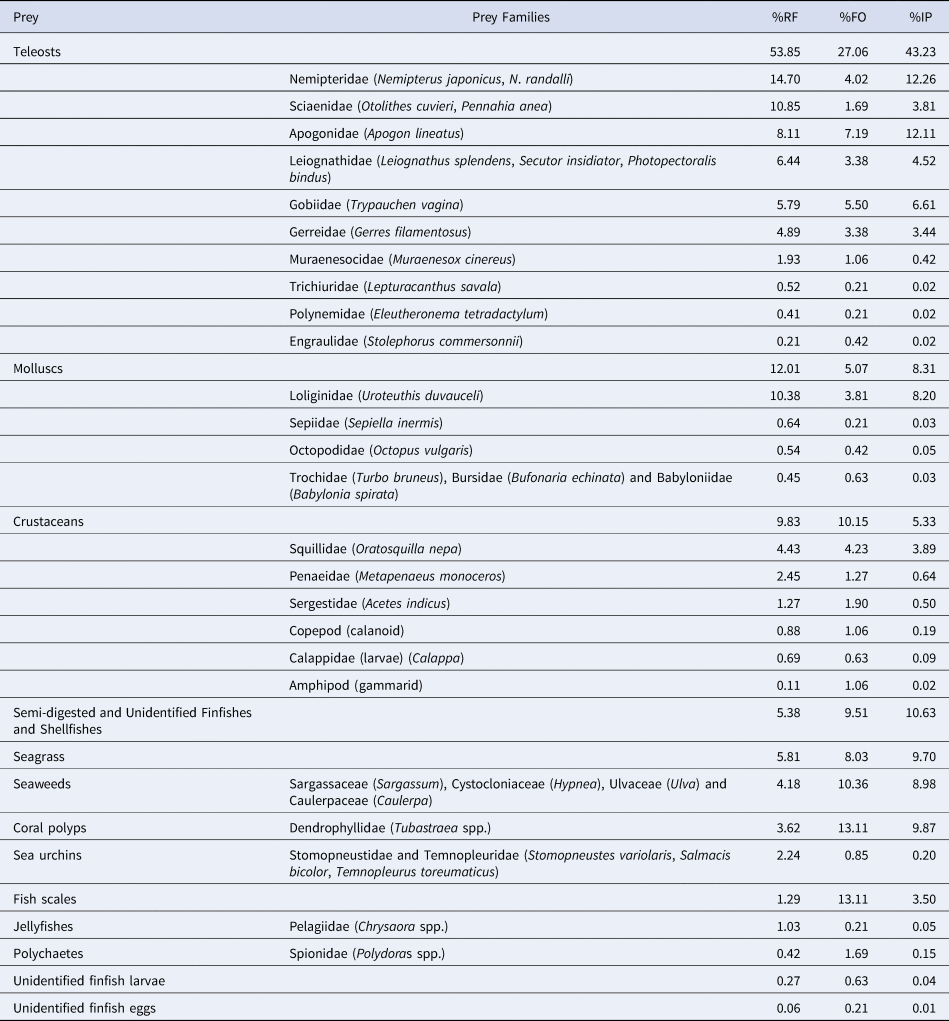
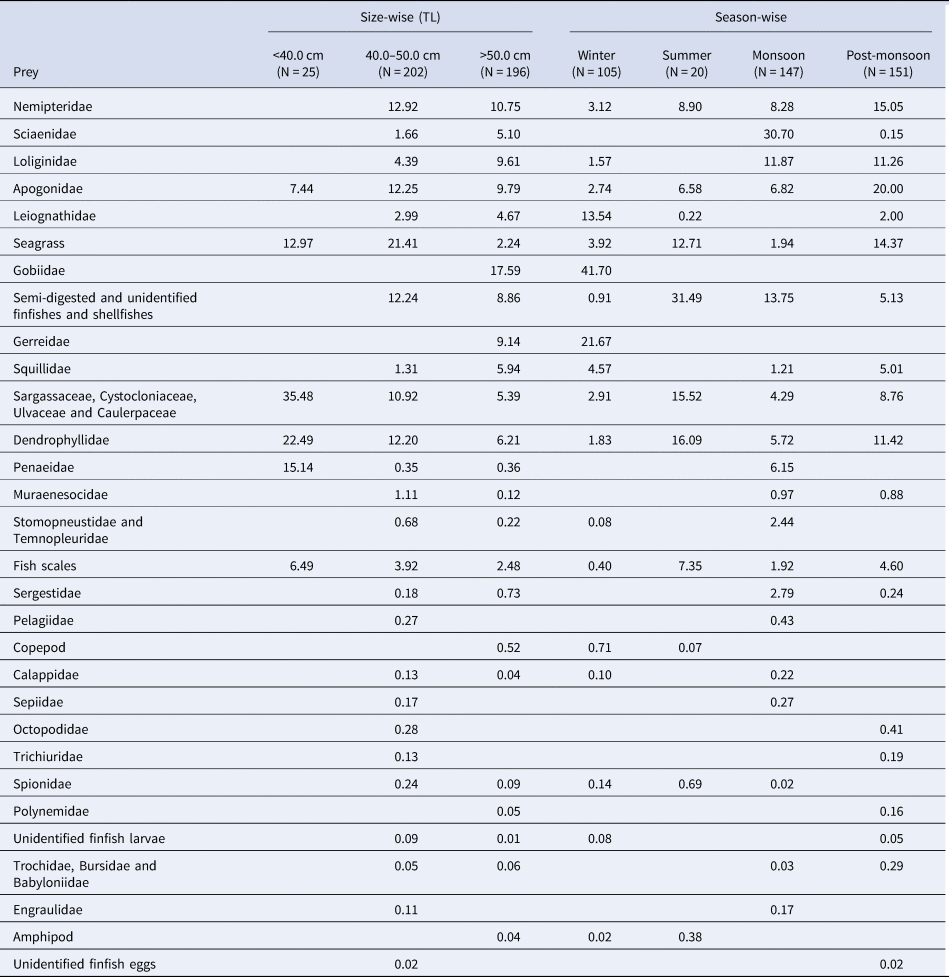
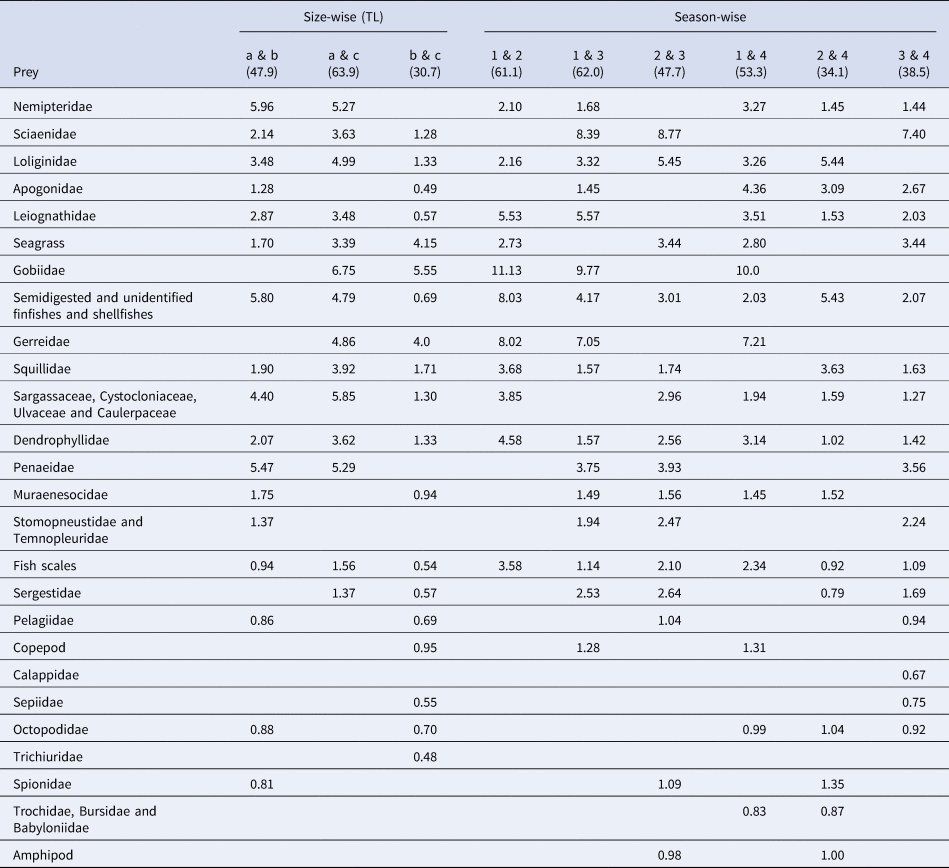
The diet was composed chiefly of juvenile teleosts, followed by coral polyps, seagrass, seaweeds, molluscs and crustaceans (Table 3). Other dietary constituents were fish scales, sea urchin, jellyfish, polychaetes and unidentified finfish eggs and larvae. Teleosts as prey were represented by 14 species belonging to 10 families; cephalopods, gastropods and nektonic crustaceans by three species each; brown and red seaweed by one species each; green seaweed by two species and corals by one genus (Table 3). Semi-digested and unidentified finfishes and shellfishes accounted for 10.63% (IP) of the diet. Prey preferences by sizes and seasons are presented in Table 4. Feeding preferences varied significantly with body size (ANOSIM Global R = 0.42, P = 0.010), and average dissimilarity in prey composition ranged from 30.66% to 63.93% (Table 5). With respect to seasons, average prey dissimilarity varied between 34.06% and 62.0% (Table 5), and this difference was found to be statistically significant (ANOSIM Global R = 0.62, P = 0.005).
Prey composition and dominance in Aluterus monoceros (RF = Relative-Fullness, FO = Frequency of Occurrence and IP = Index of Preponderance)

Size and season-based prey preferences (Index of Preponderance %) for Aluterus monoceros

Contribution of major prey species (90% cut-off for low contribution) to the observed average dissimilarities between sizes (a, b and c indicate <40.0 cm TL, 40.0–50.0 cm TL and >50.0 cm TL) and seasons (1, 2, 3 and 4 resemble winter, summer, monsoon and post-monsoon) based on one-way SIMPER; values in parentheses indicate the average total dissimilarity percentage

Discussion
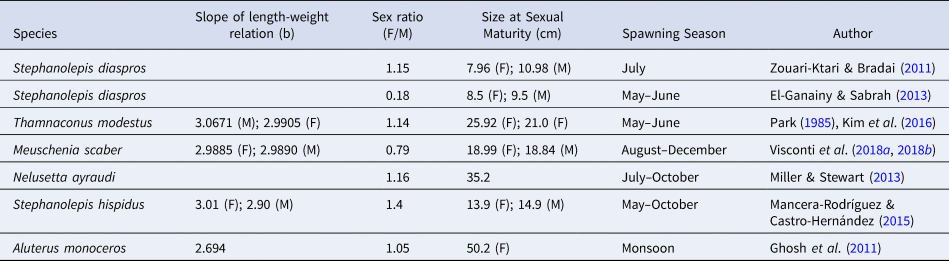
A perusal of length composition revealed that fishes of all sizes were sampled from western Bay of Bengal, with lengths ranging from 21.5–64.4 cm. Previous length ranges reported globally for Aluterus monoceros were 20.0–70.0 cm (Ghosh et al., Reference Ghosh, Thangavelu, Mohamed, Dhokia, Zala, Savaria, Polara and Ladani2011; Kanthan & Zacharia, Reference Kanthan and Zacharia2011; Saleela et al., Reference Saleela, Anil, Jasmine and Raju2011; Varghese et al., Reference Varghese, Thomas, Gandhi and Sreekumar2011; Wang et al., Reference Wang, Qiu, Zhu, Du, Sun and Huang2011; Sethi et al., Reference Sethi, Rajapackiam, Mohan, Rudramurthy and Vasu2012; Ul-Hassan et al., Reference Ul-Hassan, Ali, Rahman, Kamal, Tanjin, Farooq, Mawa, Badshah, Mahmood, Hasan, Gabool, Rima, Islam, Rahman and Hossain2020). Thus, it is surmised, that the sampling in the present study represented the gamut of population in nature. Though inter-annual variations in TL were not observed, monthly differences were recorded with significantly lower TL during June, July and August, coinciding with the monsoon. During monsoon, due to inclement weather conditions and sea state, the shallow and inshore waters are trawled extensively, whereas during other seasons, weather conditions and sea state are favourable, and trawling is carried out offshore in deeper waters. It is likely that the larger individuals inhabit the deeper waters and the smaller individuals dwell in the shallower waters, as observed for other monacanthids, such as Meuschenia scaber (Visconti et al., Reference Visconti, Trip, Griffiths and Clements2020), Stephanolepis hispidus (Mancera-Rodríguez & Castro-Hernández, Reference Mancera-Rodríguez and Castro-Hernández2015a) and Nelusetta ayruadii (Miller & Stewart, Reference Miller and Stewart2013). The majority of the individuals caught along western Bay of Bengal were from depths <100 m, with few landed from beyond, and the maximum inhabiting depth recorded was 124 m. With an earlier report (Froese & Pauly, Reference Froese and Pauly2019) suggesting maximum vertical distribution of up to 80 m depth for A. monoceros, present study provides new insights on the distributional range for the species with probable extension in habitat. Mean and modal TL was higher in females than in males, indicating higher growth rate in females. Growth rate variations between sexes have been reported earlier for other monacanthids (Kawase & Nakazono, Reference Kawase and Nakazono1994; El-Ganainy & Sabrah, Reference El-Ganainy and Sabrah2013; Miller & Stewart, Reference Miller and Stewart2013; Mancera-Rodríguez & Castro-Hernández, Reference Mancera-Rodríguez and Castro-Hernández2015a; Visconti et al., Reference Visconti, Trip, Griffiths and Clements2018b). Negative allometric growth with individuals growing more quickly in length than in weight was observed for A. monoceros, in contrast to other monacanthid species, for which growth is mostly isometric (Table 6). Similar values of exponents for length-weight relation ranging from 2.69–2.86 have earlier been reported for the species (Ghosh et al., Reference Ghosh, Thangavelu, Mohamed, Dhokia, Zala, Savaria, Polara and Ladani2011; Wang et al., Reference Wang, Qiu, Zhu, Du, Sun and Huang2011; Yagi et al., Reference Yagi, Yamada, Shimoda, Uchida, Kinoshita, Shimizu, Yamawaki, Aoshima, Morii and Kanehara2015; Ul-Hassan et al., Reference Ul-Hassan, Ali, Rahman, Kamal, Tanjin, Farooq, Mawa, Badshah, Mahmood, Hasan, Gabool, Rima, Islam, Rahman and Hossain2020), albeit with much lower sample sizes varying from 19–222 individuals. The present relation, derived from 1036 individuals is robust and provides the first account on sex-based length-weight relation for A. monoceros.
Reproductive patterns in major monacanthids globally (F: Female; M: Male)

Sex ratio for the pooled population did not deviate from the expected ratio, however, domination by females was observed at TLs below 40.0 cm and above 50.0 cm and by males at TLs between 40.0 and 50.0 cm. Variation in sex ratio with body size is probably due to spatial segregation of sexes at different TLs rendering one sex more susceptible to trawling than the other. Monacanthids undergo sex-specific short vertical movements associated with spawning dynamics or feeding habits (Visconti et al., Reference Visconti, Trip, Griffiths and Clements2018b), and the same appeared true for A. monoceros. For other monacanthids, wide variations were observed in sex ratios (Table 6). Also, significant contribution by females in February is attributed to the aggregation of females for reproductive needs, which increased the vulnerability of the females to the fishing gear. Size at sexual maturity for males and females was lower than that reported earlier for the pooled population by Ghosh et al. (Reference Ghosh, Thangavelu, Mohamed, Dhokia, Zala, Savaria, Polara and Ladani2011) (Table 6); however, the earlier study was constrained by sample sizes (N = 66) and lengths (41.0–60.9 cm). Again, the habitat difference in terms of environmental conditions and food availability between the Arabian Sea (in the earlier study) and Bay of Bengal (in the present study) could also have impacted the size at sexual maturity. Diversion of more energy for reproduction by females and for territory defence by males, a phenomenon common in monacanthids (Visconti et al., Reference Visconti, Trip, Griffiths and Clements2020), is the reason for the longer maturation time in males compared with females.
Aluterus monoceros spawned throughout the year in the Bay with two reproductive peaks, the major one during February–May and the minor one in October–November. Year-round reproduction, as observed, is a strategy used by most tropical fishes for reducing the negative impacts of environmental variation on their reproductive success. Unlike other monacanthids, wherein a single reproductive peak has been reported (Table 6), present study reports on two annual spawning peaks for A. monoceros. An increase in temperature and photoperiod from February on, provided favourable photo-thermal conditions, which triggered the spawning in the Bay during February–May. Again, decrease in temperature and photoperiod from October resulted in substantial spawning in October–November. Spawning intensity in A. monoceros is therefore dictated by the seasonal changes in temperature and photoperiod, similar to that reported in Meuschenia scaber by Visconti et al. (Reference Visconti, Trip, Griffiths and Clements2018b). GSI in females varied significantly and higher values coincided with the maximum occurrence of spawning capable individuals. Variation in GSI over months is common in multiple spawners, and is caused due to the continuous changes produced by the accumulation and discharge of gametes (De Vlaming et al., Reference De Vlaming, Roseman and Chapman1982). Seasonal changes in Relative Condition Factor, and comparison to the reproductive peaks in A. monoceros is indicative of a trade-off between the nutritional resources required for reproduction (gonadal development in females and territory defence in males) and for growth. Energy allocation to growth (relative condition) increased post-spawning and was maximum prior to spawning, but decreased progressively with commencement and advancement in spawning season as energy gained was apportioned to the reproductive needs.
In monacanthids globally, reproductive strategies are categorized into two distinct groups. The first group exhibits social reproductive behaviour and pair spawning with adhesive demersal eggs and parental egg care. The second group has a promiscuous nature characterized by spawning aggregations and broadcast spawning in offshore waters with limited or no parental egg care (Miller & Stewart, Reference Miller and Stewart2013; Visconti et al., Reference Visconti, Trip, Griffiths and Clements2018a). Most monacanthids, particularly the smaller species, belong to the former and only a few, relatively larger species such as Nelusetta ayraudi and Thamnaconus modestus belong to the latter. Aluterus monoceros is also promiscuous, as evidenced by its high fecundity, similar sizes at sexual maturity for males and females and formation of sex-specific spawning aggregations. The species' fecundity estimates, both absolute and relative, were similar to those reported for other broadcast spawning monacanthids (Park, Reference Park1985; Miller & Stewart, Reference Miller and Stewart2013). Also, absolute fecundity increased linearly with TL and weight. Similar maximum oocyte diameters have earlier been observed for other monacanthid species (Miller & Stewart, Reference Miller and Stewart2013; Mancera-Rodríguez & Castro-Hernández, Reference Mancera-Rodríguez and Castro-Hernández2015a). The simultaneous presence of previtellogenic primary growth oocytes, secondary and tertiary vitellogenic oocytes, hydrated oocytes and atretic oocytes in the ripe ovaries of spawning capable females indicates A. monoceros to be a multiple spawner. Smaller sizes of eggs when compared with other fish families is an advantage for monacanthids, in an increased survival rate, because the small sizes reduce the opportunities of predation when they are broadcasted (Nakazono & Kawase, Reference Nakazono and Kawase1993). Trade-offs between fecundity and egg size are common in marine resources, with individuals maximizing fecundity by reducing their egg sizes (Milton et al., Reference Milton, Blaber and Rawlinson1994).
Feeding intensity was low with close to 60% of the fishes exhibiting empty and trace stomachs. The stress caused to the fishes when they were captured in trawlnets resulted in regurgitation of prey due to the contraction of the oesophageal muscle leading to high incidences of stomach vacuity in A. monoceros. In contrary, higher feeding intensity with lower stomach vacuity ranging from 27–43% has earlier been reported for Stephanolepis diaspros (El-Ganainy & Sabrah, Reference El-Ganainy and Sabrah2013) and Stephanolepis hispidus (Mancera-Rodríguez & Castro-Hernández, Reference Mancera-Rodríguez and Castro-Hernández2015b). This variation in feeding activity is in all probability due to the differences in the capture mode of individuals. Using a much lower sample size (N = 129), Ghosh et al. (Reference Ghosh, Thangavelu, Mohamed, Dhokia, Zala, Savaria, Polara and Ladani2011) had reported on similar feeding intensity for the species from the Arabian Sea. The periods of low stomach fullness and high predator–prey weight ratio coincided with the reproductive peaks. Highest feeding activity after the peak in spawning facilitated accumulation of energy reserves required for the next spawning. Also, during post-spawning, when gonads are in spent state, maximum space is available for the stomachs to expand with food material. Reduced feeding intensity during spawning period has been reported for Thamnaconus modestus (Park, Reference Park1985) and Stephanolepis diaspros (El-Ganainy & Sabrah, Reference El-Ganainy and Sabrah2013). Feeding intensity increased with an increase in fish size, as evident in the values of stomach vacuity and fullness and predator–prey weight ratios. With increase in fish size, morphological alterations occur resulting in enhanced mouth gape/aperture, along with improved locomotive ability, thereby increasing the efficiency in catching prey of broader types and sizes (Labropoulou & Eleftheriou, Reference Labropoulou and Eleftheriou1997). A similar phenomenon, with larger individuals being more active predators than smaller individuals, has been reported for Stephanolepis diaspros (Zouari-Ktari et al., Reference Zouari-Ktari, Bradai and Bouain2008).
The diets of monacanthids are extremely diverse, from herbivorous to carnivorous and they are opportunistic feeders (Bell et al., Reference Bell, Burchmore and Pollard1978; Zouari-Ktari et al., Reference Zouari-Ktari, Bradai and Bouain2008; Mancera-Rodríguez & Castro-Hernández, Reference Mancera-Rodríguez and Castro-Hernández2015b). Analysis of diet constituents reveals A. monoceros to be omnivorous; however, greater dominance of animal prey indicates the tendency to carnivory. Among animal prey, teleosts contributed the most, followed by molluscs and crustaceans. Teleosts in diet were represented chiefly by demersal species, and together with considerable proportions of cephalopods and crustaceans as prey, indicate A. monoceros to be a bottom-feeder. Globally, most monacanthids are observed to be benthic grazers, consuming predominantly crustaceans and molluscs attached or associated with the plant material (Bell et al., Reference Bell, Burchmore and Pollard1978; Peristiwady & Geistdoerfer, Reference Peristiwady and Geistdoerfer1991; Zouari-Ktari et al., Reference Zouari-Ktari, Bradai and Bouain2008; El-Ganainy & Sabrah, Reference El-Ganainy and Sabrah2013; Kim et al., Reference Kim, Choi and Park2013; Mancera-Rodríguez & Castro-Hernández, Reference Mancera-Rodríguez and Castro-Hernández2015b). A possible reason for the observed variety in prey composition is that all monacanthids examined to date are small species, whereas A. monoceros is relatively large with greater body and mouth sizes, and thus able to capture a broader range of prey. In monacanthids, dietary differences are related to the morphological adaptations; species with longer caudal, anal and dorsal fins and well-developed ventral fins are equipped with a higher degree of manoeuvrability and stability and are therefore able to accurately pick a wide variety of mobile prey types and sizes (Bell et al., Reference Bell, Burchmore and Pollard1978). Ghosh et al. (Reference Ghosh, Thangavelu, Mohamed, Dhokia, Zala, Savaria, Polara and Ladani2011) had earlier reported the species to feed on zooplankton, zoobenthos and nekton from the Arabian Sea, but as already mentioned, their study was restricted in terms of sample sizes and length ranges, and as the authors did not provide quantitative or detailed qualitative composition of the diet, no effective comparison was possible. Considerable amounts of plant material (seagrass and seaweeds) and coral polyps were encountered in the stomach, similar to that reported for other monacanthids. However, it is quite possible that the plants were ingested for the nutritive value of the attached organisms. Leatherjackets use specialized teeth to bite off heavily encrusted pieces of seagrass and seaweeds and after digesting the encrusting organisms, the undigested seagrass and seaweed pieces are apparently expelled and therefore, diets are less herbivorous than they appear (Bell et al., Reference Bell, Burchmore and Pollard1978; Peristiwady & Geistdoerfer, Reference Peristiwady and Geistdoerfer1991). Similar is the case with coral polyps. Fish remains (scales) were not digested and assimilated, and hence due to accumulation, exhibited higher importance in the dietary contents. Sea urchins, jellyfishes, polychaetes and fish eggs and larvae were consumed occasionally.
Ontogenetic shifts in diet were observed for A. monoceros, with prey composition differing in fishes below and above 40.0 cm TL. Prey diversity increased and proportion of vegetative food sources decreased with an increase in fish size. Increased proportion of animal prey in the diet of larger individuals reflects optimal foraging, wherein more profitable and more easily detectable preys were ingested to maximize energetic benefits when resources were abundant. In monacanthids, ontogenetic switches in diet are common and are either associated with morphological or with maturational processes (Mancera-Rodríguez & Castro-Hernández, Reference Mancera-Rodríguez and Castro-Hernández2015b). Also, dietary shifts with the growth of fish reduce the intraspecific competition among various age groups (Oxenford & Hunte, Reference Oxenford and Hunte1999). Seasonal prey preferences were mostly due to the abundance of individual prey during each season. Seasonal prey-resource pulses coupled with possible uneven distribution of prey components resulted in A. monoceros foraging on what was present and easier to catch. Feeding on available or abundant prey species also allowed A. monoceros to obtain greater energy benefits because of less energy expenditure on search and capture.
Reproductive strategies and diet of monacanthids examined worldwide indicate significant inter-specific variability with a variety of spawning attributes and prey components, specific to each individual species studied. Considerable phylogenetic separation exists among the different genera in monacanthids (Santini et al., Reference Santini, Sorenson and Alfaro2013). In this context, the present study on reproduction and diet of Aluterus monoceros, the most abundant monacanthid in the northern Indian Ocean, assumes paramount importance. The fact that the species is a multiple spawner, with year-round spawning, would aid in devising suitable biological reference limits. Information generated may aid in developing appropriate management and conservation strategies for the species, and for non-targeted, related monacanthids in the northern Indian Ocean. However, many crucial life-history traits (age and growth, lifespan, mortality, etc.) are still unknown and need investigation. Age determination by otoliths or dorsal spines in monacanthids is challenging and limited due to the dimension, unusual shape and fragility of these structures (Visconti et al., Reference Visconti, Trip, Griffiths and Clements2020). Also, gonadal histology, which could not be performed in the present study, should be attempted in future for strongly supporting the macroscopic descriptions.
Acknowledgements
We sincerely thank Dr Loveson Edward, Dr Muktha Menon and Dr Pralaya Ranjan Behera and all the staff members of Visakhapatnam Regional Centre for the constant help and support provided to carry out the study.
Financial support
This work was supported by the Indian Council of Agricultural Research (ICAR), New Delhi, India.