Introduction
Since WHO established as a top priority, in 1997, the reduction and subsequent elimination of lymphatic filariasis (LF) by the year 2020 (Behbehani, Reference Behbehani1998), many member countries have taken up the challenge, and have begun successive programmes of community-wide mass drug administration (MDA). This global programme to eliminate LF has focused on two implementation strategies: (1) co-administration of single annual doses of albendazole and diethylcarbamazine (DEC) or ivermectin, targeting reduction rates of microfilaraemia to below sustainable transmission levels (Molyneux & Zagaria, Reference Molyneux and Zagaria2002); and (2) monitoring daytime infection status by sensitive, specific and simple finger-prick tests for detecting antigen levels, thereby obviating the need for inconvenient night-time blood sampling (Ottesen, Reference Ottesen2000). The subsequent development of the rapid immunochromatographic card test (Weil et al., Reference Weil, Lammie and Weiss1997) was a significant achievement, providing a reliable assay of circulating antigens from Wuchereria bancrofti. A desirable by-product of this ‘breakthrough’ enables mapping of endemic areas for MDA inclusion. However, this test is specific for the detection of circulating antigens from bancroftian infections and is not applicable or currently available for the detection of Brugia (Rahmah et al., Reference Rahmah, Ros Azeana and Balachandran2004).
A traditional option for detecting microfilariae (mf) caused by W. bancrofti or Brugia spp. (malayi or timori) infections has been the use of thick blood smears collected at night from endemic areas. Notwithstanding the method's inability to detect low mf counts and amicrofilaraemic stages of the infection, it nevertheless provides diagnostic specificity, is relatively inexpensive and readily administered with a minimum of training (Weil, Reference Weil2005). Historically, the thick blood smear preparation was used in southern Thailand before the initiation of MDA, to provide preliminary prevalence data (1.38% in Narathiwatt province) of brugian filariasis (Triteeraprapab et al., Reference Triteeraprapab, Karnjanopas, Porksakorn, Sai-Ngam, Yentakam and Loymak2001). Another alternative for determining the rate of exposure and infection is the use of assays measuring IgG4 antibodies to a recombinant filarial antigen such as Bm14 or Bm-R1 (Weil et al., Reference Weil, Ramzy, El Setouhy, Kandil, Ahmed and Faris1999; Fischer et al., Reference Fischer, Bonow, Supali, Ruckert and Rahmah2005), the latter of which has been used successfully in both the immunochromatographic rapid dipstick and enzyme-linked immunosorbent assay (ELISA) procedures against Brugia spp. parasites (Rahmah et al., Reference Rahmah, Taniawati, Shenoy, Lim, Kumaraswami, Anuar, Hakim, Hayati, Chan, Suharni and Ramachandran2001; Jamail et al., Reference Jamail, Andrew, Junaidi, Krishnan, Faizal and Rahmah2005). Various studies have indicated that active filarial infection elevates IgG4 antibodies over appropriate controls (Ottesen et al., Reference Ottesen, Weller, Lunde and Hussain1982; Kwan-Lim et al., Reference Kwan-Lim, Forsyth and Maizels1990; Rahmah et al., Reference Rahmah, Anuar, Ariff, Zurainee, A'shikin, Fadzillah, Maimunah and Haq1998), with decrements noted post-treatment (Helmy et al., Reference Helmy, Weil, Ellethy, Ahmed, El Setouhy and Ramzy2006).
There are two advantages to using assays for antifilarial antibodies: (1) the time to detect infection is much less than with thick blood smear measurements of microfilaraemia or antigenaemia; (2) parasitological evaluations are time-point estimates, while measuring antibodies returns a cumulative/longitudinal history of the infection (Lammie, Reference Lammie2004). Thus, for all intents and purposes, the antifilarial antibody approach is much more sensitive than the mf thick blood smear approach, and further, antifilarial IgG4 assessment could, over time, provide a useful seroepidemiological gauge/indicator of the status of lymphatic filarial infection.
In a recent study (Wongkamchai et al., Reference Wongkamchai, Rochjanawatsiriroj, Monkong, Nochot, Loymek, Jiraamornnimit, Hunnangkul and Choochote2006), an indirect ELISA was developed and used to detect isotypes IgG1, IgG3 and IgG4 in the sera of asymptomatic microfilaraemic patients, lymphangitis patients, elephantiasis patients and endemic normals. The dominant isotype in the microfilaraemic group was IgG4, which returned a positive response in 97% of the samples tested. These results indicate that the IgG4 antibody assay may be used to diagnose brugian filariasis and identify clusters of filarial transmission.
In order for MDA to yield successful outcomes, and achieve the criterion of the World Health Organization (1999) of 0.1% antigenaemia (in children), there must be high levels of drug coverage to reduce the number of persons with circulating microfilariae, thereby disrupting the cycle of transmission. Non-compliant or, at best, uncertain compliant subjects are not only at risk for LF but jeopardize the elimination programme of a particular area or country, by unwittingly serving as reservoirs for the parasite and facilitating recrudescence/revival of the infection (Mathieu et al., Reference Mathieu, Direny, de Rochars, Streit, Addiss and Lammie2006).
In Thailand, the national programme for the elimination of LF was initiated in 2002 for all known endemic communities located in Narathiwatt, Surathani and Nakorn Srithammarat provinces in southern Thailand. Prior to this, there were no systematic immuno-epidemiological surveys mapping the geographical distribution of Brugia in these areas. MDA continued for three consecutive rounds (2002–2004) before the present study was undertaken, which spans MDA IV and extends 6 months beyond MDA V. Its primary objective was to assess the immuno-parasitological indicators of Brugia malayi infection in a random sampling of participants in sentinel villages and sub-villages residing in these provinces. Interest was focused on: (1) measuring the long-term effects of MDA in clearing mf; and (2) contrasting antifilarial IgG4 levels in those classified as either good or uncertain compliant subjects with reciprocal titres above the cut-off of 100. A secondary goal was to survey the frequency of other parasitic infections among the observed samples.
Material and methods
Geographical areas and drug distribution
This study was conducted in brugian filariasis endemic villages in the Tha Chana district, Surathani province; the Tung Yai district, Nakorn Srithammarat province; and the Sungai Padi district, Narathiwatt province, located in southern Thailand. The southernmost province (Narathiwatt) is adjacent to Malaysia, an endemic area for Malayan filariasis (Triteeraprapab et al., Reference Triteeraprapab, Karnjanopas, Porksakorn, Sai-Ngam, Yentakam and Loymak2001), while the remaining provinces abut the Gulf of Thailand on the eastern shore of the Malay Peninsula. More importantly, they surround two large freshwater swamps which are the breeding place of the Mansonia indiana mosquito, the main vector of Brugia malayi. Surathani province has been an endemic area for diurnally subperiodic B. malayi for over 50 years (Nuchprayoon et al., 2006). These areas are replete with forests, grasslands, rubber, palm oil and coconut plantations. Beginning in 2002, the initial rounds of MDA consisted of oral administration of diethylcarbamazine (DEC, 1 × 300 mg to adults, 4 × 50 mg to children aged 9–14 years, 2 × 50 mg to 4- to 8-year-olds) and albendazole (1 × 400 mg) tablets given annually. Health officers from the Ministry of Public Health (MOPH) and local volunteers distributed medications, usually in the evening, on a house to house basis. Subsequent visits (7–21 days after the initial MDA) by the distribution officers were designed to provide the drugs to initially absent household members. During these village and sub-village surveys, physical examinations and stool collections were conducted as part of the follow-up interviews, as well as providing information on subject compliance, either elicited directly or by a reliable proxy. For these follow-up interviews, MOPH officers were accompanied by a person or persons who were known (or at least recognized) by the villagers being questioned. Both direct verbal questioning as well as a questionnaire, developed by and filled in by a MOPH officer, were employed. Because of familiarity and trust with local team personnel, it was felt that most responses were open, forthright and devoid of bias.
The entire coverage for all of the combined areas was approximately 85% (Ministry of Public Health, 2005). Where available, additional baseline information about mf detection and clinical manifestations prior to the initiation of the first MDA to high-risk subjects in 2002 was provided by the Vector Borne Disease Control Center of each of the provinces.
Samples
There were a total of 500 subjects drawn from the only endemic areas for brugian filariasis in Thailand. In 2004, the total population given the drugs in Narathiwatt province was 58,750 in 71 Implantation Units (IU); in Nakorn Srithammarat province, it was 837 in two IU, while in Surathani province, it was 2864 subjects in four IU. While the sampling from all three provinces was random (as opposed to stratified), the larger population of the southernmost province (Narathiwatt) warranted a larger sample (300 subjects) to achieve representativeness. The other two provinces had sample sizes of 100 each. The samples were split between three provinces because data collection in the two northernmost provinces allowed a greater geographical representation as well as mf detection in nocturnal blood collection, which was prohibitive in Narathiwatt province due to safety concerns. These samples excluded pregnant or lactating women, and children under the age of 7 years, mainly because the parents would not allow blood to be drawn from their young children. There were 20 children between the ages of 7 and 14 years of age from the Narathiwatt province. The average age of all participants regardless of sex was 41.9 years (95% confidence interval (CI) = 40.5–43.3). The mean ages of males and females, respectively, from all three provinces were: 42.2 (95% CI = 38.3–46.2) and 40.4 (95% CI = 37.1–43.7) (Nakorn Srithammarat); 41.5 (95% CI = 38.2–44.7) and 37.4 (95% CI = 33–41.9) (Surathani); and 43.1 (95% CI = 39.7–46.5) and 42.7 (95% CI = 40.1–45.20) (Narathiwatt). There were no significant age differences between the number of males and females in any of these provinces.
Ethics
Participation was voluntary and verbal informed consent was obtained from all adult subjects as well as children's parents or guardians, in the presence of two witnesses.
Parasite determination
Blood from finger pricks was taken and examined for microfilaria (mf) by the thick blood smear staining technique. Since nocturnal collection was prohibitive in the Narathiwatt province due to dangerous political unrest, only the samples from the 200 subjects in other two provinces are reported for mf evaluation. Additional plasma samples, including a daytime collection in Narathiwatt province, were used to monitor antifilarial IgG4 antibody responses in all 500 subjects. Stools were preserved in 10% formalin and examined for parasites following concentration by the formalin-ethyl acetate technique.
All blood and stool samples were collected 1 month before the IVth and Vth Annual MDA programmes in the years 2005 and 2006. Thereafter, at every 6-month time period the studied subjects were re-examined for mf and IgG4 antibody responses. For the two northernmost provinces, this testing extended over an 18-month time period (four tests), while for the Narathiwatt province it was for the first two time periods, again due to dangerous political conditions. In addition, stool examinations were performed routinely at regular (shorter) intervals to monitor the presence of intestinal parasites. When microfilariae were detected, the subject was provided additional DEC treatment despite receiving the drug annually.
Detection of antifilarial IgG4 antibodies
An indirect ELISA developed previously (Wongkamchai et al., Reference Wongkamchai, Rochjanawatsiriroj, Monkong, Nochot, Loymek, Jiraamornnimit, Hunnangkul and Choochote2006) was used to detect brugian filarial-specific IgG4 antibodies in all 500 subjects. The cut-off of this assay was based on the mean optical density (0.205)+4 SDs (1 SD = 0.085) of non-endemic residents of Bangkok who came to Siriraj Hospital for a physical examination. Subject serum was diluted serially from 1:100 to as high as 1:1600 and optical densities (OD) with ELISA replicated until the titre exceeded 0.65, which was counted as the highest positive dilution. For example, if the OD was 0.89 at 1:800 and at 0.4 at 1:1600, then that particular serum had a positive antifilarial IgG4 antibody response at 1:800. Thus, any subject with a reciprocal IgG4 titre of < 100 was excluded from the study. For graphing purposes and statistical analyses, all IgG4 titres were expressed as reciprocal scores.
Classification rationale for uncertain and good compliance subjects
Uncertain compliance in the study population was defined as any one of the following alternatives: (1) a definite verbal response that the drugs were not taken for whatever reason (some simply refused to take the medications, suspiciousness of a government-run programme, fear of possible adverse reactions, ignorance of lymphatic filariasis and its ramifications, etc.); (2) hesitancy when responding whether the drugs were taken (‘I can't remember’ or ‘I am not sure’); (3) erratic or infrequent drug-taking (some family members informed the distribution officers that the resident in question went to work in another province at the time of drug distribution.); and (4) if a subject reported compliance in a previous MDA, but not the current one.
Good compliance was defined as one of the following: (1) a definite verbal statement that the drugs were taken; (2) drug-taking was directly observed by a distribution officer; (3) the drugs were taken separately over a period of time. In general, if subjects did not yield a positive IgG4 score above 100 titres, and if they were from an area in which the MOPH reported a compliance rate >80% of the population, these subjects were automatically classified as being in good compliance. These data were not included in the statistical analyses.
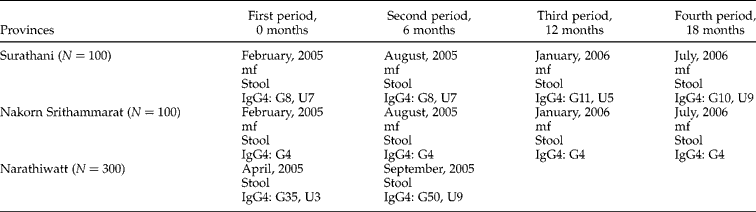
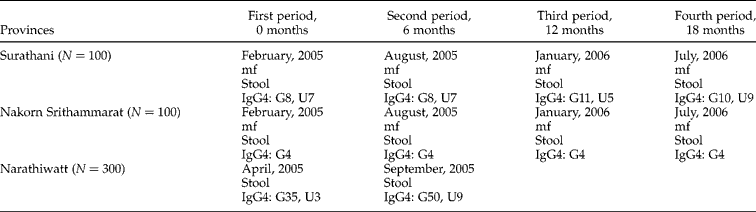
Table 1 presents a summary of the indices of data collection, including the actual date when the data were collected. All subjects in each province were tested for stool and IgG4 antibodies. The measurement of mf was restricted to the two northernmost provinces, Surathani and Nakorn Srithammarat. The number of IgG4 scores above the 100 titre cut-off are listed for the good (G) and the uncertain (U) subjects.
Data collected over the four time periods for all three provinces with the number of subjects tested, and includes the actual date of data collection, the assay of microfilariae in all subjects in that province (mf), the stool from all the subjects, and the IgG4 titres of the good (G) and uncertain (U) compliant subjects with scores >100.
Data analysis
Since the antibody titres violated the homogeneity of variance assumption as indicated by F-tests, non-parametric procedures were used to evaluate these results. The Wilcoxon–Mann–Whitney test was used for comparisons of the IgG4 reciprocal scores for the compliant versus the uncertain complaint subjects for each time period. All comparisons of infectious parasitic frequency utilized the chi-square test with Yates's correction for continuity where applicable. Student's t-tests were used to compare the age and gender data. The standard normal deviation, z, was used to analyse the differences of the proportions of protozoan infections between females and males on the one hand, and between females with helminthic infections on the other. The significance level of all inferential tests was P ≤ 0.05.
Results
Prevalence and intensity of infection measured by microfilariae and antifilarial IgG4
Only two subjects out of 200 (1%) tested positive for mf and these occurred twice, one in the first (February 2005) and one in the second (August 2005) test period. Both were females from the Surathani province, with ages 15 and 25 years. Out of 500 subjects from all three provinces, 98 subjects (19.6%) tested positive for at least one antifilarial IgG4 antibody response. Fifty-three subjects had one IgG4 measurement (45 from the Narathiwatt province); 27 had two responses (26 from Narathiwatt); three had three responses and 15 subjects had four IgG4 scores.
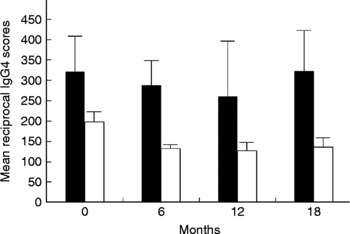
Figure 1 depicts the average reciprocal IgG4 titres for the subjects in the good and uncertain compliant groups from all three provinces over the four time periods, except for Narathiwatt province which exhibited scores for only the first two time periods.
The means (SEM) of the reciprocal IgG4 antibody scores for all subjects in the good (white bars) and uncertain (black bars) compliant groups from all three provinces with titres ≥ 100 over their respective months of observation.

Table 1 indicates that for the uncertain compliant group, the data of fig. 1 are based on 10 IgG4 scores at months 0, 16 at 6 months, 5 at 12 months and 9 at 18 months. For the good compliant group, the data are based on 47, 62, 15 and 14 titres over the respective time periods. Only the comparison at the 6 months time period between the good and uncertain compliant subjects was statistically different (P = 0.0016). However, the good compliant subjects at 0 and 18 months just missed being significantly different from the uncertain compliant subjects, with respective P values of 0.0516 and 0.0526, while the evaluation at the 12th month was clearly not significant (P = 0.0846). An alternative way of expressing this is to say that at 0, 6, 12 and 18 months, the good compliant subjects were respectively 1.62, 2.17, 2.05 and 2.37 times less likely to manifest the antifilarial antibody than the uncertain compliant subjects. When the titres of the uncertain subjects at 0 months were compared with the uncertain scores at 12 and 18 months, there were no statistically significant differences (P = 0.28 and 0.41), respectively. When the scores of the good compliant subjects at 0 months were contrasted with those at 18 months, there were no significant differences (P = 0.15), while that comparison between 0 and 12 months was at the margin of statistical significance (P = 0.058).
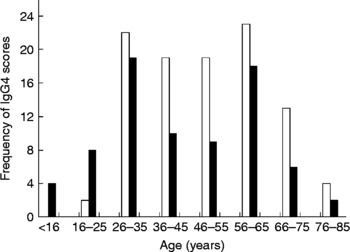
Figure 2 presents the overall frequency of the total IgG4 scores for males and females categorized by age. Although the total male prevalence (57.3%) was significantly more frequent (P = 0.044) than the total female prevalence (42.7%), none of the age intervals where males were more prevalent than females reached statistical significance. On the other hand, in the 16–25 age interval, the frequency of the female IgG4 scores was significantly more frequent (P = 0.037) than the male scores.
Age-specific prevalence for all instances of observed IgG4 antibody titres (178) in males (white bars) and females (black bars).

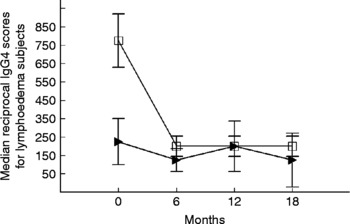
Figure 3 depicts the median scores of the six lymphoedema subjects dichotomized into compliant and uncertain compliant status. These individuals, representing 1.2% of the studied sample, were IgG4 positive throughout the four time periods and all were mf negative. There were four males (ages 31–62) and two females (20 and 33 years of age). One female was from Nakorn Srithammarat while the other was from Surathani province. None of the comparisons reached statistical significance.
The medians (SEMdn) of the reciprocal IgG4 titres for the three subjects in each of the good (□) and uncertain (▸) compliant groups with antibody scores ≥ 100 over the months of this study.

Frequency of other parasitic infections
A total of 68 subjects (13.6%) from all three provinces had a total of 105 parasitic infections, with 10 subjects having multiple infections of two or more parasites detected in their faecal examinations. The percentage breakdown from the three provinces was 27.6% from Surathani, 28.6% from Nakorn Srithammarat and 43.8% from Narathiwatt province. The helminthic infections were Ascaris lumbricoides (7), Strongyloides stercoralis (4), Capillaria philippensis (1), Hymenolepis diminuta (1), Opisthorchis viverini (1), Trichuris trichiura (3), Taenia spp. (1), hookworm (12) and one intestinal fluke egg. The protozoan infections included Giardia lamblia (18), Entamoeba coli (14), Endolimax nana (9), Blastocystis hominis (31) and Entamoeba histolytica (1). The prevalence of protozoan infection was significantly higher than the helminthic infection (P < 0.0005).
Table 2 indicates that 18 parasitic infections were found among the good and uncertain compliant subjects. While the uncertain compliant subjects had a slightly higher percentage than the good compliant subjects, the differences were statistically insignificant (P = 0.48). Protozoan infections (76%) were significantly (P < 0.01) more numerous than helminthic infections (24%). For the uncertain and good compliant subjects there were 3 and 10 protozoan infections, respectively. There was one intestinal fluke among the uncertain group.
The frequency and percentages in parentheses of the number of uncertain and good compliant subjects from all three provinces having other parasitic infections.

*One subject had two parasites; **one subject had three parasites.
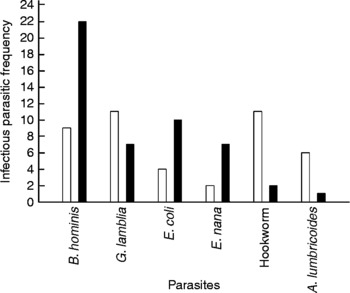
Figure 4 shows the incident frequency of the six most commonly detected parasites from all three provinces. Blastocystis hominis was statistically more numerous (P < 0.02) in females than males, while hookworm was more prevalent (P < 0.01) in males. All other comparisons in fig. 4 were statistically insignificant, including that between all males (51) and females (54) in the 105 instances of parasitic infections. However, female instances (85%) of protozoan infections were significantly more prevalent (P < 0.001) than male instances (53%) and helminthic infections (15%). Blastocystis hominis was the most prevalent infection in Nakorn Srithammarat and the Surathani provinces, with 16 (53.3%) and 29 (44.8%) infections, respectively, while E. coli was recorded 13 times (28.3%) from the Narathiwatt province.
The number of infectious parasitic occurrences of the six most common parasites from a pool of 92 infections across all three provinces for males (white bars) and females (black bars).

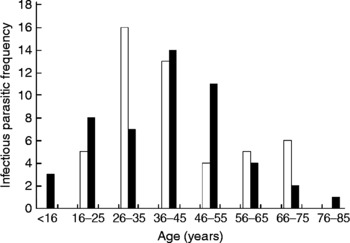
Figure 5 presents the frequency counts over all parasitic infections dichotomized by sex and displayed by age from all three provinces. None of the sex differences in any of the age categories were statistically significant, although the males were more prominent in the 26–35 age range, as were the females in the 46- to 55-year-old category. Disregarding sex, the three highest age categories for infections were in the three middle ranges from 26 through 55 years, with totals of 27, 27 and 17, respectively.
Age-specific prevalence frequencies for all infections by parasites (105) in males (white bars) and females (black bars).

Discussion
While the very low percentage mf detection (1%) in the first two time periods and none in the last two indicates a positive trend, the higher prevalence (19.6%) of antifilarial IgG4 antibody detection suggests caution. Detection of the Brugia parasite through microfilaria examination is an insensitive tool (Eberhard & Lammie, Reference Eberhard and Lammie1991) providing a ‘here and now’ estimate of transmission intensity, while the antibody assay offers a longitudinal ‘shot-gun approach’ covering previous long-term, residual and current infection status (Lammie et al., Reference Lammie, Weil, Noordin, Kaliraj, Steel, Goodman, Lakshmikanthan and Ottesen2004). Using indirect ELISA with a B. malayi soluble antigen, it was found that the antifilarial IgG4 antibody detected 4.6 times more positive cases than mf detection techniques (Rahmah et al., Reference Rahmah, Anuar, Ariff, Zurainee, A'shikin, Fadzillah, Maimunah and Haq1998). Other studies have also confirmed the higher prevalence of antifilarial IgG4 antibodies over microfilaraemia (Haarbrink et al., Reference Haarbrink, Terhell, Abadi, van Beers, Asri and Yazdanbakhsh1995, Reference Haarbrink, Terhell, Abadi, Asri, de Medeiros and Yazdanbakhsh1999). Because of the sensitivity of the IgG4 assay, its complete absence would indicate transmission interruption more so than undetectable mf responses. However, one caveat suggests that cross-reactivity of indigenous antigens from captured filarial worms with antigens from other non-filarial nematode parasites (Maizels et al., Reference Maizels, Sutanto, Gomez-Priego, Lillywhite and Denham1985) may be problematic. Previous research revealed that individuals with Strongyloides infection had a significantly higher antifilarial IgG4 isotype than those without Strongyloides infection (Muck et al., Reference Muck, Pires and Lammie2003). However, in the present study no antifilarial IgG4 was detected in the four instances of Strongyloides stercoralis infection in two subjects. Moreover, in 20 instances of S. stercoralis infection discovered in NE Thailand, not a single case was positive for IgG4, using native parasitic antigens as the test substrate (S. Wongkamchai et al., unpublished data).
The results displayed in fig. 1 suggest that for the 18-month span of this study, the lower intensity in antifilarial IgG4 response patterns of the good compliant subjects over the uncertain subjects is indicative of a highly successful treatment programme. However, even though the subjects in the good compliant groups had taken the prescribed medications at the appropriate time, they still remained positive for filarial IgG4, which may indicate that despite losing their microfilariae, a residual infection persisted in the form of circulating filarial antigens. An alternative explanation suggests that the compliance rate may be less than coverage rates (El-Setouhy et al., Reference El-Setouhy, Abd Elaziz, Helmy, Farid, Kamal, Ramzy, Shannon and Weil2007); i.e. some of the 14 subjects classified as compliant may not have taken the drugs and were actually non-compliant. However, there are no available data at the present time to deny or support this contention.
There are a number of factors associated with compliance or non-compliance. In Haiti, those individuals who were not knowledgeable about the dangers of LF, as well as women, especially those who were pregnant or using contraceptive drugs, were less likely to participate (Mathieu et al., Reference Mathieu, Lammie, Radday, Beach, Streit, Wendt and Addis2004; Talbot et al., Reference Talbot, Viall, Direny, de Rochars, Addis, Streit, Mathieu and Lammie2008). In Orissa, India, fear of side-effects was the major reason drugs were not ingested, and urban areas recorded lower compliance rates (23%) than rural areas (49%) (Babu & Kar, Reference Babu and Kar2004). In Sri Lanka, the predominant factor influencing drug compliance in an urban area was knowledge that the MDA programme was beneficial, while in a rural area, belief in the dangers or severity of LF were most important (Gunawardena et al., Reference Gunawardena, Ismail, Bradley and Karunaweera2007). In young children aged 2–9 years, 90% drug compliance resulted in a 62.6% reduction in mf after one MDA (Rajendran et al., Reference Rajendran, Sunish, Mani, Munirathinam, Abdullah, Augustin and Satyanarayana2002). In a recent Egyptian study (El-Setouhy et al., Reference El-Setouhy, Abd Elaziz, Helmy, Farid, Kamal, Ramzy, Shannon and Weil2007), four rounds of MDA with high compliance rates ranging from 87 to 96% were associated with significant decreases over baseline in antigenaemia and mf rates when one or more doses of MDA were consumed.
Furthermore, it may be suggested that the differences observed between the good and uncertain compliant subjects emphasizes the need for increased vigilance to ensure an adequate population coverage for those at risk in the endemic areas, for each of the annual MDA rounds. To accomplish this, morbidity prevalence estimates through probability sampling surveys of the real burden of the disease are sorely needed, as well as the reasons for both drug and non-drug compliance. These surveys should include information about LF, its transmission and prevention, awareness about the MDA and its distribution, all in conjunction with appropriate health education messages (Mathieu et al., Reference Mathieu, Lammie, Radday, Beach, Streit, Wendt and Addis2004). Additionally, the present study has demonstrated the usefulness of the antifilarial IgG4 procedure in detecting active infections in those endemic areas where night blood collection is difficult to accomplish. It is cost effective, being significantly lower than the price of currently available commercial kits. This is an important consideration in developing countries with impoverished or non-existent health-care systems, and where government assistance for tropical diseases may be less than optimal.
Moreover, it is suitable for the early detection of new cases, thereby facilitating earlier treatment, and it is sensitive enough to record, almost immediately, ongoing changes in antibody titres as a result of treatment. Changes in the IgG4 levels may be useful for monitoring the levels of drug compliance of those at-risk residents in ongoing lymphatic elimination programmes.
While DEC kills mf efficiently, albendazole interferes with the microtubular function of parasitic cellular division (Bradley & Kumaraswami, Reference Bradley and Kumaraswami2004) at low concentrations and complete dissociations at high concentrations (Pellegrini & Budman, Reference Pellegrini and Budman2005), while leaving the host unaffected (Lacey, Reference Lacey1990). The persistence of antigenaemia in the absence of microfilaraemia has been reported in bancroftian filariasis and ascribed to ‘cryptic adult worm infections or ultra-low levels of microfilaremia’ (Simonsen & Meyrowitsch, Reference Simonsen and Meyrowitsch1998, p. 669). Other studies also reported (>90%) persistent antigenaemia in the absence of detectable serological microfilaria (Satapathy et al., Reference Satapathy, Sahoo, Babu Geddam, Mohanty and Ravindran2001; Sahoo et al., Reference Sahoo, Babu Geddam, Satapathy, Mohanty, Das, Acharya, Mishra and Ravindran2002). There are at least two possible explanations for this phenomenon. (1) Since these areas have a long history of endemicity, it is likely that mothers may have been infected at the time of conception which could contribute to prenatal sensitization leading to increased IgG4 responsiveness during adulthood. (2) The anti-mf-sheath-antibodies hypothesis suggests the possibility, notwithstanding empirical objections (Satapathy et al., Reference Satapathy, Sahoo, Babu Geddam, Mohanty and Ravindran2001), that the antibodies to the mf sheath actually bind leucocytes to the mf, resulting in extinction (Simonsen & Meyrowitsch, Reference Simonsen and Meyrowitsch1998). In other words, the higher prevalence of IgG4 antibodies may be exerting a suppressive influence on mf intensity which, in turn, may be reflected in a positive relationship between the IgG4 measurements and circulating filarial antigens ( Jaoko et al., Reference Jaoko, Simonsen, Meyrowitsch, Estambale, Malecela-Lazaro and Michael2006). The underlying assumption of these arguments is that the findings based on W. bancroftii infection (as in the above-cited studies) may be generalized to the B. malayi findings in the present study.
Males were statistically more prevalent in returning more instances of IgG4 antibody measurements than females (fig. 2). In southern Thailand, the predominant occupation involves collecting rubber during the late afternoon or early evening when the Mansonia spp. mosquito is most active. In each family both men and women work on these plantations and should be equally exposed to infectious mosquito bites, except for the observation that men spend additional time outside in the evening in small social groups, providing ample opportunity for being bitten by infected mosquitoes. These results are similar to those for the B. malayi endemic areas observed in Indonesia (Maizels et al., Reference Maizels, Sutanto, Gomez-Priego, Lillywhite and Denham1985) as well as the Loa loa and Mansonella perstans filariasis in Gabon (Van Hoegaerden et al., Reference Van Hoegaerden, Chabaud, Akue and Ivanoff1987) and the Congo (Noireau et al., 1989). Domestic animals (cats and dogs) in these areas are also a source of infection when mosquito vectors are active.
The presence of persistent IgG4 prevalence in the lymphoedema subjects regardless of compliance status (fig. 3), and concomitant with undetectable mf levels, suggests the presence of active filarial adult worms, attributable to the failure of albendazole to exert a complete macrofilaricidal effect (in these subjects). Additionally, in 2004, prior to month 0 in the present study, four of these subjects had a higher infection load, evidenced by a clinical history of lymphoedema, with two being mf positive and two mf negative. It is probable that albendazole can remove an active infection only when the intensity of infection is low (Sahoo et al., Reference Sahoo, Satapathy, Michael and Ravindran2005). At the very least, these data also imply that a chronic worm burden from high exposure intensity may be associated with a downregulation of the host immune response, characterized by a suppression of macrophage activity caused by an inhibition of T-helper 1 (TH1) cells and an increased production of interleukin-10 (IL-10) activity, resulting in higher levels of IgG4 antibodies (Hoerauf et al., Reference Hoerauf, Satoguina, Saeftel and Specht2005; Moreno & Geary, Reference Moreno and Geary2008). Jaoko et al. (Reference Jaoko, Simonsen, Meyrowitsch, Estambale, Malecela-Lazaro and Michael2006) indirectly support the downregulation hypothesis by stating that ‘IgG4 production appeared to be induced by the adult worms, or it enhanced their survival, e.g., by blocking effector immune responses that eliminate adult worms’.
Albendazole can kill nematodes and fluke species but not protozoan infections, which may account for the higher prevalence of these infections (fig. 4) in our study. Of the helminth infections, hookworm was the most commonly seen, especially in males. For hookworm infections in the Hainan Province of China, females in the 20- to 29-year age category were more prevalent than males (Bethony et al., Reference Bethony, Chen, Lin, Xiao, Zhan, Li, Xue, Xing, Humphries, Yan, Chen, Foster, Hawdon and Hotez2002), whereas in our study, all 11 cases of males were found in the 16- to 45-year age category, with the most prevalent (six cases) in the 36- to 45-year age range. A possible behavioural explanation for the higher prevalence of parasitic infections in the 26–55 age interval (fig. 5) is the ‘working age’ hypothesis, where the predominant occupation consists of gardening and working in the open fields on the rubber plantations by those in this age category.
One final point is worth mentioning. There were 24 instances of other parasitic infections in subjects who tested negative for the IgG4 antibody. This is strong evidence suggesting the absence of cross-reactivity between the antifilarial antibody and other parasites.
Within the limitations of the present study, it may be concluded that: (1) MDA rounds IV and V have been successful in reducing mf to negligible levels in those at-risk subjects in the endemic areas for the Brugia malayi parasite in Thailand; (2) the positive trend toward lower antifilarial IgG4 scores in the good compliant subjects when contrasted with the uncertain compliant group, as well as the relatively lower percentage of individuals testing positive for the IgG4 antibody, are also indicative of a highly successful treatment programme; (3) the antibody IgG4 assay is a sensitive index for early Brugia detection, which is rapid, cost-effective and not contingent on nocturnal blood collection; (4) the presence of IgG4 titres concomitant with lymphoedema throughout the study period suggests the persistence of a chronic worm burden which was not susceptible to the albendazole dose utilized in the present study; (5) albendazole was effective in reducing helminthic infections over protozoan infectivity, which predominated in these areas especially in females; and (6) the middle age range exhibited a greater susceptibility to parasitic infections than ages in either upper or lower categories.
Acknowledgements
This work was supported financially by the Ministry of Public Health, Thailand.