INTRODUCTION
Large mammal remains are often the most common category of biological specimens from Palaeolithic archaeological sites. Basic goals of their study are the reconstruction of both hominin subsistence strategies and the palaeoenvironment. The latter has been the main focus of important studies carried out over the last decades in Italy to shed light on climatic conditions that drove changes in mammal communities during the Upper Palaeolithic (e.g., Bartolomei et al., Reference Bartolomei, Broglio and Palma di Cesnola1977; Sala, Reference Sala1983). Studies focused on ungulate taxa highlighted the influence of both climatic conditions and geomorphology on the structure of ungulate communities. In addition, a strong regionalization of the Italian Peninsula was detected, showing the Pre-Alps characterized by the presence of caprines (Capra ibex, Rupicapra rupicapra) during more arid phases and cervids (Cervus elaphus, Capreolus capreolus, Alces alces) when wooded areas increased. The northern Tyrrhenian area was characterized by a generalized alternation of Capra ibex and Cervus elaphus. In the Po Plain, the most common taxon during last glacial maximum and late glaciation was probably Bison priscus accompanied by a limited presence of Alces alces. The central Apennine area was characterized by the presence of caprines (Capra ibex, Rupicapra cf. pyrenaica), cervid taxa (Cervus elaphus, Capreolus capreolus), and the occurrence of Equus ferus and Equus hydruntinus, which were limited to the Fucino basin in Abruzzo. The central-southern Tyrrhenian side was characterized by the presence of caprines (limited to some rocky and steep areas), wild boar (Sus scrofa), cervid taxa, the aurochs (Bos primigenius), and equids (the latter limited to lowlands, some of which emerged during periods of marine regression). Apulia was characterized by an overwhelming presence of equids and Bos primigenius in the plains (especially during the driest periods) and a great abundance of Capra ibex in the Gargano promontory; Cervus elaphus became more abundant (and sometimes the dominant species) when the climate turned to milder and more humid conditions (Sala, Reference Sala1983, Reference Sala2005, Reference Sala2007; Boscato, Reference Boscato1994, Reference Boscato2000, Reference Boscato2007).
A similar regionalization was observed among small mammal populations (Berto, Reference Berto2013; López-García et al., Reference López-García, Berto, Colamussi, Valle, Lo Vetro, Luzi, Malavasi, Martini and Sala2014; Berto et al., Reference Berto, Boscato, Boschin, Luzi and Ronchitelli2017, Reference Berto, Luzi, Montanari Canini, Guerreschi and Fontana2018), which differ between north and south and, especially in southern Italy, between one side of the Apennine chain and the other. In particular, arid conditions are generally believed to have prevailed in the Adriatic regions, where micromammal communities were characterized by a lower biodiversity and were dominated by few species [e.g., Microtus arvalis or Microtus (Terricola) savii]. More humid conditions are believed to have prevailed in the Tyrrhenian side, due to the high frequencies of woodland-adapted species (Apodemus gr. sylvaticus-flavicollis, Glis glis). The eastern (Adriatic) part of northern Italy differs from the Tyrrhenian region due to the presence of taxa coming from Eastern European regions (e.g., Cricetus cricetus, Microtus oeconomus, Sicista sp.) (Berto, Reference Berto2013; Berto et al., Reference Berto, Luzi, Montanari Canini, Guerreschi and Fontana2018).
Palaeoenvironmental reconstructions based on ungulate assemblages were carried out to determine changes in species frequencies through time (e.g., Sala Reference Sala1983, Reference Sala2007; Boscato Reference Boscato1994), but the interpretations may be affected by biases due to the taphonomic pathway of remains. The relative abundance of taxa could be influenced by taphonomic agents (humans, carnivores) and taphonomic processes, such as transport to the site of selected skeletal parts; destruction of bones due to gnawing, fat extraction, and bone working; or bone attrition due to natural processes. In the case of anthropogenic bone assemblages, the choice of hunting territories on the basis of both natural and cultural constraints may also affect taxon representation. The aim of this work is to compare ungulate and small mammal assemblages from a site with a long stratigraphic record in order to understand whether changes in relative abundance of ungulate species hunted by humans may effectively reflect past climatic variations rather than particular taphonomic processes or cultural choices adopted by hunter-gatherer groups.
THE SITE
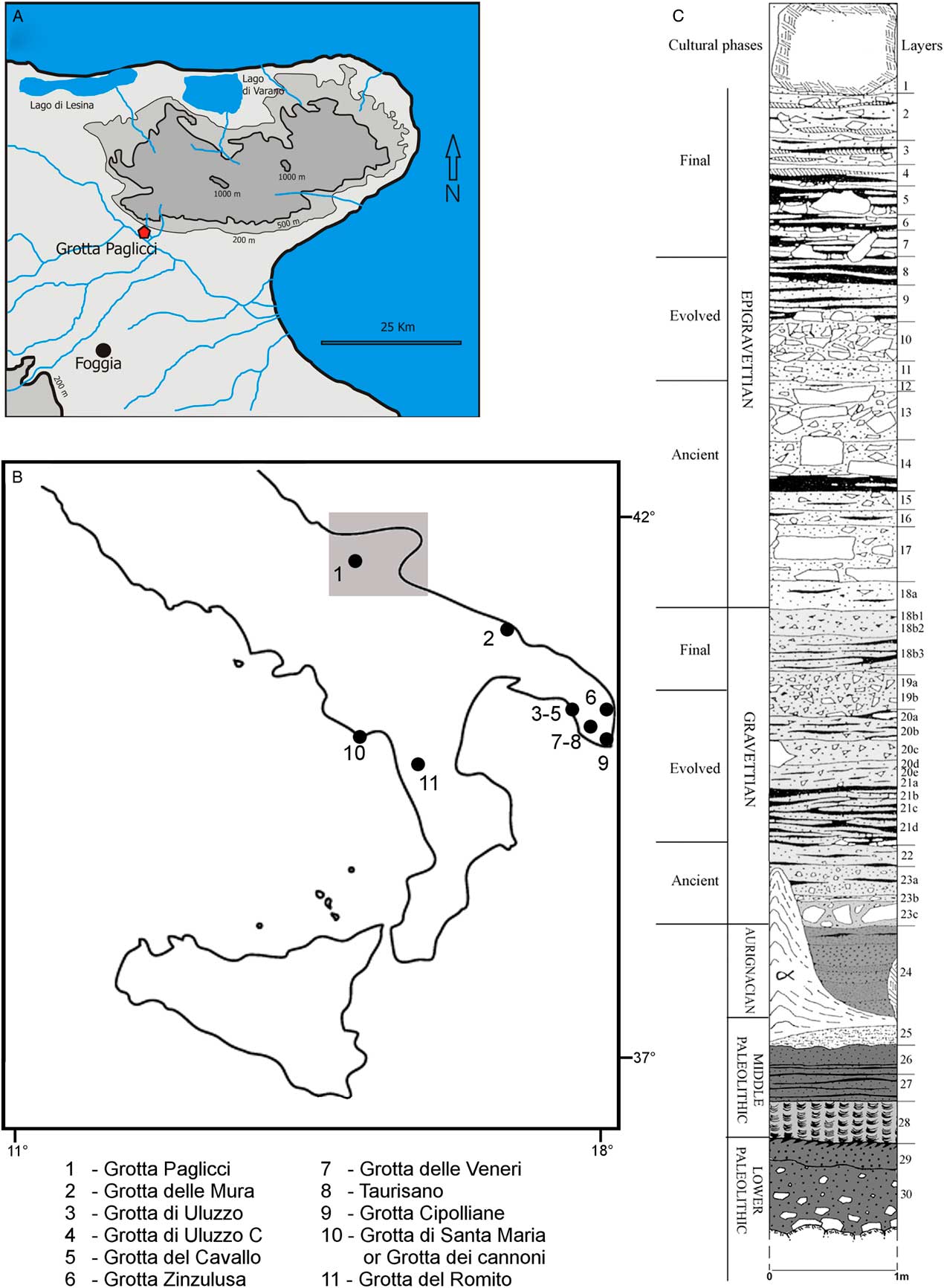
The site of Grotta Paglicci was selected to carry out our test. This cave lies on the western slope of the Gargano promontory (Apulia, southern Italy) in the municipality of Rignano Garganico (Fig. 1). It opens at an altitude of about 143 m asl and consists of a present-day cave and a rock shelter that used to be part of the same hypogean system (Crezzini et al., Reference Crezzini, Boscato, Ricci, Ronchitelli, Spagnolo and Boschin2016). After the “official” discovery of the site at the end of the 1950s (the cave was already known to local people), the first field investigations were carried out by the Natural History Museum of Verona from 1961 to 1963. From 1971 onwards, research was directed by the University of Siena in collaboration with the local heritage office (Zorzi, Reference Zorzi1964; Palma di Cesnola, Reference Palma di Cesnola2004a). A main trench was excavated in the cave, where a 12-m-thick stratigraphy spanning a period from the Middle Palaeolithic (layers 30–25) to the Final Epigravettian was discovered (Palma di Cesnola, Reference Palma di Cesnola2004b). In particular, the Upper Palaeolithic sequence is one of the most complete in the whole of Europe. It comprises the Marginally Backed Bladelets Aurignacian (layer 24), the Ancient Gravettian (layers 23–22), the Evolved Gravettian (layers 21–19b), the Late Gravettian (layers 19a–18b), the Ancient Epigravettian (layers 17–12), the Evolved Epigravettian (layers 11–8), and the Final Epigravettian (layers 7–3a). As the cave was eventually obstructed by sedimentation, it was not frequented during the Romanellian, a later phase of the Epigravettian of southern Italy (Palma di Cesnola, Reference Palma di Cesnola2001, Reference Palma di Cesnola2004b, Reference Palma di Cesnola2006, Reference Palma di Cesnola2011, and references cited therein; Wierer, Reference Wierer2013; Ricci et al., Reference Ricci, Capecchi, Boschin, Arrighi, Ronchitelli and Condemi2016; Borgia et al., Reference Borgia, Boschin and Ronchitelli2016). The importance of the site also derives from the presence of three human burials and several isolated Upper Palaeolithic human remains (Ronchitelli et al., Reference Ronchitelli, Mugnaini, Arrighi, Atrei, Capecchi, Giamello, Longo, Marchettini, Viti and Moroni2015; Fu et al., Reference Fu, Posth, Hajdinjak, Petr, Mallick, Fernandes and Furtwängler2016; Posth et al., Reference Posth, Renaud, Mittnik, Drucker, Rougier, Cupillard and Valentin2016), as well as from Upper Palaeolithic rock paintings (the only case known in Italy to date) (Zorzi, Reference Zorzi1963; Arrighi et al., Reference Arrighi, Borgia, Guasparri, Ricci, Scala and Ronchitelli2012b), mobiliary art objects (Mezzena and Palma di Cesnola, Reference Mezzena and Palma di Cesnola1972, Reference Mezzena and Palma di Cesnola1992, Reference Mezzena and Palma di Cesnola2001, Reference Mezzena and Palma di Cesnola2004; Arrighi et al., Reference Arrighi, Borgia, D’Errico and Ronchitelli2008, Reference Arrighi, Borgia, D’Errico, Ricci and Ronchitelli2012a), and evidence of Gravettian plant-food processing (Mariotti Lippi et al., Reference Mariotti Lippi, Foggi, Aranguren, Ronchitelli and Revedin2015; Revedin et al., Reference Revedin, Longo, Mariotti Lippi, Marconi, Ronchitelli, Svoboda, Anichini, Gennai and Aranguren2015).
(A) Site location; (B) positions of sites discussed in the text; and (C) site stratigraphy.

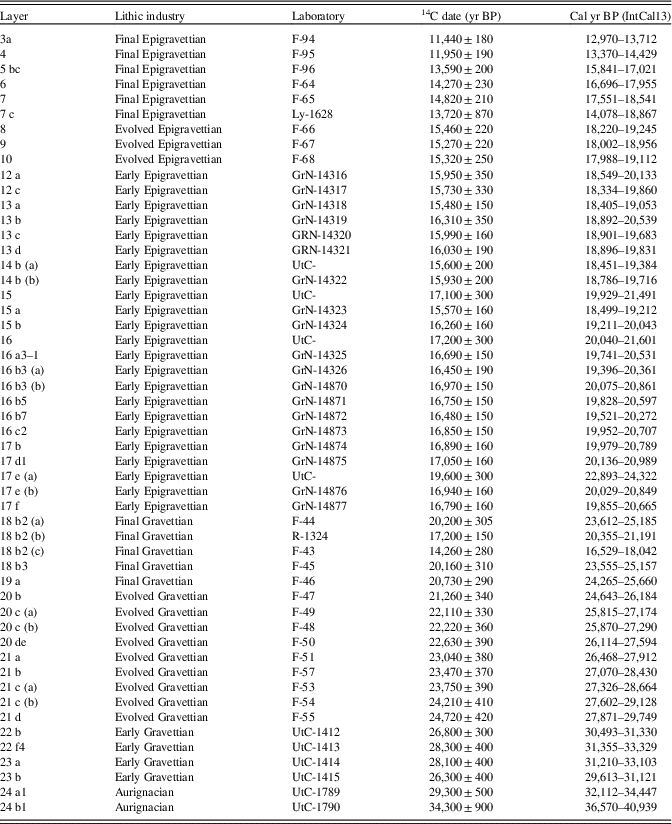
With regard to the Upper Palaeolithic layers, 52 available radiocarbon dates indicate a quite continuous frequentation of the cave for a time period of about 26,000 yr (Table 1). Thus, Grotta Paglicci can be considered as a reference sequence for the study of the Upper Palaeolithic in southern Europe and in the Mediterranean area, and it is a key site for understanding past climatic evolution from a later phase of MIS 3 until the end of MIS 2 (in particular from 40,939–36,570 cal yr BP to 13,712–12,970 cal yr BP).
14C dates of the cave’s stratigraphy.

MATERIALS AND METHODS
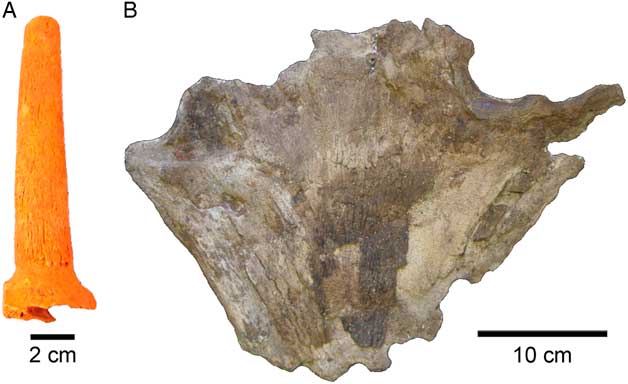
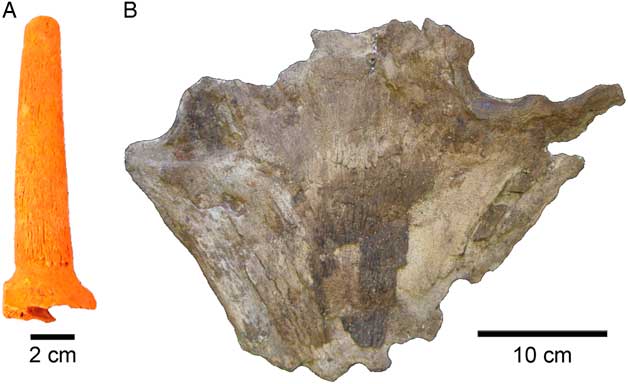
The Epigravettian large mammal assemblage and those from the Final and Evolved Gravettian layers are still under analysis. Only a part of the remains was studied by Sala (Reference Sala1983) and Boscato (Reference Boscato1994). New data presented in this paper on ungulate assemblages come from the whole Epigravettian sequence. Aurignacian and Ancient Gravettian data are from Boscato (Reference Boscato1994), whilst Evolved and Final Gravettian data are from Sala (Reference Sala1983). A total amount of 18,859 Epigravettian ungulate remains were identified for the present paper, using the osteological reference collection of the University of Siena. Rupicapra remains have been identified only according to genus, due to the lack of specimens bearing diagnostic features able to distinguish between R. rupicapra and R. pyrenaica (Fig. 2A). Palmated cervid antlers were attributed to Cervus elaphus according to Abbazzi (Reference Abbazzi1995) (Fig. 2B).
(color online) (A) Rupicapra sp., horncore (Evolved Epigravettian). This is the most relevant chamois remain from the Epigravettian sequence. (B) Cervus elaphus, palmated antler (Ancient Epigravettian).
Some specimens were ascribed to categories based on animal body size alone: the category “small ungulate” comprises remains belonging to individuals similar in size to caprines, roe deer, and wild boar; the category “medium ungulate” comprises remains belonging to individuals similar in size to red deer and European ass; the category “large ungulate” comprises remains belonging to individuals similar in size to horse and cattle.
All Epigravettian specimens were analysed from a taphonomic point of view, recognizing anthropic and natural traces on bone surfaces. Striations on bone surfaces of specimens from an Ancient Gravettian layer where a hyena den was identified (Boscato, Reference Boscato1994; Boscato and Crezzini, Reference Boscato and Crezzini2005) were reanalysed by means of 3D microscopy using a Hirox KH-7700 digital microscope (Moretti et al., Reference Moretti, Arrighi, Boschin, Crezzini, Aureli and Ronchitelli2015; Oxilia et al., Reference Oxilia, Peresani, Romandini, Matteucci, Debono, Spiteri and Henry2015; Arrighi et al., Reference Arrighi, Bazzanella, Boschin and Wierer2016). The RTF index (defined as the ratio between the breadth at the top and the breadth at the bottom of each mark’s cross section) was used as a morphometric criterion to distinguish cut marks from tooth scores. Comparative data of present-day tooth scores and experimental cut marks are from Boschin and Crezzini (Reference Boschin and Crezzini2012), Crezzini et al. (Reference Crezzini, Boschin, Wierer and Boscato2014), and Duches et al. (Reference Duches, Nannini, Romandini, Boschin, Crezzini and Peresani2016).
Relative abundance of ungulate species was calculated using NISP (Number of Identified Specimens), whilst abundance of small mammal taxa is from Berto et al. (Reference Berto, Boscato, Boschin, Luzi and Ronchitelli2017). A principal component analysis (PCA) was separately performed on both large and small mammal assemblages. First and second components from the PCA carried out on ungulate assemblages were respectively labelled “PC1ung” and “PC2ung.” The first component coming from the PCA analysis on small mammal assemblages was labelled “PC1small.” Values produced by these three components were used as proxies for the reconstruction of faunal changes over time. All statistical analyses were performed using the PAST software (Hammer et al., Reference Hammer, Harper and Ryan2001).
Radiocarbon dates are calibrated using the software OxCal v. 4.2 (Bronk Ramsey, Reference Bronk Ramsey2009) and the IntCal13 curve (Reimer et al., Reference Reimer, Bard, Bayliss, Beck, Blackwell, Bronk Ramsey and Buck2013).
RESULTS
Taphonomic agents responsible for the ungulate bone assemblage
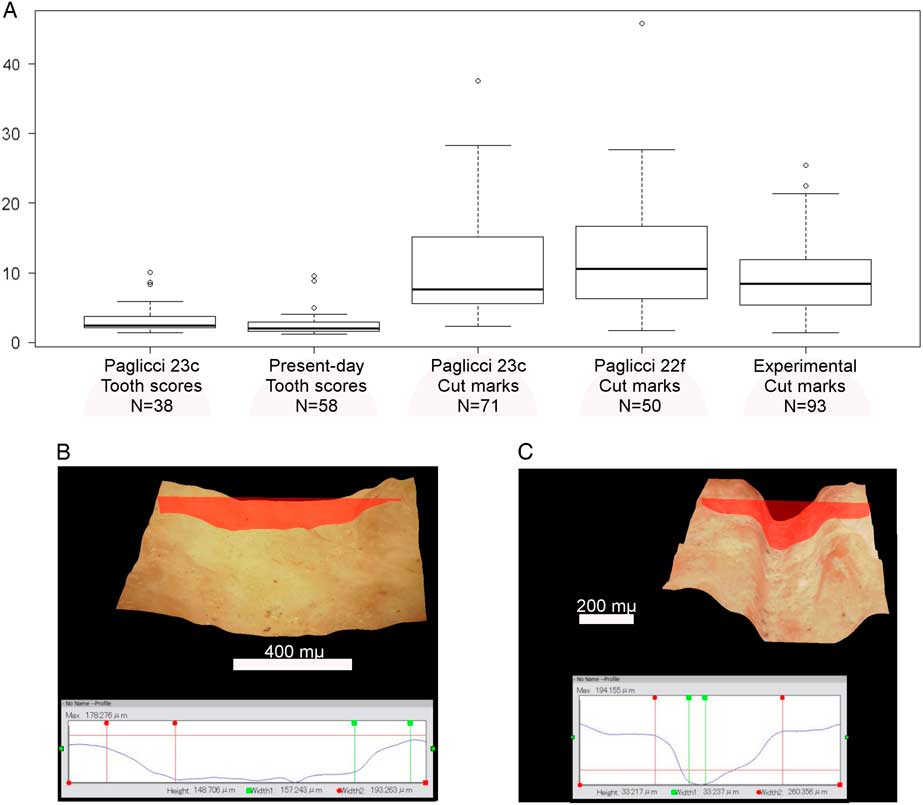
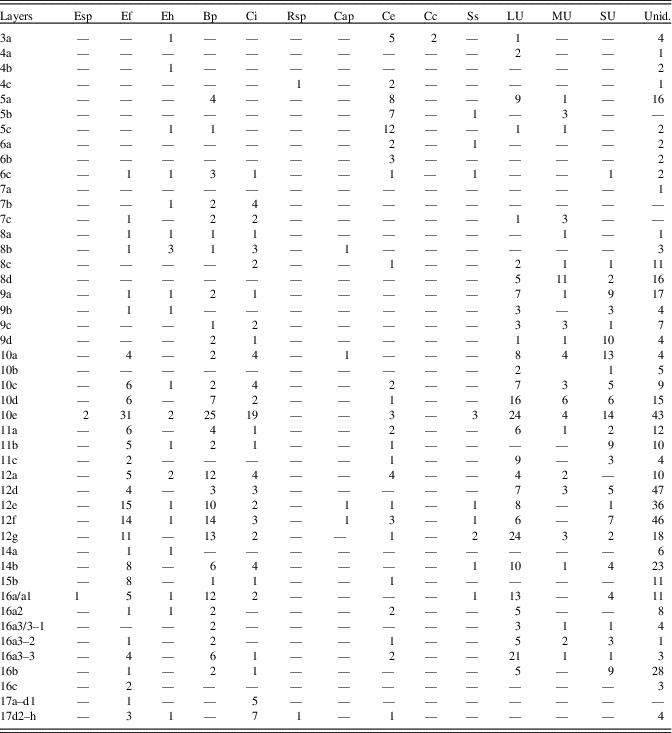
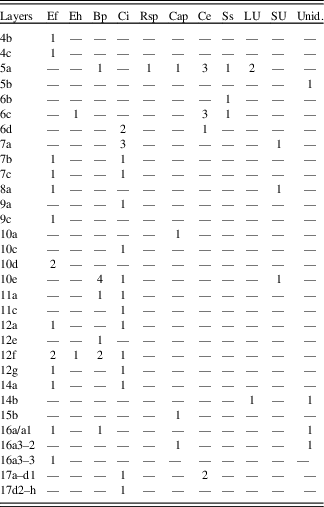
Epigravettian ungulate remains bear anthropic marks on their surfaces. These consist of cut marks, percussion marks, and relative cones. Marks ascribable to carnivore activity (gnawing marks and corrosions) are completely absent in some of the layers and very rare in the others (Tables 2 and 3). No taphonomic data are available for the Final and Evolved Gravettian phases, but layers 21–18b are very anthropized, and no traces of carnivore frequentation were detected during the excavations (Palma di Cesnola, Reference Palma di Cesnola2004b). With the exception of layer 22, other Ancient Gravettian and Aurignacian layers (23–24) are characterized both by anthropogenic and carnivore-related accumulations of animal remains. In particular, both anthropic marks and the presence of hyena coprolites and bones bearing carnivore-induced modifications are found in layers 23 and 24 (Boscato Reference Boscato1994; Boscato and Crezzini, Reference Boscato and Crezzini2005; Crezzini, Reference Crezzini2007; Borgia and Crezzini, Reference Borgia and Crezzini2011). The largest amount of coprolites is found in layer 23c (Boscato, Reference Boscato1994), where striations detected on bones can be divided into two well-defined groups with different morphological characteristics: striations of anthropic origin with a V-shaped profile were indicated by high values (N=71; min.=2.3; max.=37.5; mean=10.2) of the ratio between the breadth at the top and the breadth at the floor of mark (defined as RTF index in Boschin and Crezzini, Reference Boschin and Crezzini2012), and tooth marks with a clear U-shaped cross section were indicated by low values of the RTF index (N=38; min.=1.4; max.=10.1; mean=3.3) (Fig. 3).
(color online) (A) Distribution of RTF values among five samples: marks from layer 23c interpreted as tooth scores; present-day tooth scores; marks interpreted as cut marks from layer 23c; marks interpreted as cut marks from layer 22f; experimental cut marks produced using flint implements. (B) Example of a tooth score; and (C) example of a cut mark.

Anthropic marks on Epigravettian faunal remains (cut marks, percussion marks, and cones) according to taxonomy. Abbreviations: Bp, Bos primigenius; Cap, caprine; Cc, Capreolus capreolus; Ce, Cervus elaphus; Ci, Capra ibex; Ef, Equus ferus; Eh, Equus hydruntinus; Esp, equid; LU, large ungulate; MU, medium ungulate; Rsp, Rupicapra sp.; Ss, Sus scrofa; SU, small ungulate; Unid., unidentified.

Marks from carnivores on Epigravettian faunal remains. Abbreviations: Bp: Bos primigenius; Cap, caprine; Cc, Capreolus capreolus; Ce, Cervus elaphus; Ci, Capra ibex; Ef, Equus ferus; Eh, Equus hydruntinus; LU, large ungulate; MU, medium ungulate; Rsp, Rupicapra sp.; Ss, Sus scrofa; SU, small ungulate; Unid., unidentified.

Epigravettian ungulate assemblages
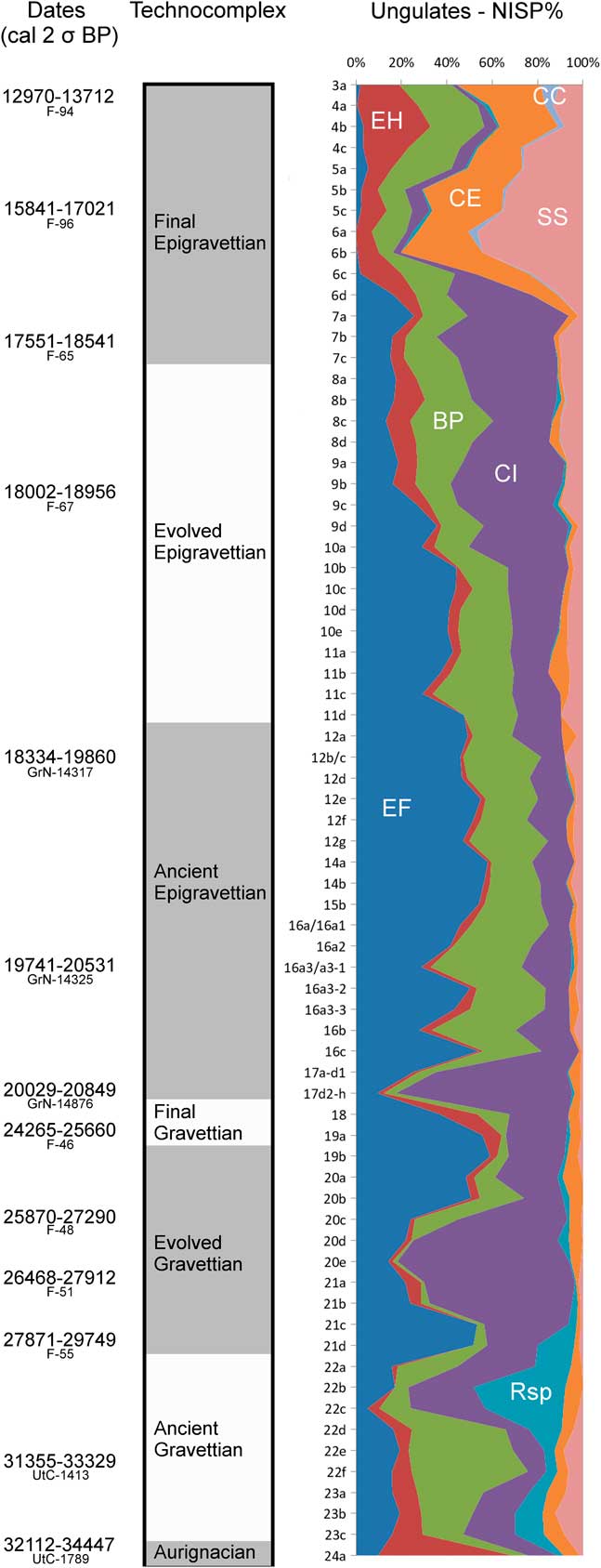
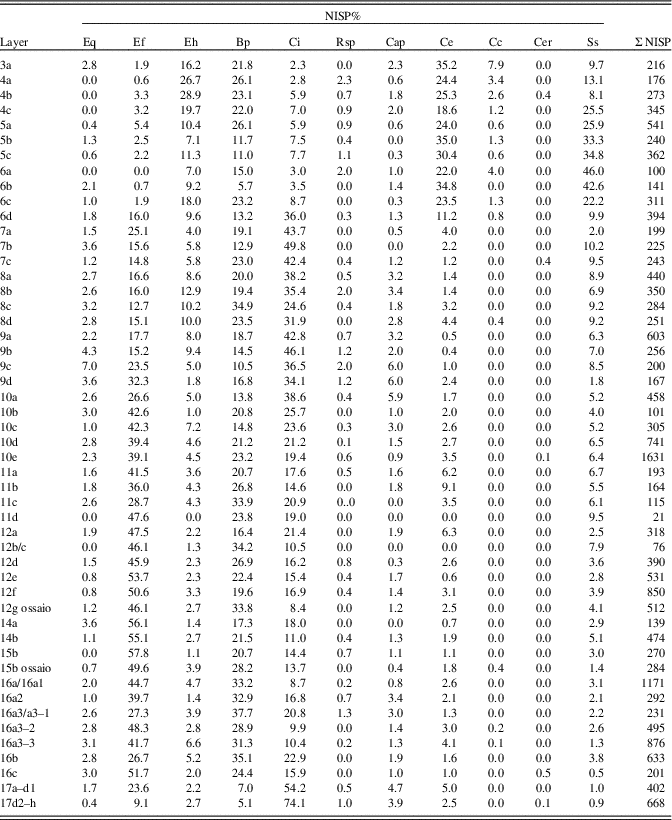
Considering the relative abundance of ungulate taxa, the Epigravettian sequence can be divided into four main sections (Fig. 4, Table 4, Supplementary Table 1):
1. Layer 17 (ca. 20,000 cal yr BP): this phase is characterized by an overwhelming presence of ibex remains. This taxon accounts for 74.1% of ungulate NISP in the lower part of this layer (levels 17d2–h) and for 54.2% of NISP in the upper part (levels 17a–d1).
2. Layers 16 to 10b (ca. 20,000–18,500 cal yr BP): during this phase, the increase in horse remains is balanced by a decrease in those of ibex. Frequency of horse is always more than 39% of NISP and reaches a peak in layer 15b (57.8%). Abundance of ibex remains is always lower than 26%, with a minimum in layer 16a/a1 (8.7%). Auroch remains increase in this phase (ranging between 37.7% in layer 16a3/a31 and 14.8% in layer 10c). Other taxa are scarcely represented, but a clear positive trend in wild boar frequency is visible.
3. Layers 10a to 6d (ca. 18,500–18,000 cal yr BP): ibex increases again, reaching a relative abundance of more than 30% of NISP in most of the layers. Horse remains are fewer (<20%), and aurochs are also rarer. Wild boar remains continue to increase, together with those of red deer and European ass.
4. Layers 6c to 3a (ca. 18,000–13,500 cal yr BP): the faunal turnover between layers 6d and 6c is the most important change of the whole sequence: horse and ibex frequencies decrease simultaneously and abruptly. In particular, ibex abundance decreases from 36% to 8.7%, whilst horse decreases from 16% to 1.9%. Both species continue to be very rare up to the top of the sequence. European ass remains increase, reaching a maximum abundance in layer 4b (28.9% of NISP); even if auroch percentages oscillate, their abundance reaches a relative stability from layer 5a onwards (always more than 20%). Chamois is rare but almost always present, whilst roe deer is always represented and reaches its greatest abundance in layer 3a (7.9%). Wild boar and red deer are well represented, and at times they are the dominant species.
(color online) Relative abundance of ungulate taxa (NISP%) through the sequence. Abbreviations: BP, Bos primigenius; CC, Capreolus capreolus; CE, Cervus elaphus; CI, Capra ibex; EF, Equus ferus; EH, Equus hydruntinus; Rsp, Rupicapra sp.; SS, Sus scrofa. 14C dates are calibrated with the Oxcal v. 4.2 software (Bronk Ramsey, Reference Bronk Ramsey2009) using the IntCal13 curve (Reimer et al., Reference Reimer, Bard, Bayliss, Beck, Blackwell, Bronk Ramsey and Buck2013).

Epigravettian ungulate assemblages (NISP%). Abbreviations: Bp, Bos primigenius; Cap, caprine; Cc, Capreolus capreolus; Ce, Cervus elaphus; Cer, cervid; Ci, Capra ibex; Ef, Equus ferus; Eh, Equus hydruntinus; Eq, equid; Rsp, Rupicapra sp.; Ss, Sus scrofa.

Comparison between ungulate and micromammal faunal assemblages (whole sequence)
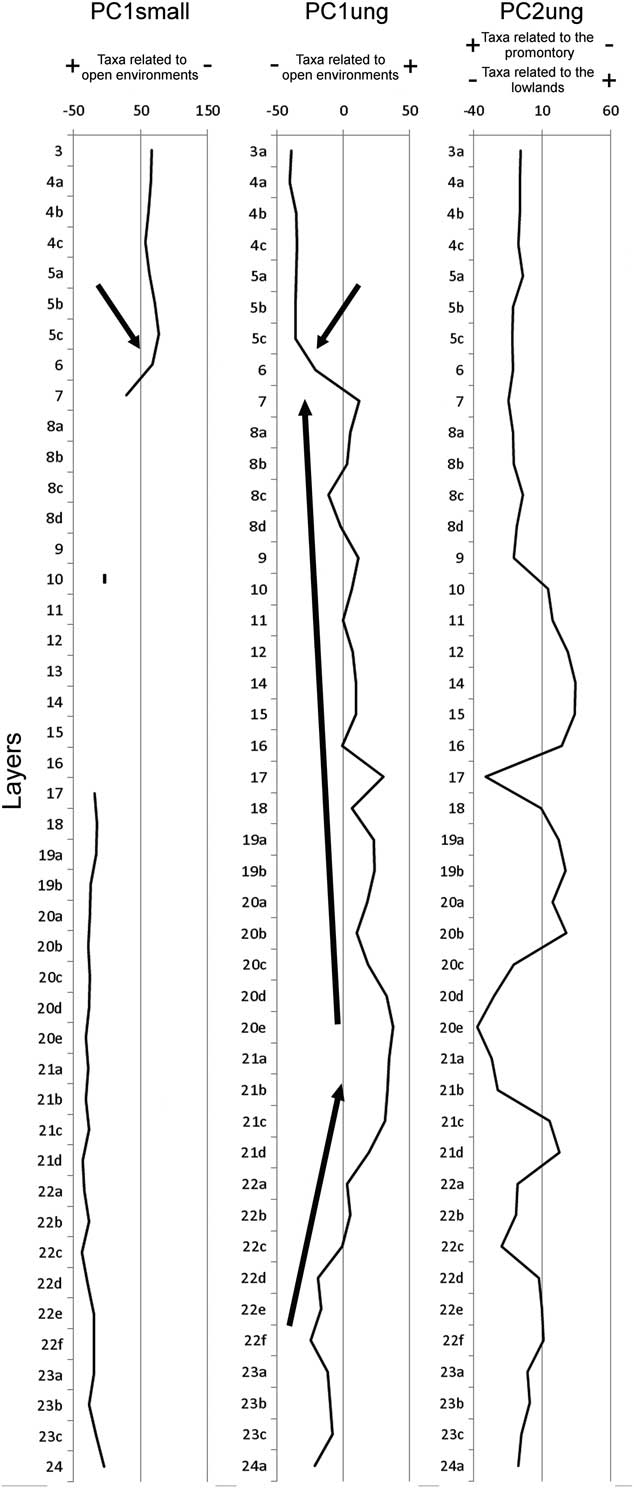
For comparison of ungulate and small mammal assemblages, ungulate data from some of the layers were grouped together. Data from layer 24b were discarded due to their poor significance. A principal component analysis was then performed on both data sets (Fig. 5). As regards ungulates, the first component (PC1ung) counts for 45.9% of sample variability. Higher PC1ung values translate to greater abundance of ibex and horse remains. The second component (PC2ung) describes 29.2% of sample variability. Higher PC2ung values represent greater abundance of horse and aurochs remains, whereas lower PC2ung values reflect greater abundance of ibex remains. Values of PC1ung are quite stable: main changes are seen in an increase from layer 22f to layer 21b, a general slight decrease (with some small oscillations) from layer 20e to layer 7, and an abrupt decrease between layers 7 and 6. This last change corresponds to a similar change detected within layer 6 (6d–6c) and described in the previous section. PC2ung is characterized by much stronger oscillations, with minima corresponding to layers 22c, 20e, and 17 (Fig. 5).
Diachronic trend of PC1small, PC1ung, and PC2ung over time.

As regards small mammals, most of the sample’s variability (89.1%) is expressed only by one component (PC1small). Higher PC1small values indicate more abundant water vole (Arvicola amphibius) and Savi’s pine vole [Microtus (Terricola) savii] remains; lower PC1small values reflect more abundant common vole (Microtus arvalis) remains. Even if data for layers 8, 9, and 11–16 are not representative, an abrupt change is visible between layers 7 and 6 (Fig. 5).
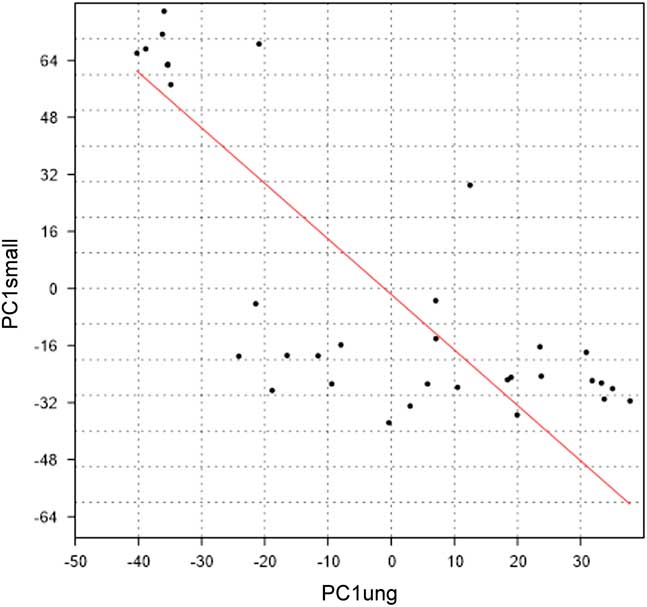
Because PC1ung appears to be positively influenced by open environment–related taxa and PC1small appears to be negatively influenced by continental, open, dry environment–related taxa, an expected and significant negative correlation was detected between these two factors using a linear model (P=4.6718×10⁻⁷) (Fig. 6). In contrast, PC2ung, whose oscillations depend on the presence of lowland-related taxa versus promontory-related taxa, is not correlated with PC1small (P=0.3).
Linear model describing a correlation between PC1ung and PC1small. Both factors are environment related.

DISCUSSION
At Grotta Paglicci, ungulate assemblages have been mainly deposited by humans. New taphonomic analyses confirm that part of the bone accumulation is unquestionably related to humans in addition to those layers where the strongest presence of hyena activities had been detected.
PCA results allow us to quantify the ecological significance of ungulate associations: PCA1ung and PCA1small have a clear palaeoenvironmental meaning in terms of open versus closed environments and/or dry versus humid conditions. In both cases, the abrupt change from layer 7 to layer 6 (Fig. 5) is clearly visible, and a significant correlation between these two factors was detected. This is very important, if we consider that accumulations of small mammal and large mammal bones are related to two completely independent agents that act on territories of different size: nocturnal and diurnal birds of prey or small carnivores, and human hunters (or hyenas), respectively.
The composition of ungulate assemblages indicates the persistence of open environment–related taxa (steppes and forest steppes) for a long time, and more precisely from the Aurignacian up to the Final Epigravettian. This long phase was characterised by small-amplitude oscillations towards more humid and milder conditions. Large mammal remains from such oscillations show a slight decrease in horse and ibex balanced by an increase in auroch and chamois. This is the case in layers 22f, 16, 11, and 8c, where palaeoclimatic reconstructions indicate an increase in woods and open woodlands (Berto et al., Reference Berto, Boscato, Boschin, Luzi and Ronchitelli2017). The climate change towards more humid and milder conditions (and generally from a continental climate to a Mediterranean one) detected by Berto et al. (Reference Berto, Boscato, Boschin, Luzi and Ronchitelli2017) from the final part of the Gravettian onwards is confirmed by a general positive trend, visible first in wild boar and later in other taxa, such as red deer and roe deer, and by a decrease in ibex and horse. This change is completed at the boundary between layers 6d and 6c (or between layers 7 and 6 when some levels are grouped together). It is worth noting how shifts towards more Mediterranean conditions are generally accompanied by a replacement of horse with European ass among equids.
This change is probably related to a regional climatic shift also detectable in other sites: at Taurisano (southern Apulia) during the Final Epigravettian, the decrease in equids was balanced by an increase in aurochs; a similar situation was observed at Grotta di Uluzzo, which is close to Taurisano (Palma di Cesnola, Reference Palma di Cesnola1993; Borzatti von Löwenstern, Reference Borzatti von Löwenstern1963); at Grotta del Romito (Calabria, Tyrrhenian side), ibex decreases during the Evolved–Final Epigravettian, whilst red deer and wild boar increase (Bertini Vacca, Reference Bertini Vacca2012). The palaeoecological meaning of this change was also confirmed by the study of micromammal remains and chronostratigraphy from the same site (López-García et al., Reference López-García, Berto, Colamussi, Valle, Lo Vetro, Luzi, Malavasi, Martini and Sala2014; Blockley et al., Reference Blockley, Pellegrini, Colonese, Lo Vetro, Albert, Brauer and Di Giuseppe2018). At Grotta di Santa Maria (Campania, Tyrrhenian side), ibex and aurochs decrease during the Epigravettian, whilst wild boar and red deer increase (Boscato, Reference Boscato2000). In addition, palaeoclimatic reconstructions based on mammal assemblages at Paglicci are confirmed by isotopic studies that indicate a climate amelioration and an increase in humidity during the late glacial (Abbazzi et al., Reference Abbazzi, Delgado Huertas, Iacumin, Longinelli, Ficcarelli, Masini and Torre1996; Delgado Huertas et al., Reference Delgado Huertas, Jacumin and Longinelli1997; Iacumin et al., Reference Iacumin, Bocherens, Delgado Huertas, Mariotti and Longinelli1997).
The disappearance of horse remains in the final part of the sequence of Grotta Paglicci does not mean that the taxon became extinct in Apulia: its remains are present in the Epigravettian layers of a number of more southerly sites: Grotta del Cavallo (Nardò, Lecce), Grotta Cipolliane (Lecce) (Palma di Cesnola, Reference Palma di Cesnola1963), Grotta di Uluzzo, Grotta di Uluzzo C (Borzatti von Löwenstern, Reference Borzatti von Löwenstern1963, Reference Borzatti von Löwenstern1965), Grotta Zinzulusa (Castro, Lecce) (Cardini, Reference Cardini1962), and Grotta delle Veneri (Parabita, Lecce) (Sala, Reference Sala1983). At Grotta delle Mura in Apulia, the horse survived until the early Holocene (Bon and Boscato, Reference Bon and Boscato1993).
The disappearance of horses at Paglicci could be due to an increase in humid areas across the plain at the foot of the Gargano promontory, which forced horses to move south. Open environments, probably still present in the rocky area of the promontory, which is characterized by a permeable limestone substratum, represented an environment suitable for the European ass, which increased at Paglicci during the Final Epigravettian.
PCA points out another intriguing issue: the first component, PC1small, accounts for most of the micromammal sample variability and indicates an exclusively palaeoecological meaning of small mammal assemblages. However, PC1ung, which is supposed to be environmentally related, accounts for much less variability within the ungulate sample. A quite large portion of the sample variability is described by the second principal component (PC2ung), the values of which may indicate the alternate exploitation by humans of two different territories, both not far from Paglicci: the plain and the promontory. In fact, both horse and ibex occur in similar (dry) climatic conditions, but they inhabit very different landscapes. A similar dichotomy could also be hypothesized for aurochs and chamois during periods when the climate became more humid and open woodlands covered the territory. When PC2ung reaches its extreme values, it is indicative of a selective exploitation of particular taxa (as it is the case of ibex in layer 17).
CONCLUSIONS
This paper demonstrates that analysis of changes in ungulate composition can represent a valuable tool for the reconstruction of past climatic shifts, even if taxon representation in anthropogenic accumulation of animal remains can be influenced by both cultural choices and different taphonomic pathways. In the case of a long-term stratigraphy, the analysis of relative abundance of taxa appears to be more sensitive than the examination of presence/absence data. In any case, collected data must be discussed in light of the geographic and geomorphological characteristics of territories around the site, especially in a diverse region like the Italian Peninsula. The comparison of ungulate data with those from the study of small mammal remains allows us to distinguish between environmental and anthropic influences on the faunal composition. Finally, the results from such multivariate analysis, if integrated with studies on raw material procurement strategies and human mobility, can represent a powerful tool to shed light on diachronic changes in hunting territories and on how the environment was exploited by humans through time.
ACKNOWLEDGMENTS
The authors thanks the Soprintendenza Archeologia, Belle Arti e Paesaggio per le provincie di Barletta–Andria–Trani e Foggia for supporting research at Grotta Paglicci, Prof. A. Palma di Cesnola for his studies of the site, and dott. Sem Scaramucci for his revision of the text.
Supplementary material
To view supplementary material for this article, please visit https://doi.org/10.1017/qua.2018.59