Background
In recent years, diagnostic criteria have been developed for prodromal diagnosis of a range of neurodegenerative diseases including Alzheimer's disease (AD) and Parkinson's disease (PD) (Albert et al., Reference Albert, DeKosky, Dickson, Dubois, Feldman, Fox and Phelps2011; Litvan et al., Reference Litvan, Goldman, Troster, Schmand, Weintraub, Petersen and Emre2012). Recently, research criteria for mild cognitive impairment with Lewy bodies (MCI-LB) have been developed (McKeith et al., Reference McKeith, Ferman, Thomas, Blanc, Boeve, Fujishiro and Tiraboschi2020). The accurate identification of MCI-LB is important to allow research into this phase of the disease, to help patients and their families understand the symptoms they are experiencing and to facilitate the identification of treatable symptoms such as REM sleep behaviour disorder, parkinsonism and constipation. MCI-LB is differentiated from other causes of MCI on the basis of the presence of core clinical features associated with dementia with Lewy bodies (DLB) (cognitive fluctuations, recurrent visual hallucinations, REM sleep behaviour disorder and parkinsonism) and diagnostic biomarkers (reduced basal ganglia dopamine transporter uptake on SPECT or PET, polysomnographic confirmation of REM sleep behaviour without atonia and reduced cardiac MIBG uptake). The MCI-LB diagnostic criteria also highlight the importance of psychiatric symptoms in prodromal DLB, including the possibility of a ‘psychiatric-onset’ presentation. Five psychiatric symptoms – non-visual hallucinations, systematised delusions, apathy, anxiety and depression are listed as supportive features in both the DLB and MCI-LB criteria (McKeith et al., Reference McKeith, Boeve, Dickson, Halliday, Taylor, Weintraub and Kosaka2017). We have previously reported that the number of these symptoms present [the Neuropsychiatric Supportive Symptom Count (NSSC)] is greater in MCI-LB than in MCI due to Alzheimer's disease (MCI-AD) (Donaghy et al., Reference Donaghy, Taylor, O'Brien, Barnett, Olsen, Colloby and Thomas2018) and that the presence of two or more of these symptoms is significantly more likely in MCI-LB than MCI-AD (likelihood ratio 4.2).
In addition to different patterns of neuropsychiatric symptoms, MCI-LB and MCI-AD also demonstrate different cognitive profiles. MCI-LB is more likely to be associated with multiple domain amnestic or non-amnestic cognitive impairment, whereas single domain amnestic cognitive impairment is most likely to be the result of MCI-AD (Ferman et al., Reference Ferman, Smith, Kantarci, Boeve, Pankratz, Dickson and Petersen2013). MCI-LB is associated with particular deficits in verbal fluency, attention, executive and visuospatial function, with relative preservation of memory (Ciafone, Little, Thomas, & Gallagher, Reference Ciafone, Little, Thomas and Gallagher2020; Donaghy et al., Reference Donaghy, Taylor, O'Brien, Barnett, Olsen, Colloby and Thomas2018).
The aim of this study was to replicate the findings from our initial MCI-LB cohort, demonstrating the effectiveness of the Lewy body NSSC to differentiate between MCI-LB and MCI-AD (Donaghy et al., Reference Donaghy, Taylor, O'Brien, Barnett, Olsen, Colloby and Thomas2018).
Hypotheses
1. The presence of two or more neuropsychiatric supportive symptoms will be more common in MCI-LB than MCI-AD
2. MCI-LB would be associated with greater visuospatial and executive dysfunction and less memory impairment than MCI-AD but these differences will not be sufficient to allow accurate differentiation of MCI-LB and MCI-AD
Methods
Participants
MCI subjects ⩾60 years old were recruited from memory clinics, older people's medicine clinics and neurology clinics in the North East of England and Cumbria. Potential participants were approached if they experienced symptoms which may be related to prodromal DLB, such as autonomic symptoms, visual disturbances, olfactory impairment and mood changes as well as any indication of the presence of core and supportive features of DLB. Subjects were excluded if they had a diagnosis of dementia, an MMSE score <20, a CDR score of >0.5, parkinsonism that developed more than one year prior to cognitive impairment or evidence of clinical stroke or a serious neurological or medical condition that would affect their performance in study assessments. Participants with symptomatic heart failure (New York Heart Association Class II or greater) were excluded to avoid false-positive cardiac MIBG results. Participants with a current episode of major depression or a history of bipolar disorder or schizophrenia were also excluded.
All subjects gave their written informed consent to take part in the study. The study received ethical approval from the National Research Ethics Service Committee North East – Newcastle & North Tyneside 2 (Research Ethics Committee Identification Number 15/NE/0420).
Neuropsychological assessment
Subjects had a thorough neuropsychological assessment including the Addenbrooke's Cognitive Examination Revised (ACE-R) (Mioshi, Dawson, Mitchell, Arnold, & Hodges, Reference Mioshi, Dawson, Mitchell, Arnold and Hodges2006), FAS Verbal Fluency (Borkowski, Benton, & Spreen, Reference Borkowski, Benton and Spreen1966), the Trail-making Test Parts A and B (Reitan, Reference Reitan1955), the Graded Naming Test (GNT) (McKenna & Warrington, Reference McKenna and Warrington2007) and the Rey Auditory Verbal Learning Test (AVLT) (Rey, Reference Rey1964), simple and choice reaction times (Ballard et al., Reference Ballard, O'Brien, Gray, Cormack, Ayre, Rowan and Tovee2001) and line angle discrimination (Wood et al., Reference Wood, Firbank, Mosimann, Watson, Barber, Blamire and O'Brien2013).
Clinical assessment
All patients were assessed by a doctor, who carried out a physical and neurological examination. Where one was available, an informant was also interviewed. Quantitative scales were used to assess neuropsychiatric symptoms [Geriatric Depression Scale (D'Ath, Katona, Mullan, Evans, & Katona, Reference D'Ath, Katona, Mullan, Evans and Katona1994), Clinician Assessment of Fluctuations (Walker, et al., Reference Walker, Ayre, Cummings, Wesnes, Mckeith, O'brien and Ballard2000), Dementia Cognitive Fluctuations Scale (DCFS) (Lee, et al., Reference Lee, Mckeith, Mosimann, Ghosh-Nodial, Grayson, Wilson and Thomas2014), Neuropsychiatric Inventory (NPI) (Cummings, et al., Reference Cummings, Mega, Gray, Rosenberg-Thompson, Carusi and Gornbein1994)], parkinsonism [Revised Unified Parkinson's disease Rating Scale Motor Sub-scale (Goetz, et al., Reference Goetz, Tilley, Shaftman, Stebbins, Fahn and Martinez-Martin2008)] and level of functional impairment [Instrumental Activities of Daily Living Scale (Lawton and Brody, Reference Lawton and Brody1969), and Clinical Dementia Rating Scale (Hughes, Berg, Danziger, Coben, & Martin, Reference Hughes, Berg, Danziger, Coben and Martin1982)]. Neuropsychological assessment was carried out by trained nurses and Psychology graduates with experience in administering neuropsychological assessments in research settings. Further clinical and neuropsychological assessments have been carried out annually. Baseline data will be reported in this manuscript.
Neuropsychiatric supportive symptom count
The presence or absence of neuropsychiatric symptoms listed as ‘supportive clinical features’ in the DLB and MCI-LB diagnostic criteria (McKeith et al., Reference McKeith, Boeve, Dickson, Halliday, Taylor, Weintraub and Kosaka2017, Reference McKeith, Ferman, Thomas, Blanc, Boeve, Fujishiro and Tiraboschi2020) was determined from the relevant section of the NPI: delusions (Section A); non-visual hallucinations (Section B1/B4/B5/B6); depression (Section D), anxiety (Section E) and apathy (Section G). An affirmative response in the relevant section (severity and frequency scores ⩾1) indicated the presence of the symptom. The Lewy Body NSSC was defined as the total number of symptoms experienced by each patient (maximum = 5).
FP-CIT SPECT
FP-CIT SPECT imaging was carried out at baseline. Three to six hours following a bolus intravenous injection of 185 MBq of 123I-FP-CIT (DaTSCAN, GE Healthcare, UK) patients were scanned using a double-headed gamma camera (Siemens Symbia S) fitted with a low-energy high-resolution (LEHR) parallel hole collimator. Images were classed as normal or abnormal based on consensus visual rating by a five-person panel, blind to any clinical data (Benamer et al., Reference Benamer, Patterson, Grosset, Booij, de Bruin, van Royen and Ries2000).
MIBG
Cardiac MIBG was carried out at baseline. A planar anterior image was acquired 4 h after injection of 111 MBq of 123I-MIBG. The heart:mediastinum ratio (HMR) was calculated for each participant, blind to clinical data. An HMR<1.86 considered abnormal based on local control data (Roberts et al., Reference Roberts, Lloyd, Kane, Durcan, Lawley, Howe and Thomas2019).
Diagnosis
An expert consensus clinical panel (AJT, PCD, JPT) reviewed all the clinical assessment data to confirm subjects met NIA-AA all-cause MCI criteria (Albert et al., Reference Albert, DeKosky, Dickson, Dubois, Feldman, Fox and Phelps2011) without considering aetiology. Where the first two raters did not agree, the third made a final decision. The consensus panel also rated the presence or absence of each of the four core symptoms of DLB (cognitive fluctuations, complex visual hallucinations, clinical parkinsonism and clinical RBD). This was all performed blind to FP-CIT SPECT and MIBG results. These symptom ratings and the imaging biomarker results were used to classify participants as probable MCI-LB (McKeith et al., Reference McKeith, Ferman, Thomas, Blanc, Boeve, Fujishiro and Tiraboschi2020) (two core clinical features or one core clinical feature and at least one abnormal MCI-LB biomarker), possible MCI-LB (one core clinical feature or one abnormal MCI-LB biomarker) or MCI-AD (none of the four core features and no abnormal MCI-LB biomarkers with and evidence of decline consistent with AD with no evidence for another aetiology). Neuropsychiatric supportive symptoms were not used to classify participants as MCI-LB or MCI-AD. The ‘one-year rule’ was applied so that no subjects had had evidence of parkinsonism for more than a year before the onset of their cognitive decline. CSF and imaging biomarkers were not used in the diagnosis of MCI-AD; therefore, the MCI-AD cases fulfilled the NIA-AA ‘Core Clinical Criteria’ for MCI-AD. Assignment to these diagnostic categories was based on information from both baseline and follow-up clinical evaluations where available.
Statistics
Missing data (e.g. where an informant was not available or participants did not wish to complete the task) were excluded from the analyses as reported in the tables. Fourteen participants did not have data for the angle task as this was added to the test battery after the study commenced.
Demographic and clinical data were compared using t tests, Mann–Whitney U tests, χ2 and Fisher's Exact tests depending on the nature of the data. Most data were non-parametric and resistant to normalisation. The effect of potential confounding factors on significant results in the cognitive data was tested using the general linear model with sex and prescription of cholinesterase inhibitors or memantine as covariates. This required the removal of outlying or influential values (standardised or studentised residual > ± 3, leverage>0.5, Cook's Distance>1). Collinearity was excluded by ensuring correlation between independent variables was <0.7 and tolerance was >0.1. Normality of residuals was assessed by visual inspection of P-P plots of standardised residuals. Scatter plots of studentised residuals against predicted values and partial regression plots were inspected to ensure the presence of linear relationships between the dependent and independent variables and homoscedasticity in the overall model.
A post-hoc discriminant analysis was carried out to assess the ability of cognitive test results to differentiate between MCI-LB and MCI-AD. Tests which demonstrated a significant difference between MCI-LB and MCI-AD were included using the ‘enter’ method. Sensitivity and specificity were calculated with each case classified by functions derived from all other cases.
Results
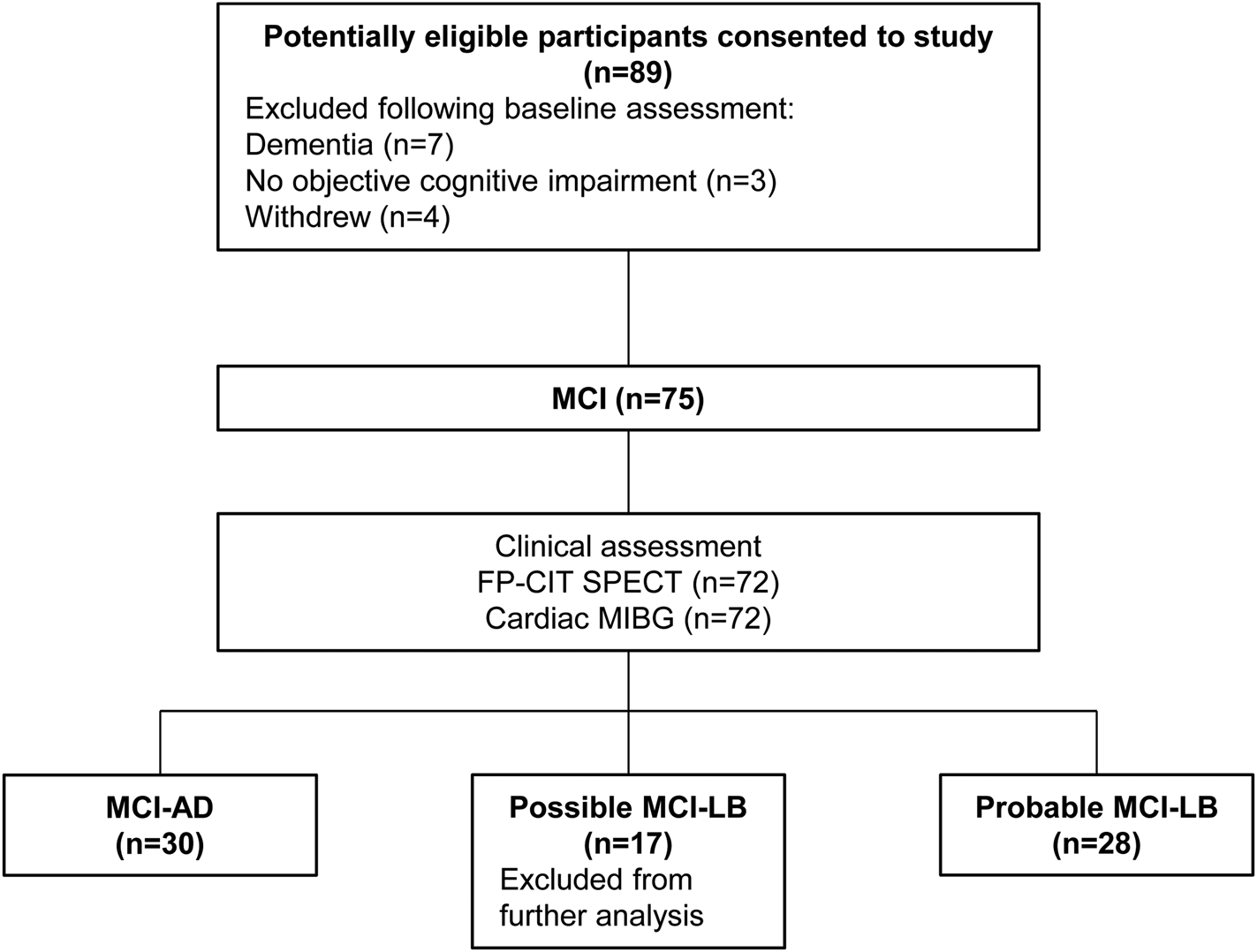
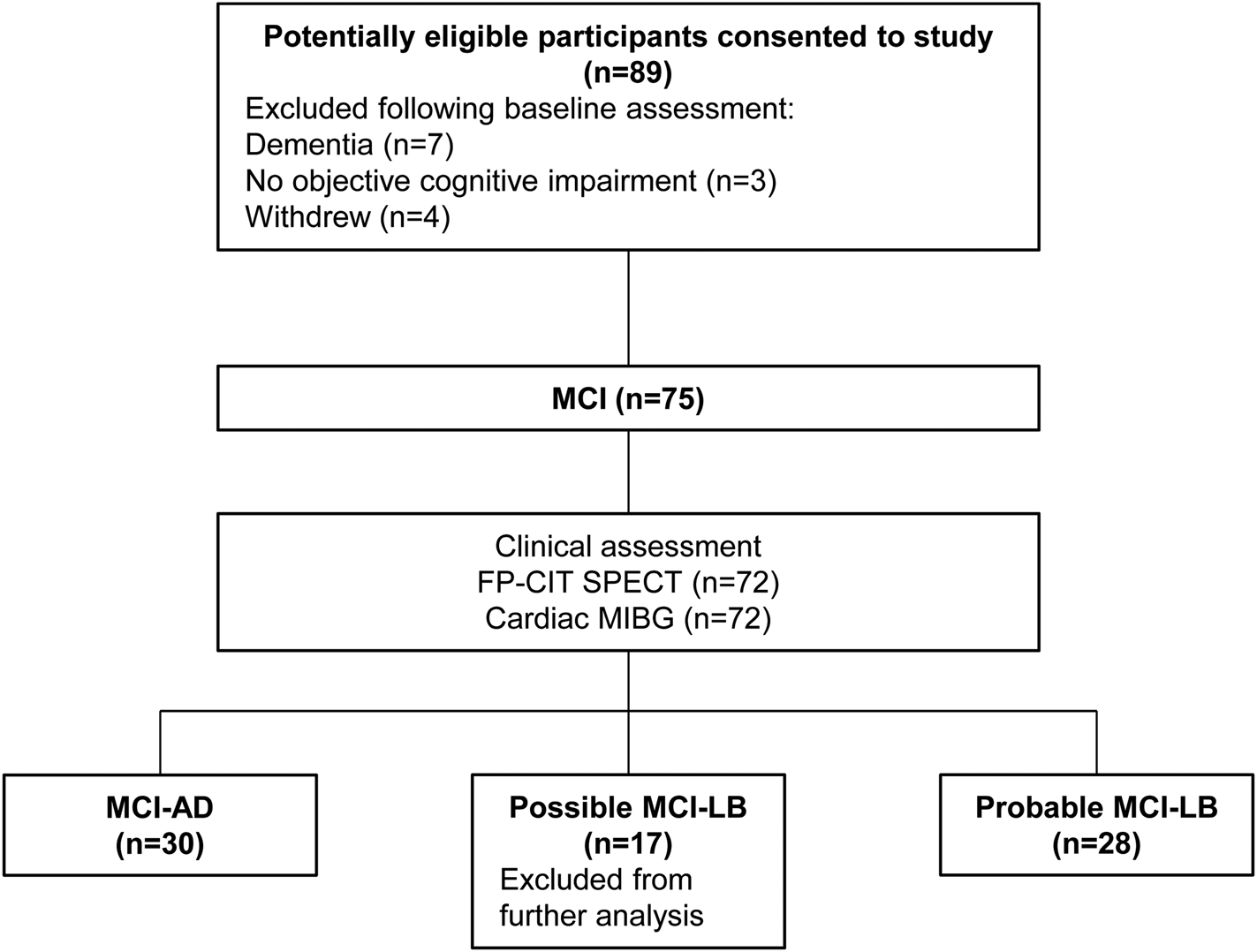
Seventy-five participants completed baseline assessment, of which 30 were diagnosed with MCI-AD and 28 were diagnosed with probable MCI-LB (Fig. 1). Seventeen were diagnosed with possible MCI-LB and were excluded from further analysis. Six MCI-AD (20%) and 11 MCI-LB (39%) had at least one follow-up assessment. In the probable MCI-LB group, RBD was the most common symptom (75%), followed by cognitive fluctuations (46%), parkinsonism (36%) and visual hallucinations (25%).
Participant recruitment and diagnosis flow chart.
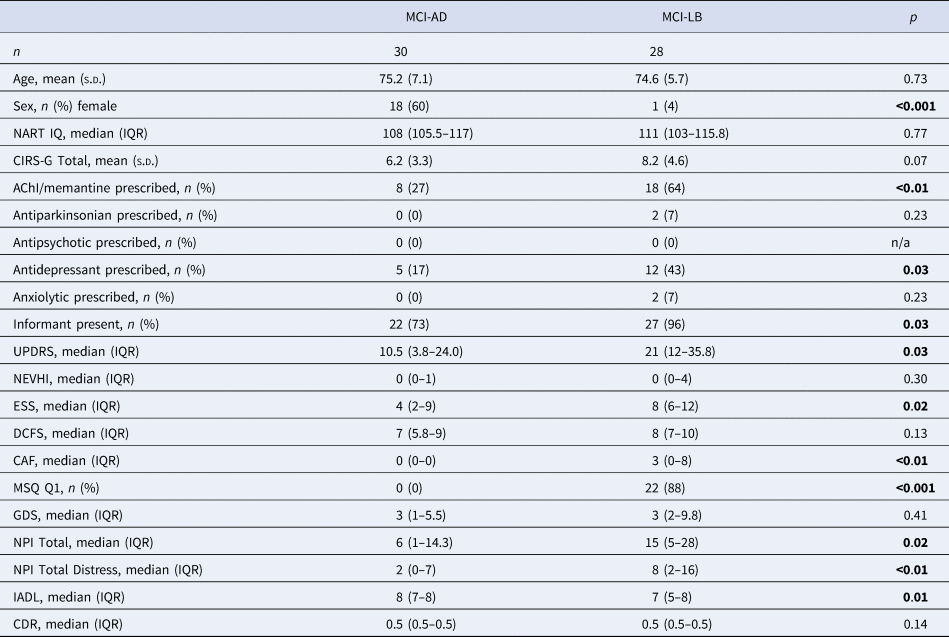
MCI-LB and MCI-AD groups were well balanced for age, predicted IQ and severity of cognitive impairment measured by the CDR (Table 1). The MCI-LB group was more likely to be male, to have an informant present and to be prescribed a cholinesterase inhibitor or memantine. As expected, the MCI-LB group scored higher in the UPDRS, ESS and CAF, and were more likely to have RBD symptoms based on the Mayo sleep questionnaire. They also had greater NPI and NPI distress total scores and greater functional impairment measured by the IADL.
Demographics and clinical scales
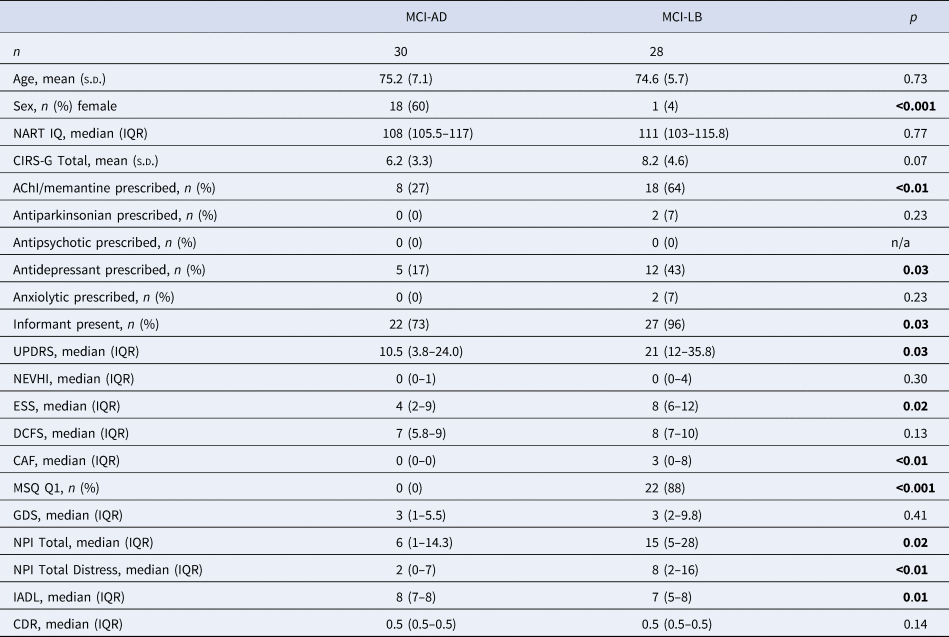
NART National Adult Reading Test; CIRS-G Cumulative Illness Rating Scale for Geriatrics; AChI Acetylcholinesterase inhibitor; UPDRS Unified Parkinson's Disease Rating Scale (MDS Revision); NEVHI North East Visual Hallucinations Interview; ESS Epworth Sleepiness Scale; DCFS Diagnostic Cognitive Fluctuations Scale; CAF Clinician Assessment of Fluctuation; MSQ Mayo Sleep Questionnaire; GDS Geriatric Depression Scale; NPI Neuropsychiatric Inventory; IADL Instrumental Activities of Daily Living Scale; CDR Clinical Dementia Rating Scale.
Parametric data reported as mean (s.d.), non-parametric data reported as median (interquartile range).
Mann–Whitney U tests, t, χ2 and Fisher's Exact tests depending on the nature of the data.
Informant-based scales MCI-AD n = 22, MCI-LB n = 27. MSQ MCI-AD n = 14, MCI-LB n = 25.
Bold denotes p < 0.05.
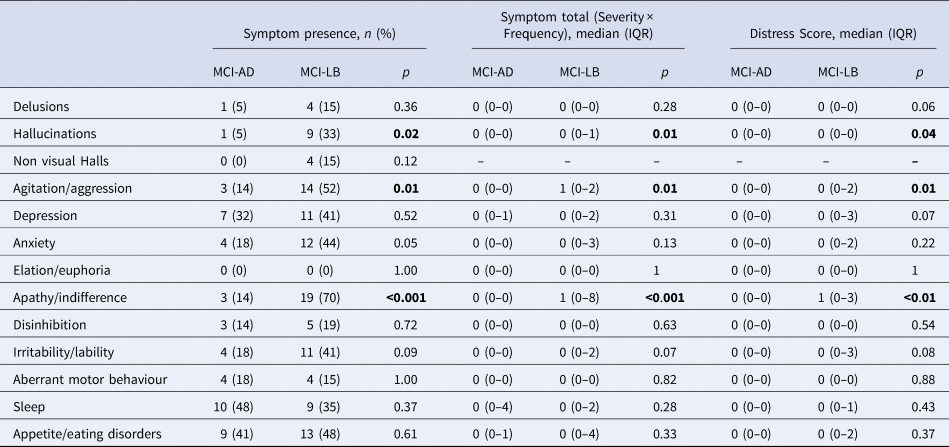
The NPI defined symptoms of hallucinations, agitation/aggression and apathy were more frequently present, more severe and caused more caregiver distress in the MCI-LB group compared with the MCI-AD group (Table 2). Depression, anxiety, irritability/lability and appetite/eating disorder symptoms were also common in MCI-LB (>40% of participants), but were not significantly more common in MCI-LB than MCI-AD.
Neuropsychiatric Inventory
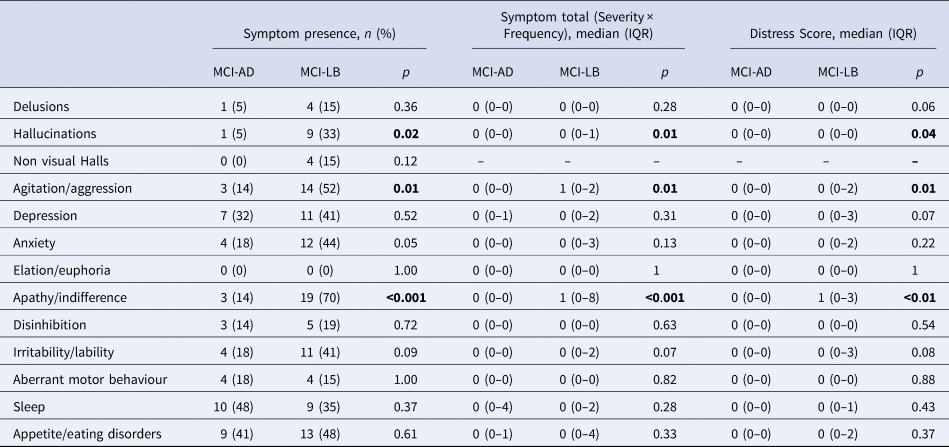
Mann–Whitney, χ2 and Fisher's Exact tests as appropriate. MCI-AD n = 22, MCI-LB n = 27 (except sleep – MCI-AD n = 21, MCI-LB n = 26). Bold denotes p < 0.05.
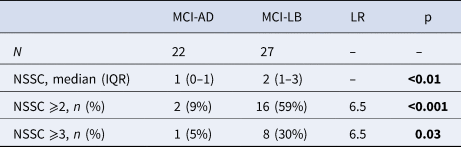
The MCI-LB group reported more neuropsychiatric supportive symptoms (median MCI-LB 2 v 1 MCI-AD, p < 0.01; Table 3). In total, 59% of MCI-LB had two or more symptoms compared with 9% of MCI-AD (likelihood ratio 6.5, p < 0.001). In total, 30% had three or more symptoms compared with 5% of MCI-AD (likelihood ratio = 6.5, p = 0.03; Table 3).
Neuropsychiatric Supportive Symptom Count
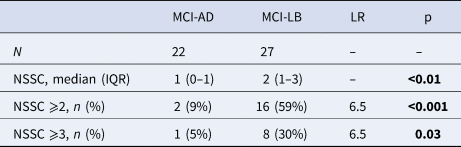
Mann–Whitney, χ2 and Fisher's Exact tests as appropriate. LR, likelihood ratio; NSSC, Neuropsychiatric Supportive Symptom Count. Bold denotes p < 0.05.
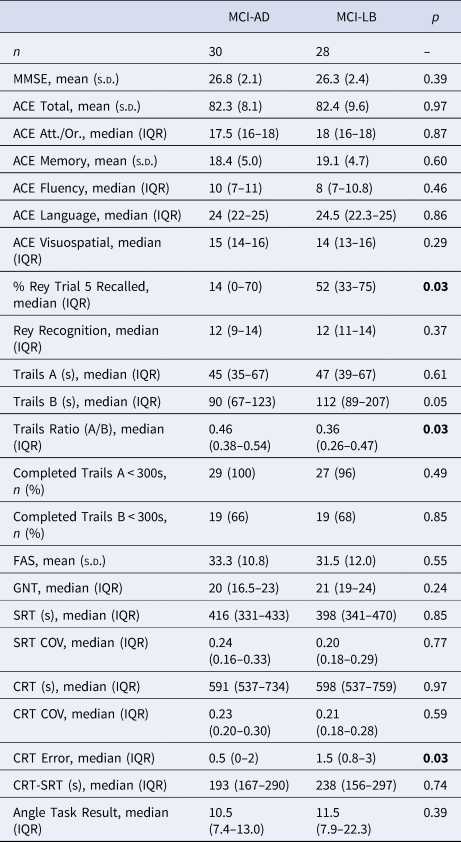
MCI-LB participants recalled a greater proportion of items learned at Rey trial 5 on delayed recall, had a lower Trails ratio (A/B) and made more errors in the choice reaction task compared with MCI-AD (Table 4). The effect of potential confounding variables on these results was tested using the general linear model with sex and prescription of cholinesterase inhibitor/memantine as covariates. One outlying result was excluded from the trails ratio analysis and two outlying results were excluded from the % Rey trial 5 delayed recall and CRT error analyses (studentised residuals >3). The results remained significant in % Rey trial 5 delayed recall (β = 0.42, p = 0.01) and Trails ratio (β = −0.46, p = 0.02). The difference in CRT error was no longer significant (β = 0.27, p = 0.16).
Cognitive tests
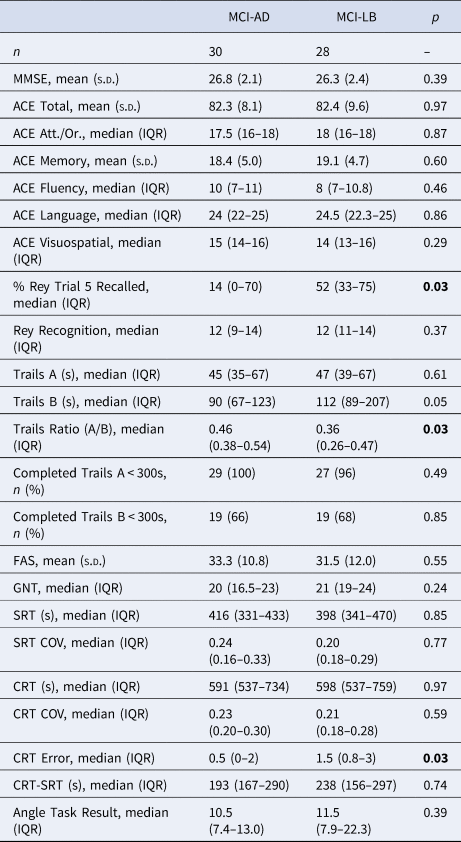
MMSE standardised Mini-Mental State Examination; ACE Addenbrooke's Cognitive Examination; Rey AVLT Rey Auditory Verbal Learning Test; FAS FAS Verbal Fluency; GNT Graded Naming Test; SRT Simple Reaction Time; CRT Choice Reaction Time.
Parametric data reported as mean (s.d.), non-parametric data reported as median (interquartile range).
Mann–Whitney U tests, t, χ2 and Fisher's Exact tests depending on the nature of the data.
Complete Rey AVLT data MCI-AD n = 27, MCI-LB n = 26; Trails A and B MCI-AD n = 29, MCI-LB n = 28; Trails Ratio MCI-AD n = 20, MCI-LB n = 23; GNT MCI-AD n = 29, MCI-LB n = 27; complete reaction time data MCI-AD n = 27, MCI-LB n = 26; Angle task MCI-AD n = 23, MCI-LB n = 21.
Bold denotes p < 0.05.
A post-hoc discriminant analysis was carried out by entering the three cognitive tests that were significantly different between MCI-LB and MCI-AD (% Rey trial 5 recalled, Trails ratio, CRT error). This yielded a sensitivity of 63% and a specificity of 61% for the identification of MCI-LB, with an overall accuracy of 62%.
Discussion
We found that neuropsychiatric symptoms were more common, more severe and caused more distress in MCI-LB compared with MCI-AD. We also found that MCI-LB was associated with greater impairment in executive function and less memory impairment than MCI-AD. MCI-LB cases were more likely to report two or more Lewy body neuropsychiatric supportive symptoms than MCI-AD, with a likelihood ratio of 6.5.
This manuscript complements our previous report by repeating a detailed neuropsychiatric and cognitive profile of MCI-LB compared with MCI-AD. It is increasingly expected that treatment will only be effective when given in early disease stages in neurodegenerative disorders. In this context, the accurate identification of neurodegenerative dementias in their prodromal stage is vital to allow research into early disease stages and to identify participants for disease-modifying treatment trials. Our findings should help inform clinical and research practice in this emerging field.
The importance of neuropsychiatric symptoms for future research studies
Criteria for the diagnosis of MCI-LB have recently been developed (McKeith et al., Reference McKeith, Ferman, Thomas, Blanc, Boeve, Fujishiro and Tiraboschi2020). The sensitivity and specificity for these criteria to identify MCI-LB are yet to be established, but the sensitivity may be lower than the criteria for the dementia stage of DLB, as neuronal damage sufficient to cause core clinical features or abnormal biomarker findings will be less likely to have occurred at this earlier stage of the disease. The MCI-LB criteria recognise that other presentations of prodromal DLB are likely to exist, such as ‘psychiatric-onset’ and ‘delirium-onset’. We have now demonstrated in two independent cohorts that the presence of two or more neuropsychiatric supportive symptoms as defined by the MCI-LB diagnostic criteria is much more likely in MCI-LB than MCI-AD. The presence of two or more symptoms in this cohort had a sensitivity of 59% and a specificity of 91% for MCI-LB.
The identification of MCI-LB cases to participate in research studies is difficult, as the diagnosis is currently not often made in clinical practice. Observational studies seeking to recruit MCI participants at risk of developing DLB could consider using the presence of two or more neuropsychiatric supportive symptoms as an inclusion criterion. Enquiring about these five symptoms with an informant is simple, does not necessarily require face-to-face contact and can be carried out by non-medical staff. Such observational studies could determine whether the presence of neuropsychiatric supportive symptoms is predictive of later development of DLB in cases of MCI which have not yet developed any core diagnostic features of MCI-LB.
The importance of neuropsychiatric symptoms in clinical practice
There is increasing recognition of the importance of behavioural symptoms in the dementia prodrome. This has led to the development of the concept of mild behavioural impairment (which can exist alongside MCI) as a risk state for dementia (Ismail et al., Reference Ismail, Smith, Geda, Sultzer, Brodaty, Smith and Area2016). The sensitivity and specificity of two or more supportive psychiatric features for the diagnosis of MCI-LB should prompt clinicians to enquire about these symptoms in clinical practice. The presence of such symptoms should raise suspicion of the presence of Lewy body disease and lead to further questioning and potential investigations.
In addition to the importance of these symptoms in diagnosis, our findings highlight the distress-related to neuropsychiatric symptoms experienced by people with MCI-LB and their family members [the NPI was completed by a spouse (n = 25) or other family members (n = 2) in all cases of MCI-LB]. Participants with MCI-LB had higher total scores and total distress scores in the NPI. This is in keeping with our previous report (Donaghy et al., Reference Donaghy, Taylor, O'Brien, Barnett, Olsen, Colloby and Thomas2018) and with research in DLB, where higher NPI scores and greater carer stress have been reported (Svendsboe et al., Reference Svendsboe, Terum, Testad, Aarsland, Ulstein, Corbett and Rongve2016). Apathy has been identified as significantly more common and severe in MCI-LB in both of our cohorts and is a source of significant stress for the family members of people with MCI-LB. Agitation/aggression was also significantly more common in this cohort and approached statistical significance in our original paper (p = 0.06). Anxiety approached statistical significance in this paper (p = 0.05) and was significant in our previous report. Depression, irritability and appetite/eating changes were also common, though these symptoms are less specific to MCI-LB. These results highlight the importance of enquiring about a range of neuropsychiatric symptoms in people with MCI, both to guide differential diagnosis, and to identify symptoms which cause distress for the person with MCI and the people around them. Some of these symptoms, such as depression or anxiety, may respond to psychological or pharmacological interventions, though the evidence base in MCI-LB is absent and the evidence from other Lewy body diseases including DLB and PD is inconclusive (Seppi et al., Reference Seppi, Ray Chaudhuri, Coelho, Fox, Katzenschlager and Perez Lloret2019; Taylor et al., Reference Taylor, McKeith, Burn, Boeve, Weintraub, Bamford and O'Brien2020). Even in the absence of evidence-based treatments, identifying of distressing symptoms and explaining their association with MCI-LB may be a source of comfort to people with MCI and their families and could help to guide care provision, e.g. planned activities for people with apathy. The need for carer support in dementia is now well recognised and interventions for carers and family members have been developed (Livingston et al., Reference Livingston, Manela, O'Keeffe, Rapaport, Cooper, Knapp and Barber2020). Our study demonstrates that significant stress related to neuropsychiatric symptoms is present in the family members of people with MCI-LB and consideration needs to be given to needs of this group, despite the preservation of independent function in the person with MCI.
It is notable that there was no difference between MCI-LB and MCI-AD in the Sleep domain of the NPI, despite RBD being the most common core diagnostic feature in the MCI-LB group. This highlights the insensitivity of the NPI for RBD and the need for specific assessment for RBD in memory clinics, for example, using the Mayo Sleep Questionnaire (Boeve et al., Reference Boeve, Molano, Ferman, Smith, Lin, Bieniek and Silber2011).
The cognitive profile of MCI-LB
The MCI-LB group demonstrated greater impairment in executive function with a lower trails A:B ratio and better memory measured by % Rey Trial 5 recalled following a delay. This is in keeping with the expected cognitive profile of MCI-LB, with greater executive function and less memory impairment. However, the results are different from our previous cohort, which demonstrated worse verbal fluency and visuospatial function measured by the ACE and angle task. Previous research studies comparing MCI-LB with MCI-AD have demonstrated cognitive profiles in keeping with that observed in DLB – greater deficits attention, executive and visuospatial function with relatively preserved memory (Cagnin et al., Reference Cagnin, Busse, Gardini, Jelcic, Guzzo, Gnoato and Caffarra2015; Ciafone et al., Reference Ciafone, Little, Thomas and Gallagher2020; Yoon, Kim, Moon, Yong, & Hong, Reference Yoon, Kim, Moon, Yong and Hong2015). In keeping with our findings, the exact differences observed have differed between cohorts [e.g. backward digit span differences observed in Cagnin et al. (Reference Cagnin, Busse, Gardini, Jelcic, Guzzo, Gnoato and Caffarra2015) but not Yoon et al. (Reference Yoon, Kim, Moon, Yong and Hong2015)]. These inconsistencies may relate to relatively small sample sizes, but are also likely affected by significant heterogeneity of cognitive impairment in MCI-LB. As with our previous cohort, differences in cognitive tests could not accurately discriminate between MCI-LB and MCI-AD cases. From the research evidence available to date, we can conclude that certain cognitive domains are likely to be particularly affected in MCI-LB such as executive and visuospatial function, whereas memory may be less affected. However, there is significant variability between individuals and the pattern of cognitive impairment based on simple analysis is not discriminatory. That said, more sophisticated analyses of cognitive data, for example, using ex-Gaussian modelling to analyse attention dysfunction may shed more light on the differences between MCI-LB and MCI-AD (Schumacher et al., Reference Schumacher, Cromarty, Gallagher, Firbank, Thomas, Kaiser and Taylor2019).
Strengths and limitations
We present a large cohort of probable MCI-LB and MCI-AD relative to the published literature. The cohort is well characterised with detailed clinical and cognitive assessment and imaging biomarkers. All but two participants had both cardiac MIBG and FP-CIT SPECT. That said, pathological diagnosis remains the gold standard in dementia studies. Several participants in this cohort have consented to brain donation and data based on pathological diagnosis will emerge in the coming years. We excluded cases of possible MCI-LB due to uncertainty regarding their diagnosis, in keeping with our previous report (Donaghy et al., Reference Donaghy, Taylor, O'Brien, Barnett, Olsen, Colloby and Thomas2018). Data from the possible MCI-LB group is available in online Supplementary Tables S1–4. Due to the relatively small size of this group, statistical comparisons were not performed. Findings in the NSSC remained similar when used in a mixed possible and probable MCI-LB group compared with MCI-AD (NSSC⩾2: Likelihood Ratio = 5.8, p = 0.01; NSSC⩾3: Likelihood Ratio = 6.3, p = 0.03; online Supplementary Table 3b).
The study cohort was selected on the basis of possible symptoms of MCI-LB. This was necessary to ensure a high proportion of MCI-LB in the study sample. Possible symptoms related to MCI-LB were identified by research staff embedded in clinical settings, who were able to examine potential participants' clinical notes. These symptoms included core diagnostic features as well as less specific symptoms such as olfactory disturbance, postural hypotension and recurrent falls. Local research staff have developed expertise in identifying these participants during our previous research study. Potential participants' clinical notes included imaging results, which allowed the exclusion of participants with suspected vascular MCI. The pre-selected nature of our cohort should be borne in mind when applying the results to a clinical setting.
The presence of current major depression was an exclusion criterion for the study. Most participants were recruited from psychiatry settings, where the presence of depression is thoroughly investigated during routine clinical assessment. Those with current active depression were not approached for participation. Participants with MCI and symptoms of psychosis (e.g. delusions or hallucinations) were included, as psychotic symptoms are known to be associated with DLB. Late-onset psychosis could present with similar features. Long-term follow-up will determine the final clinical diagnosis for these participants. Follow-up data from our original cohort found a conversion rate to dementia of over 20% per year, in keeping with a well-characterised MCI cohort.
Antidepressant prescribing was higher in the MCI-LB group than the MCI-AD group. This is in keeping with our finding of greater neuropsychiatric symptoms in this group. Higher rates of treatment in the MCI-LB group may have reduced differences between MCI-LB and MCI-AD in the reported rates of depression and anxiety.
Many participants, particularly those with MCI-LB, were receiving cholinesterase inhibitors or memantine. We believe this reflects a willingness of clinicians to use these medications in the MCI phase, particularly where they are confident that a neurodegenerative process is present. There was a significant imbalance in sex between MCI-LB and MCI-AD groups. DLB is more common in males than females (Kane et al., Reference Kane, Surendranathan, Bentley, Barker, Taylor, Thomas and O'Brien2018), but the imbalance is above what would be expected. Positive findings in cognitive tests were repeated with sex and cholinesterase inhibitor/memantine treatment as covariates to ensure the results were not due to these potential confounders.
The NPI is an informant rated scale; therefore, the presence and absence of neuropsychiatric supportive features are based on informant report rather than expert clinical judgement. The criteria for MCI-LB state that ‘systematised delusions’ are a supportive feature. We cannot confirm from our data whether delusions were systematised or not.
The MCI-LB group had greater functional impairment than the MCI-AD group and was more likely to be male. Lower scores in males have been noted in the Lawton IADL in Alzheimer's disease (Bertrand, Willis, & Sayer, Reference Bertrand, Willis and Sayer2001). As only one MCI-LB participant was female, we compared the male participants with MCI-LB and MCI-AD and found no significant difference in IADL score [median (IQR): MCI-LB 7 (5–8) v. MCI-AD 7 (6.5–8); p = 0.34]. Greater functional impairment may be associated with greater ratings for apathy. However, diagnostic group was still significantly associated with the presence of apathy using logistic regression with IADL score as a covariate (Wald = 11.7, p = 0.001), whereas there was no significant association with IADL score (Wald = 0.6, p = 0.44).
We did not use a threshold IADL score to determine the presence of significant functional impairment as a criterion for dementia. The IADL rates all-cause functional impairment, including impairment related to physical health problems such as osteoarthritis. This is illustrated by a negative correlation between CIRS-G total score and IADL score within the cohort (Spearman's ρ = −0.35, p = 0.01). To differentiate between MCI and dementia, the NIA-AA criterion of ‘preservation of independence of functional abilities’ was used (Albert et al., Reference Albert, DeKosky, Dickson, Dubois, Feldman, Fox and Phelps2011). We agree with the authors of the NIA-AA criteria that the application of this description is challenging. In this study, the diagnosis of MCI was made by a consensus panel based on a holistic assessment of each participant including consideration of comorbidities and previous levels of function. The cognitive data in this paper were analysed based on raw scores, reflecting current clinical practice and similar to the data that are likely to be available to screen participants for potential research studies. Multiple comparisons were made without statistical correction; however, the key finding of significantly greater neuropsychiatric supportive symptoms in the MCI-LB group replicates our previously reported findings.
Conclusions
MCI-LB is associated with significantly more neuropsychiatric symptoms than MCI-AD and these symptoms are associated with significant stress for family members. The cognitive profile of MCI-LB differs from MCI-AD, with greater executive dysfunction and less memory impairment, but these differences are not sufficient to differentiate MCI-LB from MCI-AD. The presence of more than one neuropsychiatric supportive symptom as defined by MCI-LB criteria should alert clinicians to the potential presence of MCI-LB. The presence of these symptoms could also be used to identify participants at risk of MCI-LB in future observational research studies.
Supplementary material
The supplementary material for this article can be found at https://doi.org/10.1017/S0033291720002901.
Acknowledgements
The authors would like to thank the staff of the NIHR Clinical Research Network North East and Cumbria for their invaluable support with participant recruitment to this study.
Financial support
This work was supported by Alzheimer's Research UK (AJT, Grant Number ARUK-PG3026-13) and the NIHR Newcastle Biomedical Research Centre. GE Healthcare provided funding for FP-CIT imaging for this investigator-led study.
Conflict of interest
PCD, JC, CAH, SB, JL, MF and LMA – none. RD – no conflicts in relation to this work. Outside of this work, RD has received an educational travel grant from Britannia. JTO'B – no conflicts in relation to this work. Outside of this work, JOB has acted as a consultant for TauRx, Axon, Eisai, Roche and GE Healthcare and received grant funding from Alliance Medical and Merck. JPT – no conflicts in relation to this work. Outside of this work, JPT has acted as a consultant for Kyowa Kirin, Heptares Sosei, and received grant funding from Heptares Sosei and speaker fees from GE Healthcare. AJT – support from GE Healthcare for investigator-led research including the provision of FP-CIT in this study.
Ethical standards
The authors assert that all procedures contributing to this work comply with the ethical standards of the relevant national and institutional committees on human experimentation and with the Helsinki Declaration of 1975, as revised in 2008.