Chronology is the backbone of archaeology, and for most regions and time periods of Mesoamerica, pottery is used for dating. There is universal agreement that better chronologies enable stronger analyses, so pottery sequences and chronologies should be under constant revision. In that regard, Inomata and colleagues (Reference Inomata, Ortiz, Arroyo and Robinson2014) reopen the discussion of Kaminaljuyu, a site vital to understanding the Preclassic period of southern Mesoamerica, by proposing revisions to the Shook and Popenoe de Hatch (Reference Shook, Popenoe de Hatch and Popenoe de Hatch1999) chronology and extrapolating what they describe as “important implications for our understanding of social processes in the Maya area” (Inomata et al. Reference Inomata, Ortiz, Arroyo and Robinson2014:402). Although the chronology of Kaminaljuyu needs fresh examination, a critical analysis of radiocarbon dates is not enough. The data presented here suggest that Inomata and colleagues' revisions should be viewed with caution, especially with regard to the Verbena and Arenal phase apogee of Kaminaljuyu. Although Inomata and colleagues at times overstate the implications of their chronology, their research raises important methodological questions about how best to achieve refined chronologies and also highlights the need for pottery analyses that match the quality of current chronometric methods.
The proposals by Inomata and colleagues should be viewed with caution for several reasons. First, the majority of the dates they used are unreliable because they (1) are old non-AMS dates with unknown collection methods and unknown laboratory pretreatments; (2) come from contexts lacking good stratigraphic relationships; or (3) are associated with uncertain phase assignments. Second, the use of Bayesian methodologies is problematic because nearly all of the chronological information from Kaminaljuyu, other than the most recent, represents “uninformative priors,” to use the term proffered by Efron (Reference Efron2013). Third, the comparative analysis by Inomata and colleagues linking Kaminaljuyu to other regions is not sufficiently refined.
Given the flaws with dates from older projects, we should now adopt a frequentist approach (sensu Efron Reference Efron2013) rather than a Bayesian one (Supplemental Material 1). Very simply, we need new high-quality dates such as those from Arroyo's (Reference Arroyo2010) recent work at Naranjo rather than analysis of dates from older projects. Kaminaljuyu demands the type of “chronometric hygiene” employed by Taché and Hart (Reference Taché and Hart2013) and an extreme culling of the data.
Similarly, the comparative analysis of sequences requires precisely defined traits and should employ frequencies rather than the mere presence or absence of them. Many of the traits used by Inomata and colleagues (Reference Inomata, Ortiz, Arroyo and Robinson2014) are long lived or too generalized to offer precise comparisons. Furthermore, using frequencies rather than presence or absence yields a different perspective, as will be shown.
The Poor State of Kaminaljuyu Chronology
Getting the chronology of Kaminaljuyu correct and aligned with other sites and regions of southern Mesoamerica is important, but constructing chronologies for the latter half of the Preclassic era throughout southern Mesoamerica is complicated by several factors. First, the pottery sequence of much of Mesoamerica is one of gradual change from 400 cal BC to cal AD 200. The boundaries between one phase and the next are imprecise and subject to the nature of deposits at any given site. The gradualism of ceramic change during the Late Preclassic era underpins the pottery-tradition approach used in analyses of highland and coastal pottery and is made manifest in the Kaminaljuyu sequence, where Providencia, Verbena, Arenal, and Santa Clara phases were originally viewed as subphases of the Miraflores culture (Popenoe de Hatch Reference Popenoe de Hatch, Pedro Laporte, Escobedo and Villagrán de Brady1993, Reference Popenoe de Hatch1997; Shook and Kidder Reference Shook and Kidder1952). The second problem is attaching absolute dates to any pottery traditions, phases, or complexes defined. Many sequences are still based on pottery from the fill of monumental constructions, and the probability of mixture of materials in such contexts is high.
Another significant challenge is posed by the plateau in the radiocarbon calibration curve for the period of 2300–2700 BP because it is, essentially, flat (Reimer et al. Reference Reimer, Bard, Bayliss, Warren Beck, Blackwell, Bronk Ramsey, Buck, Cheng, Lawrence Edwards, Friedrich, Grootes, Guilderson, Haflidason, Hajdas, Hatté, Heaton, Hoffmann, Hogg, Hughen, Felix Kaiser, Kromer, Manning, Niu, Reimer, Richards, Marian Scott, Southon, Staff, Turney and van der Plicht2013). Inomata and colleagues (Reference Inomata, Ortiz, Arroyo and Robinson2014) addressed this in their supplemental materials, but only as regards separating the Las Charcas and Providencia phases. The problem is severe and goes well beyond defining the limits between two phases. We need to be very careful how we evaluate radiocarbon assays for that time period, particularly older non-AMS dates. The impact of the plateau is to pull dates to either side, as simulation data (Inomata et al. Reference Inomata, Ortiz, Arroyo and Robinson2014:Supplemental Materials) show. Therefore, the full range of problematic dates probably extends another one hundred years before and after the plateau, from roughly 2200 BP to 2800 BP. In the Kaminaljuyu chronology, the plateau has an extreme impact for dating the Providencia phase, also affecting the early Verbena phase.
Archaeological chronology is never about dates alone, and advances in dating methods will never resolve all of our problems (Love Reference Love1993). Even the best chronometry and statistical modeling cannot overcome fundamental flaws in pottery analysis, vague phase attributions, or poor stratigraphy. For Kaminaljuyu, a persistent difficulty is that the traditional phases of the chronology are very broadly defined and based on the presence or absence of limited ceramic types or wares. Those vagaries render reconsideration of information from prior studies nearly impossible unless the full collections are available for examination, which is not the case for Kaminaljuyu.
The Use and Abuse of Uninformative Priors: The Kaminaljuyu Ceramic Sequence
Efron (Reference Efron2013) emphasizes that Bayesian analysis rises or falls on the quality of previous information, and he labels unreliable older data as “uninformative priors.” Applying that terminology broadly to Kaminaljuyu, we might say it is riddled with uninformative priors in the realms of pottery analysis, stratigraphic excavation, radiocarbon dating, and regional comparisons. The following section examines each of those areas.
Ceramic Analysis
The published ceramic chronology of Kaminaljuyu remains incomplete. There is still no definitive study of pottery sequence that fully documents the assemblage by phase and completely describes the types, decorative modes, and vessel forms. Certainly, there are phase names and dates attached to them, but complete listings of types (or wares), vessel forms, and decorative modes—and the full illustration of those data—are not to be found. Shook and Popenoe de Hatch (Reference Shook, Popenoe de Hatch and Popenoe de Hatch1999) provided the briefest descriptions of key pottery attributes for each of the Preclassic phases. Wetherington (Reference Wetherington and Wetherington1978a) is more comprehensive, but that work is deeply flawed, omits major phases defined in other studies, and lacks complete illustrations.
Popenoe de Hatch's (Reference Popenoe de Hatch1997) magnificent analysis of the pottery from the San Jorge Project, where the Shook/Hatch chronology was first published, provides the most complete descriptions and illustrations for the Late Preclassic period, describing in great detail differences between the Verbena and Arenal phases. The work also provides insight into the development of the Kaminaljuyu chronology based on the pioneering work of Edwin Shook. A question may be raised, however, about the possibility of some of the variability noted being spatial rather than chronological. The quantitative information presented by Popenoe de Hatch is laudable, but it focuses on tabulations by area rather than stratigraphic analysis. Unfortunately, the San Jorge Project did not publish any radiocarbon dates and played no role in Inomata and colleagues’ analysis (Reference Inomata, Ortiz, Arroyo and Robinson2014).
The definitions of the major phases at Kaminaljuyu have changed little since 1961 (Kidder Reference Kidder1961). The phases are lengthy, and many diagnostic wares have long lives, spanning multiple phases. Undoubtedly, there is basis for refinement, but few criteria have been published (see Popenoe de Hatch Reference Popenoe de Hatch1987, Reference Popenoe de Hatch, Pedro Laporte, Villagrán de Brady, Escobedo, Guerra de González and Valdés1991), and to my knowledge none have been applied analytically.
Long ceramic phases and limited criteria mean that we cannot be certain two publications discussing a given phase are, in fact, discussing assemblages that are contemporary with one another. Variability in assemblage composition across the site of Kaminaljuyu or within the Valley of Guatemala is rarely addressed in the published literature, and emphasis is instead placed on the shared attributes of an idealized cultural pattern. In short, the published record provides a poor understanding of variation beyond differences between major phases.
The definition of the Providencia phase is a case in point. Arroyo (Reference Arroyo2010) defined two Preclassic phases at Naranjo, where she identified Providencia materials with superposition over Las Charcas phase pottery. Inomata and colleagues (Reference Inomata, Ortiz, Arroyo and Robinson2014) rebrand the Providencia phase of occupation at Naranjo as “Late Las Charcas” with little discussion. The pottery of Naranjo from 600–400 cal BC may differ from the definition of Providencia offered by Shook and Popenoe de Hatch (Reference Shook, Popenoe de Hatch and Popenoe de Hatch1999) but clearly has many similarities, or else Arroyo would not have labeled it as she did. It may be more appropriate to label the Naranjo material “Early Providencia” than to call it “Late Las Charcas.” Regardless, the point is that many ceramic traits are longer lived than represented in idealized phase definitions.
Given the problems in defining phases and assigning contexts to them, we cannot be confident of the chronological assignments made by many projects. The problem is especially acute for the Pennsylvania State University (PSU) project, which provides a major portion of the radiocarbon dates for the site. Inomata and colleagues (Reference Inomata, Ortiz, Arroyo and Robinson2014) are only partially correct when they assert there is no reason to doubt the PSU carbon dates. The assays may reflect the age of the samples (albeit with large error terms), but the phase assignments of the contexts are in doubt. It is important to note that both pottery analysis and radiocarbon dating were given secondary roles in the PSU project, with obsidian hydration used as the primary dating tool (Michels and Wetherington Reference Michels, Wetherington and Michels1978).
Ronald Wetherington (Reference Wetherington and Wetherington1978a), author of the PSU pottery analysis, was not a trained ceramic analyst. His experience as a physical anthropologist provided a background in taxonomy and quantitative analysis, and his attribute-based analysis of the Kaminaljuyu assemblages was pioneering in Mesoamerica, but in reading his descriptions of the pottery characteristics of each phase, one doubts the strength of his analysis and chronological assignments. Wetherington's descriptions of the Charcas and Providencia phases read reasonably well, but for the later phases there are significant problems. First, he does not recognize what others consider to be clear differences between the Verbena and Arenal phases, stating he found “. . .few significant differences either in the presence of particular types or in their relative frequencies” (Wetherington Reference Wetherington and Wetherington1978a:129). Second, his analysis does away completely with the Majadas and Santa Clara phases, meaning that in the PSU analysis, the post-Providencia occupation up to the beginning of the Classic period is effectively a single phase. That is more than just a little problematic—it is disastrous.
The division between Preclassic and Classic within the PSU chronology is also questionable. Wetherington (Reference Wetherington and Wetherington1978a:131) sees many continuities between the Arenal and Aurora phases, stating that “the several Usulutan types and varieties remain essentially unchanged through the Terminal Formative and, indeed, into the Early Classic, averaging between 4–5% of the inventory of the two subphases and the Aurora phase.” Wetherington noted continuities in Osuna Red and asserted that “Amatle Brown-Grey, in its distinctive jar form with fillet shoulder applique, is introduced in minor quantities in Arenal as well.” In contrast, Popenoe de Hatch (Reference Popenoe de Hatch, Love, Popenoe de Hatch and Escobedo2002; Shook and Popenoe de Hatch Reference Shook, Popenoe de Hatch and Popenoe de Hatch1999) sees a profound transformation in the Kaminaljuyu ceramic assemblage at the beginning of the Aurora phase, with the arrival of a new group of people who bring their own ceramic wares and forms. If this latter view is correct, then many contexts labeled by Wetherington as Arenal are mixed and probably Early Classic in date.
Difficulties are also confronted in using the data from the project of the Tobacco and Salt Museum (MTS; Ohi, ed. Reference Ohi1994), which prioritized stratigraphy and architecture over ceramic analysis in defining phases. The excavations were impeccable, but the chronology was created sui generis, based only on the contexts excavated by the MTS project and divorced from traditional phases. The description of ceramic methodology says that two primary criteria were used to define types: “El acabado, que incluyen la decoración, con o sin engobe, color y tono, pulimiento, etc.,” and “La forma” (Ohi et al. Reference Ohi, Nimani, Ito, Shibata, Nakamori and Kuniaki1994:505). Forms were classified very broadly because, in the words of Ohi and colleagues (Reference Ohi, Nimani, Ito, Shibata, Nakamori and Kuniaki1994:506), “Al analizar las formas de cerámica no encontramos dos iguales.”
Looking at the published illustrations of the pottery may get one close in correlating the MTS chronology with traditional phases, but in this case, close is not enough for clarity. The Kaminaljuyu III period defined by MTS may be largely, but not precisely, equivalent to the combined Verbena, Arenal, and Santa Clara phases, so the problem is then the same as with the PSU data. We cannot place contexts more precisely within a 400-year period, and that inability renders fine-grained analysis of radiocarbon dates moot.
Stratigraphy
Bayesian chronological analysis is extremely successful in cases with good stratigraphic information. Stratigraphic relationships were key to Bayesian models defining the calibration curve (Reimer et al. Reference Reimer, Bard, Bayliss, Warren Beck, Blackwell, Bronk Ramsey, Buck, Cheng, Lawrence Edwards, Friedrich, Grootes, Guilderson, Haflidason, Hajdas, Hatté, Heaton, Hoffmann, Hogg, Hughen, Felix Kaiser, Kromer, Manning, Niu, Reimer, Richards, Marian Scott, Southon, Staff, Turney and van der Plicht2013), as they provide a firm basis for narrowing the probability distribution for a given assay and calculating a posterior probability. Stratigraphic relationships can also check the appropriateness of the uniform phase model used to estimate phase boundaries in OxCal (Bronk Ramsey Reference Bronk Ramsey2001, Reference Bronk Ramsey2009). However, if stratigraphic context is lacking, how does one verify the relationship between two contexts placed in the same phase? The longer the phase, the higher the probability of error, if we consider all such contexts to be contemporary. The need for good stratigraphic controls is especially salient in the Middle to Late Preclassic transition, when the calibration curve plateau produces bi-modal probability distributions for most assays.
Nearly all work done at Kaminaljuyu, including the excavations by the Carnegie Institution of Washington, has been salvage archaeology, carried out under difficult circumstances; everyone who has worked at Kaminaljuyu deserves praise for confronting the many challenges posed by the site's urban setting. The dictates of salvage work have prevented systematic investigation of the chronology, and most Guatemala-based work, which is the majority of research at the site, has lacked funding for radiocarbon assays. Work has always been biased toward large public constructions, where mixed deposits are more likely than in domestic structures; entire phases have been defined opportunistically and on the basis of small deposits (Popenoe de Hatch Reference Popenoe de Hatch1997, Reference Popenoe de Hatch, Love, Popenoe de Hatch and Escobedo2002; Shibata Reference Shibata and Ohi1994). In no case has the entire Preclassic sequence been found in a single stratigraphic cut, and it is rare is to find cases with radiocarbon dates from sequential phases within the same stratigraphic column. The lack of solid stratigraphic relationships between dated samples amplifies errors stemming from long-lived phases.
The massive construction efforts at Kaminaljuyu in the Arenal phase and during the Classic period mean that many of the contexts containing Late Preclassic materials are mixed (Demarest Reference Demarest, Arroyo, Méndez Salinas and Paiz2015). Identifying mixed contexts is difficult at any time, but it is exacerbated when the analytical emphasis is on the presence or absence of a limited number of artifact types. Such mixing problems clearly plagued Wetherington (Reference Wetherington and Wetherington1978a, Reference Wetherington and Wetherington1978b). In addition to issues already mentioned, Wetherington identified figurines that are Preclassic in style as belonging to the Classic period (Wetherington Reference Wetherington and Wetherington1978b: Figures 2 i, o; 5 h, i, j). Demarest (Reference Demarest, Arroyo, Méndez Salinas and Paiz2015) believed the problems so severe that he advocated for the chronological data from the PSU project to be completely discarded.
Inomata and colleagues (Reference Inomata, Ortiz, Arroyo and Robinson2014) rely upon Robinson's data from Urías for dating the Providencia phase and the Providencia/Verbena transition, yet Urías’ stratigraphy seems too weak to support such a heavy load; the transitions are gradual and not sharp. Robinson acknowledges as much when she writes, “aunque sabíamos de antemano que trabajamos con contextos mixtos, con Braswell tomamos la decisión de modificar la cronología Shook-Hatch. . .” (Robinson Reference Robinson, Arroyo, Méndez Salinas and Paiz2015:1193). Braswell (Reference Braswell2015) concurred that the stratigraphic context at Urías is not strong enough to be the sole basis for a revised chronology. In addition, Braswell noted:
The stratigraphy at Urías does not contain a single, sharp break that separates all ‘Middle’ from ‘Late’ Formative artifacts. Instead, there is a gradient where the relative frequencies of earlier Formative materials increase as one progresses down the column. Given the mixing of materials, it is difficult to say with certainty if a particular radiocarbon assay pertains to all the cultural material associated with it. (Personal communication 2016)
The stratigraphic contexts at Naranjo are much clearer, and Arroyo (Reference Arroyo2010) unequivocally excavated Providencia pottery (as defined in that publication) with superposition over Las Charcas materials. More recently, her excavations in the Palangana at Kaminaljuyu have obtained good dates for Aurora phase materials superimposed over Santa Clara (Arroyo et al. Reference Arroyo, Ajú Alvarez, Rojas, Máh, Estrada, Serech, Méndez, Reneé Jerez, Juárez, Arroyo, Méndez Salinas and Rojas2014). Building on the analytical work of Popenoe de Hatch (Reference Popenoe de Hatch1997) and Robinson (Braswell and Robinson Reference Braswell, Robinson, Love and Kaplan2011; Robinson et al. Reference Robinson, Garnica, Braswell, Pedro Laporte, Arroyo and Mejía2006), Arroyo has generated high-quality pottery analysis of very large ceramic lots. For the kind of fine-grained chronological analysis championed by Inomata and colleagues (Reference Inomata, Ortiz, Arroyo and Robinson2014), Arroyo's work must be the starting point because of the combination of stratigraphy, quality of ceramic data, and AMS dates.
The Radiocarbon Assays
No one doubts that recent AMS dates are preferable to those derived from gas-counting methods, especially ones from several decades past. Older assays are plagued by both larger estimates of error and by inconsistencies caused by unknown variations in pretreatment procedures (Bayliss Reference Bayliss2015; Buck Reference Buck, Buck and Millard2004; Pettit et al. Reference Pettitt, Davies, Gamble and Richards2003; Taché and Hart Reference Taché and Hart2013; Taylor and Bar-Yosef Reference Taylor and Bar-Yosef2014). Recent assays dated by conventional methods using standardized pretreatment procedures can be employed in Bayesian analysis with good outcomes, if the contexts are sound. The uncertainty of within-phase dating, the lack of stratigraphic context, and the problematic nature of the calibration curve during a large part of the period under consideration, support my assertion that all non-AMS dates for Kaminaljuyu should be considered uninformative priors. Unfortunately, at present, there are no AMS dates from Kaminaljuyu for the Verbena and Arenal phases, meaning that we lack good data for the crucial phases in the sequence.
Regional Comparisons
Inomata and colleagues (Reference Inomata, Ortiz, Arroyo and Robinson2014) bolster their analysis through a comparison of ceramic traits from Kaminaljuyu and the Petén. I will not presume to evaluate the Petén sequence nor definitional problems concerning the Protoclassic or Terminal Preclassic (Brady et al. Reference Brady, Ball, Bishop, Pring, Hammond and Housley1998). I assert that the traits used by Inomata and colleagues (Reference Inomata, Ortiz, Arroyo and Robinson2014) to link the highlands to the lowlands are not at all secure. For example, they label one trait as a “labial flange/medial flange” and use it to correlate the Providencia phase of Kaminaljuyu to the Chicanel phase of the Maya Lowlands. That comparison is extremely imprecise. A labial flange is quite distinct from a medial flange, and each has different distributions through time. Even the labial flange cannot be treated as a homogeneous trait. At El Ujuxte, there are at least six distinct forms with labial flanges, and each has a different chronological profile. One needs to know the ware or type on which a flange is found, the vessel form (complex vs. simple silhouette, hemispherical vs. flaring body, flat vs. rounded base), and the form of the flange (flat or rounded, straight or curving, smooth or filleted) to make a good chronological assessment. Moreover, antecedents to the labial flange occur in the flat-bottomed bowls with everted rims found in the early Middle Preclassic assemblages of the Guatemalan highlands and Pacific coast (Arroyo and Paiz Reference Arroyo, Paiz and Arroyo2010:Figures 6.34 and 6.36; Love Reference Love2002a:Figures 58 and 59). The first appearance of a true labial flange occurs late in the Conchas phase, circa 600 cal BC, so a beginning date of 500 cal BC for the Providencia style labial flange is plausible.
Similarly, pre-slip grooving, which appears in the Mamom phase in the Maya Lowlands, according to Inomata and colleagues (Reference Inomata, Ortiz, Arroyo and Robinson2014), is found during the Conchas phase by 1000 cal BC (Love Reference Love2002a:Figures 57–63). It is not difficult to imagine that this trait occurs earlier at Kaminaljuyu than it does in the Maya Lowlands.
Nubbin feet may also be earlier in the Highlands and Pacific coast than in the Petén. Solid and hollow conical supports appear on the Pacific coast during the Middle Preclassic Conchas phase (Love Reference Love2002a:Figures 51 a, b, c). Smaller rounded and solid supports are present at El Ujuxte in the earliest levels (see below), dated to about 500 cal BC. Small, solid, hemispherical supports (what most would deem ‘true’ nubbin feet) are present in the first century cal BC.
A larger question is whether or not the presence of any trait truly indicates full contemporaneity between assemblages. My data suggest that many traits, including those used by Inomata and colleagues (Reference Inomata, Ortiz, Arroyo and Robinson2014), have varying frequencies through time. Some may peak, decline, and rise again in frequency, without ever disappearing completely. Hence, simple presence or absence can lead to false equivalencies. Frequency analysis may enable us to track the origin and spread of traits, rather than relying upon the supposition that they appear almost simultaneously across broad regions.
However impressive in scope, the cross-dating discussion presented by Inomata and colleagues (Reference Inomata, Ortiz, Arroyo and Robinson2014) is ultimately unconvincing. Indeed, all the links between the Southern Highlands of Guatemala and the Maya Lowlands are generic rather than specific. In contrast, the links between Kaminaljuyu and the Pacific coastal plain are both strong and specific, offering better evidence for evaluating the Kaminaljuyu sequence.
Kaminaljuyu and the Pacific Coast
During the Late Preclassic period (including the Terminal Preclassic), Kaminaljuyu was arguably the largest city in the “Southern City-State Culture” (Love Reference Love, Love and Kaplan2011b), which included portions of the highlands, piedmont, and Pacific plains of Chiapas, Guatemala, and El Salvador. Within that zone were a number of small city-states that interacted in complex webs of cultural and economic exchange. Any proposed chronology for Kaminaljuyu and reconstruction of culture history must be consistent with chronologies of other settlements within that sphere. Here, the chronology proposed by Inomata and colleagues (Reference Inomata, Ortiz, Arroyo and Robinson2014) falls short.
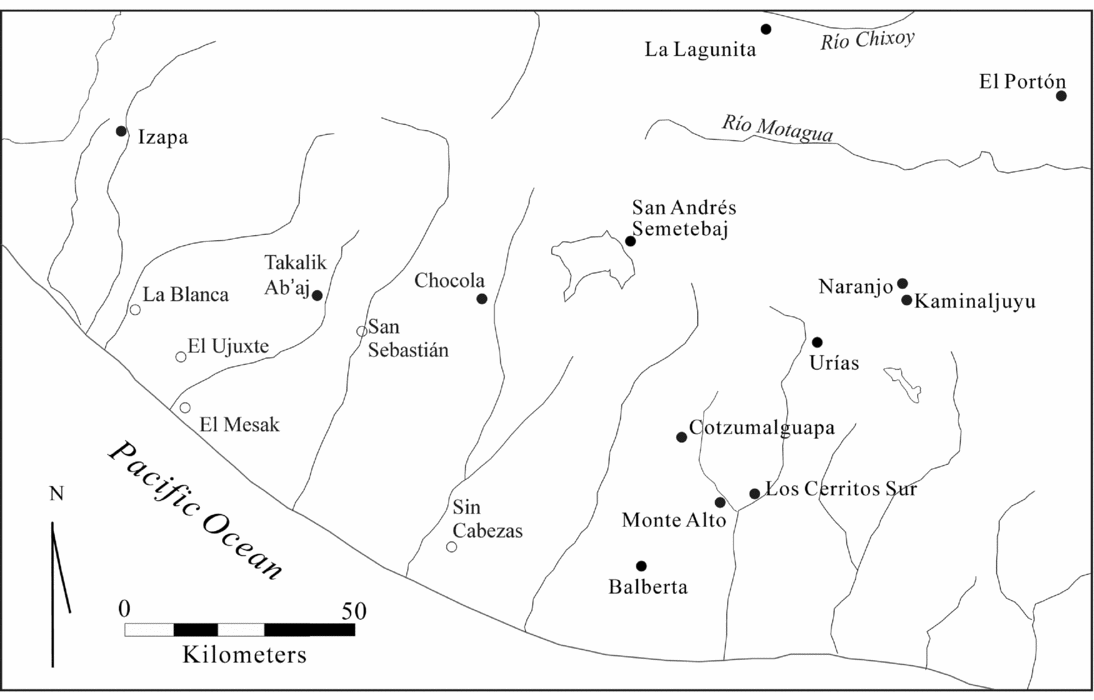
The Pacific coast (Figure 1) provides chronological sequences that are both more refined and better dated than Kaminaljuyu. Here I draw upon the ceramic sequence defined at the sites of La Blanca (Love Reference Love2002a) and El Ujuxte (Love and Castillo Reference Love and Castillo2016). The La Blanca sequence covers the first part of the Middle Preclassic period (ca. 1000–600 cal BC), known as the Conchas phase. The El Ujuxte sequence begins just after the Conchas phase, spanning from the latter portion of the Middle Preclassic to the Terminal Preclassic, roughly 600 cal BC to cal AD 200.
Archaeological sites of the Southern Maya Lowlands discussed in the text.

My previous descriptions of the El Ujuxte sequence (Love Reference Love, Love, Hatch and Escobedo2002b) were preliminary and based only on the seriation of a few large features. The new data here greatly revise and refine the chronology. Although I use the same phase names, the definitions and chronological placement of those phases are changed. The Sierra phase is described here for the first time.
The major wares in the highland and coastal regions have strong similarities. The major monochrome and bichrome wares at La Blanca greatly resemble those of Naranjo (Arroyo and Paiz Reference Arroyo, Paiz and Arroyo2010; Love Reference Love2002a). Likewise, the major wares of El Ujuxte are analogues to those at Kaminaljuyu, Chalchuapa, and other sites of the Providencia and Miraflores spheres defined by Demarest and Sharer (Reference Demarest, Sharer, Urban and Schortman1986). Specific correspondences are considered below.
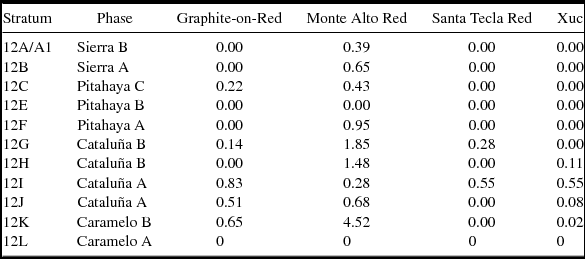
Additionally, wares imported from Providencia and Miraflores ceramic sphere sites are found at La Blanca and El Ujuxte. At La Blanca, trade wares include Charcas White Ware and Cuchillo (also called Esgarra Rojo at Naranjo [Arroyo and Paiz Reference Arroyo, Paiz and Arroyo2010]). At El Ujuxte, trade wares include Monte Alto Red, Xuc, Rofino, Kaminaljuyu Fine Incised Black/Brown, Marfil, Morfino, Sacrojo, Santa Tecla Red, and multiple Graphite-on-Red types. The stratigraphic placement of these trade wares provides chronological links that are far stronger than the comparative traits used by Inomata and colleagues (Reference Inomata, Ortiz, Arroyo and Robinson2014).
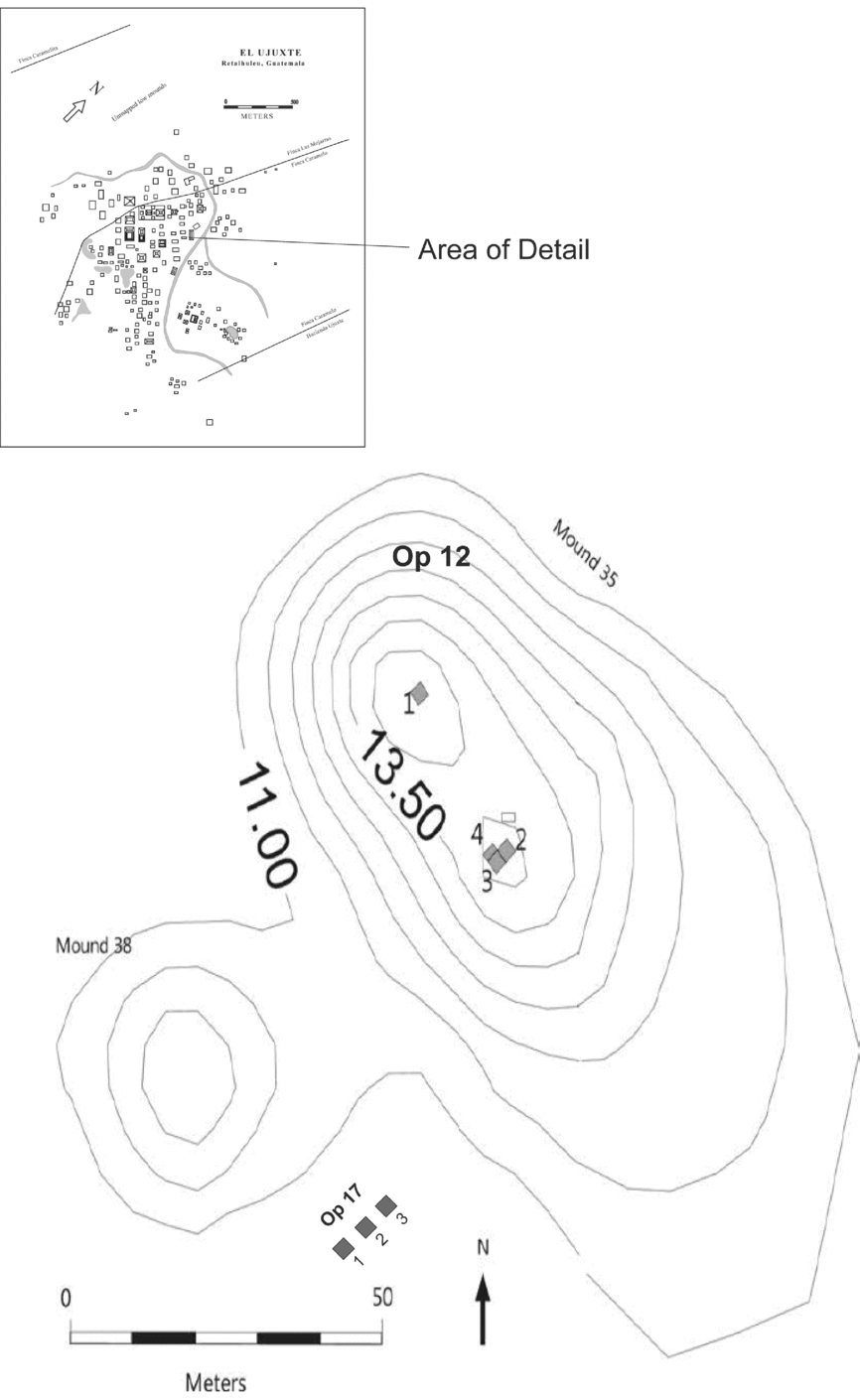
The dating of the Las Charcas phase at Naranjo and Kaminaljuyu, and its contemporaneity with the Conchas phase at La Blanca, is not in doubt, so I will focus on the El Ujuxte sequence. There, chronological control comes from 12 radiocarbon assays from stratigraphically secure features (caches, burials, and trash pits), with most placed within a single stratigraphic column. The sequence is divided into four major phases (Caramelo, Cataluña, Pitahaya, and Sierra), anchored by two 7 m deep excavations within Mound 35, an elite residential context (Figure 2). These twin 2 x 2 m excavations within a single structure contain all the phases and subphases of the sequence with radiocarbon dates for all but the Sierra phase.
Plan of El Ujuxte Mound 35 and Operation 12 excavation locations.

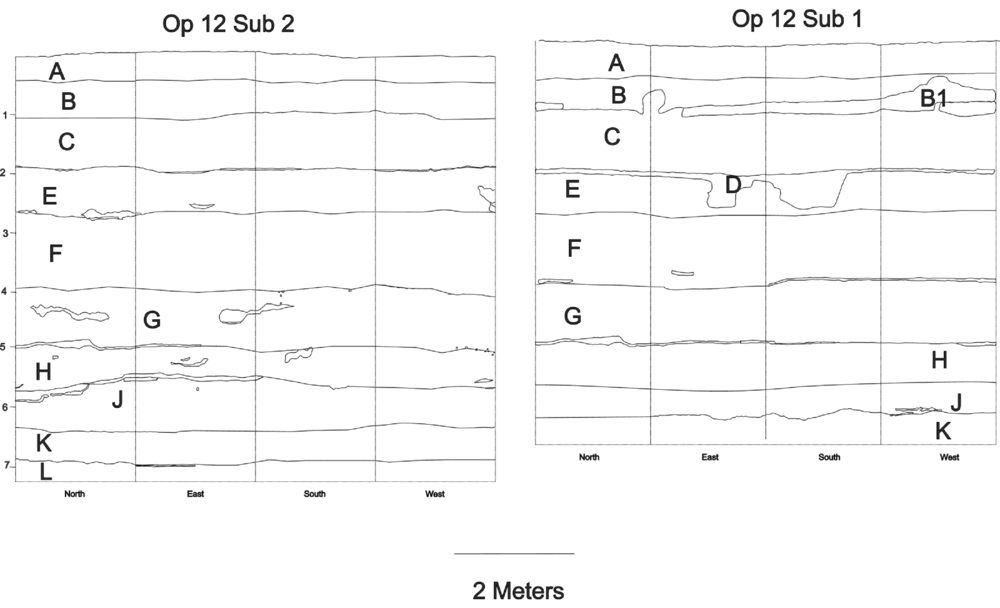
Within Mound 35 there are 12 strata, defined by soils or the presence of floors (Figure 3). The deposits were excavated in a combination of 10 cm arbitrary levels and natural strata; the data were subsequently tabulated by stratum. Arbitrary levels that mixed materials from two strata have been eliminated; neither unit obtained an unmixed sample from Stratum D. Stratum I was found only in Operation 12 Sub 1, isolated in the center of the pit. Hence, it does not appear on the stratigraphic profile.
Profiles of Sub-operations 1 and 2 of Operation 12 at El Ujuxte.

Major chronological phases at El Ujuxte were defined initially through variables showing monotonic increase or decrease in relative frequency through the stratigraphic sequence. Subsequently, variables following the classic battleship curve distribution were added. Where multiple strata were assigned the same phase, trait frequencies provide the basis for defining subphases. The variables analyzed included ware (the combination of paste and slip), vessel form, and decorative attributes such as incised motifs, Usulután resist decoration, or plastic modification.
Additional data for the Sierra phase come from Operation 17, a series of 2 x 2 m units excavated at the base of Mound 35. Sub-operation 17-1 identified a large Sierra phase rubbish pit that penetrated Pitahaya strata. The feature provided both a large sample of Sierra phase pottery and a radiocarbon date from a sealed context.
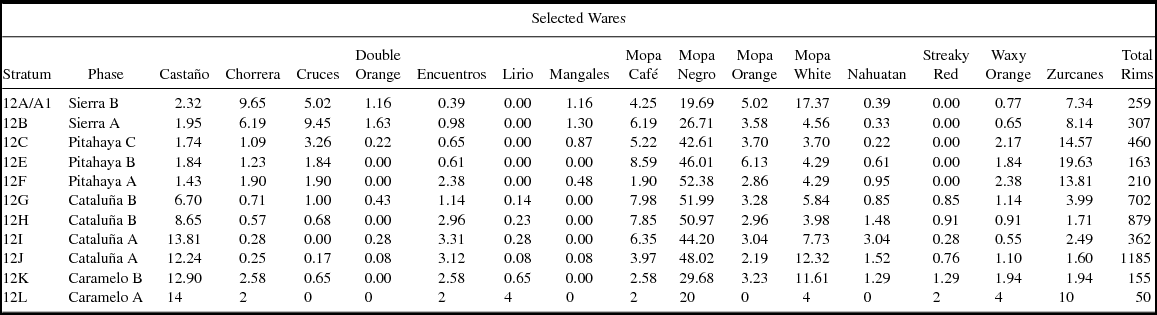
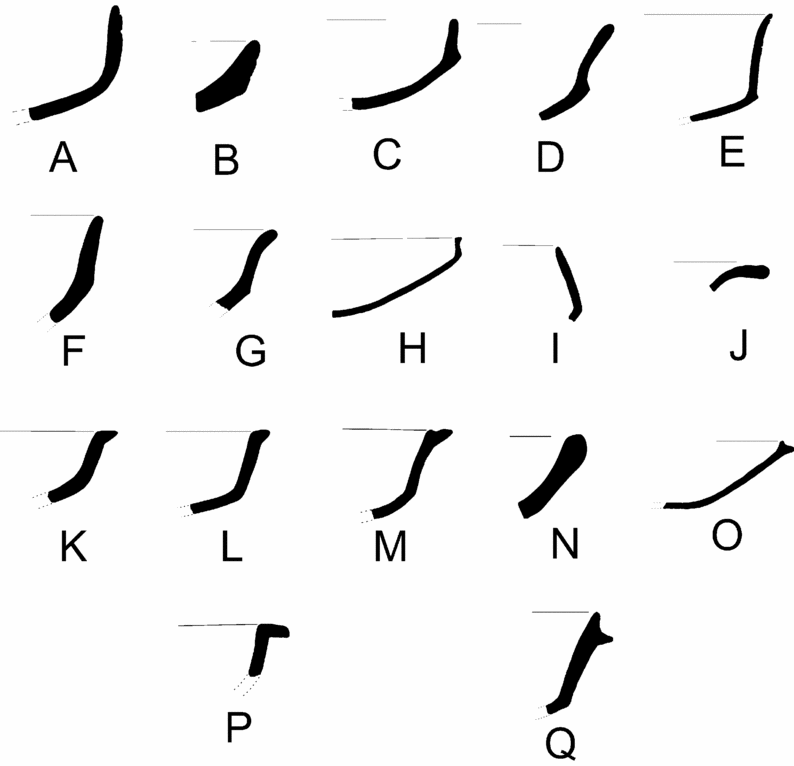
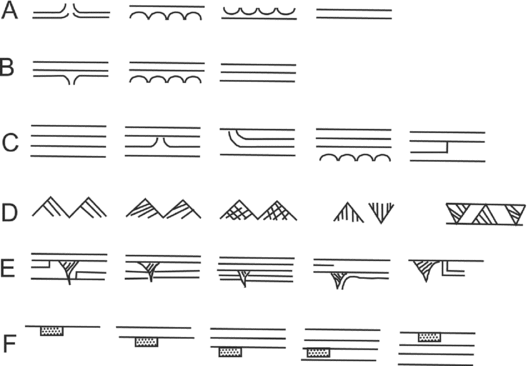
The distributions of wares with chronological significance in Operation 12 are shown in Tables 1 and 2. Data for form and decoration are provided in Supplemental Materials Tables 1 and 2. Examples of the decorative motifs and vessel forms used in the analysis are shown in Figures 4 and 5. The distributions illustrate important points about the sequence. First, there are few variables for which presence or absence usefully defines a major time period, illustrating the subtle nature of ceramic change. Second, the relative frequencies of many traits are temporally sensitive and can produce fine-grained chronologies.
Percentage Frequency of Selected Locally Manufactured Ceramic Wares in El Ujuxte Operation 12 Strata.

Note: Percentages are calculated based on the total number of rim sherds within each stratum.
Percentage Frequency of Selected Imported Ceramic Wares in El Ujuxte Operation 12 Strata.

Note: Percentages are calculated based on the total number of rim sherds within each stratum.
Bowl forms used in El Ujuxte Operation 12 chronological analysis (Table 2) (vessels are not to scale): A) Bowl Form 8: Open bowl with straight wall (tall); B) Bowl Form 9: Open bowl with straight wall (tall); C) Bowl Form 18: Complex silhouette open bowl with bolstered angle break; D) Bowl Form 31: Complex silhouette open bowl with rounded bottom and beveled angle break, and short upper wall; E) Bowl Form 31: Complex silhouette open bowl with rounded bottom, beveled angle break, and tall upper wall; F) Bowl Form 51: Open complex silhouette bowl with thick sidewalls (tall upper wall); G) Bowl Form 52: Open complex silhouette bowl with thick sidewalls (short upper wall); H) Bowl Form 62: Open complex silhouette bowl with straight upper wall and triangular bolstered lip; I) Bowl Form 111: Closed complex silhouette bowl with straight upper wall; J) Bowl Form 408: Open bowl with flat bottom, hemispherical wall, and wide everted rim; K) Bowl Form 411: Open bowl with flat bottom, hemispherical wall, and angular, narrow, flat, everted rim; L) Bowl Form 413: Open bowl with flat bottom, hemispherical wall, and rounded, flat, everted rim; M) Bowl Form 492: Open complex silhouette bowl with everted rim; N) Bowl Form 511: Open hemispherical bowl with rounded rim; O) Bowl Form 540: Open hemispherical bowl with thin and narrow everted rim; P) Bowl Form 541: Open hemispherical bowl with thin and narrow everted rim; Q) Bowl Form 551: Open complex silhouette bowl with labial flange.

Incised decorative motifs used in Operation 12 chronological analysis:
A: Double-line incised motifs from El Ujuxte
B: Triple-line incised motifs from El Ujuxte
C: Quadruple-line incised motifs from El Ujuxte
D: Triangle incised motifs from El Ujuxte
E: Peak incised motifs from El Ujuxte
F: Line and box incised motifs from El Ujuxte

Dating the El Ujuxte Sequence
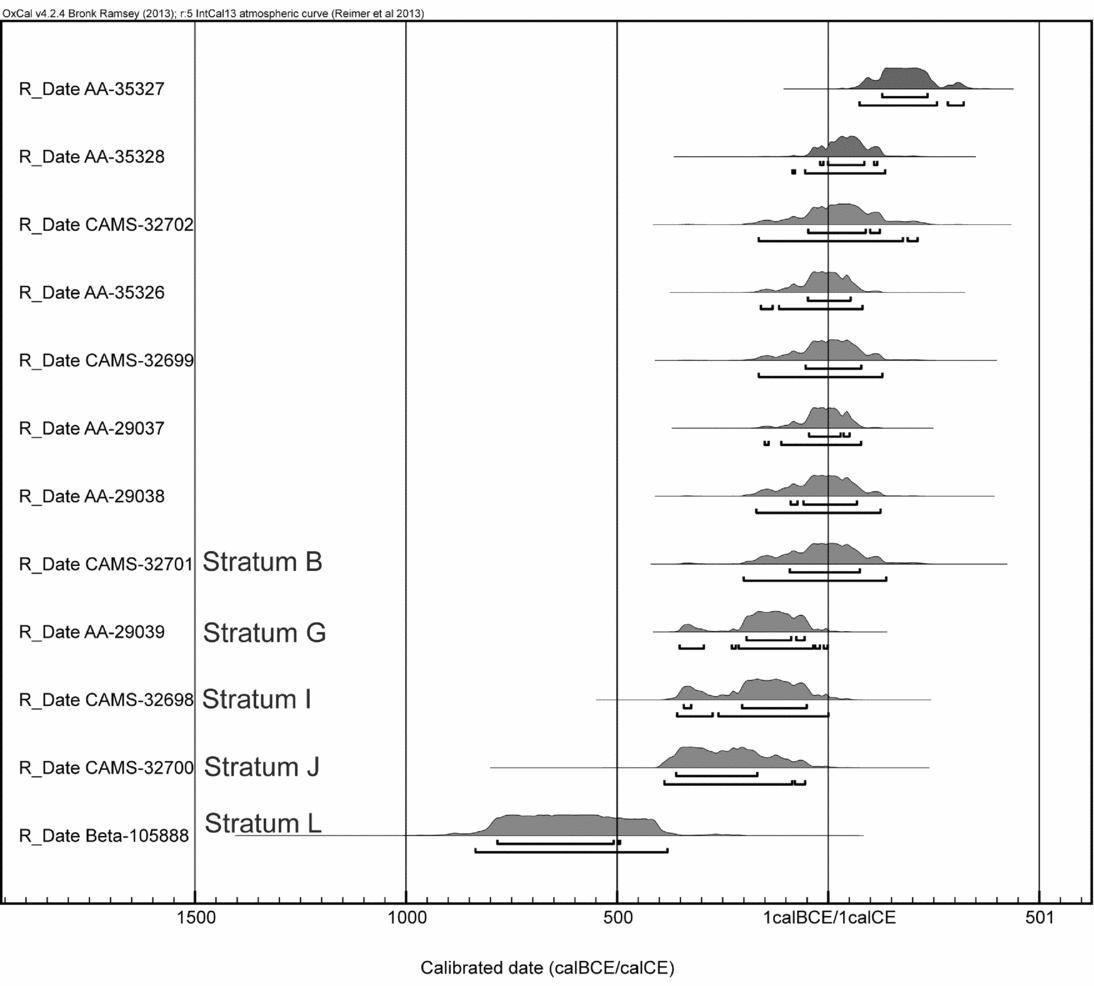
The timeline for the El Ujuxte sequence is based on 12 assays, 11 of which are AMS dates (Love Reference Love, Love, Hatch and Escobedo2002b). Each sample was a single piece of wood charcoal collected from a well-defined feature. A plot of probability distribution for the calibrated dates is shown in Figure 6.
Plot of calibration probability distributions for Ujuxte radiocarbon dates. Plot generated by OxCal v. 4.2.4 (Bronk Ramsey Reference Bronk Ramsey2001), using the IntCal13 atmospheric curve (Reimer et al. Reference Reimer, Bard, Bayliss, Warren Beck, Blackwell, Bronk Ramsey, Buck, Cheng, Lawrence Edwards, Friedrich, Grootes, Guilderson, Haflidason, Hajdas, Hatté, Heaton, Hoffmann, Hogg, Hughen, Felix Kaiser, Kromer, Manning, Niu, Reimer, Richards, Marian Scott, Southon, Staff, Turney and van der Plicht2013).

The beginning of the El Ujuxte sequence lies some time prior to 500 cal BC. The earliest date is a conventional radiocarbon date with a wide probability distribution. Nonetheless, the mean of the unimodal probability distribution falls at 600 cal BC. For the present purpose, I will be conservative and stipulate that the date is probably prior to 500 cal BC.
There are four dates from the Cataluña phase, placed approximately 300–100 cal BC. Within Operation 12, there is one problematic date (CAMS-32702), taken from Stratum G. The 1-σ confidence interval is later than the dates from Stratum B, for which there are two dates in agreement with one another, but the 2-σ confidence interval yields a range that is consistent with stratigraphic order and other dates for the phase.
There are six dates from the Pitahaya phase, placed circa 100 cal BC to cal AD 100. One of those dates (CAMS 32701) comes from Op 12 Stratum B. A solid plurality of dates for the Pitahaya phase has means in the first century BC. A single date for the Sierra phase has a maximal probability at cal AD 115. The date comes from Feature 115/125, the large trash deposit in Sub-op 17-1.
Correlating the El Ujuxte Sequence with Other Sites
The Caramelo phase at El Ujuxte shares many traits with the Providencia phase of highland Guatemala. The links are Streaky Red Ware, Xuc Ware, Waxy Orange Ware, Monte Alto Red, and bowls with sublabial flanges. Confirmation for a starting date of at least 500 cal BC for the Caramelo phase comes from correlations with the Izapa sequence. Caramelo-phase bowls with wide everted rims match Mundet Red of the Frontera phase of Izapa, dated to 500–300 cal BC (Clark and Cheetham Reference Clark, Cheetham, Merino Carrión and Cook2005; Lowe et al. Reference Lowe, Lee and Martínez Espinosa1982; Mendelsohn Reference Mendelsohn2015, Reference Mendelsohn2017; Rosenswig et al. Reference Rosenswig, Culleton, Kennett, Lieske, Mendelsohn and Nunez-Cortez2017). Waxy wares provide further links to the Escalón and Frontera phases at Izapa.
El Ujuxte's Cataluña phase is contemporary with Verbena at Kaminaljuyu. Typological links to the Miraflores sphere are provided by Monte Alto Red, Santa Tecla Red at Chalchuapa, or Sacrojo Red at Kaminaljuyu. Izote ware at Kaminaljuyu is very similar to Bejucal and Guapinol wares at El Ujuxte. The very distinctive thick band at the base of jar necks links Izote and Navarro wares at Kaminaljuyu to Guapinol at El Ujuxte. Moreover, there are technological attributes, such as a prominent kick-up on jars, and evidence of the use of molds to form the vessels. The incised decorative motifs shared by the two sites include the line/box suite of motifs, the “peak” motif series, and the scallop motif (Figure 5).
The placement of Cataluña at 300–100 cal BC is confirmed by connections to Izapa. A strong link to the Guillén phase (300–100 cal BC) is Lirio Ware, which is equivalent or identical to Tuzantan at Izapa (Clark and Cheetham Reference Clark, Cheetham, Merino Carrión and Cook2005; Lowe et al. Reference Lowe, Lee and Martínez Espinosa1982, Reference Lowe, Ekholm and Clark2013; Mendelsohn Reference Mendelsohn2015, Reference Mendelsohn2017). Another tie is the closed bowl with sharp angles (Form 111 at El Ujuxte, Figure 4i) found in the Frontera phase at Izapa (Lowe et al. Reference Lowe, Ekholm and Clark2013:Figure 20). At El Ujuxte, the maximum occurrence of the form was during the Cataluña A subphase (Supplemental Material Table 1), which may indicate borrowing from Izapa.
The equivalencies of Pitahaya to Arenal are broad, as discussed. Trade wares from the Miraflores sphere region in Pitahaya levels at El Ujuxte include Miraflores Fine Incised Black/Brown, Marfil, and white-painted orange ware (shown in Shook and Kidder Reference Shook and Kidder1952:Figure 75 o, p).
Beyond typological comparisons, vessel forms and decorative motifs strongly connect Arenal and Pitahaya. Two examples with high frequencies during the Pitahaya phase include forms with straight upper walls (Bowl Forms 8 and 9 at Ujuxte; see Figures 4a, b) and the complex silhouette bowls with bolstered angle break (Bowl Form 18 at El Ujuxte; Figure 4c). Bowls identical to Bowl Form 9 are illustrated by Shook and Kidder from Tomb II at Kaminaljuyu (Shook and Kidder Reference Shook and Kidder1952:Figures 65g, h, k). The maceta (flowerpot) form is widespread at both sites at this time. The highest frequency of Usulután decoration at El Ujuxte is in the Pitahaya phase, which matches Verbena. Other decorative modes such as plastic deformation (pressing in of the rim while the clay is moist) link Pitahaya to Arenal.
The dating of Pitahaya is confirmed by comparison to the Hato Phase at Izapa (Clark and Cheetham Reference Clark, Cheetham, Merino Carrión and Cook2005; Lowe et al. Reference Lowe, Lee and Martínez Espinosa1982; Mendelsohn Reference Mendelsohn2015, Reference Mendelsohn2017). Hato is placed from 100 BC to AD 100 by Lowe and colleagues (Reference Lowe, Ekholm and Clark2013), a range supported by an AMS date obtained by Mendelsohn (Reference Mendelsohn2017a, Reference Mendelsohn2017b).
The Sierra phase at El Ujuxte is more difficult to link to the Miraflores sphere and sites to the east. Broadly, the Sierra phase shows some continuity with the preceding phase, but it also shows a decline in some of the hallmarks of the Pitahaya phase. The difficulty in matching the Sierra phase with the Santa Clara phase at Kaminaljuyu reflects a breakdown of the economic and political structures that tied Kaminaljuyu to the coast (Love Reference Love, Love and Kaplan2011b; Popenoe de Hatch Reference Popenoe de Hatch, Love, Popenoe de Hatch and Escobedo2002) and the end of the Southern City-State Culture during the second century AD. The radiocarbon date for the Sierra phase is the only one from El Ujuxte with a mean after cal AD 100, and its probability distribution supports the proposal that the Aurora-like traits of the Classic period at Kaminaljuyu and Escuintla appear at approximately cal AD 200 (Bove et al. Reference Bove, Sonia Medrano, Brenda Lou and Bárbara Arroyo1993; Chinchilla et al. Reference Chinchilla Mazariegos, Bove and Vicente Genovez2009).
Discussion
El Ujuxte provides a bridge between the Izapa and Kaminaljuyu sequences that has eluded previous comparisons. Mendelsohn (Reference Mendelsohn2015, Reference Mendelsohn2017) prefers to link Verbena and Arenal phases at Kaminaljuyu to the Hato and Itstapa phases at Izapa, respectively, but she also equates Guillén and Hato at Izapa to Caramelo and Pitahaya at El Ujuxte, respectively. Both equivalencies cannot be true, and the factors that connect El Ujuxte to Kaminaljuyu are far stronger than the generalized trait comparisons of Izapa to Kaminaljuyu. Hence, El Ujuxte provides the best route for matching the Izapa and Kaminaljuyu sequences.
The El Ujuxte chronology is imperfect because there are only single radiocarbon dates for the beginning and end of the sequence, and the Caramelo phase assay is not an AMS date. Even if we exclude the radiocarbon date, stratigraphy and ties to Izapa show that the Caramelo phase begins well before 300 cal BC. The Cataluña and Pitahaya phases are securely anchored by ceramic analysis, strong stratigraphy, and multiple radiocarbon dates from secure contexts. The dating of those two phases directly bears on the proposition by Inomata and colleagues (Reference Inomata, Ortiz, Arroyo and Robinson2014) that the Verbena phase at Kaminaljuyu begins at cal 100 BC.
Regardless of the idealized phase descriptions for Kaminaljuyu and their dates, the El Ujuxte data demonstrate that some traits of the Providencia phase exist prior to 300 cal BC, something like Verbena takes shape circa 300 cal BC, and something like Arenal begins circa 100 cal BC. The data place the peak of the Southern City-State Culture between the first century BC and first century AD. Kaminaljuyu, like the rest of the Southern City-State Culture, had a tumultuous period during the “Late Preclassic Collapse” between AD 100 and 200 (Love Reference Love2007, Reference Love, Love and Kaplan2011a, Reference Love, Love and Kaplan2011b), after which the new traits of the Classic Period Aurora phase appear, beginning at cal AD 200.
Implications of Chronological Relationships for Social Process
My goal certainly is not to defend the precocity of the Guatemalan Highlands or the broader “Southern Maya Region” relative to the Maya Lowlands, a position correctly criticized by Inomata and colleagues (Reference Inomata, Ortiz, Arroyo and Robinson2014). Indeed, I have proposed that the “Maya” elements of the “Southern Maya Region” were intrusive (Love Reference Love2002a:619; Reference Love, Pedro Laporte, Escobedo and Nacional2004). Given the discoveries of the past thirty years in the Maya Lowlands, any scenario by which Classic Maya culture diffused from highlands to lowlands is untenable, even using the Shook/Hatch chronology (Love Reference Love, Love and Kaplan2011a). Present evidence cannot rule out some variant of the “Chiapas Model” proposed by Gareth Lowe (Reference Lowe and Adams1977; see also Clark and Pye Reference Clark, Pye, Love and Kaplan2011), wherein a migration brought “Maya” traits from the lowlands to the highlands (Love Reference Love, Love and Kaplan2011a). More complex forms of interaction are probable, however, and undoubtedly there were southern contributions to pan-Mesoamerican high culture that included the Lowland Maya. A one-way street is unlikely.
The “baton theory,” by which civilization was transmitted from the Olmec to Izapa and thence to the Lowland Maya has been dead and buried for so long that it is truly surprising to see anyone bother to attack it, or even parts of it. That model of sequential Olmec-Izapan-Maya cultures was soundly refuted by the 1980s (Demarest Reference Demarest1986, Reference Demarest, Sharer and Grove1989, Reference Demarest, Love and Kaplan2011; Demarest and Sharer Reference Demarest, Sharer, Urban and Schortman1986), and it is troubling to see outdated opinions, such as those of Coe (Reference Coe1962) or Gifford (Reference Gifford1976), cited as though they represent current thinking among scholars working in the Highlands and Pacific coast.
Inomata and colleagues further propose that the Central Highlands of Guatemala collapsed at 400 cal BC. Political cycling undoubtedly occurred throughout the Preclassic period of Mesoamerica (Love Reference Love and O'Donovan2002c), and the Valley of Guatemala experienced such episodes. Something significant happened in the Valley of Guatemala at about 400 cal BC (Arroyo, ed. Reference Arroyo and Arroyo2010; Love Reference Love, Love and Kaplan2011b, Reference Love, Traxler and Sharer2016; Popenoe de Hatch et al. Reference Popenoe de Hatch, Schieber de Lavarreda, Orrego Corzo, Love and Kaplan2011), manifested in the shift in paramount settlement from Naranjo to Kaminaljuyu and the disruption in trade routes to the east, but those political and economic changes fall short of a collapse (Supplemental Material 2). The deus ex machina summoned by Inomata and colleagues (Reference Inomata, Ortiz, Arroyo and Robinson2014), invoking the putative collapse of La Venta, contributes nothing.
For many, the most important conclusion of Inomata and colleagues (Reference Inomata, Ortiz, Arroyo and Robinson2014) is that the concept of “Divine Kingship” expressed through significant bodies of sculptural art at Kaminaljuyu, Takalik Ab'aj, and Izapa, began in the “Protoclassic.” This interpretation rests on (1) the dating of Tombs I and II from Kaminaljuyu Mound E-III-3, and (2) the assumption that tombs represent the best evidence of this ideology. The focus on royal burials distracts from a larger body of evidence that shows political centralization and ideological change beginning much earlier. Changes in settlement patterns, monumental construction, sculptural form and content, domestic ritual, public ritual, and site planning all indicate important political and ideological shifts within Southern City-State Culture by 300 cal BC (Guernsey Reference Guernsey2012; Guernsey and Love 2005; Love Reference Love and O'Donovan2002c).
There is no doubt that many of the major sites of the Southern City-State Culture witnessed large programs of sculpture and monumental construction during the first century AD. Nonetheless, the trajectory of political centralization began much earlier, and material indications of ideological change predate the first appearance of royal tombs. Much of the evidence for social inequality and the nature of ideology at Kaminaljuyu, and within Southern City-State Culture more broadly, comes from sculpture (Guernsey Reference Guernsey2006, Reference Guernsey2012; Henderson Reference Henderson2013; Parsons Reference Parsons1986). Even if the royal tombs at Kaminaljuyu and at Takalik Ab'aj date to the first century AD, their dates provide little insight into the chronology of the sculpture. First and foremost, pottery does not date the sculpture; at best the excavated context of a sculpture provides a terminus ante quem. Nearly all of the Preclassic sculpture at Kaminaljuyu and Takalik Ab'aj, to give two examples, was found in later contexts, so changing the ceramic chronology does nothing to date the sculpture in and of itself (contra Inomata and Henderson Reference Inomata and Henderson2015). Second, there is solid evidence of sculptural programs as early as the Providencia phase within the Valley of Guatemala, as already mentioned.
Inomata and colleagues (Reference Inomata, Ortiz, Arroyo and Robinson2014) suggest a need to reevaluate the dating of the Guillén phase and the apogee of Izapa. Nonetheless, recent work at Izapa has confirmed the Guillén phase at 300–100 cal BC, and Hato at 100 cal BC–cal AD 100 (Mendelsohn Reference Mendelsohn2017; Rosenswig et al. Reference Rosenswig, Culleton, Kennett, Lieske, Mendelsohn and Nunez-Cortez2017). Stylistic similarity makes it likely that at least some of the works at related sites such as Takalik Ab'aj and Kaminaljuyu is contemporary with those of Guillén phase Izapa (Guernsey Reference Guernsey2006; Parsons Reference Parsons1986). Long Count dates at Takalik Ab'aj and El Baúl document the persistence of a sculptural tradition into the first and second centuries, but many analysts view those works as the endpoint of the Preclassic sculptural sequence, not the beginning (Parsons Reference Parsons1986; Popenoe de Hatch et al. Reference Popenoe de Hatch, Schieber de Lavarreda, Orrego Corzo, Love and Kaplan2011).
With the dating of the apogee of Izapa to the Guillén phase now confirmed (Rosenswig and Mendelsohn Reference Rosenswig and Mendelsohn2016; Rosenswig et al. Reference Rosenswig, López-Torrijos, Antonelli and Mendelsohn2013, Reference Rosenswig, López-Torrijos and Antonelli2015), the irony is clear. If Inomata and colleagues’ (Reference Inomata, Ortiz, Arroyo and Robinson2014) chronology is correct, then the Izapa corpus predates the early “Maya” art at Kaminaljuyu and the baton model would be reborn. That possibility seems unlikely, given the many points of multidirectional stylistic and symbolic exchange suggested by the sculptural corpus (Guernsey Reference Guernsey2006, Reference Guernsey2012).
Conclusion
The work of Inomata and colleagues (Reference Inomata, Ortiz, Arroyo and Robinson2014) makes clear the need for a reexamination of chronology throughout southern Mesoamerica. Their diligent review of dates and ceramic complexes from the highlands of Guatemala and neighboring areas is significant and stimulating.
Advances in the chronology of the highlands and Pacific coast will come from ongoing work, with new dates for the major phases at Kaminaljuyu likely to be determined through current work within the Valley of Guatemala. We can hope that other projects will also recognize the need for new chronological studies and take up the challenge. Whatever those results may be, radiocarbon dates alone will not produce the kind of refined sequences that we need. Quantitative models of chronometric data must be matched by ceramic data of equal precision. The old methods that defined phases based on the presence or absence of a few wares or types simply are not adequate to answer new questions that demand refined chronologies (see Cowgill Reference Cowgill2015).
Formal models and Bayesian analyses of radiocarbon assays unquestionably will be central to chronology building in the future. Models that integrate Bayesian approaches to attribute-based ceramic analysis should also be explored. Bayliss (Reference Bayliss2015) provides a checklist of the protocols needed to conduct a good Bayesian analysis of chronological data, which are standards to which we can aspire; few projects in Mesoamerica, mine included, have reached them. Until those conditions are met, we will be wise to heed Efron's (Reference Efron2013) admonitions and avoid the use of uninformative prior information. As Efron suggests, in the absence of valid prior information, we should focus on collecting new data.
Acknowledgments
Fieldwork in Guatemala was authorized by the Instituto de Antropología e Historia de Guatemala. Fieldwork at La Blanca was made possible by grants from the National Science Foundation (BCS-0451024, BCS-1424298), the National Geographic Society, the Wenner-Gren Foundation, the Foundation for the Advancement of Mesoamerican Studies, the New World Archaeological Foundation, the University of Texas Department of Art and Art History, California State University, Northridge, the University of California Berkeley, and a Fulbright-Hayes Fellowship. Research at El Ujuxte was aided by grants from the National Science Foundation (SBR-9807304, SBR-96171123, and SBR-9510991), Wenner-Gren Foundation, the Heinz Foundation, the Universidad del Valle de Guatemala, Sonoma State University, California State University, Northridge, and the Fulbright Senior Fellowship program. I thank John Southon for the AMS radiocarbon assays done at the Lawrence Livermore Laboratory. Donaldo Castillo was co-director for both the El Ujuxte and La Blanca projects. Thoughtful comments on this paper were provided by Bárbara Arroyo, Geoffrey Braswell, Arthur Demarest, Julia Guernsey, Matilde Ivic, Marion Popenoe de Hatch, Rebecca Mendelsohn, Robert Rosenswig, Deborah Walker, and an anonymous reviewer. None of those named necessarily agree with the arguments or conclusions presented here. Julia Guernsey greatly improved the clarity of the article through painstaking editing. I thank the late Fred Bove for the many discussions of dating and pottery.
Data Availability Statement
The collections of the La Blanca and El Ujuxte materials are located in facilities of the Instituto de Antropología e Historia de Guatemala. Digital copies of all data are available from the same institution and the author.
Supplemental Materials
To view supplementary material for this article, please visit https://doi.org/10.1017/laq.2017.70
Supplemental Text 1: Bayesian Analysis and Uninformative Priors
Supplemental Text 2: Collapse at 400 cal BC
Table 1: Percentage Frequencies of Bowl Forms by Stratum at El Ujuxte
Table 2: Percentage Frequencies of Design Motifs by Stratum at El Ujuxte