Since the Berlin Wall came down in 1989, our understanding of Cold War history has changed considerably. The wave of new research spurred by the opening of archives and opportunities for novel East-West comparisons threw into sharper relief aspects of the Cold War contest that had received little attention previously. It has become increasingly clear that the Cold War was not only a military, political, and economic conflict, but also one profoundly implicated in, and shaped by, key transformations in twentieth-century culture.Footnote 1 Capitalizing on the increased accessibility of primary sources from former socialist states, recent research has provided valuable insights into the politics of everyday culture on both sides of the Iron Curtain,Footnote 2 and we have seen as well the publication of several transnational accounts of the cultural Cold War spanning the West and the East.Footnote 3
This growing body of work has raised a number of wider conceptual and methodological issues. Its authors challenge the perception of the socialist period as a “deviation” from the supposedly normal course of historical development, and instead highlight continuities between post-1945 cultural histories and long-term historical trends, including the rise of modernity, popular sovereignty, and mass culture. This literature has also brought to light structural similarities between developments in the East and the West, and has thereby questioned the value of understanding the Cold War as a bipolar divide and thinking about socialism and capitalism in binary terms. In line with this, several recent studies have argued that we need to unpack the logic of Cold War discourse, its historical roots and epistemic effects, and its continuing hold on scholarly and journalistic imaginations. According to Alexei Yurchak, the binary categories that still permeate much of academic and journalistic writing about Soviet socialism—such as the state and the people, oppression and resistance, official and unofficial culture—obscure the complexity of the Soviet system, within which “control, coercion, alienation, fear, and moral quandaries were irreducibly mixed with ideals, communal ethics, dignity, creativity, and care for the future.”Footnote 4 Dominic Boyer employs a similar approach in his analysis of the multiple figurations of dialectical thinking and knowing in twentieth-century Germany, stressing their constitutive role in the shaping of German modern culture.Footnote 5 One thing Boyer traces is the reshaping of the East/West distinction in the two Germanys, and he argues that actors on each side of the Cold War divide drew on the East-West binary to displace the moral burden of Nazism onto the “other” Germany. He then examines the strategic uses of the same distinction—now laden with new meanings—among media practitioners in post-unification Germany.Footnote 6
Post-World War II Yugoslavia provides an apposite case study for further reflection on the trajectories and politics of Cold War discourse and its role in shaping both the period's culture and our ways of knowing it. The developments that followed Yugoslavia's expulsion from Cominform in 1948 sit uneasily with the implicit East-West divide that underpins much of the Cold War historiography. The country's “market socialism” is often seen as a compromise between socialist planning and free enterprise, and its involvement in the Non-Aligned Movement can be interpreted as an articulation of this compromise in the field of foreign policy.Footnote 7 The same is true of Yugoslav culture: while they initially adopted Soviet cultural policies,Footnote 8 Yugoslavia's writers, artists, and other cultural producers soon began to carve out a “third way” between what they saw as the excessively state-controlled model of cultural production followed in the East, and the overly market-led approach favored in the West.Footnote 9
It is tempting to describe these developments in terms of an encounter or struggle between the “Soviet,” “totalitarian,” or “Eastern” model of social organization and the “capitalist,” “liberal,” or “Western” one, and indeed that approach dominates the literature on socialist Yugoslavia's cultural history. Aleš Gabrič, whose work examines changing cultural policies in Slovenia between 1953 and 1963, portrays them as a gradual movement away from the “Soviet” or “Stalinist” model of social organization, associated with direct party control over cultural production, toward a distinctly Yugoslav type of socialism, characterized by less-rigid forms of party influence and greater tolerance of diverse cultural forms and values.Footnote 10 Predrag Marković, whose research spans 1948 to 1965 and focuses on the capital of Belgrade, rejects as a myth the notion of an authentic, autochthonous Yugoslav path, and prefers to describe Yugoslav culture as a “field of struggle” between Eastern and Western cultural influences.Footnote 11 Reana Senjković analyzes aspects of popular culture in socialist Croatia and offers a slightly different account. In her view, Yugoslav popular culture was an ideological “hybrid” marked by a “cohabitation of at least two ideological models.”Footnote 12
Another way of organizing the narrative about socialist Yugoslav culture highlights the shifting balance of nationalist antagonisms and Yugoslav unity. This approach is especially prominent in Andrew Wachtel's analysis of Yugoslav literature and cultural politics from the nineteenth to the late twentieth centuries,Footnote 13 but is apparent in other works as well, particularly studies of Yugoslav culture from the 1960s onward. Such accounts are compelling and provide a much-needed corrective to the usual, binary accounts of Cold War culture, yet they stop short of an explicit investigation of Yugoslav Cold War discourse as such, and its constitutive role in negotiating relationships between the ideological project of socialist Yugoslavism and the reality of cultural practices and values of the time.
In this paper, I take the discourse of Yugoslav socialism as my central object of analysis. Following Pierre Bourdieu's theory of practice, I approach this discourse as “practical knowledge” produced by social actors who themselves constitute objects of analysis.Footnote 14 This practical knowledge, organized around mundane, taken-for-granted categories and distinctions was constituted by, as well as constitutive of, the reality of Yugoslav socialist culture, and requires critical scrutiny. What were the central normative assumptions, categories, and distinctions at work in the practical knowledge about socialist Yugoslav culture? How did social actors use this knowledge to make sense of the reality of cultural practices in the country? And finally, what aspects of social reality did this discourse obscure, and in what ways did it shore up, or challenge, official identity narratives?
I will address these questions by examining the journalistic discourse about culture in the northwestern part of Yugoslavia that encompasses the eastern side of the upper Adriatic coast and the region bordering Italy. This part of Yugoslavia is particularly suited for an investigation into the functioning of Cold War framings of culture, for several reasons. The proximity of Italy, the local population's bilingualism, and the presence of ethnic minorities on both sides—Italians in Yugoslavia and Slovenians in Italy—encouraged constant cross-border exchanges and obstructed the processes of cultural homogenization and nation building on each side of the border. Italian radio and later television were immensely popular with local Yugoslav audiences, and from the 1960s onward shopping trips to Italy became a regular feature of everyday life.Footnote 15 At the same time, many Italians and Slovenian minority members living in Italy became regular customers of Yugoslav restaurants and petrol stations, followed Yugoslav radio and television broadcasts, and formed a substantial proportion of the foreign tourists who visited Yugoslav coastal resorts. Due to these multiple ties, the region served as both a meeting point and a battleground for competing conceptions of culture, identity, and everyday life that were being promoted by cultural producers on both sides of the border.
To understand the full scope of these exchanges and tensions we need to keep in mind that this region forms part of the symbolic fracture that, in the eyes of Western Europeans, cuts the European continent into its civilized Western and underdeveloped Eastern or Balkan part. First formed in the period of Venetian Enlightenment,Footnote 16 this fracture was subsequently remolded to suit the legitimating strategies and identity narratives promoted by the successive administrations in the region, including the Habsburg Empire, the Kingdom of Italy, and Nazi Germany. After World War II, the older mental mappings became enmeshed with Cold War binaries, and were selectively appropriated to suit new political agendas, this time shaped by the global contest between the Soviet Union and the United States.Footnote 17 Since the spread of nationalism in the mid-nineteenth century, changes of administration in the region have been accompanied by more or less violent forms of cultural homogenization. The rise of fascism in Italy gave way to increasingly ruthless forms of Italianization of Slovenians and Croatians, which in turn prompted a hardening of anti-Italian sentiments and gave rise to clandestine antifascist organizations that regularly resorted to violent means.Footnote 18 Though paralleled by forms of Italo-Slav antifascist collaboration, this spiral of violence and suspicion continued throughout World War II and into the post-war period, and fostered successive waves of (mostly Italian) emigration from the region. This history of shifting borders and ideological landscapes intertwined with violence, prejudice, and involuntary migration gave rise to divided memories and identities that continue to shape individual recollections and collective memories in the northeastern Adriatic to this day.Footnote 19 As we will see, they also influenced how Cold War discourse was appropriated.
This paper examines two distinct historical periods. Its first part focuses on the immediate post-World War II period up to 1948, when Yugoslav cultural policies and practices were organized much like their equivalents in the Soviet Union and elsewhere in socialist Eastern Europe. The second begins with a review of key changes in Yugoslav cultural policies and practices over the course of the 1950s and the 1960s, and then concentrates on the discourse about culture in 1971, a point when the cultural field was marked by ideological diversification and a rising tide of nationalist antagonisms.
As is evident from the discussion so far, I am concerned here primarily with public discourse about culture rather than cultural events, products, or policies. In particular, I will examine the normative understanding of culture promoted by the media, the distinctions and categories it relied upon, and the ways in which the press engaged with different cultural forms, including serialized novels, popular music, and television series. My analysis is also attentive to the different uses of key discursive distinctions and categories and their application in the negotiation of Yugoslav identity and culture. To assess the epistemic effects of these discursive strategies, the paper interprets them in relation to selected secondary literature about Cold War cultural practices and forms, both in Yugoslavia and beyond. The media to be analyzed include the major Croatian and Slovenian newspapers published in the northwestern part of the federation (Riječki list/Novi list, Glas Istre, and Primorske novice), the pro-Yugoslav Slovenian minority newspaper issued in Trieste (Primorski Dnevnik), and one Italian minority newspaper (La Voce del Popolo).
It is important to clarify the limitations imposed by the nature of my primary sources. Especially in the early post-war years, the press largely reflected official views and exerted little independent influence on cultural processes.Footnote 20 This was also a period when literacy rates were relatively low and local resistance to communist policies fairly widespread.Footnote 21 We might, therefore, assert that the wider population likely ignored the framing of culture promoted by the press. But to accept this proposition is to confuse influence with approval; while the socialist Yugoslav press certainly cannot be taken as an accurate expression of public culture as a whole, it nevertheless played a major role in delineating the boundaries of what was publicly acceptable and imposing “a structure of thinking” even among those who opposed the regime.Footnote 22 Understanding the media's role becomes still more important when we consider developments after Tito's split with Stalin in 1948, and particularly after the changes to cultural policies initiated in the early 1950s. During this period the relative balance of power between the Party, the state, the market, and the media shifted towards the latter, which became much more active in shaping Yugoslav culture.
Uplifting the Working Masses
Throughout the first period I will examine, the border between Italy and Yugoslavia remained in flux. As the Cold War rivalry began to take shape, the territorial dispute between the two states assumed strategic, geopolitical importance and became a burning issue not only for Italy and Yugoslavia, but also for the Allied forces that took up the task of finding a solution to the “Trieste problem.”Footnote 23 Following the signing of the Paris Peace Treaty in 1947, an interim solution was implemented that included the establishment of the Free Territory of Trieste, an unusual political formation comprised of Trieste and its immediate surroundings. The legitimacy of this solution remained disputed, and much of the local population, particularly in Trieste, continued to live in a state of perpetual mass mobilization, which prompted many to emigrate to Italy or other countries.Footnote 24
Operating in this volatile situation marked by the intensifying global confrontation between the United States and the Soviet Union, the press was involved in a constant ideological battle. Along with the rest of the Yugoslav media, it formed part of a complex apparatus for cultural change, modeled on the one established in the Soviet Union and aimed at fostering the rise of a new, socialist Yugoslav culture.Footnote 25 Although the Yugoslav press was legally free and most of it was not directly owned by the Communist Party of Yugoslavia (CPY), this apparatus nonetheless provided ample opportunities for the CPY to filter undesirable content and use the press as a collective agitator and propagandist. To start with, most major newspapers were founded by the Peoples' Front of Yugoslavia, a mass organization that shared the CPY's ideological convictions.Footnote 26 The Departments of Agitprop and Propaganda regularly sent out detailed instructions regarding desirable cultural content, supplied newspapers with ready-made articles, and recommended editorial board members.Footnote 27 The CPY also used its influence over the legislative, judicial, and executive bodies to pass and enforce legislation favorable to the Communist Party; this allowed for various indirect forms of censorship such as issuing publishing permits only to loyal publishers, boosting circulations of party-sponsored newspapers by allocating press subsidies, and stifling unorthodox views by limiting paper use or denying access to printing facilities.Footnote 28
Ideologically, the normative views about Yugoslav culture promoted by the CPY in this period were rooted in Marxist-Leninist perceptions of modernity and society. These centered on the notion of culture as a tool of progress and elevation of the working classes, familiar from the Soviet system of values established in the post-revolutionary period. These programmatic ideas were also inflected by the experience of bloody intra-Yugoslav nationalist conflicts during the war, and memories of interwar Yugoslavism. Initially, interwar Yugoslav elites had been intent on building a common Yugoslav culture rooted in the belief that Yugoslav peoples constituted a single, national whole.Footnote 29 This understanding of Yugoslavism came to be perceived by many non-Serbs as a desire to Serbianize the country, and though there was a gradual movement away from ideas of “integral Yugoslavism” during the 1930s, interwar Yugoslavia was subsequently remembered as an oppressive state intent on forcibly assimilating Yugoslav peoples into a single nation.Footnote 30 Such selective memory constituted one of the premises that enabled the post-war Yugoslav elites to construct their project of Yugoslav nation building as an entirely unprecedented endeavor to place the South Slavs under a single political roof while maintaining their national distinctiveness. This twin emphasis on distinctiveness and ideological unity—embodied in the slogan “brotherhood and unity”—formed the basis for the communist Yugoslav nation-building project, and purportedly helped guard the new Yugoslavia against the “mistake” committed by its interwar predecessor.Footnote 31
The other key element of the post-war Yugoslav ideology was an attempt to marry the national liberation struggle to working class struggle. According to the Yugoslav myth of origins, this union was forged during the Second World War and found its expression in the Anti-Fascist Yugoslav People's Liberation Struggle led by the Yugoslav partisans.Footnote 32 In line with this myth, the past anti-imperial struggles of South Slavs were now reinterpreted as struggles led by not only oppressed nations fighting anti-national regimes but also exploited working classes revolting against the bourgeoisie. Interwar Yugoslavia, went the argument, was unable to resolve intra-Yugoslav nationalist conflicts, and instead exacerbated them due largely to continuing nationalist antagonisms between different national bourgeoisies and capitalist exploitation.Footnote 33 This blend of nationalist and communist goals proved difficult to sustain, not least because it introduced a powerful element of continuity that challenged the discursive and political attempts to create a “new” Yugoslav culture. Yugoslav socialist cultural policies continued to be underpinned by the key tropes and categories used in the pre-1945 decades, including terms like kultura or cultura (Croatian/Slovenian and Italian for “culture”) and narod, popolo, and ljudstvo (Croatian, Italian, and Slovenian for “people” or “nation”), which were burdened with the ideological baggage of nineteenth-century nation-building projects.Footnote 34 The latter three terms were particularly crucial in this respect since they could be used to refer both to an ethno-national community and an ethnically diverse collective. As such, they could simultaneously convey both national and class belonging (as, for instance, in the formulation “working people”) while discursively resolving possible tensions between them.
This particular blend of nationalist and communist ideas provided the broader context within which the normative views of the “new” Yugoslav culture in the northwest were shaped. Three features of these normative framings were prominent in the newspaper coverage I studied: (a) an understanding of culture as a tool of progress and education; (b) a distinction between form and substance, coupled with an emphasis on the importance of the latter; and (c) an emphasis on the mass character of culture. On every account, the “new Yugoslav culture” was construed as the exact opposite of “bourgeois” culture of the pre-war past, which allegedly continued to flourish in the West and in the neighboring Italy. I will examine each of these in turn.
Culture as an Instrument of Progress and Education
To start with, culture was seen primarily as an instrument of progress and education rather than entertainment or leisure, and the working classes were to be its target. This understanding of culture came clearly to the fore in articles intended to mobilize the people for extended bouts of concentrated production known as “shockwork,” and for competitions between local factories and other organizations that were expected to boost productivity.Footnote 35 Articles dedicated to shockwork and competition, typically written by local CPY leaders or left unsigned, were common in the newspapers and often placed on the first few pages. As one explained, cultural activities formed an integral part of the process of “ideological elevation,” which would also speed up the country's industrialization and help construct a “new Yugoslavia.” The article expressed concern at the lack of attention the local labor union organization was paying to the cultural aspects of the competitions, and called for more effort toward organizing literacy classes and simulating entry into education.Footnote 36 Another article in a similar vein criticized the cultural activities that accompanied the union-organized competitions for overemphasizing entertainment, staging too many “light” plays, and supplying local libraries with sentimental novels instead of promoting culture that would help recruit volunteers for shockwork and the youth labor brigades. Both leisure and entertainment were considered legitimate and necessary, yet the key task of Yugoslav cultural manifestations lay elsewhere: “They should inculcate seriousness of life needed for the construction of the new state, they should teach the people [popolo]Footnote 37 to take pride in work, to take pride in bringing one's own contribution to the creation of a common future.”Footnote 38
A report intent on exposing the drawbacks of cultural and educational activities in the region was even more prescriptive, arguing that far too little effort was being invested in cultural activities that would support the Yugoslav economy, and that more should be done to set up cultural events to promote participation in agricultural and other activities laid out in the five-year plan.Footnote 39 The emphasis on culture as a tool of socialist mobilization and progress also played a key role in the selection of various fictional and semi-fictional cultural forms published in these same newspapers. For instance, the protagonists of short stories, serialized novels, and comic dialogues were most often model socialist workers or peasants, involved in a revolutionary battle or a heroic rebuilding of their war-torn society. One serialized novel was set in the context of the October Revolution,Footnote 40 while another featured Istrian peasants reminiscing about their resistance activities during World War II and proudly talking about the freedom brought to them by the new Yugoslav rule.Footnote 41
Apart from supporting specifically socialist and Yugoslav goals, cultural activities were also meant to contribute to the general cultural and civilizational “elevation” of the Yugoslav population by developing its cultural awareness and sensibility, inculcating the habit of participating in cultural activities, and teaching appreciation and understanding of art. In an article summarizing the plan of work for a theatre in the city of Rijeka, workers were encouraged to “treat theater as their home,” since this would purportedly “help in their general and cultural elevation and raise the level of artistic education of the whole people [narod].”Footnote 42 Similarly, investment in the renovation of local cultural infrastructure was presented as evidence of the government's concern for “the raising of the cultural level of the people [narod].”Footnote 43 Treatment of illiteracy provides another case in point. In one article written by the republican-level Committee for the Spreading of Literacy, and most likely supplied by the Agitprop, illiteracy was presented as a major marker of cultural and civilizational underdevelopment. It was “suffocating the free labor force and enthusiasm for work among our people” and hindering the progress of villages as well as realization of the five-year plan. In line with this, a report from a literacy course organized in one Istrian town insisted that illiteracy should be erased from Tito's Yugoslavia, “since it is only in this way that we will be able to build the country and make it cultured and progressive.”Footnote 44 As one citizen explained in a letter he wrote as part of his literacy training: “The war is over, but we need to continue with our struggle against illiteracy.”Footnote 45 Literacy, in other words, was believed to constitute the very basis of Yugoslavia's cultural progress.
The notion of culture as a marker of progress served as a discursive tool for establishing a range of hierarchical distinctions within the local population that singled out those most in need of “cultural elevation.” The caption accompanying the aforementioned letter, written by a model Yugoslav citizen who had just attended a literacy class, said its author came “from the village,” and addressed his letter to his “comrades” at the local factory. These seemingly neutral categories, which pervaded newspaper pages, clearly indicate the hierarchical relationship between the literate “comrades” and the hitherto illiterate “peasant” now finally ready to catch up with the process of elevation and progress. Two other groups often singled out as targets of the socialist civilizing project were “women” and “the youth.” Thus the just-mentioned literacy course report emphasized that all the attendees were women, commended them for their efforts, and argued that their newly acquired knowledge would enable them “to raise their children as true mothers of our new society—our homeland”; no doubt was left as to the primary tasks of women in the new Yugoslavia.Footnote 46
The understanding of culture as a means of development was also used to delineate between the “new” Yugoslav culture of the future and the “old” culture of the pre-war decades. Yet, in contrast to the mainstream Yugoslav discourse sketched earlier, the cultural Other was not King Alexander's Yugoslavia, but rather Italy. Articles promoting “cultural elevation” routinely referred to the neighboring country and Fascist rule in particular as the party responsible for the cultural “backwardness” of the population. An article reporting on a cultural youth festival in Buje contrasted the flourishing cultural life of the village in the new Yugoslavia with the cultural wasteland of pre-war decades, when “the people were left without their own language, books and education, or opportunities for cultural development.”Footnote 47 The same message was repeated in a report written by a prominent Slovenian member of the local Communist Party, Julij Beltram, which summarized achievements of the new administration in one locality in Istria: “It was not easy to take over the heritage of Fascist Italy, which was oppressing these people [ljudstvo], and Croatian and Slovenian people [živelj] in particular, in the most shameful manner, denationalizing them and preventing any education of Slovenians and Croatians as well as the Italian working strata. It was not easy to take over and govern without personnel, since in some places as much as 60 percent of the population was illiterate, all thanks to a state that is boasting a cultural tradition going back two thousand years.”Footnote 48
This excerpt provides a good example of the specific imbrications of communist and nationalist categories characteristic of local appropriations of Cold War discourse in this part of Yugoslavia. It is symptomatic of the challenges faced by the Cold War discourse of culture in the local context. By referring to the “Italian working strata” as one of the victims of Fascism, and mentioning them as part of the same people [ljudstvo] together with “Slovenians” and “Croatians,” Beltram is trying to sustain the perception of the communist project as a transnational endeavor that defends the interests of the working classes. Yet his choice of the categories “Slovenians” and “Croatians” indicates that, in the case of South Slavs, communist aims coincide with the interests of the nation as a whole. Beltram's use of categories was not entirely at odds with the social composition of the local population, since the urban, upper-class population residing in the region was indeed predominantly Italian, while the rural hinterland was overwhelmingly Slav, but national and class distinctions did not coincide as neatly and were not as clear-cut as he implied. Apart from obscuring the complexity of ideological, national, and class identities in the region, such uses of national and class-based categories, like other proclamations of Italo-Yugoslav brotherhood in local newspapers, also masked the persistence of mutual suspicions and conflicts.Footnote 49 One can argue that the repetitive occurrence of Fascism and Italy as the main Others helped sustain the perception of Italian culture as inherently Fascist, and thereby fuelled anti-Italian prejudice in spite of official support for brotherhood.
Another element of continuity can be found in the appropriation of older cultural forms embedded in nineteenth-century projects of nation building and education. A good example is the comic dialogues between “Franina” and “Jurina” that appeared on the pages of the Croatian-language newspaper Glas Istre. The protagonists were always the same: two Istrian peasants talking in the local dialect, known from the Croatian-language almanacs that played an important role in Croatian nation building in the region. One was somewhat more ignorant than the other and provided a convenient target for both mild ridicule and education. In each episode, the better-informed protagonist would talk to his friend about an important event or issue and criticize him for knowing so little about it. The events and issues discussed were taken from the Party's agenda for that week or day, and included, for examples, the five-year plan and the Yugoslav state budget, the building of a new railway system, and the thirtieth anniversary of the October Revolution.Footnote 50 Although the dialogues were evidently adapted to suit the perception of culture as a tool of the communist modernizing project, they at the same time helped solidify the perception of socialist Yugoslav nation building as an extension of pre-war Croatian nation building.
Substance over Form
Another distinct feature of debates about Yugoslav culture in this period was a pronounced aversion to “formalism” and a strong emphasis on the ideological “content” or “substance” of art and culture. Yugoslav art critics were frequently warning against “purely formal beauty,” “art for art's sake,” and “ideologically empty art,” which were portrayed as remnants of the “old,” “bourgeois” culture that functioned to distract the masses from real social problems. A key distinction made in such debates was that between substance and form, and various authors argued that the latter should be treated as decisive when evaluating a work of art. A characteristic use of this distinction appears in a commentary published on the cover page of La Voce del Popolo, written by Eros Sequi, the first secretary of the Union of Italians and one of the “good Italians” trusted by the Yugoslav regime due to his unequivocal support for socialist Yugoslavia.Footnote 51 In Sequi's view, people should be prepared to compromise on the “external aspects” of culture and keep in mind that “external beauty can only be established once one has assured a progressive substance.”Footnote 52
The substance/form distinction was repeatedly drawn upon in articles about various cultural activities in the region. A report on the cultural youth festival organized in the Istrian town of Buje commended the participants for staging “good plays,” and it is evident from the titles listed that a prime criterion was the inclusion of socialist ideas or motives from the Yugoslav partisan struggle during World War Two. One play, The Hotel of the Past, was praised for revealing “the deception, exploitation and inhospitality in hotels of the past” and for implicitly suggesting that future Yugoslav hotels would be fairer to both their employees and guests.Footnote 53 Following similar criteria, a review of cultural events organized by the local labor unions disappointedly commented on the “ideological emptiness” of some of the events, and listed several theatre plays that would have allegedly better served the purpose of education and mobilization.Footnote 54
The contrast between ideological emptiness and progressive substance was also used to demarcate the “new” Yugoslav culture in spatial, geo-cultural terms. The exemplary models of cultural products and activities that paid due attention to “substance” were often drawn from the Soviet Union, while negative examples of “formalistic” culture were associated with “the West.” In an article about Soviet culture translated from the Soviet daily Pravda, Western culture and civilization were depicted as “superficial,” hiding a “spiritual poverty of contemporary imperialists and their followers.” In contrast, Soviet culture allegedly “arose from and blossoms on the basis of a genuine democracy, brotherly friendship of equal nations,” and “provides the rallying point for all the progressive forces of the world.”Footnote 55 Differences between Yugoslav and Italian culture were scrutinized through the same normative lens. Sequi's article is revealing in this respect; in his view, Italians, including those living in Yugoslavia, were particularly prone to the “bourgeois” and overly “formalistic” treatment of art and culture, since their cultural capabilities were “most ruthlessly manipulated and made deviant by decades of Fascism.”Footnote 56 This “deviant” culture was seen not only as an element of “the old society” dominating in Italy, but also as “the secret weapon of imperialism” operating from within the socialist Yugoslav state itself and hampering its progress. In contrast, inhabitants of Slavic descent were considered to be “much more open to reeducation,” since their sensibilities had not been contaminated by Fascist education.Footnote 57 It was probably no coincidence that such a condemnation of Italian culture came from the secretary of the Union of Italians. This helped avoid charges of anti-Italian prejudice and solidified the difference between “good” and “bad” Italians.
Culture as a Mass Phenomenon
The third notable feature of the framing of culture in this period was an emphasis on its mass character. The new Yugoslav culture was expected to extend its appeal well beyond the educated elites and thereby contribute to the erasure of class boundaries. Yugoslavia was to be a country in which culture addressed the genuine needs of the “working people,” the qualitative distinction between elite and mass culture was abolished, and high-quality culture was produced and enjoyed on a mass scale. An article written by a Croatian language teacher who worked as an editor and journalist for various newspapers published in the regionFootnote 58 proudly announced that Yugoslavia was “a country of new culture, in which a book is not a good produced for the market, but … an integral part of working people's [radnog naroda] life.”Footnote 59 The article detailing the Rijeka theater's work plan was marked by the same normative assumptions about the role of culture, and emphasized the efforts to “turn all the people [narod] into a theatre audience” by introducing season tickets for labor union members.Footnote 60
Not all of the cultural products and activities at this time were equally successful at attracting mass participation, and much reporting was dedicated to criticizing particular events and activities for failing to live up to the new cultural ideals. For instance, an article evaluating the cultural-educational activities in Rijeka and surrounding areas criticized organizers for their failures to establish strong ties with mass organizations and achieve greater popular appeal.Footnote 61 Apart from that, mass appeal also played a key role in distinguishing Yugoslavia's culture from Italian and more broadly “Western” culture, as well as from the culture of Fascist Italy. While the articles acknowledged that Italian culture was highly developed, they also pointed out that the ability to appreciate and enjoy it was limited to the wealthy, educated elites rather than being democratically available to its whole population, including the working classes. The article about the Rijeka theatre plan contrasted its strategies for making the theatre available to the masses with the situation under Italian rule, when the authorities had “calculatedly diverted the working people from theatre, deliberately entertaining them with light comedies … in order to distract them from political and social problems.”Footnote 62 The Soviet Union was presented as a shining example of the growing mass availability (omasovljenje) of culture, exemplified in the mushrooming of cultural institutions and activities that made culture available to the masses. An article translated from Pravda depicting the Soviet Union's cultural and educational achievements since the revolution detailed the numbers of new theatres and schools built and books issued since the revolution, and boasted about the rising educational level of the general population.Footnote 63 A similar quantitative approach to cultural development was employed to measure Yugoslavia's progress. Newspapers occasionally published lists with exact counts of books issued, magazines and newspapers established, or libraries built since the formation of the “new” Yugoslavia.
On the whole, journalistic discourse about culture in 1947 clearly contributed to the discursive politics of Yugoslav socialist identity. The prevailing normative distinctions were used to assess the value of local cultural production and differentiate more and less valuable examples of cultural events and activities, and more and less “developed” segments of the population. They also served to delineate the position of Yugoslav culture in geopolitical and historical terms, contrasting it with the “old” culture of the pre-revolutionary past and that of its contemporary Others in the West. Local journalists also appropriated these normative ideals to suit local power struggles and associated, historically constituted categories and distinctions. In this sense, discourses about culture served to delineate the achievements of new Yugoslav culture in relation to the Fascist past, and to contemporary Italian culture. Attempts to negotiate the relationship with the Italian minority and its culture proved particularly tricky, and reveal the challenges Yugoslav discourses about culture encountered in the northwest. Caught between the ideals of transnational brotherhood of the working classes on one hand, and the need to construct a Fascist enemy on the other, journalistic discourses about culture did little to dispel mutual suspicions, despite declaratively promoting the ideals of Italo-Yugoslav brotherhood. In practice, the break with the “old” culture, interethnic suspicions, and the sedimented forms of knowing and classifying identity and difference was far more difficult to achieve than journalistic discourse would have us believe.
Apart from obscuring continuities with the past, the clear-cut distinctions that media discourse drew concerning Yugoslav culture also neglected structural similarities in cultural practices and values on both sides of the Iron Curtain. There is no doubt that the notions of culture charted above had much in common with the Soviet system of cultural values established in the post-revolutionary period,Footnote 64 as well as with debates about culture elsewhere in the Eastern bloc in the post-1945 period.Footnote 65 Yet, while acknowledging that the ideas about the desirable content of culture in the East and West differed, we should keep in mind that intellectuals on both sides of Cold War divide pursued the goal of providing culture for the masses.Footnote 66 Modern means of mass communication were believed to provide particularly powerful instruments of cultural development and modernization. For many American social scientists and UNESCO officials at the time, the media were “great multipliers” capable of increasing the amount of information people could send and receive, and thereby of speeding up processes of change in even the world's most remote backwaters.Footnote 67 Nor was the habit of assessing development by means of quantitatively measuring the proliferation of mass culture unique to the Eastern block; literacy rates, newspaper circulation, and radio receivers per capita were all widely adopted in post-war American studies as indicators of modernization and development.Footnote 68 Given the shared history of “culture counting”—a practice that became widespread across Europe by the mid-nineteenth centuryFootnote 69—this structural similarity is hardly surprising, and it is one of the features that attest to the shared roots of the understandings of culture on both sides of the Cold War divide.
Another shared feature, prominent especially in the early post-war years, was a disdain for genuinely popular cultural forms. Despite the constant promotion of culture and art inspired by the needs of “the working masses,” Yugoslav commentators were dismissive of cultural forms actually enjoyed by them. Jazz and modern dance, they argued, instilled idleness and promoted worldly pleasures instead of mobilizing the population for the construction of socialism. Ironically, in a country that prided itself on being genuinely popular, owned and ruled by “the people,” popular cultural preferences did not seem to matter. In one article, jazz was called “hysterical,”Footnote 70 while another portrayed “boogie-woogie” as a phenomenon that clearly “has nothing to do with culture.”Footnote 71 These anxieties were shared by Soviet Party officials, who were constantly concerned about the vulnerability of the Russian people to various cultural seductions and deviations orchestrated by the capitalist world.Footnote 72 Like the inclination to associate the proliferation of mass culture with development and progress, such fears were not unique to the Eastern block. The popularity of American movies, music, and dances among young East and West Germans in the early 1950s provoked strikingly similar responses in both places, causing anxieties about the over-sexualization of women and feminization of men that these cultural forms purportedly stimulated.Footnote 73 Feeding on preexisting cultural fears of mass society, consumerism, and modernity, such anxieties were another key thread shared by early Cold War cultural policies and discourses about culture in both the East and the West.
The early Cold War discourse about Yugoslav culture in the region, by obscuring these fundamental similarities and continuities, helped sustain a belief in the uniqueness and superiority of the socialist system vis-à-vis the political, economic, and cultural structures of the past, as well as those implemented in the West. It thereby helped prevent systematic comparisons that could have challenged the Yugoslav regime's legitimacy.
Cultivating the Nation and Entertaining the Masses
After Yugoslavia's expulsion from the Cominform in 1948, Yugoslav cultural policies and public discourses about culture began to depart from the patterns just described. This shift formed an integral part of wider-ranging changes that eventually led to the rejection of “Soviet” or “Stalinist” models and gave rise to a new “founding myth” of socialist Yugoslavia, namely, “worker's self-management.”Footnote 74 One key deficiency of the Stalinist system, as identified by the CPY leadership, lay in the highly centralized Party-State apparatus, which obstructed implementation of “direct social self-management.”Footnote 75 As stated in the 1952 Resolution and Statue adopted at the Sixth Congress of the CPY—renamed at that point as the League of Communists of Yugoslavia (LCY)—the Party would not act as “the direct operative manager and commander in economic, State, and social life,” but rather would focus on the “political and ideological work in educating the masses.”Footnote 76 Changes taking place in the realm of cultural policies followed a similar logic. Already in 1949, the CPY leadership had concluded that the old cultural policies intended to change popular consciousness with the help of “administrative means” were misguided, and they argued for a less intrusive and prescriptive approach to culture, and for greater ideological pluralism.Footnote 77
In the aftermath of these shifts within political leadership, new tropes entered the Yugoslav public discourse, organized around slogans such as “de-bureaucratization,” “decentralization,” and, of course, “workers' self-management.”Footnote 78 Journalistic attacks on “Western” and “idealist” art were becoming less frequent, socialist realism was no longer hailed as the aesthetic deal,Footnote 79 and newspapers were increasingly filled with critical reports about repression in the Soviet Union as well as information drawn from Western sources.Footnote 80 These shifting discourses crystallized around a new understanding of Yugoslav identity and culture based on the idea of Yugoslavia as a meeting point of the East and the West, but belonging to neither. “We,” argued Tito in a 1954 speech, “are following our own path into socialism, and we will not allow anyone, neither those in the East nor those in the West, to make us stray away from this path.”Footnote 81 Similar ideas were being voiced by some of the most prominent members of the Yugoslav cultural elites, including Miroslav Krleža, who insisted on the uniqueness of Yugoslav culture and its distinctiveness in relation to both the East and the West.Footnote 82 This new geo-political identity provided the overarching cultural theme for a range of cultural policies meant to create an overarching Yugoslav culture.Footnote 83 In the early 1960s, this was overshadowed by the rise of particular national identities, a topic to which I will return.
Whether and to what extent Yugoslavia actually managed to fulfill the promises of its distinct road to socialism remains disputed. While the LCY did give up its monopoly over the political decision-making process, it retained control over the appointment of key personnel in the People's Front—renamed in 1953 the Socialist Alliance of the Working People (SAWP)—as well as in the trade unions, municipal governments, and other organizations.Footnote 84 In the realm of economic policy, the state retained a powerful role, and although successive waves of economic reforms indeed brought significant changes that helped increase the general well-being of Yugoslav citizens, the system effectively remained socialist in nature, and self-management was never fully implemented in practice.Footnote 85
Changes in the realm of culture were far-reaching. The Departments of Agitprop and Propaganda were formally abolished in 1952, and Yugoslavia's cinemas, newsstands, concert halls, and bookshops opened their doors to cultural imports from the West. Between 1945 and 1950, Yugoslavia imported 240 films, of which 192 were produced in the Soviet Union. After 1950, the Yugoslav film market was dominated by imports from the West, above all from the United States, but also from France, Italy, and Britain.Footnote 86 The early 1950s also saw the return of comics; in 1952, the daily newspaper Politika, sponsored by the SAWP, started publishing Donald Duck comics, and re-launched its popular weekly comic magazine.Footnote 87 Official attitudes toward jazz and popular music also softened, though a measure of suspicion remained.Footnote 88 Despite all of this, periodic purges, closings of journals, and persecutions served as constant reminders that cultural experimentation had its limits.
Influenced by broader shifts in the realm of culture, politics, and economy, the Yugoslav media system was also starting to change, although major transformation took place only in the 1960s. This was a period when liberal-minded party leaders were gaining ground across Yugoslavia, and pushing for further market reforms modeled on the West and for greater intellectual and religious freedoms.Footnote 89 The principles of self-management were finally being translated into legislative changes that allowed the media to elect their top management, which increased their organizational independence and contributed to the professionalization of media management.Footnote 90 Yugoslav journalists achieved greater political independence as well, and reformed their professional organization and redefined its key aims by drawing on Karl Popper's concept of the open society.Footnote 91 Also at this time, as a result of economic reforms, publishing houses and broadcasting organizations became more financially independent. Direct state funding decreased sharply, taxation levels were reduced, and broadcasting organizations were allowed to set subscription fees based on service costs and acquired control over 70 percent of their total profits. Advertising revenues began to be an increasingly significant proportion of revenue, even in the broadcasting sector.Footnote 92 Growing financial independence also brought incentives to maximize profits, for example by opening the pages of daily newspapers to entertainment, and publishing special-interest weekly magazines dedicated to sports, fashion, television, film, and the like. The numbers speak for themselves: while the total newspaper circulation dropped from 10.06 million in 1964 to 8.67 in 1970 (affected in part by the rising popularity of radio and television), the total magazine circulation increased from 3.8 million to 8.24 over the same period.Footnote 93
The 1960s were also marked by growing nationalist antagonisms within the federation. The combination of economic reforms and a more open climate allowed for consolidation of key nation-building institutions associated with the constituent Yugoslav nations. Before long these developments prompted a revival of nationalist antagonisms, regional economic rivalries, and mutual suspicions between national majorities and minorities.Footnote 94 In the public realm, grievances were more and more expressed in ethnic terms, a tendency facilitated by the decentralization of the media system during this period.Footnote 95 Subjected to republican rather than federal control, the separate media systems were increasingly functioning as proto-national media systems, targeted first at the different national “imagined communities,”Footnote 96 and only then at the wider Yugoslav community. Cultural policies aimed at creating an integrated Yugoslav culture were abandoned. Heated exchanges over “unitarism” became more common, and were paralleled by a rising prominence of nationalist ideas in educational and linguistic policies, and divergence of the history and literary curricula taught in each of the republics.Footnote 97 Ultimately, the alliance between liberal reformers and nationalist leaders proved deadly for both. By the end of 1971, it was clear that federal authorities were gearing up for a thorough purge of both liberals and nationalists from major political and cultural institutions, and by the end of 1972, virtually all of the leaders of the liberal reforms that marked the late 1960s had disappeared from public light.
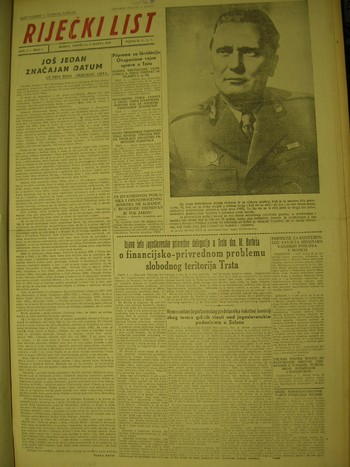
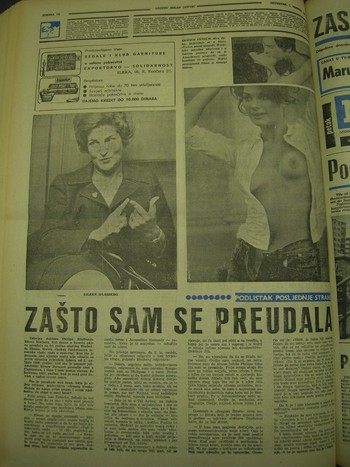
These developments inevitably had an impact on the Yugoslav press in terms of both its institutional arrangements and its form and content. Most newspapers adopted a new, smaller format, and introduced several new rubrics aimed primarily at attracting more readers. Novi list (formerly Riječki list) and Glas Istre introduced an equivalent of the “Page-Three Girl” on their back pages, and Primorski Dnevnik took every opportunity to include a photo of a half-naked popular singer or actress, making the visual layout of these newspapers strikingly different from that characteristic of the late 1940s (see figures 1 and 2). Advertising, virtually nonexistent in 1947, was now a regular feature, and included half-page ads for Coca-Cola, and several for various shops in the nearby Italian towns and cities.Footnote 98
Cover page of first issue of Riječki list, 1 Mar. 1947.

Back page of Novi list, 1 Apr. 1971.

In parallel with these shifts, the understanding of culture was changing as well. My investigation of this is limited to the coverage published in 1971, a point when many of the key trends just discussed in relation to the 1960s—particularly the growth of nationalism and prominence of entertainment in the media—reached one of their peaks. The framing of culture in this period was marked by both of these trends, and was, predictably, characterized by a far greater diversity of views on the social functions, form, and content of culture. While some of the ideas promoted in 1947 remained, they now coexisted alongside other, sometimes radically different views. The most prominent new elements of the framing of culture included: (a) culture as an instrument of national integration and preservation; (b) a greater emphasis on the quality rather than content of artistic form; and (c) attempts to find a “third way” between education and entertainment, commercialization and elitism.
Culture as an Instrument of National Integration and Preservation
Although culture was still considered to have an important social and political role, that role was no longer linked primarily to the needs of the working classes, but rather, above all, to the interests of the individual Yugoslav nations. Culture was seen as an organic entity tied to the national body, destined to serve as an instrument of both national integration and national preservation. Reviews of cultural events were frequently suffused with organicist metaphors known from nineteenth-century national romanticism. Thus an article published in the Croatian language daily Novi list described Croatian poetry as “an organic, indivisible whole,” encompassing “everything that was ever written in Croatian language from the first known beginnings of poetry to today.”Footnote 99 Another article insisted that local radio stations should broadcast traditional music from various Croatian regions, and argued that this would lead “to an even tighter integration into a unified entity.”Footnote 100 Reports and commentaries found in Slovenian-language newspapers were no different in this respect. One, written by a commentator specializing in music, portrayed a well-known Slovenian choir that was to perform as “the voice of the nation and its pride,” and its singing as “growing from the nation and for the nation.”Footnote 101 An article by a prominent Slovenian art historian argued that art is “the deepest companion of the life of every nation, and therefore carries in it the image of this nation.”Footnote 102
While in the early post-war years nationalist framings of culture remained intertwined with ideas of pan-Yugoslav patriotism and notions of international class struggle, now compatibility with these ideas was of marginal importance; what mattered more was the contribution art and culture could make to national survival and integration. The emphasis on national survival and integration, along with the ubiquitous presence of organic metaphors—“growth,” “organic, indivisible whole”—also signaled a subtle semantic shift in the notion of culture itself, and the associated understanding of its social and political role, which now centered on preservation rather than change.
The exception was the way culture was framed in the Italian minority newspaper. La Voce was not only devoid of openly nationalist descriptions of Italian culture, but even included articles that were highly critical of the rise of nationalist sentiments. Such was the case with an article by Andrea Benussi, then president of the Union of Italians and known for his unequivocal support for the Yugoslav socialist cause.Footnote 103 He condemned nationalist tendencies and called for a “purification” of party ranks to restore unity.Footnote 104 When defending the cultural rights of the minority, La Voce was careful to frame its demands in accordance with the discourse of Yugoslav “brotherhood and unity” and the rhetoric of revolutionary internationalism, much as all of the region's newspapers had in 1947. For instance, one characteristic article warned that the rise of Croatian nationalism in the region ran the risk of wasting “the rich patrimony of the class struggle among the proletarians of Istria.”Footnote 105
Such attitudes on the part of La Voce can be explained in part as a defensive reaction to the rise of Slovenian and especially Croatian nationalism in the region. However, they also bear the imprint of a well-established, post-1945 identity narrative that emphasized the contribution of Italians to the partisan struggle and their commitment to multiethnic coexistence. This narrative was constructed in response to the post-war perception of the Italian minority as a potentially threatening “fifth column,” and it served to promote an image of Italians as loyal citizens of socialist Yugoslavia.Footnote 106 While public expressions of Slovenian and Croatian nationalism were on the rise, La Voce chose to rely on its time-tested and proven legitimating narrative, and continue to emphasize its loyalty to socialism. Much as in 1947, discourses about culture served to delineate between the South Slavs and the Italian minority in the region, yet the logic was now strangely reversed: the Italian minority, considered a potential traitor in 1947, emerged as the stronghold of socialist Yugoslav values.
In summary, the notion of culture as a means of national preservation still served similar discursive ends as had the understanding of culture as a tool of progress in 1947: it was used to define “our” culture from within, and to distinguish between what was good and bad. Yet, in contrast to 1947, “our” culture was now most often limited to individual national cultures—Slovenian, Croatian, Italian—rather than explicitly equated with Yugoslav culture at large, let alone with working class culture. Furthermore, the idea of culture as a means of national preservation was rarely used to explicitly position “our” culture in geopolitical and historical terms, as had been the case before. References to the Fascist past and the partisan struggle, and even to the post-war “Stalinist” period, were few and far between. Instead of emphasizing the revolutionary break and progress, reporting about culture was now more concerned with cultural preservation. Arguably, such discursive framing of culture had the exact opposite effect of the 1947 framing: if the 1947 emphasis on the revolutionary break and progress had the effect of obscuring historical continuities, the 1971 emphasis on preservation masked important changes, in particular the growth of nationalist sentiments and the decline of Yugoslav unity. To put it differently, journalistic discourse was constitutive of the rise of nationalist antagonisms, yet presented national differences as already an attribute of reality. It thereby obscured its own role in shaping that reality.
Form over Substance?
Another feature of the framing of culture apparent in 1971 was the emphasis on artistic skills and the technical execution of cultural events. Although one still read articles critical of “modern” and abstract art, and others calling for more socially engaged art, a substantial proportion of cultural reviews were now attentive to issues such as the quality of vocal delivery or the pictorial qualities of a work of art, without necessarily linking these to questions of ideological substance or mobilizational potential. For instance, a review of a local art exhibition, written by the Trieste-born avant-garde artist Milko BambičFootnote 107 focused on the choice of techniques and the emotional and aesthetic effects the paintings had on the audience.Footnote 108 Even in articles that discussed the institutional organization of cultural activities and the various reforms needed in the sector, attention was paid primarily to questions of efficiency and allocation of resources, with little mention of specific ideological issues.Footnote 109 Also notable was an increase in the proportion of articles that focused primarily on reporting rather than critique and evaluation.
Occasionally writers questioned the whole idea of culture as an inherently political activity, an idea that had permeated much of the reporting in the late 1940s. This argument was prominent in a lengthy commentary that the Croatian writer and literary critic Igor Mandić published in response to the blacklisting of a popular Croatian singer, Vice Vukov, on Radio Sarajevo, presumably because the audience found Vukov's songs too nationalistic. Mandić, known for his provocative writings, argued that popular singers should not be judged by their political views. Rather, audiences should focus exclusively on their qualities as performers: “Singers of popular music should be kept where they belong, that is, behind a microphone and in front of an orchestra, and not on a political stage.” In a curious twist of argument, the idea of popular culture as apolitical was used to defend a singer whose work had unambiguous political repercussions.
The normative expectations concerning form and content outlined here rarely served to explicitly position “our” culture in geopolitical and historical terms, and were instead, just like the notion of culture as an instrument of national survival, used primarily to delineate the internal hierarchies of “our” culture. It is also important to note that the multitude of normative views about the relative importance of form and content in judging culture was evidently grounded in fundamental disagreements, which was yet another way in which the 1971 journalistic discourse about culture was very different from that in 1947. Later that year this ambiguity was at least temporarily reduced via political purges. Among other things, Vice Vukov was branded a Croatian nationalist and remained abroad for several years in fear of persecution, while Mandić was barred from publishing for a decade. These developments suggest that the attempt to divorce culture from politics had its limits—it was acceptable only so long as the culture in question did not directly challenge the legitimacy of Yugoslav “brotherhood and unity.”
Between Entertainment and Education, “Trash Culture” and Elitism
The disdain for popular culture and the emphasis on culture as a means of ideological elevation were far less prominent in 1971 than in 1947. Instead, reporters were now accepting the existence of differences between elite and popular cultural tastes as a given, and they rarely linked culture specifically to workers. The range of cultural forms discussed and incorporated into newspapers itself attests to this change in attitudes. Serialized novels written in the tradition of socialist realism were nowhere to be found, having been replaced mostly by detective stories and sentimental novels.Footnote 110 A festival of jazz organized in Ljubljana received lengthy coverage and was described as a cultural event with “a rich program” and “an established reputation.”Footnote 111 News about American, and also Italian, French, and English films and music were appearing on a regular basis, often accompanied by glamorous photos of famous actors and singers, and they often received sympathetic coverage.Footnote 112 Newspapers were full of admiration for popular songs, concerts, and festivals, including foreign spectacles such as the Sanremo Music Festival, which would once have been dismissed as worthless and excessively idealistic.Footnote 113 A domestic popular music industry had taken root as well, and reports spoke to the great popularity both at home and abroad of Yugoslav groups and singers, such as the Croatian singer Ivo Robič.Footnote 114 To be sure, none of this could be considered new in 1971; the proliferation of popular entertainment was already a notable trend in the 1950s and had provoked concern among members of the LCY and the SAWP ever since. But this trend became far more pronounced in the 1960s and early 1970s.
Not everyone was equally enthusiastic about the proliferation of entertainment culture in Yugoslavia. The tabloid-style coverage of (mostly Western) popular culture conveyed a rather mixed message: articles about celebrities were frequently interspersed with stories about their unhappy private lives, hints of links with criminal or immoral activity, or plain weirdness. Most importantly, Western pop icons were all presented as unmistakably foreign, as attention-grabbing and entertaining pieces in the mosaic of the “colorful world” that was not really Yugoslavia's world.Footnote 115 As an object of desire, Western popular culture remained simultaneously fascinating and threatening, and therefore something best kept at arm's length, something to marvel at and enjoy, but never accept as one's own. Note also that the symbolic map of the world charted by the newspaper coverage of popular culture in northwestern Yugoslavia was oriented almost exclusively to the West, while the rest of the world remained virtually invisible. Although imperfect and in some ways threatening, the West represented the main object of interest.
The higher-brow segments of press coverage of culture sent a less ambiguous message about the perils associated with Western popular imports, and popular culture in general. The dangers of “commercialization” and “consumerism” were periodically debated among members of the LCY and the various SAWP organs in Croatia,Footnote 116 and were also among the key issues discussed at a 1971 conference of the Association of Cultural-Educational Organizations of Slovenia.Footnote 117 “Trash culture” (šund)—a derogative term that encompassed everything from detective and sentimental novels to popular music and comics—was often singled out as the target. In the aforementioned article announcing a Slovenian choir's concert, the commentator praised the group for expressing an awareness of “one's self [and] of human ties,” and contrasted it with the “consumerist nonsense” of šund.Footnote 118 As this comment indicates, negative attitudes toward popular culture were not necessarily based on the idea that such culture was ideologically hostile to the socialist system, but rather on the conviction that it was somehow devoid of meaning, and thus of too low a quality.Footnote 119 This was in tune with views held by some leading LCY members; as Josip Broz Tito explained in a speech he delivered in the early 1960s, šund was not to be considered an expression of Western culture, but as something the West itself looked down upon.Footnote 120
Many commentators, though they criticized popular culture, were nonetheless eager to distance their criticisms from what they saw as unacceptable elitism. Some representatives of Slovenian cultural organizations, while discussing the threats of consumerism, were at the same time warning of the danger of “deviating into an elitist understanding of culture.” In a socialist society, they claimed, there is simply no place for elite culture.Footnote 121 In other words, popular culture was seen simultaneously as a threat and a blessing: a threat to established cultural canons but at the same time a welcome shield against the dangers of elitism. As an article about fashion explained, the rise of mass-produced, cheap clothing had the capacity to make designer items more easily available to the average consumer, yet it could also lead to uniformity and stimulate consumption of items that people did not really need. Instead of siding with either designer fashion or mass-produced clothing, the article left the choice to the consumer, who it said should be capable of avoiding both extremes and finding an individual path between them.Footnote 122 Similar “balancing acts” were found in articles about other forms of culture. As the director of a regional chain of cinemas explained in an interview, the key to the rising number of cinemagoers lay in finding a middle way between the demands of the “intellectuals” and the cultural preferences of the majority, “to which film represents entertainment, relaxation.”Footnote 123 The director also emphasized the cinema's attempt to educate the less demanding moviegoers by occasionally introducing “more challenging films,” with the aim of “consciously educating those viewers who do not want to think too much while watching.” In this way, the cinema chain was, he thought, able to respond to the demands of both the market and film art.
One factor that worked against the wholesale rejection of mass produced artifacts, consumer culture, and Western formats was that Yugoslav leaders had learned to exploit their popularity to their own advantage, and used them to both boost their standing abroad and attract popular support at home. The media treatment of Tito's encounters with Hollywood actors and films is particularly telling in this respect. When visiting the United States in 1971, the Yugoslav leader attended a formal welcome organized by the Los Angeles mayor, whose guest list included several Hollywood stars. Novi list found this event important enough to mention it on its cover page, and introduced it with a telling title: “Hollywood Stars Express Admiration for Tito.” The report's main emphasis was on actors' responses to Tito's presence, and the reporter mentioned, “Several famous celebrities were glad Tito visited the U.S.A,” and “did not hide their admiration for Tito's personality.”Footnote 124 That same year Richard Burton agreed to play the role of Tito in a dramatization of the Battle of Sutjeska, one of the key World War II confrontations between the Axis powers and the Yugoslav partisans. While the film was being shot, the actor and his wife Elizabeth Taylor were constantly followed by the Yugoslav paparazzi, who were particularly keen to obtain any evidence of Burton's admiration for Tito and Yugoslavia. One characteristic report of this kind included Burton's comments about Yugoslavia's “fantastic landscape,” and Tito's heroism, and it mentioned Taylor's alleged interest in acting in a film about Yugoslavia.Footnote 125 It was evident that the Hollywood stars were not the only objects of fascination in this context; rather, they served to boost popular support for Tito and Yugoslavia. If even Hollywood actors admired Tito, why should anyone in Yugoslavia have doubts about his leadership?
Another factor contributing to acceptance of popular culture in the Yugoslav northwest was the booming tourism industry. In the 1960s alone, the number of foreign visitors to Yugoslavia increased from one to almost five million per year.Footnote 126 Revenues from tourism along the Adriatic coast were mushrooming, and the local population was keen to invest in further improvements of tourist facilities and the organization of a wider range of cultural events targeted at foreign visitors. The local press provides ample evidence of how important popular culture was in boosting the leisure industry, and during the summer months one key criteria used to assess the quality of cultural events was their attractiveness to Western tourists. Reporters often commended organizers for staging a particularly well-attended concert, or criticized them for failing to offer an attractive enough choice of cultural events during the tourist season.Footnote 127 This can be seen as a local version of the widespread tendency to use popular culture to promote Yugoslavia internationally and present it as an exceptionally “liberal” and “progressive” socialist country.Footnote 128
On the whole, the discourses about culture in 1971 were marked by a diversity of normative principles, and some of them—most notably the emphasis on culture as a means of national preservation, and the perception of art as apolitical—crossed the limits of what the LCY deemed acceptable. In contrast to 1947, the discursive uses of these normative ideals were to a large extent aimed at establishing hierarchical distinctions within “our culture” rather than at positioning “our” culture in historical and geopolitical terms. The only exception to this was the coverage of popular culture, yet even here the geopolitical sense of the Yugoslav self did not emerge through explicit positioning of Yugoslav culture with respect to “the East” and “the West.” Rather it was created more indirectly and implicitly, for instance by constructing Western entertainment as attractive yet somehow alien and threatening, by reporting on Western expressions of admiration for Yugoslavia, by emphasizing the importance of “impressing” foreign visitors, and by saying virtually nothing about cultural developments elsewhere in the world. Such vague and indirect positioning of the “here” and “there,” “us” and “them,” had its counterpart in the tendency to associate “our” culture primarily with individual national cultures rather than the Yugoslav culture at large.
Put differently, if the coverage in 1947 was clearly marked by the Cold War confrontation and oriented towards marking the distinctiveness of Yugoslav culture vis-à-vis its geopolitical and historical Others, the coverage in 1971 was oriented primarily to internal struggles and hierarchies. At the same time, the way in which these internal struggles were framed and categorized—exemplified in the use of organicist metaphors and the emphasis on national preservation rather than change—served to present them as natural and rooted in history, thereby obscuring that they were a recent product of changing cultural practices and policies, and of the journalistic discourse itself. Unlike the progress-centered discourse of 1947, which neglected continuities with the past, the discourse of 1971 had the exact opposite effect, namely of obscuring change by presenting it as part of nature and history. It is precisely in this discursive context that the Cold War binaries of East and West would reenter the language of the Yugoslav mass media in the late 1980s and the early 1990s, when they would be used to unravel Yugoslav culture from within by distinguishing between the culturally “Western” republics of Slovenia and Croatia, and the culturally “Eastern” or “Balkan” rest of the country.Footnote 129 At that point, the whole of the Yugoslav past emerged as a harmful deviation from the prescribed course of modernization, and as an unnatural, forced marriage of East and West.
Conclusions
The conclusions drawn in this paper have important implications for our understanding of the Cold War, especially for any research that aims to unpack the roles of discourse, language, ideology, and culture in this historical period. First, our analysis suggests that the categories and distinctions used in narrating the cultural history of the Cold War—East and West, class and nation, socialism and capitalism, elite and mass culture, and so on—should be approached with caution. Any application of these categories that takes no account of their shifting meanings and practical uses risks missing the gap that separated subjective representations from the political, economic, and social structures they were embedded in and helped to sustain. As I have shown, the particular discursive uses of Cold War categories and distinctions obscured their own role in creating—rather than merely describing—the realities of Yugoslav culture, and they should therefore be subjected to critical scrutiny rather than taken at face value. Such critical investigation of discourse is particularly important when dealing with categories and normative distinctions that continue to circulate in journalistic and scholarly discourse today, and have in the meantime accrued new meanings and become embedded in different social structures. If used unreflexively, such categories and distinctions can easily lead us to confuse the hopes and regrets of today with the realities and concerns of the past.
At the same time, we should resist the temptation of dismissing Cold War discourse as a mere myth that has nothing to do with the everyday realities and concerns of the time, and is hence unworthy of analysis. This would not only miss the constitutive role of discourse in shaping and sustaining Cold War realities, but would also invite a misleading description of the period, organized around contrasts between myth and reality, official ideology and private narratives, oppression and resistance. Such a description would do little to explain why individual social actors were willing to overlook the mismatch between Cold War discourse and the realities they lived in, and even to appropriate elements of this discourse as fully adequate descriptions of their lifeworlds. In addition, a simplistic contrast between myth and reality runs the risk of ascribing too much weight to discourses that diverged from officially endorsed narratives and categories, or even treating them as somehow more “real” than official ones. Such an understanding comes uncomfortably close to currently popular accounts of the Cold War, and risks becoming entangled in contemporary political struggles and divided memories of the period.