Introduction
Most broiler meat and poultry products come from genetically improved birds, selected for better feed efficiency and to reach market weight faster (Tallentire et al., Reference TALLENTIRE, LEINONEN and KYRIAZAKIS2016). Usually, these fast-growing birds are raised in intensive indoor systems (Averós and Estevez, Reference AVERÓS and ESTEVEZ2018) equipped with controlled environmental conditions, such as photoperiod, light intensity, temperature and relative humidity (Cavani et al., Reference CAVANI, PETRACCI, TROCINO and XICCATO2009). It is well-established that fast-growing broiler chickens can be vulnerable to sudden death syndrome, stress, leg and cardiovascular disorders (Averós and Estevez, Reference AVERÓS and ESTEVEZ2018; Kumari et al., Reference KUMARI, TRIPATHI, BORO, SULABH, KUMAR and NIMMANAPALLI2016). Consequently, in order to improve the animals’ welfare, customers are becoming more aware of the necessity of providing better conditions when rearing poultry (Dawkins et al., Reference DAWKINS, DONNELLY and JONES2004). Consumers are increasingly interested in the quality and the rearing environment of the animals providing the products they consume, taking into account their appearance, texture, nutritional value, sensory attributes. Therefore, the use of alternative housing systems has become more important to meet consumers requirements for slow-growing birds reared with outdoor access, which is perceived as a more natural rearing system (Cavani et al., Reference CAVANI, PETRACCI, TROCINO and XICCATO2009).
Alternative housing systems
In recent years, poultry production systems with outdoor access (e.g. free range or organic systems) have gained consumer popularity not only for animal welfare, but also for perceived improvements in meat quality and bone quality of the animals (Fanatico, Reference FANATICO2006).
free-range system
In the poultry industry, ‘free-range’ refers to any production system that allows the animals to freely access an outdoor area with or without shelter during daytime for at least half of their lifetime to express their natural behaviours. While the European Union (EU) defines feed composition, stocking density, minimum slaughter age, and genotype to be used in free-range, these specifications vary in the USA (CAST, 2018) in terms of portable houses, pasture pens and integrated systems (Fanatico, Reference FANATICO2006). Besides free-range labelling, marketing statements like ‘sustainably farmed’, ‘raised without antibiotics’, ‘minimally processed’, or ‘produced in harmony with the land’ are used to specify how the animals were raised and processed (Husdak, Reference HUSDAK2007).
organic systems
‘Organic poultry’ denotes a production system in which animals are fed certain types of feed and raised without antibiotic growth-promoters, given outdoor access to vegetation for natural behavioural expression and processed to specified standards (Baier, Reference BAIER2015). Organic regulations vary by continent and from country to country. However, due to the constraints in management, the price at the marketplace of the products is subject to increase (Cobanoglu et al., Reference COBANOGLU, KUCUKYILMAZ, CINAR, BOZKURT, CATLI and BINTAS2014).
Slow-growing chicken
definition, names and characteristics of genotypes
A slow-growing genotype may be defined as a bird with daily weight gain of around 40 g, attaining 2.2-2.5 kg in 56-81 days (Hiemstra and Napel, Reference HIEMSTRA and NAPEL2013) and may reach live harvest weight of 2.9 kg in 12 weeks (Conner, Reference CONNER2010). Similarly, McCrea et al. (Reference MCCREA, MILLS, MATTHEWS and HUTSON2014) defined the heritage chicken breeds (i.e. those derived from more traditional lines) as one that has a slow growth rate and can spend most of its lifetime outdoors.
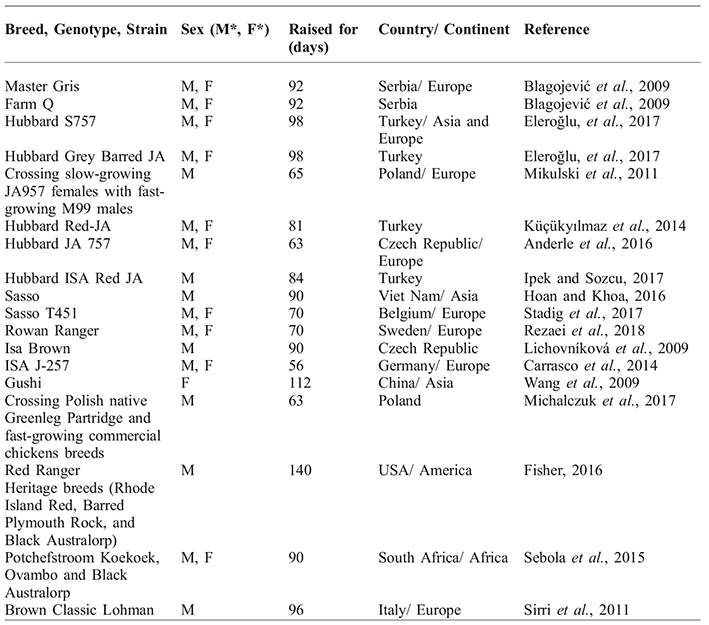
Around the world, particularly in Europe, there are several slow-growing chicken breeds available. One of the most common breeds is the Sasso, which are coloured, slow-growing chickens that are suitable for alternative and outdoor production systems (Hoan and Khoa, Reference HOAN and KHOA2016). As for heritage breeds, the Rhode Island Red and Barred Plymouth Rock (Fisher, Reference FISHER2016) are well-known. Table 1 shows the length and the location of production, as well as the name and the sex of a few breeds that have been used for research purposes, and indicates that the rearing period may range from 56 to 140 days. In some studies, both males and females were used. The choice of breed, sex and how long the birds should be reared depends on the farming system and the purpose of production.
Slow-growing breeds around the world.

* Male (M), *Female (F)
USA: United States of America
Slow-growing or heritage chicken breeds are often characterised by being more active (Fanatico et al., Reference FANATICO, PILLAI, CAVITT, OWENS and EMMERT2005), robust with excellent liveability (Hiemstra and Napel, Reference HIEMSTRA and NAPEL2013; Fanatico et al., Reference FANATICO, OWENS and EMMERT2009), having coloured feathers and lower appetite than their fast-growing counterparts. They enjoy outdoor time (Castellini et al., Reference CASTELLINI, MUGNAI, MOSCATI, MATTIOLI, AMATO, MANCINELLI and DAL BOSCO2016; Hoan and Khoa, Reference HOAN and KHOA2016) and are capable of surviving adverse circumstances like health issues, high altitude, harsh environmental conditions (cold winters, hot summers or prolonged drought) and lower feed quality. (Hiemstra and Napel, Reference HIEMSTRA and NAPEL2013; Lu et al., Reference LU, WEN and ZHANG2007). Nevertheless, they have poor productive performance, seen as high feed conversion ratio (Rezaei et al., Reference REZAEI, YNGVESSON, GUNNARSSON, JÖNSSON and WALLENBECK2018), which increases the cost of production. Undisputedly, the high cost of production is a considerable disadvantage, since it directly affects both producers and consumers. In poultry nutrition, one of the ways to counteract this may be the reduction of feed wastage by using appropriate dispensers, feed form and particle size (Neves et al., Reference NEVES, BANHAZI and NÄÄS2014; Ravindran, Reference RAVINDRAN2012). Balancing the nutritional requirements and growth rate might be a useful mean to assist the animal in reaching its optimal productive capacity, while avoiding a nutrient surplus (Sandilands and Hocking, Reference SANDILANDS and HOCKING2012). Rearing birds with access to an outdoor area covered with vegetation might help to reduce feed intake cost as forage consumption can amount to a significant quantity of chicken's diet intake (Ndelekwute et al., Reference NDELEKWUTE, ENYENIHI and AKPAN2018; Sossidou et al., Reference SOSSIDOU, DAL BOSCO, CASTELLINI and GRASHORN2015; Buchanan et al., Reference BUCHANAN, HOTT, KIMBLER and MORITZ2007; Mattocks, Reference MATTOCKS2002). Regarding genetic traits, there are breeding companies that are constantly working to improve them. For instance, Sasso has developed slow-growing male chicken's strains such as the C44 and the C44I that are able to reach market weight in about 56 days (Sasso, 2019). Besides, Aviagen offers two specialty male lines, the ‘Yield Plus Male’ and ‘Efficiency Pro Male’, that are designed to excel in feed efficiency and meat yield in different environmental conditions (Aviagen, 2019).
Life stages of slow-growing chickens
Although a slow-growing chicken requires more time to reach market weight, its life stages may still be classified as starter, grower and finisher. This classification depends on a number of factors like geographical position, environmental conditions, production system, farmer's goals, marketing channels, available infrastructural and nutritional resources. Nutritional requirements vary by genetic, sex, age, weight and environmental conditions (Morinière, Reference MORINIÈRE2015).
starter period
The first 28 days of the bird's life may be considered as the starting period (Cobanoglu et al., Reference COBANOGLU, KUCUKYILMAZ, CINAR, BOZKURT, CATLI and BINTAS2014). Although the effects of the starter diet on subsequent stages is less important (Quentin et al., Reference QUENTIN, BOUVAREL and PICARD2005), the need for protein increases to facilitate the development of the animal's immune and digestive systems, as well as vital organs like kidneys, heart and liver. Mabelebele et al. (Reference MABELEBELE, NORRIS, BROWN, GININDZA and NGAMBI2017a) stated that it takes longer for the gastrointestinal tract to develop and mature in slow-growing breeds; consequently, body weight gain could be affected by low digestion and poor absorption of nutrients. In addition, this phase coincides with feather growth. By the end of this phase, birds are able to regulate their temperature and initiate foraging behaviour. It is mandatory to maintain environmental, sanitary and nutritional factors. Adequate amount of methionine, cysteine and threonine in diet while avoiding excess of protein is key at this stage (Machado et al., Reference MACHADO, DE LIMA, BRASIL, QUARESMA, DILELIS, DA SILVA and CURVELLO2018; Morinière, Reference MORINIÈRE2015).
grower period
According to Saldanha et al. (2006), this period may extend from the 29th to the 63rd day of the bird's life. Particle size is a factor that affects broiler's digestive system development, whereby larger particles stimulate better digestion and absorption of nutrients (Yegani and Korver, Reference YEGANI and KORVER2008) and promote secretion of digestive enzymes (Engberg et al., Reference ENGBERG, HEDEMANN and JENSEN2002). In the grower period, the bird´s foraging behaviour is rapidly developing. Compared to the previous phase, protein requirement decreases during this stage (Morinière, Reference MORINIÈRE2015).
finisher period
The final phase of a slow-growing chicken is commonly from day 64 to slaughter. The beginning of this phase is characterised by increased feed intake and body weight. Birds can digest more fibre via their developed microflora, and foraging behaviour is at its peak. Since growth rate tends to decline by the end of this stage, diets are usually lower in protein compared to the two preceding periods (Morinière, Reference MORINIÈRE2015).
Adaptation of slow-growing chickens to production systems with outdoor access
The market for slow-growing broilers has increased in the last decades, particularly in Europe with the Label Rouge production system. In fact, slow-growing breeds represent up to 25-30%, 15% and 7% of broiler production in The Netherlands, France, and United Kingdom, respectively (Fisher, Reference FISHER2017). With an increase in demand, growers need to supply more products. Therefore, producers need information about the productive performance of specific breeds that can be adapted to the outdoor production system of their choice.
It has been pointed out that slow-growing breeds have been developed for use in systems with outdoor access (Fanatico et al., Reference FANATICO, PILLAI, CAVITT, OWENS and EMMERT2005). These animals tend to forage early in the morning and at sunset (Dawkins et al., Reference DAWKINS, COOK, WHITTINGHAM, MANSELL and HARPER2003). Thus, the adaptability of slow, medium and fast-growing broilers to the outdoor system has been studied. Castellini et al. (Reference CASTELLINI, MUGNAI, MOSCATI, MATTIOLI, AMATO, MANCINELLI and DAL BOSCO2016) found that slow-growing birds had an adaptability index of 0.53 compared to 0.05 for medium-growing and -1.77 for fast-growing broilers. Likewise, slow-growing broilers spent about 60% of their time outdoors, while fast-growing birds spent only 19% of their time outdoors. They concluded that the slow-growing birds fit better with outdoor systems, which may be related to the bird's immune response capacity. Slow-growing birds have a stronger immunological system where the combination of a long-term humoral response with a robust cellular response has shown a positive effect on life expectancy (Rauw, Reference RAUW2012).
Slow-growing male chickens
There are three types of slow-growing male chickens. The first corresponds to the male chickens born in hatcheries from ‘egg-type’ or ‘layer-type’ parent stock. These are usually culled by euthanasia, asphyxia or maceration at one-day-old (Bertechini et al., Reference BERTECHINI, MAZZUCO, RODRIGUES and RAMOS2014) because their fattening is considered not economically viable (Siekmann et al., Reference SIEKMANN, MEIER-DINKEL, JANISCH, ALTMANN, KALTWASSER, SÜRIE and KRISCHEK2018) due to their slow growth rate, poor feed conversion and low meat production (Horsted et al., Reference HORSTED, ALLESEN-HOLM and HERMANSEN2010). However, these practices have raised ethical and social concerns (Bruijnis et al., Reference BRUIJNIS, BLOK, STASSEN and GREMMEN2015). Consequently, these authors proposed to prevent layer-type male chickens from being born or rear them to produce meat. The second category is designated ‘dual-purpose chickens’, with cockerels being raised for meat, and hens for egg production (Brümmer et al., Reference BRÜMMER, CHRISTOPH-SCHULZ and ROVERS2018). The third group refers to meat-type broiler genotypes where both males and females are used for meat purpose (Louton et al., Reference LOUTON, KEPPLER, ERHARD, TUIJL, BACHMEIER, DAMME, REESE and RAUCH2019; Eleroğlu et al., Reference ELEROĞLU, YILDIRIM, DUMAN and ŞEKEROĞLU2015).
Carcass quality of slow-growing male chickens raised with outdoor access
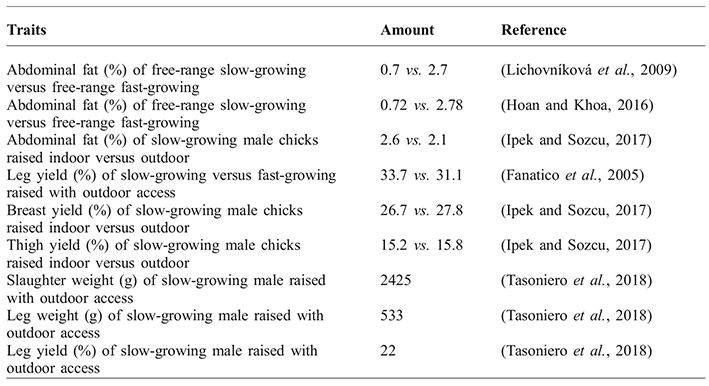
Poultry carcass quality can be evaluated through several traits like abdominal fat, carcass, breast, wing, thigh and drumstick yield. These traits are influenced by genetic, environmental and nutritional factors, including energy and protein ratio, production system, sex and age. Table 2 shows carcass quality characteristics of slow-growing male chickens when raised with or without outdoor access.
abdominal fat
Several authors have reported at least a 20% less abdominal fat in slow-growing male chickens that had access to outdoors, which was attributed to more activity such as walking, standing, spot pecking and sand bathing (Ipek and Sozcu, Reference IPEK and SOZCU2017; Hoan and Khoa, Reference HOAN and KHOA2016; Lichovníková et al., Reference LICHOVNÍKOVÁ, JANDÁSEK, JŮZL and DRAČKOVÁ2009). It is well-documented that ambient temperature has a significant effect on broiler chicken fat deposition. Indeed, Lu et al. (Reference LU, WEN and ZHANG2007), when assessing the effect of chronic heat stress (21-34°C) between fast-growing and slow-growing male chickens, reported lower abdominal fat in the latter. French and Hunton (Reference FRENCH and HUNTON1979) pointed out that females accumulated 0.3 to 0.5% more abdominal fat than males, and high energy protein ratio in the diet favoured carcass fat deposition. However, abdominal fat deposition increases with age (Deaton and Lott, Reference DEATON and LOTT1985).
breast, thigh and leg yield
Ipek and Sozcu (Reference IPEK and SOZCU2017) reported significantly higher breast and thigh yields, that represented at least 3% more muscle in slow-growing male broilers raised with outdoor access than conventionally-farmed birds. Fanatico et al. (Reference FANATICO, PILLAI, CAVITT, OWENS and EMMERT2005) reported higher leg quarter yields in outdoor-reared, slow-growing birds in comparison to their fast-growing counterparts, and higher live weight for slow-growing males. More recently, Tasoniero et al. (Reference TASONIERO, CULLERE, BALDAN and ZOTTE2018) recorded high slaughter weight, leg weight and leg yield in slow-growing chicken breeds grown under organic certification standards. Recent investigations showed that carcass quality of slow-growing birds was influenced by production system, with outdoor access systems being more profitable for farmers.
Carcass quality of slow-growing male chickens raised in alternative production systems.

Meat quality of slow-growing male chicken raised with outdoor access
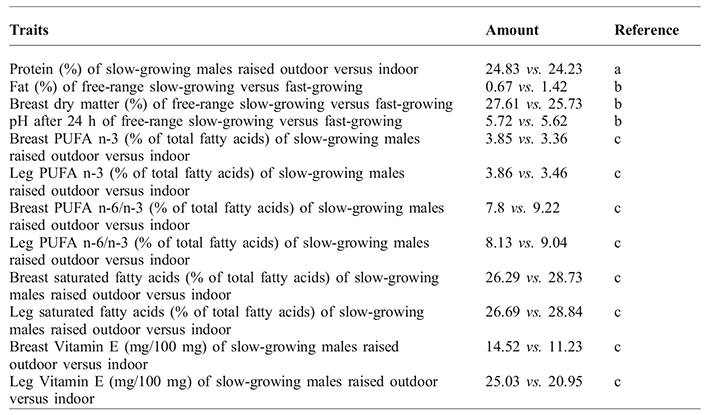
Meat acceptability for consumers is influenced by different traits that are being used to evaluate quality (Qiao et al., Reference QIAO, FLETCHER, NORTHCUTT and SMITH2002). These include moisture, lipid content, energy and protein content, taste and flavour, juiciness, aroma, tenderness, colour, shear force, cooking yield, drip loss, water-holding capacity, fatty acid profile, vitamin E content and TBARS values. Table 3 presents some characteristics of the meat of slow-growing male chickens raised with or without outdoor access.
Poultry meat attributes are directly related to the quality of the food that birds are fed and their living conditions. Since birds farmed with outdoor access tend to exercise more, express more natural behaviour and might be perceived as healthier than those intensively-grown, consumers consider that pasture-raised chickens may have better meat quality due to less stress related factors (Bartlett et al., Reference BARTLETT, LILES and BECKFORD2015).
Meat pH is an important indicator of quality, since it is negatively influenced by the combination of high muscle temperature and fast pH decline (Kim et al., Reference KIM, WARNER and ROSENVOLD2014). Factors such as muscle type, breed, age, sex, fasting, feeding, chilling and electrical stimulation (during stunning) may impact on pH. In particular, bird's ante and post mortem handlings are of crucial importance to assure that muscle pH remains at an optimum level (around pH 5.7). Similarly, heat stress and pre-slaughter struggling may lead to rapid pH fall (Rathgeber et al., Reference RATHGEBER, BOLES and SHAND1999). Choi et al. (Reference CHOI, CHOI, KIM, SONG and KIM2016) stated that pH decreases at a greater rate in white muscles than in red ones.
meat nutrient content
Meat nutrient content (as proximate analysis) is important as consumers want to be well-informed regarding the nutritional value of their food, and labelling is now a legal requirement via retailers. Desired meat qualities include adequate water holding capacity, as this influences juiciness, low fat, and high protein content to provide amino acids, especially essential ones. Production systems may affect the nutritional composition of poultry meat, with some data showing that birds raised with outdoor access having meat with higher nutritive value (Wójcik and Łukasiewicz, Reference WÓJCIK and ŁUKASIEWICZ2017). For example, breast muscles of slow-growing male chickens reared with outdoor access had higher protein (Mikulski et al., Reference MIKULSKI, CELEJ, JANKOWSKI, MAJEWSKA and MIKULSKA2011), lower fat but higher dry matter contents (Hoan and Khoa Reference HOAN and KHOA2016; Lichovníková et al., Reference LICHOVNÍKOVÁ, JANDÁSEK, JŮZL and DRAČKOVÁ2009) compared to their counterparts raised indoors. Significantly higher ash content was found in meat from slow-growing chickens grown in a free-range production system than in the indoor-farmed birds (Pambuwa and Tanganyika, Reference PAMBUWA and TANGANYIKA2017). These changes in meat from birds that have access to an outdoor area covered with vegetation might be due to extra exercise and the numerous additional nutrients from foraging (Dal Bosco et al., Reference DAL BOSCO, MUGNAI, MATTIOLI, ROSATI, RUGGERI, RANUCCI and CASTELLINI2016).
meat appearance, sensory attributes and overall acceptability
Colour is one of the most important aspects of meat quality that consumers take into account when buying raw meat, cooking and consuming the final product (Fletcher, Reference FLETCHER1999). Since chicken meat is involved in many further-processed, ready-to-cook and ready-to-eat products, like nuggets and breaded pieces, pale coloured meat is undesirable to processors (Garcia et al., Reference GARCIA, FREITAS DE, SCHWINGEL, FARIAS, CALDARA, GABRIEL, GRACIANO, KOMIYAMA and ALMEIDA2010). Several factors such as pH, sex, age, nutrition, production system, physical activity, type of muscles and fat content affect the colour of chicken meat (Michalczuk et al., Reference MICHALCZUK, ZDANOWSKA-SĄSIADEK, DAMAZIAK and NIEMIEC2017). At high pH, chicken meat tends to be darker (Allen et al., Reference ALLEN, RUSSELL and FLETCHER1997). The breast muscles of slow-growing layer-type male chickens reared with outdoor access had been reported to be darker due to higher pH after 24 hours post-mortem (Hoan and Khoa, Reference HOAN and KHOA2016; Lichovníková et al., Reference LICHOVNÍKOVÁ, JANDÁSEK, JŮZL and DRAČKOVÁ2009).
Immediately post-mortem, lean meat contains about 75% water (Offer et al., Reference OFFER, KNIGHT, JEACOCKE, ALMOND, COUSINS, ELSEY, PARSONS, SHARP, STARR and and PURSLOW1989). The amount of water that meat loses when applying pressure on the muscle is reported as water holding capacity (Garcia et al., Reference GARCIA, FREITAS DE, SCHWINGEL, FARIAS, CALDARA, GABRIEL, GRACIANO, KOMIYAMA and ALMEIDA2010). High water-holding capacity, as an expression of better meat quality, is largely influenced by muscle's pH decline rate (Kim et al., Reference KIM, WARNER and ROSENVOLD2014). Shear force is indicative of tenderness as high shear force values designate tougher meat or lower tenderness (Yang et al., Reference YANG, WEN, FANG, LI, DONG and LIU2015), which can be influenced by intramuscular fat, age, genetic strain, muscle growth, pH and water holding capacity (Saláková et al., Reference SALÁKOVÁ, STRAKOVÁ, VÁLKOVÁ, BUCHTOVÁ and STEINHAUSEROVÁ2009; Le Bihan-Duval, et al., 2008). Fanatico et al. (Reference FANATICO, OWENS and EMMERT2009) reported that slow-growing broilers produced more tender breast meat than fast-growing ones. This was attributed to the rate of post-mortem rigor in each genotype due to the difference in their body weight. Although Hoan and Khoa (Reference HOAN and KHOA2016) and Lichovníková et al. (Reference LICHOVNÍKOVÁ, JANDÁSEK, JŮZL and DRAČKOVÁ2009) did not measure tenderness and water-holding capacity directly in their work, they conducted a sensory essay and were able to conclude that the overall acceptability was significantly better in meat from free-range, slow-growing male chickens than in conventionally-reared ones.
meat fatty acids composition
From a human health point of view, polyunsaturated fatty acids (PUFA), particularly alpha-linolenic acid (ALA), eicosapentaenoic acid (EPA), and docosahexaenoic acid (DHA) are recommended in the diet for lowering serum triglyceride levels and preventing cardiovascular diseases (Alexander et al., Reference ALEXANDER, MILLER, VAN ELSWYK, KURATKO and BYLSMA2017). A dietary intake of fats with a high omega 6:3 ratio promotes inflammation, autoimmune diseases (Simopoulos, Reference SIMOPOULOS2002) and obesity (Simopoulos, Reference SIMOPOULOS2016). The omega 6:3 ratio is important because it directly affects desaturation and elongation process of fatty acids (Mugnai et al., Reference MUGNAI, SOSSIDOU, DAL BOSCO, RUGGERI, MATTIOLI and CASTELLINI2013). Therefore, due to deficiencies, the intake of products enriched with omega-3 fatty acids has attracted the attention of consumers in recent years. Although Simopoulos (Reference SIMOPOULOS2016) recommended an omega 6:3 ratio of 1-2: 1 in the diet, the daily intake of ALA and EPA + DHA should not be less than 2.22 g and 0.65 g, respectively (Simopoulos et al., 1999). Ponte et al. (Reference PONTE, ALVES, BESSA, FERREIRA, GAMA, BRÁS, FONTES and PRATES2008) pointed out that pasture is an excellent source of omega-3 fatty acids. In fact, Michalczuk et al. (Reference MICHALCZUK, ZDANOWSKA-SĄSIADEK, DAMAZIAK and NIEMIEC2017) achieved a higher PUFA level, a lower n6:n3 ratio and a lower saturated fatty acids (SFA) content in breast and leg muscles of slow-growing male chickens raised with outdoor access. Around 90% of the human requirement could be satisfied with 100 g of chicken thigh muscle enriched with omega-3 (Barroeta, Reference BARROETA2007); consequently, polyunsaturated fatty acids play an important role in meat quality. However, lipid oxidation tends to occur more quickly in PUFA than in saturated fat forms (Crespo and Esteve-Garcia, Reference CRESPO and ESTEVE-GARCIA2002), resulting in increased oxidation that generate rancid flavours and lead to the deterioration of meat during storage and processing (Cheng, Reference CHENG2016). Factors like drip-loss and antioxidant content might be used to evaluate meat quality over time.
chicken meat shelf life as influenced by drip-loss, tbars and vitamin e content
It is important to ensure the preservation of food quality during its shelf life. Low drip loss is a good indicative of better meat quality, as this is related to tenderness and reduces microbial growth. Yang et al. (2015) reported low drip loss and high muscle fibre diameter in slow-growing male chickens raised in a free-range production system. This could be due to the thickness of the meat fibre as thicker muscles tend to lose less water than thinner ones (Ismail and Joo, Reference ISMAIL and JOO2017).
Thiobarbituric acid reactive substances (TBARS) are used to measure lipid oxidative stability in cells, tissues, and body fluids (Landau et al., Reference LANDAU, KODALI, MALHOTRA and KAUFMAN2013). A low TBARS scale is indicator of better lipid oxidative stability and meat quality. Falowo et al. (Reference FALOWO, FAYEMI and MUCHENJE2014) stated that natural antioxidants can be used to reduce oxidation by inhibiting oxidation or reactions promoted by oxygen, peroxides or free radicals. Vitamin E is considered as one of the most efficient antioxidants to prevent lipid oxidation and counteract meat deterioration (Michalczuk et al., Reference MICHALCZUK, ZDANOWSKA-SĄSIADEK, DAMAZIAK and NIEMIEC2017). A high vitamin E content might contribute to increase meat quality and its shelf life. Outdoor access may allow birds to have a higher intake of antioxidants or bioactive compounds from pasture such as carotenoids (vitamin A), flavonoids, tocopherols (vitamin E), tocotrienols (Dal Bosco et al., Reference DAL BOSCO, MUGNAI, MATTIOLI, ROSATI, RUGGERI, RANUCCI and CASTELLINI2016) vitamin C, and polyphenols (Mugnai et al., Reference MUGNAI, SOSSIDOU, DAL BOSCO, RUGGERI, MATTIOLI and CASTELLINI2013), which may result in less oxidation of lipids and lower level of TBARS; then, prolonged meat shelf life (Tufarelli, et al., 2016). In agreement, Michalczuk et al. (Reference MICHALCZUK, ZDANOWSKA-SĄSIADEK, DAMAZIAK and NIEMIEC2017) reported a significantly higher level of vitamin E in breast and leg muscles of outdoor-raised slow-growing cockerels in comparison to their counterparts grown indoor.
Meat quality of slow-growing male chickens raised with or without outdoor access.

a: Mikulski et al. (Reference MIKULSKI, CELEJ, JANKOWSKI, MAJEWSKA and MIKULSKA2011); b: Hoan and Khoa (Reference HOAN and KHOA2016); c: Michalczuk et al. (Reference MICHALCZUK, ZDANOWSKA-SĄSIADEK, DAMAZIAK and NIEMIEC2017)
Bone quality of slow-growing male chicken raised with outdoor access
Bone health is of a great importance because it can have significant effects on productivity, mortality rate, welfare issues and carcass quality (Rath et al., Reference RATH, HUFF, HUFF and BALOG2000). Femur and tibia, the main long bones in chicken legs, carry the bird's body weight (Salaam et al., Reference SALAAM, AKINYEMI and OSAMEDE2016; González-Cerón et al., Reference GONZÁLEZ-CERÓN, REKAYA and AGGREY2015). Several parameters have been used to evaluate bone quality, such as bone mineral density, mineral content (Eleroğlu et al., Reference ELEROĞLU, YILDIRIM, DUMAN and ŞEKEROĞLU2017), Seedor index, robusticity index (Mabelebele et al., Reference MABELEBELE, NORRIS, SIWENDU, NG'AMBI, ALABI and MBAJIORGU2017b), bone weight, length and diameter (Han et al., Reference HAN, QU, WANG, CHEN, YAN, ZHANG, HU, YOU and CHENG2015).
Rath et al. (Reference RATH, HUFF, HUFF and BALOG2000) defined bone density as the amount of organic and mineral materials per volume of bone, and bone strength as the ability to resist stress and fracture. Poultry bone quality is influenced by a number of factors including the bird's diet and physical activities, production system, stress, sex, age and growth rate (Mutuş et al., Reference MUTUŞ, KOCABAǦLI, ALP, ACAR, EREN and GEZEN2006; Rath et al., Reference RATH, HUFF, HUFF and BALOG2000). Ash content is an important feature of bone quality as it indicates hardness and strength. Lewis et al. (Reference LEWIS, DANISMAN and GOUS2009) pointed out that bones are more resistant to fracture when they have a high ash content. Higher value of Seedor index is indicative of denser bone; however, the structure is stronger with low robusticity index (Mabelebele et al., Reference MABELEBELE, NORRIS, SIWENDU, NG'AMBI, ALABI and MBAJIORGU2017b). Fanatico et al. (Reference FANATICO, PILLAI, CAVITT, OWENS and EMMERT2005) reported greater tibia strength for slow-growing birds raised with outdoor access (4.3 kg/mm) than those grown without access to outdoors (3.5 kg/mm). In a recent study, Tasoniero et al. (Reference TASONIERO, CULLERE, BALDAN and ZOTTE2018) registered higher values for femur weight (16.5 g), length (96.7 mm) and diameter (8.61 mm) of slow-growing male chickens that had outdoor access. Eleroğlu et al. (Reference ELEROĞLU, YILDIRIM, DUMAN and ŞEKEROĞLU2017) obtained similar results for bone mineral content (5.88 g) and bone total mass (113.78 g) of slow-growing broilers that were organically-farmed. The positive effects of production systems with outdoor access on bone quality might be due to the lower stocking density and the amount of exercise that birds raised in alternative production systems benefit from (Fanatico et al., Reference FANATICO, PILLAI, CAVITT, OWENS and EMMERT2005).
Benefits from production systems with outdoor access
In both free-range and organic poultry production systems, animals have access to a land covered with vegetation where they can increase their nutrient intake, like protein, fibre, vitamins, minerals, antioxidants, particularly vitamin E through pasture, weeds, crop seeds, earthworms, insects, grit and pebble consumption (Tufarelli et al., Reference TUFARELLI, RAGNI and LAUDADIO2018; Skřivan et al., Reference SKŘIVAN, PICKINPAUGH, PAVLŮ, SKŘIVANOVÁ and ENGLMAIEROVÁ2015). In addition, they have more space to express their natural behaviour like dust bathing, moderate to extensive walking, exercising and foraging under sunlight, shade and fresh air, which may result in less stress, stronger muscles and leg bones and better well-being (Fanatico, Reference FANATICO2006). It can be considered that the birds have a better synergy with the environment and a stronger immune system as they are exposed to parasites and bacteria from the area of pasture (Castellini et al., Reference CASTELLINI, MUGNAI, MOSCATI, MATTIOLI, AMATO, MANCINELLI and DAL BOSCO2016). Furthermore, slow-growing chickens raised with outdoor access might have better gait scores and lower incidence of tibial dyschondroplasia or leg disorders (Fanatico et al., Reference FANATICO, PILLAI, HESTER, FALCONE, MENCH, OWENS and EMMERT2008), and lower mortality rate or higher flock survival rate possibly due to greater ‘vigour’ (Hoan and Khoa, Reference HOAN and KHOA2016; Mikulski et al., Reference MIKULSKI, CELEJ, JANKOWSKI, MAJEWSKA and MIKULSKA2011; Fanatico et al., Reference FANATICO, PILLAI, HESTER, FALCONE, MENCH, OWENS and EMMERT2008). Other benefits may include adaptation to poor living conditions (Castellini et al., Reference CASTELLINI, MUGNAI and DAL BOSCO2002) and dryer litter, which might result in less proliferation of pathogenic microorganisms and ammonia emissions (Chen and Jiang, Reference CHEN and JIANG2014). One of the most important advantages might be a lower cost of production due to a lower feed costs, as birds tend to tolerate low nutrient density diets (Fisher, Reference FISHER2016; Conner, Reference CONNER2010; Morris and Njuru, Reference MORRIS and NJURU1990) and get additional feed intake through pasture, which can contribute up to 20% of chickens’ dietary requirements (Sossidou et al., Reference SOSSIDOU, DAL BOSCO, CASTELLINI and GRASHORN2015; Buchanan et al., Reference BUCHANAN, HOTT, KIMBLER and MORITZ2007; Mattocks, Reference MATTOCKS2002). Since organic and free-range birds are sold at a higher price than conventionally-raised birds (Baier, Reference BAIER2015; Cobanoglu et al., Reference COBANOGLU, KUCUKYILMAZ, CINAR, BOZKURT, CATLI and BINTAS2014; Crandall et al., Reference CRANDALL, SEIDEMAN, RICKE, O'BRYAN, FANATICO and RAINEY2009), outdoor production systems may be profitable for farmers because of added value. On the other hand, customers that acquire chickens grown with outdoor access may expect to purchase a healthier bird (Sirri et al., Reference SIRRI, CASTELLINI, BIANCHI, PETRACCI, MELUZZI and FRANCHINI2011) with better meat quality (Michalczuk et al., Reference MICHALCZUK, ZDANOWSKA-SĄSIADEK, DAMAZIAK and NIEMIEC2017; Hoan and Khoa, Reference HOAN and KHOA2016; Mikulski et al., Reference MIKULSKI, CELEJ, JANKOWSKI, MAJEWSKA and MIKULSKA2011; Lichovníková et al., Reference LICHOVNÍKOVÁ, JANDÁSEK, JŮZL and DRAČKOVÁ2009) as concerns related to animal welfare are less. Then again, a more sustainably or environmentally friendly production system can result from the association of slow-growing male chickens with livestock, crop, animal's feeding forage, and grass or legume production. Perhaps, the most noticeable benefit might be a lower environmental pollution, or better air quality with less ammonia emission as the soil is being enriched with nutrients from the animal's excreta (Salaheen et al., Reference SALAHEEN, CHOWDHURY, HANNING and BISWAS2015; Fanatico, Reference FANATICO2006). However, this would depend upon local environmental laws and requirements. As Elanco Animal Health (2016) pointed out, more water might be needed to produce slow-growing chickens. Nevertheless, the pros might outnumber the cons when it comes to farming slow-growing breeds with outdoor access.
Conclusions
In conclusion, it can be stated that rearing slow-growing male chicken with outdoor access might be a viable option for farmers, consumers, animals and the environment. Pastured birds have been shown to acquire nutritional and well-being benefits from specialty production systems. From an economic point of view, producers might save money on feeding, infrastructure, changing litter on a less frequent basis and labour, although this must be balanced against extra costs of setting up such systems and lower flock density. There might be less ammonia emissions and consumers expect to benefit from a higher quality product. Even though the transition from fast to slow-growing broilers might take some time to happen in most countries, it is evident that it is currently possible, at least on a small scale. Moreover, farming slow-growing chicken might help to avoid its extinction and preserve its morphological traits while improving its productive parameters. Further information about how to keep the cost of production within acceptable limits or obtain an acceptable revenue margin is needed so that producers might feel confident to invest their resources in raising slow-growing male chicken. Promoting the consumption of these animals through proper marketing is key to the expansion of the actual production niche.