INTRODUCTION
Low-temperature storage has been the main strategy applied to prolong the post-harvest life of fruits, vegetables and ornamentals, maintaining their optimal quality. Storage at a low-temperature delays senescence in vegetables and ornamentals, and ripening in fruits, and minimizes fungal disease growth. However, tropical and subtropical fruits and vegetables are susceptible to damage during low-temperature treatment, since they develop a physiopathy related to cold stress known as chilling injury. Chilling injury is responsible for undesirable effects on the quality of these horticultural products, such as abnormal ripening, pitting or browning. In certain cases where its impact is very severe, it brings about significant deterioration of the produce and therefore renders it unfit for sale. Cell membrane alterations and secondary oxidative and osmotic stresses are some of the main negative effects of chilling injury. Previous research has shown the beneficial effects that a family of stress-responsive proteins known as heat-shock proteins (HSP) have in the post-harvest life of horticultural products by their role in inducing tolerance to chilling injury (Sevillano et al. Reference Sevillano, Sanchez-Ballesta, Romojaro and Flores2009).
Heat-shock proteins constitute a stress-responsive family of proteins whose molecular weights range from 15 to 115 kDa. Five families of HSP have been identified: HSP70, chaperonins (HSP60), HSP90, HSP100 and HSP with low molecular weight so-called small heat-shock proteins (sHSP). Heat-shock proteins are spread widely within the cytoplasm and nucleus but also in cell compartments such as mitochondria, chloroplast and endoplasmic reticulum (Wang et al. Reference Wang, Vinocur, Shoseyov and Altman2004; Timperio et al. Reference Timperio, Egidi and Zolla2008). Post-harvest treatments include physical treatments, such as ultraviolet C light and heat, chemical ones such as methyl salicylate, methyl jasmonate and salicylic acid treatments, and those involved in controlling the atmosphere surrounding the produce by regulating carbon dioxide (CO2) and oxygen (O2) concentrations (modified and controlled atmospheres). These treatments enhance the accumulation of HSP that effectively exert their protective role against chilling injury. Although applying post-harvest technologies with the goal of increasing chilling injury tolerance is accessible, their performances depend greatly on capacity limitations and energy expenses of the facilities required to set these up on an industrial scale.
At the molecular level, the expression of heat-shock genes encoding HSP is regulated by a specific family of heat-shock transcription factors (HSTF), which have the ability to ‘sense’ heat and/or cold stress and then activate HSP gene expression by binding to cis-acting elements known as heat-shock consensus elements, located in the TATA-box-proximal 5′-flanking regions within the promoter of genes encoding HSP. The eukaryotic heat-shock consensus element consensus sequence has been defined as alternating units of 5′-nGAAn-3′, and efficient HSTF binding requires at least three units of this consensus motif, resulting in 5′-nGAAnnTTCnnGAAn-3′ (Schöffl et al. Reference Schöffl, Prändl and Reindl1998; Larkindale et al. Reference Larkindale, Hall, Knight and Vierling2005). Heat-shock transcription factors are present in the cytoplasm of unstressed cells as a latent monomer that lacks both DNA binding and transcriptional activity. On stress exposure, HSTF are translocated to the nucleus and then converted from a monomeric to a trimeric form, capable of high-affinity heat-shock consensus element-binding activity and transcriptional activation (Sorger & Nelson Reference Sorger and Nelson1989; Al-Whaibi Reference Al-Whaibi2011).
Biotechnological strategies to promote chilling injury tolerance have been applied successfully. A good example is one where HSTF were biotechnologically manipulated for the generation of a transgenic tomato plant overexpressing an Arabidopsis HSTF AtHSFA1b. The main consequence of the trans-genesis is the overproduction of HSP (Li et al. Reference Li, Chang, Lu, Liu, Chan and Charng2003). Not only did tomato plants overexpressing AtHSFA1b exhibit higher expression of sHSP, but they also presented enhanced activity of the antioxidant enzyme ascorbate peroxidase (APX), and both effects may explain the higher degree of chilling injury tolerance observed in the transformed plants when compared with wild-type ones. Another example of biotechnological application to improve chilling injury resistance in tomato is described in the research work of Wang et al. (Reference Wang, Zhao, Wang and Liu2005), who transformed tomato plants by means of the Agrobacterium tumefaciens strategy with a cDNA construction containing the coding sequence for a chloroplast-localized sHSP under the control of the constitutive 35SCaMV promoter. Wang et al. (Reference Wang, Zhao, Wang and Liu2005) observed that the transgenic plants experienced lower chilling injury impact when subjected to low temperatures. This lower chilling injury emergence was associated with reduced levels of electrolyte leakage, lower degree of chlorophyll degradation correlated with higher values of net photosynthetic rate, and decreased accumulation of anthocyanins and malonyl-dialdehyde (MDA), known markers of oxidative stress.
Chilling injury mitigation due to HSP accumulation could be attributed to the specific biological actions of these proteins: (1) chaperone activity, which is a general characteristic of this protein family; (2) the action of sHSP as stabilizers of cell membranes; and (3) the synergistic action of HSP with antioxidant systems. These beneficial actions of HSP in enhancing chilling injury tolerance imply they can be envisaged as potential biotechnological targets in order to promote chilling injury tolerance in sensitive and economically important crop plant species.
An increased understanding of the language of HSP actions would enable biotechnological protocols to be formulated with the aim of pursuing enhancement of chilling injury tolerance. Boosting HSP gene expression and protein accumulation by biotechnological strategies would allow engineered horticultural products to be stored at low temperatures avoiding the risk of chilling injury incidence. The focus of the current review is to describe the biotechnological strategies that can be applied to successfully mitigate chilling injury, based on the exploitation of the biological functions of HSP to improve tolerance during post-harvest of horticultural products.
ALTERATION OF CELL MEMBRANE STRUCTURE AND FUNCTIONALITY: THE PRIMARY EFFECT OF CHILLING INJURY
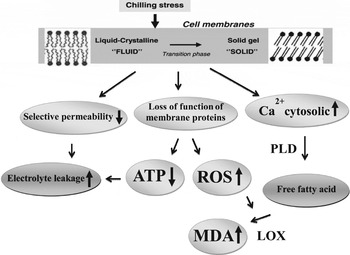
Loss of cell membrane integrity is the primary deleterious effect provoked by chilling injury (Rui et al. Reference Rui, Cao, Shang, Jin, Wang and Zheng2010). Phase transition from a flexible liquid-crystalline stage to a solid-gel one occurs at chilling temperatures, which risks a loss of cell membrane selective permeability. This phenomenon is based on the ‘membrane theory’ to explain chilling injury biological effects in plants sensitive to cold stress (Lyons Reference Lyons1973). At chilling temperatures, membrane selective permeability is negatively affected by a reduction in membrane fluidity, caused by fatty acid peroxidation, increases in the degree of saturation of membrane lipids, degradation of phospholipids and galactolipids, and the rise of the sterol:phospholipid ratio (Sevillano et al. Reference Sevillano, Sanchez-Ballesta, Romojaro and Flores2009). If the whole plant or plant organ is exposed to damaging low temperatures for too long then cell membranes rupture, causing leakage of intracellular water, ions and metabolites, which can be monitored by determination of electrolyte leakage (Sharom et al. Reference Sharom, Willemot and Thompson1994). Electrolyte leakage is an effective parameter to assess membrane permeability and therefore is used as an indicator of membrane integrity (Marangoni et al. Reference Marangoni, Palma and Stanley1996). Lipid peroxidation, which can be evaluated by analysing MDA content, is responsible for this loss of cell membrane integrity (Wise & Naylor Reference Wise and Naylor1987). Malonyl dialdehyde is the end product of fatty acid peroxidation, and is a marker of oxidative stress and damage on cell membrane integrity (Hodges et al. Reference Hodges, DeLong, Forney and Prange1999). Both physiological determinations (electrolyte leakage and MDA content) are widely used in post-harvest research to indirectly assess cell membrane integrity in refrigerated storage assays and therefore to evaluate chilling injury impact (Fig. 1; Wise & Naylor Reference Wise and Naylor1987; Sharom et al. Reference Sharom, Willemot and Thompson1994; Shewfelt & Purvis Reference Shewfelt and Purvis1995).
Transition of cell membrane phase from a flexible liquid-crystalline to a solid-gel structure that occurs at chilling temperature, increases the risk of loss of cell membrane selective permeability and leakage of intracellular water, ions and metabolites, which can be monitored by determination of electrolyte leakage. Phospholipase-D enzyme activity is responsible for degradation of unSFA and reduction of cell membrane integrity, therefore augmenting the impact of chilling injury. Loss of function of proteins linked to cell membrane, especially in mitochondrial and chloroplastic membranes, lead to an increase of ROS and decrease of ATP. In addition to the direct effect of chilling temperatures on membrane structure, loss of membrane integrity is itself boosted by oxidative stress, since cold stress increases the production of ROS that stimulate lipid peroxidation in cell membranes. Lipid peroxidation could be carried out by enzymatic oxidation of unSFA by lipoxygenase or by non-enzymatic oxidation by ROS. Lipid peroxidation could be evaluated by the content of MDA. Electrolyte leakage and MDA content, well-known physiological markers of loss of membrane permeability and membrane lipid peroxidation, are widely used in post-harvest research to indirectly assess cell membrane integrity in cold storage assays and therefore to evaluate chilling injury impact.

A key factor in cell membrane integrity and selective permeability is the maintenance of a high content of unsaturated fatty acids (unSFA). During the post-harvest life of fruits and vegetables, membrane unSFA play a dual role: (1) high content of unSFA such as linoleic and linolenic acids enhance chilling injury tolerance by contributing to maintenance of membrane fluidity (Nishida & Murata Reference Nishida and Murata1996) and (2) high unSFA levels are associated with maintenance of the aroma quality of fruits and vegetables, since these unSFA are precursors of volatile ester biosynthesis (Flores et al. Reference Flores, El Yahyaoui, de Billerbeck, Romojaro, Latché, Bouzayen, Pech and Ambid2002).
Overexpressing genes encoding for the fatty acid desaturase (FAD) enzyme leads to a rise in the degree of unsaturation of fatty acids: this is a biotechnological approach not only to improve chilling injury tolerance due to the resulting maintenance of membrane fluidity but also to enhance the organoleptic quality of the produce because of the impact of unSFA on the aroma profile of fruits and vegetables mentioned above. Domínguez et al. (Reference Domínguez, Hernández, Pennycooke, Jiménez, Martínez-Rivas, Sanz, Stockinger, Sánchez-Serrano and Sanmartín2010) observed that overexpression of the endogenous FAD3 and FAD7 genes in tomato plants by transformation with genetic constructions containing the respective coding sequences under the control of CaMV35S promoter resulted in a rise of the ratio of 18 : 3 to 18 : 2 fatty acids in leaves and fruits, as expected since the gene products catalyse the conversion of linoleic acid (18 : 2) to linolenic acid (18 : 3). This increased degree of unsaturation led to an augmentation of the hexenal content, which positively affected the fruit aroma profile. But transgenic tomato plants also exhibited a marked tolerance against chilling temperatures (Domínguez et al. Reference Domínguez, Hernández, Pennycooke, Jiménez, Martínez-Rivas, Sanz, Stockinger, Sánchez-Serrano and Sanmartín2010). Therefore, the generation of fruits and vegetables with high levels of unSFA by biotechnological methods not only enhances chilling injury tolerance but also contributes to improved aroma quality.
OXIDATIVE STRESS: THE SECONDARY EFFECT CAUSED BY CHILLING INJURY
Oxidative stress is a common secondary stress occurring in diverse biotic and abiotic stress, such as low temperatures in susceptible plant species. The alterations in membrane integrity are themselves boosted by oxidative processes, since cold stress stimulates overproduction of reactive oxygen species (ROS), which are responsible for lipid peroxidation in cell membranes, contributing to loss of its selective permeability (Sevillano et al. Reference Sevillano, Sanchez-Ballesta, Romojaro and Flores2009).
Plant defence against oxidative stress is accomplished in two ways. The first is by inducing the expression of genes encoding proteins involved in ROS avoidance, such as alternative oxidase (AOX). The AOX pathway is a branch of the respiratory electron transport chain in mitochondria that emerges from the cytochrome. When overreduction occurs in this respiratory electron transport chain, AOX intervenes in order to inhibit the excessive reduction of ubiquinol and thus assisting in avoiding ROS accumulation (Møller Reference Møller2001). Increases in the levels of AOX gene expression in pepper fruit treated with methyl salicylate and methyl jasmonate have been found to enhance chilling injury tolerance (Fung et al. Reference Fung, Wang, Smith, Gross and Tian2004). The induction of AOX gene expression in treated pepper fruits led to an increase in chilling injury tolerance via maintenance of the balance between ROS production and the general antioxidant system activity (Purvis Reference Purvis1997; Fung et al. Reference Fung, Wang, Smith, Gross and Tian2004).
The second way in which plants defend themselves against oxidative stress is by inducing enzymatic activity or gene expression for ROS scavengers such as superoxide dismutase, catalase, APX, glutathione peroxidase, glutathione-S-transferase, monodehydroascorbate reductase, dehydroascorbate reductase and glutathione reductase antioxidant enzymes (Møller Reference Møller2001). Higher activity of the enzymatic antioxidant system leads to reduction of ROS, therefore improving membrane integrity and ultimately stimulating resistance towards abiotic stresses such as chilling injury (Mittler Reference Mittler2002).
Duan et al. (Reference Duan, Feng, Wang, Li and Meng2012) observed that overexpression of a thylakoid APX gene in tomatoes (LetAPX) enhanced resistance against chilling injury and suggested that this behaviour could be associated with the increased APX activity and the maintenance of higher ascorbate/dehydroascorbate (AA/DHA) and glutathione/glutathione disulphide (GSH/GSSG) redox ratios. Also, transgenic plants presented lower levels of hydrogen peroxide and MDA, reduced electrolyte leakage, higher net photosynthetic rate (Pn) and finally higher maximal photosystem II (PSII) photochemical efficiency determined by chlorophyll fluorescence (Fv/Fm). Shu et al. (Reference Shu, Wang, Duan, Deng and Meng2011) generated transgenic tomato plants where the expression of a glutathione reductase gene (LeGR) was silenced by means of an antisense construction and the concomitant diminution of glutathione reductase activity enhanced the sensitivity of the transgenic plants to low temperatures. Glutathione reductase played a key role in maintaining the high activities of APX and superoxide dismutase under chilling conditions. Since the AA/GSH cycle is critical in ROS scavenging, Shu et al. (Reference Shu, Wang, Duan, Deng and Meng2011) suggested that the APX/glutathione reductase system is crucial in stimulating chilling injury tolerance via enhancement of the activity of the above cycle.
Wu et al. (Reference Wu, Lin, Liu, Wang, Lim, Oh, Park, Rajashekar, Whitham, Cheng, Hirschi and Park2012) reported that the overexpression of AtGRXS17, an Arabidopsis gene encoding a glutaredoxin belonging to the thioredoxin protein family, enhanced heat-stress tolerance in tomato plants and this effect was accompanied by mitigation of cell membrane damage and chlorophyll photo-oxidation. The overexpression of AtGRXS17 induced catalase activity and diminished hydrogen peroxide accumulation in tomato leaves, a trend suggesting that AtGRXS17 plays a crucial role in activation of ROS scavenging systems.
In AtGRXS17 overexpressing tomato plants, genes coding for HSP and related HSTF were also up-regulated, an event suggesting that activation of the HSTF/HSP pathway contributes to heat tolerance in the transgenic plants (Wu et al. Reference Wu, Lin, Liu, Wang, Lim, Oh, Park, Rajashekar, Whitham, Cheng, Hirschi and Park2012). Heat-shock transcription factors are present in the cytoplasm of unstressed cells as a latent monomer that lacks both DNA binding and transcriptional activities, but are translocated to the nucleus under stressful conditions (Al-Whaibi Reference Al-Whaibi2011). Also, AtGRXS17 protein has the same cytolocalization if there is no stress but it is translocated from cytoplasm to the nucleus during heat stress. Since both types of proteins, AtGRXS17 and HSTF, accumulated in the nucleus under heat stress, Wu et al. (Reference Wu, Lin, Liu, Wang, Lim, Oh, Park, Rajashekar, Whitham, Cheng, Hirschi and Park2012) suggested that the nuclear accumulation of AtGRXS17 under heat stress could participate in the induction of HSTF transcriptional activity and ultimately this fact could be considered as responsible for the enhanced thermotolerance. Wu et al. (Reference Wu, Lin, Liu, Wang, Lim, Oh, Park, Rajashekar, Whitham, Cheng, Hirschi and Park2012) considered that AtGRXS17 enhancement of catalase activity may be achieved directly via physical protection or indirectly by enhancing HSP accumulation, which would stabilize catalase via its chaperone activity.
When these overexpressing AtGRXS17 tomato plants were exposed to chilling conditions, a higher degree of tolerance to the stress compared with the wild-type ones was observed (Wu Reference Wu2012). As mentioned elsewhere, chilling injury is associated with ROS accumulation and in this regard AtGRXS17 seemed to protect plant cells against the secondary oxidative stress by enhancement of catalase activity (Wu Reference Wu2012), in an analogous way to that observed in the transgenic plants subjected to high temperatures stress (Wu Reference Wu2012). Wu (Reference Wu2012) suggested that genetic engineering of glutaredoxins may be a useful strategy to improve tolerance to chilling/heat/oxidative stress. According to these results from Wu et al. (Reference Wu, Lin, Liu, Wang, Lim, Oh, Park, Rajashekar, Whitham, Cheng, Hirschi and Park2012) and Wu (Reference Wu2012), the HSTF/HSP functional pathway as well as catalase activity seems to be under the regulation of glutaredoxin. Therefore, biotechnological use could be made of glutaredoxin to improve heat and cold tolerance, as well as tolerance to oxidative stress in fruits, vegetables and ornamentals, this beneficial effect on stress tolerance being achieved via induction of HSP (Wu et al. Reference Wu, Lin, Liu, Wang, Lim, Oh, Park, Rajashekar, Whitham, Cheng, Hirschi and Park2012; Wu Reference Wu2012).
In summary, it can be concluded that biotechnological applications for enhancing the unSFA: fatty acid ratio, inducing high FAD gene expression and activity, conferring high levels of cell metabolic energy (adenosine triphosphate (ATP) and adenylate energy charge) and lower levels of phospholipase D and lipoxygenase activities along with boosted antioxidant enzymes activities (AOX or superoxide dismutase, catalase, glutathione peroxidase, glutathione-S-transferase, APX, dehydroascorbate reductase, monodehydroascorbate reductase and glutaredoxin) could contribute to the general goal of inducing chilling injury tolerance. However, inducing HSP accumulation via biotechnology has a positive effect on chilling injury tolerance, given the beneficial effects of these proteins. Heat shock proteins have a multifaceted nature, thanks to their molecular chaperone activity, their contribution to ROS scavenging and to membrane stabilization, and all these events play a part in increasing membrane fluidity and integrity.
LOW-TEMPERATURE SENSING AND SIGNALLING
Understanding how plants perceive low temperatures and trigger the signal transduction pathway in response to this environmental effect will be of great help in designing biotechnological solutions to counteract the negative effects of this stress, aiming at manipulating cold-susceptible plants in order to stimulate their tolerance to chilling injury. So deciphering how plants survive low temperatures is critical for setting up genetic engineering strategies to improve tolerance to this abiotic stress (Solanke & Sharma Reference Solanke and Sharma2008).
Cell membranes are fluid-mosaic in nature and are made up of a bilayer of phospholipids. The membrane is plastic and permeable in normal conditions but when it is subjected to stressful low temperatures it undergoes a phase transition from liquid crystalline to solid gel, which leads to membrane rigidification. Rigidification of membrane leads in turn to loss of fluidity, a key factor in maintaining selective permeability which, if lost, would cause uncontrolled solute leakage. Therefore, since the cell membrane is the primary organ in plants that is affected negatively by cold stress at the cellular level, it is logical to think that it may also be the primary perception site for low temperature (Orvar et al. Reference Orvar, Sangwan, Omann and Dhindsa2000). As mentioned above, chilling injury occurs because of a decrease in membrane fluidity; this phenomenon is called membrane rigidification and it is highly dependent on the degree of saturation of fatty acids, essential components of the lipid bilayer that makes up the membrane (Hayashi & Maeda Reference Hayashi and Maeda2006).
For all the above reasons, the membrane can be hypothesized as the primary site for perception of low temperatures by the plant cell. Cell membrane rigidification is perceived by proteins inserted or attached to it, which function as primary sensors (Mikami & Murata Reference Mikami and Murata2003). Thus membrane proteins really ‘sense’ the phase transition from liquid crystalline to solid gel occurring in this essential cell component (Hayashi & Maeda Reference Hayashi and Maeda2006). As a second step in this perception process, the actin cytoskeleton undergoes rearrangement following phase transition of the cell membrane. It has been reported that depolymerization of microtubules and actin microfilaments occurs under low temperatures (Sangwan et al. Reference Sangwan, Foulds, Singh and Dhindsa2001; Al-Fageeh & Smales Reference Al-Fageeh and Smales2006). This whole set of events leads to an intracellular influx of calcium ions (Ca2+) (Orvar et al. Reference Orvar, Sangwan, Omann and Dhindsa2000; Sangwan et al. Reference Sangwan, Örvar, Beyerly, Hirt and Dhindsa2002); Ca2+ permeable channels responsible for the rise of cytosolic Ca2+ concentration under cold stress are also considered as potential sensors of this stress, and the activation of these channels by cold is thought to be the result of physical alterations in the cell membrane (Monroy & Dhindsa Reference Monroy and Dhindsa1995).
Perception of low temperatures leads to activation of phospholipases such as phospholipase-D and -C, which catalyse the hydrolysis of phospholipids that yield phosphatidic acid, a known second messenger (Ruelland et al. Reference Ruelland, Cantrel, Gawer, Kader and Zachowski2002). Phospholipase-D anchors cytosolic microtubules to the plasma membrane, a process that delivers conformational changes in the cytoskeleton and actin filaments rearrangement, then opening Ca2+ permeable channels (Gardiner et al. Reference Gardiner, Harper, Weerakoon, Collings, Ritchie, Gilroy, Cyr and Marc2001; Dhonukshe et al. Reference Dhonukshe, Laxalt, Goedhart, Gadella and Munnik2003). The rise of cytosolic Ca2+ level under low-temperature stress operates as a second messenger in the low-temperature signal transduction pathway. The activities of phospholipase-C and -D direct the production of inositol-(1,4,5)-triphosphate (InsP3), which is also recognized as a second messenger molecule in cell signal transduction and is in turn involved in the augmentation of cytosolic Ca2+ level. This function is accomplished by releasing the ion from the intracellular compartments where it is stored in normal conditions (Knight et al. Reference Knight, Trewavas and Knight1996; DeWald et al. Reference DeWald, Torabinejad, Jones, Shope, Cangelosi, Thompson, Prestwich and Hama2001; Ruelland et al. Reference Ruelland, Cantrel, Gawer, Kader and Zachowski2002). Finally, this accumulation of cytosolic Ca2+ triggers the signal transduction process through proteins acting as Ca2+ sensors and functioning as kinases, so the signal is transmitted downstream by a chain of phosphorylations (Monroy et al. Reference Monroy, Castonguay, Laberge, Sarhan, Vezina and Dhindsa1993). Calmodulins interacting with calmodulin domain-containing protein kinases (CDPK), and calcineurin B-like proteins interacting with calcineurin B-like interacting protein kinases (CIPK) are the main intracellular transduction pathways activated by this rise of cytosolic Ca2+. As sensor relays, calmodulin and calcineurin B-like proteins bind Ca2+ and conformational changes take place within the structure of these proteins, which allows for their interaction with the sensor responders CDPK and CIPK. These responders transmit the message to their downstream targets by interplay of consecutive phosphorylations (Reddy & Reddy Reference Reddy and Reddy2004; Klimecka & Muszyńska Reference Klimecka and Muszyńska2007).
All this series of intracellular events are involved in the phenomenon of low-temperature acclimation in plants, a process of adaptation whereby certain plants increase their tolerance to cold stress (Sangwan et al. Reference Sangwan, Foulds, Singh and Dhindsa2001; Catalá et al. Reference Catalá, Santos, Alonso, Ecker, Martínez-Zapater and Salinas2003). The final target of this signal transduction pathway, triggered by cold, is induction of the expression of specific cold-responsive genes, whose transcription is activated by a particular family of transcription factors known as C-repeat (CRT)-binding factors that belong to the AP2/EREBP superfamily of transcription factors (Gilmour et al. Reference Gilmour, Zarka, Stockinger, Salazar, Houghton and Thomashow1998). All members of this superfamily have a common feature: the DNA-binding domain, discovered in Arabidopsis thaliana APETALA2 protein and in tobacco EREBP proteins, involved in floral morphogenesis and ethylene response, respectively (Jofuku et al. Reference Jofuku, den Boer, Van Montagu and Okamuro1994; Ohme-Takagi & Shinshi Reference Ohme-Takagi and Shinshi1995). These C-repeat binding factors exert their regulatory function by binding to the specific cis-element known as C-repeat because of the nucleotide sequence that characterize it (TACCGACAT) (Baker et al. Reference Baker, Wilhelm and Thomashow1994), which is located in the promoter regions of the cold responsive genes (Chinnusamy et al. Reference Chinnusamy, Zhu and Sunkar2010).
Up till now, interaction between these Ca2+-binding proteins and C-repeat binding factor transcription factor has only been observed experimentally (Doherty et al. Reference Doherty, Van Buskirk, Myers and Thomashow2009). This is the binding of calmodulin proteins to a member of the calmodulin-binding transcription activator (CAMTA) transcription factor family, CAMTA3, which in their turn recognize regulatory elements in the CBF2 promoter and its binding induces the gene expression (Doherty et al. Reference Doherty, Van Buskirk, Myers and Thomashow2009). The results from Doherty et al. (Reference Doherty, Van Buskirk, Myers and Thomashow2009) establish for the first time a role for CAMTA proteins in cold acclimation and provide a possible point for integration of low-temperature Ca2+ and calmodulin signalling with the transcriptional regulatory system of cold-responsive genes.
LOOKING FOR A BIOTECHNOLOGICAL ALTERNATIVE TO HEAT TREATMENT
It has been reported that HSP not only play a role under high-temperature stress, but also have a crucial function in response to low-temperature stress (Swindell et al. Reference Swindell, Huebner and Weber2007). Low- and high-temperature stresses enhance the expression of HSP genes. In a systematic analysis of the effects of low-temperature storage on gene expression in peach fruit, Pavez et al. (Reference Pavez, Hödar, Olivares, González and Cambiazo2013) reported that expressions from genes encoding antioxidant enzymes (glutathione reductase, catalase and superoxide dismutase), sHSP and lipid transfer protein increased during cold storage (21 days at 4 °C) and remained high after fruits were subjected to room temperature reconditioning (21 days at 4 °C followed by 5 days at 21 °C). These results hinted at a cryoprotective role of sHSP by maintaining membrane fluidity, and also of higher molecular weight HSP, such as HSP70 and HSP100, by assisting in protein refolding (Sun et al. Reference Sun, Van Montagu and Verbruggen2002; Timperio et al. Reference Timperio, Egidi and Zolla2008). Pavez et al. (Reference Pavez, Hödar, Olivares, González and Cambiazo2013) observed that peach fruits under cold storage are able to uphold the capacity for ROS scavenging via induction of expression of genes involved in the antioxidant system such as glutathione reductase, catalase and superoxide dismutase, as well as sHSP.
Zhang et al. (Reference Zhang, Huang, Pan and Liu2005) observed that hot air treatment (38 °C for 10 h) mitigated chilling injury in grape berries: this emergence in cold tolerance was associated with a reduction of electrolyte leakage and MDA content and an increase of superoxide dismutase and catalase activities. Hot air treatment induced HSP70 expression in the grapes and this occurred prior to the rise in the activities of antioxidant enzymes. Zhang et al. (Reference Zhang, Huang, Pan and Liu2005) suggested that the stimulation of HSP70 expression and corresponding protein accumulation was associated with a rise in the activities of antioxidant enzymes, and that synergistic action between HSP70 and the enzymatic antioxidant system resulted in the maintenance of membrane integrity and the emergence of chilling injury resistance.
Sabehat et al. (Reference Sabehat, Weiss and Lurie1996) observed that treatment of tomato fruit with hot air (38 °C for 48 h) mitigated chilling injury and induced HSP accumulation, which persisted during subsequent low-temperature storage (2 °C), while Lurie et al. (Reference Lurie, Handros, Fallik and Shapira1996) found that treatment of tomato fruit with hot air at 38 °C for 3 days led to stimulation of chilling injury resistance through the rise of HSP17 accumulation and persistence of high levels during subsequent cold storage at 2 °C. Treating tomatoes with hot air (38 °C for 3 days) induced the expression of genes encoding for sHSP, such as tom66 and tom111, and the persistence of their levels during subsequent cold storage (2 °C) was associated with chilling injury resistance (Sabehat et al. Reference Sabehat, Lurie and Weiss1998a , Reference Sabehat, Weiss and Lurie b ).
Sevillano et al. (Reference Sevillano, Sola and Vargas2010) reported that hot air treatment (55 °C for 5 h) mitigated chilling injury in cherimoya fruit and was associated with the induction of sHSP gene expression. He et al. (Reference He, Chen, Kuang and Lu2012) also observed that hot air treatment (38 °C for 3 days) alleviated chilling injury in banana fruit, in this case by an interplay of expressions of three genes encoding sHSP; banana sHSP1 expression in peel and pulp and sHSP3 expression in peel increased during heat treatment, and expression of both genes in pulp and sHSP2 in peel increased during subsequent low-temperature storage (8 °C). As with Sevillano et al. (Reference Sevillano, Sola and Vargas2010), He et al. (Reference He, Chen, Kuang and Lu2012) suggested that heat treatment increased resistance to chilling injury in banana by stimulating sHSP gene expression during low-temperature storage. Similar behaviour was observed by Rozenzvieg et al. (Reference Rozenzvieg, Elmaci, Samach, Lurie and Porat2004) in grapefruit. Subjecting the fruit to heat treatment (62 °C for 20 s) led to cold resistance: expression of genes for HSP increased and was maintained during subsequent storage at low temperature (2 °C) (Rozenzvieg et al. Reference Rozenzvieg, Elmaci, Samach, Lurie and Porat2004).
It has been observed that the pace at which HSTF expression is induced with cold stress is lower than when induced by high-temperature conditions (Swindell et al. Reference Swindell, Huebner and Weber2007). Under heat stress, this faster induction of HSTF expression correlates well with the action of HSTF as transcriptional regulators of HSP (Borges & Ramos Reference Borges and Ramos2005). Li et al. (Reference Li, Chang, Lu, Liu, Chan and Charng2003) suggested that the Arabidopsis HSTF AtHSFA1b has a crucial role in the emergence of chilling tolerance when triggered by high-temperature treatment: transgenic tomato overexpressing AtHSFA1b not only exhibited higher tolerance to high temperatures, but also to low temperatures without the need for a previous heat treatment to induce it. Li et al. (Reference Li, Chang, Lu, Liu, Chan and Charng2003) observed that transgenic tomato plants overexpressing the Arabidopsis HSTF AtHSFA1b activate sHSP biosynthesis as well as the expression of genes coding for APX. The results of this set of processes are responsible for the improved cold tolerance of transgenic tomato (Li et al. Reference Li, Chang, Lu, Liu, Chan and Charng2003).
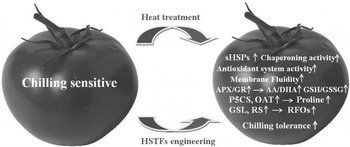
Saltveit & Hepler (Reference Saltveit and Hepler2004) and Pressman et al. (Reference Pressman, Shaked and Firon2006) suggested that fruits and vegetables treated with low temperature should increase their tolerance to heat and vice versa; heat treatment enhances chilling tolerance of sensitive fruits and vegetables, and HSTF play a critical role in this scenario of enhanced cold tolerance. Waters et al. (Reference Waters, Lee and Vierling1996) suggested that the key response of fruits and vegetables to heat treatment at the cellular level was induction of gene expression and protein accumulation of HSPs. Heat treatment also enhanced APX activity conducting increasing chilling injury tolerance in rice seedlings (Sato et al. Reference Sato, Murakami, Funatsuki, Matsuba, Saruyama and Tanida2001). The enhanced expression of pea, Arabidopsis and rice APX gene under heat treatment is explained molecularly by the presence in their promoters of heat-shock cis-acting elements (Mittler & Zilinskas Reference Mittler and Zilinskas1992, Reference Mittler and Zilinskas1994; Storozhenko et al. Reference Storozhenko, De Pauw, Van Montagu, Inzé and Kushnir1998; Sato et al. Reference Sato, Murakami, Funatsuki, Matsuba, Saruyama and Tanida2001). According to these results, it was hypothesized that overexpressing HSFT in chilling-sensitive horticultural species might be a powerful biotechnological tool to use as an alternative to post-harvest heat treatments envisaged to enhance chilling injury tolerance (Fig. 2).
Enhancing tolerance of fruits, ornamentals and vegetables to post-harvest chilling injury by heat treatment theoretically is accessible; but their performance applying different technologies such as hot water, hot air and hot vapour treatments are hindered by capacity limits and energy concerns of the required facilities. The HSTFs genetic engineering could be envisaged to overcome these hurdles and could be considered as the link between basic and applied research. HSTFs genetic engineering can be used in a biotechnological strategy to improve post-harvest chilling injury tolerance of crop plants, via enhancing HSPs accumulation, antioxidant system activity and the accumulation of proline and raffinose, all these events leading to mitigation of secondary oxidative stress and ultimately maintenance of membrane fluidity and integrity, contributing the whole set of processes to enhancement of chilling injury resistance.

HEAT-SHOCK PROTEINS AND MITIGATION OF POST-HARVEST CHILLING INJURY: MECHANISMS OF ACTION
There are environmental and developmental conditions in plants that provoke accumulation of HSP, such as fruit ripening (Lawrence et al. Reference Lawrence, Cline and Moore1997; Medina-Escobar et al. Reference Medina-Escobar, Cárdenas, Muñoz-Blanco and Caballero1998; Ding et al. Reference Ding, Wang, Gross and Smith2001; Neta-Sharir et al. Reference Neta-Sharir, Isaacson, Lurie and Weiss2005), low temperature (Ukaji et al. Reference Ukaji, Kuwabara, Takezawa, Arakawa, Yoshida and Fujikawa1999; Lubaretz & zur Nieden Reference Lubaretz and zur Nieden2002; Lopez-Matas et al. Reference Lopez-Matas, Nuñez, Soto, Allona, Casado, Collada, Guevara, Aragoncillo and Gomez2004) and oxidative stress (Eckey-Kaltenbach et al. Reference Eckey-Kaltenbach, Kiefer, Grosskopf, Ernst and Sandermann1997; Banzet et al. Reference Banzet, Richaud, Deveaux, Kazmaier, Gagnon and Triantaphylidès1998; Lee et al. Reference Lee, Won, Lee, Miyao, Chung, Kim and Jo2000; Jofré et al. Reference Jofré, Molinas and Pla2003). Often the accumulation of HSP not only confers protection against the stress that causes it but also against any subsequent stressful situation, in a phenomenon called cross-tolerance (Lin et al. Reference Lin, Roberts and Key1984; Chen et al. Reference Chen, Chou, Ren, Chen and Lin1988). Knowledge on the structure and function of HSP at molecular level, especially regarding sHSP, has expanded significantly in recent years and potential applications have emerged. By means of its interaction with the cell proteome, sHSP are useful in protecting cells from oxidative stress (Eckey-Kaltenbach et al. Reference Eckey-Kaltenbach, Kiefer, Grosskopf, Ernst and Sandermann1997; Banzet et al. Reference Banzet, Richaud, Deveaux, Kazmaier, Gagnon and Triantaphylidès1998; Lee et al. Reference Lee, Won, Lee, Miyao, Chung, Kim and Jo2000; Jofré et al. Reference Jofré, Molinas and Pla2003; Neta-Sharir et al. Reference Neta-Sharir, Isaacson, Lurie and Weiss2005), heat (Wu et al. Reference Wu, Lin, Liu, Wang, Lim, Oh, Park, Rajashekar, Whitham, Cheng, Hirschi and Park2012) and cold stress (Ukaji et al. Reference Ukaji, Kuwabara, Takezawa, Arakawa, Yoshida and Fujikawa1999; Lubaretz & zur Nieden Reference Lubaretz and zur Nieden2002; Lopez-Matas et al. Reference Lopez-Matas, Nuñez, Soto, Allona, Casado, Collada, Guevara, Aragoncillo and Gomez2004). In this section, examples of manipulation of the expression of sHSP genes for protein production as biotechnological applications for improving tolerance to post-harvest chilling injury in susceptible fruits and vegetables are reviewed.
Heat-shock protein and chaperone activity
Both low and high temperatures cause stress during the pre-harvest and post-harvest life of crop plants, causing protein denaturation in plant cells. Heat-shock proteins have a beneficial action in both cases as molecular chaperones, maintaining protein stability (Thomashow Reference Thomashow1999). There is much evidence that HSP exert their protective role against stress by means of their molecular chaperone activity, which consists of: (i) recognition and binding to unfolded proteins in order to complete their folding correctly, (ii) prevention of protein aggregation and ultimately (iii) facilitation of renaturation of aggregated proteins. This chaperone activity of HSP has been observed both in vivo and in vitro (Ellis & van der Vies Reference Ellis and van der Vies1991; Craig et al. Reference Craig, Weissman and Horwich1994; Lee Reference Lee1995; Boston et al. Reference Boston, Viitanen and Vierling1996; Sun et al. Reference Sun, Van Montagu and Verbruggen2002).
Higher chilling injury tolerance of fruits has been attributed to the production and accumulation of HSP. In a proteomic analysis of two tomato cultivars subjected to low-temperature storage, Page et al. (Reference Page, Gouble, Valot, Bouchet, Callot, Kretzschmar, Causse, Renard and Faurobert2010) suggested that increasing the ability of tomato fruit to biosynthesize and accumulate HSP at low-temperature storage (4 °C) was associated with its enhanced chilling injury resistance. Similar results were obtained by Sanchez-Bel et al. (Reference Sanchez-Bel, Egea, Sanchez-Ballesta, Sevillano, Del Carmen Bolarin and Flores2012), who reported that protein expression of HSP26, belonging to both the sHSP family and the plant glutathione-S-transferase family, and HSP17·4 and HSP22·7, both sHSP, was induced in tomato fruit stored at low temperature (2 °C). These results indicated that HSP20 expression in tomato fruit increases in response to low-temperature storage and the protein may play an important role in promoting resistance towards chilling injury because of its chaperone activity (Page et al. Reference Page, Gouble, Valot, Bouchet, Callot, Kretzschmar, Causse, Renard and Faurobert2010; Sanchez-Bel et al. Reference Sanchez-Bel, Egea, Sanchez-Ballesta, Sevillano, Del Carmen Bolarin and Flores2012). Yun et al. (Reference Yun, Jin, Ding, Wang, Gao, Pan, Xu, Cheng and Deng2012) reported that expression of HSP, cold responsive genes and temperature-induced lipocalins were induced in citrus fruit stored at low temperature (8–10 °C), an observation that hints at the participation of these genes in the promotion of tolerance to cold stress.
Transgenic carrot cells overexpressing an endogenous DcHsp17·7 gene presented a higher degree of membrane integrity under heat stress (Malik et al. Reference Malik, Slovin, Hwang and Zimmerman1999), and the heterologous expression of this carrot gene in potato-enhanced cellular membrane stability and in vitro tuberization (Ahn & Zimmerman Reference Ahn and Zimmerman2006). When Escherichia coli was transformed in order to constitutively express DcHsp17·7 it was observed that the resulting heterologous protein acted as a molecular chaperone-preventing protein aggregation and in that way promoted cell viability under heat stress (Kim & Ahn Reference Kim and Ahn2009). Song & Ahn (Reference Song and Ahn2010) reported that carrot DcHsp17·7 gene expression was up-regulated under cold stress and this fact was associated with induced cold tolerance: Song & Ahn (Reference Song and Ahn2010) examined the mode of action of the gene product in cold stress situations by heterologous expressing it in E. coli and observed that DcHsp17·7 conferred cold tolerance via its action as a molecular chaperone preventing protein degradation. Finally, Ahn & Song (Reference Ahn and Song2012) observed that DcHsp17·1 intervenes in conferring tolerance to both oxidative and osmotic stresses, which are typical secondary stresses activated by any abiotic stress. Song & Ahn (Reference Song and Ahn2010) and Ahn & Song (Reference Ahn and Song2012) suggested that given the results obtained, which clearly expose the beneficial effects of sHSP on enhancing tolerance to abiotic stresses thanks to their chaperone activity, the use of sHSP may be viewed from a biotechnological point of view as encouraging candidates for the release of transgenic crop plants in order to promote tolerance to high and low temperature as well as oxidative and osmotic stresses.
Heat-shock protein and membrane fluidity
Membrane fluidity is critical for regulation of membrane function because of its effects on integral membrane protein arrangement, membrane permeability and membrane transport activity (Los & Murata Reference Los and Murata2004). Increases in the degree of unsaturation of the membrane due to an increase of unSFA such as linolenic acid (18 : 3), associated with an increase in energy status, stimulates the enhancement of membrane fluidity and in this way the membrane cellular function could be improved. Increase of membrane fluidity decreases the membrane tendency to phase transition from liquid-crystalline to solid-gel and results in enhancing chilling injury tolerance (Los & Murata Reference Los and Murata2004).
Fatty acid desaturases are a family of enzymes responsible for increases in the degree of membrane unsaturation (Hernández et al. Reference Hernández, Padilla, Sicardo, Mancha and Martínez-Rivas2011). According to their intracellular localization, their lipid substrates and the electron donor system, there are two types of FAD in plant cells: microsomal FAD such as oleic acid desaturase (FAD2), which is responsible for the conversion of oleic acid (18 : 1) to linoleic acid (18 : 2), and linoleic acid desaturase (FAD3), which is responsible for conversion of linoleic acid (18 : 2) to linolenic acid (18 : 3). Both FAD isoforms are located in the endoplasmic reticulum and they use phospholipids as substrate and NADH, NADH–cytochrome b5 reductase and cytochrome b5 as electron donors. Plastidic FADs such as oleic acid desaturase (FAD6) and linoleic acid desaturase (FAD7 and FAD8) are located in chloroplasts and use glycolipids as substrates and NADPH, ferredoxin–NAD(P) reductase and ferredoxin as electron donors (Hernández et al. Reference Hernández, Padilla, Sicardo, Mancha and Martínez-Rivas2011). The activities of FAD enzymes are responsible for the increase in the degree of unsaturation from fatty acids making up the lipid bilayer of the cell membrane. Mechanisms of low-temperature tolerance are partially based on an increase of unSFA levels due to induced FAD activity, which has a beneficial effect on membrane fluidity (Yu et al. Reference Yu, Wang, Yang, Tang, Duan and Meng2009; Hernández et al. Reference Hernández, Padilla, Sicardo, Mancha and Martínez-Rivas2011).
The regulatory role of temperature on fatty acid desaturation achieved by FAD activity could be managed by means of controlling the corresponding gene expression levels or by post-transcriptional regulation and/or control of substrate availability (Tang et al. Reference Tang, Novitzky, Carol Griffin, Huber and Dewey2005; Teixeira et al. Reference Teixeira, Carvalho and Brodelius2010). Fatty acid desaturase needs oxygen to fulfil its catalytic activity and the increase of FAD activity at low temperatures could be the result of increasing oxygen solubility at low temperature, providing oxygen to the enzyme (Rolletschek et al. Reference Rolletschek, Borisjuk, Sánchez-García, Gotor, Romero, Martínez-Rivas and Mancha2007).
Yu et al. (Reference Yu, Wang, Yang, Tang, Duan and Meng2009) observed that FAD3 expression increased at low temperature (4 °C) in tomato plants and this resulted in an enhanced resistance to chilling injury in root and leaf. Increase of FAD3 expression led to an increase of linolenic acid (18 : 3) and a decrease of linoleic acid (18 : 2) levels in leaves and roots, which is associated with mitigation of chilling injury determined by a marked reduction of electrolyte leakage (Yu et al. Reference Yu, Wang, Yang, Tang, Duan and Meng2009). High levels of unSFA in the thylakoid membrane are critical for the protection of the photosynthetic machinery when chilling injury occurs, in order to prevent photoinhibition of PSII. The results of Yu et al. (Reference Yu, Wang, Yang, Tang, Duan and Meng2009) showed that the upsurge of linolenic acid (18 : 3) levels in tomato via overexpression of FAD3 was accompanied by the maintenance of the photochemical efficiency of PSII determined by chlorophyll fluorescence (Fv/Fm) and high level of O2 evolution rate. Therefore this genetic engineering protects PSII from photoinhibition under chilling injury conditions in tomato (Yu et al. Reference Yu, Wang, Yang, Tang, Duan and Meng2009).
Zhang & Tian (Reference Zhang and Tian2009) reported that peach fruit showed higher tolerance towards chilling injury when stored at 0 °C instead of 5 °C. Increase of chilling injury tolerance at 0 °C was associated with a greater reduction of electrolyte leakage and MDA content. Zhang & Tian (Reference Zhang and Tian2009) also observed that peach fruits stored at 0 °C had greater membrane fluidity, which was the result of increased unSFA content. This last effect seemed to be associated with a more elevated FAD3 expression in fruits stored at 0 °C compared with those stored at 5 °C. The lower accumulation of MDA in peach fruits stored at 0 °C suggested that during storage at that temperature unSFA such as linolenic acid (18 : 3) had a lower tendency to peroxidation (Zhang & Tian Reference Zhang and Tian2009). The double bound index, a criterion used for assessing membrane unSFA ratio, was significantly higher in peach fruits stored at 0 °C than those stored at 5 °C. Zhang & Tian (Reference Zhang and Tian2009) concluded that augmented levels of linolenic acid (18 : 3) resulting from a higher FAD3 expression were responsible for the higher level of double bound index in fruits stored at 0 °C.
Small HSP with low molecular weight, ranging from 15 to 42 kDa, also have chaperone activity which, in contrast to HSP of higher molecular weight, is independent of ATP (Gusev et al. Reference Gusev, Bogatcheva and Marston2002). But sHSP are able to exert their protective role against abiotic stress in specific ways that have not been observed in family members of higher molecular weight. First, they contribute to abiotic stress tolerance thanks to their role as stabilizers of cell membranes (Nakamoto & Vigh Reference Nakamoto and Vigh2007; Horváth et al. Reference Horváth, Multhoff, Sonnleitner and Vígh2008). Therefore, membrane quality attributes such as fluidity and selective permeability are at least partially under the control of sHSP and therefore these proteins can prevent the phase transition from liquid-crystalline to solid-gel that occurs at chilling temperatures. Thus, sHSP may assist in maintaining fluidity and integrity of cell membranes in fruits and vegetables subjected to post-harvest refrigerated storage, inducing resistance against chilling injury (Török et al. Reference Török, Goloubinoff, Horváth, Tsvetkova, Glatz, Balogh, Varvasovszki, Los, Vierling, Crowe and Vigh2001; Tsvetkova et al. Reference Tsvetkova, Horváth, Török, Wolkers, Balogi, Shigapova, Crowe, Tablin, Vierling, Crowe and Vigh2002; Horváth et al. Reference Horváth, Multhoff, Sonnleitner and Vígh2008).
Zou et al. (Reference Zou, Liu, Liu, Zou and Chen2012) showed that electrolyte leakage is significantly reduced in transgenic rice plants overexpressing OsHSP23·7 and OsHSP17·0 genes encoding sHSPs and these transgenic lines also displayed a higher tolerance to drought and salt stress. Lee et al. (Reference Lee, Cha, Kim, Kim, Lee and Lee2012) also reported a reduction in electrolyte leakage in transgenic tobacco plants overexpressing alfalfa HSP23, these transgenic plants exhibiting enhanced tolerance to salinity and arsenic stress. Wang et al. (Reference Wang, Zhao, Wang and Liu2005) reported that the overexpression of a tomato chloroplast sHSP led to mitigation of chilling injury in tomato plants. Enhanced chilling tolerance in transgenic tomato plant was associated with reduction of electrolyte leakage, chlorophyll degradation, anthocyanins content and MDA accumulation, and increase of net photosynthetic rate (P n ). Wang et al. (Reference Wang, Zhao, Wang and Liu2005) suggested that, apart from its intrinsic chaperone activity, accumulation of chloroplast sHSP enhanced membrane fluidity and prevented denaturalization of membrane proteins.
In addition to their direct role in protecting cell membrane integrity in abiotic stress, sHSP also play an indirect role in inducing resistance against secondary osmotic and oxidative stresses caused by the primary abiotic one. This function of sHSP is achieved by increasing the endogenous proline and raffinose contents.
During cold storage of fruits and vegetables, increased proline content has been shown to lead to increased chilling injury resistance (Szabados & Savouré Reference Szabados and Savouré2010). Proline, as a multifunctional amino acid, is multifaceted in nature and plays key roles in the osmotic regulation between cytoplasm and vacuole, in redox balance of the NAD+/NADH ratio, as membrane stabilizer and finally in promoting ROS scavenging systems activity (Sharp et al. Reference Sharp, Hsiao and Silk1990; Bohnert & Jensen Reference Bohnert and Jensen1996). Regarding transgenic rice plants overexpressing OsHSP23·7 and OsHSP17·0 mentioned previously, it was observed that endogenous proline content was significantly higher in these transformed rice lines (Zou et al. Reference Zou, Liu, Liu, Zou and Chen2012). Xue et al. (Reference Xue, Peng, Xiong, Li, Zha and Yao2009) observed that transgenic Arabidopsis lines overexpressing HSP26 from Saccharomyces cerevisiae exhibited remarkable tolerance to freezing injury. Expression of genes from the proline biosynthetic pathway is induced in these transgenic plants, such as pyrroline-5-carboxylate synthetase 1 and 2 (AtP5CS1 and AtP5CS2), pyrroline-5-carboxylate reductase (AtP5CR), proline dehydrogenase 1 and 2 (AtPDH1 and AtPDH2) and ornithine aminotransferase (AtOAT). The result of this set of induced genetic expression was significant accumulation of proline (Xue et al. Reference Xue, Peng, Xiong, Li, Zha and Yao2009). Overexpression of the yeast HSP26 gene in Arabidopsis enhances not only freezing stress but also heat tolerance, an observation associated with the reduced electrolyte leakage and MDA content found in heat stressed transgenic plants compared with WT ones. The authors remarked that similar patterns of gene expression regulation observed in transgenic plants subjected to freezing temperatures occurred in the same type of plants when treated with high temperatures (Xue et al. Reference Xue, Peng, Xiong, Li, Zha and Yao2010).
It has been reported that the raffinose family of oligosaccharides (RFO), such as galactinol and raffinose, have the ability of protecting plant cells from the oxidative aspects of environmental stress (Gilmour et al. Reference Gilmour, Sebolt, Salazar, Everard and Thomashow2000). Galactinol synthase, a key enzyme in the metabolic pathway leading to RFO accumulation, is responsible for galactinol biosynthesis, which acts as a galactosyl donor for raffinose, stachyose and verbascose biosynthesis (Gilmour et al. Reference Gilmour, Sebolt, Salazar, Everard and Thomashow2000). The expression of Arabidopsis GS1 and GS2 genes is under regulation of HSTF, namely HSFA1a, HSFA1b and HSFA2 (Panikulangara et al. Reference Panikulangara, Eggers-Schumacher, Wunderlich, Stransky and Schöffl2004; Busch et al. Reference Busch, Wunderlich and Schöffl2005; Schramm et al. Reference Schramm, Ganguli, Kiehlmann, Englich, Walch and von Koskull-Döring2006). Panikulangara et al. (Reference Panikulangara, Eggers-Schumacher, Wunderlich, Stransky and Schöffl2004) reported that GS1 expression was up-regulated in AtHSFA1b overexpressing Arabidopsis lines, suggesting that GS1 is a target gene for induction by HSFA1b, a hypothesis supported by the finding of heat-shock consensus element sequences in the promoter region of GS1. Also, transgenic Arabidopsis plants overexpressing HSFA2 presented a high expression of GS1, GS2, GS4 and Raffinose Synthase 2 (RS2) (Nishizawa et al. Reference Nishizawa, Yabuta and Shigeoka2008).
Linked to this finding, overexpression of GS1 or GS2 in Arabidopsis resulted in significant higher levels of galactinol and raffinose in the transgenic plants. The high contents of these osmolytes were correlated with a reduction in MDA content and a rise in AA/DHA and GSH/GSSG ratios, associated with increased tolerance to chilling/oxidative stress (Nishizawa et al. Reference Nishizawa, Yabuta and Shigeoka2008). Nishizawa et al. (Reference Nishizawa, Yabuta and Shigeoka2008) suggested that galactinol and raffinose participate in hydroxyl radical scavenging to protect plant cells from oxidative damage caused by salinity or chilling, so these molecules not only function as osmoprotectants and stabilizers of cell membranes but also as ROS scavengers, and in this way they play a pivotal role in the protection of cellular metabolism from oxidative damage caused by chilling, salinity or drought. The results reported in this section offer real possibilities for biotechnological applications of HSTF for improving post-harvest chilling tolerance in economically important horticultural products.
Heat-shock proteins and antioxidant systems
Heat-shock transcription factor, the specific transcription factor regulating expression of genes encoding HSP, are able to exert a protective role against secondary oxidative stress occurring in most of the stressful conditions a plant may endure. Plants are protected against this oxidative stress by a complex antioxidant system including antioxidant enzymes and metabolites. Heat-shock proteins cooperate with this system at both levels, as proper proteins and at the level of the transcription factor regulating the expression of their genes, the HSTF, which, like molecular sensors, are able to ‘sense’ ROS such as hydrogen peroxide and accordingly regulate expression of oxidative stress response genes.
The gene encoding for a pea APX1, an enzyme responsible for scavenging H2O2, contains in its promoter region a functional HSTF binding motif (Mittler & Zilinskas Reference Mittler and Zilinskas1992). This piece of information, together with the observation of HSTF-dependent APX1 gene expression in Arabidopsis, suggests that HSTF are not only involved in regulating HSP gene expression but also in the expression of genes involved in the antioxidant enzymatic system in order to enhance resistance to secondary oxidative stress (Panchuk et al. Reference Panchuk, Volkov and Schöffl2002).
In addition to this specific action of HSTF regulating the expression of genes encoding antioxidant enzymes, HSP as proper proteins are able to induce the activity of antioxidant enzymes. Zhang et al. (Reference Zhang, Huang, Pan and Liu2005) reported that hot air treatment (38 °C for 10 h) mitigated chilling injury in grape berries. This rise of chilling injury resistance was accompanied by a reduction of electrolyte leakage, MDA content and, finally, an increase in superoxide dismutase and catalase activities. Zhang et al. (Reference Zhang, Huang, Pan and Liu2005) observed that the hot air treatment led to an increase of HSP70 gene expression and that the accumulation of the HSP70 in grape directed an increase of activity of antioxidant enzymes and, finally, the synergistic action between HSP70 and the antioxidant system, resulting in maintenance of membrane integrity and emergence of chilling injury resistance (Zhang et al. Reference Zhang, Huang, Pan and Liu2005).
As well as increasing activity of antioxidant enzymes, HSP are able to improve cell defence against oxidative stress by inducing accumulation of antioxidant molecules such as glutathione (GSH). Wang et al. (Reference Wang, Chen, Kong, Li and Archbold2006) reported that post-harvest salicylic acid treatment significantly mitigated peach fruit chilling injury, apparently by induction of HSP101 and HSP73 protein expressions, and these proteins, in their turn, seem to positively influence the AA/DHA and GSH/GSSG ratios. Wang et al. (Reference Wang, Chen, Kong, Li and Archbold2006) found that AA/DHA and GSH/GSSG ratios and GSH content increased in peach fruits treated with salicylic acid, but they also observed enhanced APX and glutathione reductase activities that coincided with the highest AA/DHA and GSH/GSSG ratios and GSH content. Wang et al. (Reference Wang, Chen, Kong, Li and Archbold2006) suggested that stimulation of HSP101 and HSP73 accumulation is correlated with GSH levels in salicylic acid treated peach fruit, and the surge in chilling injury tolerance in this fruits may be due to the synergic action of both HSPs and the antioxidant system. By positively influencing the GSH/GSSG balance, HSPs assist in the maintenance of GSH supply to dehydroascorbate reductase, which is responsible for conversion of DHA to AA (Sala Reference Sala1998).
Therefore, HSPs are able to induce high ratios of GSH/GSSG and AA/DHA, which simultaneously improve the nutritional quality of fruits and vegetables and stimulate their resistance against secondary oxidative stress occasioned by chilling injury. Thus, in horticultural products HSP may play a pivotal role in regulating antioxidant system such as enhancing GSH level and increasing the gene expression and activity of antioxidant enzymes, both effects leading to an increment of resistance against the oxidative stress aspect of post-harvest chilling injury. Pongprasert et al. (Reference Pongprasert, Sekozawa, Sugaya and Gemma2011) observed that ultraviolet-C treatment of banana fruit produced a rise of phenylalanine ammonia-lyase activity and of total phenols content, and of superoxide dismutase, catalase, APX and glutathione reductase activities, a reduction of ROS content such as hydrogen peroxide and O2 −, and of MDA content and of DNA damage. Finally, an increase of HSP70 gene expression and protein accumulation was observed within treated banana fruits. This ultraviolet-C treatment led to a reduction of oxidative stress by way of increasing antioxidant system activity and HSP70 gene expression and protein accumulation, which Pongprasert et al. (Reference Pongprasert, Sekozawa, Sugaya and Gemma2011) suggest is involved in the former process, especially regarding induction of APX activity.
In addition to these actions, there is evidence that HSP also play a synergistic action with antioxidant systems in order to protect the plant from the secondary oxidative effect caused by abiotic stress. It is well-known that environmental stresses lead to a loss of cell membrane integrity due to increasing ROS levels occurring in this situation, ultimately responsible for lipid peroxidation.
With regard to this aspect of protection against oxidative stress of sHSPs, Zou et al. (Reference Zou, Liu, Liu, Zou and Chen2012) observed that MDA levels were significantly reduced in transgenic rice overexpressing OsHSP23·7 and OsHSP17·0 compared with untransformed plants when both were subjected to salinity and drought treatments. Regarding this last aspect, it has been suggested that sHSP may even be involved in ROS scavenging (Härndahl et al. Reference Härndahl, Hall, Osteryoung, Vierling, Bornman and Sundby1999; Fedoroff Reference Fedoroff2006). Hamilton & Heckathorn (Reference Hamilton and Heckathorn2001) showed that in maize plants subjected to salt stress, complex I of mitochondrial electron transport chain is protected by antioxidant systems and sHSP, while complex II is protected by osmoprotectants such as proline and betaine. These results indicate that sodium chloride stress damage to complex I is caused by oxidative stress and HSP may protect this complex by inducing the antioxidant activity. Taking into account these results, it is possible that sHSP has a broader role than just preventing protein misfolding under oxidative stress. These proteins also have the ability of inducing antioxidant activity.
There is additional evidence for this last role of HSP. Härndahl et al. (Reference Härndahl, Hall, Osteryoung, Vierling, Bornman and Sundby1999), Lee et al. (Reference Lee, Cha, Kim, Kim, Lee and Lee2012) and Zou et al. (Reference Zou, Liu, Liu, Zou and Chen2012) all observed the ability of sHSP to scavenge ROS and the beneficial effects of this function in enhancing resistance against oxidative stress. Neta-Sharir et al. (Reference Neta-Sharir, Isaacson, Lurie and Weiss2005) reported that HSP21 protects tomato photosystem II from temperature-dependent oxidative stress. Regarding this last aspect of sHSP as antioxidants protecting the photosynthetic apparatus from oxidative stress, Li et al. (Reference Li, Ji, Yang, Meng and Guo2012) observed that transgenic tobacco plants overexpressing a gene coding for a HSP26 from sweet pepper (CaHSP26) have the ability to uphold PSII stability and to mitigate photoinhibition under chilling conditions. It was suggested that the beneficial effect observed in the transgenic plants was caused by the specific actions of sHSPs in enhancing APX, catalase and peroxidase activities, in inhibiting photooxidation (degradation of D1 protein by ROS) and in sustaining fluidity of thylakoid membrane due to an increment in unSFA content (Li et al. Reference Li, Ji, Yang, Meng and Guo2012). Since CaHSP26 is a chloroplastic sHSP, an association with PSI and PSII complexes is feasible on the basis of its intracellular localization. Because of this, the protein may assist in stabilizing the complexes’ structures, allowing for their function to be fulfilled during chilling injury conditions. Considering this last hypothesis the alleviation of PSII photoinhibition in chilling conditions observed in tobacco plants overexpressing CaHSP26 (Guo et al. Reference Guo, Zhou, Zhang, Li and Meng2007) could be explained (Li et al. Reference Li, Ji, Yang, Meng and Guo2012).
CONCLUSIONS
Low-temperature storage is used widely as a post-harvest treatment for delaying senescence in vegetables and ornamentals, and ripening in fruits, in order to maintain their quality. However, its application to tropical and subtropical species is problematic due to their sensitivity to chilling injury, a physiopathy affecting these plant species when subjected to low temperatures above the freezing point. Chilling injury is a set of physiological disorders that greatly reduces the produce quality and frequently renders the product not fit for sale. There is a tremendous need to apply measures to reduce chilling injury impact while prolonging maximal shelf life of these susceptible fruits, ornamentals and vegetables, in order to maximize their possibilities for long-distance transport, a main requirement for their introduction in the global markets. Although the use of ‘classic’ post-harvest technologies such as chemical (treatment with salicylate, jasmonate and derivatives) and physical (application of hot water/air pre-treatments, preconditioning at medium–low temperatures, application of ultraviolet-C light or storage in atmospheres rich in CO2 with or low O2 levels) treatments to increase chilling tolerance is theoretically achievable, the practice is hindered by capacity limit and energy concerns of the required facilities in agro-food companies. Understanding of regulation of HSPs gene expression and protein biosynthesis and finally the language of their action are necessary requirements if considering the generation of transgenic crop plants able to enhance HSP accumulation, in particular by overexpression of HSTF, with the ultimate goal of enhancing chilling injury resistance. Apart from their role as transcriptional regulators of genes encoding HSP, HSTF has been implicated in the induction of gene expression from the antioxidant enzymatic system and of the proline and RFO metabolism. Chaperone activity of HSP in association with the crucial functions of sHSP as enhancers of membrane fluidity, the observed ability of HSP for ROS scavenging and their participation in promoting antioxidant systems, in particular by the induction of APX gene expression and the rise of GSH content, their role in activating proline biosynthetic genes leading to proline accumulation, and finally their input to RFO accumulation by regulating galactinol and raffinose biosynthesis, are all biological processes where involvement of HSP has been observed to contribute to the protection of sensitive horticultural products against chilling injury. The manipulation of HSP gene expressions opens great possibilities for its biotechnological application with the goal of mitigating post-harvest chilling injury. Understanding the regulatory roles of HSP in post-harvest life of fruits and vegetables would create new opportunities for applying biotechnological tools to improve tolerance to chilling temperatures and to extend the period of refrigerated post-harvest storage in chilling injury susceptible fruits, ornamentals and vegetables.