Nearly 40,000 children in North America underwent cardiac surgery between 1 January, 2014 and 31 December, 2017.1 Although outcomes have improved over time, mortality continues to range from 0.4 to 15% depending on diagnosis, procedure, and site.Reference Jacobs, Mayer and Pasquali2 Among survivors, up to 30% suffer a major complication.Reference Jacobs, O’Brien and Jacobs3 In addition, postoperative length of stay can be prolonged, particularly for children with the most severe defects.Reference Jacobs, Mayer and Pasquali2 Given the prevalence and variability of these adverse outcomes, identifying preoperative risk factors in this population remains critical.
Preoperative mechanical ventilation is associated with morbidity and mortality following paediatric cardiac surgery. An analysis of 25,476 paediatric cardiac operations in the Society of Thoracic Surgeons Congenital Heart Surgery Database found that preoperative mechanical ventilation was associated with discharge mortality.Reference Jacobs, O’Brien and Pasquali4 A multicentre retrospective analysis of 2557 Norwood patients similarly found that preoperative mechanical ventilation was associated with 30% increased odds of experiencing postoperative complications.Reference Hornik, He and Jacobs5 Smaller single-centre studies have shown that preoperative mechanical ventilation is associated with prolonged postoperative hospital stay.Reference Brown, Ridout, Goldman, Hoskote and Penny6, Reference Pagowska-Klimek, Pychynska-Pokorska, Krajewski and Moll7 However, the impact of duration and timing of preoperative invasive mechanical ventilation, and other modes of preoperative respiratory support including noninvasive ventilation, on outcomes in children after cardiac surgery remain unknown.
In this study, we examined the association between mode, escalation, and timing of preoperative respiratory support and postoperative mortality, hospital length of stay, and complications in children undergoing cardiac surgery. An understanding of how ventilation practices affect postoperative outcomes has important implications for preoperative management strategies in this patient population.
Materials and methods
Data source and study population
We conducted a retrospective observational cohort study of all children who underwent cardiac surgery at Duke University Medical Center between 1 January, 2014 and 31 December, 2017. The Duke congenital cardiothoracic surgical database and the Duke Enterprise Data Unified Content Explorer, a web-based electronic-health record query system, were used to identify the cohort and obtain data. We included all children younger than 18 years who underwent cardiac surgery, including those not admitted prior to surgery. We excluded children who received mechanical circulatory support prior to surgery, dropping 168 observations. In addition, we excluded those with missing data on key study variables including hospital length of stay, postoperative complications, mortality, preoperative respiratory support, and STAT mortality category. There were no patients with missing data on hospital length of stay, postoperative complications, mortality, or preoperative respiratory support, but we dropped 350 observations with a missing STAT mortality category. For children with multiple surgeries throughout the study period, including children who received multiple surgeries within the same hospital admission, we treated each surgery as a discrete case. All patients who received preoperative care, including neonates, were managed within the Paediatric Cardiac ICU. The institutional review board at Duke University approved this study and waived the need for informed consent.
Study outcomes and exposure definitions
The primary study outcome was postoperative hospital length of stay, defined as the number of days from surgery to hospital discharge. Secondary outcomes included major postoperative complications and mortality. We included the following major postoperative complications as previously defined by the Society of Thoracic Surgeons: renal failure requiring dialysis, neurologic deficit persisting at discharge, arrhythmia requiring permanent pacemaker, paralysed diaphragm/phrenic nerve injury, mechanical circulatory support, and unplanned re-intervention (includes surgical or catheter-based unplanned interventions as well as cardiac and noncardiac procedures).Reference Jacobs, Jacobs and Austin8 Mortality was defined using the Society of Thoracic Surgeons definition of operative mortality, which includes all deaths occurring during the hospitalisation in which the operation was performed and all deaths occurring after discharge from the hospital within 30 days after the operation.9
We separately evaluated the prevalence and adjusted odds of the primary and secondary outcomes based on three primary study exposures: highest mode of preoperative respiratory support, escalation of preoperative respiratory support, and invasive mechanical ventilation on the day of surgery. Postoperative length of stay and postoperative major complications were evaluated in survivors only. Preoperative respiratory support was categorised into four escalating modes: room air, nasal cannula, high-flow nasal cannula or noninvasive ventilation, and invasive mechanical ventilation. Noninvasive ventilation included bi-level positive airway pressure and continuous positive airway pressure. Invasive mechanical ventilation included both invasive conventional mechanical ventilation and invasive high frequency ventilation. For children who received multiple modes of preoperative respiratory support during one hospital admission, the mode was defined as the highest mode of respiratory support received preoperatively. For children who underwent multiple surgeries within one hospital admission, the preoperative respiratory support mode was defined by the highest mode of support received prior to each surgery. We defined escalation of respiratory support as any progression of respiratory support from a lower to a higher mode during the preoperative period (e.g. from high-flow nasal cannula/noninvasive ventilation to mechanical ventilation), regardless of any downward progression thereafter. To evaluate the timing of ventilation, we classified children based on whether or not they were on invasive mechanical ventilation on the day of surgery. The total duration of preoperative respiratory support was defined as the number of days on any preoperative respiratory support, and preoperative duration was defined as the number of days from hospital admission to surgery.
Statistical analysis
We summarised the distribution of continuous and categorical variables using medians (25th and 75th percentiles) and counts (%), respectively. Patients with missing data were excluded from analysis. To compare the study outcomes based on preoperative respiratory support parameters, we performed the Kruskal–Wallis test for continuous variables and chi-square or Fischer’s exact tests for categorical variables. We reported the study outcomes based on the primary exposures as counts (%) or medians (25th, 75th percentiles). To assess the association between study exposures and study outcomes, we developed separate multivariable logistic regression models for the three primary predictors of interest such as highest mode of preoperative respiratory support, escalation of preoperative respiratory support, and invasive mechanical ventilation on the day of surgery. Logistic regression was performed for binary outcomes (operative mortality and occurrence of any postoperative complication) and Poisson regression for postoperative hospital length of stay. To build the regression models, we included variables determined a priori based on reported association with outcomes in prior studies and biological plausibility.Reference Jacobs, O’Brien and Pasquali4, Reference O’Brien, Jacobs and Pasquali10 The final models were adjusted for age, any preoperative cardiac or noncardiac risk factors, any noncardiac congenital anatomic or chromosomal abnormalities, any syndromes, surgical complexity, and cardiopulmonary bypass duration. In addition, a Poisson regression model was used to assess the association between preoperative duration and escalation in preoperative respiratory support. The regression model controlled for all of the same variables listed above, except for cardiopulmonary bypass duration. Preoperative cardiac or noncardiac risk factors included all factors coded in the Society of Thoracic Surgeons Congenital Heart Surgery Database under the heading “preoperative factors”, which comprises factors such as preoperative complete atrioventricular block or preoperative renal dysfunction.9 All syndromes, noncardiac congenital anatomic abnormalities, and chromosomal abnormalities coded in the Society of Thoracic Surgeons Congenital Heart Surgery Database under the headings “syndromes”, “noncardiac congenital anatomic abnormalities”, and “chromosomal abnormalities” were included.9 Surgical complexity was categorised using the Society of Thoracic Surgeons and European Association for Cardiothoracic Surgery (STAT) Mortality Categories, with category 1 representing the lowest mortality risk and category 5 representing the highest mortality risk.Reference O’Brien, Clarke and Jacobs11, Reference Jacobs, Jacobs and Maruszewski12
The adjusted results from the logistic regression models are displayed as odds ratios and 95% confidence intervals. All analyses were repeated in a subcohort of neonates less than 30 days of age, with the addition of birthweight and gestational age as covariates in the neonatal multivariable model. Analyses were performed with R and R Studio software, version 1.1.453. A p value < 0.05 was considered statistically significant.
Results
Cohort clinical characteristics
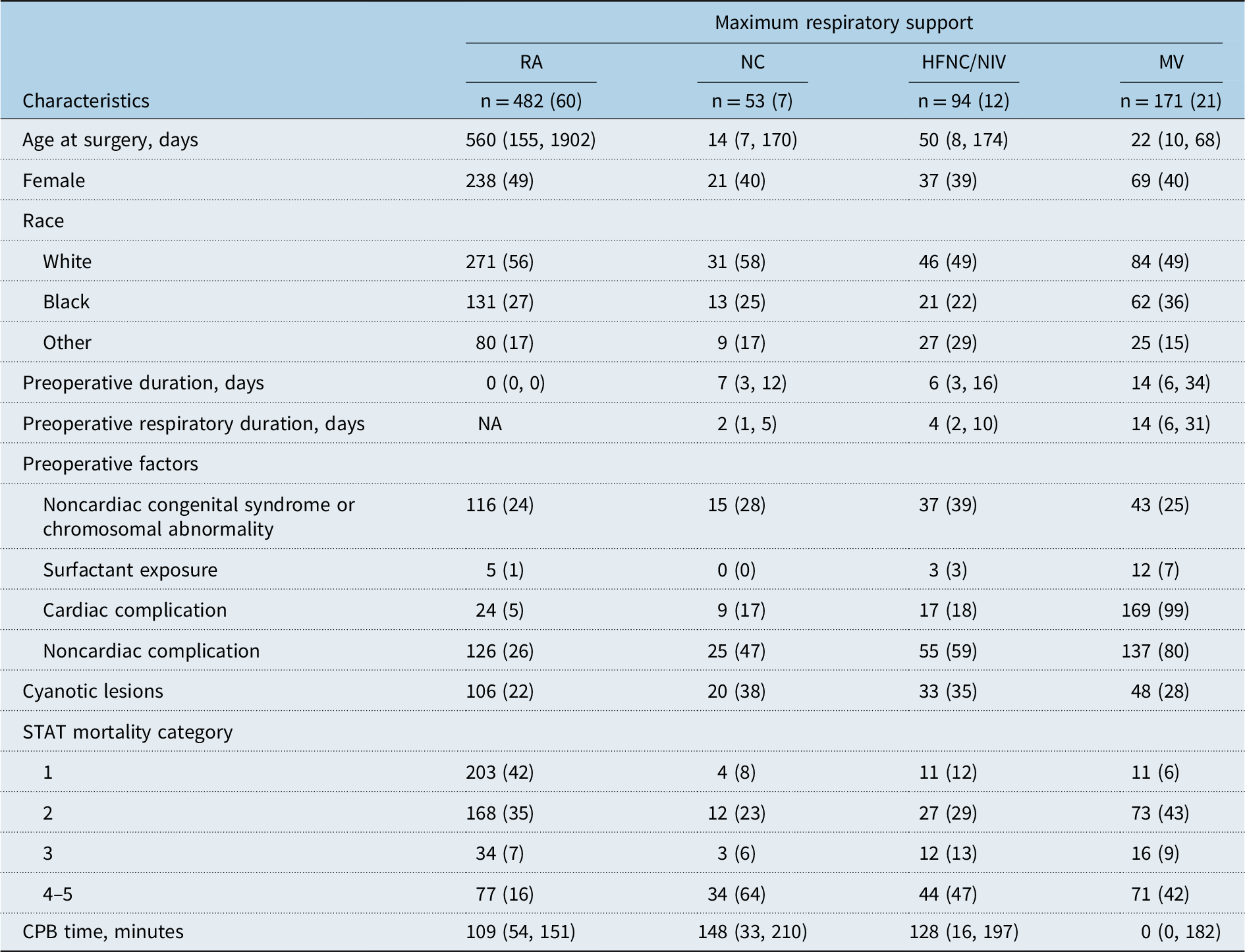
We identified a total of 701 children who underwent 800 cardiac surgical procedures during the study period. A complete list of surgical procedures and fundamental diagnoses can be found in Supplementary Tables S1 and S2, respectively. The median (25th, 75th percentiles) age at surgery was 0.5 years (0.1, 3.2), and 47% of the cohort was female. In the preoperative period, the maximum respiratory support for 60% of children was room air, while 7% received nasal cannula, 12% received high-flow nasal cannula or noninvasive ventilation, and 21% received invasive mechanical ventilation (Table 1). Preoperative duration was 0 days (0, 0) for those on room air, 7 days (3, 12) for those on nasal cannula, 6 days (3, 16) for those on high-flow nasal cannula/noninvasive ventilation, and 14 days (6, 34) for those on mechanical ventilation. Approximately 10% of children underwent an escalation in preoperative respiratory support from the time of admission to the day of surgery. Escalation in preoperative respiratory support was found to correlate with preoperative duration, with those who experienced an escalation in preoperative respiratory support more likely to have a longer preoperative duration (odds ratio = 1.51, 95% CI 1.42–1.60). The total duration of preoperative respiratory support for children was 2 days (1, 5) on nasal cannula, 4 days (2, 10) on high-flow nasal cannula/noninvasive ventilation, and 14 days (6, 31) on mechanical ventilation, and 13% of children were on invasive mechanical ventilation on the day of surgery. To address concern for variations between noninvasive ventilation and high-flow nasal cannula and the impact of including these children in the same group, the analysis was repeated excluding the six children on noninvasive support. Comparing the adjusted odds ratios (with 95% CI) for high-flow nasal cannula alone versus high-flow nasal cannula and noninvasive ventilation together, mortality [3.53 (1.11–11.26) versus 3.69 (1.20–11.40)], postoperative length of stay [1.70 (1.61–1.80) versus 1.77 (1.68–1.86)], and major complications [1.09 (0.43–2.76) versus 1.15 (0.47–2.82)] varied slightly with no change in statistical significance.
Patient and operative characteristics based on maximum respiratory support*

RA = room air; NC = nasal cannula; HFNC = high-flow nasal cannula; NIV = noninvasive ventilation; MV = mechanical ventilation; STAT = The Society of Thoracic Surgeons-European Association for Cardio-Thoracic Surgery; CPB = cardiopulmonary bypass.
* Counts (%) or median (25th, 75th percentiles).
Mortality
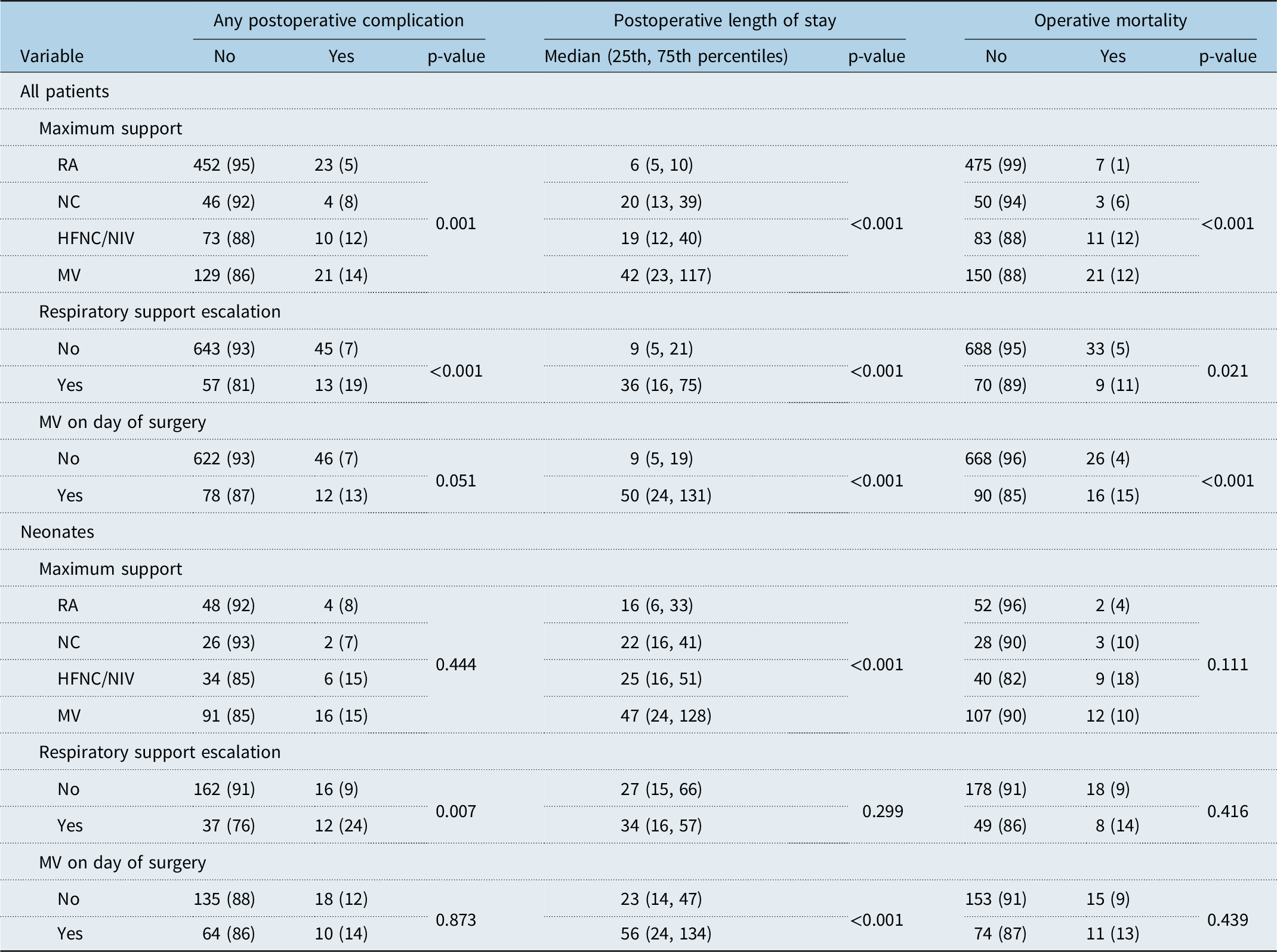
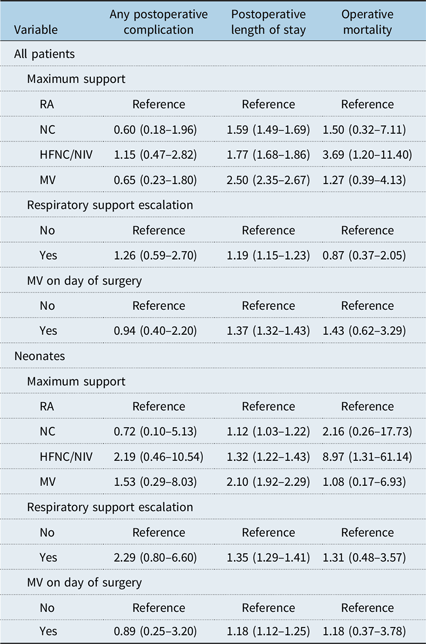
Operative mortality for the whole cohort was 5%, and it varied based on the maximum mode of preoperative respiratory support received. Operative mortality for children on nasal cannula (6%), high-flow nasal cannula/noninvasive ventilation (12%), and invasive mechanical ventilation (12%) was greater than for those who remained on room air (1%, p < 0.001) (Table 2). In addition, operative mortality was greater for children who experienced an escalation in preoperative respiratory support mode compared to those who did not (11 versus 5%, p = 0.021) and for those on invasive mechanical ventilation on the day of surgery (15 versus 4%, p < 0.001) (Table 2). After adjusting for covariates, multivariable analysis showed that only children on preoperative high-flow nasal cannula/noninvasive ventilation had increased odds of mortality following cardiac surgery compared to those who remained on room air (odds ratio = 3.69, 95% CI 1.2–11.4) (Table 3).
Study outcomes based on maximum respiratory support mode, escalation in respiratory support, and mechanical ventilation on the day of surgery.*

RA = room air; NC = nasal cannula; HFNC = high-flow nasal cannula; NIV = noninvasive ventilation; MV = mechanical ventilation.
* Counts (%) or median (25th, 75th percentiles).
Adjusted odds ratios (95% CIs) for study outcomes based on maximum preoperative respiratory support mode, escalation in respiratory support, and mechanical ventilation on the day of surgery.

RA = room air; NC = nasal cannula; HFNC = high-flow nasal cannula; NIV = noninvasive ventilation; MV = mechanical ventilation.
Postoperative hospital length of stay
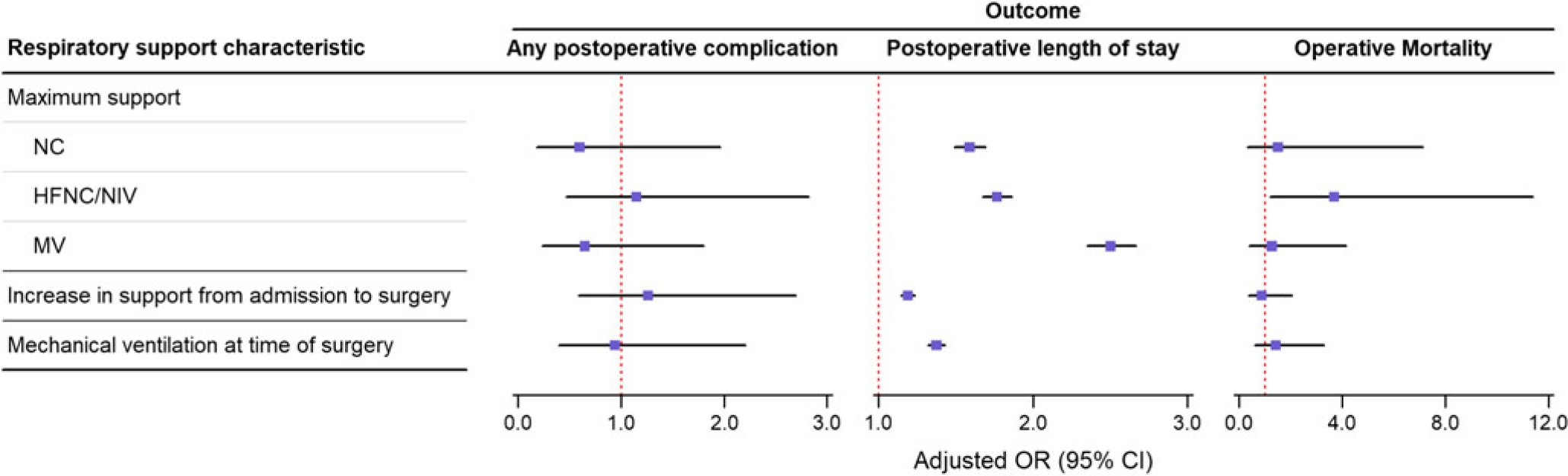
Among survivors, the median postoperative length of stay was 10 days (6, 28), and both the median and the interquartile range increased with higher maximum mode of preoperative respiratory support (Table 2). The median postoperative length of stay for the surviving children on nasal cannula [20 days (13, 39)], high-flow nasal cannula or noninvasive ventilation [19 days (12, 40)], and invasive mechanical ventilation [42 days (23, 117)] were all longer than for children who remained on room air preoperatively [6 days (5, 10), p < 0.001]. In addition, median postoperative length of stay was longer for both children who experienced an escalation in preoperative respiratory support compared to those who did not [36 days (16, 75) versus 9 days (5, 21), p < 0.001] and for children who were on invasive mechanical ventilation on the day of surgery compared to those who were not [50 days (24, 131) versus 9 days (5, 19), p < 0.001]. In multivariable analysis, we found that all modes of maximum preoperative respiratory support were associated with an increased postoperative length of stay compared to children who remained on room air (Fig 1). In addition, both escalation in preoperative respiratory support (odds ratio = 1.19, 95% CI 1.15–1.23) and invasive mechanical ventilation on the day of surgery (odds ratio = 1.37, 95% CI 1.32–1.43) were associated with increased postoperative length of stay.
Adjusted odds ratios for study outcomes based on maximum preoperative respiratory support mode, escalation in respiratory support, and mechanical ventilation on the day of surgery.

Major complications
Approximately 10% of the surviving children experienced a major postoperative complication. Major postoperative complications were more common among those on preoperative nasal cannula (8%), high-flow nasal cannula or noninvasive ventilation (12%), and mechanical ventilation (14%) compared to those who remained on room air (5%, p = 0.001) (Table 2). Postoperative complications were also more common for children who experienced an escalation in preoperative respiratory support (19 versus 7%, p < 0.001) but not for children who were on mechanical ventilation on the day of surgery (13 versus 7%, p = 0.051). Multivariable analysis showed no association between maximum preoperative respiratory support, escalation in preoperative respiratory support, or invasive mechanical ventilation on the day of surgery and postoperative complications (Fig 1).
Neonate cohort clinical characteristics
We identified a subcohort of 243 neonates who underwent 253 cardiac procedures at a median age of 11 days (6, 22). The median gestational age for neonates was 38 weeks (32, 39), and the median birthweight was 2900 g (1700, 3450). Among neonates, 79% received preoperative respiratory support. This included 12% who received nasal cannula, 19% who received high-flow nasal cannula or noninvasive ventilation, and 47% who received mechanical ventilation as their maximum preoperative respiratory support. In addition, 23% of neonates experienced an escalation in preoperative respiratory support, and 34% of neonates were on invasive mechanical ventilation on the day of surgery.
Neonatal outcomes
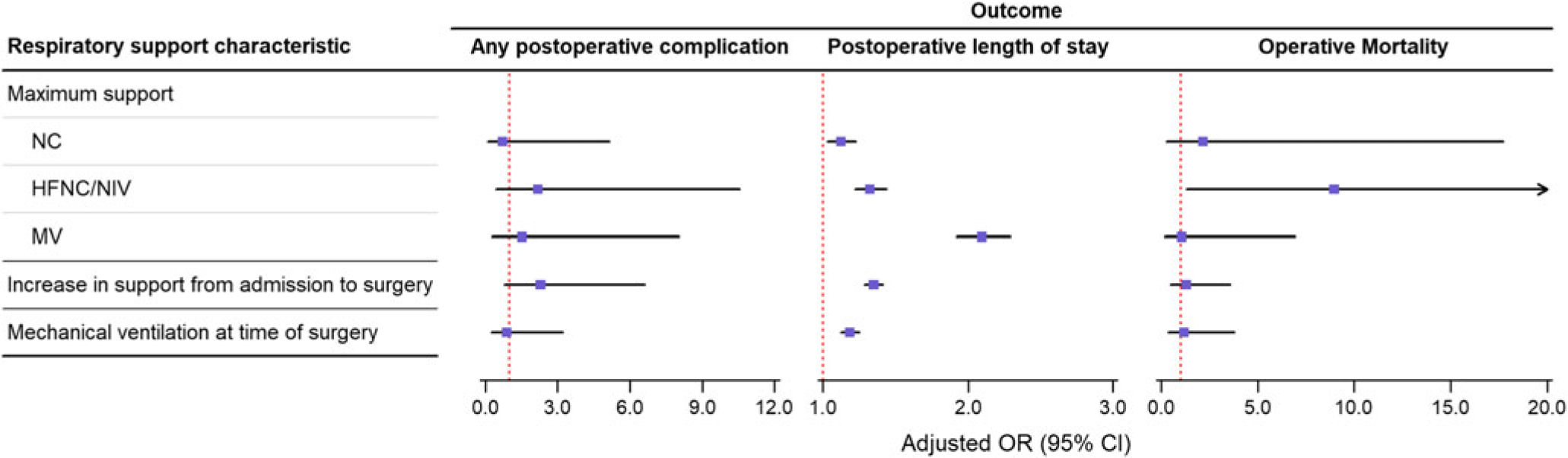
Among neonates, operative mortality was 10%, and 17% experienced a major postoperative complication. The median postoperative length of stay for neonates was 31 days (15, 71). Similar to the main cohort, median postoperative lengths of stay for neonates on preoperative nasal cannula [22 days (16, 41)], high-flow nasal cannula or noninvasive ventilation [25 days (16, 51)], and invasive mechanical ventilation [47 days (24, 128)] were all longer compared to neonates who remained on room air [16 days (6, 33), p < 0.001] (Table 2). Neonates on invasive mechanical ventilation on the day of surgery also experienced a greater postoperative length of stay than those who were not [56 days (24, 134) versus 23 days (14, 47), p < 0.001]. Multivariable analysis showed an association between all modes of preoperative respiratory support, escalation in preoperative respiratory support, and invasive mechanical ventilation on the day of surgery and an increased postoperative length of stay in neonates (Table 3). In addition, multivariable analysis showed an association between neonates on preoperative high-flow nasal cannula or noninvasive ventilation and increased odds of mortality compared to those on room air (odds ratio = 8.97, 95% CI 1.31–61.14) (Table 3). None of the other modes of preoperative respiratory support were associated with mortality, and there were no associations between any preoperative respiratory support modes and postoperative complications in neonates (Fig 2).
Adjusted odds ratios for study outcomes based on maximum preoperative respiratory support mode, escalation in respiratory support, and mechanical ventilation on the day of surgery in neonates.

Discussion
Among survivors, children who received respiratory support prior to cardiac surgery had increased odds of prolonged postoperative length of stay compared to children on room air in the preoperative period. In addition, odds of prolonged postoperative hospital length of stay increased progressively with each increase in preoperative respiratory support mode, and children who required escalation in preoperative respiratory support compared to those who did not, as well as children on invasive mechanical ventilation on the day of surgery compared to those who were not, were more likely to experience prolonged postoperative length of stay. However, only preoperative high-flow nasal cannula or noninvasive ventilation was associated with greater odds of operative mortality in children. These associations all held true in sensitivity analysis limited to neonates.
Prolonged length of stay is an important measure of morbidity as it captures the influence of several pre-, intra-, and postoperative factors and may serve as an indirect proxy of a patient’s condition. Prolonged length of stay also has a negative impact on short- and long-term neurodevelopmental outcomes in children with CHD.Reference Wernovsky and Licht13 In the Boston Circulatory Arrest Study of infants who underwent cardiac surgery, hospital length of stay was independently associated with lower full-scale, verbal, and performance IQ.Reference Newburger, Wypij and Bellinger14 Prolonged length of stay also increases resource utilisation and costs. An analysis of 12,718 congenital heart surgery operations across 27 North American centres revealed an average excess cost per case of $19,273 for each additional day of length of stay above the median.Reference Pasquali, He and Jacobs15 Identifying factors that predict or reduce postoperative length of stay in children undergoing cardiac surgery is therefore essential.
Our findings are consistent with single-centre studies that analysed the association between preoperative invasive mechanical ventilation and hospital length of stay. Among 355 children admitted to a cardiac ICU, preoperative mechanical ventilation was associated with two-fold greater odds of prolonged length of stay following cardiac surgery.Reference Brown, Ridout, Goldman, Hoskote and Penny6 Similarly, a retrospective study of 693 children after cardiac surgery found that preoperative mechanical ventilation was associated with an ICU stay above the 60th percentile of 3 days (odds ratio = 5.23, 95% CI 1.71–16.13).Reference Pagowska-Klimek, Pychynska-Pokorska, Krajewski and Moll7 Our study supplements these prior results by demonstrating that noninvasive preoperative respiratory support, escalation of preoperative respiratory support, and invasive respiratory support on the day of surgery are also associated with prolonged postoperative length of stay.
We did not find any associations between preoperative respiratory support and postoperative complications in either child or neonate survivors. This finding differs from past studies. An analysis of 2557 neonates from 53 centres following the Norwood operation found that preoperative mechanical respiratory support was associated with 30% greater odds of experiencing one or more major postoperative complications (odds ratio = 1.3, 95% CI 1.03–1.6).Reference Hornik, He and Jacobs5 This significant finding may be related to the high morbidity associated with the Norwood operation. Our smaller, mixed cohort included children of all ages undergoing any cardiac surgery, which may have masked association between preoperative respiratory support and postoperative complications in higher complexity lesions. In addition, it is possible that other complications, beyond those analysed in this study, are associated with preoperative respiratory support.
Previous mortality risk factor studies in children undergoing cardiac surgery have demonstrated an association between preoperative invasive respiratory support and mortality. Among 25,476 paediatric cardiac operations recorded in the Society of Thoracic Surgeons Congenital Heart Surgery Database, discharge mortality was significantly greater in neonates (15.1 versus 9.88%, p < 0.0001), infants (11.5 versus 2.91%, p < 0.0001), and children (14.4 versus 0.92%, p < 0.0001) who received preoperative invasive mechanical ventilation compared to those who did not.Reference Jacobs, O’Brien and Pasquali4 Single-centre studies have similarly identified preoperative invasive mechanical ventilation as a mortality risk factor.Reference Shamszad, Gospin, Hong, McKenzie and Petit16–Reference Cheng, Almodovar and Laussen18 However, none of these studies analysed noninvasive respiratory support. Our study builds on these findings by demonstrating that noninvasive preoperative respiratory support is also associated with operative mortality. In our cohort, mortality for children on noninvasive support (12%) and on invasive mechanical ventilation (12%) was comparable, and both were significantly greater than mortality among children who remained on room air before surgery (1%, p < 0.001). However, mortality in neonates on noninvasive support (18%) was greater than mortality in neonates on invasive support (10%). Furthermore, while invasive mechanical ventilation was not significantly associated with mortality in our multivariable analysis, children (odds ratio = 3.69, 95% CI 1.2–11.4) and neonates (odds ratio = 8.97, 95% CI 1.31–61.14) with preoperative noninvasive ventilation were found to have greater adjusted odds of operative mortality. These increased odds of mortality are similar to those observed in a previous study of 180 premature neonates with critical CHD receiving preoperative conventional invasive mechanical ventilation in 2002–2008 (odds ratio = 5.1, 95% CI 1.4–18.4).Reference Cheng, Almodovar and Laussen18 We can only speculate as to why noninvasive ventilation was associated with mortality in our cohort, while invasive ventilation was not. Noninvasive ventilation does not reduce work of breathing and respiratory energy expenditure to the same extent as invasive mechanical ventilation.Reference Wysocki and Antonelli19 Thus, it is possible that children and neonates on noninvasive ventilation are inadequately supported prior to surgery, thereby worsening their postoperative outcomes. This may be particularly relevant in children with significant pulmonary pathology, who may have traditionally been supported with invasive mechanical ventilation, but who may now be receiving noninvasive support instead.Reference Romans, Schwartz and Costello20 It is also possible that greater use of preoperative noninvasive respiratory support in children with CHD in recent years has simply shifted the mortality risk of preoperative invasive respiratory support to the noninvasive support group. Given the potential for noninvasive support to reduce intubation-related morbidities, such as preoperative sedation or neuromuscular blockade-associated complications, this finding alone may be beneficial. In either case, our findings suggest that careful consideration of preoperative patient selection for noninvasive support may be needed.
To our knowledge, this study is the first to provide a detailed analysis of how preoperative respiratory support affects outcomes in children undergoing cardiac surgery. While previous studies have reported mechanical ventilation as a risk factor for poor outcomes in this population, ours is the first to investigate associations between mode, timing, and escalation of preoperative respiratory support and outcomes. In addition, this study is the first to analyse these preoperative respiratory support parameters in neonates alone.
The key limitation of our study is our inability to control for the indication for preoperative respiratory support, which may vary in this population. For children with preoperative primary pulmonary disease, preoperative respiratory support may be a proxy for prolonged postoperative pulmonary convalescence, or worsened postoperative cardiopulmonary interactions.Reference Alexander, Ungerleider, Meliones, McMillan, Cooper and Jacobs21 These children will need time for their lungs to recover before undergoing surgery. Among the neonates and children included in our cohort, some may have received preoperative ventilation to treat central apnoea associated with prostaglandins administration, or to preempt loss of airway protection during transport or preoperative diagnostic procedures (e.g. brain MRI).Reference Gupta, Leven, Stewart, Cheung and Patel22, Reference Meckler and Lowe23 Under these circumstances, preoperative respiratory support may contribute to pulmonary and overall morbidity, due to the possible need for sedation, the increased risk of pulmonary infections, the impaired ability to feed, and the potential for mechanical ventilation-induced lung injury.Reference Slutsky and Ranieri24 In the absence of underlying primary respiratory disease, children may receive preoperative respiratory support to reduce work of breathing and improve oxygen delivery in left heart failure.Reference Donnellan and Justice25 By normalising venous saturations, reducing work of breathing, eliminating negative intrathoracic pressures swings, and thereby decreasing systemic ventricular afterload, respiratory support may improve the preoperative state of children suffering from left heart failure by optimising their oxygen supply-demand balance.Reference Cooper, Jacobs and Chai26 In children with parallel pulmonary and systemic circulations (e.g. hypoplastic left heart syndrome), respiratory support may be needed to control relative fractions of pulmonary and systemic blood flow and be indicative of worsened preoperative systemic cardiac output.Reference Sarris, Balmer and Bonou27 For children who receive ventilation to support their altered cardiovascular physiology, prolonged postoperative recovery may be due to the severity of their lesions, and respiratory support may actually improve their preoperative condition and subsequent outcomes.
Additional limitations of our study include several factors inherent in retrospective research. Although we controlled for a wide variety of patient, surgical, and respiratory support characteristics, there may be other risk factors contributing to variability in outcomes. For example, we were not able to obtain the duration of each type of preoperative respiratory support, which likely affects outcomes. In addition, this was a single-centre study subject to the effects of local practice patterns and may not be generalisable to other care settings. Incorporation of preoperative respiratory support parameters into an existing registry for children undergoing cardiac surgery would provide useful information on how preoperative respiratory support affects outcomes. Used in combination with blood gas, haemodynamic, and chest X-ray data, research derived from this registry could provide greater insight into the associations between preoperative respiratory support, lung injury, and prolonged recovery.
In conclusion, we found that any preoperative respiratory support is associated with increased odds of prolonged postoperative length of stay following cardiac surgery compared to children who remain on room air preoperatively. Understanding how preoperative respiratory support affects children undergoing cardiac surgery may help guide preoperative management and surgical timing, inform prognostic conversations, and improve risk stratification models in this population.
Supplementary material
To view supplementary material for this article, please visit https://doi.org/10.1017/S1047951119002786
Acknowledgements
The authors thank the Duke Clinical Research Institute and Duke University Medical Center for data acquisition and support.
Financial Support
This work was funded by the National Heart, Lung, and Blood Institute (grant 5R25HL13530402).
Conflicts of Interest
K.O.Z. receives financial support from Purdue Pharma. C.P.H. receives salary support for research from National Institute for Child Health and Human Development (NICHD) (K23HD090239), the US government for his work in pediatric and neonatal clinical pharmacology (Government Contract HHSN267200700051C, PI: Benjamin, under the Best Pharmaceuticals for Children Act), and industry for drug development in children (www.dcri.duke.edu/research/coi.jsp).
Ethical Standards
The institutional review board at Duke University approved this study (IRB Pro00100843) and waived the need for informed consent.