Introduction
Sub-Saharan Africa faces a high burden of cancer and HIV, which strains families as caregivers and health systems. Cancer is the second leading cause of death globally responsible for an estimated 9.6 million deaths in 2018 and 70% of the deaths were in developing countries (World Health Organization, 2018a, 2018b). In Uganda with a population of 42.4 million, there were 32,617 new cancer cases and 21,829 deaths (WHO, 2018a, 2018b), and cancer rates are expected to grow by 400% over the next 50 years (Ferlay et al., Reference Ferlay, Soerjonafaram and Dikshit2013). In 2015 alone, 44,000 new patients with cancer were received at the Uganda Cancer Institute in Kampala (Ministry of Health Policy Statement, 2016/2017).
A report of the Financial Year (FY 2017/2018) showed that the annual cancer incident cases were 80,000 (National Planning Authority, NPA, 2020).
In 2018, an estimated total global population living with the Human Immunosuppressive Virus/Acquired Immunodeficiency Syndrome (HIV/AIDS) was 37.5 million, 61% were in Sub-Saharan Africa with 1.7 million new infections and 77,000 deaths reported that year alone (Joint United Nations Programme on HIV/AIDS, UNAIDS, 2019).
The most recent report by UNAIDS (2019) estimated that 1.4 million Ugandans are living with HIV/AIDS with 53,000 new cases and 23,000 HIV/AIDS-related deaths reported annually (UNAIDS, 2019).
In Uganda, at least 90% of people with cancer and HIV/AIDS require palliative care.
Since its founding in 1993, Hospice Africa Uganda (HAU) has been providing palliative care to patients with cancer, HIV/AIDS and other life-limiting illnesses as well as support to their families in their homes (90%) where most of the care is provided by family caregivers. To date, HAU has cared for over 34,000 patients and currently cares for about 2,200 patients at a given time (HAU Annual Report, 2019). Uganda is now regarded as a leader in Sub-Saharan Africa in the development and provision of palliative care and as the second-best place to die in Africa because of its quality of palliative care (Economist Intelligence Unit, 2014).
Cancer and HIV/AIDS and their treatment exert tremendous burden on patients, families, and the communities. Public health education on palliative care has in the past focused mainly on improving patient outcomes such as pain and symptom management with less emphasis directed on the needs of family caregivers who are left vulnerable to psychological distress or depression (Leseure and Chongkha-Ang, Reference Leseure and Chongkha-Ang2015). More so, the current trend in health policy puts emphasis on cutting down hospital care and shifting most of the care to the home (Leseure and Chongkha-Ang, Reference Leseure and Chongkha-Ang2015). Providing care for a chronically ill patient is stressful and can contribute to physical and psychiatric morbidity in family caregivers (Areia et al., Reference Areia, Fonseca and Major2019).
A study in Australia indicated that caregiving significantly affected caregiver's grief, quality of life, and general health, and it took nearly a year for caregivers to adjust to the impact of caregiving and bereavement (Breen et al., Reference Breen, Aoun and O'Connor2019). This evidence ties into the patient and family being one-unit reality which has been emphasized by the WHO. The WHO (2014) recommends that support for the family caregivers is a core aspect of palliative care provision and it is vital that family caregivers are assessed and appropriate care plans developed. Family caregivers are prone to physical and psychological morbidity with rates of depression and anxiety between 30% and 50% (WHO, 2014).
Indeed, depression is a significant problem among family caregivers in the palliative care setting and is associated with numerous adverse psychological outcomes for both the patients and caregivers (Hudson and Payne, Reference Hudson and Payne2011). A number of studies in the developed countries have shown a high prevalence of depression among family caregivers in palliative care. A study in the USA showed that 33–50% of caregivers suffered significant psychological distress and experienced higher rates of mental ill health compared with the general population (Hudson and Payne, Reference Hudson and Payne2011). A study in Korea reported that up to 33% of palliative caregivers exhibit depressive symptomatology and other mental and physical problems (Given et al., Reference Given, Wyatt and Given2004). Another study from the Netherlands found up to 58% of caregivers had clinical depression (Emmanuel et al., Reference Emmanuel, Fairclough and Slutsman2000; Park et al., Reference Park, Kim and Shin2013).
Several most recent studies have further highlighted the high prevalence of depression and other psychological morbidities related to the burden of care and their impact on quality of life of family caregivers of patients with cancer.
Areia et al. (Reference Areia, Fonseca and Major2019) in Spain reported a very high prevalence of psychological morbidity (66.1%) with 68.8% depression in family caregivers of patients with cancer.
Oechsle et al. (Reference Oechsle, Ullrich and Marx2019) found high mean levels of distress of 7.9 (SD 1.8; range: 2–10) with 95% presenting with clinically relevant distress levels among family caregivers of patients with advanced cancer at initiation of specialized palliative care. The most frequent problems were sadness (91%), sorrows (90%), anxiety (78%), exhaustion (77%), and sleep disturbances (73%). The prevalence of anxiety and depressive symptoms were 47% and 39%, respectively.
Perpiñá-Galvañ et al. (Reference Perpiñá-Galvañ, Orts-Beneito and Fernández-Alcántara2019) also found a high prevalence of clinical anxiety (48.1%), fatigue scores of 23.0 (SD = 8.5), intense overload and significant correlations between the variables of burden, fatigue, anxiety, and depression among caregivers of palliative care patients.
Lastly, Li et al. (Reference Li, Qiao and Luan2019) in their study of the relationships between family resilience, breast cancer survivors’ post-traumatic growth (PTG), quality of life (QOL), and their principal caregivers’ burden reported that family resilience had direct and indirect effects on QOL and caregiver burden, and it was positively related to the post-traumatic growth (PTG) of the survivors.
A dearth of evidence exists on the prevalence of depression and depressive symptoms in family caregivers of palliative care patients in Sub-Saharan Africa. Studies have reported a general prevalence of depression of 17.4% (Ovuga et al., Reference Given, Wyatt and Given2005) and 21% (Bolton et al., Reference Bolton, Wilk and Ndogoni2004) in the general population in Uganda. Tomlinson et al. (Reference Tomlinson, Grimsrud and Stien2009) reported a lifetime prevalence of 9.7% in a household survey in South Africa. Brody et al. (Reference Brody, Pratt Laura and Jeffrey2018) also found a similar prevalence of 8.1% in USA, but Sanni et al. (Reference Sanni, Onuoha and Alabi2018) reported a high prevalence of 24.9% in adults attending a Primary Health Care in Nigeria. However, to date, there is no published study on the prevalence of depressive symptoms and its associated factors among family caregivers of palliative care patients in Uganda. This evidence is urgently needed to support families in their role of caring for their loved ones who are facing illnesses.
The objectives of this study were therefore (1) to determine the prevalence of depressive symptoms among caregivers of cancer and HIV/AIDS patients attending palliative care service of HAU and (2) to identify factors associated with depressive symptoms among family caregivers of palliative care patients at HAU.
These findings inform policy makers and care providers about the magnitude of the problem, its associated factors and inform the development of robust strategies to address the problem.
Methods
Design
This was the mixed method study which used qualitative and quantitative methods and the findings were integrated at the results phase. The study was conducted at the two HAU centers in Kampala, the capital city of Uganda, and in Mbarara, 300 miles in South West Uganda.
Sampling
For the two settings, we generated the updated lists of active patients on the HAU care program and their associated caregivers. Subsequently, family caregivers were selected by simple random sampling. The eligibility criteria were that they had to be family members who were: (1) caring for the patient for 8 h and above per day, (2) had no history of mental illness, (3) adults 18 years or older, (4) caring for cancer or HIV/AIDS patients, and (5) were willing to participate and could communicate with the data collectors in any of the two commonly spoken languages in the areas of study (Luganda and English). The selected family caregivers were approached and given details about the study. They were informed that the interviews will be recorded. Written informed consent were then obtained from participants who consented to participate. These were assured of confidentiality and informed that their participation was voluntary and that declining to participate in the study would not in any way affect the care given to their patients.
Both quantitative and qualitative data were collected during the same interview.
Measurements
Outcome variables
Depressive symptoms were assessed using the Patient Health Questionnaire-9 (PHQ-9). The PHQ-9 has been validated in Uganda and in other developing countries. Adewuya et al. (Reference Adewuya, Ola and Afolabi2006), Bizu et al. (Reference Bizu, Williams and Lemma2013), and Molebatsi et al. (Reference Molebatsi, Motihatlhatlhedi and Wambua2020) demonstrated very high validity Cronbach's Alpha 0.85 and 0.799 in Ethiopia and Botswana, respectively. It is a 9-item scale score corresponding to DSMIV-TR Diagnostic criteria for mental disorders. Each item is rated on a scale scored from 0 (Not at all) to 3 (Nearly every day) based on the frequency of occurrences of depressive symptoms during the past two weeks. The total score ranges from 0 to 27 with scores 5–9 indicating mild depressive symptoms, 10–19 moderate depressive symptoms, and 20 or more severe depressive symptomatology.
Socio-demographic questionnaire
Socio-demographic data were collected using a semi-structured questionnaire. We collected data on socio-demographic characteristics and family support factors. For family support, we collected data on social support services received by patients. The questionnaire was pre-tested and revised accordingly to enhance the clarity of instructions and questions.
Statistical analysis
We analyzed data using stata version 10. We summarized continuous variables by means and standard deviation and categorical variables by proportions.
We categorized the depressive symptom scores as follows: 5–9 (mild depressive symptoms), 10–19 (moderate depressive symptoms, 20+ (major depressive symptomatology), and examined the prevalence of the various levels of depressive symptoms, reported as a proportion with scores ranging from 5 to 20 and above.
To further assess for an association between depressive symptomatology and socio-demographic variables, we collapsed the data into a binary variable (no depressive symptoms (0–4) and the presence of depressive symptoms (5+)) undertook bivariate analysis and used the chi-square test as the measure of association. We also conducted univariate analysis of variance to assess for the relationship between the presence of depressive symptoms and continuous variables. Variables found significant at 0.2 were considered for multivariate analysis. At the multivariate level, we used binary logistic regression analysis for associations between the presence of depressive symptoms and socio-demographic variables. We present odds ratios as a measure of strength of association between the selected factors and the presence of depressive symptoms. A P-value of ≤0.05 at 95% confidence level was adopted for statistical significance.
Qualitative data
Qualitative data collected from open-ended questions were recorded, transcribed, and analyzed using the Inductive thematic six-stage analytic process described by Braun and Clarke (Reference Braun and Clarke2006).
The first step was to familiarize with the data by reading and re-reading the transcripts.
The second step was to organize the data and extract significant statements that relate to the caregiver's experiences. The third step was to search and identify common themes that were emerging. In the stage four, the identified themes and meanings were cross-checked by the co-investigator who compared them with the original meanings in the transcripts to ensure consistency of findings. The fourth step was to review the themes, to specifically ensure that the data supported the themes identified. The fifth step was to name the theme which was a further refinement of the themes. The sixth and the final step were to write the report. Data analysis was performed using Nvivo software.
Results
A total of 168 family caregivers were approached and 161 were recruited, the response rate of 95.8%. All the 161 were interviewed.
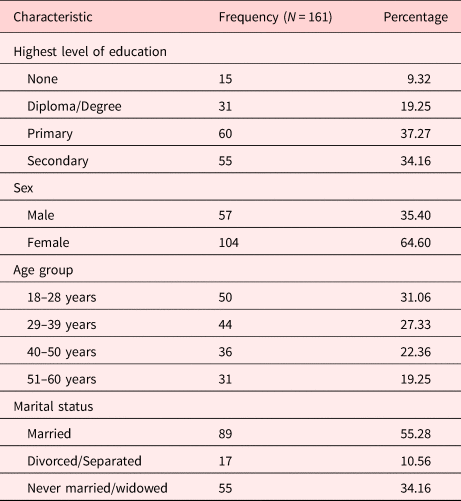
The majority of the respondents were female (64.6%), had completed secondary education (71.4%), and were married (55%). The socio-economic and occupational backgrounds of the caregivers were diverse consisting of the unemployed 9(12.16%), housewives 13(17.57%), peasant farmers 22(29.73%), and doctors, nurses, and teachers 5(6.76%) (see Table 1). The duration of caregiving ranged from 1 to 3 years (n = 39; 52.7%), 4–6 years (n = 6; 8.1%), and up to 10 years (n = 5; 6.8%).
Showing social-demographic factors of the respondents

Self-reported family support services received in the previous 14 days
The majority of family caregivers 62(83.78%) received some monetary support to buy medicines and transport to hospital, 49(66.22%) to buy food, 30(40.54%) and 29(39.19%) had some assistance with caring; 14(18.92%) received protective gear, and 10(13.5%) received support from the HAU Day Care Program. The majority of the family caregivers recruited 157(98%) said they received no direct pay for care they rendered.
Prevalence of depressive symptoms among palliative care family caregivers
Of the 161 family caregivers recruited, 23% had mild depressive symptoms, 14.3% had moderate depressive symptoms, 8.7% had severe depressive symptoms, and 54% had no depressive symptoms. The prevalence of depressive symptoms in this population was 46%.
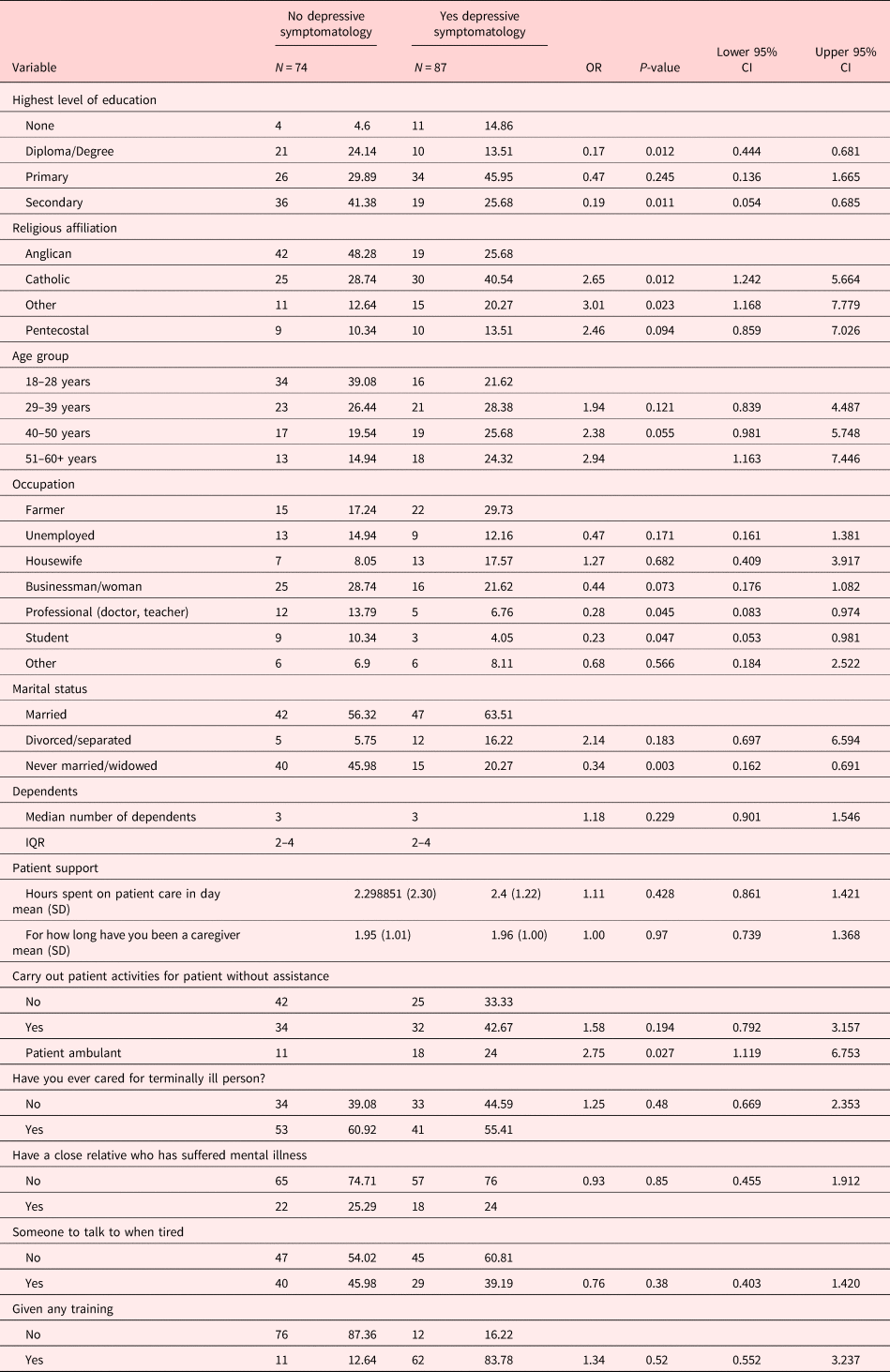
At the bivariate level, age group, marital status, religious affiliation, and occupation were significantly associated with the presence of depressive symptoms (see Table 2).
Bivariate logistic analysis of socio-demographic factors of respondents

Socio-economic factors associated with depression among family carers
Bivariate analysis of socio-economic factors associated with depression revealed that being a doctor, nurse, teacher, or student were the only occupations significantly associated with depression (OR = 0.28; 95% CI: 0.08–0.97; P = 0.045;. S see Table 2).
However, 32(43.2%) family caregivers who carried out activities of daily living to patients were about three (2.9) times more likely to develop depressive symptoms (Table 3).
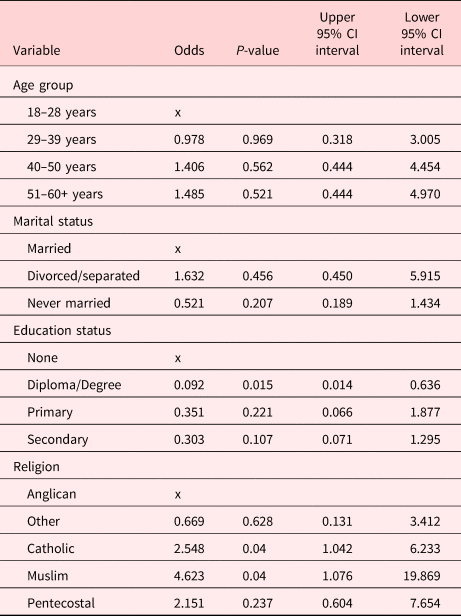
Multivariate analysis of all factors associated with depression among caregivers

x, reference category.
Qualitative findings on self-reported challenges encountered by caregivers
Financial strain
Themes from qualitative data analysis revealed that the major problems reported by half 81(51%) of family caregivers was lack of finances to buy medicine and food and about a third (27%) of them further noted that the lack of money as the major source of stress to them.
“Sometimes the patient may want to eat special food of their choice but lack of finances makes me unable to provide yet that may be the only meal he would eat” (Family caregiver C27).
Dual identities
Some family caregivers reported that they were also ill, but they did not specify the nature of their illnesses which would have prompted the interviewer to take action. The illness might have exacerbated the stress associated with the role and responsibilities of caring for the palliative care patients.
“I get tired because I am also sick, the long waiting time in the hospital, on and off loss of consciousness by the patient keeps me awake all the time” (Family caregiver C5).
Lack of knowledge about illness
Family caregivers were also concerned about the lack of awareness about illness as expressed by their patients, which made decisions on goals of care difficult. Some patients insist on searching for alternatives to the terminal diagnosis and pursue alternative curative options which may not exist. This whole process drains household resources pushing households into more vulnerability.
A husband complained:
“my wife believes she has been bewitched, so this has taken a lot of our resources. She has not accepted the fact that she has cancer. She only believes in traditional healers who ask for a lot of money and other materials” (Family caregiver C7).
Feeling unappreciated and blame
Family caregivers were also concerned about not being appreciated for the family caregiver's role and being blamed for the devastating calamity that befall the family.
One mother said:
“my child's father blames me for producing a child with cancer. This really hurts me when I have to see my child not getting better” (Family caregiver C9).
Another family caregiver reported,
“I have been disrespected by patient's family yet I am doing my best” (Family caregiver C14).
Discussion
This study aimed to establish the prevalence of depressive symptoms and the correlates among family caregivers of palliative care patients at Hospice Africa Uganda. We found a high prevalence of depressive symptomatology (46%) among the 161 family caregivers of cancer patients attending HAU palliative care services.
This prevalence is much higher than the prevalence of depression in the general population in Uganda mentioned above 17.4% (Ovuga et al., Reference Ovuga, Boardman and Warsaman2005), 21% (Bolton et al., Reference Bolton, Wilk and Ndogoni2004), and in recent studies in South Africa 9.7% (Tomlinson et al., Reference Tomlinson, Grimsrud and Stien2009), and Nigeria 24.9% (Sanni et al., Reference Sanni, Onuoha and Alabi2018). Our finding of the prevalence of depression 46% among caregivers is higher than the finding in Korea up to 33% (Given et al., Reference Given, Wyatt and Given2004) and the recent study in the USA of 15% (Nipp et al., Reference Nipp, Fishbein and El-Jawahri2015) and falls within the range of other findings from USA 18% to 58% (Hudson and Payne, Reference Hudson and Payne2011; Oechsle et al., Reference Oechsle, Ullrich and Marx2019), 39% and the WHO report of 30% to 50% (WHO, 2018a, 2018b) but is much lower than the most recent finding of 68.8% in Portugal (Areia et al., Reference Areia, Fonseca and Major2019).
Although we could not find any publication on depression in caregivers of cancer patients in Sub-Saharan Africa, several studies have been carried out on caregivers of HIV/AIDS patients in countries with high HIV infection prevalence.
These studies reported the prevalence of depression among caregivers ranging from 10.7% among carers of perinatally HIV infected adolescents in Kenya (Katona et al., Reference Katona, Abubakur and Nyongesa2020), 12.7% among spouse carers of HIV infected individuals in India (Ghale et al., Reference Ghale, Marcotte and Hirishikesh2015), 48.3% among carers of HIV infected children in Nigeria (Ogbonna et al., Reference Ogbonna, Emodi and Ikefuna2019) and 62% and 34% among carers of Status-Naïve paediatric patients in Haiti and the Dominican Republic, respectively (Beck-Sague et al., Reference Beck-Sague, Devieux and Maria Clauda Pinzon-Iregui2015). In all these studies, the prevalence of depression was higher among female carers and those from low socio-economic homes.
The wide variation in the prevalence rates could be due to different methods and depression screening instruments used but could also be due to socio-economic situations in those countries, health services, and the level of support from HIV services in each country.
Factors associated with depressive symptoms include age, marital status, level of education, occupation, religion, and work load. Family caregivers aged 60 and above were more likely to report depressive symptoms. This finding may not be surprising because depression is common among older adults associated with socio-economic and biological factors including loss of capacity and decline in functional abilities and health problems, bereavements, drop in socio-economic status, loneliness (WHO, 2017).
Older adult caregivers in this study could have experienced additional stress because they could have been caring for their spouses or worse still their children who might have been dying from HIV/AIDS a very prevalent problem in Uganda affecting mainly young people (UNAIDS, 2019).
Family caregivers within the age range of 29–60 years were more likely to suffer from depression symptoms. This is most likely due to the fact that these age groups are more likely to be married, working, and bringing up children. The additional responsibility of caring for a critically sick person at home could constitute additional stress. This negative impact of caregiving among young caregivers had been reported by Nijboer et al. (Reference Nijboer, Triemstra and Tempelarr2000), who attributed the depression to disruption in the caregivers life schedules because of the extra responsibility of looking after the ill family member in addition to work and family responsibility.
Our study found an association between marital status and depressive symptoms as being single was protective against depressive symptoms. We thought this could be due to the fact that single people did not have the additional responsibilities of caring for families and/or children in addition to the seriously ill patient. The study showed that the level of education seems to protect their caregivers against depressive symptoms. Caregivers with secondary education, diploma, or degrees were less likely to develop depressive symptoms. This is further reinforced by our qualitative findings which showed the lack of knowledge about illness being associated with limited capacity to make decisions on goals of care and accept treatment. We thought the most likely explanation is that education empowers them to have access to information about the illness and positive living which may strengthen their abilities to cope with stress and they probably had better financial resources through employment.
However, the study found that certain type of occupations/professions were significantly associated with the development of depressive symptoms. Doctors, nurses, teachers, and students were significantly more likely to have depressive symptoms compared with the unemployed, peasant farmers, and housewives. This finding may not be surprising because Medicine, Nursing, and Teaching are very demanding occupations. Combining these professional responsibilities with caring for a seriously sick relative at home can be a significant additional challenge. A study from Zimbabwe found that young females were disproportionately burdened with care giving tasks of family members with HIV/AIDS which adversely affected their education and career responsibilities (Robson, Reference Robson and Bourdillon2000).
A surprising finding from this study was the significant association between religious affiliation and depressive symptomatology. Being Catholic or Other (Muslim, Seventh Day Adventist) were significantly associated with depressive symptoms. The authors were unable to find a clear explanation for this finding and recommend further study.
Qualitative data analysis revealed that the major problems encountered by half of the caregivers (51%) were financial which nearly a third of them (27%) also reported being the major source of stress to them. This is not surprising because apart from the few doctors, nurses, and teachers (only five in the study), the overwhelming majority of caregivers were unskilled or peasants with very low incomes and received no pay for the care they gave. Although palliative care services offered by HAU including oral liquid Morphine, and health care in Government healthcare facilities are reported to be free, in most situations, the medicines prescribed at those facilities are not available in the facility pharmacy, therefore caregivers have to buy from private pharmacies. Uganda currently has no Health Insurance Scheme, which leaves the majority of self-employed or unemployed people, whose health care are not covered by their employers, to meet all their healthcare expenses. According to a report by the Uganda Ministry of Health of 2015, Ugandans were experiencing a very high out of pocket expenditure on health, equivalent to 41% of the total expenditure on health (National Health Annual Report, 2014/15).
Caregiving which involved carrying out activities of daily living (bathing, dressing, feeding, and toileting) for the patient was significantly associated with depressive symptomatology. The dual identity theme exposed by the qualitative findings may partly explain this as some caregivers are also reported battling illnesses that exerts pressure on their well-being and they have to carry out these activities 24 h a day.
A conflict between one caregiver (Caregiver C) and his wife (patient) regarding the involvement of traditional healers’ intervention is not surprising. Many patients in African setting still visit witch doctors. Belief in witchcraft being associated with serious illness and search for traditional alternatives is still widespread in Africa even among the educated and is partially responsible for late presentation to healthcare facilities and fruitless efforts by the relatives to find a cure for terminal illnesses often at significant cost to the family (Takin et al., Reference Takin, Given and Joshua2013). This calls for continued integration of palliative care services with traditional healers to address misconceptions and alleviate avoidable health-related suffering.
Finally, although this study did not involve intervention to deal with the high prevalence of depression among the study participants, recent studies which have also highlighted the high prevalence of psychological symptoms and distress related to burden of care among caregivers of patients with cancers (Areia et al., Reference Areia, Fonseca and Major2019; Li et al., Reference Li, Qiao and Luan2019; Oechsle et al., Reference Oechsle, Ullrich and Marx2019; Perpiñá-Galvañ et al., Reference Perpiñá-Galvañ, Orts-Beneito and Fernández-Alcántara2019) and have all emphasized the need and importance of providing psychological support, not only to the patient but also to the caregivers.
Significance of findings of this study
The results of this study provide the evidence on depressive symptoms in caregivers of cancer patients. This evidence is critical for informing policy, planning, and service development. Depression and depressive symptoms are a major cause of suffering and reduced quality of life and its symptoms, loss of energy, psychomotor retardation can adversely affect the mental and physical ability of the caregiver to offer the best care for the family member. The results of the study will be disseminated to, policy makers, service commissioners, palliative educators, palliative care practitioners to sensitize them about the existence of depression among caregivers of patients attending palliative care services and the need to equip the practitioners with skills to detect and manage depression and other psychosocial problems among caregivers competently as suggested by Areia et al. (Reference Areia, Fonseca and Major2019), Oechsle et al. (Reference Oechsle, Ullrich and Marx2019), Perpiñá-Galvañ et al. (Reference Perpiñá-Galvañ, Orts-Beneito and Fernández-Alcántara2019), and Li et al. (Reference Li, Qiao and Luan2019).
Limitations of the study
Only caregivers of cancer patients were studied. The study needs to be extended to caregivers of patients with other life-limiting conditions, such HIV/AIDS, those with end-stage renal failure, heart failure, and neurological conditions.
Strength of the study
This was the first study of its kind in Uganda and indeed in Sub-Saharan Africa which drew attention to the significant presence of depression symptomatology among caregivers of patients with cancer. Overwhelmed doctors and other health professionals in Africa tend to concentrate on the patient and pay less attention to the family caregiver and yet depression or other psychosocial issues in a caregiver can significantly impair their capacity to provide best care for their loved ones.
The study used mixed methods involving quantitative and quality methods. The qualitative part was able to bring out experiences and deep feelings of the family caregivers which could not be detected by the quantitative part of the study.
The study used the PHQ-9 which is one of the most widely used and well-validated instruments for screening for depressive symptoms in developing countries.
Conclusion
This study has revealed a very high prevalence of depressive symptoms and the associated factors among caregivers of cancer patients attending HAU. Urgent steps are needed to address the problem by (1) sensitizing the palliative care practitioners on burden of depressive symptoms in the caregivers of patient under their care, (2) providing them with skills to identify depressive symptoms and manage them appropriately, and (3) sensitizing policy makers and government to address the psychosocial challenges faced by the caregivers, particularly financial support to the caregivers to buy medicines and food for the terminally ill patient. The Uganda Government should consider including palliative care coverage in their health insurance scheme when developed because of the enormous need for palliative care due to the prevailing high prevalence of HIV/AIDS and the increasing prevalence of cancer and the high cost of palliative care.
Conflict of interest
None.