


The double burden of malnutrition
In the past decades, obesity has become an international public health issue. The prevalence continues to increase at an alarming rate, even though there is a growing awareness regarding the burden of obesity(1). Despite the likelihood of apparent overconsumption of calories in people with obesity, a paradoxical challenge is the co-existence of overnutrition alongside undernutrition known as the ‘double burden of malnutrition’. Within an individual, household or population, the double burden of malnutrition manifests through the simultaneous development of undernutrition (e.g. stunting, wasting or nutritional deficiencies) alongside overnutrition (e.g. overweight, obesity or other diet-related non-communicable diseases) across the life course(2). In reality, the double burden of malnutrition is more complex than a simple co-existence. Both undernutrition and overnutrition can propagate long-term effects due to interconnected biological pathways that involve metabolic dysregulation, inflammation and gut microbiome imbalance. Moreover, life-course exposure can increase the risk of developing non-communicable diseases by imposing a high metabolic load on a depleted metabolic capacity(Reference Wells, Sawaya and Wibaek3). In case of scarcity, micronutrients will be allocated to the functions needed for short-term survival rather than those required for long-term health, also known as the triage theory(Reference Ames4). The former will contribute to the development of certain chronic non-communicable diseases that are already prevalent in individuals with obesity (e.g. type 2 diabetes, cardiovascular disease or cancer)(Reference Astrup and Bugel5). Due to the severity of health implications, the United Nations have provided an umbrella of policies, programmes and plans within their decade of action on nutrition that aims to eliminate malnutrition in all forms by 2030(6). While there has been some progress, the prevalence of obesity continues to grow and is outweighing the efforts taken to prevent a further rise(1,Reference Steenackers, Mutwiri, van der Schueren and Matthys7) . As prevention fails, obesity treatment remains pivotal.
Obesity management
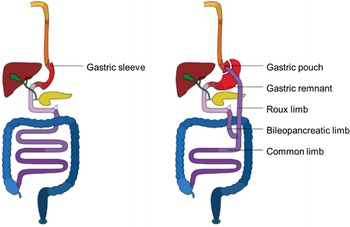
Due to the multifactorial nature of obesity, treatment is challenging. To achieve weight loss and improve obesity-related risk factors, guidelines recommend lifestyle changes, pharmacotherapy or bariatric surgery depending on the severity of overweight and associated health risks(Reference Bray, Fruhbeck, Ryan and Wilding8,Reference Magkos, Fraterrigo and Yoshino9) . Lifestyle changes should be the foundation of every obesity treatment. These changes include dietary alterations, increased physical activity and behavioural training(Reference Bray, Fruhbeck, Ryan and Wilding8,Reference Yumuk, Tsigos and Fried10,Reference Jensen, Ryan and Apovian11) . Failure of lifestyle change to induce (<5% of total body weight loss) or sustain (<1 year) weight loss indicates the necessity of complementary treatment options(Reference Bray, Fruhbeck, Ryan and Wilding8,Reference Yumuk, Tsigos and Fried10,Reference Jensen, Ryan and Apovian11) . Pharmacotherapy can result in durable weight loss beyond what lifestyle changes alone may produce(Reference Bray, Fruhbeck, Ryan and Wilding8,Reference Yumuk, Tsigos and Fried10,Reference Jensen, Ryan and Apovian11) . Until recently, long-term pharmacotherapy with suitable efficacy, tolerability and safety was perceived as a utopia. Nonetheless, recent studies showed that semaglutide at a dose of 2·4 mg can lower and sustain body weight loss by 15% after 1 year of treatment in combination with a diet and increased physical activity(Reference Davies, Færch and Jeppesen12–Reference Rubino, Abrahamsson and Davies14). Although that amount of weight loss is clinically relevant, it may seem insignificant compared with the results obtained by surgical intervention. A range of surgical or bariatric procedures has been developed that historically has been categorised as ‘restrictive’, ‘malabsorptive’ or ‘combined restrictive–malabsorptive’. Surgical procedures were deemed ‘restrictive’ when they limit food intake by reducing gastric volume, while procedures that affect nutrient absorption through an intestinal bypass were deemed ‘malabsorptive’(Reference Arterburn and Courcoulas15). Although this approach sounded appealing at first, a vast amount of evidence supports that the underlying mechanism is profoundly physiological rather than solely anatomical(Reference Stefater, Wilson-Pérez, Chambers, Sandoval and Seeley16,Reference Angrisani, Santonicola and Iovino17) . Decades of research have now linked weight loss to reduced appetitive behaviour and potentially increased energy expenditure. Underlying mechanisms that associate the rearrangement of the gastrointestinal tract with the favourable metabolic outcomes include at least central appetite control, the release of gut hormones, changes in microbiota composition and diversity, and changes in bile acid levels. For now, the exact response, combination and timing of signals remain largely unknown(Reference Akalestou, Miras, Rutter and le Roux18). To date, the main bariatric procedures are sleeve gastrectomy and Roux-en-Y gastric bypass. In a sleeve gastrectomy, the greater curvature of the stomach is longitudinally resected. In a Roux-en-Y gastric bypass, the stomach is reduced in size by forming a small gastric pouch without a pylorus and then a part of the small intestine is bypassed (Fig. 1)(Reference Nguyen and Varela19–Reference Steenackers, Vanuytsel and Augustijns21).
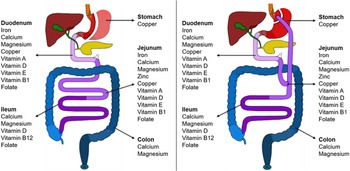
Sleeve gastrectomy (left) and Roux-en-Y gastric bypass (right).

These anatomical changes trigger a vast amount of physiological and hormonal changes that contribute to the favourable aspects of bariatric surgery. Irrespective of the type of procedure, the beneficial outcomes include substantial weight loss, improvement of obesity-related comorbidities and prolonged survival(Reference Maciejewski, Arterburn and Van Scoyoc22–Reference Carlsson, Jacobson and Peltonen25). Despite its effectiveness, bariatric surgery can result in complications due to the invasive nature of the procedure and the need for lifelong adjustment afterwards. Complications are commonly categorised into early (e.g. anastomotic leakage, gastrointestinal haemorrhage, internal hernia, obstruction, perforation, venous thromboembolism and wound infection) and late complications (e.g. anastomotic stricture, cholelithiasis, dumping syndrome, gastroesophageal reflux, gastrointestinal fistula, gastrointestinal ulceration, internal hernia, malnutrition, nutritional deficiencies and obstruction)(Reference Brethauer, Kim and Chaar26–Reference Thereaux, Lesuffleur and Czernichow28). Despite a diversity of complications, nutritional deficiencies are the most common repercussion of bariatric surgery.
Development of nutritional deficiencies after bariatric surgery
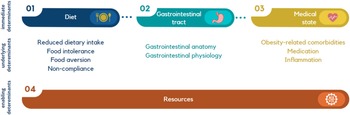
The pathological onset of nutritional deficiencies is not yet fully understood, but a variety of determinants are involved. Therefore, we developed a new framework to provide conceptual clarity on the role of key determinants in the development of nutritional deficiencies after bariatric surgery (Fig. 2). The framework acknowledges the immediate role of diet, the gastrointestinal tract and the medical state of the patient while highlighting different enabling resources.
Determinants of nutritional deficiencies after bariatric surgery.

Immediate and underlying determinants: diet
Vitamins and minerals are micronutrients that are essential for normal functioning, disease prevention and wellbeing. With some exceptions, micronutrients cannot be produced in the body and thus must be derived from the diet. If micronutrient intake is unable to compensate for its loss, nutritional deficiencies can arise with or without clinical symptoms and signs(Reference Berger, Shenkin and Schweinlin29). After bariatric surgery, a patient’s diet can be inadequate to meet his/her nutritional needs due to different underlying determinants: (i) reduced dietary intake, (ii) food intolerance, (iii) food aversion and (iv) non-compliance with dietary and supplementation recommendations (Fig. 2).
Reduced dietary intake
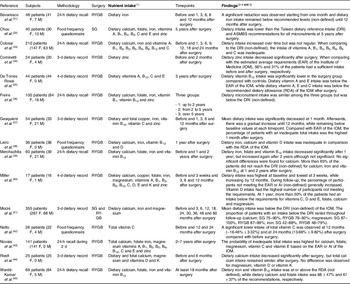
To determine if there are changes in dietary intake, several studies investigated the impact of different bariatric procedures on overall energy intake. A recent meta-analysis observed that caloric intake decreased significantly after sleeve gastrectomy (weighted mean difference: 939·8 kilocalories (kcal)/d; 95% CI 647·66–1231·10) and Roux-en-Y gastric bypass (weighted mean difference: 1215·16 kcal/d; 95% CI 887·66–1542·67)(Reference Janmohammadi, Sajadi, Alizadeh and Daneshzad30). The reduction in caloric intake goes hand in hand with a reduction in micronutrient intake. Inadequate intake of various micronutrients has been extensively investigated by different research groups after both sleeve gastrectomy and Roux-en-Y gastric bypass (Table 1)(Reference Bavaresco, Paganini and Lima31–Reference Warde-Kamar, Rogers, Flancbaum and Laferrere45). Importantly, different research methods and recommendations have been applied throughout these studies, although they do indicate inadequate micronutrient intake as a challenge after bariatric surgery(46). While there is still some uncertainty regarding the dietary mechanisms underpinning this reduction in micronutrient intake, decreased portion sizes and altered food preferences are recognised as important players(Reference Al-Najim, Docherty and le Roux47). Evidently, the size of the gastric pouch or sleeve acts as a physical barrier for (excessive) eating initially after surgery(Reference Laurenius, Larsson and Bueter48). Therefore, specific eating behaviours are recommended, including but not limited to eating at a slow pace (specific dietary recommendations are reviewed elsewhere)(Reference Dagan, Goldenshluger and Globus49). In addition, post-operative changes in appetite, smell and taste may drive changes in food preference(Reference Makaronidis, Neilson and Tymoszuk50). Food cravings may be exacerbated in cases of nutritional deficiencies, whereby the patient desires essential nutrients. Interestingly, food urges has been identified as one of the strongest predictors of weight regain(Reference Odom, Zalesin and Washington51).
Micronutrient intake after bariatric surgery

Abbreviations: AI, adequate intake; ASMBS, American Society for Bariatric and Metabolic Surgery; DRI, dietary reference intake; EAR, estimated average requirements; IOM, Institute of Medicine; RDA, recommended dietary allowance; RYGB, Roux-en-Y gastric bypass; SG, sleeve gastrectomy.
Legend: (1)Dietary intake refers to micronutrient intake from food, while total intake refers to micronutrient intake from food and nutritional supplements.; (2)Adequate intake refers to a recommended average daily intake level based on observed or experimentally determined approximations or estimates of nutrient intake by a group (or groups) of apparently healthy people that are assumed to be adequate.; (Reference Wells, Sawaya and Wibaek3)Dietary reference intake refers to a set of nutrient-based reference values that can be used for planning and assessing diets.; (Reference Ames4)Estimated average requirements refers to the average daily intake value that is estimated to meet the nutrient requirements in 50% of the individuals in a particular life stage and gender group.; (Reference Astrup and Bugel5)Recommended dietary allowance refers to the average daily intake value that is estimated to meet the nutrient requirements in 97–98% of the individuals in a particular life stage and gender group.(46)
Food intolerance and aversion
Beyond food portions and preferences, some food items may be harder to tolerate, which may lead to the avoidance of specific food groups. Consequently, food intolerance and aversion may contribute to the reduced micronutrient intake after bariatric surgery(Reference Zarshenas, Tapsell, Neale, Batterham and Talbot52). Given its subjective nature, research on dietary intolerance varies widely due to differences in the applied definition of intolerance and the given research methodology(Reference Freeman, Overs, Zarshenas, Walton and Jorgensen53–Reference Overs, Freeman, Zarshenas, Walton and Jorgensen65). In general, most reported intolerances are bread, cereals, dairy, fibrous vegetables, meat, pasta and rice(Reference Zarshenas, Tapsell, Neale, Batterham and Talbot52). Some of these intolerances may impose a risk on diet quality. For instance, avoidance of red meat may imply a lower iron intake, whereas other intolerances may improve diet quality by avoiding specific food items(Reference Nicoletti, de Oliveira and Barbin66). For instance, dumping syndrome may restrain patients from consuming energy-dense food items after surgery. The ingestion of refined sugar and fat triggers an exaggerate release of gut hormones (especially GLP-1) and the rapid entry of water into the intestinal lumen. This phenomenon of post-prandial hyperinsulinaemic hypoglycaemia is characterised by the occurrence of non-specific symptoms including a broad spectrum of presentations related to Whipple’s triad for hypoglycaemia (e.g. symptomatic hypoglycaemia, documented low plasma glucose level, and resolution of symptoms after glucose administration). For hypoglycaemia, symptoms are categorised as autonomic (e.g. sweating, tremor and palpitation) or neuroglycopenic (e.g. confusion, weakness, light-headedness, dizziness, blurred vision, disorientation and eventually loss of consciousness)(Reference Tack and Deloose67–Reference Eisenberg, Azagury, Ghiassi, Grover and Kim69). From a patient’s perspective, dumping syndrome has been described as an unpleasant protection mechanism to avoid the consumption of energy-dense food items(Reference Laurenius and Engström70). The effect on micronutrient intake may be rather small as energy-dense foods are often poor in micronutrient content(Reference Monsivais and Drewnowski71). Overall, food tolerance improves over time after both sleeve gastrectomy and Roux-en-Y gastric bypass(Reference Sherf Dagan, Keidar and Raziel56–Reference Novais, Junior, Shiraga and de Oliveira60,Reference Coluzzi, Raparelli and Guarnacci62,Reference Harbottle63) . On the basis of these individual physiological responses, efforts should be made to work towards personalising dietary recommendations based on physiological and tolerance response.
Non-compliance with dietary and supplementation recommendations
Another nutritional aspect that negatively affects nutrient intake is non-compliance with dietary recommendations and follow-up(Reference Smelt, Pouwels, Smulders and Hazebroek72,Reference Luca, Nicolas, Marina, Sarah and Andrea73) . Dietetic counselling and nutritional supplementation is recommended to prevent nutritional complications after bariatric surgery(Reference Mechanick, Apovian and Brethauer74,Reference Busetto, Dicker and Azran75) . However, the majority of research on non-compliance focuses on dietary recommendations and Roux-en-Y gastric bypass(Reference Elkins, Whitfield and Marcus76,Reference James, Lorentz and Collazo-Clavell77) . Regarding nutritional supplementation, non-compliance is frequently encountered in clinical practice. A recent systematic review and meta-analysis observed that guideline compliance rate for nutritional supplementation does not exceed 20% after bariatric surgery(Reference Ha, Kwon and Kwon78). However, research indicates that supplementation compliance is associated with more favourable biochemical assessments of nutritional status(Reference Henfridsson, Laurenius and Wallengren79,Reference Ledoux, Calabrese and Bogard80) . Previously, increasing age and medicine intake were identified as positive predictors of compliance. While experiencing barriers was identified as a negative predictor of compliance. Most common barriers for supplement use are forgetfulness, price of supplements and experience of side effects(Reference Steenackers, Vandewynckel and Boedt81).
Immediate and underlying determinants: gastrointestinal tract
Nutrient bioavailability refers to ‘the efficiency with which a dietary component is used systemically through normal metabolic pathways’. It covers every step from the release of the nutrient, digestion, absorption, distribution, deposition, metabolic and functional use up to its excretion(Reference Aggett82). The gastrointestinal tract with its defined anatomy and physiology is responsible for the first steps from the release up to nutrient absorption across the length of the small intestine(Reference Kiela and Ghishan83). One might assume that the anatomical alterations of bariatric surgery affect digestion and absorption and contribute to the increased risk of developing nutritional deficiencies after bariatric surgery.
The ‘bariatric’ gastrointestinal tract at a glance
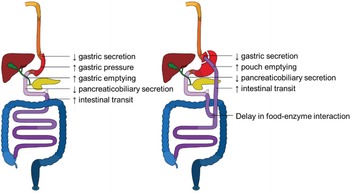
Traditionally, the presence of nutritional deficiencies after bariatric surgery was solely attributed to the mechanical aspects of inducing ‘restriction’ and ‘malabsorption’. However, this mechanical hypothesis does not provide an adequate explanation for why some nutritional deficiencies are equally common after sleeve gastrectomy and Roux-en-Y gastric bypass(Reference Moize, Andreu and Flores41,Reference Kwon, Kim and Menzo84) . In theory, it is plausible to assume that the drastic anatomical alterations of bariatric procedures influence gastrointestinal physiology. In turn, the anatomical and supposed physiological alterations imposed by the different types of bariatric procedures define the type and extent of nutritional deficiencies(Reference Syn, Cummings and Wang85). An overview of potential physiological alterations is visualised in Fig. 3 and reviewed elsewhere(Reference Steenackers, Vanuytsel and Augustijns21).
Potential physiological alterations of sleeve gastrectomy (left) and Roux-en-Y gastric bypass (right).

The ability of the gastrointestinal tract to digest food and absorb nutrients might be compromised by the profound anatomical and physiological alterations of bariatric surgery. Regarding digestion, the stomach needs an acidic environment for the initiation of macronutrient digestion (e.g. pepsinogen activation for protein digestion) and optimising micronutrients for absorption (e.g. releasing vitamin B12 from protein, optimising calcium and iron solubility and reducing ferric iron into the absorbable ferrous form)(Reference Pohl, Fox and Fried86). It is plausible that the resection and bypass of the oxyntic glands of the stomach affects digestion and nutrient absorption after surgery. In addition, this may as well reduce gastric secretion of intrinsic factor and, as such, affect vitamin B12 absorption further on in the ileum(Reference Marcuard, Sinar, Swanson, Silverman and Levine87). Moreover, a reduced gastric mixing and accelerated gastric emptying delivers partially undigested nutrients rapidly into the small intestine. This could delay protein, carbohydrate and lipid digestion until the ingested food reaches the pancreatic and biliary fluids that only appear in the common limb after Roux-en-Y gastric bypass. As a consequence, malabsorption of fat-soluble vitamins can occur that in turn affect other nutrients (e.g., vitamin D–calcium interaction). Beyond delaying digestion, a major area for nutrient absorption with transporters is bypassed after Roux-en-Y gastric bypass as visualised in Fig. 4. Altogether, changes in gastrointestinal physiology have serious implications for digestion and nutrient absorption.
Gastrointestinal micronutrient absorption after sleeve gastrectomy (left) and Roux-en-Y gastric bypass (right).

Immediate and underlying determinants: patients’ medical history and therapy
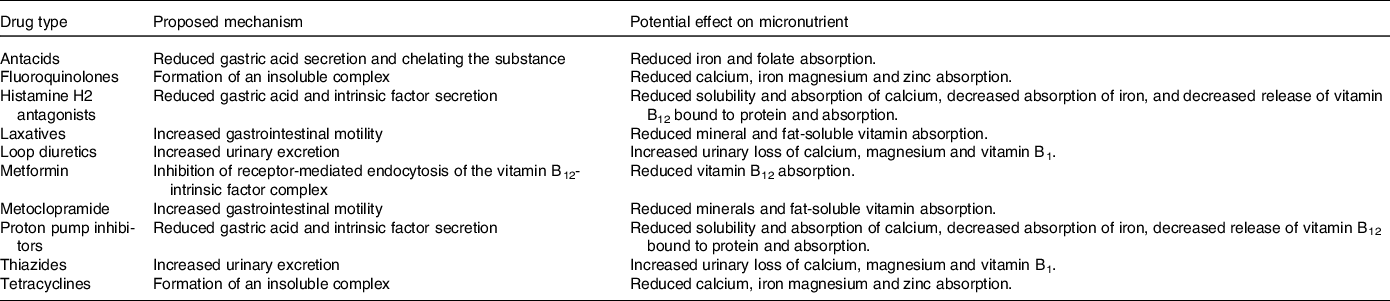
When facing an abnormal biochemical parameter, micronutrient blood levels should be interpreted with special attention to the patient’s medical history and treatment regimen. In particular, the presence of concomitant drug intake may complicate biochemical interpretation. Various drugs can affect a patient’s nutritional status by affecting the nutrikinetic properties of a micronutrient or by intervening in the transport pathway of the nutrient(Reference Chan88,Reference Boullata and Hudson89) . From a nutrikinetic perspective, drugs can interfere with micronutrient absorption by (i) reducing gastric acid secretion, (ii) altering gastrointestinal motility or (iii) forming insoluble complexes. Additionally, drugs can affect the body’s use and/or excretion of micronutrients. The proposed nutrikinetic mechanism of various drugs and their effect is summarised in Table 2 (Reference Mason90,Reference Mohn, Kern, Saltzman, Mitmesser and McKay91) . Clinically relevant data on potential drug–nutrient interactions after bariatric surgery have not been explored so far. The effect of drug–nutrient interactions differs between patients but is generally more pronounced in patients on multiple or chronic treatment(Reference Chan88,Reference Mason90,Reference Prescott, Drake and Stevens92) . Therefore, the risk of potential drug–nutrient interaction should be recognised as a part of patient assessment after bariatric surgery due to the presence of persisting obesity-related comorbidities or complications that may require therapy. Beyond drug–nutrient interaction, the presence of inflammation in the context of infection, trauma or surgery is under-recognised as a potential confounder of biochemical micronutrient levels. However, it has been shown that inflammation may induce a redistribution of micronutrients from blood to other organs(Reference Berger, Shenkin and Schweinlin29). Consequently, decreased plasma micronutrient concentration is not necessarily an indication of micronutrient depletion or deficiency (e.g. vitamins A, B6, C and D and zinc)(Reference Duncan, Talwar, McMillan, Stefanowicz and O’Reilly93). On the contrary, inflammation can also increase micronutrient markers, meaning that a plasma micronutrient concentration within the reference range does not exclude the presence of micronutrient depletion or deficiency (e.g. iron)(Reference Duncan, Talwar, McMillan, Stefanowicz and O’Reilly93). After bariatric surgery, clinical interpretation of plasma micronutrient concentration should therefore always be combined with C-reactive protein (CRP) as a surrogate marker of inflammation.
Drug–nutrient interactions and their proposed mechanism(Reference Mason90,Reference Mohn, Kern, Saltzman, Mitmesser and McKay91)

Enabling determinants: resources
To ensure maximal benefits and minimal complications, strict adherence to pre-operative screening and post-operative lifelong follow-up is pivotal after bariatric surgery. Pre-operative care should include an intake consultation with the surgeon, an internist, dietitian and psychologist, who gather (e.g. medical and psychosocial history) and provide information (e.g. bariatric procedures, benefits and risks). Different pre-surgical assessments are recommended including but not limited to physical examination and biochemical blood analysis. Post-operative surgery care differs in the early and late phases. A peri-operative enhanced recovery clinical pathway should be implemented in all patients who undergo a bariatric procedure, followed by rigorous lifelong follow-up on a regular basis(Reference Mechanick, Apovian and Brethauer74,Reference Busetto, Dicker and Azran75,Reference Stenberg, Dos Reis Falcão and O’Kane95) . Cancer research indicates that a multidisciplinary approach results in more beneficial treatment outcomes, but evidence for bariatric surgery patients is still lacking(Reference Bullen, Parmar and Gilbert96). Besides a multidisciplinary approach, lifelong follow-up is advised. Depending on the type of bariatric procedure and length of follow-up, non-compliance ranges between 3% and 63%(Reference Moroshko, Brennan and O’Brien97). Nonetheless, follow-up visits provide the patient with a medical support network, the opportunity to detect nutritional deficiencies early on and a check-up of their dietary regimen(Reference Wheeler, Prettyman, Lenhard and Tran98). Consequently, evidence indicates that post-bariatric patients have more nutritional deficiencies when being non-compliant to follow-up compared with compliant patients(Reference Ledoux, Calabrese and Bogard80). Moreover, serious nutritional complications are more common in non-compliant patients than in patients with partial or perfect follow-up (hazard ratio (HR) 3·09; 95% CI 1·74–5·50)(Reference Bielawska, Ouellette-Kuntz, Zevin, Anvari and Patel99). It is generally accepted that the financial impact of bariatric surgery is an important determinant of non-compliance. The financial resources needed for the multidisciplinary follow-up consultations with a dietitian and nutritional supplementation can be seen as an obstacle for some patients(Reference Bielawska, Ouellette-Kuntz, Zevin, Anvari and Patel99). Therefore, the development of micronutrient deficiencies after bariatric surgery would likely be prevented if follow-up care is reimbursed.
Nutritional complications in obesity and after bariatric surgery
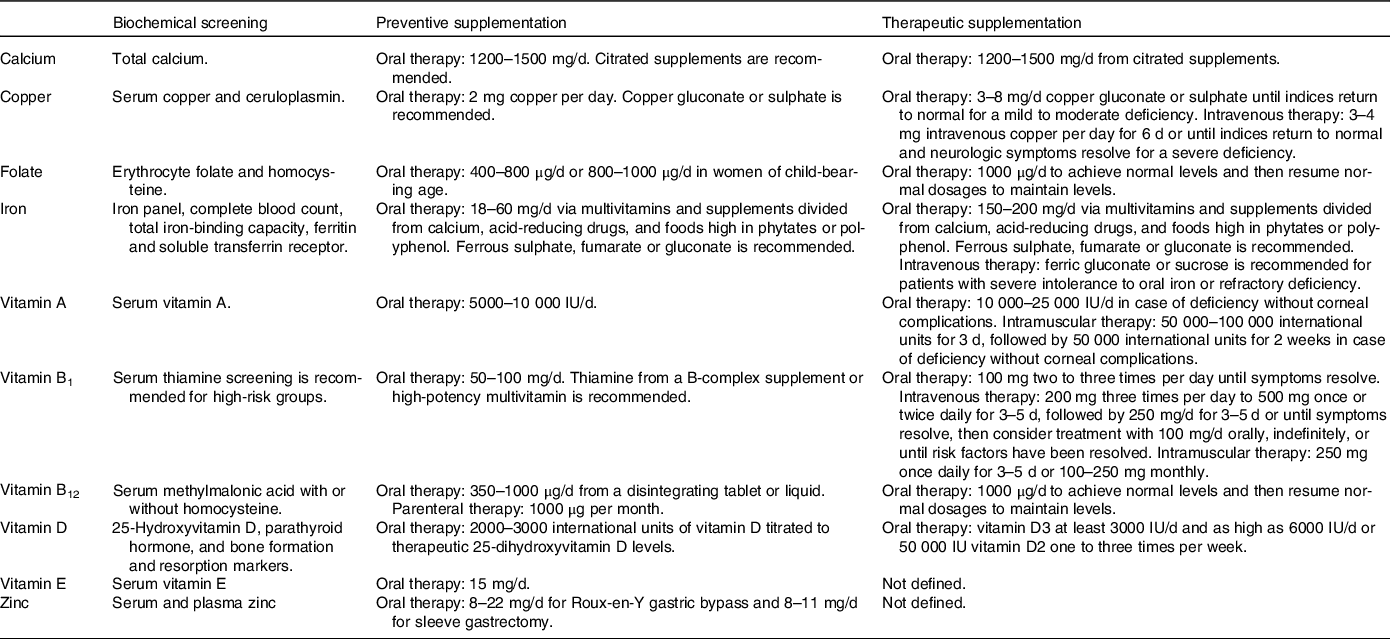
Together, an inadequate diet, altered gastrointestinal tract and a patient’s medical history may predispose post-bariatric patients to develop nutritional deficiencies. As micronutrients are essential, nutritional deficiencies can have severe consequences including haematological, musculoskeletal or neurological complications. Most patients experience mild symptoms, but serious and even life-threatening cases have been reported as well(Reference Nuzzo, Czernichow and Hertig101). Severe nutritional complications occur at an incidence rate of 4·5 per 1000 person-years, which is similar to the incidence rate of surgical complications(Reference Bielawska, Ouellette-Kuntz, Patel, Anvari and Zevin102). Despite being not as rare as generally believed, nutritional complications receive less research attention compared with surgical complications(Reference Rives-Lange, Rassy and Carette103). Current available screening and supplementation recommendations for the discussed micronutrients are summarised in Table 3 (Reference Mechanick, Apovian and Brethauer74).
Nutritional screening and supplementation recommendations after sleeve gastrectomy and Roux-en-Y gastric bypass(Reference Mechanick, Apovian and Brethauer74)

Haematological complications
Nutritional anaemia is a common complication of bariatric surgery. The prevalence of anaemia ranges between 3·6% and 52·7% and 6·0% and 63·6% after sleeve gastrectomy and Roux-en-Y gastric bypass, respectively. These high rates of anaemia may reflect a variety of vitamin or mineral deficiencies but are predominantly the result of iron, vitamin B12 or folate deficiency. Less common causes involve copper (deficiency), zinc (excessive intake), vitamin A (deficiency) and vitamin E (deficiency)(Reference Steenackers, Van der Schueren and Mertens94,Reference von Drygalski and Andris104) .
Iron deficiency
Microcytic and hypochromic erythrocytes are considered the hallmark finding of iron deficiency, which reduces the oxygen-carrying capacity of the erythrocytes(Reference Steenackers, Van der Schueren and Mertens94). Symptoms and signs of iron deficiency with/without anaemia include fatigue, lethargy, reduced concentration, dizziness, paleness, dry skin, dry hair, alopecia, koilonychia and atrophic glossitis, but can be asymptomatic as well(Reference Pasricha, Tye-Din, Muckenthaler and Swinkels105). A recent systematic review and meta-analysis observed that the risk of developing iron deficiency is comparable after sleeve gastrectomy and Roux-en-Y gastric bypass (relative risk (RR) 1·27; 95% CI 0·98–1·64; P = 0·069)(Reference Kwon, Ha and Lee106). Increased divalent metal transporter expression may increase the absorptive capacity of the remaining nutrient-exposed intestine to compensate for the bypassed biliopancreatic limb with its nutrient transporters after Roux-en-Y gastric bypass(Reference Marambio, Watkins and Castro107). Iron status monitoring and daily nutritional supplementation is recommended independently of the type of procedure. In case of deficiency, oral supplementation should be increased or replaced by intravenous administration for patients with severe intolerance or refractory iron deficiency(Reference Mechanick, Apovian and Brethauer74).
Vitamin B12 deficiency
Another frequent cause of nutritional anaemia is vitamin B12 or cobalamin deficiency. Given vitamin B12 body stores can last for 3–5 years, vitamin B12 deficiency usually only becomes clinically relevant several years after bariatric surgery(Reference Bal, Finelli, Shope and Koch108). Contrary to iron deficiency, the risk of post-operative vitamin B12 deficiency is higher after Roux-en-Y gastric bypass compared with sleeve gastrectomy (RR 1·86; 95% CI 1·15–3·02; P = 0·012)(Reference Kwon, Ha and Lee106). Severe vitamin B12 deficiency is characterised by macrocytic erythrocytes, leading to megaloblastic anaemia(Reference Stover109). Symptoms and signs of vitamin B12 with/without anaemia resemble the symptoms of iron deficiency (anaemia) including fatigue and glossitis. Beyond haematological complications, vitamin B12 deficiency can contribute to neurological complications such as myelopathy, neuropathy, paraesthesia and ataxia. As the morphological features of vitamin B12 deficiency are camouflaged in case of iron deficiency and symptoms are similar, vitamin B12 status should always be monitored in combination with iron status(Reference Nuzzo, Czernichow and Hertig101,Reference Bal, Finelli, Shope and Koch108,Reference Hunt, Harrington and Robinson110) .
Vitamin B9 or folate deficiency
Although less common, folate deficiency is another potential cause of nutritional anaemia. Folate absorption can occur along the entire small intestine, which explains the low incidence of folate deficiency, especially when supplemented with folic acid. The risk of developing folate deficiency is comparable after sleeve gastrectomy and Roux-en-Y gastric bypass (RR 0·79; 95% CI 0·47–1·35; P = 0·391)(Reference Kwon, Ha and Lee106). Similar to vitamin B12, severe folate deficiency is characterised by macrocytic erythrocytes that lead to megaloblastic anaemia(Reference Stover109). Symptoms include weakness, anorexia and weight loss(Reference Bal, Finelli, Shope and Koch108). Considering the risk of neural tube defects in the foetus, it is advised that women who underwent a bariatric procedure receive between 400 and 1000 µg of folic acid in the peri-conceptional period(Reference Mechanick, Apovian and Brethauer74,Reference Vynckier, Ceulemans and Vanheule111) .
Musculoskeletal complications
Calcium and vitamin D deficiency
Bone fragility has emerged as a common and severe complication of bariatric surgery. Different mechanisms have been proposed to contribute to bone fragility, including (i) micronutrient malabsorption, (ii) mechanical unloading and (iii) changes in sex, gut and adipose-derived hormones(Reference Corbeels, Verlinden and Lannoo112). Among micronutrients, calcium and vitamin D are essential to ensure bone health. After surgery, malabsorption of calcium and vitamin D may cause a hypocalcaemic state. As a result, the parathyroid glands will secrete higher levels of parathyroid hormone. Under the control of parathyroid hormone, urinary calcium secretion is decreased and skeletal calcium is mobilised to maintain serum calcium(Reference Bal, Finelli, Shope and Koch108,Reference Corbeels, Verlinden and Lannoo112) . In the short term, the clinical symptoms of calcium and vitamin D deficiency include muscle weakness, muscle cramps and back pain(Reference Bal, Finelli, Shope and Koch108,Reference Bouillon, Manousaki and Rosen113) . In the long term, bone loss can manifest and translate into fracture risk. Fracture risk seems to increase following mixed restrictive and malabsorptive bariatric procedures with a predominance of fractures at osteoporotic sites (RR 1·4–2·3 depending on the study). Mounting data indicate that fracture risk manifests in the long term, whereas bone remodelling already occurs within the first year after surgery(Reference Saad, Ghezzawi, Habli, Alami and Chakhtoura114,Reference Gagnon and Schafer115) . To date, it remains unclear whether sleeve gastrectomy has the same effect on skeletal health as Roux-en-Y gastric bypass(Reference Krez and Stein116). Due to the multifactorial skeletal effect of bariatric surgery, a multidisciplinary approach of screening and supplementation is recommended(Reference Beavers, Greene and Yu117).
Neurological complications
A large spectrum of neurological complications can arise after bariatric surgery with an assumed prevalence between 1% and 16%. These complications are related to a variety of micronutrients that vary from time to presentation. In the short term, Wernicke’s encephalopathy or acute polyradiculoneuropathy can arise. Long-term complications include optic neuropathy, myelopathy, peripherical neuropathy and myopathy(Reference Landais118). Prevention, recognition and management are crucial as most complications are reversible or improve over time under therapy.
Water-soluble vitamins B1, B9 and B12
Vitamin B1 or thiamine is an essential micronutrient for myelin formation in the nerve cells with limited body storage. Encephalopathy is a major nutritional complication of vitamin B1 deficiency that mainly develops in the first week or first months after surgery. After surgery, inadequate dietary intake or vomiting can lead to depleted stores. In turn, severe thiamine deficiency results in selective neuronal cell death that can culminate into acute and chronic encephalopathy. Wernicke’s encephalopathy is an acute neurological condition that is characterised by a triad of symptoms including ophthalmological problems, ataxia and consciousness disturbances. When left untreated, Wernicke’s encephalopathy can progress to Korsakoff syndrome, which is characterised by a chronic state of mental dysfunction with permanent memory impairment(Reference Landais118). In severe cases, thiamine deficiency may result in death(Reference Haid, Gutmann and Crosby119). Another rare complication associated with vitamin B1 deficiency is acute polyradiculoneuropathy. It presents as pain in the lower limbs, followed by ascending paralysis, ataxia, areflexia and sensory loss, which resembles Guillain–Barré syndrome(Reference Yasawy and Hassan120,Reference AlShareef, Albaradei, AlOtaibi, Alanazy and Abuzinadah121) . Although the risk of thiamine deficiency is highest in the first months after surgery, it can present lifelong, especially in combination with inadequate intake due to persisting vomiting and supplementation non-compliance or alcohol abuse(Reference Oudman, Wijnia, van Dam, Biter and Postma122). In addition to thiamine, other water-soluble vitamins can result in neurological complications. Although uncommon, folate deficiency may lead to peripheral neuropathy or restless leg syndrome, while vitamin B12 deficiency can manifest neurologically by presenting as myelopathy, neuropathy, paraesthesia and ataxia(Reference Berger123).
Fat-soluble vitamins A and E
Given that fat-soluble vitamins require bile acids for absorption, deficiencies of fat-soluble vitamins with neurological manifestations may arise after bariatric surgery. Due to its role in photoreceptor function, vitamin A deficiency can result in optic neuropathy, xerophthalmia and night blindness(Reference Spits, De Laey and Leroy124,Reference Lee, Hamilton, Harris and Schwab125) . Vitamin E is essential for normal neurological functioning and for protecting neural cell membranes from oxidative damage. After bariatric surgery, the clinical presentation of vitamin E deficiency is rarely documented. However, vitamin E deficiency may present as peripheral neuropathy, skeletal myopathy, gait disturbances, head titubation, decreased sensation, ataxia, ophthalmologic disorders and nystagmus(Reference Sherf-Dagan, Buch, Ben-Porat, Sakran and Sinai126).
Copper and zinc deficiency
Mineral and trace-element deficiencies have seldom been described after bariatric surgery. Although human cases are rare, copper deficiency can manifest neurologically as myelopathy and peripheral neuropathy after bariatric surgery(Reference Kumar, McEvoy and Ahlskog127), while zinc deficiency can manifest as a myeloneuropathy-like disorder with spastic gait and sensory ataxia(Reference Bal, Finelli, Shope and Koch108).
Conclusion
Taken together, the pathological onset of nutritional deficiencies is not yet fully understood, but the immediate role of diet, the gastrointestinal tract and the medical state of the patient cannot be ignored. Financial resources needed for the multidisciplinary follow-up consultations with a dietitian and nutritional supplementation can be seen as an obstacle for some patients. These determinants predispose post-bariatric patients to develop nutritional deficiencies. As micronutrients are essential, deficiencies can have severe consequences, including haematological, musculoskeletal or neurological complications. Most patients present with mild symptoms, but serious and even life-threatening cases have been reported. Therefore, it is of the utmost importance to monitor the nutritional status of patients before and after bariatric surgery.
Acknowledgements
N.S. is supported by a KU Leuven research grant (C32/17/046). B.V.d.S. and T.V. received senior clinical research fellowships from FWO, the Flemish Research Council.
The authors report no conflicts of interest.
N.S. wrote the manuscript. All authors contributed to the manuscript, revised and approved the final version of the manuscript.