Introduction
Species organization can be classified as either isolationist (few species are independently distributed) or interactive communities (Holmes & Price, Reference Holmes, Price, Anderson and Kikkawa1986). Interactions are difficult to establish in natural infections. Any positive associations may reflect a mutualistic effect, or result from life-cycle similarities. It seems that among parasitic trichostrongyle nematodes of ewes, the interactions are limited and do not depart from random associations (Cabaret & Hoste, Reference Cabaret and Hoste1998). As part of their life cycle includes a free-living phase on the herbage, their development and survival are influenced by the climatic environment (Kates, Reference Kates1950; Suarez & Cabaret, Reference Suarez and Cabaret1991; O'Connor et al., Reference O'Connor, Walkden-Brown and Kahn2006). It has been shown that while some trichostrongyle species present a very wide range of geographic distributions (Teladorsagia circumcincta, Haemonchus contortus and Trichostrongylus) others are restricted to more specific climates (Suarez & Cabaret, Reference Suarez and Cabaret1991). The trichostrongyle Marshallagia marshalli is an example of the latter and is strongly associated with sheep and goats in steppe climates (Suarez & Cabaret, Reference Suarez and Cabaret1991; Meradi et al., Reference Meradi, Bentounsi, Zouyed and Cabaret2011). A large-scale multi-regional study (Meradi et al., Reference Meradi, Bentounsi, Zouyed and Cabaret2011) showed that rainfall was the best indicator for M. marshalli prevalence in a steppe climate. This contrasted with other trichostrongyle nematode species where lower rainfall was associated with a higher prevalence of infection. It is known in other organisms that spatial scale and habitat configuration can shape the local adaptation of host–parasite interactions (Biere & Tack, Reference Biere and Tack2013). The spatial pattern of life-traits, which are the elements of success for a species, are estimated at an individual level, a species level and an assemblage level (Gaston et al., Reference Gaston, Chown and Evans2008). Thus, the influence of climate observed on M. marshalli prevalence in a large area spanning from Spain to Mongolia (Meradi et al., Reference Meradi, Bentounsi, Zouyed and Cabaret2011) may be different to that of a small region, such as the eastern part of Algeria where M. marshalli is one of the main species. Prevalence is not able to characterize assemblages and the proportion of each species in assemblages will be used in this paper. Steppe may be defined by vegetation, i.e. harbouring small xerophytic discontinuous grassland cover in opposition to prairie with continuous grass cover (Djellouli, Reference Djellouli1990). Or, steppe may also be defined by climate, defined by Viers & Vigneau (Reference Viers and Vigneau1990) to be a region where there is a large difference between the summer (up to 30°C) and winter months (sometimes below 0°C), and where the temperature can differ substantially between day and night. The vegetation and climate definitions are not fully coincident. The steppe in Eastern Algeria, according to the vegetation definition, has several sub-climates which differ mostly in their rainfall. This thereby constitutes an interesting region to evaluate adaptation to local climates, from sub-humid to arid (Côte, Reference Côte1998). This study aimed, first, to evaluate the associations of species in the assemblages of trichostrongyle nematodes of sheep, and then to identify their variations according to season and local climates.
Materials and methods
Study area
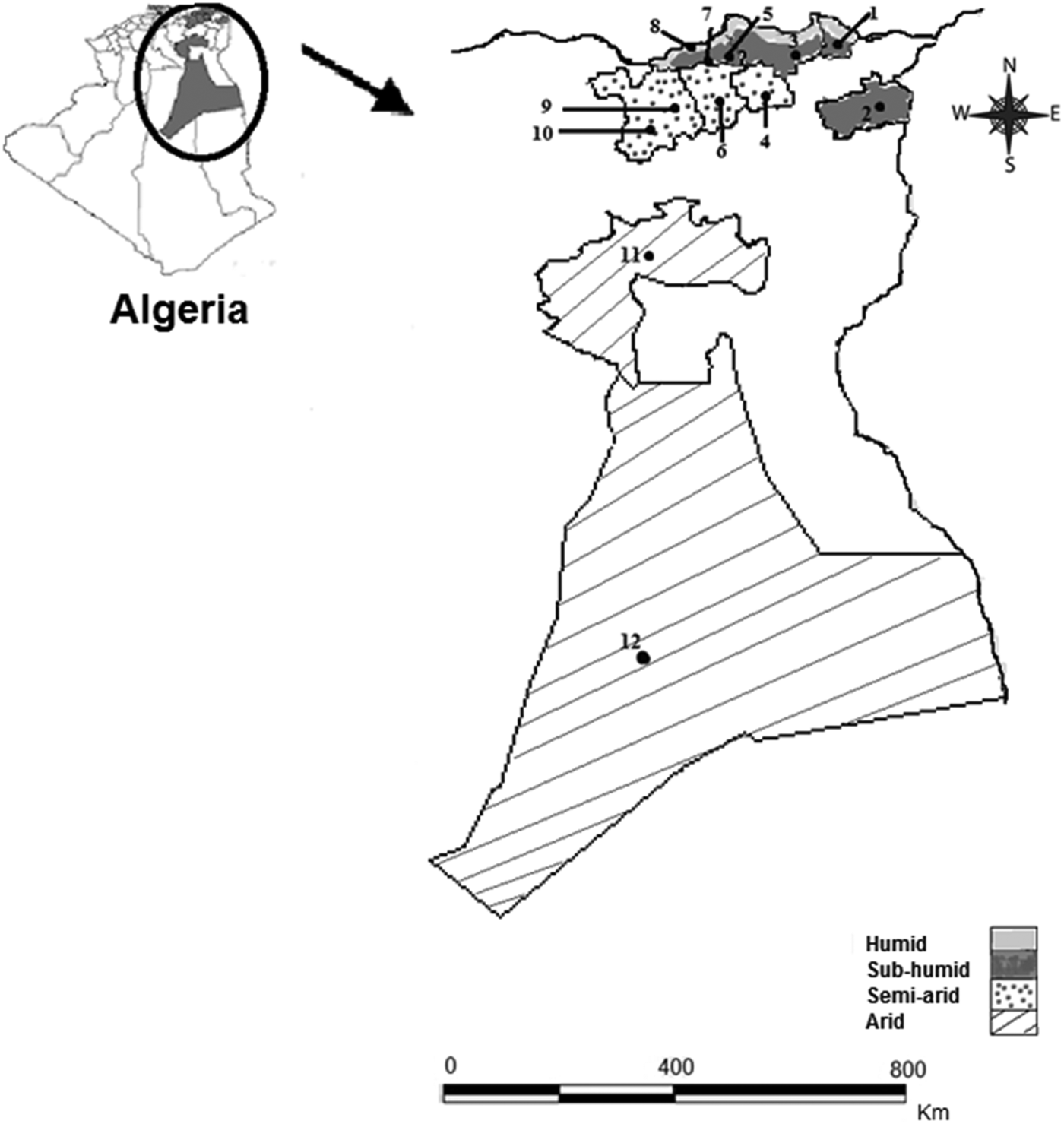
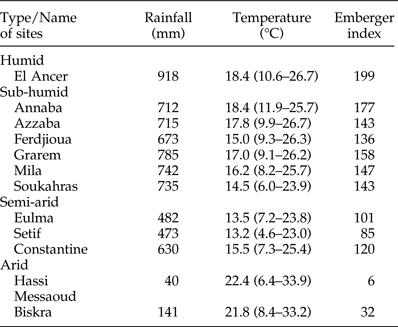
Eastern Algeria has a Mediterranean climate with a long dry period in summer lasting 3–4 months on the coast, 5–6 months in the high plains and 6 months or more in the Saharian Atlas. The Emberger pluviothermic ratio (P/(M + m)/2)(M − m) was calculated for each site, where P is the yearly rainfall in millimetres, M is the average of the hottest recorded months and m is the average of the coldest recorded months. Where M + m provides a measure of the average temperature along the year and M − m is an index of continentality (Daget, Reference Daget1977). The studied sites were also divided into humid, sub-humid, semi-arid and arid in line with the descriptions of Côte (Reference Côte1998) (table 1 and fig. 1). The most important steppe vegetation in decreasing rainfall conditions includes: Artemisia herba alba, Stipa tenacissima, Lygeum spartum and, finally, ‘remt’ or Arthrophytum scoparium (below 200 mm yearly rainfall).
Simplified map of bioclimatic areas (humid, sub-humid, semi-arid and arid) in Eastern Algeria (adapted from Côte, Reference Côte1998). Sampling sites: (1) Annaba, (2) Soukahras (3) Azzaba, (4) Constantine, (5) Grarem, (6) Mila, (7) Ferdjioua, (8) El Ancer, (9) Eulma, (10) Setif, (11) Biskra, (12) Hassi Messaoud.

Climatic characteristics of sampling sites including average yearly rainfall, temperature (range in brackets) and bioclimatic Emberger indices.

Collection and examination of samples
Twelve slaughterhouses were selected in Eastern Algeria, located among all of the climatic stages. A total of 335 young rams were examined; in Algeria, only young rams are slaughtered, in order to develop sheep production. Samples came from Ouled Djellal rams, approximately 1 year old. Almost all of the sheep originated from the same vicinity as the slaughterhouse, except for Hassi Messaoud where they came from multiple areas. In general, the rams were treated with anthelmintics twice a year, using albendazole or ivermectin, and were bred extensively on pastures (Cabaret et al., Reference Cabaret, Chylinski, Meradi, Laignel, Nicourt, Bentounsi and Benoit2015). Approximately six abomasa were sampled every month (2009–2010) in sub-humid and semi-arid areas, with slightly lower frequency in other areas. Following removal of the abomasa, they were washed with warm water in the laboratory and the washings sieved through a 100-μm mesh sieve. A one-third aliquot was then examined for worms. Adult worms were counted and identified according to Skrjabin et al. (Reference Skrjabin, Shikobalova and Shultz1954). The proportion of each species in the assemblage (number of worms of species i /number of worms in the assemblage) was calculated. Abundance (mean number of worms of a particular trichostrongylid species/number of hosts examined) was calculated according to Margolis et al. (Reference Margolis, Esch, Holmes, Kuris and Schad1982).
Data analysis
Analysis of variance was carried out using a general linear model (GLM). This univariate analysis is a full factorial model with interactions between the variables. Missing data were estimated with type III (regression) and the factors were site and month. Abundance (number of worms/lamb) was transformed as log(x + 1). The differences between months or sites were assessed using a Student–Newman–Keuls test. The Spearman rank correlation (r s) was also calculated between abundance or proportion of nematode species and the climatic data, as parasitic data did not follow a Gaussian distribution. Stepwise forward regressions between nematode proportions and climate variables were also performed. The individual abundance data were adjusted to linear, quadratic and cubic regressions to rainfalls, since it is not known if there is linearity between the variables. These analyses were done with SPSS 19 software (IBM SPSS, 2010). The respective influence of association between species due to density dependence and climate was tentatively assessed using principal component analyses (MVSP, 2001). The data were standardized as: (actual values − mean value for each species)/(standard deviation for the species). Two axes only were presented since they represented the majority of the variance. The association of species or climatic parameters is detected when they are near the plane corresponding to the two axes. The most significant climatic parameters are those located far from the intersection of axes.
Results
Composition and seasonality of nematode species
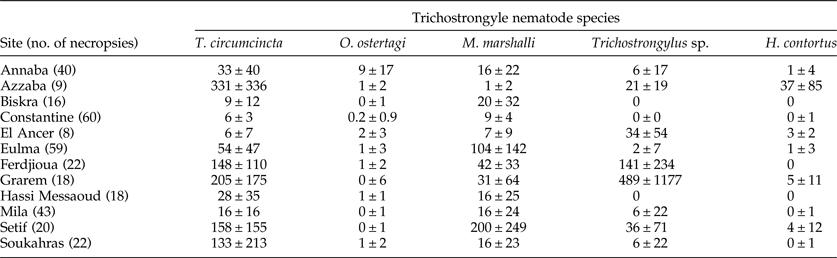
There were significant differences for all sites and all species with the GLM model, with month and site as factors. Marshallagia marshalli was mostly abundant in semi-arid areas (Setif and Eulma). Teladorsagia circumcincta was present in higher numbers at four sub-humid sites (Azzaba, Ferdjioua, Grarem and Soukahras) and one semi-arid site (Setif). Haemonchus contortus was mostly found in Azzaba, a sub-humid site. Trichostrongylus spp. (mostly Trichostrongylus axei and some Trichostrongylus vitrinus) abundance was high only in the sub-humid Ferdjioua and Grarem (table 2).
The abundance of infection (±SD) of trichostrongylid nematode species in the abomasum of sheep relative to sampling site.
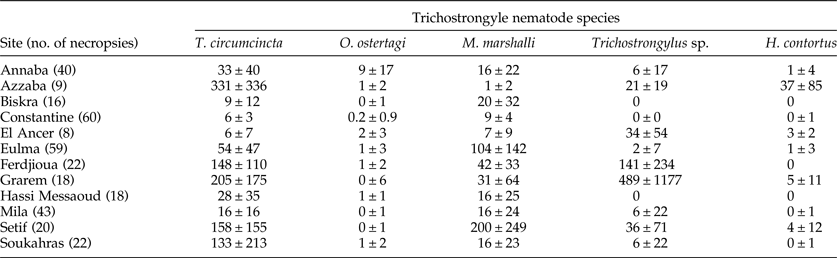
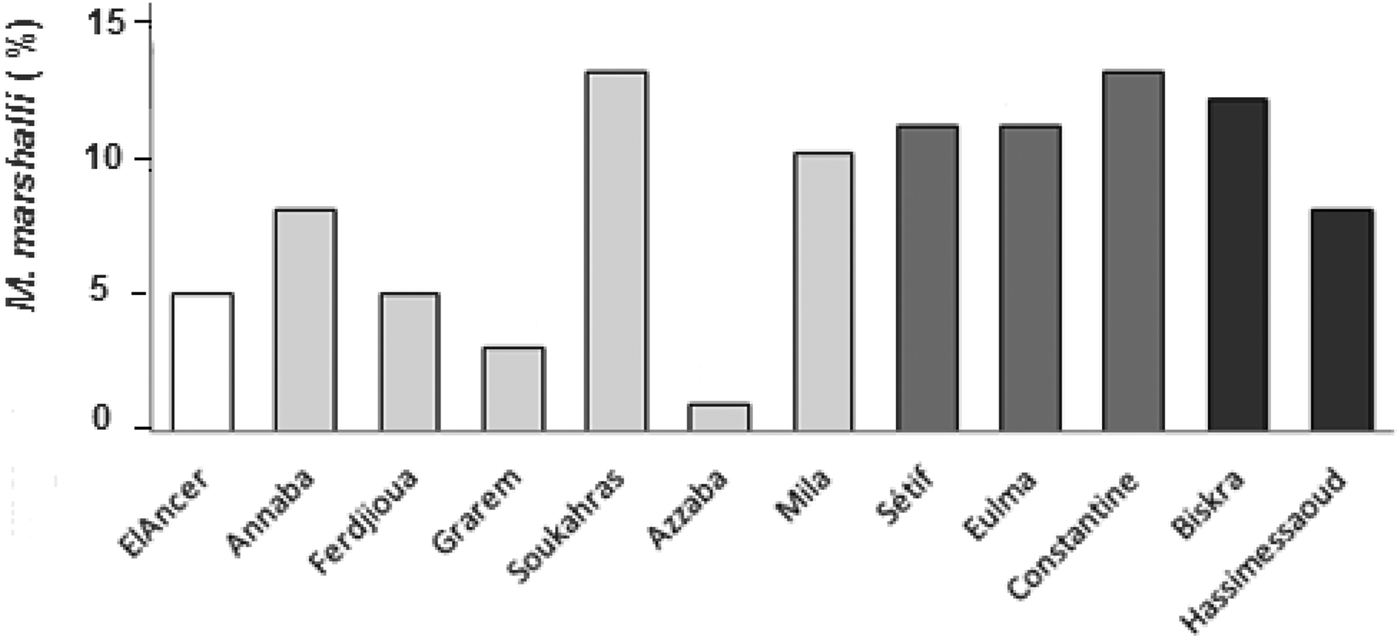
The rams from the sub-humid sites were more heavily infected, all species were rather well represented in these areas and thus the abundances gave a positively biased vision of the local adaptation for each species. The species proportions were a better indicator of the suitability of a given species in a particular climate. Proportions of M. marshalli (fig. 2) were high at two sub-humid sites (Soukahras and Mila), one arid site (Biskra) and at the majority of semi-arid sites (Eulma, Constantine and Setif).
The proportion (%) of Marshallagia marshalli in the trichostrongyle nematode assemblages from humid (white bar), sub-humid (light grey bars), arid (black bars) and semi-arid sampling sites (dark grey bars) in Eastern Algeria.

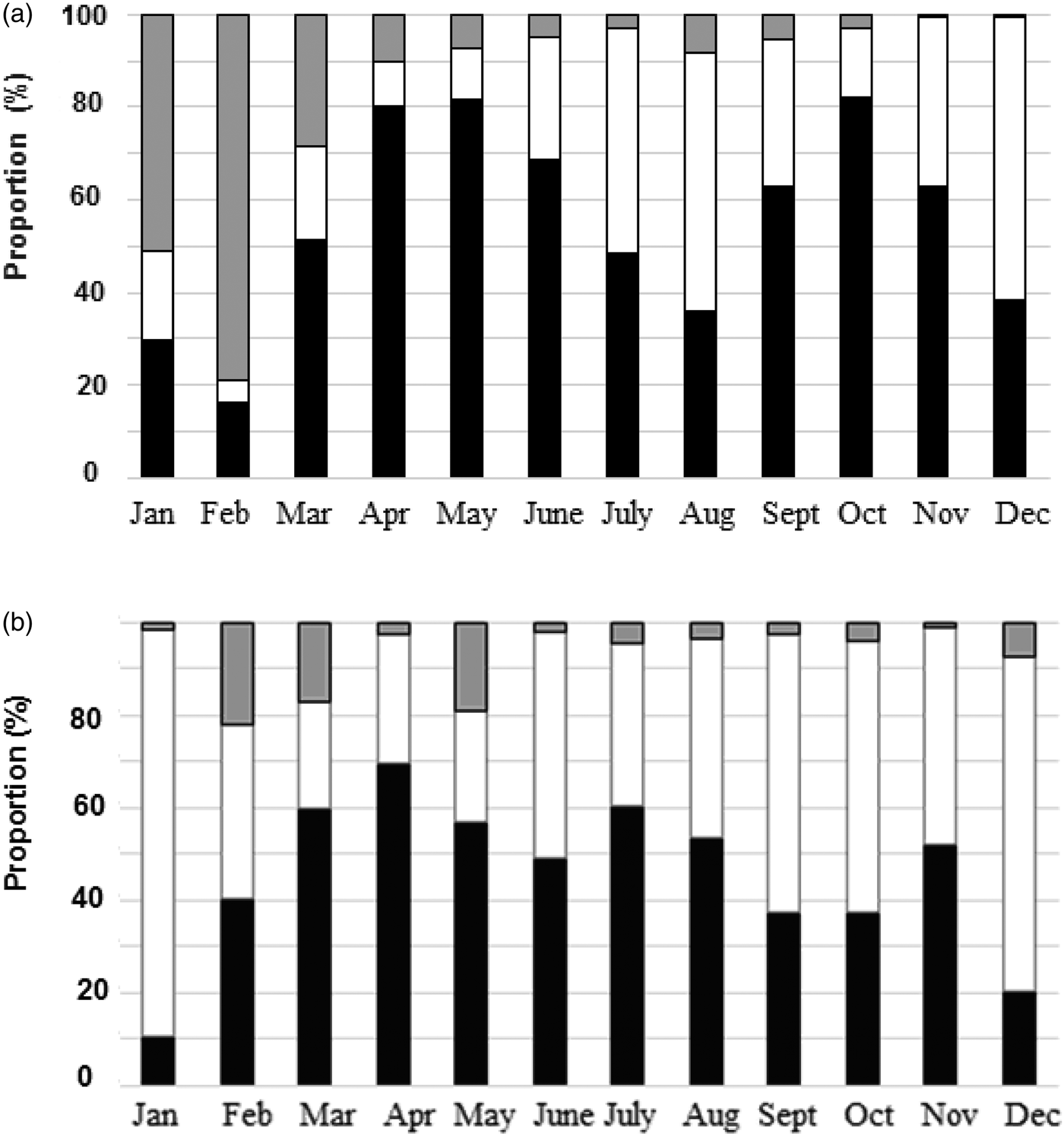
Samples were taken throughout the year and the seasonality of the proportions of nematode species was checked using GLM. The analysis was performed distinctly for the sub-humid and semi-arid areas as they differed in their respective assemblages of trichostrongyle nematode species. The three main species (M. marshalli, T. circumcincta and Trichostrongylus sp.) were included since the other two species (H. contortus and Ostertagia ostertagi) had low abundance (below five worms/host on average). There was significant seasonality in the sub-humid area for T. circumcincta (highest in April and May), M. marshalli (July–August and then November–December) and Trichostrongylus sp. (January–February). There was no significant seasonality in semi-arid areas for T. circumcincta and Trichostrongylus sp. but M. marshalli was in the highest proportion in December–January (fig. 3).
The proportion (%) of T. circumcincta (black shading) M. marshalli (white shading) and Trichostrongylus sp. (grey shading) in (a) sub-humid and (b) semi-arid trichostrongyle nematode assemblages from January 2009 to December 2010.

Regulation of the nematode assemblages by climatic variables and abundance
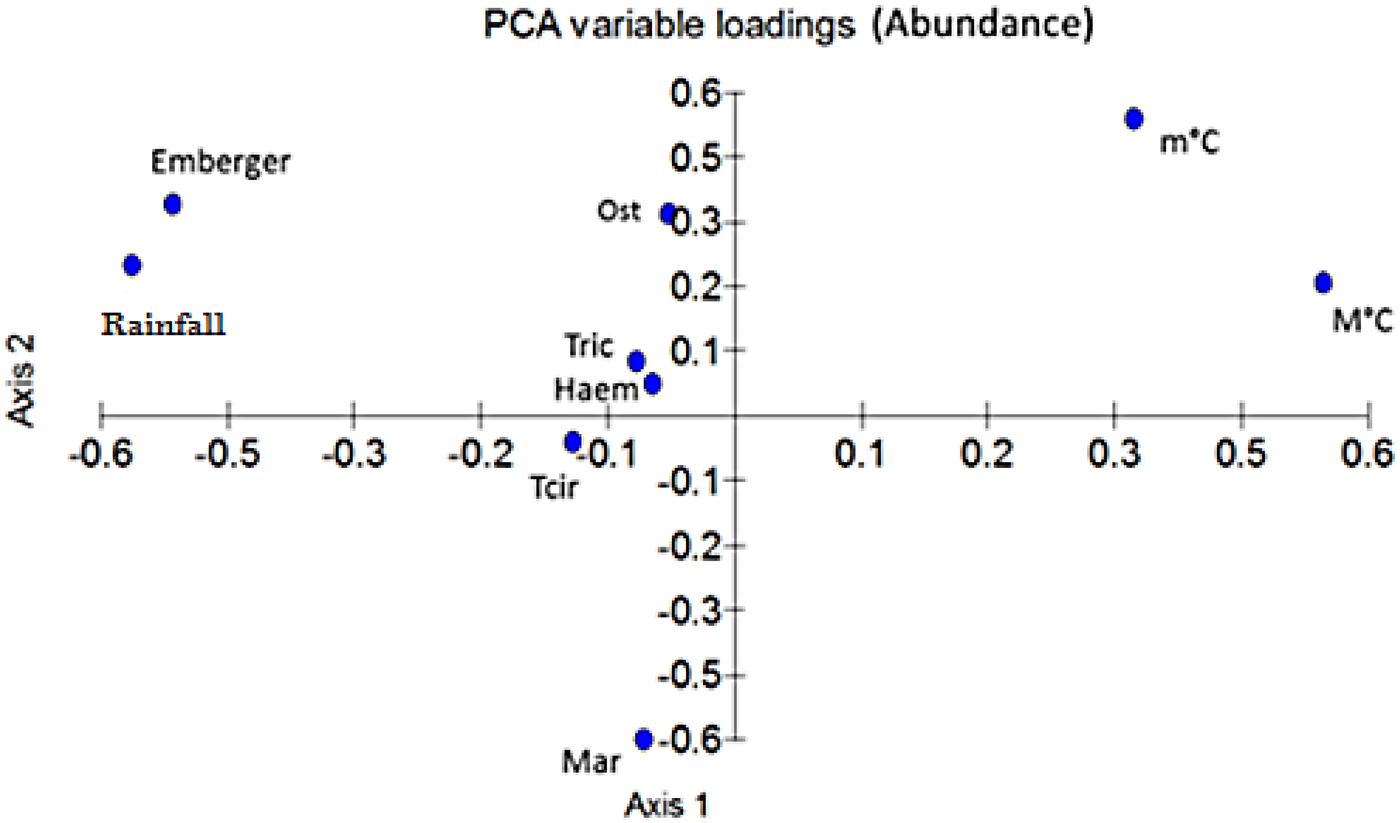
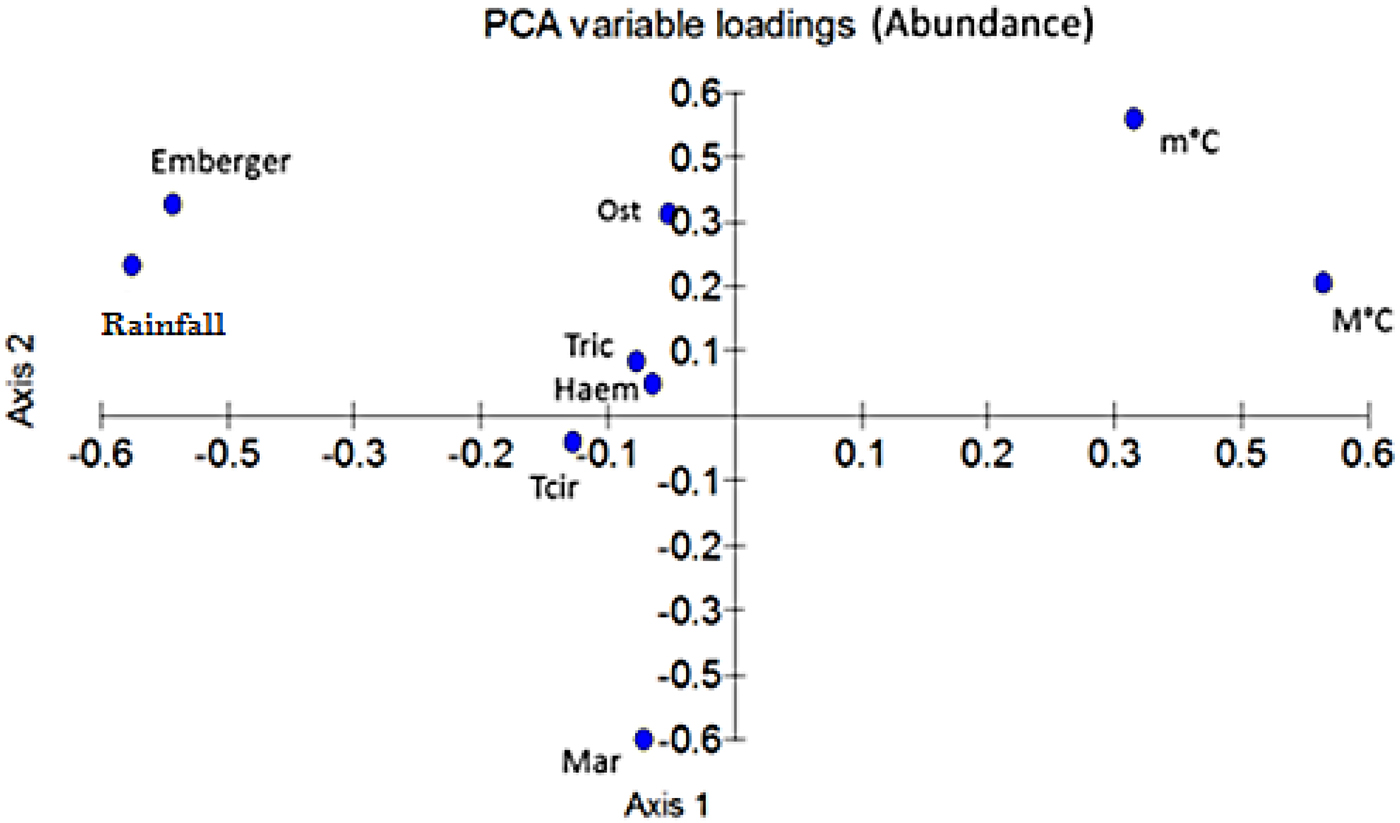
The first axis of the principal component analysis (31% of variance) was described by the opposition between Emberger index and rainfall on one hand, and temperature (mostly the maximum temperature) on the other hand (fig. 4). The second axis (19% of variance) corresponded to the abundance of species, the most representative being M. marshalli and O. ostertagi. Marshallagia marshalli differed from all the other trichostrongyles in that its proportion was negatively related to the climatic parameters. Similar analyses run with only one trichostrongyle species did not modify this relationship with the climatic variables, which indicates that the assemblage is not strongly interactive and that differences in abundance were likely due to climate.
The relationship between the abundance of infection in trichostrongyle nematode assemblages and climatic factors such as rainfall (mm/year), temperature (°C) and the Emberger index, using principal component analysis (PCA). Haem, H. contortus; Mar, M. marshalli; Ost, O. ostertagi; Tcir, T. circumcincta; Tric, Trichostrongylus sp.; Emberger, bioclimatic index of Emberger; M°C, maximum temperatures; m°C, minimum temperatures.
Climatic variables and worm species
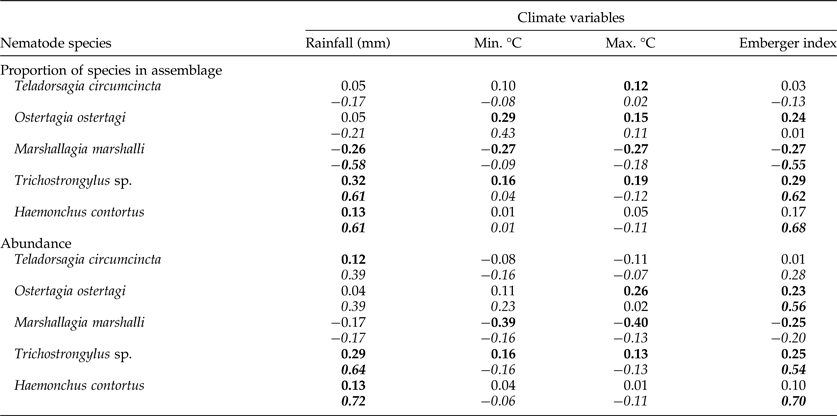
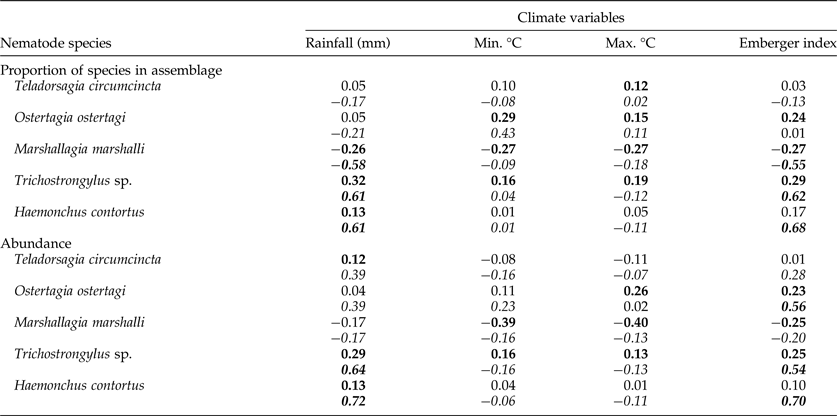
Climatic parameters are correlated. The bioclimatic index of Emberger is most significantly related to rainfall (r s = 0.89) and also to minimum (r s = 0.18) and maximum (r s = 0.25) temperature, all relationships being significant. Most of the nematode species are significantly and positively related to rainfall and temperatures. Conversely, M. marshalli is negatively related to rainfall and temperature (table 3). These data were established for individual necropsies and for average abundances of sites. When the average abundance or percentage for each species per site was considered, instead of individual data, fewer significant correlations were found.
The proportion of each species in the assemblages and abundance of infection of trichostrongylid nematode species relative to climatic variables using Spearman coefficient correlations (r s), values for individual data given as > 0.12 (n = 336), average site data as >0.54 (n = 12) in italics and correlation coefficients in bold, with levels of significance given as P < 0.05.
Since several climatic factors (rainfall – RAIN, yearly minimum temperature – MinC or yearly maximum temperature – MaxC) were involved, multiple regressions were performed using a stepwise regression technique on the proportions of species in the communities (i.e. PcOST, PcMAR PcHAEM, PcTRIC proportions of O. ostertagi, M. marshalli, H. contortus, Trichostrongylus sp., respectively). No significant equation (with multiple correlation R) could be found for T. circumcincta, but the other species were related to several climatic variables:
 $$\eqalign{{\rm PcOST} &= 0.122 + 0.011 \;{^\ast}\;{\rm MinC} - 0.008 \;{^\ast}\;{\rm MaxC; \, P} = 0.00;\cr {\rm R} & = 0.26}$$
 $$\eqalign{{\rm PcMAR} &= 1.64 - 0.0006 \;{^\ast}\;{\rm RAIN} - 0.033 \;{^\ast}\;{\rm MaxC; \, P} = 0.00;\cr {\rm R} & = 0.27}$$
 $${\rm PcHAEM} = - 0.02 + 0.00007 \;{^\ast}\;{\rm RAIN; \, P} = 0.00;{\rm R} = 0.15$$
 $$\eqalign{{\rm PcTRIC} &= - 0.43 + 0.0003\;{^\ast}\;{\rm RAIN} + 0.012 \;{^\ast}\;{\rm MaxC; \, P} = 0.00;\cr {\rm R} & = 0.28}$$
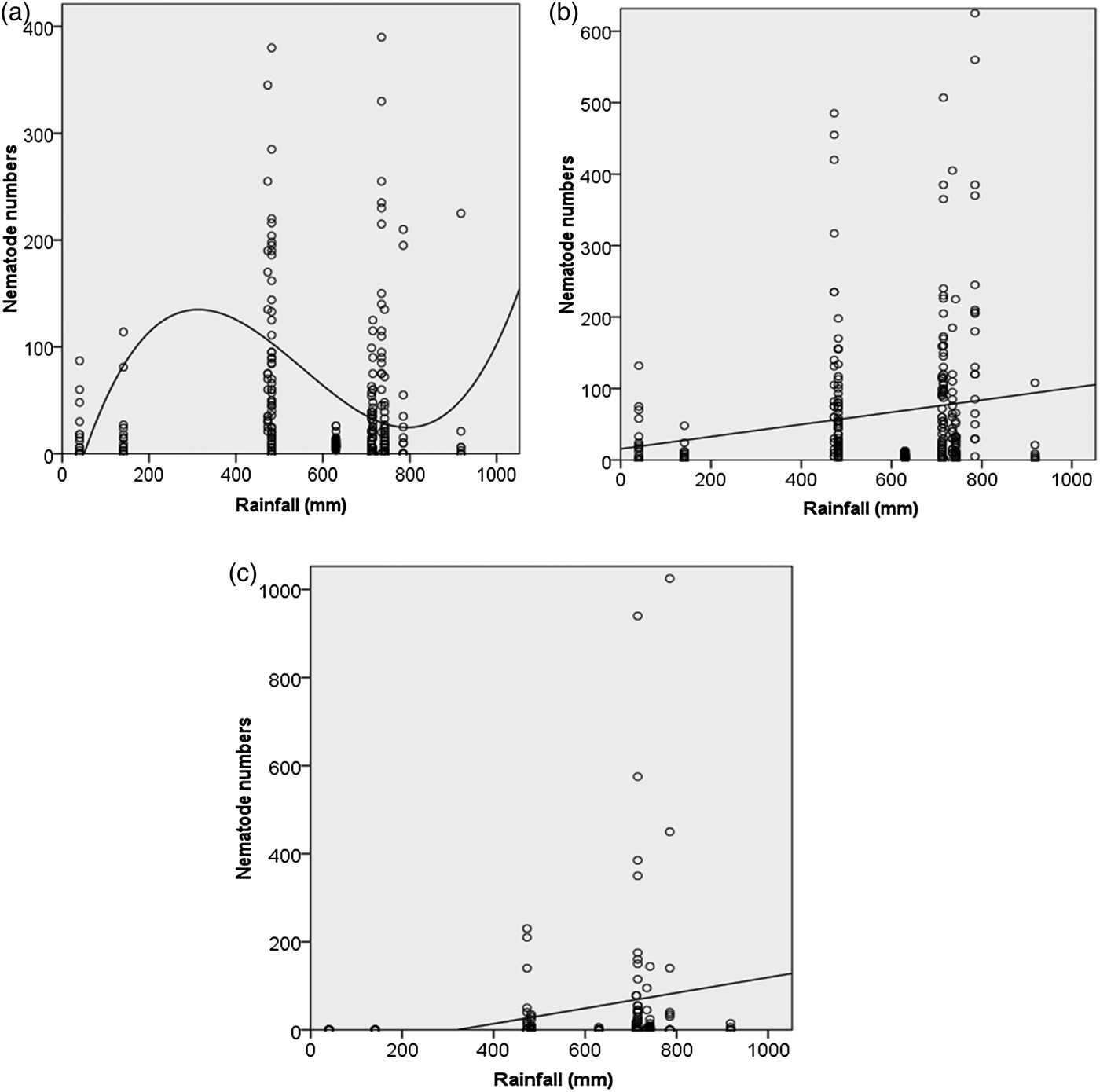
The abundance of M. marshalli responds differently from that of the other trichostrongyle nematodes to climate. The relationship of abundance to rainfall was negative only for M. marshalli. Furthermore, the relationship between rainfall and abundance of a species was not always linear, as shown from the graph for M. marshalli where the best fit was obtained with a cubic equation (fig. 5). An optimal rainfall between 350 and 450 mm was observed (R = 0.30; P = 0.00). Conversely, the best fit was obtained with linear regression for T. circumcincta (R = 0.10; P = 0.04) and Trichostrongylus sp. (R = 0.10; P = 0.04).
The relationship between yearly rainfall (mm) and individual abomasum nematode numbers for (a) M. marshalli, (b) T. circumcincta and (c) Trichostrongylus sp.; observed data (open circles) and best adjusted regression (solid line).

Discussion
The results suggest that the assemblage of trichostrongyle nematodes studied here are organized in isolationist communities, meaning that the species do not interact and influence infection by other species. Similarly, low interactions have been shown in trichostrongyle nematodes of ewes of Morocco (Cabaret & Hoste, Reference Cabaret and Hoste1998). According to Pence (Reference Pence, Esch, Bush and Aho1990) this is somewhat expected – where a parasite (such as the trichostongyles) has a direct life cycle there is a low probability of colonizing the host (low stocking rate in the present study) and a low species richness (only five species in the abomasum in this study). The infection of rams was relatively low compared to the results of surveys in Europe. This is likely due to the fact that surveys carried out in Europe have been conducted on younger lambs (Cabaret et al., Reference Cabaret, Bouilhol and Mage2002). Furthermore, farmers in northern Africa use extensive pastures and thereby have low stocking rates. They also profit from uninfected stubble and fallow fields in the summer (similar to those of Morocco: Cabaret, Reference Cabaret1984; Berrag et al., Reference Berrag, Ouzir and Cabaret2009). The fact that the assemblages are isolationist allows for studies to more easily disentangle the influence of climate on their composition.
Teladorsagia circumcincta is found in areas of steppe throughout the world (Meradi et al., Reference Meradi, Bentounsi, Zouyed and Cabaret2011). It was present in high proportions in the assemblages across all the sites of the present study, and it appears to be much less related to rainfall. Its presence in Hassi Messaoud, a very arid area, is potentially not related to local infection but rather to the importation of sheep from other places in Algeria. The consumption of meat is high in this area (due to the presence of a large concentration of petroleum production workers) which is not favourable for sheep production. Haemonchus contortus is present unequally across the different sites and always at low levels. This is similar to the results from other areas of steppe (Cabaret, Reference Cabaret1984; Meradi et al., Reference Meradi, Bentounsi, Zouyed and Cabaret2011). The presence of O. ostertagi, a cattle species, is due to sheep sharing common pasture with cattle, with similar findings observed in other studies (Cabaret, Reference Cabaret1984; Meradi et al., Reference Meradi, Bentounsi, Zouyed and Cabaret2011). The presence of M. marshalli is important in the studied area and it may impact sheep husbandry due to the pathophysiological consequences of infection (Oripov, Reference Oripov1982; Moradpour et al., Reference Moradpour, Borji, Razmi, Maleki and Kazemi2013). Marshallagia marshalli is typically found in steppes (Diez-Baños, Reference Diez-Baños1989; Giangaspero et al., Reference Giangaspero, Bahhady, Orita and Gtuner1992; Meradi et al., Reference Meradi, Bentounsi, Zouyed and Cabaret2011), yet it was still found here in several sites that could not be categorized as such. Its presence in such sites may be explained by diffusion and, possibly, adaptation to a new context (see Meradi et al., Reference Meradi, Bentounsi, Zouyed and Cabaret2011). The highest proportion of M. marshalli in the assemblages was recorded in autumn, with similar findings made in other studies (Morocco: Cabaret, Reference Cabaret1984; Syria: Giangaspero et al., Reference Giangaspero, Bahhady, Orita and Gtuner1992; Spain: Diez-Baños, Reference Diez-Baños1989; Uzbekistan: Oripov, Reference Oripov1982). There was, however, a difference in the peak prevalence periods between the sub-humid and semi-arid areas. In the former, there was a peak proportion of M. marshalli in July–August and a second peak at the end of the year, instead of one single autumn peak in the latter. This could be due to the favourable environment for abomasal trichostrongyles throughout the year and, thus, monthly fluctuations are reduced and the peaks could be partly artefactual. Rainfall is a major explanatory climatic factor for M. marshalli. On a large scale, it is a linear and negative relationship (Meradi et al., Reference Meradi, Bentounsi, Zouyed and Cabaret2011). The relationship with rainfall was less intense in the present smaller-scale survey, and the best fit was not linear. On a smaller scale, an optimal rainfall was observed. The discrepancy between M. marshalli abundance in relation to rainfall on both small and large scales is not found for other trichostrongylid species. This could be due to the limited range of rainfall to which the development and survival of M. marshalli is adapted in the free-living stages.
Although the rainfall and temperature could be related to abundance or proportion of a species in an assemblage, this provides only a partial explanation, particularly for individual assemblages. In table 3, the Spearman coefficients of correlation were below 0.30 for individual data and higher for average assemblage on site (equal to or below 0.70). This means that the part of variability explained by one or several climatic parameters (corresponding to the square value of the Spearman coefficient) is 9% for individual assemblages or 49% in average subclimate assemblages in the best cases. This may be explained by the following points, in particular for individual assemblages: the host exposure, the host immune protective response and the time since anthelmintic treatment. The relationship between climate and the average trichostrongyle assemblages of sites was higher, but this was due partly to a statistical reason: the sample is smaller (12 sites instead of 336 individual sheep). It does show, however, that the presence of trichostrongyle species can be influenced by climate characteristics and that some prediction of the importance of a species can be made for each site.
Acknowledgements
We thank Caroline Chylinski for comments and revision of the English language.
Financial support
We are grateful to the University of Constantine (Algeria) for funding a visit to INRA Val de Loire (Nouzilly, France) for one of us (I.Z.), which permitted the analyses of the data and elaboration of the present article.
Conflict of interest
None.