Introduction
Non-communicable diseases (NCDs) account for almost 86% of premature mortality and 77% of disease burden in Europe1. This high morbidity heavily impacts both individual quality of life and global health expenditures that will continue to rise unless action is taken1. It is therefore important to identify not only which interventions and actions will prevent NCDs but also how these can bring the greatest public health impact most cost-effectively1,Reference Godfrey, Reynolds and Prescott2 .
Good maternal health during pregnancy can have positive effects on long-term risk of NCDs in the next generationReference Stephenson, Heslehurst and Hall3,Reference Fleming, Watkins and Velazquez4 . However, emerging evidence indicates that this influence starts even before a mother becomes pregnantReference Stephenson, Heslehurst and Hall3,Reference Fleming, Watkins and Velazquez4 . Diet and nutritional status have been shown to modify gene expression in both female and male germ cells in animal models, suggesting that the nutritional status of both parents at the time of conception shape their offspring’s health trajectoryReference Fleming, Watkins and Velazquez4–Reference Steegers, Barker, Steegers-Theunissen and Williams6. Further, maternal and paternal diet, nutrition, and weight status prior to conception play an important role in embryonic development, placentation, and fetal/child growth trajectories Reference Fleming, Watkins and Velazquez4–Reference Poston, Caleyachetty and Cnattingius8.
Given that people rarely plan a pregnancy several years in advance, it is of utmost importance to establish healthy dietary habits and good nutritional status before people reach reproductive ageReference Stephenson, Heslehurst and Hall3,Reference Barker, Dombrowski and Colbourn9 . Adolescence is a critical period of life characterized by high demands for energy and nutrients to support rapid physical growth and development. Adolescents begin to have more autonomy over their lifestyle which often results in the adoption of unhealthy behaviorsReference Spear10,Reference Diethelm, Janckovic and Moreno11 . Dietary patterns developed during adolescence track into adulthood and determine health later in life and thus future generationsReference Lien, Lytle and Klepp12. A dietary pattern high in energy-dense and nutrient-poor foods and low in essential food groups, as observed in European adolescents, is therefore of great concernReference Diethelm, Janckovic and Moreno11.
Dietary interventions during adolescence offer a triple benefit by improving adolescents’ own health both in the short and long term, as well as the health of the next generationReference Patton, Olsson and Skirbekk13. Adolescence might therefore provide a window of opportunity to improve health years before the next generation is conceived. There is, however, currently little evidence as to how dietary patterns in adolescence might be linked to health in the next generation, and whether and to what degree the maternal versus paternal diet differ in their mechanism of action and impactReference Stephenson, Heslehurst and Hall3. This gap in research can only be addressed via prospective longitudinal studies where dietary data are collected from adolescents who are then followed up to adulthood to assess health outcomes of their offspring. To our knowledge, the data to enable this linkage exist only in Norway. The aim of this study was therefore to examine how men’s and women’s diets measured when they were adolescents predict the neonatal health of their offspring when they become parents in adulthood. This study provides a first insight into the complex relationship between dietary patterns in adolescence and preconception and health outcomes of the offspring at birth. The study used dietary data from the Young-Health Study in Nord-Trøndelag (Young-HUNT) and neonatal data from the Medical Birth Registry of Norway (MBRN).
Methods
Design and setting
The Young-HUNT study is the adolescent cohort (13- to 19-year-olds) within the HUNT study, a large population-based health study in the county of Nord-Trøndelag, NorwayReference Holmen, Bratberg and Krokstad14. Nord-Trøndelag is a mostly rural county located in the middle of Norway that has a population size of about 130 000 inhabitants but lacks large cities. Overall, the county is representative of Norway with respect to geography, economy, industry, sources of income, age distribution, morbidity, and mortalityReference Holmen, Bratberg and Krokstad14,Reference Krokstad and Westin15 . Young-HUNT comprises two population-based cohorts born approximately 11 years apart. The Young-HUNT surveys took place for the first cohort in 1995–1997 (Young-HUNT1), with a 4-year follow-up in 2000–2001 (Young-HUNT2) and for the second cohort in 2006–2008 (Young-HUNT3). The surveys assessed a broad range of health indicators including dietary behaviors from self-reported questionnaires and anthropometrical measurementsReference Holmen, Bratberg and Krokstad14. The Young-HUNT1 cohort was used for the main analysis in this study; the Young-HUNT3 cohort was used as a replication cohort. Neonatal data for children born to participants in the Young-HUNT1 and Young-HUNT3 cohorts were obtained from the MBRNReference Irgens16, a national registry of pregnancy and birth outcomes in Norway from 1967 onward. The Young-HUNT cohorts were linked to MBRN data using their unique national ID numbers.
Participants over 19 years were excluded (0.7%) since this was outside the target exposure period of adolescence. Subsequent and plural pregnancies by the same mother were excluded to avoid, respectively, confounding influences of the interpregnancy interval on mothers’ nutrition status and twin bias on the relationship between adolescent preconception diet and neonatal outcomesReference Wendt, Gibbs, Peters and Hogue17.
Recruitment and data collection
Recruitment for the Young-HUNT cohort was organized through schools. Principals of each of the 66 schools in the county gave written consent for their school’s participation. Pupils then received an information sheet about the study and data use, addressed to both pupils and parents or guardians, approximately 1 month before data collection. All participants and parents or guardians of those under 16 years gave informed written consent.
The questionnaire was completed by pupils during school hours under quiet assessment conditions. Within a month of questionnaire completion, specially trained nurses visited the schools for the anthropometrical measurements using standardized protocols and equipment. Pupils absent on the day of the questionnaire were encouraged to complete the questionnaire during the nurse visit day. Adolescents identified by the county records as out of school were invited to the study by post. For these participants, the questionnaire was included with an invitation to attend the clinical part of the study at one of the study sites for the adult cohort of the Young-HUNT studyReference Holmen, Bratberg and Krokstad14.
Birth information was obtained through record linkage with the MBRN. All live births and stillbirths in Norway from the 16th week of gestation (12th week since 2002) are recorded for the MBRN by the attending midwife or obstetrician. Antenatal records are kept with the mother until delivery and then transferred to the birth records for MBRN. Additional data are derived from the pediatric examination during the infant’s first days of life and, since 1999, also by records from neonatal intensive care units for all infants transferred to such units after birthReference Irgens16.
Measures
Child neonatal outcomes
Birth weight (g), length (cm), head circumference (cm), placenta weight (g), and gestational length (weeks) were obtained from the MBRN. Rohrer’ Ponderal index was used as an indicator of newborn adiposity and calculated via the following formula ((birth weight (g)/birth length3 (cm))*100). Gestational length was based on the mother’s reported last menstrual date and, if missing, on ultrasound-based estimations. Outliers (mean ± three standard deviations (SD)) of the outcome variables were excluded (i.e. resulting in max. 1.5% of cases for the different outcome variables).
Dietary exposures
Adolescents’ diets were assessed using self-reported questionnaire items: “How often do you drink or eat the things listed below?” Answer categories ranged from never (0) to more than once a day (4) and were recoded into number of servings/portions per week (0 = never, seldom = 0.5, every week but not every day = 3.5, once a day = 7, 14 = more than once a day) following established practiceReference Vereecken and Maes18. The frequency of consumption of sugar-sweetened soft drinks, potato chips (crisps), candy, chocolate, and other sweets was recorded as indicators of a suboptimal diet, whereas fruit, vegetables, and whole-grain bread were indicators of a healthy dietary pattern. These patterns were present in both the Young-HUNT1 and Young-HUNT3 cohortsReference Craig, McNeill, Macdiarmid, Masson and Holmes19,Reference Piernas and Popkin20 .
Questionnaire items assessing meal patterns asked how often adolescents usually ate breakfast, lunch, and dinner. Answer categories ranged from never (0) to daily (3) and were dichotomized into daily versus less than daily consumption. These diet and meal variables were based on assessments used in the Health Behavior of School-aged Children (HBSC) study that were found to be reliable and validReference Vereecken and Maes18,Reference Wold, Hetland, Aarø, Samdal and Torsheim21 . Zero imputation (i.e., assumption of no consumption) was used for food and meal items that were left blank; 5%–15% of the participants had one or more missing food items.
Potential confounders
The following a priori defined covariables were considered as potential confounders due to a known association with diet and/or neonatal outcomesReference Stephenson, Heslehurst and Hall3,Reference Stok, Hoffmann and Volkert22 . Adolescents’ age, education plans (“higher education such as university/college” vs “no higher education”), snuff (tobacco) use (“ever” vs “never”), smoking (“ever” vs “never”), and alcohol use (“ever” vs “never”) were assessed via self-reported questionnaires. Following established practiceReference Lien, Kumar, Holmboe-Ottesen, Klepp and Wandel23, adolescents’ education plans were used as an indicator of future socioeconomic status. Adolescents’ weight and height were collected by public health nurses at schools according to standardized protocols using the Heine Professional 7800 Precision electronic scale and KaWe person-check height measuring device. Weight and height were measured to the nearest 0.5 kg and 0.5 cm, with pupils being barefoot and wearing light clothes.Reference Holmen, Bratberg and Krokstad14 BMI-for-age z-scores (BMIz-scores) were calculated using the WHO criteriaReference de Onis, Onyango, Borghi, Siyam, Nishida and Siekmann24.
Statistical analyses
Main analysis
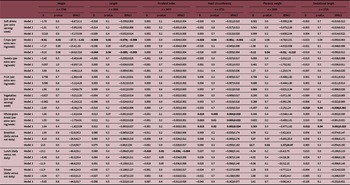
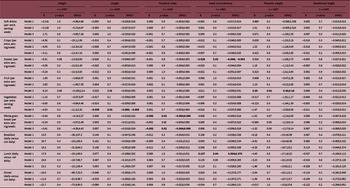
Analyses were run separately for mother–offspring and father–offspring dyads. Descriptive statistics for Young-HUNT1 data were produced (see Table 1). Analyses were conducted on complete cases, and therefore included only participants who had valid measurements for all exposures, covariables, and neonatal outcomes. To investigate the associations between adolescents’ dietary exposures (i.e., soft drinks, crisps, sweets, fruit, vegetables, and whole-grain bread) and their offspring neonatal outcomes (i.e., birth weight, length, head circumference, placenta weight, gestational length, and ponderal index), a set of linear regression models were estimated. First, an unadjusted model (model 1); second, a model adjusting for adolescents’ age (continuous), BMI z-score (continuous), smoking (dichotomous), alcohol use (dichotomous), snuff (tobacco) use (dichotomous), and education plans (dichotomous) (model 2); and finally, a model that included the covariables adjusted for in model 2 plus additional adjustment for the other – non-indicator – diet items or meal items (model 3). To allow comparisons across outcomes and exposures, we present both unstandardized (see Tables 2–7) and standardized coefficients (see Appendices 1–4).
Descriptive characteristics of the Young-HUNT1-MBRN data sets (only first and single pregnancies included, outliers >3 SD applied for outcomes)

* Based on complete cases, excluding all IDs with missing data for at least one covariate.
♯ IQR, interquartile range.
Associations between maternal diet exposures and child neonatal outcomes (outliers >3 SD excluded) in the Young-HUNT1-MBRN cohort (only first and single births included, complete cases*)

* Results in the table are for complete cases (n = 2947).
B, unstandardized beta coefficient.
Model 1: the crude model.
Model 2: adjusted for age, BMI z-score, smoking (ever/never), alcohol use (ever/never), snuff (tobacco) use (ever/never), and education plans measured via Young-HUNT1.
Model 3: model 2 adjustments plus food items for each food item and meals items for each meal item.
Replication and pooled analyses
Since this study is the first to explore associations between diet in adolescence and neonatal outcomes some years later, multiple comparisons were planned. Analyses were replicated with the Young-HUNT3 cohort to reduce the chance that any associations were found by chance. In addition, pooled analyses were conducted combining both Young-HUNT1 and Young-HUNT3 data sets.
Sensitivity analysis
Sensitivity analyses were performed to evaluate the robustness of the findings (see Appendixes 5–10) by rerunning the analyses with ≥4 SD outlier exclusion for the continuous variables and including all cases, regardless of missing values. Generally, findings were similar under these conditions and therefore will not be commented on further. Factor analyses were conducted to identify dietary indices based on all food items using the principal component method and varimax/orthogonal rotation. The following three dietary indices were denoted i) a fruit and vegetable index (i.e., sum of fruit and vegetable intake, ii) a fibre index (i.e., sum of fruit, vegetable, and whole-grain bread intake), and iii) an excess index (i.e., sum of crisps, sweets, and sugared soft drink intake).
Software package SPSS 21.0 was used to conduct all analyses.
Results
Description of sample
Fig. 1 shows a flowchart of participants in the Young-HUNT1-MBRN cohorts. In the Young-HUNT1 survey, 8980 pupils (response rate 88%) completed the questionnaire. After exclusions due to age, non-singleton pregnancies or no registered birth, 6191 parent–child dyads remained (61%). The final complete-case analysis sample comprised 5087/6191 dyads (82%). In the Young-HUNT3 survey (2006–2008), 8199 pupils (response rate 78%) completed the questionnaire. After exclusions due to age, non-singleton pregnancies or no registered birth, 1659 dyads remained (20%). The final complete-case analysis sample comprised 1241/1659 dyads (75%).
Flowchart participants Young-HUNT1-MBRN datasets.

Table 1 presents the demographics, diet items, and neonatal outcomes for the mother–offspring and father–offspring dyads of the Young-HUNT1 cohort. The mean age of participants at the time of the Young-HUNT1 questionnaire was 16.0 years, and the mean age of becoming a parent was 25.8 years for girls and 26.1 years for boys. On average, participants had a slightly higher BMI than the WHO mean, and less than a third planned to continue their studies into higher education. The Young-HUNT3 cohort yielded similar demographics for both the mother–offspring (mean age = 16.2 ± 1.7, higher education plans = 39.9%, mean BMI = 0.47 ± 0.95) and father–offspring datasets (mean age = 16.3 ± 1.5, higher education plans = 21.7%, mean BMI = 0.6 ± 0.99), except for a lower mean age of becoming a parent due to the cohort itself being much younger (mean age of mother = 21.8 ± 2.5; mean age of father = 22.06 ± 3.04).
When checking for the social patterning of diet in the Young-HUNT1 cohort (Tables A11, 12 in appendix), we found clear differences in food and meal patterns according to socioeconomic and behavioral covariables in both the mother–offspring and father–offspring dyads.
Mother–offspring associations
Associations between the mother’s diet in adolescence and neonatal outcomes are shown in Tables 2–4. In Young-HUNT1, infants born to mothers with higher crisp intakes during adolescence were on average slightly lighter and shorter at birth and had a slightly lighter placenta; an extra serving of crisps per week was associated with a 12 g reduction in birth weight (95% CI: −23 to −1 g). There was little support for these associations in the smaller replication cohort (Young-HUNT3), the associations here were all much closer to the null (Table 3). When data were pooled, these associations were still evident although slightly weaker (Table 4).
Associations between maternal diet exposures and child neonatal outcomes (outliers >3 SD excluded) in the Young-HUNT3-MBRN cohort (only first and single births included, complete cases*)

* Results in the table are for complete cases (n = 850).
B, unstandardized beta coefficient.
Model 1: the crude model.
Model 2: adjusted for age, BMI z-score, smoking (ever/never), alcohol use (ever/never), snuff (tobacco) use (ever/never), and education plans measured via Young-HUNT3.
Model 3: model 2 adjustments plus food items for each food item and meals items for each meal item.
Associations between diet exposures and child neonatal outcomes (outliers >3 SD excluded) in the pooled Young-HUNT1 and 3-MBRN mother–offspring dyads (only first and single births included, complete cases*)

* Results in the table are for complete cases (n = 3797).
B, standardized beta coefficient.
Model 1: the crude model.
Model 2: adjusted for age, BMI z-score, smoking (ever/never), alcohol use (ever/never), snuff (tobacco) use (ever/never), and education plans measured via Young-HUNT.
Model 3: model 2 adjustments plus food items for each food item and meals items for each meal item.
In Young-HUNT1, there was a pattern of slightly shorter gestational length among mothers who reported a higher vegetable intake and having an evening meal every day during adolescence. These findings were not replicated in Young-HUNT3 (Table 3). The effect of vegetable intake was evident although weaker in the pooled analyses (Table 4). Similarly, eating breakfast every day was associated with a higher placenta weight among Young-HUNT1 mothers, but not in Young-HUNT3 mothers (Table 3), though pooled analyses supported this association (Table 4).
Pooled analyses also showed an association between maternal whole-grain bread consumption and a slightly increased head circumference and longer gestational length. There was no evidence for associations between mothers’ intake of soft drinks, sweets, and fruit in adolescence with any neonatal outcomes. No association was observed between the diet indices and neonatal outcomes (Appendix A9).
Father–offspring associations
Associations between the father’s diet in adolescence and neonatal health outcomes are shown in Tables 5–7. In Young-HUNT1, paternal fruit intake during adolescence was associated with an increase in placenta weight; an extra serving of fruit per week was associated with a 2.4 g increase in placenta weight (95% CI: 0.3–4 g). This association was not observed in the Young-HUNT3 cohort, though the pooled analyses supported this finding. A slightly shorter birth length and lower ponderal index were observed in offspring of fathers in Young-HUNT1 who reported higher vegetable and whole-grain bread consumption during adolescence. No evidence of this was found in Young-HUNT3, but associations remained in the pooled analyses. Eating lunch regularly in adolescence was associated with an increase in head circumference in the offspring of Young-HUNT1 fathers. These associations replicate neither in Young-HUNT3 nor in the pooled analysis (see Tables 6 and 7).
Associations between paternal diet exposures and child neonatal outcomes (outliers >3 SD excluded) in the Young-HUNT1-MBRN cohort (only first and single births included, complete cases*)

* Results in the table are for complete cases (n = 2140).
B, unstandardized beta coefficient.
Model 1: the crude model.
Model 2: adjusted for age, BMI z-score, smoking (ever/never), alcohol use (ever/never), snuff (tobacco) use (ever/never), and education plans measured via Young-HUNT1.
Model 3: model 2 adjustments plus food items for each food item and meals items for each meal item.
Associations between paternal diet exposures and child neonatal outcomes (outliers >3 SD excluded) in the Young-HUNT3-MBRN cohort (only first and single births included, complete cases*)

* Results in the table are for complete cases (n = 391).
B, unstandardized beta coefficient.
Model 1: the crude model.
Model 2: adjusted for age, BMI z-score, smoking (ever/never), alcohol use (ever/never), snuff (tobacco) use (ever/never), and education plans measured via Young-HUNT3.
Model 3: model 2 adjustments plus food items for each food item and meals items for each meal item.
Associations between diet exposures and child neonatal outcomes (outliers >3 SD excluded) in the pooled Young-HUNT1 and 3-MBRN father–offspring dyads (only first and single births included, complete cases*)

* Results in the table are for complete cases (n = 2531).
B, standardized beta coefficient.
Model 1: the crude model.
Model 2: adjusted for age, BMI z-score, smoking (ever/never), alcohol use (ever/never), snuff (tobacco) use (ever/never), and education plans measured via Young-HUNT.
Model 3: model 2 adjustments plus food items for each food item and meals items for each meal item.
No additional associations were found in the pooled analyses for father–offspring dyads. In addition, there was no evidence for an association between fathers’ intake of soft drinks, crisps, breakfast, and dinner and neonatal outcomes in the different analyses. Fathers’ fruit and vegetable index and fiber index were inconsistently associated with the ponderal index of their offspring; a higher fruit and vegetable index was positively associated with this neonatal outcome while the fiber index was inversely related (Appendix 10).
Discussion
To our knowledge, this is the first study worldwide that examined the relationship between diet prospectively measured in adolescence before conception and subsequent neonatal health outcomes. Our study showed several associations between adolescent diet and neonatal outcomes in the Young-HUNT1-MBRN cohort. Greater consumption of energy-dense foods (i.e., crisps, sweets) was associated with a lower birth weight, and more healthy food choices (e.g., whole grain bread, daily breakfast, and lunch) were associated with a slightly larger head circumference. While these results were mostly still evident when we pooled data from the Young-HUNT3 cohort, they were much closer to the null and showed no evidence when examined separately in the smaller Young-HUNT3 cohort. Findings for each exposure were not consistent across outcomes, and some findings were also in unexpected directions, for example, higher vegetable consumption among fathers during adolescence was associated with shorter birth length and among mothers it was associated with a slightly shorter period of gestation. The size of the associations was also small and the dietary exposures were socially patterned, hence even if one or two of the associations reflect a causal pathway between adolescent diet and neonatal outcomes, the effects are likely to be small.
Direct comparisons of our results with other studies are difficult as there are no precedents. Previous longitudinal cohort studies differed in target population and timing of the exposure and only studied birth weight, birth length, and preterm deliveryReference Xie, Madkour and Harville25,Reference Grieger, Grzeskowiak and Clifton26 . In a US-based study of adolescent mothers (n = 833), where measures of diet and offspring neonatal outcomes were much closer together in time, no associations were identified between self-reported diet and birth weight and preterm delivery of offspringReference Xie, Madkour and Harville25. In an Australian cohort of women, lower diet quality 10–15 months before pregnancy (low vegetable and whole-grain intakes) was associated with lower birth weight but not with preterm deliveryReference Gresham, Collins, Mishra, Byles and Hure27. One small retrospective cross-sectional study (n = 309) found that a dietary pattern 12 months prior to conception that included protein-rich foods, fruit, and whole grains was associated with reduced likelihood for preterm delivery, while a dietary pattern that included energy-dense foods was associated with increased likelihood for preterm delivery and shorter birth lengthReference Grieger, Grzeskowiak and Clifton26. However, small sample size and retrospective dietary assessment (e.g., recall bias) temper the conclusions of the study. Some of the relationships found in our study complemented the previous studiesReference Grieger, Grzeskowiak and Clifton26,Reference Gresham, Collins, Mishra, Byles and Hure27 , energy-dense foods appeared to have a (small) detrimental impact on certain neonatal outcomes and healthier dietary habits appeared somewhat protective. Nevertheless, some of our findings (i.e., harmful effects of vegetables and daily dinner) were unexpected and difficult to explain which alongside the number of comparisons made, hints at sampling variation as a likely explanation.
A major strength of this study is the large sample of parent–offspring dyads, the replication of analyses with the Young-HUNT3 cohort and pooled analyses, combined with the precise measures of the neonatal health outcomes from the MBRN provide an unparalleled data set to explore the research questions. The generalizability from Nord-Trøndelag to Norway is considered good; the region has representative geography, economy, industry, sources of income, age distribution, morbidity, and mortalityReference Holmen, Bratberg and Krokstad14,Reference Krokstad and Westin15 . However, the relative well-being and stable socioeconomic status of the Norwegian population, compared to non-Scandinavian countries with more diverse and high-risk populations and diet variability, could influence both study compliance and results28.
Our study has several limitations. First, methods employed in the Young-HUNT survey raise some concerns. One-time measures of adolescents’ diet may not accurately reflect actual dietary habits which may fluctuate over timeReference Spear10. Diet items were self-reported and may suffer from social desirability bias. Single items were used to measure diet which may increase measurement error and may not reflect overall diet quality. Nevertheless, measures showed adequate reliability and validityReference Vereecken and Maes18. A five-point Likert scale might lack sensitivity to reflect accurately adolescents’ complex dietary habits. Frequency distributions (data available on request) indicated that healthy food items were skewed toward the higher end of the scale, while unhealthy food items were skewed toward the lower end, except for adolescent boys’ soft drink intake, which was skewed toward the higher end of the scale in contrast to the adolescent girls. More nuanced response categories could increase the discrimination capacity of diet itemsReference Willet29. Periconceptual weight status and (un)healthy lifestyle behaviors are also known to impact neonatal health outcomesReference Stephenson, Heslehurst and Hall3. However, for this study, only covariates measured in adolescence were included and covariates in adulthood were not included, nor adjusted for. Second, diet habits of this cohort were not tracked into adulthood and their nutritional status was not assessed at either time point. It was not possible in the current study to confirm whether dietary patterns of the participants tracked into (preconception) adulthood, which may alter impact on neonatal outcomesReference Lien, Lytle and Klepp12. Preconception nutritional status, instead of diet, might be a better predictor of the health of the next generation, and diet during adolescence is not synonymous with present and future nutritional status. Nutritional status is defined as an individual’s health condition as influenced by the intake and utilization of nutrientsReference Todhunter30. Existing evidence highlights the impact of parents’ periconceptual nutritional status on neonatal outcomesReference Fleming, Watkins and Velazquez4–Reference King7, whereas the influence of diet has been overlookedReference Stephenson, Heslehurst and Hall3. Future research therefore must consider both diet patterns and nutritional status in adolescence as well as adulthood. Another limitation entails the comparability of the Young-HUNT3 cohort in the replication study with the main cohort. Due to the more limited time frame between the data collection of the Young-HUNT3 cohort and our study, it is likely that not all included adolescent participants had the opportunity to have their first child resulting in a slightly younger maternal age at delivery in the Young-HUNT3 cohort.
The present study presents a unique prospective design examining the relationships between diet measured in adolescence and neonatal health of the next generation. Though we cannot confirm any specific effects of diet measured in adolescence on offspring health when individuals become parents in adulthood, we also cannot rule out an effect. If effects are present, then further longitudinal studies in larger samples and different populations with more current state-of-the-art dietary measures and different confounding structures are needed to replicate our findings with more precision.
Supplementary material
To view supplementary material for this article, please visit https://doi.org/10.1017/S2040174420001087
Acknowledgments
The Nord-Trøndelag Health Study (The HUNT Study) is a collaboration between HUNT Research Centre (Faculty of Medicine and Health Sciences, NTNU, Norwegian University of Science and Technology), Trøndelag County Council, Central Norway Regional Health Authority, and the Norwegian Institute of Public Health. University of Agder funded this specific study; the abovementioned organizations linked to the HUNT study were not involved in analysis and interpretation of data nor in writing the manuscript but did approve the final version. Coauthor CK Hanson is funded by NIMHD of the National Institutes of Health under award number 1P50MD010431-01.
Authors’ contributions
WVL, FNV, ERH, NCO were involved in the design of the research (project conception and development of the research plan). WVL, AKW, NCO conducted the analyses on the data of Young-HUNT. WVL, AKW, FNV, ERH, NCO were involved in the interpretation of the analyses. WVL, AKW drafted the manuscript. All authors contributed to interpretation of the results and provided feedback on the drafts before submission. All authors approved the submitted manuscript.
Conflicts of interest
The authors declare no competing interests.
Ethical standards
The Young-HUNT study adhered to the Helsinki Declaration and was approved by the Norwegian Data Inspectorate, the Regional and National Committees for Medical and Health Research Ethics in Norway, and the Norwegian Directorate of Health. Additional consent for this specific study was provided by the Central Regional Committee for Medical and Health Research Ethics in Norway (Reference: 2017/1220/REK midt).
Data sharing
The Nord-Trøndelag Health Study (HUNT) has invited persons aged 13–100 years to three surveys between 1994 and 2008 and is now running a new survey (HUNT4) since 2017. Comprehensive data from more than 125,000 persons having participated at least once and biological material from 78,000 persons are collected. The data are stored in HUNT databank and biological material in HUNT biobank. HUNT Research Centre has permission from the Norwegian Data Inspectorate to store and handle these data. The key identification in the data base is the personal identification number given to all Norwegians at birth or immigration, while de-identified data are sent to researchers upon approval of a research protocol by the Regional Ethical Committee and HUNT Research Centre. To protect participants’ privacy, HUNT Research Centre aims to limit storage of data outside HUNT databank and cannot deposit data in open repositories. HUNT databank has precise information on all data exported to different projects and is able to reproduce these on request. There are no restrictions regarding data export given approval of applications to HUNT Research Centre. For more information see: http://www.ntnu.edu/hunt/data.