Introduction
In 1870, Antônio Salustiano Antunes, a Portuguese engineer in Bahia, proposed a remedy for Brazil's dependence on costly imports of foreign coal: the small, oily, coconut-like seed of the piassabeira palm.Footnote 1 He asserted that the humble coquilho, as the seeds were called, represented an unused and hitherto neglected product of Brazil's ‘industrial forests’, and were, in fact, ‘a powerful combustible and a rival to coal’. Antunes' plan for the piassabeira involved the cultivation of palm groves along railway tracks and next to stations, where they would provide a self-reproducing and, he stressed, inexhaustible source of fuel for Brazilian locomotives. And this was just the beginning. Antunes further envisioned the large-scale cultivation of the palms in ‘open air mines’ that would meet the energy needs of all manner of industries.Footnote 2 The engineer did not propose the coquilho as a direct replacement for coal, but rather championed it as an auxiliary fuel that would enrich Brazil's ‘industrial arsenal’ and provide domestic markets with an inexpensive alternative. All that Brazilians needed was ‘a bit of patriotism and volition’, the engineer asserted, in order to take advantage of what Providence had so generously bestowed upon them.Footnote 3
At first glance Antunes proposal appears outlandish, yet in the early twentieth century the agronomist Edmundo Navarro de Andrade successfully acclimatised eucalyptus trees for the Companha Paulista, a railway company in São Paulo. Planted on fazendas near stations and alongside the tracks, eucalyptus groves supplied wood for locomotive fuel and railway construction.Footnote 4 Present-day experiments with bio-fuels further prove the viability of using plant combustibles for engines large and small.Footnote 5 The most successful of these, sugar-cane álcool, powers Brazilian motor vehicles, small engines and even aeroplanes. Recent experimentation with fuel farms of jatropha and babassu palms (both New World species) represents a developing industry that Brazil appears uniquely positioned to lead.
Whether he was a crackpot or merely ahead of his time, Antunes' story serves as an introduction to a little-studied topic in Brazilian historiography during the late colonial period and nineteenth century: the attempts of Brazilian scientists and entrepreneurs to locate and develop domestic resources for combustibles and commodities. Much has been written about European and US efforts to investigate the commercial potential of Brazil's forest species, but few works have addressed the attempts of Brazilians themselves.Footnote 6 Despite the dominance of sugar and coffee in their nation's nineteenth-century export economy, many Brazilians recognised the economic potential of their native flora and strove to diversify agricultural production through the discovery of economically useful species. Accordingly, botanical experimenters like Antunes identified wood for civil construction and shipbuilding; fibres for textiles, cordage and paper; medicinal plants; waxes and resins for candles and varnishes; and even substitutes for sugar, coffee and tea. The call to valorise national resources and replace imported raw materials with domestically sourced alternatives was, at its heart, a nineteenth-century version of import substitution that its advocates hoped would lead to economic self-sufficiency in Brazil.Footnote 7
Antunes was a member of a small but earnest circle of entrepreneurs who advocated the development of domestic commodities to replace imports, an enterprise that was most vocally supported by the Rio de Janeiro-based Sociedade Auxiliadora da Industria Nacional (Society for the Promotion of National Industry, 1827–1904). Born out of the reforms of the Pombaline era and the economic and institutional transformations that resulted from the transfer of the Portuguese court to Rio in 1808, the Sociedade Auxiliadora was deeply influenced by Enlightenment liberalism, particularly the ideas of Adam Smith and the agrarian-based political economy of the French physiocrats.Footnote 8 The less well-known economic thought of a Swedish naturalist, Carl Linnaeus, also strongly influenced the society's stance on natural resources.
This essay begins with a description of the impact of the eighteenth-century Enlightenment-influenced Pombaline reforms on discussions of economic development in Brazil, as represented in the publications of the Sociedade Auxiliadora and government reports in the nineteenth century.Footnote 9 A focus of these discussions was the desire to replace expensive imported raw materials with Brazilian resources. The essay then examines the economic nationalism woven into the society's projects, an influence that owes its provenance, in part, to Linnaeus' political economy of national self-sufficiency. Above and beyond ordering the natural world into kingdoms, phyla and orders, Linnaeus saw scientific classification as a tool for identifying natural resources for national economic development. Linnaeus' taxonomy was therefore explicitly crafted to ‘perfect the self-sufficiency of the nation and the physical and social state of its inhabitants’.Footnote 10 By identifying economic uses for Swedish national species and acclimatising exotic species, Linnaeus endeavoured to end his nation's dependence on imported commodities, especially from the tropics, access to which was often controlled by rival European nations. Originally introduced into the Portuguese colonial world by Domenico Vandelli, an Italian naturalist, professor at Coimbra University, director of the Lisbon Botanical Gardens and correspondent of Linnaeus, the Swede's political economy of national autarky also surfaced in the nineteenth-century writings and projects of the Sociedade Auxiliadora.Footnote 11 The society advocated a Linnaean-inflected vision of economic nationalism, with the important difference that Brazil, unlike Sweden, was in a position to supply both domestic and foreign markets with tropical commodities. Finally, the essay describes the economic projects of Brazilian scientists, entrepreneurs and engineers, most of whom were associated with the Sociedade Auxiliadora, who have until recently remained at the margins of historiography, despite their importance in debates about economic, technological and scientific development in nineteenth-century Brazil. All of the actors described here promoted their projects under the banner of national economic self-sufficiency. More was therefore at stake than merely personal profit, or so they intimated. As Antunes demonstrated, they envisioned Brazil's ‘industrial forests’ as central to the construction of an independent, economically vibrant nation.
The Forest is a Factory
Antunes' groves of piassabeira palms counter the European image of the materially rich but ‘dark and menacing tropics’ so vividly described by Nancy Stepan.Footnote 12 Far from being a dangerous wilderness, Antunes crowed, his piassabeira palms were ‘industrial plants … and promoters of progress’.Footnote 13 ‘Industrial’ invoked a sense of order, productivity and reliability that belied contemporary European representations of the tropics as disorderly, predatory and chaotic. Furthermore, in nineteenth-century Brazil, the word indústria conveyed a broader meaning than the primary association with manufacturing that it holds today – the term referred to any economically productive activity.Footnote 14 Antunes' industrious palms were therefore more than a discrete botanical species going about its daily business of metabolising sunlight into energy; they were, in essence, botanical factories. The question was how to turn that natural productivity to economically and socially profitable ends.
In asking this question, the engineer from Bahia made claim to a discourse and way of perceiving the natural world that was deeply influenced by the European scientist and explorer Alexander von Humboldt. Enfolded within Humboldt's description of the sublime elemental forces of South America was the economic value of its flora, fauna and mineral resources.Footnote 15 As the nineteenth century progressed, these visions of economic development were amplified and carried deep into the interior of the continent by increasing numbers of mostly European travellers described in the work of Mary Louise Pratt as the ‘capitalist vanguard’. Dispensing with Humboldt's emotional engagement with the landscape, this wave of explorers turned a sharp, calculating eye to the economic potential of South American natural resources and quickly set about collecting, analysing and naming whatever species or material seemed promising.Footnote 16 Humboldt's travelling partner, a naturalist called Aimé Bonpland, and an English geologist and mining engineer turned botanist, John Miers, serve as examples of Pratt's vanguard. Bonpland remained in South America, where he studied and promoted native species in European intellectual circles. Miers published several works on South American plants based on his travels in Argentina, Chile and Brazil in the 1820s and 1830s.Footnote 17 After returning to England, Miers maintained connections with Bonpland and various Brazilian institutions. He published an 1861 article on Ilex paraguayensis or mate, a species native to the Río de la Plata region and southern Brazil, based on specimens sent to him by Bonpland.Footnote 18 Miers also wrote a report for the Brazilian government on the nation's botanical display at the 1862 exhibition in London and later corresponded with the Sociedade Auxiliadora about the commercial potential of Brazilian species.Footnote 19 While Brazilian scientists and entrepreneurs were influenced by and benefited from European research transmitted through transatlantic networks, Europeans also benefited from Brazilian scientific networks. Bonpland, for instance, sent his mate specimens to Miers via the Botanical Garden in Rio de Janeiro, an institution established within a Luso-Brazilian scientific patrimony that drew its roots from Linnaeus, Vandelli and the scientific circles at Coimbra University.
For scholars such as Pratt, scientific exploration was a purely European enterprise synonymous with colonial exploitation. Yet Brazilians too appropriated this ‘European’ project, moulding it into a vision of national economic self-sufficiency. In this tale, the Sociedade Auxiliadora, one of Brazil's most important scientific and technological organisations of the nineteenth century, figures prominently. Founded in the early years of independence, scholars have disagreed about the extent to which the society played a role in transmitting Enlightenment thought in the Brazilian empire. Maria Odila da Silva Dias argues that the Sociedade Auxiliadora was essential for linking the generation of Brazilian-born and Coimbra-trained scientists of the late colonial and early independence period to their counterparts in the later part of the century.Footnote 20 José Murilo de Carvalho challenges Odila, arguing that two distinct periods of a Luso-Brazilian Enlightenment developed in the nineteenth century. The first generation faded away at the end of Pedro I's reign in 1831, and the second emerged in the 1870s with the creation of new scientific and educational institutions.Footnote 21 These included the revived Museu Nacional in 1876, which became an important site for botanical research under the direction of a naturalist, Ladislau Netto.Footnote 22 While acknowledging a new vigour in the development of Brazilian science and technology in the 1870s, this essay sides with Odila in arguing that the Sociedade Auxiliadora was an important site of engagement with Enlightenment thought earlier in the nineteenth century. This position is supported by the botanical information contained in exhibition catalogues of the 1860s, in addition to the scientific articles published in the society's journal.Footnote 23 The fact that some of the most ardent supporters of science and technology in the service of economic development from the 1840s to the 1870s were also society members further supports the claim. Among these numbered an agronomist, Frederico Burlamaque (1803–66); an engineer, André Rebouças (1838–98); an industrialist, Irineu Evangelista de Sousa (Baron of Mauá, 1813–89); politicians and members of the emperor's Council of State, José Maria da Silva Paranhos (Viscount of Rio Branco, 1819–80) and Miguel Calmon du Pin e Almeida (Marques of Abrantes, 1796–1865); and the emperor Dom Pedro II (1825–91).Footnote 24
Officially founded by decree in 1827 under the patronage of Pedro I, the Sociedade Auxiliadora was the project of a wealthy Rio merchant and ennobled courtier in Pedro I's inner circle, Ignácio Álvares Pinto de Almeida. Indicative of the high regard for French science and culture in nineteenth-century Brazil, the society was modelled after the Société d'Encouragement pour l'Industrie Nationale, founded in 1801. The Sociedade Auxiliadora ultimately functioned as an independent advisory organ for the state, from which it also received the majority of its funding.Footnote 25 Apart from financial support, the society maintained ties to the state through the appointment of prominent politicians to leadership roles, including the Viscount of Rio Branco, who served as president from 1865 until 1880.Footnote 26
The Sociedade Auxiliadora also created sister institutions, including the more famous Instituto Histórico e Geográfico Brasileiro, founded in 1838. Another important institute established in 1860, in partnership with the newly created Ministério de Agricultura, Commercio e Obras Públicas (Ministry of Agriculture, Commerce and Public Works), was the Instituto Imperial Fluminense de Agricultura (Imperial Fluminense Institute of Agriculture, IIFA). Designed as an experimental agricultural school overseen by a society member and close friend of Pedro II, Luís Pedreira do Couto Ferraz (Baron of Bom Retiro, 1818–86), the institute was located in the grounds of the Jardim Botânico in Rio de Janeiro. One of its principal objectives was the ‘expansion and improvement’ of the original garden established by João VI in 1808.Footnote 27 The IIFA produced a quarterly journal, the Revista Agricola do Instituto Imperial Fluminense de Agricultura, which covered the latest developments in agricultural improvement, including the institute's experiments with indigenous and acclimatised plants.Footnote 28 The publication supplemented the society's monthly mouthpiece, O Auxiliador da Industria Nacional, which began in 1833. Sociedade Auxiliadora members regularly contributed to both journals.
From its inception, a central goal of the Sociedade Auxiliadora was the dissemination of the latest in scientific and technological advances, especially for agricultural improvement. This was achieved through O Auxiliador, specialised publications on modern agricultural techniques and machinery, and patent assessments. After inspection by the appropriate committee, the Sociedade Auxiliadora granted preliminary patents for machinery, manufacturing processes and chemicals. Approved applications were forwarded to the Ministry of Agriculture for the issuance of a government patent.Footnote 29 Regular meetings were held at the society's Rio offices, where a library and depository for machines were also maintained. Though the society did not possess a laboratory or other equipment for experiments, machinery demonstrations for didactic purposes and patent assessments were routinely held on site.
The Sociedade Auxiliadora was also instrumental in organising four national exhibitions in Rio in the 1860s and 1870s from which Brazil's displays for international exhibitions in the United States and Europe were selected, a project overseen by the Ministry of Agriculture.Footnote 30 National exhibition displays were collected from provincial exhibitions held expressly for the vetting of local products and materials. The ministry oversaw the directives and funding for the collection of exhibition materials, and provincial presidents were tasked with organising the exhibitions and selecting material to be sent to Rio. Exhibition catalogues represented an ambitious effort at compiling a truly national ‘inventory of industry’, and were especially important in collecting and disseminating information on Brazilian botanical species, as we shall see shortly. In addition to these activities, Sociedade Auxiliadora members attended and gave lectures, maintained correspondence with scientists and agriculturalists abroad, debated economic theories, disseminated seeds, livestock and machinery, and translated and wrote articles on the latest agricultural, scientific and technological advances of the period.
Commodifying the Forest: Colonial Precedents
Although Brazil's incorporation into the Portuguese colonial empire began, as is well known, with the extraction of dyewood along the coastal regions, the country quickly became the site of intensive plantation agriculture based on one introduced species in particular: sugar cane. By the mid-seventeenth century, various drogas do sertão from the Amazon (native plant and animal materials collected in the wild) came to supplement the Portuguese trade in cultivated crops.Footnote 31 While colonial sugar planters, missionaries and other observers described the economic potential of these wild-harvested products, the Portuguese government made no sustained attempt to explore, catalogue or exploit ‘new’ species systematically until the late 1700s.Footnote 32 The crown, broadly speaking, was interested foremost in the wealth generated from agricultural production and, later, the gold and diamond mining that developed towards the end of the seventeenth century. For much of the colonial period, the secrets of Brazil's forests stayed within the province of local knowledge and use.Footnote 33
The first consistent and widespread attempt to diversify the Brazilian economy and develop its native species was undertaken towards the end of the colonial period under the ascendance of Sebastião José de Carvalho e Melo, Marquis of Pombal (1699–1782). In line with his reformer counterparts in Bourbon Spain, Pombal hoped to diversify and increase Brazilian production in support of the mercantilist goals of Portugal.
In Brazil the leadership and initiative of the Marquis of Lavradio, whom Pombal made viceroy of Rio de Janeiro in 1769, resulted in experiments with potentially lucrative commodities.Footnote 34 Lavradio solicited reports from provincial militia commanders on native plants that might be economically useful, with the order to disseminate seeds and information about the cultivation of promising species to local farmers and planters.Footnote 35 In collaboration with João Hopman, a Dutch innovator whom Lavradio appointed as an agricultural inspector, the viceroy developed a new cordage fibre from guaxima (Caesar weed), an introduced species from Africa that grew wild in Rio de Janeiro. Guaxima was successfully employed aboard Brazilian ships, but production eventually fell off by the end of the colonial period due to a lack of support in Portugal.Footnote 36
Beyond the colony, the government's interest in commodity diversification was further evidenced by the visit of Brazilian-born Hipólito José da Costa Pereira to the United States in 1799. Although couched as a diplomatic exchange, the trip was nothing less than an act of economic espionage underwritten by the Portuguese crown. Hipólito investigated US production of tobacco, whale oil, maple sugar, hemp and lumber, the last two being of strategic importance for shipbuilding.Footnote 37 His report was intended to provide new inspiration for Brazilian production, though ultimately his observations and the botanical samples he sent back to Portugal appear to have come to naught.Footnote 38
The efforts of Lavradio, Hipólito da Costa and other reformers and expeditionists took place within the context of the Luso-Brazilian Enlightenment, centred around Coimbra University, where Pombal's reform of 1772 ushered in an era of scientific interest in Brazilian resources.Footnote 39 Coimbra luminaries such as Vandelli instructed a generation of Brazilian-born politicians, intellectuals and scientists, including a botanist and expedition leader, Alexandre Rodrigues Ferreira (1756–1815), another botanist, Manuel Arruda da Câmara (1752–1811), and an engineer and statesman, José Bonifácio da Andrada e Silva (1763–1838).Footnote 40 José Murilo de Carvalho observes that it was this generation of Brazilian-born scientists trained at Coimbra who realised the ‘first scientific activity’ in Brazil, and not Europeans, as was the case in other colonial empires.Footnote 41
Though he never set foot in Brazil, Vandelli studied the colony's resources from afar, launching a vigorous criticism of the ongoing destruction of the Brazilian forest by slash-and-burn cultivation. He decried forest devastation as a careless waste of natural wealth and a tremendous loss for science. Vandelli's concern for the forest was deeply influenced by Linnaeus' developing ecological thought, as the latter witnessed forest destruction in Sweden. Without forest protection, Linnaeus lamented, unknown species would be lost before their economic value could be discovered. José Pádua has traced the influence of Linnaeus' ecological views from Vandelli to some of the most important Brazilian politicians, scientists and agricultural reformers of the nineteenth century, of whom the following were also prominent members of the Sociedade Auxiliadora: a judge, naturalist, and student of Vandelli, Baltazar da Silva Lisboa (1761–1840); Guilherme Shüch (Baron of Capanema, 1824–1908), Frederico Burlamaque and Joaquim Nicolau Moreira (1824–94), all scientists; and an engineer, André Rebouças.Footnote 42 These society members' ecological call for forest protection was not a demand for preservation for its own sake, nor was it based on a sentimental concept of nature. Indeed, this essay argues that the society's stance on forest protection was firmly linked to a Linnaean vision of economic development. Thus the Sociedade Auxiliadora viewed forest protection, like Linnaeus earlier, as an essential component in the search for new agro-industrial commodities – and ultimately national economic self-sufficiency.
Vandelli's call to protect and study the forest found a receptive audience in his students. Manuel Arruda da Câmara's research on Brazilian plants was often cited in O Auxiliador, national exhibition catalogues and botanical manuals.Footnote 43 José Bonifácio became a vociferous critic of slash-and-burn agriculture, linking it to the barbarity of slavery in his famous 1825 treatise calling for abolition.Footnote 44 Bonifácio advocated the technological modernisation of Brazilian agriculture with the triple aim of improving productivity, ending slavery and conserving forests for more diverse and sustainable economic pursuits; the politician's position was echoed regularly in O Auxiliador.Footnote 45 The Sociedade Auxiliadora's support of scientific agriculture and the protection of Brazilian forest resources reflected the Linnaean-influenced legacy of Vandelli and his circle. What started as imperial policy meant to revitalise the mercantilist relationship between Lisbon and Brazil was transformed after independence into a project of national economic development. The Sociedade Auxiliadora became an important site for discussions of agricultural improvement, mechanical innovation and the economic development of forest resources, extending Vandelli's Linnaean vision well into the nineteenth century.
Cataloguing the Nation: National Exhibitions, the ‘Industrialisation’ of Scientific Knowledge and the Search for Agro-industrial Commodities
Sociedade Auxiliadora members and contributors to O Auxiliador lamented the lack of knowledge about Brazilian forest resources, especially where they might replace imported materials or spur the development of domestic industries. In part, such complaints resembled the observations of European travellers that South Americans had done little to capitalise upon the abundant opportunities offered to them by nature.Footnote 46 But these attitudes also reflected a forceful advocacy of the development of domestic resources based on patriotic grounds, a clear reflection of Linnaean economic self-sufficiency. The desire to remedy this lack of scientific and economic initiative was one of the driving forces behind a series of national exhibitions sponsored by the Ministry of Agriculture and the Sociedade Auxiliadora in Rio de Janeiro in 1861, 1866, 1873 and 1875.
Organised as rehearsals for Brazil's participation in international exhibitions in London in 1862, Paris in 1867, Vienna in 1873 and Philadelphia in 1876, the national exhibitions were intended as educational celebrations of the empire's resources, products and technology.Footnote 47 Frederico Burlamaque, a military-trained scientist, self-described agronomist, and editor of O Auxiliador, declared the first National Exhibition of 1861 an opportunity to display domestic resources and products in a didactic manner, in addition to educating the populace about the need for agricultural and industrial instruction. Notwithstanding the fact that the exhibition was largely restricted to an audience of the more affluent residents of Rio de Janeiro city and province, the event was an important first attempt to nationalise information about Brazilian resources.
The many catalogues and reports on Brazil's national exhibitions provide a rich, if irregular, glimpse into agricultural production, technological innovation and the consolidation of both lay and scientific knowledge about the empire's resources. The catalogues for the 1861 exhibition, for instance, were organised by province and category and varied in the depth and breadth of their botanical descriptions, sometimes appearing short and cryptic – ‘resin of the tupinambur root – a powerful purgative: one-eighth is a sufficient dosage for adults’ – and at other times being quite detailed, as evidenced by a paragraph describing the piassaba palm (the same species as that championed by Antunes) that outlined its habitat, botanical characteristics, economic uses and sale price in regional markets.Footnote 48 The latter example demonstrated a lively network of knowledge-sharing and regional trade in products derived from domestic species. Brazilian catalogue categories, systems of classification and botanical descriptions also followed an established international format.Footnote 49
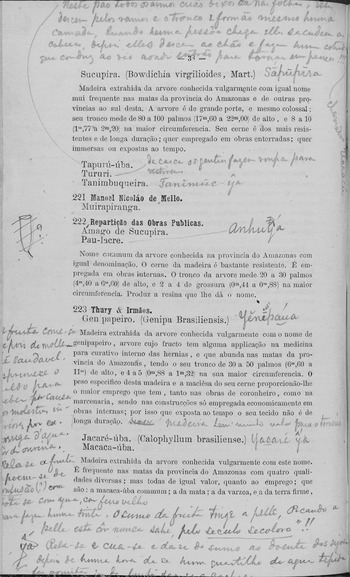
Exhibition displays provided evidence of the effort to project a unified national image of Brazil through its neatly catalogued natural resources, industrial products and technology.Footnote 50 More importantly, the exhibits represented the effort to render local knowledge about species and resources ‘legible’ on national and international stages through increasingly scientific descriptions.Footnote 51 In part this was an exercise in centralisation; contemporaries complained that the multitude of names for the same tree and plant species (or, conversely, one name for multiple species) across and even within provinces confused efforts to identify and exploit forest resources systematically.Footnote 52 Consolidating botanical information served two purposes: firstly, it employed the precise language of scientific measurement in identifying a plant's qualities, thereby presenting a species by its usable components; and secondly, it consolidated the abundant local names for a given species under one scientific label. This process also invoked the authority of science in presenting information usually collected originally from indigenous peoples. The transfer of local knowledge to scientific classification is apparent in the catalogues; descriptions for trees in the 1861 exhibition, for example, were almost all listed under their regional, usually indigenous, names. By 1875 scientific names appeared alongside popular names in a majority of descriptions.Footnote 53 Within the empire, it was hoped that this information would encourage domestic development; abroad, it would project the image of a modern nation: catalogued, analysed, organised and ripe for economic development. Evidence that the catalogues were indeed consulted for botanical reference is supplied by the anonymous Portuguese notes on plant species carefully written in the margins of the catalogue for items sent to the 1867 Paris Exhibition (see Figure 1). The notes include additional information on the listed species as well as phonetic spellings of indigenous plant names.Footnote 54
Anonymous Botanical Notes Written in the Margins of the 1867 Catalogue of Brazilian Items Sent to the 1867 Exhibition in Paris

Despite the enthusiastic descriptions of Brazilian natural resources in catalogues and the self-congratulatory tone of exhibition reports, the national exhibitions also had their critics. A wry reviewer of the exhibit for the province of Paraná in 1875 commented:
One of the richest exhibits is certainly the display of … wood from Paraná. The exhibition is exceptional in this regard, yet the display of such products does nothing but reveal the egotism of that province. Naturally, he who examines such … samples will want to buy them. But herein lies the difficulty – these are only for looking at – the lumber cannot leave the province because there are no roads on which they can be transported …Footnote 55
This observation underscored a major obstacle to establishing a national market of industrial commodities no matter how well catalogued the species of a region might be: the generally poor state of transportation between and within provinces, a problem that endured even after the arrival of railways in Brazil. As this observer pointed out, the great diversity of materials on display could not easily develop into national or even regional commerce without improved transportation networks. The fact that most Brazilian forests, with the exception of the pine forests of Paraná, were comprised of hundreds of different species spread over great distances in rugged tropical terrain further challenged the transportation of lumber. The difficulty of transporting raw materials and finished products in nineteenth-century Brazil was a chief complaint of planters and would-be entrepreneurs. Such material constraints did little to dampen the enthusiasm of the Sociedade Auxiliadora, however.
Oils, Wood and Wax
Frederico Burlamaque's detailed report on the first National Exhibition of 1861 vigorously praised the hundreds of displays as ‘Brazil's first inventory of natural resources and industry’ and proclaimed that the event had opened ‘a new pathway to prosperity’ for the nation. Part botanical report (the majority of botanical specimens described by Burlamaque came from the northern provinces of Pará and Amazônas and were thus new to observers in Rio de Janeiro), part economic treatise and part social critique, Burlamaque's text bitterly bemoaned the lack of Brazilian initiative in exploiting domestic resources for the national economy. Burlamaque decried the seeming indifference of his compatriots to the idea of transforming plant oils from the Amazon into industrial products as particularly deficient:
What an extensive commerce the [northern] provinces could provide, if only these [raw] materials were exploited with the same vigour that nature produces them …
The collection of … oils on display is large and diverse: there are oils for culinary uses, for illumination, for the fabrication of soap, for medicines, and painting. Nonetheless, the capital of the Empire, which is only 300 maritime leagues [sic] from the mouth of the Amazon, is illuminated with foreign oil … and it consumes soap made from the tallow of cattle from the Río de la Plata.Footnote 56
Burlamaque pointed to West Africa, which he claimed faced the same problems of underdevelopment and labour shortages as northern Brazil but nonetheless supplied European factories with palm oil for the fabrication of soap and candles. Burlamaque asserted that Brazil could easily replace imports with domestically produced oils, soap and candles as well as provision European manufacturers with a new complement of raw materials, thereby diversifying the nation's agricultural exports.Footnote 57
There was a precedent for the success that Burlamaque envisioned for Amazonian oils. The 1850 provincial report for the north-eastern province of Alagôas lauded the Fabrica de Oleos Purificados e de Manipular Arroz (Purified Oil Factory and Rice Mill), a medium-scale operation owned by a local family. The establishment refined castor oil for medicinal use and illumination, a substitute for linseed oil extracted from unspecified ‘certain nuts’, and coconut oil appropriate for all manner of cooking, perfumes and the most ‘delicate works of watch-making or cutlery’. Production of the oils already ‘consumed all the raw material available in the area’, which, according to the report, had doubled in price since the factory's construction. The report highlighted the potential for developing new oils based on the many native coquilhos abundant in the province. Sharing Burlamaque's patriotic assessment of the superiority of Brazilian oils, the author praised the factory's products as less expensive replacements for the ‘poor quality whale oil introduced by the North Americans’. The author further proclaimed that the factory provisioned markets in Alagôas, Pernambuco and as far away as Rio de Janeiro and Rio Grande do Sul, ‘depriving the [foreign merchant] of a large part of his profit’. On one hand, this enthusiastic account must be considered with scepticism. The report's praise of the national origin of the oils and their superiority over imports justified the request for a state loan for the impressive amount of 50 contos (£5,988) to underwrite ongoing costs of labour and raw material.Footnote 58 Nonetheless, the author's appeal to economic self-sufficiency, which he asserted would ensure a domestic supply of medicinal castor seed oil for the treatment of yellow fever victims, strongly echoed the economic nationalism of the Sociedade Auxiliadora.Footnote 59
Oil was not the only product derived from native flora that received high praise in exhibition catalogues. Numerous indigenous tree species supplied a dizzying variety of fruit, medicine, resins, fibres and lumber, sometimes all from a single tree.Footnote 60 For example, jurema branca (Acacia jurema), a species from the north-eastern province of Rio Grande do Norte, was esteemed for its suitability in civil construction and furniture, while the bark provided a treatment for dandruff.Footnote 61 Echoing colonial observers, Burlamaque lamented the importation of foreign lumber when Brazilian trees were abundant and far superior in variety and quantity.Footnote 62 He hoped the rich displays of native wood would encourage Brazilian engineers, shipbuilders and craftsmen to incorporate them into their constructions.Footnote 63
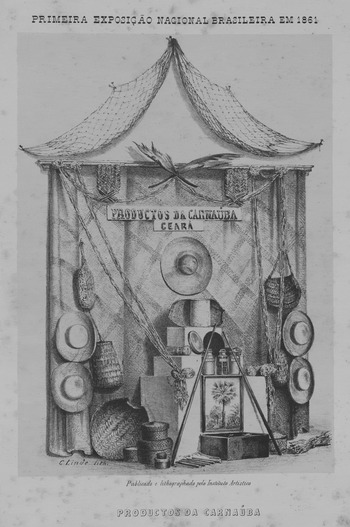
One notable tree showcased at each of the national exhibitions was the carnaúba palm (see Figure 2). No other national species presented such a diverse sampling of products and applications. The trunk supplied wood for corrals, buildings, musical instruments and pumps. Its ash contained potassium for fabricating soap and a ‘salt as yet unstudied’, while the roots provided a ‘substitute for sarsaparilla’. Through various undisclosed processes, the palm was transformed into ‘wine’, ‘vinegar’ and a ‘saccharine substance’. The carnaúba's fruit made a nourishing flour. The tree's toasted seeds were proposed as a replacement for coffee that was ‘said to be pleasant and could supply a substitute for the original fruit from Arabia’. The palm's leaves were readily transformed into hats, baskets and fans. But the most commercially successful application by far was a wax made into candles that were shipped across Brazil.Footnote 64
Products of the Carnaúba Palm

Though many of the uses of the versatile carnaúba outlined above were probably commercially impractical, the palm's description demonstrated the enthusiasm and creativity with which exhibition organisers promoted national species. Indeed, the carnaúba had several Brazilian champions, including Manuel Arruda Câmara, who was the first to describe the species to the Portuguese crown in 1796. In 1836 the governor of Piauí launched a 30-year campaign to market carnaúba in France, which included sending a sample to the Sorbonne for analysis and a display of the wax at the 1867 exhibition in Paris. The Baron of Mauá, the industrialist responsible for Brazil's first railway, also recognised the economic potential of the carnaúba and published a short-lived journal on industrial wax in the late 1840s. European botanists affirmed the suitability of carnaúba wax for candle-making, though it was ultimately most successful commercially as a floor polish.Footnote 65
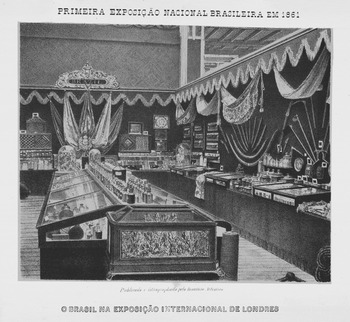
Above and beyond wax and oils, these examples also underscore the importance of trees for manufacturing and construction. The nineteenth century is called the age of iron and coal, but wood was just as indispensable as it fulfilled many of the functions of plastic in our present culture.Footnote 66 In addition to carnaúba, Mauá recognised the industrial potential of Brazilian wood and displayed a decorative mosaic made from 43 different Amazonian tree species at the 1861 National Exhibition and again at the 1862 exhibition in London (see Figure 3).Footnote 67 None doubted the aesthetic appeal of such displays, yet the question remained of how to transform the polished sections of an artfully arranged mosaic into information that could spur industrial development. In 1877 an engineer, André Rebouças, attempted to do just that with his three-volume publication on industrial tree species, Ensaio de indice geral das madeiras do Brazil (General Index of Brazilian Wood). He succinctly described more than 1,300 species used for dyes, medicine and textiles, although application in civil construction was his focus. The presentation of information took the following form, as exemplified by this description of the camaçarí tree:
1 Local names – Camaçarí; Camaçary; Camassari
2 Botanical Classification – Carapa pyramidata. Familia das Meliaceas.
3 Characteristics of duramen [heartwood] – Of a clear rose colour; compact tissue; easily visible longitudinal pores.
4 Assessment – Employed in civil construction. Short-lived under exposure to the elements; twenty years is the expected duration under such conditions.
5 Specific weight – 0.755
6 Dimensions of Trunk – 0.4 to 0.6 metres. Reaches a height of 12 to 14 metres.
7 Habitat – Can be found in Alagôas, Bahia, and neighbouring provinces.
8 Additional Properties – Produces a milky liquid that is used as a bait for capturing small birds.Footnote 68
Culled from the research of a German botanist, Karl von Martius (1794–1868), and two Brazilian botanists, Francisco Freire Allemão de Cisneiros (1797–1874) and José Saldanha da Gama (1839–1905), as well as extensive indigenous knowledge, the Ensaio de indice geral was meant to provide a ‘helpful reference for Brazilian Engineers’ as well as a description of the nation's trees for the upcoming Universal Exhibition in Paris in 1878.Footnote 69 The index most likely owed its inspiration to Rebouças' observations at the 1862 exhibition, which he attended with his brother and fellow engineer, Antônio Pereira Rebouças. In exhibition reports prepared for the Brazilian government, the Rebouças brothers asserted that Brazilian lumber was far superior to imported wood for civil and naval construction. They called for the analysis of Brazilian trees, with the aim of developing a national lumber industry to replace imports with domestic timber. Brazilian wood was, in Antônio's estimation, even better suited to the nation's tropical climate than imported iron for railway tracks.Footnote 70
The Brazilian Display at the 1862 Exhibition in London

Rebouças' students at the Polytechnic School in Rio de Janeiro calculated the specific weight for many of the different species described in the Ensaio de indice geral. Space was left blank where information on a particular tree was incomplete, presumably so that engineers could make their own notations. The index also reflected decades of accumulated practical knowledge. Descriptions of each species' applicability in construction and shipbuilding most likely drew from the long-standing shipwright's trade in Brazil.Footnote 71 Late colonial shipbuilders in Bahia were noted for their expertise in employing a variety of Brazilian woods in a single ship – a practice that differed greatly from Europe, where ships were often constructed from a single species. The use of multiple species in ship construction required considerable skill and experience to ensure a vessel's soundness over many decades at sea. To that end, assessments of wood density and relative strength for shipbuilding were undertaken in 1780 in Bahia by Colonel Theodósio da Silva Raboxo.Footnote 72 While it drew from a Brazilian shipbuilding tradition, Rebouças' index also underscored the nineteenth-century convergence of engineering, botany and the emergence of laboratory analysis for determining the practical application of plant species in industrial production.Footnote 73 In an age before synthetics, botanists (or engineers with a deep understanding of botany) were important intermediaries between the natural world and industrial production. For the Rebouças brothers, using science to measure and document ‘the most important natural resource bestowed upon [Brazil] by the Creator’ was of paramount importance for achieving economic self-sufficiency.Footnote 74
Textiles and Paper
The search for indigenous textile fibres and the neglect of local sources moved more than one researcher to hyperbole. A Cearense, Braz da Costa Rubim, roundly praised the fibres of the acclimatised Coqueiro da Bahia, asserting its superiority for ship cordage and mattresses ‘suitable for the Brazilian climate’, in addition to ‘a thousand other uses … if only [Brazilians] would look with more sagacity on our natural riches’. Despite the palm's economic usefulness, he lamented, ‘There are immense forests of coqueiros that are born, grow, and die without any human influence upon their lives.’Footnote 75 Like Antunes' piassabeira, Rubim asserted that the coqueiro da Bahia was by nature an industrious plant and required only an enlightened entrepreneur to harness its natural productivity for the national economy.
A dedicated individual from Minas Gerais, Severino Lourenço da Costa Leite, championed the indigenous cipó lactescente (milky vine) as a replacement for cotton and flax in textile manufacturing.Footnote 76 Leite also hoped to find alternatives to coffee, a monoculture crop that he predicted was on the verge of ecological and economic disaster as agricultural land became increasingly depleted by its cultivation.Footnote 77 Cipó lactescente provided a viable alternative to coffee cultivation, he argued, because it could be grown year after year with minimal improvement to the soil, in contrast to the establishment of new coffee plantations in virgin forest, a major contributor to forest destruction.Footnote 78 A special report on Leite's cipó sponsored by the IIFA for the Ministry of Agriculture underscored this point. The fact that the vine depended on large trees for cultivation (it could grow to a height of 100 feet) would preserve virgin forest ‘without the sad and lamentable need to destroy it, and to damage the earth for other cultivations perhaps not as profitable and certainly more demanding [in terms of labour].’Footnote 79
The Baron of Capanema oversaw a series of experiments with cipó lactescente intended to provide scientific evidence for the usefulness of the fibre, as described in a report published in English for the 1876 International Exhibition in Philadelphia. Samples were also sent to John Miers in England, who suggested to the Sociedade Auxiliadora that the manufacturers of Manchester would be interested in purchasing the cipó fibres if sufficient quantities could be cultivated.Footnote 80 Unfortunately, producing cipó lactescente fibre for large-scale industrial use proved challenging as extraction was difficult to mechanise, and thus the material was ultimately not successful commercially.Footnote 81
Early on, the search for domestic paper-making material was deemed a matter of national importance. A paper factory established in Bahia in the 1840s employed locally harvested banana-tree fibre. The report of the provincial president in 1843 speculated that the factory would stimulate banana cultivation in Bahia and encourage the discovery of additional ‘fibrous trees which are unappreciated and unknown amongst us, even though they are indigenous’.Footnote 82 Another paper factory, described in the 1853 presidential report from Rio de Janeiro, belonged to the Baron of Capanema. The Fabrica de Papel de Orianda (Orianda Paper Factory), located in the mountains outside Petrópolis, was powered by a nearby waterfall and used the latest in French machinery.Footnote 83 Though the factory initially used imported raw material, Capanema soon developed a process for making paper from domestic species including the folha do gravatá (a cactus-like plant with long, tongue-shaped leaves), bromeliad fibres and the banana tree.Footnote 84 The turn to local resources was precipitated by the difficulty and expense of procuring linen and cotton rags (then the predominant material for making paper) from Europe, and the absence of a local market for rag-collecting in nearby Rio de Janeiro ‘despite an abundance of material’. It also reflected Capanema's commitment to using Brazilian resources for domestic industry.Footnote 85
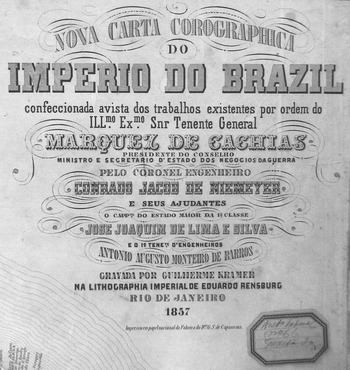
The Orianda factory produced high-quality paper throughout the 1850s, before ultimately closing in 1861 due to financial mismanagement and Capanema's frequent absences as a government envoy. Before its demise the factory supplied paper for several Rio newspapers – the Diario do Rio de Janeiro, Correio da Tarde and Correio Mercantil – in addition to the Correio Mercantil in Porto Alegre.Footnote 86 A surviving example from Capanema's factory exists in the form of a map of Brazil from 1857 (see Figure 4). The fine print proudly declares its ‘national’ provenance, underscoring Capanema's vision in a powerful metaphor for economic nationalism: a map of the nation printed on domestically produced paper manufactured from Brazilian raw material.
Detail of a Map of the Empire of Brazil from 1857, Printed on Paper from the Baron of Capanema's Factory in Petrópolis

The Sociedade Auxiliadora's review of a patent application in 1878 by two engineers, Samuel Severiano Figueira de Aguiar and Francisco Carlos da Silva, for the ‘establishment of a paper factory … in São Paulo province’ prompted a heated discussion among the members of the Committee on Industrial Manufacturing.Footnote 87 The committee members declared the factory deserving of enthusiastic support, including government subsidies, but declined to grant the petitioners a patent of protection. While the proposed factory used the latest in European paper-making techniques, it did not demonstrate any innovation in developing Brazilian materials. Committee members also protested about the assertion in a recent report by Professor Ernesto Guignet of the Polytechnic School in Rio de Janeiro that Brazilian paper production suffered from a lack of raw material.Footnote 88 Nine patents granted for paper-making techniques between 1857 and 1878 proved the possibilities for domestic production, they argued. Among the raw materials described in the patents were Capanema's ‘indigenous vegetal fibres native to the country’, sugar-cane bagasse, corn, bamboo, unspecified ‘native fibres’, and ‘Brazilian vegetal fibres’. To drive their point home, the committee awarded a patent to the champion of the cipó lactescente, Severino Lourenço da Costa Leite, for his paper fabricated from ‘various tree species commonly referred to as figueira brava [wild fig]’.Footnote 89 In addition to paper, Leite claimed that the outer bark of the versatile figueira brava could be manufactured into clothing for ‘rural workers or any other type of labourer’, as described in the florid prose of a report on the 1875 exhibition.Footnote 90
Though these patents demonstrated creativity, initiative and a solid interest in developing paper production in Brazil, members of the Sociedade Auxiliadora recognised that the creation of a national industry was difficult in the face of competition from foreign imports and a chronic shortage of start-up capital. A lack of domestic material was not the problem, they insisted; rather, cheap foreign imports hindered the development of domestic production.Footnote 91 Would-be manufacturers of any stripe faced numerous challenges in launching industrial enterprises during this period. Barbara Weinstein's work on the Amazonian province of Pará provides an example of another failed paper-making factory. Founded in 1892, the Fábrica de Papel in Pará employed ‘native woods and regional materials such as banana leaves, straw and vegetable fibres’ in addition to sugar-cane bagasse in the production of wrapping and printing paper.Footnote 92 In spite of positive publicity and partial ownership by a Paraense businessman, the fábrica suffered from a lack of capital. It also ran into difficulties procuring regular supplies of raw material, despite ownership of a sugar mill designed to supply the necessary bagasse.Footnote 93 It appears that these were long-standing obstacles for paper entrepreneurs in the nineteenth century.
If domestic sources of textile fibres and oils were viewed as essential to developing the national economy and diversifying exports, another indigenous species, mate (the ‘herb’ native to southern Brazil and the River Plate region discussed earlier), was heralded as a potentially lucrative export and replacement for other hot caffeinated beverages in foreign markets. Comprised of the leaves and stems of the Ilex paraguayensis tree, by the 1850s mate was already a profitable export to Argentina, Uruguay, Paraguay and Chile, nations that also produced the herb and competed with Brazilian producers. In a practice adopted from indigenous peoples, the slightly bitter leaves are steeped in a gourd and then sipped through a bamboo or metal ‘straw’. The resulting hot beverage provides a stimulating caffeinated drink that is milder in flavour than coffee. For this reason Brazilians envisioned mate as a less expensive replacement for tea and coffee, both of which were consumed across Europe and North America but cultivated in the tropics.
While mate was a popular colonial beverage among both the lower classes and elites in eighteenth-century River Plate and Andean communities, it was Aimé Bonpland (1773–1858) who championed mate in the European scientific community in the nineteenth century.Footnote 94 Writing from South America, Bonpland described several sub-species of mate and sent specimens to his colleagues at European institutions.Footnote 95
Beginning in the 1860s, members of the Sociedade Auxiliadora, the IIFA and the Associação Brazileira de Acclimação (founded in 1873) in Rio de Janeiro attempted to promote mate at international exhibitions. Brazil sent mate displays to the 1867 and 1873 exhibitions in Paris and Vienna respectively, but with little success.Footnote 96 Despite their high hopes, Brazilian producers faced multiple obstacles in marketing mate abroad. According to Ross Jamieson, coffee, tea and chocolate were already well-established consumer products in Europe and North America by the late seventeenth century, leaving little room for the introduction of another exotic, caffeinated beverage in the 1800s. Furthermore, unlike cacao and coffee plants, the deceptively delicate mate tree proved difficult to transplant and cultivate in traditional plantation style; after the collapse of the Jesuit missions, where mate was produced during the colonial period, harvesting in Brazil relied on wild groves, which often resulted in irregular supply.Footnote 97 Finally, the plant seems to have aroused suspicions about its salubriousness due to its association with ‘miserable and poorly nourished’ populations in faraway tropical and subtropical regions. According to Brazilian observers, this last point proved difficult to overcome despite vigorous lobbying by the imperial government in French scientific circles in the 1880s.Footnote 98
While the government promoted mate in the esteemed halls of French scientific institutions, André Rebouças, ever the Renaissance man, ascribed the generally poor reputation of Brazilian products abroad, and yerba mate in particular, to a lack of marketing know-how.Footnote 99 His 1875 treatise on the subject echoed Frederico Burlamaque's frustration with the absence of entrepreneurial vision in Brazil. Why, for example, did producers send mate to market wrapped in rough leather hides that, while suitable for the ‘wild’ pampas of Uruguay and Argentina, appeared crude to sophisticated consumers in Europe and the United States? He wrote:
Much the same as people, industrial and agricultural products have their ceremonial costumes and toilettes: one does not go to a ball in the same clothes they would wear for the countryside; likewise a product should not be presented at an industrial festival with the same rustic packaging as that for the consumption of semi-barbarous populations …Footnote 100
Rebouças further entreated producers to pay attention to what ‘nature [was] instructing’ them to do and use the pine from forests that grew alongside mate groves to manufacture attractive boxes for packaging the herb. If mate packaging more closely resembled that of tea, he asserted, foreign consumers would be tempted to try it. Additionally, Rebouças argued, Brazilian pine resin would provide an excellent finishing varnish for the boxes that would protect the delicate contents from humidity on the way to market, an important consideration in tropical Brazil.Footnote 101
The attempt to promote mate in foreign markets leads to two conclusions. First, Rebouças' observation that the Brazilian landscape itself presented a lesson in how to develop the national economy reflected a Linnaean sensibility that echoed the rhetoric of Antunes, Rubim, Leite and the Baron of Capanema. Second, efforts to promote mate consumption abroad demonstrated that Brazilians participated fully in transatlantic channels for legitimising botanical species as commodities in both scientific and consumer venues. In the case of mate, Brazilians were clearly active, if not necessarily successful, agents in promoting their natural resources abroad.Footnote 102
Turfa Wars
As the example of Antônio Antunes at the beginning of this essay demonstrates, the exploration and development of combustible fuels occupied the attention of Brazilian innovators throughout the period. In this vein, Brazilians were full participants in the nineteenth-century race to locate and extract sources of energy for burgeoning industrial, transportation and household needs. Though coal was the most sought-after fuel, Brazilians explored other possibilities in an effort to secure domestically produced sources of energy.
One promising combustible, turfa (turf or peat), received high acclaim from Brazilian observers. In 1849 an enthusiastic article published in the Jornal do Commercio praised a sample of turfa extracted in Ingá, across the bay from Rio. Citing the successful application of peat as a fuel in France and Holland, the article called for its exploitation in Brazil, especially in light of the so far unproductive search for easily accessible coal deposits.Footnote 103 Twenty-six years later, the Baron of Vila-Franca displayed an example of turfa extracted from the margins of the River Quissamã in Rio de Janeiro province at the 1875 exhibition.Footnote 104 Vila-Franca experimented with using peat for ‘working iron’ on the fazenda of Santa Francisca, with apparently favourable but unspecified results. Turfa deposits in Bahia were also described in the 1866 exhibition catalogue:
Large-scale exploration of the deposits of turfa is highly desirable. Many of the deposits are located next to waterways that make it easy to transport. Undoubtedly any person who undertakes extraction of turfa will be more than rewarded for his efforts as it is proportionally less expensive than that of coal and certain to be in high demand. [Turfa] will, most assuredly, become another important branch of industry and commerce to be developed in this country.Footnote 105
Descriptions of turfa also appeared in patent applications and in O Auxiliador. In 1850 the Baron of Capanema used gas extracted from turfa in a public trial for street lamp illumination in Rio de Janeiro.Footnote 106 In 1865 William Gilbert Ginty received a patent for ‘his process for preparing turfa as a substitute for all or part of native as well as prepared vegetal combustibles and minerals’.Footnote 107 But it was an article in the Jornal do Commercio that illustrated the material's commercial potential fully. In January 1880 Joaquim Alves de Souza, a machinist and resident of Rio de Janeiro, demonstrated his system for using turfa to make gas for illumination at the offices of the Dom Pedro II railway. Souza also described useful by-products, including turpentine, ‘combustible bricks’ and ‘coke’, that comprised a ‘satisfactory and economical fuel’. The machinist and his business partner asserted that turfa would provide a less expensive alternative to existing sources of illumination fuel because of its abundance and availability across Brazil.Footnote 108
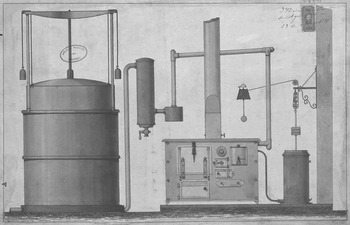
Souza's demonstration provoked an angry response in the next day's Jornal do Commercio from an inventor, Antônio Lucio de Medeiros, who accused the machinist of copying his system for processing turfa into gas. Not only had Medeiros patented a peat-gas system seven years earlier, he asserted, but his apparatuses had also been in use since 1875 at the ‘establishments of the Ministry of the Navy’ situated on the Ilha das Cobras in Guanabara Bay in Rio de Janeiro. Indeed, a patent for ‘mechanical fire’ (fogões mecânicos) called the ‘Double Economy’ was given to Medeiros in January 1873, with an extension of ten years granted in September 1874 (see Figure 5).Footnote 109 A vitriolic month-long exchange between the two inventors ensued in the pages of the Jornal do Commercio. Unfortunately the disagreement between Medeiros and Souza then falls silent in the sources, leaving tantalising clues but no definitive answers as to the outcome of the patent dispute or the extent to which turfa was successfully used in producing gas for illumination.
The Patent Design for the ‘Double Economy’ System for Converting Peat into Gas for Illumination, by Antônio Lucio de Medeiros

Could turfa, as its supporters claimed, have met growing industrial and domestic needs for combustibles in Brazil? In the nineteenth century peat was successfully used in Europe and the United States to produce gas for illumination, power farm machinery, warm houses, heat cooking stoves, fuel forges and run steam engines of all kinds, up to and including locomotives.Footnote 110 A manual by a Massachusetts-based entrepreneur, T. H. Leavitt, published in 1867, described experiments with the material in France, Ireland, Italy and the United States, especially in regions facing firewood shortages due to forest depletion or where coal was scarce.Footnote 111 Peat was also showcased at international exhibitions. French peat displayed at the 1851 Great Exhibition in London, for example, excited attention for its inexpensiveness and suitability for running ‘stationary steam engines and locomotives’.Footnote 112 The Swedish catalogue of the 1876 Philadelphia Exhibition described a burgeoning peat-manufacturing industry facilitated by new machines designed to cut, ‘knead’ and transform the material into easily transported ‘peat balls’, presumably for heating, domestic use and light industry.Footnote 113 Interestingly, Brazil was better situated than Europe and the United States to channel its peat resources into industrial applications as the demand for heating fuel was much lower there.
Although it is impossible to know how much Medeiros and Souza might have been aware of or influenced by peat technology developing abroad, they provide strong evidence for a lively community of inventors and researchers in the capital city of the empire, and, moreover, demonstrate that Brazilians possessed a spirit of scientific inquiry and the technological know-how to apply domestic resources to practical and profitable use. Importantly, Brazilian peat entrepreneurs also emphasised the national provenance of their turfa. For them peat presented more than a commercial opportunity for personal enrichment, they declared with apparent sincerity; the fuel also promised to aid national economic self-sufficiency. As one anonymous letter-writer to the Jornal do Commercio in 1862 despaired, why did Brazilians continue to waste money on imported coal when God had so generously blessed them with turfa?Footnote 114
Conclusion
This essay has described a small but vibrant nexus of inventors, scientists, botanists and engineers who hoped to create Brazilian economic self-sufficiency through the development of domestically produced agro-industrial commodities and combustibles. The actors described here drew from a tradition of scientific investigation established during the Pombaline reforms and transmitted, in part, through the Sociedade Auxiliadora. Brazil's thousands of ‘industrial’ species and seemingly inexhaustible tropical fecundity appeared the perfect setting for a Linnaean vision of economic self-sufficiency. For visionaries like Rebouças, the Baron of Capanema or Burlamaque, no other country seemed better positioned to provision its own economy and that of the world with new agro-industrial commodities derived from forest species.
Significantly, the majority of the entrepreneurs described in this essay were affiliated with the Sociedade Auxiliadora, either as members or as contributors to O Auxiliador. As Patrícia Corrêa Barreto argues, the society provided an important venue for disseminating scientific information and promoting scientific activity within Brazil, even if its contours and methods were not as visible as institutions in Europe.Footnote 115 The projects of Antunes in Bahia and Leite in Minas Gerais demonstrated that the Sociedade Auxiliadora provided a crucial national forum for bringing together botanical entrepreneurs through O Auxiliador, international and national exhibitions and the IIFA. This essay therefore counters the notion that Brazilians of Pedro II's reign (1840–89), a period primarily associated with technological backwardness and a slave-dependent export economy, were mere consumers of technology and scientific information imported from the North Atlantic industrialising nations. On the contrary, nineteenth-century entrepreneurs and scientists operated within a Luso-Brazilian tradition that drew upon the knowledge and observations of native peoples, Brazilians and Europeans alike. Their efforts represented a project of national economic development that sat at the intersection of science, technology, botany, environmental conservation and agricultural improvement, as demonstrated in the publications of the Sociedade Auxiliadora.
Why, then, were so many of these projects ultimately unsuccessful? Transportation was, and remains, a major hindrance to establishing commercial contact between the Brazilian provinces, as the reviewer for O Mosquito caustically observed in the case of timber samples from Paraná. Even today, many Amazonian products are unknown outside the northern provinces where they are produced. Ironically, despite the eighteenth- and nineteenth-century image of the Brazilian wilderness as an Eden bursting with botanical riches, tropical commodities also suffered from a lack of familiarity in North Atlantic markets. The perception of tropical forests as dangerous tainted the image of new tropical products, especially when they were associated with non-white populations or backward regions, as in the example of mate. According to Rebouças, this was compounded by a lack of Brazilian marketing know-how. The lower cost of European imports was also blamed for handicapping Brazilian entrepreneurs. Would-be paper producers, for example, faced challenges in procuring sufficient quantities of locally sourced raw materials, a problem that was exacerbated by difficulties of transportation that increased the sale price further. Processing the final product was also often difficult to mechanise, as in the case of Leite's cipó fibres or the carnaúba palm. All of these challenges point to the obstacles that prevented Brazilian botanical entrepreneurs from fully realising their projects.
On a final note, the experiments, observations and declarations proffered by the likes of the Baron of Capanema, Leite and Burlamaque suggest that nineteenth-century Brazilians were influenced by a hybrid of economic thought that went beyond the dominant economic philosophies of the time, especially the free-market political economy of Adam Smith. Carl Linnaeus strongly influenced the ecological thought of important nineteenth-century Brazilians, which in turn shaped ideas about political economy. The Sociedade Auxiliadora developed a hybrid vision of ecological, scientific and economic thought that both appropriated European rhetoric and expressed a uniquely Brazilian perspective inspired by the nation's immense natural wealth. The observations outlined in this essay suggest the need for a renewed examination of the impact of alternative economic theories on nineteenth-century development, and how such theories contributed to constructions of nation and national economy, especially in the case of Brazil.