INTRODUCTION
Most tropical shrimps around the world are fully exploited and particularly when fisheries management is inefficient or lacking, serious socio-economic problems have resulted (Guillet, Reference Guillet2008). The failure in fisheries management has mainly originated under the pressure of the increased catch rate, a response to intense social-political pressure to obtain bigger catches in the short term and the intrinsic uncertainty of fisheries (Pauly et al., Reference Pauly, Christensen, Guenette, Pitcher, Sumaila, Walters, Watson and Zeller2002, Reference Pauly, Alder, Bennett, Christensen, Tyedmers and Watson2003). Therefore, fisheries management requires a delicate balance between extraction and conservation of biodiversity and the ecosystem structure and function (Pikitch et al., Reference Pikitch, Santora, Babcock, Bakun, Bonfil, Conover, Dayton, Doukakis, Fluharty, Heneman, Houde, Link, Livingston, Mangel, McAllister, Pope and Sainsbury2004; Bianchi, Reference Bianchi, Bianchi and Skjoldal2008; Stokstad, Reference Stokstad2009; Zhou et al., Reference Zhou, Smith, Punt, Richardson, Gibbs, Fulton, Pascoe, Bulman, Bayliss and Sainsbury2010), yet fisheries management must also consider food sources, income and livelihoods (Bianchi, Reference Bianchi, Bianchi and Skjoldal2008). Successful fisheries management also requires that the authorities incentivize conservation and strong management strategies (Beddington et al., Reference Beddington, Agnew and Clark2007; Worm et al., Reference Worm, Hilborn, Baum, Branch, Collie, Costello, Fogarty, Fulton, Hutchings, Jennings, Jensen, Lotze, Mace, McClanahan, Minto, Palumbi, Parma, Ricard, Rosenberg, Watson and Zeller2009), based on the characteristics of the habitats and its organisms (Pitcher et al., Reference Pitcher, Morato, Hart, Clark, Haggan and Santos2007). In the Colombian Caribbean Sea the shallow water shrimp fishery targets Farfantepenaeus notialis (Pérez Farfante, 1967), Farfantepenaeus brasiliensis (Latreille, 1817), Farfantepenaeus subtilis (Pérez Farfante, 1967) and Litopenaeus schmitii (Burkenroad, 1936) with F. notialis constitute ~70% of the total shrimp catch. This is a typical case of a collapsed-uncontrolled fishery with different development stages such as growth, fully-exploited, over-exploited, collapse and probably a recovery stage, resulting in a significant depletion of shrimp stock (Paramo & Saint-Paul, Reference Paramo and Saint-Paul2010). In this sense, due to failure of traditional fisheries management measures, there is a necessity for additional fisheries management measures to those used traditionally that contribute to protect the fishing resources and to improve the fishing production, such as the identification of marine protected areas that have emerged as a tool for marine conservation and fisheries management (Worm et al., Reference Worm, Barbier, Beaumont, Duffy, Folke, Halpern, Jackson, Lotze, Micheli, Palumbi, Sala, Selkoe, Stachowicz and Watson2006; Fraser et al., Reference Fraser, Greenstreet and Piet2009; Paramo et al., Reference Paramo, Guillot, Benavides, Rodríguez and Sanchez2009). Therefore, the future development of the fishing sector should focus on the search for new resources that are economically attractive, yet at the same time exploitation should not put at risk sustainability. At the moment, there is no developed deep-sea fishery in the Colombian Caribbean Sea. The giant red shrimp Aristaeomorpha foliacea (Risso 1827) found in the deep waters of the Mediterranean Sea is a commercially important shrimp (D'Onghia et al., Reference D'Onghia, Tursi, Maiorano and Panza1998; Figueiredo et al., Reference Figueiredo, Figueiredo and Machado2001; Papaconstantinou & Kapiris, Reference Papaconstantinou and Kapiris2003; Politou et al., Reference Politou, Kapiris, Maiorano, Capezzuto and Dokos2004; Mouffok et al., Reference Mouffok, Massuti, Boutiba, Guijarro, Ordines and Fliti2008). This species has a wide geographical distribution from the Mediterranean Sea and the eastern Atlantic, the western Atlantic, the Indian Ocean and the western Pacific from Japan to Australia, New Zealand and the Fiji Islands (Tavares, Reference Tavares and Carpenter2002). Aristaeomorpha foliacea is found in deep waters from 250 to 1300 m over bottom mud and is actively fished because of its high commercial value (Tavares, Reference Tavares and Carpenter2002). Gracia et al. (Reference Gracia, Vázquez-Bader, Lozano-Alvarez and Briones-Fourzán2010) recently explored deep waters off the Yucatan Peninsula in Mexico and showed that A. foliacea and Pleoticus robustus represent a potential fishing resource. Nowadays, A. foliacea constitute a valuable deep shrimp fishery off the south-eastern and southern sectors of the Brazilian coast (Dallagnolo et al., Reference Dallagnolo, Perez, Pezzuto and Wahrlich2009). The royal red deep shrimp (P. robustus) inhabits continental slopes from 180 to 730 m depth, but larger abundances are found at depths between 250 and 475 m over mud, sand, muddy sand, or white calcareous mud. This species is only captured in high abundances off the coast of north-eastern Florida, near the Dry Tortugas Islands, in the Mississippi delta and also off the coast of Venezuela (Tavares, Reference Tavares and Carpenter2002). This study is the first attempt to explore new fishing grounds in poorly understood deep-sea habitats of the Colombian Caribbean Sea, to determine the potential for a viable deep-sea shrimp fishery studying the abundance and spatial distribution of the giant red shrimp (Aristaeomorpha foliacea, Risso 1827) and royal red shrimp (Pleoticus robustus, Smith 1885), both species with increasing commercial value.
MATERIALS AND METHODS
Study area and sampling design
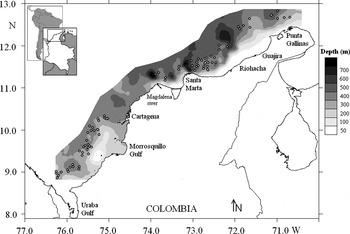
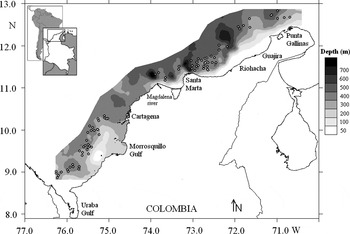
The Colombian Caribbean Sea is characterized by north-east trade winds with surface currents flowing in west and south-west directions almost parallel to coast. These trade winds are responsible for upwelling in the north zone of the study area, which increase the productivity on the Guajira coast (Andrade et al., Reference Andrade, Barton and Mooers2003; Paramo et al., Reference Paramo, Quiñones, Ramirez and Wiff2003, Reference Paramo, Guillot, Benavides, Rodríguez and Sanchez2009). Two experimental trawl surveys were carried out in 2009, the first in November (south zone) and the second in December (north zone). Data were collected by trawling in depths ranging between 200 and 550 m (100 m strata intervals) in the Colombian Caribbean Sea. The location of trawl was based on trawlable bottoms found by the commercial echosounder FURUNO FCV 1150 with a transducer at a frequency of 28 kHz, on a grid of 87 stations, with at least two hauls per 100 m depth stratum (Figure 1). Samples were collected by the commercial shrimp trawler ‘Tee Claude’ using a trawl with a cod-end mesh size of 44.5 mm from knot to knot. Data between the Cartagena and the Magdalena River were not collected due to the irregular depths. The haul duration was 30 minutes and the distance travelled by the net was estimated by means of a GPS Garmin MAP 76CSx. The shrimp catch from each haul was calculated into biomass (kg km−2). The swept area was estimated from the spread of the net (11.58 m) and the speed of the vessel (average 2.5 knots) (King, Reference King2007).
Study area in the Colombian Caribbean Sea. Circles indicate the sampled stations.
Size-structure analysis
Catches were identified at the species level. The total weight, sex and numbers of individuals per species from each station were recorded. All the specimens were weighed to the nearest 0.1 g and the cephalothorax length (CL) was measured to the nearest 0.1 mm using callipers from the posterior margin of the ocular indent to the posterior margin of CL. Size–frequency data of CL for female and male and for depth-strata of A. foliacea and P. robustus were analysed as a mixture of probability density functions, whose modes depend upon a combination of the distances between means, the magnitudes of the variances and the proportion of the individual numbers in each mode and the overall sample size, using the software MIX (Mixture Analysis) (MacDonald & Pitcher, Reference MacDonald and Pitcher1979). The approach used was to minimize the Chi-squared value and to obtain a P value in which the observed and estimated distributions were not significantly different (MacDonald & Pitcher, Reference MacDonald and Pitcher1979). Differences in the frequency distributions among females or among depth-strata for both females and males were assessed using a non-parametric Kruskal–Wallis multi-sample test (Gotelli & Ellison, Reference Gotelli and Ellison2004). To determine which strata contributed to the observed significant differences, multiple comparisons using the Nemenyi and Dunn test were computed (Zar, Reference Zar2009).
Spatial analysis
Geostatistical analyses (Cressie, Reference Cressie1993; Petitgas, Reference Petitgas1993) were used to describe the spatial structure of the deep shrimp distribution, as well as the mean density, biomass and its variance. The experimental variogram is defined as the variance of difference between values that are h units apart.

where  is semivariance, h is a vector of distance and direction, and N(h) is the number of pairs of observations at distance h and given direction, z(xi) is the shrimp density of A. foliacea for the ith data point. Since the P. robustus density was characterized by very many small and few large values, which can impact the variogram pattern and parameters (Paramo & Roa, Reference Paramo and Roa2003; Mello & Rose, Reference Mello and Rose2005), we chose the robust (or stable) variogram estimator for this species (Cressie & Hawkins, Reference Cressie and Hawkins1980; Cressie, Reference Cressie1993).
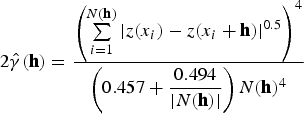
In order to evaluate whether the spatial autocorrelations vary according to direction (anisotropic processes), experimental variograms were calculated for the raw data in four directions (0°, 45°, 90° and 135°). The spherical model of variogram was the most appropriate to explain the experimental variograms according to the weighted least-square minimization criterion (Cressie, Reference Cressie1993). Finally, ordinary point kriging was used to reproduce the stochastic processes across the region of interest, i.e. the mean density inside the spatial distribution area of these deep-sea shrimps (Isaaks & Srivastava, Reference Isaaks and Srivastava1989). To estimate the variance of the mean shrimp density, the intrinsic geostatistical method was applied, in which the variance is dependent on the geometry in the area of spatial distribution, the sampling design, and the variogram structure (Petitgas & Prampart, Reference Petitgas and Prampart1995; Rivoirard et al., Reference Rivoirard, Simmonds, Foote, Fernandes and Bez2000). The spatial analysis were carried out in the R software (geoR library) (Ribeiro & Diggle, Reference Ribeiro and Diggle2001).
RESULTS
Size-structure of deep-sea shrimps
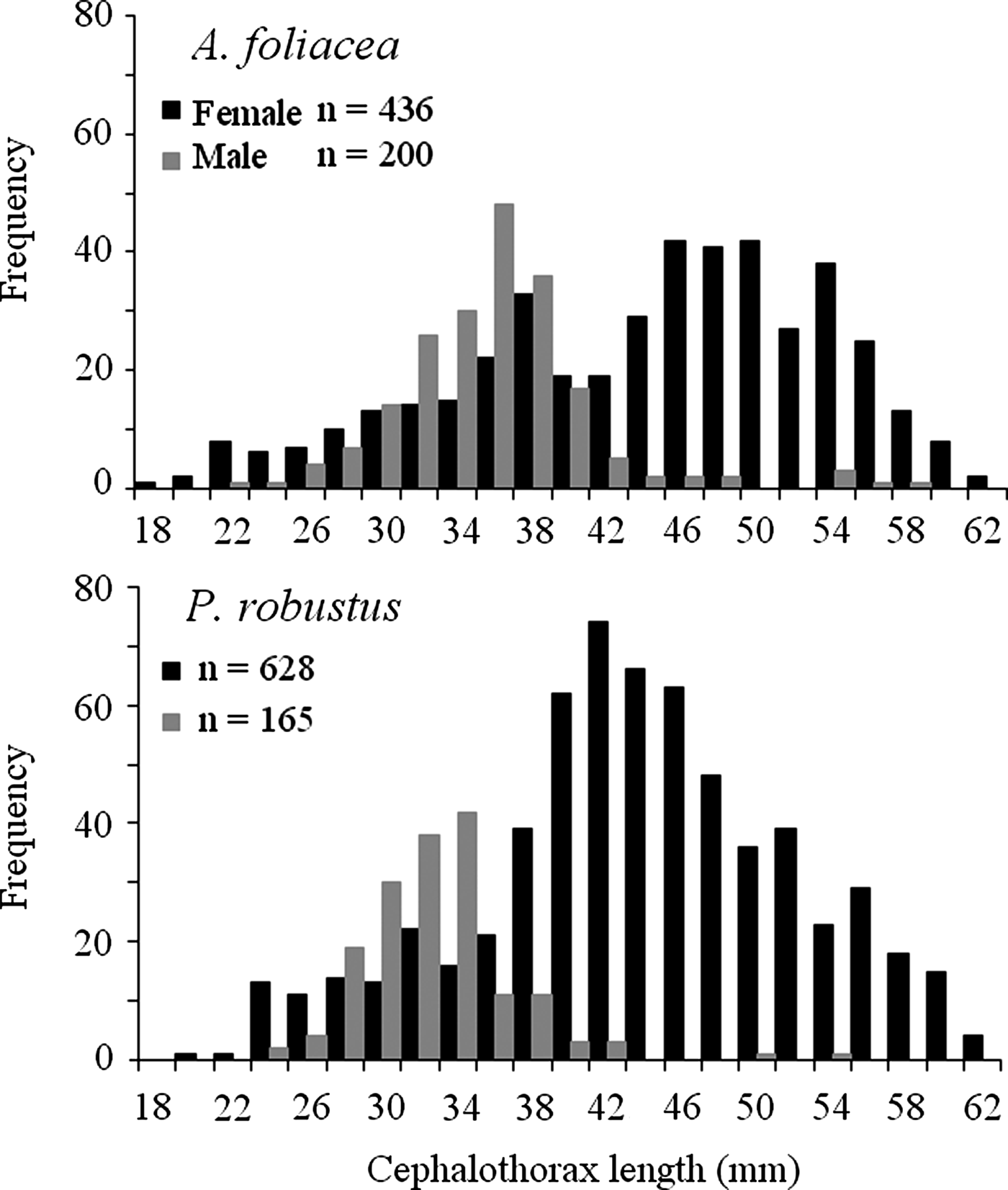
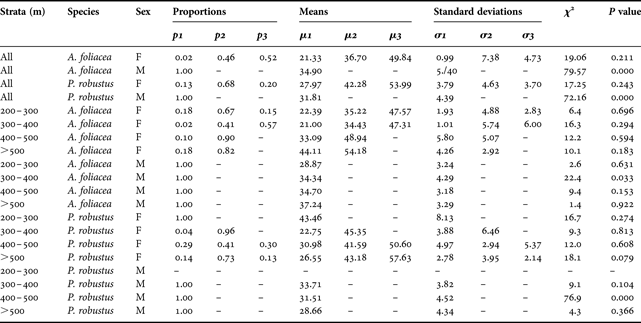
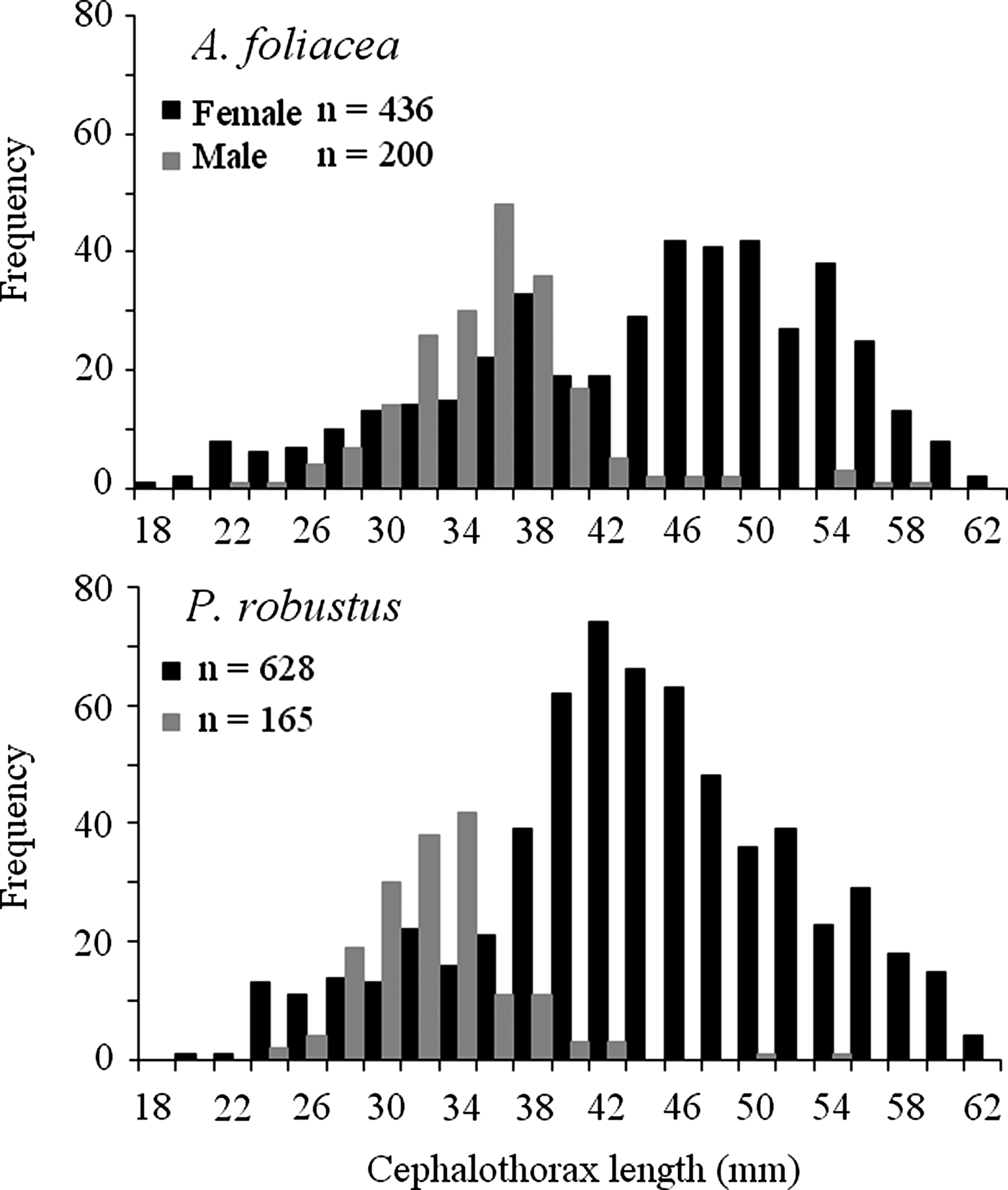
Statistically significant differences for both species between sexes were found (Figure 2), revealing sexual dimorphism (P < 0.01). Males were smaller than females in both species. The Kruskal–Wallis multisample test shows significant differences among depth-strata for both females and males of A. foliacea and P. robustus (P < 0.01). The size-structure for A. foliacea females ranged between 18.5 and 63.1 mm CL (mean 44.2 ± 9.4 mm) and for males between 23.5 and 59.1 mm CL (mean 35.8 ± 5.1 mm). The entire frequency-distribution of CL was characterized by 3 modes for the females of A. foliacea (Table 1). The first two modes of the total abundance represented 48% and the third 52% (mean 49.8 mm CL). In males of A. foliacea, one mode with 34.9 mm of CL was observed. The CL frequency-distribution for P. robustus for females ranged between 21.2 and 62.8 mm CL (mean 43.8 ± 8.4 mm) and for males between 24.3 and 54.8 mm (mean 32.7 ± 4.0 mm). Furthermore, P. robustus showed three modes for females, the first mode represented 13% (size mean 28.0 mm CL) and the other two modes represented 68% (mean 42.3 mm CL) and 20% (mean 54.0 mm CL), respectively. The males of P. robustus showed one mode with 31.8 mm CL.
Size–frequency distributions of cephalothorax length for Aristaeomorpha foliacea and Pleoticus robustus.
Frequency distribution parameters (proportions, means and standard deviations) for each mode of the histograms of cephalothorax length of Aristaeomorpha foliacea and Pleoticus robustus by sex and strata.
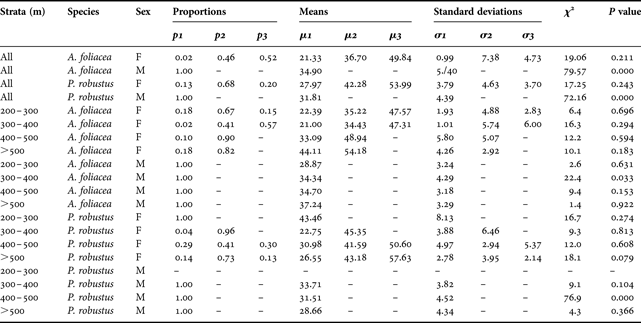
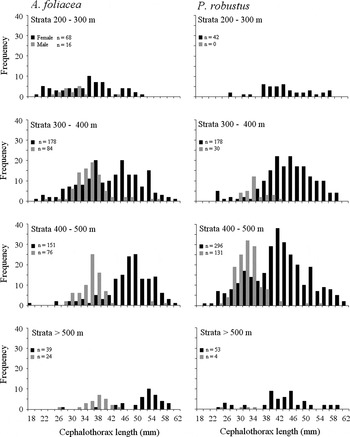
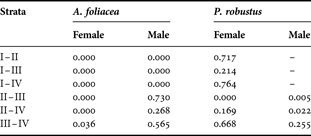
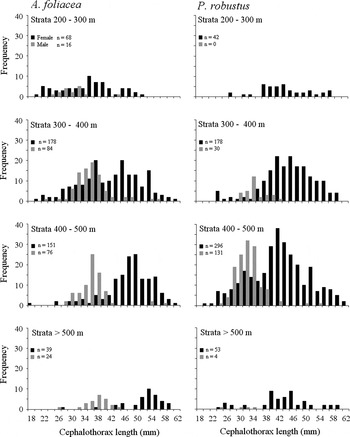
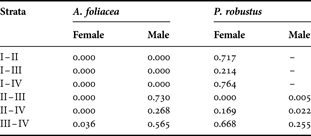
The size-structure for female A. foliacea showed an increase in CL with depth, having a three modal trend for the 200–300 and 300–400 m strata and two modes for 400–500 and >500 m strata (Figure 3; Table 1). The males of A. foliacea had a modal structure, also an increasing CL with depth. The means of CL of A. foliacea female differ significantly among strata, but means of males differ only in the first strata in comparison to the others (Table 2). Otherwise, the shrimp P. robustus showed a tendency to decreasing size with depth. The three modal dispositions for females in this species were found in the 300–400 and >500 m, the males showed a one-modal size-structure in all strata (Table 1). The means of CL of the P. robustus females and males only show significant differences for the 300–400 versus 400–500 m depth-strata (Table 2).
Size–frequency distribution of cephalothorax length by sex and depth- strata for Aristaeomorpha foliacea and Pleoticus robustus.
Nemenyi and Dunn test for differences between means of cephalothorax length by strata for Aristaeomorpha foliacea and Pleoticus robustus. Strata: I (200–300 m), II (300–400 m), III (400–500 m) and IV (> 500 m).
Spatial analysis
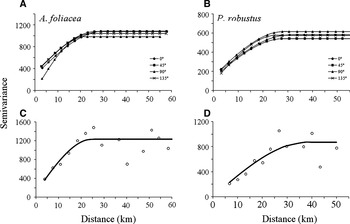
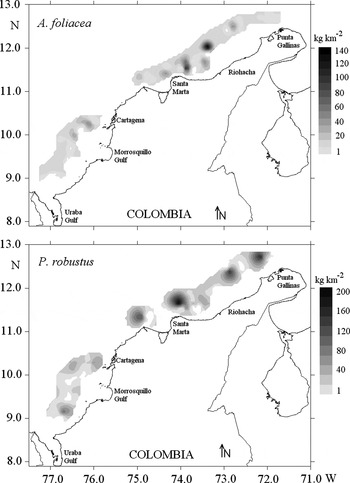
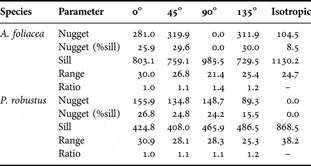
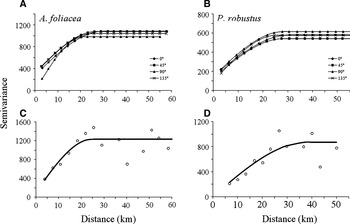
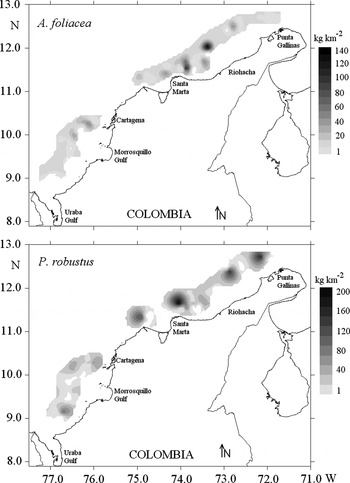
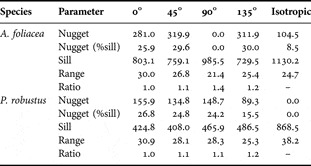
The unidirectional variograms showed spatial similarity in their modelling of spatial characteristics for both species (Figure 4A, B). In fact, the anisotropy ratio between the maximum and minimum value of spatial autocorrelation range in the unidirectional variograms was less than 2 (Table 3), which suggests the absence of anisotropy. Therefore, the spatial structure of deep-sea shrimp biomass (kg km−2) was studied through an experimental isotropic variogram (Figure 4C, D), to which a spherical model was fitted. The variograms showed a non-resolved structure for the sampling design to that considered for A. foliacea (8.5%) and for P. robustus (0.0%) of total variance (nugget as percentage of sill) (Table 3). The autocorrelation range of the shrimp aggregation for A. foliacea was 24.7 km and for P. robustus 38.2 km (Table 3). For both shrimps the higher biomass values were distributed in well defined spatial patches in the northern zone of the Colombian Caribbean Sea (Figure 5). The bulk of biomass for both species was distributed between Santa Marta and Riohacha. However, the patches of P. robustus were more abundant, with higher concentrations off Punta Gallinas. In the southern zone, this species revealed high abundances between the Cartagena River and south-west off the Morrosquillo Gulf. Pleoticus robustus presented higher values of mean density and biomass than A. foliacea; the precision was between 10.0 and 23.3%, respectively (Table 4).
Directional experimental (A, B) and omnidirectional (C, D) variograms showing an isotropic process for abundance of Aristaeomorpha foliacea (A, C) and Pleoticus robustus (B, D) in Colombian Caribbean Sea.
Spatial distribution of Aristeomorpha foliacea and Pleoticus robustus abundances (kg km−2) as the reproduction of a spatially stochastic process by kriging.
Analysis of anisotropy, a spherical variogram model fitted to the directional empirical variogram and omnidirectional spherical model of variogram for Aristaeomorpha foliacea and Pleoticus robustus.
Assessment of biomass of deep-sea shrimp species obtained by geostatistic in the Colombian Caribbean Sea.

DISCUSSION
The deep-sea shrimps have a patchy distribution (D'Onghia et al., Reference D'Onghia, Tursi, Maiorano and Panza1998; Belcari et al., Reference Belcari, Viva, Mori and de Ranieri2003), which justifies the importance of using spatial statistical methods such as the geostatistic to address the spatial distribution structure and calculate the biomass more precisely (Paramo & Roa, Reference Paramo and Roa2003). Studying the spatial distribution of populations is of great importance for ecological studies, because most of marine organisms are not distributed at random, rather, they are forming patches, gradients or other types of spatial structures (Legendre & Legendre, Reference Legendre and Legendre1998; Rivoirard et al., Reference Rivoirard, Simmonds, Foote, Fernandes and Bez2000; Paramo & Roa, Reference Paramo and Roa2003). Also, successful fisheries management in new fisheries requires knowledge about population abundance, the spatial distribution and size structure (Rivoirard et al., Reference Rivoirard, Simmonds, Foote, Fernandes and Bez2000), since failure to recognize spatial complexity of fisheries has resulted in stock collapses (Hilborn & Walters, Reference Hilborn and Walters1992; Katsanevakis & Maravelias, Reference Katsanevakis and Maravelias2009). The higher biomass of these two deep-sea shrimp species were found mainly in the northern zone of the Colombian Caribbean Sea, where the local oceanography is modulated by the seasonal upwelling with high productivity (Paramo et al., Reference Paramo, Quiñones, Ramirez and Wiff2003, Reference Paramo, Guillot, Benavides, Rodríguez and Sanchez2009). In the eastern Ionian Sea A. foliacea is associated with areas of significant upward nutrient transport, which may result in greater biological productivity (Politou et al., Reference Politou, Kapiris, Maiorano, Capezzuto and Dokos2004).
Our results showed that in both species the number of females was higher than males. This characteristic was also found for A. foliacea in the Mediterranean Sea indicating segregation between sexes (D'Onghia et al., Reference D'Onghia, Tursi, Maiorano and Panza1998; Papaconstantinou & Kapiris, Reference Papaconstantinou and Kapiris2003). The different modes showed for both species (3 modes for females and 1 for males), which agree with the growth of A. foliacea in the Mediterranean Sea, in females is faster than males and the longevity of females (3–4 year-classes) is higher than males (2 year-classes) (Papaconstantinou & Kapiris, Reference Papaconstantinou and Kapiris2003). The mean size of A. foliacea (female 44.2 mm; male 35.8 mm CL) is similar to the same species found at an unexploited fishing ground in the Greek Ionian Sea in depths between 250 and 800 m (Papaconstantinou & Kapiris, Reference Papaconstantinou and Kapiris2003) and higher than the size of maximum reproductive potential in females (37.11 mm CL) (D'Onghia et al., Reference D'Onghia, Tursi, Maiorano and Panza1998). The pattern of increasing size with depth was also found throughout the Mediterranean basin (Politou et al., Reference Politou, Kapiris, Maiorano, Capezzuto and Dokos2004), in the Greek Ionian Sea (Papaconstantinou & Kapiris, Reference Papaconstantinou and Kapiris2003), and on the Portuguese continental slope (Figueiredo et al., Reference Figueiredo, Figueiredo and Machado2001). D'Onghia et al. (Reference D'Onghia, Tursi, Maiorano and Panza1998) found that the very small individuals of A. foliacea in the north-western Ionian Sea had a shallower distribution (upper 500 m). Additionally, during the winter–spring season the population rise out from deepest areas and migrate to the upper slope. Then, after the mating peak in summer, when spawning takes place, the population is again displaced on the deeper grounds (D'Onghia et al., Reference D'Onghia, Tursi, Maiorano and Panza1998). Therefore, the bathymetric gradient in size could be explained by reproductive aspects and spatial segregation of the different year-classes. Pleoticus robustus showed a mean size (female 43.8 mm; male 32.7 mm CL) similar to what has been reported off the Yucatan Peninsula in Mexico (Gracia et al., Reference Gracia, Vázquez-Bader, Lozano-Alvarez and Briones-Fourzán2010). Our study found that the majority of adult individuals in these two deep-sea shrimp species reflect the non-fished populations in the study area. The A. foliacea biomass reported here was higher than the same species from the Balearic Islands (0.76 kg km−2) and western Ionian Sea (1.00 kg km−2), but similar to that reported from the eastern Ionian Sea (14.33–95.35 kg km−2) (Politou et al., Reference Politou, Kapiris, Maiorano, Capezzuto and Dokos2004), which provides crucial support to the proposed development of a new fishery in the Colombian Caribbean Sea.
The non-overlapping of abundances in spatial distribution, suggest use of different niche areas. However, A. foliacea is found from 250 to 1300 m (Tavares, Reference Tavares and Carpenter2002) and higher concentrations were located between 500 and 600 m in the Greek Ionian Sea (Papaconstantinou & Kapiris, Reference Papaconstantinou and Kapiris2003), therefore, more research is need in deeper strata to delimit the spatial distribution of this species in the Colombian Caribbean Sea. Our results point to the necessity of more scientific biological research to aid in the understanding of the life cycle parameters of these deep-sea shrimps, including growth, recruitment, mortality, areas and seasons of spawning, nursery regions, and associated biodiversity, before beginning concrete steps to initiate a new commercial fishery. Management and conservation strategies, taking into account the ecosystem approach to fisheries management must be also considered. The substantial marketability of these deep-sea shrimp species, not only on the local level but also in numerous international markets (Belcari et al., Reference Belcari, Viva, Mori and de Ranieri2003; Papaconstantinos & Kapiris, 2003), make these deep-sea shrimps a potential new economic resource in the Colombian Caribbean Sea.
ACKNOWLEDGEMENTS
This work is a contribution of the Leibniz-Zentrum für Marine Tropenökologie (ZMT), Germany and Research group Ciencia y Tecnología Pesquera Tropical (CITEPT) Universidad del Magdalena (Colombia). Writing of the manuscript was supported by the ALECOL-DAAD PhD Scholarship, Universität Bremen, Germany. We thank Dr Kostas Kapiris (Hellenic Centre for Marine Research, Greece) and Dr Keyl Friedemann (ZMT) for helpful and insightful comments on the manuscript. We also thank the crew of the vessel ‘Tee Claude’ and Captain José Guillem and members of the research group CITEPT who participated in the laboratory and research survey. The work was sponsored by COLCIENCIAS grant number 117-452-21288 and the Instituto Colombiano de Desarrollo Rural (INCODER) through Subgerencia de Pesca y Acuicultura.