


Introduction
Irritable bowel syndrome (IBS) is a bowel disorder affecting 8.1–25% of populations globally, dependent on diagnostic criteria used and country studied (Canavan et al., Reference Canavan, West and Card2014; Endo et al., Reference Endo, Shoji and Fukudo2015; Sperber et al., Reference Sperber, Dumitrascu, Fukudo, Gerson, Ghoshal and Gwee2016). It costs the UK's National Health Service just below £12 million annually (Williams et al., Reference Williams, Barclay, Benneyworth, Gore, Hamilton and Matull2016). Despite some evidence of physiological mechanisms involving brain–gut interactions, the aetiology remains unclear (Mayer et al., Reference Mayer, Savidge and Shulman2014), although it is likely there are biological, psychological and social factors involved in the maintenance and development of IBS. Cognitive behavioural models of IBS, in particular, posit a role of cognitions and behaviours in the maintenance of symptoms (Elsenbruch, Reference Elsenbruch2011; Elsenbruch and Enck, Reference Elsenbruch and Enck2016; Spence and Moss-Morris, Reference Spence and Moss-Morris2007).
Research into beliefs about emotions has been conducted in chronic fatigue syndrome (CFS), another disorder with uncertain aetiology, showing that individuals with CFS hold more beliefs that it is unacceptable to express one's emotions (Rimes and Chalder, Reference Rimes and Chalder2010; Rimes et al., Reference Rimes, Ashcroft, Bryan and Chalder2016). Further research found that these beliefs predicted fatigue, depression and anxiety, and that these relationships were mediated by emotional suppression and self-compassion in a healthy sample (Sydenham et al., Reference Sydenham, Beardwood and Rimes2016).
One study found that participants with IBS report more beliefs that expressing emotions is unacceptable compared with healthy controls (Bowers and Wroe, Reference Bowers and Wroe2016). This fits with the increased secrecy, stigma and embarrassment in conditions with unclear aetiology (McInnis et al., Reference McInnis, McQuaid, Bombay, Matheson and Anisman2015), with IBS symptoms in particular relating to stigma and embarrassment (Spiegal et al., Reference Spiegal, Khanna, Bolus, Agarwal, Khanna and Chang2011). This stigma and embarrassment about symptoms of IBS may result in secrecy about the condition and a reluctance to discuss emotional difficulties associated with IBS.
It may be valuable to address beliefs and behaviours relating to emotional suppression in treatments for IBS. Doing so might elicit improvements in quality of life as suppressing emotions has been found to be related to worse outcomes in IBS through an increase in distress (Bowers et al., Reference Bowers, Wroe and Pincus2017b). Addressing beliefs in addition to behaviours surrounding emotional suppression may result in longer-term improvements that have not been found in brief behavioural emotional expression interventions in other conditions (e.g. Gillis et al., Reference Gillis, Lumley, Mosley-Williams, Leisen and Roehrs2006). It has also been suggested that expressing emotions may lead to greater emotional support. However, evidence for support-seeking as a mediator of the relationship between beliefs about emotions and quality of life suggests a more complex relationship (Bowers et al., Reference Bowers, Wroe and Pincus2017a; Bowers et al., Reference Bowers, Wroe and Pincus2017b; Sydenham et al., Reference Sydenham, Beardwood and Rimes2016).
One recent trial tested emotional awareness and expression training (EAET) in individuals with IBS (Thakur et al., Reference Thakur, Holmes, Lockhart, Carty, Ziadni, Dohert, Lackner, Schubiner and Lumley2017). They found that EAET (n = 34), delivered in three weekly individual sessions, led to improvements in symptom severity compared with waitlist controls (n = 34), while no significant improvement was found for relaxation training (n = 36). There were no changes in depression and anxiety specific to the EAET group. The current study extends this research in that it supported people in evaluating their own beliefs around emotional expression, and making changes around emotional expression using a cognitive behavioural approach.
The current study therefore aimed to investigate whether beliefs about the unacceptability of expressing emotions and emotional suppression could be adapted, and whether any changes in such beliefs and behaviours are associated with quality of life in relation to IBS. An approach used therapeutically to support people in making helpful changes in term of beliefs and behaviours is cognitive behavioural therapy (CBT). Based on evidence that psychological factors (such as emotional suppression, trauma, mood disorders and all-or-nothing behaviour) are involved in the maintenance of IBS (Bowers et al., Reference Bowers, Wroe and Pincus2017b; Bradford et al., Reference Bradford, Shih, Videlock, Presson, Naliboff, Mayer and Chang2012; Sibelli et al., Reference Sibelli, Chalder, Everitt, Workman, Windgassen and Moss-Morris2017; Spence and Moss-Morris, Reference Spence and Moss-Morris2007), CBT has been tested with regard to improving symptoms and distress. Psychological treatments (including CBT) are beneficial, with clinically significant effect sizes, although it had been suggested further research on potential processes of psychological interventions is needed (Altayar et al., Reference Altayar, Sharma, Prokop, Sood and Murad2015; Ford et al., Reference Ford, Quigley, Lacy, Lembo, Saito and Schiller2014; Lackner et al., Reference Lackner, Mesmer, Morley, Dowzer and Hamilton2004; Laird et al., Reference Laird, Tanner-Smith, Russell, Hollon and Walker2017). CBT techniques focusing specifically on beliefs and behaviours around emotional suppression were used in this single case series of four participants with IBS in order to test whether beliefs about emotions and emotional suppression could be adapted and whether efforts to adapt these would result in changes in distress and quality of life. Reductions in beliefs about unacceptability of emotions, emotional suppression and distress, and improvements in quality of life were predicted.
Method
Participants
Eleven participants responded to an advertisement on campus webpages for staff and students. Five participants responded to the following email providing further information about the study. One of those five did not begin the study due to the time commitments involved. This resulted in a sample of four female participants (mean age = 45.5 years, SD = 9.75) all of whom had been diagnosed with IBS by a clinician and met three or more of the Manning Criteria for Irritable Bowel (Manning et al., Reference Manning, Thompson, Heaton and Morris1978). Participants had been diagnosed on average 18.25 years prior to the study (SD = 6.50), three were white British and one was Indian (both in terms of nationality and ethnicity). One participant was educated at a postgraduate level, two had undergraduate degrees and one finished education at 16 years old.
Measures and procedure
Participants completed the Beliefs about Emotions Scale (BES; measuring beliefs about the unacceptability of experiencing and expressing emotions), Courtauld Emotional Control Scale (CECS; measuring emotional suppression), Hospital Anxiety and Depression Scale (HADS; measuring affective distress) and the Irritable Bowel Syndrome Quality of Life (IBS-QoL) instrument, all of which have been validated in clinical samples (Patrick et al., Reference Patrick, Drossman, Frederick, DiCesare and Puder1998; Rimes and Chalder, Reference Rimes and Chalder2010; Watson and Greer, Reference Watson and Greer1983; Zigmond and Snaith, Reference Zigmond and Snaith1983).
Idiographic measures were taken for each questionnaire as participants were required to complete the questionnaires bi-weekly. By creating idiographic measures, the number of items is reduced (with the number of items ranging from two to 10 per questionnaire) and therefore less time is required of the participant. Idiographic measures are designed to increase the relevance of an instrument to a particular individual (Haynes et al., Reference Haynes, Mumma and Pinson2009). After completing full questionnaires at the first time point, these questionnaires were reduced to include only the highest scoring items for that participant. As there is no set guideline for selecting items that will comprise an idiographic measure, it was decided (between the current authors and an academic with experience in research using idiographic measures) that higher scoring items on each measure reflect particular thoughts, feelings and behaviours that are relevant to that individual. Items for which the participant scored the highest possible score were included in the measure for that participant. In cases where less than two items were scored to the maximum value for a particular measure, items with the second highest possible score were included. Questionnaires were completed bi-weekly online at home except those collected during the group sessions. The number of items for each measure ranged from one to four for the HADS, three to six for IBS-QoL, six to ten for CECS and three to six for the BES.
Three of the four participants were able to meet for a semi-structured group interview at the end of the follow-up phase of the study. This interview was conducted to determine how receptive participants were to the intervention and what in particular they felt had changed since the intervention. A group interview was chosen over individual interviews due to problems with scheduling the interviews around university term time. The study was approved by the university ethics committee.
Intervention
A 5-week course was designed with an accompanying booklet. This course aimed to address beliefs about emotions and emotional suppression in a group-based cognitive behavioural intervention across five 60–90 min sessions, facilitated by a Clinical Health Psychologist (A.L.W.). The sessions focused on the relation between beliefs about emotions, emotional responses, stress and symptoms, and used cognitive and behavioural approaches to test out relevant changes.
The sessions discussed the relationships between emotions; beliefs and behaviours around emotions; and IBS symptoms as part of a ‘vicious cycle’. The pros and cons of emotional suppression compared with sharing one's emotions were discussed with a focus on thought evaluation. Participants were asked to set goals and to test out making changes with regard to the expression of emotions. These goals were later discussed in relation to what participants had learnt. Participants raised the issue of how one can cope with difficult emotions, if not avoid them and asked about relaxation techniques. As such, in this session relaxation techniques were briefly discussed. The final session involved setting long-term goals and managing set-backs. Each week participants were set home tasks that were designed to support their learning during the intervention. Details about the individual sessions can be found in Appendix 1.
Design and statistical analysis
This study used an AB single case design, where phase A is the pre-treatment phase (consisting of five data points for three participants and four data points for one participant) which spanned 1–2 weeks and phase B is the treatment phase. The treatment phase consisted of two parts. Phase B1 was during the intervention (spanning 9 weeks) and phase B2 was after treatment, where participants were followed up for 2 months after the intervention (spanning 7–8 weeks). Phase B1 consisted of between nine and 13 data points across participants, while B2 consisted of nine to 12 data points. The variance in the number of data points across participants is due to participants’ non-completion of questionnaires at certain time points.
The data were analysed using Tau-U non-overlap analysis to determine differences in levels and trends between phases by considering the proportion of non-overlapping data between phases (http://www.singlecaseresearch.org/calculators/tau-u). This analysis is specifically designed for single case research and uses all data points, as opposed to averages of the raw data (Willson et al., Reference Willson, Veale and Freeston2016). Comparisons were made for each participant individually (phase A vs B1 and B1 vs B2) for each of the four variables. Baseline corrections were applied as necessary. Weighted averages of the changes were calculated for each of the four variables (weighted by the inverse of the variance of Tau) which reflects the non-overlapping data across all cases. Confidence intervals that do not contain zero indicate a significant proportion of non-overlap between phases.
Thematic analysis was used to uncover themes and subthemes regarding the participants’ views on how beneficial the intervention was, what content in particular was useful and how they felt it had been of benefit (see Appendix 2 for the interview schedule). Thematic analysis was conducted on interview data by one author (H.M.B.) and a research assistant (E.H.) identifying themes after reading and coding the qualitative data (Braun and Clarke, Reference Braun and Clarke2006). The research assistant was kept blind to the aims of the research (including the rationale and particular content of the intervention itself) to avoid any potential bias caused by the author being involved in the design of the intervention and the interpretation of the interviews. The research assistant was told the participants had taken part in an intervention and that the qualitative study aimed to understand their views of that intervention. Data were coded manually and independently (using emergent as opposed to pre-set codes) by the two researchers who independently organized these into themes and subthemes. The two researchers then combined themes and subthemes and agreed on the organization of these. Themes and subthemes are presented in Appendix 3.
The therapist (A.L.W.) was not involved in the statistical analysis, but was consulted when organizing themes and subthemes within the qualitative data – although A.L.W. did not analyse the raw qualitative data.
Results
Attendance
All of the participants missed at least one session, with only one participant missing two sessions. If a session was missed, the participant(s) met with a facilitator at another time. The handbooks given to each participant covered the content of the sessions and therefore also supported those who missed a session, although completion of home tasks was not checked. In this sense, none of the participants missed any of the information given during the intervention.
Quantitative analysis
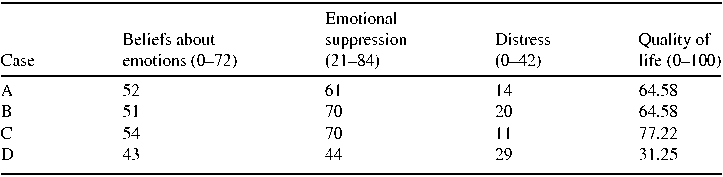
Baseline scores for each measure for each participant are presented in Table 1.
Baseline scores for each participant for each measure as a whole (i.e. not idiographic measures)

Beliefs about emotions
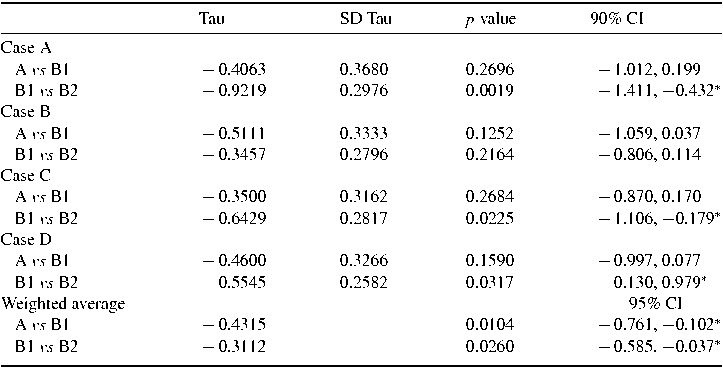
Looking at the weighted average across participants, there was a significant reduction in beliefs about emotions (as measured by BES item scores) during the intervention period (i.e. when comparing phase A with phase B1) and during follow-up (comparing phase B1 with B2). Confidence intervals and Tau statistics are presented in Table 2 (see Fig. 1 for scores over time). Case B showed no changes from phase A to B1 or from phase B1 to B2. Post-hoc analyses revealed, however, that there was a significant decrease in beliefs about emotions when comparing phase A with phase B2 (Tau-U = –.9333, SD = .3333, p = .0005, 90% CI [–1.482, –0.385]), indicating a slower, but still significant decline in scores. Cases A and C showed a reduction in beliefs about emotions during the follow-up period (phase B1 compared with phase B2). Case D showed no improvements from phase A to phase B1 and unexpectedly showed an increase in beliefs about emotions in the follow-up period (phase B1 compared with B2). However, post-hoc analyses to explore this revealed that phases A and B2 were not significantly different (Tau = –0.0545, SD = 0.3210, 85% CI [–0.517, 0.408]).
Tau statistics and confidence intervals for BES scores

CI, confidence interval. *indicates where confidence interval does not include zero.
Emotional suppression
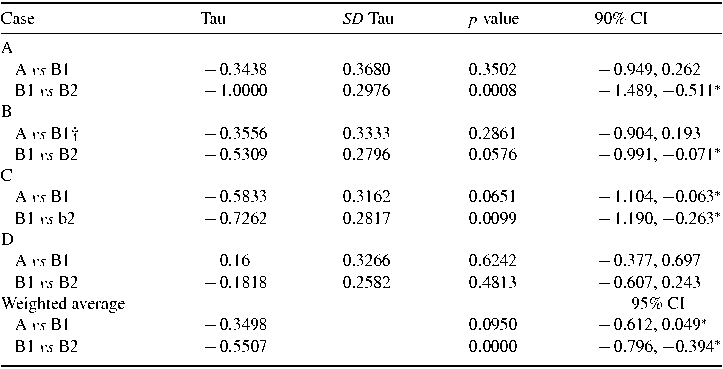
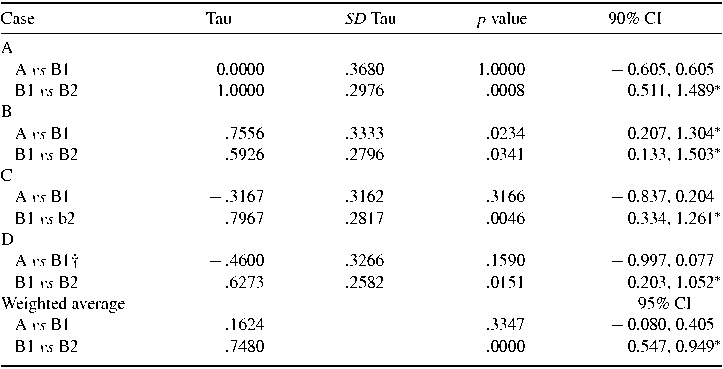
Across the four cases there was a significant reduction in emotional suppression (as measured using CECS items) during the follow-up period (phase B1 compared with B2) and a marginally significant trend in this direction from phase A to phase B1 (see Table 3 for Tau statistics and confidence intervals, and Fig. 2 for scores over time). As with beliefs about emotions, only one participant (case C) showed a reduction in emotional suppression during the intervention which continued to decrease during the follow-up phase. For cases A and B, changes were not observed until the follow-up period where there was a significant reduction in emotional suppression. Case D did not change on this measure of emotional suppression during the intervention or during follow-up.
Tau statistics and confidence intervals for CECS scores

CI, confidence interval; †, correction for baseline trends. *indicates where confidence interval does not include zero.
Affective distress
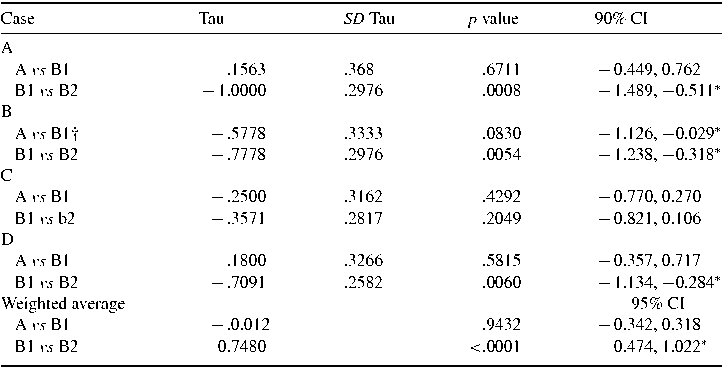
The weighted average across the four cases shows that there was no change in affective distress (as measured by HADS item scores) during the intervention phase compared with baseline. However, there was a significant reduction in affective distress during the follow-up phase (see Table 4 for Tau statistics and confidence intervals, and Fig. 3 for scores over time). Only one participant (case B) showed a reduction in affective distress when comparing phase B1 (intervention) with phase A (baseline). This continued to decrease during the follow-up period. Cases A and D showed a reduction in affective distress during the follow-up phase only, while case C showed no changes in affective distress throughout.
Tau statistics and confidence intervals for HADS scores

CI, confidence interval; †, correction for baseline trends. *indicates where confidence interval does not include zero.
Quality of life
Across all four cases, there was no immediate improvement in quality of life during the treatment phase (B1) compared with baseline (A). Tau statistics and confidence intervals are presented in Table 5 (see Fig. 4 for scores over time). However there was a significant increase in quality of life indicating improvement during the follow-up phase (phase B1 vs phase B2). As with the other measures, only one participant (case B) showed improvements during the treatment phase. This improvement continued into the follow-up period. For the remaining three participants (cases A, C and D) there were improvements in quality of life during the follow-up period only.
Tau statistics and confidence intervals for IBS-QoL scores

CI, confidence interval; †,correction for baseline trends. *indicates where confidence interval does not include zero.
Qualitative analysis
Two researchers analysed the qualitative data independently using thematic analysis (Braun and Clarke, Reference Braun and Clarke2006) and then combined themes. Eight themes were identified with the aim of understanding the participants’ perspectives of the intervention (including feasibility, if they found it helpful and why they found it helpful).
(1) It's good to share with others. This theme was identified which indicated that in particular identifying and sharing thoughts and feelings with others was beneficial. Within this theme, it was found that participants felt uncomfortable talking to others. They felt that keeping their IBS and their feelings about their IBS a secret was a burden and that it was a relief to discuss these issues with others.
Case B: And for me talking about it to my partner and a close friend is like, it was like a pressure released that you didn't even realise was there because you live with it.
(2) Reassurance in identifying with others. In particular, it was noted that meeting with other individuals who have IBS was beneficial. Participants reported feeling less lonely and feeling understood. There was a sense that participants’ thoughts and feelings were normalized through identifying with others who also have IBS.
Case B: My solution to this problem would be doing this which is quite normal in my world but you would never dream of telling anyone else, and then you find out that ‘yeah that's my solution to that problem as well’. It's reassuring and enlightening really.
(3) Changes/improvements in cognition, emotion and behaviour. Participants noted a shift in their perception of talking with others, in particular, with one individual (Case D) reporting feeling ‘less awful’ about talking about her IBS.
Case D: I'd already shared things with family and work and things so I didn't need to change that. But it did make me feel less awful about it. Less like I was some kind of problem.
Similarly, in this theme, there appeared to be a shift in behaviour with regard to making an effort to see friends and to talk about IBS.
Case B: We were given challenges. It made you rethink your whole situation but we weren't given challenges to deal with other people or change our our normal routine of just saying no we don't want to go to dinner, we don't want to do this, or I'm not going to tell anyone about it. It actually challenged me and the others too to do something new.
(4) Changes/improvements in the perception and understanding of IBS. There was a shift in participants’ perceptions of their IBS in that they now understood the relation between stress and symptoms and had also learned to ‘draw a line’ separating the two.
Case D: When it happens when you have a bad thought it's so easy to get more and more and more stressed about what's happening once it once it kicks off once you feel the first like,. . . mm. . ., and then to just worry about it and it gets worse and worse and then it gets worse and worse and worse and it's a bit sort of self-perpetuating.
(5) Presence of avoidant behaviour prior to the intervention. There was also evidence of avoidance prior to attending the intervention. Participants reported that previously they had been avoiding activity (e.g. avoiding going out to dinner) and avoiding thinking about their IBS.
Case C: I refused to sort of. . . either not dealing with it not trying to think about it ignore it
(6) How other people view IBS. Participants also explained their understanding of other people's perceptions of IBS. In particular they spoke of the lack of support from their GP and the marginalization of the disorder.
Case D: [talking about the online advert]. . .it's quite marginalized. I thought ‘somebody's actually looking at it!’ You know it's like you say the GPs don't just tell you you've got it and don't really. . ., that's it.
Case D: I have talked about [IBS] to other people but obviously nobody really understood.
(7) Techniques outside of the intervention aims. In this theme, participants note the value of accepting their IBS and the emotions that accompany it, and acknowledge that symptoms are only temporary and that relaxation is a useful tool.
Case D: It's definitely made me accept that it happens to other people therefore it's nothing to be you know. It's just one of those things. Not a very nice thing, but one of those.
Participants also commented on using relaxation techniques as a means of managing difficult emotions, particularly stress, and unpleasant symptoms in a more accepting as opposed to avoidant manner.
Case B: We did learn some techniques to relax which I do find useful especially when it is bad or it does – I said it's frustrating it's annoying it gets you down.
For some, acceptance of the symptoms resembled a mindful approach.
Case C: Quite often you sort of get this feeling it is never going to end. And what are you going to do, how are you going to manage. And then you have to keep reminding myself it will pass and I'll be ok again but just not at the moment.
(8) The intervention was not as expected, but was well-received. Participants discussed their expectations of the intervention. They felt that five meetings was a good amount to benefit from the intervention, but felt that continuing to meet with each other would be useful.
Case D: I just thought I was giving out my experiences that's what I thought I'd be doing. This is how it affects my life. I did not expect it to help me at all, and it did.
The questionnaires, while generally well received, were at times difficult to answer. In particular one individual noted that the questions were not always well-suited to reflect day-to-day changes.
Case C: Some of the questions asked about your emotions in the last few days and I was thinking. . ., sort of feeling angry was one of them. And I found it hard to answer because I didn't recall feeling angry in the last week
Discussion
There were significant decreases in beliefs about the unacceptability of emotions and emotional suppression during the intervention, and improvements in affective distress and quality of life following the intervention when Tau-U scores were averaged across participants. This suggests that the designed sessions, which specifically targeted beliefs about emotions and emotional suppression using cognitive behavioural methods, were beneficial to these participants. This indicates potential value in incorporating work on beliefs about emotions and emotional suppression into existing CBT for IBS. This is supported by the reception of the treatment by participants where participants reported liking the intervention, noting changes where they were sharing more with others and changes in their perspectives on their IBS and how they cope with it. This finding is in line with existing evidence of the benefits of CBT to those with IBS (Altayar et al., Reference Altayar, Sharma, Prokop, Sood and Murad2015).
The changes in distress and quality of life were not significant until follow-up, compared with the more immediate changes in beliefs about emotions and emotional suppression, when looking at averages. The timing of these changes is consistent with the proposal that beliefs about emotions and emotional suppression are potential mechanisms with a possible causal effect of changes in these beliefs and behaviours on the outcomes of affective distress and quality of life. However, when looking at individual cases, none of the cases’ BES scores changed during the intervention and only one participant's CECS scores changed during the intervention, with the remaining changing during follow-up. Further experimental exploration into whether these variables directly influence one another is needed in order to determine this.
Qualitative analysis revealed that participants perceived benefits of the intervention that were not part of the current aims, nor a focus of the intervention, such as a reduction in avoidance of activities, acceptance of the disorder, viewing symptoms as temporary and coping by using relaxation techniques. While the intervention discussed acceptance of emotions, it is possible that these discussions also encouraged acceptance more broadly, which resulted in participants being more accepting of having IBS. Similarly, when discussing avoiding talking about one's feelings, participants may have also reflected on avoidance more generally, leading to less avoidance of activity. Relaxation techniques were reported as being useful by some of the participants. Although relaxation was not a key component planned in the intervention, there was discussion during the intervention around relaxation techniques, as participants specifically asked about relaxation. It seems that this discussion was useful as participants reported using relaxation techniques to deal with the stress that comes with IBS. Interestingly, there was no explicit discussion regarding viewing symptoms as temporary; however, participants reported finding this useful. This shift in the perception of symptoms is surprising and indicates that although particular coping strategies are not taught, individuals may adopt new coping strategies as a result of intervention. This demonstrates the value of using a mixed methods design in that there may be processes that are beneficial to participants that may not be otherwise detected (Greenhalgh et al., Reference Greenhalgh, Annandale, Ashcroft, Barlow, Black and Bleakley2016; Rennie and Frommer, Reference Rennie and Frommer2015).
While the overall changes across participants support the hypotheses, the changes were not consistent across all four cases. For example, Case D unexpectedly showed an increase in her beliefs about the unacceptability of emotions during the follow-up phase. This might be explained by a marked decrease in scores for the last two data points during the intervention phase (see Fig. 4) as opposed to an overall increase in scores since the intervention started. This is further supported with evidence that there was no significant difference between the baseline and the follow-up phase. This seems to indicate there was no change in beliefs about emotions as opposed to an increase. Case D also showed no changes in emotional suppression. This fits with the participant describing herself in the interview as emotionally expressive even before the intervention. It may be that those who are emotionally suppressive respond more to this kind of intervention; it may be possible therefore to identify treatment responders.
Case C surprisingly showed no improvements in affective distress; however, this participant had much lower levels of distress at the start of the intervention, resulting in only two items on her idiographic measure which perhaps limited variance to the extent that changes would not be detected. These floor effects may therefore explain this finding.
Qualitative analysis suggests that participants were generally happy with the intervention, although only three of the four participants attended the interview. It is possible that the fourth participant held different views of the intervention or did not attend because she did not like the intervention. Further bias may have been introduced by having the experimenter conduct the interview. While another researcher, blind to the intervention, analysed the data to account for potential bias in the interpretation of the data, participants may have been more inclined to speak favourably about the intervention, given the presence of the experimenter in the interview. Further improvements could have been made to the qualitative analysis through agreement of pre-set codes using an agreed coding manual. This may have aligned the two analysts and provided a clearer structure to the analysis. However, themes and subthemes were combined and agreed after analysis and were largely very similar between the two analysts.
Despite participants’ reporting satisfaction with the intervention, attendance to the meetings could have been improved. However, participants met individually with the facilitator to cover the session that they missed, meaning they did not miss any of the content of the intervention. Given that participants were generally happy with the intervention, it may be that extraneous factors (such as scheduling the meetings during work hours) influenced attendance. Data on reasons for missing sessions was not collected, but would have provided further insight into the feasibility of the intervention. Furthermore, data on the extent to which individuals engaged in the work between sessions was not systematically tested. However, each session started with a brief summary of the previous session, and a discussion around any changes people had made, and barriers they may have met. Future research may wish to measure systematically to what extent participants engaged with the materials outside of the group meetings.
This design has the advantage of testing theory-based interventions without the costs (with regard to both time and money) involved with randomized control trials (RCTs) and can also inform process variables worthy of further investigation. Furthermore, exploring individual cases sheds light on how the intervention affects individuals differently. Once an intervention has been tested using single case methods, this may then justify the time and financial investments that come with RCTs.
Idiographic measures were useful as they lightened the workload for participants. However, they were not validated as shortened measures and therefore may measure different constructs for each individual. Furthermore, with the limited number of items, it becomes difficult to reliably interpret whether changes are clinically significant. Future research investigating this intervention in a larger sample would allow for less frequent measures, which would mean the full validated versions of questionnaires could be used.
The current sample consisted of individuals who were able to commit to attending five face-to-face sessions on campus, and as a result were individuals who believed they would be well enough to be able to attend. Further research is therefore needed in individuals whose quality of life is perhaps more severely impaired by their IBS.
The current methodology does not include a control group. A RCT would be useful in ruling out placebo effects, and improving understanding of specific factors that may be mediators of changes in distress and quality of life. Additionally, using CBT that does not focus on beliefs about emotions as a control condition, compared with the same CBT with the addition of the current study's content, would be useful in determining the additive value of addressing beliefs about emotions and emotional suppression in individuals with IBS.
The current study suggests that facilitating change in beliefs about the unacceptability of emotions and emotional suppression may elicit improvements in quality of life in IBS which is in line with previous correlational evidence (Bowers and Wroe, Reference Bowers and Wroe2016; Rimes and Chalder, Reference Rimes and Chalder2010; Sydenham et al., Reference Sydenham, Beardwood and Rimes2016). Beliefs about emotions may influence quality of life through a number of mechanisms including through increased suppression and consequent increases in distress (Bowers et al., Reference Bowers, Wroe and Pincus2017a) or through other mechanisms not currently measured such as self-soothing and self-compassion (Gilbert, Reference Gilbert2010; Sydenham et al., Reference Sydenham, Beardwood and Rimes2016).
Acknowledgements
The authors wish to thank Elizabeth Haines for her contribution to the qualitative analysis in this research.
Conflicts of interest: There are no conflicts of interest to declare.
Ethical statement: All authors have abided by the Ethical Principles of Psychologists and Code of Conduct in accordance with APA guidance. Ethical approval was provided by the Ethics Committee of Royal Holloway University of London.
Financial support: This research was funded by Royal Holloway University of London as part of a PhD research project.
Supplementary material
To view supplementary material for this article, please visit https://doi.org/10.1017/S1352465818000589




Comments
No Comments have been published for this article.