


Introduction
The relationship between trauma and psychosis is well established. This includes evidence of a dose-related response to trauma as well as certain childhood adversities being associated with specific symptoms (Morrison et al., Reference Morrison, Frame and Larkin2003; Bentall et al., Reference Bentall, Wickham, Shevlin and Varese2012; Varese et al., Reference Varese, Smeets, Drukker, Lieverse, Lataster, Viechtbauer, Read, van Os and Bentall2012). Alongside this, auditory hallucinations are common in people with post-traumatic stress disorder (PTSD) (Thomas et al., Reference Thomas, Hayward, Peters, van der Gaag, Bentall, Jenner, Strauss, Sommer, Johns, Varese, Garcia-Montes, Waters, Dodgson and McCarthy-Jones2014). Mechanisms linking the two concepts have been proposed and investigated, such as: attachment and emotional resilience (Sitko et al., Reference Sitko, Bentall, Shevlin, O'Sullivan and Sellwood2014), the traumatogenic neurodevelopmental model (Read et al., 2001), the interaction between information processing and stress (catastrophic interaction hypothesis) and Morrison's integrated cognitive model (Morrison et al., Reference Morrison, Frame and Larkin2003), which frames hallucinations as decontextualized flashbacks and unusual beliefs as attempts to explain trauma-related hallucinations (linked to beliefs about themselves, others and the world).
There is a large amount of overlap between the ICD/DSM (International Classification of Diseases/Diagnostic and Statistical Manual of Mental Disorders) diagnostic criteria for PTSD and psychosis and/or schizophrenia. In spite of the level of co-morbidity and the evidence for the links and the underlying mechanisms, trauma is rarely a focus of intervention in psychosis. In addition, clinicians seem reluctant to treat PTSD in individuals with psychosis (Becker et al., Reference Becker, Zayfert and Anderson2004; Meyer et al., Reference Meyer, Farrell, Kemp, Blakey and Deacon2014). Trauma-focused cognitive behavioural therapy (CBT) and eye movement desensitization and reprocessing (EMDR) are recommended as front-line treatments for PTSD, and yet therapists do not routinely offer them to service users with symptoms of psychosis and PTSD. For example, results found that 33% of a sample of patients with a severe mental illness within a community mental health setting met the diagnostic criteria for PTSD, though only 4% of the sample had a formal diagnosis of PTSD in their medical record (Howgego et al., Reference Howgego, Owen, Meldrum, Yellowlees, Dark and Parslow2005).
Alongside this, psychosis has often been on the list of exclusion criteria for research studies on PTSD (Spinazzola et al., Reference Spinazzola, Ford, Zucker, van der Kolk, Silva, Smith and Blaustein2005). As a result, there is a lack of published literature on the impact of trauma work on PTSD and psychosis.
One randomized controlled trial (RCT) has examined the use of cognitive restructuring with service users with severe mental illness and found a modest positive effect. However, only 16% of the sample had schizophrenia or schizoaffective disorder (Watts et al., Reference Watts, Schnurr, Mayo, Young-Xu, Weeks and Friedman2013). Two pilot studies, one examining the efficacy of prolonged exposure (PE) and the other EMDR found large effects on PTSD (Frueh et al., Reference Frueh, Grubaugh, Cusack, Kimble, Elhai and Knapp2009; Van den Berg and Van der Gaag, Reference van den Berg and van der Gaag2012), as did a controlled case series study examining both approaches (de Bont et al., Reference de Bont, van Minnen and de Jongh2013b).
There has been one multi-site RCT comparing the effects of PE, EMDR and waiting list on service users with a diagnosis of psychosis and co-morbid PTSD (de Bont et al., Reference de Bont, van den Berg and van der Vleugel2013a; van den Berg et al., Reference van den Berg, van der Vleugel, Staring, De Bont and de Jongh2013). Participants in the PE and EMDR conditions showed a greater reduction of PTSD symptoms compared with those in the waiting list group; these participants were also more likely to subsequently not meet criteria for a diagnosis of PTSD, a difference maintained at 6-month follow-up. Both standard PE and EMDR protocols were found to be safe and effective with this client group. This study focused on participants with long-standing psychotic symptoms and a clear diagnosis of both PTSD and schizophrenia.
Early intervention services in the UK were initially provided to care for young people aged between 14 and 35 years with a first episode of psychosis in the community EIP Services (EIPS) in the UK (Policy Implementation Guide, 2003) but the service has now been extended to 14- to 65-year-olds (NHS England, 2016). Recent NICE Guidelines for Psychosis and Schizophrenia (NICE, 2014) recommend the use of CBT for psychosis and suggest the need to assess for PTSD and then to follow PTSD NICE guidelines (2005) for those who show signs of post-traumatic stress. There has been no published research examining the safety and efficacy of interventions for post-traumatic stress within an early intervention population and without a formal diagnosis of PTSD. This study seeks to address this.
The Lancashire Traumatic Stress Service (LTSS) was set up as a tertiary level out-patient service to provide specialist psychological and pharmacological interventions for individuals presenting with symptoms of PTSD within secondary care mental health services. Service users referred to the service typically presented with multiple traumatic experiences often commencing in childhood. The service provides a ‘phasic’ or ‘modular’ approach. This prepares service users to manage the demands of trauma-focused interventions and offer therapists confidence in facilitating such interventions. Phasic or modular treatment has been found to be effective with clients with complex presentations (Cloitre et al., Reference Cloitre, Courtois, Charuvastra, Carapezza, Stolbach and Green2011).
When considering the design for this study it was important to acknowledge the differences in treatment as usual between service users in the UK and in the Netherlands. It has been noted that for service users in the Netherlands the treatment as usual (using the fACT model of care) is more comprehensive (Nugter et al., Reference Nugter, Engelsbel, Bähler, Keet and van Veldhuizen2015). Given the lack of outcome data for treating trauma in psychosis in the UK and the differences in treatment as usual it was felt that a longer stabilization phase was needed in this pilot phase.
The literature on working with trauma emphasizes the importance of clinician self-care and managing the risks of potential burnout due to prolonged exposure to vicarious trauma (Baird and Kracen, Reference Baird and Kracen2006). The structure within the LTSS emphasizes regular case discussion via a weekly team supervision approach to ensure the work is contained and the team's clinical expertise is available for the benefit of all service users.
Method
Assessment and measures
Both service users completed the standard assessment process within the LTSS. The service uses a standard set of measures. These include:
• Clinician Administered PTSD Scale for DSM-IV (CAPS-4). The CAPS-4 is a 30-item structured interview that can be used to indicate the presence of PTSD according to the DSM-IV definition. Questions also explore the onset and duration of symptoms, subjective distress, impact of symptoms on social and occupational functioning, overall PTSD severity, and dissociation (depersonalization and derealization). Reliability and validity for the original CAPS are high (Hovens et al., Reference Hovens, Van Der Ploeg, Klaarenbeek, Bramsen, Schreuder and Rivero1994; Blake et al., Reference Blake, Weathers, Nagy, Kaloupek, Gusman, Charney and Keane1995; Foa and Tolin, Reference Foa and Tolin2000; Mueser et al., Reference Mueser, Rosenberg, Fox, Salyers, Ford and Carty2001).
• Beck Depression Inventory-second edition (BDI-II). The BDI-II is a 21-item self-report questionnaire for measuring depression in people age 13 years and above. It was created using the criteria for depression in the Diagnostic and Statistical Manual of Mental Disorders-fourth edition (DSM-IV, 1994). Scores range between minimal and severe depression. The BDI-II has high reliability and validity (Beck et al., Reference Beck, Steer and Brown1996).
• Beck Anxiety Inventory (BAI, 1993 edition); The BAI is a 21-item scale that measures the severity of anxiety in adults and adolescents. The BAI also has high reliability and validity (Beck et al., Reference Beck, Steer and Brown1993).
• The Basic Emotion Scale (BES). This scale is designed to assess the experience of a range of emotions derived from the five basics: sadness, anxiety, anger, disgust and happiness (Power, Reference Power2006).
• Regulation of Emotions Questionnaire (REQ). This assessment is designed to assess individual differences in the use of strategies to manage difficult or painful emotions. Four types of emotion regulation strategies are identified: (a) internal – functional; (b) internal – dysfunctional; (c) external – functional; and (d) external – dysfunctional (Phillips and Power, Reference Phillips and Power2007; Power and Fyvie, Reference Power and Fyvie2013).
• Impact of Events Scale Revised (IES-R) (Creamer et al., Reference Creamer, Bell and Faillan2003; Horowitz et al., Reference Horowitz, Wilner and Alvarez1979; Weiss and Marmar, Reference Weiss, Marmar, Wilson and Keane1997). This is a 22-item scale used for the assessment of PTSD symptoms. The full scale internal consistency is high (α = .96); the three subscales (intrusions, avoidance and hyperarousal) also have good internal consistencies, but construct validity can be questioned (Creamer et al., Reference Creamer, Bell and Faillan2003). Concurrent validity is strong.
• Dissociative Experiences Scale II (DES-II). The DES-II is a 28-item measure of dissociative symptoms. Each symptom is rated on a scale of 0 to 100% of the time; the totals are then added and divided by 28 to get a mean score. Mean scores below 30 are considered indicative of a low level of dissociations and above 30 are considered indicative of a high level of dissociations. The DES-II has been found to have good reliability and validity (Bernstein and Putnam, Reference Bernstein and Putnam1986; Carlson and Putnam, Reference Carlson and Putnam1993).
• Session Rating Scale (SRS) (Johnson et al., Reference Johnson, Duncan, Miller, Spark, Claud, Reynolds and Brown2003). The SRS explores a service user's experience of therapy across four factors: relationship, goals and topics, approach and method, and overall satisfaction. This scale was completed by the service user at every session (including all the assessment sessions). Data from this scale offered consistent feedback with regard to the acceptability of the LTSS modular approach.
• The Psychotic Symptom Rating Scales (PSYRATS) (Drake et al., Reference Drake, Haddock, Tarrier, Bentall and Lewis2007) is an instrument designed to quantify the severity of delusions and hallucinations and is typically used in research studies and clinical settings focusing on people with psychosis and schizophrenia. It consists of the auditory hallucinations (AHS) and delusions subscales (DS).
• The Choice Questionnaire (Greenwood et al., Reference Greenwood, Sweeney, Williams, Garety, Kuipers, Scott and Peters2010) has been developed by asking the opinions of people who have used CBT to help with their unusual distressing experiences. It supports the identification of treatment goals in CBT.
Pharmacological assessment and treatment
Both service users were offered and both accepted assessment by the service pharmacist with a view to medicines optimization within the context of trauma-focused psychological intervention. Both service users were offered and took prazosin to support sleep and manage nightmares (Raskind et al., Reference Raskind, Peterson, Williams, Hoff, Hart, Holmes, Homas, Hill, Daniels, Calohan, Millard, Rohde, O'Connell, Pritzl, Feiszli, Petrie, Gross, Mayer, Freed, Engel and Peskind2013). Dosage was in line with standard protocols and the service users remained on this regime during the period of active intervention. Their pharmacological regime in relation to psychosis remained unaltered and consistent with treatment as usual.
Intervention
The LTSS used the following six modules:
• Module 1: introduction, assessment and formulation (Ehlers and Clark, Reference Ehlers and Clark2000) model, EMDR case conceptualization in supervision (van den Berg et al., Reference van den Berg, van der Vleugel, Staring, De Bont and de Jongh2013);
• Module 2: pharmacological treatment (including prazosin);
• Module 3: safety, stabilization, building resources, behavioural activation and education;
• Module 4: sleep and nightmare management – using imagery rehearsal therapy (IRT) (Krakow and Zadra, Reference Krakow and Zadra2010);
• Module 5: focusing on the trauma – TF-CBT and/or EMDR (three methods approach described in van den Berg et al., Reference van den Berg, van der Vleugel, Staring, De Bont and de Jongh2013);
• Module 6: post-trauma growth, relapse prevention and preparing for the future.
We present a brief outline the three methods approach. The first method involves identifying difficult life events on a timeline before identifying the worst memories that connect with current symptoms. Consequently the therapist would utilize the standard EMDR protocol. The second method approach is used to identify memories that underlie the dysfunctional core beliefs or intermediate assumptions of the client that continue to influence their thoughts and behaviours. The starting point in the second method is the negative dysfunctional core beliefs that are connected with the client's problems. Target images of experiences that have led to the formation of these negative beliefs about self, others, and the world (the so called ‘evidence’) are identified. These pieces of evidence are then rated in a hierarchy (from strong to weak ‘proof’) and reprocessed via standard EMDR protocol to obtain a deactivation of the negative schemas or a decrease of their credibility to the client. The third method would be to target any unrealistic and fearful expectations or negative imagery that is associated with the current symptoms.
Following collaborative formulation of service user difficulty, safety and stabilization interventions (modules 1–4) were offered in line with the service model.
The intervention was offered predominantly on a weekly basis although there were a few slightly longer gaps due to public holidays. The therapist (clinical psychologist) offering the sessions was closely supervised (on a weekly basis) by a highly experienced therapist (cognitive therapist and EMDR practitioner with experience of TF-CBT and EMDR with clients with and without psychosis).
Case study 1: Sarah – CBT-T and EMDR first method
Presenting problem (both service users details have been anonymized)
Sarah was 20 years old and lived with her parents. She had been bullied throughout school life. Sarah experienced a sexual assault by a family member at age 17. She reported that she started hearing voices when she was 19 (triggered by disclosure of the assault). Sarah heard a critical and commanding male voice that she linked to the abuser. She experienced flashbacks of the trauma, nightmares, poor sleep, thoughts of self-harm and suicide, current self-harm, rumination about seeking revenge and a mixture of emotions that included anger, shame and fear.
Assessment and measures
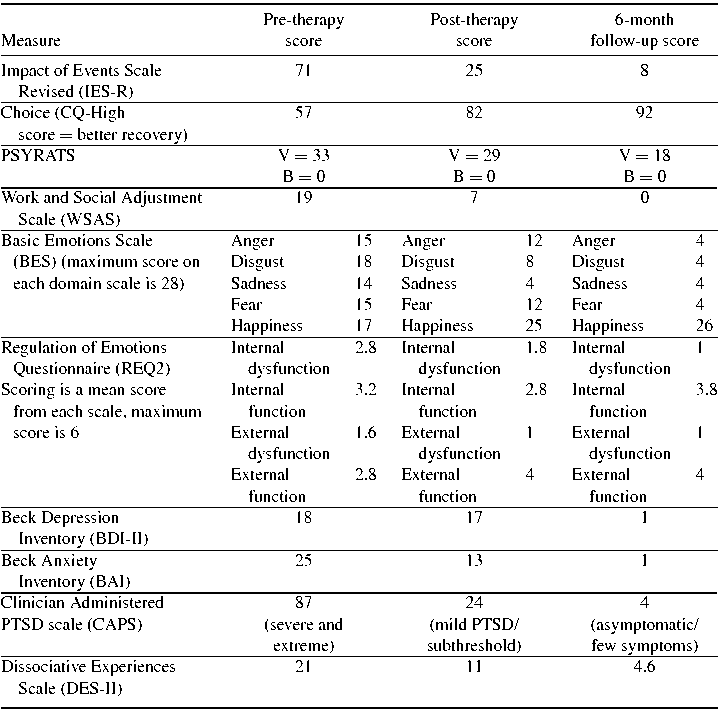
Sarah completed the standard set of measures and initial scores on these indicated the presence of significant symptoms of post-traumatic stress and anxiety. Her scores on the DES-II did not indicate high levels and the need to adapt therapy to manage dissociation was not indicated. In addition, the BES and REQ showed higher scores on negative emotions and dysfunctional emotional self-regulation. Table 1 summarizes all the measures at the three assessment points.
Sarah's pre-therapy, post-therapy and 6-month follow-up scores

Intervention
Sarah had previously made links between her sexual trauma and her experience of hearing voices and reported that she needed to work on this trauma so that she could move on. Her main goals for therapy were to improve her mood and reduce how much the voice was troubling her (although ideally she wanted to get rid of the voice all together). Sarah also wanted to stop self-harming and wanted to get back to her old job as a support worker. A collaborative formulation was developed collaboratively with Sarah, based on the Ehlers and Clark model (Reference Ehlers and Clark2000). Module 3 involved working on building resources such as different ways to cope with the voice, emotional regulation techniques and asserting her needs to others. Common responses to sexual trauma were discussed. Imagery rehearsal therapy (IRT) was used in module 4 to help Sarah to rescript nightmares that were strongly linked to the traumatic memory. Module 5 helped Sarah to develop a safe place (imagery work) as well as resource development (EMDR protocol). EMDR using eye movements was used to help Sarah to process the sexual assault (first method approach; van den Berg et al., Reference van den Berg, van der Vleugel, Staring, De Bont and de Jongh2013).
Reliving work was also facilitated. This was completed, at Sarah's request, to assist her to process a particular difficult aspect of her trauma (see protocol by Foa et al., Reference Foa, Hembree and Rothbaum2007). The final module looked at helping Sarah to continue to repair her reputation (to help reduce feelings of shame). Sarah identified an interest in being involved in service user groups, staff training and has talked about being able to tell her recovery story to help others.
Sarah attended a total of 33 sessions plus one follow-up session 6 months after ending therapy.
Outcomes
Measures
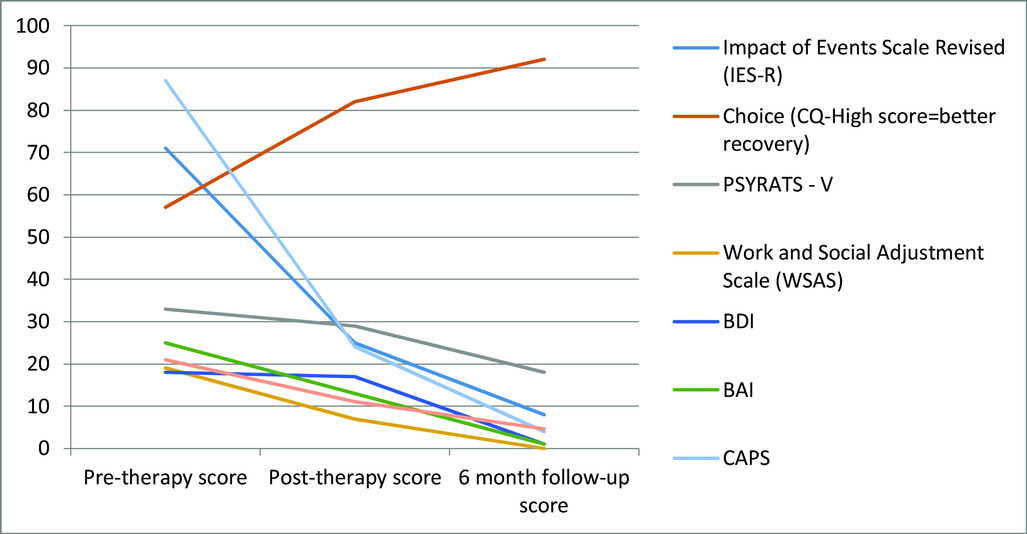
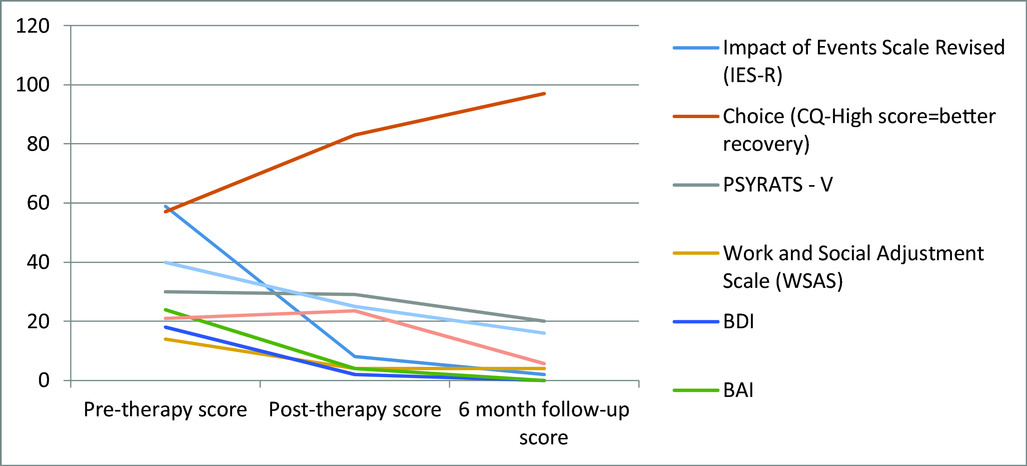
Sarah's scores on the measures of distress reduced from baseline to the end of therapy. Symptom reduction measures showed a reduction in symptoms of post-traumatic stress, depression and anxiety. Also, improvements were found on the Choice measure. These improvements continued at 6-month follow-up and in addition, her PSYRATS score showed larger improvements at 6-month follow-up compared with post-therapy. In addition, the CAPS score was asymptomatic.
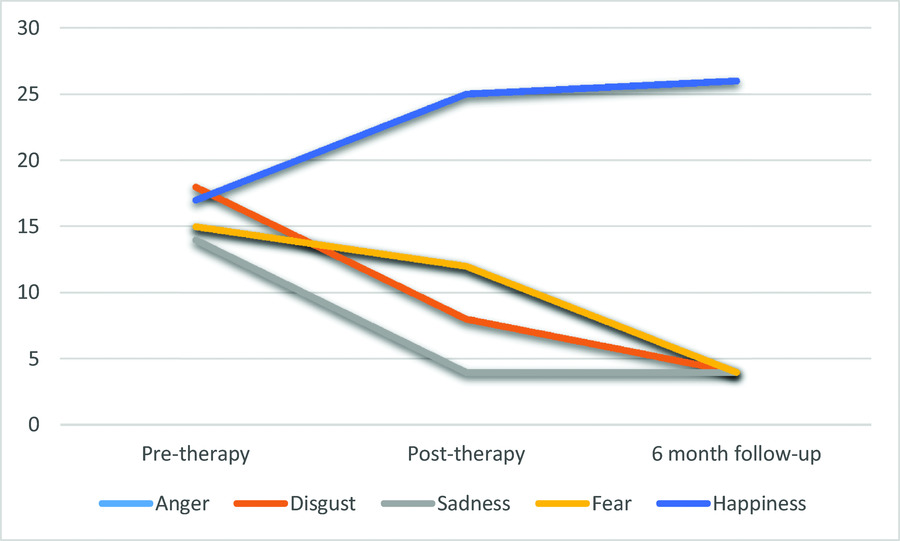
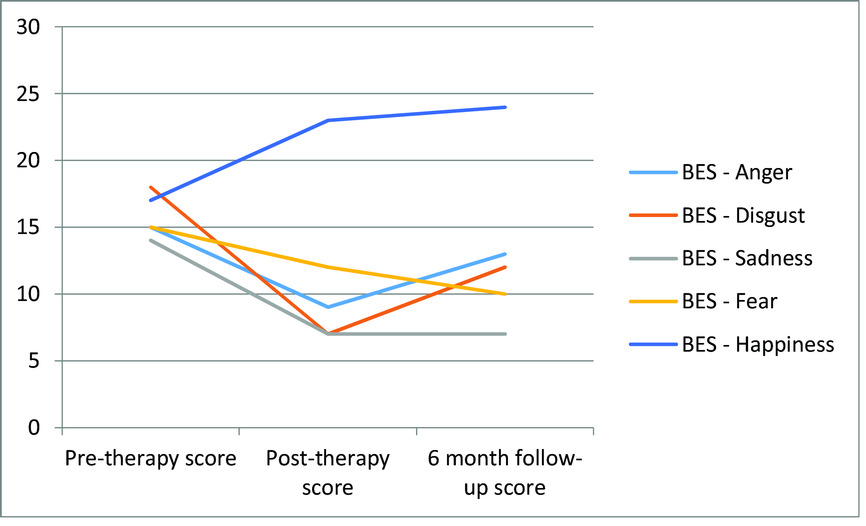
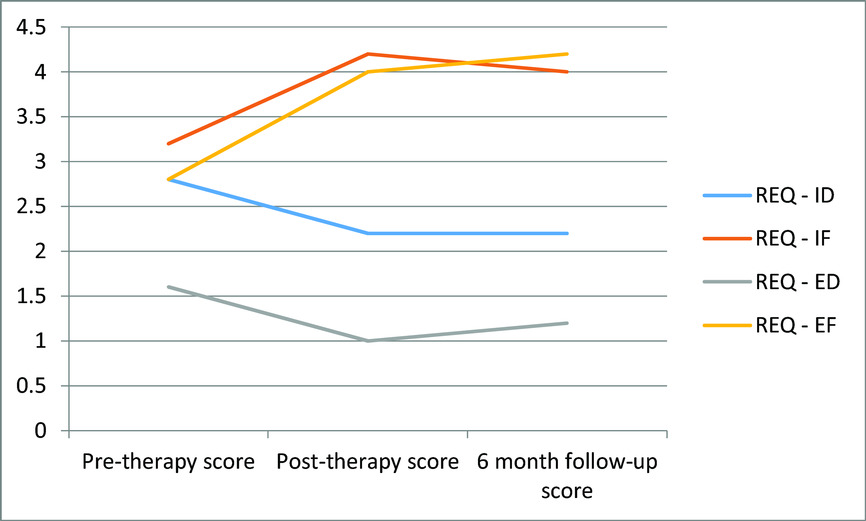
The BES and REQ also showed a reduction in negative emotions and dysfunctional emotional strategies. An increase was found in functional emotional strategies and also happiness. This was maintained or improved at 6-month follow-up (see Figs 1–3).
Sarah's pre, post and follow-up scores

Sarah's pre, post and follow-up scores (Basic Emotions Scale). Scores on Anger and Fear were identical.

Sarah's pre, post and follow-up scores (Regulation of Emotions Questionnaire)

The SRS showed a slightly lower score for the first session then the highest possible score for all future sessions. This was explored with Sarah and she reported that she was expecting to have to talk about her trauma during the first session (which didn't occur). Overall, these scores demonstrate good engagement.
Overall outcomes
Sarah had managed to improve the quality of her life significantly (having returned to work, playing sports, engaging in an active social life, planning for the future) and reported being more able to cope with her voices and the memories of the trauma. She talked about the usefulness of having her experiences validated and of understanding some common experiences during and after sexual abuse and would have liked to help others to go through this process. After therapy had finished, Sarah told her case manager that she had not been taking her anti-psychotics for the past year. Sarah has recently been discharged back to her GP.
Case Study 2: Katy – CBT-T and EMDR second and third methods
Presenting problem
Katy was 17 years old and lived with her parents. She came into the service after being in different adolescent inpatient units. She reported that she heard many different critical voices and saw visions that others could not see (which started when at school). She had history of self-harm and suicide attempts. Katy talked about being bullied throughout school and experienced trauma while on the adolescent units. She experienced flashbacks, dissociation/zoning out, extremely poor sleep, low mood, shame and anger.
Assessment and measures
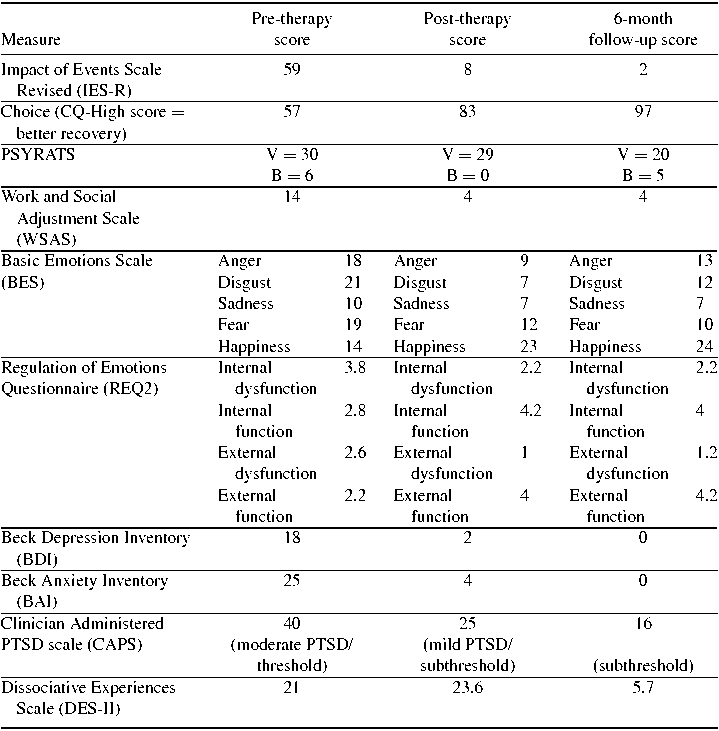
Katy also completed the standard assessment. Her post-traumatic stress symptoms were moderate but she displayed significant anxiety and depression. Her scores on the DES-II did not indicate high levels and the need to adapt therapy to manage dissociation was not indicated. Her BES and REQ scores were also characterized by negative emotions and dysfunctional emotional coping strategies. Table 2 summarizes all the measures at the three assessment points.
Katy's pre-therapy, post-therapy and 6-month follow-up scores

Intervention
Katy talked about multiple traumas and her formulation work identified that her voices and hallucinations were indirectly linked to these traumas (via her core beliefs). Katy also reported strong imagery of future catastrophe/flash-forwards (e.g. attempting to take her own life again). The use of the EMDR case conceptualization helped to point to the use of the second and third EMDR methods (van den Berg et al., Reference van den Berg, van der Vleugel, Staring, De Bont and de Jongh2013). Katy's goals for therapy changed throughout and included focusing on sleep and nightmares, developing self-esteem, living with the voices and hallucinations and dealing with traumatic memories.
Katy had already worked on emotional regulation techniques while on an inpatient unit so these techniques were revised (she reported the most useful was mindfulness). Some time was spent working on Katy's interpersonal effectiveness skills and communicating her needs to her parents. The therapist also explored different ways to cope with the voices and visual hallucinations. IRT was used to help Katy to rescript nightmares that were linked to her hallucinations and traumatic memories. Module 5 consisted of using PE to process her two most distressing memories (one was an unwanted sexual experience and the other was of being restrained while on an inpatient unit after trying to end her own life). The EMDR second method (using hand pulsars for the bilateral stimulation) was used to process memories connected to Katy's core beliefs (I am weak, I am a disappointment) which were linked to her unusual experiences and other current difficulties. The EMDR third method was used to process flash-forwards. The final module focused on helping Katy to keep building up her more adaptive beliefs that emerged during therapy (I am stronger than I thought, I am good enough).
Katy was seen for a total of 32 sessions.
Outcomes
Measures
Katy's scores on the measures show improvements in scores for all questionnaires apart from the DES-II and only a very small improvement on the PSYRATS voices questionnaire. The most striking improvements were on the IES-R, BDI, BAI and WSAS showing a reduction in post-traumatic stress, depression, anxiety symptoms and an improvement in daily functioning. At 6-month follow-up, her CAPS score was below the clinical cut-off for clinically significant symptoms of PTSD.
On the BES, sustained improvements were found with reducing scores on the subscales of Fear and Sadness, and a sustained increase in happiness. Post-therapy, the scores on Disgust and Anger had reduced but had increased almost to pre-therapy levels within 6 months. On the REQ, maintained increases in both external and internal functioning were found and sustained reductions in the respective dysfunction scores from pre-therapy to 6-month follow-up (see Figs 4–6).
Katy's pre, post and follow-up scores

Katy's pre, post and follow-up scores (Basic Emotions Scale)

Katy's pre, post and follow-up scores (Regulation of Emotions Questionnaire)

Katy's scores on the session rating scale were similar to Sarah's with slightly lower than maximum score at first appointment but then the maximum score for the remaining appointments.
Overall outcomes
Katy reported that she now experienced much less distress from her trauma/aversive life event memories and was starting to build up more positive beliefs about herself. She stated that the trauma therapy helped her to change how she felt about her voices and visual hallucinations and she felt she was more able to accept them and to carry on with her life. She had not made any attempts at taking her own life in the past year and had reported that she felt more confident about her ability to cope with life. Katy reported that her relationships in her family had improved and Katy said she felt more hopeful for the future. Katy had plans to go to university in the future.
Summary of intervention and outcomes for both service users
Within module 5 both clients were given the choice of starting with TF-CBT, which included prolonged exposure (Foa et al., Reference Foa, Hembree and Rothbaum2007) or EMDR (Shapiro, Reference Shapiro2001). In the present study, a significantly larger amount of preparation work (modules 1–4) was completed. They were both offered and took up a combination of TF-CBT and EMDR, as guided by a collaborative framework including a shared formulation.
Overall, the two service users demonstrated clear benefits from engaging in trauma-focused psychological intervention. This was evidenced by their improvement in functioning as well as clinically significant reductions in the assessment measures used within the service.
Discussion
The aims of this case series were to investigate how feasible, acceptable and useful TF-CBT and EMDR are for young people with experiences of trauma and psychosis, within a phasic treatment approach.
For both Sarah and Katy, positive outcomes were achieved by the end of therapy and also at 6-month follow-up. The outcome measures have demonstrated clinically significant reductions on measures of mood and post-traumatic stress reducing to below caseness thresholds. The use of the BES and REQ indicated improvements in positive emotions and coping strategies for both service users. However, for one of the case studies (Katy) the scores on anger and disgust increased, although a number of life events and historic relational difficulties may well account for this. Both service users were positive about their therapy experience and felt it had helped them to move on. The qualitative feedback included: ‘I would like to tell others that if they are thinking about trying this therapy, they should stick with it. Even though it is a lot of commitment and hard work, it pays off’ and ‘The stabilization and safety part was essential in preparing me to face the more difficult parts of trauma therapy’.
The findings of this study indicated that both TF-CBT and EMDR have been useful for both clients (used in an integrated way, incorporating other approaches to psychosis such as ways of managing distressing voices). The phasic approach felt containing for both the client and the therapist and allowed time to build up the clients’ understanding and coping skills so that they felt more able to face their traumatic experiences.
The aims of the study were met in that both service users were able to engage with the intervention across the modular approach (aims 1 and 2). The intervention offered was acceptable (aim 3) as evidenced by their session rating scale and completion of all the assessment measures.
Links with previous research
The results from this study show some similarities to the T-TIP and RCT studies done in Holland (van den Berg et al., Reference van den Berg, van der Vleugel, Staring, De Bont and de Jongh2013) in that trauma-focused approaches seem to be feasible and acceptable for some service users with psychosis. In comparison with the Dutch studies, a significantly larger amount of preparation work (modules 1–4) was done in these two cases (the rationale for this is given in the introduction). They were both offered and took up a combination of TF-CBT and EMDR and neither had a diagnosis of co-morbid PTSD, although both had symptoms suggestive of PTSD ranging from moderate to severe on the CAPS IV assessment. On reflection, given that the therapist had not previously treated trauma in psychosis using TF-CBT or EMDR and was currently undertaking EMDR training, additional sessions were provided in order to trial this approach and to gain confidence. The authors of this paper would therefore aim to adapt this approach in future (using less sessions).
The results from this discussion point to a need to focus on treating trauma in psychosis for clients who feel ready to do so.
Limitations
There are some limitations to this study. The approaches were only trialled with two participants. However, Katy and Sarah both have complicated life stories and a wide range of difficulties which do seem to match the majority of other early intervention service clients. The therapist administered most of the outcome measures; the scores are therefore more at risk of being biased by the therapeutic relationship and/or the need to please the therapist or the therapist scoring the questionnaires to fit in with the hoped-for findings. There was no use of a control group so assumptions cannot be made that the changes seen were down to the therapy alone. Both Katy and Sarah had input from their case managers (who had been trained in psychosocial interventions) and so it is likely that their sessions contributed to the positive outcomes. Sarah and Katy were seen for a year each; this was necessary to allow time to explore the usefulness and impact of the different approaches/techniques. It was also felt that the length of therapy enabled the development of a strong and trusting relationship with the therapist so that the clients felt able to talk about the very worst parts of their traumatic experiences. NICE guidelines currently recommend that service users are offered between 16 and 20 sessions of CBT (NICE, 2005).
It is worth noting the setting in which this therapy took place. The clients were seen at a trauma service clinic which was set up for this purpose (calm, quiet, welcoming waiting area, high level of input and support from administrative staff at reception). Sarah and Katy both commented on how helpful it was to come for therapy there and that they felt more able to work on their aversive or traumatic experiences than in other settings (EIP Services home visits or busy community clinics). The therapist received intensive weekly one-to-one supervision as well as weekly peer support discussions. This structure supports therapist efficacy as well as promoting a supportive culture to prevent vicarious traumatization and burnout. These factors would be difficult to replicate in every day early intervention or community mental health services and so this limits the degree to which we can extrapolate from these findings. This raises questions about ways of working in early intervention services and the possibility of moving away from the culture of mainly offering home visits (with the rationale of reducing distress and stigma linked to being seen in mental health clinics).
A further issue relates to the extensiveness of therapy. There were five modules plus the use of medication to reduce nightmares. In addition, input from the EIP service was not recorded in detail for the purposes of the current study. Some components might be shortened or removed with no detrimental effect and this cannot be determined from the present study. Optimizing medication would have potentially impacted on service user wellbeing and as such could also be considered.
Future research
Future research could involve a larger feasibility study on the use of the TF-CBT and/or EMDR for young people with trauma and psychosis (in early intervention services), within the modular approach. Clearly, a more extensive trial would be required in which outcomes could be compared with patients receiving treatment as usual in EIP services. Following on from this, a multi-centre randomized trial would help to contribute to the evidence base for these approaches and could potentially shape future guidance on therapy for people with experiences of trauma and psychosis. Qualitative studies on service users’ experiences of receiving these approaches, with specific focus on EMDR given its infancy in the psychosis area, would provide more detailed and meaningful information on what aspects of the therapy have an impact and which are the most useful. This would build on previous studies on service users’ experiences of trauma-focused therapy such as Lowe and Murray (Reference Lowe and Murray2014).
Conclusion
In summary, this case series and the small number of other mentioned studies are starting to build up evidence of significant positive outcomes for service users with trauma and psychosis, receiving trauma-focused approaches. The use of EMDR with psychosis is still very much in its infancy and more research needs to be done to explore its feasibility, acceptability and effectiveness as well as examining the underlying mechanisms involved in any progress made in therapy. The culture of professionals feeling worried about working with trauma in psychosis is starting to shift but still has a long way to go. The use of phasic/modular approaches also warrants further exploration and could provide a useful framework to help service users to feel ready to face the aversive or traumatic life events that have contributed to their current difficulties and distress.
Main points
(1) Service users who present with trauma and psychosis can have successful treatment for trauma.
(2) Trauma-focused approaches for people with psychosis may require additional safety and stabilization intervention prior to trauma-focused therapy.
(3) People with psychosis do tolerate trauma-focused interventions.
Ethical statement
All authors have abided by the Ethical Principles of Psychologists and Code of Conduct as set out by the APA. The service users included in this publication provided their informed consent. The case studies were undertaken as part of routine clinical practice.
Conflicts of interest
The authors have no conflict of interest with respect to this publication.
Financial support
This research received no specific grant from any funding agency, commercial or not-for-profit sectors.
This study was designed to evaluate the impact of providing trauma-focused psychological interventions to service users presenting to an early intervention in psychosis service who also had a history of traumatic experiences.
The aims were threefold:
(1) Does the LTSS modular approach translate appropriately to young people with psychosis (i.e. to ensure that the interventions within the modular approach could be tailored to both service users’ priorities and goals, and evidence-based practice)?
(2) Do the safety and stabilization interventions (initial phases of modular approach) prepare service users to manage the demands of exposure-based interventions (second-line interventions: PE, EMDR)?
(3) Is the intervention offered acceptable to the participants and were they able to complete the assessments and intervention without negative consequences?
Two service users were provided with trauma-focused interventions following referral from EIPS. This paper reports the assessment, intervention and outcomes for two cases involving a modular intervention for service users affected by both psychotic and traumatic stress symptoms.




Comments
No Comments have been published for this article.