Introduction
Removal of antibiotic from adult olive fruit fly diet and replacement of cellulose powder from larval diet
The olive fruit fly Bactrocera oleae (Rossi) (Diptera: Tephritidae) is the only reared tephritid that incorporates an antibiotic in its adult diet. The standard solid adult diet (Tsitsipis and Kontos, Reference Tsitsipis and Kontos1983) routinely contains 470–500 ppm ampicillin or streptomycin. This practice originates from the work of Hagen et al. (Reference Hagen, Santas and Tsekouras1963) who initiated olive fruit fly rearing.
The significance of symbiotic fauna to the insects has been demonstrated in numerous studies, concerning nutrition, metabolism and development (Vanderzant, Reference Vanderzant1974; Treves and Martin, Reference Treves and Martin1994; Zurek and Keddie, Reference Zurek and Keddie1996; Wilkinson and Ishikawa, Reference Wilkinson and Ishikawa2000; Behar et al., Reference Behar, Yuval and Jurkevitch2005; Ben-Yosef et al., Reference Ben-Yosef, Jurkevitch and Yuval2008), oogenesis and fertility (Caillaud and Rahbe, Reference Caillaud and Rahbe1999; Dale and Welburn, Reference Dale and Welburn2001; Zchori-Fein et al., Reference Zchori-Fein, Borad and Harari2006), flight activity (Grenier et al., Reference Grenier, Nardon and Nardon1994), tolerance of heat stress (Montllor et al., Reference Montllor, Maxmen and Purcell2002) and defence against pathogen invasion (Dillon and Charnley, Reference Dillon and Charnley1986; Gilliam, Reference Gilliam1997; Dillon et al., Reference Dillon, Vennard, Buckling and Charnley2005). To date, there are no published results (except personal communication) regarding any positive or negative effect from adding antibiotic in the rearing of adults. In this context, in this study, the effect of removal of antibiotics from olive fruit fly adult diet on colony survival and growth was examined. Because long-maintained olive fruit fly laboratory colonies have been subjected to alterations and adaptation through selective pressures of their artificial environment, any positive or negative effect of antibiotic presence was assessed during new colonization of the fly. Colonization occurred using wild olive fruit flies collected by two methods: adult flies collected using modified McPhail traps and larvae collected from infested olive fruit. A stable antibiotic-free strain was created by the trapped adult methodology, and its P, F1 and F8 were studied and/or evaluated against the standard ‘Lab’ strain. Comparisons involved the performance of the adult stage and, in some cases, of the immature stages as well.
Cellulose powder (bulking/texture agent) has been used from the beginning of the olive fruit fly larval diet development. Over the years, cellulose powder has been preferred over other bulking agents such as agar powder, grounded corn cob and paper pulp (Tzanakakis, Reference Tzanakakis1971). Although it gives good results in terms of egg–pupa recovery, it is expensive and relatively hard to obtain. To improve the larval rearing system, it is very important to replace this inert material with another that is more readily available and inexpensive. Therefore, various tests were conducted to simplify the preparation and reduce the cost of the fly larval diet by substituting the bulk carrier (powdered cellulose) with a reusable substrate, mainly synthetic sponge cloth. An alternative approach was greatly reducing the use of cellulose by incorporating it only into the starter component of a starter–finisher system.
Microflora associated with wild and laboratory strains of the olive fruit fly
By identifying the bacterium Bacillus (Pseudomonas) savastanoi, Petri (Reference Petri1910) described the first ‘bacterial symbiotic association’ in the olive fruit fly. Since then, several researchers have reported the presence of ‘bacterial symbionts’ in this pest species. Most of these studies resulted in contradictory findings regarding the number and species of bacteria that form its symbiotic microflora. However, they clearly indicated that natural and laboratory populations differ in their microflora, and also that the microflora plays a significant role in host physiology (Hagen et al., Reference Hagen, Santas and Tsekouras1963; Fytizas and Tzanakakis, Reference Fytizas and Tzanakakis1966; Hagen, Reference Hagen1966; Yamvrias et al., Reference Yamvrias, Panagopoulos and Psalidas1970; Tsiropoulos, Reference Tsiropoulos1983, Reference Tsiropoulos, Anderson and Leppla1992; Konstantopoulou et al., Reference Konstantopoulou, Economopoulos and Manoukas1996, Reference Konstantopoulou, Economopoulos and Raptopoulos1999; Capuzzo et al., Reference Capuzzo, Firrao, Mazzon, Squartini and Girolami2005). In this study, we tried to identify the major bacteria within olive fly pupae collected from different olive varieties and seasons of the year, using simple and reliable molecular techniques.
Evaluation of the enhanced green fluorescence protein transgenic olive fruit fly strain
Despite extensive research for more than 40 years, a sexing strain of olive fly is still unavailable for sterile insect technique (SIT) applications. Recent advancements in molecular techniques and DNA recombination provide a powerful tool for developing such a strain. In December 2006, from the Laboratory of Insect Molecular Genetics of the Institute of Molecular Biology and Biotechnology (Heraklion, Crete), our laboratory received for evaluation the Series 12 of a transgenic olive fruit fly (enhanced green fluorescence protein (EGFP)) strain (Koukidou et al., Reference Koukidou, Klinakis, Reboulakis, Zagoraiou, Tavernarakis, Livadaras, Economopoulos and Savakis2006). This was the first transgenic olive fruit fly strain ever produced, and the evaluation of vital parameters of its biology was considered important in order to elucidate potential negative traits resulting from the transgenesis process.
Materials and methods
Test with wild flies from McPhail trap catches
Trials were conducted with wild olive fruit fly adults caught in the field using modified McPhail traps (IAEA, 2003). Female survival and fecundity, with or without antibiotic, were measured in the initial ‘P’ generation trapped adults as well as in the following ‘F1’ generation adults that were bred from the cages of the ‘P’ generation. The percentage of egg–pupa recovery and percentage of adult emergence, with or without antibiotic, were also measured in the two adult generations.
Ten plastic McPhail traps with transparent top half and yellow bottom half were modified to trap the parental adult population in the Heraklion olive plantations, Crete, Greece in September 2006. The traps were stuffed with a synthetic sponge impregnated with 4% protein hydrolysate water solution (Entomela™, Phytophyl Stavrakis S.A., Schimatari Viotia GR-32 009, Greece) so that the flies would not drown. Olive fruit fly adults were collected daily with efficiencies of up to 250 flies per day. They were divided into two treatments, with (0.5%, 472 ppm) and without antibiotic (streptomycin) in their food, of three cages each. Eighteen pairs of flies were placed in each cage (30 × 30 × 30 cm wood and wire screen cages) for the ‘P’ generation and were provided with adult food (sugar, hydrolysed brewer's yeast and dried egg yolk powder; Tsitsipis and Kontos, Reference Tsitsipis and Kontos1983), water and two ceresin wax egg-laying domes (5 cm height, 3 cm diameter) in each cage (Tsitsipis, Reference Tsitsipis1977). Each day for 13 days, egg production in the ceresin domes was measured, and dead flies were counted and removed. Six consecutive egg collections were incubated for 48 h on 0.3% propionic acid–water solution; subsequently, the eggs were seeded onto standard ‘T’ larval medium (Tzanakakis, Reference Tzanakakis1971) to assess percent egg–pupa recovery and percent adult emergence as well as to produce the next ‘F1’ generation adults. Cages were placed in a randomized design on shelves and rotated daily to compensate for differences in light intensity. Photoperiod was 14L:10D; to simulate dawn and dusk, light was reduced 50% for 1 h at the beginning and 1 h at the end of photophase. Temperature was kept at 25 ± 1 °C and relative humidity at 50 ± 5%. In F1, three cages per treatment (with and without antibiotic) were used again, but with 12 pairs of flies in each cage. Egg production and survival were measured for 11 days. All other conditions were similar to the P trial. The flies of the antibiotic-free treatment were bred until F8 when they were compared with F498 of the standard ‘Lab’ strain.
Test with wild flies from infested fruit
To collect olive fruit flies from infested olives, sufficient quantities of fruit were collected in January 2007 from four olive plantations in Heraklion, Crete, and placed on screen trays so that third-instar larvae would fall into, and then pupate in, sawdust. Emerging adults were divided into two groups: with antibiotic and without antibiotic in their food. For comparison, a third treatment of laboratory-reared F494 ‘Lab’ standard strain flies of the same age was included in the test. Four replicate cages per treatment were used, each containing 30 pairs of flies. Females in all treatments were provided with ceresin wax/mesh cones 24 cm high and 8 cm base diameter for oviposition (Tsitsipis, Reference Tsitsipis1977). Survival and egg production were measured over 44 and 26 days, respectively (egg measurements started when oviposition commenced in all cages). All other conditions were similar to the previous test.
Comparison of F8 ‘antibiotic-free’ strain with F498 of the standard ‘Lab’ strain
The antibiotic-free treatment of the first test (adults from McPhail traps), due to its higher egg production compared with wild flies obtained as larvae, was easily colonized, and the performance of its F8 was compared with F498 of the standard laboratory-reared flies. Percent egg hatchability of each strain was measured in six replicates, by incubating 100 eggs per replicate and checking non-hatched eggs after 5 days. Duration of the larval stage (time required for 50% of larvae to reach the pupal stage), percentage of egg–pupa recovery, pupal weight (2 days before emergence) and percentage of adult emergence were measured in three replicates per treatment by seeding trays of larval medium at the standard density of 10 eggs/g of diet. Adult survival and egg production were measured in six replicate cages per strain, each containing 30 pairs of flies of the same age. Females were provided with ceresin wax/mesh cones for oviposition. Data were recorded over 19 days. All other conditions were similar to the previous tests.
Results of the tests for the immature stages were analysed in one-way ANOVAs (SPSS, 1999). A Kaplan–Meier survival analysis was used for the daily recordings of adult data (survival), and the one-way ANOVA for egg production. Before the analysis, data were tested for the normality and homogeneity of variance assumptions.
Replacement of cellulose with sponge cloth in olive fruit fly larval diet, starter–finisher system
The standard solid larval diet (Tsitsipis, Reference Tsitsipis1975) was compared with liquid sponge cloth (Wettex®, commercially available) diets (Mittler and Tsitsipis, Reference Mittler and Tsitsipis1973), containing all the materials except cellulose and different concentrations of potassium sorbate (100, 150, 200, 250 and 300% of the standard control diet), maintaining the standard dose of nipagin. For all treatments, eggs collected from the main lab-reared colony were incubated for 24 h and seeded into the larval medium with a density of 10 eggs/g of medium. For the starter–finisher system, 10 × density (100 eggs/g of larval medium) was used during the starter phase (standard solid diet), and subsequently the larvae were moved into the finisher liquid sponge substrate for the finisher phase. The egg–pupa recovery was measured, and differences among treatments were detected using the one-way ANOVA (SPSS, 1999).
Bacterial species associated with the olive fly
In this study, the microorganisms associated with different strains of the olive fruit fly were examined, looking for differences in the microflora among wild and laboratory populations, differences that might affect the pest's biology. Bacteria were isolated from wild pupae obtained in different climatic locations and seasons of the year, and from olive fruit cultivars as well as from laboratory strains. After external sterilization, pupae were homogenized and cultivated in the Luria-Broth medium (Chrysargyris et al., Reference Chrysargyris, Bourtzis and Economopoulos2007). Single bacterial colonies were examined macroscopically, and different patterns were obtained from each strain. The colonies were subsequently identified with the use of molecular analysis of the 16S rRNA (Weisburg et al., Reference Weisburg, Barns, Pelletier and Lane1991), using specific primers and enzymes appropriate for bacterial DNA amplification. The final product was sequenced following a precipitation cleaning process in order to identify the bacterial species.
EGFP strain evaluation
The new transgenic olive fly strain was reared in two lines, expressing the gene ‘moderately’ and ‘intensely’, to avoid homozygosis with potential lethal effects, and was adapted without difficulty in mass-rearing conditions. Evaluation tests compared the following parameters of the EGFP strain with the standard ‘lab’ strain: egg production, percent egg hatchability, duration of larval stage, percent egg–pupa recovery, pupal weight, percent adult emergence and adult survival. Various tests were conducted similar to the ones described in the antibiotic removal study, and ambient conditions were also similar to the ones described before.
Results and Discussion
Removal of antibiotic from adult olive fruit fly diet and replacement of cellulose powder from larval diet
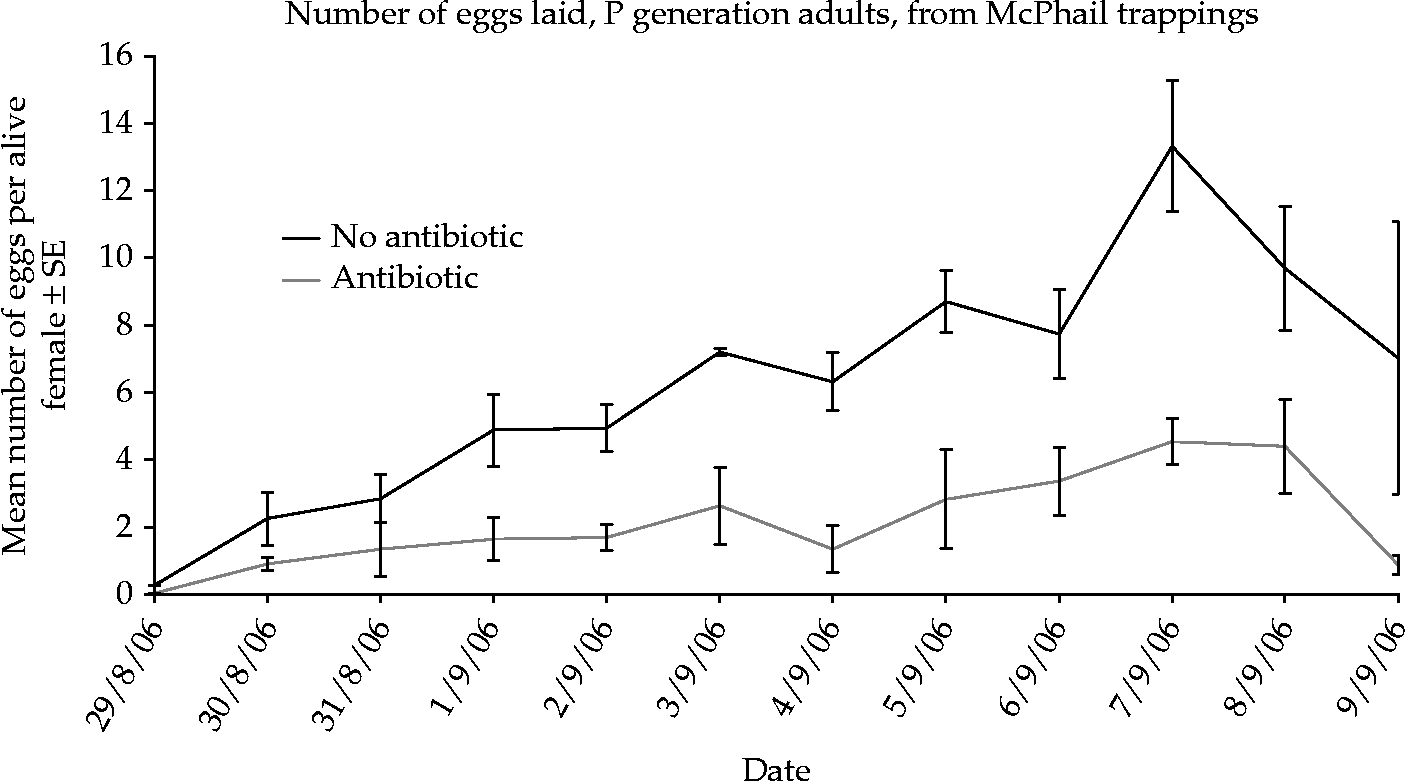
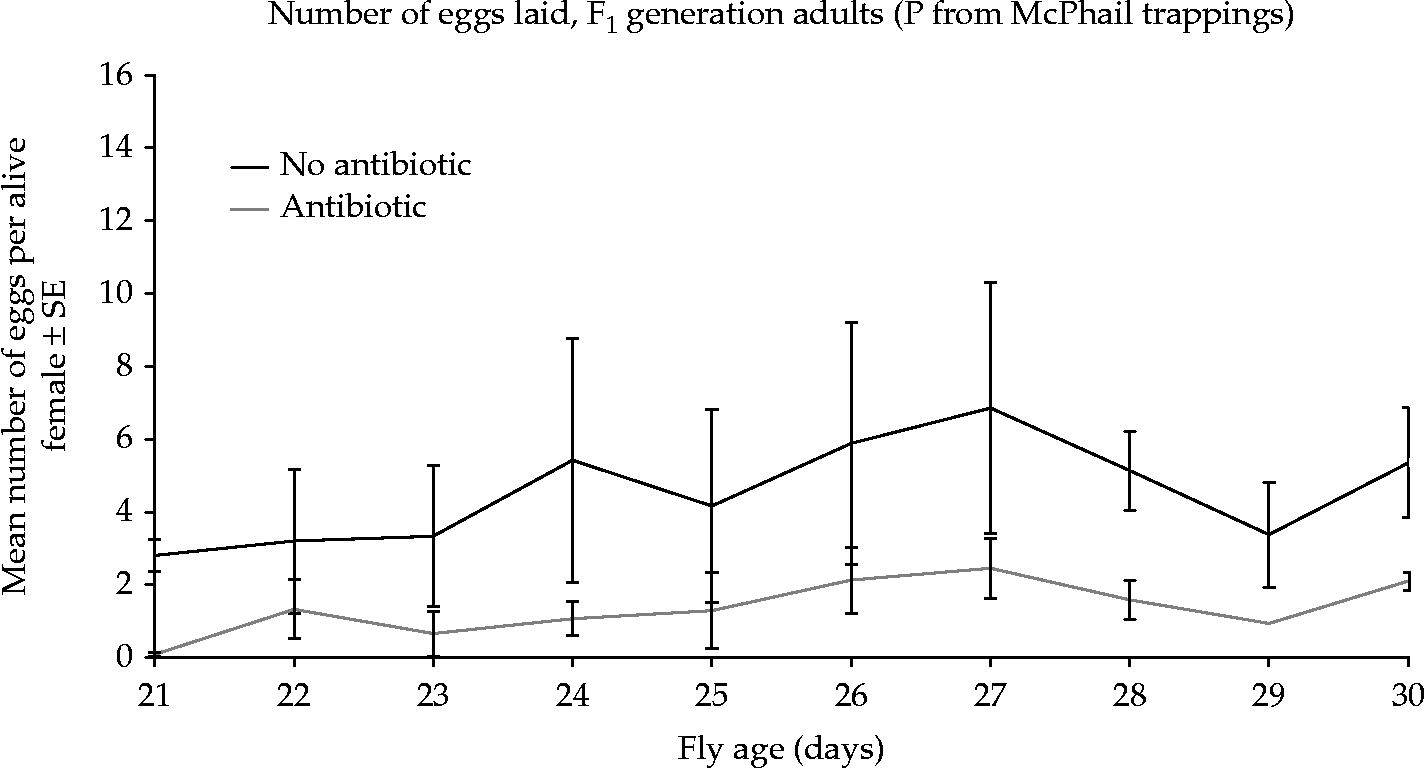
The data indicated that it is feasible to remove the antibiotic (streptomycin or ampicillin) from the adult diet without any adverse effect on survival and fecundity. Feeding or not feeding an antibiotic to wild flies collected by different methods (McPhail traps or infested fruit) did not affect their survival in the laboratory. Also, percent egg–pupa recovery and percent adult emergence were not affected. Wild adults caught with McPhail traps, if kept without antibiotic, oviposited three to four times more eggs than those provided with antibiotic (Fig. 1), and this effect was noticeable in the next generation as well (Fig. 2). Furthermore, the colonization process proved to be easier when adult flies were used as founders rather than flies obtained as larvae from infested fruits. The colony that originated from adults eventually adapted successfully to the artificial rearing for at least eight generations, whereas the colony originated from larvae was discontinued after the first three generations, due to smaller egg production.
Mean number of eggs per live female per day on the egging substrates, with and without antibiotic, from wild olive fruit fly adults trapped with McPhail traps (initial ‘P’ generation). Reproduced from (Dimou et al., Reference Dimou, Rempoulakis and Economopoulos2010), with permission.

Mean number of eggs per live female per day on the egging substrates, with and without antibiotic, from olive fruit fly adults of the following ‘F1’ generation. Reproduced from (Dimou et al., Reference Dimou, Rempoulakis and Economopoulos2010), with permission.
In wild flies from McPhail traps or from infested fruit, adding or not adding antibiotic in the adult food did not appear to affect fly survival, at least during the period of observation. The survival of the immature stages, expressed as overall percent egg–pupa recovery and percent adult emergence, also did not appear to be affected. Moreover, an antibiotic-free strain of the fly has been colonized and maintained for more than eight generations without any apparent pathogen contamination/mortality. The overall results suggest that removing the antibiotic will not have any negative effects on colony survival and growth (Dimou et al., Reference Dimou, Rempoulakis and Economopoulos2010).
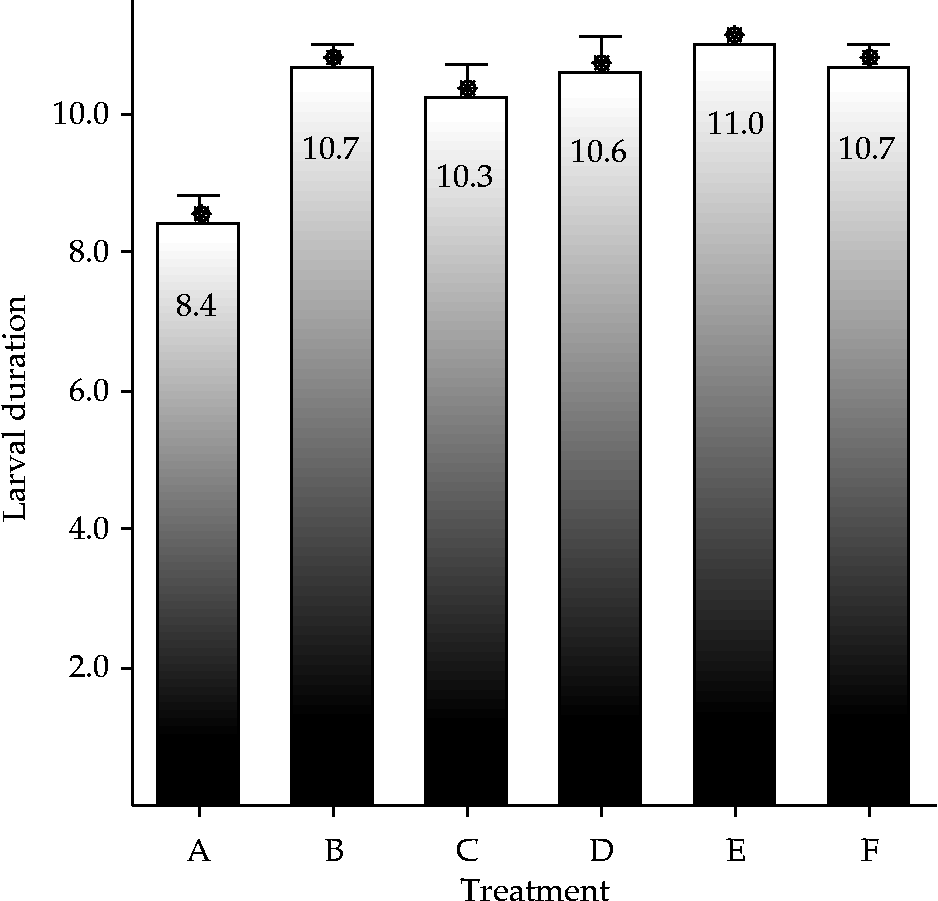
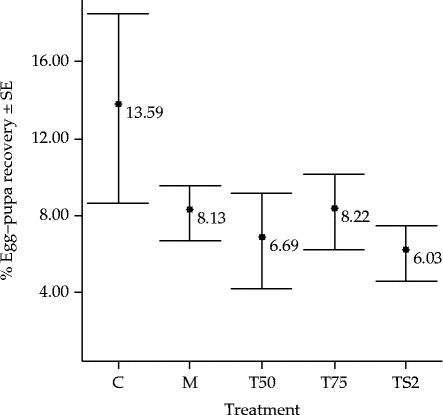
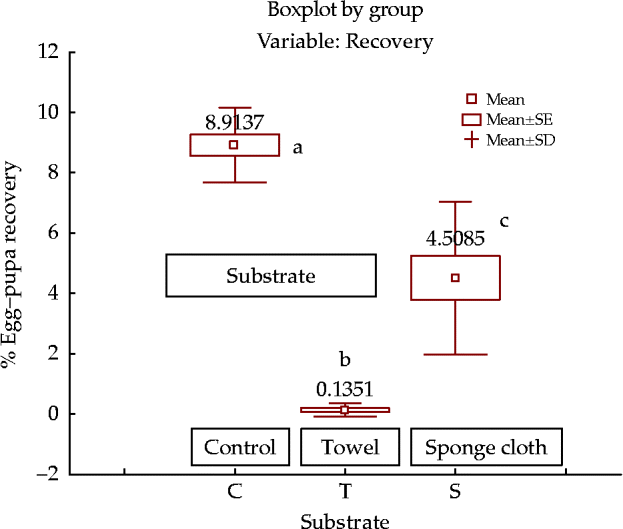
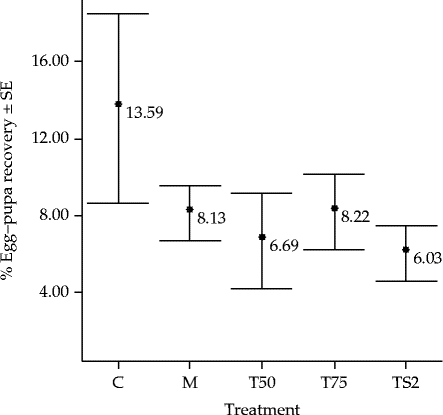
Replacement of cellulose powder by sponge cloth initially led to a prolonged larval development (prolonged by 1.5–2.5 days) (Fig. 3), severe mould problems and minimal percent egg–pupa recovery (Fig. 4). The mould problem was not resolved by gradually increasing the potassium sorbate concentration of the diet to 300%. Improvements were achieved only when a ‘liquid’ synthetic sponge diet was used as a finisher in a starter–finisher system with a standard ‘solid’ 3-day starter diet, but the percent recovery was still significantly lower than when using the standard control diet (Fig. 5).
Prolongation of the larval stage by 1–3 days observed with the liquid sponge cloth diets (B, C, D, E and F liquid diets with potassium sorbate concentrations at 100, 150, 200, 250 and 300% of the standard control diet, respectively; A = control solid diet). Each bar shows mean ± 1.0 SE. Bars show means.
Percent egg–pupa recovery values of liquid sponge cloth diets (C = control solid diet, M = Mittler's liquid diet (Mittler and Tsitsipis, Reference Mittler and Tsitsipis1973), T50 = liquid diet with preservatives at 50% of the solid diet, T75 = liquid diet with preservatives at 75% of the solid diet, TS2 = liquid phase of the most recent solid diet)
(colour online) Percent egg–pupa recovery of starter–finisher systems with a solid starter and a liquid finisher (C = standard single-composition solid diet, T = starter–finisher with cotton towelling as a liquid finisher, S = starter–finisher with a synthetic sponge cloth as a liquid finisher); bars with different letters differ at 0.05 level of significance (one-way ANOVA)
Microflora associated with wild and laboratory strains of the olive fruit fly
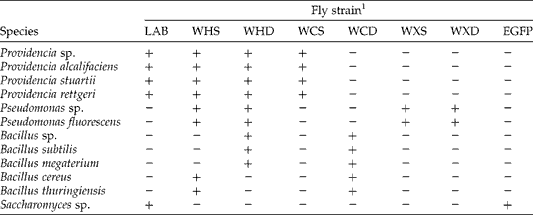
The molecular analysis (DNA extraction and 16S rRNA gene amplification) revealed the existence of several different bacterial species and fungi, and differences appeared to exist, among others, between laboratory and wild strains from different olive cultivars and seasons of the year (Table 1). A first conclusion might be that the microflora synthesis depends, among others, on the nutritive composition of the larval substrate fed to the different strains tested (Chrysargyris et al., Reference Chrysargyris, Bourtzis and Economopoulos2007).
Microorganisms isolated from different strains of the olive fruit fly by molecular analysis (reproduced from Chrysargyris et al., Reference Chrysargyris, Bourtzis and Economopoulos2007, with permission)
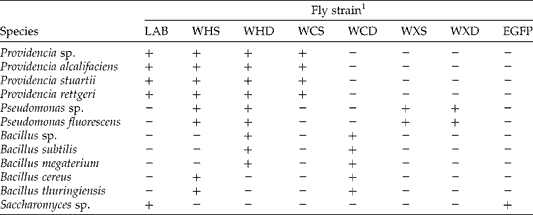
1LAB = laboratory strain flies; WHS, WHD = wild flies from olives (variety Koroneiki) of Heraklion region in September and December, respectively; WCS, WCD = wild flies from olives (variety Koroneiki) of Chania region in September and December, respectively; WXS, WXD = wild flies from olives (variety Chondrolia) of Heraklion region in September and December, respectively; EGFP = transgenic strain, constructed from the laboratory strain after the insertion of the EGFP gene.
Evaluation of the EGFP transgenic olive fruit fly strain
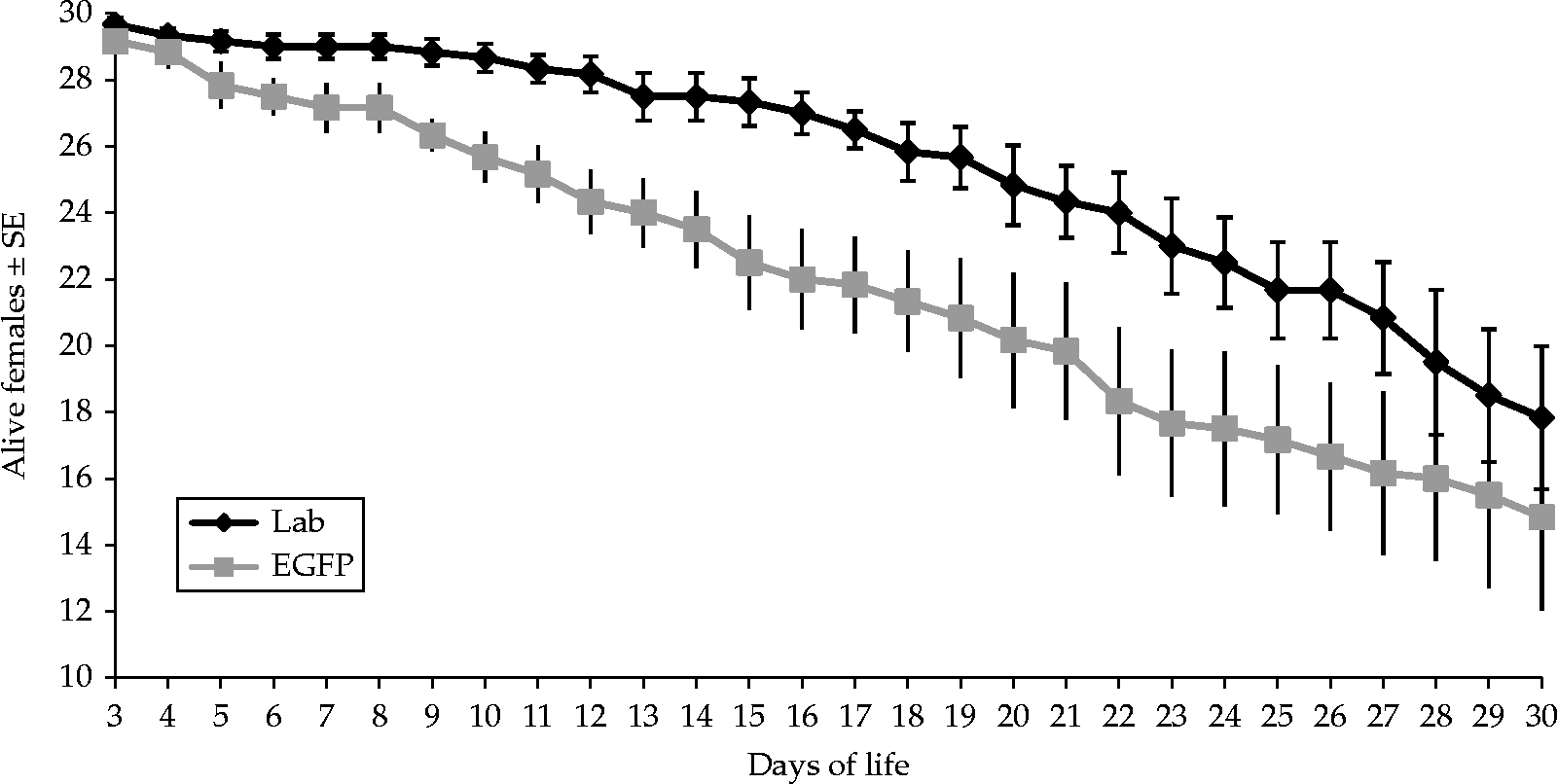
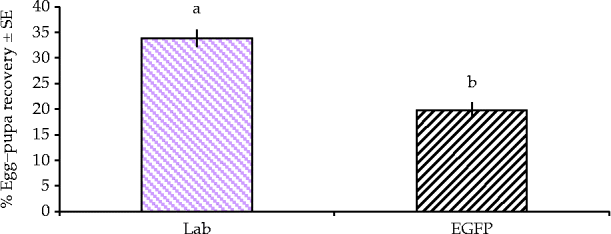
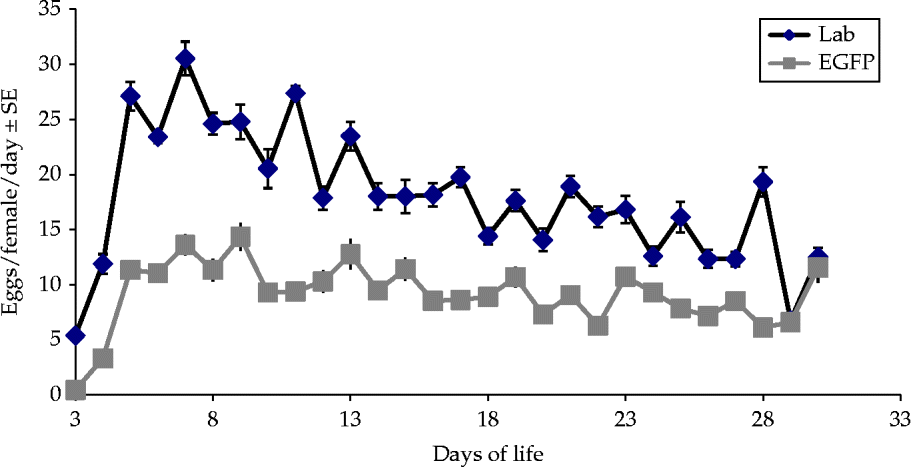
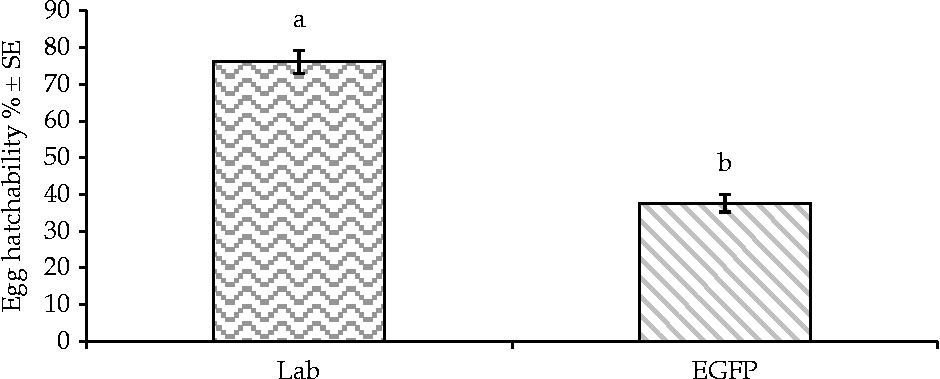
From the comparison of the transgenic EGFP strain with the standard laboratory strain, adult female survival (Fig. 6), percent egg–pupa recovery (Fig. 7), egg production (Fig. 8) and percent egg hatchability (Fig. 9) of the EGFP strain were found to be significantly lower than the standard ‘lab’ strain currently in use. The remaining comparisons did not reveal any significant differences thus not presented here. The findings indicate the absolute need for a careful approach to genetic-sexing strain development and evaluation for fitness quality when applying the sterile insect technique.
Female survival of the two strains, Laboratory (Lab) and transgenic (EGFP); six cages of each strain, 30 pairs of insects/cage, were used.
(colour online) Percent egg–pupa recovery of the two strains, Laboratory (Lab) and transgenic (EGFP); 4000 eggs for each strain were used. Different letters stand for statistically significant difference (t-test F= 36.85; df = 1; P< 0.001).
(colour online) Daily egg production by the females of the two strains, Laboratory (Lab) and transgenic (EGFP); six cages of each strain, 30 pairs of insects/cage, were used.
Percent egg hatchability of the two strains, Laboratory (Lab) and transgenic (EGFP); 1600 eggs of each strain were used. Different letters stand for statistically significant difference (t-test F= 99.79; df = 1; P< 0.001).
Summarizing the findings from this study, we can come to some suggestions regarding the olive fly diet, colonization attempts, microflora role and new genetic sexing strains construction with molecular methodologies. It is feasible to rear olive fly without antibiotics, thus reducing the selective pressure on the colony and achieve better results in terms of quality during the mass rearing of the insect for release purposes. Evidently, cellulose powder could be successfully replaced in the larval diet, and also antibiotics eliminated from the adult diet. The latter could, among others, reduce the drastic effect of colonization on the microflora associated with the wild olive fly. The wild fly microflora varied with the origin of the strain, and among others depends on the olive cultivar. Finally, the quality of genetic-sexing transgenic strains, developed for male-only releases, must be carefully evaluated for their fitness when applying the sterile insect technique.
Acknowledgements
The authors thank Mr I. Chahine for help in collecting the olive fruits, as well as the owners of the respective olive plantations. Parts of this work were supported by the EU Crete Operational Program 2000–2006 Measure 1.2, Project KP-20 and by the FAO/IAEA Coordinated Research Project on the ‘Development of Mass Rearing for African, Asian and New World Fruit Fly Pests in Support of the Sterile Insect Technique’. Critical comments and suggestions from two anonymous reviewers greatly improved this paper.