Background
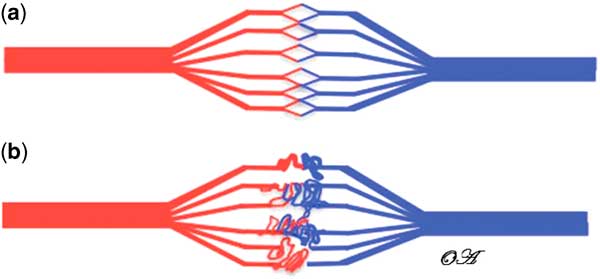
Sporadic paediatric idiopathic pulmonary arterial hypertension is uncommon and has rarely been ascribed to pathologic genetic variants in the activin A receptor type II-like kinase 1 (ACVRL1). ACVRL1 variants are implicated in the development of hereditary haemorrhagic telangiectasia with late-onset penetrance, such that paediatric pulmonary arterial hypertension may develop significantly before any overt symptoms of hereditary haemorrhagic telangiectasia.Reference Girerd, Montani and Coulet 1 , Reference Abman, Hansmann and Archer 2 Hereditary haemorrhagic telangiectasia manifests as progressive mucocutaneous telangiectasias, recurrent epistaxis, and the development of arteriovenous malformations that may affect multiple organs, including the lungs, liver, or brain (Fig 1).Reference Vorselaars, Velthuis, Snijder, Vos, Mager and Post 3 Other genetic variants implicated in hereditary haemorrhagic telangiectasia include variants in endoglin, SMAD-4, and growth differentiation factor-2.Reference Hernandez, Huether and Carter 4
AVM depiction ( a ) Normal capillaries. ( b ) AVM capillaries. AVM=arteriovenous malformation

There are three pulmonary manifestations of hereditary haemorrhagic telangiectasia: pulmonary arteriovenous malformations, pulmonary hypertension secondary to increased pulmonary blood flow from a high cardiac output state, and, rarely, pulmonary arterial hypertension.Reference Vorselaars, Velthuis, Snijder, Vos, Mager and Post 3 Pulmonary hypertensive crisis may be precipitated after minor procedures or owing to inter-current respiratory infections. With significant long-standing pulmonary artery dilation from pulmonary hypertension, compression of the left recurrent laryngeal nerve may occur, causing vocal changes.Reference Mulpuru, Vasavada, Punukollu and Patel 5 This was first described in 1897 by Norbert Ortner in an adult female with mitral stenosis and left atrial enlargement and is also reported in cases of aortic aneurysm, chronic obstructive pulmonary disease, and recurrent pulmonary embolism.Reference Mulpuru, Vasavada, Punukollu and Patel 5 We report a case of a 14-month-old boy with Ortner syndrome secondary to pulmonary arterial hypertension associated with a de novo ACVRL1 variant known to be associated with hereditary haemorrhagic telangiectasia.
Case presentation
A healthy 14-month-old boy presented with syncope in the setting of 4 weeks of progressive “noisy” breathing. The patient did not have a prior history of syncopal episodes, dyspnoea on exertion, CHD, telangiectasias, or epistaxis. The family history was negative for bleeding disorders, epistaxis, or pulmonary arterial hypertension. His physical examination was unrevealing and benign other than stridulous breathing and he was admitted to the hospital for observation and workup of the respiratory symptoms. A bedside laryngoscopy was performed, which revealed a left vocal cord paralysis. The procedure provoked a pulmonary hypertensive crisis manifesting as cardiogenic shock and identified by new-onset hypotension, tachycardia, poor perfusion, delayed peripheral pulses, and a prominent S2 with a gallop. Further evaluation by echocardiogram revealed severe right ventricular strain and an echocardiograph demonstrated supra-systemic pulmonary arterial hypertension with bowing of the ventricular septum in a structurally normal heart. CT images of the chest and neck confirmed right ventricular hypertrophy and a severely dilated main pulmonary artery that is likely to have contributed to left recurrent laryngeal nerve compression. Further workup for idiopathic pulmonary hypertension included negative hepatitis and HIV serologies, normal coagulation studies, normal thyroid function, and negative antinuclear antibodies as a screen for rheumatologic disease.
The patient’s right ventricular failure progressed despite treatment with inhaled nitric oxide, sildenafil, bosentan, and treprostinil. His clinical course was complicated by an inter-current rhinovirus upper respiratory tract infection. He was placed on veno-atrial extracorporeal membrane oxygenation for right ventricular failure and exhibited a partial response to an escalating dose of treprostinil, allowing for extracorporeal membrane oxygenation decannulation after 7 days. Owing to severity of his illness, cardiac catheterisation was performed after extracorporeal membrane oxygenation decannulation, confirming the diagnosis of pulmonary arterial hypertension with a mean pulmonary artery pressure of 59 mmHg and indexed pulmonary vascular resistance of 9.5 wood units/m2. Cardiac output was 3.05 L/minute, as estimated by the Fick equation. The pulmonary artery wedge pressure was 13 mmHg and pulmonary vasoreactivity testing was negative. Serial echocardiograms demonstrated improvement in right ventricular function and the patient was discharged after 3 months on subcutaneous treprostinil in addition to the above-mentioned oral therapies.
Rapid trio whole-genome sequencing revealed a de novo heterozygous missense variant (c. 1450C>T; p.Arg484Trp) in the ACVRL1 gene that has been associated with hereditary haemorrhagic telangiectasia type 2. This variant was predicted to be pathologic and was confirmed by Sanger sequencing.Reference Farnaes, Nahas and Chowdhury 6
Discussion
When pulmonary arterial hypertension occurs in a familial context, pathologic variants in bone morphogenic protein receptor 2 (BMPR2) are identified in approximately 70% of patients. Furthermore, in patients with sporadic idiopathic pulmonary arterial hypertension, 10–40% will have a pathologic variant in BMPR2 detected.Reference Abman, Hansmann and Archer 2 Heritable pulmonary arterial hypertension can be associated with a variety of additional gene mutations, including ACVRL1, growth differentiation factor-2, SMAD-4, SMAD-8, and endoglin.Reference Chida, Shintani and Yagi 7 According to Girerd et al., carriers with pathogenic ACVRL1 variants in comparison with carriers and non-carriers of BMPR2 variants were diagnosed at a younger age and had overall worse prognosis.Reference Girerd, Montani and Coulet 1 Utilisation of rapid trio whole-genome sequencing to identify pathologic genetic variants may be advantageous in several regards. First, as patients with ACVRL1 variants typically do not respond to acute vasoreactivity testing, as was found with our patient, they may not respond to calcium channel blockade.Reference Girerd, Montani and Coulet 1 Second, although current recommendations for genetic screening in idiopathic pulmonary hypertension without a positive family history can be controversial, it may also be helpful for family planning.Reference Abman, Hansmann and Archer 2 Last, knowledge of the genetic variant may change long-term management in our patient, resulting in periodic surveillance for development of cerebral arteriovenous malformations. Successful treatment of early paediatric ACVRL1 patients is rarely reported, and in our patient a response was obtained to a combination of a phosphodiasterase-5 inhibitor, an endothelin receptor antagonist, and a prostacyclin. Progressive pulmonary arterial hypertension despite medical management warrants lung transplant evaluation.
Conclusion
Paediatric pulmonary arterial hypertension may manifest with Ortner’s syndrome. We present a child with severe pulmonary arterial hypertension who was found to have a de novo autosomal-dominant ACVRL1 pathologic variant by rapid trio whole-genome sequencing who required advanced medical management and exhibited a short-term favourable outcome to multi-modal therapy. A multi-disciplinary approach and long-term follow-up is key for patients with hereditary haemorrhagic telangiectasia as long-term outcomes are not well described.
Acknowledgements
The authors thank Justin Yeh, MD, Rohit Rao, MD, MBA, Raghav Murthy, MD, Shylah Haldeman, MSN, NP-C, and the remaining team at the Genomics Institute, including Stephen Kingsmore, MB, ChB, BAO, Lauge Farnaes, MD, PhD, Amber Hildreth, DO, Nathaly M. Sweeney, MD, MPH, Shareef Nahas, PhD, Julie A. Cakici, BSN, Yan Ding, MD, Narayanan Veeraraghavan, PhD, and David Dimmock, MD.
Financial Support
National Human Genome Research Institute. Award Number: U19HD077693. Recipient: Stephen F. Kingsmore.
Conflicts of Interests
None.
Ethics Standards
Rady Children’s Hospital has approved of the research study in which genetic testing was performed. “Genomic Biorepository: Protocol for the Collection, Storage, Analysis and Distribution of Biological Samples and Clinical Data.”
Consent
Written informed consent for publication of their clinical details and/or clinical images was obtained from the patient’s parent. A copy of the consent form is available for review by the editor of this journal.
Data Generation
All data generated and/or analysed during this study are included in this published article.