These FSOs and international civil servants receive daily reminders of their second-tier status in the form of cramped working conditions, modest pay, chronic personnel shortages, and faulty communications systems. A study by the Overseas Presence Advisory Panel (1999) found U.S. embassies, consulates, and specialized missions to be “near a state of crisis.” The panel reported “shockingly shabby and antiquated building conditions” in overseas missions, which were increasingly staffed by personnel from other U.S. agencies.2
More than two dozen federal agencies are currently engaged in foreign affairs alongside the State Department at more than 250 U.S. facilities abroad. These agencies include, among others, the departments of Agriculture, Commerce, Defense, Energy, Justice, Labor, Treasury, and Veterans Affairs; the Environmental Protection Agency, the Federal Bureau of Investigation, and the National Science Foundation. Personnel from various intelligence agencies are also stationed at these posts.
Despite new funding to improve security after the August 1998 bombings of the U.S. embassies in Kenya and Tanzania, the panel reported that U.S. employees in these facilities still faced “an unacceptable risk from terrorist attacks and other threats.” A central recommendation of the panel—that staffing levels at foreign posts be “rightsized” to reflect shifting workloads and requirements—encountered a series of obstacles and resource limitations that hindered progress for more than two years (
U.S. General Accounting Office 2001a). Computer networks in the State Department have not kept pace with the technological advances that enhance productivity in the private sector and other government agencies. The panel found computers in these offices to be “grossly inefficient,” with few employees having desktop Internet access.
3 No centralized system of managing the department's information services existed until October 1998. Since then, a fully integrated system connecting the domestic and foreign offices to each other, and to other government agencies and data bases, has yet to be deployed (Dizard, 2001; U.S. General Accounting Office 2001b).
The State Department has long confronted a skeptical and sometimes hostile Congress, especially during budget deliberations. Legislators complain about management problems in the department, its lack of clearly defined goals, poor coordination, and, most recently, its lack of responsiveness to terrorist threats before and after the September 2001 attacks on the United States. Perceptions of elitism in the department remain firmly embedded in the minds of many legislators, along with concerns that FSOs suffer from “clientitis,” or a subjective bias favoring the countries in which they are stationed over U.S. self-interests. Congress reserves its strongest criticism for the foreign aid programs supervised by the State Department, which account for most of the international-affairs budget.
Given the State Department's lack of a formidable domestic constituency, members of Congress air these grievances without fear of alienating voters or powerful interest groups. Indeed, such denouncements may provide political, or even electoral, benefits by framing legislators as defenders of citizens' interests at home against the wasteful practices of rootless bureaucrats. Such posturing, however, obscures the differences between legitimate and superfluous problems. The common legislative remedy—punitive and indiscriminate spending cuts and restrictions—deprives the State Department of adequate funding for programs with proven track records, or for new initiatives. As membership on congressional committees involved in foreign affairs becomes less attractive than domestic committee assignments, and as ideologically driven policy “mavericks” dominate these committees and sub-committees, the prospects for effective congressional oversight diminish further (Binder 1996).
This article explores the U.S. government's estranged relationship with its foreign service. The first section reviews the origins and evolution of this relationship, which has been fraught with tension throughout its history.
The second and third sections examine trends in the State Department and Foreign Operations budgets, respectively, the primary non-defense spending categories in the area of international affairs. I conclude with a review of findings and an assessment of future prospects.
Strengthening the non-defense agencies of U.S. foreign policy need not be equated with a “softer” or more idealistic approach to global relations, nor one that subordinates U.S. selfinterests to transnational concerns. An empowered, properly equipped foreign service enables policy makers to communicate coherently and persuasively with their counterparts overseas. Adequate resources permit FSOs to coordinate their efforts with the Pentagon, intelligence agencies, and the foreign-economic bureaucracy. An effective campaign of public diplomacy generates mass support for U.S. principles and goals that is increasingly central to the foreign-policy calculations of elected leaders. And carefully targeted economic support for developing countries, used in conjunction with funds from other donors and with the technical expertise of nongovernmental organizations, enhances the prospects for economic growth and democratic development overseas, both of which serve the long-term interests of the United States.
State's Long Uphill Battle
The U.S. government's disregard for its own foreign service is hardly a recent phenomenon. Early leaders dismissed the practice of diplomacy as a collusive game played by monarchs, priests, and feudal despots. Thomas Jefferson, the first secretary of state, dismissed eighteenth-century diplomacy as “the pest of the peace of the world, as the workshop in which nearly all the wars of Europe are manufactured” (Rubin 1985, 3). Members of Congress expressed a cultural disdain for diplomats, whose background, interests, and lifestyles were unlike those of the general public. In the popular imagination, the nation's early foreign-policy achievements, particularly the rapid pace of continental expansion and economic growth, resulted from the government's rejection rather than embrace of diplomacy. George Washington's geopolitical objective to exploit the “detached and distant” position of the United States, reaffirmed in 1821 by Secretary of State John Quincy Adams and two years later in the Monroe Doctrine, established the pretext for this minimalist approach to statecraft. The State Department's stature in Congress was so dubious that Rep. Benjamin Stanton of Ohio declared in 1858 that he knew of “no area of public service that is more emphatically useless than the diplomatic service—none in the world.”
The U.S. government did not create a full-scale foreign service until 1924, long after the United States emerged as a major world power. Even then, Congress strictly limited State Department budgets and closely scrutinized the diplomatic corps. The budget cutbacks of the Great Depression, which took place after the United States effectively withdrew from great-power politics, weighed more heavily on international affairs than domestic programs. Ironically, the largest expansion of the State Department, which occurred after World War II, coincided with the dilution of its role in the policy process. The creation of the National Security Council (NSC) in 1947 effectively produced two foreign ministries, with the White House-based NSC having greater access to the president and more impact on strategic and crisis decision making. All this complicated the tasks of the secretary of state, who was forced to contend not only with foreign governments but also with rival power centers in the executive branch.
Henry Kissinger epitomized the transformed balance of domestic foreign-policy power by overshadowing, then taking over the State Department as national security adviser in the Nixon and Ford administrations. Jimmy Carter's pledge to revive State failed as Zbigniew Brzezinski, his national security adviser, dominated the policy process during the Iranian hostage crisis and revived superpower tensions. For his part, Ronald Reagan left Secretary of State George Schultz out of the loop in many critical areas of foreign policy—a blessing for Schultz in the Iran-Contra scandal. An exception to this pattern involved George H. W. Bush, who granted Secretary of State James A. Baker III broad authority to manage U.S. foreign policy. Baker, however, did little to enhance the overall stature of the State Department or to secure larger budgets for international affairs after the Cold War.
Secretaries of State Warren Christopher and Madeleine Albright never gained the traction they needed to implement the Clinton administration's grand strategy of “engagement and enlargement,” which itself originated in the NSC. After taking office, deficit reduction and health-care reform preoccupied Clinton, who refused to expend his political capital or considerable marketing skills on a campaign to gain popular support for the new paradigm. The failure of the U.S. military intervention in Somalia late in 1993 weakened the already soft public support for humanitarian intervention and peacekeeping. After the Republican Party gained control of both houses of Congress in November 1994, the legislature's frontal attack on the State Department paralyzed the international-affairs bureaucracy. The foreign service and aid budget endured deep funding cuts despite the opening of new embassies in the former Soviet Union, a broader and more complex diplomatic agenda, and the unprecedented capacity of the United States at its “unipolar moment” to shape the international system. Sen. Jesse Helms, the new chairman of the Senate Foreign Relations Committee, called for a “new” State Department that would eliminate the U.S. Agency for International Development (USAID), the U.S. Information Agency (USIA), and the U.S. Arms Control and Disarmament Agency (ACDA). In an unprecedented move, he indefinitely recessed the committee until his demands were met.4
Helms effectively held much of U.S. foreign policy hostage by the end of 1995, including nearly 400 foreign-service promotions, 30 ambassadorial nominations, more than a dozen treaties and international agreements, and many daily functions of the State Department. The Clinton Administration, which endorsed the downsizing of the foreign-affairs bureaucracy in its own internal reports, agreed to abolish ACDA and USIA as independent agencies and fold them into the State Department. Congress reluctantly retained USAID's independent status but brought its director under the direct authority of the secretary of state.
The ordeal of Colin Powell in his first two years as George W. Bush's secretary of state personified the State Department's continuing plight. It was expected when Bush took office that Powell, with his exceptional credentials and public approval, would play a pivotal role in both foreign and defense policy. Writing in the New York Times after the election, columnist Thomas Friedman (2000, A35) expressed concern that Powell “so towered over the president-elect … that it was impossible to imagine Mr. Bush ever challenging or overruling Mr. Powell on any issue.” Yet halfway through Bush's term, Vice-President Dick Cheney, National Security Adviser Condoleezza Rice, and Secretary of Defense Donald Rumsfeld carried more weight than Powell in most policy deliberations. George Tenet, the director of central intelligence, personally conducted diplomatic negotiations in the Middle East while presidential adviser Karl Rove participated in foreign-policy discussions despite his limited background in the area. Lower-level appointees such as Deputy Secretary of Defense Paul Wolfowitz strongly influenced the president, whose adoption of a more antagonistic and unilateral foreign policy preceded the terrorist attacks of September 2001. By this time, Powell had such a low profile in the administration that Time magazine asked on its cover, “Where Have you Gone, Colin Powell?” (McGeary 2001).
With little direct input from State, the administration in 2002 revived a national-security strategy based on U.S. primacy and “preempting” foreign challengers that Wolfowitz initially drafted in the first Bush administration (Lemann 2002). The president's determination in 2002 to overthrow the Iraqi government despite opposition among U.S. allies, moderate Arab states, and the United Nations further isolated the State Department. Powell, “who once envisioned himself as arbiter of the Bush foreign policy, (was) relegated to cleaning up the diplomatic imbroglios that the hard-liners leave behind” (Hirsh 2002, 26). Powell also seemed out of step with other State Department appointees such as John Bolton, the undersecretary of state for arms control and international security, who spent much of 2001 and 2002 blocking, weakening, or withdrawing from international agreements rather than pursuing them.5
These agreements included the Anti-Ballistic Missile Treaty with Russia; global bans on land mines, biological weapons, and nuclear testing; and curbs in the trafficking of small arms. The one agreement Bolton successfully negotiated, the Treaty of Moscow that called for deep cuts in U.S. and Russian long-range nuclear weapons, was most distinctive for its lack of details, binding obligations, interim deadlines, and enforcement mechanisms.
The State Department's Ends-Means Gap
A tangible sign of the State Department's problems at home is the difficulty it faces in gaining budget support from Congress and the White House. Spending by the U.S. government has special significance in the area of foreign policy. “If budget levels are thought to affect the behavior of potential foreign threats, budget totals then become an instrument of foreign policy” (Wildavsky and Caiden 1997, 232). In this respect, the U.S. government's financial commitments to the various institutions of foreign policy, on an absolute level and relative to other spending programs, is a tangible expression of the government's priorities and future intentions. Shifts in foreignpolicy spending over time also send important signals abroad.
More than any other federal agency, the State Department suffers from a chronic gap between its stated goals, or ends, and the means by which these goals are pursued. This endsmeans gap is perhaps inevitable given the ambitious, wideranging goals identified in the department's mission statements and annual reports. Its 2000 strategic plan claimed a “vital role” for the State Department in pursuing a full range of U.S. national interests and strategic goals, which included:
- preventing regional conflicts from threatening U.S. interests;
- increasing global economic growth and expanding U.S. exports while lessening disparities of wealth within and among countries;
- protecting the safety and security of American citizens abroad;
- reducing the entry of illegal drugs into the United States;
- promoting democratic reforms in formerly autocratic countries;
- securing a sustainable global environment;
- reducing the rate of global population growth; and
- strengthening international health capabilities.6
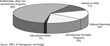
The U.S. government's spending on foreign policy occurs entirely within its discretionary budget authority, which comprises about one-third of the federal budget. The defense budget, which totaled about $350 billion in Fiscal Year 2002 and is expected to surpass $400 billion in FY2005, consumes by far the largest volume of discretionary spending, a level about equal to that of all domestic agencies combined (see Figure 1). Of particular interest in this analysis is the budget for international affairs (IA), which includes the costs of operating the State Department and other non-defense agencies, foreign assistance programs, and contributions to multilateral organizations. Taken together, these expenses amounted to $22.8 billion in FY2001 and $24 billion in FY2002 (U.S. Department of State 2002). The Bush administration requested $25.4 billion for international affairs in FY2003, largely to fund improved embassy security and higher levels of security assistance related to the war on terrorism.
Distribution of Federal Spending: Fiscal Year 2001
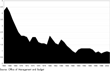
The gap between the State Department's ends and means widened along with the global roles and responsibilities of the United States after World War II. Other demands on government resources, primarily defense, entitlement programs, and interest payments on the national debt, claimed a growing share of the federal budget. As a percentage of all federal outlays, post-World War II spending on IA declined steadily from its peak of nearly 17% in 1947 to less than 1 percent in 2001 (see Figure 2). As a percentage of the U.S. defense budget, IA expenditures fell from their peak level of 50% in 1948 to an average of 6% in the 1990s. Higher budgets for IA in the mid- 1980s, primarily to provide security assistance to Central American states and base-rights countries such as the Philippines, were followed by sharp reductions in spending. The budget cuts accelerated in the aftermath of the Cold War, totaling nearly 21% in the three fiscal years from 1994 through 1996. Measured in constant dollars, the $19.1 billion in IA budget authority in FY1997 was the lowest in more than 20 years and just over half the 1985 peak of $36.1 billion (Nowels 2000, 6). Additional funding in FY1998 and FY1999 covered overdue payments to the UN, enhanced embassy security, and emergency humanitarian assistance. Another increase in IA budget authority followed the September 2001 terrorist attacks, including a $2.2 billion supplemental appropriation in FY2002. These increases after FY1997 still left the IA spending levels lower than post-World War II averages when calculated in constant dollars or as a percentage of the federal budget.
Federal Outlays Spent on International Affairs, Fiscal Years 1964–2001: Percentage of Total Spending
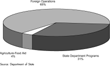
Spending on the day-to-day conduct and administration of foreign affairs claims about one-third of the IA budget (see Figure 3). Outlays in this category include the operational costs of the State Department headquarters and foreign service, public-information campaigns, exchange and democratization programs, and assessed U.S. contributions to international organizations and peacekeeping. After rising in the 1980s and early 1990s to a peak of $7 billion in FY1994, these budget levels dropped by more than 20% in real terms over the next four years (Nowels 2000, 19). A sharp increase in embassysecurity spending in 1999 contributed to a one-year spike in overall spending, but congressional support declined again until the terrorist attacks in 2001. Powell has received broad increases in his operational budget, and a recruitment drive is under way to hire 1,400 FSOs and civil servants by 2004. But the return of federal deficits, which forced deep cuts at State in the 1980s and 1990s, may limit this expansion in personnel.7
According to recent OMB projections, the State Department's budget authority is expected to grow by less than 10% between FY2003 and FY2007, from $9.1 billion to $10 billion.
Distribution of International Affairs Budget, Fiscal Year 2001
Funding Foreign Aid
Doubts about the State Department are mild in contrast to the contempt many legislators and executive-branch agencies have for U.S. foreign aid. By far the largest part of the IA budget, spending on Foreign Operations includes bilateral and multilateral aid programs, disaster relief, support for refugees, debt relief, and voluntary payments to international organizations. The United States also provides security assistance with this budget, particularly to recipients in the Middle East.8
The primary recipients of U.S. assistance in FY2002 included Israel ($2.8 billion), Egypt ($2 billion), Pakistan ($921 million), Afghanistan ($420 million), Colombia ($382 million), and Jordan ($230 million).
In the view of its advocates, foreign aid reflects the generosity, compassion, and best intentions of the U.S. government and its people. Others defend aid on utilitarian grounds. They argue that aid serves U.S. self-interests by securing allies, promoting stable and democratic governments, fostering export markets, and subsidizing domestic farmers and manufacturers through the tying of aid. Critics charge that aid flows are wasted on bloated bureaucracies, reward corrupt dictators, and serve as an agent of U.S. hegemony. To many opponents of aid, the U.S. government can better advance international development by encouraging private investment rather providing government assistance (see Hook 1995).9
While the United States is the largest source of funding for the World Bank and International Monetary Fund, these multilateral agencies provide concessional loans rather than grants to recipients and are thus not considered in most foreign aid spending totals.
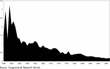
The United States provided the largest volumes of economic and military assistance during the Cold War, transferring $390 billion in aid to more than 120 foreign governments (USAID 1996, 4). As a percentage of U.S. economic output, the level of foreign aid spending steadily dropped throughout this period and after the Cold War (see Figure 4). Japan replaced the United States as the world's leading aid donor in 1989 and continues to maintain this distinction despite a prolonged recession. In real terms, U.S. spending declined from a peak of $33 billion in FY1985 to less than $14 billion in FY1997 (Nowels 2002, 5). Cutbacks in the late-1980s resulted from the Gramm-Rudman deficit-reduction program. Additional cuts followed the end of the Cold War, which removed the rationales of several security-aid programs. As noted above, the Republican Party's capture of both houses of Congress in November 1994 led to even deeper reductions in the aid budget, which Helms likened to a “rat hole” of government waste.
Foreign Assistance as a Percentage of U.S. GDP, Fiscal Years 1946–2001
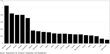
The poisoned political climate surrounding aid prompted the Foreign Operations authorization committees in Congress to stop “authorizing” aid expenditures in the late 1990s and to surrender this responsibility to the appropriations committees. With the exception of large bilateral aid packages to Israel and Egypt, a by-product of the Camp David accords, U.S. aid fell to negligible levels in absolute as well as relative terms by the turn of the century (Tarnoff and Nowels 2001, 23–24). The level of aid as a percentage of U.S. gross domestic product in 2000 was the lowest level of support among members of the Organization for Economic Cooperation and Development (see Figure 5). Members of Congress frequently cite low levels of public support for foreign aid in supporting these cutbacks. In doing so, they fuel a public misperception that the volume of aid spending is much larger than it actually is.10
Respondents in public-opinion surveys consistently estimate that the U.S. government spends 15–20% of the federal budget on foreign aid, in contrast to the less than 1% actually spent. In the same surveys, the median level of preferred spending is between 5 and 10% (Kull and Destler 1999, 124; see also Rielly 1999).
Development Aid as a Percentage of GDP, Fiscal Year 2000
The politicization of U.S. foreign aid further undermines the credibility of the State Department. Among his first acts after taking office in 2001, President Bush reinstated the Mexico City policy, first adopted by Reagan in 1984 but later suspended by Clinton, that prevents the transfer of U.S. aid to family-planning agencies in developing states that offer abortion counseling or services. Bush's action, though praised by conservative interest groups at home, further isolated the United States among other members of the OECD and recipient states. In July 2002, Bush suspended $34 million in U.S. commitments to the UN Population Fund on the grounds that China, a beneficiary of the program, was engaged in forced abortions. The suspension deprived the agency of U.S. funds for other developing countries and hindered its work in less controversial areas, such as maternal and child health care, cancer screening, and HIV prevention. President Clinton, it should be noted, also manipulated the foreign aid budget to gain political support among domestic interest groups.
The Foreign Operations budget rebounded after the terrorist attacks of September 2001, reaching $16.8 billion in FY2002. The White House and Congress approved additional funds for “front-line” states in the war on terrorism, including Afghanistan, Pakistan, and their neighbors in central Asia. In March 2002, Bush pledged a $5-billion increase in aid spending from FY2004 through FY2006 that would reward developing countries that institute political and economic reforms. This general pattern suggests that even a skeptical president and Congress can find effective uses for U.S. foreign aid. But most of the proposed increases have yet to be appropriated, and foreign aid is among the first spending programs Congress curtails in times of fiscal austerity. There is also a danger that renewed interest in security versus development assistance will bring a return to the Cold War days when the United States supported dozens of autocratic regimes in return for their support in containing communism.
Conclusion
Questions regarding the fiscal solvency of the State Department must ultimately be placed in the context of ongoing U.S. foreign relations. No amount of funding could overcome the diplomatic ruptures that occurred between the United States and much of the world in the Bush administration's first two years. Its approach to foreign policy, best described as assertive unilateralism , alienated global opinion at the very time the United States needed the support of foreign governments, international organizations, and mass publics in the war on terrorism. A year after the terrorist attacks, U.S. bilateral relations were strained, for a variety of disconnected and overlapping reasons, with most member states of NATO and the European Union, Russia, China, Japan, and Mexico. Meanwhile, the government's turn away from the multilateral regimes it helped create in the half-century after World War II produced resentment and ill-will toward Washington that will be difficult to overcome in the near term.
As noted earlier, this dysfunctional behavior is hardly unique to the current period but instead has deep roots in the history and political culture of the United States. The disregard for diplomacy in general, and the State Department in particular, reflects a societal ambivalence regarding foreign affairs that extends beyond immediate questions of grand strategy, spheres of influence, and the scope of military interventions. An embedded sense of national exceptionalism, combined with an equally pervasive belief that the United States has the necessary resources to go it alone, are persistent if paradoxical elements of the nation's “style” of foreign policy (Hook and Spanier 2000). Fundamental doubts also persist regarding the most appropriate and effective sources of international influence. To many in and out of government, the United States is best served when its values and interests are expressed by citizens and groups in the normal course of their international interactions. In this view, these purveyors of “soft-power” are the most potent agents of U.S. foreign policy. Diplomats and aid programs simply consume public resources and get in the way. When the United States faces a direct security threat, a favorable outcome can be assured through the use of overwhelming military force.
Such a perspective continues to resonate deeply within the legislative and executive branches of the U.S. government. Yet, for all the benefits that may be derived from the softpower projection of civil society, a clear and singular statement of national purpose is essential. Military policy, trade relations, and other substantive aspects of foreign policy must flow deductively from such a statement, which can only originate within the federal government. Historical experience suggests that this cannot be accomplished in the absence of a national consensus that is achieved through open and vigorous debate. Nor can the United States achieve its primary foreignpolicy goals without first gaining the support of its allies, which must be thoroughly consulted and not simply notified of pending U.S. actions.
Unlike much of the NSC staff, the State Department's diplomatic corps is directly engaged with governments and private citizens abroad. Members of the foreign service are uniquely situated to convey the interests of the United States to foreign governments and to relay information to senior decision makers regarding the likely outcomes of specific policy initiatives. In this respect, “clientitis” is overstated by critics of the State Department. More often than not, the malady refers to the discomfort officials in the White House and Congress experience when they receive information from the field that conditions are more complex than suspected and are, for this reason, less amenable to the immediate realization of U.S. objectives. The perception of FSOs as unduly averse to risks or bold departures in foreign relations is similarly exaggerated. Among their primary duties is to translate the proclaimed national interests of the United States to the ever-changing realities of world politics. Such a task requires a degree of political and ideological detachment that can, if properly managed, serve as an asset to foreign-policy makers. As Theodore Sorensen (1987-88, 238), special counsel to President Kennedy, observed with respect to the State Department:
The caution, continuity, and constant consultations for which the department is chided reflect in large part the reality of a dangerous world that does not change merely because we change presidents. The department's institutional memory, in-depth planning and orderly procedures can protect an eager president from his errors as well as his enemies. The experienced eye and pragmatic perspective of career specialists … are needed to balance White House pressures for quick and dramatic solutions that conform with campaign slogans or popular sentiment.
Its potential attributes notwithstanding, the diminished role of the State Department is now a permanent fixture of the U.S. foreign-policy process. The locus of decision making in military as well as foreign economic policy is increasingly centered in the White House. The NSC will continue to take the lead in coordinating policy, and the national security adviser will remain the president's primary source of strategic guidance and crisis management. The State Department has effectively conceded this primacy to the NSC, focusing instead on the day-to-day conduct of diplomatic relations and the administration of non-military programs. These are not trivial duties, however. And they are impossible to carry out effectively when those responsible for international affairs are under attack at home.