Introduction
Researchers and clinicians have long noted a strong association between psychosis and suicidal thoughts and behaviors (STBs). Approximately 30–40% of people with psychotic spectrum disorders think about suicide, 20–30% make a suicide attempt, and 5–10% die by suicide (Radomsky et al. Reference Radomsky, Haas, Keshavan and Sweeney1995; Palmer et al. Reference Palmer, Pankratz and Bostwick2005; Fialko et al. Reference Fialko, Freeman, Bebbington, Kuipers, Garety, Dunn and Fowler2006). These rates are alarmingly high considering that the 12-month prevalence rates of suicide ideation and attempt are about 3% and 0.5%, respectively, and that the rate of suicide death is 0.013% in the USA (Kessler et al. Reference Kessler, Berglund, Nock, Wang and Page2005; Kochanek et al. Reference Kochanek, Murphy, Xu and Tejada-Vera2016). Although reasons for this elevated risk remain unclear, multiple mutually non-exclusive explanations exist. For instance, psychotic symptoms (e.g. command hallucinations for suicide) might directly prompt STBs. Alternatively, psychosis may indirectly increase risk through concomitant effects of the illness such as feeling like a burden on others. Clarifying the role of psychosis in STBs is crucial for prediction and treatment. Therefore, this study aims to summarize existing literature to determine whether and how psychosis confers risk for STBs.
Before further discussion on the role of psychosis in suicidality, it is important to understand the term risk factor. According to Kraemer et al. (Reference Kraemer, Kazdin, Offord, Kessler, Jensen and Kupfer1997), a correlate is a factor associated with the outcome of interest, but the directionality of the association is unclear. Risk factors are special kinds of correlates that precede the outcome and divide the population into high- and low-risk groups (e.g. psychosis at Time 1 predicts suicide outcomes at Time 2). Cross-sectional studies can only establish correlates; longitudinal designs are necessary to identify risk factors. Thus, the effect of psychosis as a risk factor should be examined in the context of longitudinal studies.
It has been well documented that psychosis might directly confer risk for STBs via symptoms such as hallucinations and delusions (Koeda et al. Reference Koeda, Otsuka, Nakamura, Yambe, Fukumoto, Onuma, Saga, Yoshioka, Mita, Mizugai, Sakai and Endo2012). Past research suggests that command hallucinations for suicide are positively associated with suicide ideation and attempt (Kasper et al. Reference Kasper, Rogers and Adams1996; Harkavy-Friedman et al. Reference Harkavy-Friedman, Kimhy, Nelson, Venarde, Malaspina and Mann2003; Wong et al. Reference Wong, Öngür, Cohen, Ravichandran, Noam and Murphy2013). Hallucinations that are persistent, highly realistic, and congruent with delusional beliefs tend to incite a greater need to comply (Shawyer et al. Reference Shawyer, Mackinnon, Farhall, Sims, Blaney, Yardley, Daly, Mullen and Copolov2008). It is also likely that some types of delusions alone might prompt individuals to think about suicide and even take actions. For example, delusions that one is responsible for a crime or disaster might lead one to conclude that he or she deserves to die (Grunebaum et al. Reference Grunebaum, Oquendo, Harkavy-Friedman, Ellis, Li, Haas, Malone and Mann2001). Under this hypothesis, positive psychotic symptoms, but not negative symptoms, should be strong risk factors for STBs.
Indirect effects of psychosis are also plausible. For instance, the hopelessness theory posits that the cognitive style of making negative, stable, and global attributions about life events, the world, and self, is a sufficient cause for suicidality (Beck, Reference Beck1986; Abramson et al. Reference Abramson, Metalsky and Alloy1989, Reference Abramson, Alloy, Hogan, Whitehouse, Gibb, Hankin, Cornette, Joiner and Rudd2000). Disorders with psychotic symptoms such as schizophrenia are often associated with cognitive and memory impairment (Aleman et al. Reference Aleman, Hijman, De Haan and Kahn1999; Kuperberg & Heckers, Reference Kuperberg and Heckers2000), which predicts functional and economic loss (Green et al. Reference Green, Kern and Heaton2004; Marwaha & Johnson, Reference Marwaha and Johnson2004; Lewine, Reference Lewine2005). Individuals suffering from these symptoms and impairments might experience elevated hopelessness, which might in turn increase suicidality (Eisenberg & Lazarsfeld, Reference Eisenberg and Lazarsfeld1938; Kim et al. Reference Kim, Jayathilake and Meltzer2003; Lewine, Reference Lewine2005; Paul & Moser, Reference Paul and Moser2009). According to this theory, the global presence and severity of psychotic symptoms and disorders should be strong risk factors for STBs.
The interpersonal theory of suicide also suggests that psychosis might confer risk for suicide indirectly (Joiner, Reference Joiner2005; Van Orden et al. Reference Van Orden, Witte, Cukrowicz, Braithwaite, Selby and Joiner2010). This theory proposes that both the desire to die (i.e. perceived burdensomeness and thwarted belongingness) and the capability for suicide, defined as lowered fear of death and increased physical pain tolerance, must be present for someone to act on their suicidal intent. Psychosis is associated with an increased burden on caregivers (Awad & Voruganti, Reference Awad and Voruganti2008; Papastavrou et al. Reference Papastavrou, Charalambous, Tsangari and Karayiannis2012), and a diminished social connection due to impairment and stigma (Liddle, Reference Liddle2000; Lee et al. Reference Lee, Lee, Chiu and Kleinman2005). Psychosis might also increase acquired capability for suicide by habituating people to painful events such as homelessness (Folsom & Jeste, Reference Folsom and Jeste2002) and self-mutilation (Large et al. Reference Large, Babidge, Andrews, Storey and Nielssen2009). Based on this theory, the global presence and severity of psychosis would increase suicide ideation via perceived burdensomeness and thwarted belongingness; positive symptoms such as delusions and hallucinations would increase suicidal behaviors via increased capability for suicide resulted from experiences of painful events.
Despite these plausible hypotheses, mixed evidence in the field precluded a qualitative review of the literature from ascertaining the strength and the patterns of the association between psychosis and suicidality. Some studies reported higher prevalence rates of suicide thoughts and behaviors in psychotic populations (Kontaxakis et al. Reference Kontaxakis, Havaki-Kontaxaki, Margariti, Stamouli, Kollias and Christodoulou2004; Hawton et al. Reference Hawton, Sutton, Haw, Sinclair and Deeks2005; Palmer et al. Reference Palmer, Pankratz and Bostwick2005; Hor & Taylor, Reference Hor and Taylor2010), whereas others did not detect a significant difference (Black et al. Reference Black, Winokur and Nasrallah1988; Lykouras et al. Reference Lykouras, Gournellis, Fortos, Oulis and Christodoulou2000; Leadholm et al. Reference Leadholm, Rothschild, Nielsen, Bech and Ostergaard2014). Moreover, some studies reported that negative symptoms (e.g. diminished emotional expression) were inversely related to suicide risk (Fenton et al. Reference Fenton, McGlashan, Victor and Blyler1997; Bertelsen et al. Reference Bertelsen, Jeppesen, Petersen, Thorup, Ohlenschlaeger, Le Quach, Christensen, Krarup, Jorgensen and Nordentoft2007; Chang et al. Reference Chang, Chen, Hui, Chan, Lee and Chen2014); others found that negative symptoms significantly conferred risk (Havaki-Kontaxaki et al. Reference Havaki-Kontaxaki, Kontaxakis, Protopappa and Christodoulou1994; Steblaj et al. Reference Steblaj, Tavcar and Dernovsek2007), with some reporting a non-significant relationship (Nordentoft et al. Reference Nordentoft, Jeppesen, Abel, Kassow, Petersen, Thorup, Krarup, Hemmingsen and Jorgensen2002; Hawton et al. Reference Hawton, Sutton, Haw, Sinclair and Deeks2005; Jahn et al. Reference Jahn, Bennett, Park, Gur, Horan, Kring and Blanchard2016). Similar debates exist regarding positive symptoms such as delusions and hallucinations (Kelleher et al. Reference Kelleher, Connor, Clarke, Devlin, Harley and Cannon2012; Chang et al. Reference Chang, Chen, Hui, Chan, Lee and Chen2014; DeVylder et al. Reference DeVylder, Lukens, Link and Lieberman2015).
These inconsistencies suggest that determining the patterns and mechanisms of the association requires examining finer-grained predictor categories and potential methodological moderators. Past studies have often focused on different predictors related to psychosis, such as specific diagnoses (e.g. schizophrenia: Paerregaard, Reference Paerregaard1975), symptom types (Leadholm et al. Reference Leadholm, Rothschild, Nielsen, Bech and Ostergaard2014), and age of onset (Robinson et al. Reference Robinson, Harris, Harrigan, Henry, Farrelly, Prosser, Schwartz, Jackson and McGorry2010). To understand the true effect estimates of psychosis, it would be beneficial to study the effects of different categories of predictors (e.g. diagnoses, symptoms, aspects). Identifying predictor categories would also inform the field whether and how psychosis may directly and indirectly confer risk for STBs.
The mixed evidence further suggests that potential methodological differences might be impacting the effect estimates. Studies vary in their sample characteristics (e.g. sample size and age) and research design (e.g. follow-up length). Examining whether the effect of psychosis differs among populations is critical to understand the effect magnitude of psychosis.
Under these circumstances, a meta-analysis that quantitatively summarizes existing research is needed to determine the strength of psychosis as a risk factor for suicidality. As such, we conducted a meta-analysis that advances our knowledge in three major ways. First, only longitudinal studies were included in order to examine the magnitude of psychosis as a risk factor instead of a correlate. Second, we meta-analyzed categories of psychosis-related predictors (i.e. psychosis diagnosis, symptoms, and aspects) to study whether certain predictor categories are particularly strong. Third, moderator analyses were conducted to test how the effect of psychosis might vary based on sample characteristics. Understanding whether and to what extent psychosis confers risk for STBs is important for informing prediction and treatment.
Methods
Data sources, study selection, inclusion criteria
We identified all relevant articles using a range of search terms through 1 January 2016 using PubMed, PsycInfo, and Google Scholar. Search terms included combinations of words for ‘longitudinal’ and ‘suicide,’ including: ‘longitudinal,’ ‘longitudinally,’ ‘predicts,’ ‘prediction,’ ‘prospective,’ ‘prospectively,’ ‘future,’ ‘later,’ and ‘self-injury,’ ‘suicidality,’ ‘self-harm,’ ‘suicide,’ ‘suicidal behavior,’ ‘suicide attempt,’ ‘suicide death,’ ‘suicide plan,’ ‘suicide thoughts,’ ‘suicide ideation,’ ‘suicide gesture,’ ‘suicide threat,’ ‘nonsuicidal self-injury (NSSI),’ ‘self-mutilation,’ ‘deliberate self-harm (DSH),’ ‘self-cutting,’ ‘cutting,’ ‘self-burning,’ and ‘self-poisoning.’ Variants of nonsuicidal self-injury were included to increase likelihood of identifying relevant articles that may have otherwise been missed if a narrower search strategy were to have been applied. However, outcomes that combined forms of STBs and/or were not specific to STBs (e.g. parasuicide, deliberate self-harm, etc.) were excluded as we were interested in the specificity of effects on discrete suicide-relevant outcomes. We also searched the reference sections of all papers identified through these sources.
Inclusion required that studies report at least one longitudinal analysis using psychosis or related variables predicting suicide ideation, attempts, and death. We also required papers to be peer-reviewed publications in English. We elected to use only published studies for three reasons. First, we wanted to provide a summary of literature widely available to clinicians and researchers. Second, the peer review process provides some safeguards regarding study quality. Third, ensuring the completeness of unpublished data would be difficult; as such, the resulting pool of located studies could fail to be a representative sample of unpublished data, which could in turn bias results. To offset our inclusion of only published data, we have conducted extensive publication bias analyses and obtained bias-corrected effect size estimates.
Studies were excluded based on five criteria: (1) analyses were not longitudinal; (2) analyses did not examine discrete suicide-relevant outcomes (e.g. combining ideation and attempt as one outcome); (3) analyses were not reported with sufficient statistics (e.g. beta weights with no index of variance); (4) analyses used statistical tests that cannot be converted into odds or hazard ratios; and (5) analyses were conducted in the context of a primary treatment study.
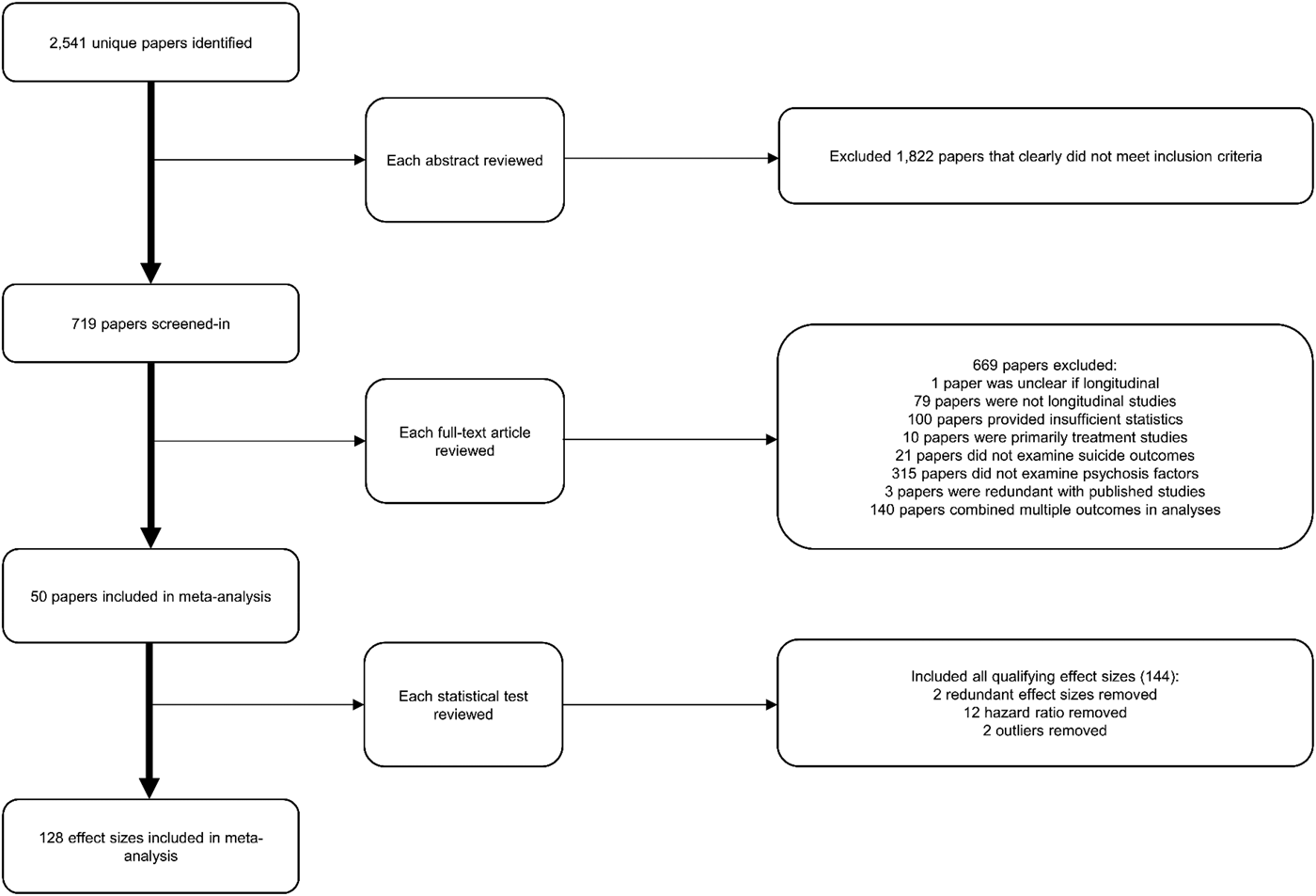
A total of 2541 unique papers were identified. Based on abstracts, 719 studies were screened in. After reading the remaining articles in full, a total of 50 studies were retained (see online Supplement 1 for references of included studies). See Fig. 1 for PRISMA flowchart.
PRISMA flow chart.

Study coding
Authors reviewed all eligible statistical tests in each study. Each statistical test where a psychosis-relevant variable was used to predict suicide ideation, attempt, or death was termed as an ‘effect size,’ and retained for further analysis. If a study reported effect sizes with the same predictor and same outcome over multiple time points, only the effect size from the last time point was retained, as this represented the most inclusive data point. This procedure was adopted to reduce data redundancy. Two effect sizes were excluded, resulting in 142 unique effect sizes.
The following information was extracted from each study: (1) publication year, (2) sample size, (3) sample age, (4) follow-up length, (5) predictor variables, (6) outcome variables, and (7) relevant statistics. Of note, we also extracted sample country, sample type, psychiatric medication status and diagnostic criteria of psychosis; results were highly consistent across these moderators (see online Supplement 2).
Publication year
Publication year was extracted to test the effects of time or generation.
Sample size
Number of participants at baseline assessment was extracted.
Sample age
Mean or median sample age was extracted from 79.91% of the effect sizes. All studies provided sufficient information for samples to be classified into adult, adolescent, or mixed samples of adults and adolescents.
Follow-up length
Psychosis may confer risk to different extent depending on follow-up length. Therefore, we recorded the longest follow-up interval in terms of months from each study.
Predictor variables
After extracting predictor variables for each effect size, authors organized predictor variables into three major categories: psychosis diagnosis, symptoms, and aspect. Psychosis diagnosis includes predictors such as schizophrenia and delusional disorder diagnoses. Psychosis symptoms were subcategorized into overall (e.g. total score on the Positive and Negative Syndrome Scale), positive (e.g. hallucinations), and negative symptoms (e.g. poverty of speech). Relevant symptoms not unique to psychosis (e.g. aggression) were labeled as other symptoms. Psychosis aspect includes predictors such as age of onset and duration of illness. These categories were created to understand meaningful differences between certain factors while striving to maintain a sufficient number of effect sizes in each category.
Outcome variables
For each effect size, we extracted from the article which discrete suicide outcome was examined: suicide ideation, attempt, or death (Nock, Reference Nock2010).
Relevant statistics
We extracted relevant statistics for each effect size in their original form (e.g. t tests, Cohen's d, means and standard deviations, risk ratios, chi-squared analyses, or 2 × 2 tables with rates and raw information).
Study quality
Study quality is often an issue of concern for meta-analyses due to the heterogeneity among studies. Combining studies that widely differ in their methodologies (e.g. naturalistic, experimental, single-group, case-control) might result in inaccurate effect estimates. Therefore, it is commonly recommended to assess and control for study quality. However, variations in study quality were substantially limited in this meta-analysis due to our stringent inclusion criteria: studies were required to share the same core design (i.e. longitudinal), examine common predictors (i.e. variables related to psychosis), and investigate the same three outcomes (i.e. suicide ideation, attempt, and death).
Despite sharing similar methodologies, studies can still differ in subtle ways, such as sample age, sample medication, and follow-up length. However, it is unclear how these minor differences might impact the outcomes. Therefore, we conducted moderator analyses to empirically examine the effects.
Statistical analyses
We used Comprehensive Meta Analysis Version 3.0 software (Englewood, N.J.) to conduct the meta-analysis. A random-effects model was adopted to account for heterogeneity across studies. Unlike fixed effects models, which assume that the true effect size is identical across studies, random effects models estimate within- and between-study variance to provide an estimate for the effects distribution. I 2 tests were used to measure between-study heterogeneity.
To provide a raw estimate of each effect size, we used zero-order (i.e. unadjusted) effects whenever possible (94.5%). The majority of effect sizes were either reported in terms of ORs or statistics that could be converted into ORs (n = 130). Effect sizes reported in hazard ratios (n = 12) cannot be converted into ORs and were therefore removed from main report (see online Supplement 3). Estimates greater than three standard deviations above the mean were treated as outliers (n = 2), resulting in 128 remaining effect sizes.
The overall effect of psychosis was examined across outcomes by combining all predictors. We then examined the effects of specific predictor categories for each outcome. To ensure that a reliable effect estimates, we only conducted analyses for categories with at least three effect sizes. We also conducted moderator analyses to test the impact of sample age, sample size, publication year, and study follow-up length on effect estimates. Distinct from moderator analyses in primary studies, moderator analyses in meta-analyses can only examine variations in effect size across studies instead of within each study.
Finally, we calculated multiple indices of publication bias using the following tests: Classic Fail-safe N, Orwin's Fail-safe N, Begg and Mazumdar Rank Correlation Test, Egger's Regression test, funnel plot symmetry, and Duval and Tweedie's Trim and Fill test.
Results
Descriptive statistics
The earliest published study included in this meta-analysis was published in 1975 (Paerregaard, Reference Paerregaard1975). The number of effect sizes reported has increased over the years, with 2.3% published before 1985, 6.3% between 1985 and 1994, 36.7% between 1995 and 2004, and 54.7% between 2005 and 2015. The majority of the effect sizes examined suicide death (43.0%), followed by attempt (39.1%) and ideation (18.0%). A total of 78.1% of the studies recruited adult participants; the rest recruited adolescents (10.9%), or a mix of both (10.9%). Most studies used clinical samples (68.8%), with the rest from self-injurious samples (18.0%), and community samples (13.3%). The median follow-up length was 7.5 years (M = 128.86 months, s.d. = 110.18 months). Only five effect sizes used follow-up lengths of 1 year or shorter.
Prediction estimates and publication bias
Suicide ideation
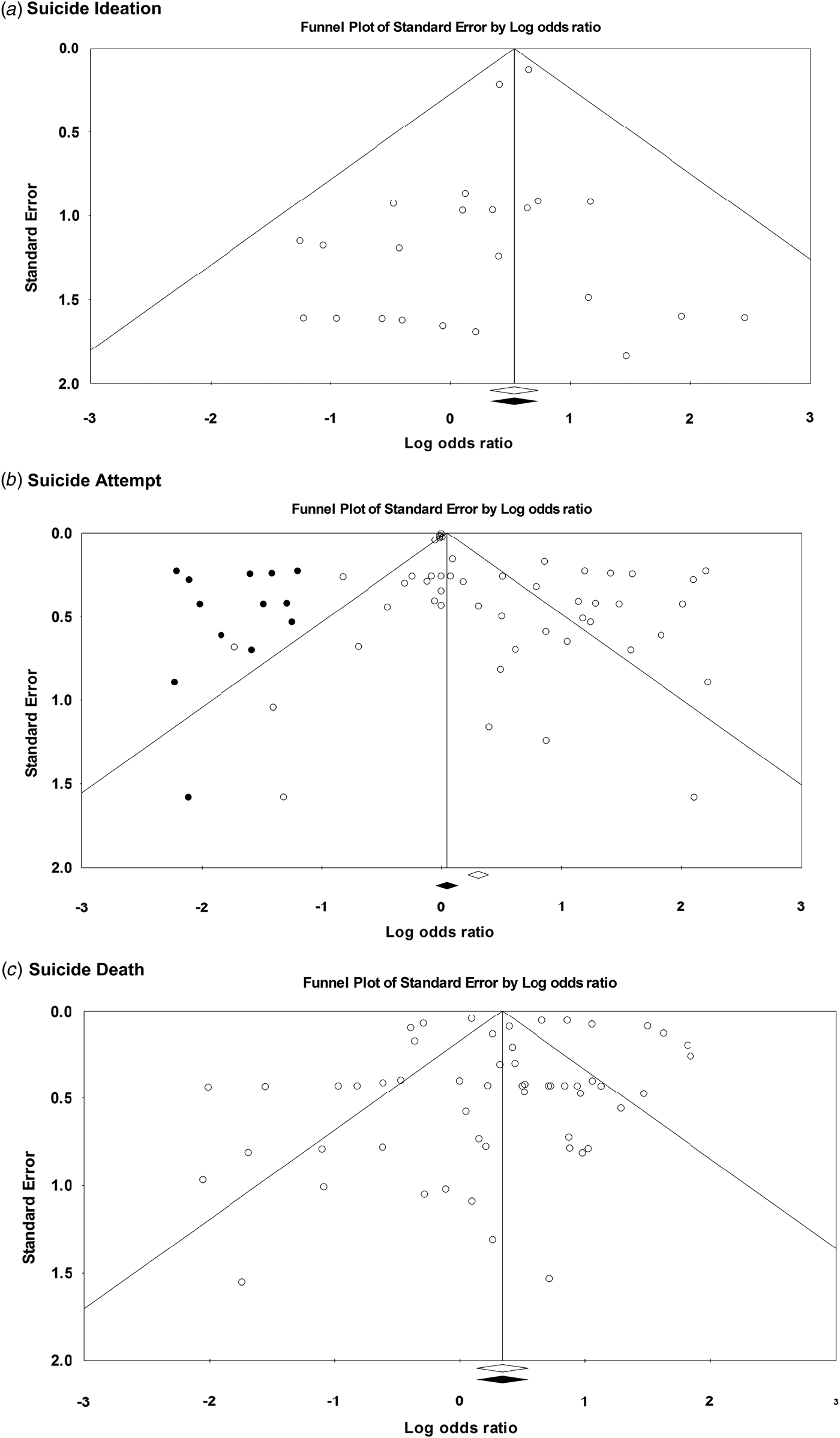
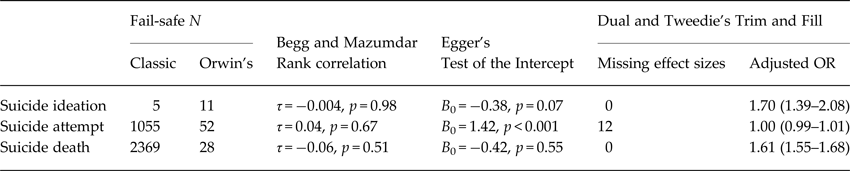
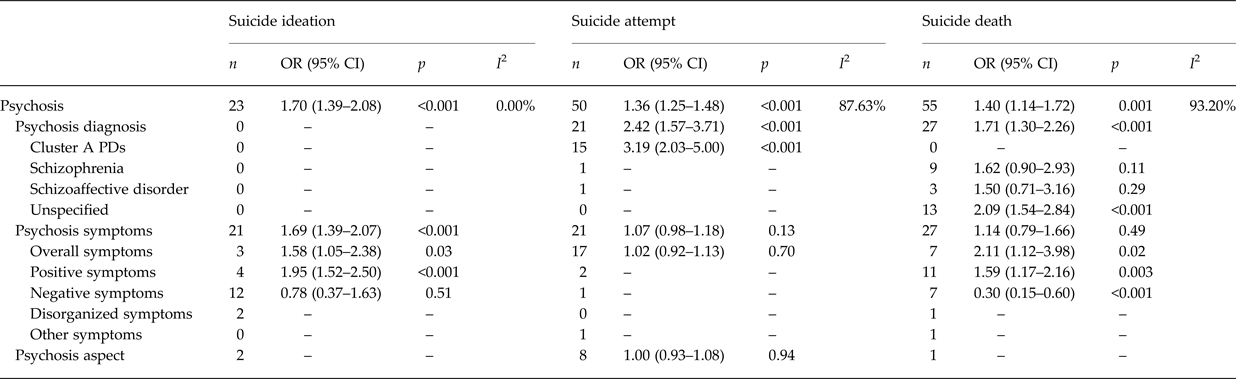
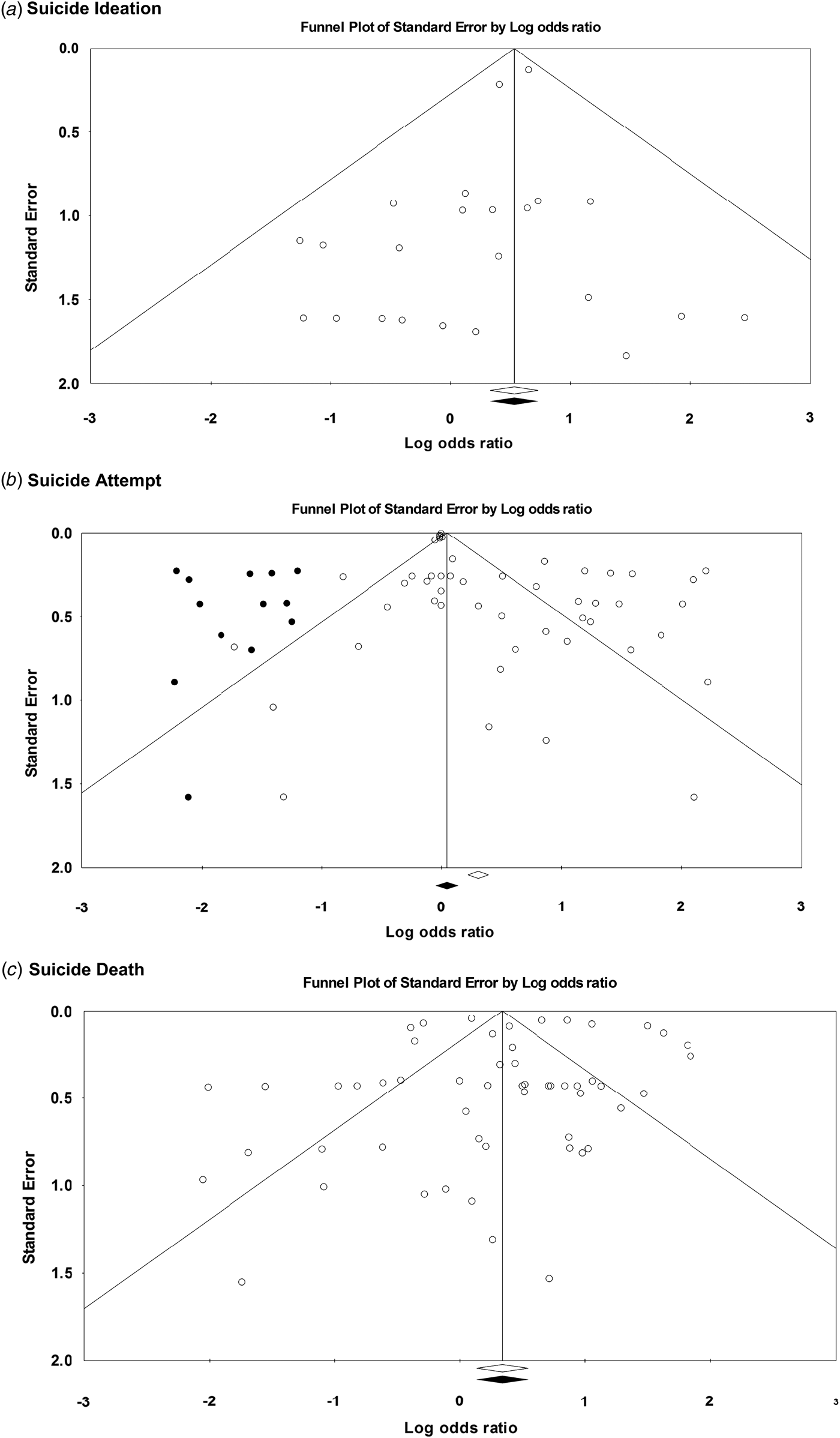
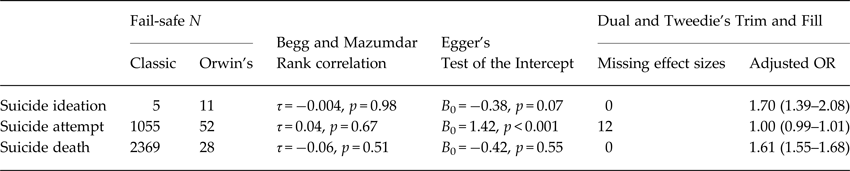
A total of 23 effect sizes were included. Overall, psychosis significantly conferred risk for suicide ideation, with a weighted mean Odds Ratio (wOR) of 1.70 [95% confidence interval (CI) 1.39–2.08]. Between-study heterogeneity was low (I 2 = 0%) and there was minimal evidence of publication bias (Table 1 and Fig. 2 a). As a predictor category, psychosis symptoms predicted higher risk for suicide ideation (Table 2). This effect was mainly driven by overall symptoms and positive symptoms; negative symptoms did not significantly predict risk.
Funnel plots. (a) Suicide ideation (b) Suicide attempt (c) Suicide death. Note. Open circles represent observed estimates; shaded circles represent imputed values estimated to be missing to the left of the mean. Open diamond indicates unadjusted weighted mean hazard ratio; shaded diamond indicates adjusted weighted mean hazard ratio.
Publication bias
OR, weighted mean odds ratio.
Notes. Classic and Orwin's Fail-safe N values represent the number of studies needed to nullify the observed effects; Begg and Mazumdar Rank Correlation Test computes the rank order correlation between effect estimates and standard error; Egger's Test of the Intercept uses precision (i.e. the inverse of the standard error) to predict the standardized effect (i.e. effect size divided by the standard error). The size of the effect is reflected in the slope and bias is reflected in the intercept (B 0); Missing effect sizes under Duval & Tweedie's Trim & Fill are the number of effect sizes estimated as missing below the mean.
OR analyses
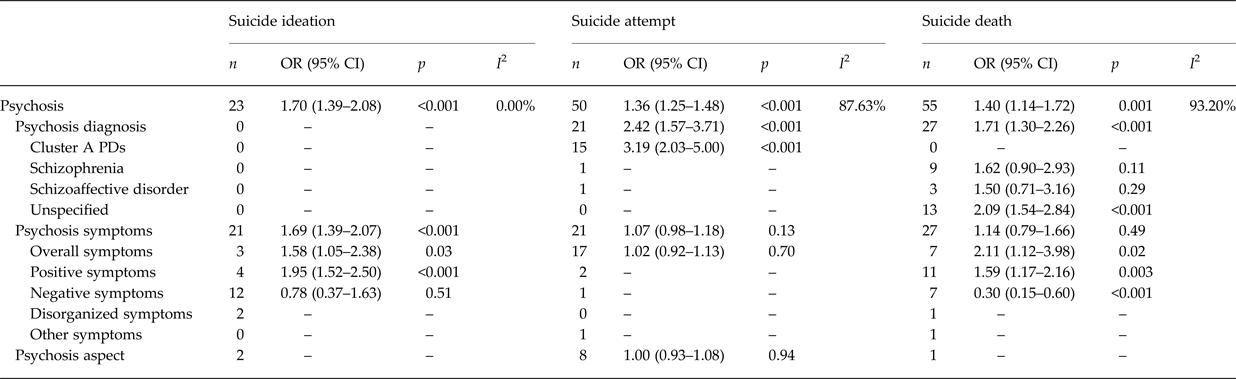
n, number of effect sizes; OR, weighted mean odds ratio; 95% CI, 95% confidence interval, dashes indicate unavailable information; I 2 indicates the percentage of variances due to heterogeneity between studies.
Note. Estimates were not reported for analyses involving fewer than three effect sizes as small number of effect sizes reduce the reliability of estimates.
Suicide attempt
The overall analysis included 50 effect sizes, resulting in a wOR of 1.36 (95% CI 1.25–1.48). High heterogeneity between studies (I 2 = 87.63%) and moderate publication bias (Table 1 and Fig. 2 b) were detected. Psychosis diagnoses, especially Cluster A Personality Disorders and Schizophrenia diagnoses, significantly predicted higher risk for suicide attempt. No other predictor category yielded a significant result (Table 2).
Suicide death
A total of 55 effect sizes were included in the analyses. Overall, psychosis significantly elevated risk for suicide death, with a wOR of 1.40 (95% CI 1.14–1.72). Between study heterogeneity was high (I 2 = 93.20%). Results of publication bias tests indicated minimal bias (Table 1 and Fig. 2 c). We also examined specific risk factor categories (Table 2). Psychosis diagnoses, especially unspecified diagnoses, predicted significantly higher risk for death. For psychosis symptoms, both overall symptoms and positive symptoms were associated with significantly higher risk; however, negative symptoms were associated with significantly lower risk.
Moderator analyses
Sample age
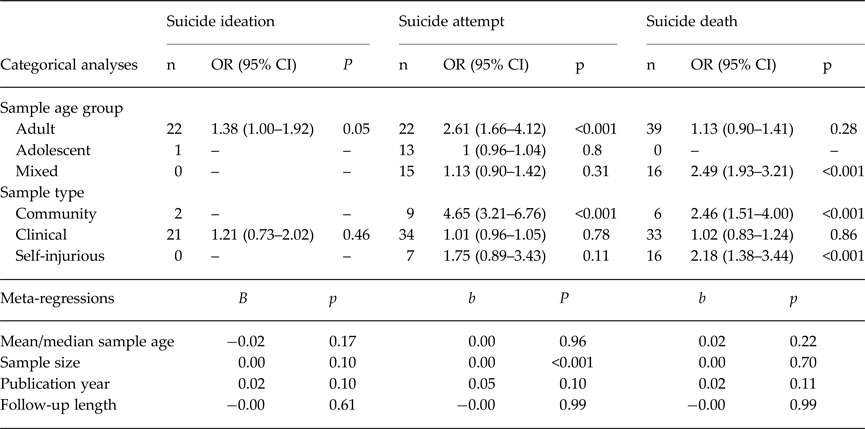
In predicting attempt, the effect estimate yielded from effect sizes using adult samples was significantly larger than those from effect sizes using adolescent and mixed samples. For suicide death, moderator analyses indicated that psychosis conferred significantly higher risk in mixed samples than in adult samples. There were no significant effects of mean/median sample age (Table 3).
Moderator analyses
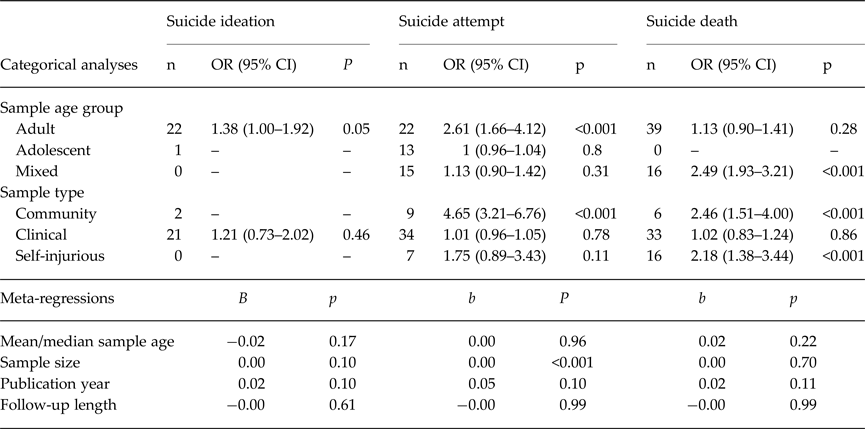
n, number of effect sizes; OR, weighted mean odds ratio; 95% CI, 95% confidence interval, dashes indicate unavailable information; b, regression coefficient.
Note. Estimates were not reported for analyses involving fewer than three effect sizes, as small number of effect sizes compromise the accuracy of estimates.
Year of publication
The effect estimates of psychosis remained consistent regardless of publication year (Table 3).
Sample size
There were no significant effects of sample size on the effect estimates of psychosis for ideation and death. Larger sample sizes were associated with larger effect estimates for attempt, though the effect was small (Table 3).
Follow-up length
Meta-regression analyses indicated that effect estimates remained statistically identical regardless of the follow-up length (Table 3).
Discussion
This meta-analysis aimed to estimate the effects of psychosis on STBs. Our major findings include: (1) psychosis significantly confers risk for suicide ideation, attempt, and death; (2) different predictor categories confer risk to various extents; (3) minor moderator effects of sample and methodological differences were detected. Each of these findings is discussed in more detail below.
Psychosis, when analyzed as an aggregate across different predictors, significantly, albeit weakly, increased risk for suicide ideation, attempt, and death. These results were consistent with previous findings showing higher prevalence rate estimates of STBs in psychotic populations (Radomsky et al. Reference Radomsky, Haas, Keshavan and Sweeney1995; Palmer et al. Reference Palmer, Pankratz and Bostwick2005; Fialko et al. Reference Fialko, Freeman, Bebbington, Kuipers, Garety, Dunn and Fowler2006). Even though mechanisms for the association between psychosis and suicidality were not directly tested in this study, our findings were consistent with certain hypotheses. The fact that the global presence and severity of psychosis (e.g. psychosis analyzed across all predictors, psychosis spectrum disorders, overall psychotic symptoms) confers risk indiscriminately across suicide outcomes suggests the likelihood that either delusions and hallucinations directly cause ideations and actions, or psychosis induces ideations and actions via other indirect mechanisms (e.g. hopelessness, perceived burdensomeness), or a combination of both.
In-depth analyses of predictor categories revealed that certain predictor categories exerted stronger effects on suicide outcomes than others. Psychosis spectrum diagnosis as a predictor category significantly predicted suicidal behaviors, indicating that psychosis might confer risk through increased capability for suicide. Schizophrenia diagnosis surprisingly did not significantly increase risk for suicide death, though we speculate that the relatively small number of studies might have rendered our analyses underpowered. The results might have also been constrained by limitations of the literature discussed in more detail below.
Further, analyses on subcategories of psychotic symptoms found distinct patterns between positive and negative symptoms as predictors. Positive symptoms significantly increased risk for both suicide ideation and death, whereas negative symptoms were not significantly associated with ideation, and in fact significantly decreased risk for death. These findings were consistent with the hypothesis that delusions and hallucinations directly induce STBs. Moreover, positive symptoms might have also rendered individuals more prone to experience painful events such as jumping from a high place in response to persecutory delusions. Therefore, it is possible that positive symptoms also confer risk indirectly through increased capability for suicide (Joiner, Reference Joiner2005; Van Orden et al. Reference Van Orden, Witte, Cukrowicz, Braithwaite, Selby and Joiner2010).
Besides positive symptoms directly inducing STBs, we speculate two other reasons that might explain the differences between positive and negative symptoms as predictors. First, the avolition and amotivation reflected in negative symptoms might have prevented individuals from making active plans for suicide attempts. Contrary to common perception of suicide as impulsive, it is suggested that suicide is often a deliberate act that involves many preparations ahead of time, such as researching lethal methods on the internet, acquiring the means, and choosing the location for suicide (Joiner, Reference Joiner2010). It is highly likely that individuals experiencing negative symptoms such as avolition and amotivation might have been unable to engage in deliberate planning for an attempt. Second, factor analytic studies have shown that negative symptoms consistently emerge as a factor separate from positive symptoms (Blanchard & Cohen, Reference Blanchard and Cohen2006). If positive and negative symptoms are distinct manifestations of psychosis, it is not surprising that they have different effects on suicidality.
Given sample and methodological variances across studies, we also conducted moderator analyses. The results showed that the effect estimates of psychosis remained largely consistent across multiple variables (e.g. sample age and type, sample size, year of publication, follow-up length), though minor moderator effects were detected for some samples.
Based on our findings, we note three major limitations of the literature and two limitations of the present study. First, certain predictors were rarely examined in a longitudinal context, which precluded us from determining the mechanisms through which psychosis confers risk for suicidality. For instance, longitudinal studies on schizophrenia diagnosis, aspects of psychosis (e.g. age of onset), and psychosis in the context of mood disorders and organic psychopathology are scarce. In a similar vein, we were unable to conduct even finer-grained analyses on specific symptoms (e.g. delusions, flat affect) due to insufficient number of effect sizes. Future research should study these less-understood factors and their longitudinal associations with suicidality.
Second, past research has often overlooked the interactions both among psychosis predictors, and between psychosis and other risk factors (e.g. demographics, comorbidity with internalizing disorders). Out of the 50 papers included in this meta-analysis, three studies reported a total of five interaction effects (Pillmann et al. Reference Pillmann, Balzuweit, Haring, Blöink and Marneros2003; Flensborg-Madsen et al. Reference Flensborg-Madsen, Knop, Mortensen, Becker, Sher and Grønbæk2009; Crocq et al. Reference Crocq, Naber, Lader, Thibaut, Drici, Everitt, Hall, Le Jeunne, Mittoux, Peuskens, Priori, Sturkenboom, Thomas, Tanghøj, Toumi, Mann and Moore2010), and these interactions were too idiosyncratic to meaningfully meta-analyze. The lack of emphasis on interactions is particularly sobering considering that accurate suicide prediction requires capitalizing on interactive effects (Ribeiro et al. Reference Ribeiro, Franklin, Fox, Bentley, Kleiman, Chang and Nock2016). According to our findings, the average odds ratios of a psychosis predictor are 1.70, 1.36, and 1.40 for suicide ideation, attempt, and death. Therefore, a psychosis risk factor on average raises one's likelihood of experiencing suicide ideation and attempt in a given year from 3% and 0.5%, to 5.1% (3% × 1.70) and 0.68% (0.5% × 1.36), and raises one's likelihood to die from suicide from 0.013% to 0.018% (0.013% × 1.40), respectively (Kessler et al. Reference Kessler, Berglund, Nock, Wang and Page2005; Kochanek et al. Reference Kochanek, Murphy, Xu and Tejada-Vera2016). These small increases in absolute risk are unlikely to be helpful in most clinical situations. Examining the interactions among multiple predictors, however, has been shown to be a promising way to greatly increase suicide prediction accuracy (Kessler et al. Reference Kessler, Warner, Ivany, Petukhova, Rose, Bromet, Brown, Cai, Colpe, Cox, Fullerton, Gilman, Gruber, Heeringa, Lewandowski-Romps, Li, Millikan-Bell, Naifeh, Nock, Rosellini, Sampson, Schoenbaum, Stein, Wessely, Zaslavsky and Ursano2015; Ribeiro et al. Reference Ribeiro, Franklin, Fox, Bentley, Kleiman, Chang and Nock2016; Walsh et al. Reference Walsh, Ribeiro and Franklin2017). Future studies should endeavor to examine interaction effects between psychosis and other factors.
Third, most studies have adopted extremely long follow-up lengths in their design. The median follow-up was 7.5 years, and only five effect sizes out of 128 used follow-up length of 1 year or shorter. Although moderator analyses indicated that results were consistent across follow-up lengths, it is possible that psychosis might have been a stronger predictor for suicide outcomes within days, weeks, or months, and that the present literature contains too few studies to reflect its short-term effect. Long follow-up lengths might have also obscured the effects of psychosis due to variations in medication status and diagnostic criteria over time. Even though moderator analyses indicated results were consistent across these two moderators, it is possible that these effects were not detected. Future research should consider using shorter follow-up lengths to approximate clinical situations and control for potential confounders.
Along with limitations in the literature, three methodological limitations should be kept in mind when interpreting the findings as well. First, the present meta-analysis only included published statistics, while excluding unpublished studies or studies without sufficient statistical information. Even though the studies included in this meta-analysis are highly homogenous (e.g. longitudinal design, psychosis predictors, suicide outcomes, similar effect sizes) and the exclusion of other studies are unlikely to affect the present findings, findings should be interpreted as a summary of peer-reviewed studies widely accessible to the public.
Second, although our findings provided evidence that was consistent or inconsistent with certain theories in the field, this meta-analysis did not directly test the mechanisms of the association between psychosis and suicide. Risk factors established through longitudinal studies precede the outcome of interest, but are still not equivalent to cause (Kraemer et al. Reference Kraemer, Kazdin, Offord, Kessler, Jensen and Kupfer1997). It is possible that a third variable (e.g. genetic antecedents, substance abuse, depression) might have caused both the risk factor and the outcome. Only experimental designs can infer cause by reducing influences of third variables through randomization and stringent control groups. However, very few experimental studies exist in the field of psychosis and suicide due to practical and ethical reasons. As such, the findings from this study reflect the longitudinal rather than causal effects of psychosis, and no definite conclusion on mechanisms can be reached based on the present meta-analysis.
Third and similarly, this study cannot rule out the possibility that potential confounders might have contributed to the association between psychosis and suicide. For example, other psychiatric disorders are common among individuals suffering from psychosis. It is estimated that 50% of patients with schizophrenia also have comorbid depression, 47% with comorbid substance use, and 29% with comorbid posttraumatic stress disorder (Buckley et al. Reference Buckley, Miller, Lehrer and Castle2009). As such, the risk that psychosis confers on suicide might be due to comorbidity with other psychiatric disorders. In addition, factors that elevate risk for both psychosis and suicide might be a potential confounder as well. For instance, research has shown impairment in neuropsychological function in suicide attempters (Keilp et al. Reference Keilp, Gorlyn, Russell, Oquendo, Burke, Harkavy-Friedman and Mann2013) and individuals with schizophrenia (Reichenberg et al. Reference Reichenberg, Harvey, Bowie, Mojtabai, Rabinowitz, Heaton and Bromet2009). Therefore, it is possible that certain neuropsychological factors may confound the association. Future studies should investigate this issue.
Together, the results of the present meta-analysis indicated that psychosis significantly confers risk for STBs, and that different predictor categories confer risk to different extents. Specifically, positive symptoms were significant risk factors, whereas negative symptoms were non-significant predictors for suicide ideation, and significant protective factors for death. Results of moderator analyses indicted some effects of sample differences, though the effects were inconsistent across outcomes. Our results provided evidence for a direct association between psychosis and suicidality through delusions and command hallucinations, and some evidence for an indirect association via hopelessness, perceived burdensomeness, and thwarted belongingness. Due to the nature of the study designs (i.e. longitudinal instead of experimental), however, the exact mechanisms of the associations between psychosis and suicide cannot be determined. Future studies should fill the gaps of research by examining less-focused risk factors, exploring interaction effects, and adopting a shorter follow-up in their design.
Supplementary material
The supplementary material for this article can be found at https://doi.org/10.1017/S0033291717002136.
Acknowledgements
None.
Declaration of Interest
None.