INTRODUCTION
Sea bass (Serranidae) are among the most important families of commercially harvested tropical marine fish worldwide. Most members of the Epinephelinae subfamily, in particular, are heavily exploited and bring high market prices (Beets & Hixon, Reference Beets and Hixon1994; Morris et al., Reference Morris, Roberts and Hawkins2000). Aspects of groupers' biology and ecology render them extremely vulnerable to overexploitation. They exhibit life history characteristics typical of a K selected species: slow growth; late reproduction; large size; and long lifespans (Parrish, Reference Parrish, Polovina and Ralston1987). All groupers except Nassau grouper Epinephelus striatus are protogynous hermaphrodites, rendering them more vulnerable to overfishing than those species that do not change sex because size-selective harvest may strongly bias the sex-ratio of a stock (Coleman et al., Reference Coleman, Koenig and Collins1996). Moreover, many groupers also form large spawning aggregations, and most are territorial with small home ranges (Domeier & Colin, Reference Domeier and Colin1997; Morris et al., Reference Morris, Roberts and Hawkins2000). Consequently, approximately half of 101 grouper species in a recent preliminary review were considered Vulnerable or Endangered (Morris et al., Reference Morris, Roberts and Hawkins2000).
In the Gulf of Gabès (south of Tunisia, central Mediterranean), a part of the North African shelf, bottom longline used in the summer period, generally with small boats, targets groupers and specifically Epinepheleus aeneus and Epinepheleus marginatus and also causes the by-catch of other non-target species such as sharks and rays. Bottom longline consists of a mainline anchored to the bottom, carrying a series of branchlines; each branchline is terminating with a single baited hook. It can be set over most types of habitats and may be useful to prospect the distribution and the relative abundance of fish that inhabit irregular sea bottoms or are difficult to be caught with trawls.
In order to increase selectivity of the gear and reduce mortality, several technological and methodological changes have been introduced in various fishing gears and methods. In particular, recent attention has been given to circle hooks, for their apparent conservation benefits relative to conventional J-style hooks (Montrey, Reference Montrey1999). The use of circle hooks is now encouraged by tackle manufacturers, resource management agencies and conservation organizations. However, few scientific studies provide data to justify the widespread adoption of this type of hook. Comparisons of circle and ‘J’ hook catch rates (catchability) and mortality rates that were made from conducting longline studies of hook types and recreational hook and line fisheries have yielded variable results and substantial inter-study variation.
The goal of this study was to evaluate the interaction of groupers and non-target species with bottom longline fisheries and to assess the influence of circle and ‘J’ hooks.
MATERIALS AND METHODS
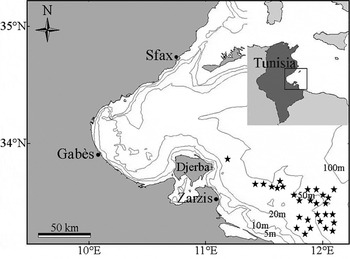
In the Gulf of Gabès (south of Tunisia) (Figure 1), longline fishery takes place from June to September. In the remaining months, most fishermen change the longlines for other gears targeting other species, such as the gillnet targeting sharks and rays, longlines using small hooks targeting sparidae, and the Karoor, which is a traditional gear targeting octopus.
The Gulf of Gabès. Locations of pelagic longline sets (★).

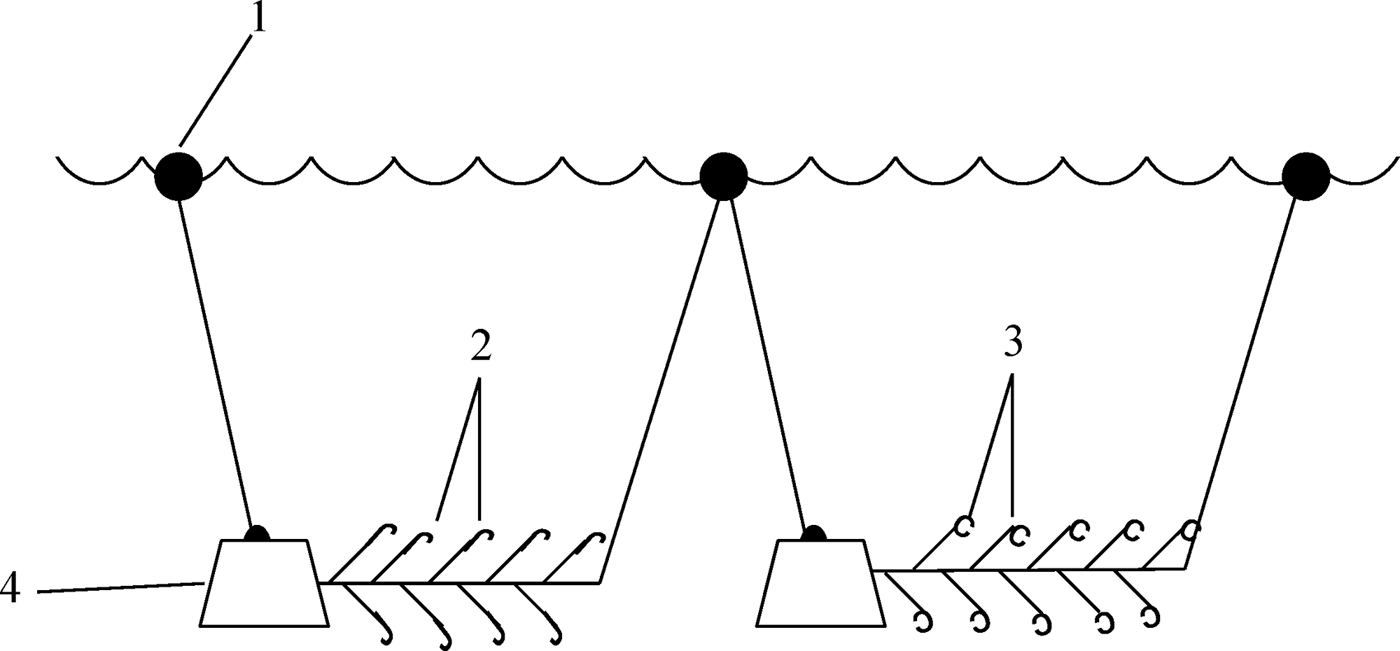
Experiments to test the interaction of bottom longline with groupers were conducted on a commercial longline fishing vessel attached to the port of Djerba located in the southern part of the Gulf of Gabès, Tunisia. Data were obtained from records taken by on-board observers during 29 fishing sets from five randomly selected trips in August 2011 (Figure 1). Bottom longline gear consists of a 1.3 km mainline anchored to the bottom, carrying a series of monofilament polyamide branchlines separated with a distance of about 4 m, each branchline is 1 m long and 2 mm diameter terminating with a single baited hook. A total of 520 hooks were deployed per set, of which 260 were ‘J’ hooks, attached to the first portion of the mainline and 260 circle hooks attached to the second portion (Figure 2). To reduce the variance in catch rates, only one bait type was used (Sardinella aurita) cut into sections. During all trips conducted, bottom longline was deployed at any moment of the day and retrieval started immediately or after 2–3 h (the number of sets deployed ranged from one to seven in one single trip).
Bottom longline: experimental design consisting of ‘J’ and circle hooks along the mainline. (1) float; (2) ‘J’ hook; (3) circle hook; (4) weight.

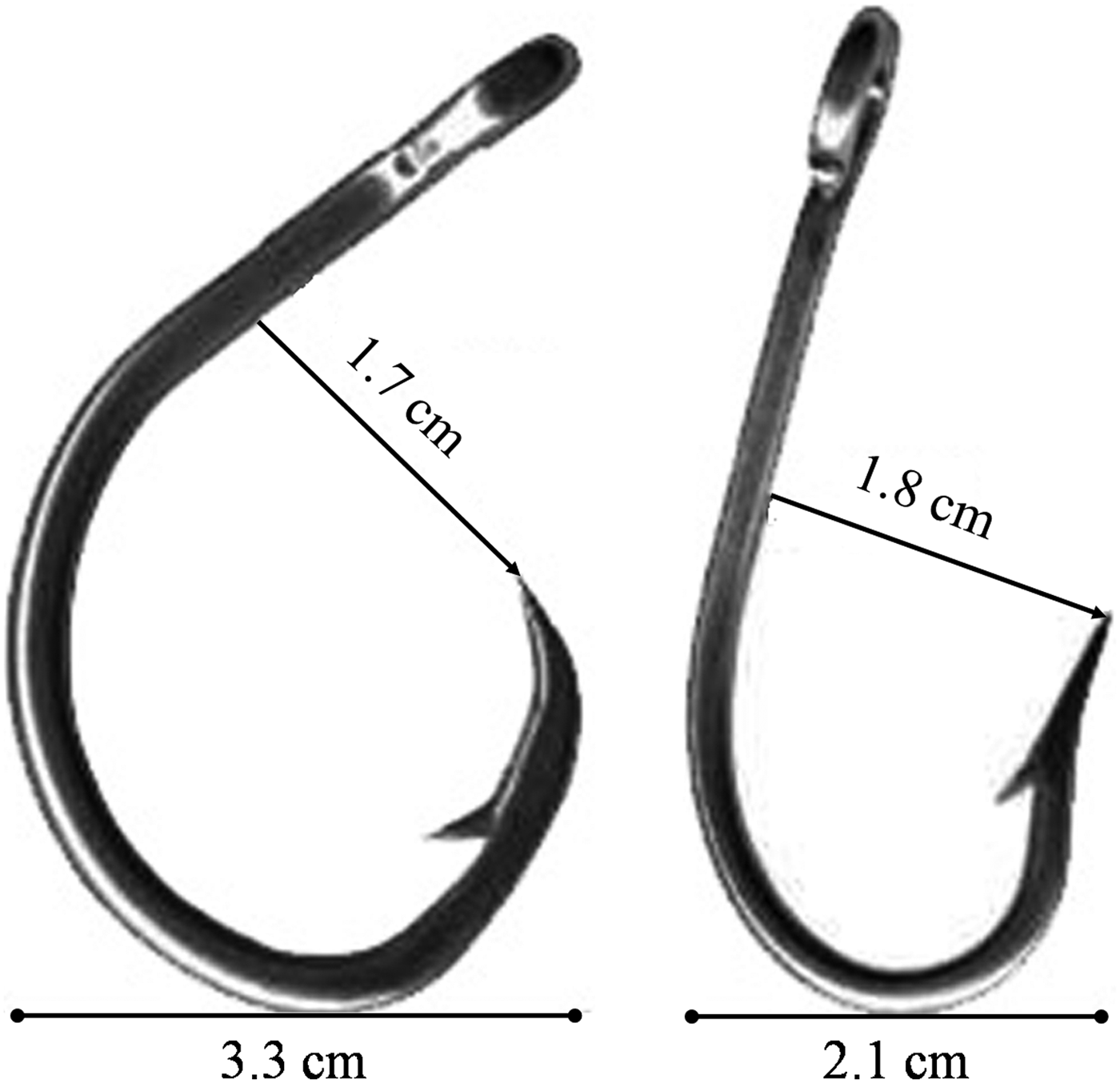
The relative hooking rates of a target and non-target species (by-catch) between circle and ‘J’ hooks, with particular attention paid to hook measurements such as the gape width and the narrowest width, were assessed. The gape width, i.e. the distance between the point and the shank (Cortez-Zaragoza et al., Reference Cortez-Zaragoza, Dalzell and Pauly1989), is one parameter proposed for hook size standardization among manufacturers (ASMFC, 2003). It is a functional parameter that affects the possibility of jaw hooking in fish (Cooke et al., Reference Cooke, Barthel, Suski, Siepker and Philipp2005), and can be conveniently related to the size of the fish mouth (Hovgard & Lassen, Reference Hovgard and Lassen2000). In this study, the gape width, or minimum inner width (Yokota et al., Reference Yokota, Minami and Kiyota2006), was assumed as a primary measure for hook size, thus hooks with an equal gape width are considered hooks of the same size. The narrowest width, or minimum total width (Yokota et al., Reference Yokota, Minami and Kiyota2006), was measured because it is a functional parameter that affects the possibility of swallowing the hooks.
Local fishermen selected the type and size of circle hook to be tested based on their traditional practices and experiences, from among a pool of hooks already in commercial use in other countries. The circle hook with a gape width similar to that of the ‘J’ hooks locally employed was chosen in order to optimize the jaw hooking of the target species. A circle hook (Mustad Circle hook 39960 D, made in Norway) size 12/0 with a gape width of 1.7 cm was tested and compared with the traditional ‘J’ hook (Mustad model number 92671) with a gape width of 1.8 cm. The narrowest width was 3.3 cm for the circle hook and 2.1 cm for the ‘J’ hook (Figure 3), thus because of the shape the circle hook was 33% wider than the ‘J’ hook. Both hooks were 0°offset, ending with a barb point, eye in-line with the hook shank, and no ring.
Gape width (centre) and narrowest width (bottom) of a Mustad circle hook size 12/0 (made in Norway) and a Mustad ‘J’ hook size (9/0).

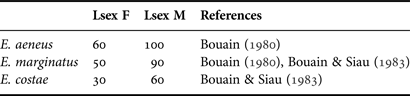
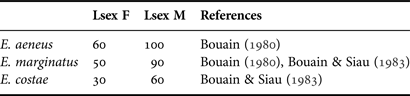
For each longline set, times and locations of initial and retrieval sets, species composition, catch rate and condition of caught individuals (alive or dead) at the time of haulback were recorded in relation to hook type. All individuals were identified and their total lengths (TLs) (to the nearest millimetre) were recorded. All Epinephelinae were combined due to their ecological and morphological similarities. Small (i.e. <50 cm TL) and large (i.e. ≥50 cm TL) groupers were analysed separately to examine differences in catch rates by size. Sex-ratio was identified based on a previous study conducted in the area (Bouain, Reference Bouain1980; Bouain & Siau, Reference Bouain and Siau1983) (Table 1). Hooking location was recorded for each fish and were characterized into three types: (1) ‘external’, if the hook lodged in the edge of the jaw, the corner of the mouth, or the snout/bill area; (2) ‘internal’, if the hook was swallowed (non-visible) or lodged in the roof of the mouth or throat; and (3) ‘entangled’, if the fish was entangled in the leader or hooked on the body other than mouth.
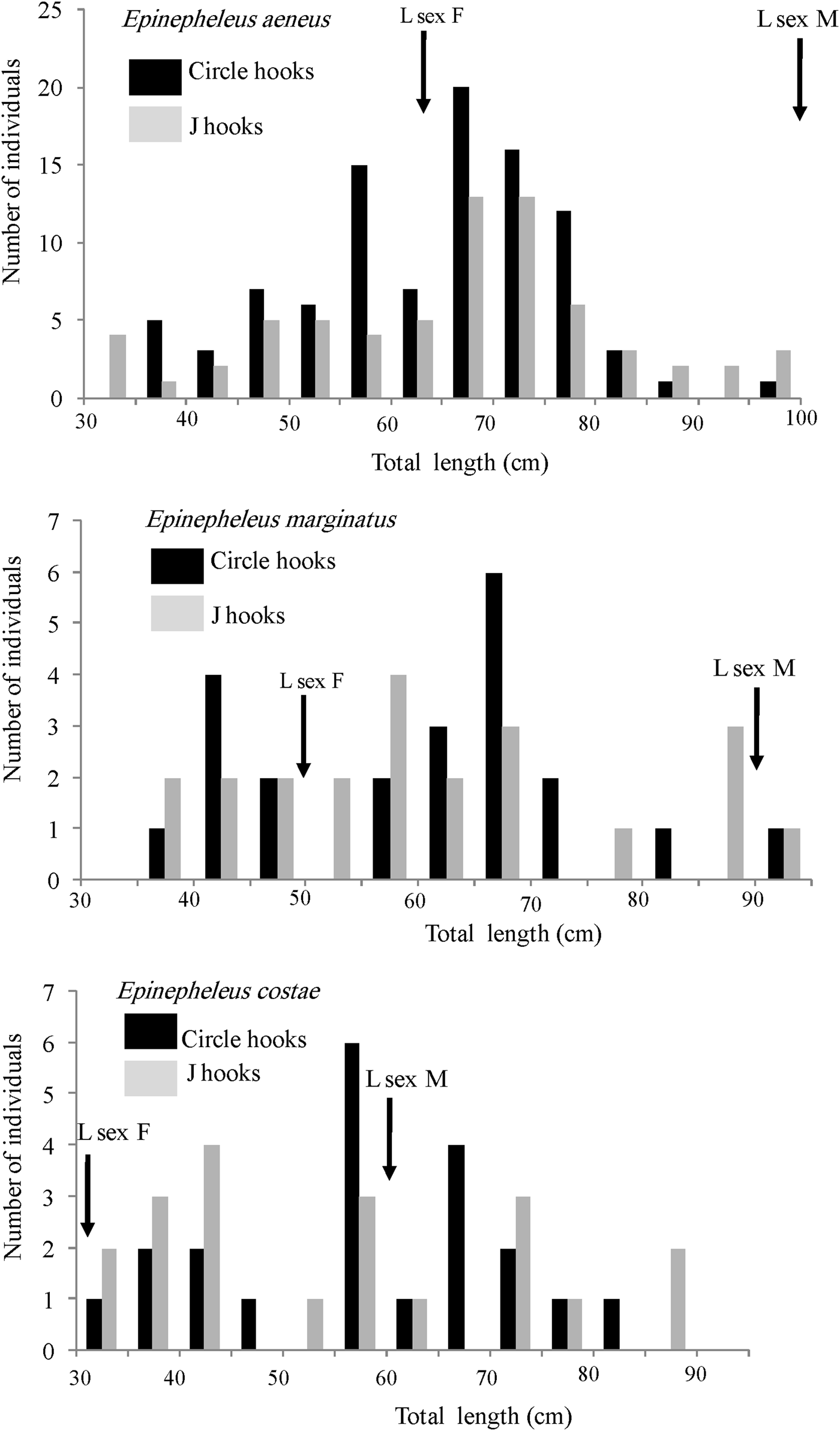
Size of maturity of Epinepheleus groupers species captured (Lsex F, 100% of females were mature; Lsex M, 100% of males were mature).
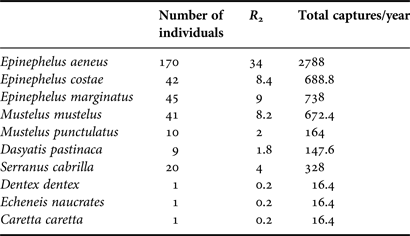
To assess the capture of species caught with longline, two catch rates (CPUE) R 1 and R 2 were calculated: R 1 is the number of caught specimens per 1000 hooks calculated and R 2 is the number of caught specimens per trip. Total captures were estimated by multiplying R 2 with the total fishing trips taken from the General Direction of Fisheries and Aquaculture.
The Wilcoxon signed ranks test was used to assess and compare the differences of species captures for each type of hook and to verify the effect of hook shape on hooking location. Analysis of variance (ANOVA) was applied to test the effect of day on the catch rate of groupers.
RESULTS
All species overview
A total of 340 specimens belonging to 10 species were caught during experimental trips. The investigation showed that 32 artisanal boats were practising longline fishery. A total of 92 fishing trips corresponding to 203 fishing days were recorded in the study area. The total number of individuals per species captured and corresponding R 1 values are summarized in Table 2. When considering the whole of hooked specimens per set, the difference between circle and ‘J’ hooking rates was not significant (Wilcoxon signed ranks test: Z = 0.414, P = 0.678).
Numbers and CPUEs (number of specimen per 1000 hooks) for each species captured by circle hooks (C), ‘J’ hooks (J), and in total (irrespective of the type of hook).

Target species: groupers
A total of 257 groupers representing three species were hooked: the white grouper Epinepheleus aeneus, the dusky grouper Epinepheleus marginatus and the gold blotch grouper Epinepheleus costae accounting for 66.14, 17.50 and 16.57% of the grouper catch, respectively. A total of 118 groupers were hooked with ‘J’ hooks and 139 with circle hooks representing catch rates of 8.13 and 9.58 specimens per 1000 hooks, respectively. Circle hooks caught more E. aeneus than ‘J’ hooks (Z = 2.246, P = 0.024) while the difference was not significant between the two catch rates recorded with the two types of hooks for E. marginatus (Z = 0.313, P = 0.753) and E. costae (Z = 0.070, P = 0.94). Considering all grouper specimens, the catch rates did not differ significantly across the type of hook (Z = 1.627, P = 0.103). Taking into account the annual total fishing effort in the study area (82 fishing trips) and catch rates (R 2), the estimated total captures are illustrated in Table 3.
Catch rate and total capture estimated.

A visual check of histograms of the size distribution (Figure 4) shows that E. aeneus specimens captured were mainly mature females (78%) while males were absent; juveniles were also present, making up 22% of the total capture.
Length–frequencies distribution of grouper species caught with bottom longline in the Gulf of Gabès.

Female E. marginatus represented a greater proportion of the landings (79.5%). Males represented 4.5% of the total capture and the proportion of immature specimens was about 20.5% (Figure 4).
Juvenile specimens were absent from E. costae captures. Mature females and males represented, respectively, 53.65 and 46.34% of the total (Figure 4).
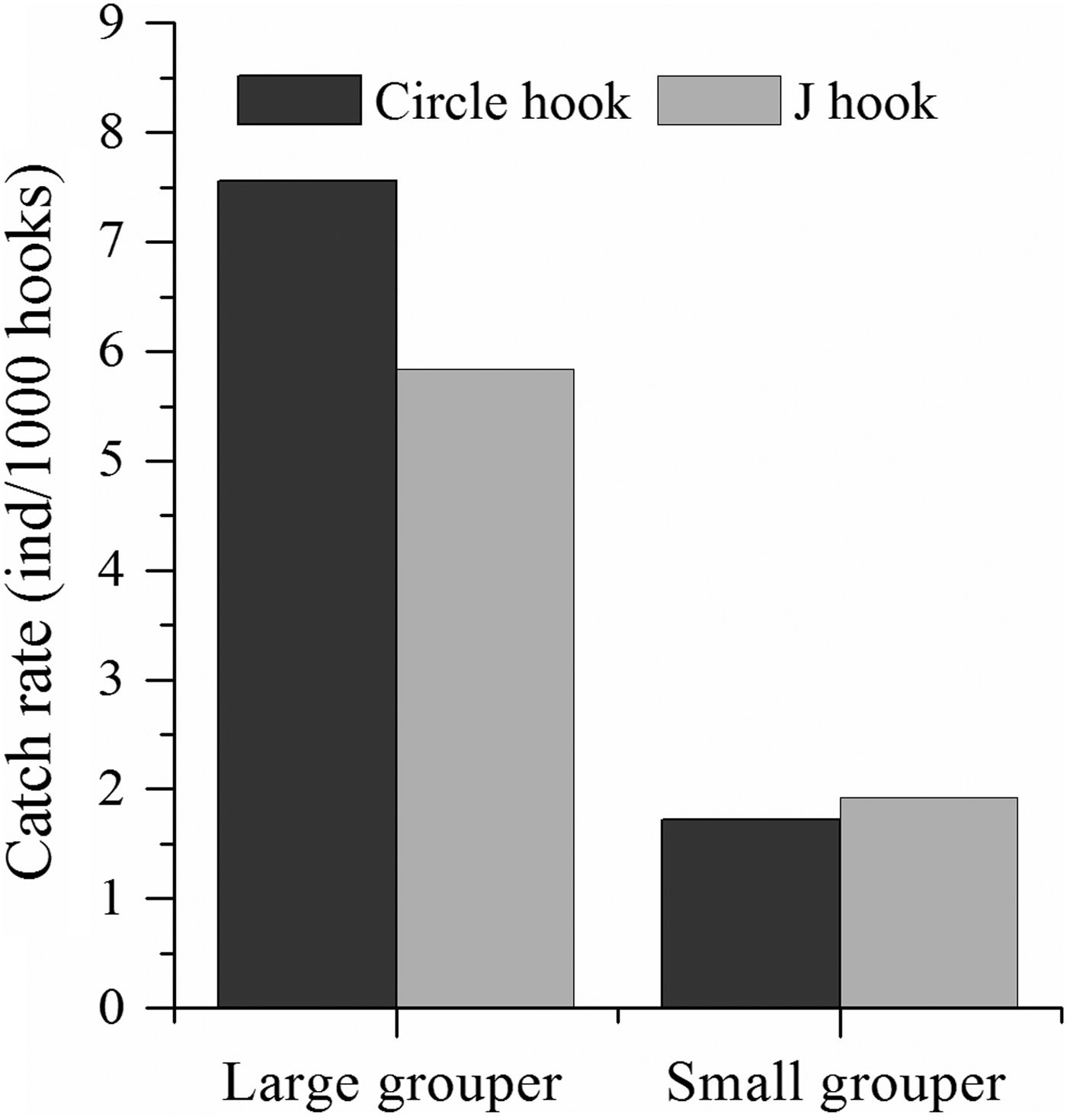
A total of 202 large groupers (TL ≥ 50 cm) were caught, representing 78.9% of all groupers caught. Daily catches of large grouper, pooled across hooks, ranged from 1 to 21 fish. The effect of day on catch was not significant (F = 1.33, P = 0.260), suggesting relatively invariant daily catches. Differences in large grouper catch rates across hook treatment were significant (F = 4.2750, P = 0.043) (Figure 5).
Catch rates of large (≥50 cm total length (TL)) grouper and small (<50 cm TL) grouper across hook treatments.

Small groupers (TL < 50 cm) comprised 21% of the total grouper catch. Daily catches of small grouper, pooled across hooks, ranged from 2 to 13 fish. There is no effect of day on the capture (F = 0. 790, P = 0.260), suggesting relatively invariant daily catches of small grouper. Differences in small grouper catch rates across hook treatment were not significant (F = 0.134, P = 0.71) (Figure 6).
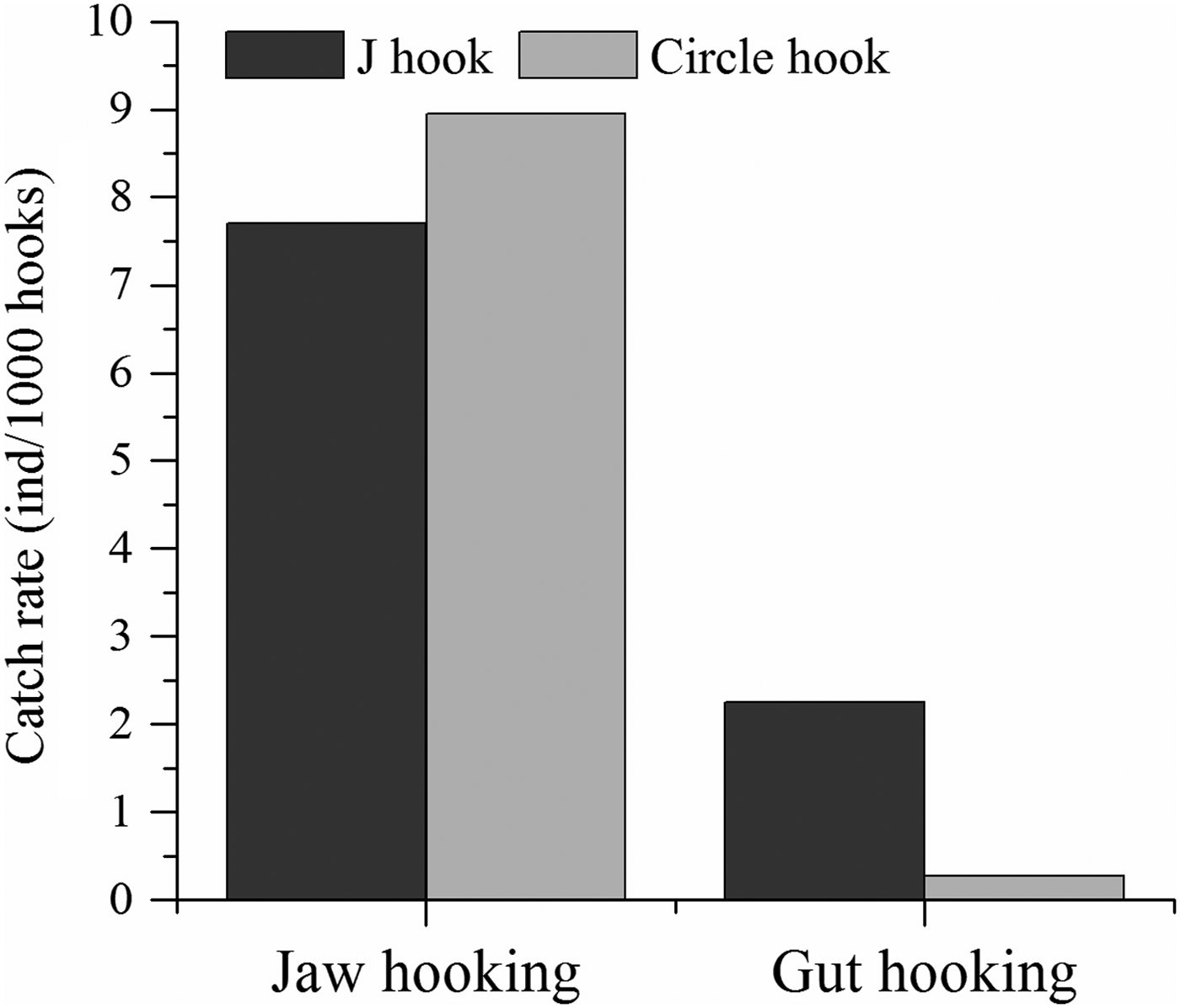
Proportions of various hooking locations across hook treatments in grouper species caught.

Groupers were mostly hooked in the jaw, but hooking also occurred in the gut (Figure 6). The difference between hooking rates was suggestive, but inconclusive (Z = 2.803, P = 0.050).
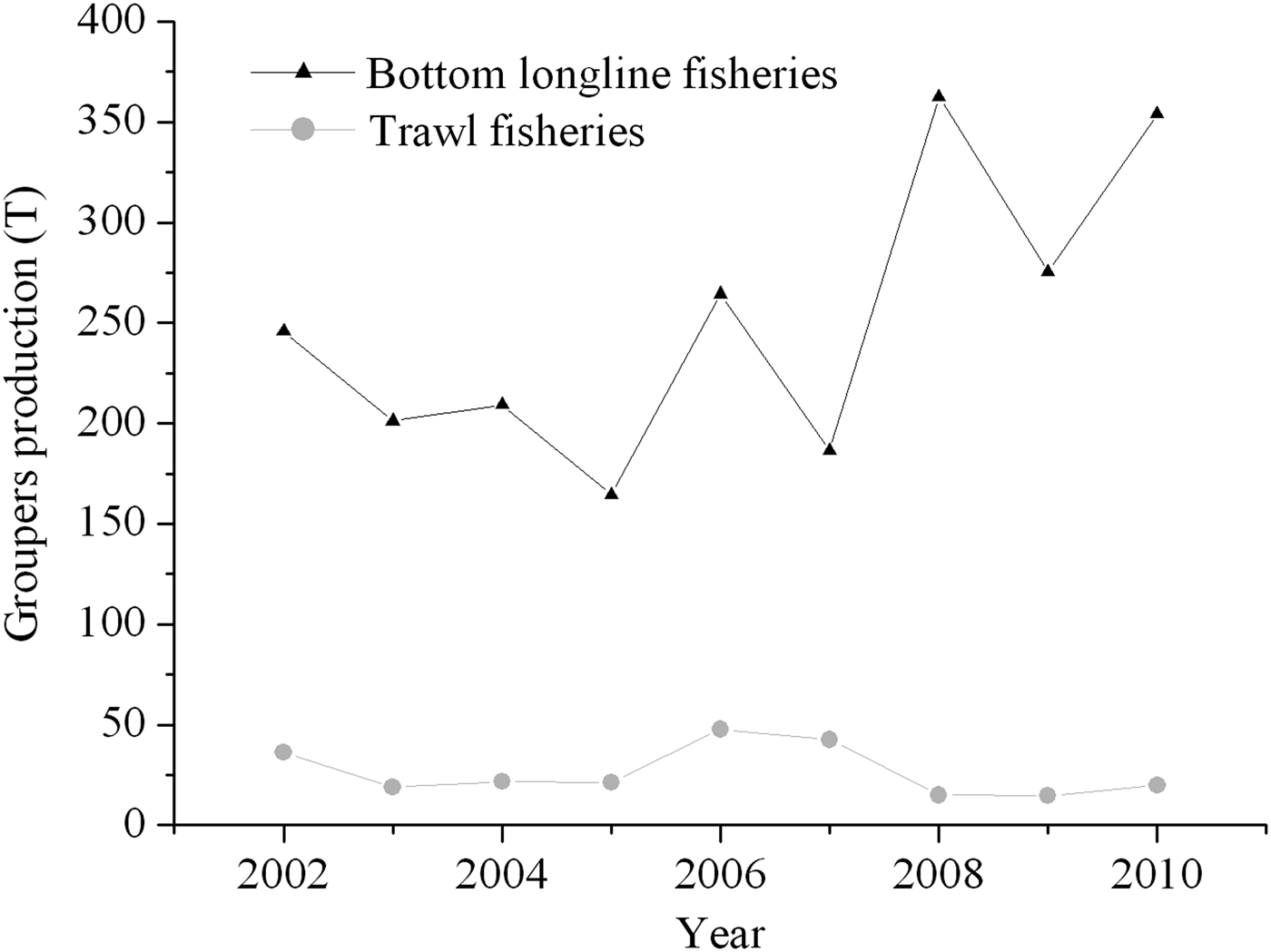
Catch rates and total capture estimates show the importance of grouper captures in the study area. Annual grouper production in the Gulf of Gabès is considered as the greatest in Tunisia (78%) and more than 72% of this grouper production is landed by longline fisheries (Anonymous, 2010). The annual catch recorded with this type of gear increased significantly in recent years: from 160 t in 2005 to 350 t in 2010 (Figure 7).
Grouper productions in the Gulf of Gabès.

Non-target species
A total of 83 specimens, belonging to seven species, were considered as non-target species (Table 2). Among them, 46 specimens were caught with ‘J’ hooks and 36 with circle hooks, corresponding to catch rates of 3.11 and 2.38 specimens per 1000 hooks, respectively. All specimens were hooked in the mouth, independently of hook type. Among these non-target species, elasmobranchs constitute the major number with 70 individuals: 36 specimens were caught with ‘J’ hooks and 34 with circle hooks. In addition to fish hooked, one loggerhead turtle Caretta caretta with curved carapace length of 45 cm was entangled in the mainline.
DISCUSSION
Bottom longline groupers interactions
This study show the importance of grouper captures in the Gulf of Gabès. The distribution of fishing operations highlights the remoteness of the fishing effort to the east. This distribution is due to anglers' choice in search of rocky shoals, wrecks and deep holes inaccessible to trawlers. This fishing distribution shows the existence of rich reef areas, arranged in a corridor to the east and playing the role of a relay for the renewal of Tunisian grouper populations from the east away from the effect of destructive gears (such as trawls and purse seiners). These findings support the previous study of Bouain (Reference Bouain1984) who showed a movement of Tunisian stocks fished to the east of the Gulf of Gabès, and that the population began to be overexploited in the north part of the Gulf of Gabès (Sfax).
Reef fishery managerment shows that fishing can affect the reproductive capacity of protogynous fish more severely than gonochoristic (separate sex) stocks. In protogynous stock, the increase of fishing mortality can reduce the relative abundance of males by reducing the abundance of the older age-class and diminish the probability that eggs will be successfully fertilized. In extreme cases, fishing can remove all the age-classes that contain males and thereby preclude any reproduction. Consistent with results obtained in this study, it is obvious for groupers species with late-occurring sex change that the greatest numbers of individuals caught are females. Concerning immature E. aeneus and E. marginatus caught in large quantities, two hypotheses can be suggested: (1) it could indicate the youth of the exploited population and a previous successful reproduction—the previous year could then correspond to a good recruitment; and (2) it could be a result of a sudden increase of fishing effort with other fisheries (trawling) capturing small individuals escaping from longlines. The disappearance of juveniles for E. costae can be explained by the importance of fishing effort in previous years, leading to poor recruitment.
This preliminary study shows a high exploitation of the primary grouper species E.aeneus and indicates that populations of E. aeneus and E. marginatus are generally equilibrated. The Epinephelus costae population constitutes a disturbing case by capture of individuals of large sizes. This can disrupt the reproduction of this species which takes place in the full fishing season.
Effect of hooks treatments
This study indicates that circle hooks increase the capture of groupers and aggravates the stock status of these species in Tunisia. This type of hook has beneficial effects for commercial fishermen. For the primary target species E. aeneus, catch rate (catchability) was higher with circle hooks than ‘J’ hooks. In addition, the difference in catchability was large enough to increase total catch and financial returns; among Tunisian groupers, the white grouper is the species with the highest commercial value. It is important to note that predictions of elevated catches and financial returns could be related to the longliner involved, style of operations, areas and seasons. For example, captures were similar among circle and ‘J’ hooks for striped bass and Atlantic bluefin tuna (Caruso, Reference Caruso2000; Skomal et al., Reference Skomal, Chase and Prince2002). However, chinook salmon were hooked and landed less frequently with circle hooks than other hook types (Orsi et al., Reference Orsi, Wertheimer and Jaenicke1993). In freshwater fisheries, capture efficiencies were highly variable among hook types (Cooke et al., Reference Cooke, Barthel and Suski2003, Reference Cooke, Barthel, Suski, Siepker and Philipp2005). Varying hook sizes and configuration may affect catch rates through as-yet unquantified gape size or other morphological feeding limitations among various species groups. For example, smaller hooks caught more sea bream Pagellus spp. than larger hooks (Erzini et al., Reference Erzini, Gonçalves, Bentes, Lino and Ribeiro1998), and a relationship between hook size and size selectivity was seen with circle hooks and freshwater bluegill Lepomis macrochirus (Cooke et al., Reference Cooke, Barthel, Suski, Siepker and Philipp2005). Bait species is likely to affect catch rates and it might also interact with hook type. Specific experiments are required to determine whether variables such as bait species and hook size affect the performance of ‘J’ and circle hooks across a broad range of species (Watson et al., Reference Watson, Epperly, Shah and Foster2005).
The power of the test evaluating the effect of hooks treatments on hook locations and the few samplings do not permit us to draw a definitive conclusion on the impact of hook treatments on hooking location. Several studies showed that the type of hook used can influence hooking location which can independently affect survival, injury, and ultimately fitness. Jaw hooking rates generally increased with decreasing hook size, whereas roof hooking rates decreased. The choice of proper hook, appropriate for minimizing bycatch injury and mortality while maximizing capture efficiency of target fish, seems to be especially important for the proper function of hooks if they are to provide reasonable conservation benefits. Circle hooks have been found to reduce gut hooking in bluegill Lepomis macrochirus (Cooke et al., Reference Cooke, Barthel and Suski2003), rainbow trout Oncorhynchus mykiss (Jenkins, Reference Jenkins2003) and striped marlin Tetrapturus audax (Domeier et al., Reference Domeier, Dewar and Nasby-Lucas2003). The study of Cooke & Suski (Reference Cooke and Suski2004) indicates that circle hooks function most effectively when the entire hook can fit in the mouth of the fish and when the shank to point distance (gape) is large enough to permit jaw hooking (Cooke et al., Reference Cooke, Barthel, Suski, Siepker and Philipp2005). The depth of hook penetration, which can delay or prohibit hook removal and may increase the potential for damaging vital organs, has been shown to vary with bait type in smallmouth bass (Clapp & Clark, Reference Clapp and Clark1989), rock bass (Cooke et al., Reference Cooke, Philipp, Dunmall and Schreer2001) and bluegills (Siewert & Cave, Reference Siewert and Cave1990). Generally, circle hooks have been promoted to increase survival by having a higher proportion of jaw hooking compared to deep or gut hooking (Kerstetter & Graves, Reference Kerstetter and Graves2006; Diaz, Reference Diaz2008). This type of hook facilitates jaw hooking by sliding over soft tissue and rotating as the eye of the hook exits the mouth (Cooke & Suski, Reference Cooke and Suski2004). Ease of hook removal will strongly influence potential injury and may create additional difficulties for anglers inexperienced with handling fish (Cooke et al., Reference Cooke, Philipp, Dunmall and Schreer2001).
Management implications
Successful management of grouper fisheries is complicated by the general lack of fishery information and life history characteristics of this group of fish. Conservation of these populations is further confounded by the delayed responses in the implementation of fishery restrictions, typically resulting in the implementation of management strategies following the overexploitation of targeted populations.
A slot limit (minimum and maximum capture limits) is a management method that could help protect the largest/oldest individuals of the population. For E. marginatus and E. aeneus, the minimum landing size should be increased to 50 cm TL and a maximum landing size should be established at 80 cm TL. For E. costae, where the situation is more serious, a maximum landing size must not exceed 40 cm TL. These measures can protect the largest/oldest members of the population, as has been done for other populations of large serranids (Pears et al., Reference Pears, Choat, Mapstone and Begg2006). At the same time, fishing should be banned in nursery areas which can be designated as marine protected areas, as this has been shown to be the best management strategy for protecting the E. marginatus population all around the Mediterranean (e.g. Harmelin & Harmelin-Vivien, Reference Harmelin and Harmelin-Vivien1999; Sanchez-Lizaso et al., Reference Sanchez-Lizaso, Goñi, Reñones, García-Charton, Galzin, Bayle, Sanchez-Jerez, Rérez-Ruzafa and Ramos2000; García-Charton et al., Reference García-Charton, Perez-Ruzafa, Sánchez-Jerez, Bayle-Sempere, Reñones and Moreno-Lampreave2004) as well as other long-lived hermaphrodite species. However, the effectiveness of this management measure will depend on the rate of survivorship of released individuals (this has to be estimated for the species), the total fishing mortality exerted and the level of compliance with the regulation.
The successful conservation and sustainable use of bottom longline fishery resource requires the following actions: (1) continued collection and survey of species specific information on catches and landings, by number and weight; (2) improved statistical data collection at the specific level; (3) delineate nursery areas in the Gulf of Gabès; (4) assessment of the impact of fishing mortality on juveniles and large size individuals; and (5) the undertaking of socio-economic studies of the bottom longline fisheries.
Although the use of circle hooks in this preliminary study increased the catch of primary target species and can probably play an important role in reducing internal hooking, there is insufficient evidence to suggest that circle hooks should be used for all recreational fish and fisheries. Rather, we need to support continued research in the field of developing novel terminal tackle that reduces injury and mortality of recreational fish.
The importance of by-catch species with bottom longline even with circle hooks may be of concern to fishery managers. Mainly, elasmobranchs are generally considered at risk of longlining because most species are slow-growing and long-lived, with low reproductive potential (Stevens et al., Reference Stevens, Bonfil, Dulvy and Walker2000). For some species of sharks, the fishing mortality of externally hooked individuals appears to be ultimately shaped by gear soak time. Conservation measures aiming to reduce by-catch post-release mortality by requiring the reduction of soak time coupled with the mandatory release of sharks and rays that are alive at the time of haulback could, therefore, be much more effective with the use of circle hooks. Gilman et al. (Reference Gilman, Boggs and Brothers2003) identified considerations in implementing measures to reduce by-catch. Such measures would have to meet the following conditions: (1) must significantly reduce by-catch; (2) must not cause increase of by-catch of protected or endangered species; (3) must require a minimal amount of alteration of traditional fishing practices and provide operational benefits; (4) must be practical for crew to employ and not increase safety hazards; (5) must increase fishing efficiency; and (6) must be feasibly enforced when limited resources for enforcement are available.
ACKNOWLEDGEMENTS
We wish to thank the Regional Activity Centre for Specially Protected Areas (RAC/SPA) and specially Mr Atef Ouerghi and also fishermen who allowed us to operate on its boat, all the crews, as well as all the scientists and on-board observers who have participated in this work.