Introduction
The population of older adults is increasing rapidly. It is estimated that globally, the number of over-65 s is expected to grow nearly two-fold over the next 30 years; from 506 million calculated in 2008 to 1.3 billion (United States Census Bureau 2008). The process of ageing augments the occurrence of chronic conditions (Department of Health 2011), increasing the burden not only on the individual and their life quality but also on health and social care budgets throughout the world (Kohl et al. Reference Kohl, Craig, Lambert, Inoue, Alkandari, Leetongin and Kahlmeier2012; World Health Organisation (WHO) 2012). In an attempt to improve the health of all nations and diminish the drain on global expenditure, physical activity (PA) has been promoted (WHO 2004, 2013), as it is known to benefit the health status and general wellbeing of the individual (American College of Sports Medicine 2009; WHO 2013). It can also prevent and manage long-term disorders and therefore is particularly advantageous to the older person (Department of Health 2011; Vogel et al. Reference Vogel, Brechat, Lepretre, Kaltenbach, Berthel and Lonsdorfer2009).
Evidence recommends that to be beneficial to the individual, PA should be carried out on a regular long-term basis (Department of Health 2011; Stiggelbout et al. Reference Stiggelbout, Popkema, Hopman-Rock, de Greef and van Mechelen2004). The challenge, therefore, is to facilitate a change in health behaviour so that the individual has the avidity to want to continue to adhere to a certain level of PA (Hughes et al. Reference Hughes, Leith, Marquez, Moni, Nguyen, Desai and Jones2011; Mulgan Reference Mulgan2010). In fact, older people with lower socio-economic status, health conditions or from black and minority ethnic (BME) groups are particularly less likely to adhere to PA (Department of Health 2011; Hughes et al. Reference Hughes, Leith, Marquez, Moni, Nguyen, Desai and Jones2011).
It has been recognised that support from people within the community can have a positive impact on individual behaviours towards their health and wellbeing (Department of Health 2011; Mulgan Reference Mulgan2010). As a result, a number of community health initiatives have come into being worldwide, including the setting up of PA groups (WHO 2008a). Community PA groups are keep-fit enterprises implemented in local settings, to provide older adults with opportunities to engage in a variety of PA such as walking, dancing, tai chi and aerobics. Although they differ in the agencies that are involved in the setting up, organisation and funding of these groups, many are voluntary run, therefore providing older adults with free or low-cost access to PA. These groups have clearly influenced some older adults to participate in PA who previously would not have done. However, adherence rates have been found to be poor (Garmendia Reference Garmendia, Dangour, Albala, Eguiguren, Allen and Uauy2013; White et al. Reference White, Ransdell, Vener and Flohr2005). In addition, men are less likely to engage in PA groups but there is no certainty as to why (Hughes et al. Reference Hughes, Leith, Marquez, Moni, Nguyen, Desai and Jones2011).
There is a plethora of research which has explored the barriers and motivators to engagement in PA (Hardy and Grogan Reference Hardy and Grogan2009; Schutzer and Graves Reference Schutzer and Graves2004). However, studies concerning the long-term adherence of older adults to community PA groups are limited. The aim of this study is therefore to explore experiences of PA groups from the viewpoint of a diverse range of older adults who live in the community. Older adults from sub-groups who are less likely to adhere to PA will be included in this study; specifically those with chronic health conditions, people from BME groups, people of a low socio-economic status and men. The intention is to gain an understanding of what older adults attain from attending community PA groups and, in particular, what influences their adherence to these groups, so that future initiatives can be tailored to provide optimum conditions for their long-term adoption.
Method
A qualitative, exploratory approach was used in order to gain an insight into older people's experiences of community PA groups (Creswell Reference Creswell2013: 43–7). A purposive sample of 18 community-living older adults aged 65 and over from North West England, who participated in community PA groups, was recruited for this study. A member of the local government who had contact with community PA groups facilitated access to the participants (Creswell Reference Creswell2013). To enable the recruitment of participants from the sub-groups identified who were less likely to adhere to PA, three PA groups were purposively selected: one group from the African Caribbean community, one group was a general PA group available to all, and one group was for older adults with cardiac dysfunction. In addition, the three groups selected were situated in different districts in terms of regional deprivation (Department for Communities and Local Government (DCLG) 2011a). The cardiac rehabilitation group was chosen as cardiovascular disease is a chronic condition, known to be the largest cause of mortality in the older person (WHO 2011; Wittink, Engelbert and Takken Reference Wittink, Engelbert and Takken2011) and is particularly associated with inactivity. Furthermore, long-term adherence to PA has been found to be beneficial in improving cardiovascular function and reducing the chance of reoccurrence of coronary dysfunction (British Heart Foundation 2012; Department of Health 2011).
The researchers were invited to attend the PA groups to give potential participants details of the study and to ask for six volunteers from each group to participate in the research. It was felt that North West England would be an appropriate region to draw the sample from due to the diversity of its population in relation to the demographics of interest in this study, including ethnicity and socio-economic status.
Focus groups were undertaken with the participants. This can be a useful method for exploring how people think and feel about a particular topic as the participants respond not only to the researcher, but also to each other (Holloway and Wheeler Reference Holloway and Wheeler2010: 126–36). The 18 participants took part in one of the three focus groups (six participants per group). It is considered that six participants is the optimum number for a focus group as this is sufficient to generate debate and new ideas, whilst allowing all the participants to contribute and to be heard clearly (Holloway and Wheeler Reference Holloway and Wheeler2010). All focus groups were conducted by the same researcher on the premises of the meeting place for the group, as this would be more familiar to the participants and minimise the burden on those who wished to participate. Each focus group lasted approximately 60–90 minutes.
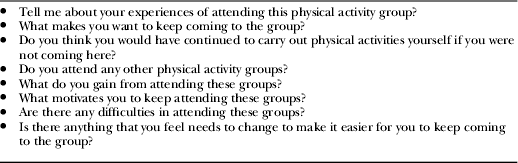
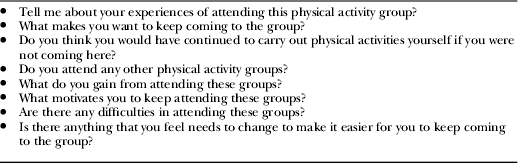
Participants completed a questionnaire of demographic information. An interview topic guide was used in the focus groups to guide data generation (Table 1). Follow-up questions were asked by the interviewer to explore further the groups’ responses.
Focus group topic guide
Ethics
As this research involved the public, an application to the Faculty Ethics Committee at the researchers’ own academic institution was submitted and approval was granted (Manchester Metropolitan University, reference number 1139, 2012). The central tenet of research ethics is to protect the dignity, rights and wellbeing of the participants (British Educational Research Association 2011). This included gaining informed consent, maintaining confidentiality and protecting anonymity.
Data generation and analysis
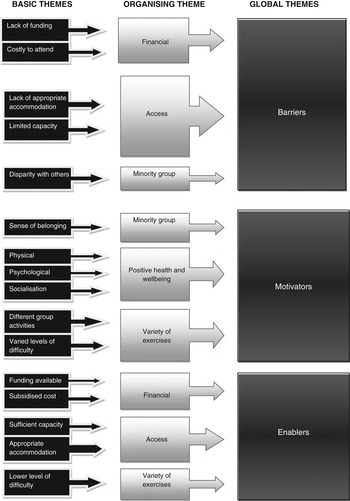
The focus groups were digitally recorded and transcribed verbatim. Thematic Network Analysis was used to facilitate the structuring and depiction of the themes and to analyse the data (Attride-Stirling Reference Attride-Stirling2001). The initial stage entailed open coding of data (Corbin and Strauss Reference Corbin and Strauss2008: 195–204). This involved repeated listening to the audio recordings, and transcripts and field notes of the interview were read and re-read to ensure that the findings were grounded purely in the data. During this process, codes were applied to segments of the textual data that identified salient points. Codes which established recurring premises across the interviews were then arranged together to form basic themes. Basic themes are the lowest order notions derived from the data and on their own give little meaning to the text as a whole (Attride-Stirling Reference Attride-Stirling2001). The next stage was to group together conceptually similar basic themes into organising themes. Organising themes summarise the main assumptions of the assembled basic themes and, as such, give more meaning to the text. Finally, global themes were derived from the collection of related organising themes. It is these global themes which encapsulate the principal metaphors in the text (Attride-Stirling Reference Attride-Stirling2001) (Figure 1). These themes iteratively fed into subsequent data generation.
Themes identified from older adults’ perceptions of adherence to community physical activity groups.

To ensure rigour, two researchers independently analysed the data. Both researchers showed substantial agreement in their analysis. Where disagreements were found, these related to semantics rather than due to differences in interpretation. This was resolved through discussion; with the authors deciding jointly on the words used for the theme which best reflected the experiences of the participants (Corbin and Strauss Reference Corbin and Strauss2008). This critical discussion contributed to a deeper reflexive analysis that facilitated the refinement of the themes in the Thematic Network (Holloway and Wheeler Reference Holloway and Wheeler2010). This process encouraged thoroughness in interrogating and analysing the data (Barbour Reference Barbour2001).
Findings
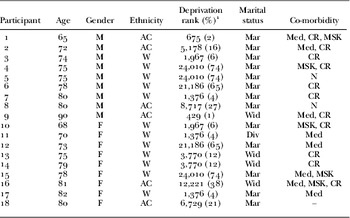
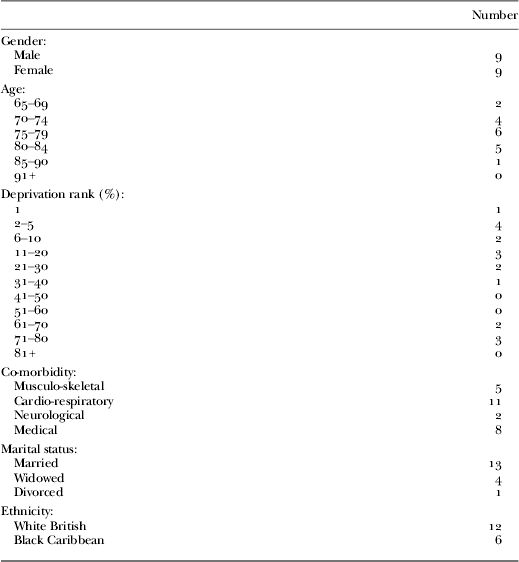
Eighteen participants took part in one of three focus groups (nine males and nine females). Twelve of the participants described their ethnicity as white British and six as African Caribbean. The participants resided in areas ranked between the 1 and 74 per cent most deprived areas in England (Table 2) (DCLG 2011b), with 28 per cent (N=5) of the participants coming from the 5 per cent most deprived areas.
Demographics of older adults who participated in the focus groups

Notes: 1. Deprivation is based on the Income Deprivation Affecting Older People Index at the Lower-layer Super Output Area (LSOA) level (DCLG 2011a). LSOA relates to geographies for the collection and publication of small area statistics (DCLG 2011a). There are 32,482 LSOA in the country. The LSOA with a rank of 1 (1%) is the most deprived, and 32,482 (100%) is the least deprived (DCLG 2011b). M: male. F: female. AC: African Caribbean. W: White. Mar: married. Wid: widowed. Div: divorced. MSK: musculo-skeletal (arthritis, osteoporosis). CR: cardio-respiratory (hypertension, asthma, chronic obstructive pulmonary disease, myocardial infarction, angina). N: neurological (stroke). Med: medical (diabetes, underactive thyroid, visual impairment).
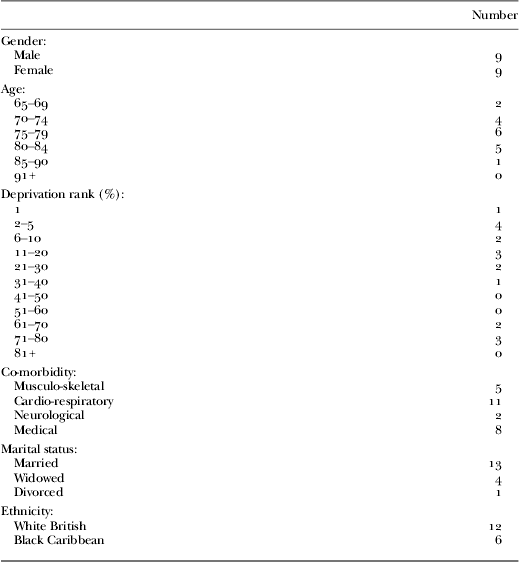
Seventeen of the 18 participants had one or more co-morbidities, including: musculo-skeletal (arthritis, osteoporosis); cardio-respiratory (hypertension, asthma, chronic obstructive pulmonary disease, myocardial infarction, angina); neurological (stroke); and medical (diabetes; underactive thyroid, visual impairment) (Table 2). A summary of the demographic data is presented in Table 3.
Summary of the demographic data of older adults who took part in the focus groups
Themes
Three global themes were identified: barriers, motivators and enablers, to PA adherence. The findings and discussion have been presented under the organising themes as these were often linked to more than one global theme (Figure 1). Direct quotes from participants have been included to illuminate the findings. Pseudonyms have been used to ensure anonymity.
Organising theme: financial
Financial expenditure was identified as a barrier and an enabler to PA adherence, as high costs to engage in PA would make regular attendance unaffordable for many. What seemed particularly significant to the participants was that they were given the free use of the Community Hall to carry out PA. Consequently, only a minimum fee for attendance was charged, usually for the upkeep of equipment. Keeping costs down in this way enabled participants to make PA part of their weekly routine and thus facilitated their adherence. Sustainability of this financial support, however, was a concern as one participant claimed:
One of the problems is likely to be the hall … [due to] the economic climate 18 months ago there was talk of making a charge. At the moment we get it for nothing, but there's talk of a charge being made for the use of the hall. That could cause problems.
When asked if increasing charges would influence their adherence to PA, one participant said:
Well if it got too much, course it would, yeh course it would. You've gotta think about we're all pensioners … Some others, they go to a few groups in the week … you've only got so much money haven't you.
Organising theme: access
Even though a physical space was provided for the older adults, it was clear that this accommodation was limited, as the groups were reaching their full capacity:
We are rapidly approaching saturation point, if they all turn up, you get 37, 38 … the stations that we do, normally set out two, but most of them we can set out three, so going into groups of three. We are struggling though aren't we after three. Yeah … there's too many.
Furthermore, finding other places that were appropriate to engage in PA was highlighted as an issue. This lack of suitable space provided a barrier to instigating older adults into PA and hence facilitating their long-term engagement. As one participant alleged:
There's people that want to set up groups but there's no places, no halls they can go to … We have a user's meeting once a month and we've got people from Lisebrook coming. They want to start up what we have got … but have nowhere to go … They have but it is small, they could do with something bigger. No equipment, apparently all that they have got was run for children so they've got low tables and low chairs so there is nothing they can do for the older people but it is getting grants, isn't it?
Organising theme: minority group
It appeared that being in the minority when attending PA groups created a barrier to adherence. Participants who perceived themselves as the marginal group felt that they stood out from the rest of the group as they were different and this deterred them from continuing to pursue PA. What seemed important for adherence was the ability to relate to others with whom they had a common interest. One of the participants said that she attended the African Caribbean Centre so that she could be with people from her own ‘culture’, her ‘sisters and brothers’; so they could talk about their heritage. This was more important to her than the accessibility of the facilities as it took her three buses to get there. When asked why she chose to travel this distance rather than attend a local group, she responded:
It wasn't my people … When I looked around all I could see is white faces, I was the only black one.
Whereas she said that she regularly attended the African Caribbean Centre because:
I feel more homely because we all are just one, we all just West Indians, we communicate as one … If we speak to white people about their history we don't know anything about it so we cannot discuss anything with them because they are not from the West Indies.
Feeling in the minority was not just related to ethnicity. Participants from two of the three groups were all white British, with women being the majority attendees. This appeared to alienate some of the men from adhering to the PA, as they seemed to feel a disparity with the female members of the group. As one of the males said:
I gave up because I found I was the only male amongst a predominantly female exercise group. I was just the odd one out; it was uncomfortable to be the only male.
Another male participant reiterated this by claiming:
When it comes to this other group, and same as the Monday group, I found it was uncomfortable being the only male. I probably shouldn't have been but I was, so I stopped going there.
When the males were questioned as to why they felt uncomfortable in that situation one participant claimed:
Well personally, and this is personal, I think women talk too much … when I go walking on a Thursday it's mostly women that go walking and some of them, they never stop talking all the way around … [the conversations are] trivia really and nonsense.
Even so, the ability to socialise with others had been identified by some of the men as a reason for them wanting to continue to attend PA groups. However, it seemed that men perceived that their topics of conversation with other men were different to women. When asked what men liked to talk about, one of the males said:
… football and more nonsense. Well it would be mostly news and sport … DIY or something like that, gardening, holidays.
Whether the men themselves or the behaviour of the women towards the men in the class brought on this alienation is not clear. However, one of the women did claim that ‘women have more of a laugh than men’ and it appeared that men were discouraged from attending one of the PA groups.
It's always been women only this group, this Thursday one … There is Active Life, they [the men] can go to that if they want.
Even so, this was not always the case, and on some occasions, men continued to pursue PA even though women outnumbered them. This seemed to be related more to the activity that was undertaken and whether it was pleasurable for them. What seemed to be particularly popular for the men was the walking group. As one of the males stated:
I still come here; I've come here for six or seven years, the Nordic walking where it's predominantly women … eight, nine, ten to about three males and the Wednesday walk, which is predominantly women …
However, this was not the only PA group that some men appeared to like and continued to attend. As one of the women added:
When the tai chi was on it was only women and then slowly we got Mike and Paul … they came and although they laughed because of it being tai chi, they enjoyed it … so they still carried on.
Organising theme: variety of exercises
It appeared that for the majority of participants having a range of PA was more motivating and participants were more likely to adhere as it gave variety to their sessions and fulfilled their different needs:
We're all in different [PA] groups … Annie's in a couple aren't you, I'm in a couple. We not only do keep fit we do line dancing and the Heart group, it's what you want, … fun and games.
Having access to different physical activities also appeared to be more enabling for some participants as the variation in exercise level that this provided meant that people of different physical abilities could attend:
… they now have two groups, a slow walk group and a faster, normal group. There's no pressure, it's comfortable.
Organising theme: positive health and wellbeing
Most of the participants adhered to PA in order to improve their health and psycho-social wellbeing. Some were particularly motivated by the physical benefits that they gained from being more ‘active’ and ‘agile’. As one participant said:
There's the health … [it] keeps you fit.
Enhancing physical ability had improved, for some, their capacity to carry out activities of daily living. For one participant, it seemed that accessing PA groups had developed her capability to function more independently. She acknowledged that taking part in PA had given her more ‘freedom’. When asked what this freedom was from, she responded:
Depending on other people to come and do this and that. I had a hip replacement and if it hadn't have been for here, I wouldn't be able to do half what I do now … I'd be sat in the house with the others.
For some of the participants, gaining weight appeared to be a particular concern. As one participant claimed:
Well, I think as you get older you tend to put weight on easily and they say it's harder to lose it.
Whereas attending the PA groups on a regular basis was seen as a way to lose or manage their weight:
… I am prone to put weight on so I'm constantly thinking about my diet and the walking exercises [done at the PA group], walking in particular, does help me to be aware of that. I should do more really.
Attending PA groups for people with heart conditions offered the older person somewhere to go after discharge from the National Health Service cardiac rehabilitation classes so that they could continue to improve their fitness and retain the benefits that they have already gained from exercising. For one participant in particular, regular attendance at this class had helped him to achieve a very high level of physical health:
I couldn't walk up any sort of an incline, or 100 yards I couldn't walk, and yet within the first year I did the Manchester 10 K and finished it. The year after I went up Kinder Scout and Mam Tor [hill walking] and loads of climbing that I hadn't done for 50 years, since I was a boy. That's the advantage it meant for me, so I was determined to try, if I could, to keep up the advantages that have been handed me.
Participants who had other morbidities claimed they were motivated to adhere to PA groups because of the advice and education they got from health professionals, which helped them to manage their own medical conditions:
Yeh, because you can speak to people and we have speakers in; a nurse telling us about all the inhalers and that, which is useful information, stuff you wouldn't find out at home … And with our arthritis I wouldn't do half as much as what I would do if it wasn't for a place like this. … the people that train you and the people that listen to you, they're really good. She [the nurse] tries to sort your health problems out for you … she's really good. If you say you have something she'll know someone who's had something similar and will tell you what to expect or how you will be or what medication to ask for.
Interacting and sharing experiences with others who had similar ailments provided the opportunity for participants to support each other to cope with their situation, as well as learn ways that may help to improve their health status. As one participant said:
… it makes it easier to know things. When you say, ‘oh my blood sugar is low’, and the conversation can develop from that and so forth. So that helped me.
Another participant who had a number of morbidities claimed:
I have diabetes and blood pressure, everything, arthritis even, you name it … And people tell you what helped them and you can feed off them and say; ‘alright, that thing helped them’. And if you've got a good thing to tell them they say; ‘alright a certain person takes this and it helped them so we will try it and see if it helps’.
Psycho-social benefits appeared to be another motivator for adhering to PA sessions. Most participants highlighted the emotional support gained from attending these groups as they felt that it ‘raised spirits’ and helped them to ‘get through life’.
Mentally [it's helpful] because you make friends and perhaps you're feeling down and you don't want to go out, but this motivates us to come.
It was apparent that this support and concern for each other's welfare occurred not only during attendance at the group but continued outside the classes when members had returned home:
… I think the importance is the friendship, the companionship, the friends. Once you've made friends and if that friend needs help, then you keep in touch … and we're constantly ringing and if there is one not well, we keep in touch.
Socialisation with others also appeared to encourage individuals to adhere to PA. Group activities afforded an opportunity to meet different people on a regular basis for ‘chatter’, to have ‘fun’ and to make ‘friends’. As one participant said:
… [the group] developed very much into a social thing and people love coming because everybody knows each other and they're all very friendly and it's a great place to come on a Tuesday, that's my sort of feeling on this.
Retirement seemed to make this more important for some, as being retired gave these people more time on their hands which they needed to fill and more time enabled them to attend regularly.
… when you retire you find that you've not got much to do so you find places to go that's why when I retired I came here … [whereas] when you're working you are not looking for it really.
This also seemed particularly the case for people who were on their own as it gave them something to get involved in and share the company of others:
I come because it's something for me to do. I'm retired now, the kids are gone so I am living on my own, so I need something to do.
In fact, many participants had taken on various organisational roles within the groups, which they saw as an important part of attending. These ranged from being part of the user group who met regularly to discuss matters concerning the running of the PA groups, to arranging guest speakers, checking and putting out the equipment, to making the tea. Some in the group got involved in ensuring the health and safety of their peers:
We've done a first aid course … it is quite voluntary, it's just basic but it's just what you want. There are four of us here, first aiders.
Discussion
Financial expense is an important consideration for the older person, as participants highlighted that increasing the charge of attending PA groups would provide a barrier to their adherence. What was particularly significant in keeping the costs low was the availability of free accommodation that was suitable for older adults to carry out PA. However, it was apparent that the current provision was inadequate to cater for a large number of people. Therefore, the securing of additional, inexpensive physical spaces for PA is vital. The promotion of partnerships between government and non-governmental organisations to provide resources to support local PA schemes have helped somewhat in reducing costs (WHO 2008a, 2013). However, community initiatives have often amounted to short-term commitments that have not been maintained (Jupp Reference Jupp2008). It could also be said that governments’ abilities to commit to this financial outlay long term is questionable, as since the global financial crisis there has been increasing pressure on nations to reduce government expenditure (The Kings Fund 2012; WHO 2009). Therefore finding more sustainable ways to provide financial support would therefore seem prudent, as the health benefits gained by the adherence of the older adult to PA, would help in the long term to reduce the burden on health and social care budgets (Kohl et al. Reference Kohl, Craig, Lambert, Inoue, Alkandari, Leetongin and Kahlmeier2012; The Kings Fund 2012).
It has been suggested that corporate organisations that have both the financial capital and, for many, are internationally situated could provide the opportunity to become more engaged locally (WHO 2008b). However, government policies sanctioning more endurable corporate social responsibility commitments to PA community enterprises are needed, to ensure this obligation is undertaken. Companies and other non-governmental organisations could assist more by providing resources including the use of their own facilities for PA groups to run, for example, corporate staff gymnasiums, sports clubs, national sports bodies and educational establishments.
It was apparent that being in a minority group, for some, was a barrier to adhering to PA groups. In this study, minority groups corresponded to the male gender and ethnicity. Participants from these sub-groups articulated a preference to be around individuals of a similar identity and culture. However, what seemed significant for adherence was that participants felt a sense of belonging to the group, which was instilled by their ability to interrelate with their peers. For those who foregrounded their ethnicity, it was by sharing biographies and stories about their heritage, that a kinship with others from the African Caribbean community was felt. Conversely, for those men who foregrounded their gender, they felt a disparity to the women whom they perceived as talking too much and about subjects of little interest to them. Individuals are known to feel a belonging to others whom they perceive as bearing a resemblance to how they view themselves and their own behaviour (Charles and Davies Reference Charles and Davies2005; Phillipson Reference Phillipson2007). Furthermore, it is by interacting and through social discourse with others that this self-validation can occur (Jupp Reference Jupp2008). Therefore, providing access to ethnic- and gender-specific PA groups may encourage more older adults to participate in PA, however, it is only through offering opportunities to develop social relationships within the groups that identities can be affirmed and adherence to PA will be facilitated.
Men, in particular, have been found to be less represented in community PA groups (Hughes et al. Reference Hughes, Leith, Marquez, Moni, Nguyen, Desai and Jones2011). Providing PA arenas which offer the chance for men to develop social networks with each other would, therefore, seem pertinent. Indeed, recent research on ‘men's sheds’, a place for men to share practical skills and interests, has highlighted that the social support and interaction men gained from each other was a key influence for them wanting to meet on a regular basis (Ormsby, Stanley and Jaworski Reference Ormsby, Stanley and Jaworski2010). It has been suggested that men are more likely to engage in what may be perceived as ‘masculine’ environments, such as sporting venues and fishing clubs (Golding Reference Golding2011; Witty and White Reference Witty and White2011), and are more driven than women by the effort and competition of the PA that they undertake (Barnett, Guell and Ogilvie Reference Barnett, Guell and Ogilvie2012). Therefore, the establishment of PA groups within these settings that are already appealing to males, and providing opportunities for PA that are more challenging, would seem an ideal prospect to facilitate PA adherence for men.
Providing ethnic- or gender-specific environments in this way can be seen as inclusive in that they encourage the adherence of specific groups of older people to PA who may not have continued to engage otherwise. However, as has been shown in this study, it can also be perceived as alienating, hence exclusionary to other sub-groups (Cattell et al. Reference Cattell, Dines, Gesler and Curtis2008; Warburton, Ng and Shardlow Reference Warburton, Ng and Shardlow2013). It is also important to note that for some men in this study, being in the minority was not a barrier to adherence to the PA group. In this situation, men appeared motivated to adhere to PA they found enjoyable to undertake. In fact, this was an important factor for many of the other participants also. This resonates with previous research that has identified that people are more likely to continue an activity that they find pleasurable (Hardy and Grogan Reference Hardy and Grogan2009; Horne et al. Reference Horne, Skelton, Speed and Todd2012). Therefore, offering PA opportunities that are perceived as enjoyable to the older adult will help to facilitate their adherence.
Some participants also highlighted the provision of varied PA, requiring different levels of effort, as a motivator to adherence. Providing a diverse selection of PA should improve the prospect that the older adult finds a PA which is not only pleasing enough for them to want to continue (Hughes et al. Reference Hughes, Leith, Marquez, Moni, Nguyen, Desai and Jones2011; Mulgan Reference Mulgan2010), but is more likely to enable individuals to adhere over time as their level of ability may change. Therefore, providing a variety of opportunities for PA would be more conducive to adherence for all sub-groups.
When individuals act and interact together, they co-create the social environment within the physical location that they are situated, in order to achieve the collective requirements of the group (Cattell et al. Reference Cattell, Dines, Gesler and Curtis2008; Wiles Reference Wiles2005). Therefore, when older adults become actively engaged within the group they can influence what takes place within that setting, to ensure their needs are also being met. As was seen in this study, if the group is majority white British or women, then the environment will reflect the requirement of this majority group which can be perceived as alienating to other minority sub-groups, in this case BME groups or men. Even so, this is not a fixed state as the environment is constantly being reshaped depending on the individuals engaging and their changing needs (Wiles Reference Wiles2005; Wiles et al. Reference Wiles, Allen, Palmer, Hayman, Keeling and Kerse2009). It has been found that older people can be adaptive to different settings (Wiles et al. Reference Wiles, Allen, Palmer, Hayman, Keeling and Kerse2009). However, as has been identified in this study, individuals need to feel a similarity to others in the group to want to participate and hence take the time to adapt. Therefore, it seems reasonable to suggest that as long as there are others within the group that the individual can initially identify with, through their involvement and interaction within the group, they can help to modify the environment to be more conducive to their own long-term adherence. Thus, potentially creating a setting that is more inclusive to a greater number of individuals rather than exclusive (Cattell et al. Reference Cattell, Dines, Gesler and Curtis2008; Charles and Davies Reference Charles and Davies2005). It would seem therefore a balance is needed between cultivating environments that will encourage specific sub-groups of individuals to adhere to PA but also providing more universal settings that could promote long-term adherence for a more heterogeneous group. For example, there may be the potential for more inter-cultural engagement amongst marginal groups, as being the minority group may be the defining factor that binds them together. Further research is needed to identify how environments may be fostered, which facilitate cross-cultural group adherence.
Some participants had highlighted that regularly engaging in PA provided them with something to occupy their time, particularly after retirement or for those who lived on their own. In fact, many participants had taken on organisational roles to help with the running of the group. Kohn (Reference Kohn, Hastrup and Hervik1994) claimed that it is only through taking part and being involved in the group undertakings that individuals become affiliated with other members. It would seem reasonable to suggest that if older adults are given ownership for the management of their own PA groups, then not only can they ensure that the requirements of the group continue to be fulfilled, but having responsibility for the group endeavour could also be empowering for them (Ormsby, Stanley and Jaworski Reference Ormsby, Stanley and Jaworski2010; Warburton, Ng and Shardlow Reference Warburton, Ng and Shardlow2013). Previous research has highlighted that many retirees who no longer have the daily routine of employment have felt a loss of purpose to their existence (Barnett, Guell and Ogilvie Reference Barnett, Guell and Ogilvie2012). Being part of a shared enterprise and, for some older adults, providing a new intent to their life, it is more likely they feel an allegiance to the group, thus fostering their long-term adherence (Department of Health 2011; Horne et al. Reference Horne, Skelton, Speed and Todd2012).
Health reasons were highlighted as motivators to adherence to PA. People continued to attend the groups because of the psycho-social benefits that they gained from meeting up with people on a regular basis. What seemed significant were the formation of friendships and the cultivation of nurturing relationships, which for some, continued beyond the group sessions. Developing supportive networks in this way has been found to foster emotional attachment to others and provide a sense of solidarity (Charles and Davies Reference Charles and Davies2005; Evans Reference Evans2009), thus helping to facilitate group adherence.
The ability to keep fit and remain independent also motivated participants to adhere to PA. The physical benefits were particularly significant for participants at the cardiac rehabilitation class, as regular attendance had helped them to improve their level of fitness. Enhancing physical health in this way has been found to improve the management as well as the prevention of long-term conditions (Department of Health 2011; Vogel et al. Reference Vogel, Brechat, Lepretre, Kaltenbach, Berthel and Lonsdorfer2009). Health service provision of cardiac rehabilitation for the participants in this study lasted for 12 weeks. Therefore, providing community facilities for cardiac rehabilitation offers older adults with cardiac conditions a place where they can continue to attend once this 12-week provision has ended, thereby promoting long-term adherence to PA.
As chronic illnesses are more prevalent with age (Department of Health 2011; The Kings Fund 2012), it was no surprise that many participants who attended the PA groups had additional morbidities. Although PA has been found to be beneficial in the management of long-term conditions (Department of Health 2011; Royal College of Physicians 2012), the opportunities provided for this group of people to access PA is limited (Chard and Stuart Reference Chard and Stuart2012). Community PA groups could offer a cost-effective way for people with specific long-term conditions to regularly engage in PA. The ability to gain expert advice and education about their morbidities, from both health professionals and their peers, was also highlighted in this study as a motivator to adherence to PA. Developing knowledge in this way could help older adults to develop the confidence to manage their own chronic illnesses (Department of Health 2006; Hartley, Goodwin and Goldbart Reference Hartley, Goodwin and Goldbart2011), thus reducing the burden on health services. What may be more beneficial is to engage within the group activities, older adults with long-term conditions who have been trained to provide guidance to others with chronic illnesses (Department of Health 2006). As having a similar condition, it is more likely that they have a greater understanding of their peers’ situation (Hartley, Goodwin and Goldbart Reference Hartley, Goodwin and Goldbart2011). Creating a supportive environment in this way, including partnerships with medical professionals, could, therefore, be significant to foster adherence. Further research is needed to investigate the feasibility and cost-effectiveness of setting up and running these PA groups.
Limitations of the study
Some limitations to using focus groups to generate data have been identified, for example, the researcher having less control over the data produced in comparison to other methods (Bloor et al. Reference Bloor, Frankland, Thomas and Robson2001: 4–8). However, this could also be considered a strength of this form of data generation, as the issues which were discussed in relation to the phenomenon of interest have emerged from the participants and are seen as important to them rather than the researcher.
A further limitation to this method is that the individuals in the focus group may not be expressing their own definitive individual view, rather the group effect may lead to conformity in their responses (Holloway and Wheeler Reference Holloway and Wheeler2010). Therefore, it may be difficult for the researcher to clearly identify an individual message (Bloor et al. Reference Bloor, Frankland, Thomas and Robson2001).
As participants who took part in the research were volunteers, the findings could be said to assume the views of the more motivated who attended the PA groups and less so, the indifferent. Nevertheless, the sample included a cross-section of characteristics, thus giving a voice to a diverse range of older adults.
Finally, as only older adults who accessed the community PA groups took part in this research, the views of those who do not attend were not explored. Further research therefore needs to be undertaken with older adults who do not participate in PA groups, to gain more insight into their non-attendance.
Conclusion
To inspire older adults to embrace PA, it is essential that there is a provision of low-cost, universal settings in the community, for this to occur. However, it is the social space, which is created within these physical environments by the interactions and activities that take place, that is influential in fostering long-term adherence to PA. What is important is that individuals feel a sense of belonging to the group, which can be gained through cultural ties but more specifically by developing emotional and social attachments to one another. Cultivating these inter-relationships across diverse groups of older people could facilitate a more social inclusionary approach, therefore helping to address health inequalities and improve the health of nations.
Providing opportunities for older adults to have more active involvement within PA groups and responsibility in the organising and running of the groups should enable them to have more control in shaping the environment. As a result, it is more likely that PA groups fulfil the needs of the older adult, hence more conducive to their long-term adherence.
To realise this aspiration, however, it is imperative that governments continue to endorse social responsibility partnerships between themselves and non-governmental organisations, including corporate establishments, to ensure that commitment to PA in the community becomes a lifetime legacy and not a short-term obligation.
Acknowledgements
The authors would like to thank Tracey Annette and Sally Chandler at Manchester City Council for their support throughout the research process and to all the older adults who took part in this study for their valuable insights. The authors report no conflicts of interest. The authors alone are responsible for the content and writing of the paper.