

DISCUSSION POINTS
• More than 75% of the oil in large oil spills gets left behind and dissolved into the ocean.
• There has been ineffective leverage to force oil companies to take responsibility for large oil spill cleanup, despite the toll these spills take on their local economies and the environment.
• Large oil spills, both terrestrial and marine, continue to happen (large spills of >700 tonnes happened 1.8 times a year in the 2010s), and yet technology has not emerged to meet this challenge.
Introduction
On April 20 of 2010, natural gas burst from the Deepwater Horizon oil platform drill well and exploded, beginning of the largest uncontested accidental oil spill incident in history and lasting until July 15.Reference Guard1 The oil well, which was owned and serviced by British Petroleum (BP) in the Gulf of Mexico, would spill 4.9 million barrels (686,000 metric tonnes) of crude oil over 87 days.Reference Ivshina, Kuyukina, Krivoruchko, Elkin, Makarov, Cunningham, Peshkur and Atlas2,Reference Schrope3 To attempt to contain and eventually clean such a massive spill in an open-water marine environment, many factors had to be considered: the depth of the spill, the currents out at sea, water temperature, winds, and many other factors present.Reference Ivshina, Kuyukina, Krivoruchko, Elkin, Makarov, Cunningham, Peshkur and Atlas2 The oil and natural gas from the ruptured wellhead was released in all directions from 5000 feet (1500+ m) underwater at between 1000 and 5000 barrels per day.Reference Guard1 As the plumes of oil surfaced in the warm waters of the Gulf of Mexico exposed to sunlight and factors that could cause it to weather over time, it began to disperse across the surface. Most of the oil, more than 60%, disappeared into the ecosystem through evaporation, settled into coastal sands, and was dispersed into the seawater as fine droplets naturally.Reference Schrope3,Reference Wilson, Graham, Hale, Maung-Douglass, Sempier, Skelton and Swann4 Traditional methods of response were found not to be effective for containment and removal: of the original amount spilled, only 1.24 M barrels were recovered, of which 260,000 barrels were simply burned on the ocean’s surface.Reference Schrope3 Close to 15% of the oil was further dissolved and chemically dispersed into the environment with over 1.5 million gallons of surfactants used during the spill.Reference Graham, Hale, Maung-douglass and Sempier5 Skimming recovered approximately 190,000 barrels, some 2–4% of the 1.24 M barrels,Reference Schrope3,Reference Wilson, Graham, Hale, Maung-Douglass, Sempier, Skelton and Swann4 and the use of sorbents accounted for an even smaller portion of this.Reference Walther6
In the interest of preventing future oil spill catastrophes, two questions are put forth by this article: are new sorbent technologies capable of effectively containing and removing major spills of crude oil quickly and effectively and are they scalable for major spills such as the Deepwater Horizon incident? In recent history (after 2010), “major” marine spills of greater than 700 metric tonnes occurred an average of 1.8 times per year for tankers and the need for this technology, which could be ideally used to quickly contain spills on-site, would find use for many applications of hazardous waste containment.7 Terrestrial spills are not explored here but are worth considering and represent major disasters that occur almost as frequently with complications that depend on the location of the spill (rivers, fields, inland bodies of water, etc.). As asserted earlier, the methods for containment, recovery, and removal of marine ocean spills require significant development of new technology. Currently, three methods are recommended for recovery of crude oil during a spill at seaReference Ivshina, Kuyukina, Krivoruchko, Elkin, Makarov, Cunningham, Peshkur and Atlas2,Reference Chang, Stone, Demes and Piscitelli8 :
(i) Chemical dispersants/emulsifiers: the use of chemicals to thin or thicken the coagulated, viscous oil to increase the oil’s solubility in the ocean or collect mechanically, respectively.
(ii) In situ burning: setting ablaze of the crude for quick surface removal.
(iii) Skimming and mechanical collection: retrieval of surface floating oil by ship, such as by sorbents.
Chemical dispersants work by breaking up larger collectives of oil into microscopic droplets that can be more easily dissolved in the ocean. Studies on marine life may not be conducted thoroughly before use, and some dispersants can reduce the survival rate of a variety of wildlife.Reference Graham, Hale, Maung-douglass and Sempier5,Reference Goodbody-Gringley, Wetzel, Gillon, Pulster, Miller and Ritchie9
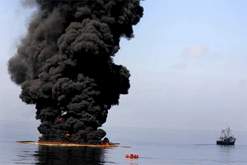
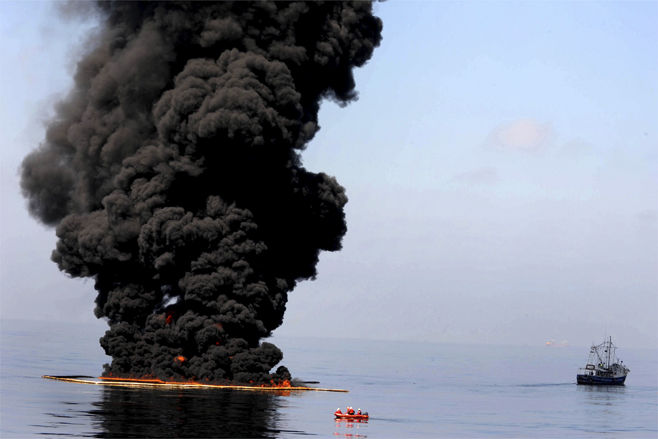
Combustion involves in situ ignition of floating pools of oil, resulting in the emission of polycyclic aromatic hydrocarbon (PAH) compounds and carbon emissions,Reference Evans, George, Baum, Walton and Kevin10 as seen in Fig. 1. PAH compounds are dangerous because they may increase susceptibility to breast cancer in women.Reference Korsh, Shen, Aliano and Davenport11 This method generates an immense amount of greenhouse gases and particulate matter, which pollutes the ocean water—thus, making this option only marginally better than leaving the oil where it was. Over 260,000 barrels of crude were burned during the BP oil spill, and the resultant smoke and aerosols contaminated thousands of square miles of ocean as well as generating CO2 and dissolved pollutant ashes.Reference Schrope3 In situ burning was also the method chosen for removing the oil from the Persian Gulf spill, and an estimated 52,500 metric tonnes of oil were burned, releasing 2400 tonnes of NOx and 300 tonnes of SO2.Reference Khordagui12
In situ burning is a common approach to quickly remove crude oil spilled in the ocean and is widely employed and preferred due to its simplicity and cost-effectiveness. This picture was taken during the Deepwater Horizon oil spill on May 6, 2010 (credit: US Navy). Generally, the crude oil slick, which can spread itself across the surface of the water per its viscosity, is corralled into a confined area away from the shore and allowed to burn until it is completely eliminated.
Skimming involves the use of smaller vessels dragging floating nets or absorbent materials that work in several ways, usually by encircling the pools of floating crude and withdrawing the net to collect the oil in containers. This technique has the disadvantage of being extremely labor-intensive and slow because oil slicks can be extremely thin and water/oil emulsions or other conditions can result in ineffective removal.Reference Guard1,Reference Chang, Stone, Demes and Piscitelli8,Reference Barry, Mane, Libera, Elam and Darling13
The environmental and economic consequences of the Deepwater Horizon will likely not be understood by researchers for many years, but some knowledge has been gained since the onset of the disaster. These catastrophes inflict damage on multiple fronts and time is of the essence to prevent the rapid spread of an oil slick into coastal areas.Reference Wilson, Graham, Hale, Maung-Douglass, Sempier, Skelton and Swann4 Nearby marshland and beaches experience a reduction in animal life and vegetation,Reference Nelson and Grubesic14 which in turn can lead to erosion of the land.Reference Chang, Stone, Demes and Piscitelli8 In the ocean, coral reefs die off and habitats for coastal dwellers are lost.Reference Schrope3 Large and small fishing operations suffer loss of income due to tainted shrimp, fish, and oysters by oil and dispersants for generations of game.Reference Guard1,Reference Chang, Stone, Demes and Piscitelli8 As a result, tourism can also fall into decline, thereby affecting hundreds of thousands of jobs.Reference Goodbody-Gringley, Wetzel, Gillon, Pulster, Miller and Ritchie9 Estimating the total cost of this disaster and those like it is still not completely answeredReference Ainsworth, Paris, Perlin, Dornberger, Patterson, Chancellor, Murawski, Hollander, Daly, Romero, Coleman and Perryman15,Reference Bishop, Boyle, Carson, Chapman, Michael, Kanninen, Kopp, Krosnick, List, Paterson, Presser, Smith, Tourangeau, Welsh, Wooldridge, Debell, Donovan, Konopka and Scherer16 and is outside the scope of this article.
The sorbent technology necessary to meet the challenge of a full-size oil spill has yet to be realized despite the rapid uptick in attention related to technologies depicted in the news.Reference Barry, Mane, Libera, Elam and Darling13 Sorbents are building their advantage compared with these other methods because they are becoming faster, more selective, and increasing in adsorptive capacity.Reference Sabir17 This means that if these sorbents can be stored and deployed as needed at the scale of a major oil spill near the well site, they may be able to greatly reduce the long-term damages observed for the Deepwater Horizon incident. Some of the best sorbents engineered to alleviate the blow of a major spill involve expensive, multistep manufacturing to retrieve spilled oil in laboratory conditions, and these factors of cost will be compared. Some of these technologies are also ineffective and untested against the unpredictable conditions of the ocean, and technology readiness will need to be further developed. Efforts have been made to push technologies for oil spill cleanup to include designs, which are not only effective but also quick, disaster-scalable, and cheap to mount an effective cleanup response to an industrial-scale spill.
Principles of sorbency
A “sorbent” is defined as a solid-state material, which is capable of reversibly withdrawing “target” liquid or gaseous materials, and these terms will be used to address these two separate entities throughout this paper. Sorbents can be further classified as “ab-sorbant” or “ad-sorbent” depending on whether or not any structural change takes place or the material simply adheres to the sorbent surface.Reference Doshi, Sillanpää and Kalliola18 Many materials described here primarily have elastic porous structures, which are capable of withdrawing volumes of liquid materials by mechanically deforming them, with suction and by surface attraction to the open pores and lumen within the material. Other porous materials can have their contents removed by vacuum filtration/distillation, can be heated to allow flow of nonpolar fluids out of the material, and can even be combusted, removing the nonpolar combustible material and leaving the sorbent intact. These materials would thus be classified as primarily “adsorbent,” but absorption may likely be taking place as well as so the term “sorbent” to describe both behaviors.Reference Doshi, Sillanpää and Kalliola18
The concept of polarity and nonpolarity is not often explained further than a property, which controls miscibility and is often misunderstood on a fundamental level. Understanding hydrophobic properties, surface tension/energy, and the dynamics of fluid boundaries requires an understanding of the fundamental intermolecular interactions caused by polarity. A brief explanation of polarity starts with the electronegativity (EN) of individual elements on the periodic table and their relationship with their neighboring atoms across bonds. EN is defined as the affinity of a particular atom to be reduced by an electron and keep it with fluorine being the most electronegative of all with a calculated coefficient between 3.8 and 4.0 (depending on the computational or empirical methods used to determine it). If the difference in electronegativity (ΔEN) is relatively small across the bond, such as the difference between carbon (2.5) and hydrogen (2.2) in many less polar alkyl bonds, electrons are shared according to the local orbital rules, and a very small coulombic charge vector is felt by the atoms in the direction of the more electronegative atom. The molecular geometry of nonpolar molecules, such as methane, which has tetrahedral geometry with one central carbon and four hydrogen atoms, often cancels out this nonzero vector because each vector is orthogonal and equal in magnitude to the other three. Conversely, a large difference in EN creates a proportionally larger vector, such as in hydrogen fluoride, which has a ΔEN = 3.8–2.2 = 1.6, and this polar vector uses its chemical environment to stabilize its unbalanced coulombic forces. The vectors of these molecular compounds can lower a fluid’s internal energy and surface when in contact with fluid has a similar degree of polarity or nonpolarity, causing them to become miscible, or can allow the fluid to interact with a surface by repelling or wetting the surface.Reference Du, Huang, Duan, Xiong and Wang19
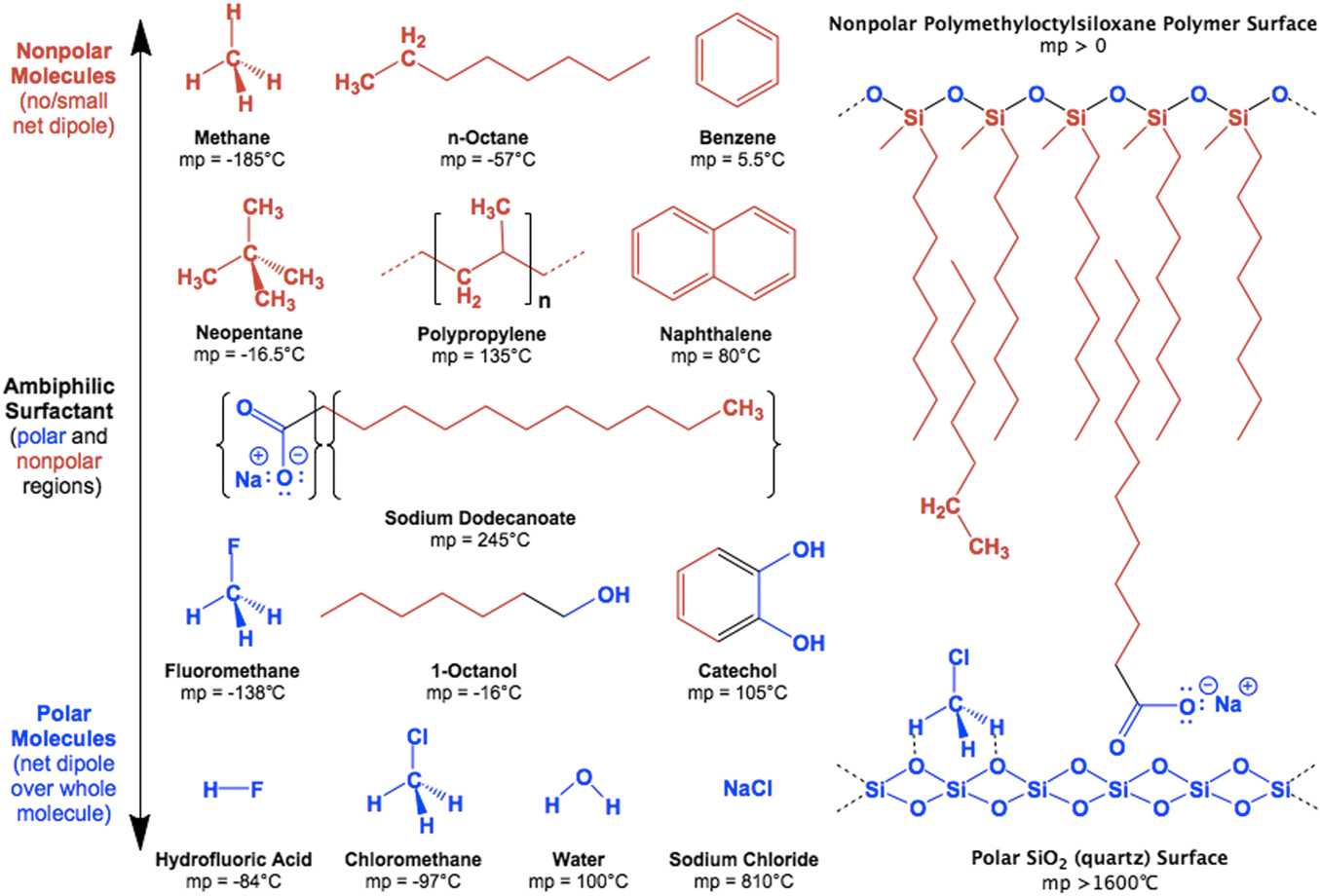
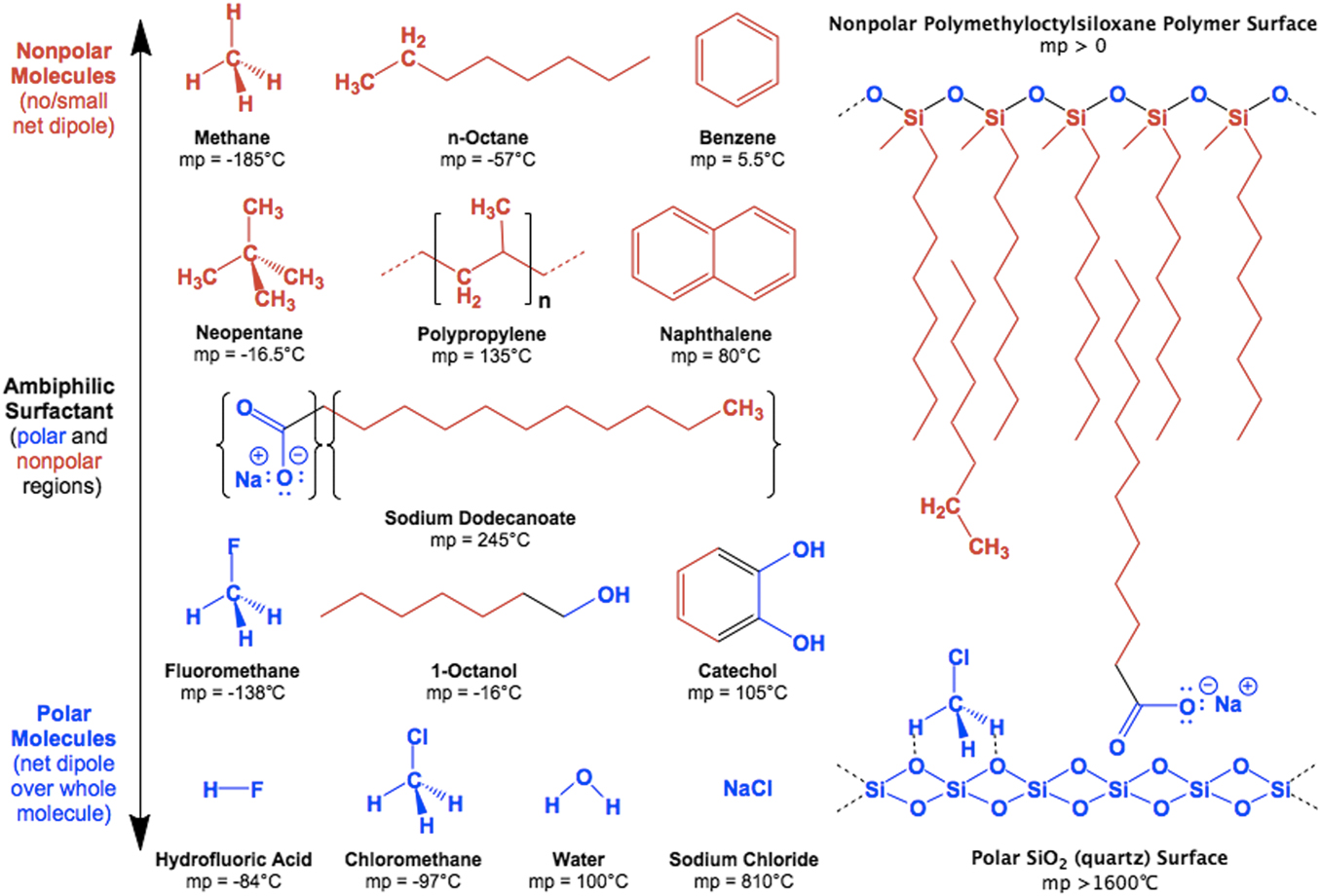
Many sorbents are designed with the intent of creating a surface, which has polar or nonpolar molecular attraction and adhesive wetting properties with certain liquids. The combined molecular geometry and EN differences gives rise to the observed “polar” and “nonpolar” behaviors that exist on a material’s surface (Fig. 2). Polyurethane sponges are commonly used household cleaning products and are composed of a porous, elastic material, which has “amphiphilic” behavior, meaning that they have attraction to both polar and nonpolar molecules within a fluid media.Reference Doshi, Sillanpää and Kalliola18 Molecular amphiphilic materials often used in oil spills include surfactants, molecules that have both nonpolar and polar functional groups,Reference Chandler20 which are used to enhance the miscibility of liquid crude oil and the waters they contaminate. Crude oil, as mentioned before, contains numerous compounds that are unsafe, toxic, and carcinogenic to life in the ecosystems near a spill. Sorbents offer the advantage of containing these compounds and preventing them from dispersing into ecosystems, whereas surfactants dissolve the crude oil into the natural habitats and ecosystems where spills take place, makes it nearly impossible to eliminate the undesired compounds and limit long-term ecological damage.Reference Dedov, Ivanova, Sandzhieva, Lobakova, Kashcheeva, Kirpichnikov, Ishkov and Buznik21 Sorbents also have the attractive feature of allowing both containment and possible separation of the target material, meaning that some portion of the oil can still be used once it is no longer endangering wildlife. Each of the described sorbents were designed to sorb nonpolar solutions, a property termed “oleophilicity” to describe materials with an attraction to nonpolar oils, and so typically contain internal pore surfaces with nonpolar molecular and bulk properties.Reference Liu, Xu, Latthe, Gurav and Xing22 Sorbents, which are oleophilic, porous, and capable of withdrawing and releasing oil when desired, are considered ideal here.
Intermolecular and intramolecular polarity control the observed hydrophilic and hydrophobic properties of a surface and surface interactions with molecules. These physical properties manifest themselves both on the molecular level as the boiling/melting points of the target for bulk properties, such as adhesive and cohesive contact angles. Melting points are provided and serve to show how intermolecular forces caused by polarity affect physical properties, such as the boiling point.
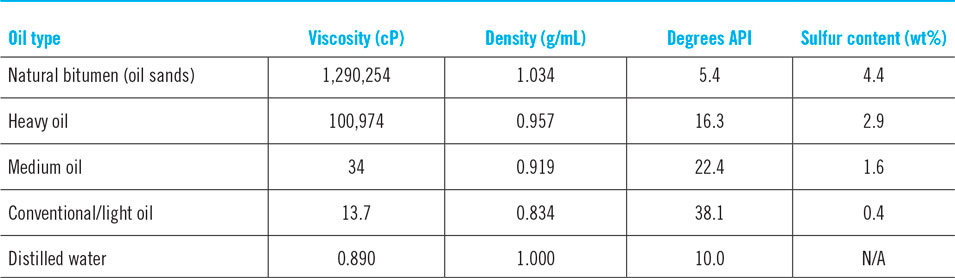
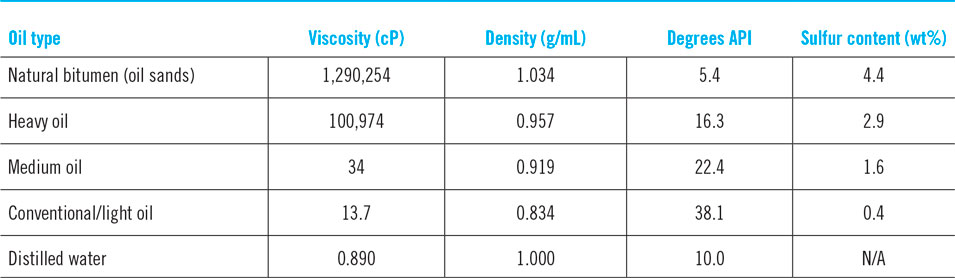
Selecting a sorbent that effectively captures crude oil and the numerous other compounds dissolved in it, depending on where the oil was sourced, is an ambitious task before it is scaled for million-barrel spills. There are different grades of crude contain compounds that affect the viscosity, density, smell, and color. Typically, the viscosity and density of heavier crude oil and bitumen are greater than those of light crude, and this comes from a significant portion of the oil (<95%) containing residuum, asphaltenes, tars, metals, and others.Reference Langevin, Poteau, Hénaut and Argillier23 Densities of oil are often compared using specific gravity (kg/m3 or g/mL) or degrees American Petroleum Institute (API) on a scale from 0 to 70° (0° being very light and 70° being extremely heavy). The aroma of crude oil is often described as sour or sweet, which has to do with the amount of sulfur dissolved, between 4.4% and 0.4% respectively. Most often, crude oil is found as a shade between brown and black and may be homogeneous or contain minor particulates, and an oil containing few extra compounds will often have a tan, lighter color and will hardly be viscous at all.Reference Liu and Kujawinski24 A few properties across very simple crude oil types are listed in Table 1 and are the simplest measurable properties responsible for difficulties in cleaning, especially viscosity. Varieties of crude oil are often defined by their geographic source, and so often, there is at least some inconsistency in crude oil used to compare sorbent materials.Reference Meyer, Attanasi and Freeman25 Many of the compounds in crude oil other than the alkanes, which are fractionally distilled into fuels, are actually quite polar and can react with sorbents at high temperature or temper their reusability. This makes crude oil a very complicated target and often is not used in laboratory-scale demonstration.
Properties of different types of crude oil as measured at 77 °F (25 °C). Distilled water is provided for comparison.
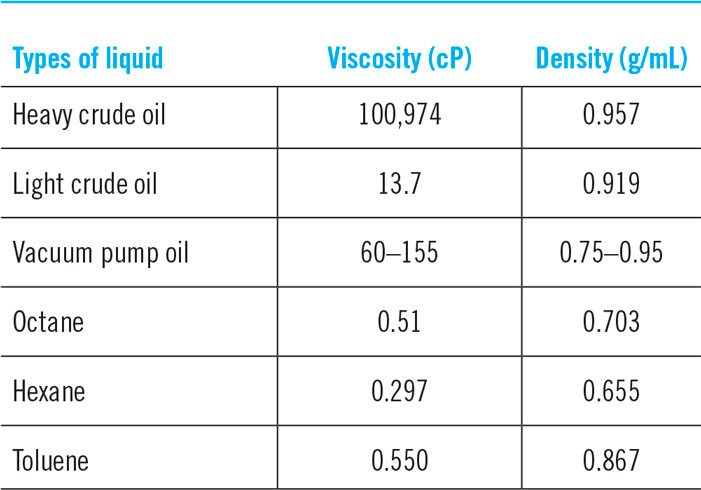
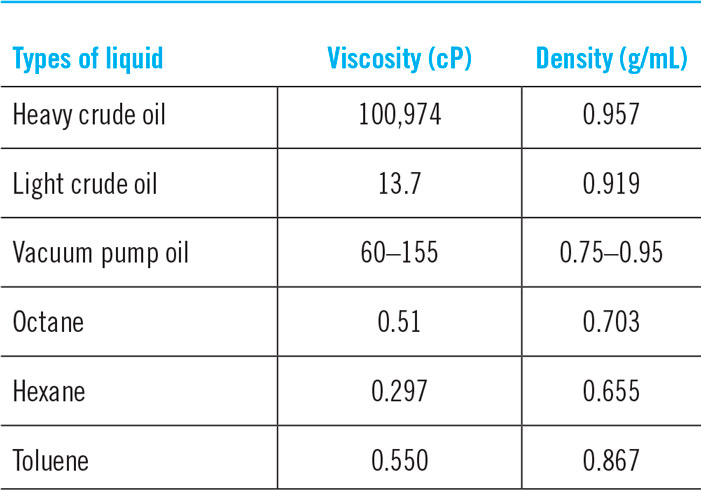
Target fluids that are compared in the literature are usually paraffin oils, mineral silanes, or common nonpolar solvents, such as vacuum pump oil, diesel, and toluene.Reference Sabir17 Vacuum pump oil is often preferred because of its range of viscosities and color, which resembles lighter crude oils. Unfortunately, the composition of pump oils varies from brand to brand and for oils intended for different vacuum environments and most components are not declared by the manufacturer. Some vacuum pump oils contain silicon-based additives to enhance thermal stability, which can increase the density of the oil causing it to sink or become more miscible with water. Simpler mixtures of less-viscous pure nonpolar fluids are expected to have the desirable nonpolar intermolecular forces but often lower molecular weight, which are related to their observed lower viscosities and densities (see Table 2). The properties of these pure, simpler target fluid materials make them an inept simulation of the efficacy of a sorbent material intended for crude oil, but their ease of use allows behavior toward nonpolar fluids to be observed quickly and conveniently. Materials that perform well in fluids with a more consistent composition than crude can still be used for other kinds of hazardous cleanup or sorption but serve as a proof of concept for oil cleanup at best.
Different types of nonpolar targets, their viscosity, and density. Viscosity and density can affect the sorption speed and efficacy of sorption methods and which demonstrate qualitatively how nonpolar a sorbent surface is.
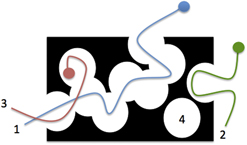
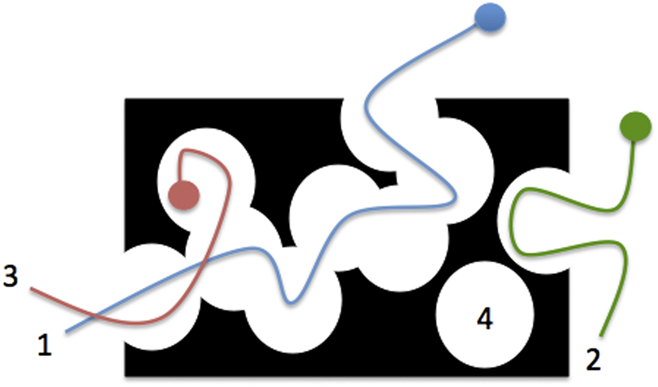
The structure and mechanical properties of an effective solid-state crude oil sorbent material will allow it to contain a maximum volume of oil, which it can attract, withdraw, and then release from its pores. First and foremost, an oil sorbent should have structural “open” interconnected pores to allow oil to come and go as needed versus “closed” lamina-sealed pores that prevent flow between channels and individual pores.Reference Gibson and Ashby26,Reference Pang, Wang, Wu, Liu, Wu, Lee and Zheng27 Maximizing open pores allows fluid displacement void space shown in Fig. 3. Once oil can enter the sorbent, the porous capacity of an oil sponge is governed by its relative density defined by Gibson and Ashby as ρ*/ρs, where ρ* is a material’s total density and ρs is the density of the solid struts, which retain the sponge’s shape.Reference Gibson and Ashby26 “Porosity” is then equal to 1 − ρ*/ρs and represents the total proportion of open space for oil to be contained in a material. The internal surface area of sorbents, usually defined as meter2/gram sorbent, is often determined using gas adsorption techniques.Reference Gibson and Ashby26 Porous material structures have been theorized and computationally modeled to optimize parameters, such as relative density, pore geometry, and surface area. An added feature and advantage of sorbent materials with high structural porosity is buoyancy, which is enhanced by closed pores, but this extra space displaces the target fluid. Removing structural material to increase void space and porosity can also degrade mechanical sturdiness and so elastic properties in sorbents are often ideal because removing the oil can be achieved by deformation of the material that we know as “squeezing” or “wringing” seen in household sorbents. Striking a balance between maximum porosity and surface area with mechanical robustness and resilience requires a lot of trial and error to optimize both precursors and manufacture, and often, it is more effective to design these materials for a specific intended use.
Creating an open architecture of trusses, lumen, and pores to allow particles to flow in and out of sorbents can increase reusability. Ideally, particles (1 & 2) can move completely through the material without getting stuck in internal voids (3). Closed or “blind” pores (4) can limit the working capacity of a sorbent but are inevitable in all materials.
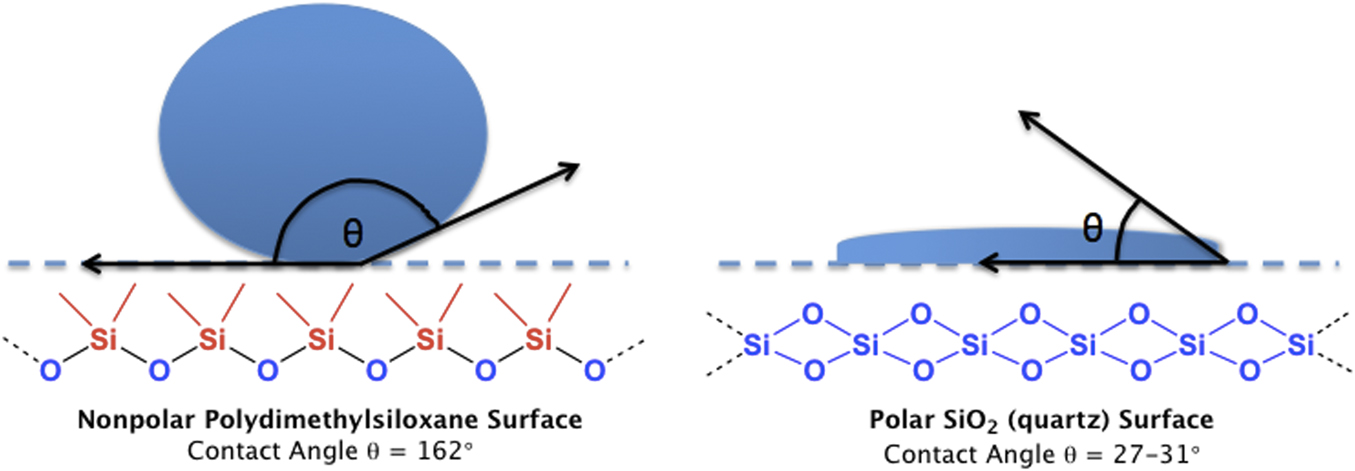
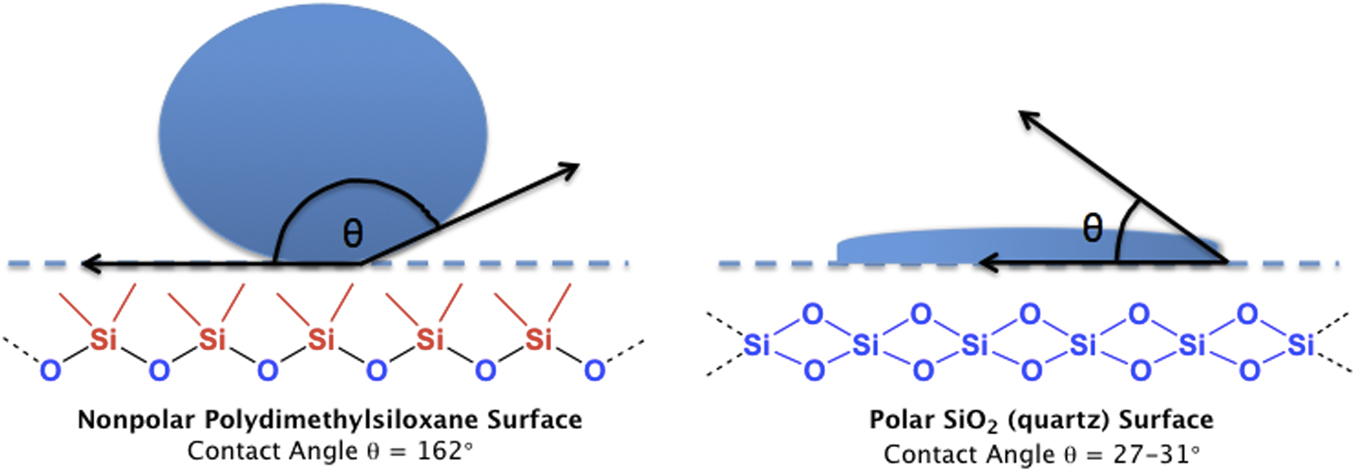
Hydrophobicity and oleophilicity are two related factors for high-performing sorbents in the literature and describe the attractive forces at the liquid/solid interface. Usually, the hydrophobicity of a material is reported as the contact angle θ from 0° (perfectly hydrophilic) to 180° (perfectly hydrophobic) between a solid or semisolid surface and deionized water allowing for visual comparison between different hydrophobic material surfaces.Reference Bay28,Reference Bay, Patino, Mutlu, Romero, Ozkan and Ozkan29 This technique, known as contact angle goniometry (CAG), is not always an effective parameter to judge performance in the field because results depend on the surface topology/roughness, charge, and even the method by which a water droplet is set on the material before measurement. CAG is also not notably descriptive of the material’s dynamic interactions a nonpolar target solution moving in and out of it and sometimes it is not advantageous for a sorbent material to be so strongly repellent of water for ease of use. Comparison of the oleophilic properties is completed using the same methods on surfaces using nonpolar liquid droplets instead of water and has similar pitfalls across examples of sorbents in the literature (Fig. 4).
CAG is the primary comparative test for hydrophobic properties of surfaces. The adhesive and cohesive forces between a sorbent material surface and water are often measured as the angle between the surface and the arc of the water drop, shown above.Reference Ethington30 This allows a quantitative measure how water repellent and usually oil adsorbent the surface is with an angle range of 0° < θ < 180°.
Selecting a sorbent material requires that we define the parameters that will be utilized for comparing different materials; these of which are believed necessary to judge whether the material displays viability for a practical solution. An ideal crude oil sorbent will be:
(i) Oleophilic and will selectively sorb nonpolar substances over polar ones.
(ii) Contain oil and release oil as desired without degradation of the material or loss in the environment.
(iii) Cost-effective manufacturing that does not create more hazardous waste than the sorbent is intended to eliminate in its lifetime.
Current sorbent materials
“Novel” sorbent materials are published in the literature monthly and are all based on similar principles, which rely on surface structure or chemistry for oleophilicity and boast high capacities or other features to seize attention and acclaim. The composition and manufacture of a few examples of highly sorbent materials designed for oil cleanup were analyzed and classified into very general categories. While there are more material surface types prepared to exhibit hydrophobic and oleophilic properties than those described here, they may not be ideal for sorbing because they are not porous, which is the focus here.
The loose, hierarchical classification methods we use here divide synthetic sorbents in two: they can be assembled from either a “bottom-up” synthesis from raw, unstructured chemical precursors or “top-down” synthesis, which uses a previously existing material’s porous structure as a template for the new sorbent.Reference Shtein and Shoseyov31 The latter is a popular method throughout the recent literature because the method exploits the recognizable elastic mechanical properties of readily obtained household/industrial sponges and applies an often nanoscopic surface layer to coat the coarse and fine voids with a nonpolar layer giving desirable oleophilic properties.Reference Zhang, Xu, Sun and Yang32 The sponges produced by this top-down method are demonstrably easy to use, can be reused/recycled with ease and the true cost of their synthesis is the chemical application of the surface layer. Bottom-up synthetic sorbents are synthesized by non-porous precursors form products that are given porous voids by use of blowing agents, drying or contain pores which are caused by the chemical structure as in zeolites.Reference Abbasi, Shamsaei, Fang, Ladewig and Wang33 These bottom-up sorbents can go from nonporous precursors to porous products via sintering, polymerization, gelling, crystallization, and thermal treatment to name a few methods \cite{C5TA08321D}.Reference Nam, Li, Zhang and Chung41 The line between these two classifications can get blurry, for example, when a bottom-up porous solid nonsorbent is generated but then used as a template for a porous sorbent by an added step, and so these two classes serve to guide discussion and comparison.
As discussed in the earlier sections and depicted in Fig. 2, there are many alkyl, aliphatic, and aryl liquid organic compounds, which are nonpolar due to low ΔEN and orthogonal EN vectors across bonds in the medium. It is then expected that the surfaces of organic polymers composed of these kinds of nonpolar molecular structures would have similar nonpolar intermolecular interactions and high sorbent adhesion properties with nonpolar fluids. The plastic industry has matured to the point where the degree of polymerization, crystallinity, functional group/structure selection, and physical morphology of polymers can be finely tuned in a bottom-up synthesis to optimize porosity, surface area, and the elastic mechanical properties desired to remove oil by squeezing. High surface area plastic structures can be synthesized using an arsenal of techniques, including supercritical drying, autoclaving, and gelling approaches, which can be used to create both polydisperse and monodisperse pore sizes.Reference Liu, Xu, Latthe, Gurav and Xing22,Reference Suh, Park, Han and Lim34 One crucial disadvantage of these materials is that many plastics cannot break down naturally and instead run the risk of unintentionally polluting the ocean if the sorbent is damaged or cracked in use. Solar radiation can cause breakdown and cracking of plastics, and there is already an immense problem with organic plastic pollution in oceans, especially in the Great Pacific Garbage Patch.Reference Jambeck, Geyer, Wilcox, Siegler, Perryman, Andrady, Narayan and Law35 Other potential risks include contamination of the ocean by water-soluble plastic additives left from synthesis, interaction with oil-soaked plastics by wildlife (depending on the application as small or large plastic forms), and the potential an immense amount of manufacturing waste from multistep syntheses.Reference Koelmans, Gouin, Thompson, Wallace and Arthur36 Strategies to reduce the risks of this type of sorbent include the use of environmentally benign manufacturing precursors and solvents as well as monitoring of performance and degradation.
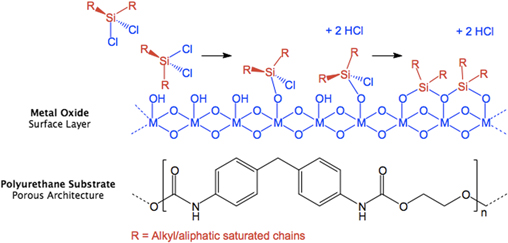
Silanol and alkylsilane-based materials are becoming increasingly popular, especially for their use in top-down syntheses using surface coatings on commercially obtained sponges. The common method of preparation of these surface-coated top-down sorbents is to take a porous architecture and place a metal oxide coating on the surface via electrolytic deposition, oxidation, or washing/evaporation. Once this coating has set a metal oxide layer on the surface of the already porous material, silyl alkyl chlorides, such as methyltrichlorosilane MeSiCl3, are applied to the surface by liquid or gas methods (Fig. 5). Silicon–oxygen bonds form in favor of silicon–chlorine bonds, and HCl gas is released as by-product with the alkyl portion of the silane remaining. This new polar covalent network of polar silicon–oxygen bonds attached to the sponge anchors a usually superhydrophobic, nonpolar alkyl surface. Because these layers are so thin, they can conform with mechanical deformations of the sponge underneath, making them excellent for classical sponge-like manipulations. One critical problem with these materials comes from the eventual mechanical wear and degradation of the surface layer, which will rupture, eventually opening domains of the internal sponge’s molecular structure that may have different hydrophobic properties, causing a drop in selectivity of the material toward nonpolar media. Another drawback, similar to organic polymer networks, is that many of these materials will not be environmentally benign if they are left in the ocean.
Many top-down approaches in oil sponge research utilize prefabricated inner porous structures and use chemical deposition/etching to fabricate an oleophilic outer surface. A thin metal oxide surface layer is installed into a substrate architecture, such as polyurethane, which is then reacted with silyl alkyl chlorides leaving behind an extremely fine, even surface of alkyl chains (alk) which are shown to have excellent superhydrophobic contact angle properties.

Carbon allotrope materials, such as graphene, graphite, and carbon nanotubes (CNTs), are known to have a nonpolar surface structure of hexagonal rings with 120° sp 2 geometry, which makes them extremely symmetrical, uniformly electronegative, and therefore very nonpolar. Graphene sheets are a mere 0.3 nm thick and have the ability to be folded, bent, and perforated to accommodate nonpolar fluids on a surface and so are similar to alkylsilanes and silanols because they can be set in place by treatment, which anchors them to the surface of a sponge or template.Reference Du, Huang, Duan, Xiong and Wang19 Carbonization of already porous carbon-based materials can create nonpolar domains of both crystalline carbon materials (graphene, graphite, CNTs) and nonpolar amorphous carbon. Top-down materials are especially advantageous because they can be made from almost any carbon-based precursor and heat treated, which allows for them to be made out of waste materials, such as plastics, lignocellulosic biomass, or other persistent waste materials, which can serve as a porous template (Fig. 6).Reference Mohan, Sarswat, Ok and Pittman37 Bottom-up gel formation followed by pyrolysis and carbonization is an example of a combined bottom-up and top-down approach by Bay et al. A major disadvantage of mass production of carbonized materials is that they must be prepared without oxygen because carbon and O2 gas environments will exothermically generate CO2 gas and combust/degrade the materials. The formation of noxious fumes of bio-oil and bio-gas also occurs in high-temperature, low-oxygen processing environments. Another disadvantage of carbonized carbon materials is that they are particularly friable and rigid, making them unable to be squeezed to release oil or other nonpolar fluid media. The rigid fracturing disadvantage also makes carbonized materials less ideal for ocean cleanup because they can be lost to the environment but, unless they are saturated in oil, they usually pose as little risk as activated carbon to wildlife.
Carbon biomass sources are abundant and most carbon biomass can be pyrolyzed under inert conditions at temperatures >350 °C. Crude graphene oxide has relatively nonpolar/hydrophobic bulk properties due to a very minor difference in chemical EN across the surface structure. Hydrogen gas and other reductants can further reduce the structure to become very nonpolar reduced graphene oxide or amorphous carbon.

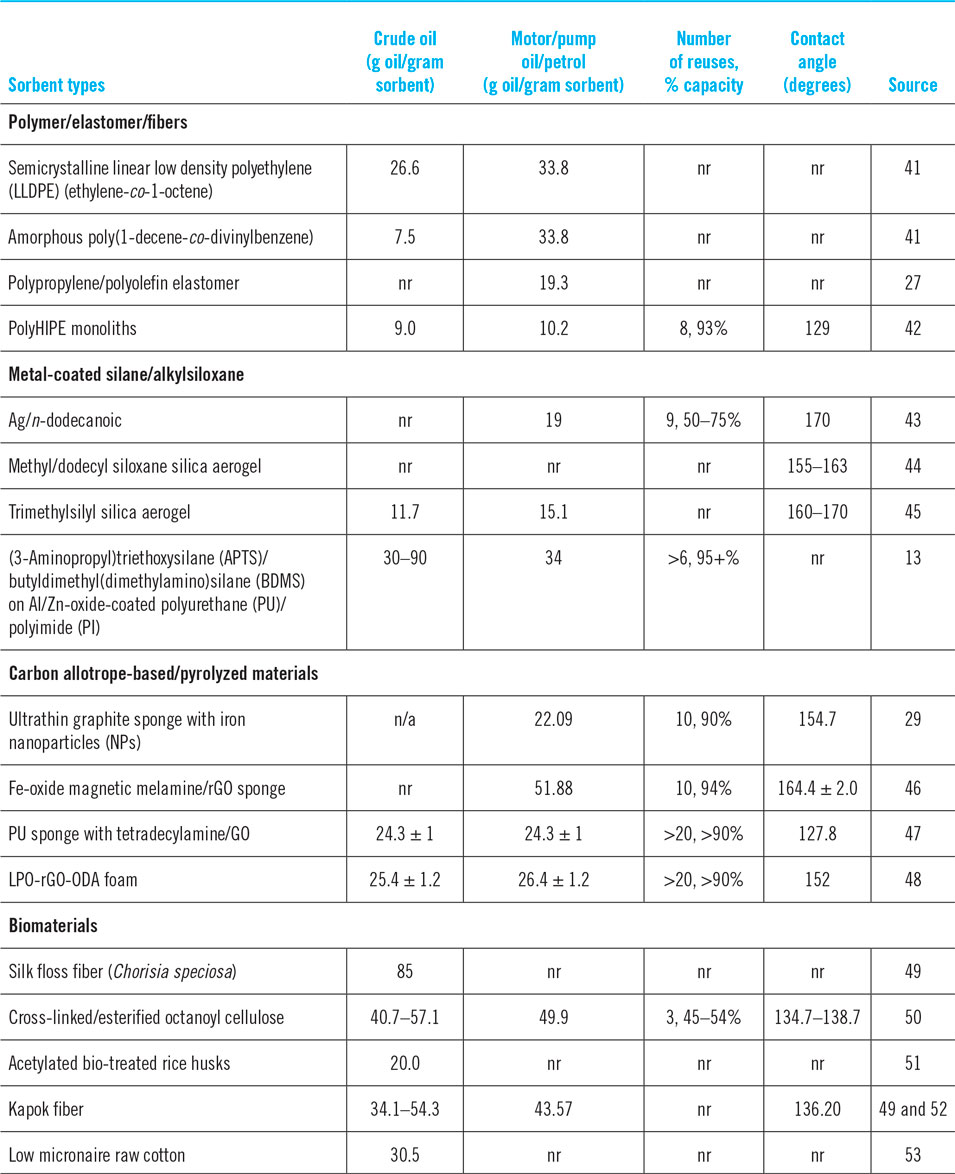
Biomaterials for oil spill collection have been proposed as a way to create environmentally benign waste and pollutants from sponges deployed in oil spills. Many morphologies in nature are well adapted for oil collection, such as fibers and stems, because they contain capillaries, which can draw nonpolar liquids into their lumen or onto their surfaces depending on the nature of these materials. Cyclodextrins are well studied for their ability to contain nonpolar materials in their cavities, and synthetic adaptations of these molecules have been used with success.Reference Crini38 Cellulose, which is the most abundant form of carbon in the biosphere, is well known for its nonpolar, highly insoluble properties caused by the crystallinity and regularity of its glucose-based structure.Reference Wang, Dai, Yang and Luo39 Using aerogel formation and drying techniques, many normally dense natural materials can be physically altered to become porous. While novelty of synthetic biomaterial sorbents claim more attention, there is much to be said of materials, which are used as-is or barely processed from nature. Human hair, silk fibers, and kapok fibers have all been used to sorb oil for early oil spills.Reference Adebajo, Frost, Kloprogge, Carmody and Kokot40 These biologically produced biomaterials do not really fit into the bottom-up or top-down classification because they are not manufactured and thus have the advantage to being as abundant and available as they can be grown or collected in case of an oil spill. The challenge of applying both synthetic and collected materials effectively to a large-scale oil spill comes from supply issues and the ease of their production via agricultural methods because overharvesting could have ecological consequences. Certain materials, such as carbohydrates, carry the risk of causing different kinds of ecological damage compared with toxic compounds because certain flora and microbiological species can metabolize them and generate harmful by-products (Table 3).
Sorbent materials are hard to compare effectively across the literature because they have different sorption capability testing methods and test different materials. One of the most universal materials used in sorbent testing are vacuum pump oils, which are often a mixture of alkyl hydrocarbons, siloxanes, and mineral oils.
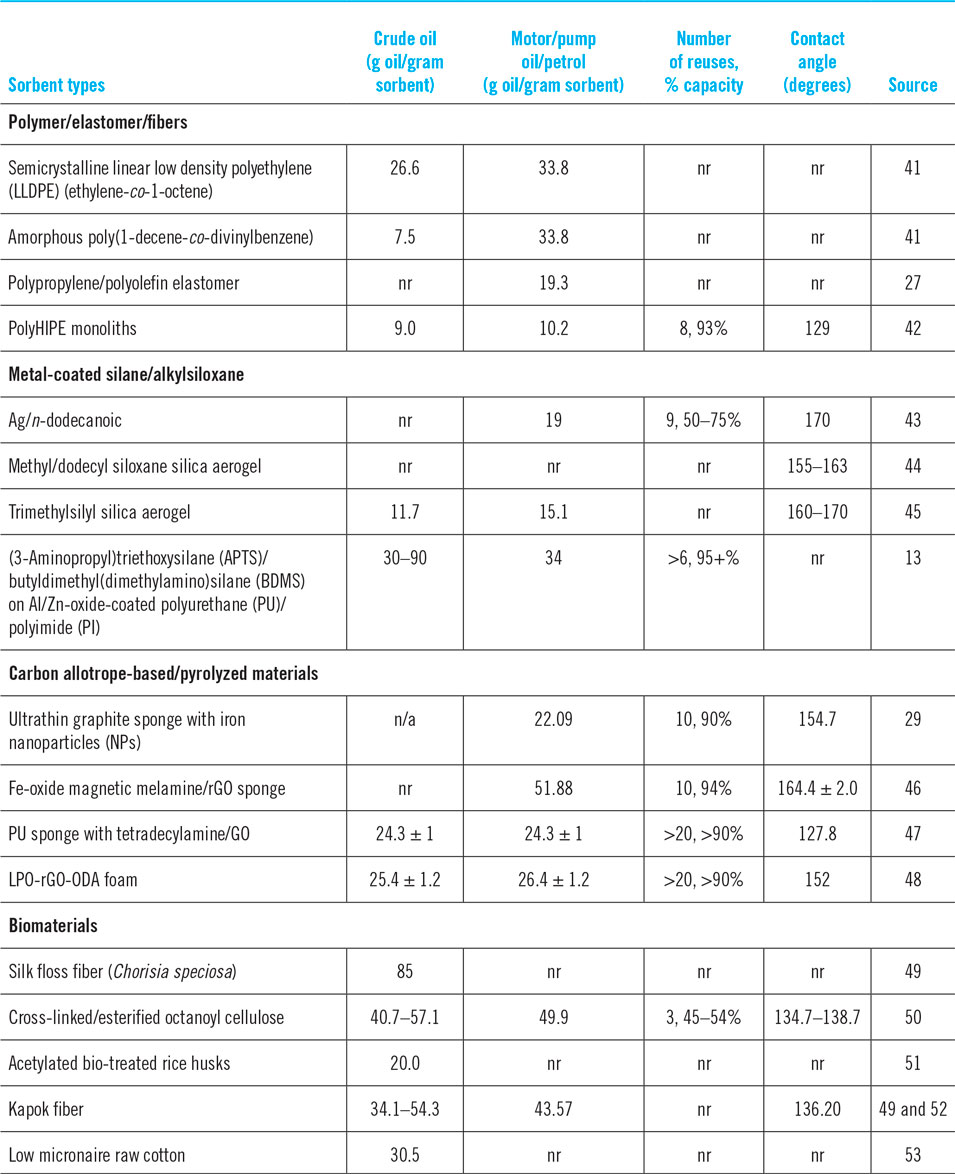
nr = not reported, GO = graphene oxide, rGO = reduced graphene oxide.
While some sorbents are single-use, the recyclability of a sorbent can allow much more oil to be collected faster and decrease the amount of waste remaining at the end of cleanup. Recyclability can be defined as the number of reuses a material can undergo filling and emptying of its contents before losing significant capacity and physically breaking apart. This property is very attractive for sorbents because it allows them to withdraw and release target fluids multiple times without contaminating the fluid with degrading sorbent particles. In the case of an oil spill, this allows easier purification and reuse of oil products or other target fluids while also drastically reducing the total cost per use and, if the sorbent can be drained at the cleanup site, significantly increase cleanup speeds.
Manufacturing cost
Developing a cost analysis of sorbent materials for a full-scale crude oil spill must consider many factors:
(i) Precursor cost: What compounds must be obtained for the manufacture of this material and what is their standard price? Is their manufacture environmentally harmful?
(ii) Manufacturing cost: Does the method used to manufacture the material cost a significant amount per gram to keep safe? Does scaling the sorbent to a larger size incur expensive complications compared with the small scale? How much cheaper per gram is it to mass-produce the material? How long does the material take to produce?
(iii) Reusability: Can the material be regenerated for each reuse cheaply or is it complex, expensive, and difficult to remove crude oil and other materials adhering to the surface of the sorbent?
(iv) Disposal: When the sorbent can no longer be used to collect crude oil? How much will it cost to convert the material to an environmentally benign state? How long will this process take?
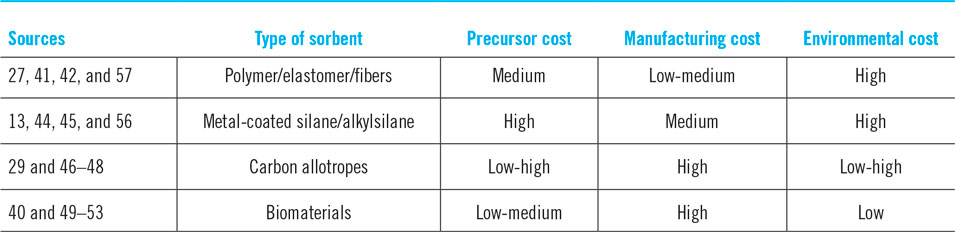
These questions will be considered briefly to offer a framework for curbing enthusiasm about new sorbent technologies. Answering all these questions completely would take an entire, separate review paper and varies based on market price and so each point is summarily addressed (Table 4).
Qualitative cost comparison of each example of sponge material models per gram for precursors, manufacture, and the environmental amenability of the product.
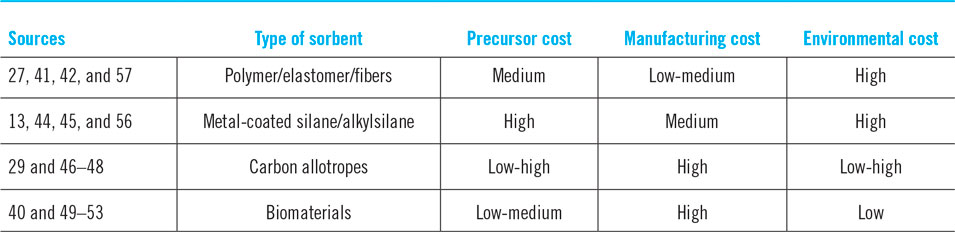
Although many synthetic precursors may seem monetarily cheap, their environmental costs should also be considered: will obtaining these precursors create more environmental harm than the oil spill itself? Assessing the true cost of some manufacturing precursors must consider dependent factors, such as seasonal availability or market volatility. Metallic precursors used to etch, oxidize, or functionalize surfaces as part of production must be mined and processed. Olefinic and alkyl precursors must be collected as raw petroleum and refined into pure stock chemicals. Biological precursors must be produced agriculturally or collected from nature, both carrying immense cost when done at scale. Overall, the most critical aspect of this cost comes from the abundance of the precursor as well as the degree of purity the chemical is needed to be for successful synthesis of the sorbent.
The advantage of a bottom-up material becomes most apparent in the cost of the sponge at an industrial scale: if the sponge’s surface is made out of a material that is cheaper than polyurethane and physically or chemically treated at the same price of the sponge to produce analogous capacity, it has the advantage. An argument can be made that most biologically sourced chemical precursors, which can be grown cheaply and sustainably or are produced en masse as a waste product, such as lignocellulosic biomass from agricultural resources,Reference Zhu, Romain and Williams54 are the ultimate feedstock because they are astronomically cheap (≈$100/tonne). Using waste or recycled precursors is ideal because the costs from the collection of the biomass and the cost of processing the raw lignocellulose into manufacturing-grade precursors (depending on the methods) can incur its own footprint. Using materials directly from nature or with minimal chemical enhancement, such as kapok fiber and human hair, has been a strategy used in the past but has not been attempted for cleanup of industrial-scale spill.Reference Adebajo, Frost, Kloprogge, Carmody and Kokot40,Reference Wang, Zhang, Zhi, Wang, Tang, Xu, Weng, Jiang, Mitome, Golberg and Bando55 Utilizing precursors collected from a particular species of plant or animal that cannot be mass produced because it is a recipe for extinction when millions of kilograms of the material may need to be utilized for a single cleanup effort. For this particular realm, it would therefore be most effective to utilize materials created as by-products of other comparably large-scale industrial processes to offset precursor costs.
Manufacturing cost describes all he processing steps and energy used to generate the material being described. The final optimized synthesis of a sorbent may exclude some precursors that are needed at the smaller scale, take less time, and utilize synthetic techniques that are only practical at the industrial scale, such as fluidized bed reactors. Synthesizing nonpolar surfaces usually involves highly flammable aliphatic or silyl precursors, sometimes even pyrophorics and strong oxidizers, and so must be reacted inertly.Reference Zhu, Chu, Wang, Chen, Lin, Liu and Pan56 Some materials employ vacuum or supercritical drying techniquesReference Nam, Li, Zhang and Chung41 and so, on the industrial scale, immense vacuum chambers and dedicated equipment will be needed. This offers a major advantage for materials that can be used as-grown or gently refined because they are ready to use right after harvesting.Reference Adebajo, Frost, Kloprogge, Carmody and Kokot40
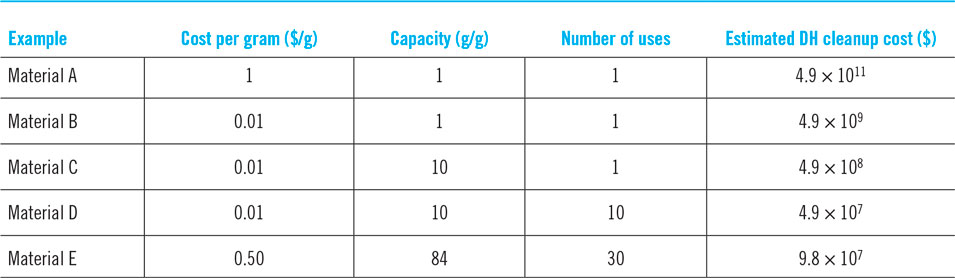
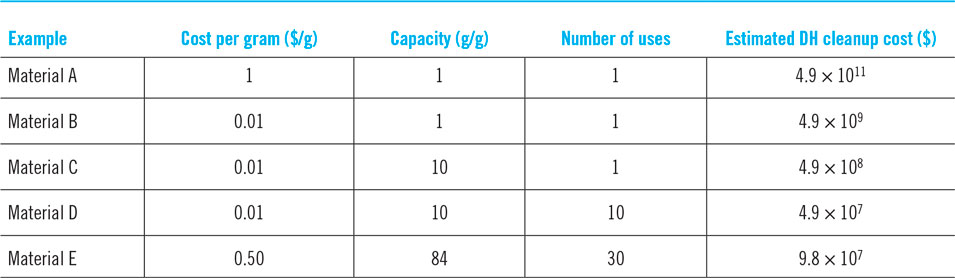
Reusability and product lifetime will lessen the total cost of any material by a factor per use. Recyclability and reusability reduce cost and can be calculated simply: a ceramic coffee mug purchased for $5, which is reused 5 times is found to only cost $1 per use, 50 times for $0.10 per use, etc. It can also be expected that the capacity and structural integrity will decrease for any material over time. This trait, while extremely desirable to maximize to minimize the total lifetime cost, will also lower the environmental cost of the disposal of this material (Table 5).
Cost of cleaning Deepwater Horizon (DH) incident-size spill (4.9 million barrels) with materials based on cost parameters. Combining the best known performance parameters at a cost of $0.50 a gram gives a price of $9.23 × 10⁷.
Containing, transporting, and disposing of crude sorbent materials drenched in tonnes of crude is no small task. The ideal solution to this, as discussed earlier, is naturally to develop a material, which can both catch and release as much crude oil as possible and eliminate the total amount left in the environment with only the sorbent as waste. One advantage of biomaterials or carbon materials is that they can be heat treated (pyrolyzed) into biochar and used to amend soil.Reference Mohan, Sarswat, Ok and Pittman37 Polymer materials could also be treated this way depending on the heteroatom content they contain and what compounds are formed during pyrolysis. Alkylsilanes containing traces of chromium-based oxidizers should not be pyrolyzed because of the potential for chromium(VI) contamination of the released gases, which would need to be carefully scrubbed.
Instead of offering the monetary amount for each kind of technology, which can change with respect to the global market for the price of individual precursors, a generalized estimation for a theorized material is offered. For Material A, which can contain 1 g of crude oil per gram of sorbent the, cost to manufacture the material, precursors included, will be conservatively $1 per gram. Material A will only be able to be used 1 time and disposed of immediately, hazardous waste disposal/handling costs notwithstanding. The Deepwater Horizon incident released 4.9 million barrels of crude oil (465,307 metric tonnes, 4.65 × 10¹¹ g).Reference Schrope3 Each advancement that moves these factors forward can quickly lower the price. If the cheapest precursors, such as lignocellulosic biomass, which is an abundant waste product, could be sourced for $0.01 per gram, the price would be 100× cheaper (Material B) and would cost less than BP’s settlement of $5.5B. If this material could then be enhanced to increase its capacity (Material C), be reused multiple times by enhancing the collection strategy on the ground (Material D) or both this price can goes down another two order of magnitude based on values seen thus far in materials found in the literature.
Conclusions
It is likely that current sorbent materials are not yet capable of meeting the challenge of cleaning up a full-scale oil spill primarily because they are mostly unfit for mass production. This conclusion comes from the high material costs of these sorbent precursors and the impracticality of techniques used at the lab scale when compared with the effectiveness of the final material. A factor worth considering, efficacy of the sorbent materials aside, is that even an attainable 100× improvement from the low-capacity Material A (see Table 5), which can be achieved for any of the materials with a capacity of about 50 g/g and can be recycled twice, is cheap enough to almost be feasible considering the costs of the spill are already in the tens of billions of dollars. Another major hurdle will be to make sure that these technologies do not create more environmental harm than they prevent when deployed. If the superior prototypes currently on hand could be manufactured, stockpiled, and deployed immediately at spills, their use would also offer enhanced outcomes for the local economy and nearby populations of people and, if designed to be rigorously benign in the ecology, the wildlife too.
The amount of research and attention that has already been spent on addressing this task is a start, but the true cost of inaction is borne almost every year by the ecosystems affected by these spills, the people who live near the locations where these spills take place, and future generations who will never be able to see what a pristine marine ecosystem looked like. It is time to work with the oil industry to offer funding, resources, and accountability to contain every drop that it spills.
Declaration of competing interests
This manuscript was prepared by researchers with vested interest in Sponge Inc. No further competing interests are declared in the preparation of this manuscript.