Introduction
Clay gouges or fault gouges are non-cohesive fault rocks containing <30% of visible fragments (Brodie et al., Reference Brodie, Fettes, Harte and Schmid2004; Sibson, Reference Sibson1977). One of the most important goals of recent studies of clay gouges has been to constrain the timing of the studied faulting (e.g. Abad et al., Reference Abad, Jiménez-Millán, Schleicher and van der Pluijm2017; Boles et al., Reference Boles, Mulch and van der Pluijm2018; Fitz-Díaz et al., Reference Fitz-Díaz, Hall and van der Pluijm2016; Haines & van der Pluijm, Reference Haines and van der Pluijm2012; Mancktelow et al., Reference Mancktelow, Zwingmann and Mulch2016; Viola et al., Reference Viola, Zwingmann, Mattila and Kapyaho2013). Clay gouges usually contain significant amounts of K-bearing micas; therefore, K-Ar and 40Ar-39Ar dating have been used widely for studies of these rocks. The 40Ar-39Ar method has gained more attention because it eliminates potential errors caused by measuring K and Ar content from two different portions of a sample, which is a standard procedure in K-Ar dating (Clauer, Reference Clauer2013; Clauer et al., Reference Clauer, Zwingmann, Liewig and Wendling2012). As pointed out by Dong et al. (Reference Dong, Hall, Peacor and Halliday1995, Reference Dong, Hall, Halliday, Peacor, Merriman and Roberts1997), fine-grained materials such as clay minerals require vacuum encapsulation before 40Ar-39Ar dating in order to account for Ar loss due to the recoil effect from crystals with sizes of a few nanometers.
Fault gouges commonly contain both minerals inherited from the parent material and authigenic minerals, i.e. those formed during, or shortly after, tectonic deformation (Haines & van der Pluijm, Reference Haines and van der Pluijm2008; Solum et al., Reference Solum, van der Pluijm and Peacor2005; Torgersen et al., Reference Torgersen, Viola, Zwingmann and Harris2014; van der Pluijm et al., Reference van der Pluijm, Hall, Vrolijk, Pevear and Covey2001; Ylagan et al., Reference Ylagan, Kim, Pevear and Vrolijk2002). In such a case, age values obtained during isotopic dating represent mixtures of two or more constituents. In addition, for shear zones with a history of multiple reactivation episodes, the final composition may not be a mixture of just two end members. Each reactivation event may potentially have led to creation of a distinct mineral population and may or may not have reset the K-Ar system within previously crystallized authigenic components (Bense et al., Reference Bense, Wemmer, Löbens and Siegesmund2014).
Various methods have been proposed to extract the end-member ages from the age values of mixtures (Dong et al., Reference Dong, Hall, Peacor, Halliday and Pevear2000; Grathoff & Moore, Reference Grathoff and Moore1996; Pevear, Reference Pevear, Kharaka and Maest1992; Szczerba & Środoń, Reference Szczerba and Środoń2009; Ylagan et al., Reference Ylagan, Pevear and Vrolijk2000). In most of the proposed methods, the material was assumed to be a mixture of two components, i.e. non-authigenic and authigenic, that could be distinguished mineralogically, e.g. by polytype quantification. The high-temperature 2M 1 dioctahedral mica (“illite”) polytype was assumed to have been inherited, while low-temperature 1M and 1M d polytypes of dioctahedral mica were believed to be authigenic. A common practice in the field is, however, to use only 1M d and 2M 1 polytypes for description of fault gouge material (van der Plujm & Hall, Reference van der Pluijm, Hall, Rink and Thompson2015), because the 1M polytype is rare and requires specific formation conditions (Peacor et al., Reference Peacor, Bauluz, Dong, Tillick and Yonghong2002). In addition, the 1M polytype is believed not to occur during normal prograde diagenesis of pelitic rocks (Peacor et al., Reference Peacor, Bauluz, Dong, Tillick and Yonghong2002), and many of the studies on fault dating were of clay gouges hosted in sedimentary rocks (e.g. Solum et al., Reference Solum, van der Pluijm and Peacor2005). On the other hand, the 1M polytype was demonstrated to co-exist with the 2M 1 polytype in hydrothermally altered igneous rocks, where it occurs as a component of sericite (Eberl et al., Reference Eberl, Środoń, Lee, Nadeau and Northorp1987; Yan et al., Reference Yan, Tillick, Peacor and Simmons2001).
Pevear (Reference Pevear, Kharaka and Maest1992) proposed the concept called “Illite Age Analysis” (IAA), which is based on dating of multiple size fractions and extrapolating an obtained function (age value vs. mass fraction of detrital illite) to zero detrital illite to get the age of the authigenic illite in a sample and to 100% detrital illite to get the age of the non-authigenic illite. One of the underlying assumptions in IAA is that the two end members should concentrate in different size fractions. Furthermore, age value was assumed to be linearly correlated with end-member mass fraction. As pointed out by Środoń (Reference Środoń1999) and Szczerba and Środoń (Reference Szczerba and Środoń2009), deviation from linearity of age value vs. fraction of detrital illite can be caused by different amounts of K in the two components and the logarithmic nature of the age equation. Szczerba and Środoń (Reference Szczerba and Środoń2009) proposed an approach that takes into consideration both of these issues and developed the MODELAGE computer program to calculate end-member ages for two-component mixtures.
Clay gouges are common in the Tatra Mountains (a part of the Inner Western Carpathians on the Polish-Slovakian border), where they have been formed in shear zones developed in granitoids. The geology of the Tatra Mountains is quite well established (Jurewicz, Reference Jurewicz2005; Plašienka et al., Reference Plašienka, Grecula, Putiš, Kovác, Hovorka, Grecula, Hovorka and Putiš1997), but the mineral composition of the gouges has never been investigated.
The aims of the present study were to determine the mineralogy of selected clay gouges from the Tatra Mountains, to interpret their origins, and to obtain time constraints on the formation of the authigenic micaceous components of the gouges. Furthermore, an attempt was made to develop an approach capable of finding the ages in a three-component system.
Geological setting
The Tatra Mountains are the tallest mountains in the Inner Western Carpathians, which, in turn, comprise part of the Alpine orogenic system in Europe. The Tatras consist of a crystalline core, which is built of igneous (mainly granitic) and metamorphic rocks, and sedimentary cover thrust over the core during late Cretaceous stages of the Alpine Orogeny (Plašienka et al., Reference Plašienka, Grecula, Putiš, Kovác, Hovorka, Grecula, Hovorka and Putiš1997). The present study focused on the eastern part of the range, the so-called High Tatras. According to Gawęda (Reference Gawęda2007), the composition of the biotite monzogranites, which are the most common type of granitoids in the High Tatras, is as follows: plagioclase (43–69%), quartz (21–29%), K-feldspar (0.8–24%), biotite (2–5%), and muscovite (0.4–2.9%). Muscovite occurs as a magmatic mineral, and alongside other varieties of dioctahedral micas occurs in the form of sericite within altered feldspars.
Geologic evolution of the Tatra Mountains
Granitoids of the Tatra Mountains are polygenetic, with several batches of granitoid magma having intruded between ~370 and 340 Ma (Burda et al., Reference Burda, Gawęda and Klötzli2011, Reference Burda, Gawęda and Klötzli2013; Gawęda et al., Reference Gawęda, Doniecki, Burda and Kohút2005, Reference Gawęda, Szopa and Chew2014). U-Pb dating of apatite returned the most-recent dates at ~340 Ma, which means that the granitoids have not experienced temperatures above the closure temperature of the U-Pb system in apatite, i.e. above 350–550°C, since 340 Ma (Gawęda et al., Reference Gawęda, Szopa and Chew2014). The earliest dates recorded by 40Ar-39Ar dating of white micas from mylonitization zones within the crystalline core are Variscan (~333 Ma; Maluski et al., Reference Maluski, Rajlich and Matte1993). These dates, however, could reflect post-magmatic extension (Gawęda et al., Reference Gawęda, Szopa and Chew2014). The core was uplifted and eroded during the Permian and the Early Triassic (Jurewicz, Reference Jurewicz2005). Subsequent transgression resulted in sedimentation of various siliciclastic sediments and carbonates that prevailed during the Mesozoic. Tectonic activity during this Era comprised Middle to Late Triassic rifting and extension, and a major thrusting and nappe-forming Alpine event in the Late Cretaceous (Jurewicz, Reference Jurewicz2005; Králiková et al., Reference Králiková, Vojtko, Sliva, Minár, Fügenschuh, Kovác and Hók2014; Plašienka et al., Reference Plašienka, Grecula, Putiš, Kovác, Hovorka, Grecula, Hovorka and Putiš1997). Mylonites from the Tatra Mountains and adjacent areas returned 40Ar-39Ar ages of the latter tectonic phase in the 75–89 Ma range (Maluski et al., Reference Maluski, Rajlich and Matte1993). Evidence of an earlier, Early Cretaceous thermotectonic event in the 140–120 Ma range was also found (Maluski et al., Reference Maluski, Rajlich and Matte1993). As inferred from a fluid inclusion study, temperatures of Alpine deformation for selected shear zones within the Tatra granitoid core did not exceed 250°C (Jurewicz & Kozłowski, Reference Jurewicz and Kozłowski2003). The early Cenozoic evolution of the Tatra Mountains is difficult to determine because no sediments from that period lay directly on the crystalline core (Anczkiewicz et al., Reference Anczkiewicz, Danišik and Środoń2015), but zircon fission track (ZFT) ages of 77±11 to 63±6 Ma (Králiková et al., Reference Králiková, Vojtko, Sliva, Minár, Fügenschuh, Kovác and Hók2014) suggest a period of cooling and probable erosion. The final uplift took place in the Miocene (~20 Ma) and was preceded by late Eocene–Oligocene burial that started at about 45 Ma (Králiková et al., Reference Králiková, Vojtko, Sliva, Minár, Fügenschuh, Kovác and Hók2014). Anczkiewicz et al. (Reference Anczkiewicz, Danišik and Środoń2015) and Śmigielski et al. (Reference Śmigielski, Sinclair, Stuart, Persano and Krzywiec2016) demonstrated, by thermal history modeling based on ZFT and apatite fission track (AFT) ages, that temperatures during Paleogene burial were >150°C. AFT ages of crystalline-core samples are scattered from 15 to 30 Ma, which may indicate that the final uplift of the core involved block tectonics (Anczkiewicz et al., Reference Anczkiewicz, Danišik and Środoń2015). AFT dates record uplift from the 100°C isotherm, i.e. a depth of 5 km assuming a 20°C/km geothermal gradient.
Clay gouges
Clay gouges in the Tatra Mountains occur mainly along steeply dipping shear zones that were formed during pre-Alpine times (Jurewicz, Reference Jurewicz2006) and are accompanied by mylonites and cataclasites. Shear zones in the Tatra Mountains and surrounding areas have probably undergone multiple episodes of re-activation, as can be inferred from 40Ar-39Ar dating of fault-associated rocks that revealed Late Cretaceous and Paleogene ages (Kohút & Sherlock, Reference Kohút and Sherlock2003; Maluski et al., Reference Maluski, Rajlich and Matte1993) and from tectonic reconstruction models that imply final uplift of the High Tatras in the Neogene (Anczkiewicz, Reference Anczkiewicz, Danišik and Środoń2015; Jurewicz, Reference Jurewicz2005; Králiková, Reference Králiková, Vojtko, Sliva, Minár, Fügenschuh, Kovác and Hók2014).
Materials and methods
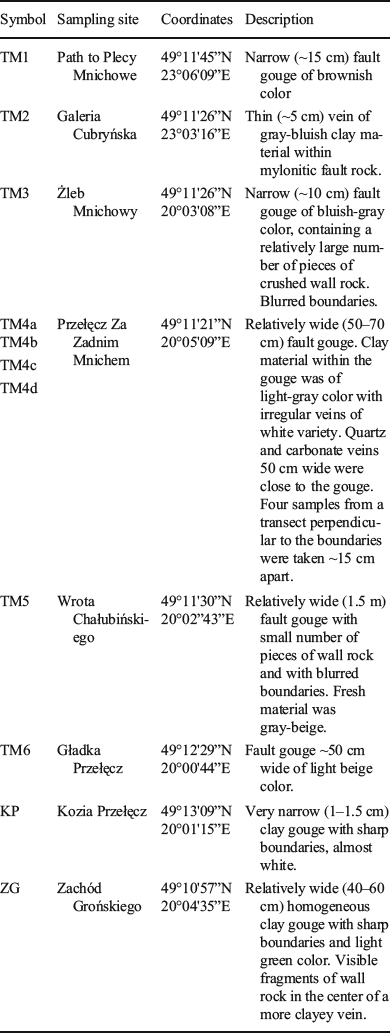
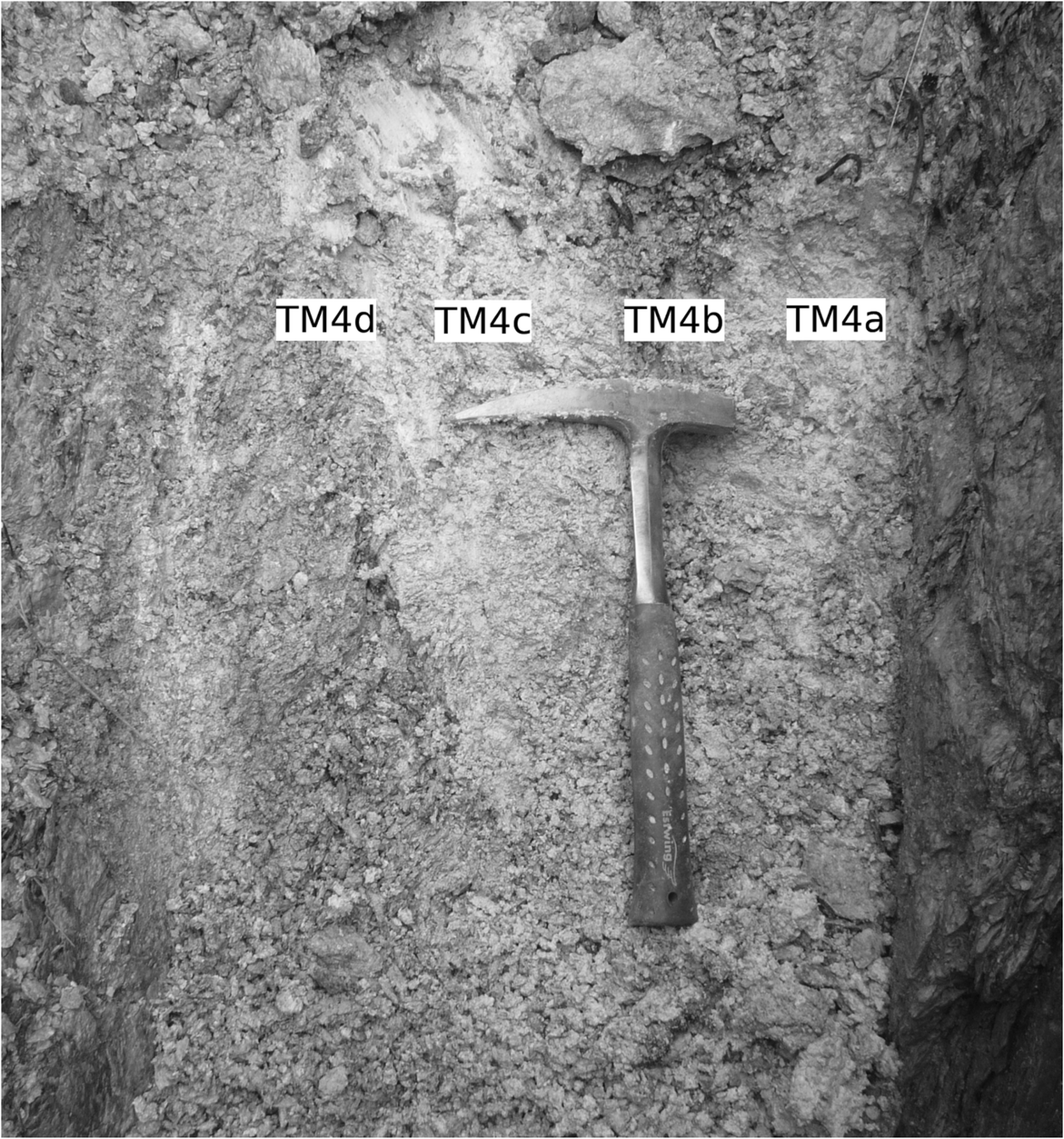
Samples used in the present study were collected from clay gouges developed in Variscan granitoids in the eastern part of the Tatra Mountains. Eight shear zones were investigated (Fig. 1; Table 1): Plecy Mnichowe (TM1), Mała Galeria Cubryńska (TM2), Żleb Mnichowy (TM3), Przełęcz za Zadnim Mnichem (TM4), Wrota Chałubińskiego (TM5), Gładka Przełęcz (TM6), Kozia Przełęcz (KP), and Zachód Grońskiego (ZG). All of the samples were taken from the zones that strike NE–SW. The ~0.5 m thick gouge TM4 was sampled along a cross section perpendicular to the walls in order to determine the variability of the mineral composition within the gouge (Fig. 2).
Digital elevation model (DEM) of the area of study with sampling sites (white dots). Lakes shown in blue. Fault lines after Piotrowska (Reference Piotrowska1970). Inset: DEM of the Carpathians showing the location of the Tatra Mountains (source: European Environment Agency, GTOPO 30 elevation model)

Locations and descriptions of the samples used in the study

Clay gouge TM4 situated in the Przełęcz za Zadnim Mnichem with sampling points

Sample handling and instrumental methods
Collected samples were air-dried and subsequently hand-crushed gently in a steel mortar to pass through a 0.4 mm sieve. Prior to clay separation, portions of the ground samples were treated with Na acetate–acetic acid buffer to remove carbonates and exchangeable divalent cations (Jackson, Reference Jackson1969). The white to greenish-white color of the samples indicated a small organic matter content and small “free Fe-oxide” content, so peroxide and citrate-bicarbonate-dithionite treatments were not applied. After removal of carbonates and Na-saturation by four washings with 1 M NaCl (analytical reagent grade, POCH S.A., Gliwice, Poland), <0.2 μm size fractions were separated by centrifugation (Stokes's Law). For one sample, which was selected for the radiometric dating, three additional size fractions were separated by centrifugation (0.2–2 μm) or by sedimentation in a water column (2–10 μm and 10–20 μm) (Stokes’s Law). Subsequently, fractions to be examined by X-ray diffraction (XRD) were saturated with Ca2+ or K+ cations by four washings with the respective chloride solutions (analytical reagent grade, POCH S.A., Gliwice, Poland). The final saturation was followed by dialysis to remove excess electrolytes.
Portions of the hand-crushed bulk samples were micronized with a McCrone micronizing mill (McCrone Microscopes & Accessories, Westmont, Illinois, USA), with 10% zincite (analytical reagent grade, Fisher Scientific, Waltham, Massachusetts, USA) added as an internal standard, and side-loaded into aluminum holders for XRD analysis. Portions of the size fractions (<0.2, 0.2–2, 2–10, and 10–20 μm) of the KP sample were loaded in similar fashion but with no internal standard. Clay fractions were also analyzed by XRD as oriented mounts on glass slides (with surface density of 10 mg/cm2).
X-ray diffraction patterns were recorded using a Philips X'Pert APD system (Philips Electronics N.V., Almelo, The Netherlands) with a PW3020 goniometer equipped with a 1° divergence slit, a 0.02 mm receiving slit, a 2° antiscatter slit, a graphite diffracted-beam monochromator, and two Soller slits. CuKα radiation produced with an acceleration voltage of 40 kV and 30 mA current was used. The oriented mounts were scanned in a step scanning mode in the range of 2–52°2θ with 2 s counting time per 0.02°2θ step. The scanning range for random powder mounts was 2–65°2θ with 5 s counting time per 0.02°2θ step.
Quantitative analysis (qXRD) of bulk samples and the KP size fractions was performed with Profex-BGMN (Doebelin & Kleeberg, Reference Doebelin and Kleeberg2015) Rietveld refinement software. The region below 10°2θ was excluded from the refinement and the background polynomial order was constrained to 2.
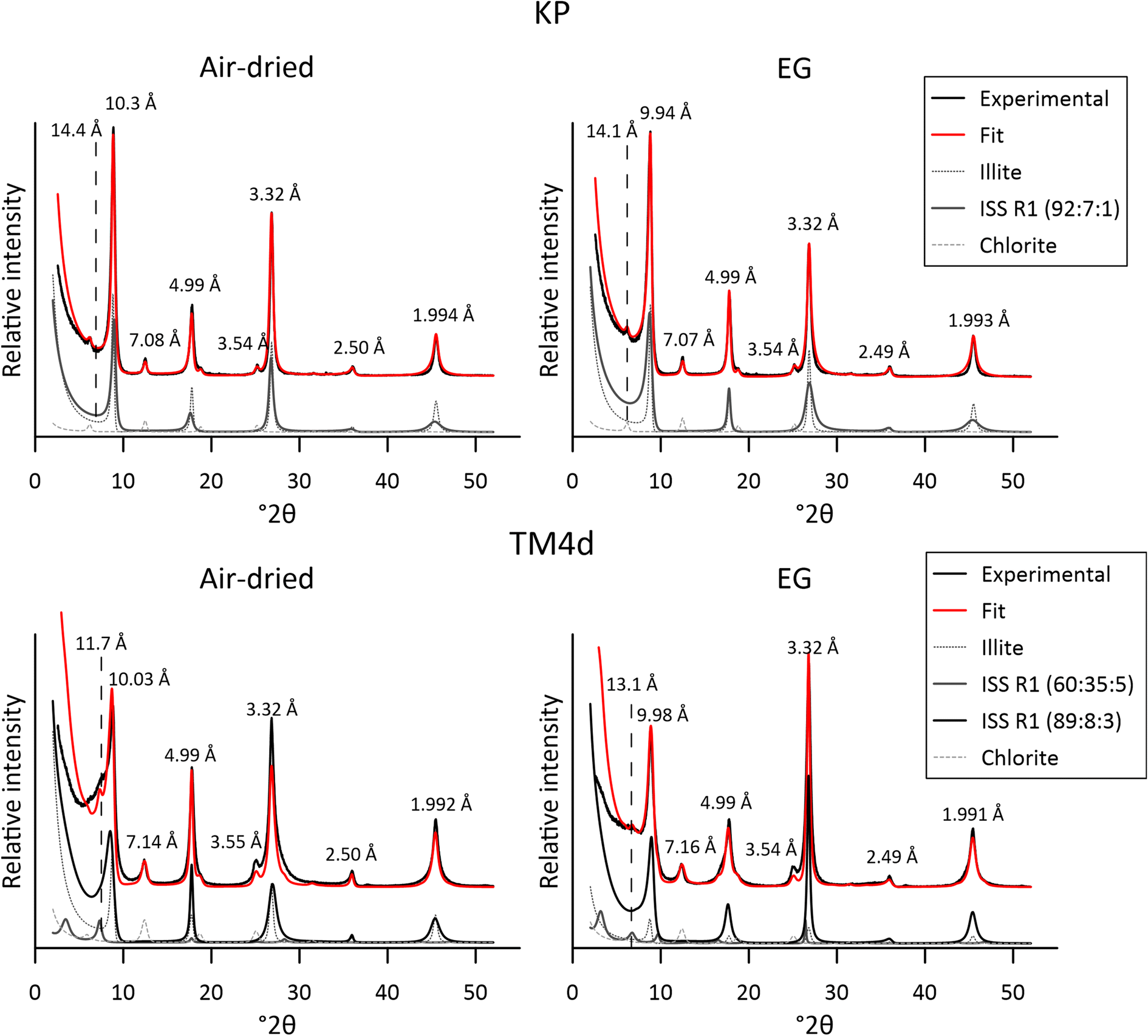
Clay minerals present in the <0.2 μm size fractions were identified using the criteria given by Środoń (Reference Środoń, Bergaya and Lagaly2013) for XRD patterns of oriented specimens. Smectite was identified by the presence of a 15 Å peak for the Ca2+ saturated air-dried form that shifts to ~17 Å upon saturation with ethylene glycol. Illite and chlorite were identified from 10 Å and 14 Å peaks, respectively, that do not shift upon saturation with ethylene glycol. For the samples TM4a, TM4b, TM4c, TM4d, and KP, the XRD patterns of oriented mounts were modeled with Sybilla (Chevron proprietary) software. During modeling, the region below 4°2θ was excluded from analysis because of large instrumental and interparticle diffraction effects (e.g. Drits & Tchoubar, Reference Drits and Tchoubar1990; Moore & Reynolds, Reference Moore and Reynolds1997). The σ* parameter was set to 12 for all phases used. The charge of the illite particles in mixed-layered phases was assumed to be 0.95 per half unit cell and that of smectite was constrained to 0.41 after Środoń et al. (Reference Środoń, Zeelmaekers and Derkowski2009). The interplanar spacing (d 001) of illite and of the illitic component in illite-smectite (I-S) phases was fixed at 9.98 Å. The presence of smectitic layers with almost exclusively two glycol layers was assumed for glycol-saturated specimens. A highly smectitic I-S was used instead of pure smectite to model swelling phases present in the samples, following the approach of McCarty et al. (Reference McCarty, Sakharov and Drits2009). The low-angle parts of the XRD patterns (<10°2θ) were allowed to have poorer fits in order to obtain better fits in the region between 24.5 and 27°2θ, which carries the most information on percentage of smectite and size distribution of the modeled phases (Środoń et al., Reference Środoń, Zeelmaekers and Derkowski2009).
For potassium determination, portions of selected size fractions were digested in a sulfuric acid–hydrofluoric acid mixture, followed by hydrochloric acid treatment. The potassium content of the solutions obtained was measured with a Sherwood 420 flame photometer (Sherwood Scientific Ltd., Cambridge, UK) calibrated against NIST standards SRM 76a and SRM 70a. The measurement error of the photometric analysis corresponded to a 1σ uncertainty in clay K2O content of ±0.05%, absolute.
Fourier-transform infrared (FTIR) spectra of Ca-saturated size fractions <0.2 μm were obtained from thin films deposited on top of the attenuated total reflectance (ATR) crystal using a Nicolet 6700 (Thermo Scientific, Waltham, Massachusetts, USA) FTIR spectrometer equipped with a MIRacle (PIKE Technologies, Madison, Wisconsin, USA) ATR accessory following the procedure described by Kuligiewicz et al. (Reference Kuligiewicz, Derkowski, Szczerba, Gionis and Chryssikos2015). Briefly, ~0.5 mg of a sample was dispersed in 0.5 mL of D2O (99.9 atom% D, Sigma-Aldrich Chemie GmbH, Steinheim, Germany), and the suspension was deposited on top of the ATR crystal. Subsequently, the liquid was evaporated with a dry N2 purge, which allowed us to obtain a FTIR spectrum free of interferences in the OH-stretching region from adsorbed H2O molecules (Russell & Farmer, Reference Russell and Farmer1964). One hundred scans were collected for each sample in the range 400 to 4000 cm−1 with a resolution of 2 cm−1. The spectra were smoothed using the Savitzky-Golay filter with a 17 point window.
Inspection of the results of the XRD analysis of bulk samples showed that the KP sample contained no feldspars, thus it was selected for 40Ar-39Ar dating. Four size fractions, <0.2, 0.2–2, 2–10, and 10–20 μm, saturated with Ca2+ were analyzed in the Ar-Ar Geochronology Laboratory of the University of Michigan following the analytical protocol of Hall (Reference Hall, Jourdan, Mark and Verati2014). Dated size fractions were saturated with Ca2+ in order to remove any loosely associated K+ which could have been adsorbed on the surfaces of clay particles. Vacuum encapsulated samples were irradiated for 30 MWh at location 5C of the McMaster Nuclear reactor. Standard hornblende MMhb-1 was used as a neutron fluence monitor with an assumed age of 520.4 Ma (Samson & Alexander, Reference Samson and Alexander1987).
Encapsulated samples were not baked prior to analysis to avoid outgassing that might complicate measurement of the Ar released by the effects of recoil. Encapsulated samples were laser step-heated in situ for 60 s per step using a defocused beam from a 5 W Coherent Innova continuous Ar-ion laser operated in multi-line mode. Ar isotopes were measured using a VG1200S mass spectrometer with a source operating at 150 μA total emission and equipped with a Daly detector operating in analog mode. Mass discrimination was monitored daily using ~2 pmol of atmospheric Ar. A blank step (no heating) was run after every five heating steps and blank corrections — typically ~1 amol, ~1.4 amol, ~0.5 amol, ~1.4 amol, and ~90 amol — were applied to the amounts of the argon isotopes 36 through 40, respectively, determined in each gas fraction. Corrections were also made for the decay of 37Ar and 39Ar; for the argon produced by interfering nuclear reactions from K, Ca, and Cl; and for production of 36Ar from the decay of 36Cl. The decay constants of 40Ar and the atmospheric Ar isotopic composition are those of Steiger & Jäger (Reference Steiger and Jäger1977).
Age calculations
The results of radiometric dating were first interpreted using the IAA concept (Pevear, Reference Pevear, Kharaka and Maest1992) and an alternative approach based on MODELAGE software (Szczerba & Środoń, Reference Szczerba and Środoń2009) to estimate age values of authigenic and inherited components by extrapolation. IAA, modified by plotting values of eλt – 1 instead of age values, was performed using York regression (York et al., Reference York, Evensen, Lopez Martinez and De Basabe Delgado2004) assuming that errors follow a normal distribution and are uncorrelated. In the case of mineralogical analysis, the 1σ error was assumed to be 5% (absolute), following the authors’ experience in qXRD of clay-bearing materials. The alternative approach followed the age-calculation procedure of MODELAGE software, where the I d(K) parameter is used instead of the mass fraction of non-authigenic components in end-member age extrapolation (Eq. 3 of Szczerba & Środoń, Reference Szczerba and Środoń2009). I d(K) represents potassium within non-authigenic minerals of a size fraction as a percentage of the total amount of potassium in this size fraction. I d(K) is used in MODELAGE plots because, in principle, a plot of 40Ar*/40K vs. percentage of non-authigenic illite is linear only if the K contents of the authigenic and non-authigenic illite are equal, which should not be assumed. The ratio 40Ar*/40K instead of the age is used in order to overcome the departure from linearity of the I d(K) vs. age plot posed by the logarithmic nature of the age equation. The use of the 40Ar*/40K ratio is equivalent to using eλt − 1 as proposed by van der Pluijm et al. (Reference van der Pluijm, Hall, Vrolijk, Pevear and Covey2001), because the two values are linearly related (Szczerba & Środoń, Reference Szczerba and Środoń2009). Although created for K-Ar dating results, the MODELAGE software can work equally well using the results of 40Ar-39Ar dating. It is because 40Ar-39Ar total-gas age values are equivalent to conventional K-Ar age values. MODELAGE software has an internal constraint that the calculated end-member ages have to be non-negative. In order to overcome this issue, calculations were made in the Microsoft Excel spreadsheet, following the approach implemented in the MODELAGE software. The Solver™ Excel add-in was used with a genetic optimization engine to refine three parameters: the ratio of 40Kauthigenic to 40Knon-authigenic and age values of the two end members. Following the computational algorithm implemented in the MODELAGE software, theoretical eλt – 1 values for each size fraction were computed based on the three aforementioned variables and the results of qXRD analysis. These theoretical values were compared with the eλt – 1 values for each size fraction obtained by 40Ar-39Ar dating. The goal of optimization was to minimize the difference between these two data sets. During optimization, the 40Kauthigenic to 40Knon-authigenic value was allowed to vary in the 0.7 to 1.5 range, and end-member ages were allowed to vary between –100 and 500 Ma. Errors around the end-member age values were determined with the Monte Carlo method under assumption of a normal error distribution about each measured value with standard deviation equal to the 1σ measurement uncertainty. Optimization was repeated 1000 times with randomly changed input variables.
Results and discussion
Bulk composition of the gouges
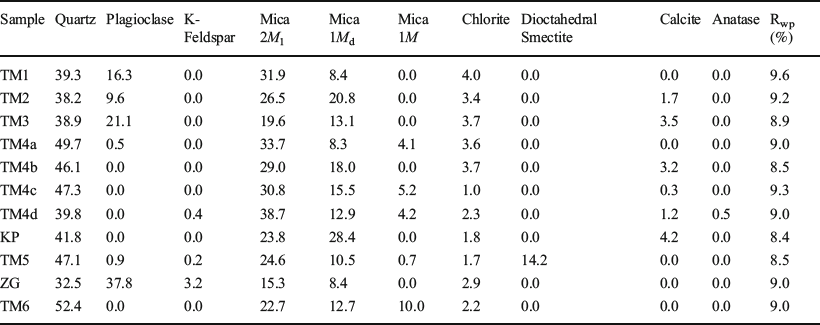
The most abundant components of the gouge samples were quartz, with contents varying between 33 and 52%, and dioctahedral mica (Table 2). The sum of the amounts of the dioctahedral 2:1 layer silicates in bulk gouge varied widely between 56% for sample TM4d and 24% for sample ZG, with the average about 44% (Table 2). Chlorite was a minor constituent (≤4%) of all samples. Plagioclase was abundant in some samples, a little K-feldspar was present in a few samples, and one sample contained discrete dioctahedral smectite (14%). Small amounts of calcite in some samples and a very small amount of anatase in one sample were also observed.
Results of qXRD analysis (mass %) of bulk samples with the goodness of fit parameter Rwp

Composition of the <0.2 μm fractions
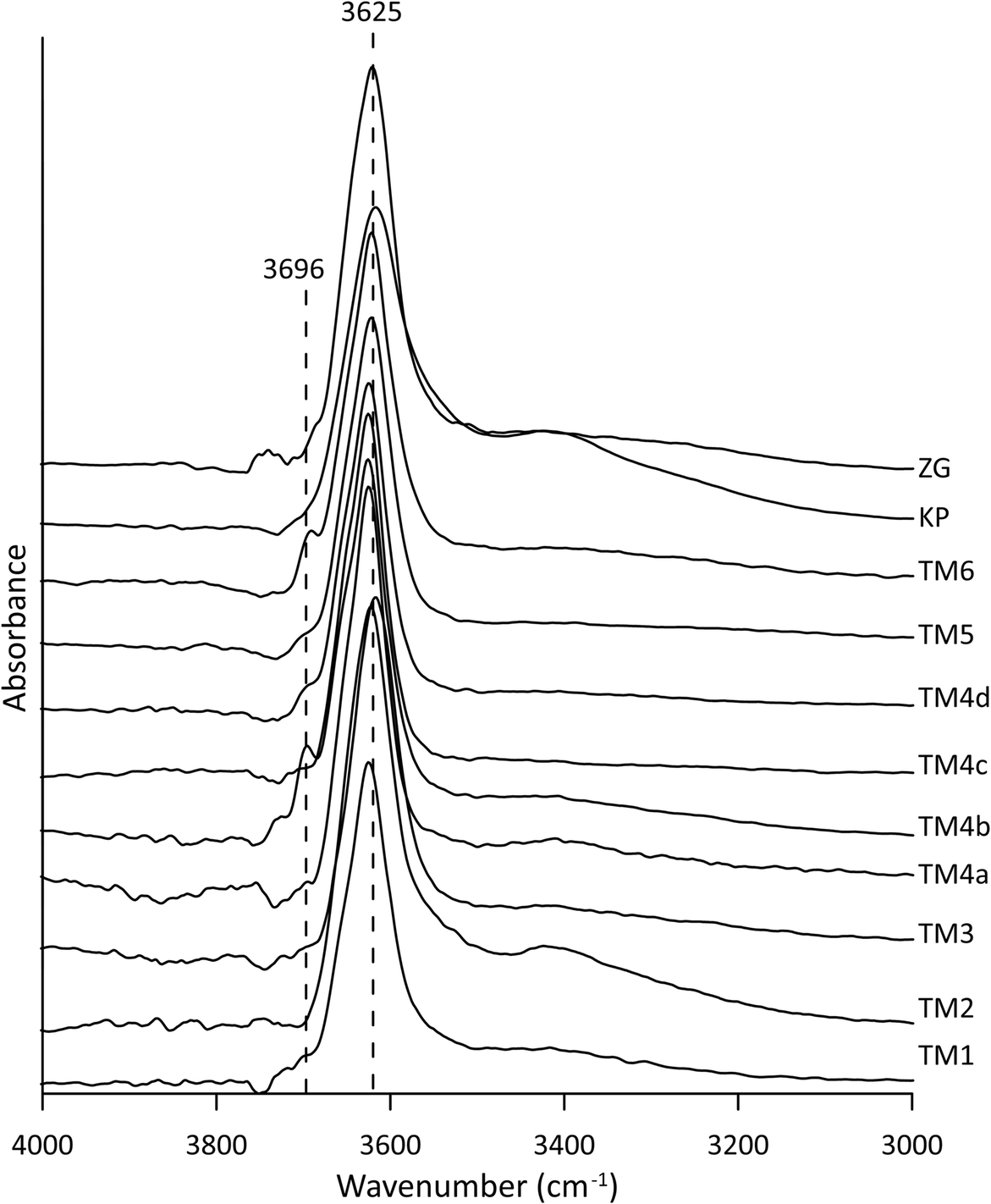
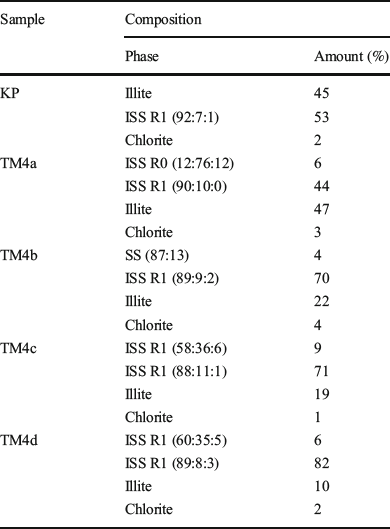
All fine-clay fractions separated from studied samples contained discrete illite, expandable dioctahedral phyllosilicates (I-S and discrete dioctahedral smectite), and chlorite, as evidenced by XRD patterns of oriented mounts (Fig. 3 and associated Research Data). In addition, the presence of a band at 3696 cm–1 in the FTIR spectra of samples TM4b, TM4d, TM5, and TM6 indicated the presence of small admixtures of kaolinite, which were below the XRD detection limit (Fig. 4). Modeling of the XRD patterns of a few of the fine-clay fractions with the Sybilla (Chevron proprietary) software indicated the presence of at least two illite and/or I-S populations (Table 3). The <0.2 μm fractions were dominated by 2:1 phyllosilicates, with prevailing mixed-layered I-S and discrete illite and minor amounts of chlorite. Kaolinite was not included in the modeling because it was present as a small admixture, detectable only by FTIR (Figs 3 and 4). In the case of the KP sample, the model that produced the best fit was relatively simple and contained only chlorite, illite, and highly illitic R1 I-S (8% smectite; Table 3). In the TM4 set of samples, two groups were distinguished. For samples TM4a and TM4b, models included highly illitic I-S and either highly smectitic (88%) I-S or discrete smectite. Models proposed for samples TM4c and TM4d contained two populations of ordered (R1), highly illitic I-S with different percentages of smectite. The remaining phases in both groups were discrete illite and chlorite (Table 3).
XRD patterns of oriented mounts for <0.2 μm fractions of the KP (top) and TM4d (bottom) samples with theoretical models calculated with Sybilla (Chevron proprietary) software. EG denotes patterns of ethylene glycol-solvated clay

FTIR spectra of fine-clay fractions of the investigated samples. The band at 3696 cm–1, at the side of the main OH-stretching envelope of dioctahedral 2:1 phyllosilicates at ~3625 cm–1, indicates the presence of kaolinite

Parameters of Sybilla (Chevron proprietary) models for <0.2 μm Ca2+-exchanged and ethylene glycol-saturated fractions of selected samples

Quantitative analysis of size fractions of the KP sample
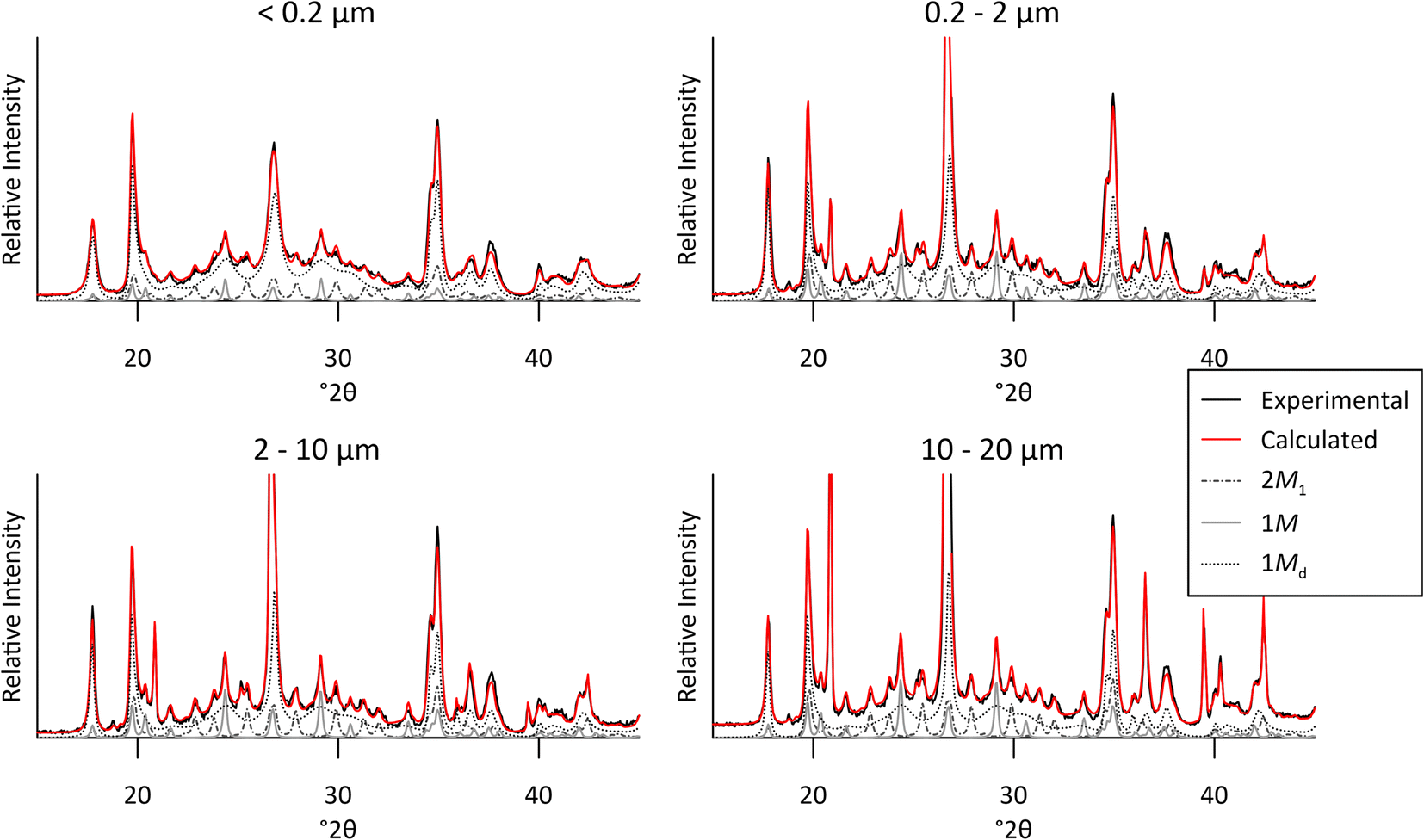
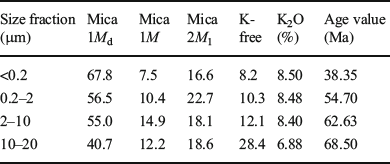
1M d, 1M, and 2M 1 polytypes (of dioctahedral mica and/or illite) were identified in <0.2, 0.2–2, 2–10, and 10–20 μm size fractions separated from the KP sample, based on the presence of diagnostic reflections in the 20–30°2θ range in the XRD patterns of random powder mounts (Fig. 5). Because these size fractions were selected for 40Ar-39Ar dating, a detailed quantification of the relative proportions of these polytypes was performed. While 1M and 2M 1 structures are described adequately by default structure files available in the Profex-BGMN database, the 1M d structure is simplified, which may cause imprecise quantification. Therefore, the 1M d structure description provided by Ufer et al. (Reference Ufer, Kleeberg, Bergmann and Dohrmann2012) was used instead. This structure allowed simulation of peak broadening resulting from the presence of 60° and/or 120° rotations along the c* crystallographic direction and cis and trans vacancies in the octahedral sheet. Tests performed for 1M d structures containing 120° rotations and both 120° and 60° rotations, both with and without preferred orientation (Table S1), revealed that the differences in relative proportions of different polytypes among quantifications based on different 1M d structural models were smaller than the qXRD error assumed to be 5% (absolute). The exception was the quantification using the 1M d structure with 120° rotations without preferred orientation for the <0.2 μm size fraction. This model was considered as oversimplified, because it was the one that returned results inconsistent with the three other quantifications for this size fraction (Table S1). Generally, the amount of the 1M d polytype decreased systematically from the finest to the coarsest size fraction. The 2M 1 polytype displayed the opposite trend, and the 1M content remained relatively constant among size fractions.
XRD patterns of random powder mounts of different size fractions of the KP sample with theoretical patterns calculated with BGMN-Profex software

Given the similarity of the results obtained with the three models considered as reliable, quantification involving the 1M d illite model with 120° rotations and preferred orientation was used in further considerations (Table 4). This model was chosen over the two models that include 60° rotations because, in XRD patterns of examined samples, separate reflections in the 37–39°2θ range were observed, which is characteristic for structures that do not contain 60° rotations (Fig. 5). If such rotations were present, only one broad reflection should be observed in the 37–39°2θ range instead.
qXRD analysis results and K2O contents (all as percent by mass) of size fractions of the KP sample. See text for estimates of the analytical errors

Problems associated with polytype quantification
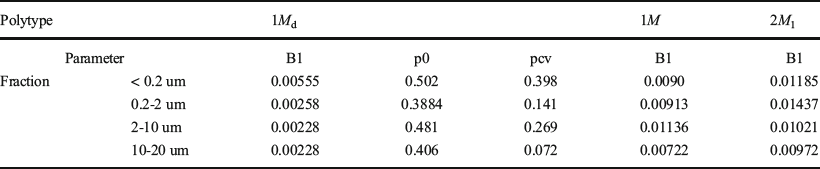
Precise quantification of polytypes can be affected by several problems. Relative amounts of 1M and 1M d polytypes can depend on definition of these structures. Theoretically, if a structure of 1M d polytype with reflections similar to those of 1M is used, part of the XRD intensity in the regions of overlap is assigned to the 1M d polytype, which leads to reduction in the amount of 1M polytype in quantification. For example, Grathoff and Moore (Reference Grathoff and Moore1996) assumed that the 1M d polytype contains 60% trans- and 40% cis-vacant layers; the fraction of 0° rotations is 0.6; and the fraction of 60°, 180°, and 300° rotations is 0.6. This model results in reflections at 3.61 and 3.10 Å, similar to those of the 1M phase (Fig. 2 of Grathoff & Moore, Reference Grathoff and Moore1996). In the case of the 1M d polytype of the KP sample in the present study, no 60°, 180°, and 300° rotations were assumed, and BGMN was allowed to optimize trans- vs. cis-vacant layer contents and fraction of 0° rotations for each size fraction separately. This led also to some overlap of reflections of 1M and 1M d phases at ~24 and 27°2θ (Fig. 5). Refined structures for the 1M d polytype (Table 5) were somewhat different from those assumed by Grathoff and Moore (Reference Grathoff and Moore1996). Generally, there were fewer 0° rotations, which means that XRD patterns of the 1M d polytype had more diffuse reflections. The 1M d structures were also more dominated by trans-vacant layers.
Detailed structural parameters of dioctahedral mica and/or illite polytypes obtained by Profex-BGMN optimization. B1 – crystallite size parameter, p0 – fraction of 0° rotations, pcv – fraction of cis-vacant layers. Parameters p0 and pcv were refined only for the 1M d polytype

The crystallinity of all phases is another important factor, because samples with larger crystallites produce more intense reflections than compositionally equivalent samples with smaller crystallites. In the case of polytype quantification, the larger the crystallites of a polytype, the smaller the amount of that polytype required to fit the experimental XRD pattern of a sample.
40Ar-39Ar dating
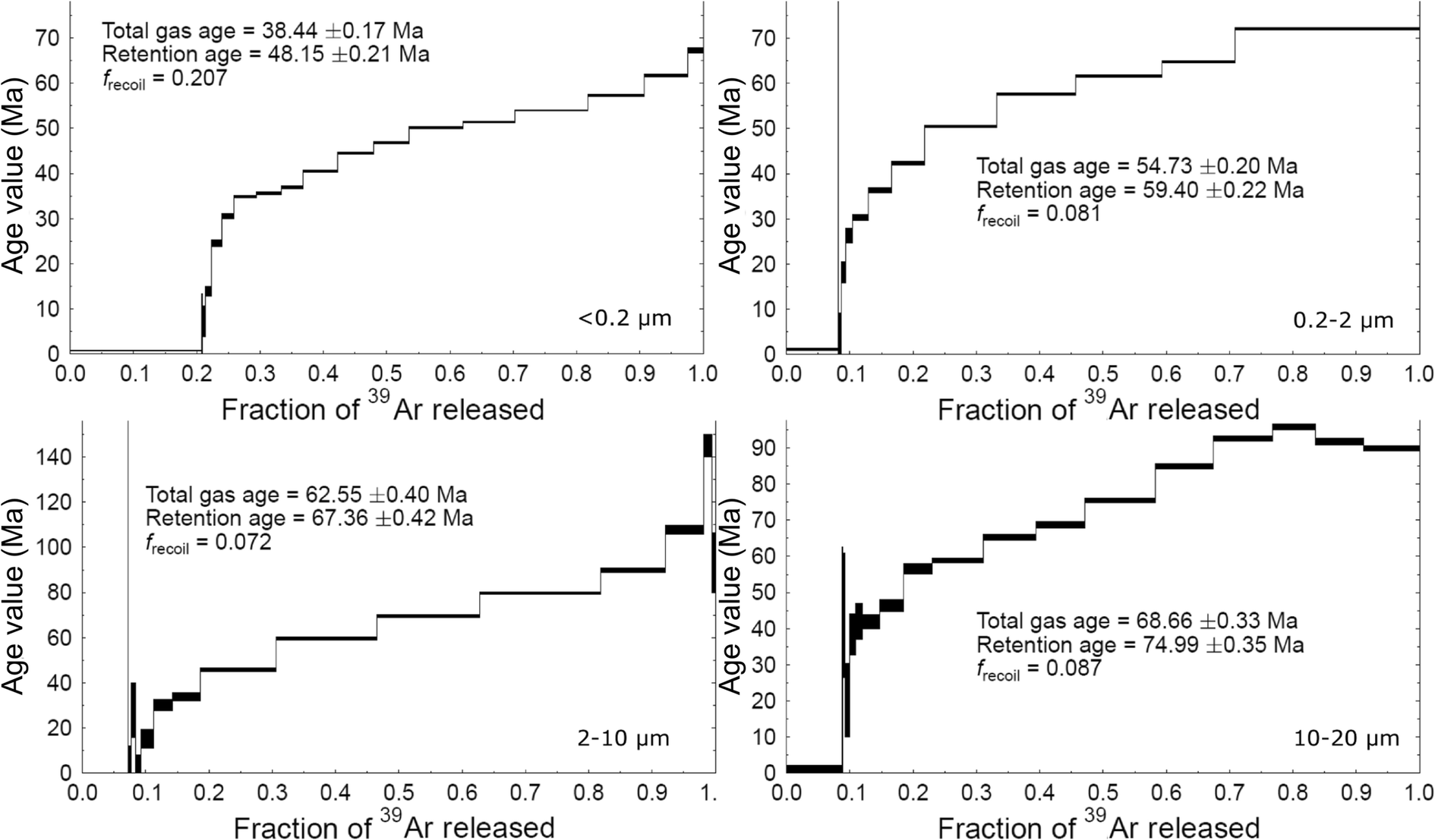
The smaller age values of finer size fractions (Fig. 6) pointed toward tentative acceptance that a basic assumption of 40Ar-39Ar radiometric dating of clay mixtures was fulfilled, i.e. that the younger, authigenic component has smaller crystallites and is relatively concentrated in finer size fractions (Kelley, Reference Kelley2002). None of the Ar-release patterns exhibited a plateau (Fig. 6). This behavior is typical of very fine material and does not invalidate the dates obtained (Haines & van der Pluijm, Reference Haines and van der Pluijm2008). Total-gas age values instead of retention age values were used because samples were Ca-exchanged before radiometric dating, which makes valid the assumption that no weakly bonded potassium is present in the non-retentive sites. Using total-gas age values is appropriate under this assumption (van der Pluijm & Hall, Reference van der Pluijm, Hall, Rink and Thompson2015). In addition, total-gas age values are equivalent to conventional K-Ar age values. The age values of authigenic and inherited material were calculated under the assumption that the 1M d polytype is authigenic and that the 1M and 2M 1 polytypes were inherited. That the 1M polytype was inherited from the wall rocks seemed likely, because formation of this polytype as an authigenic clay gouge component is not widely documented (Haines & van der Pluijm, Reference Haines and van der Pluijm2012).
Ar-release patterns of dated size fractions

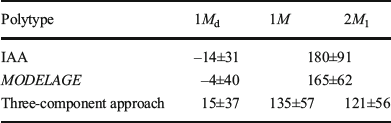
The results obtained for authigenic and inherited components using the IAA concept were −14±31 and 180±91 Ma for authigenic and inherited components, respectively. The average age values obtained by Monte Carlo calculations in the MODELAGE-based approach (hereinafter MODELAGE approach) were −4±40 and 165±62 Ma for authigenic and inherited components, respectively. The ratio of potassium content in authigenic and non-authigenic components (40Kauthigenic/40Knon-authigenic) was 1.1±0.2. Results for particular Monte Carlo runs are presented in Table S2.
Calculation of K contents and age values in a three-component system
Potassium contents of size fractions separated from the KP sample varied from 6.89 to 8.52% (as K2O) and were inversely correlated with the particle size (Table 4). The examined material contained three dioctahedral mica and/or illite polytypes (1M d, 1M, and 2M 1) which might differ from one another in age and K2O content. Following the reasoning of Szczerba & Środoń (Reference Szczerba and Środoń2009), determination of the K2O content of each polytype is an important prerequisite for age determination. Assuming that each polytype has the same K2O content in each size fraction, the following set of linear equations is obtained:


where f stands for the mass fraction of a given polytype in a size fraction as determined with qXRD (Table 4), w stands for the mass fraction of K2O in a polytype or in a size fraction, subscripts 1, 2, and 3 denote the 1M d, 1M, and 2M 1 polytypes, respectively, and subscripted letters indicate the size fraction: a – <0.2 μm; b – 0.2−2 μm; c – 2−10 μm; d – 10−20 μm; e.g. f 1a stands for the mass fraction of the 1M d polytype in the <0.2 μm size fraction. The symbols w a – w d denote the mass fractions of K2O in size fractions a to d, respectively (Table 4).
The matrix inversion technique was applied in order to facilitate handling of the set of linear equations with three unknowns (Collins, Reference Collins1990). This method is applicable to sets of equations with an equal number of equations and unknowns. Three subsets of Eq. 1 having three equations each were selected for matrix inversion. These were Eqs 1a, 1b, and 1c; 1a, 1b, and 1d; 1a, 1c, and 1d. The subset of Eqs 1b, 1c, and 1d was not used, because it had very small differences in polytype contents. The set of Eq. 1a, 1b, and 1c can be written in matrix form as:

Analogous equations can be written for the remaining subsets. The first matrix on the left in Eq. 2 contains mass fractions of polytypes in size fractions <0.2, 0.2−2, and 2−10 μm. If the determinant of this matrix is other than 0, both sides of Eq. 2 can be multiplied by the inverse fraction matrix. This was the case for all subsets. The inverse matrix equation for the subset 1a-1b-1c is, therefore,

An analogous transformation was made for the two remaining subsets.
Once a value for the K2O content of each polytype is known, calculation of a K-Ar age value for each polytype is possible. The 40K content of a size fraction is given by

where 40K denotes a specific amount (amount of substance per unit mass) of 40K and f denotes mass fraction of a polytype as in Eq. 1. Similarly, for the radiogenic Ar content of a size fraction

where 40Ar* denotes a specific amount of radiogenic argon. The K-Ar method age equation yields

Substitution of Eq. 5 into Eq. 6 gives a relationship that may be expressed as

which leads to

Despite the fact that atomic proportions of 40K in the polytypes and in the size fractions are used in Eq. 8, potassium contents can be used instead, because the relative abundance of 40K in common terrestrial materials is virtually constant, i.e. one may assume that 40K/K2O in each polytype and in each size fraction is the same. Assuming that the age value of each polytype is constant among size fractions, following from Eq. 8 is that (for subsystem 1a-1b-1c; notation as in Eq. 1):

Analogous equations can be written for the two remaining subsets of Eq 1.
An attempt was made to calculate K2O contents and age values of the three mica and/or illite polytypes identified in sample KP using the logic described above. The set of four equations with three unknowns (w 1, w 2, and w 3; Eq 1) is inconsistent after substitution of mineralogical and chemical data for the KP sample, i.e. no set of w 1, w 2, and w 3 values exists that simultaneously satisfies all equations. Furthermore, different K2O contents and age values are obtained for corresponding polytypes when data are substituted into Eqs 3 and 9 written for different subsets of Eq. 1. This is interpreted as a result of analytical errors, mainly the error of qXRD, which is two orders of magnitude greater than the error of K determination. An attempt was made to remove the inconsistency by optimization of the analytical results, allowing measured values to vary within ranges defined by their 1σ measurement uncertainty. An Excel spreadsheet with Solver™ add-in was used to simultaneously minimize (1) the sum of squared differences in K2O contents obtained for each polytype with different subsets of Eqs 1 and (2) the sum of squared differences in age values obtained for each polytype with different subsets of Eq. 1. The mass fraction of each polytype and the sum of mass fractions of K-free phases in size fractions were allowed to vary in the ±5% range. Optimized size fraction compositions had to sum to 100%. The K2O content of each size fraction was allowed to vary within the ±0.05% range, corresponding to the 1σ measurement error of K2O determination. Similarly, age values of size fractions were optimized in the range defined by the 1σ analytical uncertainty of the 40Ar-39Ar analysis. The optimization allowed to obtain a set of data (Table 6), which returned consistent values for the K2O contents and age values of the polytypes: w 1 = 8.77%, w 2 = 11.28%, and w 3 = 10.35%, t 1 = −6 Ma, t 2 = 205 Ma, and t 3 = 101 Ma for 1M d, 1M, and 2M 1 illite, respectively.
Optimized mineralogical composition (mass %), K2O content, and age value for various size fractions of the KP sample

The above-mentioned K contents and age values for the polytypes are not associated with any estimate of uncertainty. In order to rectify this issue, a Monte Carlo approach was used. Calculations of K2O contents and age values of polytypes were repeated 1000 times using randomly changed optimized input data (Table S3). For each repetition, values of polytype contents, K2O content, and 40Ar-39Ar age for each size fraction were randomly drawn, each from a population having a normal distribution about the optimized value of that variable (Table 6) and a standard deviation equal to the 1σ measurement uncertainty, and substituted into Eqs 3 and 9. For each subset of Eq. 1, a small number of repetitions (between 2.7 and 3.3%) returned eλt − 1 values that were smaller than −1 and consequently could not be converted to Ma. These repetitions were discarded when analyzing age values of the polytypes.
Interestingly, the results obtained showed that w 1, w 2, and w 3, as well as age values of the1M d, 1M, and 2M 1 polytypes do not have normal distributions (Table S4 and Fig. S1). This is confirmed by the results of the Shapiro-Wilk test, which returned p-values of <0.05 for K2O contents and age values of the polytypes generated by the Monte Carlo calculations (Table S4). Visual inspection of histograms of K2O contents and age values of the polytypes points toward a Cauchy (Lorentz) distribution, i.e. symmetric distribution with very long tails on both sides of the maximum (Fig. S1). In such a situation, statistical measures other than the mean and the standard deviation are needed to provide an accurate description of data. For this reason, the median and the interquartile range (IQR) were used for the central value and the uncertainty range, respectively, of calculated age values in the three-component system. The results (median values) of the Monte Carlo approach differed from results of initial optimization; however, the former are considered as more reliable because results of the Monte Carlo approach can be associated with uncertainties based on their IQR ranges. The three-component age values used in further considerations are median values averaged across all subsets (Table 7). The associated uncertainties are based on correspondingly averaged IQR values and are presented as plus or minus one-half of the IQR.
Age values (Ma) calculated with the different approaches used in the present study

No large differences were found in the median of calculated K2O values among the polytypes. This result agreed with a 40Kauthigenic/40Knon-authigenic ratio not differing significantly from 1, as calculated with the MODELAGE approach.
Comparison of age values calculated with various approaches
Both IAA and MODELAGE approaches returned negative age values of the authigenic component of the gouge. The time ranges of formation of the authigenic component, as defined by 1σ uncertainties, were −45 to 17 Ma and −44 to 36 Ma, for IAA and MODELAGE approaches, respectively. The earlier boundary of the range for the MODELAGE approach is close to the total gas age of the finest size fraction (38.44±0.17 Ma). In the three-component system, the age value for the 1M d polytype was 15±37 Ma. All age values obtained for the youngest component of the gouge point towards post-Paleogene formation of this component, most probably during final Miocene uplift of the core, as indicated by the median values of 1M d age calculated with the three-component approach (Table S4).
IAA and MODELAGE approaches returned age values for the inherited component of 180 and 165 Ma, respectively, with corresponding 1σ time ranges being 89−271 Ma, and 103−227 Ma. The three-component system returned age values of 135 Ma (IQR time range 78−192 Ma) and 121 Ma (IQR time range 65−177 Ma) for the 1M and 2M 1 polytypes, respectively. Disregarding error, the age values for the inherited component coming from IAA and MODELAGE approaches correspond roughly to late Early Jurassic−Late Jurassic extension. Median age values for the 1M and 2M 1 polytypes obtained with the three-component approach correspond to a thermotectonic event that was suggested to have affected the area around 140–120 Ma (Maluski et al., Reference Maluski, Rajlich and Matte1993). A definitive link of any component to a particular phase of tectonic activity in the area is, however, not possible because of large uncertainties around the calculated age values. An alternative explanation of such age values in the present work is that they are the result of partial resetting of the K-Ar system of micas formed during intrusion of Tatra granitoids 340–370 Ma by one or more of the subsequent tectonic events.
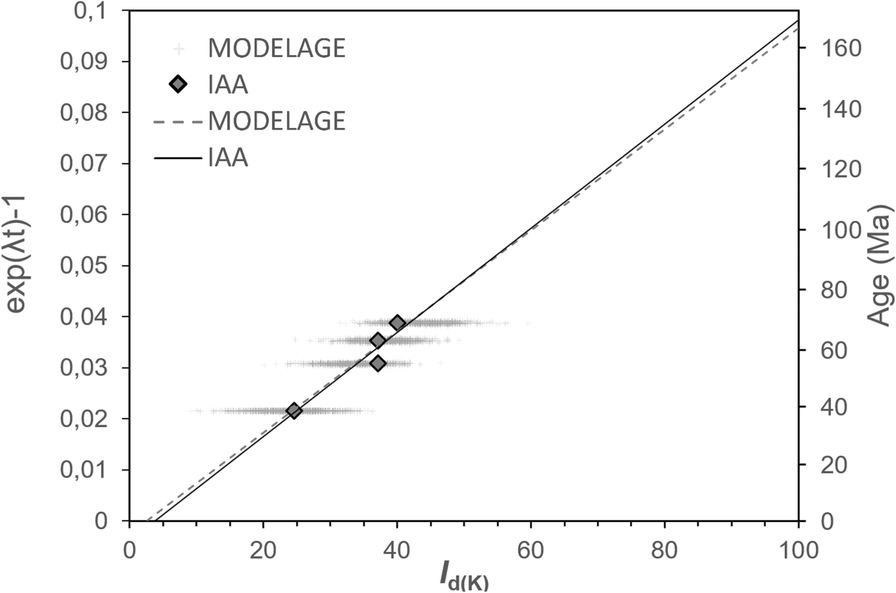
Interpretation of polytype age values obtained in the present study is highly speculative because of large uncertainties associated with those values. Several factors can possibly contribute to such large uncertainties. First, variability of polytype contents among separated size fractions is relatively small. In addition, the relative amount of the 1M polytype is small, which also amplifies the error in the three-component approach. In two-component approaches, a small variability of 2M 1 + 1M polytype contents makes the regression upon which the age value calculation is based poorly constrained (Pevear, Reference Pevear1999; Szczerba & Środoń, Reference Szczerba and Środoń2009). In addition, for IAA and MODELAGE approaches, data points are scattered around the best fitting line (Fig. 7), which can be the result of errors in qXRD analysis. The scatter can indicate that the dated materials do not meet the assumptions behind IAA and MODELAGE approaches, e.g. potassium content or age value of a given polytype varies among size fractions.
Plots of eλt – 1 vs. the appropriate measure of the non-authigenic component for IAA and MODELAGE interpretative concepts. For MODELAGE, the extrapolation is for averages of 1000 runs using a Monte Carlo approach (light gray crosses). Gray diamonds and dashed extrapolation line – IAA approach.

Origin of the components identified in clay gouges
Compared to the surrounding rocks, the gouges are enriched in quartz and muscovite and depleted in plagioclase and K-feldspar. Unlike the High Tatra granitoids, the gouges are almost completely devoid of biotite. Other phases, which do not occur in fresh granitoids, are chlorite, calcite, 1M d illite, I-S, smectite, and kaolinite. The observed differences between compositions of wallrocks and gouge follow patterns described for other shear zones developed in igneous and metamorphic rocks of similar mineralogical composition (Abad et al., Reference Abad, Jiménez-Millán, Schleicher and van der Pluijm2017; Boles et al., Reference Boles, Mulch and van der Pluijm2018; Haines & van der Pluijm, Reference Haines and van der Pluijm2012; Hayman, Reference Hayman2006; Surace et al., Reference Surace, Clauer, Thélin and Pfeifer2011).
In the investigated gouges, quartz and feldspars were inherited from the surrounding granitoids and mylonites. These minerals can be macroscopically identified in the wallrocks and as crushed grains in hand specimens of investigated samples. Larger proportions of quartz (relative to the granitoids) can be interpreted as a result of a decrease in rock volume within the shear zone (Goddard & Evans, Reference Goddard and Evans1995; Schleicher et al., Reference Schleicher, Warr and van der Pluijm2009). Smectite and kaolinite are considered as authigenic components of the examined gouges. These phases do not occur in the host rocks of the gouges. A weathering origin of the smectite is considered unlikely, because it coexists with chlorite, which is broken down before precipitation of smectite during weathering (Skiba, Reference Skiba2007). Because the investigated materials have no signs of weathering, the small quantities of kaolinite found are also most likely authigenic. Chlorite present in studied gouges is is probably inherited from the parent rocks. Chlorite in general is commonly found in the Tatra granitoids as a product of biotite alteration (e.g. Gawęda & Włodyka, Reference Gawęda and Włodyka2012; Gawęda et al., Reference Gawęda, Doniecki, Burda and Kohút2005; Turnau-Morawska, Reference Turnau-Morawska1948). Chloritization, which is always complete in the granitoids located next to a fault, is believed to have taken place during Alpine dynamometamorphism (Jurewicz & Bagiński, Reference Jurewicz and Bagihski2005; Leichmann et al., Reference Leichmann, Jacher-Sliwczynska and Broska2009), before the gouges formed.
The majority of the discrete 1M d illite polytype, as well as the I-S, is authigenic and the majority of the 1M and 2M 1 polytypes was inherited. During age calculations I-S was included in the 1M d component and all interpretations derived for 1M d illite apply also to I-S in this respect. A possible source of non-authigenic 1M d polytype is wall rock containing feldspars, which often had been hydrothermally altered to sericite or illite of uncertain polytype (Uchman & Michalik, Reference Uchman and Michalik1997). According to the best knowledge of the authors, no detailed information on sericite from the Tatra Mountains is available in the literature.
The parent rock is the most likely source of the 2M 1 polytype, which has been considered herein as an inherited component of the gouge. Taking into account the geologic history of the area (Kohút & Sherlock, Reference Kohút and Sherlock2003; Maluski et al., Reference Maluski, Rajlich and Matte1993), the 2M 1 polytype must have formed originally during crystallization of granitoids ~340−370 Ma, with possible recrystallization during the main Alpine event between 70 and 140 Ma.
A relatively large variability in the clay mineralogy of the gouges is exemplified by the TM4 site, where samples were taken 10–15 cm apart. This may be due to polycyclic formation of the gouges, reflecting both temporal and spatial variability of the conditions inside the gouge at the centimeter scale.
Conclusions
Clay gouges from the Tatra Mountains consist of quartz, dioctahedral mica (discrete phase, and I-S), and chlorite, commonly with plagioclase and more rarely with K-feldspar, dioctahedral smectite, calcite, or anatase. Discrete illite, mixed-layered I-S phases, chlorite, dioctahedral smectite, and kaolinite were found in fine-clay fractions (<0.2 μm) of these materials. Kaolinite and smectite are authigenic components of the clay gouges. Most if not all of the 1M d polytype also belongs to this category. The rest of the phases were probably inherited from the surrounding parent rocks, but formation of 2M 1 and 1M mica polytypes during one of the high-temperature stages of the shear-zone activity cannot be excluded unequivocally.
A new interpretative concept for 40Ar-39Ar and K-Ar dating was introduced, allowing for calculation of age values for the individual components in a three-component system. The proposed approach allows different K contents among the three components to be recognized and determined and allows compensation for the uncertainty of inherently imprecise qXRD analysis. For the investigated system, the errors associated with the results of the new interpretative concept were large, because of small differences in polytype contents among dated size fractions and, in some cases, small relative amounts of certain polytypes. The three-component approach should be tested on samples with larger compositional variability.
Supplementary Information
The online version contains supplementary material available at https://doi.org/10.1007/s42860-022-00176-7.
Acknowledgments
Artur Kuligiewicz thanks The Clay Minerals Society for supporting the research with a Student Research Grant. The fieldwork needed for the present study was conducted with the help of the Tatra National Park. Chevron ETC and Douglas McCarty are acknowledged for their permission to use their proprietary SYBILLA software. The authors thank Arkadiusz Derkowski for valuable discussions. Insightful comments from Joseph W. Stucki, J. M. Wampler, Austin Boles, and an anonymous reviewer greatly helped to improve the manuscript.
Availability of data and material
Research Data associated with this article are stored in Mendeley Data repository and can be accessed at https://doi.org/10.17632/w4shwhhm58.1
Code availability
Not applicable.
Funding
This research was funded by the Student Research Grant awarded to AK by The Clay Minerals Society.
Declarations
Conflicts of interest
The authors declare that they have no conflict of interest.