


Introduction
The prenatal diagnosis of CHD changes what parents expect about caring for their newborn. Reference Donofrio, Moon-Grady and Hornberger1–Reference Bratt, Järvholm, Ekman-Joelsson, Mattson and Mellander3 Prenatal visits usually focus on surgery and intensive care, but often leave out important information about feeding. Reference Marino, Johnson and Davies4 Nevertheless, for neonates with CHD, feeding represents a complex clinical and emotional challenge that significantly impacts early outcomes. Reference Connor, Kline, Mott, Harris and Jenkins5,Reference Tregay, Brown, Crowe, Bull, Knowles and Wray6
Mother’s milk is the optimal source of nutrition for infants with CHD. It reduces the risk of necrotising enterocolitis, sepsis, poor growth, and adverse neurodevelopmental outcomes. These benefits are attributed to its anti-inflammatory, immunomodulatory, and gastrointestinal properties, which are particularly important for haemodynamically unstable infants. Despite these advantages, mother’s milk use remains suboptimal in this population. Fifty to ninety percent of neonates with CHD receive preoperative enteral feeds, Reference Brandfonbrener, Gorsky, Marks, Hetherton, Kramer and Steurer7 but only 50% receive human milk Reference Kataria-Hale, Roddy and Cognata8–Reference Demirci, Davis, Glasser and Brozanski10 and only approximately 15–25% directly breastfeed during the preoperative period. Reference Brandfonbrener, Gorsky, Marks, Hetherton, Kramer and Steurer7,Reference Torowicz, Seelhorst, Froh and Spatz9,Reference Elgersma, Spatz and Fulkerson11,Reference Gauntt, Tucker, Dolan, Gajarski and Krawczeski12 Feeding practices vary substantially across institutions and often reflect cultural norms rather than evidence-based protocols Reference Elgersma, Spatz and Fulkerson11
Feeding difficulties in CHD arise from both clinical complexity and institutional practices. The wide range of cardiac lesions and rapid physiologic changes after birth complicate feeding decisions. However, recent data suggest that with dedicated lactation support, many infants with CHD can successfully receive human milk. Reference Gauntt, Tucker, Dolan, Gajarski and Krawczeski12 Maternal factors such as prior breastfeeding experience, early initiation of milk expression, and access to specialised lactation support strongly influence these outcomes. Reference Demirci, Caplan, Brozanski, Bogen and Perinatol13–Reference Davis, Glasser, Clemens, Eichhorn, Vats and Demirci15 Most previous research has focused on clinical endpoints, such as necrotising enterocolitis and infection rates Reference Elgersma, Wolfson and Fulkerson16,Reference Cognata, Kataria-Hale and Griffiths17 Few studies have examined maternal prenatal expectations, counselling experiences, or the early psychosocial factors that shape feeding behaviours. Although qualitative work has described feeding difficulties in infants with CHD, Reference Demirci, Caplan, Brozanski, Bogen and Perinatol13,Reference Cognata, Kataria-Hale and Griffiths17,Reference Elgersma, McKechnie, Sommerness, Tanner and Swanson18 modifiable maternal factors and interventions related to these difficulties are poorly studied.
This study aimed to address that gap. We prospectively evaluated maternal expectations, prenatal counselling experiences, and early feeding outcomes among infants with prenatally diagnosed CHD. We identified factors that improve direct breastfeeding and human milk use in this high-risk group. By characterising these early influences, we hope to identify interventions that optimise nutrition and long-term outcomes for infants with CHD.
Materials and methods
We conducted a prospective cohort study of mothers with infants prenatally diagnosed with CHD. Inclusion criteria were neonates with prenatally diagnosed CHD admitted within the first 7 days of life. Since our intended study population included infants with CHDs and these infants are more likely to have non-cardiac anomalies, Reference Egbe, Lee, Ho, Uppu and Srivastava19 we chose to include all infants with prenatally diagnosed CHD. There was no gestational age limit since our study aim was to assess the level of information and preparedness planning of mothers of infants with CHD regarding feeding of their infants after the initial prenatal diagnosis. Even in the setting of prematurity, the mothers would still have some time to think and prepare for the birth of their infant. Patients were excluded from participating if parental consent was not obtained. The study included mother–infant dyads born at or transferred to the 72-bed Level IV neonatal ICU or 22-bed paediatric cardiac ICU at the University of Florida Shands Children’s Hospital between March 1, 2021, and August 31, 2022. The University of Florida Institutional Review Board approved the study protocol, and informed consent was obtained from all participants.
Prenatal consults and lactation support
Prenatal counselling consists of a paediatric cardiologist and a neonatologist meeting with families prior to delivery. Both specialists typically discuss importance of providing human milk if the mother is able and willing. Although there is no standardised evidence-based guidelines or scripted prompts for discussing human milk and it’s benefits. Lactation support consists of a lactation consultant (IBCLC) who meets with the families within the first 24 hours of infant’s admission. The IBCLCs follow the mother–infant dyad throughout their initial hospitalisation and provide support with hand expression, obtaining a double electric hospital-grade pump, goal volumes of expressed milk, pump troubleshooting and are available for one-on-one sessions as needed by the mother.
Survey administration
Because existing scales lack specificity for prenatally diagnosed CHD populations and do not capture prenatal counselling, medical feasibility, or family experiences across both neonatal ICU and paediatric ICU settings, we developed a custom survey. This instrument was designed to assess prenatal expectations, anticipated medical complexity, and feeding perceptions across the care continuum. Eligible mothers completed this structured survey assessing their expectations and preparedness regarding neonatal feeding. The 23-question survey included a mixture of yes/no, free-response, and Likert scale questions and was developed by a multidisciplinary team, comprising a neonatal fellow, a neonatologist, and a paediatric cardiac critical care physician trained in neonatology. Surveys were administered using Qualtrics (Qualtrics, Seattle, WA) on hospital-issued iPads. All surveys were completed during the first 7 days of the infant’s hospitalisation to minimise recall bias.
Chart review
We performed a retrospective chart review using the electronic health record (Epic Systems, Verona, WI). Data were collected and managed using Research Electronic Data Capture tools hosted at the University of Florida. Extracted variables included maternal and infant demographics, prenatal and postnatal cardiac diagnoses, comorbidities, surgical interventions, feeding plans, and nutritional status during hospitalisation, at 3 months, and at 6 months after discharge. We reviewed inpatient records and outpatient follow-up visits with paediatric cardiologists and primary care providers at three- and six-months post-discharge. As most patients were born with a CHD amenable to surgery, the updated Society of Thoracic Surgeons-European Association for Cardio-Thoracic Surgery (STAT) mortality score was used to categorise patients according to their surgical mortality risk, with a higher score implying higher risk Reference Mago-Shah, Athavale, Fisher, Heyward, Tanaka and Cotten20.
Outcome measures
Outcomes included:
-
• Volume of maternal expressed human milk by day of life 14
-
• Type of nutrition at hospital discharge and 3- and 6-month follow-up
-
• Use of direct breastfeeding during hospitalisation and 3 and 6 months after discharge
Breastfeeding variables were stratified into direct breastfeeding, expressed human milk, fortified human milk, combination feeding, and formula-only feeding. Direct breastfeeding was measured in the following ways: 1) Was there any direct breastfeeding during hospitalisation? (Yes/No) If yes, what was the number of days of direct breastfeeding during hospitalisation? 2) Was there any ongoing breastfeeding at discharge? (Yes/No) 3) Was there any direct breastfeeding at 3 months? (Yes/No) 4) Was there any direct breastfeeding at 6 months? (Yes/No) 5) Percentage of feeds that were direct breastfeeding. Adequate milk volume, or “coming to volume,” was defined as ≥500 mL/day by day of life 14, Reference Mago-Shah, Athavale, Fisher, Heyward, Tanaka and Cotten20 measured by daily cumulative expressed milk volume deposited in the University of Florida’s inpatient Milk Room. If the daily volume reached or exceeded 500 mL at any time during the first 14 days, the volume goal was met.
Statistical analysis
We used descriptive statistics to characterise maternal and infant demographics, feeding practices, and survey responses. Likert-scale responses were treated as continuous variables. Categorical variables were compared using Fisher’s exact test or Pearson’s chi-squared test, and continuous variables were analysed using Wilcoxon rank-sum or Kruskal–Wallis tests as appropriate.
Although socio-economic factors influence lactation outcomes, we did not adjust for race/ethnicity or employment in the primary model. The cohort was 90% White and 94% non-Hispanic (n = 3 Hispanic), producing near-zero variance that precludes meaningful regression adjustment. Employment data had 26.5% missing values, and formal imputation was not performed. To assess robustness, we conducted a sensitivity analysis adding Medicaid status (n = 46 complete) to the primary model. All reported predictors retained essentially identical effect sizes and significance (gravida odds ratio 3.22, p = 0.033 vs. original odds ratio 3.43, p = 0.031; age at first surgery odds ratio 1.01, p = 0.040 vs. original p = 0.052; congenital anomalies odds ratio 0.010, p = 0.007 vs. original p = 0.006). Medicaid status itself was not significantly associated with outcomes (odds ratio 0.13, 95% confidence interval 0.01–0.95, p = 0.062).
Multivariable logistic regression models evaluated the associations between maternal and clinical factors and feeding outcomes, adjusting for potential confounders, including maternal gravida, infant age at first surgery, and the presence of congenital anomalies, as well as the STAT score. We reported odds ratios with 95% confidence intervals. Statistical significance was set at p < 0.05. All analyses were conducted using R (version 4.2.3, R Foundation for Statistical Computing, Vienna, Austria). Since the sample showed progressive attrition at 3 and 6 month follow-up (n = 49 at baseline), longitudinal models (GEE or mixed-effects) were not appropriate due to risk of non-convergence and unreliable estimates. Instead, cross-sectional logistic regression models were fit separately at each time point. To evaluate whether discharge feeding status mediated the relationship between in-hospital breastfeeding practices and longer term outcomes, we additionally ran models at 3 and 6 months with discharge feeding type included as a covariate. After this adjustment, discharge feeding status emerged as the primary predictor of sustained human milk use, while other in-hospital factors no longer reached significance, suggesting a mediation pathway.
Results
Maternal and infant demographics
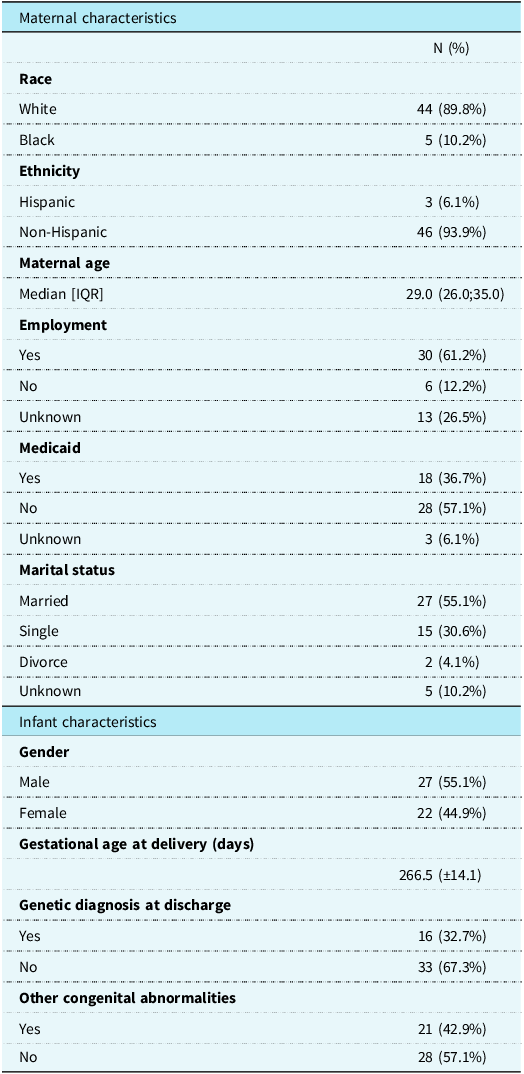
A total of 50 mother–infant dyads were enrolled in the study; 49 completed the maternal survey and were included in the final analysis (Supplementary Figure 1). The maternal cohort was predominantly White (90%) and non-Hispanic (94%) (Table 1). Nearly half of the mothers (47%) reported one prior pregnancy, and the majority were multiparous. At the time of enrollment, 61% were employed, 55% were married, and 38% were covered by Medicaid.
Maternal and infant demographics

Table 1. Long description
The table presents maternal and infant characteristics in a study with 50 participants. It includes two main sections: maternal characteristics and infant characteristics. The maternal characteristics section has 10 rows and 2 columns, detailing race, ethnicity, maternal age, employment status, Medicaid coverage, and marital status. The infant characteristics section has 5 rows and 2 columns, detailing gender, gestational age at delivery, genetic diagnosis at discharge, and other congenital abnormalities. Each row provides the count and percentage for each characteristic. Notable trends include a predominantly White and non-Hispanic maternal cohort, with a median maternal age of 29.0 years. Employment status is varied, with 61.2 percent employed, 12.2 percent unemployed, and 26.5 percent unknown. Medicaid coverage is reported by 36.7 percent, while 57.1 percent do not have Medicaid, and 6.1 percent have unknown status. Marital status shows 55.1 percent married, 30.6 percent single, 4.1 percent divorced, and 10.2 percent unknown. Infant characteristics include a nearly equal gender distribution, with 55.1 percent male and 44.9 percent female. The average gestational age at delivery is 266.5 days. Genetic diagnosis at discharge is present in 32.7 percent, and other congenital abnormalities are reported in 42.9 percent of infants.
Infant demographic and clinical characteristics are summarised in Table 1. The majority of infants were male (55%). At the time of discharge, 33% had a documented genetic diagnosis, and 43% had an additional congenital anomaly. The most common cardiac diagnoses included coarctation of the aorta and/or aortic arch hypoplasia (33%), hypoplastic right heart syndrome (14%), and transposition of the great arteries (10%). The median length of hospitalisation was 28 days. In-hospital mortality was 2%.
Expressed human milk volume by day of life 14
Among mothers, 31 (63.3%) achieved ≥500 mL/day of expressed human milk by days of life 14, while 14 (28.6%) did not; 4 (8.2%) had missing or insufficient data The median maternal age was slightly lower among mothers who did not achieve adequate expressed human milk volume (31.0 years [interquartile range 25.8–36.8]) versus those who did (28.0 years [interquartile range 26.0–32.0]); however, this difference was not statistically significant (p = 0.19).
Most mothers (23 of 31, 74.2%) who achieved the expressed human milk goal did so within the first 7 days of life. There were no statistically significant differences in maternal age or infant age at goal attainment between those who reached the volume goal early (≤7 days) and those who achieved it later (>7 days; p = 0.67).
The absence of additional congenital anomalies was a significant predictor of reaching the goal volume of ≥500 mL/day (odds ratio 0.0087, 95% CI 0.00014–0.141, p = 0.0058). Mothers of children with higher STAT score correlated with a later achievement of coming to volume (500 mL/day) by 14 days (p = 0.04).
Direct breastfeeding and feeding outcomes at discharge
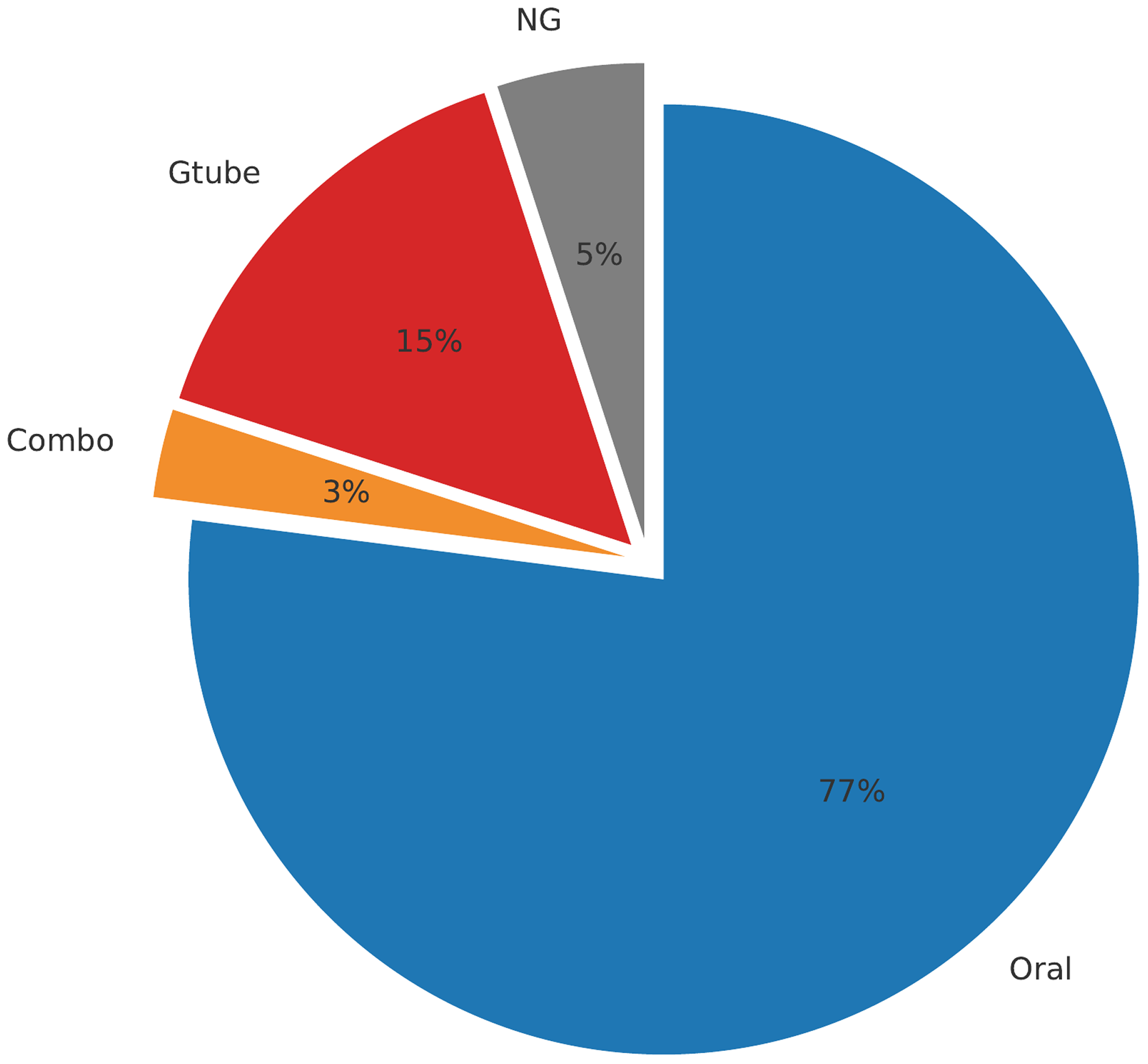
Among infants who had any direct breastfeeding during hospitalisation (n = 27), the proportion of feeding days that included direct breastfeeding was calculated as the ratio of days receiving direct breastfeeding to total enteral feeding days during hospitalisation. The median proportion was 17.4% (interquartile range 10.6–56.3%, range 0–100%), reflecting the heterogeneity in clinical complexity and length of stay across our cohort. Direct breastfeeding was associated with a higher likelihood of oral feeding at discharge. Infants who were directly breastfed during hospitalisation were more likely to be fed orally (77%) than those who were not directly breastfed (p = 0.007). Fewer infants in the direct breastfeeding group required gastrostomy tubes (15%) or alternative feeding routes such as nasogastric or combination feeding (Figure 1).
Association between direct breastfeeding and feeding route at discharge among infants with CHD. The majority of (77%) were discharged on full oral feeds, while smaller proportions required gastrostomy tube (15%), nasogastric tube (5%), or combination feeding (3%).

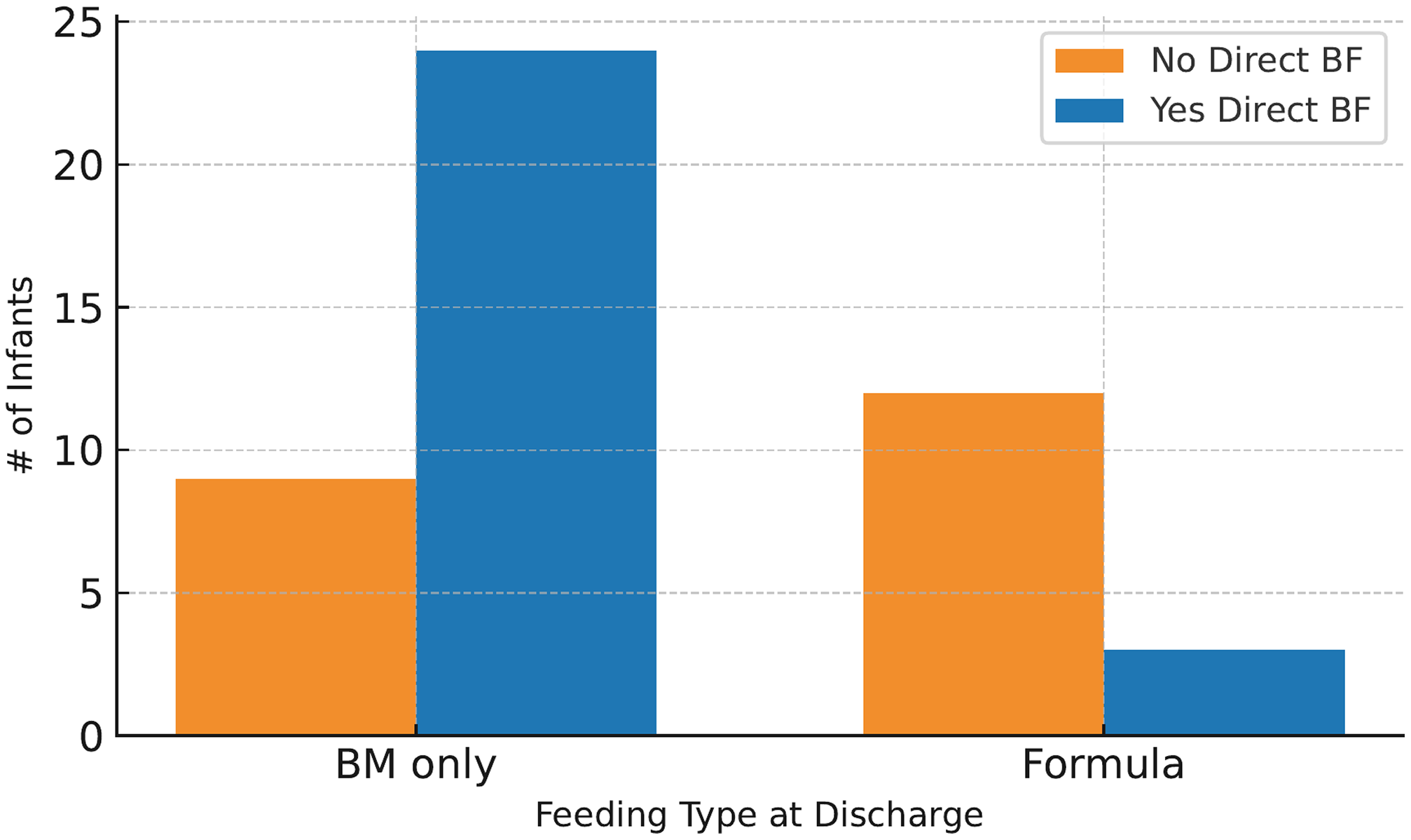
Direct breastfeeding during hospitalisation was significantly associated with increased use of the mother’s own expressed human milk at discharge. Among infants who were directly breastfed, 24 (77%) were discharged receiving human milk exclusively, compared to 9 (28%) in the non-direct breastfeeding group. In contrast, formula-only feeding at discharge was more common among infants who had not directly breastfed (12 vs. 3 infants; p = 0.0006) (Figure 2).
Relationship between direct breastfeeding and feeding type at discharge. Among infants who directly breastfed during hospitalisation, a higher proportion was discharged receiving breast milk only, while those who did not directly breastfeed were more likely to receive formula.

Maternal expectations and prior breastfeeding experience
Prior exclusive breastfeeding experience of more than six months was significantly associated with improved outcomes. Infants of these mothers were more likely to receive human milk at discharge, at 3 months (odds ratio 56.0, p = 0.009), and at 6 months (odds ratio 23.7, p = 0.031). Mothers with prior breastfeeding experience also had higher rates of direct breastfeeding during hospitalisation (odds ratio 140.3, p = 0.015), at 3 months (odds ratio 24.6, p = 0.041), and at 6 months (odds ratio 6.84, p = 0.178). Unadjusted associations were derived from Fisher’s exact tests, adjusted models using Firth penalised likelihood regression (to account for complete separation in this small sample) yielded consistent directionality across all time points, with four of six associations remaining statistically significant after adjustment for maternal gravida, infant age at first surgery, congenital anomalies, and STAT score.
Predictors of direct breastfeeding
For each additional prior pregnancy, the odds of direct breastfeeding during hospitalisation increased approximately 3.4-fold (odds ratio 3.43, 95% confidence interval 1.29–12.73, p = 0.031). Earlier age at first surgery showed a positive trend (odds ratio 1.01 per day, 95% confidence interval: 1.00–1.02, p = 0.052), suggesting potential influence on breastfeeding initiation.
Early exposure to human milk
Receipt of any human milk (exclusive, fortified, or mixed) within the first 72 hours of life was significantly associated with human milk feeding at hospital discharge (p = 0.0158).
Prenatal counselling
Although 68% of mothers reported receiving prenatal counselling on the benefits of human milk, pumping, and early lactation; these efforts were not significantly linked to feeding outcomes.
Discussion
To our knowledge, this is the first prospective study to evaluate how direct breastfeeding, maternal intent and expectations, and early lactation behaviours influence feeding outcomes in neonates with CHD. While prior research has documented the benefits of human milk in reducing necrotising enterocolitis, infection, and mortality in this population, Reference Cognata, Kataria-Hale and Griffiths17 few studies have explored potentially modifiable maternal or behavioural predictors of human milk feeding during and after hospitalisation. By examining both maternal and clinical factors, this study fills an important gap, providing a clearer picture of in-hospital factors that may affect feeding at discharge for infants with CHD.
Counselling and expectations: limited predictive value
Firm maternal intention to breastfeed was significantly associated with improved short-term and sustained lactation outcomes. Mothers rating their breastfeeding intent as 10/10 produced greater milk volumes by day 14 and maintained human milk feeding through 6 months, which is consistent with population-based studies showing definite prenatal intention predicts both initiation and continuation. Surprisingly, early maternal counselling alone was not significantly associated with improved feeding outcomes. Early counselling alone did not increase the chances of human milk use. Our findings in our single cite CHD population stand in contrast to broader lactation literature. There may be a substantial intention–behaviour gap in the CHD population, and despite comparable breastfeeding intentions across socio-demographic groups, barriers related to medical complexity, high-stress settings, Reference Gauntt, Tucker, Dolan, Gajarski and Krawczeski12,Reference Demirci, Caplan, Brozanski, Bogen and Perinatol13 separation, and limited lactation support in the neonatal ICU and paediatric ICU settings may prevent mothers from achieving their goals. Our data suggest that in the prenatal-diagnosed CHD population, where multidisciplinary counselling may enhance maternal goal clarity and reduce ambivalence about feasibility, strong intention coupled with structured lactation support may overcome some of these institutional and clinical barriers. This population-specific pattern warrants further investigation across diverse cardiac complexity and socio-economic contexts.
Clinical complexity reduces human milk use
Given differences in approaches and data sources, we analysed outcomes with revised STAT risk stratification scores. Our findings showed that mothers of children with higher STAT score were less likely to come to a human milk volume >500 ml/day by 14 days. This finding corroborates how illness severity affects feeding for children and their mothers. Critically ill infants often stay Nil per os longer, take more time to recover after surgery, and are often separated from their mother’s contact, factors that delay both expressed human milk feeding and direct breastfeeding. These findings underscore the importance and utility of early, targeted lactation support that accommodates medical complexity. Reference Torowicz, Seelhorst, Froh and Spatz9,Reference Gauntt, Tucker, Dolan, Gajarski and Krawczeski12
Direct breastfeeding improves feeding outcomes
Direct breastfeeding during hospitalisation was the strongest modifiable predictor of oral feeding at discharge. Infants who were directly breastfed were significantly more likely to be feeding orally at discharge, supporting prior evidence linking breastfeeding with improved feeding coordination, gastrointestinal motility, and neurologic development. Reference Elgersma, Engel, Ramel, Davis, McKechnie and Pfister21,Reference Davis, Baumgartel and Baust22 Importantly, this benefit persisted even in infants with moderate clinical complexity, highlighting the feasibility of direct breastfeeding in intensive care settings when medically appropriate. Clinical teams often hesitate to allow oral feeding due to concerns about aspiration or intake monitoring. However, structured bedside tools, such as pre- and post-feed weights, provide objective reassurance. Dedicated lactation leadership within a single institution has been shown to shift unit culture and increase human milk use across regional neonatal ICU networks. Reference Spatz, Evans and Froh23 Our findings justify institutional protocols that support direct breastfeeding as a standard component of care for stable CHD patients. Reference Trabulsi, Lessen and Siemienski24
Direct breastfeeding sustains human milk use
Infants who received direct breastfeeding were also more likely to receive human milk and breastfeeding directly at discharge. This association suggests that early direct breastfeeding has downstream effects on lactation maintenance. Reference Kataria-Hale, Roddy and Cognata8,Reference Davis, Glasser, Spatz, Scott and Demirci14,Reference Spatz25 Breastfeeding involves both physical contact and emotional connection, which likely helps boost milk production, build maternal confidence, and support continued pumping. These benefits highlight direct breastfeeding as more than a milestone; it is a key intervention for maintaining human milk use.
Limitations
This study has limitations inherent to prospective single-centre designs. However, our structured methodology, including real-time survey administration and standardised chart review protocols, supports internal validity and minimises recall bias. Although clinical outcomes were obtained through retrospective chart review, which may have introduced variability in documentation, data were extracted using predefined criteria from a consistent electronic medical record system, enhancing reliability. Maternal survey responses were self-reported and may have been subject to social desirability bias. To mitigate this, surveys were administered privately during hospitalisation using digital tools, thereby reducing the potential influence of care teams or family.
The cohort was predominantly White and non-Hispanic, limiting adjustment for race, ethnicity, or socio-economic factors. Future multicentre studies enrolling more diverse populations are needed to evaluate the influence of structural and social determinants on lactation outcomes in infants with CHD. Reference Davis, Scott, Ray, Elgersma, Demirci and Levine26 Additionally, the small sample size and missing follow-up data precluded the use of longitudinal regression models. Cross-sectional models were fit separately at each time point.
Implications and future directions
To improve human milk feeding in infants with CHD, standard counselling alone may not be enough. Future approaches should include early screening to understand each mother’s feeding goals, targeted support for infants who are more medically complex, and efforts to encourage direct breastfeeding whenever possible, even in critically ill infants. Counselling should also focus on goal setting, motivation, and ongoing support. These strategies can help hospitals take a more proactive and personalised approach to lactation care. Reference Davis, Glasser, Clemens, Eichhorn, Vats and Demirci15,Reference Spatz25 Ultimately, our findings reinforce that maternal engagement and early breastfeeding behaviours are central to optimising nutritional outcomes in infants with prenatally diagnosed CHD.
Conclusions
Our findings support direct breastfeeding and maternal goal setting as modifiable, high-yield interventions for improving nutrition in neonates with CHD. Early milk exposure, even before surgery, should be prioritised in neonatal ICU care pathways. Future multicentre studies should test structured prenatal-lactation counselling and early bedside lactation support in this population.
Supplementary material
The supplementary material for this article can be found at https://doi.org/10.1017/S1047951126124287
Data availability statement
All data generated or analysed during this study are included in the published article. Questions or requests for additional information should be directed to the corresponding author.
Acknowledgements
We thank the families and infants whose participation made this study possible.
Students from Dr Parker’s laboratory: Lauren Cervantes, Meikim Wong; Larissa Iapica, RN.
Financial support
This study received no external funding.
Competing interests
The authors disclose none.
Ethical standard
The University of Florida Institutional Review Board approved the study protocol IRB202002253.


 Open access

