Introduction
Cardiovascular disease has been established as a leading cause of mortality globally, with 80% of cardiovascular disease-related deaths occurring in low- and middle-income countries (Murray et al., Reference Murray, Vos and Lozano2012). Hypertension is an important cause of cardiovascular morbidity and mortality worldwide with responsibility for roughly 50% of deaths from stroke and heart disease (WHO, 2013; Go et al., Reference Go, Mozaffarian, Roger, Benjamin, Berry and Borden2013). In 2008, over 40% of adults over 25 years old were affected worldwide, accounting for about 57 million Disability Adjusted Live Years (DALYS) and up to 7.5 million deaths (WHO, Reference Wickrama, Lorenz, Wallace, Peiris, Conger and Elder2016).
Increasing age, gender, family history, genetics, race, cigarette smoking, high salt intake, consumption of saturated fats, high alcohol intake, physical inactivity, environmental stress and low socioeconomic status have been shown to be important determinants of hypertension in several studies (Addo et al., Reference Addo, Agyemang, Smeeth, De-Graft Aikins, Edusei and Ogedegbe2012; van den Berg et al., Reference Van den Berg, Meinke-Franze, Fiss, Baumeister and Hoffmann2013; Laxmaiah et al., Reference Laxmaiah, Meshram, Arlappa, Balakrishna, Rao and Reddy2015; Nyarko, Reference Nyarko2016). The now routine use of automated ambulatory blood pressure monitors in clinical practice and research in the last two decades has revealed intra-day variability in blood pressure linked to the sleep–wake cycle (Fagard et al., Reference Fagard, Thijs, Staessen, Clement, De Buyzere and De Bacquer2009; Cuspidi et al., Reference Cuspidi, Giudici, Negri and Sala2010; Hansen et al., Reference Hansen, Li, Boggia, Thijs, Richart and Staessen2011) as well as routine daily activities and life circumstances (James, 1991; Ice & James, Reference Ice and James2012). These activity-linked ‘physiological’ changes in blood pressure, termed ‘allostasis’, help individuals adapt to their activities and circumstances and shed some light on the link between social conditions, behaviour and cardiovascular health (Sterling, Reference Sterling2004; James, Reference James2013).
Although hypertension is already a major health concern globally, its prevalence continues to rise disproportionally in low- and middle-income countries, particularly in urban communities (Danaei et al., Reference Danaei, Finucane, Lin, Singh, Paciorek and Cowan2011; Murray et al., Reference Murray, Vos and Lozano2012; WHO, 2013). In Africa, the prevalence of hypertension has been estimated to be about 46% for both sexes – the highest across all World Health Organization regions (WHO, Reference Wickrama, Lorenz, Wallace, Peiris, Conger and Elder2016). This rise in the prevalence of hypertension in low- and middle-income countries has been linked to rapid (uncontrolled) urbanization and unhealthy lifestyle changes (consumption of Western-style diets, sedentary lifestyle, smoking and increased alcohol consumption) and a general increase in the prevalence of non-communicable diseases (WHO, 2010; Delisle et al., Reference Delisle, Ntandou-Bouzitou, Agueh, Sodjinou and Fayomi2012). In Ghana, the prevalence rate of hypertension is estimated to be between 25% and 48%, again with higher rates in urban than in rural populations (Amoah, Reference Amoah2003; Agyemang, Reference Agyemang2006; Addo et al., Reference Addo, Agyemang, Smeeth, De-Graft Aikins, Edusei and Ogedegbe2012). Importantly, almost half (47.5%) of those with hypertension in Ghana already have evidence of target organ damage, including complications to the eyes, heart, kidneys and brain (Addo et al., Reference Addo, Smeeth and Leon2009), which inevitably impacts morbidity and mortality. Unsurprisingly, hypertension has been reported to be the second leading cause of outpatient morbidity in Ghanaian adults over the age of 45 years and a major contributor to the rise in non-communicable diseases, which are responsible for about 42% of premature deaths in Ghana (Addo et al., Reference Addo, Agyemang, Smeeth, De-Graft Aikins, Edusei and Ogedegbe2012; WHO, 2014). An in-depth understanding of the biology and epidemiology of hypertension globally and locally is therefore critical for the implementation of effective interventions.
Marital status is an important social characteristic that is known to predict a range of health outcomes, including cardiovascular health in particular (Brummett et al., Reference Brummett, Barefoot, Siegler, Clapp-Channing, Lytle and Bosworth2001; Lett et al., Reference Lett, Blumenthal, Babyak, Strauman, Robins and Sherwood2005) and mortality in general (House, Reference House2001; Kaplan & Kronick, Reference Kaplan and Kronick2006). Two main schools of thought have sought to explain the relationship between marital status and health outcomes – the social selection and social causation hypotheses (Joung et al., Reference Joung, Van De Mheen, Stronks, Van Poppel and Mackenbach1998; Averett et al., Reference Averett, Sikora and Argys2008). The social selection hypothesis purports that healthier individuals are selected into marriage and unhealthy persons into unmarried states. Proponents argue that the association between marital status and health may not be a function of marriage per se but a function of the selection of marriage partners, which favours healthy individuals (Averett et al., Reference Averett, Sikora and Argys2008).
The social causation hypothesis, on the other hand, argues that marital status determines an individual’s exposure to the social or economic conditions that shape one’s health outcomes. Thus, the married state could offer an economic and social environment that promotes healthier behaviours. However, physiological stress associated with taxing marital roles such as caring for children and spouses, increased pressures to earn a higher income and psychological stress from marital discord could negatively impact the health of married individuals (Law & Sbarra, Reference Law and Sbarra2009; Ferree, Reference Ferree2010). Further, the stresses associated with marital breakdown (spousal death, separation or divorce) could precipitate unhealthy lifestyles such as smoking, drinking and poor diet. On these hypotheses, the literature on allostasis and adaptation as a determinant of hypertension is particularly strong (Schnall et al., Reference Schnall, Pieper, Schwartz, Karasek, Schlussel and Devereux1990; Landsbergis et al., Reference Landsbergis, Schnall, Pickering, Warren and Schwartz2003; James, Reference James2013).
Most previous studies exploring the relationship between marital status and health were primarily conducted outside Africa (Brummett et al., Reference Brummett, Barefoot, Siegler, Clapp-Channing, Lytle and Bosworth2001; House, Reference House2001; Lett et al., Reference Lett, Blumenthal, Babyak, Strauman, Robins and Sherwood2005; Kaplan & Kronick, Reference Kaplan and Kronick2006; Averett et al., Reference Averett, Sikora and Argys2008). Only a handful of these (Wang, Reference Wang2005; Kaplan & Kronick, Reference Kaplan and Kronick2006; Molloy et al., Reference Molloy, Stamatakis, Randall and Hamer2009; Schwandt et al., Reference Schwandt, Coresh and Hindin2010) focused on the relationship between marital status and hypertension. Evidence from these studies generally points towards an association between the unmarried state (including the never married, divorced, widowed or separated) and hypertension (Wang, Reference Wang2005; Schwandt et al., Reference Schwandt, Coresh and Hindin2010). One study (Schwandt et al., Reference Schwandt, Coresh and Hindin2010) looked specifically at gender differences and blood pressure in married versus unmarried African-Americans and found that single African-American women were more likely than single African-American men to have hypertension. Another study (Adeoye et al., Reference Adeoye, Adebiyi, Owolabi, Lackland, Ogedegbe and Tayo2016), which specifically examined the relationship between gender and hypertension in Africans in Africa, found gender disparities in the prevalence of hypertension, with a higher prevalence in men than women. The authors, however, did not look at the effects of marital status in their study.
Given that: 1) evolutionary and ecological differences between populations may affect allostatic variation regulation of blood pressure (James, Reference James2013, Reference James2017); 2) the evidence that familial responsibilities and domestic stress may affect blood pressure differently in men and women (James et al., Reference James, Broege and Schlussel1996; Brisson et al., Reference Brisson, Laflamme, Moisan, Milot, Masse and Vezina1999; Gerin & James, Reference Gerin and James2010); 3) the possibility that marital status may affect blood pressure differently in men versus women (Wang Reference Wang2005; Molloy et al., Reference Molloy, Stamatakis, Randall and Hamer2009; Schwandt et al., Reference Schwandt, Coresh and Hindin2010); and 4) the dearth of studies examining these subjects in Africa, this study sought to examine the effect of marital status on hypertension in Ghana and whether this effect varies by gender. The findings of the present study fill a gap in the literature and should inform public health interventions aimed at reducing hypertension in Ghana and sub-Saharan Africa in general.
Methods
Data source
The study used data from the 2014 Ghana Demographic Health Survey (GDHS), which is the sixth in a series of nationally representative surveys of women, men and children for monitoring population dynamics and health situation in Ghana. For the collection of data, the GDHS employed a two-staged stratified sampling procedure in a cross-sectional design. The first stage involved the systematic random selection of clusters based on an updated master sampling frame constructed from the 2010 Ghana Population and Housing Census. The second stage involved the systematic sampling of the households listed in each cluster from which a nationally representative sample of 9396 women and 4388 men were interviewed, with a response rate of 98.5%.
The 2014 survey was the first in the series of GDHS since 1987/88 to measure the blood pressure of participants. More than 99% of the eligible women and men interviewed consented to having their blood pressure taken. The analysis in this study was therefore based on 9356 women and 4374 men with complete blood pressure data. All respondents provided written consent before each interview was conducted.
Dependent variable
The dependent variable was derived from the blood pressure measurements of respondents in the survey. Using standardized procedures, trained personnel measured blood pressure using the LIFE SOURCE® UA-767 Plus blood pressure monitor: a digital oscillometric blood pressure measuring device with automatic upper-arm inflation and automatic pressure. Three measurements of both systolic and diastolic blood pressure (measured in millimetres of mercury [mmHg]) were taken for each participant with an interval of at least 10 minutes between measurements during the interviews. The average of the second and third measurements was used to classify individuals with respect to hypertension (Ghana Statistical Service (GSS) et al., 2015). No 24-hour ambulatory blood pressure measurements were obtained.
Participants who had a systolic blood pressure level of 140 mmHg or above, or a diastolic blood pressure level of 90 mmHg or above, or were taking antihypertensive medication to control their blood pressure at the time of the survey were classified as having hypertension and coded ‘1’ (GSS et al., 2015). Participants with a systolic blood pressure below 140 mmHg or a diastolic blood pressure below 90 mmHg or not taking antihypertensive medication to control their blood pressure at the time of the survey were classified as not having hypertension and coded ‘0’ (GSS et al., 2015). The term ‘hypertension’ as used in the current study is not meant to be a clinical diagnosis of the disease; rather, it is meant to provide an indication of the disease burden in the population at the time of the survey (GSS et al., 2015).
Key explanatory variable and covariates
Participants answered questions about their marital status. Responses were grouped into five categories: never married, married, living together, divorced, separated and widowed. For the purpose of this study, four marital status categories were created, namely: never married, married, cohabiting (living together), and previously married (divorced, separated and widowed). In order to better assess the effect of marital status on hypertension, other covariates were controlled for.
Two groups of covariates were considered, namely: lifestyle-related factors and socio-demographic factors. The lifestyle-related factors considered were body mass index (BMI), days of fruit intake per week and days of vegetable intake per week. These are modifiable factors that may protect or predispose one to hypertension. Body mass index was expressed as the ratio of weight in kilograms to the square of height in metres (kg/m2), and classified according to standard WHO (1995) cut-offs: underweight, BMI<18.5 kg/m2; normal weight, BMI of 18.5–24.9 kg/m2; overweight, BMI of 25.0–29.9 kg/m2; and obese, BMI≥30.0 kg/m2. Days of fruit intake per week and days of vegetable intake per week were each put into three categories: none, 1–3 and 4–7.
The socio-demographic factors considered were age group (15–24, 25–34, 40–44, and 45+), educational level (no education, primary, middle/junior secondary school (JSS)/junior high school (JHS) and secondary/higher education), occupation (not working, professional/managerial, sales/trade, agricultural and manual labour), wealth status (poorest, poorer, middle, rich and richest), ethnicity (Akan, Ga/Adangme, Ewe, Mole-Dagbani, Gruma and ‘Other’) and type of locality (rural and urban)
Data analyses
All analyses were conducted using STATA version 11.0 software. Descriptive and inferential statistics were employed to explore the relationship between marital status and hypertension. All analyses were stratified by gender in accordance with the initial premise of potential gender differences in the effect of marital status on hypertension. Descriptive statistics were used to analyse and present the results for all variables considered in the study, and their relationship with hypertension. The chi-squared test was used to test for statistical significance (p<0.05) in the descriptive analyses.
The next stage of the analyses involved the use of multivariate binary logistic regression analyses to estimate the effect of marital status on hypertension. Three models were estimated, with marital status in the first model (Model I). In Model II, lifestyle-related factors were included to assess their influence on the results between marital status and hypertension. Then in Model III, socio-demographic factors were fitted to assess their influence on the factors in the preceding models. Based on reviewed literature, an interaction term, comprising age and BMI, was introduced to ascertain possible moderation effects.
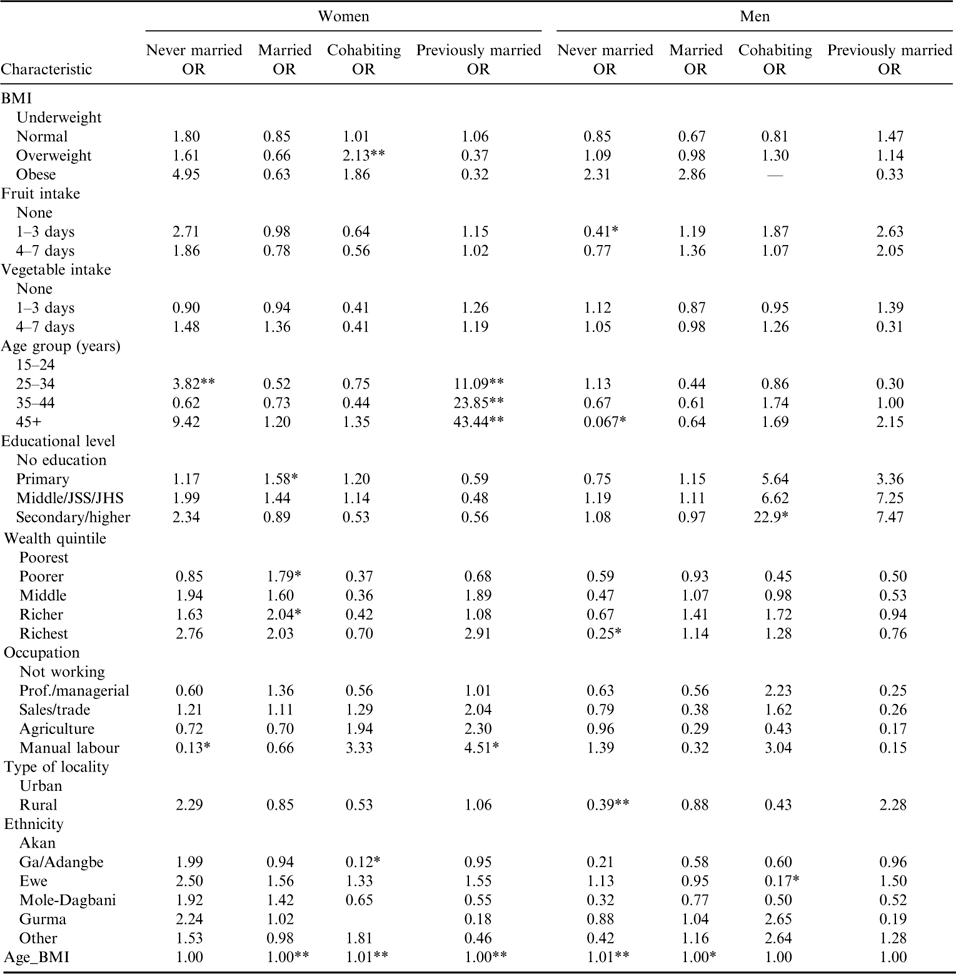
To explore possible cohort variations in the association between the covariates (lifestyle-related and socio-demographic factors) controlled for in Model III and hypertension, further regression analyses were conducted stratified by marital status and gender (see Table 5). The results from the final model (Model III) were used to assess the overall effect of marital status on hypertension. Results from binary logistic regression analyses were presented as odds ratios at 95% confidence intervals (CIs). In order to ensure representativeness and to correct for non-response, the GDHS weighting was applied in all analyses.
Results
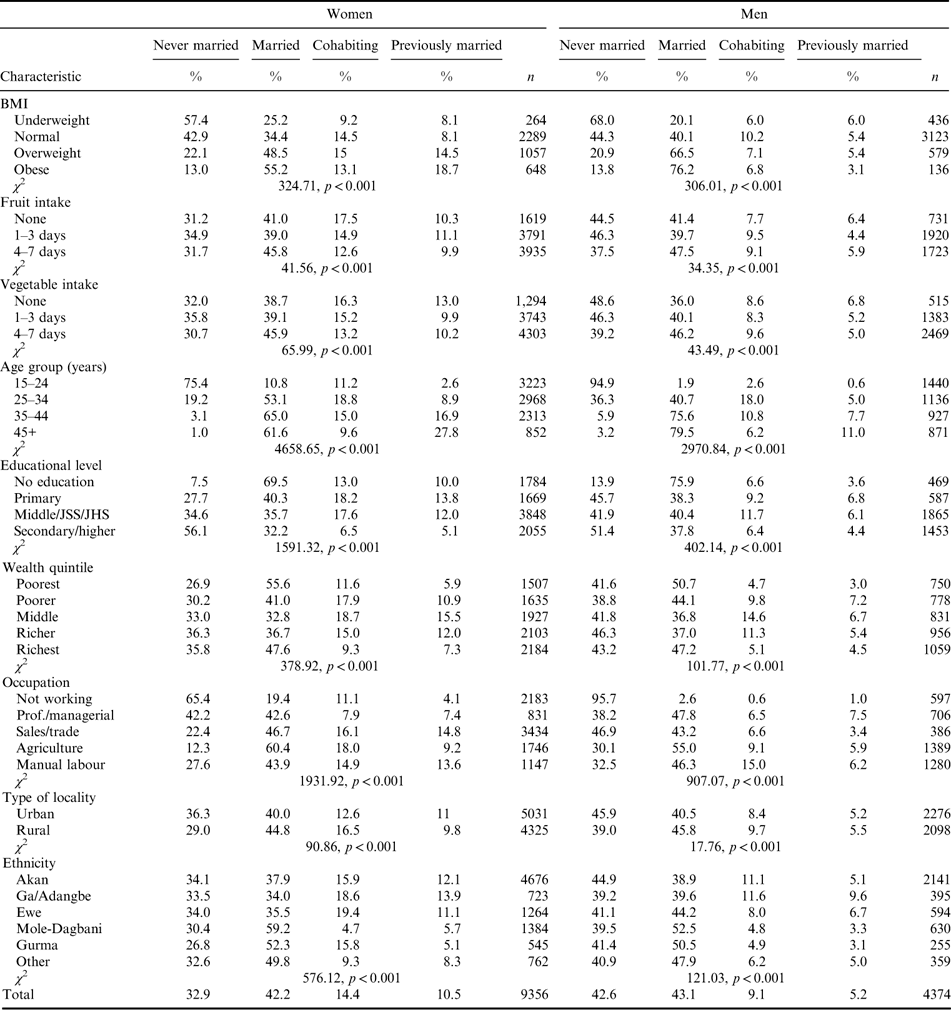
Table 1 presents the distribution of marital status by the various characteristics of the study participants. All the characteristics considered in this study were found to be significantly (p<0.05) associated with marital status. In general, about four in ten participants were married (42.2% women and 43.1% men). Most obese participants were married (55.2% women and 76.2% men), whereas most of those categorized as underweight were in the never-married cohort (57.4% women and 68.0% men). The consumption of fruit and vegetables on most days of the week was higher among married participants, with over four in ten married men and women indicating they consumed fruit (45.8% women and 47.5% men) and vegetables (45.9% women and 46.2% men) 4–7 days per week.
Marital status of men and women by background characteristics, 2014 GDHS
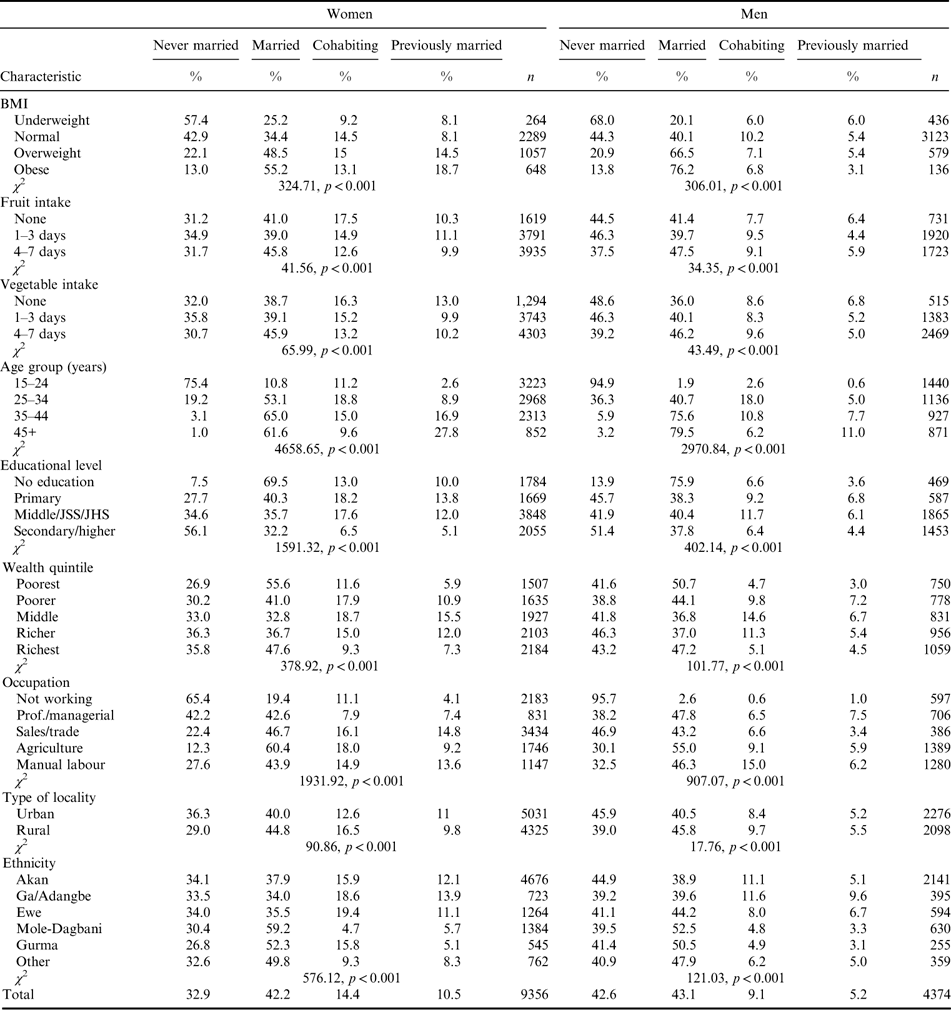
Total may vary across characteristics due to cases with missing information not shown separately.
With the exception of the 15–24 cohort, all age cohorts were dominated by married men and women (range of percantages). Participants with no education (69.5% women and 75.9% men), in the poorest wealth category (55.6% women and 50.7% men), engaged in agriculture (60.4% women and 55.0% men), residing in rural localities (44.8% women and 45.8% men) and belonging to the Mole-Dagbani ethnic group (59.2% women and 52.5% men) were most likely to be found in the married category.
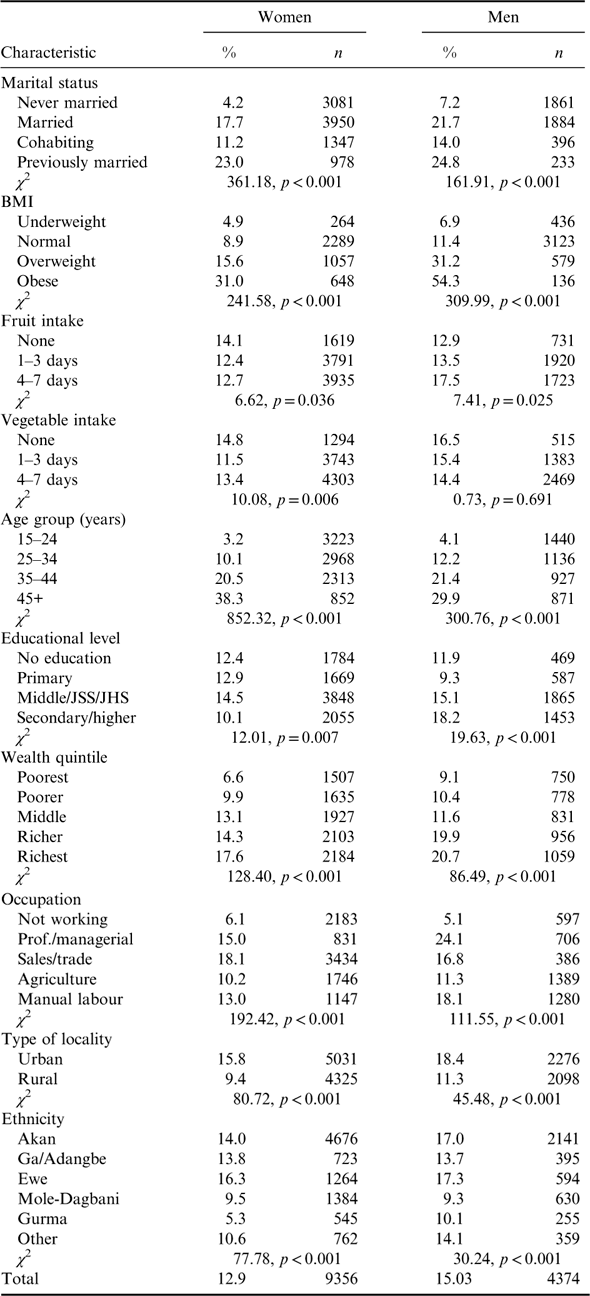
As shown in Table 2, the overall prevalence of hypertension was only slightly higher in men (15.0%) than women (12.9%). With the exception of vegetable intake, the chi-squared test indicated a significant (p<0.05) association between hypertension and all characteristics considered in the study. The prevalence of hypertension appeared to increase with BMI status, with about one-third of obese women being hypertensive compared with more than half of men in the same BMI category. The prevalence of hypertension was highest among women who consumed no fruit per week (14.1%), but highest for men who consumed fruit 4–7 days per week (17.5%). In terms of vegetable intake, hypertension was more common among those who consumed no vegetables at all per week (14.8% women and 16.5% men). Hypertension seemed to increase as age and wealth status increased, with variations between men and women. For instance, whereas more women (38.3%) than men (29.9%) aged 45 years or older had hypertension, more men (20.7%) than women (17.6%) in the richest wealth category had hypertension. With regards to level of education, the pattern of prevalence of hypertension for men increased in a manner similar to that observed for age and wealth status. All the other socio-demographic factors considered varied between women and men.
Prevalence of hypertension by background characteristics and gender, 2014 GDHS
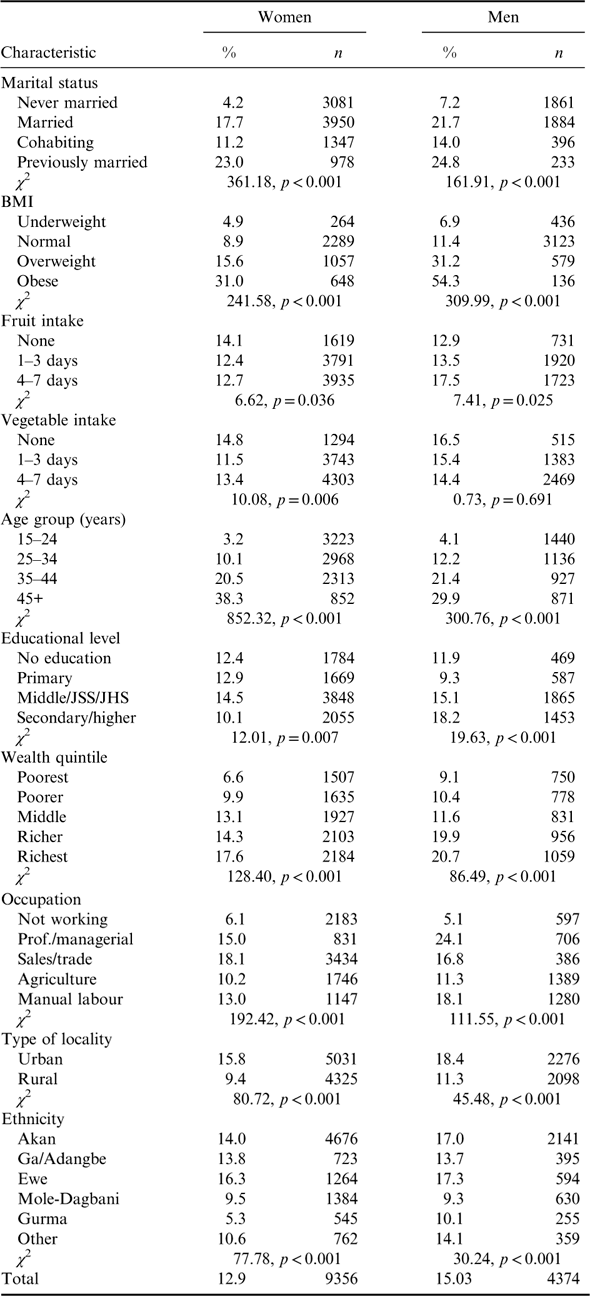
Total may vary across characteristics due to casing with missing information not shown separately.
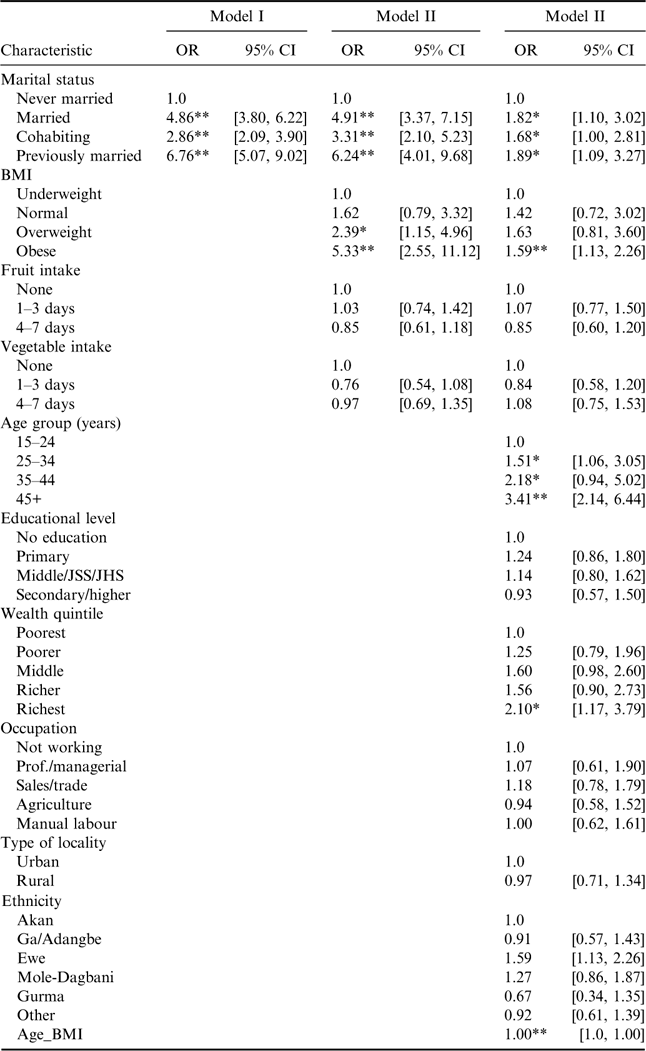
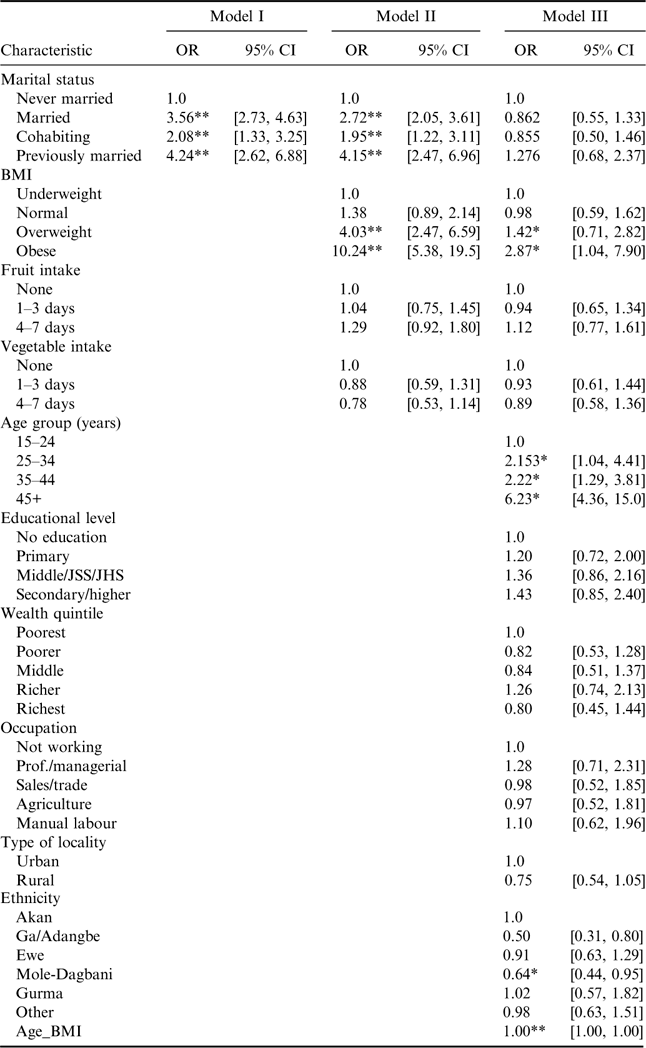
Tables 3 and 4 show the results of the binary logistic regression models fitted to explore the relationship between marital status and hypertension. In Model I (Tables 3 and 4), the odds of being hypertensive were significantly higher for all categories of marital status compared with the never-married category. Further, in all the marital status categories considered, the odds of being hypertensive were much higher for women (married, OR=4.86, 95% CI=3.80–6.22; cohabiting, OR=2.86, 95% CI=2.09–3.90; previously married, OR=6.76, 95% CI=5.07–9.02) compared with men (married, OR=3.56, 95% CI=2.73–4.63; cohabiting, OR=2.08, 95% CI=1.33–3.25; previously married, OR=4.24, 95% CI=2.62–6.88).
Logistic regression results for marital status and hypertension among women in Ghana, 2014 GDHS
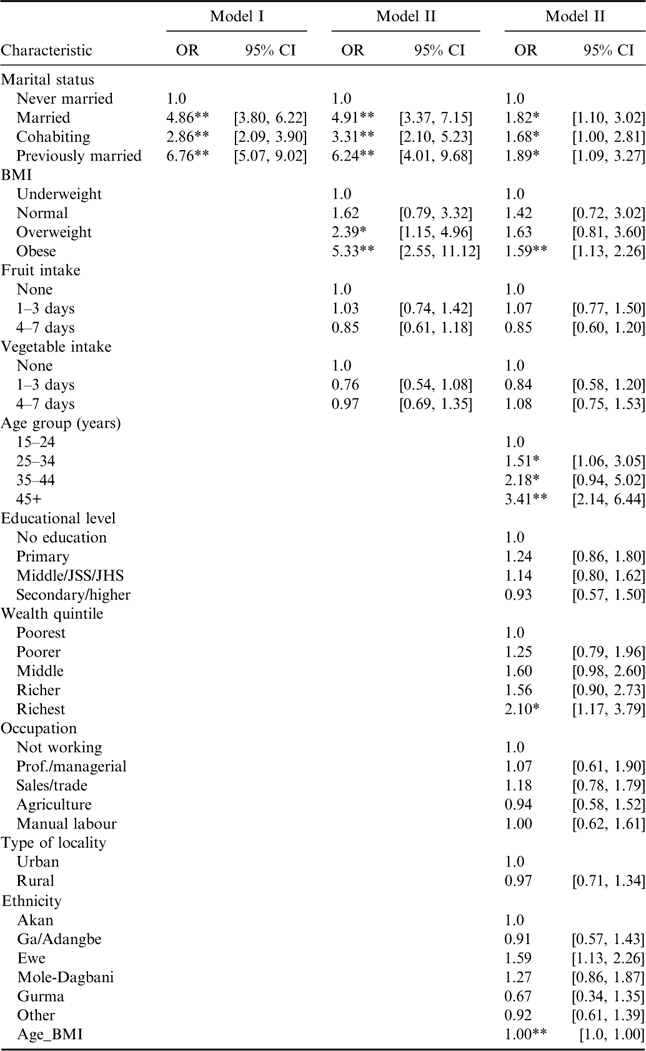
OR, Odds Ratios; 95% confidence intervals in parentheses; *p<0.05, **p<0.01.
Model I, marital status; Model II, marital status, BMI, fruit intake and vegetable intake; Model III, marital status, BMI, fruit intake, vegetable intake, age, educational level, wealth quintile, occupation, type of locality and ethnicity.
Logistic regression results for marital status and hypertension among men in Ghana, 2014 GDHS
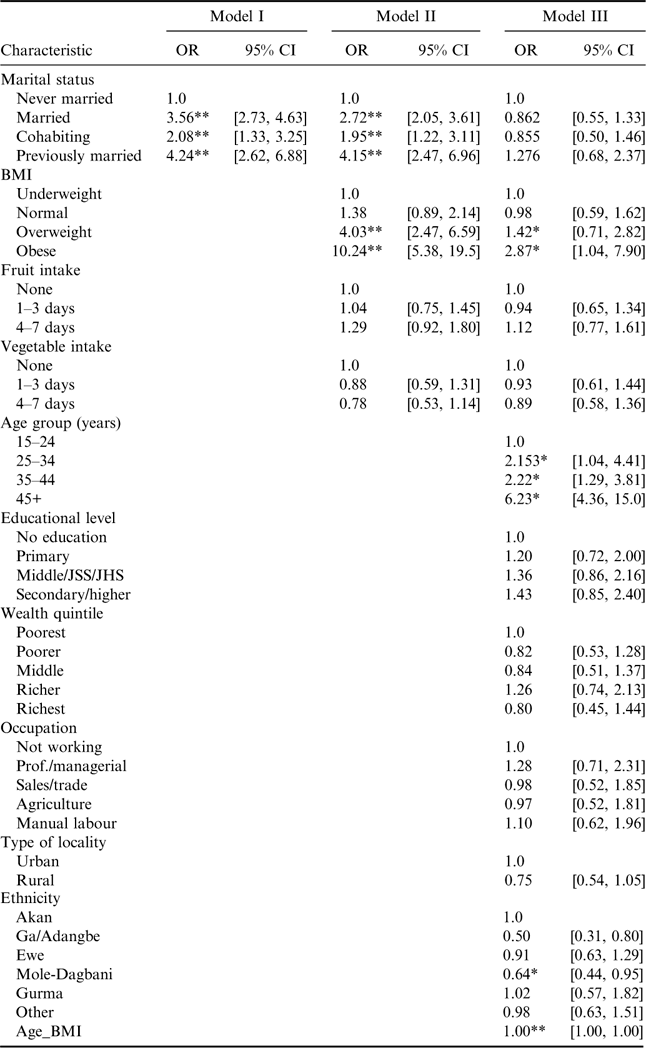
OR, Odds Ratio; 95% confidence intervals in parentheses; *p<0.05, **p<0.01.
Model I, marital status; Model II, marital status, BMI, fruit intake and vegetable intake; Model III, marital status, BMI, fruit intake, vegetable intake, age, educational level, wealth quintile, occupation, type of locality and ethnicity.
The inclusion of lifestyle-related factors in Model II neither changed the direction nor significance of the effect of marital status on hypertension as observed in Model I. For women, the magnitude of effect increased among those married and cohabiting, while the effect marginally reduced among those previously married. For men, however, the magnitude of effect was reduced for all categories of marital status. Among the lifestyle factors included in Model II, only BMI had significant effects on hypertension. The odds of being hypertensive were higher among those who were overweight and those who were obese, with the odds almost doubling for men (overweight, OR=4.03, 95% CI=2.47–6.59; obese, OR=10.24, 95% CI=5.38–19.50) compared with women (overweight, OR=2.39, 95% CI=1.15–4.96; obese, OR=5.33, 95% CI=2.55–11.12).
With socio-demographic factors included in Model III, the effect was still positive and statistically significant for women, although the magnitude reduced for all the marital status categories. Thus, compared with never-married women, the odds of developing hypertension were about twice as high for married (OR=1.82, 95% CI=1.10–3.02), cohabiting (OR=1.68, 95% CI=1.00–2.81) and previously married (OR=1.89, 95% CI=1.09–3.27) women. In sharp contrast, the association between marital status and hypertension was no longer statistically significant for men, while the direction of effect changed from positive to negative for those in marital unions (married and cohabiting). In the final model (Model III), the effect of BMI on hypertension slightly reduced for men, while for women, the effect found between being overweight and hypertension was no longer significant. Turning to socio-demographic covariates, increasing age had the greatest positive effect on hypertension for both women and men. Women in the richest wealth quintile had higher odds of developing hypertension.
The interacting term (Age_BMI) introduced in the final model was significantly associated with hypertension for both women and men. The results of covariates stratified by marriage cohorts and gender revealed considerable variations in the factors associated with hypertension across gender and marital status (see Table 5). For instance, BMI was only significantly associated with hypertension for cohabiting women, while this was the case for fruit intake among never-married men. Similarly, age was significantly associated with hypertension for both never-married women and men, as well as previously married women, whereas educational level was associated with hypertension among married women and cohabiting men.
Logistic regression results on factors associated with hypertension by gender and marital status, 2014 GDHS
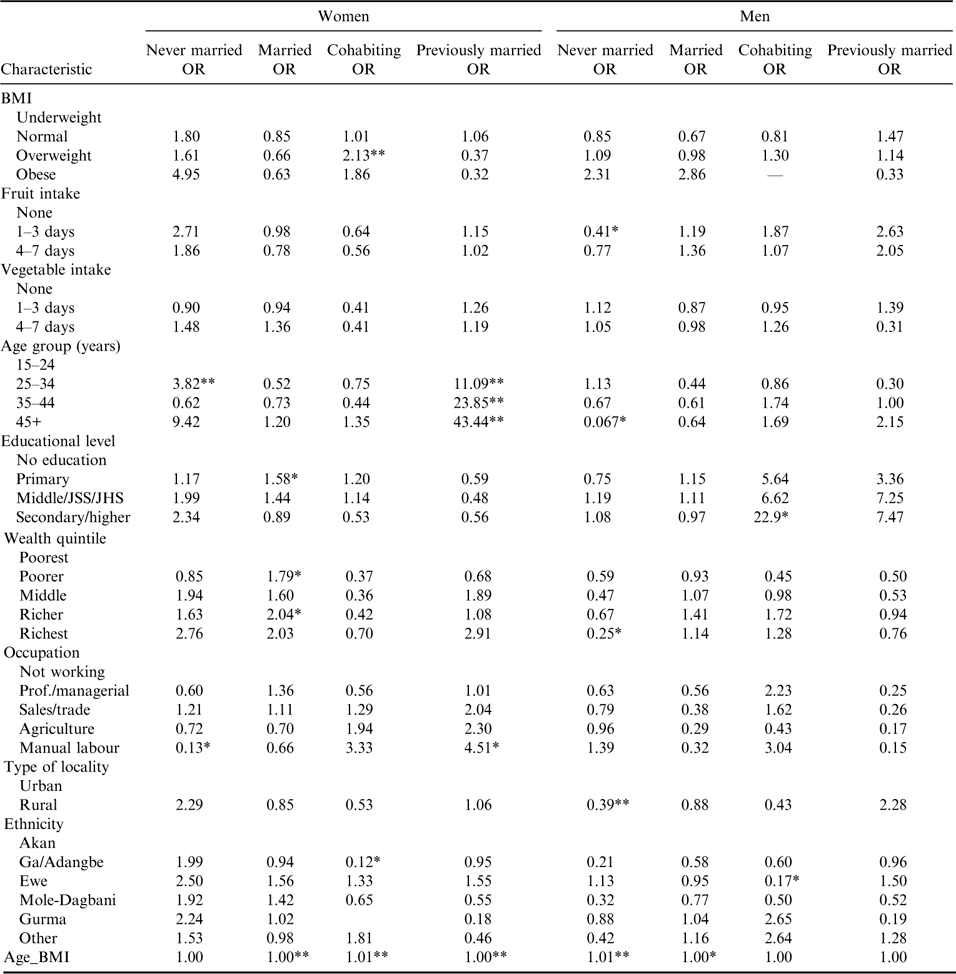
OR=Odds Ratios; *p<0.05, **p<0.01.
Discussion
To the best of the authors’ knowledge, this is the first study of Africans residing in Africa to have explored the effects of marital status on hypertension, with a focus on gender. The results indicate the presence of an independent material effect of marital status on hypertension for women, and an absence of any such effect for men. Specifically, married and co-habiting women, as well as previously married women, were found to be more at risk of developing hypertension compared with their male counterparts.
Hitherto, a variety of studies, conducted largely outside Africa, have shown that supportive social networks promote longer life expectancy and health (Schoenbach et al., Reference Schoenbach, Kaplan, Fredman and Kleinbaum1986; Welin et al., Reference Welin, Larsson, Svärdsudd, Tibblin and Tibblin1992). Others have revealed a specific protective effect for marriage on health (Brummett et al., Reference Brummett, Barefoot, Siegler, Clapp-Channing, Lytle and Bosworth2001; Lett et al., Reference Lett, Blumenthal, Babyak, Strauman, Robins and Sherwood2005; Kaplan & Kronick, Reference Kaplan and Kronick2006; Manzoli et al., Reference Manzoli, Villari, M Pirone and Boccia2007). On gender, the protective effect of marriage with respect to mortality has been found to be more significant in men compared with women (Kaplan & Kronick, Reference Kaplan and Kronick2006; Scafato et al., Reference Scafato, Galluzzo, Gandin, Ghirini, Baldereschi and Capurso2008). In general therefore, evidence has suggested an association between the unmarried states (never married, divorced, widowed or separated women) and hypertension, which might reflect a lack of social support (Wang Reference Wang2005; Schwandt et al., Reference Schwandt, Coresh and Hindin2010).
Other investigators (Adeoye et al., Reference Adeoye, Adebiyi, Owolabi, Lackland, Ogedegbe and Tayo2016) examining the relationship between gender and hypertension in Africa, found gender disparities in the prevalence of hypertension, with more men than women reported to be hypertensive. These authors, however, did not look at the effects of marital status on their findings. The present study is therefore a significant departure from the existing literature, helping to fill a gap in the current understanding of gender differences in the relationship between marriage and hypertension in Africa.
While further exploration of the mechanisms by which marital unions shape the risk of hypertension among women is merited, a number of plausible explanations consistent with the social causation hypothesis are surmised, as follows. First, being in a marital union in sub-Saharan Africa confers significant socioeconomic advantages for women, particularly through spousal income support. Such ‘improvements’ in the socioeconomic circumstance of women could increase their affordability and consumption of foods associated with a high Dietary Guidelines Index (Livingston & McNaughton, Reference Livingstone and Mcnaughton2016), thereby increasing their risk of developing hypertension. In Ghana, this could be exacerbated by common cultural and traditional food practices such as the heavy use of salt – an increased intake of which is now clearly associated with hypertension (Graudal et al., Reference Graudal, Hubeck-Graudal and Jurgens2017) – in cooking and at the table, as well as the consumption of salted fish and meat (Agyemang et al., Reference Agyemang, Bhopal and Bruijnzeels2005).
Another plausible explanation in line with the social causation hypothesis relates to stress associated with changes in the roles of women as they enter into marital unions. Ghanaian women are often expected to combine work with the traditional responsibilities of caring for their spouse, children and, in some instances, kin members – a phenomenon described as the ‘double burden’ (Ferree, Reference Ferree2010). This may generate significant physiological stresses for married and cohabiting women exposing them to the risk of hypertension. This is consistent with a number of studies suggesting that familial responsibilities at home and other domestic stresses, rather than job strain at work as is the case for men (Steptoe et al., Reference Steptoe, Cropley and Joekes1999; Landsbergis et al., Reference Landsbergis, Schnall, Pickering, Warren and Schwartz2003; Brown et al., Reference Brown, James, Nordloh and Jones2003; Riese et al., Reference Riese, Van Doornen, Houtman and De Geus2004), contribute to the induction and maintenance of hypertensive states in women (Brisson et al., Reference Brisson, Laflamme, Moisan, Milot, Masse and Vezina1999; Gerin & James, Reference Gerin and James2010; Ice & James, Reference Ice and James2012). The effects of this in Ghana (and possibly the rest of Sub-Saharan Africa), where most wives and co-habiting women carry heavy culturally dictated domestic stress burdens, cannot be overstated.
In line with this, it is interesting that domestic stresses have been shown to have a greater effect on blood pressure in women than in men in ambulatory blood pressure studies (James et al., Reference James, Yee, Harshfield and Pickering1988), while catecholamine levels (best described as stress hormones) which correlate positively with blood pressure and pulse rate remain high in working married women even after leaving work – suggesting that home stress may continue to affect sympathetic activation at home and taking us closer to a pathophysiological mechanism (James et al., Reference James, Yee, Harshfield and Pickering1988; Frankenhaueser et al., Reference Frankenhaeuser, Lundberg, Fredrikson, Melin, Tuomisto and Hedman1989; Luecken et al., Reference Luecken, Suarez, Kuhn, Barefoot, Blumenthal, Siegler and Williams1997).
It has been suggested that although a happy marriage has been said to provide emotional benefits, including the reduction of stress (Law & Sbarra, Reference Law and Sbarra2009), many women in unions seldom reap these benefits, especially during periods of marital strain (Umberson et al., Reference Umberson, Chen, House, Hopkins and Slaten1996; Wickrama et al., Reference Wickrama, Lorenz, Wallace, Peiris, Conger and Elder2001). If correct, this could be another explanation for why married and cohabiting women in the current study had a higher probability of being hypertensive. While marriage and its demands can also result in stress in men, the traditionally patriarchal nature of Ghanaian society limits opportunities for stress-relieving leisure activities for women in Ghana and similar sub-Saharan African regions (Henderson, Reference Henderson1996; Adam, Reference Adam2014). It is still uncommon for women to go out and socialize without their husbands or children in many parts of Ghana. For cohabiting women, who were also more likely to be hypertensive in this study, living with a man without completing traditionally required legal or customary rites could expose them to scorn and stigma within their communities (Okyere-Manu, Reference Okyere-Manu2015). This, and the perceived uncertainty surrounding the future of such a relationship, could compound stress levels, which have been linked to hypertension (Sparrenberger et al., Reference Sparrenberger, Cichelero, Ascoli, Fonseca, Weiss and Berwanger2009; Gasperin et al., Reference Gasperin, Netuveli, Dias-da-Costa and Pattussi2009). This is indeed a common scenario in Ghana.
The finding that women in disrupted unions (previously married) also had a higher probability of developing hypertension is congruent with previous studies on the negative effects of disrupted marriages on health (Lee et al., Reference Lee, Cho, Grodstein, Kawachi, Hu and Colditz2005; Ikeda et al., Reference Ikeda, Iso, Toyoshima, Fujino, Mizoue, Yoshimura and Tamakoshi2007), and in particular hypertension (Wang, Reference Wang2005; Schwandt et al., Reference Schwandt, Coresh and Hindin2010). With the dissolution of marriage, many women in Ghana lose considerable economic resources as well as social support systems previously enjoyed in marriage. This could lead to health-compromising behaviours such as poorer diet and depression, which have both been linked to hypertension (Lee et al., Reference Lee, Cho, Grodstein, Kawachi, Hu and Colditz2005; Ndanuko et al., Reference Ndanuko, Tapsell, Charlton, Neale and Batterham2016). Also, previously married women may have developed hypertension as a result of the stresses associated with a difficult marriage or spousal death, and would have to endure the additional stresses of marital dissolution or the grieving process.
It was also observed in this study that increasing BMI and age, as well as their interactive effect, were significantly associated with hypertension for both men and women. This is consistent with several studies, including work done in Ghana (Landsberg et al., Reference Landsberg, Aronne, Beilin, Burke, Igel, Lloyd-Jones and Sowers2013; van den Berg et al., Reference Van den Berg, Meinke-Franze, Fiss, Baumeister and Hoffmann2013; Williams et al., Reference Williams, Keenan, Ansong, Simpson, Boakye and Boaheng2013; Laxmaiah et al., Reference Laxmaiah, Meshram, Arlappa, Balakrishna, Rao and Reddy2015; Jiang et al., Reference Jiang, Lu, Zong, Ruan and Liu2016). Wealth status was the only socio-demographic factor that uniquely predicted hypertension in women, and more specifically married women. This finding concurs with previous research on the relationship between socioeconomic status and hypertension in low- and middle-income countries (Alam et al., 2015; Laxmaiah et al., Reference Laxmaiah, Meshram, Arlappa, Balakrishna, Rao and Reddy2015). Women with a higher wealth index may have reduced physical activity and increased consumption of High Dietary Guidelines Index foods, which could expose them to the risk of hypertension. The use of energy saving devices (e.g. motorized vehicles, refrigerators, washing machine etc.) and increased inactive leisure time (e.g. watching television, movies, computing etc.) in richer households might also help explain this finding (Lear et al., Reference Lear, Teo, Gasevic, Zhang, Poirier and Rangarajan2014).
The study has a number of limitations. First, the cross-sectional nature of the study design limits the ability to derive temporal and causal links between hypertension and marital status, as well as the other factors explored in the study. Thus, the study was limited to the identification of associations. Second, the study could not directly test the effects of other potentially influencing factors of hypertension such as stress levels, smoking, alcohol consumption and physical activity due to lack of data. Finally, the blood pressure measurements in the GDHS survey used in the study were obtained by the traditional non-ambulatory blood pressure measurement method. It is now well established that blood pressure varies diurnally and with activities of daily living and social and environmental stressors. Ambulatory blood pressure measurement is the gold standard in clinical practice and preferred to non-ambulatory blood pressure measurements, even if repeated and averaged (as was done in the GDHS survey). The blood pressure values analysed therefore need to be interpreted with some degree of caution. Nonetheless, the findings of the present study are largely generalizable given that the study used a nationally representative dataset from an internationally recognized survey (GDHS).
In conclusion, the present study has demonstrated that marital status is an important independent predictor of hypertension in Ghana for women, rather than men. This observation persisted for married, cohabiting and previously married women, after controlling for lifestyle and socio-demographic factors. Importantly, other correlates of hypertension depended on one’s marital status or gender. This finding, a first in Ghana, could have immediate and far reaching consequences for the management of cardiovascular health in Ghana. In particular, it could lead to more informed and better targeted public health interventions as well as improved risk factor assessment and education in clinical settings for more effective patient management and better clinical outcomes.
Acknowledgment
The authors wish to acknowledge Measure DHS for granting permission to use the data.
Ethical Approval. The authors assert that all procedures contributing to this work comply with the ethical standards of the relevant national and institutional committees on human experimentation and with the Helsinki Declaration of 1975, as revised in 2008. Ethical clearance for the survey was obtained from the Ghana Health Service Ethical Review Committee in Accra, Ghana.
Conflicts of Interest. The authors have no conflicts of interest to declare.
Funding. This research received no specific grant from any funding agency, commercial entity or not-for-profit organization.