Introduction
Antibiotic growth promoters (virginiamycin, linomycin, sacox, avilamycin, flavomycin etc.) have been used in broilers to improve live weight and feed efficiency (Palic et al., Reference PALIC, STANKOVIC and NOVAKOVIC1998; Giriprasad et al., Reference GIRIPRASAD, RABINDRA, SIDDIQUI and RAO1990; Miles et al., Reference MILES, BUTCHER, HENRY and LITTELL2006). However there are consumer fears that their addition in feed may promote resistant strains of pathogens against those antibiotics. Some researchers have found that antibiotic growth promoters such as avoparcin, enrofloxacin and tylosin (Khachatourians, Reference KHACHATOURIANS1998; Collignon, Reference COLLIGNON2003) caused development of resistant strain of pathogen in the human population via the food from animal origins. In some cases the antibiotics are thought to have caused development of resistant strains of pathogens in the host animal, which have already been found in Bangladesh (Chowdhury et al., Reference CHOWDHURY, HAQUE, ISLAM and KHALEDUZZAMAN2009a). People may become infected with the resistant strain of bacteria by eating or handling animal products like meat and egg. It is therefore timely to examine alternate sources of antibiotics growth promoters in broiler. This paper reviews the use and benefits of using citric acid in this manner.
Organic acid as an alternative to antibiotic growth promoters
Considering the safety aspects for animals and humans, some alternatives (non-antibiotic) to antibiotic growth promoters have been proposed to use in animal diet namely organic acids, probiotics, prebiotics and herbal products.
Organic acids (citric acid, lactic acid, propionic acid etc.) have mainly been used in order to sanitize feed to prevent issues such as salmonella infections in animals (Thompson and Hinton, 1997). Their effect in animal diets may also suppress pathogenic growth and improve digestion, absorption, mucosal immunity and topical effects on the intestinal brush border (Mroz, Reference MROZ2005). Some acids increase pepsin proteolysis secretion and the release of hormones, including gastrin and cholecystokinin, which regulate the digestion and absorption of protein (Vargas-Rodriguez et al., Reference VARGAS-RODRIGUEZ, HERRERA-HARO, MORALES-BARRERA, SUAREZ-OPORTA, GONZATER-ALCORTA and GARCIA-BAJALIL2002; Afsharmanesh and Pourreza, Reference AFSHARMANESH and POURREZA2005).
Citric acid as growth promoter
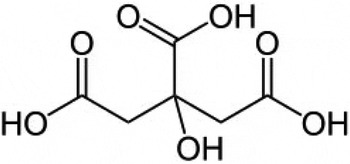
Citric acid (CA, C6H8O7; Figure 1) was first isolated in 1784 by Swedish chemist Carl Wilhelm Scheele, who crystallised it from lemon juice. Industrial-scale CA production began in 1860. This weak organic acid is a natural preservative and is used to add an acidic or sour taste to foods and soft drinks. It is an essential component of the CA cycle, which releases energy for physiological functions (Wright, Reference WRIGHT1976).
Molecular structure of citric acid.

Citric acid shows sufficient antimicrobial activity to preserve feed against bacterial spoilage, but simultaneously reduces the levels of undesirable bacteria (e.g. E. coli.) in the gastrointestinal tract can ultimately improve growth rate (Falkowski and Aherne, Reference FALKOWSKI and AHERNE1984; Eidelsburger and Kirchgessner, Reference EIDELSBURGER and KIRCHGESSNER1994; Deepa et al., Reference DEEPA, JEYANTHI and CHANDRASEKARAN2011).
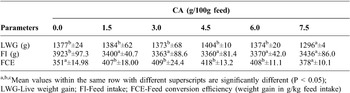
Cave (Reference CAVE1984) reported that the addition of high levels of CA could strongly decrease palatability of feed whereas its inclusion at low levels increased feed intake in avian species. Daskiran et al. (Reference DASKIRAN, TEETER, VANHOOSER, GIBSON and ROURA2004) stated that early exposure to dietary acidifier might cause an adaptation in birds, and reduce the subsequent therapeutic activity of acidifier. Therefore, they proposed to use the acidifiers in the grower phase rather than in the starter phase in order to reduce economic losses from heat stress. However, chickens fed rice by-products based diets with 2% CA increased the feed intake (Atapattu and Nelligaswatta, Reference ATAPATTU and NELLIGASWATTA2005). Nezhad et al. (Reference NEZHAD, SHIVAZAD, NAZEERADL and BABAK2007) reported that, feed conversion efficiency improved on diets supplemented with three level of CA (0.0, 2.5 and 5.0%). Shen-HuiFang et al. (2005) demonstrated the best feed conversion ratio with addition of 0.3% CA in growing chickens. A dose titration study of CA in broiler diets found that up to 6% CA maintained live weight, but feed intake was reduced by 1.5% level and feed conversion efficiency increased till 6% level (Islam et al., Reference ISLAM, ISLAM, AKBAR, HAQUE, HOSSAIN and KHALEDUZZAMAN2011c; unpublished data). The higher inclusion level of 7.5% did not cause any sign of toxicity but caused depression of growth (Table 1).
Safety margin of citric acid (CA) in broiler diet in a 35 days trial (Islam et al., Reference ISLAM, ISLAM, AKBAR, HAQUE, HOSSAIN and KHALEDUZZAMAN2011c).

a,b,cMean values within the same row with different superscripts are significantly different (P < 0.05);
LWG-Live weight gain; FI-Feed intake; FCE-Feed conversion efficiency (weight gain in g/kg feed intake)
In a study with broilers, 0.5% acetic acid in water showed lower (P<0.05) weight gain (1.335 kg) than the control group (1.427 kg), but 0.5% CA showed the highest (P<0.05) weight gain (1.552 kg). Improved growth (1.452 kg) was observed when CA was used in diets alongside acetic acid in water (Islam et al., Reference ISLAM, KHANDAKER, CHOWDHURY and ISLAM2008).
Mode of action of citric acid against micro-organisms
Non-ionized organic acids can penetrate the bacteria cell wall and disrupt the normal functioning of pH sensitive bacteria, so that they cannot tolerate a wide internal and external pH gradient (Mroz, Reference MROZ2005). The overall modes of action of organic acids on bacteria are:
1. Undissociated forms of acid diffuse across cell membrane of pathogens, destroying their cytoplasm or inhibiting growth;
2. Intestinal dissociation liberates H+ ions serving as a pH barrier inhibiting pathogen colonization on the brush border;
3. Bacterial membrane disruption;
4. Inhibition of essential metabolic reactions;
5. Stress on intracellular pH homeostasis;
6. Accumulation of toxic anions;
7. Energy stress response to restore homeostasis.
Akyurek et al. (Reference AKYUREK, OZDUVEN, OKUR, KOC and SAMLI2011) found that addition of organic acid in ileal digesta caused lactic acid bacteria counts to be significantly increased, whereas Escherichia coli were significantly decreased. Tolba (Reference TOLBA2010) observed a reduction in pathogenic burden due to addition of CA in broiler chicks. Reducing the bacterial burden due to addition of organic acid in feed can caused gut health parameters to improve significantly, which may be related to an increase in the availability of nutrients.
reduction of ph of feed and ingesta
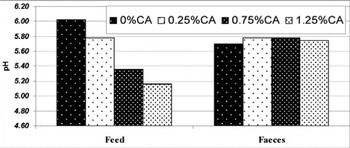
By reducing the pH of the feed, organic acids can decrease bacterial contamination prior to consumption by the animal, making them useful as feed preservatives (Mroz et al., Reference MROZ, JONGBLOED, PARTANEN, VREMAN, VAN DIEPEN, KEMME P.A. and KOGUT1997). The acid decreases pH of caecal digesta (Jozefiak and Rutkowski, Reference JOZEFIAK and RUTKOWSKI2005), crop, gizzard (Andrys et al., Reference ANDRYS, KLECKER, ZEMAN and MARECEK2003) and intestine (Denil et al., Reference DENIL, OKAN and CELIK2003 and Rahmani et al., Reference RAHMANI, SPEER and MODIRSANEI2005) in broiler chicks. They exhibit specific antibacterial effects at low pH, which may help to reduce overall bacterial numbers or modify distribution of bacterial species in the gut and thus improved the birds health status. Chowdhury et al. (Reference CHOWDHURY, HAQUE, ISLAM and KHALEDUZZAMAN2009a; Reference CHOWDHURY, ISLAM, KHAN, KARIM, HAQUE, KHATUN and PESTI2009b) mentioned that supplementation of 0.5% CA in the diet resulted in lower dietary pH (6.62) compared to the basal diet (7.38). A few published papers have indicated that the linear reduction of the pH in feed due to addition of CA was not seen in faeces (Shahin et al., Reference SHAHIN, ISLAM, AKBAR, HAQUE, CHOWDHURY and ISLAM2009; Islam et al., Reference ISLAM, SCHAEUBLIN, WENK, WANNER and LIESEGANG2011a; 2001b; Figure 2). Similarly, Nourmohammadi et al. (Reference NOURMOHAMMADI, HOSSEINI, SARAEE, ARAB and AREFINIA2011) found that the addition of CA in broiler diet decrease the pH of feed which increased towards lower gut.
Effect of citric acid (CA) on the pH of feed and faeces in different groups of broiler (Islam et al., Reference ISLAM, SCHAEUBLIN, WENK, WANNER and LIESEGANG2011a).

It has been speculated that the biological secretion and chemical effects of CA as a buffering agent can be used to minimise variation in the lower gut environment. In order to preserve the beneficial effects of CA, a protected form should be recommended, as for other organic acids namely propionic and formic acid.
Citric acid vs. antibiotic growth promoters
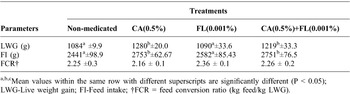
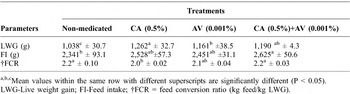
It is true that the antibiotics could not be fully replaced by the organic acids in the development of specific immunity and disease prevention, but could considered as growth promoters. Some studies have been conducted to test the feasibility of CA instead of antibiotics in the context of the performance of broilers. Haque et al. (Reference HAQUE, ISLAM, AKBAR, KARIM, CHOWDHURY, KHATUN and KEMPPAINEN2010) found that dietary supplementation of 0.5% CA increase weight gain, feed intake, tibia ash deposition and non-specific immunity as well as feed efficiency and carcass yield (Table 2). He concluded that the CA has potential as a growth promoter to replace the antibiotic flavomycin. Chowdhury et al. (Reference CHOWDHURY, ISLAM, KHAN, KARIM, HAQUE, KHATUN and PESTI2009b) found similar results when CA was used as a feed additive instead of the antibiotic growth promoter avilamycin (Table 3).
Performance of broiler fed citric acid (CA), Flavomycin (FL) or their combination during 35 days trial (Haque et al., Reference HAQUE, ISLAM, AKBAR, KARIM, CHOWDHURY, KHATUN and KEMPPAINEN2010).

a,b,cMean values within the same row with different superscripts are significantly different (P < 0.05);
LWG-Live weight gain; FI-Feed intake; †FCR = feed conversion ratio (kg feed/kg LWG).
Performance of broiler fed citric acid (CA), Avilomycin (AV) or their combination during 35 days trial (Chowdhury et al., Reference CHOWDHURY, ISLAM, KHAN, KARIM, HAQUE, KHATUN and PESTI2009b).

a,b,cMean values within the same row with different superscripts are significantly different (P < 0.05).
LWG-Live weight gain; FI-Feed intake; †FCR = feed conversion ratio (kg feed/kg LWG).
Findings of Haque et al. (Reference HAQUE, ISLAM, AKBAR, KARIM, CHOWDHURY, KHATUN and KEMPPAINEN2010) and Chowdhury et al. (Reference CHOWDHURY, ISLAM, KHAN, KARIM, HAQUE, KHATUN and PESTI2009b; Reference CHOWDHURY, ISLAM, KHAN and KARIM2009c) indicated that the well-known antibiotic growth promoters did not match the performance seen in birds receiving 0.5% CA. Additionally, CA may be involved in improving non-specific immunity in broiler. Data showing increasing bone ash content in birds fed CA is good evidence for an involvement of the acid in increasing the availability of minerals for bone formation, which is not found in case of antibiotics. It appears that, from limited research work, CA has further benefits over antibiotic growth promoters considering performance, non specific immunity and bone formation.
Citric acid and mineral metabolism
effects on digestibility of ca, p, and mg
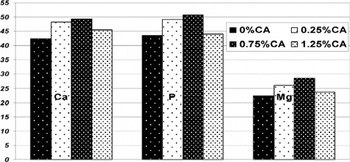
The availability of Ca, P and Mg is known to be further increased by addition of CA in broiler diets (Figure 3) up to the 0.75% inclusion level, and further addition has a tendency to decrease the availability, but maintain it at a level which is still higher than the control group (Islam et al., Reference ISLAM, SCHAEUBLIN, WENK, WANNER and LIESEGANG2010b; Reference ISLAM, SCHAEUBLIN, WENK, WANNER and LIESEGANG2011a). Brenes et al. (Reference BRENES, VIVEROS, ARIJA, CENTENO, PIZARRO and BRAVO2003) showed that the Ca and P retention are only at 3.0 and 3.0% in diets containing CA at the level of 2% in broiler. In another trial, using a diet deficient in Ca, P and Mg, the addition of CA increased their availability (Broz et al., Reference BROZ, OLDALE and VOLTZ1994; Boling et al., Reference BOLING, PARSONS and BAKER1999; Reference BOLING, SNOW, PARSONS and BAKER2001).
Availability (%) of dietary Ca, P and Mg fed different levels of citric acid (CA) in broiler (Islam et al., Reference ISLAM, SCHAEUBLIN, WENK, WANNER and LIESEGANG2011a).

There are trials that have revealed that addition of CA to diets that were deficient in Ca and/or P could prevent rickets by increasing femur ash and reducing faecal P (Shohl, Reference SHOHL1937; Pileggi et al., Reference PILEGGI, LUCA, CRAMER and STEENBOCK1956). A recent study stated that, in deficient broiler diets, the Ca and P availability increased with the addition of CA (Woyengo et al., Reference WOYENGO, SLOMINSKI and JONES2010). Boling et al. (Reference BOLING, WEBEL, MAVROMICHALIS, PARSONS and BAKER2000) found that including CA at levels of 4 to 6% in the diet was found to improve the utilisation of phytate-P in broilers, which was further confirmed in crossbred chicks (Rafacz-Livingston et al., Reference RAFACZ-LIVINGSTON, MARTINEZ-AMEZCUA, PARSONS, BAKER and SNOW2005). Nezhad et al. (Reference NEZHAD, GALE-KANDI, FARAHVASH and YEGANEH2011) concurred with this finding, showing that CA supplementation increased the availability of P in comparison to phytase addition.
Dietary acidification increases the activities of gastric enzymes, leading to improvements in digestion and absorption of protein and fibre (Atapattu and Nelligaswatta, Reference ATAPATTU and NELLIGASWATTA2005; Abdel-Fattah et al., Reference ABDEL-FATTAH, EI-SANHOURY, EI-MEDNAY and ABDUL-AZEEM2008). The organic acid appears to have a positive impact on histology of the small intestine, thereby facilitating nutrient absorption and growth performance in broiler chicken (Adil et al., Reference ADIL, BANDAY, BHAT, MIR and REHMAN2010). Overall, it is of note that the addition of CA in the diet increased the availability of minerals, but only up to a certain level in standard diet. In deficient feeds, the effect of CA may well be greater.
blood profile related to mineral metabolism
There was no dose related effects of CA addition on osteocalcin, serum CrossLaps or 1.25-(OH)2Vit D and Ca in blood serum obtained from different groups of broilers fed commercial diets containing 0, 0.25, 0.75 and 1.25% CA (Islam et al., Reference ISLAM, SCHAEUBLIN, WENK, WANNER and LIESEGANG2010b; Reference ISLAM, SCHAEUBLIN, WENK, WANNER and LIESEGANG2011a). However, increasing levels of P and decreasing Mg content was observed in the 1.25% CA diets (P<0.05). In this study CA influenced the availability of macrominerals, but this was not detected in the blood profile. Nourmohammadi et al. (Reference NOURMOHAMMADI, HOSSEINI and FARHANGFAR2010) found that a 3% inclusion of CA did not change blood Ca, P and Mg. However, Abdel-Fattah et al. (Reference ABDEL-FATTAH, EI-SANHOURY, EI-MEDNAY and ABDUL-AZEEM2008) found that adding different levels of CA (1.5 and 3%) gave increased serum P concentration agreeing with the finding of Islam et al. (Reference ISLAM, SCHAEUBLIN, WENK, WANNER and LIESEGANG2011a), especially at the 1.25% CA inclusion level. Brenes et al. (Reference BRENES, VIVEROS, ARIJA, CENTENO, PIZARRO and BRAVO2003) indicated that 2% CA feed increased Mg, but Islam et al. (Reference ISLAM, SCHAEUBLIN, WENK, WANNER and LIESEGANG2011a, Reference ISLAM, SCHAEUBLIN, WENK, WANNER and LIESEGANG2011b) found that CA reduced Mg. These variations in findings may be due to feed formulations and management conditions, but there is the argument that the homeostasis by endocrine regulation (calcitonin, parathyroid hormone etc.) could be responsible for maintaining the Ca and P level in blood (Fraser, Reference FRASER1988), although their availability has been reported to be increased due to addition of CA.
bone ash, Ca, P, and Mg content of the tibia
Rafaez-Livingston et al. (2005) reported that tibia ash increased linearly (P<0.05) as CA increased from 0 to 4%, but in a Ca and P deficient diet the result were even more promising (Shohl, Reference SHOHL1937). Atapattu and Nelligaswatta (Reference ATAPATTU and NELLIGASWATTA2005) reported that the addition of two levels of CA (1 and 2%) in broiler chickens increased toe ash. The wide variations in response may be due to the deficiency of minerals in the feed.
Citric acid added at 0.25 and 0.75% level in a standard broiler diet caused a numerical increase of dry matter content of bone (Islam et al., Reference ISLAM, SCHAEUBLIN, WENK, WANNER and LIESEGANG2010b; Reference ISLAM, SCHAEUBLIN, WENK, WANNER and LIESEGANG2011a). Values for ash, Ca, P and Mg content in fresh bone showed significant differences but were lower at the 1.25% CA level. When calculated on a dry matter basis, the ash, Ca and P content did not vary, but Mg was still lower in the 1.25% CA group (P<0.05). Brenes et al. (Reference BRENES, VIVEROS, ARIJA, CENTENO, PIZARRO and BRAVO2003) found that addition of CA at 2% level increased tibia ash, tibia Ca and P but this was not significant.
bone mineral density and breaking strength of tibia
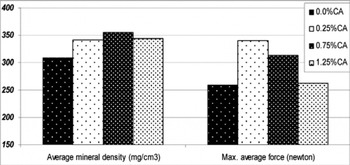
A high positive correlation between bone breaking strength and mineral density has been reported by several researchers (Frost and Rowland, 1991; Orban et al., Reference ORBAN, ROLAND, BRYANT and WILLIAMS1993; Rath et al., Reference RATH, BALOG, HUFF, HUFF, KULKARNI and TIERCE1999; Reference RATH, HUFF and BALOG2000; Massé et al., Reference MASSÉ, BOSKEY, ZIV, HAUSCHKA, DONOVAN, HOWELL and COLE2003). Although there is not much work conducted with CA in avian species for mineral density and breaking strength, a study in mice found that CA (5 g/100 g diet) improved trabecular structures of the femur (Miyake et al., Reference MIYAKE, KOZAI, SAKURAI and KASHIMA2007). This recent study agreed that the mineral density increased by 11, 15 and 11% at the level of 0.25, 0.75 and 1.25% level of dietary CA respectively (Figure 4). The highest maximum average force (Newton) required to break the tibia was obtained from birds fed diets containing 0.25% CA (P<0.05), but the 0.75 and 1.25% CA groups were numerically stronger than the control (Islam et al., Reference ISLAM, SCHAEUBLIN, WENK, WANNER and LIESEGANG2011a), suggesting a dose-dependent response. A linear relationship between the availability of minerals, bone mineral content, mineral density, and breaking strength of the tibia (Figure 3and 4) may exist. Generally, bone ash increases with deposition of mineral through better availability and results in increasing bone breaking strength (Rowland et al., Reference ROWLAND, HARMS, WILSON, ROSS and FRY1967; Meyer and Sunde, Reference MEYER and SUNDE1974; Anderson et al., Reference ANDERSON, WARNICK and NAKHATA1979; Islam et al., Reference ISLAM, SCHAEUBLIN, WENK, WANNER and LIESEGANG2011a). The effect of dietary CA on mineral metabolism could be reflected by increasing bone mineral content, density and breaking strength of bone.
Mineral density and breaking strength of tibia of birds fed citric acid (CA) supplemented diet (Islam et al., Reference ISLAM, SCHAEUBLIN, WENK, WANNER and LIESEGANG2011a).

Citric acid and immunity
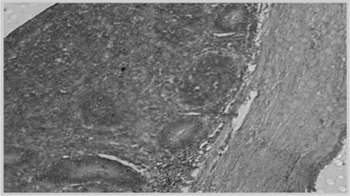
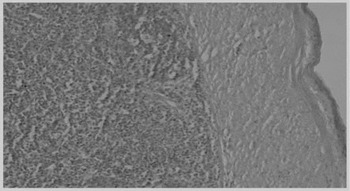
Chowdhury et al. (Reference CHOWDHURY, ISLAM, KHAN, KARIM, HAQUE, KHATUN and PESTI2009b, Reference CHOWDHURY, ISLAM, KHAN and KARIM2009c) showed higher density of immunocompetent cells in the gastro intestinal tract of broilers fed CA supplemented diets, which is an indicator of healthy broilers with higher immune status and protection against enteric pathogens and infectious diseases (Abdel-Fattah et al., Reference ABDEL-FATTAH, EI-SANHOURY, EI-MEDNAY and ABDUL-AZEEM2008). The results of Khatun et al. (Reference KHATUN, ISLAM, HOWLEDER, HAQUE, CHOWDHURY and KARIM2010) and Haque et al. (1010) confirmed this finding using similar levels of CA in broiler diet (Figures 5a and 5b).
a The section of cecal tonsil of control group showing sparsely distributed lymphocytes (Haque et al., Reference HAQUE, ISLAM, AKBAR, KARIM, CHOWDHURY, KHATUN and KEMPPAINEN2010).

b The section of cecal tonsil of citric acid (CA) supplemented group showing lymphocytes.

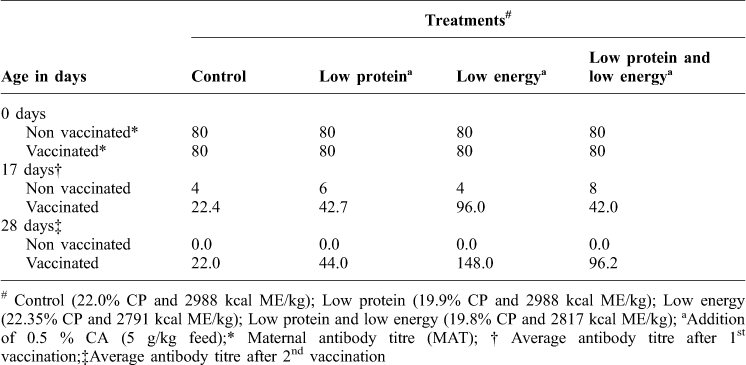
Higher serum globulin levels were seen in broilers fed acidified diets, which also had better immune responses (Rahmani et al., Reference RAHMANI, SPEER and MODIRSANEI2005; Abdel-Fattah et al., Reference ABDEL-FATTAH, EI-SANHOURY, EI-MEDNAY and ABDUL-AZEEM2008), which is important for better disease resistance (Griminger and Scane, 1986). As CA increased serum globulin it might enhance specific immunity reflected in a recent study which showed that antibody titre against Newcastle Disease vaccine increased due to addition of CA in diet (Das et al., Reference DAS, ISLAM and ISLAM2011) (Table 4).
Using CA can be useful for increasing the growth of broilers as well as enhancing the overall immunity of birds and, to some extent, improve specific immunity of vaccinated birds. But, the work is still at the initial stages and more data is required to validate such benefits.
Result of HI test of different group of chicken vaccinated against New Castle Disease and citric acid (CA) was added in diet (Das et al., Reference DAS, ISLAM and ISLAM2011).
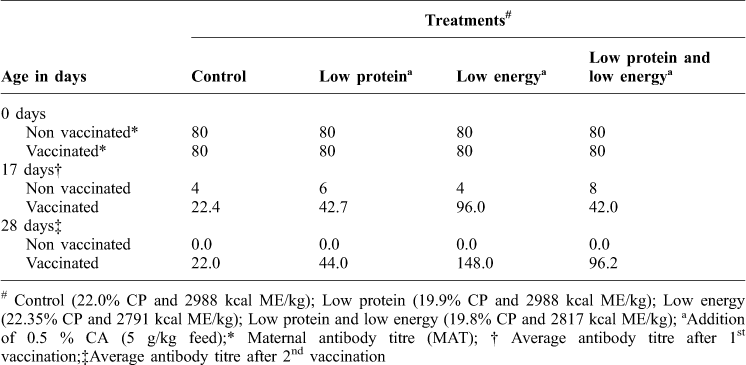
# Control (22.0% CP and 2988 kcal ME/kg); Low protein (19.9% CP and 2988 kcal ME/kg); Low energy (22.35% CP and 2791 kcal ME/kg); Low protein and low energy (19.8% CP and 2817 kcal ME/kg); ªAddition of 0.5 % CA (5 g/kg feed);* Maternal antibody titre (MAT); † Average antibody titre after 1st vaccination;‡Average antibody titre after 2nd vaccination
Citric acid and probiotics
Khatun et al. (Reference KHATUN, ISLAM, HOWLEDER, HAQUE, CHOWDHURY and KARIM2010) fed a balanced diet to broilers containing either 0.5% CA, 0.001% probiotic or 0.5% CA + 0.001% probiotic. Citric acid increased live weight by 11% while probiotic increased it by only 2% compared to the control group. The combination of CA and probiotic appears to be ineffective, as feed intake, feed conversion and carcass characteristics were not influenced by the addition of probiotic and CA. Bone mineralization increased with CA and probiotic supplementation, where the effect of CA may have exceeded that of the probiotic. Although probiotics are recognised alternative to antibiotic growth promoters, CA was found more promising for use in broiler diet.
Citric acid in commercial diets
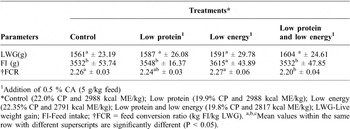
Feed manufacturers use a number of pronutrients and growth promoters to attain the highest level of genetic potential by converting feed to gain more efficiently within a minimum time duration. CA would not show much effect on growth performance, as seen in studies where CA was added to a balanced commercial diet (Islam et al., Reference ISLAM, HAQUE, CHOWDHURY, SHAHIN and ISLAM2010a). But some laboratory scale studies with mash diets exhibited benefits for using CA (Chowdhury et al., Reference CHOWDHURY, ISLAM, KHAN, KARIM, HAQUE, KHATUN and PESTI2009b; Haque et al., Reference HAQUE, ISLAM, AKBAR, KARIM, CHOWDHURY, KHATUN and KEMPPAINEN2010). Further studies with diets of reduced protein and energy specifications are required to confirm the best application of CA on a commercial basis. CA may compensate for the performance losses in low nutrient diets (Table 5).
Live weight gain, feed intake and feed conversion ratio of broilers fed low nutrient and supplemented 0.5% CA for 35 days (Das et al., Reference DAS, ISLAM and ISLAM2011).

1Addition of 0.5 % CA (5 g/kg feed)
*Control (22.0% CP and 2988 kcal ME/kg); Low protein (19.9% CP and 2988 kcal ME/kg); Low energy (22.35% CP and 2791 kcal ME/kg); Low protein and low energy (19.8% CP and 2817 kcal ME/kg); LWG-Live weight gain; FI-Feed intake; †FCR = feed conversion ratio (kg FI/kg LWG). a,b,cMean values within the same row with different superscripts are significantly different (P < 0.05).
Effect of citric acid added in drinking water
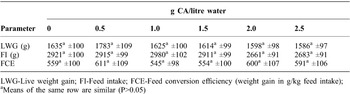
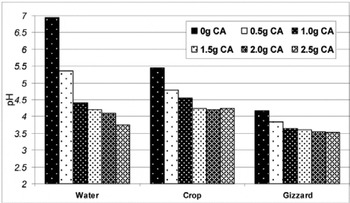
The addition of organic acids in feed or drinking water does not appear to be effective. Açıkgöz et al. (2011) found that drinking water acidification did not provide beneficial effects in performance, intestinal microflora and carcass contamination in male broilers. Overuse of organic acids such as CA might reduce water and feed intake due to its strong taste and hence depress growth in broilers. In addition, acidified water may lead to sub-clinical intestinal problems, in spite of the fact that chickens can rapidly adapt to acid water (pH 3, 4, or 5) (Oviedo, Reference OVIEDO2006). But, other studies have shown that CA could be added in drinking water (up to 2.5g/litre water) for broilers to maintain gut health without hampering performance (Table 6), and recommended further research to confirm actual effects on pathogenic burden (Islam et al., Reference ISLAM, HAQUE, CHOWDHURY, SHAHIN and ISLAM2010a). Increasing level of CA in water decreased its pH following a trend (Figure 6) which continued when feed passed through the crop and gizzard. So, it is possible to decrease the pH of drinking water to a range that would lower the pH of the crop to almost 4, thus creating an environment that is hostile to undesirable microbes.
Performance of broiler administered different level of citric acid (CA) through drinking water for 28 days (Islam et al., Reference ISLAM, HAQUE, CHOWDHURY, SHAHIN and ISLAM2010a).

LWG-Live weight gain; FI-Feed intake; FCE-Feed conversion efficiency (weight gain in g/kg feed intake);
aMeans of the same row are similar (P>0.05)
Effect of citric acid (CA) in water (g/litre) on the pH of water, crop and gizzard of birds (Islam et al., Reference ISLAM, HAQUE, CHOWDHURY, SHAHIN and ISLAM2010a).

Carcass characteristics of broilers supplemented with citric acid
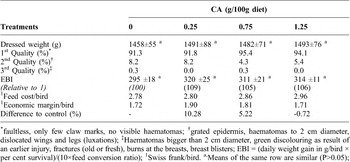
In a recent trial, high grade carcasses from birds fed diets containing CA at 0.75% (Table 7) had better European Broiler index (EBI) when up to 1.25% CA was included in the diet. This result is in agreement with investigations by Abdel-Fattah et al. (Reference ABDEL-FATTAH, EI-SANHOURY, EI-MEDNAY and ABDUL-AZEEM2008) and Ebrahimnezhad et al. (Reference EBRAHIMNEZHAD, SHIVAZAD, TAHERKHANI and NAZERADL2008). Other research has indicated numerical improvements in carcass yield in broilers fed 3% CA but not at a 6% level (Nourmohammadi et al., Reference NOURMOHAMMADI, HOSSEINI and FARHANGFAR2010). No further research conducted on the carcass quality of broiler using CA is available, but data from other organic acids supports the usefulness of organic acid for promoting carcass quality.
Economy of using citric acid in broiler diets
Citric acid is using throughout the world as a food additive, so its production and availability is high. Its influence the feed cost would therefore be low, whilst gains can be made from enhanced growth and reduced mortality. Recent findings show that the addition of 0.5% CA increased diet cost but production was more profitable due to better growth and feed efficiency (Islam et al., Reference ISLAM, KHANDAKER, CHOWDHURY and ISLAM2008). Islam et al. (Reference ISLAM, SCHAEUBLIN, WENK, WANNER and LIESEGANG2011b) supported this result of increasing profit in CA fed birds (Table 7). Other researchers have found that the addition of CA increased the profitability of broiler production in comparison to an unsupplemented control (Tolba, Reference TOLBA2010).
Carcass traits of broiler on day 37 fed citric acid (CA) containing diets (Islam et al., Reference ISLAM, SCHAEUBLIN, WENK, WANNER and LIESEGANG2011b).

*faultless, only few claw marks, no visible haematomas; †grated epidermis, haematomas to 2 cm diameter, dislocated wings and legs (luxations); ‡Haematomas bigger than 2 cm diameter, green discolouring as result of an earlier injury, fractures (old or fresh), burns at the breasts, breast blisters; EBI = (daily weight gain in g/bird × per cent survival)/(10×feed conversion ratio); 1Swiss frank/bird. a,Means of the same row are similar (P>0.05);
Conclusions
Citric acid can be considered to be a potential alternative to antibiotic growth promoter use in broiler diets, considering its preservative effects on feed, improvements in gut health, growth, feed conversion efficiency, macro mineral utilisation, bone mineral content and density, carcass quality and resulting economic returns from commercial production. It is considered safe to add up to 6% CA in broiler diets without hampering performance. CA increased the performance best when using 0.5% in mash and 0.75% in commercial pelleted diets. Its inclusion reduces the pH of gastrointestinal tract but this effect is not apparent in the faeces. It may increase non-specific immunity and enhance specific immunity against Newcastle disease, especially during vaccination in broilers. Addition of CA in drinking water is not promising in terms of performance promotion, but may be useful for improving gut health by reducing the pathogenic burden. CA can compensate for losses in performance of broilers fed low protein and energy diets and may increase the mineral availability to birds. Use of CA in broiler rations and drinking water can be recommended, but further research is needed to understand its mechanism of action and best application in commercial production.