




No CrossRef data available.
Chemical control of ticks on cattle and the resistance of these parasites to acaricides
Published online by Cambridge University Press: 19 April 2005
Abstract
Toward the end of the nineteenth century a complex of problems related to ticks and tick-borne diseases of cattle created a demand for methods to control ticks and reduce losses of cattle. The discovery and use of arsenical solutions in dipping vats for treating cattle to protect them against ticks revolutionized tick and tick-borne disease control programmes. Arsenic dips for cattle were used for about 40 years before the evolution of resistance of ticks to the chemical, and the development and marketing of synthetic organic acaricides after World War II provided superior alternative products. Most of the major groups of organic pesticides are represented on the list of chemicals used to control ticks on cattle. Unfortunately, the successive evolution of resistance of ticks to acaricides in each chemical group with the concomitant reduction in the usefulness of a group of acaricides is a major reason for the diversity of acaricides. Whether a producer chooses a traditional method for treating cattle with an acaricide or uses a new method, he must recognize the benefits, limitations and potential problems with each application method and product. Simulation models and research were the basis of recommendations for tick control strategies advocating approaches that reduced reliance on acaricides. These recommendations for controlling ticks on cattle are in harmony with recommendations for reducing the rate of selection for acaricide resistance. There is a need to transfer knowledge about tick control and resistance mitigation strategies to cattle producers.
Information
- Type
- Research Article
- Information
- Copyright
- © 2004 Cambridge University Press
INTRODUCTION
During the nineteenth century, as the number of cattle in the world was increased to feed the human populations of recently industrialized nations, there was a growing awareness of the relationship between infestations of cattle with ticks and disastrous epizootics of disease in herds of cattle. Problems with tick-borne diseases were related to the introduction of improved breeds of cattle into tick-infested areas because of their greater productivity than well-adapted indigenous breeds. Also, cattle infested with ticks and infected with tick-borne disease agents were moved into areas where these tick species had not previously existed (Shaw, 1969).
A severe outbreak of disease in cattle, almost certainly bovine piroplasmosis, occurred in Lancaster County, Pennsylvania, of the United States (US) in 1796. Epidemiological evidence indicated a relationship between the disease problem and a recent shipment of cattle into the state from South Carolina, a southern state. ‘Experience soon showed that the invariable result following the transportation of southern cattle into the Northern States was the death of all northern cattle along the roads and on the pastures over which the southern cattle had traveled, although the latter animals remained perfectly healthy. In the same way northern cattle taken south almost invariably succumbed to the malady’ (Mohler, 1906). The disease was called ‘Texas fever’ or ‘cattle fever’ and by 1885 resulted in the prohibition of movements of southern cattle into the northern states.
In Australia, cattle that, according to Angus (1996), were ‘almost certainly’ infested with Boophilus microplus and infected with ‘tick fever’ or ‘redwater fever’ were introduced to the Northern Territory (NT) from Timor, and possibly Bali, some time during the years from 1829 through 1849. There is evidence from archival records that by 1870 tick fever was endemic in the Darwin area. Tick fever and its vector progressively spread eastward and then southerly through Queensland. Successive quarantine lines were established by the Queensland government in an effort to contain the problem, but the disease reached southeastern Queensland by 1897, and by 1906 tick fever was in New South Wales in spite of double fencing and strict surveillance.
Much of the complex history of tick-borne diseases of cattle in Africa dates to the colonial settlement of the interior of eastern and southern Africa in the last decades of the nineteenth century. A deadly disease, later determined to be East Coast Fever (ECF), was diagnosed in 1902 in cattle at several locations south of the Zambezi River. The origin of the disease was determined to be importations of cattle from Dar-es-Salaam in Tanzania after the cattle population of much of southern Africa had been destroyed by an epidemic of rinderpest (Lawrence, 1992). Even though there are no records of ECF in eastern Africa before it was identified in 1904, it must have been present for many generations in areas populated by indigenous cattle, particularly in the Lake Victoria Basin and along the costal strip of eastern Africa (Perry, 1992). Other tick-borne diseases of cattle such as redwater fever, heartwater and anaplasmosis were probably widespread in eastern and southern Africa before the arrival of white settlers and introductions of susceptible cattle in the period from 1885 through 1890 (Lawrence & Norval, 1979; Norval et al. 1984; Perry, 1992).
The economic benefits of resolving questions about the epidemiology and control of tick-borne diseases in the vast cattle-producing areas of eastern and southern Africa, Latin America, Australia and the southern US motivated research by national and colonial governments in the affected countries plus efforts by international animal health companies to create and market products that provided a means for protecting cattle. The majority of literature on chemical control of ticks documents more than a century of research to test new acaricides for controlling ticks on cattle, strategies for using acaricides, and efforts to mitigate problems of acaricide resistance to all except the most recently developed chemicals. The introduction to this chapter is intended to remind readers of the kinds of problems associated with tick-borne disease agents that are the basis of historical and current needs for technology to control ticks on cattle. The remainder of the chapter represents a selective review of chemical methods for the control of ticks on cattle, the nature of the problem of the evolution of resistance to acaricides, the effects of resistance on the use of acaricides, and the future of chemical methods for the control of ticks on cattle. The excellent review by Taylor (2001) of developments in ectoparasiticides will be of interest to those seeking recent information on chemicals for the control of insects and acarines affecting both livestock (large and small ruminants) and companion animals.
ACARICIDES FOR THE CONTROL OF TICKS ON CATTLE
Even before the seminal discovery by Smith & Kilborne (1893) that proved the role of ticks as vectors of Babesia, animal health authorities in the US, Australia and southern Africa were treating cattle with a variety of chemical agents in an effort to control ticks. Early remedies in the US included smearing the legs and sides of cattle with a lard and sulphur mixture, a lard and kerosene combination, cottonseed oil or fish oil. Mixtures of kerosene, cotton-seed oil and sulphur; a 10% kerosene emulsion; a mixture of cotton-seed oil and crude petroleum; or Beaumont crude oil alone reportedly proved efficacious when applied to cattle two to three times a week with sponges, syringes, brushes, mops, or brooms (Francis, 1892; Mohler, 1906). As early as 1895 Australian investigators were immersing cattle in dipping-vats containing such things as mineral oil and ‘carbolics’ (Angus, 1996).
Dipping vats in which cattle were immersed in arsenical solutions revolutionized the control of ticks on cattle, and arsenic quickly replaced other tick control remedies. Angus (1996) attributes the discovery of arsenical solutions in 1896 to an Australian farmer. Shaw (1969) observed that arsenical solutions had been used for over a century to control parasites of sheep before the first reports of their use in 1893 in southern Africa and 1895 in Australia to control ticks on cattle. The Bureau of Animal Industry in the US did not adopt arsenic as its recommended tick control agent until 1910 (Graham & Hourrigan, 1977). Not only were arsenic dips widely used to control ticks, but they were also key tools in the successful ECF eradication programme in South Africa and in the campaign to eradicate B. annulatus, B. microplus and cattle fever from the US (Graham & Hourrigan, 1977; Lawrence, 1992). The evolution of resistance of ticks to arsenicals, the narrow limits between the effective concentration for tick control and the toxic concentration for cattle, and concerns about toxic residues in animal tissues were major factors for replacing arsenic with synthetic organic insecticides in the decade after World War II ended (Graham & Hourrigan, 1977). Populations of B. microplus and B. decoloratus developed resistance to arsenic after 1935, and with the lack of an alternative acaricide, Boophilus infestations on cattle in parts of the world reached ‘enormous’ proportions. Relief was not available until the mid-1940s when the first organochlorine products became available (Shaw, 1970).
Organochlorine insecticides were the first synthetic organic insecticides to be marketed and many of them were formulated for the control of ticks on cattle. DDT and benzenehexachloride (BHC) were the first of this group of chemicals to be used as acaricides (Cobbett, 1947; Maunder, 1949; Whitnall et al. 1951). Dieldrin and aldrin, cyclodiene compounds, and toxaphene, a polychloroterpine product, also were widely used for the control of ticks on cattle. In areas such as Australia (Norris & Stone, 1956; Stone & Meyers, 1957) and equatorial and southern Africa (Whitehead, 1958; Baker & Shaw, 1965), cross-resistance of populations of tick species including B. microplus, B. decoloratus and Rhipicephalus appendiculatus to all organochlorines abbreviated the useful life of these chemicals. Organochlorine products for treating livestock are now unavailable or have been withdrawn from the market (Kunz & Kemp, 1994). All of the organochlorine pesticides are persistent in the environment; DDT, BHC and the cyclodienes are especially prone to accumulate in body fat (Ware, 2000).
Unlike the persistent organochlorines, the organophosphate compounds that replaced them were chemically unstable and non-persistent. The organophosphates are generally categorized as the most toxic of all pesticides to vertebrates and are closely related to the nerve gases sarin, soman and tabun (Ware, 2000). The development of organophosphate acaricides was primarily for the control of organochlorine-resistant Boophilus ticks that had become common throughout much of the cattle-producing areas of the tropics and subtropics (Shaw, 1970). Ethion, chlorpyrifos, chlorfenvinphos and coumaphos are four of the most widely used organophosphates for the treatment of tick-infested cattle. Carbamate acaricides (e.g. carbaryl and promacyl), like the organophosphates, function by inhibiting the target's cholinesterase, but they have very low mammalian and dermal toxicity. Unfortunately, the value of carbamates for the control of ticks was limited because of their cross-resistance with organophosphates (Roulston et al. 1968; Schuntner, Schnitzerling & Roulston, 1972; McDougall & Machin, 1988). Resistance to organophosphates and carbamates has eliminated or minimized their usefulness in Australia, much of Africa and parts of Latin America (Kunz & Kemp, 1994).
The formamidines, chlordimeform, clenpyrin, chloromethiuron and amitraz, are members of a small group of chemicals that are effective against ticks. Chlordimeform was introduced in Australia as an additive to organophosphates in dipping vats to restore their efficacy against an organophosphate-resistant tick strain (Nolan, 1981), but was removed from the market in 1976 because of evidence of carcinogenicity (Ware, 2000). Results of successful tests of amitraz for the control of B. microplus on cattle in Australia with an experimental formulation (BTS 27419) were reported in 1971 (Palmer et al. 1971). Subsequent trials with commercial amitraz formulations in Australia (Roy-Smith, 1975) and the US (George et al. 1998) proved the efficacy of the acaricide against B. microplus. A series of trials executed over a five-year period in South Africa proved the effectiveness of amitraz for the control of B. decoloratus, R. appendiculatus, R. evertsi and A. hebraeum (Stanford et al. 1981). Amitraz is unstable in dipping vats, but adding sufficient calcium hydroxide or hydrated lime to raise and maintain the pH of the vat solution to 12 insures the stability of the active ingredient (Stanford et al. 1981; George et al. 1998).
Natural pyrethrum, a costly insecticide that is unstable in sunlight, was the predecessor to a series of synthetic pyrethrin-like materials. Compounds in this group of chemicals were originally called synthetic pyrethroids, but current nomenclature is simply pyrethroids. Pyrethroids have a history of evolution that began in 1949, but the third generation chemicals, permethrin and fenvalerate, were the first of these materials available for control of ticks on cattle (Davey & Ahrens, 1984; Ware, 2000). Cross-resistance to DDT precluded or abbreviated the use of permethrin and fenvalerate in countries such as Australia and South Africa where DDT resistance had been diagnosed in Boophilus ticks (Nolan, Roulston & Schnitzerling, 1979; Coetzee, Stanford & Davis, 1987). Cypermethrin, deltamethrin and cyhalothrin are examples of fourth generation cyano-substituted pyrethroids that are effective acaricides (Stubbs, Wilshire & Webber, 1982; Kunz & Kemp, 1994; Aguirre, D. H. et al. 2000). In Australia, the strategy for registering and using cyano-substituted pyrethroids was influenced by evidence that after selection with permethrin a field strain (Malchi) with a low frequency of resistance to DDT exhibited no enhanced resistance to DDT, but was resistant to permethrin. This strain was only slightly resistant to cypermethrin and deltamethrin (Nolan et al. 1979). It appeared likely that populations of B. microplus resistant to permethrin would evolve rapidly from existing populations having low frequencies of individuals resistant to DDT. Consequently, permethrin was not registered, and cypermethrin and deltamethrin were registered for use only at concentrations that would be likely to control the most pyrethroid-resistant field strain. A second component of the strategy to delay the evolution of pyrethroid resistance was based on the observation that several organophosphate acaricides would synergize the toxicity to B. microplus of cypermethrin and deltamethrin. The reduction in concentration of a relatively expensive pyrethroid that could be used with a relatively cheap organophosphate synergist provided an efficacious, inexpensive product for the control of organophosphate-resistant tick populations (Schnitzerling, Nolan & Hughes, 1983). Flumethrin, an α-cyano-substituted pyrethroid, was designed for application to cattle as a pour-on, but there is also an emulsifiable concentrate formulation that can be applied as a dip or spray. The active ingredient in the pour-on has a remarkable capacity for spreading rapidly on the skin and hair from points of application along the dorsal line of an animal to all areas of the body. The residual effect of treatment with flumethrin is extended if the pour-on formulation is applied. Flumethrin for the control of both one-host and multi-host tick species on cattle is effective at relatively low concentrations compared to other pyrethroids (Stendel, 1985). The trans-flumethrin isomer is approximately fifty times more toxic to B. microplus than the other most-toxic pyrethroids, cis-cypermethrin and deltamethrin (Schnitzerling, Nolan & Hughes, 1989).
In Australia, the combination products of cypermethrin+chlorfenvinphos and deltamethrin+ethion remain on the market (Jonsson & Matschoss, 1998). Mixtures of different products are also marketed in Latin America. Furlong (1999) listed products consisting of mixtures of cypermethrin+chlorfenvinphos and cypermethrin+dichlorvos among acaricides marketed in Brazil. One value of these mixtures may be their possible use for the control of both ticks and the horn fly.
There are two classes of macrocyclic lactones with acaricidal activity. The avermectins are derivatives of the actinomycete Streptomyces avermitilis and the milbemycins are derived from fermentation products of S. hygroscopicus aureolacrimosus (Lasota & Dybas, 1991). Ivermectin, eprinomectin and doramectin are related to avermectins; moxidectin is the only milbemycin-derived macrocyclic lactone marketed for the control of ticks. Each of the macrocyclic lactones is active systemically in very low doses for the control of ticks. Ivermectin, doramectin and moxidectin treatments, administered as subcutaneous injections, are efficacious for the control of B. microplus infestations of cattle (Gonzales et al. 1993; Remington et al. 1997; Caproni et al. 1998). Satisfactory control of B. microplus on cattle may also be obtained with pour-on formulations of ivermectin, eprinomectin, doramectin and moxidectin (Muniz et al. 1995; Davey & George, 2002). Macrocyclic lactone acaricides are efficacious, but high cost limits their use (Kemp et al. 1999).
Fipronil, a phenylpyrazole compound, applied as a pour-on to cattle infested with B. microplus and confined in an open-sided barn, had a therapeutic efficacy greater than 99% and a similar degree of persistent protection against larval reinfestation for eight weeks after the treatment was applied (Davey et al. 1998). Under field conditions with exposure to sunlight and weather, the high degree of persistent efficacy of a single pour-on treatment of fipronil on cattle was reduced by two to three weeks (Davey et al. 1999). Fipronil is available for the control of ticks in several countries in Latin America, but it has not been registered in the US and some other countries for use on food animals.
Fluazuron, a benzoyl phenyl urea, inhibits chitin formation in B. microplus. Most of the benzoyl phenyl ureas including diflubenzuron, lufenuron and flufenoxuron are effective against a wide variety of insects, but fluazuron is an exception and it is efficacious against ticks and some mite species (Taylor, 2001). The adverse consequences for ticks on cattle treated with a pour-on of this acaricide are the reduction of the fecundity and fertility of engorged females to near zero, and mortality of immature ticks because they are unable to moult to the next instar. Efficacy of fluazuron persists for approximately twelve weeks. Because of its characteristic of binding to fat, fluazuron is excreted in milk and it is unnecessary to treat suckling calves. Because of the persistence of residues in fat, it is necessary to withhold treated cattle from human consumption for six weeks (Bull et al. 1996).
Spinosad represents a new class of pesticides, the spinosyns. Spinosad is a fermentation metabolite of the actinomycete Saccharopolyspora spinosa and has a unique mode of action that involves disruption of the binding of acetylcholine in nicotinic acetylcholine receptors at the postsynaptic cell (Ware, 2000). Spinosad provides about 90% control of B. microplus on cattle infested with all three parasitic stages at the time of treatment. Efficacy is greater against nymphal and larval ticks than adults. The product provides excellent persistent efficacy against larval re-infestations of treated cattle for two weeks post-treatment (Davey, George & Snyder, 2001). Spinosad's unique mode of action qualifies it as an alternative acaricide to consider for the control of B. microplus that are resistant to other chemicals.
APPLICATIONS OF ACARICIDES TO CATTLE
Traditional methods for the delivery of an acaricide treatment to cattle to control ticks required formulation of the acaricide into a form such as an emulsifiable concentrate, wettable powder or flowable product that could be diluted in water and applied to cattle with a hand sprayer, spray race or through immersion of animals in a dipping vat. More recently, treatment possibilities include the use of pour-on products, injectables, an intraruminal bolus, acaricide-impregnated ear tags and pheromone/acaricide-impregnated devices attached in different ways to the host. The effectiveness of an acaricide applied to cattle for the control of ticks depends not only on the degree of toxicity of a chemical, but on the quality, quantity and degree of dispersal of active ingredient deposited on cattle or delivered internally. Whatever the treatment method, adherence to procedures developed by the manufacturer is essential for maximizing the degree of tick control that will occur.
A century of experience with dipping vats has provided solutions to many problems that confound the success of cattle dipping operations. A variety of factors that include: the nature of the formulation; the degree of vat fouling from hair, manure, and soil; and the tendency of a product in a dipping vat to strip (i.e. when the concentration of acaricide in the fluid draining from an animal is less than the concentration of active ingredient in the fluid used in treatment) influence the quantity and quality of active ingredient a treatment delivers to the target animal (Schnitzerling & Walker, 1985). To prevent degradation of amitraz in a dipping vat, a pH of approximately 12 must be maintained (Stanford et al. 1981; George et al. 1998). Degradation of coumaphos in a dipping vat to potasan, with its greater oral toxicity to cattle, may occur in fouled dipping vats unless the vats are kept acidified to a pH [les ]5·5 to prevent blooms of anaerobic bacteria (Davey et al. 1995). Historically, most treatments of cattle with acaricides required application methods that ensured the thorough wetting of the surfaces of an animal with water containing the diluted acaricide formulations. Devices such as hand-held sprayers, spray races or dipping vats were used as means to deliver treatments to cattle. Spray races were generally less effective because of the tendency of ticks to survive on the ears and necks of sprayed animals (Wharton et al. 1970). Regardless of the method of acaricide application, a variety of operational factors such a failure to stir a vat properly after it sits unused for a time, lack of attention to details for replenishing acaricide solutions in a dipping vat, permitting rain to dilute the contents of a vat, and failure to apply sufficient spray to completely wet animals are some common problems that minimize the quality of tick control on cattle.
Acaricides such as flumethrin, the macrocyclic lactones, fipronil and fluazuron have physical and chemical attributes that enable their formulation as products that can be delivered to the host as a pour-on (Stendel, 1985; Muniz et al. 1995; Bull et al. 1996; Davey et al. 1998; Davey & George, 2002). A pour-on product is an effective tool for treating small numbers of cattle, but it can also be used to treat large herds. Factors such as cost and resistance of ticks to other acaricides may influence a producer's decision to use a pour-on. Macrocyclic lactone products applied as pour-ons have lower efficacy and are less persistent than flumethrin, fipronil or fluazuron pour-on formulations. Injectable treatments with macrocyclic lactones are more efficacious than treatments with many pour-ons, but the risk of spreading a disease agent within a herd of cattle by contaminated needles must be considered when electing to use this method (Gonzales et al. 1993; Remington et al. 1997; Caproni et al. 1998). The perceived value of persistence in terms of a reduction in the frequency and number of treatments needed to sustain tick control should be weighed against the selection pressure for resistance associated with the declining concentration of residual acaricide.
The costs and inconvenience of mustering cattle regularly for treatments with a parasiticide stimulated research to develop methods for sustaining the delivery of a chemical and extending the duration that control from a single treatment is maintained. The organophosphate systemic insecticide famphur was used in an early unsuccessful effort to develop a practical intraruminal bolus for the control of ticks (Teel, Hair & Stratton, 1979). Four to five boluses releasing 304 mg of active ingredient/bolus/day were required in 180 kg calves to provide the serum levels of 7 mg/kg/day of famphur needed to control Amblyomma maculatum and A. americanum. In calves, ivermectin is delivered at a rate of 40 μg/kg/day by a prototype of the IVOMEC® SR Bolus, which is designed to function as a mini-osmotic pump. A single one of these boluses in a 168–268 kg calf delivered 12 mg of ivermectin daily for approximately 90 days providing a minimum dose of 40 μg/kg/day. The treatment reduced engorgement success of female B. decoloratus, Hyalomma spp., R. appendiculatus and R. evertsi evertsi by >99, 91, 95 and 83%, respectively (Soll et al. 1990). In a trial in South Texas against B. annulatus on calves weighing approximately 200 kg, the degree of control from treatment with a single IVOMEC SR Bolus was <30%. Two boluses/calf provided complete control of engorging females for the 20-week trial (Miller, J. A. et al. 2001). However, the cost of a sufficient number of boluses to treat adult cattle could be prohibitive. A bioabsorbable, injectable microsphere formulation containing ivermectin in a poly (lactide-co-glycolide) copolymer was used to control ticks on calves kept in a pasture infested with B. annulatus. Untreated calves maintained in tick-infested pastures remained heavily infested, but the ivermectin microsphere treatment controlled the ticks on the calves and eradicated the infestation in the treatment pasture within 12 to 15 weeks (Miller, J. A. et al. 1999).
An acaricide-impregnated ear tag placed in each ear of cattle provided a high degree of control of R. appendiculatus for up to 160 days after application. Active ingredients in the nine different tags that were tested included the organophosphate propetamphos, several pyrethroids, amitraz and an amitraz+permethrin tag that provided 100% control for the 160 days of one trial. The ear tags had limited efficacy against species such as B. decoloratus, A. variegatum and R. evertsi evertsi (Young, de Castro & Kiza-Auru, 1985). The cost of tags and the limited protection they offer against ticks other than R. appendiculatus minimized the likelihood that ear tags would replace other treatment methods in Africa (Rechav, 1987).
Amblyomma variegatum and A. hebraeum are examples of tick species whose unfed nymphs, males and females are attracted to hosts infested by feeding male ticks, and then these ticks aggregate at specific sites on the host where the feeding males are attached. By combining the components of attraction-aggregation-attachment pheromones in a polyvinylchloride matrix with a pyrethroid acaricide and stabilizers a ‘tail-tag decoy’ was created (Norval et al. 1996). The experimental design to evaluate this technology for the control of ticks on cattle in Zimbabwe included treatments with a pheromone+acaricide tail-tag, a pheromone only tail-tag, or untreated controls, but not an acaricide only tail-tag treatment. When the tail-tag decoys were attached to cattle on pastures infested with A. hebraeum, R. evertsi evertsi, R. zambeziensis and Hyalomma spp., the percentage control of adult A. hebraeum was 95% on animals treated with tags impregnated with pheromone+cyfluthrin. On animals treated with tail-tag decoys containing pheromone+flumethrin, control of adult A. hebraeum was 87·5%. ‘Moderate’ (40 to 75%) control of the other species also resulted from the tail tags. During twelve-week trials in Zimbabwe, efficacy persisted and retention of tags was ‘excellent,’ but progressive loss of pheromone was considered to be a factor that limited the useful life of the tags to approximately three months. Unfortunately, the Norval et al. (1996) experiment did not include data from a treatment with tail tags containing acaricides only to provide a basis for partitioning the effects of the pheromones and acaricides on either therapeutic or persistent efficacy. It is possible that the degrees of control they observed were not influenced by the pheromone, but were due entirely to the acaricide in the tail-tag decoys. The numbers of A. hebraeum on cattle treated with a pheromone only tail-tag were not significantly different than the numbers of ticks on untreated cattle. In a subsequent 13-week trial with the pheromone+acaricide tag technology used on cattle in Guadeloupe, efficacy against A. variegatum was determined for treatments with pheromone+cyfluthrin, cyfluthrin only, pheromone+deltamethrin, and deltamethrin only tags attached both to the tail and on collars on different groups of cattle. Results produced evidence that the pheromone+acaricide combination treatments were no more efficacious than the acaricide only treatments. The degrees of control obtained with pheromone+cyfluthrin tags or pheromone+deltamethrin tags vs. tags containing the complimentary acaricide only were similar, 87% (pheromone+cyfluthrin) vs. 86% (cyfluthrin only) with cyfluthrin and 92% (pheromone+deltamethrin) vs. 97% (deltamethrin only) with deltamethrin (Allan et al. 1998).
STRATEGIES FOR THE CONTROL OF TICKS ON CATTLE
The primary interest of cattle-producers in a strategy for the control of ticks on their livestock is likely to be one of profitability although motives for cattle production among small-scale farmers may be different. Assessments of the cost per animal of a control strategy reduced to a comparison of the cost of damage vs. the cost of implementation of a particular control strategy would be expected to indicate the net economic benefit for a producer. How to determine which approach to tick control fits a particular situation and is likely to enhance a producer's income is not a simple problem to resolve. In Australia, through the use of a combination of information from models and data from studies of cattle, an approach for developing control policy guidelines was created (Sutherst et al. 1979). How to use research information and models to create practical solutions for actual problems was the basis for further research that resulted in a set of recommendations for tick-control strategies (Norton, Sutherst & Maywald, 1983). Management options were considered in a context of climate and impact of a component of an integrated tick control strategy on a particular phase of the life cycle of B. microplus. Potential elements of integrated tick control approaches consist of the following options: (1) increase the level of host resistance to ticks in herds by stocking pastures with cattle with high levels of heritable resistance to ticks; (2) employ prophylactic dipping, dipping in response to economic thresholds, or opportunistic dipping when guidelines suggest a particular approach is appropriate; and (3) reduce the host-finding rate of ticks by changing host density or by pasture spelling (i.e. removing animals from a pasture to deny unfed ticks an opportunity for contact with a host).
The excellent research and resulting synthesis of guidelines on tick-control by Sutherst et al. (1979) and Norton et al. (1983) is cited in the scientific literature (George, 1990; Nolan, 1990; Sangster, 2001) as a basis for programmes for B. microplus control, but it has not been adapted and recast as they intended in a practical form, such as an expert system that producers or advisors could use to prescribe a strategy to fit the needs and production goals of a specific producer. Also, the Norton et al. (1983) recommendations relate primarily to the control of B. microplus in Australia, and while the principles have widespread applicability, options are needed to cover situations where more than one tick species, including multi-host species, is the target. Of course, any rational strategy for the control of ticks affecting cattle must feature approaches to prevent rapid selection for resistance to acaricides (Sutherst & Comins, 1979; Nolan, 1990). The need for technology transfer is clear. A programme in Australia to educate dairy farmers and encourage them to adopt sound tick control programmes (Jonsson, 1997; Jonsson & Matschoss, 1998) is an excellent example of the kind of effort needed to help producers with problems of controlling ticks.
RESISTANCE OF TICKS TO ACARICIDES
Since the first report of the development of resistance of B. microplus to arsenic in Australia in 1937 (Newton, 1967) and B. decoloratus in South Africa in 1939 (Whitehead, 1958), the progressive evolution of resistance of ticks affecting cattle to almost all of the available acaricides has frustrated the efforts of cattle producers to manage ticks and tick-borne diseases affecting their animals. The history of the resistance of ticks to acaricides parallels, with a relatively few years of delay, the introduction of new acaricide products representing several different classes of chemicals. Wharton & Roulston (1970), Solomon (1983) and Kunz & Kemp (1994) provided reviews of the problem and its impact. Selected records of the geographic distribution and the year of documentation of acaricide resistance in populations of tick species important as parasites of cattle are presented in Table 1.
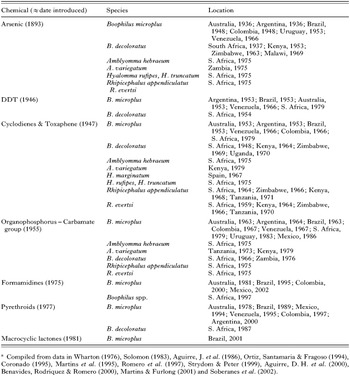
Because resistance has progressively eliminated or limited the use of arsenic, chlorinated hydrocarbons, organophosphates, carbamates and pyrethroids, the eventual effect of acaricide resistance on the useful life of the remaining acaricides has been a topic of great concern and much discussion (Nari & Hansen, 1999). Predictably, the spectrum of chemical groups to which ticks have evolved resistance continues to broaden. Resistance to amitraz was first detected in Australia 1981 when populations of the ‘Ulam’ amitraz-resistant strain were identified in a few widely spread locations in the country (Nolan, 1981). Identification of the ‘Ultimo’ strain in Australia in 1992 with its co-resistance to amitraz and all available pyrethroids did not represent a great immediate threat, because its distribution remained limited for several years. By 1999 the spread of the Ultimo strain had accelerated, and its presence at over 50 locations had been diagnosed (Kemp et al. 1999; Kunz & Kemp, 1994). More recently there have been reports of amitraz resistance in populations of Boophilus spp. in South Africa (Strydom & Peter, 1999) and B. microplus in Brazil (Furlong, 1999), Colombia (Benavides, Rodríguez & Romero, 2000) and Mexico (Soberanes et al. 2002). Macrocyclic lactone resistance of B. microplus in Brazil to doramectin with cross-resistance to ivermectin (another avermectin) and moxidectin (a milbemycin) was reported in ticks from one farm. The widespread use of macrocyclic lactone products for parasite control and limited choices of alternative acaricides has caused concern that macrocyclic lactone resistance will become a major problem (Martins & Furlong, 2001). The emergence of resistance in both single- and multi-host ticks in Africa to a variety of acaricides and of B. microplus in Latin America and Australia to the organophosphate, pyrethroid, formamidine and macrocyclic lactone acaricides does not, of course, mean that none of the products containing these kinds of active ingredients have any further value. Tick populations susceptible to a variety of acaricides exist and can be controlled, but it is more critical than ever to use existing and improved diagnostic tools to determine where products are still useful and to employ tick control strategies that minimize the rate of selection for resistance.
DIAGNOSIS OF RESISTANCE IN TICKS
A variety of bioassay methods has been developed for assessing the susceptibility of ticks to acaricides, but the ones used most often for tests with organophosphates-carbamates and pyrethroids are the larval packet test (LPT), the larval immersion test (LIT) and the Drummond test (DT) (Kemp et al. 1998). The LPT can also be used for bioassays of fipronil (Miller, R. J. et al. 2001). The LPT was recommended by the Food and Agricultural Organization of the United Nations (FAO) for use as a standard tick bioassay method, but it has not been adopted worldwide. Until recently, satisfactory methods for measuring the susceptibility of ticks to amitraz and macrocyclic lactones were unavailable. A modified LPT that involved the use of formulated amitraz and a nylon fibre substrate instead of filter paper has been used successfully to determine dose-mortality relationships of susceptible and amitraz-resistant strains of B. microplus (Miller, Davey & George, 2002). Comparisons of the LPT, LIT and an adult immersion test (AIT) for determining LC50 and discriminating doses for macrocyclic lactones against B. microplus indicated that the LIT and AIT were likely to provide the most consistent results with all of the macrocyclic lactones (Sabatini et al. 2001). Evaluation of the bioassays for amitraz and the macrocyclic lactones by personnel at a variety of laboratories is needed to confirm their utility. The lapse of time between the identification of a resistance problem and the availability of results from bioassays is a major problem with most existing bioassays. With a one-host tick, such as B. microplus, a minimum of about 35 days is required after engorged females are collected and larvae of the appropriate age (7–14 days) are available for testing. If a multi-host tick species is involved, it may require much longer to obtain sufficient numbers of ticks of uniform age to do an analysis. With the AIT test of Sabatini et al. (2001) results can be available in 10 days if a sufficiently large sample of engorged females can be collected from untreated cattle. The difficulty of obtaining the number of engorged females needed for a reliable analysis is likely to limit the value of the AIT for rapid resistance diagnosis except in cases were the frequency of resistant ticks is high enough to minimize the risk of a diagnostic error related to an inadequate sample size.
The need for methods to overcome the limitations of conventional bioassay techniques for resistance diagnosis has stimulated investigations of the potential usefulness of molecular methods. Unique advantages of molecular techniques for diagnosis of resistance are that they are highly specific and sensitive with small quantities of DNA (Sangster et al. 2002). As alternatives to bioassay methods for diagnosis of acaricide resistance in ticks, molecular methods also offer the possibility of obtaining results in one or two days vs. weeks with conventional methods. Sangster et al. (2002) observed that, in spite of the benefits, there are also potential drawbacks with molecular diagnosis, including: (1) tests require detailed knowledge of resistance mechanisms at the molecular level; (2) the identified mechanism must be the predominant one in the field; (3) molecular tests may not be appropriate for all resistance mechanisms; (4) ideally, they need to be offered as a battery of tests so resistance to several available drugs can be measured simultaneously; and (5) PCR technology is relatively complex. One recent effort to determine the molecular basis of OP resistance in B. microplus populations in Australia resulted in the isolation of the cDNA of acetylcholinesterase from susceptible and resistant strains. Unfortunately, no point mutations that could have explained the genetic basis of the target site resistance mechanism and provided a means for making a PCR-based diagnostic tool were detected (Baxter & Barker, 1998). A point mutation in an esterase gene was identified in a pyrethroid-resistant B. microplus strain from Mexico (Hernandez et al. 2000), but further research (Guerrero, Li & Hernandez, 2002) found that the occurrence of resistance was not associated with the presence of the mutation. In a different pyrethroid-resistant strain of B. microplus from Mexico with a target site resistance mechanism, a point mutation was identified in the para-type sodium channel gene (He et al. 1999). A PCR diagnostic assay that was created to detect the mutation proved useful for identification of the genotype of ticks with resistance conferred by the mutation of the sodium channel gene (Guerrero et al. 2002) and will be tested in the field. Whether molecular methods for diagnosis of resistance of ticks to acaricides will provide practical alternatives to conventional techniques is a question that requires considerably more research to determine the molecular basis of the multiple forms of resistance that exist, the creation of new diagnostic methods and tests of their sensitivity, specificity, and utility in the field.
Sensitive, reliable diagnostic methods are essential for: (1) recognizing if acaricide resistance is the cause of a tick control failure; (2) determining which acaricide is a suitable alternative to a product when it fails; (3) investigating the epidemiology of resistance; (4) developing control strategies that minimize the rate of selection of resistance genotypes; and (5) developing new acaricides. Often, diagnostic services in a country document the occurrence of resistance of ticks to acaricides and provide some information of the distribution and prevalence of various forms of resistance. Diagnostic laboratories are unlikely to have facilities, finances and staff needed to respond in a timely fashion to the requests of all producers for assistance or to provide more than general information about the geographic distribution of a problem. A major consequence of the lack of adequate information is likely to be poor decisions by producers about which acaricide would be useful to them. After resistance of B. microplus to organophosphates was diagnosed in Mexico, the Federal Government allowed pyrethroid products on the market for the first time and their use quickly became common. Many producers switched to a pyrethroid acaricide even though there was no evidence of resistance of the ticks on their cattle to organophosphates (Fragoso et al. 1995). Even if the ticks affecting an individual producer's herd are determined to be resistant to one or more acaricides, it is not possible to relate the degree of resistance indicated by a bioassay to the degree of control expected from proper use of an acaricide. Also, the limited availability and quality of advice on suitable alternative acaricides and strategies for their use hinders implementation of effective responses to problems.
MITIGATION OF RESISTANCE TO TICKS
It is unlikely that it will be possible to prevent the evolution of resistance in tick control programmes, which feature the use of acaricides. However, there are options for slowing the rate of selection for resistant individuals and there are a few options that may be used when resistance renders an acaricide ineffective (Nolan, 1990).
The most important fundamental to consider in the design of any control programme is to reduce the number of pesticide treatments to a minimum (Roush, 1993). Sutherst & Comins (1979) made several practical suggestions about resistance management and the use of acaricides: (1) The cost of managing resistant tick populations makes acaricide treatments more expensive and raises the costs of a control programme. Consider financial benefits derived from ignoring light infestations and employing alternative management practices including the use of tick-resistant breeds of cattle or pasture rotation. (2) Decrease acaricide use by increasing the control threshold for initiating control of the spring to autumn generations of ticks. (3) Avoid any unnecessary dipping because the long-term consequences of acaricide treatments are more expensive than the short-term gains. (4) Reduce the adverse effects of disseminating resistant strains of ticks through regional cooperation to impose controls on the movement of cattle. To avoid contact of ticks with cattle having low concentrations of residual acaricide on them, Sutherst & Comins (1979) also encouraged treating at three-week intervals, especially during the spring or early summer when a large proportion of the tick population is in the parasitic stage. Nolan (1990) emphasized, ‘Undue reliance on the illusory economic benefits of residual persistence is implicated as one of the major factors contributing to the early demise of several effective acaricides.’ Economic considerations of controlling acaricide-resistant ticks may force producers to be more open to the advantages of using host-resistance as a major tool in reducing the number of times they treat with acaricides (Jonsson, 1997).
Maintenance of biosecurity of premises and herds is an ongoing process that should be a routine part of a cattle producer's efforts to minimize adverse impacts of acaricide resistant ticks on his or her operation. By insuring that new cattle introduced to a farm or ranch are quarantined, treated with an acaricide and free of ticks before they are turned out to pasture, the risk of introducing a new strain of resistant ticks will be minimized (Sutherst & Comins, 1979; Jonsson & Matschoss, 1998). Unfortunately, a neighbour whose property is adjacent can compromise efforts to maintain good biosecurity. The early restricted distribution of amitraz-resistant B. microplus strains in Australia may have been due in part to circumstances that limited the dissemination of resistant ticks on cattle moved for various reasons from the affected farms (Kunz & Kemp, 1994).
The concentration or dose used to control ticks is another operational decision considered important in the selection of individuals with resistance genotypes (Georghiou & Taylor, 1977; Sutherst & Comins, 1979). Theoretically, the use of a high dose when homozygous-resistant individuals are rare would keep their frequency low by removing the more susceptible heterozygous-resistant individuals from the population. While the theoretical basis of the high-dose strategy is sound, the strategy has limitations when applied to the control of pesticide-resistant populations (Roush, 1993). The deficiencies of the high-dose tactic are, according to Roush (1993): economic and environmental limitations on the doses needed; the difficulty of maintaining doses high enough to kill heterozygotes; the deleterious effect of pesticide residues on inward migration of susceptible insects; and the difficulty of maintaining an untreated source for immigrants. Roush (1993) also observed that perhaps one of the greatest flaws of the high-dose strategy is that the dose needed to kill resistant heterozygotes is unknown because the strategy must be applied when the resistance allele frequency is less than 10−3, and it is improbable that this knowledge would be available. A practical limitation on the possible use of a high dose strategy is the restriction related to the approved (registered) dose for a product. There might be a special situation, such as the official dipping of cattle from Mexico in 3000 ppm coumaphos as a high dose strategy to protect against OP-resistant B. microplus before exportation of the animals to the US, where a high concentration of acaricide might be approved. Even if animal and human safety and environmental issues were not limiting factors for approval of high doses of an acaricide, the higher cost of such a product for general use would probably confer a competitive disadvantage in the market place. In relation to the use of a low-dose strategy, Roush (1993) referred to the ‘persistent myth that resistance can be managed by low doses.’ Generally, it would not be acceptable or practical to use a strategy that allows a large proportion of the treated individuals to survive to delay the emergence of resistance.
‘Rotation’ is a term applied to a treatment strategy that alternates the use over time of two or more chemicals with differing modes of action and no potential for cross-resistance (Riddles & Nolan, 1986; Tabashnik, 1990; Roush 1993). The rotation scheme assumes that the frequency of individuals in the population with resistance to one acaricide will decline during the time the alternate chemical is used. Any decline in the frequency of ticks with resistance genotypes to one of the acaricides depends on a relatively lower degree of fitness of resistant individuals to the alternate acaricide (Tabashnik, 1990). Even though rotation may offer a theoretical advantage in models or laboratory experiments, the tactic must be evaluated in the field, and results can be expected to vary depending on the fitness and mode of inheritance of a particular form of resistance.
The use of mixtures of acaricides to reduce the rate of evolution of acaricide resistance is based on the assumptions that resistance to each acaricide is monogenic; there is no potential for cross-resistance; each acaricide is equally persistent; resistant individuals are rare; and that some of the population remains untreated (Tabashnik, 1990). Also, mixtures and the components of formulations must be compatible and the product must not be toxic to the host (Kemp et al. 1998). Although simulations with the application of mixtures suggested their potential value (Sutherst & Comins, 1979) and several products containing mixtures are on the market, published scientific evidence from field trials of their efficacy and value in the mitigation of resistance of ticks to acaricides is lacking.
Possible countermeasures to exercise once resistance has emerged are limited to attempting to use the acaricide to which resistance has been diagnosed or selecting a new acaricide from a group of chemicals unaffected by the resistance problem (Nolan, 1990). Nolan identified three possibilities to consider if a lack of suitable alternative acaricides favours an effort to continue use of the affected chemical. Increasing the concentration of the acaricide is a tactic that was employed to extend the use of organophosphates in Australia and it could succeed elsewhere. Toxicity to the host and cost are factors that should be considered. The addition of a synergist to the formulation of an acaricide would have potential value if the resistance mechanism in target tick population was known to be detoxification (Nolan & Schnitzerling, 1986). Eradication of the resistant alleles is a possibility if the populations of the resistant ticks are not widespread. It would be necessary to impose strict quarantines and to trace recent movements of cattle from affected premises to ensure that the problem was contained and could be eradicated. If the choice is to select another acaricide, it is obvious that care must be taken to select a product with a mechanism of action that will not be overcome by the resistance mechanism in the ticks against which it will be used. It is important to determine the areas where an acaricide rendered ineffective in some locations by resistance is still effective.
CONCLUSIONS
The evolution of resistance to the majority of the groups of chemicals on the market used to control ticks on cattle and the development of few new products has clouded the future for the chemical control of ticks. Our current problems should force an analysis of the usefulness of available information on tick control and resistance mitigation; how we are applying the technology available for moderating the adverse impacts of tick and tick-borne diseases on beef and dairy operations; and what is needed to help extend the useful life of existing acaricides. First, we need to recognize that basic principles for profitable, well-reasoned tick control/resistance mitigation programmes were developed two decades ago (Sutherst & Comins, 1979; Norton et al. 1983) and have been cited repeatedly in reviews such as this one. The tick vaccines TickGARDPLUS and Gavac are on the market, and knowledge of the value of tick-resistant breeds of cattle has increased (Sangster, 2001), but the principles have not changed. Unfortunately, much of the recent literature documents the problems but provides little evidence of systematic attempts to help producers resolve them. The work by Jonsson (1997) and Jonsson & Matschoss (1998) to determine the attitudes and approaches of dairy farmers in Australia to the problem of tick control and to identify possibilities and obstacles to the use of new methods are models of efforts to help a group of producers improve their approach to tick control. Farmers and ranchers are unlikely to change the way they manage their cattle and parasite problems unless they see convincing evidence that a new approach will confer an economic advantage. They will be most interested in short-term benefits, but they need convincing evidence of the potential for positive long-term outcomes. We have knowledge of the tools available for tick control, but need practical research involving work with producers to understand the most efficacious, cost-effective combinations, how to adapt strategies to specific kinds of cattle operations, and to determine net costs and profits. Such research should lead to the creation of literature and programmes to educate producers and help them make changes in control programmes that will benefit them and help preserve the remaining acaricides. Policy makers and regulatory authorities, especially in less developed countries, need to be well informed about problems relating not only to acaricide usage and management, but also to questions pertaining to standards for registration, labeling, and marketing acaricides and other pesticides.
References
REFERENCES
AGUIRRE, J., SOBRINO, L., SANTAMARIA, M., ABURTO, S., ROMAN, E., HERNANDEZ, M., ORTIZ, M. &
ORTIZ, Y. A. (
1986).
Resistencia de garrapatas en Mexico. In
Seminario Internacional de Parasitologia Animal, Memorias (
ed. Cavazzani, A. H. & Garcia, Z.), pp.
282–306.
Cuernavaca, Morelos, Mexico.
AGUIRRE, D. H., VIÑABAL, A. E., SALATIN, A. O., CAFRUNE, M. M., VOLPOGNI, M. M., MANGOLD, A. J. &
GUGLIEMONE, A. A. (
2000).
Susceptibility to two pyrethroids in Boophilus microplus (Acari: Ixodidae) populations in northwest Argentina: Preliminary Results.
Veterinary Parasitology
88, 329–334.CrossRefGoogle Scholar
ALLAN, S. A., BARRÉ, N., SONENSHINE, D. E. &
BURRIDGE, M. J. (
1998).
Efficacy of tags impregnated with pheromone and acaricide for control of Amblyomma variegatum.
Medical and Veterinary Entomology
12, 141–150.CrossRefGoogle Scholar
ANGUS, B. M. (
1996).
The history of the cattle tick Boophilus microplus in Australia and achievements in its control.
International Journal for Parasitology
26, 1341–1355.CrossRefGoogle Scholar
BAKER, J. A. F. &
SHAW, R. D. (
1965).
Toxaphene and lindane resistance in Rhipicephalus appendiculatus, the brown ear tick of equatorial and southern Africa.
Journal of the South African Veterinary Medical Association
36, 321–330.Google Scholar
BAXTER, G. D. &
BARKER, S. C. (
1998).
Acetylcholinesterase cDNA of the cattle tick, Boophilus microplus: characterization and role in organophosphate resistance.
Insect Biochemistry and Molecular Biology
28, 581–589.CrossRefGoogle Scholar
BENAVIDES, E., RODRÍGUEZ, J. L. &
ROMERO, A. (
2000).
Isolation and partial characterization of the Montecitos strain of Boophilus microplus (Canestrini, 1877) multi-resistant to different acaricides.
Annals of the New York Academy of Sciences
916, 668–671.Google Scholar
BULL, M. S., SWINDALE, S., OVEREND, D. &
HESS, E. A. (
1996).
Suppression of Boophilus microplus populations with fluazuron – an acarine growth regulator.
Australian Veterinary Journal
74, 468–470.CrossRefGoogle Scholar
CAPRONI, L. Jr., UMEHARA, O., MORO, E. &
GONCALVES, L. C. B. (
1998).
Field efficacy of doramectin and ivermectin against natural infestations of the cattle tick Boophilus microplus.
Brazilian Journal of Veterinary Parasitolgy
7, 151–155.Google Scholar
COBBETT, N. G. (
1947).
Preliminary tests in Mexico with DDT, cube hexachlorocyclohexane (Benzene hexachloride), and combinations thereof, for the control of the cattle fever tick, Boophilus annulatus.
American Journal of Veterinary Research
8, 280–283.Google Scholar
COETZEE, B. B., STANFORD, G. D. &
DAVIS, D. A. T. (
1987).
The resistance spectrum shown by a fenvalerate-resistant strain of blue tick (Boophilus decoloratus) to a range of ixodicides.
Onderstepoort Journal of Veterinary Research
54, 79–82.Google Scholar
CORONADO, A. (
1995).
Current status of the tropical cattle tick, Boophilus microplus in Venezuela. In
Resistencia y Control en Garrapatas y Moscas de Importancia Veterinaria, III Seminario Internacional Parasitologia Animal (
ed. Rodriquez, S. & Fragoso, H.), pp.
22–29.
Acapulco, Guerrero, Mexico.
DAVEY, R. B. &
AHRENS, E. H. (
1984).
Control of Boophilus ticks on heifers with two pyrethroids applied as sprays.
American Journal of Veterinary Research
45, 1008–1010.Google Scholar
DAVEY, R. B., AHRENS, E. H., GEORGE, J. E., HUNTER, J. E. III &
JEANNIN, P. (
1998).
Therapeutic and persistent efficacy of fipronil against Boophilus microplus (Acari: Ixodidae) on cattle.
Veterinary Parasitology
74, 261–276.CrossRefGoogle Scholar
DAVEY, R. B., AHRENS, E. H., GEORGE, J. E., HUNTER, J. E. III &
JEANNIN, P. (
1999).
Evaluation of a pour-on formulation of fipronil against Boophilus microplus (Acari: Ixodidae) under natural South Texas field conditions.
Experimental and Applied Acarology
23, 351–364.CrossRefGoogle Scholar
DAVEY, R. B., AHRENS, E. H., GEORGE, J. E. &
KARNS, J. S. (
1995).
Efficacy of freshly mixed coumaphos suspensions adjusted to various pH levels for treatment of cattle infested with Boophilus annulatus (Say) (Acari: Ixodidae).
Preventative Veterinary Medicine
23, 1–8.CrossRefGoogle Scholar
DAVEY, R. B. &
GEORGE, J. E. (
2002).
Efficacy of macrocyclic lactone endectocides against Boophilus microplus (Acari: Ixodidae) infested cattle using different pour-on application treatment regimes.
Journal of Medical Entomology
39, 763–769.CrossRefGoogle Scholar
DAVEY, R. B., GEORGE, J. E. &
SNYDER, D. E. (
2001).
Efficacy of a single whole-body spray treatment of spinosad, against Boophilus microplus (Acari: Ixodidae) on cattle.
Veterinary Parasitology
99, 41–52.CrossRefGoogle Scholar
FRAGOSO, H., SOBERANES, N., ORTIZ, M., SANTAMARIA, M. &
ORTIZ, A. (
1995).
Epidemiologia de la resistencia a ixodicides piretroides en garrapatas Boophilus microplus en la Republica Mexicana. In
Resistencia y Control en Garrapatas y Moscas de Importancia Vetenaria, III Seminario Internacional de Parasitologia Animal (
ed. Rodriquez, S. & Fragoso, H.), pp.
45–57.
Acapulco, Guerrero, Mexico.
FRANCIS, M. (
1892).
Preventive measures for farm or range use.
Bulletin of the Texas Agriculture Experiment Station
24, 253–256.Google Scholar
FURLONG, J. (
1999).
Diagnosis of the susceptibility of the cattle tick, Boophilus microplus, to acaricides in Minas, Gerais State, Brazil. In
Control de la Resistencia en Garrapatas y Moscas de Importancia Veterinaria y Enfermedades que transmiten, IV Seminario Internacional de Parasitologia Animal (
ed. Morales, G., Fragosa, H. & Garcia, Z.), pp.
41–46.
Puerto Vallarta, Jalisco, Mexico.
GEORGE, J. E. (
1990).
Summing-up of strategies for the control of ticks in regions of the world other than Africa.
Parassitologia
32, 203–209.Google Scholar
GEORGE, J. E., DAVEY, R. B., AHRENS, E. H., POUND, J. M. &
DRUMMOND, R. O. (
1998).
Efficacy of amitraz (Taktic® 12·5% EC) as a dip for the control of Boophilus microplus (Canestrini) (Acari: Ixodidae) on cattle.
Preventive Veterinary Medicine
37, 55–67.CrossRefGoogle Scholar
GEORGHIOU, G. P. &
TAYLOR, C. E. (
1977).
Operational influences in the evolution of insecticide resistance.
Journal of Economic Entomology
70, 653–658.CrossRefGoogle Scholar
GONZALES, J. C., MUNIZ, R. A., FARIAS, A., GONCALVES, L. C. B. &
REW, R. S. (
1993).
Therapeutic and persistent efficacy of doramectin against Boophilus microplus in cattle.
Veterinary Parasitology
49, 107–109.CrossRefGoogle Scholar
GRAHAM, O. H. &
HOURRIGAN, J. L. (
1977).
Eradication programs for the arthropod parasites of livestock.
Journal of Medical Entomology
13, 629–658.CrossRefGoogle Scholar
GUERRERO, F. D., LI, A. Y. &
HERNANDEZ, R. (
2002).
Molecular diagnosis of pyrethroid resistance in Mexican strains of Boophilus microplus (Acari: Ixodidae).
Journal of Medical Entomology
39, 770–776.CrossRefGoogle Scholar
HE, H., CHEN, A. C., DAVEY, R. B., IVIE, G. W. &
GEORGE, J. E. (
1999).
Identification of a point mutation in the para-type sodium channel gene from a pyrethroid-resistant cattle tick.
Biochemical and Biophysical Research Communications
261, 558–561.CrossRefGoogle Scholar
HERNANDEZ, R., HE, H., CHEN, A. C., WAGHELA, S. D., IVIE, G. W., GEORGE, J. E. &
WAGNER, G. G. (
2000).
Identification of a point mutation in an esterase gene in different populations of the southern cattle tick, Boophilus microplus.
Insect Biochemistry and Molecular Biology
30, 969–977.CrossRefGoogle Scholar
JONSSON, N. N. (
1997).
Control of cattle ticks (Boophilus microplus) on Queensland dairy farms.
Australian Veterinary Journal
75, 802–807.CrossRefGoogle Scholar
JONSSON, N. N. &
MATSCHOSS, A. L. (
1998).
Attitudes and practices of Queensland dairy farmers to the control of the cattle tick, Boophilus microplus.
Australian Veterinary Journal
76, 746–751.CrossRefGoogle Scholar
KEMP, D. H., McKENNA, R. V., THULLNER, R. &
WILLADSEN, P. (
1999).
Strategies for tick control in a world of acaricide resistance. In
Control de la Resistencia en Garrapatas y Moscas de Importancia Veterinaria y Enfermedades que transmiten, IV Seminario Internacional de Parasitologia Animal (
ed. Morales, G., Fragosa, H. & Garcia, Z.), pp.
1–10.
Puerto Vallarta, Jalisco, Mexico.
KEMP, D. H., THULLNER, F., GALE, K. R., NARI, A. &
SABATINI, G. A. (
1998).
Acaricide resistance in the cattle-ticks Boophilus microplus and B. decoloratus: Review of Resistance data; standardization of resistance tests and recommendations for integrated parasite control to delay resistance. Report to the Animal Health Services AGAH, FAO, October 1998.
FAO, Rome.
KUNZ, S. E. &
KEMP, D. H. (
1994).
Insecticides and acaricides: Resistance and environmental impact.
Revue scientifique et technique Office International des Epizooties
13, 1249–1286.CrossRefGoogle Scholar
LASOTA, J. A. &
DYBAS, R. A. (
1991).
Avermectins, a novel class of compounds: Implications for use in arthropod pest control.
Annual Review of Entomology
36, 91–117.CrossRefGoogle Scholar
LAWRENCE, J. (
1992).
History of bovine theileriosis in southern Africa. In
The Epidemiology of Theileriosis in Africa (
ed. Norval, R. A. I., Perry, B. D. & Young, A. S.), pp.
1–40.
Academic Press, London.
LAWRENCE, J. A. &
NORVAL, R. A. I. (
1979).
A history of ticks and tick-borne diseases of cattle in Rhodesia.
Rhodesian Veterinary Journal
10, 28–40.Google Scholar
MARTINS, J. R., CORREA, B. L., CERESÉR, V. H. &
ARTECHE, C. C. P. (
1995).
A situation report on resistance to acaricides by the cattle tick Boophilus microplus in the state of Rio Grande do Sul, southern Brazil. In
Resistencia y Control en Garrapatas y Moscas de Importancia Veterinaria, III Seminario Internacional Parasitologia Animal (
ed. Rodriquez, S. & Fragoso, H.), pp.
1–6.
Acapulco, Guerrero, Mexico.
MARTINS, J. R. &
FURLONG, J. (
2001).
Avermectin resistance of the cattle tick Boophilus microplus in Brazil.
The Veterinary Record
July 14, 2001, 64.Google Scholar
MAUNDER, J. C. J. (
1949).
Cattle tick control: Results achieved in the field with DDT and BHC.
Queensland Agricultural Journal
September, 1–8.Google Scholar
McDOUGALL, K. W. &
MACHIN, M. V. (
1988).
Stabilization of the carbamate acaricide promacyl in cattle dipping fluid.
Pesticide Science
22, 307–315.CrossRefGoogle Scholar
MILLER, J. A., DAVEY, R. B., OEHLER, D. D., POUND, J. M. &
GEORGE, J. E. (
1999).
Control of Boophilus annulatus (Acari: Ixodidae) on cattle using injectable microspheres containing ivermectin.
Journal of Economic Entomology
92, 1142–1146.CrossRefGoogle Scholar
MILLER, J. A., DAVEY, R. B., OEHLER, D. D., POUND, J. M. &
GEORGE, J. E. (
2001).
The Ivomec SR Bolus for control of Boophilus annulatus (Acari: Ixodidae) on cattle in South Texas.
Journal of Economic Entomology
94, 1622–1627.CrossRefGoogle Scholar
MILLER, R. J., DAVEY, R. B. &
GEORGE, J. E. (
2002).
Modification of the Food and Agriculture Organization Larval Packet Test to measure amitraz-susceptibility against Ixodidae.
Journal of Medical Entomology
39, 645–651.CrossRefGoogle Scholar
MILLER, R. J., GEORGE, J. E., GUERRERO, F., CARPENTER, L. &
WELCH, J. B. (
2001).
Characterization of acaricide resistance in Rhipicephalus sanguineus (Latrille) (Acari: Ixodidae) collected from the Corozal Army Veterinary Quarantine Center, Panama.
Journal of Medical Entomology
38, 298–302.CrossRefGoogle Scholar
MOHLER, J. R. (
1906).
Texas or tick fever and its prevention.
United States Department of Agriculture Farmer's Bulletin Number 258, 1–45.Google Scholar
MUNIZ, R. A., HERNANDEZ, F., LOMBARDERO, O., LEITE, R. C., MORENO, J., ERRECALDE, J. &
GONCALVES, L. C. B. (
1995).
Efficacy of injectable doramectin against natural Boophilus microplus infestations in cattle.
American Journal of Veterinary Research
56, 460–463.Google Scholar
NARI, A. &
HANSEN, J. W. (
1999).
Resistance of Ecto- and Entoparasites: Current and Future Solutions.
Office International des Épizooties Technical Report 67 SG/10. OIE, Paris.
NEWTON, L. G. (
1967).
Acaricide resistance and cattle tick control.
Australian Veterinary Journal
43, 389–394.CrossRefGoogle Scholar
NOLAN, J. (
1981).
Current developments in resistance to amidine and pyrethroid tickicides in Australia. In
Tick Biology and Control (
ed. Whitehead, G. B. & Gibson, J. D.), pp.
109–114.
Tick Research Unit, Rhodes University, Grahamstown, South Africa.
NOLAN, J. (
1990).
Acaricide resistance in single and multi-host ticks and strategies for control.
Parassitologia
32, 145–153.Google Scholar
NOLAN, J., ROULSTON, W. J. &
SCHNITZERLING, H. J. (
1979).
The potential value of some synthetic pyrethroids for control of the cattle tick (Boophilus microplus).
Australian Veterinary Journal
55, 463–466.CrossRefGoogle Scholar
NOLAN, J. &
SCHNITZERLING, H. J. (
1986).
Drug resistance in arthropod parasites. In
Chemotherapy of Parasitic Diseases (
ed. Campbell, W. C. & Rew, R. S.), pp.
603–620.
Plenum Press, New York.CrossRef
NORRIS, K. R. &
STONE, B. F. (
1956).
Toxaphene-resistant cattle ticks (Boophilus microplus (Canestrini)) occurring in Queensland.
Australian Journal of Agricultural Research
7, 211–226.CrossRefGoogle Scholar
NORTON, G. A., SUTHERST, R. W. &
MAYWALD, G. F. (
1983).
A framework for integrating control methods against the cattle tick, Boophilus microplus, in Australia.
Journal of Applied Ecology
20, 489–505.CrossRefGoogle Scholar
NORVAL, R. A. I., FIVAZ, B. H., LAWRENCE, J. A. &
BROWN, A. F. (
1984).
Epidemiology of tick-borne diseases of cattle in Zimbabwe. II. Anaplasmosis.
Tropical Animal Health and Production
16, 63–70.CrossRefGoogle Scholar
NORVAL, R. A. I., SONENSHINE, D. E., ALLAN, S. A. &
BURRIDGE, M. J. (
1996).
Efficacy of pheromone-acaricide-impregnated tail-tags decoys for controlling the bont tick, Amblyomma hebraeum (Acari: Ixodidae), on cattle in Zimbabwe.
Experimental and Applied Acarology
20, 31–46.Google Scholar
ORTIZ, E. M., SANTAMARIA, E. M. &
FRAGOSO, S. H. (
1994).
Resistencia en garrapatas Boophilus microplus, a los ixodicidas en Mexico. In
XIV Pan American Congress on Veterinary Sciences, Proceedings (
ed. Peréz Trujillo, J. M. & Gonzales Padilla, E.), pp.
473–474.
Acapulco, Guerrero, Mexico.
PALMER, B. H., McCARTHY, J. F., KOZLIK, A. &
HARRISON, I. R. (
1971).
A new chemical group of cattle acaricides.
Proceedings of the 3rd International Congress of Acarology, Prague 1971, pp.
687–691.
PERRY, B. D. (
1992).
History of east coast fever in eastern and central Africa. In
The Epidemiology of Theileriosis in Africa (
ed. Norval, R. A. I., Perry, B. D. & Young, A. S.), pp.
41–62.
Academic Press, London.
RECHAV, Y. (
1987).
Use of acaricide-impregnated ear tags for controlling the brown ear tick (Acari: Ixodidae) in South Africa.
Journal of Economic Entomology
80, 822–825.CrossRefGoogle Scholar
REMINGTON, B., KIERAN, P., COBB, R. &
BODERO, D. (
1997).
The application of moxidectin formulations for control of the cattle tick (Boophilus microplus) under Queensland field conditions.
Australian Veterinary Journal
75, 588–591.CrossRefGoogle Scholar
RIDDLES, P. W. &
NOLAN, J. (
1986).
Prospects for the management of arthropod resistance to pesticides. In
Parasitology – Quo Vadit? (
ed. Howell, M. J.), pp.
679–687. Proceedings of the 6th International Congress of Parasitology.
ROMERO, A., BENAVIDES, E., HERRERA, C. &
PARRA, M. H. (
1997).
Resistencia de la garrapata Boophilus microplus a acaricides organofosforados y piretroides sintéticos en el departamento del Huila.
Revista Colombiana de Entomologia
23, 9–17.Google Scholar
ROULSTON, W. J., STONE, B. F., WILSON, J. T. &
WHITE, L. I. (
1968).
Chemical control of an organophosphorus- and carbamate-resistant strain of Boophilus microplus (Can.) from Queensland.
Bulletin of Entomological Research
58, 379–392.CrossRefGoogle Scholar
ROUSH, R. T. (
1993).
Occurrence, genetics and management of insecticide resistance.
Parasitology Today
9, 174–179.CrossRefGoogle Scholar
ROY-SMITH, F. (
1975).
Amitraz – Australian field trials against the cattle tick (Boophilus microplus).
Proceedings of the 8th British Insecticide and Fungicide Conference, pp.
565–571.
SABATINI, G. A., KEMP, D. H., HUGHES, S., NARI, A. &
HANSEN, J. (
2001).
Tests to determine LC50 and discriminating doses for macrocyclic lactones against the cattle tick, Boophilus microplus.
Veterinary Parasitology
95, 53–62.CrossRefGoogle Scholar
SANGSTER, N. C. (
2001).
Managing parasiticide resistance.
Veterinary Parasitology
98, 89–109.CrossRefGoogle Scholar
SANGSTER, N., BATTERHAM, P., CHAPMAN, H. D., DURAISINGH, M., JAMBRE, L. L., SHIRLEY, M., UPCROFT, J. &
UPCROFT, P. (
2002).
Resistance to antiparasitic drugs: the role of molecular diagnosis.
International Journal for Parasitology
32, 637–653.CrossRefGoogle Scholar
SCHNITZERLING, H. J., NOLAN, J. &
HUGHES, S. (
1983).
Toxicology and metabolism of some synthetic pyrethroids in larvae of susceptible and resistant strains of the cattle tick Boophilus microplus (Can.).
Pesticide Science
14, 64–72.CrossRefGoogle Scholar
SCHNITZERLING, H. J., NOLAN, J. &
HUGHES, S. (
1989).
Toxicology and metabolism of isomers of flumethrin in larvae of pyrethroid-suceptible and resistant strains of the cattle tick Boophilus microplus (Acari: Ixodidae).
Experimental and Applied Acarology
6, 47–54.CrossRefGoogle Scholar
SCHNITZERLING, H. J. &
WALKER, T. B. (
1985).
Factors affecting the performance of acaricides used for control of the cattle tick, Boophilus microplus.
Tropical Pest Management
31, 199–203.CrossRefGoogle Scholar
SCHUNTNER, C. A., SCHNITZERLING, H. J. &
ROULSTON, W. J. (
1972).
Carbaryl metabolism in larvae of organophosphorus and carbamate-susceptible and -resistant strains of cattle tick Boophilus microplus.
Pesticide Biochemistry and Physiology
1, 424–433.Google Scholar
SHAW, R. D. (
1969).
Tick control on domestic animals (i) A brief history of the economic significance of tick infestations.
Tropical Science
11, 113–119.Google Scholar
SHAW, R. D. (
1970).
Tick control on domestic animals (ii) The effect of modern treatment methods.
Tropical Science
12, 29–36.Google Scholar
SMITH, T. &
KILBORNE, F. L. (
1893).
Investigations into the nature, causation, and prevention of Texas or southern cattle fever.
United States Department of Agriculture, Bureau of Animal Industries Bulletin
1, 1–301.CrossRefGoogle Scholar
SOBERANES, N., SANTAMARIA, M., FRAGOSO, H. &
GARCIA, Z. (
2002).
Primer caso de resistencia al amitraz en garrapata del Ganado Boophilus microplus en México.
Técnica Pecuaria en México
40, 81–92.Google Scholar
SOLL, M. D., BENZ, G. W., CARMICHAEL, I. H. &
GROSS, S. J. (
1990).
Efficacy of ivermectin delivered from an intraruminal sustained-released bolus against natural infestations of five African tick species on cattle.
Veterinary Parasitology
37, 285–295.CrossRefGoogle Scholar
SOLOMON, K. R. (
1983).
Acaricide resistance in ticks.
Advances in Veterinary Science and Comparative Medicine
27, 273–296.Google Scholar
STANFORD, G. D., BAKER, J. A. F., RATLEY, C. V. &
TAYLOR, R. J. (
1981).
The development of a stabilized amitraz cattle dip for control of single and multi-host ticks and their resistant strains in South Africa. In
Proceedings of a Conference on Tick Biology and Control (
ed. Whitehead, G. B. & Gibson, J. D.), pp.
143–181.
Rhodes University, Grahamstown, South Africa.
STENDEL, W. (
1985).
Experimental studies on the tickicidal effect of Bayticol® Pour-on.
Veterinary Medical Report
2, 99–111.Google Scholar
STONE, B. F. &
MEYERS, R. A. J. (
1957).
Dieldrin-resistant cattle ticks, Boophilus microplus (Canestrini), in Queensland.
Australian Journal of Agricultural Research
8, 312–317.CrossRefGoogle Scholar
STRYDOM, T. &
PETER, R. (
1999).
Acaricides and Boophilus spp. Resistance in South Africa. In
Control de la Resistencia en Garrapatas y Moscas de Importancia Veterinaria y Enfermedades que transmiten, IV Seminario Internacional de Parasitologia Animal (
ed. Morales, G., Fragosa, H. & Garcia, Z.), pp.
35–40.
Puerto Vallarta, Jalisco, Mexico.
STUBBS, V. K., WILSHIRE, C. &
WEBBER, G. (
1982).
Cyhalothrin – a novel acaricidal and insecticidal synthetic pyrethroid for the control of the cattle tick (Boophilus microplus) and the buffalo fly (Haematobia irritans exigua).
Australian Veterinary Journal
59, 152–155.CrossRefGoogle Scholar
SUTHERST, R. W. &
COMINS, H. N. (
1979).
The management of acaricide resistance in the cattle tick, Boophilus microplus (Canestrini) (Acari: Ixodidae), in Australia.
Bulletin of Entomological Research
69, 519–537.CrossRefGoogle Scholar
SUTHERST, R. W., NORTON, G. A., BARLOW, N. D., CONWAY, C. R., BIRLEY, M. &
COMINS, H. N. (
1979).
An analysis of management strategies for cattle tick (Boophilus microplus) control in Australia.
Journal of Applied Ecology
16, 359–382.CrossRefGoogle Scholar
TABASHNIK, B. E. (
1990).
Modeling and evaluation of resistance management tactics. In
Pesticide Resistance in Arthropods (
ed. Roush, R. T. & Tabashnik, B. E.), 153–182.
Chapman Hall, New York.CrossRef
TAYLOR, M. A. (
2001).
Recent development in ectoparasiticides.
The Veterinary Journal
161, 253–268.CrossRefGoogle Scholar
TEEL, P. D., HAIR, J. A. &
STRATTON, L. G. (
1979).
Laboratory evaluation of a sustained-release famphur bolus against gulf coast and lone star ticks feeding on Hereford heifers.
Journal of Economic Entomology
72, 230–233.CrossRefGoogle Scholar
WARE, G. W. (
2000).
The Pesticide Book, 5th edn.
Thomson Publications, Fresno, California.
WHARTON, R. H. (
1976).
Tick-borne livestock diseases and their vectors. 5. Acaricide resistance and alternative methods of tick control.
World Animal Review
20, 8–15.Google Scholar
WHARTON, R. H. &
ROULSTON, W. J. (
1970).
Resistance of ticks to chemicals.
Annual Review of Entomology
15, 381–403.CrossRefGoogle Scholar
WHARTON, R. H., ROULSTON, W. J., UTECH, K. B. W. &
KERR, J. D. (
1970).
Assessment of the efficiency of acaricides and their mode of application against the cattle tick Boophilus microplus.
Australian Journal of Agricultural Research
21, 985–1006.CrossRefGoogle Scholar
WHITEHEAD, G. B. (
1958).
A review of insecticide resistance in the blue tick, Boophilus decoloratus, in South Africa.
Indian Journal of Malariology
12, 427–432.Google Scholar
WHITNALL, A. B. M., McHARDY, W. M., WHITEHEAD, G. B. &
MEERHOLZ, F. (
1951).
Some observations on the control of the bont tick, Amblyomma hebraeum Koch.
Bulletin of Entomological Research
41, 577–591.CrossRefGoogle Scholar
YOUNG, A. S., DE CASTRO, J. J. &
KIZA-AURU, P. P. (
1985).
Control of tick (Acari: Ixodidae) infestation by application of ear tags impregnated with acaricides to cattle in Africa.
Bulletin of Entomological Research
75, 609–619.CrossRefGoogle Scholar
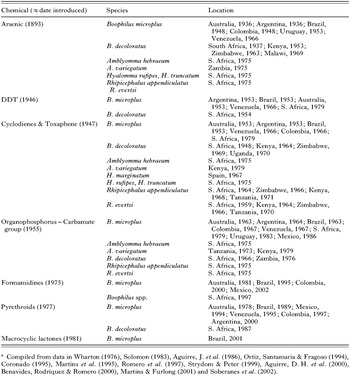
Table 1. An overview of occurrences of acaricide resistance in species of ticks that parasitize cattlea
 You have
Access
- 307
- Cited by