Introduction
Major adverse climatic events (MACEs) in heavily-populated areas can inflict severe damage to infrastructure, disrupting essential municipal and commercial services. They pose unique public health challenges due to compromised health care delivery systems; limited utilities, such as electricity, heating, potable water, sanitation, and housing; and undermined transportation infrastructure. A surge of toxicological exposures (eg, carbon monoxide and chemical waste), may accompany natural disasters, placing the population at additional risk for adverse health consequences.Reference Iqbal, Clower, Hernandez, Damon and Yip1-Reference Forrester7 Thus, regional poison control centers (PCCs) play an important role in public health surveillance, as well as education and advice to callers in disaster-afflicted areas.
Hurricane Sandy made landfall on October 29, 2012 near Atlantic City, New Jersey (USA) as a post-tropical cyclone, bringing hurricane-force winds to heavily-populated areas of the northeastern coast of the US.8 The largest Atlantic hurricane on record, Sandy brought wind gusts of over 75 miles per hour, with a storm diameter spanning approximately 1,100 miles.8, 9 The hurricane winds and storm surge, exceeding 12 feet, devastated New Jersey (NJ) and New York (NY), inflicting severe infrastructure damage and disrupting municipal services, including electricity, steam, public transportation systems, and communications. Numerous city and private facilities closed from flooding and electrical outage, including major medical centers. The prolonged electrical outage and damage to oil refineries evoked an acute gasoline shortage and rationing in NY and NJ, not experienced in the US since the 1970s. Freezing temperatures from a nor'easter (a large winter storm that bring heavy snow and strong northeasterly winds to the northeastern coast of the US) that followed a week after the devastation from Hurricane Sandy, increased gasoline demand further, as residents used portable gasoline generators to power heating devices.10, 11 As part of daily case review, the PCC noted an acute surge of toxic exposures in the aftermath of Hurricane Sandy, including carbon monoxide and gasoline. Increased carbon monoxide exposures after natural disasters have been well reported.Reference Iqbal, Clower, Hernandez, Damon and Yip1-Reference Klein, Herzog, Smolinske and White3, 6, 12, Reference Greife, Goldenhar and Fruend13 To a lesser degree, surge in post-disaster gasoline exposures also have been reported.Reference Cox, Amundson and Brackin2, Reference Klein, Herzog, Smolinske and White3, 6, Reference Forrester7 However, previous studies involving gasoline exposures are limited by lack of data on exposure characteristics, including demographic information of affected population and their clinical outcome.Reference Cox, Amundson and Brackin2, Reference Klein, Herzog, Smolinske and White3, 6, Reference Forrester7 This study describes a regional PCC's experience of increased gasoline exposure and patient characteristics in NY following Hurricane Sandy and places this in context with the experience of the previous four years, including 2011, when a nor'easter also affected the NY area.
Methods
This was a retrospective review of a prospectively collected, standardized dataset. Toxicall (Computer Automation Systems, Inc., Aurora, Colorado USA), the regional PCC's electronic database, captures spontaneous, self-reported poisoning calls from the public and health care professionals. Most of the 390,000 proprietary and non-proprietary drugs, chemicals, and biological agents are classified by their primary active ingredient into one of 965 American Association of Poison Control Center (AAPCC) generic codes.Reference Bronstein, Spyker, Cantilena, Green, Rumack and Dart14 Calls are coded as “exposure” if there is a concern about an exposure (perceived or actual) to a substance. Toxicall data includes demographic information (eg, age, gender, and caller zip code); call date and times; exposure type; context; signs and symptoms; recommendations and treatments; duration of effect; and AAPCC-delineated, standardized clinical outcomes.Reference Bronstein, Spyker, Cantilena, Green, Rumack and Dart14 Structured Query Language (SQL) was employed to extract gasoline exposures using the AAPCC generic code 039502 (gasoline). All gasoline exposure cases from October 29, 2012, prior to Hurricane Sandy's landfall, through November 28, 2012 were reviewed. This 1-month survey included the period when electricity returned to >95% of the households that had lost power (November 12, 2012) and gas rationing had ceased (November 23, 2012).15-Reference Fahey18 The SQL permitted construction of a de-identified database that consisted of demographic and medical data as entered by Certified Specialists in Poison Information (CSPIs) at the time of the exposure call. Two toxicologists independently reviewed the extracted cases to ascertain the gasoline exposure route (siphoning, inhalation, dermal, or ophthalmologic), clinical symptoms, and PCC referral to a hospital. In case of discordance between the two toxicologists, a third toxicologist reviewed the data to resolve the disagreement. Gasoline exposure data were extracted for the identical time period for the previous four years for comparison. Notably, in 2011, the northeast region of the US also experienced a nor'easter during the study period. The primary outcome of interest was the trend in gasoline exposures during the acute gasoline shortage. Secondary outcomes included exposure type, severity of clinical outcome based upon standardized AAPCC definitions,Reference Bronstein, Spyker, Cantilena, Green, Rumack and Dart14 and hospital referral rates.
The New York City (NYC) PCC is a certified regional poison center serving the five counties of NYC proper, as well as three surrounding counties. The catchment area covers nearly 12 million people and the center receives approximately 96,000 calls per year, of which 67,781 calls per year are human exposures. This study used de-identified data and was determined to be Institutional Review Board exempt by the NYC Department of Health and Mental Hygiene Institutional Review Board upon review.
A descriptive analysis was performed using SPSS Version 20 (International Business Machine Corporation, Chicago, Illinois USA). To evaluate the statistical significance of the 2012 events, the data were distributed across 32 days (October 29, 2012-November 29, 2012) for each of the past five years. The Friedman statistic was utilized to compare the inter-year data trends. It is the non-parametric equivalent of a 1-sample repeated measures design or a 2-way analysis of variance with one observation per cell. Friedman statistical method tests the null hypothesis that k-related variables come from the same population. For each case, the k variables are ranked from one to k. The test statistic is based on these ranks.Reference Mehta and Patel19 Kendall's coefficient of concordance is a normalization of the Friedman statistic. Significance was determined a priori at a level of .05.
Results
A total of 290 gasoline exposure cases were identified during the 4-week study period. Two carbon monoxide exposure cases erroneously coded as gasoline exposures were excluded from analysis. Five duplicate entries were excluded, leaving 283 unique reports during the study period. Figure 1 provides the temporal exposure trends. Within the first 24 hours of Hurricane Sandy's landfall, a significant increase in the number of gasoline exposures was noted. An acute escalation in gasoline exposures occurred on November 1, 2012, three days after Hurricane Sandy's landfall, and peaked on post-landfall day 5. When compared with the four previous years, the gasoline shortage from Hurricane Sandy caused approximately an 18- to 283-fold increase in gasoline exposure during the same time period (Figure 2). Because the distributions for the study period substantially deviated from previous four years’ dates, it is unlikely that the increase in exposure call volume is due to pure chance (P < .001 by Kendall's W) (Figure 2). The closure of Long Island Poison Control Center in 2010 increased the NYC PCC's catchment population from 8.3 million to 12 million. When normalized to account for the increased call volume, there were 41.8 gasoline exposure calls per 10,000 PCC calls in 2012 compared with 3.6 in 2011. From 2008 through 2010, 1.1, 2.3, and 0.2 gasoline exposure calls per 10,000 PCC calls were reported, respectively. Several reports of gasoline exposure (n = 24) did occur in 2011 during a nor'easter, when access to gasoline was limited by snow-related road closures. Once the electricity was restored to the majority of hurricane-affected areas (by November 12, 2012), gasoline exposure decreased significantly as the gasoline supply increased in the local gas stations. The use of portable gasoline generators also became less necessary, although power grid revival did not necessarily guarantee dwelling power if transmission equipment had been compromised (Figure 1). There was a 3-day delay in trend of increased gasoline exposures compared to carbon monoxide exposure (data not shown). The majority of the gasoline exposures involved men (83.0%). A precise age was reported in 48.4% (n = 137) of patients, (mean = 34.9 years). Two-hundred and sixty gasoline exposures (91.9%) involved adults older than 20 years of age. Thirteen cases (4.6%) involved children under the age of five years. Siphoning was the leading exposure type (53.4%), followed by “unintentional” gasoline ingestion (27.2%), which was suspicious for non-disclosed siphoning in many cases based on the narrative account (Figure 1). Inhalational, dermal, and ophthalmologic exposures consisted of 15.9%, 2.5%, and 1.1%, respectively.
(Color online) Gasoline Exposure Cases After the Landfall of Hurricane Sandy A: Hurricane Sandy landfall on October 29, 2012 at 9:00 pm B: Nor'easter November 7, 2012 C: New York City initiated gasoline rationing based on odd/even license plate number D: Return of electricity to >95% of affected areas. E: New York City gasoline rationing ended

Gasoline Exposure During the Same 4-week Study Period, 2008-2012 A: Nor'easter 2011 (October 28, 2011) B: Hurricane Sandy (October 29, 2012) C: Nor'easter 2012 (November 7, 2012)
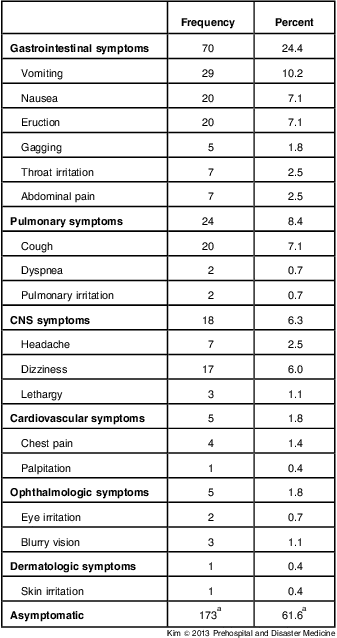
Reported clinical symptoms after gasoline exposure are provided in Table 1. Asymptomatic exposures occurred in 61.5% of patients (n = 173). Among the symptomatic cases, the most common symptoms were gastrointestinal (n = 70; 24.4%) and pulmonary (n = 24; 8.4%) in nature: vomiting (n = 29; 10.2%) and cough (n = 20; 8.5%). Minor and moderate toxic effects occurred, based on AAPCC's medical outcome definitions, in 12.4% and 3.5% of the exposure cases, respectively. Moderate effects included gastrointestinal, pulmonary, and central nervous system (CNS) related symptoms (vomiting, cough, and dizziness). One patient experienced hemoptysis after gasoline ingestion. There were no major effects or deaths reported.
Reported Clinical Symptoms After Gasoline Exposure (N = 283)
Abbreviations: CNS, central nervous system
aThe total frequency and percent do not equal N = 283 and 100% respectively, as multiple clinical symptoms occasionally were reported by unique exposure cases.
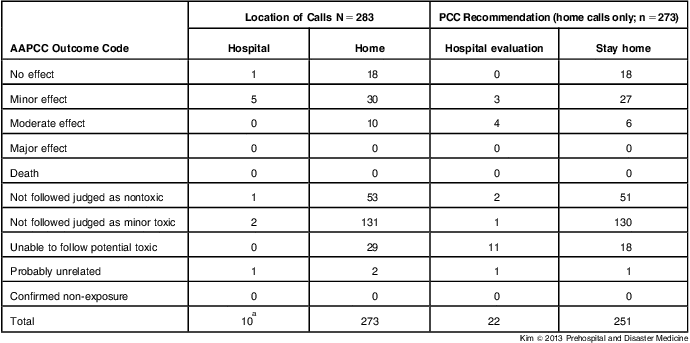
Two-hundred and seventy-three gasoline exposure cases were home-based calls (Table 2). A large number of these cases (88.7%) were managed successfully on site, which limited burdening already overcrowded emergency departments (EDs). Also, 68.5% (n = 187) of these cases were not followed as they were judged to be nontoxic or minor toxic exposures. The CSPIs were unable to follow up on 29 potentially toxic gasoline exposures from the home-based calls. The database did not contain sufficient information to determine the reasons for the lack of follow up. The regional PCC recommended health care evaluation in 22 out of 273 home-based calls. Pulmonary (cough) and gastrointestinal (vomiting) symptoms were two leading home complaints, 45.5% and 36.4%, respectively. Eight cases had two or more organ systems-based symptoms. The pattern of clinical symptoms among the 10 cases reported from EDs was similar to home-based reports. Gastrointestinal symptoms (vomiting, nausea, and abdominal pain) were reported most frequently, followed by pulmonary (cough) and CNS symptoms (headache). Two out of 10 patients were children (1.5 years and 14 years old), while the mean age for the eight adult patients was 48 years old (range: 25-67). All gasoline exposed ED patients who sought medical evaluation independently were treated and released from the corresponding health care facilities.
Clinical Outcomes Based on AAPCC Definition by Poison Control Recommendation and Location of the Call
Abbreviations: AAPCC, American Association of Poison Control Centers; PCC, poison control center
aAll hospital cases were advised to provide symptomatic care by the PCC.
Discussion
Damage to municipal infrastructure and industrial facilities, electricity and fuel shortage, and limited access to health related information and resources can increase the risk of potential toxic exposures in disaster-affected areas, with associated morbidity and mortality. Recovery effort from natural disasters involves complex integration of resources and collaboration among federal, state and city agencies. In this effort, regional PCCs play an integral role in public health surveillance and information dissemination to the public. The public health implication of increased toxic exposure after devastating natural disasters has been documented well.Reference Iqbal, Clower, Hernandez, Damon and Yip1-Reference Forrester4, 6, 12 Several studies have shown an increase in exposure and poisoning by carbon monoxide, gasoline, and other potential toxins during post-disaster periods.Reference Cox, Amundson and Brackin2-Reference Forrester4, 6, Reference Forrester7 Correspondingly, PCCs experienced a surge in call volume related to toxic exposures, as well as calls seeking health information following natural disasters.Reference Cox, Amundson and Brackin2-Reference Forrester4, 6, Reference Forrester7
This study evaluated the pattern and characteristics of gasoline exposure as a consequence of the power and gasoline shortages from Hurricane Sandy. Similar to previously published studies, the regional PCC experienced a dramatic surge in gasoline exposure following Hurricane Sandy compared to baseline frequencies, as well as the same time period from 2008 through 2011.Reference Cox, Amundson and Brackin2, Reference Forrester4, 6, Reference Forrester7 Not surprisingly, the majority of the gasoline exposures were related to siphoning, presumably to obtain fuel from motor vehicles to fuel portable gasoline generators for electricity or heating devices. Unlike previous studies in which gasoline exposure peaked approximately 24-48 hours after the natural disaster,Reference Klein, Herzog, Smolinske and White3, Reference Forrester4, 6 the data indicated that peak gasoline exposure was not observed until the fourth and fifth day after Hurricane Sandy made landfall. This might be due to the delayed realization of imminent gasoline shortages at fueling stations from electrical outage, as well as depletion of gasoline stockpiled in preparation for the hurricane from prolonged requirement for portable generators. Once electricity returned to affected areas, the number of gasoline exposure trended downward (Figure 1). Gasoline rationing was implemented 11 days after Sandy's landfall (November 9, 2012), when a further drop in gasoline exposure was noted. However, it is unlikely that the rationing contributed to the decreasing exposure rate.
Unlike previously published studies of post-disaster toxic exposure, this study evaluated the demographic characteristics and medical outcomes of gasoline exposures.Reference Cox, Amundson and Brackin2, Reference Forrester4, 6, Reference Forrester7 The data revealed that men older than 20 years of age were more likely to engage in siphoning compared with women. Aside from siphoning, unintentional ingestions comprised an additional 77 cases (27.2%), which actually may represent undisclosed siphoning. The most commonly-reported symptoms were gastrointestinal related (vomiting and nausea), followed by pulmonary symptoms (cough) (Table 1). Approximately 9.9% of cases apparently aspirated gasoline, based on the presence of pulmonary symptoms, and were potentially at risk of developing chemical pneumonitis. However, of all gasoline exposure cases, the majority of the gasoline exposures were either asymptomatic (61.5%; n = 173) or had minimal toxicity (78.4%; n = 222), permitting home management (88.3%). The PCC recommended that 22 patients with symptomatic exposures seek health care. However, hospital follow up information on these patients was unavailable. Cross referencing these cases with ED reports of gasoline exposures failed to identify any cases that were referred to seek medical evaluation. These factors may underestimate clinically-significant morbidity related to gasoline exposures. However, the findings suggest that the toxicity from gasoline exposures as a whole may be limited in cases of adult exposures, and the accessibility to PCC resources by the public can help alleviate undue burden on medical resources by screening appropriate toxic exposure for further medical evaluation. This was supported further by the eight out of 10 gasoline exposures from local EDs who had minimal clinical symptoms and likely could have been managed at home if PCC had been initially contacted.
Children were affected notably by the increased presence and handling of gasoline in the household. Seventeen gasoline exposures were reported in children during the study period. The majority of these exposures involved children under five years of age (13 cases), while the remaining four cases consisted of one six-year-old, one 12-year-old, and two 14-year-old patients. Of the 13 cases involving children under five years old, 10 had inhalational exposure from gasoline spillage and two were cases of unintentional ingestion. The majority of the inhalation calls were from parents with children with asymptomatic exposures, who were seeking information on potential toxicity of gasoline fumes and did not require health care referral. Two cases reported clinical symptoms, including one ED patient with vomiting (unintentional ingestion), and a lethargic child from dermal exposure who was referred to the local ED. Although the number of children exposed (n = 17) was less than that for adults, children under five years old were affected disproportionally. Additionally, all symptomatic children were either brought to ED directly by their caregivers or were referred to the local ED by the PCC, suggesting that symptomatic children will, more often than not, lead to medical evaluations.
Limitations
This study has several limitations. Poison control center data rely on the general public and health care providers’ self-reporting of toxic exposures. Although PCC resources and services are accessible through a toll-free number around the clock, under-reporting of potential toxic exposures remains real. While the PCC has the capacity to provide interpretation services to non- or limited English speakers, potential toxic exposures may have not been reported due to perceived language barriers among the many immigrant communities served in New York City and its surrounding areas. Additionally, self-reporting of exposures may have introduced both selection and reporting bias as the exposure reports may have been made by those with clinical symptoms or with awareness of existing PCC services. Although the NYC Health Code requires health care providers to report toxic exposures, compliance is incomplete in a busy ED setting. While the regional PCC operated under generator backup power during the electric outage without service interruption, the limitations of public reporting were compounded by population displacement, absent electricity, and limited access to telephones and communication services in the aftermath of the hurricane. Thus, the data presented in this study likely underestimates the true incidence of gasoline exposures and potentially toxic effects.
For this study, Toxicall data was reviewed retrospectively as entered by CSPIs at a regional PCC. Toxicall provides specific prompts to enter both caller and patient information (demographic and clinical). In certain cases, the available data can be incomplete due to either failure to obtain the data or callers who decline to provide the requested information. To address this potential limitation in the data quality, all free-entry note sections were reviewed for all cases in respect to both demographic and clinical information.
The study used the medical outcomes criteria defined by the AAPCCReference Bronstein, Spyker, Cantilena, Green, Rumack and Dart14 to determine the degree of severity in symptoms. Although standardized criteria is used by PCCs across the US, aggregate outcome criteria may not reflect correctly the severity of clinical toxicity as they indicate only the presence of symptoms. Thus, the use of aggregate definition for medical outcome may overestimate the overall severity of toxicity.
Conclusion
This report characterizes a significant outbreak of gasoline exposures in the post-Hurricane Sandy disaster recovery period in the NY area. Adult men were most likely involved with siphoning, resulting in unintentional ingestion and aspiration of gasoline. Redundant fuel supplies and potential stockpiling should be assured in preparation for major adverse climatic events to preclude the need for siphoning. Although a majority of the gasoline exposure cases were either asymptomatic or minimally toxic, the potential risk for morbidity from hydrocarbon exposure is present, as approximately 10% of cases developed pulmonary symptoms. Children are particularly vulnerable to toxic exposure during post-disaster periods due to increased presence of potential toxins (eg, gasoline and cleaning agents) around the household, from improper handling and storage, and possible distraction of caregivers. Disaster plans should incorporate public health messaging regarding toxic exposures in the post-disaster period and leverage regional PCCs for potential on-site management, public health promotion, and disaster toxicological surveillance.
Disclaimer
The authors’ views do not necessarily reflect those of the New York University School of Medicine, the New York City Poison Control Center, or the New York City Department of Health and Mental Hygiene.