INTRODUCTION
Groundnut (Arachis hypogaea) is an important food and cash crop across West Africa and is cultivated mainly by small-household and resource-poor farmers. Increasing groundnut production has the potential to mitigate malnutrition due to the high protein (12–36%) and oil content (36–54%) of the seed. Groundnut is widely traded in local, regional and international markets with good market prices compared with other legumes, and thus can help alleviate poverty. Groundnut is also a major component of the farming systems of many West African countries because of its ability to fix atmospheric nitrogen (N), thus contributing to soil fertility improvement. In addition, haulm is an important fodder for small ruminants.
Despite the importance of groundnut, yields on farmers' fields across West Africa are very low (~800–1020 kg ha−1 of pods) compared with Asia (1780 kg ha−1), Argentina (3300 kg ha−1) and the USA (3500 kg ha−1) (FAO, 2007). A number of factors have been associated with low yield including inadequate or uneven plant population, inadequate weed and disease control, poor rotations (e.g. continuous groundnut), poor soil fertility and nutrient management, and harvest losses. Foliar diseases, especially early leaf-spot caused by Cercospora arachidicola and late leaf-spot caused by Cercosporidium personatum, are generally considered to be major constraints to groundnut production and are estimated to cause yield reduction of 50–60% (McDonald et al., Reference McDonald, Subrahmanyam, Gibbons and Smith1985; Smith, Reference Smith, Porter, Smith and Rodriguez-Kabana1984; Subramanyam et al., Reference Subrahmanyam, Greenberg, Savary and Bosc1991; Waliyar, Reference Waliyar1991; Waliyar et al., Reference Waliyar, Adomou and Traore2000). Management practices such as cultivar selection, application of fungicides and plant-based extracts, sowing date, plant population and tillage practices can minimize leaf-spot disease and increase groundnut yield (Hafner et al., Reference Hafner, Ndunguru, Bationo and Marschner1992; Kannaiyan and Haciwa, Reference Kannaiyan and Haciwa1990; Naab et al., Reference Naab, Tsigbey, Prasad, Boote, Bailey and Brandenburg2005; Reference Naab, Boote, Prasad, Seini and Jones2009; Smith and Littrell, Reference Smith and Littrell1980).
Low soil fertility, especially P deficiency, is inherent in many soils in West Africa and drought may also limit groundnut yield. Adequate supply of phosphorus (P), calcium and sulphur in the soil is essential for pod and kernel development (Gascho and Davis, Reference Gascho, Davis and Smartt1994; Reference Gascho, Davis, Pattee and Stalker1995; Sumner et al., Reference Sumner, Kvien, Smal and Csinos1988). Groundnut yield responses to P application have been shown in several studies (Lombin and Singh, Reference Lombin and Singh1986; Naab et al., Reference Naab, Tsigbey, Prasad, Boote, Bailey and Brandenburg2005). In contrast, Hafner et al. (Reference Hafner, Ndunguru, Bationo and Marschner1992) did not observe pod yield responses to P fertilizer in acid sandy soils of Niger, although they observed significant improvement in shoot dry matter and tissue P concentration. They concluded that the lack of response to P was due to molybdenum deficiency. Most research findings indicate that higher plant population and closer inter-row spacing improve groundnut yield. Increasing plant density has often been shown to increase total dry matter and pod yield (Bell et al., Reference Bell, Harch and Wright1991; Kumar and Venkatachari, Reference Kumar and Venkatachari1971; Naab et al., Reference Naab, Boote, Prasad, Seini and Jones2009).
Although the literature on the effects of various management practices on groundnut yield is comprehensive, most studies were conducted in experimental plots on research stations, and relatively few were undertaken in on-farm conditions, especially in West Africa. Apart from a few studies (Pande et al., Reference Pande, Narayana Rao, Upadhyaya and Lenne2001; Singh et al., Reference Singh, Boote, Yogeswara Rao, Iruthayaraj, Sheikh, Hundal, Narang and Phool1994), there is a paucity of information on the interaction of various agronomic factors on groundnut yield in farmers' fields; more specifically, little information is available on the likely benefits of fungicide and P application. Information on the interaction of fungicide and P under farmers' field conditions is important for assessing the technical and economic feasibility of improved technology, since leaf-spot disease is a worldwide problem and P is one of the most common nutrients deficient in tropical soils.
In Ghana, rain-fed groundnut production currently amounts to about 13 000 ha, with recent rapid expansion particularly in northern Ghana where the crop is promoted as a poverty alleviation crop for farmers to gain more income. Farmers currently do not use any external inputs such as fertilizers or fungicide, and sowing density is often less (<10 plants m−2) than the recommended density of 20 plants m−2. Through previous collaborative research, scientists at the Savanna Agricultural Research Institute and the University of Florida developed several recommendations to increase groundnut productivity of farmers in northern Ghana (Naab et al., Reference Naab, Tsigbey, Prasad, Boote, Bailey and Brandenburg2005; Reference Naab, Boote, Prasad, Seini and Jones2009; Nutsugah et al., Reference Nutsugah, Tsigbey and Marfo1998; Tsigbey, Reference Tsigbey1996; Tsigbey et al., Reference Tsigbey, Bailey and Nutsugah2001). However, it is important to test technologies developed in researcher-managed plots under farmers' field conditions before these technologies are released to extension services. Objectives of the on-farm trials conducted in this study were to: i) test the effects of plant population density, and phosphorus and fungicide application on early and late-maturing groundnut varieties; ii) assess the economic benefit of fungicide and P fertilizer application for groundnut production in Northern Ghana; and iii) gain a better understanding of the determinants of groundnut yield in farmers' fields.
MATERIALS AND METHODS
Experimental site, design and crop management
On-farm trials were conducted during the cropping season from 2004 to 2007 in two adjacent villages, Piisi and Nakor, near Wa (lat. 10 °N, long. 2°92′W; 360 m) in the Upper West Region of Ghana. Soils in the two communities are predominantly sandy, slightly acid and of low organic carbon, total N and available P. The soils are classified as Ferric Luvisols according to the FAO classification system. Rainfall in the area is mono-modal, falling between May and October with a long-term average of 1200 mm. Average daily air temperature is about 27 °C.
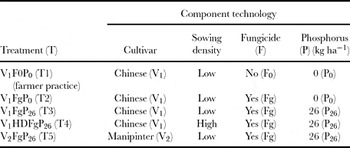
In each village, trials were conducted in five farmers' fields giving a total of 10 replications. There were five treatments in each farmer's field (Table 1). An improved, commonly grown early maturing (90 day) groundnut cultivar, Chinese (Spanish type), was sown at farmers' sowing density (<10 plant m−2) without fungicide and P application (farmer's practice, T1), with only fungicide sprays (T2), with fungicide sprays and 26 kg P ha−1 (T3), and with fungicide sprays and 26 kg P ha−1 at the recommended higher (20 plant m−2) density (T4); a late maturing (120 day) cultivar, Manipinter (Virginia type), was sown at low density with fungicide sprays and 26 kg P ha−1 (T5).
Treatments in farmers' fields during the 2004–2007 cropping seasons at Wa, Upper West Region, Ghana.

Following land preparation, five contiguous plots measuring 25 m × 8 m were marked by the research staff on each farmer's field. Composite soil samples were taken to a depth of 20 cm in each field. The soils were air dried and analysed for particle size distribution by the hydrometer method. Soil samples were ground, passed through 2-mm sieve and analysed for pH, organic carbon, total N, available P and exchangeable calcium. The two improved groundnut cultivars were sown on flat seedbeds in rows. The fungicide treatment plots were sprayed with Tebuconazole (Folicur, 3.5F at 0.22-kg active ingredient ha−1) four times during the season at 14-d intervals, starting about 28–30 d after sowing each year. The fungicide plus fertilizer-treated plots received a combination of fungicide sprays and P fertilizer as single superphosphate applied before sowing. The fertilizer was broadcast and incorporated into the soil with hoes. All management practices were carried out by farmers except the P and fungicide applications, which were supervised by researchers.
Measurements
Dates of major operations (sowing, weeding, fertilizer application and harvest) as well as the plant population at emergence and final harvest were recorded. Groundnut plant densities and yields were measured in the four central rows of each plot (50 m2) at maturity. Pods were stripped off, sun dried and weighed. After shelling, seed weight was recorded. The haulm from the four central rows of each plot was weighed immediately in the field, and sub-samples (five plants) were taken for oven drying in the laboratory to compute total dry matter produced. The percentage of defoliation and severity of leaf-spot disease per plot were rated in 2004, 2005 and 2007 on a scale of 1–10 (Chiteka et al., Reference Chiteka, Gorbet, Shokes and Kucharek1997) on the basis of visual observation. Daily rainfall was measured by using a rain gauge mounted in the village. Minimum and maximum temperatures and solar radiation were obtained from an automatic HOBO weather station (Onset computers, Bourne, MA, USA) located about 2 km from the villages.
Cost–benefit analysis
Costs and benefits of each treatment were compared by using partial budgeting, which included only costs and benefits that varied from the control (i.e. costs of seed, fungicide, P and increased groundnut yield). In this paper, these are referred to as added costs and added benefits. The profit or gross margin (GM) was computed for each treatment as follows:

where Y is pod yield of groundnut crop (kg ha−1), P is the selling price of groundnut pods at harvest and TVC is the total variable cost or costs of inputs related to the treatment in US dollars (US$) ha−1. The marginal rate of return (MRR) which compares the increment in costs and benefits between pairs of treatments, was calculated as follows:

where R is total revenue, and Tx and Ty are pairs of treatments.
Groundnut pod yields on an air-dry basis were used in the economic analysis. Groundnut vine was assumed to be of no value, although it is fed to animals in some areas of northern Ghana. Price of groundnut seed and P fertilizer were as purchased from input dealers each year in the area while the price of fungicide was as in 2004. Labour was valued at the wage rate of hired farm labourers during the cropping season. Groundnut price was an average of the market price during harvest (October 2004 and January 2007) in the local Wa market. Dominance analysis (CIMMYT, 1988) was used to ensure that a treatment with higher net benefits had an acceptable MRR (i.e. the difference in net benefits between this treatment and any other divided by the difference in costs between those treatments). The purpose is to identify treatments that are ‘dominated’ by other treatments, for example, having similar net benefits but higher costs. All monetary values were converted to US$ at the mean exchange rate of the Ghana cedis during the field experiments (0.97 Ghana cedis = 1 US$).
Statistical analyses
Preliminary correlation and regression analysis with PROC CORR and PROC REG in SAS (SAS, 2002) were conducted separately for each treatment by using pod yield as the dependent variable to identify significant covariates. Data on haulm dry weight and pod yield were subjected to mixed model analysis of variance by using the restricted maximum likelihood method for the estimation of the random variance components. Two approaches were used to study the differences among the variables. First, assuming that farmers' practice varied considerably among fields, a new variable measuring performance of the introduced technologies was derived (the difference between the pod yield of the new technology and farmers' practice). The alternative approach assumed all treatments were identical and incorporated significant covariates. Covariates, where relevant, included density of plants at final harvest, number of days between sowing and first weeding, percentage of defoliation, leaf-spot disease score, available soil P (Bray-1), total soil N, percentage sand, clay and silt. All analysis was done by using the SAS statistical package (SAS Institute, 2002).
RESULTS
Temperature and rainfall characteristics
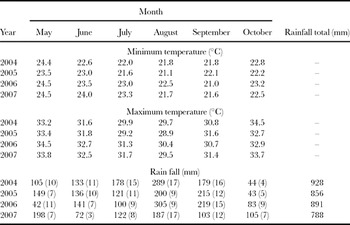
Minimum air temperatures during the growing seasons were similar averaging about 23 °C during the four years, which is representative of long-term conditions for the area (Table 2). Maximum air temperatures were higher in 2006 and 2007 especially during June and July when temperatures exceeded 31 °C, in contrast to the same months in 2004 and 2005. Monthly rainfall totals were highly variable from year to year, which is characteristic of the area (Table 2). By June, when groundnut sowing was usually done, total amount of rainfall received was lowest in 2007 with only three rainfall events and highest in 2006 with seven rainfall events. Rainfall in July was again lowest in 2006 and 2007 with fewer than 10 rainfall events. Although rainfall in August was highest in 2006, this was from only nine rainfall events with more than 200 mm falling on two days. Rainfall in October was lowest in 2004 and 2005 with only four and five rainy days, which indicates the abrupt end of the season in these years. Farmers typically harvest groundnut in October. In terms of total rainfall for each season, the wettest year was 2004 with 928 mm and the driest year was 2007 with 788 mm (Table 2).
Average monthly minimum and maximum air temperatures and rainfall during the 2004 to 2007 cropping season at Wa, Upper West Region, Ghana. Number of rainy days in parentheses.

Soil fertility status of farmers' fields
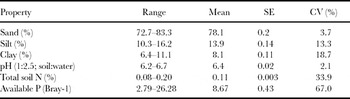
Some physical and chemical characteristics of soils collected from farmers' fields in 2004 are summarized in Table 3. Soils were generally sandy in texture with sand content ranging from 73 to 83% (mean = 78%), silt from 10 to 16% (mean = 13.9%) and clay from 6 to 11% (mean = 8.1%). Soil pH values ranged from 6.2 to 6.7. Total N values were generally low ranging from 0.08 to 0.20% (overall mean 0.11%). Available soil P varied considerably (coefficient of variation = 67.0%) with values of 2.8–26.3 mg P kg−1 (average = 8.67 mg P kg−1 soil) which is considered low.
Some soil properties on 10 farmers' fields at Wa, Upper West Region, Ghana.

Incidence and severity of leaf-spot disease
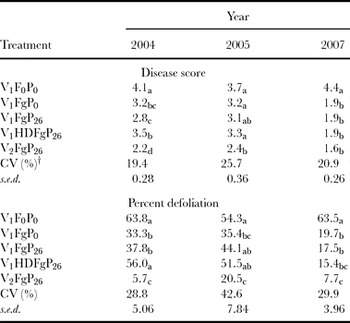
Leaf-spot disease symptoms were observed in all farmers' fields during the experimental period. Generally, disease scores were higher in 2004 and 2005 than in 2007 (Table 4). Early leaf-spot was the dominant leaf-spot disease in the study (>90%), although some late leaf-spot was observed late in the season in both years. In 2004 and 2007, disease severity in cultivar Chinese was significantly higher with farmer practice than in the other treatments with fungicide sprays. In 2005, there was no difference in disease scores of cultivar Chinese under farmers' practice or with fungicide application. Cultivar Manipinter had lower disease scores than cultivar Chinese, although differences were statistically significant only in 2004 and 2005. The higher disease pressure in the farmers' practices (no fungicide sprays) treatment resulted in more leaf defoliation than in treatments that received fungicide sprays (Table 4).
Groundnut disease score and percentage defoliation recorded in farmers' fields during the 2004, 2005 and 2007 cropping seasons, at Wa, Upper West Region, Ghana.

†CV: coefficient of variation.
Means within a column followed by dissimilar letters are significantly different at 0.05 level of probability, according to Duncan's multiple range test. For treatment details see Table 1.
Haulm dry weight
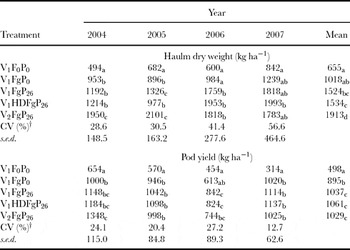
Haulm dry weights were generally less in 2005 and 2006 than in 2004 and 2007 for all treatments (Table 5). Averaged across years, the least above-ground biomass was produced with the farmers' practice. Application of fungicide or combined application of fungicide and P to both cultivars, Chinese and Manipinter, produced the greatest haulm dry weight. There was no difference in haulm dry weight of cultivar Chinese sown at high or low density with fungicide and P application.
Effects of fungicide, phosphorus and sowing density on haulm weight and pod yield of two groundnut cultivars in farmer-managed trials (2004–2007) cropping seasons (n = 10) near Wa, Ghana.

†CV: coefficient of variation.
Means within a column followed by dissimilar letters are significantly different at 0.05 level of probability, according to Duncan's multiple range test. For treatment details see Table 1.
Pod yield
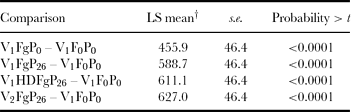
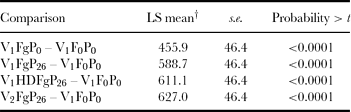
Pod yield varied from year to year but was generally lower in 2005 and 2006 than in 2004 and 2007. In 2005 and 2006, pod yields ranged from 570 to 1098 kg ha−1 (mean 919 kg ha−1) and from 454 to 842 kg ha−1 (mean = 695 kg ha−1) respectively, whereas in 2004 and 2007, pod yield ranged from 654 to 1348 kg ha−1 (mean = 1067 kg ha−1) and from 314 to 1137 kg ha−1 (mean = 922 kg ha−1) respectively (Table 5). Despite the year-to-year variation in pod yield, there were significant responses of pod yield to fungicide and P application. At farmers' sowing density, the application of only fungicide to cultivar Chinese significantly increased pod yield compared with farmers' practice of no fungicide and P application in all years except 2006. Combined application of fungicide and P to cultivar Chinese sown at farmers' sowing density also gave significantly higher pod yield than the farmers' practice in all years but was not different from when only fungicide was applied to cultivar Chinese in 2004, 2005, and 2007. There were no significant differences in pod yield between cultivar Chinese and the full season groundnut cultivar, Manipinter, when sown at low density, with fungicide and P application in all years. Yield performance increment analyses showed that the difference between the pod yield of treatments with fungicide sprays or both fungicide sprays and P application and farmer practice (V1F0P0) were significantly higher than the farmers' practice (Table 6).
Yield performance increment of groundnut production practices with only fungicide or combination of fungicide and phosphorus application compared with farmers' practice.
†Least square mean.
Correlation and regression analysis
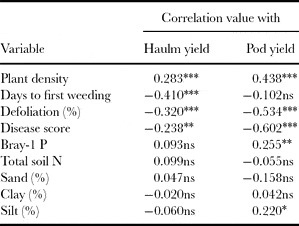
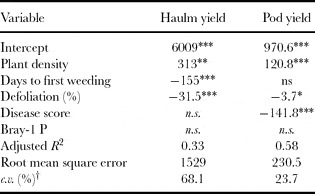
Correlations of haulm (aerial biomass minus pod) and pod yield averaged across all treatments with measured or observed variables are given in Table 7. Both haulm and pod yield were significantly correlated with sowing density, days from sowing to first weeding, disease score and percentage defoliation. Haulm and pod yield were positively correlated with plant density, but the correlation was stronger with pod yield than with haulm at final harvest. In contrast, haulm yield was better correlated with days from sowing to first weeding (r = −0.41; p <0.001) than with pod yield (r = −0.10). Haulm and pod yield were negatively correlated with percentage defoliation and disease score, but the correlation was higher with pod yield. Pod yield was significantly but weakly correlated with available P (r = 0.25; p <0.01) but was not related to total soil N, sand and clay content. Stepwise forward regression analysis showed that plant population density, days from sowing to first weeding and percentage defoliation were the major determinants of haulm yield (Table 8). Plant population density, disease score and percentage defoliation were the major determinants of pod yield (Table 8).
Correlation (r) of groundnut haulm and pod yield across all treatments and seasons with measured variables.

*,**,***probability significant at 0.05; 0.01, 0.001, respectively; n.s. = non significant.
Stepwise regression analysis of groundnut haulm and pod yield (kg ha−1) on observed independent variables across all treatments.

†Coefficient of variation.
*,**,***probability significant at 0.05; 0.01, 0.001, respectively; n.s. = non significant.
Economic analysis
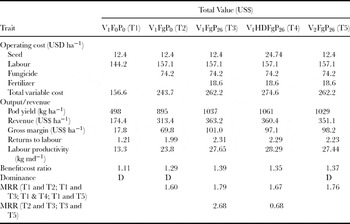
Total variable cost, gross margins, returns to labour, labour productivity, marginal rate of return and benefit:cost (B/C) ratio for groundnut production for the different technologies are shown in Table 9. The cost of producing groundnut by using the farmers' practice (T1) was estimated to be about US$157 ha−1. This was increased by 56% with the application of fungicide alone (US$243 ha−1). The operating cost was further increased by 8.0% with the application of the P fertilizer (T3). Doubling the seeding rate of cultivar Chinese (T4, high sowing density) raised the cost of T3 by additional 4.7%. Replacing cultivar Chinese with cultivar Manipinter (T5) introduced no extra cost to production. There was, however, no significant difference in yield between the high-density treatment (T4) and the normal-density treatment (T3) (Table 9). The high-density treatment, which obviously adds to the cost of production, did not add significantly to output.
Total variable cost, profitability, returns to labour, labour productivity and marginal rate of return (MRR) of groundnut production under different technologies implemented on-farm, averaged over four years in Wa, Ghana.

Generally, all treatments are attractive given their positive gross margins. Furthermore, the B/C ratios are all greater than 1. Gross margins of T3, T4 and T5 were about five times higher than that of the farmers' practice (T1). The treatment with only fungicide application (T2) gave a gross margin that was about four times higher than that of the farmers' practice. Returns to labour and labour productivity were about double with application of fungicide and/or P fertilizer compared with farmers' practice. Results of the dominance analysis indicate that T1, T2 and T5 are dominated by T3 and T4. The MRR gave a higher ratio of 1.79 (i.e. 179%) for T3 over T1, compared with the remaining treatments. The increase in benefit resulting from a unit rise in cost due to increase of the plant population (i.e. T4 over T3) is equally positive, but the ratio was about 0.68.
DISCUSSION
Leaf-spot disease was observed in all fields during the study. Disease severity was higher in 2004 and 2005 than in 2007, probably because drier conditions occurred in 2007 than in the previous years. Disease severity and defoliation were higher with the farmers' practice of no fungicide and no fertilizer compared with treatments that received fungicide sprays. However, despite fungicide application to some treatments, leaf spots were observed in all treatments indicating that fungicide application was only partially effective in controlling disease on farmers' fields. This was probably due to ineffective coverage of fungicide, rapid speed of applicator or failure to target the base of the crop, where infection begins. Spraying was also possibly less effective because of early leaf-spot beginning before the start of fungicide application or the presence of weeds in most fields, which interferes with fungicide reaching the groundnut crop.
Although fungicide application was only partially effective in controlling leaf-spot disease on farmers' fields, pod yield was significantly higher with fungicide and/or P application than with current farmer practice. Application of fungicide alone increased pod yield by 80% (range 35–225%) relative to the farmers' practice. Combined application of fungicide and P increased pod yield by 108% (range 76–255%) relative to farmers' practice and by 16.0% (range 9.2–37.4 %) relative to fungicide application alone. Increasing seeding rate of cultivar Chinese by sowing at high density (T4) significantly increased pod yield relative to cultivar Chinese with fungicide (T2) but was not significantly different from cultivar Chinese with fungicide and P application (T3). This suggests that the observed final plant density in the farmers' fields (5–8 plants m−2) was sufficient provided disease and weeds were controlled. Population densities in these farmers' fields were comparatively better because farmers were more careful in sowing knowing that researchers would monitor the plots. Poor population densities (<5 plants m−2) are often observed in farmers fields. The late-maturing long-duration cultivar, Manipinter, showed less severe leaf-spot (suggesting moderate resistance), but it produced a pod yield similar to that of cultivar Chinese, with fungicide and P application.
The year-to-year differences in pod yield may be partly explained by year-to-year variations in rainfall. The low pod yield in 2005 was due to the abrupt end of the season and delayed harvesting of the crop. Field observations also indicated variable plant populations and high incidence of weeds that limited yield potential. Correlation and stepwise regression analysis showed that pod yield was influenced significantly by sowing density, leaf-spot disease score and percentage defoliation. Pod yield was weakly but significantly correlated with available P, and silt and sand content.
Results from these on-farm trials corroborate previous on-station studies which showed that sowing density, fungicide and P application increased groundnut yields (Naab et al., Reference Naab, Tsigbey, Prasad, Boote, Bailey and Brandenburg2005; Reference Naab, Boote, Prasad, Seini and Jones2009). However, pod yield responses to treatments (fungicide and/or P) were lower in the on-farm trials (about 1000–1500 kg ha−1) than in the on-station trials (about 1500–2500 kg ha−1). This difference might be due to higher sowing density, better soil fertility, better weed control and more effective application of fungicide on research plots compared with farmers' fields. Most farmers were unable to do two weeding operations because of competing labour demands during the season. Currently, farmers in the study area can apply herbicides or insecticides to crops only by using 15-l back-mounted knapsack sprayers with a spray width of about 30 cm. This makes application of fungicide and other pesticides not only tedious and labour intensive but also less effective in coverage. Minimizing the yield gap between researchers’ and farmers' fields will involve optimizing sowing densities as well as efficient and better control of weeds and foliar diseases. One way to overcome the problems of low sowing densities and labour demand for weeding and fungicide application is the introduction of simple technologies such as planters, herbicides, applicators and harvesting aids to reduce labour. Studies to evaluate herbicide × fungicide × cultivar interactions may be needed to identify best management practices that will allow producers to maximize profits. It is also important to use other classes of fungicides to avoid the development of leaf-spot resistance due to the use of only one fungicide as in this experiment. In addition, studies are required to assess the amount of fungicide remaining on groundnut haulm and any possible harmful effects to animals and humans, since haulm is usually fed to small ruminants in West Africa.
Gross margins were higher in treatments with fungicide and/or P application than in the control. The increase in gross margins was 4- to 5-fold in both cultivars with fungicide and P application. Returns to labour increased by 64% with application of fungicide and by 88% on average for both cultivars with fungicide and P fertilizer. Application of fungicide and P also resulted in a doubling of labour productivity compared with farmers' practice. Similar economic benefits with fungicide application have been reported by others (Chandra et al., Reference Chandra, Kumar and Singh1998; Kannaiyan and Haciwa, Reference Kannaiyan and Haciwa1990; Pande et al., Reference Pande, Narayana Rao, Upadhyaya and Lenne2001). The availability of groundnut cultivars with moderate levels of disease resistance can help manage diseases with reduced fungicide input, which potentially can reduce costs and increase profits for producers. However, leaf-spot resistant cultivars have not broken into the local market for many reasons, among them being the plant breeders’ difficulty of finding sufficient leaf-spot resistance along with yield potential, but also because of a failure of national cultivar testing, improvement and distribution systems to use the improved lines.
The impressive economic performance of all treatments compared with farmer practice makes it difficult to choose between them. Given that labour is the most important constraining factor of production (Table 9), labour factor productivity could be an important parameter in the decision to adopt the most attractive treatment. Results of the economic analysis indicate that T3, T4 and T5 had the best labour factor productivity of about 28 kg of groundnut per man-day. The farmer practice (T1) yielded the lowest labour factor productivity, estimated to be about 13 kg of groundnut per man-day. The estimated B/C ratios also confirm the attractiveness of the treatments. A rational decision maker could adopt T3 as it gives the highest return to investment at a relatively lower cost and higher returns. However, considering that smallholder farmers are very diverse in terms of their available resources, access to credit, livelihood strategies and risk attitude, it is unlikely that one set of treatments will fit all. Inexpensive treatments might be adopted by resource-poor farmers, whilst expensive treatments may be of interest to market-oriented farmers willing to invest in higher return strategies. Thus farmers who can afford inexpensive and medium-cost strategies would choose T2; farmers willing to adopt an expensive strategy would choose T3, T4 and T5.
Although all treatments were several-fold superior to farmer practice, barriers to adopting these technologies exist, such as the high cost of the inputs needed (fungicide and fertilizer) and the intensity of management that some practices require. These barriers are common in African farming systems and often limit the capacity of farmers to adopt otherwise profitable activities. Many farmers would need considerable financial support to be able to use ‘best management practices’ for groundnut production that generate high profit. We believe that the provision of micro-credit could be one way of motivating farmers' to adopt these new technologies. Since leaf-spot disease is a worldwide problem and P deficiency is common in many tropical soils, results of this study have regional and even worldwide application. International development agencies, non-governmental organizations and government agencies may be looking for opportunities to promote groundnut production as a poverty alleviation strategy. This study provides information to those agencies and farmers that should encourage the development of such opportunities.
CONCLUSIONS
Results show that the application of fungicide and P to groundnut improves yields compared with farmers' practice of no fungicide or P application. Application of fungicide alone improved groundnut pod yield by 80% on average under on-farm conditions. Combined application of fungicide and P fertilizer improved groundnut pod yields by about 108% under on-farm conditions. Sowing the early-maturing groundnut cultivar Chinese with application of fungicide and P gives similar pod yield as sowing the long-duration cultivar Manipinter with fungicide and P. Gross margins increased four-fold with application of only fungicide and five- to six-fold with fungicide and P fertilizer use. Returns to labour and labour productivity were also doubled with combined use of fungicide and P fertilizer. Our research shows clearly that use of fungicide and/or P fertilizer in groundnut production in northern Ghana is profitable and should be promoted and adopted if farmers' are to increase groundnut yield and maximize profits.
Acknowledgements
This research was supported in part by the United States Agency for International Development, Peanut Collaborative Research Support Project to Drs K. J. Boote, J. W. Jones and J. B. Naab. We thank the technical staff of Savanna Agricultural Research Institute at Wa for their support and the farmers of Piisi and Nakor villages for their collaboration. This is contribution no. 09–165-J from the Kansas Agricultural Experiment Station.