

In 1905, Hilda Satt Polachek, a Jewish immigrant from Poland who grew up several blocks from Hull House and spent many years as a garment worker, wrote an essay for a composition class she took at the settlement house at the urging of Jane Addams. “The Ghetto Market” criticized the city for failing to implement health regulations at Chicago's Maxwell Street Market. “There is one injustice untouched, one wrong which is crying for immediate remedy. This is the insanitary [sic], filthy food which the poor in certain quarters are forced to eat,” she wrote. “Not until the city takes this matter in hand and orders all vegetables and meats to be sold only in adequate and sanitary rooms will this condition entirely be overcome.” Upon observing flies and dust covering market food, she asked, “Is it any wonder that this district has more typhoid fever than any other section of the city? … Why should this class of people who work harder than any other be compelled to eat inferior food when they might be supplied with good food for the same money?”Footnote 1
‘Maxwell Street Market,’ Chicago History Museum, ICHi-019155; Barnes-Crosby Company

This and other essays, along with Polachek's later memoir, provide rare insight into a working-class immigrant's interpretation that health and the environment were inextricably linked, that the poor health of Chicago's marginalized residents reflected deep injustice, and that authorities must take action.Footnote 2 In an essay Polachek likely wrote in the 1930s, she recalled a 1902 typhoid outbreak that killed six hundred people in one small district of the Hull House neighborhood alone. Polachek identified the cause of the typhoid epidemic as a combination of heavy rains and “defective sewers and the loathsome privies [which] would spread the deposits through the streets. This olluted [sic] sewage would eventually seep into the drinking water. This gave birth to the millions of typhoid fever germs” that “do not stop to ask who breaks the law. They attack the innocent and the guilty in the same manner. The game of health must be played by everybody, in order to win.”Footnote 3 Much later, in the 1960s, Polachek would recall accompanying Alice Hamilton, the famous Hull House reformer, physician, and industrial hygiene pioneer, to a rag shop as Hamilton studied the neighborhood's tuberculosis epidemic. Polachek asked a ragpicker about a pile of damp rags on the filthy shop's floor, only to learn that the rags, which had come from a garbage dump, would be dried and sold. “After all these years, I still recall how I shuddered at the thought.”Footnote 4
Hilda Satt Polachek (with long braid) camping with friends at Saugatuck, Michigan, 1911 (University of Illinois at Chicago, The University Library, Hilda Satt Polachek Collection)

Scholars have illuminated aspects of immigrant communities’ folk beliefs about health, including the various forms of alternative medicinal practices they brought with them from the “old country,” where many had been peasants. Yet we still know relatively little about how Progressive Era immigrant communities viewed their health.Footnote 5 In particular, we know little of their beliefs about the role environments and germs played in health, and whether they saw the three as linked. We also have yet to uncover whether (and how) their views on these issues shaped environmental politics.Footnote 6 This article enriches scholarship on environmental health reform in the Progressive Era by adding perspectives “from below,” offering an ethnographic interpretation of immigrant Chicago's approach to health.Footnote 7 It advances our understanding of Progressive Era environmental politics by delving into cross-class immigrant communities’ views of health.Footnote 8 Archives, memoirs, and newspapers reveal how ethnic constituencies across the class spectrum displayed a sophisticated understanding of health.Footnote 9 Specifically, these minority communities embraced a mixture of germ and environmental theories that effectively made many of them health or disease ecologists.Footnote 10 Their interpretations of health as ecological underpinned some of their political activism in pursuit of greater environmental equity.
In this respect, immigrant communities mirrored the Progressive Era Anglo reformers and professionals—about whom recent scholarship has revealed how germ theory did not displace environmental analyses during this period. The nineteenth-century bacteriological revolution that located the cause of certain illnesses in a contained bacillus did not immediately become dogma, as Nancy Tomes and others have shown. Structural understandings of health persisted as the germ theory and environmental explanations continued to march hand in hand for quite some time. Many reformers and professionals like Alice Hamilton and her fellow settlement house workers, industrial hygienists, and government agency representatives, along with social workers, public health experts, water engineers, and some doctors, came to be health ecologists, though scholars do not always discuss them as such. These mostly Anglo, native-born reformers and professionals believed that environmental contexts, both natural and human created, influenced health and illness. They blended germ and ecological interpretations, appreciating that in many cases germs traveling in inequitable factory and tenement environments resulted in health injustice for poor communities. Even in sicknesses where they saw no role for germs—including, for example, silicosis, caused by inhaling residual manufacturing dust particles—and in general poor health conditions like malnutrition, they viewed unjust factory and urban conditions as disproportionately undermining the health of poor, heavily immigrant communities. Certainly, many of these reformers and professionals also condescendingly faulted working-class immigrants’ habits and characteristics to different degrees. But structural environmental inequities were often central to their interpretations.Footnote 11
Recovering the voices of immigrants on health and illness reveals that a widespread health ecology orientation was not limited to educated Anglo professionals and reformers. Many community members agreed with reformers that sickness, disease, and general poor health often resulted from environmental causes, including the interplay of germs and environments.Footnote 12 Specifically, many believed that germs traveling in inequitable environments meant health injustice for poor communities. In other words, everyday ethnic Chicagoans—uneducated immigrants alongside journalists and medical professionals—were well versed in medical and scientific germ theories, and such perspectives often complemented rather than displaced environmental interpretations. Some working- and professional-class ethnic Chicagoans also interpreted health as the result of individual or ethnic communities’ habits and failures, mirroring to a degree the condescension visible among many Anglo reformers and professionals. Cross-class members of Southern and Eastern European ethnic communities explained poor health in multifaceted ways—often by targeting structural inequities, but also to varying degrees by blaming immigrants for their own habits.
Interestingly, those ethnic community members who interpreted inequitable environments as responsible for poor health seemed to criticize the system in class terms more than seeing it as a result of racism or ethnonational prejudice. Sylvia Hood Washington has argued that Chicago's Southern and Eastern European immigrants suffered from environmental racism, along with African Americans, because they were not fully white. But the evidence considered here suggests that many immigrant communities—even those at the top of the class structure like ethnic doctors—often viewed environmental health inequalities as resulting from class oppression rather than prejudice per se. To be sure, the categories of class and race/ethnicity/national origins were inextricably linked, as people from particular ethnonational groups—notably Southern and Eastern Europeans in Chicago in this era—disproportionately occupied the bottom rungs of the class spectrum.Footnote 13 Nevertheless, evidence suggests the merits of a class analysis of the way ethnic communities viewed the inequities they confronted.
CHICAGO CONDITIONS
Environmental conditions in poor Chicago neighborhoods during the Progressive Era were abominable. By the early 1920s, among the city's population of European descent, more than half the men and a third of the women who worked in the manufacturing and mechanical industries in Chicago and lived in the worst neighborhoods were born in another country. Even one born in the United States was likely to have at least one parent born elsewhere. A small but growing number of African Americans and Mexican immigrants also worked in Chicago factories, especially in the steel and meatpacking industries, but the former only began to arrive in increasing numbers with the Great Migration of the 1910s and 1920s and the latter after the Mexican Revolution of the 1910s. A very small number of Chinese also lived in the city.Footnote 14 In the Progressive Era, immigrants from Southern and Eastern Europe disproportionately worked in industrial manufacturing and populated the city's most contaminated neighborhoods.
Some of the worst neighborhoods sat to the south near the city's stockyards in Packingtown, in places like the Back of the Yards district. By the turn of the century the area processed over four million hogs, cattle, and sheep annually. Fields of hair drying from stockyard carcasses emitted putrid smells, stagnant creeks filled with industrial runoff, and the pungent smell of glue factories and the cattle yards wafted through the air. In addition to the stockyards to the east, dumps on the west and Bubbly Creek to the north—where nineteen packinghouses deposited their waste—also surrounded the neighborhoods. Exposed railroad tracks bounded the neighborhood on three sides. A significant number of immigrants, especially Poles, Lithuanians, Slovaks, Russians, and Hungarians, but also Croatians, Slovenians, and Galicians (from Northwest Spain), labored in the meatpacking industry concentrated there. Living in significantly ethnic-specific enclaves, Southern and Eastern Europeans had increasingly replaced the earlier Irish, German, and to some degree Bohemian (Czech) immigrants who labored there in earlier decades. By the end of the Progressive Era, a growing number of African Americans and Mexicans increasingly joined the steelworker and meatpacker ranks with them.Footnote 15
Herbert E. Phillips, who grew up in the Back of the Yards district at the end of the nineteenth century, recalled that the neighborhood lacked pavements and sewage systems, with outside toilets and sink drainage emptying into open ditches that were “stagnant, green, and odorous in summer,” and overflowing during spring floods. Streets were “deep in dust in dry weather and deep in mud in wet.” In hair fields “hog hair was spread out until the flesh particles decayed and the hair was cleansed by the wind, rain, and sun. Sickening smells emanating from these fields permeated the air.” Phillips also remembered gases bubbling to the surface of Bubbly Creek, waterways the packers used as open sewers, quarry pits where politicians sold garbage dumping privileges, and odors wafting from the stockyards’ fertilizing plants and meatpacking houses.Footnote 16
‘Union Stockyards,’ Chicago History Museum, ICHi-001869
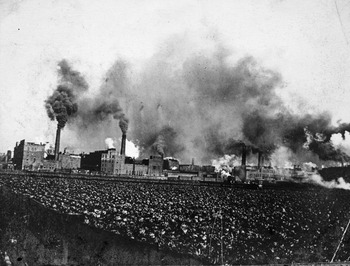
West Side neighborhoods, including those containing Polachek's Hull House, had their own problems. They were situated just beyond the Loop, the city's central business district, in an industrial part of the city where residents breathed in smoke, ashes, and dust from factories and trains that ran through the neighborhoods. Uncovered, street-level train tracks endangered pedestrians trying to cross from one part of their neighborhood to another. Garbage piling up and flowing out of boxes and onto the streets clogged alleys while manure from horse-drawn wagons further dirtied the unpaved, dusty streets. Poor people foraged in uncovered dumps across from their homes, hoping to find things they might salvage to eat, sell, or use to furnish their dark, crowded, unventilated homes. Children played in alleys for lack of green space or playgrounds. West Side neighborhoods drew immigrant populations hoping to find work in the nearby factories, garment manufacturers, and sweatshops, including predominantly Greeks, Italians, and Russian and Polish Jews, as well as a smaller number of Bohemians/Czechs (who were largely moving westward by the early twentieth century), and to a smaller degree Germans, Scandinavians, Hungarians, Austrians, and Dutch.Footnote 17 An 1895 study found that 19,654 people lived in a one-third square mile area, which also contained small factories and warehouses. Only 26 percent of the families living there had access to a water closet. The rest only had privy vaults (outhouses), while fewer than 3 percent lived in buildings with baths.Footnote 18 The 1897 Hull House Bulletin reported that a Board of Health investigation revealed that the settlement's Nineteenth Ward had the city's highest death rate in August and October 1896.Footnote 19
Terrible conditions had life and death consequences, as a 1924 article in the Daily Jewish Courier illustrated by highlighting the very sad case of an immigrant who killed his two-year-old child and committed suicide when his family was unable to find suitable housing. The housing situation, the paper wrote, is a “terrible indictment against our society.” Tenements in West Side Jewish immigrant neighborhoods like Maxwell Street and elsewhere were “dark and terribly dirty… and foul-smelling,” and garbage littered sidewalks. “Even if a tenant wants to keep clean, he cannot do so. The very air is poisoned … The Board of Health, in its annual reports, confirms these facts and says that something should be done. But nothing is being done.” The author charged that Chicago's alleys were the most terrible in the world.Footnote 20
Such appalling environmental conditions, along with other issues specific to the United States’ “second city,” make Chicago a particularly fertile place to study environmental health efforts in the late nineteenth and early twentieth centuries. Chicago was one of the first big industrial cities in the United States; the capital of the meatpacking industry; and a major manufacturing, resource, transport, and immigrant crossroads. It was also one of the most polluted places in terms of both land and water. Chicago was also the site of many battles between labor and capital and between racial and ethnic groups, including among others Haymarket, the Pullman Strike, and the 1919 “Race Riot.” For many reformers it symbolized the new urban and industrial order, a violent, dirty, loud, lawless, ugly, foul-smelling place. It is thus not surprising that many movements for environmental and social reform emerged as a major force in Chicago during the Progressive Era, including the settlement house movement that reverberated through many immigrant communities.Footnote 21
BOTTOM-UP ENVIRONMENTAL HEALTH INTERPRETATIONS AND ACTIVISM
Polachek's 1905 essay represents a rare piece of writing by an immigrant who fought for improved environmental conditions. But numerous immigrants’ actions reveal a pervasive sense that environmental inequities caused poor health. Chicagoans of many ethnicities engaged in activities such as protesting the siting of garbage dumps in their neighborhoods. Lithuanian and Polish immigrant neighbors of a South Side dump objected to its odors, plague of flies, and litter from the wagons that both menaced their health and lowered real estate values. In a particularly large gathering, four thousand neighbors in the Catalpa Square neighborhood opposed the prospect of a clay hole dump being located near them.Footnote 22 Joseph J. Elias, the president of the United Lithuanian Societies of Chicago, also warned in the Chicago Tribune in 1913 that Polish and Lithuanian residents planned to sign petitions against the city's garbage disposal methods.Footnote 23
In fact, such environmental activism often relied on specifically ethnic networks. In 1928, Polish residents of the Hawthorne neighborhood formed an association that protested refuse being dumped in abandoned quarries. They were angry that the dumped refuse caused a stench “beyond description” and in the summer posed a “danger to health,” as well as lowered property values. Since their protests had come to no avail, the local Businessmen's Association spoke with officials and the city council, again with no results. The Association then named a committee of local residents and hired a lawyer to bring charges before the courts. Ultimately the committee criticized the Board of Health and city officials in general for not fulfilling their duty, and appealed to Polish residents to support their effort, as fighting the city was expensive. “This is not a political fight, but a fight to safeguard the health of every citizen living in Hawthorne and vicinity—a fight to protect the health of every family. There is no reason why this community should not be as pleasant to live in as other communities. … Today people keep away from here as if the place were a plague-spot.”Footnote 24
‘Men, women and children, some in wagons, searching through the refuse at the 47th Street dump,’ Chicago Daily News negatives collection, Chicago History Museum, DN-0003990; copyright Chicago Historical Society

Some protesters focused on the city's failure to improve alley conditions in their areas. The Czech newspaper Denni Hlasatel reported in 1911 that a well-attended Eleventh Ward Taxpayers Club meeting discussed the “unhealthy” alley conditions, where waste accumulation kept water from draining. Club members decided to ask the Board of Local Improvements to force local lime kiln owners, “like any other mortals,” to provide cement sidewalks.Footnote 25 Jewish residents organized the Von Humboldt Sanitary Improvement Association in 1921 “for the purpose of keeping the neighborhood, which has lately been so inexcusably neglected, clean.” A Daily Jewish Courier newspaper article about the association reported that its president, Mr. Gutnik, explained that alleys full of garbage involved “not only a question of cleanliness, but also of health.” Mr. Gutnik told the paper, “If our city fathers do not pay sufficient attention to the cleanliness of the neighborhood, we will have to force them to do so through our organization.”Footnote 26
Neighborhood activism to improve the environment was so significant that it attracted the attention of middle-class Anglo reformers. Mary McDowell, the head of the stockyards district's University of Chicago settlement house, recalled how in 1897, her settlement neighbors, “working people whose only capital is their health,” spent two years filing complaints to City Hall about the location of a dumping ground four blocks west of the settlement, resulting in an injunction against the city.Footnote 27 McDowell also recalled how stockyards residents organized a Neighborhood Guild through the University of Chicago settlement that fought, among other things, a glue factory that pooled filthy reused water on vacant lots. Bohemian, Polish, and other householders asked the guild to “have this menace to their health abolished.” The guild complained to City Hall and visited the health department many times, finally succeeding by forcing the factory to store water in a rooftop tank. It then protested scum-covered ditches where a child died trying to walk on the “crust of filth.” The guild struggled against bad street lighting that enabled flourishing crime, and for sewer connections. Members also fought to elevate forty-two area railroad tracks that endangered people crossing. Eventually the city demanded the railroad elevate them.Footnote 28 The guild also protested against local dumping, reminding Department of Public Works Commissioner Kent that dumping within the city limits violated the garbage contract, and brought City Hall a petition asking for the neighborhood dump's removal.Footnote 29 University of Chicago Settlement neighbors attended public hearings about garbage disposal companies’ practices, countering the companies’ statements that poor communities were not “sensitive” and thus did not mind having “unpleasant things” dumped in their neighborhoods.Footnote 30
Hull House neighbors joined the settlement house reformers’ fight for sanitation services reforms, including by expressing their opinions in political arenas. A Mrs. Harty made repeated complaints to the Board of Health in 1902 about conditions including foul vaults without sewer connections. She participated in a lawsuit against property owners for violating health codes that she believed helped cause three cases of typhoid in her family.Footnote 31 Local women discussed sanitary problems at a Hull House Woman's Club meeting and fanned out into the neighborhood to investigate. They prepared a complaint report for the city council based on their findings.Footnote 32
To be sure, such sources are filtered through the lens of the settlement reformers who had potential incentives to disproportionately emphasize community participation in health campaigns. But enough documentation emerged from the ethnic communities themselves to reveal ethnic Chicago's widespread environmental health advocacy. Former stockyards residents later recalled environmental health efforts initiated by settlement houses collaborating with their local communities. A handwritten note from Mrs. Emily Janovsky, a Bohemian woman who had been a “settlement baby” around the turn of the century and whose mother Rose E. Janovsky was one of the original members of the University of Chicago Settlement's Bohemian [Czech] Woman's Club, expressed settlement neighbors’ conviction that such environmental health activism was central to the settlement's work. Janovsky believed that environmental health-related issues like filling “the great garbage dump on Robey St.,” eliminating the “open hair field” that sickened and killed babies, and building athletic fields, parks, and playgrounds in the area were among the most important accomplishments Mary McDowell had helped her community achieve. McDowell's work with her community had made a great difference, Janovsky concluded. Before the settlement brought its health activism to the neighborhood, one out of every three babies died.Footnote 33 Former neighbor Herbert E. Phillips appreciated McDowell's summertime “Joy Bus” that took the ward's denizens, who he said McDowell believed had certain “inalienable rights” including “cooling lake breezes in the summer,” to the lake.Footnote 34 Similarly, Polachek credited Jane Addams and the Hull House settlement community's role in exposing and improving poor environmental health conditions during the 1902 typhoid epidemic. The “investigation, emanating from Hull-House, brought about the knowledge of the sanitary conditions of the Nineteenth Ward and brought about the changes that we enjoy today.”Footnote 35
Immigrant newspapers frequently lashed out at unjust environmental conditions as a cause of poor health, opening a window into activism beyond the influence of the settlement houses. Sometimes they emphasized poor neighborhood and housing conditions. In 1915, Saloniki-Greek Press blamed the Greek quarter's widespread illness and mortality on confinement “to a filthy, diseased, and stuffy section of the city with narrow, dirty streets and a most repulsive atmosphere” lacking fresh air. Fresh air and a wholesome environment, the paper explained, were the “two indispensable prerequisites of a healthy and pleasant community,” both absent for Greek residents of Halsted Street. The paper urged wealthier Greeks to help poorer residents move from the “polluted and diseased atmosphere” of the manufacturing district to a “clean, healthful, and pleasant atmosphere.”Footnote 36 Many Jewish, Polish, Croatian, Serbian, Russian, and Lithuanian communities’ newspapers, among others, also targeted bad workplace environments for causing health problems.Footnote 37 Countless articles identified both workplace and neighborhood environments, including the Jewish paper Forward, which in 1921 blamed tuberculosis on “The hard work, the long hours, the poor living quarters, the under nourishment, and the general environment,” which all “shorten the life of the Worker by ruining his health.”Footnote 38
Many ethnic newspapers were sympathetic to workers’ issues in general, especially in the Jewish community, and thus it is unsurprising that they would be sympathetic to workers’ health issues in particular. But other newspapers sympathetic to ethnic communities’ health plights represented a more nuanced orientation, in many cases founded by community elites and with little sympathy for workers’ issues like strikes. The latter group of newspapers’ attention to environmental inequities is thus even more striking.Footnote 39
Immigrant communities held “capitalists” and various officials responsible for their exploitative health conditions. An 1893 editorial in a Polish paper blamed capitalists for damp, unsanitary, poorly ventilated workplaces that caused disease; for allowing worker fatalities from minute metal, glass, shell, and horn dust particles; and for not protecting factory laborers from coming into contact with phosphorus, mercury, and similar substances. “Practically nothing has been done to protect the lives and health of the workers,” the editorial charged. “This is the greatest fault of the capitalists.”Footnote 40 This editorial is particularly noteworthy, coming from a paper founded by Catholic priests to present readers with a pro-clerical line, and supposedly reluctant to support strikes. The next year L'Italia countered an assertion in the mainstream news outlet Inter-Ocean that poor residents were to blame for bad conditions among Italian ragpickers, beggars, newsboys, and organ grinders. Corrupt politics and lax enforcement of city ordinances and state laws regulating ragpicking and begging instead were responsible. The paper defended Italian residents, who along with their press had worked hard to achieve such regulations, including by raising $400 and hiring an attorney.Footnote 41 Several years later, the Norwegian newspaper Skandinaven focused its ire on Mayor Harrison, building owners, lessees, and building inspectors, whom it accused of “criminal negligence” for a deadly fire in a building they knew to be unsafe and in “flagrant violation of existing laws and ordinances.” When Harrison pleaded that he lacked funds to enforce laws, the article countered that city officials had failed to warn the public despite their “full official knowledge of the fact that nearly every building used for manufacturing purposes was a fire trap,” and then failed to punish those responsible.Footnote 42 Judges did not escape unscathed either. A 1904 Swedish reporter was outraged at a judge who overruled the Board of Health, the Building Commission, and the mayor's orders prohibiting packing companies from housing stockyards strikebreakers overnight in warehouses with no ventilation or fire escapes.Footnote 43
Workers writing to their ethnic newspapers often explained their labor activism and urged others to join their struggle, in terms of environmental inequity and health. A stockyards worker named P. Vipartas writing in the Lithuanian paper Naujienos in 1916 pressed his fellow workers to join a union in part to fight bad health conditions that included working fifteen or sixteen hour days in “filthy places of employment” with “foul” air and no sunshine. Vipartas lamented, “Our comrades are dying by the hundreds from various diseases which they contracted in filthy places of employment, or they die from injuries or are killed in accidents because there is no protection in the factories against such happenings.”Footnote 44
Harry Rosenberg, a Jewish lawyer who grew up in the stockyards neighborhood, echoed Vipartas's emphasis on environmental health motivations in explaining the participation of fifteen thousand of his fellow workers in a 1904 stockyards strike. Poor conditions in neighborhoods included “unsanitary” and other conditions producing “disease and poor health” such as “black smoke and frightful smell of the yards,” dumps full of garbage, and “fecal and decayed matter that became small neighborhood children's playgrounds,” and the “polluting stench and germ-laden scum” of Bubbly Creek. Such reference to germs traveling in inequitable environments reveals immigrant communities’ facility with both concepts, which Rosenberg blamed for babies’ five times higher death rate in the stockyards than in wealthier districts. At work, Rosenberg identified disease; dirty floors where meat that had fallen to the floor was scooped back up for use; humid, moldy conditions; and filthy toilets.Footnote 45
While we see that many ethnic immigrant communities throughout Chicago wrote about and discussed environmental health hazards, discussions in the Jewish and Polish communities stand out in particular. While fifteen different Jewish community news articles and eleven different Polish community accounts furnished evidence discussed in this article, only five articles came from the Lithuanian and Norwegian communities; four from the Croatian and German communities; three from the Russian, Greek, and Italian communities; and two from the Bohemian/Czech and Swedish communities.Footnote 46
It is unclear why Jewish and Polish Chicagoans were so relatively prolific expressing concerns about links between the environment and health. It may be because they were among the biggest populations living in the poor, industrial neighborhoods, and thus more likely to have large numbers of publications that would discuss residents’ concerns, including the unhealthy environment. Chicago's population of 2,702,000 in 1920 included 400,000 Poles, the biggest concentration in the United States; and an estimated 230,000 Jews, in both cases including American- and foreign-born residents.Footnote 47 Those two populations also produced a large number of publications. The Foreign Language Press Survey (FLPS) included approximately twenty Jewish community publications, and the Chicago Jewish community produced approximately fifteen newspapers representing the immigrant labor perspective alone—let alone from the whole community—during this era.Footnote 48 The FLPS included approximately thirteen publications from the Polish community, which published approximately eleven newspapers representing the immigrant labor community alone—again, not including papers from the rest of the Polish community.Footnote 49
But numbers alone cannot explain the disproportionate coverage of environmental health issues. Other communities with similarly large numbers both of populations rooted in the industrial, polluted neighborhoods as well as of publications seemed to mention environmental health hazards less frequently than did the Jewish and Polish communities, and even less than some smaller ethnic communities. For example, Russians were the third-largest national group in the city, but the community's approximately fourteen Russian publications translated in the FLPS furnished relatively few mentions of health for this study (only three). Italians, Chicago's fourth-largest national group, for which the FLPS translated approximately thirteen publications, provided only three relevant citations. And some smaller ethnic communities like the Greeks and Lithuanians discussed environmental health relatively more than Italians and Russians, both larger populations with more publications.Footnote 50
It is perhaps surprising that more evidence does not emerge from Chicago's Italian population, a group that resembled Jews, one of the most active groups. Jewish and Italian immigrants both (along with many other Southern and Eastern European groups) frequented settlement houses like Hull House, where they worked with Jane Addams, who was extremely active in local sanitation improvement efforts.Footnote 51 The difference between Jewish and Italian coverage of environmental health issues thus suggests that communities’ involvement in environmental health issues may have been at least somewhat independent of settlements.
The difference may have stemmed, at least in part, from the two communities’ different European roots, which predisposed Jews more than Italians to place their trust in co-ethnic medical professionals, and may have helped orient them toward structural health critiques. While Italians in this era moved from rural peasant backgrounds, particularly in Southern Italy, Jews came mostly from Europe's industrial cities. Jews were thus exposed to more modernizing influences in Europe's cities than peasant Italians. Relatedly, though not entirely due to this difference, Jews also valued and trusted modern medical advice and professionals more than Italians, who were more likely to rely on folk medical practitioners. Since ethnic doctors showed greater willingness than their Anglo counterparts to defend their communities from societal criticism of immigrant “failings” by also targeting structural, environmental inequalities, they may have played a role in shaping their immigrant readers’ environmental health interpretations. However, the cost of consulting doctors in both communities was prohibitive, even for Jews who were willing, so Jews, too, ultimately relied mostly upon folk healers. Moreover, given both ethnic communities’ strong preference for doctors from their own ethnic backgrounds over outsider doctors, and the relative scarcity of such ethnic doctors until the 1930s, both communities’ exposure to medical doctors was likely limited. Moreover, even if Jews did visit doctors, such reliance on medical professionals would not necessarily facilitate a structural environmental interpretation of health, as modern medicine focused increasingly on germs’ role (conversely, ethnic readers of medical news might have increasingly recognized germs’ role for this reason).Footnote 52
Jews’ significant labor consciousness, which their leadership in unionization efforts among Chicago's garment industry workers reflected, may better explain their orientation toward structural critiques in general, including health. While many ethnic groups were active in labor efforts—members of all groups joined unions during the era, and Poles published eleven labor oriented press outlets while Jews and Italians both published approximately fifteenFootnote 53—Jews disproportionately led union activities.Footnote 54 Whatever the explanation, though, Jews and (non-Jewish) Poles seemed to discuss concern for and involvement in environmental health issues disproportionately to other communities such as Italians.
While some advocacy efforts emerged from the working communities, the settlement houses, or a combination of the two, at other times the ethnic press initiated them, urging readers to press for change. The Daily Jewish Courier advised workers in 1907 to report bosses’ violations of cleanliness and sanitary working condition laws. Such violations reflected a “sin not against the state, but against humanity and against themselves, for because of their negligence, many diseases spread and take their toll.” Every manufacturer should consider it his duty to limit the spread of tuberculosis and countless other diseases that spread in sweatshops and other work environments due to “dirty, close, ill-lighted and ill-ventilated working quarters.”Footnote 55 Six years later the same newspaper advised pressers (a kind of tailor), whose health was ruined by standing all day and sweating before gas-operated irons, to unionize and fight for better health conditions. It also implored the United Jewish Trades to admit pressers to their ranks.Footnote 56 The next year it counseled Jewish Chicagoans to “demand better housing conditions,” one of the most “vital problems” since “unsanitary, obscure, and noxious tenement houses ” were one of the biggest culprits jeopardizing “the welfare of the underpaid strata.” Because nearly all diseases came from the so-called slum districts, the Courier urged readers to force the city to create an agency to improve housing, along the model of the Health Department that enforced health regulations. Readers must “become conscious of the fact that they need better dwelling places, [so] the reformers [will] devote less time to devising plans and more time to setting them in motion.” The article lamented, “others worry over the masses’ needs, while the masses themselves are dormant.”Footnote 57
The ethnic press's occasional willingness to take on their own community's elites shows just how popular its environmental activism was with some of its readers. The Greek press helped expose poor working conditions among Greek shoeshine boys in 1915 and 1916. In an interesting twist, the employers in question were also Greek, revealing internal community fissures. George Prasinos, himself the owner of a shoeshine establishment, wrote a letter to the Saloniki-Greek Press to condemn his fellow Greek employers’ practice of forcing the boys to work sixteen hour days, even on Sundays. Working conditions lacking fresh air, where boys inhaled only dust and dirt, explained why they were “unhealthy, shrunken, and sallow.” Prasinos praised the newspaper for calling attention to the issue, and urged shoeshine boys to report their working conditions to the paper so that the city council and state legislature might be asked to pass laws regulating shoeshine workdays.Footnote 58 Eventually Chicago shoeshine boys created a bootblacks’ association, and Prasinos became president.Footnote 59
CLASS, COMPLEXITY, AND BLAME
This disagreement over Greek employers’ treatment of Greek shoeshine boys complicates any attempt at a simple class analysis of how ethnic communities interpreted the role of structural environmental injustice in causing poor health. It would be easy to assume that class determined whether Chicagoans targeted structural or ethnic causes—that middle- and professional-class, perhaps second or third generation, residents blamed poorer, immigrant Chicagoans while working-class ethnics targeted structures. But while some middle-class ethnics did place responsibility on their working-class co-ethnics, others including Prasinos and some ethnic journalists criticized structural more than ethnic community failings, targeting other middle-class ethnics, officials, or wealthier non-ethnic Chicagoans. In turn, while we have seen that many working-class Chicago ethnics focused on structural injustice, others condescendingly faulted the communities themselves to a degree for inadequacies—habits and ignorance—that caused illness and high mortality.
Such nuance enhances understandings of the role ethnic intermediaries like newspapers and immigrant doctors played in trying to improve health habits of their more working-class co-ethnics, and modernize their communities more generally, at the same time they tried to protect them from an often hostile Anglo society and state. As historian Alan Kraut has argued, such institutions in the Southern and Eastern European communities disseminated information about public health and played an important role encouraging immigrants to exchange unhealthy habits for healthier ones, teaching them modern medical approaches in part to counter what they feared would be a wave of medicalized prejudice fueled by intense nativism.Footnote 60 Kraut explores how, for example, Italian and Jewish immigrant doctors often played an in-between role mediating between their community and American society at large. They encouraged their communities to modernize their health and hygiene habits while they also blamed American conditions in workplaces and neighborhoods for their communities’ illness.Footnote 61 In this intermediary role, ethnic doctors joined other ethnic community leaders, as scholars like Daniel Greene have shown, in working to both integrate their community into modern American society and defend it and its unique traditions.Footnote 62 Here we see how ethnic elites like businesspeople and the press at times joined ethnic doctors and workers in pushing back against structural health conditions, and did not merely pass along mainstream medical interpretations to their poorer co-ethnics. In other words, ethnic elites sometimes joined working-class populations in their “bottom-up” approach to health reform.
Chicago ethnic communities in fact battled internally over the issue of blame, in some cases arguing that bad morals and individual habits at least partially caused working-class communities’ poor health, in others defending communities against such accusations by underscoring structural, environmental inequities. Some ethnic Chicagoans resembled those Anglo progressives who believed popular ignorance and backwardness were real problems, but did not necessarily blame the victims. Many believed both structural injustice and community failings played a role. Numerous ethnic Chicagoans grappled with and debated about morality and culpability, reflecting the internal complexity of ethnic communities and their beliefs about environmental or individual explanations for poor health.
Polachek's environmental health activism illustrates this complexity, as she targeted her co-ethnics for their own failings and habits alongside structural inequities. Polachek wrote that the immigrant market vendors shouldered part of the blame for the poor health conditions. A man and his wife at the Maxwell Street fish stall handled their wares all day, she wrote, without washing their hands once. “I was amazed to see the man even re-fill his gasoline lamp and handle fish immediately after,” she explained. “The women who crowd around this stall are permitted to handle the wares to their heart's content. When they finally selected suitable portions of the fish, the shopkeeper weighed them on a dirty scale and wrapped them in a dilapidated newspaper, regardless of what substance may have been used in printing it or who handled it when it came off the press.”Footnote 63 Polachek's critique of the husband and wife fish sellers mirrored the progressive Anglo reformers whom scholars have interpreted as condescending Americanizers bent on holding poorer, ethnic communities liable in part for their failures, alongside their recognition of structural environmental causes. Like the Anglo reformers about whom we know much more, at least some members of the ethnic communities offered nuanced interpretations of blame for the poor health conditions.
At times those both defending and blaming communities deployed the issue of morals. The former argued that structural change would improve communities’ morals, while the latter argued that poor morals explained unhealthy conditions. Authors who defended their communities against the moralists often identified the poor moral character of their co-ethnics but argued it was not their communities’ fault. P. Novik emphasized that improving housing environments would bring better morals to Jewish neighborhoods: “Nobody ever thinks about the health of the tenant, about his need of cleanliness, about creating for him an atmosphere where he should be able to bring up his children in the proper moral spirit.”Footnote 64 An 1896 editorial in the Skandinaven argued sweatshops were responsible for workers’ weakness in “body, mind and morals,” as well as for their exposure to contagious diseases.Footnote 65 The Lithuanian paper Naujienos said moralists’ critique of the poor for their bad conditions and their children's poor upbringing was misplaced since “Poor people rear their children badly not from choice but from necessity. They can do no better because their living conditions—due to their poverty—will not let them.” Naujienos attributed child labor, and the resulting bad health and criminality, to parents’ low wages rather than to morals. Higher pay for workers would enable their children to finish school instead of working in an environment that kept them from play, weakened their bodies, and exposed them to occupational diseases.Footnote 66
Ethnic community defenders sometimes argued that improving morals through education alone without structural, environmental change was pointless. A 1910 editorial in the Polish newspaper Dziennik Zwiqzkowy Zgoda urged the community, including businessmen, press, teachers, clergy, and parents, to demand that the city provide them with playgrounds, which were important to both health and morals, as “we are entitled to it just as are other communities in this city.” Without playgrounds, the “filthy, foul-smelling … alley environment” where children were injured, maimed, or killed each year was not only unhealthy but also forced them to resort to “crime and immorality.” The author believed providing good schools alone was inadequate because children's “minds are molded by the environment of the streets and alleys.”Footnote 67 A Russkoye Slovo author made an implicitly moral argument when he defended his fellow Russians in 1918 from accusations that ignorance and poverty helped explain the poor sanitation in the “Russian belt.” Instead, city laxity and bad environmental conditions, where denizens lived in “decayed, dilapidated, frame hands, [and] Piles [sic] of ill-smelling refuse are conspicuous in the yards” were responsible.Footnote 68 La Fiamma similarly countered a Saturday Evening Post characterization of the Italian community as responsible for its own poor health. Instead, “if the Italian quarters of any city lack cleanliness the fault lies particularly with the American health authorities who neglect such quarters and do not enforce, with the necessary vigor, the observance of the laws covering public hygiene.” It was unjust to condemn “the ignorant, the humble, the poor, and insist that they should spontaneously uplift themselves” when in fact “the learned and the rich, who generally neglect the ignorant and the poor, should extend to them a helping hand in order to uplift them to a higher standard of living.”Footnote 69
Many authors embraced a blend of structural and individual/community blame, connecting poor morals to both environmental causes and immigrant community habits and characteristics. An 1892 editorial in the Norwegian Skandinaven critiqued aldermen, inspectors, and the wealthy for failing to improve conditions of poverty and sickness on the West Side, where “the less favored classes of the community are obliged to dwell.” Instead of treating this population with contempt for its supposed filth and degradation, and merely teaching Sunday school to improve morals, the “opulent” should focus on improving environmental conditions such as dirty streets, alleys, and sidewalks, which “would do more both for the physical and moral amelioration of the people than missions and Sunday Schools.” The article condemned a community of wealth and luxury that could not enforce “the simplest demands of outward decency.” But it also condescended to the neighborhood residents, who must be shown “that something better is expected of them than to wallow in filth and nastiness.”Footnote 70 Early twentieth-century newspapers often proposed that people applying for marriage licenses be required to take courses in “the fundamentals of good housekeeping, health protection, and child care” to alleviate the “ignorance” that, along with poverty and structural causes, supposedly helped cause high rates of illness and mortality.Footnote 71 Even socialists writing in the Croatian paper Radnicka Straza criticized parents for the “ignorance,” alongside “capitalistic greed and brutality,” which led to child labor.Footnote 72
At times, communities’ own members were as paternalistic and condescending toward their co-ethnics as many of the Anglo reformers. There was a significant gender component to such condescension, as the ethnic press, often run by male elites, regularly faulted fellow community members, especially mothers and women in general, for their communities’ poor health. Polish news articles with titles like “A Few Words about Keeping Order in the Home” and “A Girl as Mother's Helper” reprimanded moms and wives for poor sanitation and health. “If our Polish mothers knew how to arrange the domestic work for their children, if they did the shopping themselves, and kept their children at home, there would be fewer accidents and less sickness much of which is contracted on the streets.”Footnote 73 The Czech Denni Hlasatel echoed such condescending critiques when it reported that the efforts of two Czech women instructing foreign-born female stockyards employees had improved conditions among a population previously “careless about their habits and appearance. Today these women have acquired a sense of cleanliness and an understanding of sanitary laws.”Footnote 74
Prescriptions for preventing disease at the individual level sometimes involved the opposite—chastising individuals for abandoning their ethnic traditions rather than for retaining supposed old country habits. An editorial in the Jewish Standard in 1908 argued that individual Jews should prevent disease, at least in part, by continuing to keep kosher. It reprimanded establishments that made false claims about serving kosher food since: “Kosher food [keeps] the faithful from disease” and those who do not keep kosher end up under a doctor's care “because they ate meat which poisoned their blood and ruined their stomach.” According to this editorial, “It is a well-known fact that when plagues have swept away the trefa-eating population of a whole city the faithful Jews have been spared from disease and death.”Footnote 75
Frequent references to “bacteria germs” and “microbes” suggest that ethnic Chicagoans appear to have been surprisingly well versed in germ theory. In particular, ethnic newspapers’ casual references to germs, microbes, and bacteria, including articles using germs and microbes as metaphors, suggest that awareness of bacteriological theory was widespread among their readers. Dziennik Zwiqzkowy in 1915 used infectious germs as a metaphor for communist infiltration of the Polish community. Just as disease germs caused infections in physical bodies, “parasitic germs in the form of whole mobs of more or less red ‘comrades’ have entered” the Polish National Alliance.Footnote 76 Most articles referring to germs or microbes as metaphors saw no need to explain what the terms meant. In 1917 the German newspaper Illinois Staats-Zeitung wrote of the “graft microbe” in the context of import and export policy.Footnote 77 An article in the Croatian paper Znanje defended Balkan nationals (in Europe) from an Anglo American magazine's accusations that their beliefs about health were based on superstition rather than an understanding that microbes spread disease.Footnote 78 The same paper referred to religious evangelical propagandists attempting to convert Greek Orthodox Christians as “deadly microbes.”Footnote 79 The Daily Jewish Courier warned in 1914 of the danger of the “microbes of foreign nationalism.”Footnote 80 Since these papers were written in the communities’ native tongues, the local working-class communities reading them must have been familiar with germs’ role in health. In other words, germ theory seems to have made inroads among a wide swath of Chicago's population.
We cannot be sure how working-class ethnics attained such information about germs and microbes, but it is certainly plausible that the knowledge passed to them via ethnic doctors and the ethnic press, as well, perhaps, as the settlement houses. Regardless, ethnic communities’ awareness of and reference to germs, bacteria/bacilli, and microbes grew as the germ theory became better established in the medical profession and elsewhere. References to these words became more frequent in the 1910s than they had been in the 1890s or 1900s, revealing an increasing awareness and acceptance of modern science among wider swaths of the population. A keyword search of the Foreign Language Press Database reveals that ethnic publications only used these terms eight times in the 1890s and nine times in the 1900s, but thirty-one times in the 1910s. Jewish community references in particular increased, from one in the 1890s, to two in the 1900s, to six in the 1910s (notably, no Italian publication in the database referred to any of these terms even once; Polish references were more constant—three in the 1890s, none in the 1900s, and four in the 1910s).
Interpretations of germs’ role often existed in tandem with environmental perspectives. In their quest to improve poor neighborhoods’ health, ethnic communities targeted unequal environmental conditions in part because they facilitated germ-related illness. In 1892, the German newspaper Illinois Staats-Zeitung expressed anger about the lack of enforcement of state laws and city ordinances against sweatshop conditions, where “unhealthy conditions prevail, and where quite frequently the air is infected with contagious disease germs.”Footnote 81 An 1898 editorial in the Norwegian newspaper Skandinaven blamed dirty streets on corruption, accusing the mayor of assigning jobs to people as rewards rather than for their ability. This spoils system resulted in “every street and alley in the city filled with filth and reeking with disease-dealing germs.”Footnote 82 These rare sources referencing the connection between corruption, lax enforcement of laws, and germs in contributing to poor health illustrate that for many immigrant Progressive Era Chicagoans the germ theory complemented rather than replaced environmental explanations. This environmental recognition extended to many ethnic doctors who, alongside their appreciation of germs’ role in some illnesses, showed a surprising willingness to situate microbes in a context of environmental inequity when explaining the poor health of their fellow co-ethnics.
To be sure, some ethnic doctors conformed to class expectations by condescending to their poorer, less educated co-ethnics, highlighting their inadequacies. Dr. A. L. Graicunas, who organized American citizens to give regular lectures on civics, hygiene, sanitation, preventive medicine, and related topics to ethnic Chicagoans in their own language, explained that his fellow Lithuanians’ failure in hygiene was one of his community's three biggest problems (along with economic conditions and absence of Lithuanian schools). The people “them-selves are to blame!” for young people's early mortality from tuberculosis and other contagious diseases since “had they been acquainted in their early days with the principles of hygiene, they would not have met untimely deaths.” The Lithuanian doctor confounded class analysis to some degree, though, by chastising poor community members but also priests, attorneys, and authors, as well as his fellow ethnic doctors whose hygiene instruction focused on young children to the exclusion of older children and adults.Footnote 83
Some male ethnic doctors echoed their journalist peers in attributing poor health to the “ignorance” of immigrant mothers and women. In 1919, the Italian Medical Society sought to improve “sanitary conditions and health of the babies of the Italian colony of Chicago … a large number [of whom] is now victims [sic] of infectious diseases, irrational feeding, and neglected hygiene.”Footnote 84 Women were implicitly at fault for poor sanitation regarding babies. Dr. M. F. Bozyncz, a Polish doctor, more explicitly explained infant cholera in terms of immigrant mothers’ shortcomings, since “a practical mother” could avoid such illness “by proper care and accurate feeding, along hygienic lines.”Footnote 85 A group of Polish doctors lectured in the summer of 1917 about Polish mothers’ inadequacies, identifying the “chief cause” of so many children and infants dying during the summer as “the ignorance of the Polish mothers.”Footnote 86
But a significant number of ethnic doctors mirrored their working-class and journalist co-ethnics who lashed out primarily at unjust environments and urged city, state, and federal authorities to improve conditions. Dr. M. Reitzenstein spoke at the National Conference of Jewish Charities in June 1900 on the subject of “Poverty and its Cause in Large Cities,” explaining that poor housing and unsanitary living conditions devitalized people and led to poverty. Cities had a duty to fight poverty, Reitzenstein argued, by “erect[ing] sanitary dwellings” and “enforc[ing] the strictest sanitary laws.” At the same event Dr. Frankel emphasized the state's responsibility to build sanitariums for patients suffering from tuberculosis.Footnote 87
Dr. Hultgen, who practiced medicine in the stockyards, incorporated early twentieth-century medicine's emphasis on germs as he articulated an environmental inequity explanation of poor health in 1911, using terms that would resonate with modern environmental justice activists concerned about the relationship between microbes and unequal environments as a factor in disease like cholera.Footnote 88 Speaking at the English Medical Association's lecture series, Hultgen explained, “Little organisms called bacilli” operated alongside the environmental conditions that exacerbated tuberculosis in the stockyards district, where the whole city's garbage was dumped, sending out “terrible odors; day and night this district is covered with smoke.” He lamented that Polish (and Lithuanian) mothers roamed garbage dumps with their children, searching for fuel, food, and clothing. Alongside ameliorating “a river full of disease germs,” Hultgen spoke of “chang[ing] the environment” by eliminating neighborhood garbage dumps, improving low pay and irregular employment, and providing fresh air, wholesome food, and clean and comfortable houses. The city must fight tuberculosis by “mak[ing] the surroundings healthful, and giv[ing] people the chance to work and live hygienically.” Hultgen was outraged at the injustice of blaming the communities: “How can one talk of sanitary conditions here when the state of affairs at the stock yards is so horrible.” And science, prescriptions, and medicines were inadequate without accompanying environmental improvements. As Hultgen showed slides depicting dirty, exhausted, and drunk Poles, he emphasized that environments rather than individual inferior habits or ignorance caused such conditions. Hultgen carefully preempted accusations that he was a socialist, articulating that he wanted change to happen “in the name of humanity and Christianity.”Footnote 89
Other doctors identified environmental conditions at the heart of poor health even as they also placed blame on poor ethnics. Dr. Theodore B. Sachs urged the Industrial Relations Commission to prevent tuberculosis in 1914 by making sure working conditions were sanitary.Footnote 90 Sachs blamed sweatshops, tailor shops, and cigar factories, as well as the city, for West Side Jewish communities’ vulnerability to tuberculosis. He criticized the city for making “no attempt to segregate the sick from the healthy citizens, or at least, to come to the aid of the sick in time.” But he also chastised Jews for their superstitions and fear of catching colds, which he argued prevented them from going outside for fresh air to fight tuberculosis.Footnote 91 Dr. Jacob A. Goodman, appointed by the city's health commissioner as chief of the division of the Jewish Districts, in 1919 urged rabbis to speak to their congregations about Health Promotion Week and explain that the city government surely had a role to play in fighting disease by cleaning alleys and backyards. But, similar to the paternalistic attitude displayed toward immigrant women explored earlier, Goodman told rabbis to be sure to communicate that the “housewife” too had a job: to keep her home clean.Footnote 92 The Russian Dr. Krasnow acknowledged in December 1918 that Russians and Poles faced structural challenges as they lived in “the filthiest section of the city,” in “decayed, dilapidated, antediluvian houses” that he blamed the city for not having demolished. But Krasnow nevertheless argued that the filth, dirt, garbage, lack of fresh air, and related high proportion of consumptives, other sicknesses, and mortality “must be viewed as a direct result of ignorance and darkness among the greatest number of Russian workingmen, who lack the A B C of information in hygiene or sanitation.” He chastised Russians for turning to doctors only once it was too late.Footnote 93
Working-class communities sometimes chafed at such condescension, becoming angry when doctors like Krasnow and others failed to acknowledge how fully structural environmental factors contributed to their bad health. A Croatian worker countered a Croatian doctor's accusations in a lecture on hygiene and health that Croatians were “one of the most neglectful [peoples]. One of [their] first shortcomings is the habit of settling in dirty sections around factories where there is no sun, air, nor light.” Such conditions explained why such “maladies as diphtheria [sic], tuberculosis, and trachoma … prevail among our people here.” The outraged author, a self-declared socialist, explained, “Never did I expect the honorable doctor to mention … why our people live in such bad conditions … Neither did I expect that he was going to propose the same remedies as we Socialists do.” But he was nevertheless shocked when the doctor blamed “a shortcoming of our people” for their habitation in unclean streets near factories. He wished the doctor had conceded that “the economic conditions which are characteristic and are the sequence [sic] of our social structure of today” instead explained their miserable living conditions. Such structural conclusions, the author argued, would require structural solutions: rather than recommending progressive legislation, hygienic rules, and having fewer children, the doctor would have been forced to take on the capitalistic system, “the cause of all social evils.”Footnote 94
CONCLUSION
Many of the Southern and Eastern immigrant and ethnic communities who suffered from the worst environmental inequities moved out of polluted and congested neighborhoods by the mid-twentieth century. Polachek's children, for instance, moved into the professional class—her daughter, Dena J. Polachek Epstein, eventually became the assistant music librarian at the University of Chicago and edited her mother's memoir to bring it to publication posthumously. Significant numbers of the children of Jewish, Italian, Greek, Lithuanian, and other immigrant communities who lived in poor neighborhoods like Polachek's in the late nineteenth and early twentieth centuries moved to wealthier, healthier areas of the city, or to the growing suburbs, in the years following World War II. Increasing numbers of Latinx and African Americans replaced them in the poorest, sickest, most polluted parts of Chicago. But the Southern and Eastern European residents left a lasting legacy.
By focusing on the environmental health advocacy work of these immigrant and ethnic minority communities rather than the Anglo reformers who are the focus of much previous scholarship, this article joins scholars like Sylvia Hood Washington in helping reveal an early version of environmental activism that foreshadowed the late twentieth-century Environmental Justice (EJ) movement.Footnote 95 In the process, it complicates assessments by scholars like Martin Melosi that Progressive Era urban environmental activism provides “a partial (rather than full) legacy for modern environmental justice advocates.” On the one hand, Melosi refutes the modern EJ movement's claims that its origins are separate from the legacy of American environmentalism, which EJ activists claim previously focused on conservation and “eco” concerns at the expense of individual, human health, and urban issues. Melosi rightly argues that turn-of-the-century reformers often did focus on human health in an urban environment. But he also suggests that such reforms either overlooked class and race disparities, blamed the ethnic and racial groups entirely for their problems, or ignored the inequitable distribution of sanitary services.Footnote 96 However, by looking at the reformers rooted within immigrant and ethnic communities, we see that such activism exposes a fundamental focus on structural disparities shaped by class, and to some degree race/ethnicity/nationality. In this way, as other scholars have also increasingly recognized, Progressive Era ethnic communities’ activism in significant ways resembles the Environmental Justice activism of the late twentieth and early twenty-first centuries.
In other ways, though, the movements diverge. One point of departure between Progressive Era and contemporary activists is that contemporary activists have self-consciously molded their activism on the legacy of the various civil rights and racial equality movements of the mid-twentieth century, focusing on environmental health as a right, where earlier activists focused more on inequities per se without the language of rights.Footnote 97 The earlier activists did not have the benefit of drawing on the legacy of the rights movements—women's rights, civil rights, gay rights, and others—from the 1960s and 1970s, as the later EJ generation did. Relatedly, while earlier environmental critics to different degrees blamed the communities alongside inequities, this element of blame is notably absent in the EJ movement. Such a shift is likely due to the influence of the earlier rights movements’ visible and influential targeting of structural inequality. Earlier activism differed from EJ work in another significant way. Activists a century ago were hopeful that their efforts could make the urban industrial environment better and fairer. But the attitudes of late twentieth-century Environmental Justice advocates, who came of age in the wake of Vietnam and Silent Spring, were more pessimistic. They recognized the difficulty, if not the impossibility, of preventing the environmental damage that resulted from urban industrial society, though they hoped to lessen its inequities. In a philosophical sense, therefore, the environmental justice campaigns of the Progressive Era and of the modern era look significantly different.
Despite some differences, though, the work of these Progressive Era activists emerging from within the poorest, disadvantaged communities of their day, and their disagreements over what caused poor health among Progressive Era working-class communities, continue to be surprisingly relevant to current discussions. Americans today investigate pervasive allergies, often wondering whether the cause is individual—germs, individual body capabilities, etc., or environmental—genetically modified foods, overreliance on certain crops, environmental toxins, and so forth. Investigations also try to ascertain whether BPA, phthalates, and other environmental toxins in health care, cleaning, and food products cause diseases like cancer; or whether such diseases rather result from individual, genetic factors and are merely more detectable today than in the past. Americans of all classes debate the links between environment and health, from medical doctors to poor urbanites neighboring industrial dumps.
Moreover, as the 2016 Flint lead fiasco indicates, twenty-first-century environmental health and EJ activists continue to fight industrial toxins, pollution, lead, pesticides, and many other environmental inequalities that cause health problems in poor, often minority communities. In Chicago and other American metropolises, Latinx, Southeast Asian, and other poor immigrant communities, alongside African Americans and Native Americans, have significantly replaced the Southern and European ethnics who fought for greater environmental health equity a century ago. In other words, the debate over the cause of poor health, and the injustice associated with it, continues into the twenty-first century.


