Central venous catheters (CVCs) facilitate intravenous administration of chemotherapy, fluids, total parenteral nutrition, and avoid multiple venipunctures or therapy interruptions that may be associated with peripheral intravascular catheters. Usage of CVCs varies across pediatric populations, and distinct types of CVCs are currently used. Reference Hord, Lawlor and Werner1–Reference Carter, Langley, Kuhle and Kirkland3 Peripherally inserted central catheters (PICCs) are used for long-term access and can be inserted at the bedside by various healthcare providers, whereas surgically implanted catheters, such as an implanted port (Port-A-Caths; PAC) are indicated for infrequent long-term access. Reference Cheung, Baerlocher, Asch and Myers4 Tunneled CVCs (eg, Hickman and Broviac) are surgically tunneled under the skin before entering a vein in contrast to nontunneled catheters, which directly enter the subclavian, jugular, or femoral vein (eg, Cook and Arrow). Reference Cheung, Baerlocher, Asch and Myers4,Reference Ullman, Marsh, Mihala, Cooke and Rickard5
Despite their advantages, CVCs may be associated with complications. A systematic review revealed that 25% of pediatric CVCs fail due to infectious or mechanical complications before therapy completion. Reference Ullman, Marsh, Mihala, Cooke and Rickard5 Surveillance for central-line–associated bloodstream infection (CLABSI) is a routine patient safety outcome collected and reported in infection prevention and control programs. 6 Literature characterizing pediatric populations who require CVCs and the rates and types of mechanical complications that occur is scarce, and this event is not routinely surveilled, unlike CLABSI. Reference Langley, LaRoche and Hanakowski7 A considerable amount of variability exists in reported rates of mechanical complications, with reported rates from 5% to 19% of CVCs. Reference McGee and Gould8–Reference Merrer, DeJonghe and Golliot10
The literature on CVC-associated mechanical complications has mostly focused on incidents around the time of insertion of the CVC rather than events that occur over the duration of the line placement. Reference McGee and Gould8 Moreover, this literature is focused on select populations, catheter types, or complications; therefore, it does not give clinicians a comprehensive picture of CVC-related mechanical complications or at-risk populations. Reference Ullman, Marsh, Mihala, Cooke and Rickard5,Reference Takashima, Ray-Barruel, Ullman, Keogh and Rickard11,Reference Carraro, Cicalese and Cesaro12 This cohort study was designed to determine mechanical complication rates for the spectrum of CVCs used in a large cohort of pediatric patients to identify complications that should be surveilled and mitigated.
Methods
In this retrospective cohort study, we followed children from the time of CVC insertion until line removal between January 2001 and June 2016. The study was conducted in a tertiary-care pediatric referral facility based in Halifax, Nova Scotia (Izaak Walton Killam Health Centre), which serves the Maritime provinces of Canada, a population >2 million. Eligible children were aged ≤19 years.
Deidentified patient records were retrieved from the IWK Central Venous Access Device centralized database, which was created in 1994, captured all CVC-related data in a standardized manner and lacked any significant gaps in data. Reference Langley, LaRoche and Hanakowski7 After completion of a CVC insertion, care providers collected patient CVC reports daily during all in-hospital days. These data were used to document CVC care and for surveillance of CVC use. Out of hospital days were analyzed by calculating the difference between discharge and admission, considering insertion, and removal dates of the catheters. Patients remained under the care of the healthcare team while the line was in situ and were instructed to return to hospital for evaluation in the case of any catheter-related event. Therefore, patients were assumed to have had no mechanical complications when they were not inpatients.
The insertion documentation recorded patient identifiers, insertion reason (ie, urgent, elective, or emergency), and the CVC type used: PAC, PICC, nontunneled (Cook and Arrow), or tunneled catheter (Broviac and Hickman). Daily patient CVC record variables collected included patient demographics, patient care area, line type, vein location, patient age, and mechanical complications. The following age groupings were used: newborn (0–28 days), >28 days to 6 months, >6 months to 12 months, >12 months to <2 years, >2 years to <3 years, ≥3 years to <10 years and ≥10 years. These age ranges were chosen to group the newborn, infant, toddler–preschool, school age, and adolescent periods.
Patient care areas were used as a proxy for underlying medical conditions: pediatric medical unit (PMU), hematology and oncology unit (Heme/Onc), nephrology, medical surgical neuroscience unit (MSNU), neonatal intensive care unit (NICU), pediatric intensive care unit (PICU), medical day ambulatory treatment (MDAT) or other. Insertion veins included jugular, subclavian, femoral, saphenous, cephalic, basilic, antecubital, axilla, brachial, and the left or right side. Tip location in the superior vena cava (SVC), inferior vena cava (IVC), innominate, subclavian, and right atrium were confirmed via radiographic or clinical evidence (ie, catheter length measurements by clinicians).
Mechanical complications were classified as follows: tip migration, infiltration (of CVC contents into tissue), CVC fracture, accidental disconnection of components of the line, or blockage. Blockage was defined as inability or difficulty to flush the line or draw blood after >1 attempt. If a single catheter had multiple mechanical complications on a single day (eg, blockage and migration), those events were counted as a single complication for the observed line day for the purpose of calculating complication rates. CVC events reported included each CVC type inserted in patients over the study period. The mechanical complications of catheters leading to removal earlier than intended were blockage (ie, unable to withdraw or flush liquids through the catheter), catheter fracture, and catheter migration. Other mechanical complications included infiltration of catheter contents into tissue outside the vein and accidental disconnection. Catheter removal due to infection was included for context of mechanical complication frequency; CLABSI infection data are not reported here because CLABSI has been described by Carter et al. Reference Carter, Langley, Kuhle and Kirkland3
CVC-associated mechanical complications rates (events per 1,000 catheter-line days per year) and 95% confidence intervals (CIs) were reported according to the year the complication occurred, irrespective of insertion date. Catheter days were all days the CVC was indwelling, defined as the insertion date (line day 1) until the removal date, regardless of whether the child was hospitalized or was an outpatient. No mechanical complication data were computed unless a significant complication occurred while accessing CVCs, such as implanted ports. Because Canada has a universal healthcare system and the IWK is the only tertiary-care center in our region, children were assumed to have sought care at this facility for ongoing care of CVCs. Descriptive statistics of CVC characteristics (eg, type of line, anatomic insertion site, patient care area, tip location, insertion reason) and patient demographics data were reported as counts and percentages. Stata SE version 13 software (Stata Corp, College Station, TX) was used to perform the statistical analysis. The institutional review board approved this study.
Results
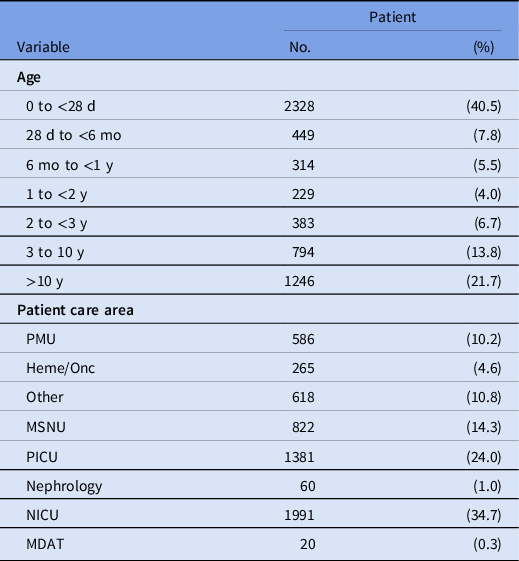
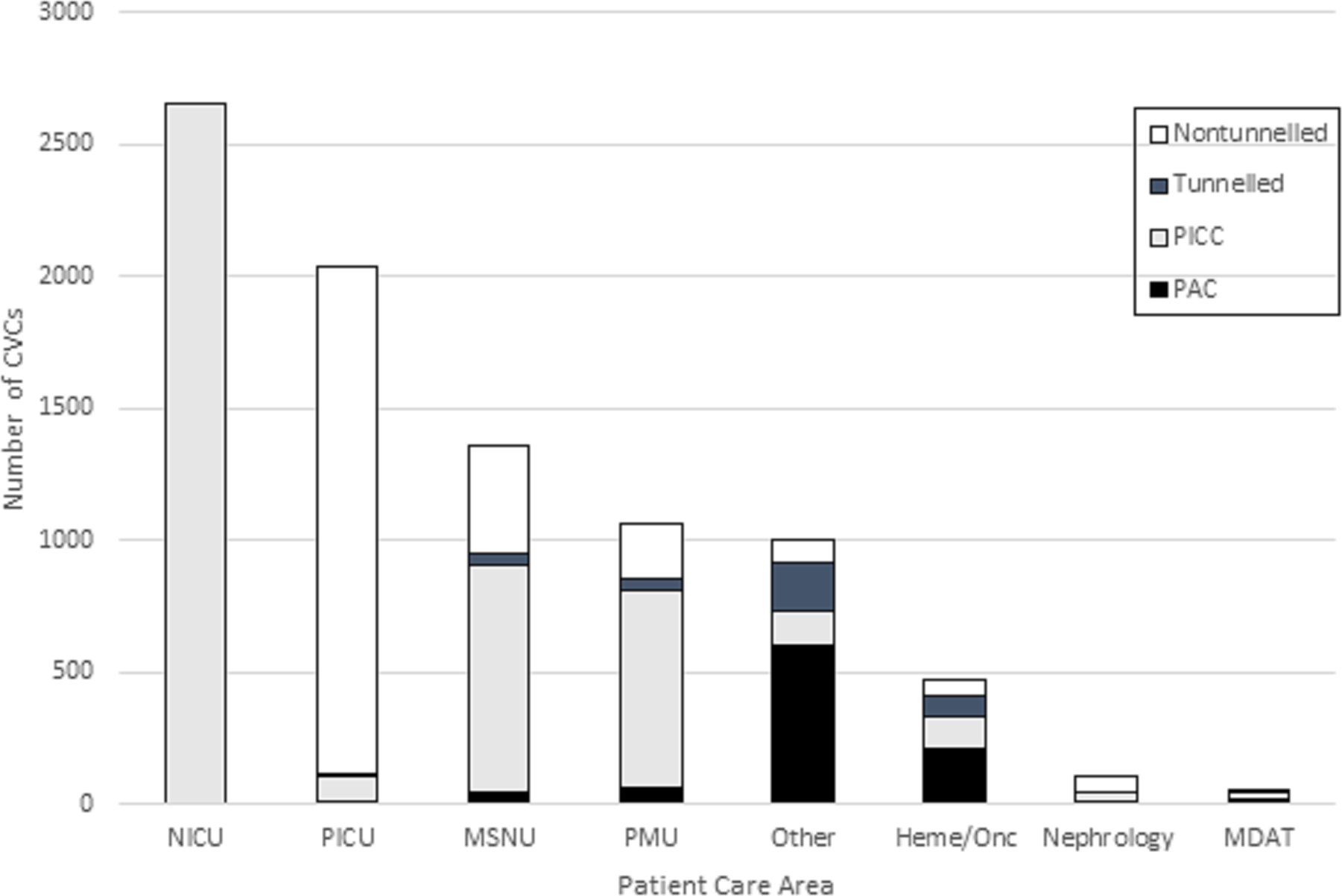
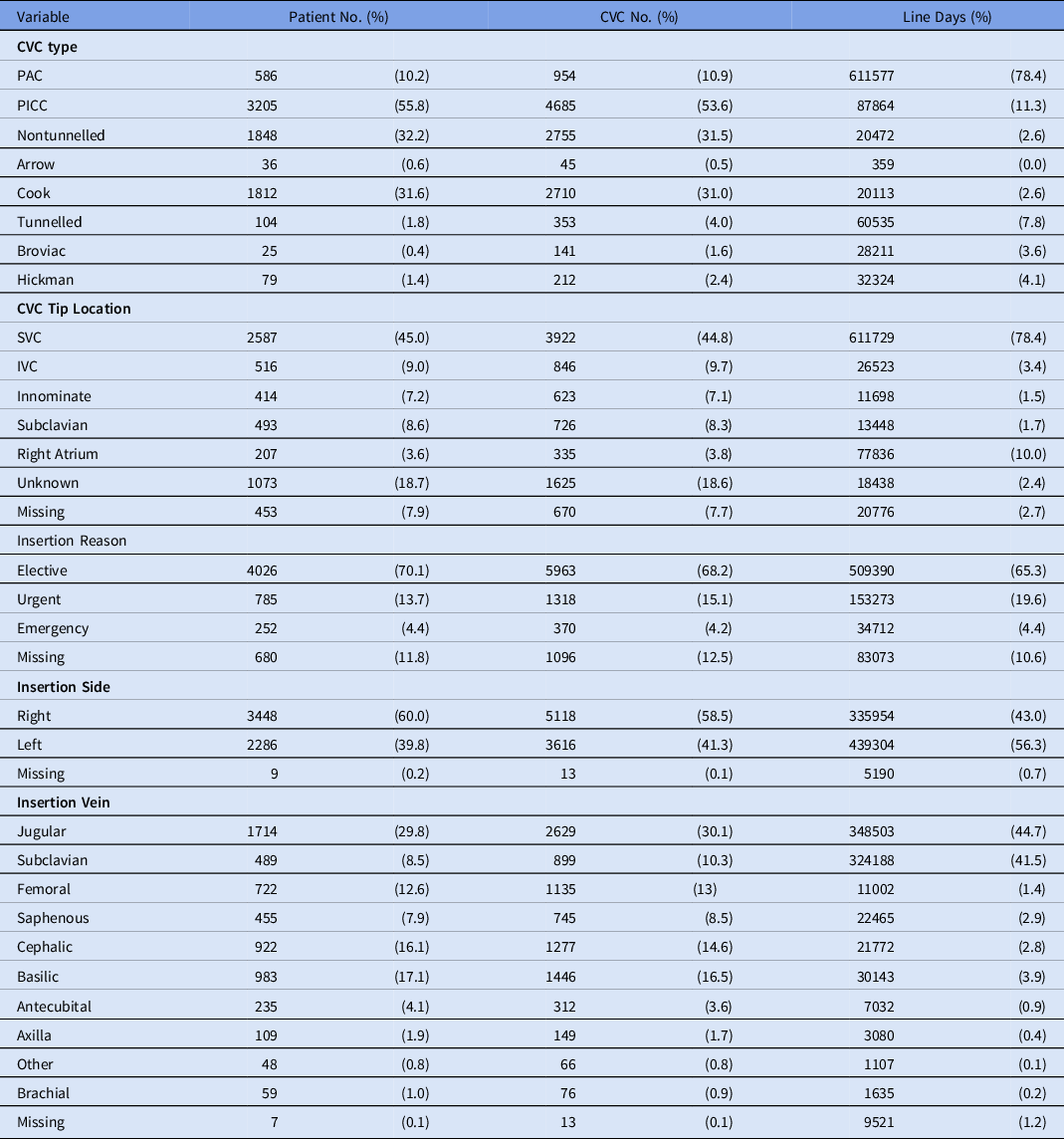
In total, 8,747 CVCs were placed in 5,743 patients during the study period, which captured 780,448 catheter days. Newborns in the NICU were the largest subpopulation (Table 1) and had the greatest number of CVCs inserted, followed by children aged >10 years. The highest CVC use occurred in the critical care areas, NICU and PICU (58.7%). The PICC catheter was the most frequently used device type (53.6%) and PACs remained in situ the longest (78.4% of all catheter days). CVCs were inserted electively in most patients (68.2%). CVC device type varied according to the patient care areas; nontunneled catheters were most commonly used in the pediatric critical care unit, the general medical unit and the medical-surgical unit (Fig. 2).
Demographic Characteristics of Pediatric Patients who Received a CVC at the IWK Between January 2001 to June 2016

Note: CVC, central venous catheter; PMU, pediatric medical unit; Heme/Onc, hematology and oncology unit, MSNU, medical surgical and neuroscience unit; PICU, pediatric intensive care unit; NICU, neonatal intensive care unit; MDAT, medical day ambulatory treatment. Totals are CVCs (n = 8,747) and patients (n = 5,743).
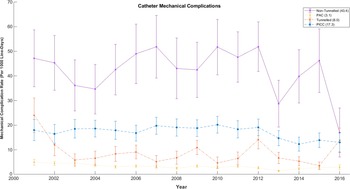
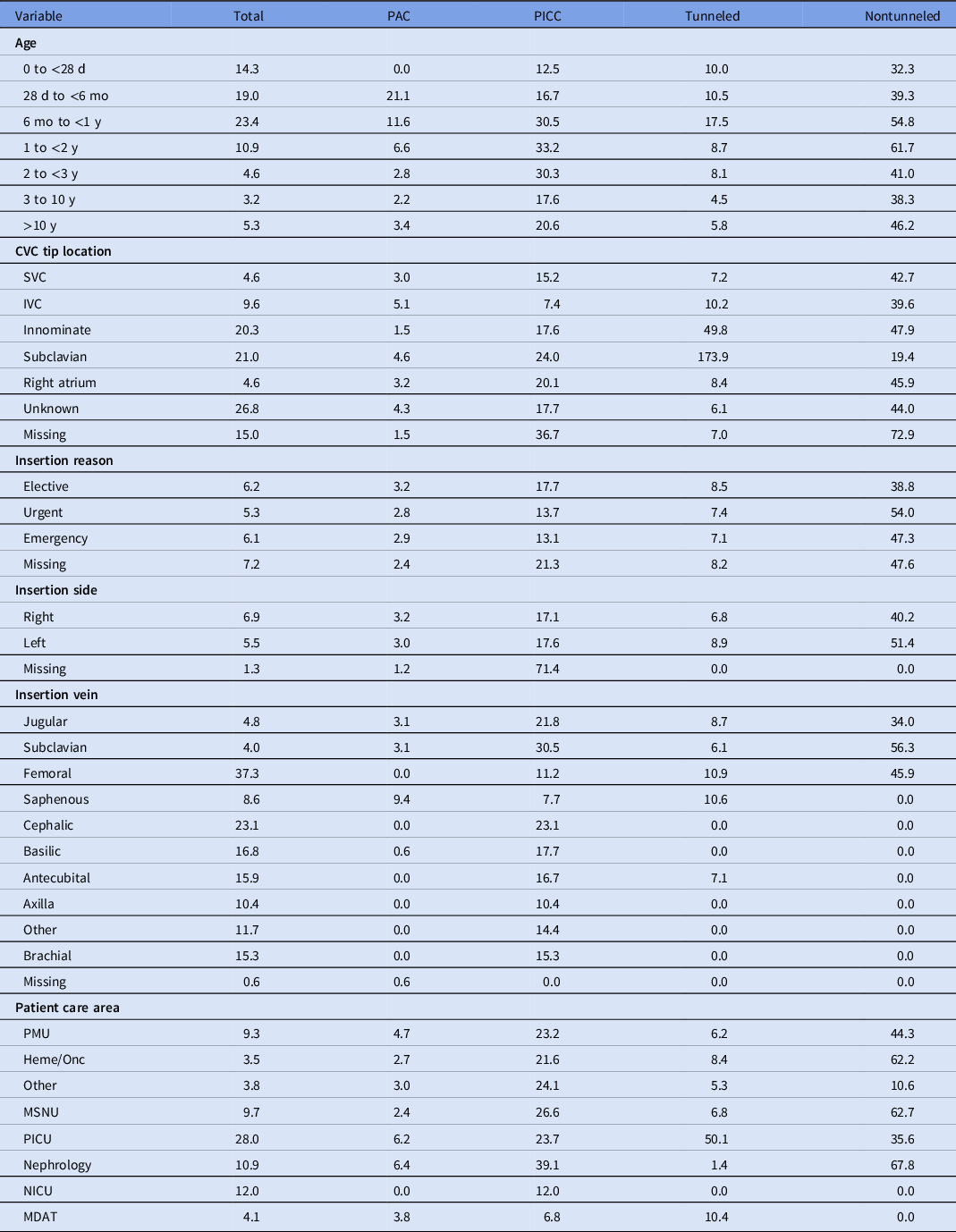
The overall mechanical complication rate for all catheters was 6.1 per 1,000 catheter days (95% confidence interval [CI], 5.9–6.3). Mechanical complication rates by device category over time are shown in Figure 1. Nontunneled catheters had the highest rate of mechanical complications overall (43.4 per 1,000 catheter days), and this was consistent throughout the 15-year observation period. Complication rates by age and other characteristics are seen in Table 3.
Mechanical complication rates by CVC device type; vertical lines denote 95% confidence intervals (n = 8,747 CVCs). Note. PICC, peripherally inserted central catheter; PAC, Port-A-Catheter. Total complication rate seen in parenthesis.

Summary CVC type by patient care area (n = 8,847 CVCs). Note. CVC, central venous catheter; PAC, Port-A-Catheter; PICC, peripherally inserted central catheter; PMU, pediatric medical unit; MSNU, medical surgical and neuroscience unit; PICU, pediatric intensive care unit; NICU, neonatal intensive care unit; MDAT, medical day ambulatory treatment.

Characteristics of CVCs Used in a Tertiary Care Pediatric Health Care Centre Between January 2001 to June 2016

Note: CVC, central venous catheter; PAC, Port-A-Catheter; PICC, peripherally inserted central catheter. Total values are CVCs (n = 8,747), patients (n = 5,743) and line days (n = 780,448).
Complication Rates by CVC Type for Pediatric Patients at the IWK Between January 2001 to June 2016

Note: Complication rates are expressed per 1,000 catheter days. CVC, central venous catheter; PAC, Port-A-Catheter; PICC, peripherally inserted central catheter; PMU, pediatric medical unit; MSNU, medical surgical and neuroscience unit; PICU, pediatric intensive care unit; NICU, neonatal intensive care unit; MDAT, medical day ambulatory treatment.
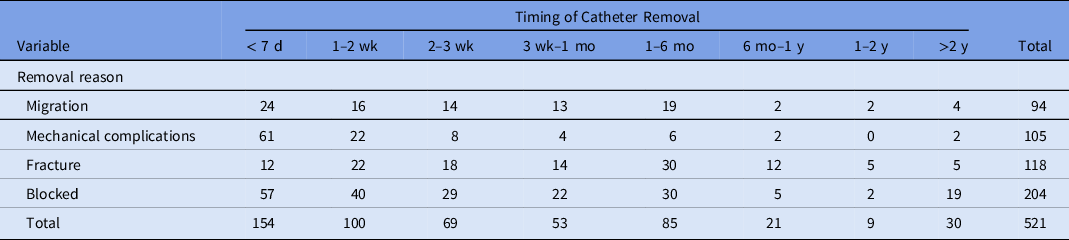
Mechanical complications led to premature removal of 521 CVCs (6%; 95% CI, 5.5%–6.5%). Of these removals, the most common reason was a blockage (39.2%), followed by line fracture (22.6%) and line migration (18.0%) (Table 4). Overall complications were reported most frequently for children under a year of age and in the PICU patient population (Table 3).
Summary of CVC Dwell Time and Mechanical Reason for Catheter Removal a

Note: CVC, central venous catheter. The dwell time variable was measure by days (d), weeks (w), months (m) and years (y).
a Table values reflect catheters inserted over the study period (n = 8,747). Catheters removed due to “no longer required” (n = 6,153), “other” (n = 837), “missing” (n = 257), “infected” (n = 307), “interstitial” (n = 285), “child died” (n = 115), “accidental” (n = 113), “medical complication” (n = 83), “clot” (n = 54), and “censored” (n = 22) not shown.
Elective catheter insertions did not appear to have fewer complications than urgent or emergency insertions. Most CVCs remained in place for <2 weeks (54.6%), but the mean duration of 89.2 days and the range of catheter placement was from 1 to 4,474 days. Of the 4,769 documented mechanical complications, catheter removal was required 521 times (11%) with ∼6% of CVCs being removed due to mechanical complications.
Discussion
In this large cohort study, the catheter-related mechanical complications during a 15-year period remained remarkably stable, with an overall rate of 6.1 mechanical complications per 1,000 catheter days. Also, ∼6% of CVCs had to be removed due to mechanical complications, in contrast, only 3.5% of catheters were removed due to infection. Complication rates varied by device type, with implanted devices (PACs) having the lowest rates over time, while tunneled lines and PICCs had lower event rates than lines, with no subcutaneous path prior to entering the central vein (ie, nontunneled lines). The youngest children (<12 months of age) were most likely to incur these events.
Mechanical complication rates for indwelling intravascular catheters have not been well defined or described in the literature. A systematic review by Ullman et al Reference Ullman, Marsh, Mihala, Cooke and Rickard5 found CVC mechanical complications events per 1,000 catheter days to be on average 1.06 (occlusion or blockage), 0.43 (dislodgment or migration), and 0.14 (breakage or rupture). Unlike our study, this paper did not report nontunneled catheters. These complications may lead to unintended CVC removal, which is associated with pain and anxiety for patients and families. CVC-associated complications increase the likelihood of a repeated reinsertion, which often requires sedation in children. Reference Carraro, Cicalese and Cesaro12 Additionally, during the time the line is out, intravascular access may not be available. These diverse complications and their consequences are significant, and we propose that mechanical complication rates should be collected routinely as a standard patient safety outcome. This data collection would allow comparison of experience with this adverse event to be studied across jurisdictions so that practices associated with lower event rates can be identified. The scope of the surveillance programs and the comprehensiveness of the variables collected could be determined based on feasibility, impact, and resources.
Although our CVC-associated mechanical complication rates in children appear higher than those reported in the literature, limitations in those reports make comparisons difficult. Most of these reports do not include all indwelling catheter days to quantify complications; therefore, they do not capture the risk over time. Many of these studies are limited by one-time insertion data or focus on specific subtypes of mechanical complication. Reference Ullman, Marsh, Mihala, Cooke and Rickard5,Reference Eisen, Narasimhan and Berger9,Reference Heidemann, Nathani, Sagana, Chopra and Heung13,Reference Bowdle14 We likely captured all events over the duration of these CVCs due to our model of care, in which patients are connected to their specialty care provider upon discharge and between hospital admissions.
Totally implanted lines (PACs) demonstrated the lowest complication rate in this study. Similar observations have been reported; this is likely related to the stability from surgical implantation and the less frequent manipulation of the device. Reference Iannacci and Piomelli15–Reference Moureau, Poole, Murdock, Gray and Semba18 Nontunneled CVCs, which directly enter the vessel and therefore have less structural support, were associated with a mechanical complication rate 14-fold higher over the 15-year period compared to PACs in our study. Nontunneled catheters accounted for higher complication rates (43.4 per 1000 catheter days) in virtually all clinical scenarios (Table 3). The indications and patient population receiving immediate short-term catheterization without opportunity for long-term alternatives may also be a sizable reason for the observed disparity.
PICC lines have been studied extensively, and their safety has been well described in the context of infection. Reference Greenberg, Cochran and Smith19 In our study, the mechanical complication rate was 17.3 per 1,000 PICC days. Comparisons for PICC lines in the literature were scant and mostly consisted of limited mechanical subtypes, such as an occlusion rate of 6.6 per 1,000 catheter days described by Barrier et al. Reference Barrier, Williams, Connelly and Creech20 Our PICC mechanical complication rate was 12 per 1,000 catheter days (95% CI, 11.1–13.0) in the NICU, which is where more than half (n = 2,656) of all catheters were placed, and PICC was the only catheter type used in this area. Evaluation in a large cohort of pediatric patients receiving 2,754 PICC lines outside the NICU found a similar overall complication rate of 11.6 per 1,000 catheters, with mechanical complications being much more prevalent than infectious complications. Reference Jumani, Advani, Reich, Gosey and Milstone21 However, Levy et al Reference Levy, Bendet, Samra, Shalit and Katz22 reported a mechanical failure rate equal to that of infection (13.6%) in 279 PICC lines, emphasizing the incidence of mechanical failures and the scarcity of literature further investigating their clinical impact.
Although mechanical complications have been poorly defined in the literature, debate about the optimal vascular approach and placement of CVCs continues. Reference Merrer, DeJonghe and Golliot10,Reference Jumani, Advani, Reich, Gosey and Milstone21,Reference Vesely23,Reference Bell, Goyal and Long24 Our data documented one of the largest collections of CVC tip locations and reiterated the complication rates of tip location outside the SVC and right atrium to be much higher, a phenomenon previously recognized as a risk factor, especially in the context of thrombosis. Reference Wall, Moore and Thachil2,Reference Jumani, Advani, Reich, Gosey and Milstone21 With the lowest total complications occurring when tip location was in the SVC or right atrium, at a rate of 4.6 per 1,000 catheter days, our data agree. Current literature on tip location remains somewhat vague for central lines; however, growing evidence supports our findings.
Clinicians must also evaluate which vascular approach is appropriate when initiating CVC placement. One study evaluating insertions via the internal jugular, subclavian, and femoral veins found no position to have a significant outcome on CVC complications. Reference Bell, Goyal and Long24 In contrast, insertion via the femoral vein has consistently been associated with higher CVC complications in various populations. Reference Merrer, DeJonghe and Golliot10,Reference Kusminsky25,Reference Parienti, Mongardon and Mégarbane26 The incidence of mechanical complications was highest among catheters inserted into the femoral vein (37.3 per 1,000 catheter days; 95% CI, 33.9–41.0), which was 9 times more frequent compared to the internal jugular and subclavian approach. Moreover, debate regarding left- versus right-sided insertion continues. Reference Vesely23 In our study, the discrepancy between complication rates in left- versus right-sided CVCs was minimal and appeared to be most predominant in nontunneled catheters (Table 2). Although the theoretical effect of anatomical variability in vascular structure and provider preferences have mostly guided side choice, our data further enhance evidence-based decisions.
To our knowledge, this study is the largest study to report indwelling CVC-related mechanical complications in children. In addition, our study is strengthened by the standardized data collection used prospectively in the central venous access program and the long follow-up period for each catheter.
This study has several limitations. The analysis was conducted retrospectively, and some desirable variables were not available, including documentation of sex and detailed diagnostic data for underlying health conditions. Also, line days recorded outside of the hospital were assumed to be complication free; however, we expect that significant events were not missed due to ongoing patient follow-up. Children with >1 CVC may have contributed multiple data points, and this factor was not controlled for in this study. Data entry via clinical documentation of CVC complications may include some variability among individual entries which may have led to misclassification errors. This issue is consistent among mechanical complication definitions, underscoring the need for standardized definitions. Although we did not specifically assess the strength of the relationship between risk factors and particular mechanical complications in this study, our future work will focus on this aspect.
A strength of this study was the large cohort with prospectively collected data and broad inclusion criteria. In previous work, we reported infectious complications of CVCs from 1995 to 2013; therefore, several patients were also captured in this study. However, characterization of mechanical complications has not been published. Reference Carter, Langley, Kuhle and Kirkland3 Although this research does not fulfill population-based criteria, the hospital-based study was representative of a diverse pediatric cohort, largely reflective of the regional population. Because the IWK is the sole tertiary-care center in the Maritime provinces, it is highly uncommon for a CVC insertion to occur outside our center.
Our findings help convey the true frequency of mechanical failures for CVCs, and they could be used to establish benchmarks for mechanical CVC complications. We propose that reporting of mechanical complications become a standard patient safety outcome in children so that the true scope of this adverse event is recognized. Our findings underscore the indwelling mechanical complications that may lead to interrupted treatment and premature catheter removal, which we believe to be imperative because insertion failures and other CVC complications are commonly documented. Reporting CVC removal due to mechanical complications may be a more feasible standardization to surveil this adverse event. Further analysis of detailed risk factors from this study are underway and will help guide future catheter management for pediatric patients to improve patient safety, reduce unnecessary interventions, and optimize the use of CVCs.
Acknowledgments
We thank Dr Stefan Kuhle for advice regarding study design and analysis, Brenda MacDougall for assistance with data extraction, and Kevin Wilson for help with data management.
Financial support
No financial support was provided relevant to this article.
Conflicts of interest
All authors report no conflicts of interest relevant to this article.