Emotional intelligence has received considerable attention from management researchers (Jordan, Ashkanasy, Härtel, & Hooper, Reference Jordan, Ashkanasy, Härtel and Hooper2002; Wong & Law, Reference Wong and Law2002; Cote & Miners, Reference Cote and Miners2006; Rode et al., Reference Rode, Mooney, Arthaud-Day, Near, Baldwin, Rubin and Bommer2007; Ayoko, Callan, & Härtel, Reference Ayoko, Callan and Härtel2008; Joseph, Jin, Newman, & O’Boyle, Reference Joseph, Jin, Newman and O’Boyle2014; Parke, Seo, & Sherf, Reference Parke, Seo and Sherf2015). To date, most emotional intelligence studies have been conducted at the individual employee level, and it is known that employee emotional intelligence level is related to job outcomes such as job satisfaction and performance (e.g., Wong & Law, Reference Wong and Law2002; Law, Wong, & Song, Reference Law, Wong and Song2004). Some research has suggested that emotional intelligence should also be examined at the group level (Druskat & Wolff, Reference Druskat and Wolff2001a; Yang & Mossholder, Reference Yang and Mossholder2004; Jordan & Lawrence, Reference Jordan and Lawrence2009). Druskat and Wolff (Reference Druskat and Wolff2001b) refer to the concept at the group level as team emotional intelligence, and define it as ‘the ability of a group to develop a set of norms that manage emotional processes’ (Druskat & Wolff, Reference Druskat and Wolff2001a: 133). According to this definition, teams with higher emotional intelligence are more efficient and effective at handling emotional issues.
There is a growing emphasis in the literature on dealing with emotion through better management of intrateam conflict and facilitation of team performance (Elfenbein, Reference Elfenbein, Polzer and Ambady2006; Bell, Reference Bell2007; Boyatzis, Stubbs Koman, & Wolff, Reference Boyatzis, Stubbs Koman and Wolff2008; Troth, Jordan, Lawrence, & Tse, Reference Troth, Jordan, Lawrence and Tse2012; Jiang, Zhang, & Tjosvold, Reference Jiang, Zhang and Tjosvold2013). In this study, we focus on the role of team emotional intelligence. Emotionally intelligent teams understand and cope with members’ emotional responses even in emotionally negative situations through a set of norms or shared behavioral patterns. More importantly, team emotional intelligence creates a solid foundation of norms that build trust, group identity, and group efficacy through awareness and regulation of emotions in members’ interactions (Druskat & Wolff, Reference Druskat and Wolff2001a). Such trust, group identity, and group efficacy encourage team members to cooperate and collaborate, which in turn has a positive effect on team functioning and performance. Furthermore, team emotional intelligence can mitigate negative emotions engendered by task conflict and relationship conflict, by managing them in a collaborative manner (Jordan & Troth, Reference Jordan and Troth2004; Ayoko, Callan, & Härtel, Reference Ayoko, Callan and Härtel2008) and promoting beneficial interactions (Elfenbein, Polzer, & Ambady, Reference Elfenbein2007).
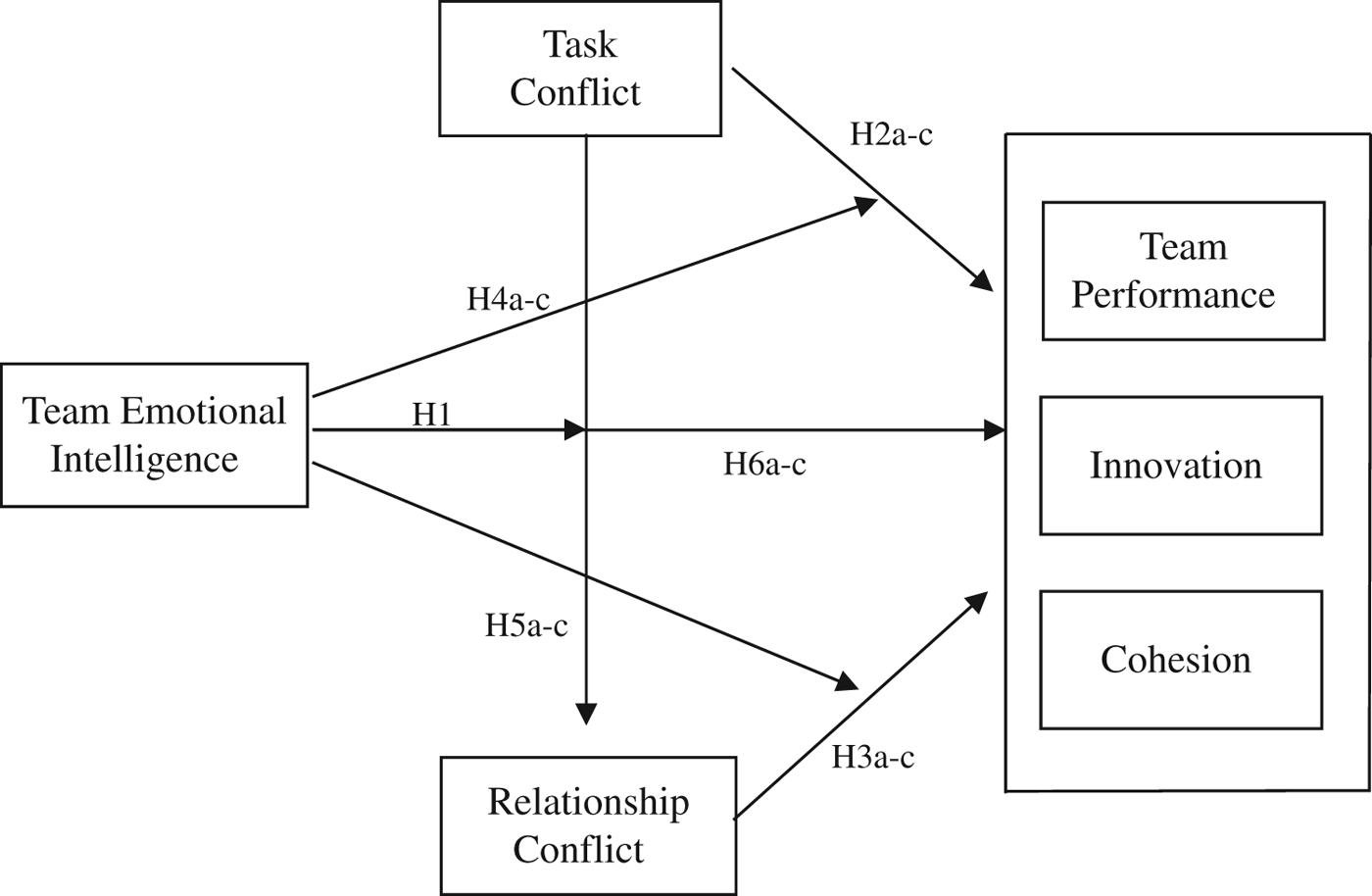
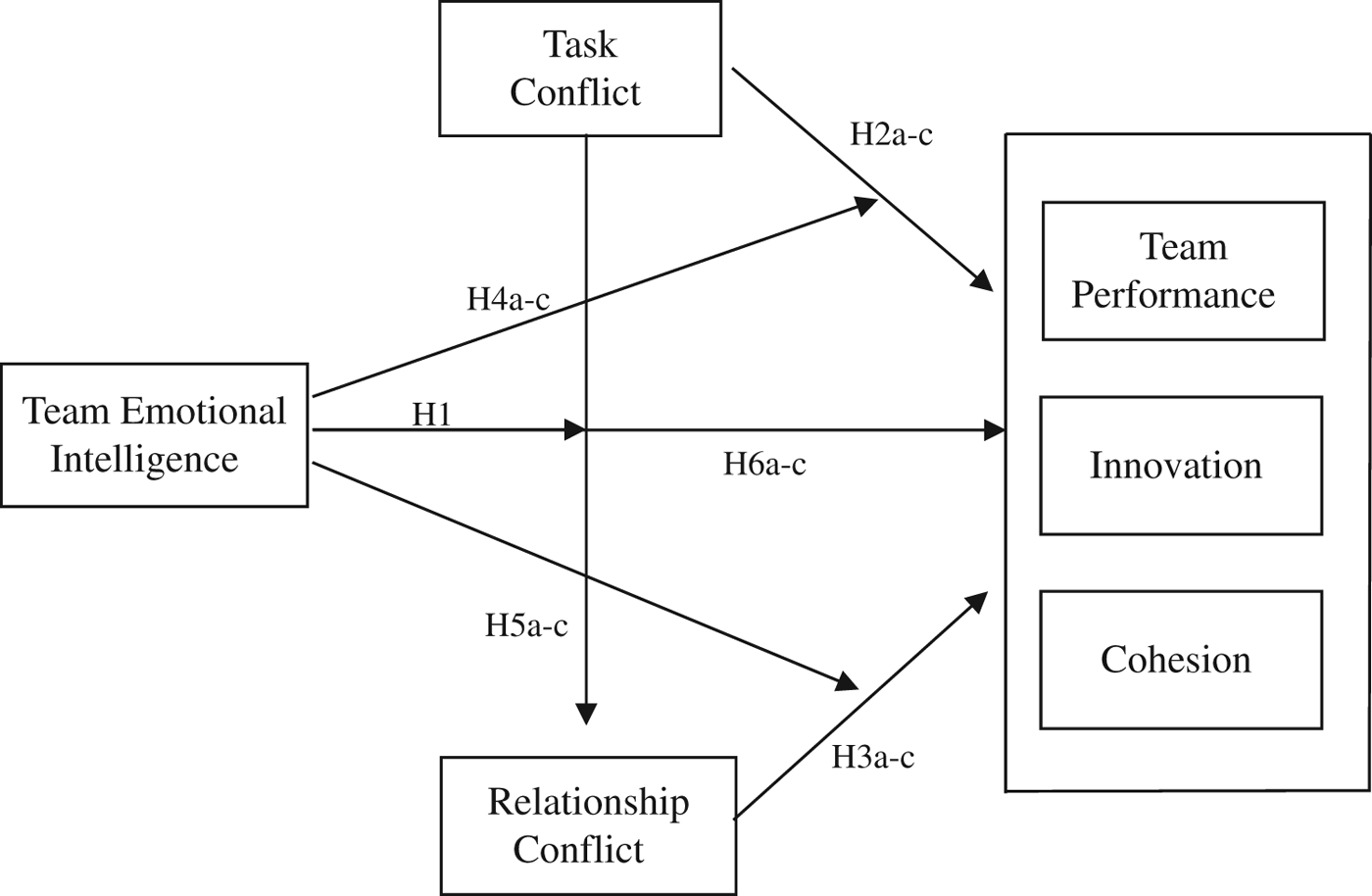
This study proceeds as follows. First, we provide a detailed understanding of team emotional intelligence, investigating its effects on intrateam conflict and subsequent team performance. We examine the moderating effect of team emotional intelligence on the spillover effect between task conflict and relationship conflict. Second, we demonstrate how task conflict and relationship conflict affect team performance, innovation, and cohesion, and explore team emotional intelligence as a boundary condition on the relationships between these two types of conflict and team effectiveness. Specifically, we test the moderating effect of team emotional intelligence on the links between task conflict and team effectiveness and between relationship conflict and team effectiveness. Third, this study breaks ground in identifying the effects of team emotional intelligence on team effectiveness (i.e., team performance, innovation, and cohesion). Figure 1 shows the expected relationships in graphic form.
Research model of this study
THEORETICAL BACKGROUND AND HYPOTHESES
Team emotional intelligence and intrateam conflict
As stated earlier, Druskat and Wolff define team emotional intelligence as ‘the ability of a group to develop a set of norms that manage emotional processes’ (Reference Druskat and Wolff2001a: 133). Teams with high team emotional intelligence help members to deal with emotional problems. For example, when a team member gets frustrated, an emotionally intelligent team has the norm that other members should pay attention to that frustration and take action to manage the member’s emotions. In teams with low team emotional intelligence, members receive little support and help from other members. Emotionally intelligent teams build a set of norms and behavioral patterns for how members recognize, express, and deal with emotions through interaction, and by doing so, team members influence each other and learn to manage emotional processes.
Although team emotional intelligence can be expected to influence intrateam conflict (i.e., task conflict and relationship conflict) and team effectiveness (i.e., team performance, innovation, and cohesion), team emotional intelligence has been largely unexplored by empirical studies. The literature provides a limited understanding of the role of team emotional intelligence (Druskat & Wolff, Reference Druskat and Wolff2001b; Jordan & Troth, Reference Jordan and Troth2004; Boyatzis, Stubbs Koman, & Wolff, Reference Boyatzis, Stubbs Koman and Wolff2008). To better understand the dynamic nature of team emotional intelligence, our study examines how team emotional intelligence influences intrateam conflict and team effectiveness.
Unlike the literature on team emotional intelligence, the literature on intrateam conflict is extensive. Most conflict research has examined two types of conflict, task conflict and relationship conflict (Jehn, Reference Jehn1995). Task conflict is defined as disagreements about the content of tasks, and includes differences in viewpoints, ideas, and opinions among team members. Relationship conflict refers to interpersonal animosity, and involves hostility, tension, friction, and frustration among team members (Jehn, Reference Jehn1995). Many scholars have focused on the spillover effect of task conflict and relationship conflict (Simons & Peterson, Reference Simons and Peterson2000; De Dreu & Weingart, Reference De Dreu and Weingart2003; Yang & Mossholder, Reference Yang and Mossholder2004; Choi & Cho, Reference Choi and Cho2011; De Wit, Greer, & Jehn, Reference De Wit, Greer and Jehn2012).
Role theory (Hindin, Reference Hindin2007) may explain why task conflict and relationship conflict have a spillover effect. According to role theory, people have multiple roles, each involving a set of rights, duties, expectations, norms, and behaviors. When multiple roles are in conflict, negative effects such as poor workplace performance result. A relationship conflict between two team members will affect their interpersonal roles and thus create greater relationship conflict. Their relationship conflict may also affect their roles in performing tasks.
The possibility that task conflict has a positive effect on performance depends on decoupling the link between task conflict and relationship conflict (De Dreu & Weingart, Reference De Dreu and Weingart2003). Some researchers have suggested contextual factors that moderate the relationship between task conflict and relationship conflict, such as collective emotional intelligence, intragroup relational ties, norms, and intragroup trust (Simons & Peterson, Reference Simons and Peterson2000; Yang & Mossholder, Reference Yang and Mossholder2004). However, empirical evidence has shown that intragroup trust (Simons & Peterson, Reference Simons and Peterson2000) and behavioral integration (Mooney, Holahan, & Amason, Reference Mooney, Holahan and Amason2007) can separate task conflict and relationship conflict. Until recently, there have been few empirical studies on moderators that reduce the spillover effect between task conflict and relationship conflict.
We posit that team emotional intelligence moderates the relationship between task conflict and relationship conflict. In emotionally intelligent teams, members have clearer roles when dealing with relationship conflict, and thus this conflict has less effect on their roles when performing tasks. As emotionally intelligent teams are able to recognize and regulate team members’ emotions in conflict situations, it is possible to enhance intrateam communication, embrace diverse opinions, and encourage team members not to take task-related debates personally. Therefore, team members are less likely to make misattributions, feel irritated, and have dysfunctional interactions because of differences in task-related issues. By focusing time and energy on improving tasks and adopting constructive ways to reduce negative emotions, teams can keep task conflict from turning into relationship conflict. George (Reference George2002) also suggests that collective emotional intelligence helps team members to seek creative solutions from different perspectives and prevent conflict from escalating. Furthermore, Jordan and Troth (Reference Jordan and Troth2004) and Ayoko, Callan, and Härtel (Reference Ayoko, Callan and Härtel2008) show that emotionally intelligent teams are likely to use collaborative conflict management skills and develop a climate that lowers levels of conflict intensity. Therefore, we suggest that team emotional intelligence reduces the positive relationship between task conflict and relationship conflict within a team.
Hypothesis 1 : Team emotional intelligence moderates the relationship between task conflict and relationship conflict. That is, the positive effect of task conflict on relationship conflict is weaker when team emotional intelligence is high.
Conflict and team effectiveness
Task and relationship conflict both have an impact on team effectiveness. Research has found mixed results concerning the relationship between task conflict and team performance. For example, some studies find a positive relationship between task conflict and performance for certain types of task, such as nonroutine tasks (Jehn, Reference Jehn1995; Jehn, Reference Jehn1997). In addition, moderate task conflict can contribute to better decision making (Amason, Reference Amason1996). However, many empirical studies have shown the negative effects of task conflict on performance, team member satisfaction, and cohesion (Jehn, Reference Jehn1995; De Dreu & Weingart, Reference De Dreu and Weingart2003; Choi & Sy, Reference Choi and Sy2010; Sobral & Bisseling, Reference Sobral and Bisseling2012). Finally, meta-analysis has demonstrated that task conflict is negatively related to team performance (De Dreu & Weingart, Reference De Dreu and Weingart2003; De Wit, Greer, & Jehn, Reference De Wit, Greer and Jehn2012).
The negative effect of task conflict on team effectiveness can be explained by role theory and information processing (Carnevale & Probst, Reference Carnevale and Probst1998). When there is high task conflict, the role of team members performing the task may have greater ambiguity, and thus performance is negatively affected. From the information-processing perspective, moderate conflict can facilitate information processing (Jiang, Zhang, & Tjosvold, Reference Jiang, Zhang and Tjosvold2013). However, when there is intense task conflict in teams, team members’ cognition systems are overloaded, and this increased cognitive load interrupts cognitive flexibility and creative thinking (Carnevale & Probst, Reference Carnevale and Probst1998). Thus, team members are less likely to perform well or generate new ideas, diverse alternatives, and solutions. Furthermore, as task-related disagreement increases, teams are unlikely to build and maintain team cohesion. Some studies also indicate that task conflict and cohesion are negatively associated (De Dreu & Weingart, Reference De Dreu and Weingart2003). Therefore, we hypothesize that task conflict has a negative effect on team effectiveness.
Hypothesis 2a : Team task conflict is negatively associated with team performance.
Hypothesis 2b : Team task conflict is negatively associated with innovation.
Hypothesis 2c : Team task conflict is negatively associated with cohesion.
Compared with the literature on task conflict, prior research shows considerable consensus on the negative effects of relationship conflict on team effectiveness. For instance, empirical research has consistently demonstrated that relationship conflict is negatively associated with team commitment, team member satisfaction, cohesion, and performance (Jehn, Reference Jehn1995; Amason, Reference Amason1996; Jehn & Chatman, Reference Jehn and Chatman2000; De Dreu & Weingart, Reference De Dreu and Weingart2003; Chun & Choi, Reference Chun and Choi2014). Relationship conflict involves negative emotions such as anger, hostility, annoyance, and frustration (Jehn & Mannix, Reference Jehn and Mannix2001) that result from personal issues (e.g., dislike among team members). Interpersonal conflict is likely to degrade team members’ work morale and diminish their motivation to work together (Jehn, Reference Jehn1995; Jehn, Reference Jehn1997), and thus reduce overall performance. In addition, relationship conflict can limit a team’s information-processing ability (Jehn & Mannix, Reference Jehn and Mannix2001) and increase process loss. The result is misunderstanding and miscommunication among team members, which may interfere with team performance (Kaplan, Reference Kaplan1979). Interpersonal conflict can distract team members from their own tasks, as they need time and energy to resolve conflicts (Jehn & Chatman, Reference Jehn and Chatman2000). Relationship conflict also increases team members’ stress and anxiety, which in turn restricts cognitive functioning (Jehn & Mannix, Reference Jehn and Mannix2001). Thus, relationship conflict makes it difficult for team members to communicate, perform, and innovate. Finally, interpersonal conflict engenders unproductive attitudes among team members and inhibits collaborative problem solving (De Dreu, Reference De Dreu2006). As interpersonal disagreement causes negative affective reactions and emotional clashes and disrupts interpersonal interaction, team members are unlikely to get along with each other and become cohesive. In other words, constructive collaboration among team members to achieve higher performance is undermined. Therefore, relationship conflict is negatively related to team cohesion. We make the following hypotheses:
Hypothesis 3a : Team relationship conflict is negatively associated with team performance.
Hypothesis 3b : Team relationship conflict is negatively associated with innovation.
Hypothesis 3c : Team relationship conflict is negatively associated with cohesion.
The moderating role of team emotional intelligence
As stated earlier, the literature is divided on whether task conflict has a negative or positive effect on team performance (Jehn, Reference Jehn1995; Jehn, Chadwick, & Thatcher, Reference Jehn, Chadwick and Thatcher1997; Pelled, Eisenhardt, & Xin, Reference Pelled, Eisenhardt and Xin1999; De Dreu & Weingart, Reference De Dreu and Weingart2003; De Wit, Greer, & Jehn, Reference De Wit, Greer and Jehn2012; Chun & Choi, Reference Chun and Choi2014). Some researchers have suggested a contingency approach to resolve this debate (Jehn & Bendersky, Reference Jehn and Bendersky2003; De Wit, Greer, & Jehn, Reference De Wit, Greer and Jehn2012). Recently, researchers have focused on the specific conditions in which task conflict improves performance. Empirical studies show that team members’ emotion regulation abilities (Jiang, Zhang, & Tjosvold, Reference Jiang, Zhang and Tjosvold2013), emotional stability, and openness to experience (Bradley, Klotz, Postlethwaite, & Brown, Reference Bradley, Klotz, Postlethwaite and Brown2013) reduce the negative effect of task conflict on team performance. We believe team emotional intelligence is another important moderator. To better understand the effect of team emotional intelligence, we extend the literature by examining how team emotional intelligence affects the relationship between the two types of conflict and team effectiveness.
Emotionally intelligent teams build a set of norms that recognize and manage team members’ emotions. Members have clearer roles in handling each other’s negative emotions, so these emotions do not affect collaboration or hinder performance. Team emotional intelligence can thus reduce the negative feelings caused by task and relationship conflict, improve task focus, and facilitate open discussion without resulting in interpersonal hostility, which in turn has a positive effect on team effectiveness. Jiang, Zhang, and Tjosvold (Reference Jiang, Zhang and Tjosvold2013) show that teams with members skilled in emotion regulation moderate the negative effects of task conflict and relationship conflict on team performance. By building collaborative norms dealing with task conflict, such teams foster collaboration and productive interaction between members, which in turn improves team performance. Team emotional intelligence can also promote cognitive understanding of tasks and the exchange of different ideas and perspectives, and team members are more likely to use diverse information to perform tasks and innovate. As emotionally intelligent teams can prevent cognitive overload, team members are likely to engage in information processing and creative problem solving, thus reducing the negative effects of task conflict on innovation. Moreover, when team emotional intelligence is high, members create cooperative relationships and maintain team cohesion by facilitating effective interactions. In this manner, team emotional intelligence may moderate the negative link between task conflict and cohesion. Therefore, we make the following hypotheses:
Hypothesis 4a : Team emotional intelligence reduces the negative relationship between task conflict and team performance.
Hypothesis 4b : Team emotional intelligence reduces the negative relationship between task conflict and innovation.
Hypothesis 4c : Team emotional intelligence reduces the negative relationship between task conflict and cohesion.
Although there have been few studies of the relation between relationship conflict and team effectiveness, we suggest that team emotional intelligence may reduce the detrimental effect of relationship conflict on team effectiveness. Emotionally intelligent teams have clear roles for members in handling each other’s negative emotions, and thus they promote interpersonal understanding and constructive interaction and enhance cooperation and collaboration (Druskat & Wolff, Reference Druskat and Wolff2001b). Team members can manage negative affective responses engendered by relationship conflict and thus are likely to spend energy and effort on their tasks without being distracted by interpersonal conflict. Therefore, we propose that team emotional intelligence may moderate the relationship conflict–team effectiveness link. We make the following hypotheses:
Hypothesis 5a : Team emotional intelligence reduces the negative association between relationship conflict and team performance.
Hypothesis 5b : Team emotional intelligence reduces the negative association between relationship conflict and innovation.
Hypothesis 5c : Team emotional intelligence reduces the negative association between relationship conflict and cohesion.
Team emotional intelligence and team effectiveness
Although research has suggested a potential positive relationship between team emotional intelligence and team effectiveness, few studies have explored it (Jordan et al., Reference Jordan, Ashkanasy, Härtel and Hooper2002; Jordan & Troth, Reference Jordan and Troth2004; Boyatzis, Stubbs Koman, & Wolff, Reference Boyatzis, Stubbs Koman and Wolff2008). We posit that team emotional intelligence can indicate team effectiveness (i.e., team performance, innovation, and cohesion). Emotionally intelligent teams that are aware of and regulate emotions can improve members’ interpersonal understanding, relationships, and effective interaction. Team emotional intelligence helps members to understand and manage emotional responses even in emotionally negative situations. Members’ roles include enhancing other members’ positive emotions and handling their negative emotions. Positive emotional responses have a beneficial effect on the affective tone of the team and thus enhance helping behavior (George, Reference George1990). In addition, members of emotionally intelligent teams not only cooperate and collaborate but also coordinate their work and communicate with each other, which in turn contributes to team functioning and effectiveness. Empirical evidence has shown that team emotional intelligence influences collaborative culture (Barczak, Lassk, & Mulki, Reference Barczak, Lassk and Mulki2010), improves conflict management skills, and promotes team performance (Jordan et al., Reference Jordan, Ashkanasy, Härtel and Hooper2002; Bell, Reference Bell2007; Boyatzis, Stubbs Koman, & Wolff, Reference Boyatzis, Stubbs Koman and Wolff2008; Troth et al., Reference Troth, Jordan, Lawrence and Tse2012). Furthermore, emotionally intelligent teams enable team members to deal with emotions and sustain favorable interpersonal relationships, which in turn facilitates team cohesion. They also may foster an atmosphere of open discussion, exchange of diverse ideas, and creative problem solving, which enables team members to share information and innovate. Thus, we expect team emotional intelligence to have a positive effect on team effectiveness.
Hypothesis 6a :Team emotional intelligence is positively associated with team performance.
Hypothesis 6b :Team emotional intelligence is positively associated with innovation.
Hypothesis 6c :Team emotional intelligence is positively associated with cohesion.
METHODS
Sample and data collection
The sample consisted of 79 teams from five South Korean companies in the banking, investment, health care, information technology, and pharmaceutical industries. With permission, we visited these companies to collect data by questionnaire. Confidentiality was guaranteed and participants did not need to identify themselves in the questionnaire. The final sample consisted of 333 respondents from 79 teams. The 79 team leaders were not included among these 333 respondents. Team size ranged from 4 to 12, and the average team size was 4.22. The average age of participants was 34.87 years (SD=8.97); 37.8% were male and 62.2% were female. The average age of team leaders was 44.52 years (SD=3.48); 87.3% were male and 12.7% were female. All of the participants had worked together on their teams for at least 1 year. Team leaders evaluated the two dependent variables: team performance and innovation. Team members evaluated team emotional intelligence, task conflict, and relationship conflict. They also rated team cohesion. Although it would have been better for supervisors to rate the dependent variables, we believe team members were likely to be better judges of team cohesion.
Measures
Team performance
To measure team performance, we asked the team leaders to rate their teams using four items developed by Hackman (Reference Hackman1987). Sample items were ‘This team usually accomplishes its objectives’ and ‘This team attains its objectives efficiently.’ The coefficient α for team performance was 0.95.
Innovation
Team innovation was measured by team leaders using four items on a 7-point Likert scale (Anderson & West, Reference Anderson and West1998). A sample item for innovation was ‘Team members often implement new ideas to improve the quality of our products and services.’ The coefficient α for innovation was 0.94.
Team emotional intelligence
We measured team emotional intelligence using 16 items developed by Jordan and Lawrence (Reference Jordan and Lawrence2009). Sample items were ‘Our team members can talk to other members of the team about the emotions we experience’ and ‘We are able to cheer team members up when they are feeling down.’ The coefficient α for team emotional intelligence was 0.96.
Task conflict and relationship conflict
To measure task conflict and relationship conflict in the team, we used the items from the intrateam conflict scale developed by Jehn (Reference Jehn1995). The questionnaire comprises four items on a 7-point Likert-scale, with 1=‘not at all’ and 7=‘a lot.’ A sample item for task conflict is ‘How often do members of your team disagree about opinions regarding the task being done?’ A sample item for relationship conflict is ‘How much friction is there among members of your team?’ The coefficient α for task conflict was 0.94 and relationship conflict was 0.93.
Cohesion
Cohesion was measured using three items from Widmeyer, Brawley, and Carron (Reference Widmeyer, Brawley and Carron1985) and three items from Seashore (Reference Seashore1954) to assess team task and social cohesion. Sample items were ‘Our team is united in trying to reach its goals for performance’ and ‘The members of this team stick together.’ The coefficient α for cohesion was 0.94.
Control variables
We controlled team size, age diversity, and gender diversity, as these variables could have affected the team outcomes. Team size referred to the number of members on a team. To measure age diversity, we used the coefficient of variation, calculated as the ratio of means to standard deviations (Allison, Reference Allison1978). Gender diversity was calculated using Blau’s (1977) index of heterogeneity (1−∑i 2, where i is the proportion of respondents in the ith category). This index has been used to assess the degree of diversity (Simons, Pelled, & Smith, Reference Simons, Pelled and Smith1999; Kearney, Gebert, & Voelpel, Reference Kearney, Gebert and Voelpel2009).
Aggregation of data
As this study is about teams, some measures had to be aggregated on a team level. We aggregated individual responses by taking the average score of the team. To justify aggregation, we calculated r wg and the two intraclass correlation coefficients (ICC), ICC(1) and ICC(2). All of the r wg values for the aggregation were acceptable, ranging from 0.80 to 0.87. The mean r wg values for task conflict, relationship conflict, team emotional intelligence, and cohesion were 0.82, 0.80, 0.87, and 0.86, respectively. The ICC(1) values were 0.33 for task conflict, 0.39 for relationship conflict, 0.27 for team emotional intelligence, and 0.29 for cohesion. The F-test for the ICC(1) values was statistically significant (p<.001), supporting the aggregation. The ICC(2) values for task conflict, relationship conflict, team emotional intelligence, and cohesion were 0.67, 0.73, 0.61, and 0.63, respectively. Taken as a whole, the results indicated acceptable aggregation (Klein & Kozlowski, Reference Klein and Kozlowski2000).
Confirmatory factor analysis
Using A-MOS, we conducted a confirmatory factor analysis to test whether the four-factor model, with an overall second-order factor, fit our data. The goodness of fit of each model was evaluated by using Comparative Fit Index (CFI), Tucker-Lewis Index (TLI), and Root-Mean-Squared Error of Approximation (RMSEA). The result revealed a reasonable fit to the data (χ2=157.539, df=80, p<.001, CFI=0.98, RMSEA=0.05, TLI=0.97). We then performed a confirmatory factor analysis on the four variables (task and relationship conflict, team emotional intelligence, and cohesion). According to the χ2 difference tests, the four-factor model provided a better fit to the data (χ2=886.437, df=375, p<.001, CFI=0.95, RMSEA=0.06, TLI=0.93) than a three-factor model (combining team emotional intelligence and task conflict) (χ2=1,054.818, df=376, p<.001, CFI=0.93, RMSEA=0.07, TLI=0.91), two-factor model (combining task conflict, relationship conflict, and team emotional intelligence) (χ2=1,083.840, df=377, p<.001, CFI=0.93, RMSEA=0.08, TLI=0.91), or one-factor model (χ2=1,086.687, df=378, p<.001, CFI=0.93, RMSEA=0.08, TLI=0.91).
RESULTS
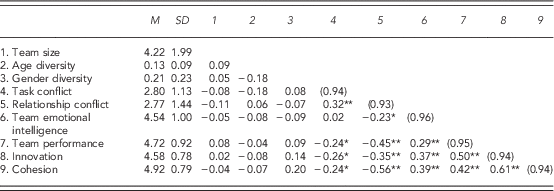
Table 1 provides the descriptive statistics and correlations between the variables. We conducted a hierarchical linear regression to test the hypotheses. Before computing the interaction terms, independent variables were centered (Cohen & Cohen, Reference Cohen and Cohen1983; Aiken, West, & Reno, Reference Aiken, West and Reno1991). We calculated interaction terms by multiplying these centered variables. Variance inflation factors were calculated to examine the likelihood of multicollinearity. As the variance inflation factor indexes were less than the critical value of 10, multicollinearity was not serious.
Descriptive statistics and correlations

Note. N=79 teams.
*p<.05; **p<.01.
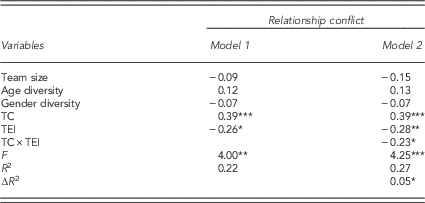
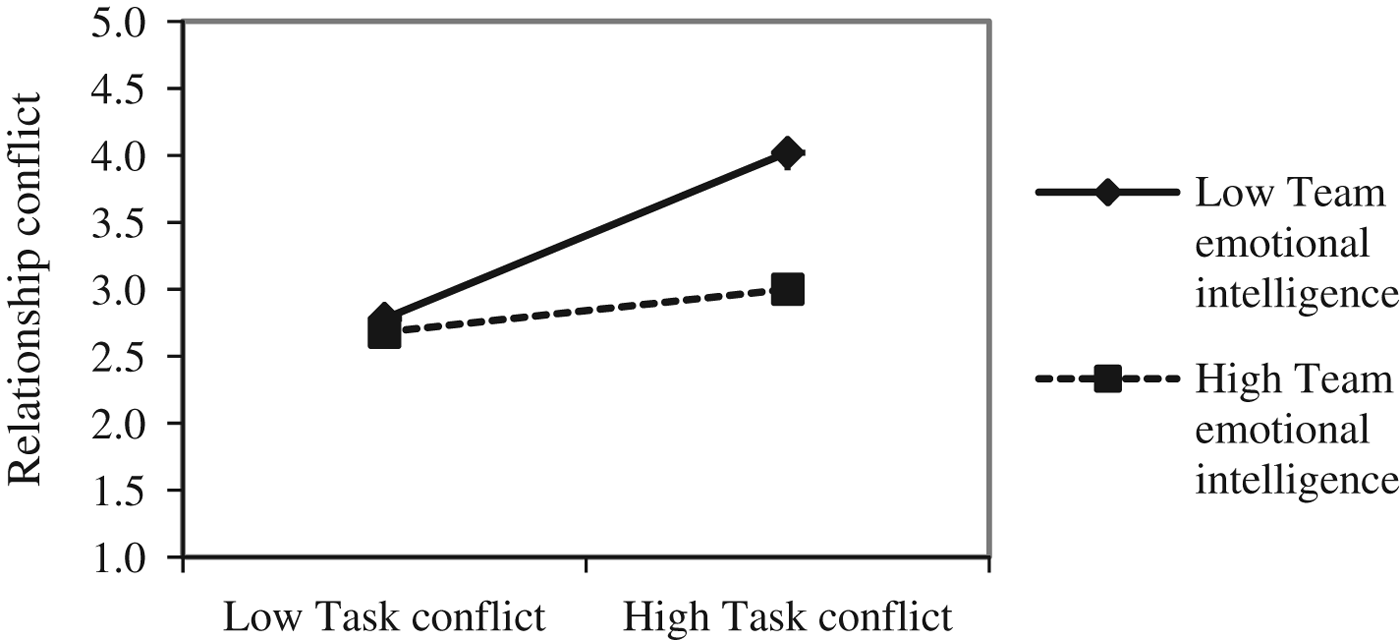
We conducted hierarchical linear regression to test our hypotheses. Independent variables were entered in the following sequence: (1) control variables, (2) independent variables, and (3) moderator. As presented in the second model of Table 2, we entered the interaction term between task conflict and team emotional intelligence. The interaction term is significant (β=−0.23, p<.05), supporting Hypothesis 1. This result indicates that team emotional intelligence moderates the effect of task conflict on relationship conflict.
The moderating effect of team emotional intelligence (TEI) (task conflict [TC] → relationship conflict)

Note. N=79 teams, all entries are standardized regression coefficients.
*p<.05; **p<.01; ***p<.001.
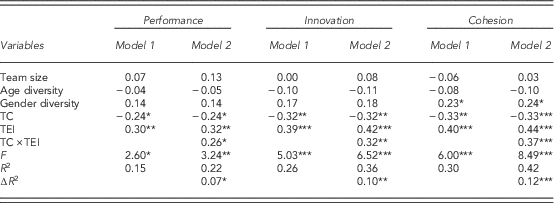
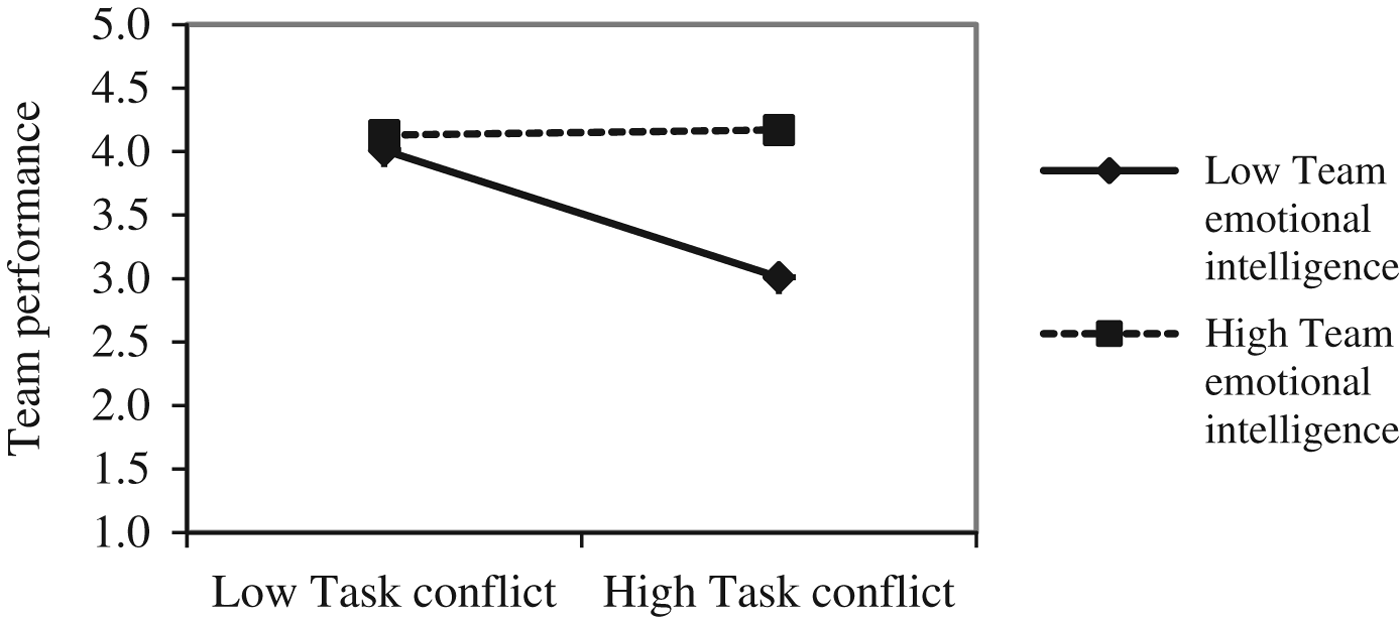
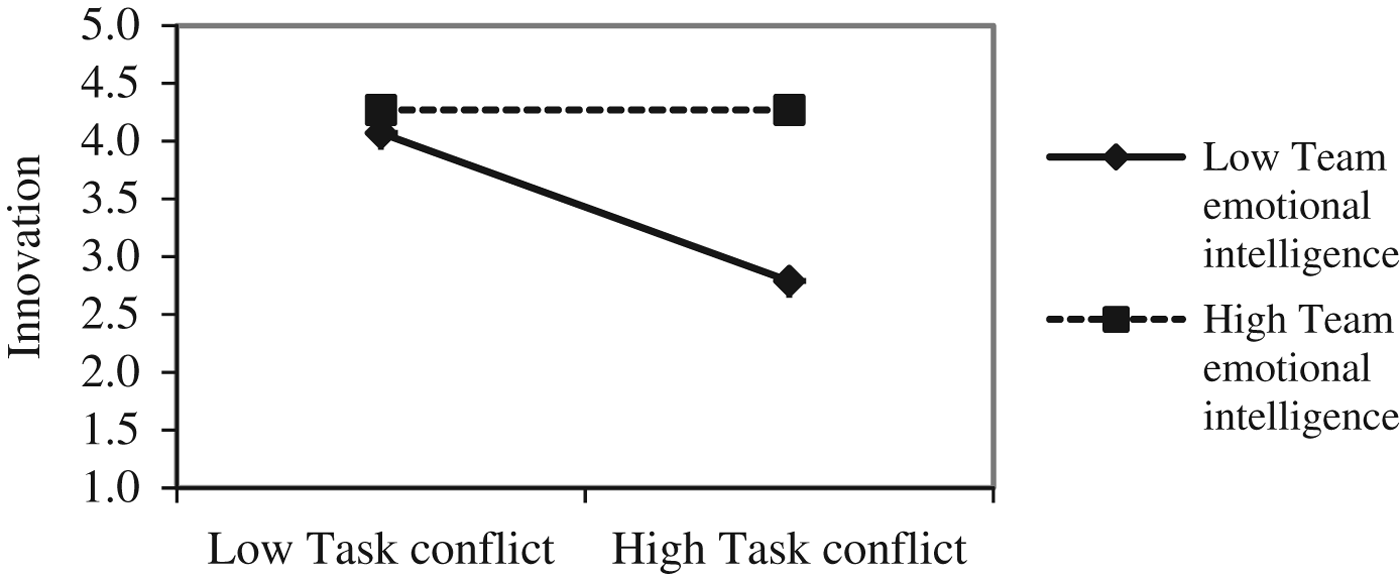
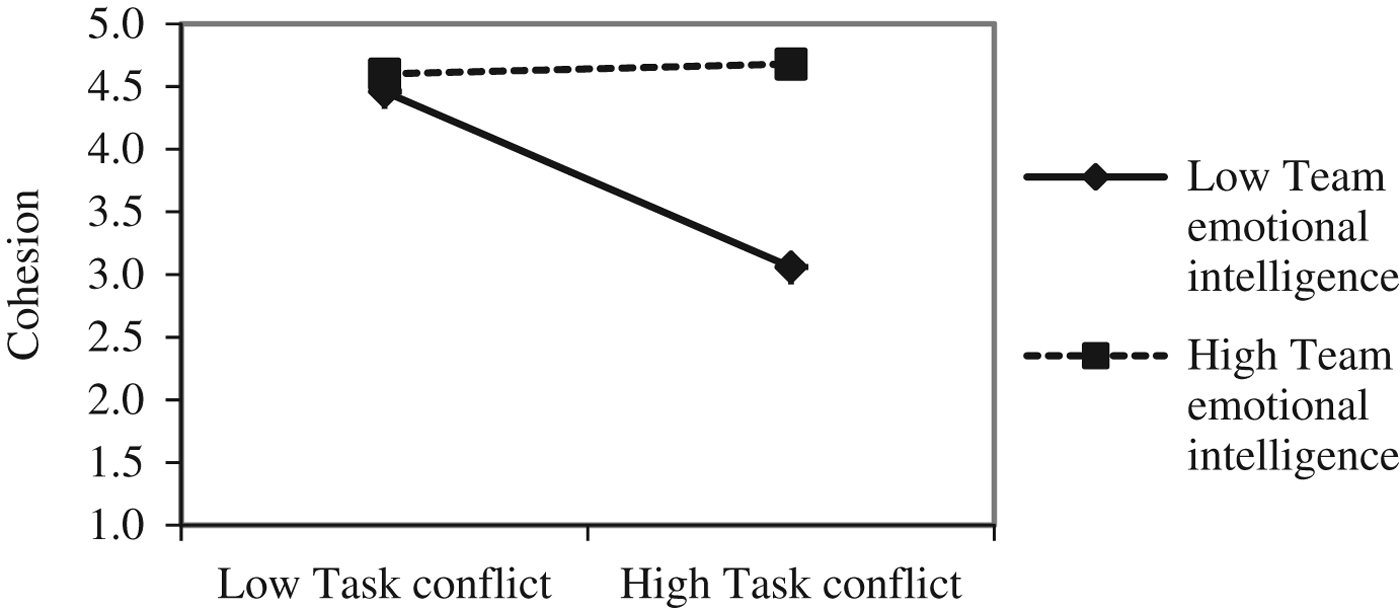
Hypotheses 2a, 2b, and 2c propose that task conflict is negatively associated with team effectiveness. As shown in Table 3, the main effects of task conflict on team performance, innovation, and cohesion are negatively significant (β=−0.24, p<.05; β=−0.32, p<.01; β=−0.33, p<.01, respectively). Thus, Hypotheses 2a, 2b, and 2c are supported. Next, we entered the interaction term between task conflict and team emotional intelligence. These interaction terms are significant (β=0.26, p<.05; β=0.32, p<.01; β=0.37, p<.01, respectively, for team performance, innovation, and cohesion), and so Hypotheses 4a, 4b, and 4c are supported. As we expected, team emotional intelligence is a significant moderator of the relationship between task conflict and team effectiveness.
The moderating effect of team emotional intelligence (TEI) (task conflict [TC] → team effectiveness)

Note. N=79 teams, all entries are standardized regression coefficients.
*p<.05; **p<.01; ***p<.001.
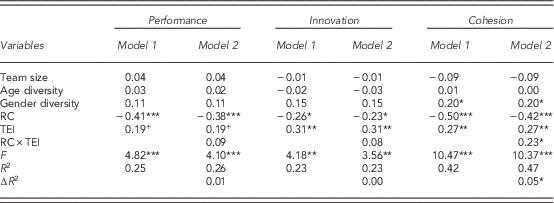
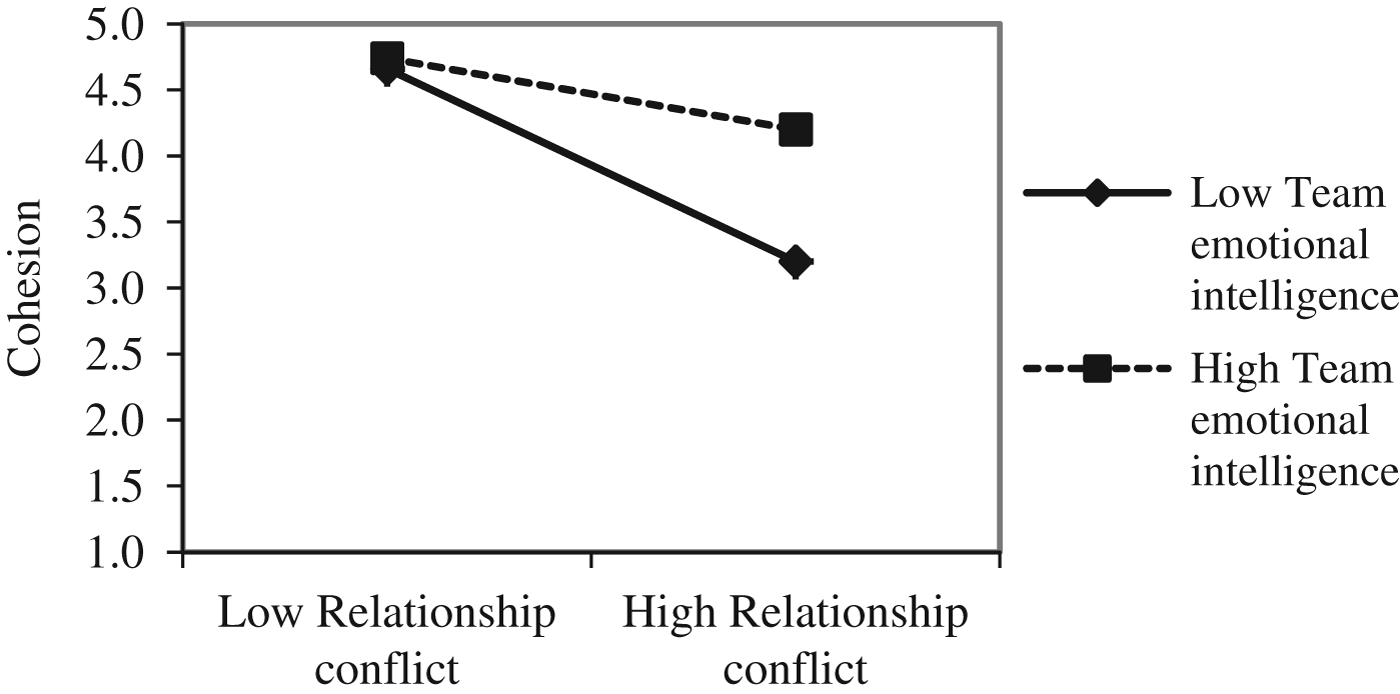
In line with Hypotheses 3a, 3b, and 3c, the main effects of relationship conflict on the three indicators of team effectiveness are significant (β=−0.41, p<.01; β=−0.26, p<.05; and β=−0.50, p<.01 for team performance, innovation, and cohesion, respectively). Hypotheses 5a, 5b, and 5c propose that team emotional intelligence moderates the link between relationship conflict and team effectiveness. As presented in Table 4, Hypotheses 5a and 5b are not supported. However, the interaction term of relationship conflict and cohesion is significant (β=0.23, p<.05), supporting Hypothesis 5c. Thus, team emotional intelligence has a moderating effect on the relationship between relationship conflict and cohesion.
The moderating effect of team emotional intelligence (TEI) (relationship conflict [RC] → team effectiveness)

Note. N=79 teams, all entries are standardized regression coefficients.
*p<.05; **p<.01; ***p<.001; + p<.10.
As shown in Table 4, the main effects of team emotional intelligence on team effectiveness are positively significant (β=0.19, p<.10; β=0.31, p<.01; β=0.27, p<.01, respectively, for team performance, innovation, and cohesion), Thus, Hypotheses 6a, 6b, and 6c are supported.
We plot the results to probe the nature of the interactions. As Figures 2–6 show, the positive effect of task conflict on relationship conflict is weaker at higher levels of team emotional intelligence. Furthermore, the negative effects of task conflict on team effectiveness (i.e., team performance, innovation, and cohesion) are weaker at higher levels of team emotional intelligence. The effect of relationship conflict on cohesion is more likely to decrease when team emotional intelligence is high rather than low.
Moderating effect of team emotional intelligence on task conflict and relationship conflict

Moderating effect of team emotional intelligence on task conflict and team performance

Moderating effect of team emotional intelligence on task conflict and innovation

Moderating effect of team emotional intelligence on task conflict and cohesion

Moderating effect of team emotional intelligence on relationship conflict and cohesion

DISCUSSION
This study explores the comprehensive roles of team emotional intelligence in team process and effectiveness. As mentioned earlier, empirical research on team emotional intelligence remains scarce. This study represents a step toward better understanding team emotional intelligence. Our findings show how team emotional intelligence influences team process (i.e., task conflict and relationship conflict) and team effectiveness (i.e., team performance, innovation, and cohesion).
Our study contributes to the literature on team emotional intelligence and intrateam conflict in several ways. First, we use the relatively direct argument from role theory to examine the effect of team emotional intelligence on team process and outcomes. Specifically, team emotional intelligence may help to clarify and establish members’ roles in enhancing others’ positive emotions and handling their negative emotions. Thus, it should have a positive effect on team processes and outcomes.
Second, we provide insights into how team emotional intelligence affects team process. We demonstrate both the direct and moderating effects of team emotional intelligence on task conflict and relationship conflict. As expected, team emotional intelligence is negatively associated with task conflict and relationship conflict. We extend prior research on conflict, examining team emotional intelligence as a contextual factor that decouples the overlooked link between task conflict and relationship conflict. One important area of conflict research has been to separate these two types of conflict. As task conflict results in relationship conflict, it has been argued that task conflict has a detrimental effect on team effectiveness (Simons & Peterson, Reference Simons and Peterson2000; De Dreu & Weingart, Reference De Dreu and Weingart2003; De Wit, Greer, & Jehn, Reference De Wit, Greer and Jehn2012). Some scholars have proposed possible moderators for the association between task conflict and relationship conflict, such as collective emotional intelligence, intragroup relational ties, and intragroup trust (Simons & Peterson, Reference Simons and Peterson2000; Yang & Mossholder, Reference Yang and Mossholder2004). Nevertheless, there is a dearth of empirical studies concerning this relationship. Our results show that team emotional intelligence plays a significant role in decoupling task conflict and relationship conflict.
Third, we identify a link between the two types of conflict and team effectiveness. Additionally, we examine the moderating effect of team emotional intelligence on the relationship between these two types of conflict and team effectiveness. Another important part of conflict research has been outlining the conditions in which task conflict can enhance team effectiveness. In this context, our finding that the relationship between task conflict and team effectiveness is contingent on team emotional intelligence is noteworthy. Consistent with prior studies, how members understand and deal with emotions within teams affects the relationship between intrateam conflict and team effectiveness (Bradley et al., Reference Bradley, Klotz, Postlethwaite and Brown2013; Jiang, Zhang, & Tjosvold, Reference Jiang, Zhang and Tjosvold2013). Specifically, we examine team emotional intelligence as a contextual factor in the unexplored link between relationship conflict and team effectiveness. Our results indicate that team emotional intelligence can reduce the negative effects of relationship conflict on team cohesion. Contrary to our expectation, we find no significant moderating effect of team emotional intelligence on the association between relationship conflict and team performance and innovation. One possible explanation is that relationship conflict has a negative impact on team performance, as shown by conflict research (Jehn, Reference Jehn1994; De Dreu & Weingart, Reference De Dreu and Weingart2003; De Wit, Greer, & Jehn, Reference De Wit, Greer and Jehn2012; Sobral & Bisseling, Reference Sobral and Bisseling2012; Jiang, Zhang, & Tjosvold, Reference Jiang, Zhang and Tjosvold2013). Although emotionally intelligent teams faced with relationship conflict can reduce the negative emotions engendered by relationship conflict, interpersonal conflict among members is more likely to interfere with team functioning and effectiveness.
Fourth, we examine how team emotional intelligence affects team effectiveness. Our results show that team emotional intelligence is positively related to team effectiveness. To date, empirical studies have addressed only the effects of team emotional intelligence on performance (Jordan et al., Reference Jordan, Ashkanasy, Härtel and Hooper2002; Boyatzis, Stubbs Koman, & Wolff, Reference Boyatzis, Stubbs Koman and Wolff2008; Troth et al., Reference Troth, Jordan, Lawrence and Tse2012). In the present study, we show that team emotional intelligence has positive effects on team performance, cohesion, and innovation. As emotionally intelligent teams are willing to work in a cooperative manner (Barczak, Lassk, & Mulki, Reference Barczak, Lassk and Mulki2010), coordinate interactions between members (Elfenbein, Polzer, & Ambady, Reference Elfenbein2007; Troth et al., Reference Troth, Jordan, Lawrence and Tse2012), and maintain favorable relationships (Druskat & Wolff, Reference Druskat and Wolff2001b), it is possible to achieve better performance and cohesion. In addition, team emotional intelligence can facilitate the exchange of ideas and information and foster open discussion among members, which in turn contributes to innovation.
In sum, our findings have important theoretical implications for team emotional intelligence and conflict research. We hope they will inspire further research in this area.
Practical implications
Our findings indicate that managers should take into account the importance of team emotional intelligence and implement training programs to improve it. Team leaders play an important role in developing team emotional intelligence. Empirical research has indicated that a team leader’s emotional intelligence has a positive effect on team emotional intelligence (Boyatzis, Stubbs Koman, & Wolff, Reference Boyatzis, Stubbs Koman and Wolff2008). It may be necessary to provide training for both team members and leaders on understanding and dealing with emotions in teams. Through training programs and individual coaching, team members can learn how to interact constructively and appropriately in given situations. Such training should in turn have positive effects on team functioning and effectiveness.
Limitations and future research
There are several limitations to this study. First, as we collected data from a small number of teams in Korea using a cross-sectional design, our data analyses were limited to testing hypotheses. Considering the small sample size, it is better to separate the analyses for two types of conflict and team effectiveness, as has been done in other studies (e.g., see Jiang, Zhang, & Tjosvold, Reference Jiang, Zhang and Tjosvold2013). To better understand the dynamics of team emotional intelligence, future research should be conducted by collecting more team samples and using a longitudinal design.
Second, although we focus on how team-level emotional intelligence affects intrateam conflict and team effectiveness, it is worth examining how team emotional intelligence influences individual task and relationship conflict and performance using a multilevel approach. Future studies should investigate the effects of cross-level interaction between team emotional intelligence and individual members’ emotional intelligence on individual conflicts and performance. For example, individual team members may be influenced by team emotional intelligence when interacting with other members. When a member feels unhappy or frustrated, teams of emotionally intelligent individuals can better recognize and deal with these emotions. By providing supports and promoting positive interactions, team emotional intelligence may strengthen the relationship between individual emotional intelligence and performance.
Third, more evidence is needed to generalize our findings to other settings. Future research may thus be conducted on more diverse teams and organizational contexts to examine the generalizability of our findings. Fourth, common method variance may still pose a problem, especially for the dependent variable of cohesion. To minimize common method variance, we collected data from two different sources (team performance and innovation, as measured by team leaders). However, for the analyses of the relationship between conflict and team emotional intelligence, common method bias may be a problem. Future research may use multiple sources to collect data on these three variables. Fifth, the measurement of team emotional intelligence has been the subject of debate. In this study, we assess team emotional intelligence using self-reported measures. Although we use valid measures of team emotional intelligence within a team context (Jordan & Lawrence, Reference Jordan and Lawrence2009), future research may use alternative measures of team emotional intelligence (Troth et al., Reference Troth, Jordan, Lawrence and Tse2012).
Finally, our findings suggest that the effects of team emotional intelligence on intrateam conflict and team effectiveness should be further examined. Moreover, future research should take into consideration how individual emotional intelligence can affect team emotional intelligence. For example, will the emotional intelligence level of an individual member (high or low) have a major influence on team emotional intelligence, or is the average emotional intelligence level of all members more important? Furthermore, what are the process and conditions for a team to develop high team emotional intelligence? These are interesting and important questions for future research to answer.
To conclude, despite the preceding limitations, we believe our study provides substantial evidence for the effects of team emotional intelligence on the relationship between task conflict and relationship conflict and on team effectiveness. These findings demonstrate that team emotional intelligence is a valuable construct that deserves more research attention.
Acknowledgement
The authors would like to acknowledge the participants in this study. We also thank the editor and reviewers for their insightful comments to improve the article.
About the authors
Changyu Lee is a PhD candidate in the Department of Business Administration at the Sookmyung Women’s University, Seoul, South Korea. Her major research interests include conflict management, emotional intelligence, creativity, leadership, and team dynamics.
Chi Sum Wong (PhD, Purdue University) is currently a professor in the Department of Management, The Chinese University of Hong Kong. He has published extensively in management, psychology, and education journals. His major research interests include emotional intelligence in the workplace, career interests in Chinese societies, localization of human resources in China, and research methodology of management studies.