The prevalence of extended-spectrum β-lactamase–producing Enterobacteriaceae (ESBL-PE) in the general population has now reached endemic levels in most countries.Reference Karanika, Karantanos and Arvanitis1 This is worrisome because ESBL-PE are frequent causes of difficult-to-treat infections, with substantial health and economic burdens.Reference Stewardson, Allignol and Beyersmann2
ESBL-PE may spread by transfer of bacteria or mobile genetic elements. Some biologically fit phylogenetic groups particularly drive the emergence and persistence of virulence traits and acquisition of ESBL-PE.Reference Johnson, Thuras and Johnston3 Persistence of ESBL-PE in the community might be further amplified by various risk factors such as antibiotic exposure,Reference Stewardson, Vervoort and Adriaenssens4–Reference Aldeyab, Harbarth and Vernaz7 previous hospitalization,Reference Rodríguez-Baño, Navarro and Romero5, Reference Tham, Odenholt and Walder8 recurrent urinary tract infection,Reference Rodríguez-Baño, Navarro and Romero5 travel activities,Reference Tham, Odenholt and Walder8, Reference Ruppé, Andremont and Armand-Lefèvre9 having children attending daycare centers,Reference van den Bunt, Liakopoulos and Mevius10 as well as chicken meat consumption.Reference Hijazi, Fawzi and Ali11 Overcrowded households also appear to increase the risk of ESBL-PE carriage.Reference Otter, Natale and Batra12 Furthermore, intrahousehold transmission may play an important but understudied role. Several studies have shown that antibiotic-susceptible and -resistant Escherichia coli are transmitted between household members,Reference Samore, Tonnerre and Hannah13 suggesting that both susceptible and resistant Enterobacteriaceae compete for niches within the gastrointestinal tract. This competitive balance is influenced by multiple factors including antibiotic exposure, which favors resistant Enterobacteriaceae and their intrahousehold transmission.Reference Stewardson, Vervoort and Adriaenssens4
Despite the potential relevance of ESBL-PE cross transmission among household members on persistence and spread of ESBL-PE in the community, evidence on this topic is scarce. We therefore aimed to systematically review epidemiological studies on ESBL-PE cocarriage and acquisition among household members.
Methods
Data sources and search strategy
We searched the Cochrane Library, PubMed, Embase and CINAHL databases for observational studies published between January 1990 and June 2018, without language restriction. Systematic manual reference search was performed from eligible articles’ bibliography. Duplicate studies with the same title and authors were automatically deleted by the «Distiller» SR software (Evidence Partners, Ottawa, Canada). Core search strings, assembled Boolean operators, included “household OR community OR family OR outpatient” and “animal OR pet” for the study population; “extended-spectrum beta-lactamase OR lactamase OR cephalosporin OR beta-lactam resistance” for exposures; and “transmission OR carriage OR acquisition OR colonization OR microbiota OR molecular epidemiology” for outcomes. The full search strategies are available in the Supplementary Appendix online. This study was conducted according to the Meta-analysis of Observational Studies in Epidemiology (MOOSE) and Preferred Reporting Items for Systematic reviews and Meta-Analyses (PRISMA) statements.Reference Moher, Liberati and Tetzlaff14
Selection criteria and definitions
This systematic review includes cohort or cross-sectional studies evaluating cocarriage proportions and acquisition rates of ESBL-PE in households, focusing mainly on intestinal carriage of E. coli and Klebsiella pneumoniae. ESBL-PE were defined phenotypically by presence of third-generation cephalosporin resistance and a positive double-disk synergy test, and/or genotypically by an identified ESBL-PE resistance gene. Studies were eligible if they included isolates sampled from human subjects. Cocarriage was defined as simultaneous carriage by 2 or more household members of a related ESBL-PE strain at a certain point in time or during a predefined follow-up period. Acquisition was defined as newly identified carriage of a related strain in another household member who was previously ESBL negative. Relatedness definition depended on the level of microbiological discrimination employed. Cocarriage and acquisition rates were stratified considering the level of microbiological discrimination: “closely related” pathogens were phenotypically similar bacteria, sharing the same phenotypic or genotypic resistance profile, and “clonally related” pathogens were bacteria assessed for relatedness through genotyping methods.
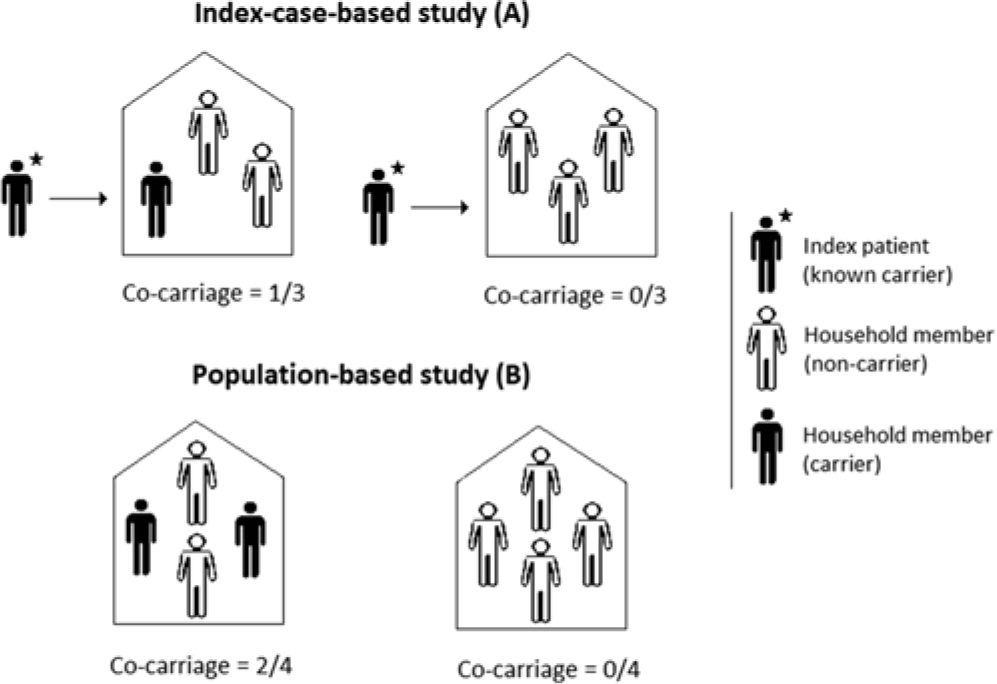
Studies were stratified according to their sampling scheme. In index-case–based studies (category A), recruitment of families derived from a previously identified ESBL-PE index case. In population-based studies (category B), household members were not recruited based on a previously known index case but from the general population. In category A, cocarriage proportions were calculated as the number of household members of a colonized or infected index case simultaneously carrying a closely related or clonally related ESBL-PE, among the total number of household members (excluding the index case). In category B, all household members presenting simultaneous ESBL-PE–related carriage among the total number of household members were considered (Fig. 1).
Examples for the evaluation of cocarriage estimates in studies based on their sampling schemes.

We excluded single-household case reports, studies focusing on animal-to-animal or animal-to-human transmission only, as well as studies focusing on the environment (eg, surface water) or conducted in nonhousehold settings (eg, childcare facilities). Studies focusing on international travelers, indigenous populations with a specific way of living, farms, or foodborne community outbreaks were excluded. Due to specific exposures and an extensive literature on the topic, studies on mother-to-newborn transmission were also excluded.
Study screening and data extraction
Title and abstract screening was performed independently by 2 authors (R.M. and M.E.R.). All discrepancies were solved by consensus, involving a third investigator (M.A.) if needed. Concordance was checked by Cohen’s κ coefficient. One author (R.M.) performed full-text screening and data extraction, with any uncertainties resolved by discussion with another author (M.E.R.). We extracted the following data: study characteristics (study dates, design, outcomes, and follow-up), study population (ie, characteristics of index cases and families, number of household members, and potential biases addressed), and microbiological methods. As the primary outcome, ESBL-PE cocarriage proportions and acquisition rates were calculated based on available information. Preferably, cocarriage proportions of longitudinal studies were generated at baseline as a point prevalence to compare them with cross-sectional studies. However, if no such information was available, cocarriage proportions of the overall follow-up period were reported as a period prevalence. Both study screening and data extraction were performed using standardized electronic forms in DistillerSR software (Evidence Partners, Ottawa, Ontario, Canada). Potential clinical and microbiological confounders were specifically reported, both for index cases and their household members. Characteristics of household members, sampling methods, loss to follow-up, hospital stay, antibiotic exposure, travel activity, food intake, daycare centers, and socioeconomic status were considered clinically relevant. The number of colonies analyzed per morphotype and the use of broth enrichment were considered microbiologically relevant.
Statistical analysis
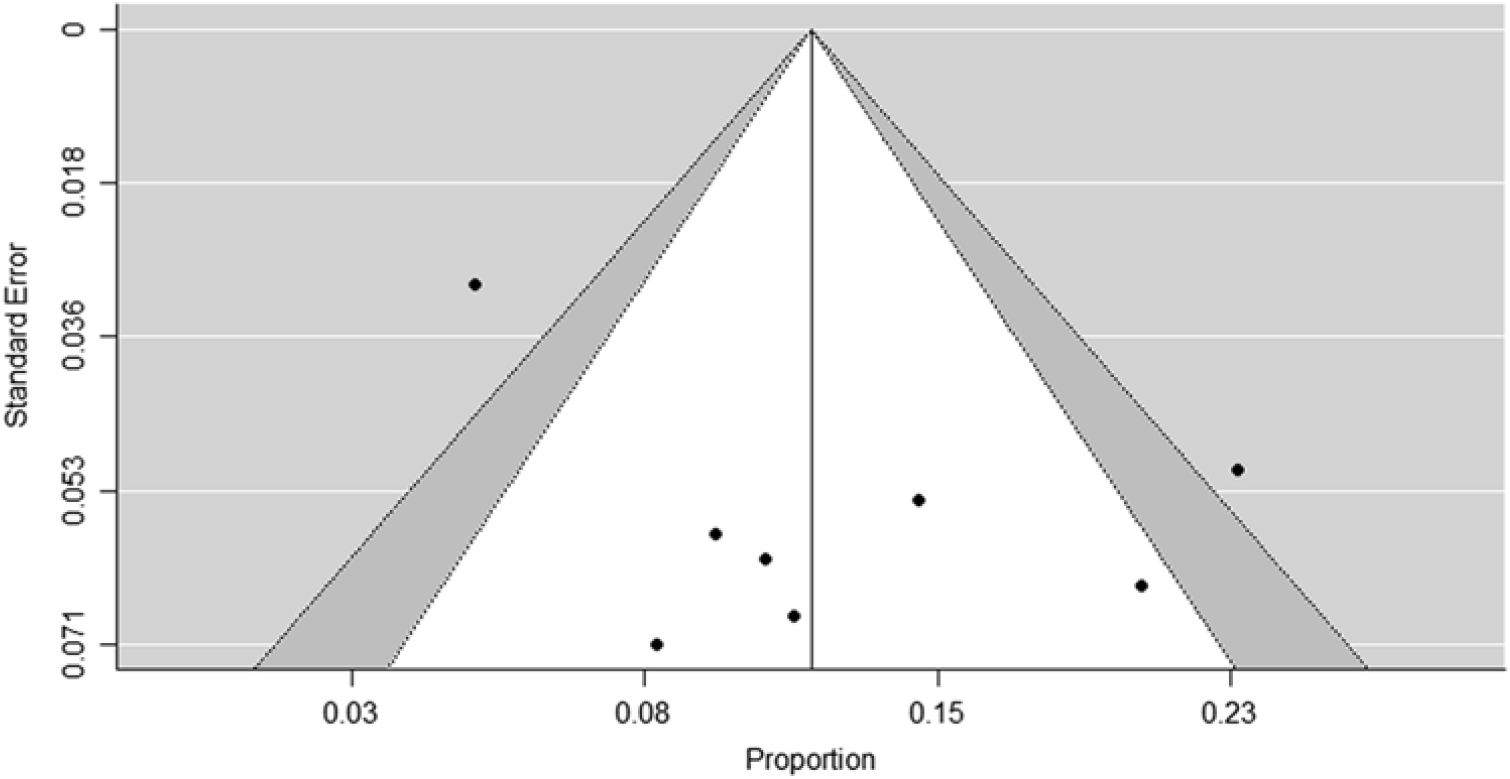
The main outcomes of interest were the proportion of cocarriage and rate of acquisition among household members, stratified by the study type (defined by its sampling scheme), and microbiological discrimination level. Cocarriage proportions of closely related and clonally related Enterobacteriaceae were compared. Cocarriage proportions of household members with clonally related ESBL-PE from index-case–based studies were pooled using meta and metafor packages.Reference Viechtbauer15, 16 Double-arcsine transformation was applied on raw proportions to estimate a normal distribution before pooling.Reference Barendregt, Doi and Lee17 Transformed individual effect sizes were then pooled using a random-effects model to account for between-study variance. Heterogeneity among effect size was estimated using the Q test and the I2 test. Subgroup comparisons were performed to explore relationships and heterogeneities by stratifying individual-based cocarriage among the proportion of species isolated from index cases (ie, >15% or <15% of K. pneumoniae). Potential publication bias or small-study effects were examined by funnel plot. All analyses were performed using the R open-source software environment, version 3.4.4 (R Foundation for Statistical Computing, Vienna, Austria). The R code is available in the Appendix (online).
Results
Study selection and features of included studies
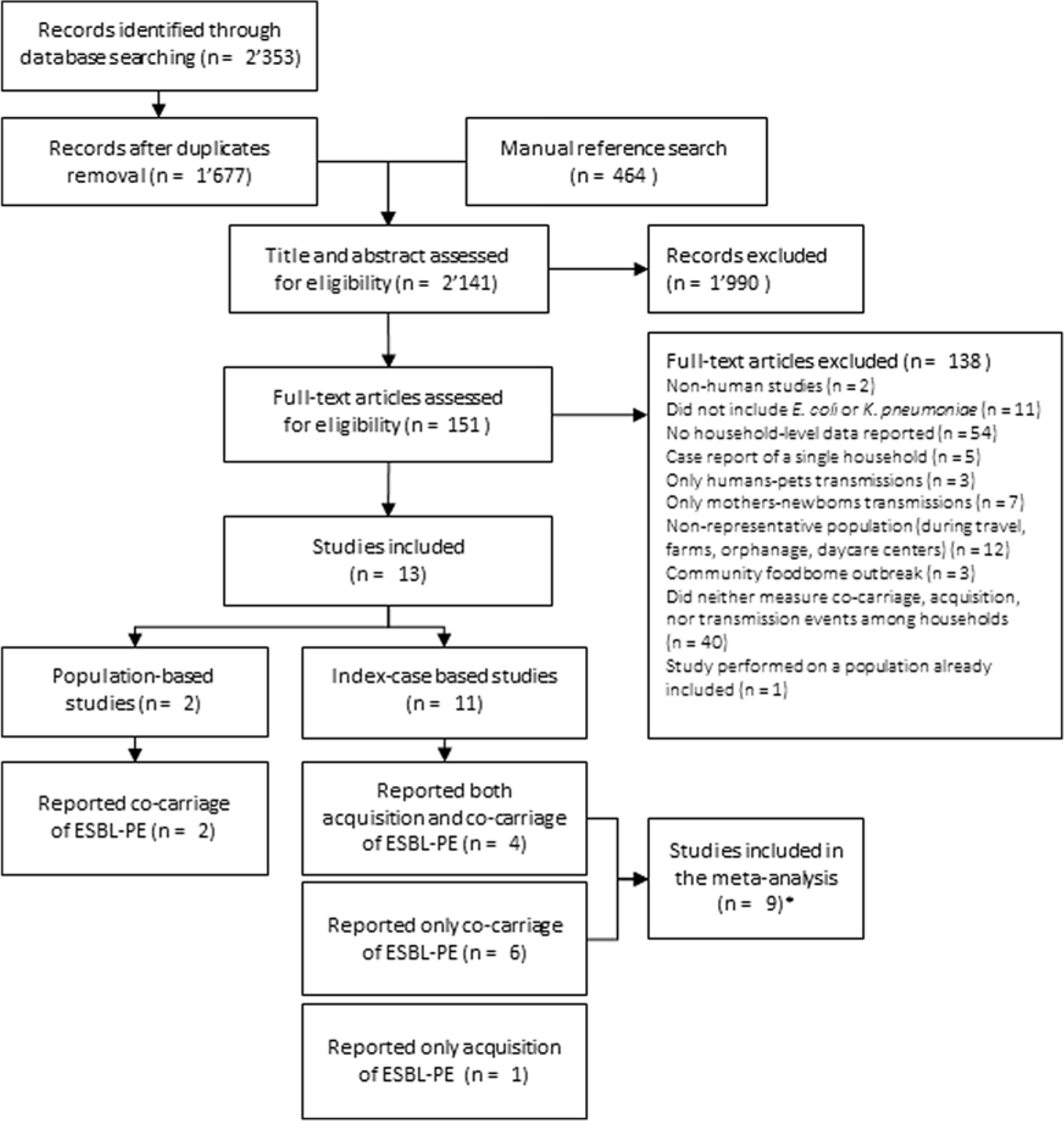
The literature search identified 2,353 articles. After duplicate removal, 2,141 articles were screened for eligibility. In total, 151 articles underwent full-text screening (κ, 0.80). Finally, 13 studiesReference Stewardson, Vervoort and Adriaenssens4, Reference Adler, Baraniak and Izdebski18–Reference Hilty, Betsch and Bögli-Stuber29 were selected for data extraction and bias assessment (Fig. 2). Two publications initially classified as population-based studies qualified as index-case studies because we were able to extract household cocarriage and acquisition rates with at least 1 colonized member from the crude data.Reference Stewardson, Vervoort and Adriaenssens4, Reference Liakopoulos, van den Bunt and Geurts22 Thus, sampling schemes were population based and index-case based for 2 and 11 studies, respectively. The 2 population-based studies were considered cross sectional,Reference Lo, Ho and Chow21, Reference Kurz, Bayingana and Ndoli25 and of the 11 index-case–based studies, 7 were longitudinal cohort studiesReference Stewardson, Vervoort and Adriaenssens4, Reference Strenger, Feierl and Resch20, Reference Arcilla, van Hattem and Haverkate24, Reference Tandé, Boisramé-Gastrin and Münck26–Reference Hilty, Betsch and Bögli-Stuber29 and 4 were cross-sectional studies.Reference Adler, Baraniak and Izdebski18, Reference Rodríguez-Baño, López-Cerero and Navarro19, Reference Liakopoulos, van den Bunt and Geurts22, Reference Valverde, Grill and Coque23 Two longitudinal studies were considered as nested cross-sectional studies for the purpose of our review because after a first baseline sampling at home, subsequent follow-up occurred only in a hospital setting.Reference Adler, Baraniak and Izdebski18, Reference Kurz, Bayingana and Ndoli25 Cocarriage data were not collected for one index-case–based study that only included previously negative household members.Reference Arcilla, van Hattem and Haverkate24 Another index-case–based study reporting only cocarriage of closely related bacteriaReference Stewardson, Vervoort and Adriaenssens4 was excluded from the meta-analysis, which focused on only those 9 studies with data on cocarriage of clonally reported pathogens. Acquisition rates were extracted and calculated from 5 of the 7 index-case–based cohort studies, excluding 2 studies with unknown ESBL-PE status of household members at baseline.Reference Strenger, Feierl and Resch20, Reference Hilty, Betsch and Bögli-Stuber29
Systematic review flow chart detailing the study selection procedure. Note. *Only studies evaluating cocarriage of clonally related extended-spectrum β-lactamase–producing Enterobacteriaceae (ESBL-PE) were included in the meta-analysis.

Study population
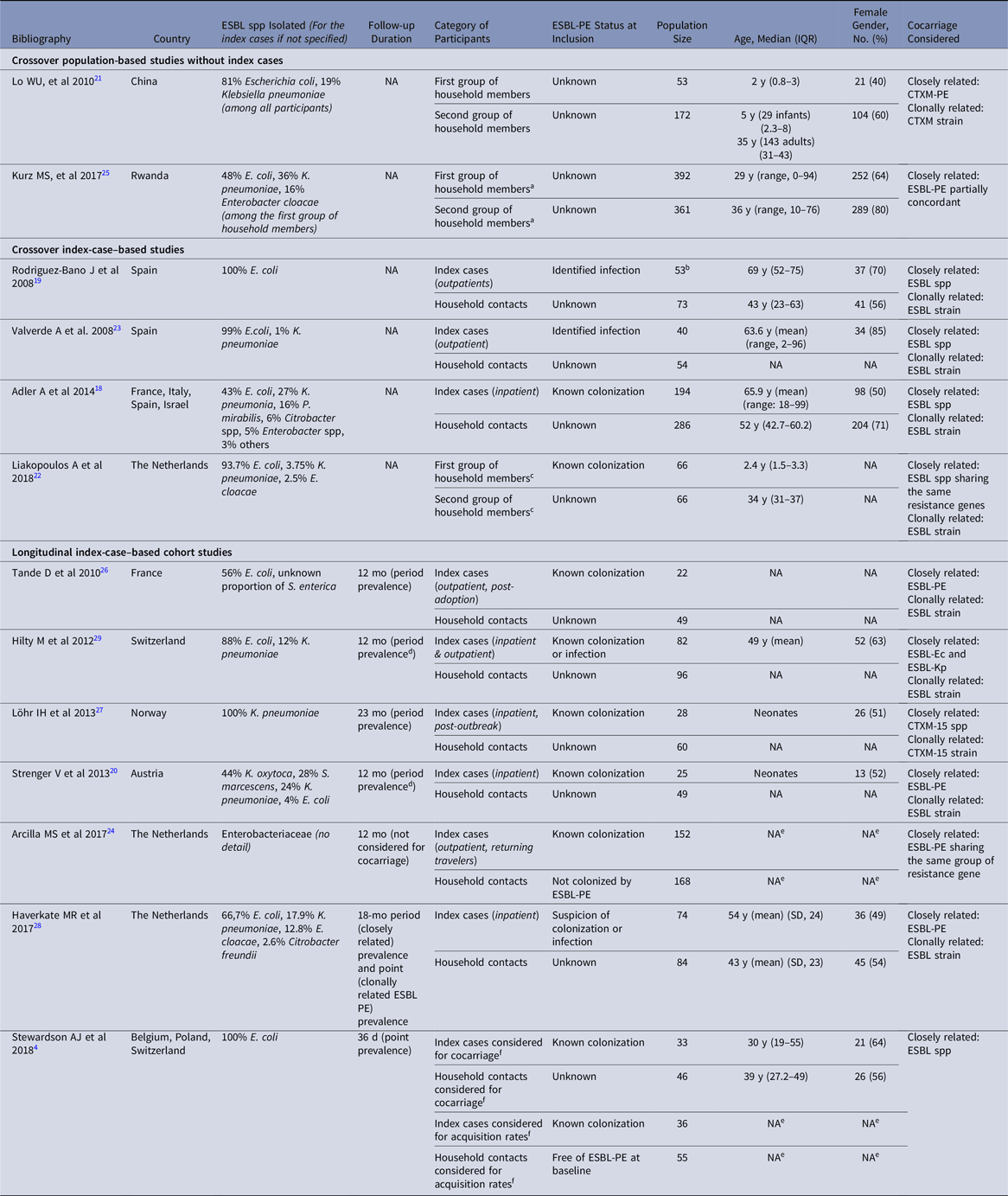
The main characteristics of the included studies are displayed in Table 1. For index-case–based studies, sample sizes ranged from 46 to 286 household members, and for population-based studies, sample sizes ranged from 225 to 753 household members. The 9 studies based on index cases defined them by being colonizedReference Adler, Baraniak and Izdebski18, Reference Strenger, Feierl and Resch20, Reference Arcilla, van Hattem and Haverkate24, Reference Tandé, Boisramé-Gastrin and Münck26, Reference Löhr, Rettedal and Natås27 or infectedReference Rodríguez-Baño, López-Cerero and Navarro19, Reference Valverde, Grill and Coque23 with ESBL-PE or both.Reference Haverkate, Platteel and Fluit28, Reference Hilty, Betsch and Bögli-Stuber29 The 4 population-based studies recruited household members from inpatient,Reference Lo, Ho and Chow21, Reference Kurz, Bayingana and Ndoli25 outpatient,Reference Stewardson, Vervoort and Adriaenssens4, Reference Lo, Ho and Chow21 or healthy community settings.Reference Liakopoulos, van den Bunt and Geurts22 Of the 13 studies, 3 recruited an entire familyReference Lo, Ho and Chow21, Reference Tandé, Boisramé-Gastrin and Münck26, Reference Haverkate, Platteel and Fluit28 and 10 recruited a convenience sample of at least 2 household participants.Reference Stewardson, Vervoort and Adriaenssens4, Reference Adler, Baraniak and Izdebski18–Reference Strenger, Feierl and Resch20, Reference Liakopoulos, van den Bunt and Geurts22–Reference Kurz, Bayingana and Ndoli25, Reference Löhr, Rettedal and Natås27, Reference Hilty, Betsch and Bögli-Stuber29
Study Population and Characteristics of Included Studies

Note. CTXM, specific family of genes coding for extended-spectrum β-lactamase; CTXM-15, specific gene coding for extended-spectrum β-lactamase; ESBL, extended-spectrum β-lactamase; ESBL-PE, extended-spectrum β-lactamase–producing Enterobacteriaceae; ESBL Ec, extended-spectrum β-lactamase–producing Escherichia coli; ESBL Kp: extended-spectrum β-lactamase–producing Klebsiella pneumoniae.
a Caregivers and not household members were concerned.
b 13 index cases lived alone.
c Data were extracted based on the crude microbiological data from the study “Van den Bunt et al.” Epidemiological information on this subpopulation (household members of a known carrier) is missing.
d Longitudinal cohort study not considered for acquisition rates because unknown proportion of previously negative household members.
e Nested cohort from the main study population, with missing epidemiological information.
f Cocarriage: 1 household member positive at baseline per household. Acquisition rates: 1 household member positive with negative household members.
Cocarriage proportions or acquisition rates were assessed for closely related and for clonally related pathogens in 13 of 13 and 10 of 13 studies, respectively. Closely related pathogens were defined as the sharing of same ESBL-PE species,Reference Stewardson, Vervoort and Adriaenssens4, Reference Adler, Baraniak and Izdebski18, Reference Rodríguez-Baño, López-Cerero and Navarro19, Reference Liakopoulos, van den Bunt and Geurts22, Reference Valverde, Grill and Coque23, Reference Löhr, Rettedal and Natås27, Reference Hilty, Betsch and Bögli-Stuber29 or ESBL-PE without species identification.Reference Strenger, Feierl and Resch20, Reference Lo, Ho and Chow21, Reference Arcilla, van Hattem and Haverkate24–Reference Tandé, Boisramé-Gastrin and Münck26, Reference Haverkate, Platteel and Fluit28 Pathogen characteristics, as well as main features of the applied microbiologic methods are described in Supplementary Table 1 (online). Supplementary Table 2 (online) summarizes reporting practices of the included studies. Potential confounders and biases were mainly reported for index cases at baseline, especially for previous antibiotic intake (12 of 13 studies) and previous hospital stays (10 of 13 studies). However, risk factors were often heterogeneously defined, and poorly reported during follow-up of household members. Considering potential microbiological biases (Supplementary Table 3 online), only 3 studies used broth enrichment,Reference Liakopoulos, van den Bunt and Geurts22, Reference Arcilla, van Hattem and Haverkate24, Reference Löhr, Rettedal and Natås27 and 4 analyzed >1 colony per morphotype.Reference Stewardson, Vervoort and Adriaenssens4, Reference Rodríguez-Baño, López-Cerero and Navarro19, Reference Lo, Ho and Chow21, Reference Liakopoulos, van den Bunt and Geurts22
Index-case–based studies evaluating cocarriage of ESBL-producing Enterobacteriaceae among household members
Cocarriage proportions of closely related pathogens were collected as a point prevalence (either in cross-sectional studies or at baseline of longitudinal studies) in 5 studies and as a period prevalence (with varying follow-up from 12 to 23 months) in 5 longitudinal studies. When considering cocarriage of closely related pathogens at the species level, point prevalence of ESBL-PE cocarriage among household members of a previously identified index case ranged between 8% and 27% and period prevalence ranged between 14% and 34%. When considering cocarriage of closely related pathogens at the Enterobacteriaceae level, period prevalence of cocarriage among household members of an index case ranged between 18% and 37%.
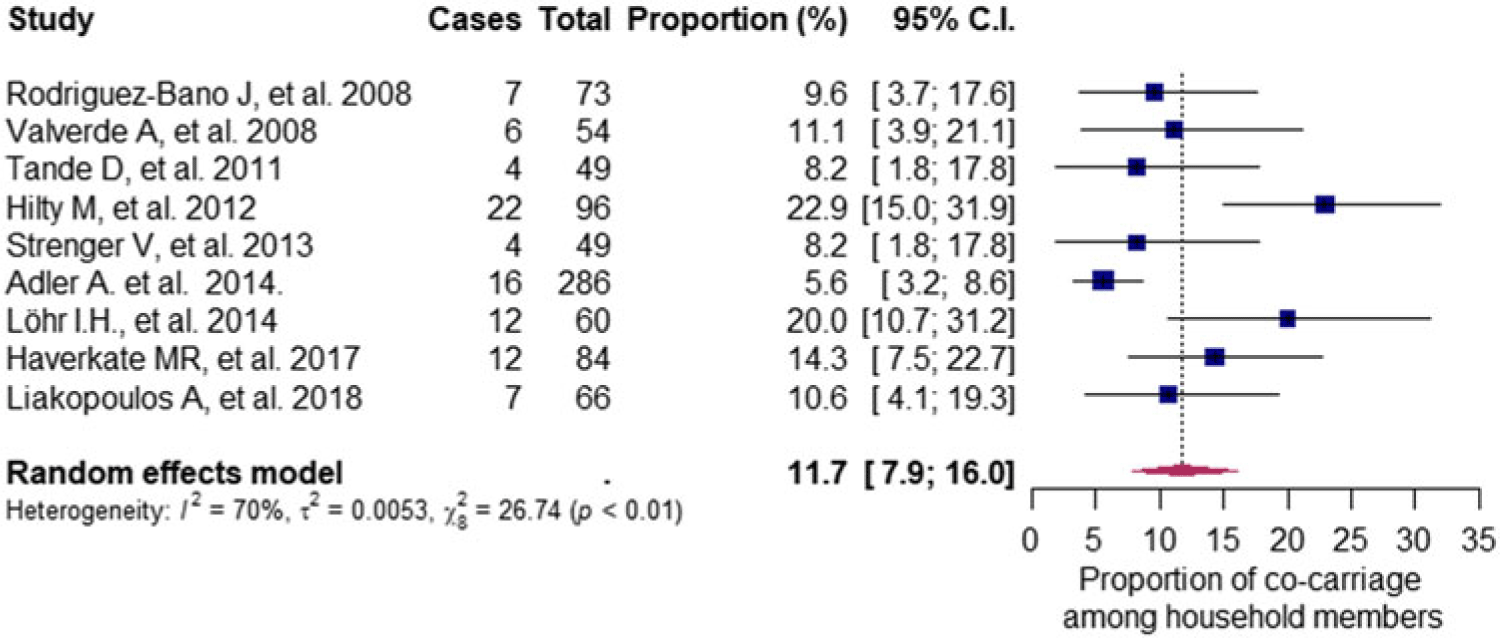
In the 9 studies assessing cocarriage of clonally related pathogens, including 817 household members of index cases colonized or infected by ESBL-PE, the proportion of cocarriage with a clonally related strain ranged between 5.6% and 23% (cf, Supplementary Table 4 online). The pooled estimate was 12% (95% confidence interval [CI], 8%–16%) (Fig. 3). High heterogeneity was observed among studies (I², 70%), with a Q test for heterogeneity rejecting the hypothesis of homogeneity (P < .001).
Forest plots for prevalence of cocarriage of clonally related extended-spectrum β-lactamase–producing Enterobacteriaceae (ESBL-PE).

Cocarriage proportions of clonally related K. pneumoniae was evaluated in 2 studies and ranged between 20% and 25%Reference Löhr, Rettedal and Natås27, Reference Hilty, Betsch and Bögli-Stuber29; cocarriage proportions of clonally related E. coli was evaluated in 3 studies and ranged between 10% and 20%.Reference Rodríguez-Baño, López-Cerero and Navarro19, Reference Valverde, Grill and Coque23, Reference Hilty, Betsch and Bögli-Stuber29 These findings reveal important differences after stratification by species. In a subgroup analysis stratifying studies that included <15% versus >15% of index cases colonized by ESBL-producing Klebsiella spp, cocarriage proportions were observed to increase for studies including more Klebsiella spp (13% [95% CI, 7%–21%] vs 10% [95% CI, 6%–14%]). Inspection of the funnel plot (Fig. 4) was not suggestive of any reporting bias for the primary outcome.
Evaluation of potential publication bias, funnel plot for prevalence of cocarriage of clonally related extended-spectrum β-lactamase–producing Enterobacteriaceae (ESBL-PE).

Population-based studies evaluating cocarriage of ESBL-producing Enterobacteriaceae among multiple families
Cocarriage at the population level was evaluated by 2 studies for closely related ESBL-PE (prevalence, 15% and 14%) and by a single study for clonally related ESBL-PE (6%; Supplementary Table 5 online).
Acquisition rates of ESBL-PE
Follow-up periods in the 5 prospective cohort studies evaluating ESBL-PE acquisition rates ranged from 36 days to 23 months, with a variable frequency between screening time points. Acquisition rates of closely related ESBL-PE among household members of a previously identified carrier were reported by 2 studies and ranged between 1.5 and 17.39 events per 1,000 person weeks, via follow-up of 223 initially ESBL-PE–free household members. When we restricted the analysis to clonally related ESBL-PE reported in 3 studies, the rates ranged between 1.56 and 2.03 events per 1,000 person weeks of follow-up among 180 initially ESBL-PE–free household members (Supplementary Table 6 online). Acquisition rates were slightly higher when expressed as person weeks at risk, excluding the follow-up time after an acquisition of a related ESBL-PE. In the 3 studies providing detailed data on person time at risk, the corresponding rates ranged between 1.69 and 19.21 events per 1,000 person weeks at risk versus, respectively, 1.56 and 17.39 events per 1,000 person weeks of total follow-up.
Discussion
ESBL-PE spread dominates in the community setting, mainly driven by specific subclones of ESBL-producing E. coli.Reference Bevan, Jones and Hawkey30 Through the sharing of well-recognized risk factors for community ESBL-PE carriageReference Tham, Odenholt and Walder8–Reference Hijazi, Fawzi and Ali11 and through their daily proximity, household contacts of ESBL-PE carriers are at risk of ESBL-PE acquisition. Household transmission of ESBL-PE has been described, but knowledge of its extent remains scant. To our knowledge, this is the first systematic review performed on cocarriage and acquisition of ESBL-PE in private households.
Higher carriage proportions were observed among household members of a colonized or infected index case compared to ESBL-PE carriage prevalence in the general population. For instance, carriage of ESBL-producing E. coli and K. pneumoniae was 4.5% in the Dutch populationReference van Duijkeren, Wielders and Dierikx31 but was 18% among such household members.Reference Liakopoulos, van den Bunt and Geurts22, Reference Haverkate, Platteel and Fluit28 In Switzerland, community carriage of ESBL-producing E. coli was 5.3%Reference Kronenberg, Hilty and Endimiani32 but reached 34%Reference Hilty, Betsch and Bögli-Stuber29 when considering household members. In France and Spain, community carriage of ESBL-producing E.coli was between 2% and 7%,Reference Castillo García, Seral García and Pardos De la Gandara33, Reference Galas, Decousser and Breton34 but this rate was 14%–27% among household members.Reference Rodríguez-Baño, López-Cerero and Navarro19, Reference Valverde, Grill and Coque23, Reference Tandé, Boisramé-Gastrin and Münck26 When focusing on ESBL-producing K. pneumoniae, community carriage was 0.3%Reference Ulstad, Solheim and Berg35 in Norway, and 20% in household members of a colonized index case.Reference Löhr, Rettedal and Natås27 Thus, families and households may serve as ESBL-PE amplification platforms.
Cocarriage proportions decreased when considering only cocarriage of clonally related ESBL-PE, with a pooled prevalence of 12%. These findings underline the importance of genotyping methods to elucidate the epidemiology of ESBL-PE in household settings. Moreover, they suggest that multiple sources of ESBL-PE introduction (eg, food, travel) into households may exist beyond transmission via ESBL-PE index cases, which may explain the polyclonal ESBL-PE picture observed in many households.Reference Johnson, Davis and Clabots36
Confidence intervals of pooled proportions for clonally related pathogens, as well as the range of prevalence proportions and rates, suggest important variations in cocarriage and acquisition of ESBL-PE between household members. Unfortunately, considering the small sample size and number of studies, the risk of overfitting for subgroup analyses was high. However, several hypotheses might explain this heterogeneity. First, substantial differences existed in study populations, risk factors, and microbiological features. For instance, index cases with an ESBL-PE–related infection, recruitment after an outbreak with a particularly transmissible strain, as well as antibiotic exposure, may increase the likelihood of ESBL-PE cross transmission.Reference Stewardson, Vervoort and Adriaenssens4 Additional characteristics of household members, such as healthcare exposure, travel activities, and food habits, may have influenced ESBL-PE acquisition risks.Reference Stewardson, Vervoort and Adriaenssens4, Reference Rodríguez-Baño, Navarro and Romero5, Reference van den Bunt, Liakopoulos and Mevius10, Reference Hijazi, Fawzi and Ali11, Reference Arcilla, van Hattem and Haverkate24 Second, the various study designs led to different estimates. Cocarriage evaluated during cross-sectional studies and at baseline during longitudinal studies was considered a point-prevalence proportion. This contrasts with cocarriage evaluated during the whole follow-up of a cohort study, considered a period-prevalence proportion. Comparability of such proportions might be questionable and may have caused methodological heterogeneity.Reference Zingg, Huttner and Ginet37 Third, included studies originated from different regions of the world. However, European households were overrepresented; thus, acquisition rates and cocarriage proportions might differ in other settings, especially in low- and middle-income countries. Clearly, the geographic and socioeconomic context influences ESBL-PE colonization pressure, antibiotic exposure, way of living, proximity of household members and ultimately ESBL-PE household acquisition rates.
We identified multiple potential biases in the included studies. Several studies only included 2 members in household members, introducing selection bias and possibly missing transmission chains. At isolate levels, relatedness analysis was often performed on the basis of a unique isolate per morphotype to determine cocarriage of clonally related pathogens. Acknowledging coexistence of sensitive and resistant ESBL-PE in our microbiota, some related strains and thus cocarriage has possibly been missed. Another detection bias might have missed resistant pathogens in the absence of broth-based methods, in case of very low bacterial load. Finally, despite the genotyping performed in more than half of included studies, the applied methods were not discriminative enough to assess strain relatedness among isolates to distinguish acquisition from external sources versus cross transmission. Of upmost importance, none of the included studies performed advanced bacterial or plasmid sequencing using whole-genome sequencing to elucidate the exact transmission pathways of ESBL-PE, as is already done in hospital-based studies.Reference Ruppé, Olearo and Pires38 Only 3 studies examined the spread of plasmids to other species in the gut across family members in the absence of clonally related pathogens (Supplementary Appendix 7 online). However, the methods were not discriminative enough to ascertain horizontal transfers of mobile genetic elements. Only sporadic sharing of plasmid profiles among household members were observed, but available data were not sufficient to measure the influence of mobile genetic transfer in acquisition rates of antibiotic resistance.
Differences in cross-transmission risk between Klebsiella spp and E. coli have been described in hospital-based studies.Reference Gurieva, Dautzenberg and Gniadkowski39 We identified a similar trend in the included household studies. If Klebsiella is more transmissible, E. coli seems to be a more successful colonizer of humans. This dominance might be explained by the presence of more transmission pathways (food chain, environment) and successful dissemination of particularly virulent subclones.Reference Schaufler, Semmler and Wieler40
In summary, the observed ESBL-PE cocarriage prevalence and acquisition rates are concerning and may explain in part ESBL-PE spread and persistence among families, along with other determinants. The observed heterogeneity in study designs and populations has contributed to the variability of results and limited the precision of our estimates. The methodological limitations of included studies therefore highlight the need for further research evaluating ESBL-PE cocarriage, acquisition, and cross transmission in households, with standardized selection and follow-up of participants. Furthermore, novel sequencing approaches are required to ascertain exogenous acquisition of bacteria and plasmids. Such research output could help to provide a broader understanding of ESBL-PE transmission dynamics in a One Health perspective, and ultimately could drive future preventive measures to control ESBL-PE in the community.
Supplementary material
To view supplementary material for this article, please visit https://doi.org/10.1017/ice.2019.336
Acknowledgments
We acknowledge the assistance provided by Didier Tandé and Marcus Hilty in providing data from and methodological details of their original studies.
Financial support
R.M. was partially supported by the Swiss National Science Foundation (grant no. 407240_177454). M.E.R. was partially supported by Joint Programming Initiative on Antimicrobial Resistance (JPIAMR) via the Swiss National Science Foundation (grant no. 40AR40-173608).
Conflicts of interest
S.H. participated in scientific advisory boards of DNA Electronics and Sandoz; and has received financial support for research activities from the European Commission. All other authors declare no conflicts of interest.