

A considerable body of research demonstrates the link between punitive parenting practices and negative developmental outcomes for children (Anda et al., Reference Anda, Felitti, Bremmer, Walker, Whitfield, Perry, Dube and Giles2006; Hoeve et al., Reference Hoeve, Dubas, Eichelsheim, van der Laan, Smeenk and Gerris2009; Jeynes, Reference Jeynes2007; McLeod, Weisz, & Wood, Reference McLeod, Weisz and Wood2007). One such practice, physical punishment, continues to be used by parents, despite research highlighting its harmful effects and its ineffectiveness in guiding children towards desirable behaviour (Gershoff, Reference Gershoff2002, Reference Gershoff2010; Gershoff & Grogan-Kaylor, Reference Gershoff and Grogan-Kaylor2016). Physical punishment has detrimental effects not only on children's physical, psychological, and social wellbeing but also on the parent-child relationship (Durrant & Ensom, Reference Durrant and Ensom2012). Experience of physical punishment in childhood has also been associated with negative outcomes in adulthood, such as mental health problems, aggression, criminal and antisocial behaviour, alcohol and other drug use, and a heightened risk of abusing one's own child or spouse (Durrant & Ensom, Reference Durrant and Ensom2012). Moreover, most substantiated physical abuse takes place within the context of punishment (Trocmé & Durrant, Reference Trocmé and Durrant2003; Trocmé et al., Reference Trocmé, Fallon, MacLaurin, Daciuk, Felstiner, Black and Cloutier2005; Trocmé et al., Reference Trocmé, MacLaurin, Fallon, Daciuk, Billingsley, Tourigny and McKenzie2001); that is, in most cases, physical abuse is physical punishment (Durrant, Reference Durrant2008). In fact, a recent meta analysis found that the effects of physical abuse and physical punishment (spanking) on children are similar in magnitude and direction across study designs, countries and age groups (Gershoff & Grogan-Kaylor, Reference Gershoff and Grogan-Kaylor2016). Despite the consistency of research findings demonstrating that physical punishment predicts only negative developmental outcomes, approximately 25% of Canadian parents continue to use it, and many Canadian children continue to experience it (Fréchette & Romano, Reference Fréchette and Romano2015; LaRoche, Lee, & Ateah, Reference Laroche, Lee and Ateah2013).
Reducing the prevalence of physical punishment is one means of reducing risk of maltreatment and negative developmental outcomes for children. Parenting programs that discourage physical punishment and encourage alternative approaches, such as non-physical forms of punishment and non-punitive parenting responses, hold promise in this area. Examples of alternative approaches are: providing explanations, teaching and encouraging self-regulation, monitoring children non-intrusively, and diverting children's attention. These responses have been linked to reductions in destructive behaviour and aggression, and to increases in positive social interaction, prosocial behaviour, moral regulation, empathy, social competence, self-control, and enhanced communication skills (Amato & Fowler, Reference Amato and Fowler2002; Carlo Knight, McGinley, & Hayes, Reference Carlo, Knight, McGinley and Hayes2011; Fabiano et al., Reference Fabiano, Pelham, Manos, Gnagy, Chronis, Onyango and Swain2004; Ford, Olmi, Edwards, & Tingstrom, Reference Ford, Olmi, Edwards and Tingstrom2001; Hester, Hendrickson, & Gable, Reference Hester, Hendrickson and Gable2009; Jones, Forehand, Brody, & Armistead, Reference Jones, Forehand, Brody and Armistead2002). A parent education program available in Canada that promotes alternatives to physical punishment is the Positive Parenting Program or Triple P (Sanders & Turner, Reference Sanders and Turner2005).
Triple P is a multilevel parenting program based on behaviourist social learning principles that has been adopted in more than 25 countries (Triple P, n.d.). The program is designed to: (1) improve parental competence and parenting skills by helping parents develop non-violent responses to common child behaviours (Sanders et al., Reference Sanders, Ralph, Sofronoff, Gardiner, Thompson, Dwyer and Bidwell2008); (2) reduce behavioural and emotional problems in children (Prinz, Sanders, Shapiro, Whitaker, & Lutzker, Reference Prinz, Sanders, Shapiro, Whitaker and Lutzker2009); (3) target five developmental periods: infancy, toddlerhood, preschool age, primary-school age, and adolescence (Sanders, Markie-Dadds, & Turner, Reference Sanders, Markie-Dadds and Turner2003); and (4) provide five levels of intervention of increasing intensity that allows for tailoring the intervention based on parents’ needs and preferences regarding type, intensity and mode of support required (Sanders et al., Reference Sanders, Markie-Dadds and Turner2003). Five meta analyses reveal the program has meaningful but small to moderate effects on child behaviour, parenting practices, and parent wellbeing (De Graaf, Speetjens, Smit, de Wolff, & Tavecchio, Reference De Graaf, Speetjens, Smit, de Wolff and Tavecchio2008a, Reference De Graaf, Speetjens, Smit, de Wolff and Tavecchio2008b; Nowak & Heinrichs, Reference Nowak and Heinrichs2008; Sanders, Kirby, Tellegen, & Day, Reference Sanders, Kirby, Tellegen and Day2014; Thomas & Zimmer-Gembach, Reference Thomas and Zimmer-Gembach2007). The larger effect sizes have been found for the more intensive levels of the Triple P program (Sanders, Healy, Grice, & Del Veccio, Reference Sanders, Healy, Grice, Del Vecchio and Thielking2017). Across study designs, parents consistently report positive changes in their parenting style, confidence and self-efficacy, and reductions in child behaviour problems (UNODC, 2009). These positive outcomes have been found across family types (e.g., single-parent, two-parent, and step families; and families where there is parental stress, depression, marital conflict, or a child with an intellectual disability) and among culturally diverse parents, including Indigenous, Chinese, Indonesian, and African American parents (Leung, Sanders, Leung, Mak, & Lau, Reference Leung, Sanders, Leung, Mak and Lau2003; Matsumoto, Sofronoff, & Sanders, Reference Matsumoto, Sofronoff and Sanders2007; Prinz et al., Reference Prinz, Sanders, Shapiro, Whitaker and Lutzker2009; Sanders et al., Reference Sanders, Markie-Dadds and Turner2003; Turner, Richards, & Sanders, Reference Turner, Richards and Sanders2007). What is not known is whether the program has an impact on parental use of physical punishment (Voisine & Baker, Reference Voisine and Baker2012).
To date, the link between receiving Triple P parent education and parental use of physical punishment has not been examined (Voisine & Baker, Reference Voisine and Baker2012). Also, the evidence base for Triple P comes from studies that have focused on the more intensive levels of the program and have been conducted in Australia and other countries around the world, such as Germany, Hong-Kong, Netherlands, Switzerland, Japan, and the United States (Bodenmann, Cina, Ledermann, & Sanders, Reference Bodenmann, Cina, Ledermann and Sanders2008; Heinrichs, Bertram, Kuschel, & Hahlweg, Reference Heinrichs, Bertram, Kuschel and Hahlweg2005; Leung, Sanders, Ip, & Lau, Reference Leung, Sanders, Ip and Lau2006; Matsumoto et al., Reference Matsumoto, Sofronoff and Sanders2010). Little research attention has been given to assessing the effectiveness of less intensive levels, such as Levels 1 and 2 (McConnell, Breitkreuz, Savage, & Hamilton, Reference McConnell, Breitkreuz, Savage and Hamilton2010), and Canadian studies in this area are largely absent from the literature. Thus, examining the effect of a less intensive level of Triple P (Level 2) on the parenting responses of a sample of Canadian parents was warranted.
Triple P Programming in Manitoba
Triple P has been accessible to parents in Manitoba since 2006 (Healthy Child Manitoba, 2015). In Manitoba, Triple P's primary focus is on families with children under the age of 12. Available services include the Manitoba Parent Line, Teen Triple P and variants of the five levels of intervention (Healthy Child Manitoba, 2015). Level 1 Triple P (Universal Triple P) provides information to parents through media campaigns and is designed to raise awareness and encourage participation in parenting programs. Level 3 Triple P is for parents with mild-to-moderate challenges (e.g., tantrums, fighting with siblings). Intervention methods include group, face-to-face, or telephone sessions with a Triple P practitioner, where parents are taught to respond to challenging situations through advice, rehearsal, and self-evaluation. Level 4 Triple P is for parents of children considered to have severe behaviour problems (e.g., oppositional defiant disorder, conduct disorder). Training may be self-directed or involve telephone, face-to-face, or group sessions (8–10 sessions) that focus on parent-child interaction, parenting skills and activities addressing the causes of children's behaviour and strategies for managing it, promoting positive family relationships, and encouraging children's development. Finally, Level 5 Triple P is for families in which both child behaviour and family dysfunction are of concern. Training is offered through group sessions, telephone or face-to-face contact, and includes teaching parenting skills, partner support skills, mood management strategies, and stress coping skills (Sanders, Reference Sanders2008; UNODC, 2009).
Level 2 or Seminar Triple P
Level 2 Triple P is designed for parents interested in participating in parent education and for those who have minor concerns about their child's behaviour or development (e.g., bedtime challenges). Delivery formats include brief consultations and group sessions. The group sessions (Triple P Seminar Series) consist of a series of three 90-minute public education seminars on positive parenting. The seminars are offered in the community and are designed for groups of 20 or more parents. They are aimed at increasing parental competence by: (1) enhancing parents’ communication about parenting issues, (2) promoting and increasing parents’ use of specific parenting principles and strategies, (3) promoting use of consequences, and (4) reducing stress related to parenting (Sanders & Turner, Reference Sanders and Turner2005). Facilitators provide informal presentations or generate group discussions and provide parents with support to address the parenting issues of concern (Sanders & Turner, Reference Sanders and Turner2005).
In Seminar 1, ‘The Power of Positive Parenting’, parents are introduced to the five principles that form the basis of the program and strategies that can be implemented to put each principle into practice (Sanders, Markie-Dadds, & Turner, Reference Sanders, Markie-Dadds and Turner2005; Sanders & Turner, Reference Sanders and Turner2005). In this seminar, parents are encouraged to avoid yelling, threatening or spanking and to: give their child attention, use praise, provide engaging activities, set a good example, use incidental teaching, use prompts to teach new skills, reward appropriate behaviour, establish ground rules, use directed discussion, watch and supervise, use planned ignoring for minor misbehaviour, give clear and calm instructions, and use consequences, quiet time and/or time out (Sanders & Turner, Reference Sanders and Turner2005).
In Seminar 2, ‘Building Confident, Competent Children’, parents are given information about fostering children's social and emotional skills. Strategies are discussed to help parents teach their children to be respectful and considerate, communicate well with others, develop healthy self-esteem, be good problem solvers, and become independent. Parents are encouraged to: teach their children to be polite and cooperative and to follow rules, model being considerate, and provide consequences for inconsiderate or hurtful behaviour. To help children develop healthy self-esteem, parents are encouraged to be affectionate towards their children and to encourage their children to be good friends to others, be active in outdoor play, set goals, recognise their accomplishments, express their ideas, laugh, and make decisions. To help children become good problem solvers and become independent, parents are encouraged to set a good example, teach their child problem-solving steps, and encourage children to take responsibility and do things for themselves (Sanders et al., Reference Sanders, Markie-Dadds and Turner2005; Sanders & Turner, Reference Sanders and Turner2005).
During Seminar 3, ‘Raising Resilient Children’, six building blocks of emotional resilience and strategies to promote development are discussed. Parents are encouraged to: (1) discuss feelings with their children, reward appropriate expression of emotion, and use consequences for inappropriate expression; (2) encourage their children's optimism, curiosity, and contentment; (3) teach their children to problem solve, think positively, relax, and look for support when needed; and (4) set a good example of managing their own stress and negative emotions, demonstrating problem solving when appropriate, and seeking professional advice when needed (Sanders et al., Reference Sanders, Markie-Dadds and Turner2005; Sanders & Turner, Reference Sanders and Turner2005). At the end of each seminar, parenting tip sheets summarising the information and strategies discussed are handed out, 30 minutes are allotted to allow parents to ask questions, and Triple P practitioners are available for individual consultations. If the need for a referral becomes evident through the consultation, the option of participating in a more intensive level of Triple P is suggested (Sanders & Turner, Reference Sanders and Turner2005).
Research on Level 2 or Seminar Triple P
Little research has been conducted on the effectiveness of the Seminar Series (McConnell et al., Reference McConnell, Breitkreuz, Savage and Hamilton2010; Sanders et al., Reference Sanders, Prior and Ralph2009). To date, four studies have examined its impact on child and parent outcomes (McConell et al., Reference McConnell, Breitkreuz, Savage and Hamilton2010; Sanders, Prior, & Ralph, Reference Sanders, Prior and Ralph2009; Sumargi, Sofronoff, & Morawska, Reference Sumargi, Sofronoff and Morawska2014, Reference Sumargi, Sofronoff and Morawska2015). For example, Sumargi et al. (Reference Sumargi, Sofronoff and Morawska2014) examined whether Level 2 Triple P enhanced parent and child outcomes (parenting style, child behaviour) with a sample of 30 Indonesian parents residing in Australia. However, the focus was on examining the effect of delivering one 90-minute Triple P seminar (as opposed to all three seminars). A pre–post design with a 3-month follow-up component was used. The Parenting Scale (Arnold, O'Leary, Wolff, & Acker, Reference Arnold, O'Leary, Wolff and Acker1993) was used to measure global parenting styles: laxness or permissive parenting (characterised by allowing rules to go unenforced, parents giving in, or providing positive consequences for misbehaviour), over-reactivity or authoritarian parenting (characterised by displays of anger, meanness, and irritability), and verbosity (characterised by long reprimands and reliance on talking even when talking is ineffective). The scale yields an overall dysfunctional parenting score. Child emotional and behavioural problems were measured with the Child Adjustment and Parent Efficacy Scale (CAPES; Morawska, Sanders, Haslam, Filus, & Fletcher, Reference Morawska, Sanders, Haslam, Filus and Fletcher2014). Post intervention, the average authoritarian parenting score had not decreased significantly, but parents did report less frequent use of dysfunctional parenting practices (permissive parenting style in particular), and a reduction was found in child emotional and behavioural problems. The effects were maintained at a 3-month follow-up.
Two studies have explicitly examined the effect of Level 2 Triple P (all three seminars) on various child and parent outcomes. Sanders et al. (Reference Sanders, Prior and Ralph2009) assessed the impact of the Seminar Series on parenting style, interparental conflict, relationship quality, parental adjustment, parental confidence, and behavioural and emotional problems in children. A sample of 244 Australian parents who had a child between the ages of 4 and 7 were assigned to a: (1) partial exposure condition that involved attending the introductory seminar, (2) full exposure condition that involved attending all three seminars, or (3) waitlist control group. The Parenting Scale (Arnold et al., Reference Arnold, O'Leary, Wolff and Acker1993) was used to measure parenting style. Post intervention, parents in both the full and partial exposure groups reported lower levels of authoritarian parenting and lower total levels of dysfunctional parenting compared to parents in the waitlist control group. There were no significant reductions in lax or verbose parenting practices among parents in the full and partial conditions compared to parents in the waitlist control group post-intervention.
Sumargi et al. (Reference Sumargi, Sofronoff and Morawska2015) examined the effects of Level 2 Triple P on various child and parent outcomes (parenting style, child behaviour) using a randomised pre–post waitlist comparison group design with a 6-month follow-up component. The sample comprised 143 parents residing in Indonesia. Child emotional and behavioural problems were measured with the CAPES (Morawska et al., Reference Morawska, Sanders, Haslam, Filus and Fletcher2014) while parenting practices were measured with the Parenting Subscale of the Parenting and Family Adjustment Scale (PAFAS; Sanders et al., Reference Sanders, Morawska, Haslam, Filus and Fletcher2014) and the Parenting Scale (Arnold et al., Reference Arnold, O'Leary, Wolff and Acker1993). Parents in the intervention group reported fewer behavioural problems, had significantly lower scores on laxness (permissive parenting) and overreactivity (authoritarian parenting), and had significantly lower scores on dysfunctional parenting as measured by the PAFAS compared to parents in the waitlist control condition at post-intervention. The effects were maintained at 6-month follow-up. Although these studies found Level 2 Triple P to be effective in improving parenting practices, the studies focused on global measures of ‘dysfunctional’ parenting or global measures of parenting practices that include both effective and ineffective strategies (positive encouragement, consistency, coercive parenting). Further, the results from the Sanders et al. (Reference Sanders, Prior and Ralph2009) study were based on data from randomly and non-randomly assigned samples.
One Canadian study examined the impact of integrating Triple P services into Parent Link Centres (PLCs) in Alberta (McConnell et al., Reference McConnell, Breitkreuz, Savage and Hamilton2010). One of the goals was to assess whether Levels 2 and 3 Triple P enhanced client outcomes (positive parenting practices, child difficulties, family functioning, and parenting stress) compared to PLC services as usual. Level 2 Triple P was defined as providing health promotion information or advice for specific concerns regarding child development or behaviour issues. Parent education was provided via one-on-one sessions or group seminars (Seminar Series) with the use of videotapes and parenting tip sheets. Level 3 Triple P provided a four-session intervention that incorporated one-on-one active skills training for parents reporting mild-to-moderate challenges (McConnell et al., Reference McConnell, Breitkreuz, Savage and Hamilton2010). Intervention sites consisted of PLCs that provided Levels 2 and 3 Triple P as well as services as usual, while comparison sites consisted of PLCs that provided only services as usual. Comparisons on child, parent, and family outcomes of interest revealed no differences between Triple P and services as usual groups (McConnell et al., Reference McConnell, Breitkreuz, Savage and Hamilton2010).
Although McConnell et al. (Reference McConnell, Breitkreuz, Savage and Hamilton2010) examined whether Triple P (Levels 2 and 3) enhanced client outcomes compared to PLC services as usual, the authors did not focus solely on the effect of the Seminar Series on the outcomes of interest. Further, parenting practices were measured with a scale that measures global parenting styles (parenting scales of the National Longitudinal Survey of Children and Youth; NLSCY).
Purpose and Hypotheses
Given the lack of research on Level 2 Triple P, the methodological problems noted in the available research, and the lack of data on the relationship between Level 2 Triple P and physical punishment, non-physical punishment and non-punitive responding, the proposed study sought to examine these relationships among a sample of parents residing in one Canadian city. For the purposes of this study, physical punishment is defined as ‘An action intended to cause physical discomfort or pain to correct a child's behaviour, to “teach a lesson”, or deter the child from repeating the behaviour’ (Durrant, Ensom, & Coalition on Physical Punishment of Children and Youth, Reference Durrant and Ensom2004, p. 1). Non-physical punishment refers to imposed non-physical consequences for a misbehaviour: withholding privileges, penalties, and time-out (Martin & Pear, Reference Martin and Pear2010). Non-punitive parenting responses refer to positive, non-violent strategies for dealing with problem behaviour and developmental issues: explaining or teaching desirable behaviour, using rewards, monitoring children's behaviour, withdrawing attention, and diverting children's attention (Sanders, Reference Sanders2008). Parental reports of physical punishment, non-physical punishment, and non-punitive responses were compared before and after parents attended the Level 2 Triple P parent education seminars.
Although the relationship between Level 2 Triple P and parents’ use of physical punishment has not been examined (Voisine & Baker, Reference Voisine and Baker2012), the primary objectives of Triple P, the program's content, and research on the more intensive levels of the program (Sanders et al., Reference Sanders, Markie-Dadds and Turner2005) suggest that receiving Triple P parent education should decrease use of physical punishment by educating parents about child development and a range of potential responses to challenging situations. Triple P also promotes the use of both non-physical punishment and non-punitive parenting. Therefore, it is reasonable to expect that participation in Level 2 Triple P should increase both non physical punishment and non punitive strategies.
We hypothesised that:
(1) Post-intervention, compared to pre-intervention, parents would use physical punishment less frequently.
(2) Post-intervention, compared to pre-intervention, parents would use non-physical forms of punishment (withholding of privileges, penalties, and time out) more frequently.
(3) Post-intervention, compared to pre-intervention, parents would use non-punitive parenting strategies (explain/teach, diversion, reward, monitoring, planned ignoring) more frequently.
Method
Design
A pre–post design was used. Baseline data were collected from participants via an online survey prior to their participation in the intervention. Post-intervention data were collected via an online survey 2 weeks following intervention completion.
Sample
Sample size calculation
Sample size calculations were conducted taking into account the pre–post intervention design. The minimum number of participants required to detect a medium effect size (0.6) when comparing mean differences for a given sample for a one-tailed test (examining statistical significance in the direction of interest as hypothesised), where power = .80 and alpha= .05, was determined to be 27 (Faul, Erdfelder, Buchner, & Lang, Reference Faul, Erdfelder, Buchner and Lang2009).
Inclusion criteria
Parents were required to have children between the ages of 2 and 6 years. This age group was selected because research suggests that children in this age group are those most likely to experience physical punishment (Durrant et al., Reference Durrant and Ensom2004). Therefore, the potential to detect change would be maximised. All participants were required to be 18 years of age or older, speak English, not have participated in another parent education program, and have common parenting concerns (e.g., non-compliance, bedtime routines).
Sampling procedure
Participant recruitment began in March 2014. Various recruitment strategies were used: (1) managers of community agencies were asked to share study information with clients, including a flyer and information letter providing details about the study; (2) diverse sites advertised the study: paediatricians’ offices, daycare centres in all community areas of the city, public indoor and outdoor pools, public libraries, community centres, family centres, resource centres, YMCAs, supermarkets, and centres that provide primary care and family services; and (3) several university and college departments advertised the study. All school divisions, community agencies that offer programming for parents, and parent-child coalitions in the city where the study was conducted were approached to ask if they were interested in hosting the seminars. Once an agency or coalition agreed to host the seminars, daycares, community centres and parent-child drop-in centres in the area were visited and study information was shared with parents. The study was also advertised through a study Facebook page, community newspapers, and parent-child coalitions’ networks.
To entice parents to participate, participants who attended the seminars had the opportunity to enter their name into a $50 draw at the end of each seminar. They also had the chance to enter their names into a draw to win $50 upon completing the pre-test and another $50 upon completing the post-test. Free childcare was also provided. After 13 months of recruitment, 29 parents had agreed to participate. Recruitment was discontinued 2 months after the third offering of the seminars and once all agencies that could host the parenting seminars had been approached.
Through a standardised telephone script, the 29 interested parents were screened to determine whether they met the inclusion criteria. All parents met the criteria but two mothers decided not to participate due to the distance between their homes and the locations where the seminars were held. The remaining 27 parents were sent a copy of the consent form, received session information reminders, and attended all three seminars.
Participants
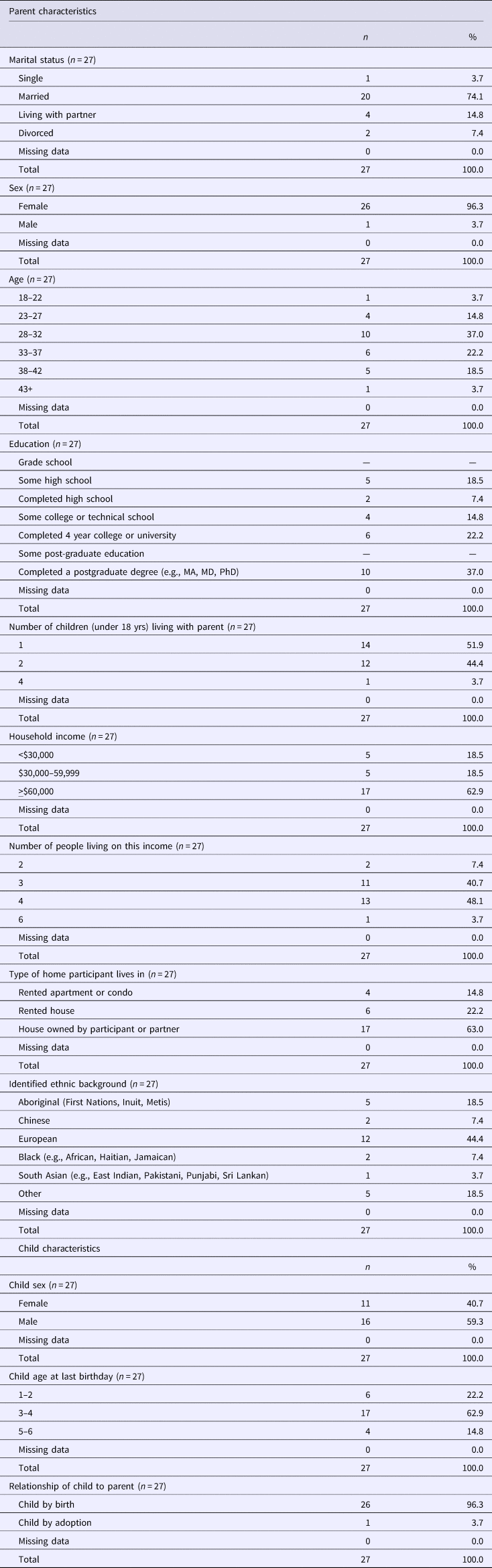
Table 1 summarises the sample's characteristics. All but one of the participants were female. The majority of participants were married (74.1%) and were between the ages of 28 and 42 years (77.7%). Participants who attended the seminars were highly educated. Slightly more than a third (37.0%) had completed a postgraduate degree. Approximately two-thirds of participants reported household incomes of $60,000 or more (62.9%) and reported living in houses they and/or their partners owned (63.0%).
Sample Characteristics

Participants were asked to answer questions in reference to their 2- to 6-year-old child. If they had more than one child in that age group, they were asked to choose one on whom to focus their responses (the target child). More than half of the target children were boys (see Table 1). Almost two-thirds of the target children were between 3 and 4 years of age. All but one of the participants reported that the target child was their biological child.
Materials
Survey questionnaire (pre-intervention and post-intervention)
The pre- and post-questionnaires included sections of the Parent and Adult Recall forms of the Dimensions of Discipline Inventory (DDI; for information about the DDI, see Straus & Fauchier, Reference Straus and Fauchier2007). The internal consistency of the DDI has been examined: Cronbach alphas have ranged from .50 to .61 across samples of parents and from .51 to .89 among samples of university students (Straus & Fauchier, Reference Straus and Fauchier2007). The DDI has been found to have good validity. For example, scores on the DDI's Sociodemographic Risk Index have been found to correlate significantly with mothers’ and fathers’ reports of physical punishment. The scales have been found to discriminate between psychological aggression and parents’ use of discipline methods as measured by each of the scales (Straus & Fauchier, Reference Straus and Fauchier2007). For detailed information about the psychometrics of each of the DDI's subscales (e.g., reliability analysis and results), please see Straus and Fauchier (Reference Straus and Fauchier2007).
Given the low internal consistency of the DDI among parent samples, the questionnaire used for this study also included four physical punishment items taken from the nine-item Parental Responses to Child Misbehavior Revised (PRCM-R) scale (see Holden, Reference Holden, Touliatos, Perlmutter and Holden2001, for more on the PRCM). Test–retest reliability for the original PRCM has been reported for a sample of middle- to upper-middle-class mothers with correlations for various items averaging .64 (Holden, Reference Holden, Touliatos, Perlmutter and Holden2001). The PRCM has been found to have good validity. For example, reports of spanking on this measure have been found to correlate significantly with a measure of attitudes toward spanking as well as reported daily reports of spanking: r = .54 and .77 respectively (Holden, Reference Holden, Touliatos, Perlmutter and Holden2001; Holden, Coleman, & Schmidt, Reference Holden, Coleman and Schmidt1995).
Procedure
Outcome variables
Physical punishment
Parental use of physical punishment was measured with the four items that make up the DDI's Corporal Punishment (CP) scale. These items assess how often in the past month the parent: (1) shook or grabbed the child to get their attention; (2) spanked, slapped, smacked, or swatted the child; (3) used a paddle, hairbrush, belt or other object; and (4) washed the child's mouth out with soap, put hot sauce on their tongue, or something similar. Response categories for each item have assigned weights and included: 0 = never, 36 = a few times a month (2–3 times a month), 50 = weekly (1–2 times a week), 200 = several times a week (3–4 times a week), 350 = daily (5 or more times a week), and 700 = two or more times a day. A total CP score is obtained by summing the weights across items. CP scores can range from 0 to 2,100. The higher the score, the more frequently physical punishment is used (Straus & Fauchier, Reference Straus and Fauchier2007). As the weights were assigned somewhat arbitrarily by the measure's creator (e.g., a response of ‘daily’ is given a value of 350 by rounding down the number of days in a year), this scoring system may distort the results. Therefore, we also used the simple rating scale given to parents: 0 = never; 1 = a few times a month (2 to 3 times a month); 2 = weekly (1 to 2 times a week); 3 = several times a week (3 to 4 times a week); 4 = daily (5 or more times a week); 5 = two or more times a day. To examine whether the weighted scoring system and the simple scoring system would yield different results, we conducted the pre–post analyses using both the weighted scores and the simple rating scores.
Non-physical punishment
Non-physical punishment was measured with two scales of the DDI. The Deprivation of Privileges scale measures how often in the past month parents: (1) took away the child's allowance, toys or privileges; (2) sent the child to bed without a meal; (3) withheld allowance, toys or other privileges; and (4) grounded the child or restricted the child's activities. The Penalty Tasks and Restorative Behavior Scale assesses how often in the past month parents: (1) gave the child extra chores; (2) made the child do something to make up for the misbehaviour; and (3) made the child apologise. The Non-Physical Punishment measure also included one item from the DDI's Diversion scale: how often in the past month the parent put the child in time out or sent the child to their room.
To obtain a total non-physical punishment score, the assigned scores for the scale items noted above were summed: 0 = never, 36 = a few times a month, 50 = weekly, 200 = several times a week, 350 = daily, and 700 = two or more times a day. Total non-physical punishment scores could range from 0 to 5,600. The higher the score, the more frequently non-physical punishment was used (Straus & Fauchier, Reference Straus and Fauchier2007).
Non-punitive parenting responses
Non-punitive parenting responses were measured with the DDI's Non-Punitive Responding scale, which assesses how often in the past month parents: (1) explained rules to the child, (2) showed or demonstrated the right thing to do, (3) deliberately did not pay attention when the child misbehaved, (4) let the child misbehave so they would have to deal with the results, (5) praised the child, (6) gave the child money or other things for stopping misbehaviour or for behaving well, (7) checked on the child so they could tell them they were doing a good job, (8) told the child they were watching or checking to see if the child did something, and (9) checked on the child to see if he or she was misbehaving. Although some of these items are debatably punitive (e.g., planned ignoring), we decided to use this scale as it was the only one we found that included all parenting responses of interest. We also included one item from the DDI's Diversion subscale, which asks parents how often in the past month they give the child something else to do instead of what they were doing wrong. To obtain a total non-punitive responding score, each parents’ scores on these 10 items were summed. Response categories for scale items have assigned values and include: 0 = never, 36 = a few times a month, 50 = weekly, 200 = several times a week, 350 = daily, and 700 = two or more times a day. Total scores could range from 0 to 7,000. The higher the score, the more frequently non-punitive responses were used.
Data collection
Pre- and post-intervention questionnaires were created with FluidSurvey, an online survey platform. Parents were asked to complete the pre-intervention questionnaire electronically 2 weeks prior to attending the seminars. Those who requested a paper copy of the survey as they did not check their email frequently were sent a copy of the questionnaire via post along with a postage-paid return envelope. Parents were telephoned and emailed 3 days prior to the first seminar to remind them of the seminar times and location. An accredited Level 2 Triple P practitioner was hired and facilitated the seminars. All seminars were facilitated by the same individual for consistency. The Seminar Series was delivered to participating parents with 1 week between seminars. Two weeks following the completion of the third seminar, parents were sent an email message providing a link to the post-intervention questionnaire. Those with infrequent access to email were sent a copy of the post-intervention questionnaire via regular mail. Once all parents had completed the post-intervention questionnaire, they were sent a thank you letter via email (all parents indicated they wished to receive the thank you letter via email). All parents were sent a summary of the findings via email once the project was completed.
Ethical considerations
The project received ethics approval from the Education and Nursing Research Ethics Board of the University of Manitoba. All criteria for informed consent were reviewed with potential participants upon initial telephone contact. Participants’ contact information was not connected to their questionnaires. Their email addresses were uploaded directly to FluidSurvey. The program assigned a code to the survey link sent to each participant and recorded only the assigned code along with each person's responses. The codes were used to connect pre- to post-test data but not to connect data to individuals. When a participant requested paper copies of the questionnaires, these were assigned a randomly generated code. No record was kept of the codes assigned to participants.
Method of data analysis
Univariate descriptives, paired samples t tests, and Wilcoxon signed rank tests were used to test the study's hypotheses.
Results
Hypothesis 1: Parents’ Use of Physical Punishment Will Decrease From Pre- to Post-Intervention
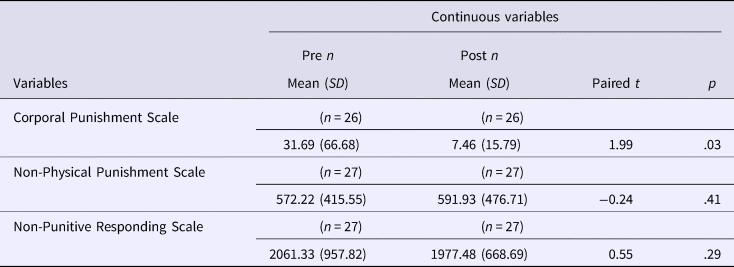
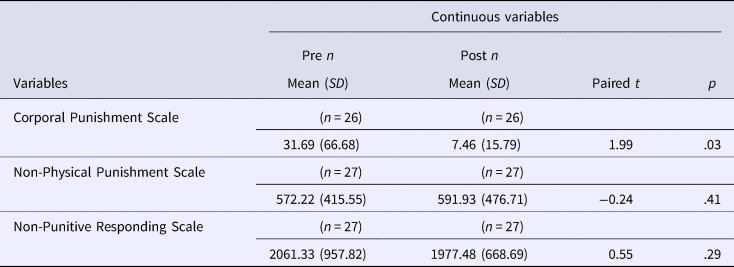
Table 2 provides the results of the paired samples t test on the Corporal Punishment scale before and after attending the Triple P parenting sessions. There was a significant decrease on this scale from pre- (M = 31.69, SD = 66.68) to post-intervention (M = 7.46, SD = 15.79) for a one-tailed test at the .05 level of significance; t(25) = 1.99, p = .03.
Results of Paired Samples t Test on Outcome Measures Using Dimensions of Discipline Inventory (DDI) Weighted Scores
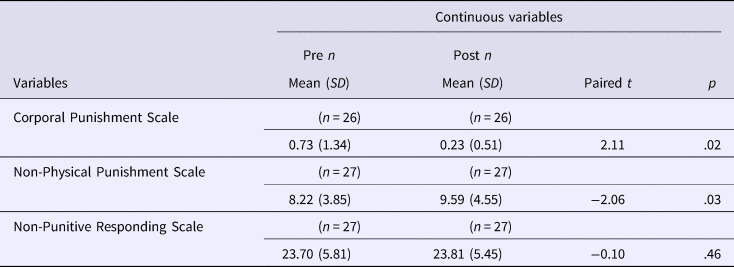
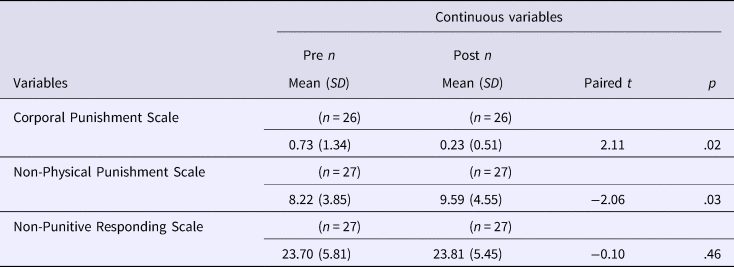
The paired samples t test on the Corporal Punishment scale was also conducted with the simple rating scale given to parents to assess whether the weighted scores were confounding the findings (see Table 3). Again, the Corporal Punishment score decreased from pre- to post-intervention.
Results of Paired Samples t Test on Outcome Measures Using Dimensions of Discipline Inventory (DDI) Simple Rating Scale
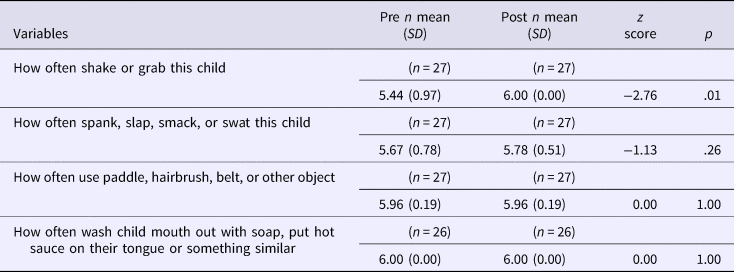
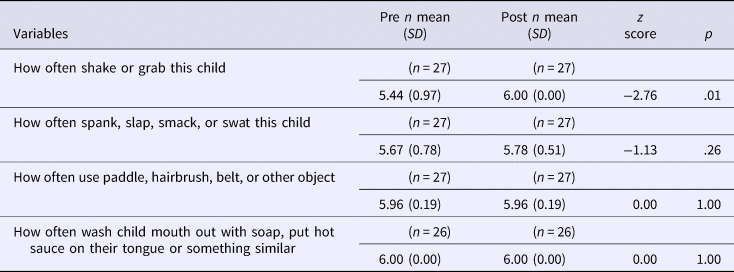
To further examine this finding, a descriptive analysis of the items that make up the Corporal Punishment scale was conducted. It revealed that there was a decrease pre- to post-intervention only in the case of shaking/grabbing. Prior to the intervention, 66.7% of parents (18 parents) reported never shaking/grabbing a child while all parents (27 parents) reported never doing so following the intervention. On the spanking/slapping/smacking/swatting item, two parents moved categories (from more often to less often) but no one moved to the never category. There was also a floor effect for two (hit child with objects, wash child's mouth out with soap) of the four items of this scale. That is, pre-intervention, the majority of parents reported never hitting their child with an object or washing their child's mouth out with soap. To further examine how parents’ post-test scores on the Corporal Punishment items differed from their pre-test scores, Wilcoxon signed rank tests were conducted for each pair of items. As can be seen in Table 4, post-test scores were significantly higher than pre-test scores only on the shaking/grabbing item, z = −2.76, p = .01. That is, parental use of shaking/grabbing significantly decreased from a mean frequency of a few times a month (M = 5.44) pre-intervention to never (M = 6.00) post-intervention.
Results of Wilcoxon Signed Rank Test Comparing Physical Punishment Items Pre-and Post-Intervention
Hypothesis 2: Parents’ Use of Non-Physical Punishment Will Increase From Pre- to Post-Intervention
As shown in Table 2, parents’ Non-Physical Punishment Scale scores did not change significantly from pre- to post-intervention (M = 572.22, M = 591.93) for a one-tailed test at the .05 level of significance, t(26)= -.24, p = .41. Results of the paired samples t test using the simple rating scale revealed a significant increase on the Non-Physical Punishment Scale (see Table 3).
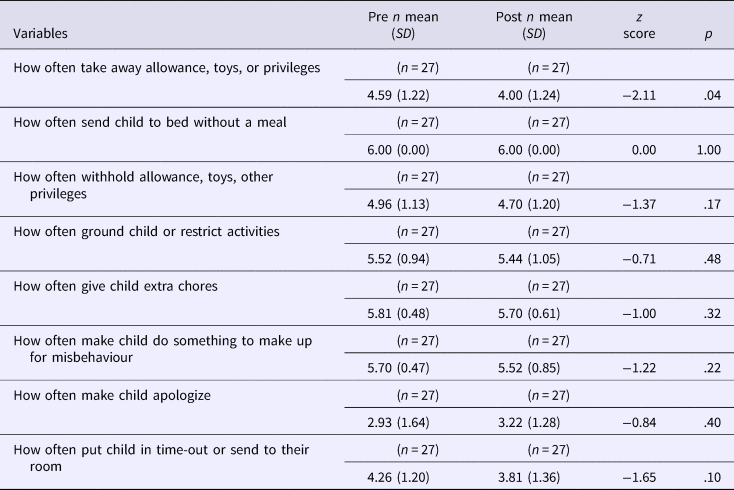
To further examine this increase, a frequency analysis of items that make up the Non-Physical Punishment Scale was conducted. There was a floor effect for the item ‘How often do you send the child to bed without a meal?’. To examine whether this item affected the results of the paired samples t test, the analysis was conducted again without this item using the weighted scores and the simple rating scale. The pre- to post-intervention difference on this item remained non-significant whether the weighted scores or the simple ratings were used. The frequency analysis also revealed that all remaining items of the Non-Physical Punishment Scale showed increases in some of their categories pre- to post-intervention. For instance, when it came to how often the parent made the child apologise, 18.5% of parents (five parents) reported doing this several times a week prior to the intervention while 33.3% (nine parents) reported doing so post-intervention.
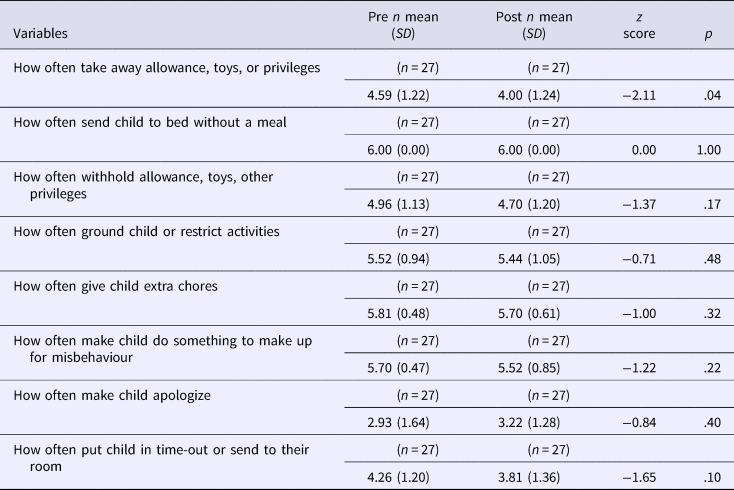
To examine mean differences between the pre- and post-test scores, Wilcoxon signed rank tests were conducted on each item (Table 5). Scores increased pre- to post-intervention only for the ‘Make the child apologise’ item, but this increase was not statistically significant (z = −0.84, p = .40). For the item with the previously noted floor effect (send child to bed without a meal), scores did not change pre- to post-intervention. For all remaining items, pre- to post-test scores decreased but the difference was statistically significant only for the ‘Take away allowance, toys, or privileges’ item, z = −2.11, p = .04.
Results of Wilcoxon Signed Rank Test Comparing Non Physical Punishment Items Pre- and Post-Intervention
Hypothesis 3: Parents’ Use of Non-Punitive Responses Will Increase From Pre- to Post-Intervention
As shown in Table 2, parents’ scores on the Non-Punitive Responding scale did not differ significantly from pre- to post-intervention (M = 2,061.33, M = 1,977.48) for a one tailed test at the .05 level of significance, t(26) = 0.55, p = .29. Results of the paired samples t test using the simple rating scale were similar (see Table 3).
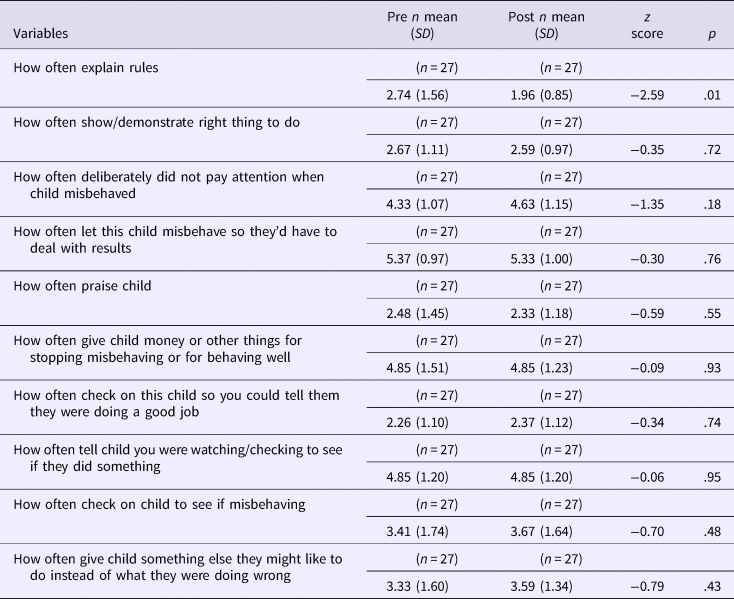
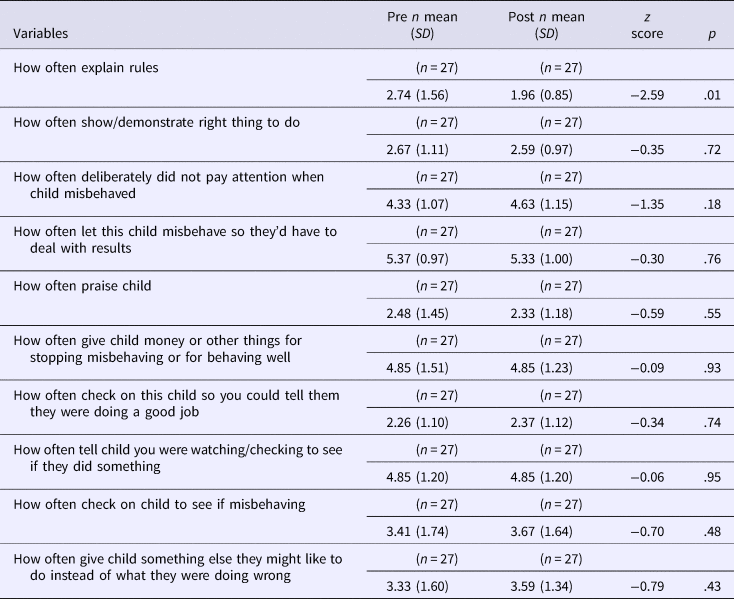
A frequency analysis of the Non-Punitive Responding items revealed that for all but one item (where scores stayed the same for each category), there were small changes pre- to post-intervention for various item categories. For instance, prior to the intervention, 11.1% of parents (three parents) indicated they used praise with their children several times a week while 22.2% (six parents) reported doing so after the intervention. To further examine parental responses to the Non-Punitive Responding items pre- to post-intervention, Wilcoxon signed rank tests were conducted on each item. As Table 6 indicates, there was a significant decrease from pre- to post-test scores on the explain rules item, z = −2.59, p = .01. Given that similar results (except for Non-Physical Punishment) were found whether the weighted scores or the simple rating scale was used, the weighted scores are used when discussing the findings.
Results of Wilcoxon Signed Rank Test Comparing Non-Punitive Responding Items Pre- and Post = Intervention
Discussion
A significant decrease was found in parents’ reporting of physical punishment overall from pre- to post-intervention. However, this decrease was due to change on only one of four items: shaking/grabbing the child. The floor effects at pre-test on two items (hitting with objects, washing the child's mouth out with soap) made it impossible to find a decrease on these items post-intervention. The analysis was therefore limited to the remaining two items (shaking/grabbing and spanking/slapping/smacking/swatting). The mean frequency of spanking/slapping/smacking/swatting did not decrease post-intervention, and in fact increased slightly, though non-significantly. Therefore, the first hypothesis was only partially supported.
This study is the first to investigate whether Level 2 Triple P has potential to reduce parental use of physical punishment. As the most common form of physical punishment (spanking/slapping/smacking/swatting) did not decrease, the potential usefulness of the Seminar Series in reducing physical punishment as defined in this study cannot be fully ascertained and needs to be further explored. In addition to the floor effects at pre-test on two of the four physical punishment scale items, there are three other possible explanations for the lack of a significant decrease in overall use of physical punishment pre- to post-intervention. One explanation might be the measures used in this study. The DDI's Corporal Punishment scale is designed to assess changes in specific, goal-directed behaviours (Straus & Fauchier, Reference Straus and Fauchier2007). Studies that have found the Triple P seminars to be effective in reducing coercive parenting have used instruments that measure parenting styles, or global dimensions or categorisations, such as permissive discipline or authoritarian discipline (Sumargi et al., Reference Sumargi, Sofronoff and Morawska2014; Sanders et al., Reference Sanders, Prior and Ralph2009). Another explanation may be that parents may need longer than the 2-week assessment period post-intervention to implement other strategies learned. It may also be that the Seminar Series increases parents’ awareness of and desire to change their use of physical punishment, but not their actual behaviour.
While parents’ reports of non-physical punishment did not change overall from pre- to post-intervention, their reports of taking things away from their children (allowance, toys, and privileges) increased. Similarly, although parents’ non-punitive responding did not change overall over the course of the program, the frequency analysis revealed there was an increase in the frequency with which they explained rules, from several times a week at pre-intervention to daily at post-intervention. Therefore, hypotheses 2 and 3 were only weakly supported.
This study is the first to examine the relationship between Level 2 Triple P and parents’ reports of non-physical punishment and non-punitive responding. The finding that parents who participated in Level 2 Triple P took things away from their children and explained rules more often following the program is consistent with research on targeted Triple P that suggests the program leads to increased non-physical punishment (e.g., taking away allowance or toys) and non-punitive responses such as explaining rules (De Graaf et al., Reference De Graaf, Speetjens, Smit, de Wolff and Tavecchio2008a; Hahlweg, Heinrich, Kuschel, & Feldmann, Reference Hahlweg, Heinrichs, Kuschel and Feldmann2008; Nowak & Heinrichs, Reference Nowak and Heinrichs2008; Thomas & Zimmer-Gembach, Reference Thomas and Zimmer-Gembach2007). However, a study that implemented all five levels of Triple P found no significant difference from pre- to post-intervention in parents’ total use of non-physical punishment and non-punitive responses, such as applying consequences that fit the situation, giving rewards or descriptive praise, or calling a family meeting to work out a solution (Sanders et al., Reference Sanders, Ralph, Sofronoff, Gardiner, Thompson, Dwyer and Bidwell2008). Together with these findings, the present results might indicate that Level 2 Triple P is not sufficient to convince or enable parents to eliminate their use of physical and other punishments. They may require a more intensive program variant or more discussion time, examples of how to implement the strategies, or additional support (Sanders et al., Reference Sanders, Ralph, Sofronoff, Gardiner, Thompson, Dwyer and Bidwell2008; Sumargi et al., Reference Sumargi, Sofronoff and Morawska2014). Given that in two of the three seminars there is limited focus on teaching actual strategies, changes in seminar content may be required to achieve changes in parents’ behaviour. Alternatively, it might be the case that the content of the Seminar Series places emphasis on taking things away from children as punishment and on setting rules. Thus, the present findings may indicate that the Seminar Series conveys these messages effectively to parents.
Limitations
Due to the study design used, any changes seen from pre- to post-intervention cannot be interpreted to be solely the result of the Triple P seminars. Also, the study design did not include a follow-up component, so it was not possible to assess maintenance of effects (or non-effects) over the long term. With regard to the sample, all participants who expressed interest in participating were accepted provided they met inclusion criteria. Thus, self-selection bias may have occurred. More than half of the parents had completed at least one university degree and two-thirds had household incomes of at least $60,000. Therefore, this sample was likely not representative of the Canadian parent population. Although the sample size was adequate according to our power calculation, a larger sample size would have increased the power to detect change.
Regarding the measures, the DDI scales have been found to have low internal consistency, and some of their constituent items are double-barrelled questions, affecting the reliability of the data. Also, the scale used to measure non-punitive responding included planned ignoring, which is actually a form of punishment (Martin & Pear, Reference Martin and Pear2010), reducing the validity of the non-punitive responding scale. The floor effects found on several of the physical and non-physical punishment items at pre-test made it impossible to find a decrease on them post-intervention. Finally, biases inherent in self-reports such as social desirability bias and recall bias might have affected the findings.
Directions for Future Research
Examining the impact of the Seminar Series on changes in parents’ use of physical and other punishments with a larger sample and a randomised control design is warranted. Future research should follow parents over a few months following program completion, with repeated data collection at specific time periods to allow for the examination of change over time. Samples should be more diverse, including more fathers, younger parents, and parents from diverse socioeconomic and ethnic backgrounds. Future studies also should include two or more sources of data (e.g., children's reports, teachers’ reports) or make use of other methodologies (e.g., audio recordings of family interactions, home observation and coding of family interactions) to enhance validity of outcome measurement. Given our findings, parents’ awareness and desire to change their use of physical punishment following completion of the seminars should also be assessed.
Finally, the time commitment required for the Seminar Series may be seen as too great by parents of young children, who often have many competing demands on their time (e.g., challenging to recruit participants, only one father participated). Offering a range of delivery modes (e.g., web-based program, self-directed with telephone assistance, television program) may facilitate accessibility to parents. Strategies that were found in this study to facilitate recruitment were: (1) identifying organisations or school divisions interested in offering the seminars well in advance, (2) providing monetary contributions to organisations that agree to offer the seminars, (3) minimising the work required of host organisations, (4) identifying the ideal time for recruitment within participating organisations, (5) offering child-minding services and snacks, and (6) providing a token of appreciation for each participant after each seminar.
Conclusions
This study serves as a feasibility study to guide future work examining the relationship between Level 2 Triple P, physical punishment, and non-punitive parental responses. We gathered useful information for conducting a full-scale study on this topic in a Canadian context by: (1) collecting preliminary data on a relationship not previously examined, (2) assessing the adequacy of the instruments as well as the sampling frame and technique, and (3) identifying effective recruitment strategies for parents of preschoolers.
The lack of change found in parents’ reports of the most common forms of physical punishment (spanking/slapping/smacking/swatting) should be further examined from both a qualitative (parental experience of the seminars) and a quantitative perspective. The increase found in parents’ tendency to take things away from their children may be cause for some concern, as taking things away from children is a power assertive act that does not actually help the child to acquire skills or understanding. It is important to gain a better understanding of the actual content of the seminars to determine the extent to which parents are taught to use punishments (e.g., taking things away from children) over non-punitive responses. Finally, parents did not report modelling appropriate behaviour, praising their children, or ‘catching them being good’ more often. Thus, several ‘positive parenting’ strategies did not increase over the course of the Seminar Series. It is important to highlight that changing behaviour is a complex task. From a socio-ecological perspective, intrapersonal (e.g., individual child characteristics such as child age or behaviour, parent characteristics such as knowledge and skills), interpersonal (e.g., family, friends, social networks), and broader environmental factors (e.g., organisational: schools, workplaces; community: connectedness, spaces; and laws and policy) influence behaviour (McLeroy, Bibeau, Steckler, & Glanz, Reference McLeroy, Bibeau, Steckler and Glanz1988). The Triple P Seminar Series targets influences at the intrapersonal level (e.g., parental knowledge, skills), which are factors at one level of the multiple levels that interact to influence behaviour. Further research is needed on the impact of the Seminar Series on physical punishment and non-punitive responses by parents.
Acknowledgments
This work was completed in partial fulfillment of the corresponding author's doctoral work. The Children's Hospital Research Institute of Manitoba (Grant # SMG13-15, 2013), Research and Education for Solutions to Violence and Abuse (RESOLVE), and the University of Manitoba are acknowledged for their financial support. The funding sources had no role in the design of the study, analysis of data, writing of the paper, or the decision to publish.
Declaration of Interest
None.
Ethical Standards
The authors assert that all procedures contributing to this work comply with the ethical standards of the relevant national and institutional committees on human experimentation and with the Helsinki Declaration of 1975, as revised in 2008.