“We have to change our mindsets and start thinking about biological threats as the security threats that they are—in addition to being humanitarian threats and economic threats. We have to bring the same level of commitment and focus to these challenges as we do when meeting more traditional security issues.”
President Barack Obama
The potential for disasters in Africa—both epidemics of disease and other disruptive catastrophes—poses a significant threat with worldwide implications. 1 - Reference Heymann 5 The capability and capacity of governments to manage these threats are critical to global health security, as well as national and regional stability, and indicative of the fundamental responsibility of any state to protect vulnerable populations from the impact of disasters. Government agencies play key roles in preparing for and responding to disasters in collaboration with non-governmental and international organizations to provide essential services such as security, logistics, communications, and health care to affected populations. When a government visibly demonstrates its resolve to mitigate or respond effectively to catastrophes, trust in government by the population is validated, resulting in increased stability and security.Reference Allenby and Fink 6 - Reference Benson and Clay 8 Conversely, it is evident that with increasing levels of disaster severity and ineffective governance to support the basic needs of the citizenry, trust in government fails, leading to high-risk environments for instability. 9 - 13
The notion of “health security,” or the protection from threats to population health, has recently risen to the forefront of international security discussions—particularly in light of Ebola and Zika virus outbreaks in the past few years.Reference Heymann, Chen and Takemi 14 Twenty-five percent of global non-conflict emergencies, and 44% of deaths related to these emergencies, occurred in developing countries with restricted ability to prepare for and respond to such types of emergencies. 15 In addition, according to the recent Sendai Framework for Disaster Risk Reduction, “effective disaster risk management contributes to sustainable development.” 16
The Center for Disaster and Humanitarian Assistance Medicine (CDHAM),Footnote a established within the Uniformed Services University of the Health Sciences, is postured by the Department of Defense (DOD) to advance the understanding and delivery of disaster medical care and humanitarian assistance worldwide. From 2009 through 2015, CDHAM functioned as the primary implementing agent for the US Africa Command (USAFRICOM) Disaster Preparedness Program (DPP), which was designed to promote stability and security by enhancing African Partner Nations’ (PN) national capacities to plan for and respond to disasters. 17 , Reference Miles 18 In concert with interagency and international partners, CDHAM organized and conducted education, training, planning sessions and evaluation exercises to assist PN militaries and civilian authorities to better prepare for, respond to, and mitigate disasters, thereby promoting greater stability and security on the continent. By improving coordination and forging regional strategic partnerships within the USAFRICOM Area of Responsibility, DPP has been instrumental in significantly advancing the DOD’s aim to develop long-term disaster management capacity in Africa and promote greater stability and security on the continent.
DPP represents USAFRICOM’s, and arguably the US Government’s, most established and effective vehicle for capacity building to combat all-hazard disaster threats on the African continent, having been founded upon lessons learned from 2 previous programmatic efforts. DPP evolved from its predecessors, the Pandemic Response Program (PRP), which was initiated in 2009 and merged with the all-hazards-focused Disaster Planning and Preparedness Program (DP3) in 2012. PRP and DP3 both sought to identify the necessary resources, management constructs, and national systems of roles and responsibilities for dealing with all aspects of humanitarian emergencies—from mitigation to preparedness and response, through recovery, in order to lessen the impact of human suffering and save lives. Many of PRP and DP3’s founding principles and best practices were incorporated into DPP, leading to the creation of a more effective and inclusive methodology for addressing the whole-of-government disaster management and preparedness needs of African PNs.
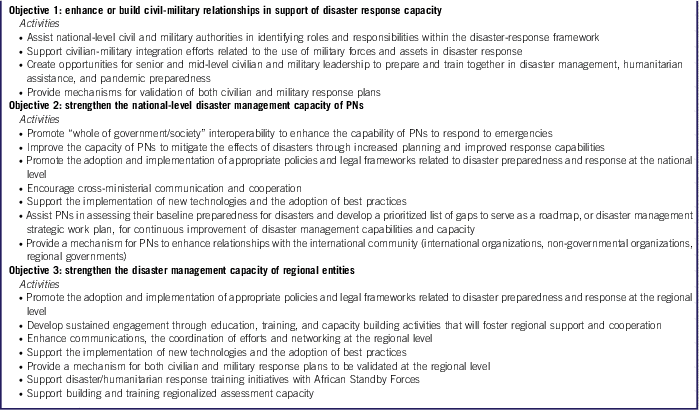
The overarching goal of this initiative, governed by the Office of the Secretary of Defense and the Defense Security Cooperation Agency, was to assist African PNs to prepare for, respond to and mitigate disasters, as well as to develop strategic partnerships on the continent. DPP supported global health security through adherence to the following objectives (Table 1).
Disaster Preparedness Program (DPP) Objectives With Activities

Abbreviation: PN, Partner Nations
Program and Process Description
DPP is built on several basic principles that facilitate resiliency and meet the national security objectives of both the United States and its PNs. These principles are integrated into the planning, development, execution, and evaluation of each engagement:
1. Effective partnerships are built on trust, which must be gained over time.
2. Health engagements should always be aligned with strategic objectives.
3. Improved partner nation population health is a primary goal.
4. Partner nation participation and visibility in a leadership role is critical.
5. Sustainable capacity building should always be a goal, and requires longitudinal engagement.
Utilizing these principles, DPP has emerged as a model for longitudinal DOD engagement with long term, sustainable capacity building as the primary outcome. The program utilizes a whole-of-government approach by focusing on the roles and interoperability of civilian and military government agencies, while including international and non-governmental organizations in all relevant engagements. The DPP methodology has defined specific steps to achieve desired outcomes, yet maintains flexibility to adapt to the relative situation in each PN. These steps include:
1. Establishing a commitment by government leaders and identifying key focal points from the multiple ministries responsible for disaster preparedness and response.
2. Conducting a Disaster Management Capability Assessment using a multi-stakeholder process.
3. Developing a Disaster Management Strategic Work Plan (DMSWP) to move toward the desired end states.
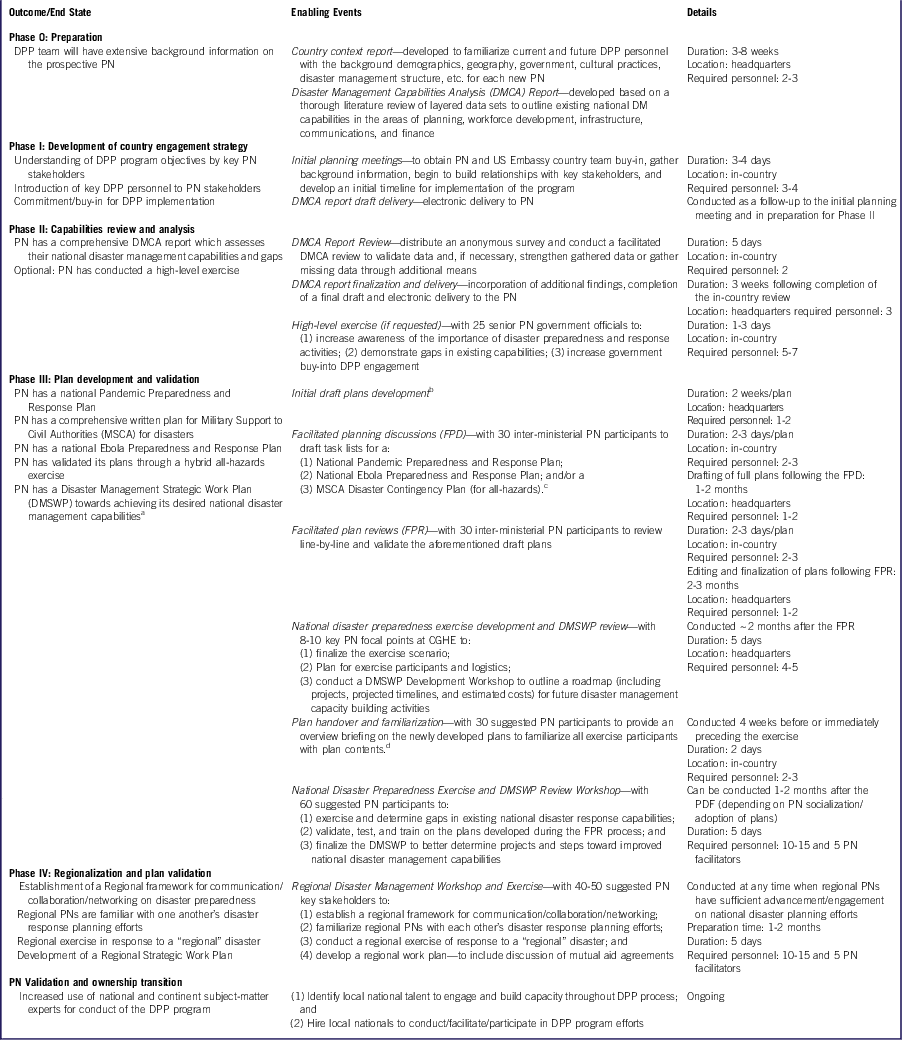
The DPP concept of operations (CONOPS) represented below served as a strategic framework for DPP engagement with each PN. Implementation details were tailored to an individual nation’s priorities, capabilities, and circumstances. Phases are denoted by the CDHAM to conceptualize components of the DPP, and were not intended to indicate an inflexible sequence of events (see Table 2 for a summary of all phases listed below).
Phases of Disaster Preparedness Program (DPP) Operation

Abbreviation: PN, Partner Nations.
a Each activity is optional and can be selected based upon the particular needs of each PN.
b Based on the requests of each PN.
c Engagement with a given country on multiple plans can result in economies of scale with additional planning efforts incorporated for much lower costs.
d May be combined with activity below.
Phase 0: Preparation
Disaster Management Capabilities Analysis (DMCA) Report
The DMCA was an iterative process designed to provide PNs with a platform to consider their respective ways forward for long-term disaster management development. The DMCA applied country-specific relevant information from 3 primary sources of information: (1) a thorough literature review of various data sets, (2) anonymous self-assessment survey data, and (3) information from targeted in-person interviews. The critical strengths and weaknesses highlighted by the analysis were then summarized in a comprehensive DMCA report and returned to each PN to help prioritize future initiatives, mobilize resources, and create collaborative partnerships towards sustained capacity in disaster preparedness and management.
The DMCA process objectives were to improve disaster management capabilities, to include preparedness and response strategies, and specifically identify gaps within the following areas: planning, workforce development, infrastructure, communications, and financing.
(A) Planning: support the development of disaster contingency plans to include national all-hazards and threat-specific plans which designate roles and responsibilities for civilian and military entities alike during disaster response operations. Identify gaps in existing disaster preparedness capabilities and work toward development of a roadmap to fulfill those gaps, utilizing both internal and external resources.
(B) Workforce development: promote accredited training of disaster management staff and specialists (ie, Geographic Information System, risk-assessment analysts) including sustainable train-the-trainer programs. Conduct preparedness drills at the district and national levels to exercise disaster preparedness and response contingency plans.
(C) Infrastructure: support the establishment of an in-country designated facility housing a national disaster management agency to include a functioning Emergency Operations Center (EOC), adequate logistical capabilities as well as passive and active surveillance networks for rapid response to critical incidents at both the district and national levels.
(D) Communications: identify and foster use of critical communication linkages and reporting networks within the national government, disseminate key information to the general public and maintain open channels of communication between PNs and their relevant regional and international stakeholders to strengthen coordination efforts for effective disaster management. Develop national and regional multi-sectorial communication plans within PN ministries/agencies, including the military, as well as among neighboring countries and regional multilateral institutions (ie, the Economic Community of West African States [ECOWAS]) for rapid response to disaster emergencies.
(E) Financing: advance in-country (first priority), donor countries’, international organizations’, regional banks’, and non-governmental organizations’ commitment for funding local, national, and regional disaster management capacity building activities.
Phase I: Development of Country Engagement Strategy
Initial Planning Meetings
DPP conducted an initial in-country visit to engage the US Embassy Country Team (namely the Office of the Chief of Mission, Office of Security Cooperation, the United States Agency for International Development [USAID], the Centers for Disease Control and Prevention and others), PN government authorities and disaster management focal points, as well as other appropriate partners and stakeholders to discuss the program’s CONOPS and the way ahead, should the PN decide to move forward with DPP engagement. Background information was gathered to further define the structure of program engagement and prepare a timetable for next steps in accordance with the phases of implementation. DPP also focused on building relationships with key stakeholders in-country through ongoing discussions and collaboration.
Phase II: Capabilities Review and Analysis
High-Level Exercise (If Requested)
Each PN had the opportunity to determine if an up-front exercise was necessary to raise awareness about the gaps in existing disaster management capabilities and increase buy-in of high ranking government officials. As a result, this step was optional and left to the discretion of each PN.
Phase III: Plan Development and Validation
Plans Development/Review
If the need for new or enhanced disaster preparedness and response plans was identified, CDHAM worked directly with the PN’s civilian and military planners to develop these plans through a facilitated plan development process. Previous plan requests made of the DPP have included Military Support to Civil Authorities (MSCA) Disaster Contingency Plans, National/Military Pandemic Influenza Preparedness and Response Plans, Ebola Preparedness and Response Plans and national DMSWPs. For countries with a more mature planning system, planning requests could include enhancements to existing plans, mid-term evaluation and revision of plans, and targeted sub-planning efforts to help meet existing national action plans.
National Disaster Preparedness Tabletop Exercise
If deemed necessary by the PN, a hybrid functional/tabletop exercise was conducted to validate new and existing plans and to enhance “whole of society” cooperation between civilians, the private sector, government institutions, and the military. The objectives were as follows: provide the opportunity to identify the gaps in existing disaster management capabilities, increase buy-in of high-ranking government officials, ensure all appropriate PN stakeholders are effectively integrated into the national disaster preparedness and response efforts, and ensure mechanisms are in place to support a rapid involvement of international organizations, non-governmental organizations, and regional organizations.
Phase IV: Sustained Engagement Structure
The goal of the final phase, led by USAFRICOM, was to develop a follow-on engagement structure through sustained interactions with PNs. CDHAM continued to support engagement and sustainment activities as requested, as additional components of the DPP grant or through separate funding and statements of work.
All Phases—Detailed Description
Regionalization
Throughout implementation of DPP, a common focus was on increasing regional communication and collaboration in disaster management and preparedness. This took the form of cross border invites and training, mentoring, support for development of mutual aid agreements, potential regional exercises or symposia, and potential regional strategic work plan development. Development of regional activities was based on interaction with regional and national partners through DPP engagements.
Partner Nation Validation and Ownership Transition
It is important to note that during all phases of the DPP program, there was an increased emphasis on using subject-matter experts (SME) and existing capabilities from African PNs. Identifying and hiring Africans to conduct, facilitate, and participate in DPP program efforts aided in reducing program costs, increased PN ownership of the process, and served to validate PN governments by recognizing their existing capabilities and strengths.
Outcomes and Benefits
To date, a number of obvious outcomes of DPP-implemented engagement have been realized at organizational, national, regional, and international levels. These identified benefits included, but were not limited to the following:

Following the recent Ebola epidemic in West Africa, DPP was used to frame the execution of the West Africa Disaster Preparedness Initiative (WADPI). WADPI leveraged the network of SMEs developed through the previous 6 years of the program, and relationships with the Kofi Annan International Peacekeeping Training Center and the National Disaster Management Organization of Ghana. As a result, WADPI was able to successfully train nearly 800 individuals from 12 PNs in the West and Central Africa sub-regions. Topics of training included EOC operations, Ebola awareness, One Health disease surveillance, open-source and web-based disaster and information management tools, and first responder training.
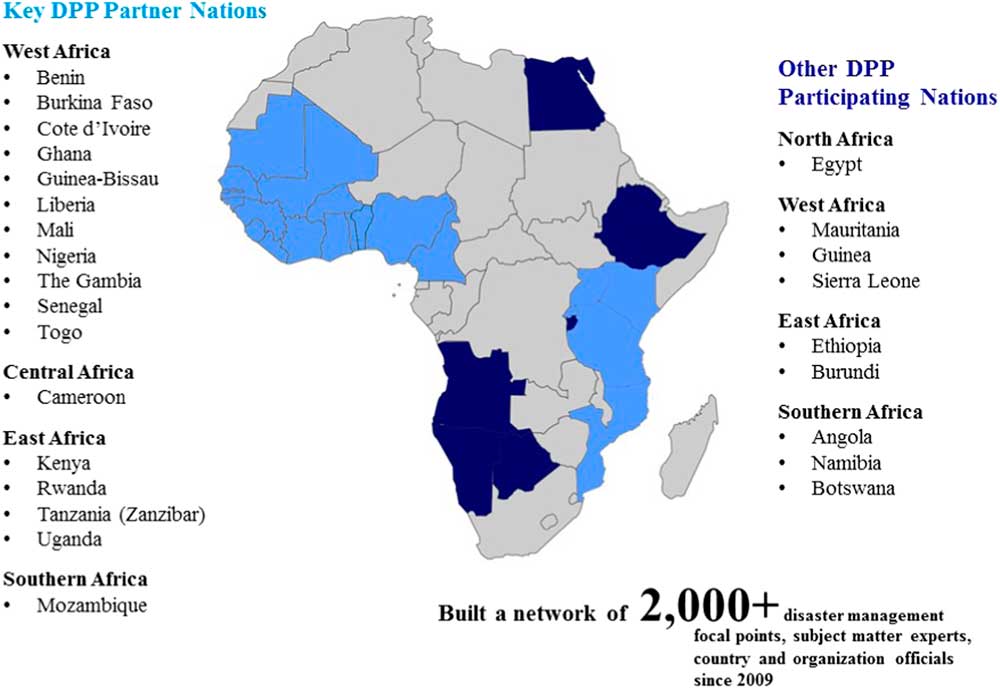
DPP has, in total, engaged 26 African nations, including 17 key PNs, over the past 8 years (Figure 1). DPP disaster preparedness capacity building activities have reached an audience of over 2000 people and built a sizable cadre of African disaster management experts—many of whom have served as facilitators for DPP-assisted exercises in their neighboring countries as well as for the duration of the WADPI training and exercise activities.
Key Disaster Preparedness Program Partner Nations. Abbreviation: DPP, Disaster Preparedness Program.

Throughout the lifespan of DPP, the program team has partnered with these 17 key PNs to assist in developing:
∙ 10 National Pandemic Influenza Preparedness and Response Plans
∙ 9 Military Pandemic Preparedness and Response Plans
∙ 12 National Ebola Preparedness and Response Plans
∙ 9 Military Assistance/Support to Civil Authorities (MSCA) Disaster Contingency Plans
∙ 11 DMSWPs
To improve upon and stress-test these 50+ plans, over 20 national disaster preparedness and response exercises were designed and implemented by CDHAM in conjunction with African national facilitators.
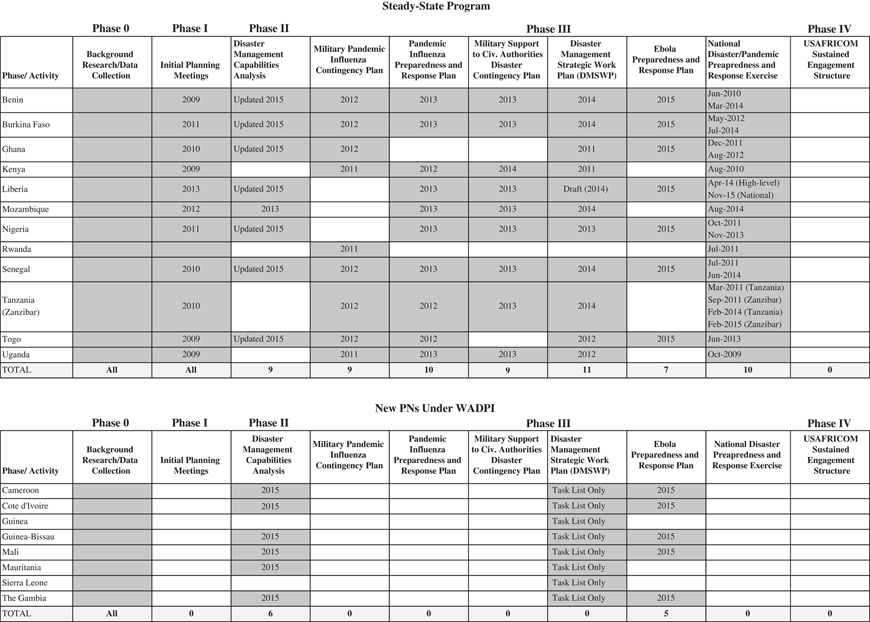
Table 3 depicts key milestones for each of the DPP PN’s, and indicates where each currently stands within the phased CONOPS. While many of the steady-state DPP PNs have opted to complete the majority of program activities, the newer PNs brought into the DPP fold through WADPI remain in the early stages, with numerous opportunities for continued enhancement of their existing disaster management capabilities.
Disaster Preparedness Program (DPP) Products

 : Complete as of December 31, 2015.
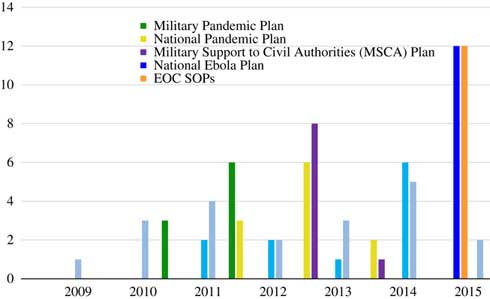
As a result of the efforts involved with development, review, and finalization of the products above, DPP has achieved a number of its aforementioned programmatic goals and objectives and manifests extraordinary, long-term bi-lateral engagement affecting measurable change in the capacity and capabilities of numerous PNs. While the total number of PN engagements measures in the hundreds, there are a few prime examples of the measurable impacts of DPP (Figure 2).
Disaster Preparedness Program (DPP) Plan Development and Validation Deliverables, 2009-2015. Abbreviations: EOC, Emergency Operations Center; SOP, Standard Operating Procedures.

Case Study: Republic of Liberia
In April 2014, DPP facilitated a historic engagement, the Republic of Liberia Government High Level Disaster Response Meeting, held in Monrovia. The meeting was opened by the Honorable Joseph Boakai, Vice President of the Republic of Liberia, and the Honorable Deborah Malac, US Ambassador to Liberia. After the opening remarks and introductions, 30 very senior members of government, including Ministers, Deputy Ministers, and Executive Directors, explored how their country would respond to a major pandemic disaster event through use of an exercise scenario led by CDHAM.
One key contributor to the successful outcome of this meeting was the input from representatives of neighboring ECOWAS countries. Members of national disaster management organizations and legislatures from Ghana and Nigeria shared with the Liberian leaders how their respective countries had overcome obstacles to pass legislation and develop their respective national disaster management organizations. Mr Ebenezer Kofi Portuphy, National Coordinator of Ghana’s National Disaster Management Organization, explained how this was mandated by ECOWAS for member states and recommended by the United Nations in the Hyogo Framework for Action 2005-2015: Building the Resilience of Nations and Communities to Disasters.
After several hours of discussion, a group of the senior leaders held an ad hoc Cabinet meeting to address the need for moving the proposed legislation forward to create Liberia’s autonomous National Disaster Management Agency. This draft legislation had previously stagnated for almost 2 years due to political obstacles. With media in the room, the Minister of Internal Affairs, the Honorable Morris M. Dukuly, announced that the proposal would be presented to the full Cabinet in 2 weeks and then proceed on to the legislature. As a result, this piece of legislation was eventually voted through the House of Representatives and the Senate, and has now become law. 19
To summarize the DPP-facilitated event, Deputy Executive Director of the Liberian Environmental Protection Agency, the Honorable Stephen Neufville, commented that, “what happened Tuesday was a masterpiece.” This serves as one of many examples of the effectiveness of DPP efforts in the region.
Case Study: Republic of Senegal
Prior to the recent Ebola outbreak in West Africa, DPP had partnered extensively with the Government of Senegal since 2010, working with focal points within the Ministry of Interior, Ministry of Health, Ministry of Defense and others involved in disaster management processes to develop national civilian and military contingency plans. As the Ebola virus continued to spread across the region in 2014, DPP team members remained in regular contact with these focal points, as a steady flow of communication is a key aspect of the relationship-building component of the DPP process. In these exchanges, a key point of contact from within Senegal’s Ministry of Interior reported that the Republic of Senegal Pandemic Influenza Preparedness and Response Plan (developed through assistance from DPP), had been utilized to curb importation of new cases into Senegal as well as limit the spread of Ebola within their national borders after the first few cases had been confirmed.
All DPP-facilitated pandemic influenza plans are designed to be comprehensive, but also flexible enough to be adapted and used in the event of any major disease outbreak. It is for this reason that the Ministry of Interior credited Senegal’s quick action in the Ebola response, in part, to having an existing national pandemic plan. In later months, the DPP team returned at the request of the Government of Senegal to formally adapt the national pandemic influenza plan into a complementary Ebola Preparedness and Response Plan to be used in the event of a future outbreak.
Discussion
There is a critical need for agencies across the African continent to develop disaster preparedness and response plans.Reference Aliyu 20 - 24 In response to these increasing global health security concerns, efforts to build capacity in infectious disease and all-hazards disaster preparedness and response among developing and developed countries alike are of urgent, if not emergent priority. Since 2005, when DOD Directive 3000.05 put stability operations on an equal priority to combat operations, the role of health engagements has grown as an important platform for security cooperation. 25 , Reference Cullison, Beadling and Erickson 26 In May 2013, Policy Guidance for DoD Global Health Engagement (GHE) was released as a cable stating GHE activities, “…are a means to partner with other nations to achieve security cooperation and build partner capacity….” This document also lists disaster preparedness and response, and disease surveillance and prevention, key components of DPP, as means to achieve combatant command strategic objectives.Footnote b By working with over 2000 local and regional partners in the development and execution of exercises and contingency plans, DPP provided a visible opportunity for partner nations to demonstrate to their populations how they were improving their ability to protect them from disaster and disease, contributing to stability and security.
Within the last 8 years, DPP has engaged extensively with 17 key African PNs from various sub-regions of the continent to assist with the development of new pandemic and disaster preparedness plans and has been the lead coordinating program in the implementation of numerous disaster management preparedness and response tabletop exercises. DPP has established a wide array of trusted relationships within each PN, enabling the program to effectively assist nations in beginning to close daunting gaps in existing disaster management capabilities. DPP has contributed to advancement in the political process of several nations through technical assistance in promoting their adoption and implementation of these plans, while also encouraging establishment of autonomous national disaster management agencies. As well, DPP has helped instill a philosophy of and mechanisms for cooperation and mutual support across regions of Africa that will likely continue to facilitate self-sustainment amongst African partner nations.
As such, DPP has proven to be a successful model for building lasting personal and organizational relationships in order to assist in the development of institutional capacities within these nations and across regions to better prepare for and respond to disaster events. The combination of sustained engagement and improved national disaster management capabilities directly contributes to USAFRICOM’s overarching goal of improved security and stability of these nations. These efforts and outcomes of DPP are also in keeping with the highest order of United States Government policy and strategy in foreign investment.Reference Licina 27 , Reference Lim and Blazes 28 Namely, the tenets of the National Security Strategy, the National Military Strategy, DOD Policy Directives for GHE, and the Global Health Security Agenda are, in part, met through the long-term application of DPP programming. 29 - Reference Smith 33 One may argue that few, if any, DOD programs supportive of meaningful capacity building and aligned to the imperative of averting health security threats have shown such sustained engagement and such breadth of impact.
Limitations
There are arguably some weaknesses in the approach defined in the DPP. Some may contend that it is not the role of the US DOD to conduct such activities, and that they are best left to civilian agencies—although there is a long history of DOD collaboration in such capacity building efforts. Even if DOD health engagement activities are accepted as legitimate, frequent personnel turnover in military jobs may hamper continuity and effective implementation of programs. Lack of strategic focus has been a criticism of DOD GHE in the past. Funding streams may also not be consistent for such activities, although this weakness is often encountered in such work conducted by civilian agencies. Coordination with additional civilian agencies (NGOs, international organizations) performing similar work would help synergize and sustain this and other DOD GHE efforts.
Conclusions
The sustained engagement methodology and principles of engagement used in DPP have arguably demonstrated their value, both for building capacity in PNs and achieving strategic security objectives. One of the most difficult aspects of partnerships is building strong relationships based on trust. This requires commitment and consistency over time. The Center for Global Health Engagement, which evolved from and replaced CDHAM in early 2016, is now postured to explore opportunities on behalf of the US DOD to work with PNs in collaboration with other US Government agencies as well as international partners to implement this and similar effective models in regions around the world.
Conflicts of Interest
The authors declare that there are no conflicts of interest.