Salih myopathy (MIM #611705), also known as early-onset myopathy with fatal cardiomyopathy, is characterised by the childhood onset of quickly progressive dilated cardiomyopathy or the neonatal or infantile onset of delayed motor development with generalised muscle weakness mainly affecting proximal and distal lower limbs. It is a rare genetic neuromuscular disease, inherited in an autosomal recessive manner, with an unknown prevalence. Reference Adam, Ardinger and Pagon1 Salih myopathy is caused by mutations in the gene encoding titin (TTN; MIM #188840), which is the largest and possibly the most complex known human polypeptide (up to 4200 kDa) and is comprised of approximately 35991aa (NM_001267550.2) residues located on chromosome 2q31 in both human and mouse. Reference Gigli, Begay and Morea2 The giant protein titin not only is a major sarcomere component and a mechanosensor in cell signalling but also plays a vital role in striated muscle development, structural integrity, and myofibril elasticity, Reference Carmignac, Salih and Quijano-Roy3–Reference Kontrogianni-Konstantopoulos, Ackermann, Bowman, Yap and Bloch6 hence the considerable attention paid to the TTN gene in recent years. Expressed in both cardiac and skeletal muscles of many various species such as humans, this filamentous protein spans the entire length of sarcomeres from the Z-disc to the M-band and interacts with different proteins. Reference Yu, Zhu and Xie7,Reference Bang, Centner and Fornoff8 The TTN gene contains 363 coding exons with a first noncoding exon. In view of the presence of N2A and N2B elements in the I-band region, titin isoforms are classified into three main categories: N2A, N2B, and N2BA. Reference Freiburg, Trombitas and Hell9 There are also multiple different transcripts identified as Novex-1, Novex-2, and Novex-3, with many more yet to be recognised.
Besides Salih myopathy, both dominant and recessive pathogenic mutations in TTN have also been found to be involved in an unexpectedly wide range of other severe disorders affecting skeletal and/or cardiac muscles such as late-onset autosomal dominant tibial muscular dystrophy (MIM #600334), young- or early adult-onset recessive distal titinopathy, limb-girdle muscular dystrophy type 2J (MIM #608807), congenital centronuclear myopathy (MIM #255200), multi-minicore disease with heart disease including clinical variations, childhood/juvenile-onset Emery–Dreifuss-like phenotype without cardiomyopathy, hereditary myopathy with early respiratory failure (MIM #603689), and adult-onset recessive proximal muscular dystrophy. Reference Evilä, Palmio and Vihola10–Reference Savarese, Sarparanta, Vihola, Udd and Hackman16 Mutations in the TTN gene may lead to several different phenotypes of genetic disorders in the coming years. The molecular diagnosis of Salih myopathy is admittedly a daunting challenge due to the giant size of the TTN gene, making it practically impossible to sequence the whole gene by conventional mutation-screening approaches such as polymerase chain reaction-based Sanger sequencing in routine analysis. A subset of TTN variants is reported at https://databases.lovd.nl/shared/genes/TTN. The next-generation sequencing technology is particularly useful and appropriate for the simultaneous sequencing of a large number of genes, making the genetic analysis of giant genes such as TTN more straightforward, rapid, and accessible. Reference Gigli, Begay and Morea2 To date, a dramatic increase of about 130 pathogenic TTN coding sequence mutations has been reported in patients affected with skeletal and/or cardiac myopathies. Reference Savarese, Sarparanta, Vihola, Udd and Hackman16–Reference Chauveau, Rowell and Ferreiro18 Nonetheless, additional functional studies and specific bioinformatics tools are required to improve the interpretation of the clinical significance of TTN variations. Whole-exome sequencing is an efficient diagnostic approach in the next-generation sequencing technology for the identification of known, rare, and novel mutations with a less expensive sequencing price per exome.
In this study, we documented a clinical and molecular examination of a consanguineous Iranian family and segregated Salih myopathy involving both heart and skeletal muscles in an autosomal recessive condition. Whole-exome sequencing enabled us to identify two compound heterozygous variants, namely c.61280A>C, (p. Gln20427Pro) in exon 273 and c.54970G>A, (p. Gly18324Ser) in exon 253 of the TTN gene located on chromosome 2q31.2. To our knowledge, the current study is the first report of this compound heterozygous variant in the TTN gene from Iran.
Materials and methods
Ethics approval and consent to participate
The present study was conducted in accordance with the Declaration of Helsinki and approved by Rajaie Cardiovascular Medical and Research Center (approval number: IR.RHC.REC.1399.019). Prior to the commencement of the study, written informed consent was obtained for participation in the present study.
Family recruitment and clinical presentations
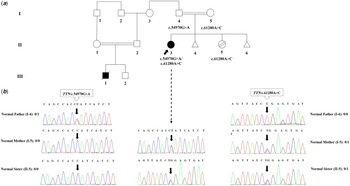
The pedigree of a three-generation Iranian family is displayed in Figure 1a. The proband (II-3) was a 16-year-old girl, initially diagnosed with dilated cardiomyopathy at 1 year of age. She had heart transplantation at the age of 14. Three years before the transplantation, at age 11, she had developed rapid muscle weakness and gait difficulties. Although she was initially able to walk independently, the severe muscle weakness gradually exacerbated the walking difficulties and ultimately forced her to be dependent on the wheelchair at the age of 16. The consanguineous parents of the family (I-4 and I-5) with a history of two spontaneous miscarriages were clinically unaffected. There were no further details to be given on the causes of the miscarriages in the family. The 9-year-old sister of the proband (II-5) indicated no symptoms of mobility difficulties, albeit she suffered from recurrent seizures. With regard to the other pedigree members, the patient from consanguineous healthy parents (III-1) died as a result of dilated cardiomyopathy at 18 years of age.
The pedigree and sequence chromatograms of an Iranian family affected by TTN mutation are illustrated herein. ( a ) A consanguineous pedigree shows two affected members (II-3 and III-1) in the second and third generations with dilated cardiomyopathy. The proband II-3 (pointed with an arrow) also developed Salih myopathy. The patient (II-5) suffered from recurrent seizures. Among the pedigree members, males are represented by squares, females by circles, affected individuals by shaded symbols, and unaffected individuals by open symbols. The triangle is used to represent a miscarriage. The symbol with a diagonal line indicates a deceased family member, and the double lines indicate consanguineous mating. ( b ) The Sanger sequencing chromatograms of the mutated loci in the proband (II-3) and her family members (reverse sequencing results) are depicted herein. Both of the c.61280A>C (p. Gln20427Pro) and c.54970G>A (p. Gly18324Ser) variants in TTN were confirmed in the proband (II-3) and all the family members (I-4, I-5, and II-5) by Sanger sequencing. Also presented are the TTN c.61280A>C (p. Gln20427Pro) and TTN c.54970G>A (p. Gly18324Ser) variants in the proband (II-3), the TTN c.54970G>A (p. Gly18324Ser) variant in the father, the TTN c.61280A>C (p. Gln20427Pro) variant in the mother, and the TTN c.61280A>C (p. Gln20427Pro) variant in the sister (II-5). The arrows point to the mutated nucleotide position in the patients.

Cardiac MRI and pathology
For cardiac pathology, the explanted heart was fixed in formalin. After a gross examination, mid-ventricular sections from the right and left free ventricular walls and septa, as well as sections from the coronary arteries, atrioventricular valves, and semilunar valves, were prepared. The sections were evaluated by light microscopy and haematoxylin staining.
Cardiac MRI was performed with a Siemens Avanto 1.5 Tesla scanner on the proband (II-3). Multi-planar magnetic resonance sequences were acquired via steady-state free precession, cine steady-state free precession, and short tau inversion recovery. First-pass perfusion sequences were taken with the administration of a 7 mmol gadolinium contrast agent (Dotarem), without adverse effects. Late enhancement images were obtained 10 minutes following the contrast administration to assess myocardial fibrosis. Flow quantification through the aorta and the pulmonary artery was performed. Post-processing was performed on the cardiac MRI workstation console, and all the images were reviewed on Circle CMR 42 workstation.
Pompe disease screening
For Pompe disease (MIM #232300) screening, a dried blood specimen of the patient was sent to the University Medical Center Hamburg-Eppendorf (Hamburg, Germany). Acid α-glucosidase (GAA) and other lysosomal enzymes were tested by Western blot analysis. In addition, DNA sequencing of all coding exons and flanking intronic regions was performed for the further analysis of the GAA gene via polymerase chain reaction amplification.
Whole-exome sequencing
The affected proband (II-3) was checked previously via karyotyping, and array comparative genomic hybridisation (array-CGH) and no chromosomal abnormality or causative copy number variation were revealed. For the identification of possible causative variants, whole-exome sequencing was carried out just on the proband (II-3). Exome capture was performed using the SureSelect XT Library Prep Kit, followed by exome sequencing on the Illumina HiSeq 4000 System. The sequence reads were aligned to the reference human genome (GRCh37 build) with BWA-MEM (v07.17) and then the Genome Analysis Toolkit (v4.1.4.1). The quality and target region coverage of mapping to the reference genome were 98.8 and 99%, respectively. Small indels and single-nucleotide variants were detected with Genome Analysis Toolkit HaplotypeCaller, Reference Li and Durbin19 and filter-based annotation was performed with ANNOtate VARiation (24 October 2019). Reference Wang, Li and Hakonarson20 Additionally, dvnsfp33a (v3.0) was used to predict variant deleteriousness. Reference Liu, Wu, Li and Boerwinkle21 The variants were filtered and prioritised for minor allele frequency based on the 1000 Genome (http://www.1000genomes.org/), the Genome Aggregation Database (gnomAD, v2.1.1) (https://gnomad.broadinstitute.org/), and the Exome Aggregation Consortium (http://exac.broadinstitute.org/) databases. Compound heterozygous and homozygous variants with high quality and reads coverage were evaluated for damaging effects on the disease. Lastly, false-positive variants were removed by bioinformatic analysis, followed by polymerase chain reaction and Sanger sequencing confirmation and segregation of TTN variants (http://ftp.ebi.ac.uk/pub/databases/lrgex/LRG_391.xml).
Bioinformatic analysis and protein-structure modelling
The pathogenicity of the variants was predicted via the use of the bioinformatic tools of MutationTaster (http://www.mutationtaster.org/), Sorting Intolerant From Tolerant (https://sift.bii.a-star.edu.sg/), Combined Annotation Dependent Depletion (https://cadd.gs.washington.edu/home), and Protein Variation Effect Analyzer (http://provean.jcvi.org/index.php). Variants identified by most of the prediction tools to be damaging were selected for future confirmation and segregation analyses. Since it is impossible to model a huge titin protein with computational methods, Reference Marchler-Bauer, Bo and Han22 conserved domain database was employed to identify mutated domains. Accordingly, for the estimation of the variant effects on the structure of the domains, the SWISS-MODEL server was used to predict native and mutated 3D structures. Reference Waterhouse, Bertoni and Bienert23 Thereafter, I-Mutant2.0, Reference Capriotti, Fariselli and Casadio24 MUpro, Reference Cheng, Randall and Baldi25 and DUET Reference Pires, Ascher and Blundell26 servers were utilised for stability prediction.
Polymerase chain reaction and Sanger sequencing
Polymerase chain reaction primers of the variants were designed by applying Primer3 (v.04.0) (http://bioinfo.ut.ee/primer3-0.4.0/). Forward primer 5′-TAGATAAGCCTGGTCCTGTGA-3′ and the reverse primer 5′-CTTTCATACGTCTCTCAGGGA-3′ for exon 253 and forward primer 5′-GTGCTATCAGTGCTCCATCA-3′ and the reverse primer 5′-AGGTGTCCATGTAAGTGTTGC-3′ for exon 273 were used to amplify the affected/normal individuals of the family. DNA was extracted via our in-house method of salting out. polymerase chain reaction was carried out on a SimpliAmp Thermal Cycler (Thermo Fisher Scientific) with 200-ng DNA, 1.5-mmol/L MgCl2, 200-mmol/L dNTP, 10-pmol/L primers, and 1-U Taq DNA polymerase (Amplicon, UK). The polymerase chain reaction schedule was incubated at 95°C for 5 minutes and 38 amplification cycles (40 seconds at 95°C, 40 seconds at 59°C, and 30 seconds at 72°C), and the product was sequenced on an ABI Sequencer 3500XL PE (Applied Biosystems, CA, United States of America) in our centre. Once a variant was validated, all the family members were evaluated to analyse variant segregation.
Results
Cardiac MRI and pathology findings
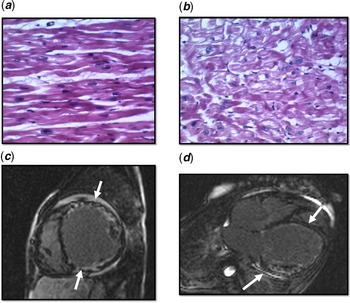
The macroscopic examination of the explanted heart showed an increase in weight, enlargement of both ventricular cavities, and thinning of the free ventricular walls. Histological features revealed nuclear enlargement, anisonucleosis, and myocyte vacuolation due to myofibrils loss and delicate interstitial fibrosis. There was no inflammation (Fig 2a and b). The proband (II-3) underwent cardiac MRI, and the cine images showed enlarged biventricular size with severe biventricular dysfunction (Supplementary Video 1). There was no detectable inflammation in short tau inversion recovery images. The late gadolinium enhancement images showed diffuse subendocardial/ nearly transmural fibrosis with left ventricular thrombosis (Fig 2c and d). The pattern of fibrosis was diffuse, subendocardial with nearly transmural involvement in the basal to mid-lateral wall. The extent of fibrosis was substantial, and the pattern was atypical for dilated cardiomyopathy. Given the subendocardial pattern and ischaemic aetiology of the fibrosis, hypereosinophilic syndrome and vasculitis were also considered in the differential diagnosis. The origin of the coronary vessel was normal in echocardiography. There was no eosinophilia or leucocytosis in the peripheral blood count, and the inflammatory markers, including high-sensitivity C-reactive protein and the erythrocyte sedimentation rate, were within normal limits.
The cardiac pathology and cardiac magnetic resonance imaging findings are presented herein. ( a ) The microscopic examination shows cardiac myocytes with hypertrophy and delicate interstitial fibrosis. Inflammation is not seen. ( b ) Cardiac myocytes show nuclear enlargement, anisonucleosis, and myocyte vacuolation due to myofibrils loss. ( c and d ) the late gadolinium enhancement images in short axis and four chamber, respectively, showing diffuse subendocardial enhancement with nearly transmural enhancement in the basal to mid-lateral wall with a thrombosis attached to it.

Pompe disease evaluation
The proband (II-3) was analysed for metabolic parameters using a dried blood specimen. The analysis of the sample showed that the activities of GAA at pH 3.8, with and without specific inhibitions, were within their respective reference ranges. The results are presented in Table 1. To expedite diagnosis, we also carried out a molecular genetic assay of the GAA gene on the proband (II-3). Despite the presence of the pathogenic variants in the majority of Pompe disease cases (>99%), no pathogenic variant was detected in the proband (II-3).
Whole-exome sequencing
Whole-exome sequencing was implemented on the proband’s (II-3) genome. Minor allele frequency thresholds of 0.005 for recessive and 0.0005 for dominant variants were considered in all populations of the 1000 Genome, gnomAD, and Exome Aggregation Consortium databases. The filtered variants were further analysed according to the zygosity of the proband based on the autosomal recessive inheritance pattern of the pedigree, phenotype-related genes, and remove benign variants based on the criteria of the American College of Medical Genetics and Genomics. Reference Richards, Aziz and Bale27,Reference Kleinberger, Maloney, Pollin and Jeng28 This approach led to a reduction in the number of candidate variants to 6 with potential associations with cardiac and skeletal muscle development considering their critical effects on protein structure/function. The bioinformatic analysis of the remaining variants indicated that none of them was entirely segregated in this family except 2 TTN gene (NM_133378.4) variants: c.61280A>C, (p. Gln20427Pro) and c.54970G>A, (p. Gly18324Ser). Sanger sequencing revealed co-segregation in the family and confirmed that the affected proband (II-3) inherited the missense variant c.54970G>A, (p. Gly18324Ser) from her father and the heterozygous variant c.61280A>C, (p. Gln20427Pro) from her mother. Sanger sequencing also revealed that the father (I-4) was a carrier of the heterozygous c.54970G>A, (p. Gly18324Ser) variant, whereas the mother (I-5) was a carrier of the heterozygous c.61280A>C, (p. Gln20427Pro) variant. Furthermore, the heterozygous variant c.61280A>C, (p. Gln20427Pro) was detected in the sister (II-5) (Fig 1b).
Bioinformatic analysis of variants and effects on protein structure
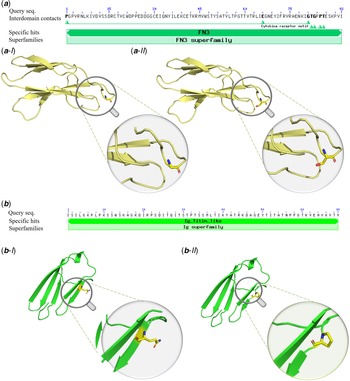
The c.61280A>C, (p. Gln20427Pro) and c.54970G>A, (p. Gly18324Ser) variants were predicted to be deleterious in dvnsfp33a, MutationTaster, Sorting Intolerant From Tolerant, and Protein Variation Effect Analyzer. The Combined Annotation Dependent Depletion score was 22.0 for the c.61280A>C, (p. Gln20427Pro) and 23.4 for the c.54970G>A, (p. Gly18324Ser) variant. In keeping with the criteria of American College of Medical Genetics and Genomics, segregation analysis validation determined the c.61280A>C, (p. Gln20427Pro) and c.54970G>A, (p. Gly18324Ser) variants as variant of uncertain significance, both. Apropos the protein structure of titin, the c.54970G>A, (p. Gly18324Ser) variant fell within the fibronectin type III (FN3) domain (Fig 3a-I–II), and c.61280A>C, (p. Gln20427Pro) variant occurred within the immunoglobulin (Ig)-like domain of titin (Fig 3b-I–II). Further, all the servers used unanimously predicted a decrease in the stability of the FN3 and Ig-titin-like domains.
Mutations in titin domains are presented herein. ( a ) Fibronectin type III domain was explored in the conserved domain database. ( a : I–II) The 3D structure of the native and mutated FN3 domains was built using the SWISS-MODEL server. The red box shows the position of the mutation. Panel II indicates that the amino acid has been changed from glycine to serine. ( b ) The immunoglobulin-like domain of titin related to the c.61280A>C (p. Gln20427Pro) variant was identified by searching the conserved domain database. ( b : I–II) The spatial structures of the wild-type and mutant immunoglobulin-titin-like domain were modelled using the SWISS-MODEL server. The red box indicates the position of the mutation. Panel II shows that glutamine has been mutated to proline.

Discussion
The TTN gene, which encodes the giant sarcomeric protein titin (also known as connectin), is the only gene whose pathogenic variants are the major cause of Salih myopathy. Reference Hackman, Savarese, Carmignac, Udd and Salih29 Recent studies on titin have provided significant advances in understanding the functions and clinical importance of this unique protein, which consists of many structurally distinct domains, not only because of its gigantic size but also because of its complexity and several central roles in the development and function of striated muscle sarcomeres.
Titin is composed mainly of four regions of the N-terminal Z-disc, I-band, A-band, and C-terminal M-band. Also, it includes the Ig-like domain, PEVK-rich domain, FN3-like domain, and titin kinase domain. Reference Bang, Centner and Fornoff8,Reference Linke and Hamdani30 The mutations of the different parts of titin are responsible for various diseases in humans. Salih myopathy, as a novel titinopathy, is an early-onset myopathy with fatal cardiomyopathy characterised by progressive skeletal muscle weakness perceptibly beginning in early infancy and motor skill developmental delays. Reference Adam, Ardinger and Pagon1,Reference Misaka, Yoshihisa and Takeishi31 Homozygous TTN deletion mutations were found in the M-band (Mex1 and Mex3) in five patients affected by Salih myopathy. Reference Carmignac, Salih and Quijano-Roy3 Also, novel homozygous or compound heterozygous TTN mutations (5 in the M-line and 5 truncation mutations) were identified in four families with Salih myopathy. Reference Chauveau, Bonnemann and Julien13
A total of 346 TTN causative mutations, consisting of 259 missense/nonsense mutations, 13 small insertions, 47 small deletions, 23 splicings, 1 small indel, and 2 gross deletions, have to date been reported to cause at least 10 different phenotypes collectively termed “titinopathy” in the Human Gene Mutation Database. Reference Neiva-Sousa, Almeida-Coelho, Falcao-Pires and Leite-Moreira32,Reference Younus, Ahmad and Malik33 Correspondingly, both dominant and recessive mutations in this gene have been reported in skeletal myopathy and hypertrophic or dilated cardiomyopathy. Reference Yoskovitz, Peled and Gramlich34 The development of next-generation sequencing methodology has recently conferred the detection of new mutated sites of TTN in a variety of diseases, despite the enormous size of the coding gene. Reference Misaka, Yoshihisa and Takeishi31 Be that as it may, a considerable number of missense and truncation variants of TTN have also been identified in the general population. Reference Herman, Lam and Taylor35 Therefore, a comprehensive clinical interpretation of TTN variants remains a tremendous challenge. Global mutation screening of TTN has been rarely performed due to its huge size and the costliness of conventional genetic testing. Reference Izumi, Niihori and Aoki36 In the current study, the next-generation sequencing of whole exomes revealed two non-synonymous variants, namely exon 273: c.61280A>C, (p. Gln20427Pro) and exon 253: c.54970G>A, (p. Gly18324Ser), of the TTN gene in the proband (II-3), who presented with both heart and skeletal muscle involvement in an autosomal recessive manner. This finding indicates the expansion of the mutational spectrum of this gene. It has been reported that homozygous or compound heterozygous cases often have cardiomyopathy in humans. Reference Charton, Daniele and Vihola37 The majority of TTN mutations are associated with dilated cardiomyopathy. Reference Liu, Fan and Zhang38 In our study, the proband (II-3), who carried the compound heterozygous variants in the TTN gene, also had dilated cardiomyopathy. Clinically, the proband (II-3) had dilated cardiomyopathy from childhood (1 year of age). Conversely, muscle weakness and gait difficulties appeared at a later age (at the age of 11) but progressed swiftly. Unfortunately, the geographic distance precluded further musculoskeletal assessment on the proband (II-3). In 2007, Carmignac et al Reference Carmignac, Salih and Quijano-Roy3 studied two consanguineous pedigrees affected by an early-onset recessive muscle and cardiac disorder. They reported skeletal muscle weakness, which as a distinctive physical feature from the first months of life stayed moderate and relatively stable during the first decade of life. Additionally, although cardiac dysfunction manifested itself later, it dramatically progressed and led to death before adulthood. This is the first report of TTN pathogenesis possibly causing Salih myopathy in a sample of the Iranian population. Needless to say, further studies on Salih myopathy among larger numbers of Iranians would contribute to a better understanding of this myopathy and its genetic mechanisms.
In conclusion, our study identified compound heterozygous variants in the TTN gene as a possible cause of Salih myopathy. The identification of TTN causative variants and the clinical relevance of whole-exome sequencing results in the family can confer the early identification of the family members and relatives who are at-risk for this myopathy.
Supplementary material
To view supplementary material for this article, please visit https://doi.org/10.1017/S1047951121004455
Availability of data and material
Not applicable.
Acknowledgements
We hereby express our gratitude to the family members, who kindly permitted the documentation of their story with a view to enhancing collective knowledge regarding this condition. This research was funded by Rajaie Cardiovascular Medical and Research Center, Tehran, Iran, and was approved by its ethics committee (IR.RHC.REC.1399.019).
Author contribution
NMP and SK drafted the manuscript. NN performed the experiments. NMP, SK, and HR performed genetic analyses and interpreted variant data. MM, MM, MH, HSH, and GH participated in patient clinical management. All authors were involved in interpreting data and all have read and approved the final manuscript.
Financial support
No funding was received for conducting this study.
Conflict of interest
None declared.
Ethical standards
Written and informed consent was obtained from all patients for their participation in the study and for publication of this report.
Accession number
The accession number of the variant in ClinVar is as follows: NM_006663.4 (PPP1R13L): c.580C>T (p. Gln194Ter): VCV001173087.1.