Introduction
The Himalayan region spans over 4 million km2, which is about 2.9% of the global land area and approximately 18% of the global mountain area. The Himalayan glaciers sustain around 150 million people. Additionally, changes in this vast region impact the lives of over 1.3 billion people living in the basin of the rivers originating in the Himalayas, and on almost three billion people when downstream coastal zones are taken into account (Xu et al., Reference Xu, Shrestha, Vaidya, Eriksson and Hewitt2007). The Himalayan region includes all of Nepal, Bhutan and the mountainous parts of Afghanistan, Bangladesh, China, India, Myanmar and Pakistan and are interwoven with nine major river basins. The most recent estimates show that throughout the Himalayan region, the land cover include 14% (595,705 km2) forest, 26% (1,105,546 km2) agriculture including areas with a mixture of natural vegetation, 54% (2,267,600 km2) rangeland and scrubland, 1% (42,550 km2) water bodies and 5% (212,751 km2) permanent snow cover (Bajracharya and Shrestha, Reference Bajracharya and Shrestha2011). Out of the total 26% Himalayan agricultural land 6% (256,204 km2) is jointly constituted by India, Nepal, Bhutan and Pakistan. Due to restricted resources particularly water, agriculture is getting difficult in the area. From 256,204 km2, 7.5% of the area can achieve better productivity by identifying alternate water harvesting techniques and bridging the gap of water shortage due to climate change. The study is focused in higher elevations of Himalayas that are facing similar situation as a result of which farmers are bound to harvest crops of shorter duration and lower yields. Intensification of agriculture is continuing with expansion of crop land in other parts of the country, whereas tribal marginal farming community of Ladakh have limited access to agricultural technologies particularly water management strategies that results in productivity stagnation (Dorjey and Srivastava, Reference Dorjey and Srivastava2012). The ability of farmers to counter such challenges is inadequate as they are poor and the average size of their holdings is very small. Limited agricultural land in Ladakh remains a constraint moreover irrigation water (IW) availability makes agriculture all the more difficult. In order to increase wheat productivity and attain self-sufficiency, there is a need to identify alternate source of IW (LAHDC-L, 2005). The focus of the research and extension groups is still on the traditional wheat varieties thinking it to be the prime movers to increase in grain production but that has never produced tangible gains. Farmers now need to realize the requirement for better water management techniques accompanied with early-sown high-yielding varieties in order to increase wheat productivity where the yield gains are almost negligible as compared to rest of the state (Gupta and Kant, Reference Gupta and Kant2012). Irrigation based management strategies can help bridging the yield gaps in wheat to achieve self-sufficiency of the region, which remains cut off from rest of the world for almost 4–5 months due to heavy snow fall on Zogila and Manili path. This area is connected only by roads, thus getting cut off from rest of the country making human life difficult as there is shortage of the common commodities required for their basic daily needs.
In cold arid Himalayan deserts of Ladakh, annual precipitation is very low and entire region relies heavily on water from the melting of glacier for agricultural production to sustain livelihoods (Parvaiz, Reference Parvaiz2010). Late melting of snow packs has made agriculture difficult in the area due to deprivation of IW. Climate change has altered the hydrology of Ladakh and the area now experiences water shortage as some springs are drying up and free running water is almost disappearing (Central Groundwater Board, 2009; GRWH, 2011). The change in hydrology of Himalayan glaciers is quite evident at the time of sowing cereals especially wheat, since the amount of water melting is unpredictable, uncertainty increases the risk of crop failure or dependency on short-duration low-yielding wheat varieties as the crop duration gets restricted. With the change in climate, this region will become even more vulnerable to drought. This will most likely have a negative effect on agriculture in glacier-fed water basins and adaptation techniques needs to be developed for handling water stress in such conditions.
In Ladakh, cropping period lasts for about 5–6 months (Pudasaini, Reference Pudasaini2010); out of these, the first 2 months are really important, because delay in sowing especially if wheat is planted, the entire harvest can get damaged as the crop is not able to attain maturity due to low temperature of cold winter weather. Scanty irrigation water availability at the time of sowing thereby increases the risk for late crop maturation (Bagla, Reference Bagla2001). To deal with water shortage and unpredictable water supply at high altitude of Ladakh, an alternate water harvesting technique termed as artificial glacier or icing has been created by Glacier man Chewang Norphel, that involves the principle of freezing flowing water on top of a previously frozen surface in a shed area formed by stone embankments. Artificial glaciers are large reservoirs that are created upstream of villages, i.e., capturing the naturally melting water of winters that would otherwise run off and remain unutilized. This stored water is allowed to freeze during winter, and since it is collected at a lower altitude, in spring it melts early enough to be used for pre sowing irrigation or initial water requirement of the wheat crop. Therefore, it is favourable for early sowing of wheat which otherwise gets delayed by more than a month as temperature at higher elevations of glaciers are still low enough to prevent the glaciers from melting. Thus, this technology of water harvesting provides a window of at least 45 days in cropping season to introduce long- and medium-duration high-yielding wheat varieties to have prolonged vegetative and reproductive stage giving higher yields to replace existing traditionally grown short-duration low-yielding wheat varieties common in this region. Ignorance of additional irrigation at the time of grain filling with late-sown short-duration wheat varieties due to water scarcity under high evapotranspiration rates in the crop growth stage also leads in yield reduction, but with early sowing, the crop escapes terminal heat stress condition and fetches higher yields.
The transformation of farmer's mindset from poor water management to best water harvesting techniques requires better management skills to foster its expansion, when supplemented with the inclusion of agronomic interventions wheat productivity can be even further enhanced. The study focused on identifying and implementing alternate IW source to meet pre sowing irrigation and initial water requirement for introducing long- and medium-duration wheat varieties. Water management remained as the major yield enhancing intervention for wheat crop in the farmer participatory research. Effect of early sowing, i.e., a non-cash input was also emphasized for mainstreaming with the poor farmers and increasing their crop productivity. Improvement in schedule for date of sowing and replacement of local varieties with high-yielding long-duration varieties under water harvesting by artificial glaciers can correlate strongly with increased grain yield thus, leading to harness maximum benefits for the farmers.
Materials and methods
Experimental site and soil properties
Total of 99 sites distributed across Ladakh within six blocks and nine villages were selected. The cropping cycle under general weather conditions across the sites faces variable temperature range. The whole Ladakh totally depends on natural glaciers for water requirement in agriculture as the area does not have access to any alternate irrigation system other than canal irrigation. IW from glaciers is available for agricultural purpose in the month of May. Due to this, agriculture in Ladakh particularly at sowing and initial crop water requirement stage faces water shortages. As a result, farmers are forced to choose short-duration low-yielding varieties because of delayed sowing. Soils in this region are neutral to slightly alkaline in nature with low to medium organic carbon, nitrogen, phosphorus and zinc but medium to high in potassium.
Process of building an artificial glacier
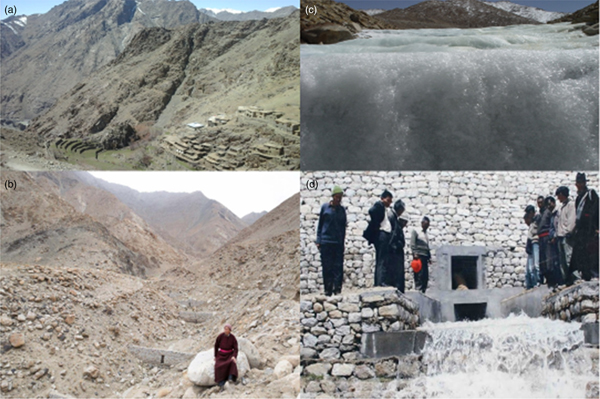
The concept of artificial glaciers has been developed by engineer Chewang Norphel and his team based on ancient practices of harvesting snow melt water. The method involves diversion of melting water in winter into heavily shaded areas where the winter sun is blocked by a ridge or a mountain slope. Along the mountain slope, stone embankments are set up at regular intervals to impede the flow of water. These stone embankments form shallow pools where the melting water refreezes. During winter, the pools form thick ice masses as the temperature falls steadily. The walls of the pool are gradually raised, trapping and freezing the water above. In spring, the frozen water melts at apt time for the early sowing of wheat. For higher efficiency of artificial glacier, water harvesting systems following points were taken in account. The design for head work of diversion channel was framed in such a way that it can enter the diversion channel simply by opening the head regulator gate without blocking the main stream. The bed grade of the diversion channel was kept steep enough so that water does not get blocked by freezing. Silt brought by water velocity settles down in the silting tank and then clean water was allowed to flow into the distribution chambers. Water started to freeze just when it comes out from the installed pipes in the distributing chamber. The flow of water was controlled else higher water velocity could have destroyed the initially formed ice and sometimes even damage framed structures. Perforations were made while constructing the structure for retaining ice so that on melting the water gets an easy passage without damaging the structure (Fig. 1).
(a) Site identification for construction and community area benefitted by artificial glacier. (b) Stone embankments constructed to build water reservoirs. (c) Freezing process of water over layerings. (d) Water discharge for early sowing.

Experimental methodology for study
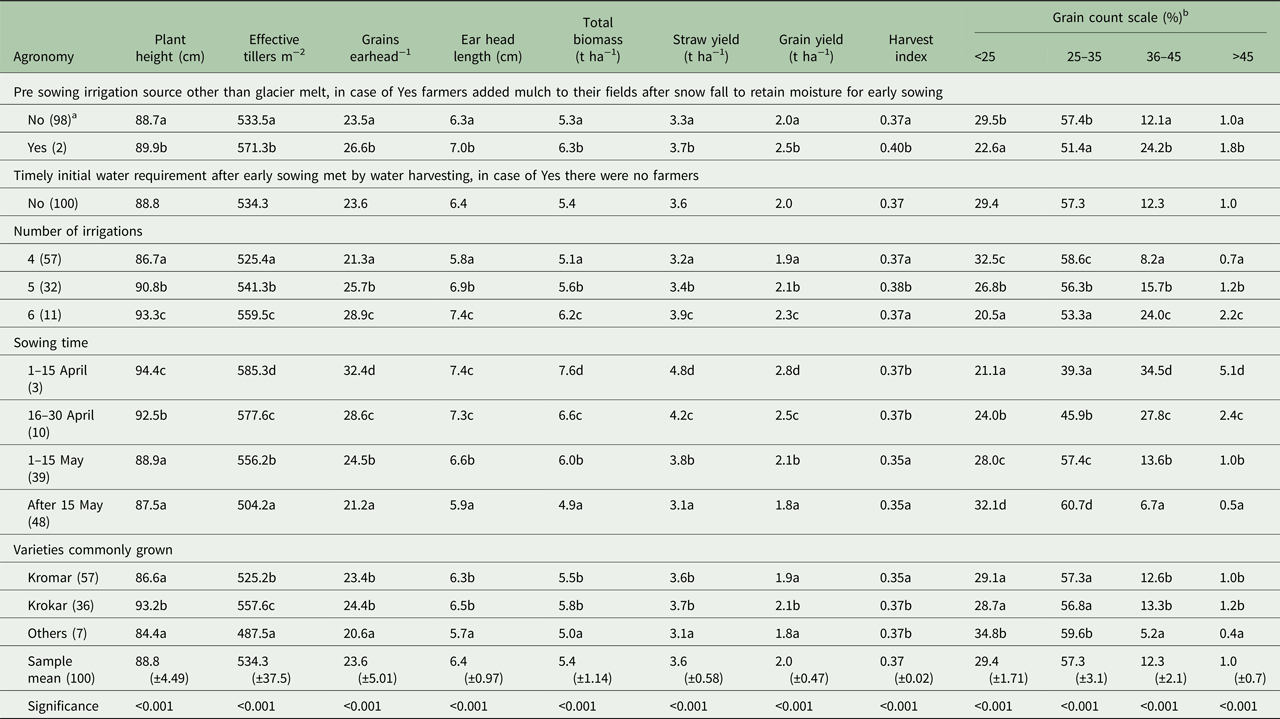
Before introducing best agronomic interventions in areas we acquainted ourselves with the back ground by conducting survey of existing crop management practices followed by farmers. The survey of 100 randomly selected farmers was conducted before setting the priorities. Status of benchmark survey and data collected from the fields of these farmers included all information including problem of initial water availability was highlighted. The importance of water harvesting from melting of natural water sources was highlighted as a prime priority and early sowing of long- and medium-duration high-yielding wheat varieties as secondary precedence came out as few of the major components for higher yields (Table 1). Replacement of the traditional varieties with high-yielding varieties throughout the high productivity zones of India happened 50 yr from now, but in this part of the country, 100% farmers prior to invention of this water harvesting intervention were growing local wheat varieties like Kromar and Krokar due to shorter growing season as a result of water crisis in the month of April and May. Intervention of artificial glacier water harvesting provided window for the entry of long- and medium-duration high-yielding varieties. The long-duration varieties HD 2967, HD 2824 and PBW 343, and medium-duration varieties Baaz, HS 375 and PBW 550 were tested for their existence in this window in comparison with locally grown short-duration wheat varieties Krokar and Kromar. Identifying the most suitable time for advancement of average wheat sowing from the current average wheat sowing of 8th May was evaluated to see the effect on the grain yield of wheat. Different sowing dates from 1st to 15th April, 16th to 30th April and 1st to 15th May were tested to check variability in the yield and yield attributing parameters for all varieties and irrigation management practices. As per survey, 89% farmers apply 4–5 irrigations to wheat crop, whereas 11% apply six irrigations; therefore, the implications of lower irrigation frequency under high evapotranspiration was also evaluated on effective tillers, grains per ear head and susceptibility to yield losses. Pre sowing and first post sown irrigation were met by artificial glacier in the early-sown condition and by natural glacier in the late-sown conditions. In this experiment, 5–9 irrigations were applied on the basis of results from 3-yr trial conducted by mountain agriculture research and extension center to evaluate best production under high evapotranspiration rates.
Agronomic practices and their effect on wheat followed in region prior to artificial glacier water harvesting technique

a Value in parenthesis without ± sign is sample size of a component while with that of ± sign is ± S.D.
b Grain count (%) for scales (<25, 25–35, 36–45 and >45) is based on grain count from ear heads found in effective tillers m−2.
Note: Significance levels are from one-way ANOVA (numerical data) and χ2 (% data). Data followed by different lower case letters differ significantly (Duncan multiple range test, significance level = 0.05, within column comparison).
Management practices and observations recorded
These trials conducted in different locations across the hub were on different scale that involved large number of farmers and average of 2 yr has been reported in this paper. Farmers’ participatory approach is the process of collaboration that optimizes greater technology extension and then adding value to it. It gives an extraordinary access to modify technologies. It relies on farmers’ experimentation and farmers’ interaction with important market opinion, backstopping and follow-up research. Even long-term trials may be monitored to anticipate and deal with any kind of undesirable consequences that may arise out of recommendations. Based on the implementation of ACIAR and NATP projects, a multidisciplinary, multi-institutional and farmer's participatory approach can lead to huge consequences for both evolution of technologies and their accelerated adoption at the same time. This approach is known to work well in the fields (Malik et al., Reference Malik, Yadev, Singh, Malik, Balyan, Banga, Sardana, Jaipal, Hobbs, Gill, Singh, Gupta and Bellinder2002). The crop was sown using traditional method, farmers broadcasted both seed and fertilizer then covered it by using cultivator and plank. The amount of fertilizer used was according to the state recommendation. Fifty percent of nitrogen and full phosphorous and potassium were given as basal dose of the recommended amount at the time of seeding, remaining 50% of nitrogen was top dressed at first and third irrigation in two equal splits. For controlling weeds, no herbicide was applied but were allowed to germinate and uprooted manually after third and fourth irrigation. It was used as a fodder for the cattles as the region faces fodder scarcity. Harvesting was done manually. Plant height of ten plants was measured in cm. The effective tillers were counted in 1 m2 area. Grains per ear head were counted from effective tillers present in 1 m2 and ear head length for ten plants were measured in cm. At harvest grain yield, straw yield and total biomass were taken from1.5 m × 2 m area at three spots per trial. Harvest Index was calculated using the formula (grain yield/biological yield) × 100. For calculating grains per ear head, total number of ear heads from effective tillers m2 were counted and were measured on a scale <25, 25–35, 36–45 and more than 45 grains per ear head; the total count was converted to percent in table for discussion because number of effective tillers vary across experiment and agronomic management.
Statistical analysis
The study, of course, had some limits of involving large number of farmers with different management skills despite of our regular monitoring. The significance (P = 0.05 in case of bench mark survey or 0.10 in case of farmer participatory research) between different groups was calculated using the appropriate statistical tests (e.g., χ2 for % data and ANOVA for numerical data with post-hoc test) using SPSS (version 16) statistical software.
Results
Bench mark survey
From the survey conducted randomly with 100 farmers in Ladakh, a pattern of agricultural practices and trends followed in the region came forward. The problems and reasons for low yield were also highlighted. It was observed that the major proportion (98%) of the farmers used fresh natural glacier water as the sole source of irrigation which led to delay in sowing and dependency on short-duration wheat varieties. Two percent of farmers added mulch to retain the soil moisture for early sowing; thereafter all irrigations were met from melting of natural glacier. From the data, it was observed that fields with added mulch were more productive in comparison to the one without mulch by advancing sowing time and meeting initial water requirement of crop by retaining moisture. This intervention of supplemental irrigation and mulch led to have more plant height, effective tillers, grains per ear head, ear head length, total biomass, straw yield and grain yield in comparison to the fields where mulch was not added (Table 1). The data revealed that (87%) of the farmers delayed sowing due to lack of irrigational facility. The date of sowing also had significant effect on the yield and yield attributing characters. Early-sown wheat was found more productive in comparison to late-sown wheat. It was very clear from the survey data that none of the farmers were growing long- and medium-duration high-yielding varieties. They were generally growing local varieties out of which majority of them grew Kromar and Krokar (93%), both with lower yield potential.
Irrigation frequency
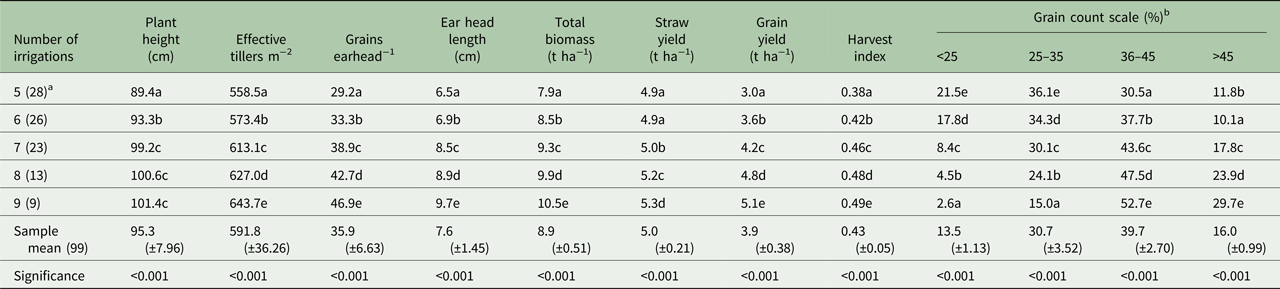
The first post seeding irrigation from water harvested reservoirs was given well on time that otherwise is generally delayed by a month due to lack of IW availability as there is no alternate source of water. Moreover, terminal heat stress was also a problem in the later crop growth stage in delayed sowing due to high evapotranspiration rate due to high temperature and strong winds. Due to water shortage, farmers have a tendency of skipping irrigation at some crucial crop growth stages. It is evident from the data that farmers who applied <6 irrigations generally skipped three irrigations that are applied at crown root initiation (CRI) stage and at terminal heat stress stage. Similarly, where seven irrigations were applied, two irrigations were skipped one each at CRI and terminal heat stress stage, whereas when farmers applied eight irrigations, they skipped one irrigation either at CRI or terminal heat stress stage. Data suggest that farmers who skipped irrigations at these crucial growth stages had higher yield penalty (Table 2). From the data, it is clear that good irrigated fields especially at crucial growth stages improved wheat yield in shallow soils in comparison to that under limited irrigated conditions. Well managed irrigation from artificial glacier water harvesting technique increased 2-yr mean percent in plant height by 0.7–14.2%, effective tillers m−2 by 4.5–20.5%, grains per ear head by 23.7–98.7%, ear head length by 1.6–51.6%, total biomass by 46.3–94.4%, straw yield by 36.1–47.2%, grain yield by 50–142.9% and Harvest Index by 2.7–32.4% in case of 5–9 given irrigations in comparison to an average of 100 previously bench mark surveyed data with 4–6 irrigations due to non-availability of initial water requirement by plant and fear of lodging at terminal heat stress. However, under late-sown conditions, the magnitude of increase due to higher irrigation frequency on wheat yield was more than in the early-sown wheat (long- and medium-duration varieties) as compared with late-sown wheat (short-duration varieties). On an average, there was an increase of 42.3% ear heads having more than 35 grains when five irrigations were applied, 47.8% increase when six irrigations were applied, 61.4% increase when seven irrigations were applied, 71.4% increase when eight irrigations were applied and 82.4% increase when nine irrigations were applied. In comparison, this percentage remained only 13.4 for the average of 100 previously bench mark surveyed data where 4–6 irrigations were applied. Farmers invariably give less irrigations in wheat sown between 1st and 15th April, which leads to a loss in the productivity. Farmers tend to avoid two to three irrigations in early-sown wheat, which leads to grain shrinkage and attain early physiological maturity leading to reduction in grain yield. Such effects are more serious when terminal heat forces wheat to mature early particularly with poor root initiation and development, thus deficit of IW also affects effective tillers and grains per ear head. More effective tillers and grains per ear head were recorded when 8–9 irrigations were given. Data indicated that this is one strategy that will pay off in term of higher yields.
Effect of managed irrigation frequency on performance of wheat after artificial glacier water harvesting technique

a Value in parenthesis without ± sign is sample size of a component while with that of ± sign is ± S.D.
b Grain count (%) for scales (<25, 25–35, 36–45 and >45) is based on grain count from ear heads found in effective tillers m−2. Some of row sum up in case of grain count scale % may not add up to 100% due to rounding.
Note: Significance levels are from one-way ANOVA (numerical data) and χ2 (% data). Data followed by different lower case letters differ significantly (Duncan multiple range test, significance level = 0.05, within column comparison).
Date of sowing
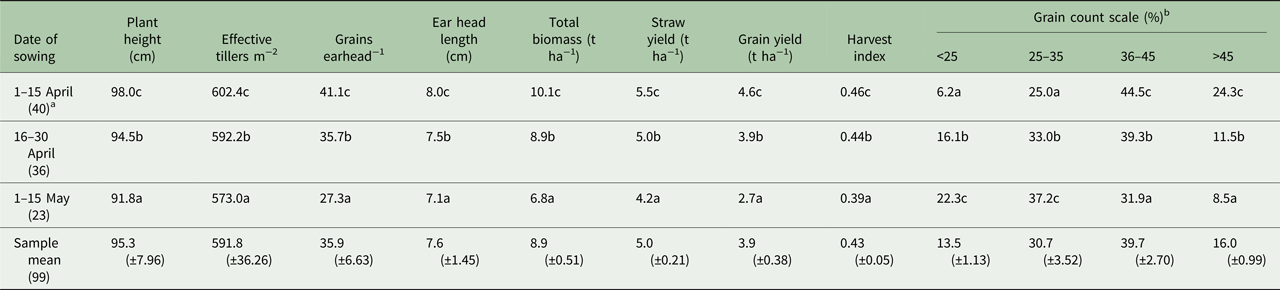
The advancement in date of wheat sowings was also part of the initiative taken up to raise yield in the cold deserts of Ladakh. It is well known that substantial increases can be realized in wheat yields if it is sown on time and plant stands is good. Data presented in Table 3 show responses of wheat to different dates of sowing. From the data, it reflects that there is linear decline in yield when sowing is done after optimum date. Data on the adoption pattern of early sowings shows that farmers in the study area are supporting pyramidal shift in sowing dates due to availability of well-managed irrigation facility. Prior to such managements, as per bench mark survey only 13.0% sowing in the studied area were completed in the month of April, and by intervention of artificial glacier water harvesting technique, 76.8% sowing was made possible in the month of April. Early sowing led to increase yield of wheat almost twofold due to creation of a window to incorporate high-yielding long- and medium-duration varieties and these emerged as vital approach to achieve the change required to attain more productivity. Data related to date of sowing revealed that wheat sown between 1st and 15th April had percent increase of 11.0% in plant height, 12.7% in effective tillers m−2, 74.1% in grains per ear head, 25.0% in ear head length, 87.0% increase in total biomass, 52.8% increase in straw yield, 130.0% in grain yield and 24.3% in Harvest Index; whereas for sowing in between 16th and 30th April, there was a percentage increase of 6.4% plant height, 10.8% effective tillers m−2, 51.3% grains per ear head, 17.2% in ear head length, 64.8% increase in total biomass, 38.9% increase straw yield, 95.0% in grain yield and 18.9% in Harvest Index; and for sowing between 1st and 15th May, there was a percent increase of 3.4% in plant height, 7.2% in effective tillers m−2, 15.7% grains per ear head, 10.9% in ear head length, 25.9% increase in total biomass, 16.7% increase straw yield, 35% in grain yield and 5.4% in Harvest Index as compared to average of bench mark survey data. However, under late-sown conditions, the magnitude of increase on wheat yield was less in short-duration low-yielding varieties in comparison to the early-sown long- and medium-duration wheat varieties. The wheat yield in early-sown wheat varieties showed a marked effect on visually observing the grains per ear head. On an average, 68.8% ear heads had more than 35 grains per ear head when sown in between 1st and 15th April, 50.8% ear heads had more than 35 grains per ear head when sown in between 16th and 30th April and 40.4% heads had more than 35 grains per ear head when sown in between 1st and 15th May; whereas, only 13.4% ear heads had more than 35 grains per ear head recorded in the 100 previously bench mark surveyed data.
Advanced sowing time effect on performance of wheat after artificial glacier water harvesting technique

a Value in parenthesis without ± sign is sample size of a component while with that of ± sign is ± S.D.
b Grain count (%) for scales (<25, 25–35, 36–45 and >45) is based on grain count from ear heads found in effective tillers m−2. Some of row sum up in case of grain count scale % may not add up to 100% due to rounding.
Note: Significance levels are from one-way ANOVA (numerical data) and χ2 (% data). Data followed by different lower case letters differ significantly (Duncan multiple range test, significance level = 0.05, within column comparison).
Varieties
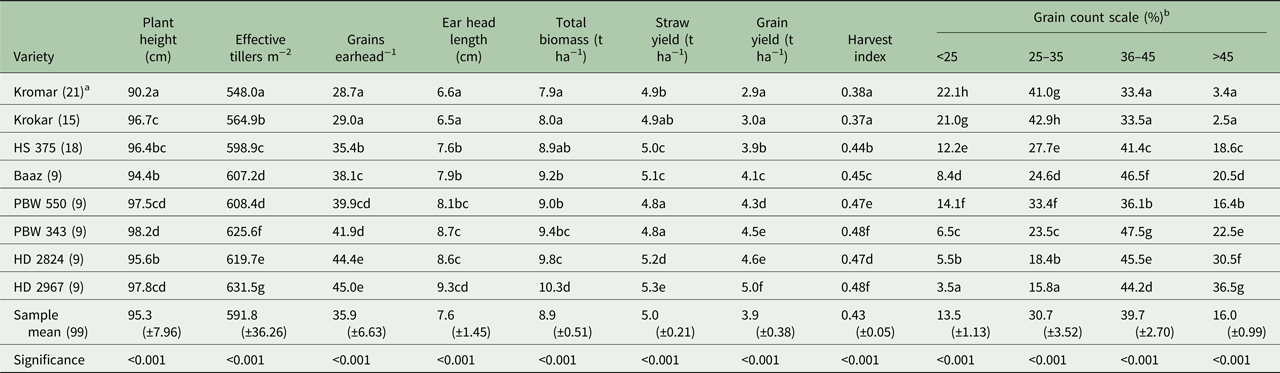
The percentage of farmers who adopted high-yielding long- and medium-duration varieties (HD 2967, HD 2824, PBW 343, Baaz, HS 375 and PBW 550) increased to 63.6 at the time of execution of farmer participatory research trial in comparison to the locally grown short-duration wheat varieties (Table 4). The average yield levels of these six varieties were higher in comparison to the locally grown wheat varieties. The data indicate that these high-yielding varieties can totally abolish farmer's misconception of the crop reaching physiological maturity and terminal heat stress with change in temperatures and high wind speed. The results were similar when the sowings were done even in late April. Although the grain yield of these six promising varieties under late sowings were reported to be far below their yield potential in comparison to them in early-sown condition, still their yield was quite higher when compared to the local Kromar and Krokar varieties. On observing the data of long-duration high-yielding wheat varieties in comparison to the short-duration low-yielding varieties, the percent increase in plant height was seen between 6.3 and 10.6%, effective tillers m−2 12.1 and 18.2%, grains per ear head 50 and 90.7%, ear head length 18.7 and 45.3%, total biomass 64.8 and 90.7%, straw yield 33.3 and 47.2%, grain yield 95 and 150% and Harvest Index 18.9 and 29.7% were observed in HS 375, Baaz, PBW 550, PBW 343, HD 2824 and HD 2967 to that of average of locally grown Kromar and Krokar varieties prior to artificial glacier water harvesting techniques as mentioned in Table 1. On the average, 60–80% of ear heads had more than 35 grains per ear head in high-yielding wheat varieties HS 375, Baaz, PBW 550, PBW 343, HD 2824 and HD 2967; whereas in locally grown Kromar and Krokar varieties, it was seen to be 13.4%.
High-yielding wheat varietal introduction and their performance as compared to short-duration local wheat varieties after artificial glacier water harvesting technique

a Value in parenthesis without ± sign is sample size of a component while with that of ± sign is ± S.D.
b Grain count (%) for scales (<25, 25–35, 36–45 and >45) is based on grain count from ear heads found in effective tillers m−2. Some of row sum up in case of grain count scale % may not add up to 100% due to rounding.
Note: Significance levels are from one-way ANOVA (numerical data) and χ2 (% data). Data followed by different lower case letters differ significantly (Duncan multiple range test, significance level = 0.05, within column comparison).
Discussions
Bench mark survey
Few facts were also highlighted from the traditional followed practices, i.e., early sowing of wheat definitely helped in enhancing the grain yield and extra irrigations applied was also positively correlated in terms of production. It was also found that mulch helped in retaining soil moisture to do early sowing, thus boosting up the yield and yield attributing characters. Thus, an important finding was that for a long time this area has been ignored to get quality genotypes on the basis of climatic variability to ensure better production, productivity and livelihood of resource-poor small or marginal farmers.
Irrigation frequency
On evaluating the weather data during experiment execution years, it is evident that due to low temperature at upper elevations, the glacier does not melt during early growth stage of wheat, temperature increases at the end of May to mid-August in crop cultivated areas and unavailability of IW required was more detrimental to wheat productivity. Due to skipping these irrigations either at early growth stages or at milking/dough stage to escape terminal heat wheat crops are even more vulnerable to lower yields. Farmers in Ladakh generally skipped irrigations in crop required at crucial growth stages. Initiatives were taken to persuade farmers to apply at least two more irrigations one at crown root initiation and second at terminal heat stage in the timely planted wheat is advisable to make farming economically viable, but still there is a lot of reluctance from them as they fear that these additional irrigations may cause either immaturity or lodging. Even if the farmers irrigate the crop at crown root initiation stage in early-sown wheat, a significant improvement in the growth and development can be seen, but still this does not help much if the farmer escapes irrigation at the stage that can lead to low yields due to terminal heat under high evapotranspiration rate. This is where the last irrigation can be assured and can help in moderating the soil temperature and maintaining the food supply at the source and sink end to the grain. The number of irrigations has direct implications on the wheat performance as it is essential for physiological and metabolic functions and facilitates the uptake of nutrients. Hobbs et al. (Reference Hobbs, Sayre and Ortiz Monasterio1998) found that sustainable increases in wheat system productivity depend on availability of adequate IW at the time of crop growing season. In many studies, it has been reported that yield losses are associated with water stress at different physiological stages. Sharma et al. (Reference Sharma, Kar and Cheema1990) tested combinations of three irrigation regimes based on the ratios of IW to cumulative pan evaporation of 1.2 (I1), 0.9 (I2) and 0.6 (I3) on the yield of wheat in northwestern India and found that grain yield increased with increase in frequency of irrigation. Pandey et al. (Reference Pandey, Maranville and Admou2001) found that water deficiency at any growth stage due to high temperature and high ET demand had adverse effects on wheat growth, especially if the stress period is from flowering to grain-filling stages, thus leading to reduced grain yield, kernel numbers and straw yield. The adverse effects of this stress can be partially mitigated by an adequate supply of IW.
Sowing dates
Non-cash input, i.e., early sowing can help in increasing wheat yields to a marked extent. Data reported in benchmark survey and field trials show that date of sowing alone can help in improving the yield levels across the region. Since late sowing has remained a problem, farmers depend on short-duration varieties like Krokar and Kromar which are potentially low yielder. The use of these two varieties is common and wide spread because of shorter growth cycle. In contrast to the belief that these varieties are evolved for late-sown conditions, it was found that the long- and medium-duration varieties are equal or better in performance even under late-sown conditions. The high-yield potential of these long-duration varieties gives higher yield even when sown in April end. Early sowings of wheat remain a constraint in the drastic environment due to unavailability of IW required in the early growth stages of the crop. Thus, under best water management techniques, advancement in sowing time can be a good strategy to have best possible crop growth phases and escape terminal heat stress challenges for yield enhancement. Another important outcome emerging out of this trial is that there is no need to spend both time and money on breeding wheat cultivars for late-sown conditions. It is beneficial that the breeders invest their time on developing timely sown wheat cultivars and further push the yield potential of these cultivars and tailor them to respond to better agronomic interventions and tolerance to terminal heat stress. When these long- and medium-duration high-yielding varieties are planted in the late-sown conditions, they generally out yield the short-duration cultivars recommended for late-sown conditions. On visually observing these early-sown wheat crops, farmers found it more appealing based on the performance during the development phase with more grains per ear head and more effective tillers m−2. In similar findings, Tripathi et al. (Reference Tripathi, Mongia, Sharma, Kharub and Chhokar2005) estimated that delay by every single day of wheat planting past the optimal date of sowing results in yield loss of 26.8 kgha−1 day−1. Malik et al. (Reference Malik, Singh and Ashok2007) reported that in order to make the system more productive, a shift in sowing time will be required. Early sowings have led to major gains in the yield of wheat (Erenstein et al., Reference Erenstein, Malik and Singh2007). From research done in the western indo gangetic plain (WIGP), it has been already established that early wheat sowings are necessary for increasing the wheat productivity (Harrington et al., Reference Harrington, Fujisaka, Morris, Hobbs, Sharma, Singh, Chaudhry and Dhiman1993; Malik et al., Reference Malik, Singh and Ashok2007; Jat et al., Reference Jat, Singh, Latare, Singh and Patel2013). Ali et al. (Reference Ali, Ali, Sattar and Ali2010) reported that early sowing of wheat was more beneficial than the late sowings in arid areas where the growth duration for wheat crops is short and stressed at the end of the growing season. Moreover, late sowing triggered the usage of short-duration varieties with lower inputs, and management practices, so long-duration variety can be a great substitute to enhance productivity in early sowings provided water harvesting techniques can be practiced to have enough IW available.
Varieties
Data clearly indicate that the grain yield of wheat is strongly related to the genetic potential of any variety. It also indicated that late seeding of long-duration varieties with high-yield potential can drastically be lowered if sown late due to terminal heat stress compared with the short-duration varieties, which reaches to physiological maturity well on time, but on comparing their yields, the long-duration varieties always have an edge. It is advisable to encourage farmers to adopt early-sown long- or medium-duration varieties whose yield potential is more as compared with the short-duration varieties practiced in the region. In the trial conducted, special emphasis was given on high-yielding medium-duration (Baaz, PBW 550 and HS 375) and high-yielding long-duration (HD 2967, HD 2824 and PBW 343) varieties which can fit in a system where early sowings are targeted to achieve high-yield levels. Generally, the short-duration varieties are grown in order to escape water stress in the region that is particularly seen at sowing and initial water requirement of the growth stage. Pingali (Reference Pingali1999) found that more than 90% of the farmers adopted semi-dwarf wheat by 1997. Since late sowing has remained a problem with farmers, they gradually shifted to short-duration varieties, have low yield potential. Kumar et al. (Reference Kumar, Alam and Ali2013) reported that cultivar is a crucial factor to determine yield levels; cultivars are mainly selected for higher yields, greater tolerance to adverse or stress conditions and shorter maturity as every crop cultivar has its own requirements for particular environmental conditions for maximum growth, which could be facilitated by correct sowing date.
Conclusions
The main aim of this study was to evaluate the productivity potential of wheat by replacing low-yielding short-duration varieties by high-yielding medium- and long-duration varieties and harnessing of two additional irrigations from artificial glacier water harvesting technology, thus sowing wheat early in comparison to the traditional method. The early-sown wheat during the development phase and on harvest was found to have more grains per ear head and higher effective tiller per unit area. It was also observed that the farmers who adopted early sowing generally chose high-yielding varieties used better agronomic practices, i.e., relatively more inputs including timely weed management, applied more fertilizer as well as irrigation. There was also a change in the mindset in contrast to the earlier belief that short-duration varieties were evolved for late-sown conditions; it was established that the long-duration varieties even under late-sown condition are equal or better in performance. The high-yield potential of the long-duration wheat varieties is better even when these varieties are sown at April end. It was also observed that the number of irrigations has direct implications on the performance of wheat crop as it facilitates the crop to have prolonged vegetative and reproductive stage, thus improving the physiological and metabolic functions and facilitates the uptake of nutrients. It was seen that the farmers who skipped last two irrigations showed more instances of grain shrinkage, fewer grains per ear head and effective tillers, thus incurring heavy yield penalty in comparison to the farmers who gave the supplemental irrigation that prevented the crop under high-temperature stress at the time of grain filling. On the other hand, artificial glacier water harvesting technique made it convenient to facilitate pre sowing irrigation and initial crop water requirement of early sown wheat, thus ensuring enough water availability to beat terminal heat stress by increasing the number of irrigation up to nine that emerged as the major driving force for championing the change. Integration of all these agronomic practice can gain a foothold in the cold arid climatic condition with a definite and sustainable yield gain. The technology is new to the farmers, and the result of the trials is so satisfying that this change will definitely be accepted to achieve higher production and profits. The process of adoption of the new interventions like varietal replacement and early sowing under artificial glacier water harvesting can be achieved through improved knowledge and awareness generation.
Acknowledgement
This research work was initiated by Krishi Vigyan Kendra Kargil, Ladakh & Mountain Agriculture Research and Extension Centre (Sheri Kashmir University of Agricultural Sciences and Technology Kashmir). The authors are thankful to Plant Nutrition Project Board, Leh, Ladakh for identifying locations and constructing artificial glacier water harvesting storages and CIMMYT India for providing quality seed material for conducting the farmer field trials. The authors would also like to thank the local farmers who co-operated in carrying out the field activities and crop management as per the requirement of the trial.