Introduction
In 2021, an estimated 472,000 Australians are living with dementia; moreover, almost 1.6 million Australians are involved in the care of people living with dementia (Dementia Australia, 2021). Hence, in line with the World Health Organization’s statement, it is essential to create an inclusive and accessible environment for people living with dementia (PLWD) and their carers and families (World Health Organization, 2017). To create such dementia-friendly communities, a reduction in the stigmatization, discrimination, and misunderstandings of dementia is a key aspect. In addition, positive attitudes towards dementia and PLWD are critical to encourage the public to actively engage in dementia health promotion, including risk reduction and timely detection (Devoy and Simpson, Reference Devoy and Simpson2017; Phillipson et al., Reference Phillipson, Magee, Jones, Reis and Skladzien2015).
Modern Australia is a multicultural country. One in five PLWD in Australia are from culturally and linguistically diverse (CALD) backgrounds (Brown et al., Reference Brown, Hansnata and La2016). With the anticipation of a substantial increase in the number of immigrants aged 65 years and over in the coming decades, it is expected that the number of dementia patients with CALD backgrounds in Australia will also increase (Wilson et al., Reference Wilson, McDonald, Temple, Brijnath and Utomo2020). However, CALD populations, including Chinese immigrants, are greatly unrepresented in Australian dementia research (Low et al., Reference Low, Barcenilla-Wong and Brijnath2019). In Australia, Chinese immigrants have been the second-largest migrant group since 2017 (Australian Bureau of Statistics, 2020). It is therefore reasonable to anticipate that Chinese immigrants will make up a sizeable portion of PLWD in the future.
Considering the migrant background of CALD populations, their traditional values and cultural beliefs might affect how they think about dementia and PLWD (Dilworth-Anderson and Gibson, Reference Dilworth-Anderson and Gibson2002; Sayegh and Knight, Reference Sayegh and Knight2013). In a study on Hispanic, African, Asian, and Pacific Islander Americans, researchers summarized and discussed four culturally associated beliefs and values about memory loss and dementia (Sayegh and Knight, Reference Sayegh and Knight2013). These beliefs/values included as follows: viewing mild symptoms of early dementia as a normal part of aging; attributing dementia to insanity rather than a neurodegenerative disease; the fatalism of dementia causes, such as labeling dementia as “evil,” “an act of God,” or “bad feng shui”; and feeling shame and concealing the patients. In addition, given their experience of migrating to and resettling in a new country, sociocultural changes might also impact on how they respond to dementia, such as seeking diagnosis and care support. For example, language difficulties were often reported as a barrier to social and health service access in CALD populations (Batalova, Reference Batalova2012; You et al., Reference You2021).
Most recent studies on dementia attitudes among CALD populations were conducted in the United States or Europe, and their findings suggested that negative attitudes and stigma towards dementia might be very prevalent. Herrmann et al. reviewed dementia-related stigma studies and found that stigma might be more common among America’s ethnic and immigrant minorities (Herrmann et al., Reference Herrmann2018). Another study in the United States indicated that African Americans often use negative words and phrases to describe PLWD, such as “fear,” “crazy,” and “damned” (Epps et al., Reference Epps2021). In Denmark, Nielsen et al. compared three immigrant groups, Polish, Pakistani and Turkish, with native Danish people regarding their attitude towards dementia (Nielsen and Waldemar, Reference Nielsen and Waldemar2016). They found that the proportions of misunderstandings and stigmatizing concepts in relation to dementia were much higher in CALD participants than the native population.
However, studies targeting older Chinese immigrants are very limited in the literature, including in Australia. Most of these studies were conducted in the United States and used quantitative methods. Their results focused on perceived threats of or stigma towards dementia. Therefore, more studies are needed to obtain a preliminary and detailed description of their attitudes towards dementia. In this study, a qualitative methodology was employed.
In addition, a conceptual framework is needed to structure and guide this investigation while considering their migration experience, sociocultural changes, and traditional health beliefs. In the literature, the conceptual frameworks, such as the Self-Regulation Model or Common Sense Model of Illness Representation, and related measures were used to explore or evaluate people’s attitudes towards dementia (Clare et al., Reference Clare, Quinn, Jones and Woods2016; Quinn et al., Reference Quinn, Morris and Clare2018). Usually, these studies mainly targeted people’s beliefs about dementia, which might ignore other perspectives on how people perceive dementia or PLWD.
Hence, in this study, the tripartite model of attitudes was selected as the conceptualized structure of dementia attitudes to gain a comprehensive understanding of how people think about dementia or PLWD (Rosenberg et al., Reference Rosenberg, Hovland, McGuire, Abelson and Brehm1960). This model, developed by Rosenberg et al., is widely used to understand attitudes towards various diseases and palliative care and guided the development of the Dementia Attitude Scales (O’Connor et al., Reference O’Connor, Breen, Watts, James and Goodridge2019; O’Connor and McFadden, Reference O’Connor and McFadden2010). In this model, attitude consists of three measurable components: affective, cognitive, and behavioral. In the context of attitudes towards dementia, the affective component could refer to people’s evaluations of and feelings about dementia or PLWD. The cognitive component could refer to people’s knowledge of and thoughts about dementia or PLWD. The behavioral component could refer to people’s intentions or actual behaviors towards dementia or PLWD.
With regard to the affective component of dementia attitudes, among a group of 207 older Chinese Americans aged 55 years and above, Shi et al. reported that 55% of them worried about their own memory problems, 11% even indicated that they were too worried to fall asleep, and 87% thought their family members would be very stressed if they had dementia (Shi et al., Reference Shi2018). With regard to the conceptive component, in Shi et al.’s study mentioned above, 32% of older Chinese Americans thought they would develop dementia someday. In another study, researchers interviewed 36 older Chinese Americans about their perceptions of the symptoms and causes of dementia (Laditka et al., Reference Laditka2013). They reported that participants commonly thought genetics or heredity, anxiety or stress, and “having a lot on the mind” were causes of dementia, and the core symptom was memory loss, from minor forgetfulness to a very severe condition. Woo et al. studied stigma towards dementia among older Chinese Americans aged 55 years and over and found that 32% of the 449 participants thought that PLWD were dangerous to others, and 73.1% also thought that PLWD were impulsive and unpredictable (Woo and Mehta, Reference Woo and Mehta2017). With regard to the behavioral component, in Shi et al.’s study, 56% of older Chinese Americans wanted to know their risk of developing dementia someday, and 22% would seek dementia-related information about prevention from doctors and others. In Woo et al.’s study, 40% of the participants would not want to be friends with PLWD, and 49% thought PLWD should be institutionalized. In Laditka et al.’s study, older Chinese Americans rarely used the term “dementia”; instead, they used the term “Alzheimer’s disease” or euphemisms, such as “senior moment.”
To the best of our knowledge, only one study on dementia attitudes was conducted in Australia, which included Chinese immigrants aged 18 years and over. Low et al. assessed 437 Chinese Australians’ attitudes towards dementia with seven “yes” or “no” questions (Low et al., Reference Low2010). The study observed that Chinese immigrants expressed more negative attitudes than third-generation Australians. Fifty-one percent of them agreed with the statement that dementia was a normal part of aging, 84% thought PLWD could have done something to avoid dementia, 83% thought PLWD should be cared for like young children, and 7% thought they would feel embarrassed if a family member developed dementia.
In previous studies, older Chinese immigrants are not well represented, especially in Australian studies, and current evidence indicates that they have many misunderstandings of or negative attitudes towards dementia. However, there is not enough current evidence to generate a comprehensive understanding of the attitudes of older Chinese immigrants towards dementia. Little is known regarding the impact of the migration experience and sociocultural environment on dementia attitudes. Therefore, this study aimed to explore attitudes towards dementia in two groups of Chinese adults aged 50 years and over: immigrants living in Melbourne, Australia, and nonimmigrants living in Beijing, China. By comparing the similarities and differences in dementia attitudes between these two groups, an improved understanding of the role of the migration experience and sociocultural changes in older Chinese immigrants’ attitudes towards dementia can be gained.
Methods
Study design
A qualitative research design was employed in this study. The data were collected through in-depth semi-structured interviews.
Participants
Two convenience samples were recruited from the metropolitan areas of Melbourne, Australia, and Beijing, China. Participants were recruited using the following inclusion criteria: 1) aged 50 years or above; 2) born in mainland China and self-identified as ethnic Chinese; 3) community-dwelling; 4) not diagnosed with dementia, mild cognitive impairment, or any neurocognitive disorders; and 5) for participants recruited from Melbourne, first-generation Chinese immigrants.
This study was approved by the Medicine and Dentistry Human Ethics Sub-Committee of The University of Melbourne and the Ethics Review Board of Peking University Institute of Mental Health (Sixth Hospital). All participants provided written (before COVID-19 pandemic) or oral consent (during COVID-19 pandemic).
Data collection
Twenty-one interviews were conducted in Melbourne between September and December 2019, and 25 interviews were conducted in Beijing between March and June 2020.
In Melbourne, participants were given the option of either an in-person interview at their preferred locations or a phone interview. In Beijing, all interviews were conducted via telephone owing to the coronavirus (COVID-19) pandemic.
All interviews were conducted in Mandarin and audio-recorded with the consent of the participants. The duration ranged from 30 to 60 minutes per interview.
Interview schedule
A semi-structured interview schedule was developed based on the tripartite model of attitudes and structured with three sets of open-ended questions regarding affective, cognitive, and behavioral components. At the beginning of the interview, several demographic questions were asked, including questions on age, sex, education, marital status, employment status, self-rated health condition, family history of dementia, exposure to dementia, and migration experience. Additional explorative questions were asked if more detailed descriptions or information were sought from the participant.
Data analysis
Descriptive analyses of the demographic information were conducted. Data for continuous variables are presented as means and standard deviation (SD), and data for categorical variables are presented as numbers and percentages. The Mann–Whitney U test and chi-square test were selected to compare the continuous and categorical variables between the two groups, respectively.
Interview recordings were transcribed verbatim by professional transcriptionists, and then MZ double-checked the accuracy of all transcripts. The transcripts from Melbourne and Beijing were analyzed separately using the thematic analysis method by Braun and Clarke Reference Braun and Clarke(2006).
Firstly, an initial coding framework was generated. In each group, 20% of the transcripts were randomly selected and coded by MZ to derive this framework. Then, the second coder (HFZ) reviewed this framework using a randomly selected transcripts sample. Disagreements of the code framework were then addressed through group discussion within the research team. With this code framework, the remaining 80% of transcripts were coded. When more disagreements appeared, MZ and HFZ discussed and reached a consensus. Themes were initially defined and named by MZ and then were discussed within the research team until a consensus was reached. QRS NVivo 12 was used to store and manage data files and facilitate the data analysis.
Results
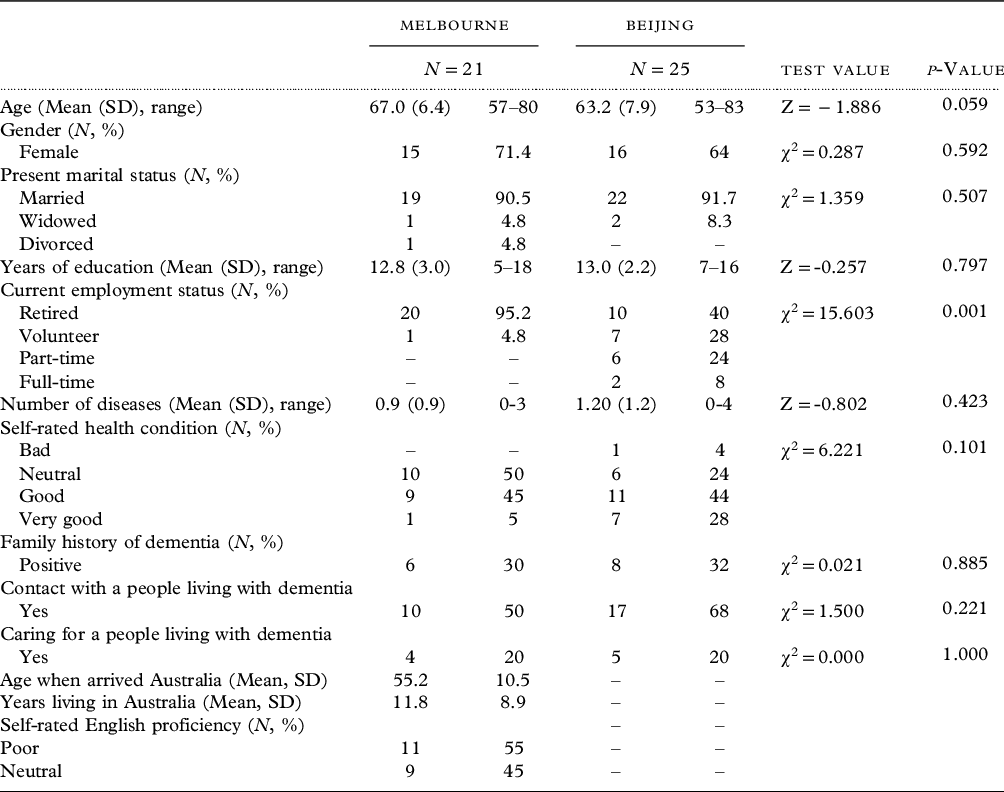
A total of 46 Chinese adults were interviewed in this study, including 21 from the Melbourne group and 25 from the Beijing group. There were no significant differences between these two groups regarding demographic characteristics, except for current employment status (Table 1). In the Beijing group, more participants volunteered or participated in part-time or full-time work (p < 0.05).
Comparison of the participants' demographic characteristics between two groups

Note: N = number; SD = standard deviation.
In the Melbourne group, the mean age when participants migrated to Australia was slightly over 55 years (SD = 10.5), and the average number of years living in Australia was nearly 12 years (SD = 8.9). All participants rated their English proficiency as “poor” (55%) or “fair” (45%).
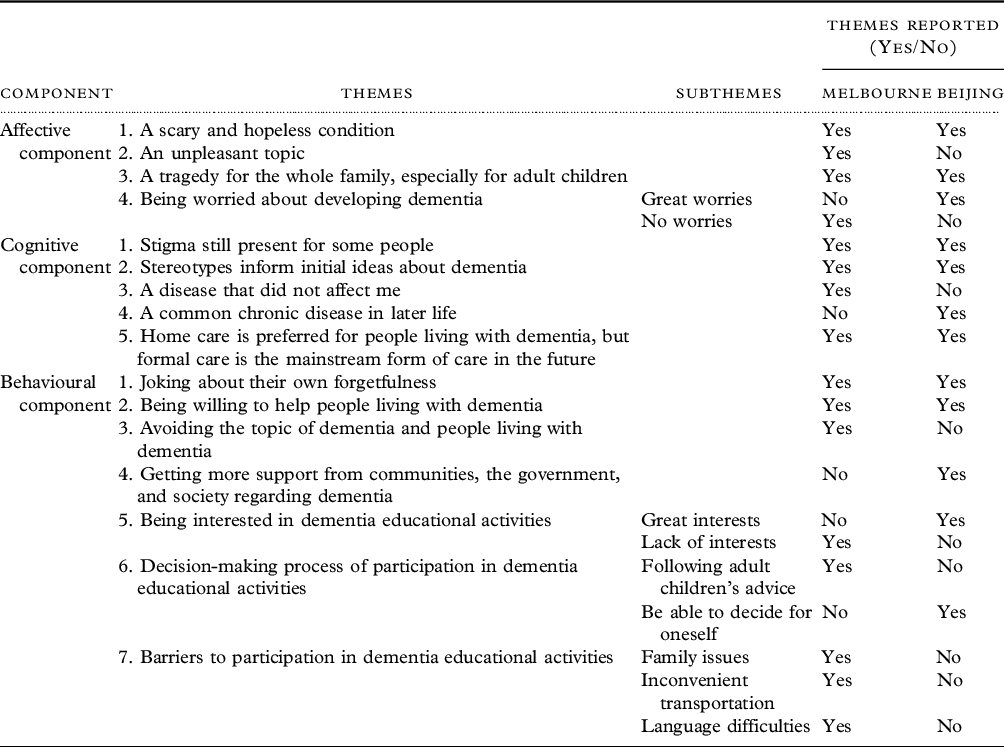
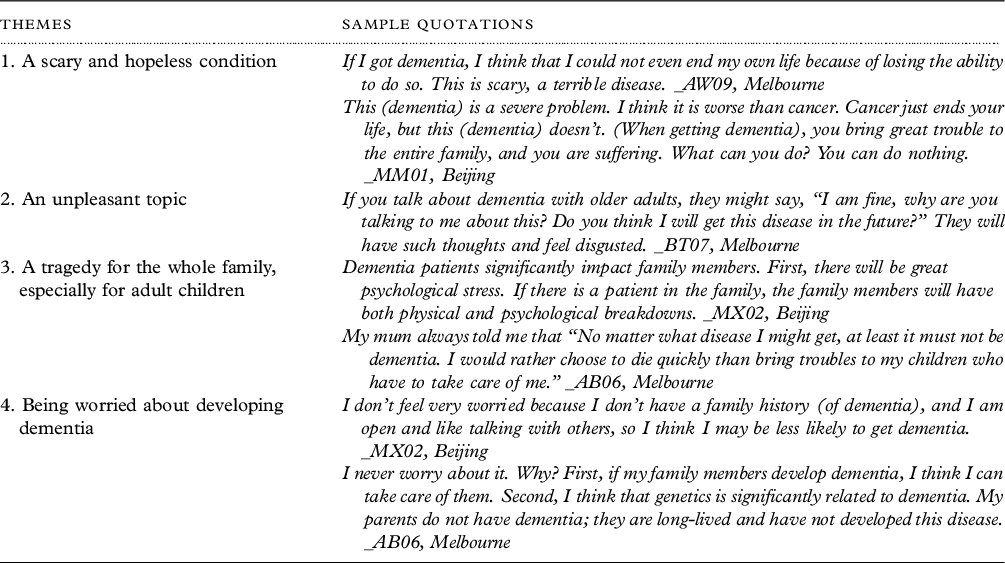
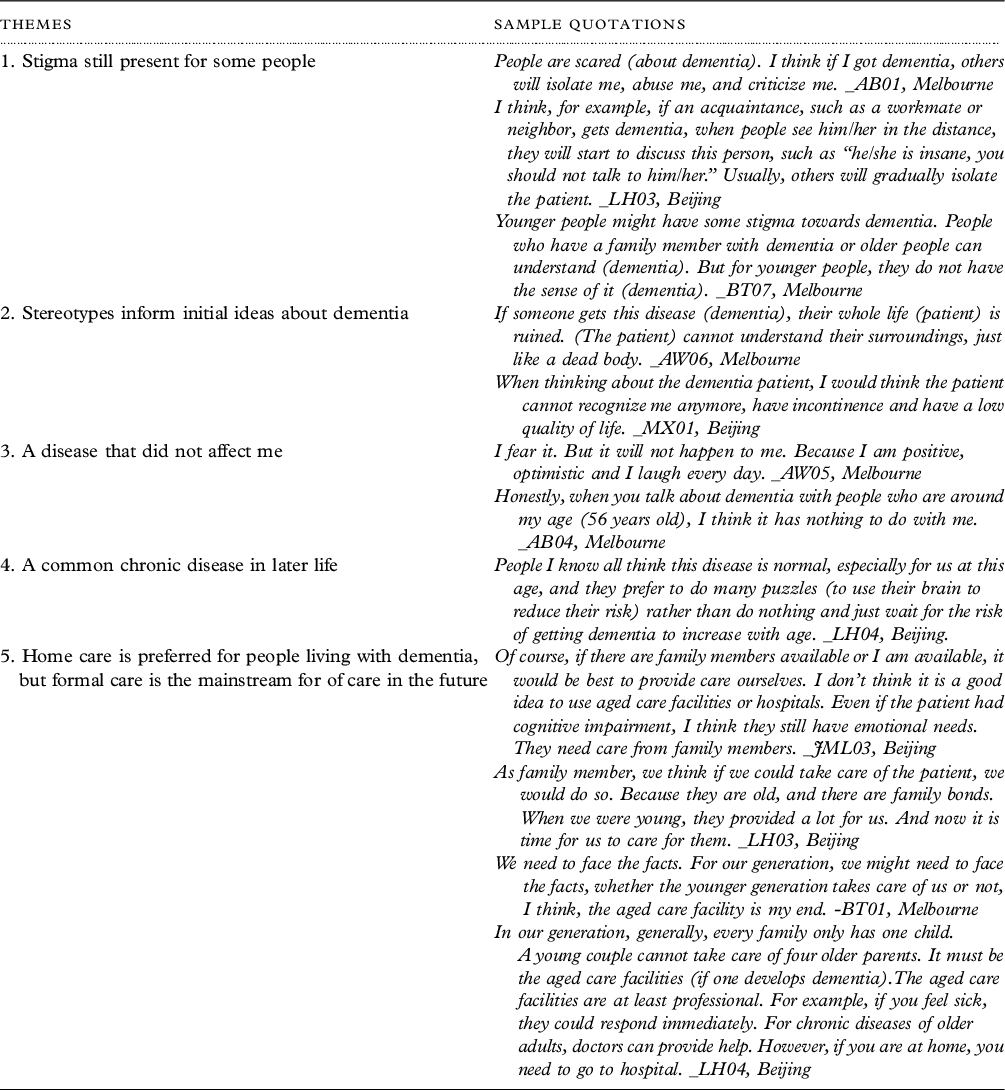
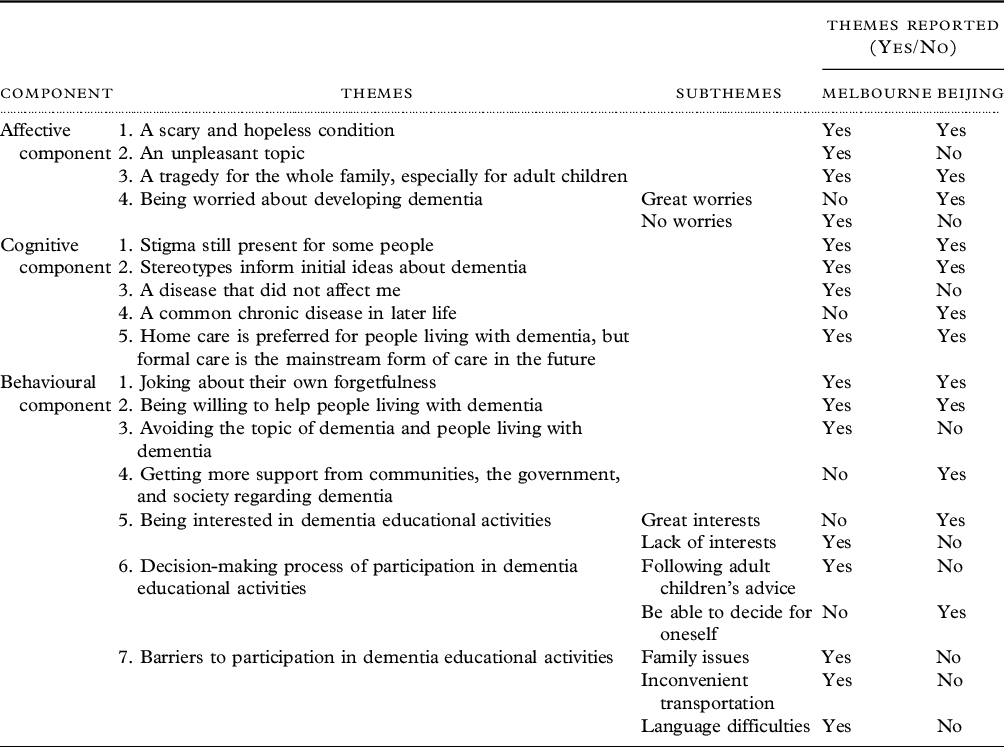
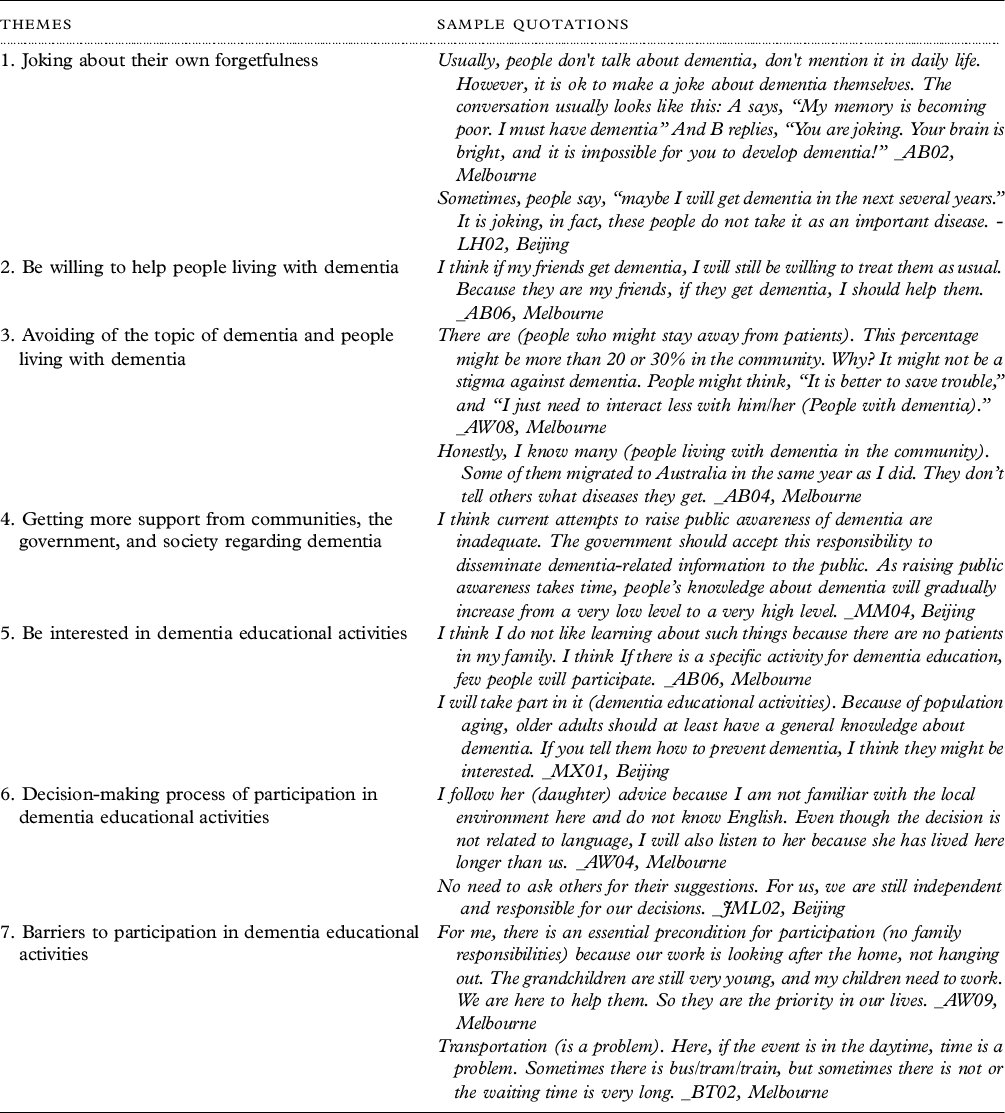
Themes and subthemes are described in Table 2. There were four themes generated in the affective component, five in the cognitive component and seven in the behavioral component. Of these, seven themes were present in both groups, five were present in only one group, and four were present differently between the two groups. More details on each theme are provided below and sample quotations are shown in Tables 3, 4 and 5.
Attitudes towards dementia among Chinese adults in the Melbourne and Beijing groups based on the tripartite model of attitude
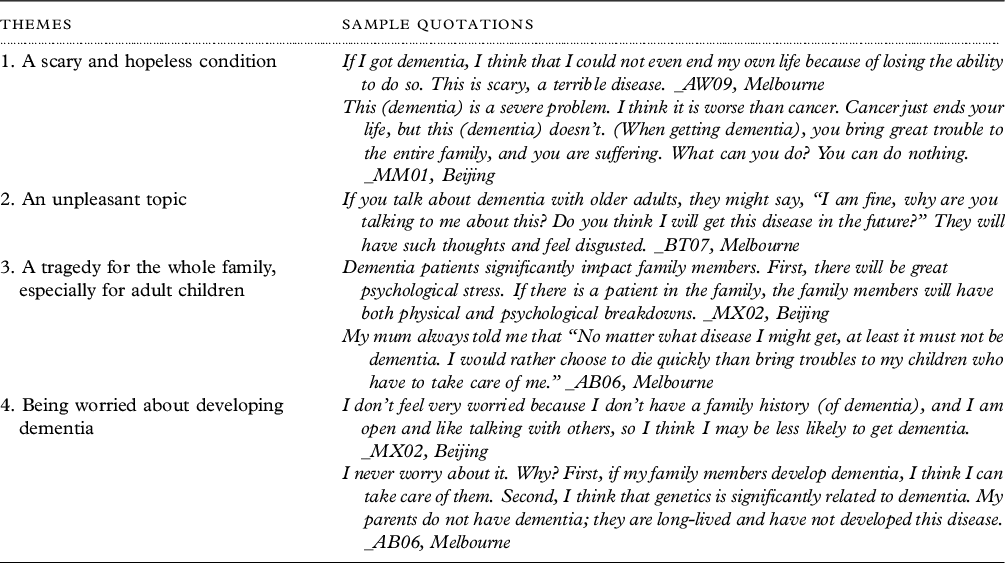
Sample quotations of each theme from the affective component
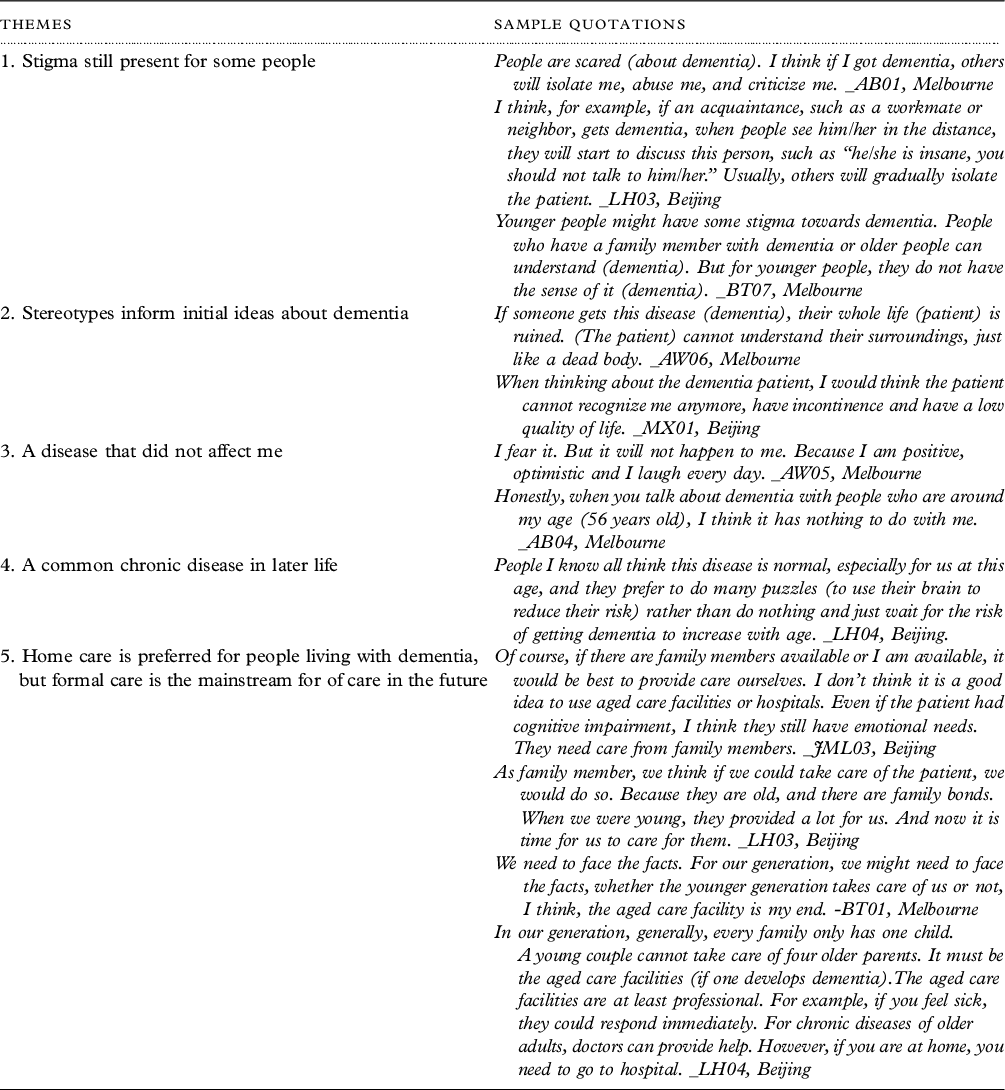
Sample quotes of each theme from the cognitive component
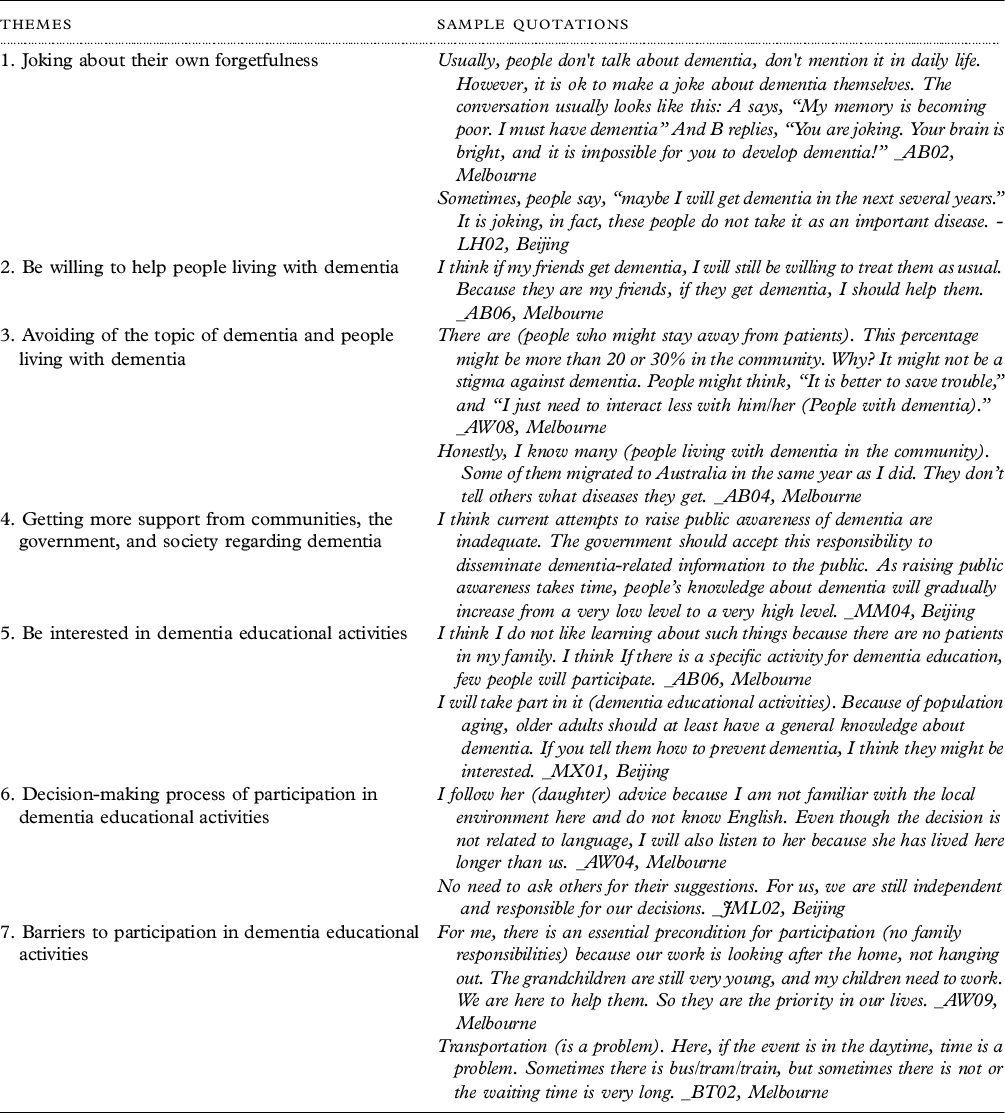
Sample quotes of each theme from the behavioral component
The affective component
A scary and hopeless condition
Both groups (14 out of 25 in the Beijing group and 18 out of 21 in the Melbourne group) reported feeling scared at the thought of dementia. Many participants characterized dementia as foolishness and a loss of dignity, self-control, and independence. Several participants mentioned that PLWD were so impaired that they even lost the ability to commit suicide.
An unpleasant topic
In the Melbourne group, many participants (7 out of 21) reported that older adults were not interested in or joined in the discussion if others mentioned dementia. The reason was that dementia was an unpleasant topic. Some words they used to describe their feelings were “boring,” “annoyed,” or “disgusted.”
A tragedy for the whole family, especially for adult children
Participants in both groups expressed sympathy not only for PLWD but also for their carers and family members (12 out of 25 in the Beijing group and 16 out of 21 in the Melbourne group). They described having PLWD in the family as a tragedy that could destroy the lives of the entire family. Care burden was commonly mentioned by participants, who thought that the care burden was heavier for dementia than for other diseases and that caring for PLWD would place a physical, mental, and financial burden on their families, particularly their adult children.
Being worried about developing dementia
When asked whether they worry about developing dementia in the future, the majority of participants in the Beijing group reported worries (15 out of 25). Moreover, they worried more if they had risk factors for dementia, such as a family history of dementia or stroke. In contrast, more participants in the Melbourne group (14 out of 21) reported no worries about developing dementia, and the most commonly mentioned reason was that they did not have a positive family history of dementia.
The cognitive component
Stigma still present for some people
When asked a broad question about Chinese adults’ attitudes towards dementia, the majority of participants in both groups believed that some older Chinese adults still held stigmatizing thoughts about dementia and that, if diagnosed with dementia, some people might have self-stigma and be ashamed of their diagnosis (10 out of 25 in the Beijing group and 14 out of 21 in the Melbourne group). Younger age, a lack of exposure to PLWD, and a higher education level were mentioned as possible reasons for such stigma towards dementia.
Stereotypes inform initial ideas about dementia
When exploring the general view of dementia or PLWD in both groups, most participants’ description of PLWD was usually related to severe cognitive or behavioral problems, such as getting lost and having incontinence (16 out of 25 in the Beijing group and 14 out of 21 in the Melbourne group). Some also reported that developing dementia meant a loss of independence and even a loss of meaning in life.
A disease that did not affect me
When asked about their primary thoughts on dementia, participants living in Melbourne (7 out of 21) usually thought dementia had nothing to do with them. Their reasons varied, ranging from a younger age to a positive personality. They denied the possibility that themselves might develop dementia in the future.
A common chronic disease in later life
In the Beijing group, many participants (16 out of 25) regarded dementia as a common disease later in life. They believed that very mild memory loss is a common problem for most older adults but that it can worsen and become an early symptom of dementia.
Home care is preferred for people living with dementia, but formal care is the mainstream form of care in the future
Home care, particularly provided by spouses or adult children, was still the first choice for most older adults regarding dementia care in both groups (11 out of 25 in the Beijing group and 16 out of 21 in the Melbourne group). Home care could provide a familiar and convenient living environment for the patient. Participants particularly highlighted the psychological support patients could receive from their loved ones. Home care is also aligned with the traditional Chinese values of caring for older family members.
On the other hand, many participants (6 out of 25 in the Beijing group and 7 out of 21 in the Melbourne group) argued that aged care facilities would become an inevitable and mainstream form of care in the future. Considering the care burden for adult children and the advantages of formal care, such as having healthcare professionals, participants from both groups indicated they could accept formal care if they had dementia in the future. However, the risk of ignoring the psychological well-being and abuse of older adults in aged care facilities were also mentioned as serious worries about formal care.
The behavioural component
Joking about their own forgetfulness
When asked whether they talked about memory problems or dementia in their daily lives, some participants in both groups (6 out of 25 in the Beijing group and 5 out of 21 in the Melbourne group) mentioned making jokes about their own memory loss or the possibility of getting dementia. In other words, they thought developing dementia was a joke which would never happen to themselves.
Being willing to help people living with dementia
Most participants (11 out of 25 in the Beijing group and 13 out of 21 in the Melbourne group) in both groups expressed compassion towards PLWD and their families and a willingness to help PLWD with mild symptoms in the community. In particular, when their friends developed dementia, some participants believed that it was their responsibility to help them when needed.
Avoiding the topic of dementia and people living with dementia
When asked about the topic of dementia in the Chinese community in Melbourne, participants (8 out of 21) commonly reported that Chinese adults usually avoid this topic. They did not actively mention it in daily conversation, denying the possibility of developing dementia or even avoiding PLWD.
In addition, when asked about people’s possible reactions to a dementia diagnosis or a person with dementia in the Chinese community in Melbourne, many participants (12 out of 21) mentioned avoidance. For example, people might deny this diagnosis, try their best to pretend to be cognitively normal, conceal their diagnosis, and even actively withdraw from others.
Getting more support from communities, the government, and society regarding dementia
In the Beijing group, many participants (9 out of 25) mentioned the community, government, and society’s role in disseminating dementia-related information, care services, and other support resources for PLWD and their families. They thought more policies or programs were needed to raise public awareness and to support PLWD and their families.
Being interested in dementia educational activities
Many immigrants in the Melbourne group (8 out of 21) reported they did not want to know or felt they did not need to know dementia-related information. The most frequently mentioned reason was that they did not have a family history of or any risk factors for dementia. However, most of them did not share their reasons. In contrast, for the Beijing group, participants (16 out of 25) expressed great interest in dementia educational activities, especially in risk reduction.
Decision-making process of participation in dementia educational activities
When discussing whether they decided to participate in dementia educational activities, Melbourne participants (10 out of 21) first considered their adult children’s advice as they were not familiar with the local environment, including the sociocultural environment. In contrast, Beijing participants (12 out of 25) reported that they could make the decision based on their needs and interests.
Barriers to participation in dementia educational activities
Melbourne participants (11 out of 21) mentioned many migration-related barriers when considering whether to participate in dementia educational activities. These barriers included family responsibilities, such as taking care of their grandchildren and helping with the housework, transportation problems, such as an inability to drive and inconvenient public transportation, and low English proficiency.
Discussion
This study provides an in-depth description of older Chinese Australians’ attitudes towards dementia and compares them to those of older Chinese adults living in China. Guided by the tripartite model of attitudes, several similarities and differences were found in the aspects of affective, cognitive, and behavioral components. In general, although these two groups of older Chinese adults shared many common feelings, perceptions and actions related to dementia or people living with dementia, Melbourne participants were more likely to negatively perceive or respond to dementia or people living with dementia than Beijing participants.
Similarities between the Melbourne and Beijing groups
There were common results for each attitude component between Melbourne and Beijing participants. To some extent, these similarities are related and compose a relatively negative view of how older Chinese adults think about dementia. From the cognitive perspective, participants held stigmatizing views of people living with dementia and negative stereotypes of dementia symptoms. Thus, such perceptions might lead to negativity regarding dementia and people living with dementia, including “a scary and hopeless condition” and “a tragedy for the whole family.” Hence, from the behavioral perspective, most participants expressed an intention to help patients with dementia and their families.
These findings of stigma and negative stereotypes are largely consistent with the findings of previous studies on Chinese immigrants and Chinese adults living in China (Low et al., Reference Low2010; Wang et al., Reference Wang, Zou, Li and Hu2013; Woo and Chung, Reference Woo and Chung2013; Woo and Mehta, Reference Woo and Mehta2017; Yang et al., Reference Yang2021). These findings indicate that Chinese adults’ understandings of dementia might relate more to folklore knowledge, cultural beliefs, or self-experience than to scientific evidence. Our previous study also found that older Chinese adults living in Melbourne and Beijing had insufficient knowledge of dementia, with a mean score of approximately 17.5 out of 30, which was consistent with other studies in the United States and mainland China (Sun et al., Reference Sun, Gao, Shen and Burnette2014; Yang et al., Reference Yang2021; Zhao et al., Reference Zhao2021). Therefore, future research should focus on increasing the public’s evidence-based knowledge about dementia. After increasing their acquaintance with such knowledge, older Chinese adults might be more likely to reduce their negative perceptions towards dementia and individuals living with dementia (Yin et al., Reference Yin, Wardenaar, Xu, Tian and Schoevers2020).
The fear and hopelessness of dementia and the willingness to help dementia patients both reflect people’s most direct affective responses to the symptoms and impacts of dementia. These responses might be due to a common response to health threats as well as Chinese culture and traditional values. In this study, participants were cognitively healthy and socially active. Hence, it is unthinkable for them that they would behave like people living with dementia in the future. Additionally, self-sacrifice and filial piety are two core features of Confucianism. The gradually decreasing independence of people living with dementia in daily life would place a heavy burden on their families, including financial burden, carer burden, social stress, and psychological stress (Chen et al., Reference Chen2017; Wang et al., Reference Wang, Wang, Tang and Yang2017; Zhang et al., Reference Zhang, Clarke and Rhynas2020). Consequently, instead of making a contribution, older adults with dementia would place significant burdens on the family and challenge filial piety, which might lead to the fear among such individuals of developing this disease and increased compassion for family members of dementia patients.
Another expected finding is the preference for home care among Chinese adults, which supports findings reported in the literature (Alexandra and Joanna, Reference Alexandra and Joanna2017; Low et al., Reference Low2010). However, surprisingly, participants also admitted that formal care, such as aged care facilities, would become the mainstream form of care in the future. Although concerns regarding the quality of care and risk of abuse were also reported, our results showed an increasing acceptance of formal care among older Chinese adults. Therefore, in line with the recommendations in the literature, more formal care services, such as community-based supportive care or aged care facilities, could be designed and implemented for Chinese communities.
Differences between the Melbourne and Beijing groups
Worries about developing dementia
One notable difference between the study groups was identified for the affective component: worries about developing dementia in the future. On the one hand, most Beijing participants expressed significant worries about getting dementia, while only a small proportion of the Melbourne group expressed this concern. This result is consistent with those of many previous studies conducted in mainland China (Calia et al., Reference Calia, Johnson and Cristea2019; Zeng et al., Reference Zeng2015). The reasons for the worries might be various. From previous studies, concern about developing dementia might be attributed to many factors, such as age, education, exposure to dementia, income, knowledge about dementia, perceived care burden, and traditional cultural beliefs (Gao et al., Reference Gao, Gao, Guo, Sun and Zhang2020; Jang et al., Reference Jang, Yoon, Park, Rhee and Chiriboga2018; Sun et al., Reference Sun, Gao and Coon2013). Moreover, in the present study, participants’ negative perceptions of dementia and people living with dementia might also contribute to their worries. In particular, in the Beijing group, a higher proportion of participants were volunteers or employees with better self-rated health conditions than in the Melbourne group. Hence, one possible reason for more worries in the Beijing group is that dementia would disturb their current active social life or even lead to social isolation.
On the other hand, a higher proportion of Melbourne participants did not report worries, and this result is inconsistent with those of previous studies. Shi et al. evaluated 207 Chinese Americans (mean age 75.37 years) and found that more than half were worried about memory loss (Shi et al., Reference Shi, Sun, Liu and Marsiglia2020). In contrast, Jang et al. found a very low percentage (11.5%) of Chinese Americans (aged between 18 and 98 years) who were concerned about developing Alzheimer’s disease (Jang et al., Reference Jang, Yoon, Park, Rhee and Chiriboga2018). Considering the age difference in participants in these studies, worries of developing dementia might be more prevalent in older adults. One possible explanation might be that Melbourne participants were uneasy about expressing their worries about memory problems. First, the Western sociocultural environment might make them feel unsafe and uneasy; thus, they might try to hide their perceived weaknesses. For example, most of them did not understand English and the local lifestyle. In particular, they were not familiar with the services and support that they could seek for help. Second, in line with the finding of “following adult children’s advice,” older Chinese immigrants become the more vulnerable member in the parent–child relationship and lose their financial independence and social status after migrating to a new country (Jetten et al., Reference Jetten2018; Montayre et al., Reference Montayre, De-Arth, Shrestha-Ranjit, Neville and Holroyd2019; Shuang et al., Reference Shuang, Maher and Sheer2019). Hence, they might avoid complaining about memory loss, which might trouble their children and make them impatient.
A common/normal condition in later life
Another difference was found in the cognitive component: Beijing participants in this study clearly stated that dementia was an abnormal condition that usually develops later in life, whereas previous studies have found that Chinese participants generally considered dementia to be a normal part of aging. Yang et al. assessed older Chinese adults in Shanghai, China, and reported that comparatively large proportions of the participants (44.6%) agreed that “dementia is not a disease. It is forgetfulness due to aging” (Yang et al., Reference Yang2021). Similarly, Zeng et al. also found that approximately 38.1% of Chinese participants thought that “It is normal to get Alzheimer’s disease during aging” (Zeng et al., Reference Zeng2015). This inconsistency may be caused by misunderstandings of the word of “normal” in Chinese. As aging or old age is seen as an essential cause of or risk factor for dementia in Chinese culture, many people regard developing dementia as common in later life. In quantitative studies, this view could be mistakenly presented as “dementia is a normal condition with aging.” Furthermore, in the current qualitative study, participants were recruited from community centers or groups who had high education levels and actively participated in local community activities. Therefore, with a high literacy level and good communication skills, participants in this qualitative study could better understand the questions, clearly express their ideas, and give more details about “normal aging” and dementia.
Avoidant responses to dementia
From all three components of attitudes, there were more avoidant responses to dementia in Chinese immigrants living in Melbourne than in Chinese individuals living in Beijing. Such attitudes include becoming uncomfortable regarding the topic of dementia, denying the possibility of developing dementia, and avoiding thinking or talking about dementia or even engaging with people living with dementia. Only one common avoidant response was found in both groups: joking about one’s own forgetfulness. All these behaviors might be barriers to seeking help for potential symptoms of dementia (Nielsen et al., Reference Nielsen, Nielsen and Waldemar2020; Vernooij-Dassen et al., Reference Vernooij-Dassen2005). Therefore, these avoidant thoughts and behaviors might delay dementia diagnosis and treatment and reduce these individuals’ interactions with people living with dementia, in turn deepening their fear of dementia and causing more stigma about dementia in the community.
Interest in, need for, and barriers to dementia educational activities
This study found more interest in and need for dementia educational activities in the Beijing group and more barriers against these activities in the Melbourne group. As discussed above, resettling in a new sociocultural environment might make older Chinese immigrants uneasy and rely more on their adult children. Other factors also prevented them from engaging in local community activities, such as seeking dementia-related information, attending dementia-related activities, and communicating with people living with dementia. For example, Melbourne participants often faced language difficulties, were unfamiliar with public transportation, were unable to drive, and had limited social connections (Ester et al., Reference Ester2019; Haralambous et al., Reference Haralambous2014; Lee et al., Reference Lee2011; Xiao et al., Reference Xiao, De Bellis, Habel and Kyriazopoulos2013).
In contrast, increasing dementia-related information was available to the general public in mainland China, including information on risk reduction, early symptoms, and care services. This information could be easily accessed on the internet, mobile phone, and TV. With the development and promotion of these dementia-related resources, the general public would feel more encouraged to talk about dementia, seek help for memory problems, and gain support from the community.
Limitations
Several limitations of this study need to be noted. First, the method we used is a qualitative comparative study in nature and is usually considered as part of the mixed research methodologies (Rihoux and Lobe, Reference Rihoux and Lobe2009; Rihoux, Reference Rihoux2006). The findings might partly complement our previous survey findings on the different levels of dementia knowledge between older adults living in Beijing and Melbourne (Zhao et al., Reference Zhao2021). However, the qualitative comparative analysis is case-sensitive and may limit the generalizability of our findings from a statistical viewpoint. Second, all older Chinese immigrants in this study were born in mainland China. Therefore, the generalization of the results to Chinese immigrant groups born out of mainland China, such as Taiwan, Hong Kong, and Macau, may not be appropriate. Third, this qualitative study was exploratory in nature and therefore might not sufficiently explain the underlying factors and mechanisms contributing to the development of dementia attitudes in the studied groups. Future studies should focus on exploring further underlying factors of dementia attitudes. Fourth, anon-CALD comparison group or immigrant groups from other CALD backgrounds might be needed to further explore the impact of migration experience and sociocultural environment on Chinese immigrants’ attitudes.
Conclusion
To our knowledge, this study is the first to explore differences in attitudes towards dementia between older Chinese immigrants in Australia and their nonimmigrant counterparts in mainland China. Our findings might provide policymakers, healthcare professionals, and other service providers with a better understanding of the attitudes towards dementia of Chinese immigrants living in Australia. In this study, older Chinese immigrants expressed diverse avoidant responses to dementia and barriers to engaging in local dementia services. Special training or information about Western culture, local lifestyles, the English language, and other practical skills should be offered to older immigrants in culturally appropriate ways. Considering the change in the parent–child relationship, family responsibilities and relationships must be considered when implementing health services or other activities for older Chinese immigrants.
Conflict of interest
None.
Description of authors’ roles
M. Zhao, N. Lautenschlager, H. Wang, and X. Lin formulated the research questions. M. Zhao, N. Lautenschlager, H. Wang, and X. Lin designed this study. M. Zhao conducted all the semi-structured interviews. N. Lautenschlager and H. Wang supervised the data collection. M. Zhao and H. Zhang carried out the thematic analysis. N. Lautenschlager, H. Wang, and X. Lin reviewed and discussed the themes. All authors contributed substantially to the study conduct and interpretation of the data. M. Zhao wrote the manuscript. N. Lautenschlager, H. Wang, X. Lin, E. You, and H. Zhang provided critical review and comments on the manuscript.
Acknowledgements
This study was conducted as part of Mei Zhao’s Ph.D. project supported by the Melbourne Research Scholarship from The University of Melbourne and the Academic Unit of Psychiatry for Old Age, Department of Psychiatry, The University of Melbourne and research funding provided by Professor Huali Wang in Beijing. The authors thank Mengmeng Xia, Ying Zhang, Tianhang Zhou, Xue Meng, and Han Li in Beijing. The authors also thank staff and members of the Melbourne Bentleigh Chinese Community Association, Monash Chinese Senior Friendship Association, Whitehorse Chinese Senior Friendship Association, and Chinese Seniors Cultural Association, Inc., as well as all others who participated in this study.