Introduction
Overall, the tobacco use rate is 2–3 times higher among people living with HIV (PLHIV) than in the general population. (Amiya et al., Reference Amiya, Poudel, Poudel-Tandukar, Kobayashi, Pandey and Jimba2011; Burkhalter, Springer, Chhabra, Ostroff, & Rapkin, Reference Burkhalter, Springer, Chhabra, Ostroff and Rapkin2005; Gritz, Vidrine, Lazev, Amick, & Arduino, Reference Gritz, Vidrine, Lazev, Amick and Arduino2004; Munyati et al., Reference Munyati, Redzo, Dauya, Matambo, Makamure and Bandason2006) Estimates indicate that 47–70% PLHIV smoke tobacco in high-income countries (HIC) (Helleberg et al., Reference Helleberg, Afzal, Kronborg, Larsen, Pedersen and Pedersen2013; Miguez-Burbano et al., Reference Miguez-Burbano, Ashkin, Rodriguez, Duncan, Pitchenik and Quintero2005). In the era of antiretroviral therapy (ART), PLHIV in care loses more life years to tobacco dependence than to HIV infection itself (Helleberg et al., Reference Helleberg, Afzal, Kronborg, Larsen, Pedersen and Pedersen2013). Compared to non-smoking PLHIV, for example, tobacco use independently reduces life expectancy for PLHIV by 12.3 years (Helleberg et al., Reference Helleberg, Afzal, Kronborg, Larsen, Pedersen and Pedersen2013). Tobacco use increases the risk of several opportunistic infections including tuberculosis and associated mortality (Chattopadhyay et al., Reference Chattopadhyay, Caplan, Slade, Shugars, Tien and Patton2005; Shiboski, Neuhaus, Greenspan, & Greenspan, Reference Shiboski, Neuhaus, Greenspan and Greenspan1999; Slavinsky et al., Reference Slavinsky, Myers, Swoboda, Leigh, Hager and Fidel2002), spontaneous pneumothorax, (Metersky, Colt, Olson, & Shanks, Reference Metersky, Colt, Olson and Shanks1995), and certain cancers (Lifson et al., Reference Lifson, Neuhaus, Arribas, van den Berg-Wolf, Labriola and Read2010; Reddy et al., Reference Reddy, Kong, Hyle, Baggett, Huang and Parker2017; Winstone, Man, Hull, Montaner, & Sin, Reference Winstone, Man, Hull, Montaner and Sin2013). Tobacco use affects the immune system of PLHIV, resulting in increased viral replication (Abbud, Finegan, Guay, & Rich, Reference Abbud, Finegan, Guay and Rich1995; Valiathan, Miguez, Patel, Arheart, & Asthana, Reference Valiathan, Miguez, Patel, Arheart and Asthana2014), thus decreasing the response to ART (Feldman et al., Reference Feldman, Minkoff, Schneider, Gange, Cohen and Watts2006). Among PLHIV, tobacco dependence contributes to 24% of all-cause mortality, 30.6% of non-AIDS-related cancers, 25.5% of respiratory infections, and 25.3% of cardiovascular disease (Lifson et al., Reference Lifson, Neuhaus, Arribas, van den Berg-Wolf, Labriola and Read2010). PLHIV are at particularly high risk for tobacco-related diseases in low- and middle-income countries (LMIC), where 80% of the world's 1.3 billion smokers (WHO, 2015) and over 90% of the 36.7 million PLHIV reside (UNAIDS, 2017).
Evidence from HIC suggests that evidence-based tobacco dependence treatment may facilitate abstinence from tobacco smoking among PLHIV. According to a Cochrane systematic review (Pool, Dogar, Lindsay, Weatherburn, & Siddiqi, Reference Pool, Dogar, Lindsay, Weatherburn and Siddiqi2016), for example, more intense combined interventions of smoking cessation counseling and pharmacotherapy were effective in increasing short-term (1–6 months) quit rates than a comparison group consisting of pharmacotherapy and a single brief intervention. Strategies used in HIC may not be affordable or suitable for low-resource settings (Lando, Reference Lando2016). For example, cost of pharmacotherapy, along with limited availability, misinformation on the treatment of tobacco dependence, physician reluctance to prescribe medications to treat tobacco dependence due to efficacy and safety concerns may hinder efforts to initiate and access tobacco dependence treatment (Carpenter, Ford, Cartmell, & Alberg, Reference Carpenter, Ford, Cartmell and Alberg2011; Maziak, Eissenberg, Klesges, Keil, & Ward, Reference Maziak, Eissenberg, Klesges, Keil and Ward2004; Nollen, Adewale, Okuyemi, Ahluwalia, & Parakoyi, Reference Nollen, Adewale, Okuyemi, Ahluwalia and Parakoyi2004; Parascandola & Bloch, Reference Parascandola and Bloch2016). Moreover, more intense behavioral counseling may not be feasible in LMIC given the limited existing resources.
Despite evidence of well-documented consequences of tobacco use in PLHIV, evidence-based tobacco use screening, counseling and cessation support are not readily available in LMIC. In such countries, existing tobacco control actions mainly rely on legislative measures, such as bans on advertising, promotion, and smoking in public places; taxation; and regulation on packaging (Anderson, Becher, & Winkler, Reference Anderson, Becher and Winkler2016; Raw, Mackay, & Reddy, Reference Raw, Mackay and Reddy2016). Limited studies conducted in LMIC suggest that a significant number of PLHIV are interested in quitting tobacco (Berg et al., Reference Berg, Nehl, Wang, Ding, He and Wong2014; Nguyen et al., Reference Nguyen, Tran, Hwang, Markham, Swartz and Vidrine2015; Shapiro, Tshabangu, Golub, & Martinson, Reference Shapiro, Tshabangu, Golub and Martinson2011) and are in need of evidence-based tobacco cessation education and treatment support.
Smoking cessation efforts in LMICs may be most effective when integrated with existing health services. Similar to HICs, LMICs have established systems to manage HIV as a chronic disease (Poudel, Fujita, Green, Poudel-Tandukar, & Jimba, Reference Poudel, Fujita, Green, Poudel-Tandukar and Jimba2011). PLHIV typically have frequent contact with their HIV care providers (Fujita et al., Reference Fujita, Poudel, Green, Wi, Abeyewickreme and Ghidinelli2015). This gives care providers the opportunity to screen patients' tobacco use and tobacco dependence as a disease. Based on screening results, providers can deliver brief counseling messages tailored to needs and existing health conditions of tobacco-using PLHIV. These clients may be more receptive to such advice as their existing health problems are often linked to tobacco use. We conducted this study as a first step to develop an effective, HIV clinic-based, provider delivered smoking cessation intervention for PLHIV in LMIC. The objective of this study was to examine the effects of a brief tobacco dependence intervention in increasing knowledge on health effects of smoking and intention to quit smoking among PLHIV in Nepal, a low-income country in South Asia.
Methods
Study design and procedures
Data for this study was derived from the Positive Living with HIV (POLH) Study designed to improve HIV risk reduction and other health outcomes. The study design has been described in detail elsewhere (Poudel, Buchanan, & Poudel-Tandukar, Reference Poudel, Buchanan and Poudel-Tandukar2015). Briefly, participants were recruited through a network of five non-governmental organizations (NGOs) providing services to PLHIV in the Kathmandu Valley, Nepal. Using a quasi-experimental research design, two groups of NGOs (matched on gender and number of clients) were randomly assigned to provide one of two interventions to study participants: tobacco cessation, treatment literacy education, and mental health education (157 PLHIV at three NGOs) or sexual risk reduction (165 PLHIV at two NGOs). Of the 157 participants in the first intervention group, 131 attended six 1- to 2-h group sessions on tobacco cessation (1.5 h), treatment literacy education (1.5 h), and mental health education (8 h) on 2 consecutive days and completed both baseline and immediate post-intervention assessments. Of those, 59 participants were current smokers (those who currently smoked cigarettes ‘every day’ or ‘some days’(Fine, Philogene, Gramling, Coups, & Sinha, Reference Fine, Philogene, Gramling, Coups and Sinha2004)). Similarly, 146 of the 165 participants in the second intervention group attended six educational sessions on sexual risk reduction strategies over the course of 2 days and completed both baseline and immediate post-intervention assessments. Of those, 67 participants were current smokers. In both groups, the intervention was conducted in groups with 20–25 male or female PLHIV.
Of the 126 current smokers in the study, 59 received 1.5 h of the tobacco dependence intervention (intervention group of this study) while 67 did not (control group of this study). All tobacco dependence intervention sessions were implemented by a team of facilitators consisting of bilingual researchers (first and second authors), a local HIV physician (third author), and two other local HIV care providers. Local HIV care providers were trained on the contents of the intervention and study procedures.
Participants
A total of 322 PLHIV were recruited in the main study. The inclusion criteria included age 18 years or older, self-reported HIV-positive diagnosis, and willing to participate in the study voluntarily by giving written informed consent. In this study, we included all the 126 current smokers (intervention group = 59 and control group = 67) who attended either treatment or control intervention sessions and completed both baseline and immediate post-intervention assessments. To enroll participants in this study, first, we informed all participants individually about the study procedures using a prepared information sheet. Then, we asked them if they had any questions and answered their questions. Finally, we obtained written informed consent from each participant who wished to participate in the study. Each participant was provided with 400 Nepalese rupees as compensation for attending the baseline assessment, intervention sessions, and immediate post-intervention assessment. The study procedures were reviewed and approved by the research ethics committee of the Nepal Health Research Council, Nepal; Waseda University, Japan; National Center for Global Health and Medicine, Japan; and the institutional review board of the University of Massachusetts Amherst, USA.
Intervention
We used the trans-theoretical model of change (TTM) (Prochaska & DiClemente, Reference Prochaska and DiClemente1982) as a theoretical framework to inform the development and evaluation of our intervention. According to the TTM, behavioral change consists of five stages, including precontemplation (no intention to take action within the next 6 months), contemplation (intention to take action within the next 6 months), preparation (intention to take action within the next 30 days), action (observed overt behavior change in the past 6 months), and maintenance (observed overt behavior change for over 6 months). For a state to be successful, smokers need special applications of each stage (Prochaska & DiClemente, Reference Prochaska and DiClemente1982; West, Reference West2005). The TTM allows for the use of tailored interventions according to the stage of each individual smoker. Once the smoker displays success in each stage, he or she will move to the next stage of the intervention. Since all participants of our study were current smokers, our intervention encouraged them to quit smoking using motivational interviewing techniques that are empirically supported for smoking cessation (Fiore et al., Reference Fiore, Jaen, Baker, Bailey, Benowitz and Curry2008). The focus of the evaluation of our brief intervention was on the intention to quit smoking; action and maintenance were beyond the scope of our study as we conducted our follow-up assessment immediately after post-intervention.
Intervention group participants attended a 1.5-h tobacco dependence treatment session. This participatory session was designed to improve participants' knowledge about the harms of smoking specific to PLHIV and encourage quitting. Emphasis was given to situational triggers that might increase the risk of relapse (e.g., being with another smoker) and to identify coping strategies (e.g., anticipating and avoiding temptation and trigger situations, including avoiding alcohol use and passive smoking), which are empirically supported for smoking cessation (Fiore et al., Reference Fiore, Jaen, Baker, Bailey, Benowitz and Curry2008). During the session, participants first worked in small groups and identified their reasons for smoking and quitting. Reasons for smoking included preventing illicit drug relapse, relieving stress, having HIV-positive peers who smoke, enjoyment, and lacking an in-depth knowledge on the harms of smoking specifically for PLHIV and benefits of quitting (Box 1). Overall, participants displayed poor knowledge on how abstinence from tobacco smoking significantly improves the health status of PLHIV.
Reasons for not intending and intending to quit smoking, and causes of relapse.
Reasons for smoking (or not intending to quit smoking):
• I gave up drug (illicit drug). I am using smoking as a replacement. I cannot think about quitting smoking…
• I was told that quitting smoking may lead to drug relapse.
• My colleagues and drug treatment counselor recommended smoking as one of the strategies to give up the (illicit) drug successfully…
• Smoking helps me to reduce my stress… I smoke to relieve other symptoms…
• I have several HIV-positive smoker colleagues. I do not want to be left out of the group by quitting smoking…
• I have heard about the benefits of smoking in HIV-positive people (e.g., relief stress, prevention of substance use) but not much about its consequences except lung cancer…
• I am in 40s and I have HIV in my body. I do not think that I will develop lung cancer because of smoking before I die.
• I enjoy smoking…
Reasons for intending to quit smoking:
• I have a strong family pressure to quit smoking.
• I am worried that my family may face health consequences from my smoking habits.
• I am worried that my children will develop positive perceptions toward initiating smoking in the future because of my smoking habits.
• I believe that I will have better CD4 and viral load results and less chances of getting lung cancer by quitting smoking. There may be some other health benefits as well.
• I am not 100% sure but quitting smoking may improve immunity of HIV-positive people. In the past, I tried to quit smoking two times. I am still interested in quitting and learn effective methods for quitting.
Causes of relapse:
• I restarted smoking because my (HIV-positive) friends encouraged me several times… They stated that I will not gain anything as I am already HIV-positive but lose enjoyment and possibly some friends…
• My brother is a regular smoker. I felt like smoking when I saw him smoking with morning tea…
• One day, I had tension because of family issues. I thought I was not a worthwhile member of the family… I went out, bought a packet of cigarettes without knowing it, and restarted smoking.
• I was under several medications as I was dealing with opportunistic infections… I had pain and I was not sleeping well… I restarted smoking…
• I remember I had a strong desire for smoking, especially while drinking tea and early morning…
• …I restarted smoking without my knowledge while taking drugs (illicit drugs)…
Participants also identified several reasons for quitting smoking (in an answer to the question, ‘Why some of you or other PLHIV are willing to quit smoking?’). Reasons included family pressure and worry about smoking-related consequences on children and their own health (Box 1). Participants who had conversations with their care providers about smoking also identified ‘possible benefit to improve immunity’ as another reason for quitting but wanted more specific information. Most participants stated that they were willing to learn more about the specific consequences of smoking in PLHIV. Participants who did not intend to quit smoking also shared the pressures they were receiving from their family members to quit smoking.
Second, those who attempted to quit smoking (or self-treat their tobacco dependence) at least one time but were not successful, identified their causes of relapse. Such causes included having friends and family members who smoke, family and/or health-related stress, and craving (Box 1). Some participants also identified ‘substance use’ as another cause of relapse.
Third, participants were asked what particular smoking issues they wanted to discuss during the session. All participants expressed their willingness to learn about the harms of active smoking, passive smoking, and smokeless tobacco, and benefits of quitting specifically for PLHIV. They were also interested in learning how smoking influences the immune system and the specific diseases or health conditions related to smoking among PLHIV. Those who were interested in quitting smoking wanted to learn effective cessation methods (including medications), and strategies to prevent relapse. Some participants wanted to learn about nicotine replacement therapy and other smoking cessation medications as well.
Finally, the discussion emphasized the association between the widespread availability of ART and increased life span, high prevalence of tobacco use and tobacco dependence among PLHIV compared to the general population, and the counter-productive effects of smoking on the immune system and its link to cancer and other diseases affecting PLHIV. Participants also observed photographs or images of a cigarette containing about 4,000 chemicals, healthy versus smokers' lungs, constricted blood vessels showing the possible effect of nicotine, and lung cancer abscess. They next participated in a small group quiz to read various statements (e.g., ‘your health does not begin to improve until several years after you quit smoking’) and identify the statements as ‘True,’ ‘False,’ ‘Don't know.’ After these activities, participants summarized what they learned and shared how they were motivated (or not motivated) to quit smoking. Participants then discussed barriers to quitting, smoking triggers, and strategies for managing such barriers or triggers. They also identified strategies for obtaining and maintaining necessary support, while disengaging from activities or relationships that hindered their abilities to quit tobacco use.
At the end of the intervention session, some participants discussed their personal plan to quit smoking. Some participants shared their plan to quit together and maintain abstinence as they had while quitting illicit drugs. Other participants discussed their plan to encourage and provide support to each other during their quit attempts. Some participants opted to have further discussions with their physician and/or other HIV care providers about the linkage between smoking and their specific health conditions or learn about the potential health consequences of relapse before making the decision to quit the smoking. The HIV care physician and other local care providers involved in the intervention agreed to continue the conversation on the link between smoking and specific health conditions of each PLHIV. In the future, all participants preferred attending either in-person smoking cessation counseling sessions or having helpful audio-visual materials and voice messages instead of reading materials or leaflets.
The first or second author attended all of the intervention sessions and monitored intervention fidelity with a checklist, including contents covered, facilitation methods, participants' engagement, and the overall quality of the intervention sessions. They provided feedback and re-instruction as needed immediately after the session. During the brief tobacco dependence intervention, one of the facilitators was responsible for documenting the intervention session, particularly participants' responses on reasons for smoking and quitting, causes of relapse in past quit attempts, and smoking-related topics of interest. Facilitators also documented any issues raised or questions asked and any highlights of the intervention session (e.g., participants' plan to quit tobacco and sustain it, if any). Throughout the intervention period, facilitators met briefly before each session and held an intensive meeting after the delivery of the sessions. All fidelity-related issues were discussed in these meetings.
Although we were not able to offer all the sessions of sexual risk reduction intervention to intervention group participants due to limited resources, we provided correct answers to several questions (such as about strains of HIV-1, the possibility of HIV superinfection, consequences of having superinfection, etc.) to the participants of both groups immediately after the post-intervention assessment. Moreover, we encouraged all PLHIV (i.e., PLHIV of both groups) to use condoms while having sex with all HIV-positive, HIV-negative, and un-known serostatus partners. Participants were provided with the opportunity to meet with local care providers to talk about condom negotiation and condom application.
Measures
Measures included socio-demographic (age, sex, marital status, and education), health (HIV diagnosis, ART status, CD4 cell count, and depressive symptoms), risk behaviors (injecting drug use history and alcohol use), and smoking (age at smoking initiation, change in smoking since HIV diagnosis, and quit attempt in past 12 months). These data were collected at baseline. In addition, data regarding participants' intention to quit smoking and smoking-related knowledge was collected both at baseline and immediate post-intervention assessments. Participants were reassured that their personal information would remain confidential prior to each interview. They were informed that identification numbers would be used in the records instead of their names.
The primary measure was the intention to quit smoking within the next 6 months (yes or no). This measure was constructed using responses to the question: ‘Are you seriously thinking of quitting smoking?’ (DiClemente et al., Reference DiClemente, Prochaska, Fairhurst, Velicer, Velasquez and Rossi1991; Velicer et al., Reference Velicer, Fava, Prochaska, Abrams, Emmons and Pierce1995). Responses included ‘No, I am not seriously thinking of quitting,’ ‘Yes, I am thinking of quitting within the next month.’ ‘Yes, I am thinking of quitting within the next 6 months.’ Participants reporting an intention to quit smoking within the next 6 months were categorized as those having positive intention to quit smoking, while those expressing no intention to quit within the next 6 months or no plan to quit at all were categorized as those not having the intention to quit smoking.
Smoking-related knowledge was measured using six items (e.g., ‘if a person has been smoking cigarettes for 20 years, it will be still beneficial for him/her to quit smoking now’). Participants responded to these items as ‘strongly agree,’ ‘agree,’ ‘disagree,’ ‘strongly disagree,’ or ‘don't know.’ For analysis, ‘strongly agree’ and ‘agree’ responses and ‘disagree’ and ‘strongly disagree’ responses were combined as correct or incorrect responses as appropriate; don't know response was scored as incorrect. Then, a total smoking-related knowledge score was calculated according to the number of correct responses. Immediately after the post-intervention assessment, we provided both treatment and control group participants with correct responses to all six questions. Participants were also encouraged to quit smoking during this review.
We measured depressive symptoms in the past 2 weeks using the validated Nepali version of the 21-item Beck Depression Inventory (BDI)-I (Kohrt, Kunz, Koirala, Sharma, & Nepal, Reference Kohrt, Kunz, Koirala, Sharma and Nepal2002; Poudel-Tandukar, Bertone-Johnson, Palmer, & Poudel, Reference Poudel-Tandukar, Bertone-Johnson, Palmer and Poudel2014). Participants responded to these items using the four-point Likert scale, with a range between 0 and 62 points. Results from the validation study suggest that scores of 20 or higher may require mental health intervention (Kohrt et al., Reference Kohrt, Kunz, Koirala, Sharma and Nepal2002).
Data analysis
First, we compared the baseline characteristics of the intervention and control group participants using chi-squared or t-test as appropriate. Second, we compared the pre- and immediate post-intervention scores of each item of smoking-related knowledge, mean score of total smoking-related knowledge, and intention to quit smoking using McNemar's test or paired t-test as appropriate following the methods used in a previous study (Walter & Vaughan, Reference Walter and Vaughan1993). Finally, we calculated standardized linear coefficients and adjusted odds ratio (aOR) and 95% confidence interval (CI) (Cohen, Cohen, West, & Aiken, Reference Cohen, Cohen, West and Aiken2003; Katz, Reference Katz2010) for intervention effects on mean score of total smoking-related knowledge and intention to quit smoking, respectively, adjusting for baseline score of each outcome variable and injecting drug use history.
Results
Baseline characteristics
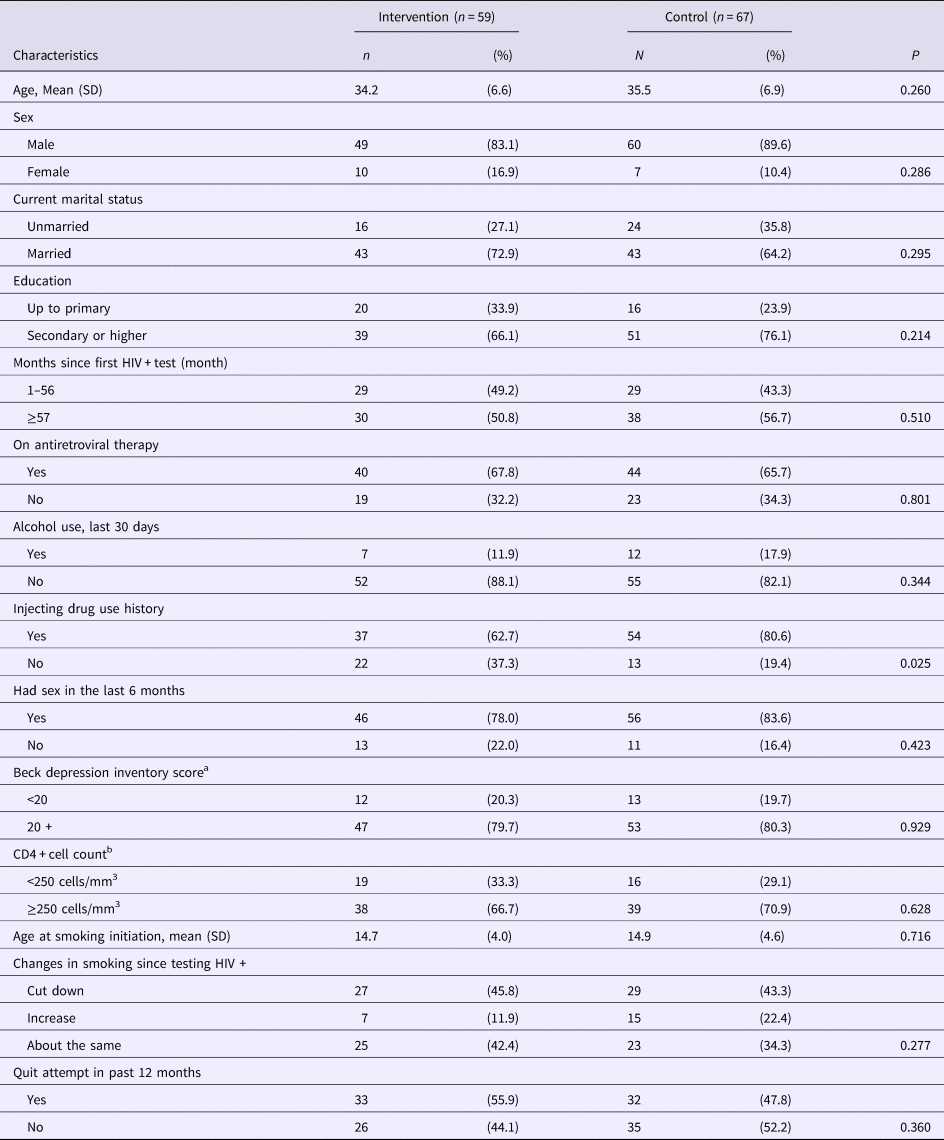
Table 1 shows the baseline characteristics of participants by intervention assignment. The number of participants with a history of injecting drug use was significantly lower in the intervention group (62.7%) than in the control group (80.6%; P = 0.025). Other characteristics were not statistically different between intervention and control groups at baseline.
Baseline characteristics of participants, by intervention assignment (n = 126)

HIV, Human Immunodeficiency Virus; SD, Standard deviation.
a One participant did not complete the Beck Depression inventory.
b Fourteen participants did not have CD4+ cell count results.
Intervention effects on smoking-related knowledge
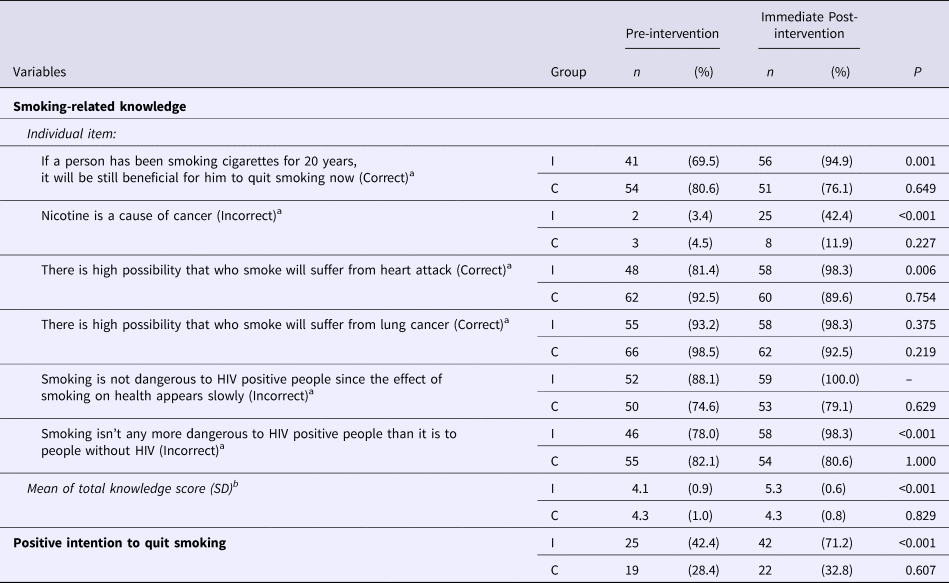
Overall, smoking-related knowledge increased significantly in the intervention group, while there was no change in the control group (Table 2). In the intervention group, the mean score of smoking-related knowledge increased from 4.1 at baseline to 5.3 at immediate post-intervention (P < 0.001), compared with 4.3 at baseline to 4.3 at immediate post-intervention for the control group (P = 0.829). In the multivariable linear regression analysis, the mean score of smoking-related knowledge was significantly higher in the intervention group participants, after adjusting for injecting drug use history and baseline mean score of smoking-related knowledge (Unstandardized coefficients = 0.99 [SE = 0.14]; Standardized coefficients = 0.54; 95% CI = 0.72–1.26; P ≤ 0.001).
Intervention effects on smoking-related knowledge and intention to quit smoking among PLHIV

HIV, Human Immunodeficiency Virus; SD, Standard deviation.
a McNemar's test.
b Paired t-test;.
Intervention effects on intention to quit smoking
In the intervention group, intention to quit smoking increased from 42.4% at baseline to 71.2% at immediate post-intervention (P < 0.001), compared with 28.4% at baseline to 32.8% at immediate post-intervention for the control group (P = 0.607, Table 2). In the multivariable logistic regression analysis, the odds of reporting an intention to quit smoking were 4.83 times greater in the intervention group compared with the control group, after adjusting for injecting drug use history and baseline intention to quit smoking (95% CI = 2.03–11.56; P ≤ 0.001).
Discussion
Our study demonstrated significant protective effects of a brief tobacco dependence intervention to improve knowledge regarding the health effects of smoking and intention to quit smoking among PLHIV in the Kathmandu Valley, Nepal. The positive effects of our tobacco dependence intervention remained statistically significant after adjusting for participants' injecting drug use history and baseline scores.
The efficacy of our brief tobacco dependence intervention may be attributable to our approach in designing and implementing the intervention. First, our intervention specifically incorporated the information collected from the participants. More specifically, we explored participants' reasons for smoking as well as quitting (or intention to quit smoking). Those who made at least an attempt to quit smoking identified their causes of relapse. During the intervention, participants were given the opportunity to identify smoking-related topics of interest to them. Our intervention addressed individual concerns by discussing the issues participants faced regarding smoking and cessation methods. Similar to the general population (Kreuter & Skinner, Reference Kreuter and Skinner2000), capitalizing on health parameters with direct relevance to PLHIV (e.g., CD4 cell count, viral load) and information provided by the PLHIV (e.g., reasons for quitting), tailored counseling can provide support and guidance unique to each PLHIV. Such tailoring increases the perceived relevance of the counseling contents and information processing, fostering greater intervention impact, leading to improved outcomes (Noar, Benac, & Harris, Reference Noar, Benac and Harris2007; Strecher et al., Reference Strecher, McClure, Alexander, Chakraborty, Nair and Konkel2008).
Next, we adopted a group level approach to implement our tobacco dependence intervention. Our approach enhanced participants' engagement by discussing intervention contents to improve their smoking-related knowledge and intention to quit smoking. Participants also took a short quiz to reinforce this information. Almost all PLHIV in each intervention group knew each other as they belonged to the same support group or met while receiving HIV services from the same institution. Some PLHIV with a history of injecting drug use were‘smoking buddies.’ During the intervention session, these participants shared their plan to ‘quit smoking together’ and sustain it as they did while quitting illicit drugs in the past. Other PLHIV expressed their desire to monitor the smoking cessation plans of their colleagues and encourage each other to quit smoking and maintain abstinence.
Finally, we involved local HIV care providers as co-facilitators, who were known to almost all of our participants and aware of the health conditions of many of the participants. Our approach provided an opportunity for PLHIV to ask questions specific to their health and for the care providers to deliver counseling messages tailored to individual needs and existing health conditions. Both the care providers and PLHIV agreed to continue such conversations during regular HIV clinic visits and specifically monitor changes in CD4 cell count and specific health conditions after quitting smoking. Such conversations could lead to greater intention to quit and increased quit rates among PLHIV, as three or more counseling sessions increase the chances of quitting compared to brief advice or pharmacotherapy alone (Stead, Hartmann-Boyce, Perera, & Lancaster, Reference Stead, Hartmann-Boyce, Perera and Lancaster2013).
This study has some limitations. First, this study examined the immediate effects of the intervention on participants' smoking-related knowledge and intention to quit smoking. Future studies should evaluate the medium-term and long-term effects of the intervention on these outcomes as well as biologically verified actual smoking cessation rates using a randomized controlled trial. Second, despite our efforts to minimize social desirability bias by ensuring the confidentiality of personal information, participants' responses, in particular on their intention to quit smoking, might have been influenced by such bias, as we relied on self-reports. Third, there might be a concern about the potential influence of mental health education on the intention to quit smoking in our intervention group participants as they also received such education. However, our mental health education neither included an assessment of the smoking status of our participants nor any additional contents of smoking cessation, including the link between mental health and smoking. Therefore, the potential influence of mental health education, if any, should be minimal on the intention to quit smoking among participants of our intervention group. Finally, some caution is required in generalizing our findings to all PLHIV in Nepal, as our participants were selected through networks of NGOs working with PLHIV. It is worth mentioning that most PLHIV are affiliated with some kind of support group or similar type of networks in Nepal and other resource-limited countries in Asia and other regions and that our findings may be applicable to such PLHIV. We are not sure to what extent our findings will be generalizable to PLHIV who are not affiliated with any support groups or networks of NGOs working with PLHIV, as such PLHIV may prefer individual-level counseling over a group-based intervention.
Despite these limitations, our brief tobacco dependence intervention was effective in improving smoking-related knowledge and intention to quit smoking among PLHIV in the Kathmandu Valley, Nepal. Our experience suggests that intervention components tailored to the specific health conditions of PLHIV and other information provided increased their perceived relevance to counseling content and engagement in smoking cessation conversations. The findings of our intervention suggest that a brief tobacco dependence intervention might effectively improve smoking quit rates among PLHIV in Nepal as well as other LMIC. Further studies are necessary to evaluate if improved knowledge and behavioral intention translate into biologically verified actual smoking cessation among PLHIV in Nepal and other LMIC.
Acknowledgements
We acknowledge all the participants of this study for their time, information, and participation. We also thank HIV care providers and interviewers for their hard work in collecting the data and conducting the intervention. We sincerely acknowledge five non-governmental organizations (Shakti Milan Samuha, SPARSHA Nepal, Sneha Samuha, Srijansil Mahila Samaj, and Youth Vision) for their support in recruiting study participants, providing venues for collecting data, and conducting the intervention. We also thank Dr. Rachel Amiya for her assistance in preparing the intervention curriculum. This study was presented in part at the Annual Meeting of the American Public Health Association, Atlanta, Georgia, November 4–8, 2017; Session: HIV Roundtable 3 – HIV Interventions (3383.0).
Financial support
The fieldwork of this study was partially supported by a Grant for Research on Global Health and Medicine (21A-2) from the National Center for Global Health and Medicine, Japan and by a Grant-in-Aid for Young Scientists (B22790581), Japan Society for the Promotion of Science, Ministry of Education, Culture, Sports, Science and Technology, Japan. This study was also supported by HPP-PSGI, a grant from the University of Massachusetts Amherst, MA, USA. Funding agencies did not have any role in the study design; the collection, analysis, and interpretation of data; writing the manuscript; or the decision to submit the article for publication.
Conflict of interest
We declare that we have no conflict of interest.
Ethical standards
The study procedures were reviewed and approved by the research ethics committee of the Nepal Health Research Council, Nepal; Waseda University, Japan; National Center for Global Health and Medicine, Japan; and the institutional review board of the University of Massachusetts Amherst, USA.