Introduction
Over the last decade numerous studies have described the emergence of rumen fluke in various European countries including Spain (González-Warleta et al. Reference González-Warleta, Lladosa, Castro-Hermida, Martínez-Ibeas, Conesa, Muñoz, López-Quílez, Manga-González and Mezo2013), France (Mage et al. Reference Mage, Bourgne, Toullieu, Rondelaud and Dreyfuss2002; Rondelaud et al. Reference Rondelaud, Vignoles and Dreyfuss2016), Belgium (Malrait et al. Reference Malrait, Verschave, Skuce, Van Loo, Vercruysse and Charlier2015) and the UK (Gordon et al. Reference Gordon, Roberts, Lean, Zadoks, Sargison and Skuce2013; Jones et al. Reference Jones, Brophy, Mitchell and Williams2017a, Reference Jones, Dalesman, Ayodeji, Thomas and Brophyb). This situation is mirrored in Ireland where surveillance data and abattoir studies have indicated a sharp increase in infection rates in both cattle and sheep since the late 2000s (Zintl et al. Reference Zintl, Garcia-Campos, Trudgett, Chryssafidis, Talavera-Arce, Fu, Egan, Lawlor, Negredo, Brennan, Hanna, De Waal and Mulcahy2014; Toolan et al. Reference Toolan, Mitchell, Searle, Sheehan, Skuce and Zadoks2015; Martinez-Ibeas et al. Reference Martinez-Ibeas, Munita, Lawlor, Sekiya, Mulcahy and Sayers2016). This increase in incidence appears to be largely due to the rapid expansion of a single species, Calicophoron daubneyi, with just one other species, Paramphistomum leydeni occasionally reported in small numbers from sheep and deer (Toole et al. Reference Toole, Browne, Hogan, Bassière, Dewaal, Mulcahy and Zintl2014; Martinez-Ibeas et al. Reference Martinez-Ibeas, Munita, Lawlor, Sekiya, Mulcahy and Sayers2016). Changes in diagnostic awareness and climatic conditions, the replacement of broad-spectrum anthelmintics with more specific treatments against fasciolosis, which do not affect rumen fluke, recent importation of C. daubneyi and its gradual adaptation to the intermediate host have all been suggested as possible reasons for this expansion (Mage et al. Reference Mage, Bourgne, Toullieu, Rondelaud and Dreyfuss2002; Zintl et al. Reference Zintl, Garcia-Campos, Trudgett, Chryssafidis, Talavera-Arce, Fu, Egan, Lawlor, Negredo, Brennan, Hanna, De Waal and Mulcahy2014; Iglesias-Piñeiro et al. Reference Iglesias-Piñeiro, González-Warleta, Castro-Hermida, Córdoba, González-lanza, Manga-González and Mezo2016; Jones et al. Reference Jones, Brophy, Mitchell and Williams2017a, Reference Jones, Dalesman, Ayodeji, Thomas and Brophyb).
The life cycle of C. daubneyi is very similar to that of the liver fluke, Fasciola hepatica (Deplazes et al. Reference Deplazes, Eckert, Mathis, Samson-Himmelstjerna and Zahner2016). Briefly, ruminants become infected by ingesting metacercariae encysted on vegetation. Juvenile flukes initially colonize the duodenum where they remain for several weeks or even months. Histological sections indicate that the flukes do not penetrate beneath the layer of the submucosa but attach themselves to the mucosa by pulling tissue plugs into their large posterior suckers. Once they have reached a size of 1–3 mm they migrate to the rumen where they mature (Deplazes et al. Reference Deplazes, Eckert, Mathis, Samson-Himmelstjerna and Zahner2016). Rumen fluke eggs resemble those of F. hepatica except that they are colourless. Maturation of the eggs takes place in the environment and is optimal at temperatures of 25–27 °C. Ciliated miracidia hatch from the eggs and have about 20–30 h to locate a suitable intermediate host. The main intermediate host in Europe for both C. daubneyi and F. hepatica is the mud snail Galba truncatula (Dinnik, Reference Dinnik1962; Bargues et al. Reference Bargues, Vigo, Horak, Dvorak, Patzner, Pointier, Jackiewicz, Meier-Brook and Mas-Coma2001). In snails co-infected with both trematodes, the species that is the first to occupy the digestive glands has better access to nutrients and as a result, its rediae develop faster, rapidly outnumbering those of the latecomer which generally settles in the haemolymphatic sinuses (Rondelaud et al. Reference Rondelaud, Vignoles and Dreyfuss2007). Because co-infected snails are rarely encountered in the field (Rondelaud et al. Reference Rondelaud, Vignoles and Dreyfuss2007; Martínez-Ibeas et al. Reference Martínez-Ibeas, González-Warleta, Martínez-Valladares, Castro-Hermida, González-Lanza and Mi2013; Jones et al. Reference Jones, Williams, Dalesman and Brophy2015; Iglesias-Piñeiro et al. Reference Iglesias-Piñeiro, González-Warleta, Castro-Hermida, Córdoba, González-lanza, Manga-González and Mezo2016), it is thought that double parasitism may be detrimental to their survival. Eventually, cercariae emerge from the snails and encyst on vegetation to be ingested by the next host during grazing.
Although inflammatory changes in the rumenal and reticular epithelium have been described in animals infected with adult flukes (Fuertes et al. Reference Fuertes, Pérez, Benavides, González-Lanza, Mezo, González-Warleta, Giráldez, Fernández, Manga-González and Ferreras2015), this life cycle stage is generally thought to be of little clinical significance. In contrast, large numbers of juvenile flukes in the intestine can cause considerable morbidity and mortality, particularly in young animals. However, while the number of clinical case reports in the published literature is growing (Murphy et al. Reference Murphy, Power, Sanchez-Miguel, Casey, Toolan and Fagan2008; Mason et al. Reference Mason, Stevenson, Cox and Dick2012; Millar et al. Reference Millar, Colloff and Scholes2012; Anon, 2016; SAC, 2016) it is important to stress that pathogenic infections are rare, amounting to perhaps 3–4 per annum in Ireland (Toolan et al. Reference Toolan, Mitchell, Searle, Sheehan, Skuce and Zadoks2015).
This paper describes the epidemiology of an acute disease outbreak on an Irish dairy farm. Over a 2-day period in late September 2016, the farmer reported 11 mortalities in a group of 31 spring-born calves. Eight more calves died or were euthanized over the next 5 days and a further animal was eventually euthanized 4 weeks later. Following comprehensive investigations by the Governmental Veterinary Laboratory (DAFM Central Veterinary Research Laboratory), these cases were eventually ascribed to severe infections with C. daubneyi and the presence of large numbers of juvenile rumen fluke in the intestine of affected animals. Although the animals were treated with oxyclozanide, one further mortality occurred 6 weeks after the start of the outbreak.
In an attempt to explain the unusually severe clinical presentation of this outbreak, pasture contamination with metacercariae and trematode infection rates of snails collected from the herbage were investigated. In addition, C. daubneyi isolates were subtyped to determine whether unusual, possibly more pathogenic genotypes were present.
Materials and methods
Collection and enumeration of metacercariae
Grass samples were collected from the field along a W-shaped pattern using standard methods (Taylor, Reference Taylor1939). Briefly, herbage was gathered from 200 locations using scissors. At each location, four grass samples were taken, with grass being cut as close to the ground as possible, avoiding soil. On return to the laboratory, the herbage sample was weighed and a 100 g sub-sample removed for dry matter (DM) estimation. In order to estimate metacercarial pasture burden, metacercariae were recovered following published methods (MAFF, 1986). Briefly, the herbage was fixed in 10% formalin (to prevent any infected snails included in the sample from releasing additional cercariae), cut into lengths of approx. 5 cm, and vigorously agitated in water to aid the detachment of encysted metacercariae. Subsequently, it was poured through a series of two mesh screens with apertures of 0·25 and 0·075 mm, respectively. The grass remaining on the first sieve (aperture of 0·25 mm) was repeatedly washed using a strong flow of water. The cysts and debris retained on the second sieve were transferred to a 250 mL beaker, to which 150 mL of concentrated sulphuric acid was added to dissolve the organic debris. After 10 min, an equal volume of saturated copper sulphate was added and the mixture passed once again through the second 0·075 mm sieve used earlier to collect any adherent material. The material retained on the sieve was then back-washed into a bucket using a steady flow of water. The washings were transferred to a series of large graduated cylinders (2 L) and left to sediment overnight. Following removal of the supernatant, the sediment was transferred to a petri dish (marked with lines 5 mm apart) and examined under a dissection microscope to enumerate the metacercariae. Metacercariae for in vitro hatching and genotyping were isolated in the same way except the samples were not subjected to fixation in formalin and incubation in concentrated sulphuric acid and saturated copper sulphate.
Identification of metacercariae
For morphological identification, metacercariae were stimulated to hatch as described by Carmona et al. (Reference Carmona, Dowd, Smith and Dalton1993) with minor modifications. Briefly, metacercariae were incubated for 3 h at 38 °C in a freshly prepared excystation solution consisting of equal volumes of solution A (1·2% NaHCO3, 0·9% NaCl, 0·8% sodium tauroglycolate) and solution B (5 mm HCL and 0·8% L-cysteine). Newly excysted liver and rumen flukes were distinguished on the basis of the location of the posterior sucker (ventral in liver fluke and posterior in rumen fluke). Metacercariae that failed to hatch were mechanically disrupted under the stereomicroscope using a hypodermic needle and DNA extracted using the QIAamp DNA Mini Kit. All DNA extracts were screened with species-specific primers developed to amplify the mitochondrial DNA encoding transfer RNA (tRNA-Thr) with partial sequences from the flanking cytochrome oxidase subunit 1 (Cox1) gene and the large subunit ribosomal RNA gene (Martínez-Ibeas et al. Reference Martínez-Ibeas, González-Warleta, Martínez-Valladares, Castro-Hermida, González-Lanza and Mi2013). Primer sequences were as follows: CdCox1F 5′-TGGAGAGTTTGGCGTCTTTT-3′; CdCox1R 5′-CCATCTTCCACCTCATCTGG-3′ (specific for C. daubneyi) and FhCox1F 5′-GCCGGGTCCTCAACATAATA-3′; FhCox1R 5′-AGCACAAAATCCTGATCTTACCA-3′ (specific for F. hepatica). Polymerase chain reaction (PCR) reactions were performed under standard conditions in a reaction volume of 50 µL containing 10 µL PCR buffer, 0·2 mm of each deoxynucleoside tri-phosphate, 12·5 pmoles of each primer, 2 mm MgCl2, 2·5 U Taq polymerase (Promega GoTaq) and 10 µL DNA template. Each PCR assay included positive C. daubneyi and F. hepatica controls and a negative control consisting of nuclease-free water. All PCR reactions were started with a denaturation step of 2 min at 92 °C, followed by 38 cycles of 95 °C (30 s), 65 °C (30 s) and 72 °C (90 s) with a final elongation for 10 min at 72 °C. Amplified products were visualized under UV following gel electrophoresis in 2% agarose gels stained with Gel Red (Biotium) and sequenced in both directions using the respective PCR primers (GATC Biotech, Germany).
Collection of snails from pasture
Snails which grossly resembled the mudsnail, G. truncatula were collected from the wetter, low-lying parts in the centre of the field where a drain had collapsed leading to the accumulation of standing water.
Snail identification and analysis for the presence of fluke
Following rinsing with distilled water, snails were identified based on the morphological characteristics of the spire and aperture shape and width according to the key developed by Macan (Reference Macan1960). Genus and species names were adopted from Bargues et al. (Reference Bargues, Vigo, Horak, Dvorak, Patzner, Pointier, Jackiewicz, Meier-Brook and Mas-Coma2001). Subsequently, the snails were dissected and the soft tissue of each snail incubated individually at 55° C for 20 h in the ATL buffer/proteinase K provided by the QIAamp DNA Mini Kit. In order to ensure complete digestion of the tissue an extra 8·75 µL of 0·7 m proteinase K (PanReac, AppliChem) were added during this incubation step. Subsequently, DNA was extracted as advised by the manufacturers’ instructions. All snail DNA extracts were screened for the presence of liver and rumen fluke using the species-specific PCR protocol aimed at the Cox1 gene fragment (Martínez-Ibeas et al. Reference Martínez-Ibeas, González-Warleta, Martínez-Valladares, Castro-Hermida, González-Lanza and Mi2013) as described above.
Phylogenetic analysis of the C. daubneyi isolates and index of diversity calculation
The level of heterogeneity of Cox1 amplicons from this study and others in the database was analysed by alignment (Clustal Omega) and construction of a neighbour-joining tree (MEGA 7·0·21) (Kumar et al. Reference Kumar, Stecher and Tamura2016). Tree reliability was assessed by the bootstrap method with 1000 pseudoreplicates. The cut-off value for the consensus tree was 75% with the percentage of replicate trees resulting in the same clusters shown next to the branches. Genotype frequency and isolate diversity were assessed using Simpson's index of diversity calculated as 1-D with D = Σ (n/N)2 (where n is the total number of isolates of a particular genotype and N the total number of isolates of all genotypes).
Results
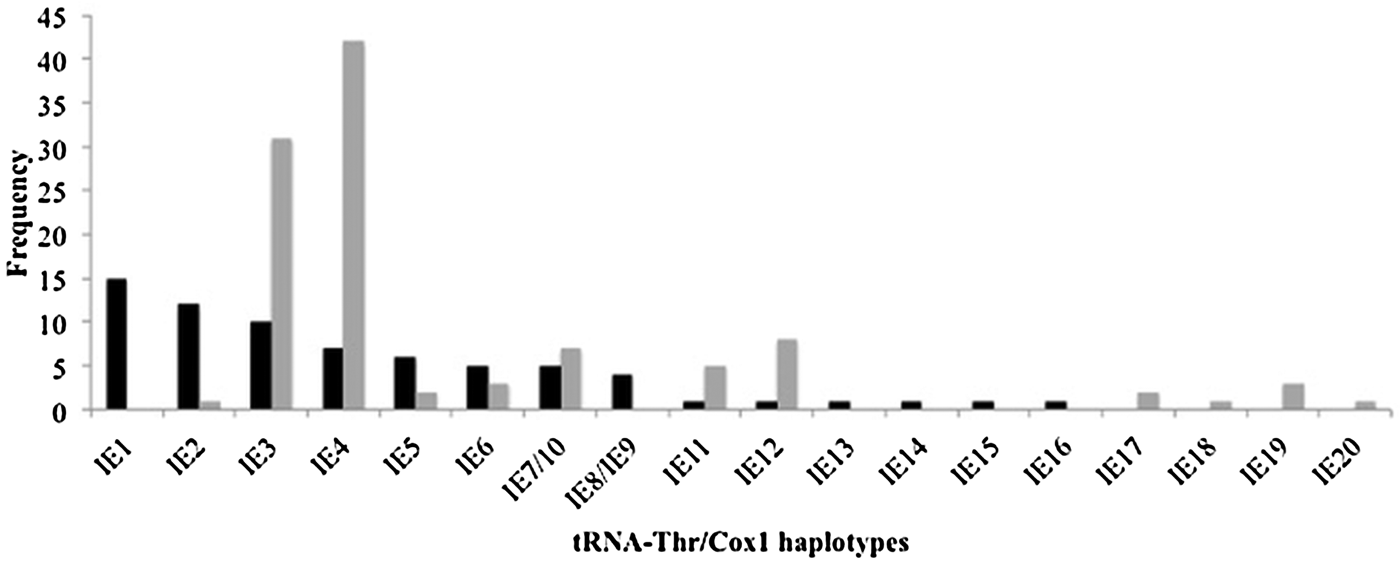
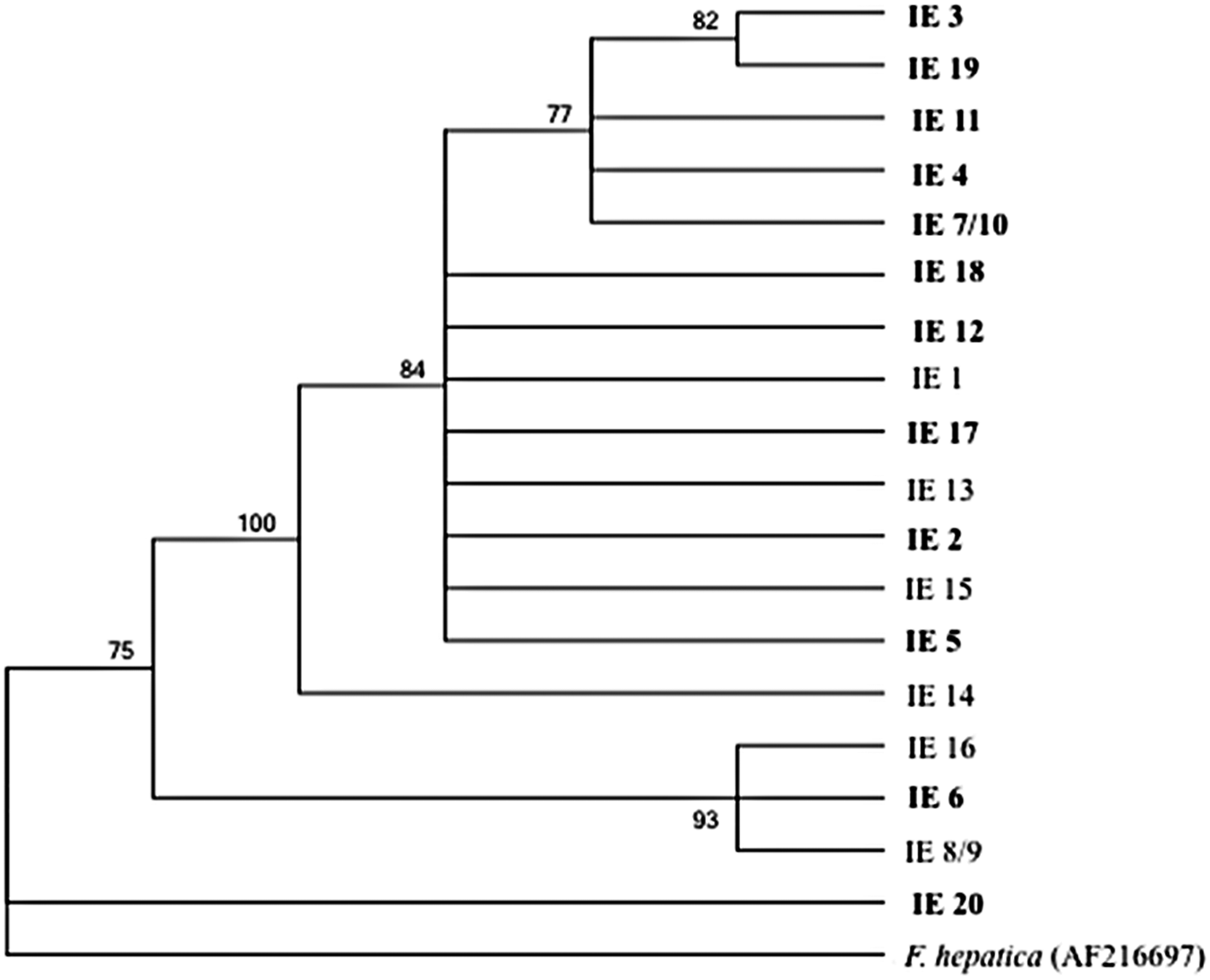
The field where the deaths and clinical signs were observed had a total area of approximately 8·1 ha. Along the centre of the field, a drain had collapsed leading to the accumulation of standing water. After having been grazed by mature animals from February until the beginning of August, the field was left empty for 3 weeks to facilitate post-grazing growth until the start of September when the spring-born calves were moved into it. The first mortalities occurred about 3 weeks later. Based on a DM of 18·9% of the herbage collected, the metacercarial pasture burden was estimated to be 1270 fluke metacercariae per kg DM. In vitro hatching of metacercariae was successful in 14·7% (22 out of 150 cysts), with all of the emerging juvenile flukes identified as rumen fluke on the basis of the presence of an oral and a large posterior sucker. In addition DNA extracts from 112 metacercariae amplified with the C. daubneyi-specific primers targeted at the Cox 1 region and none with the F. hepatica-specific primers. They were thus identified as C. daubneyi. Good sequences were obtained from 106 of these revealing 12 haplotypes (Fig. 1), 8 of which had already been identified in a previous survey conducted in Ireland in 2014 (Zintl et al. Reference Zintl, Garcia-Campos, Trudgett, Chryssafidis, Talavera-Arce, Fu, Egan, Lawlor, Negredo, Brennan, Hanna, De Waal and Mulcahy2014). The two most common haplotypes were 100% identical to IE03 and IE04 described in the previous study, while 4 rare genotypes (IE17, 18, 19 and 20) represented by 7 metacercariae in total had not been identified before (Accession numbers LC278940 to LC278943). Simpson's diversity index was 0·74 indicating a moderately high diversity. Phylogenetic analysis revealed 4 main clades with 10 of the haplotypes identified during the present study contained in a single clade together with 3 other haplotypes that had only been detected in the previous survey (Fig. 2). The other 3 clades were represented by between 1 and 3 haplotypes. Overall homology between the haplotypes ranged from 97·79 to 99·75%.
The frequency of Cox1 haplotypes identified in the present study (grey) and during a previous survey carried out in 2014 (black) (Zintl et al. Reference Zintl, Garcia-Campos, Trudgett, Chryssafidis, Talavera-Arce, Fu, Egan, Lawlor, Negredo, Brennan, Hanna, De Waal and Mulcahy2014).

Phylogenetic relationship of rumen fluke isolates (IE1–20) according to mtDNA fragment tRNA-Thr/Cox1. Bold labels indicate isolates detected during the present study. Published sequence AF216697 (F. hepatica) is included as an outgroup.

Of the 70 snails identified as G. truncatula, 39 (55·7%) were infected with C. daubneyi, 1 tested positive for F. hepatica (1·4%). No co-infected snails were detected.
Discussion
This study aimed to explain a severe rumen fluke outbreak reported in Ireland in September 2016. Considering the now widespread nature of C. daubneyi in Ireland on the one hand (estimated prevalence rates range from 12 to 86% in sheep and 35–52% in cattle) (Toolan et al. Reference Toolan, Mitchell, Searle, Sheehan, Skuce and Zadoks2015; Martinez-Ibeas et al. Reference Martinez-Ibeas, Munita, Lawlor, Sekiya, Mulcahy and Sayers2016), and the low number of mortalities reported on the other (Toolan et al. Reference Toolan, Mitchell, Searle, Sheehan, Skuce and Zadoks2015), it is reasonable to assume that a specific set of circumstances is required for the parasite to exhibit severe pathogenicity. One possible explanation considered in this study was the emergence of some highly pathogenic subtypes. Based on sequence analysis of the mitochondrial DNA fragment this possibility was ruled out as most of the haplotypes were identical to ones that had been described from clinical infections on two Irish farms (Zintl et al. Reference Zintl, Garcia-Campos, Trudgett, Chryssafidis, Talavera-Arce, Fu, Egan, Lawlor, Negredo, Brennan, Hanna, De Waal and Mulcahy2014). Just four novel haplotypes were identified which were present in low frequencies. Moreover, if there had been a small number of predominant pathogenic haplotypes we would have expected reduced diversity in the parasite population. However, the Simpson's diversity index of 0·74 reported in this study was very similar to that observed in the previous study (0·78 and 0·73 in the 2 farms, respectively) (Zintl et al. Reference Zintl, Garcia-Campos, Trudgett, Chryssafidis, Talavera-Arce, Fu, Egan, Lawlor, Negredo, Brennan, Hanna, De Waal and Mulcahy2014).
A more likely explanation for the severity of the disease outbreak was the infectious dose to which the animals were exposed. Assuming a live weight of 150 kg and a pasture UFL (unité fourragère du lait) of approximately 0·95 kg−1 DM, the DM intake of the calves would have been around 4·2 kg hd day−1 (NRC, 2001). With an estimated pasture burden of 1270 encysted flukes per kg DM, the calculated oral dose was 5334 metacercariae per day and about 112 014 metacercariae over the 3 week grazing period. Horak (Reference Horak1971), who was one of few workers to carry out experimental infections with rumen fluke, suggested that in cattle infected with >50 000 rumen fluke metacercariae, maturation and migration to the rumen is delayed resulting in a build-up of very large numbers of immature worms in the small intestine. Under these circumstances, the immature flukes spread beyond their preferential proximal site in the duodenum, also invading the second 3 m portion and even more distal sites of the small intestine. These observations correlate well with case descriptions of severe rumen fluke infections (Millar et al. Reference Millar, Colloff and Scholes2012; Anon, 2016; SAC, 2016) and the PM reports for the current outbreak. Horak (Reference Horak1971) also reported that the percentage ‘take’ in cattle was around 30–60% irrespective of the degree of infection. Interestingly, excessive infectious doses of liver fluke metacercariae in cattle also result in delayed migration and maturation. However, in this case, the liver fluke is trapped by immune-mediated fibrotic reactions in the liver parenchyma, resulting in reduced liver burdens (Dawes and Hughes, Reference Dawes and Hughes1970).
What was striking in the present study was the marked predominance of C. daubneyi to the almost complete exclusion of F. hepatica in a field that appeared to offer ideal environmental conditions for liver fluke. This was indicated by the fact that all of the 112 metacercariae that were analysed were identified as C. daubneyi, and almost 56% of the mud snails tested positive for C. daubneyi while only one snail was infected with F. hepatica. Not only does this represent an exceptionally high snail infection rate for C. daubneyi (compared with between 4 and 11% reported from France, the UK and Spain) (Mage et al. Reference Mage, Bourgne, Toullieu, Rondelaud and Dreyfuss2002; Jones et al. Reference Jones, Williams, Dalesman and Brophy2015; Iglesias-Piñeiro et al. Reference Iglesias-Piñeiro, González-Warleta, Castro-Hermida, Córdoba, González-lanza, Manga-González and Mezo2016), but also poses the question whether we are currently witnessing a gradual replacement of F. hepatica by C. daubneyi. A similar development has been reported from France and the UK (Rondelaud et al. Reference Rondelaud, Vignoles and Dreyfuss2016; Jones et al. Reference Jones, Brophy, Mitchell and Williams2017a, Reference Jones, Dalesman, Ayodeji, Thomas and Brophyb). One possible reason frequently suggested is that the most commonly used flukicides such as triclabendazole and albendazole are only effective against F. hepatica but have no efficacy against C. daubneyi, conferring a competitive advantage to the latter. However, on the outbreak farm this is unlikely to have been a significant factor because although routine treatment consisted of several doses of albendazole at strategic times during the year, it also included one dose of oxyclozanide at housing each autumn. Oxyclozanide is one of the few drugs that are effective against adults of both fluke species.
On the other hand, it is conceivable that specific environmental conditions favoured one fluke species over the other. For example, it has been shown that there are subtle differences between the two parasites with regard to the optimum temperature regimen and timing of their development in the snail (Martínez-Ibeas et al. Reference Martínez-Ibeas, González-Warleta, Martínez-Valladares, Castro-Hermida, González-Lanza and Mi2013; Dreyfuss et al. Reference Dreyfuss, Vignoles, Rondelaud and Cabaret2015). Moreover, cercarial shedding of C. daubneyi was enhanced by brief periods of 6–8 °C and an otherwise constant 20 °C while the emergence of F. hepatica was optimal at a constant temperature of 20 °C (Abrous et al. Reference Abrous, Rondelaud and Dreyfuss1999). Compared with F. hepatica cercariae, which are negatively geotactic and encyst primarily on the underside of leaves near the water surface, C. daubneyi cercariae are slow swimmers and exhibit positive geotaxis settling preferentially further down along the plant stem (Dreyfuss et al. Reference Dreyfuss, Abrous, Vignoles and Rondelaud2004, Reference Dreyfuss, Vignoles, Rondelaud and Cabaret2015). That these differences in parasite biology can affect the prevalence of trematodes in G. truncatula was shown by Rondelaud et al. (Reference Rondelaud, Vignoles and Dreyfuss2016) who reported that snails collected from the furrows in meadows had significantly higher C. daubneyi than F. hepatica infection rates. Similar conditions may have been presented by the collapsed drain in the present study. Moreover, encystment in the deeper zone of the snail habitat may render C. daubneyi less susceptible to desiccation, while animals feeding closer to the ground would be expected to ingest greater numbers of rumen fluke metacercariae. Finally, any set of circumstances that gives C. daubneyi a head start in the vertebrate host would probably cause its predominance. The reason for this is not only that timing of infection appears to determine which fluke prevails in the snail (Rondelaud et al. Reference Rondelaud, Vignoles and Dreyfuss2007). It is also likely that an initial and prolonged invasion of the ruminant duodenum by immature C. daubneyi flukes would provoke an immune response that could affect immature F. hepatica during their very brief sojourn in the intestine, possibly impeding their migration. In contrast, the opposite scenario, i.e. a deleterious effect on rumen fluke by an immune response elicited against liver fluke is highly unlikely.
To conclude, the severity of disease observed in this outbreak was almost certainly the result of the high metacercarial dose the animals were exposed to. This pasture build-up may have been due to specific environmental conditions that favoured C. daubneyi such as specific temperature and light exposure, the degree of pasture inundation and the level of grazing.
Moreover, the effect of the continued widespread use of narrow-spectrum flukicides specifically targeting F. hepatica infection also must be considered as it effectively frees the niche for the establishment and spread of C. daubneyi. In Ireland, rumen fluke is now replacing liver fluke as the most common trematode in both cattle and sheep (Toolan et al. Reference Toolan, Mitchell, Searle, Sheehan, Skuce and Zadoks2015) and there is no reason to suggest that this trend is going to change. Considering the relatively benign nature of typical C. daubneyi infections as compared with F. hepatica, notwithstanding sporadic reports of severe clinical cases, this development may be turn out to be of benefit to Irish livestock farming in the long term.
Acknowledgements
We would like to thank the farmer for facilitating collection of snails and metacercariae.
Financial support
This research received no specific grant from any funding agency, commercial or not-for-profit sectors.