Introduction
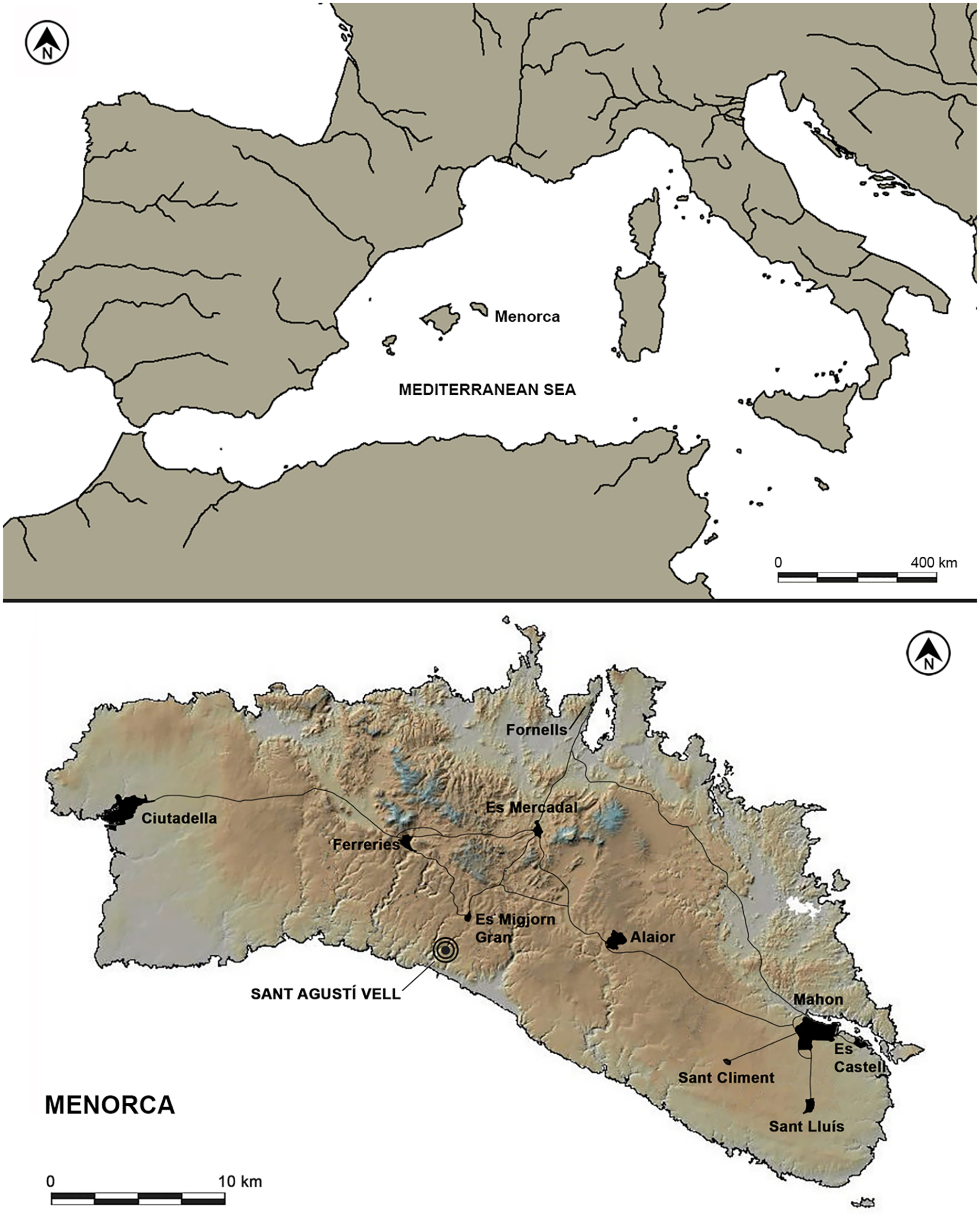
Sant Agustí Vell is a Talayotic settlement located south of the municipality of Es Migjorn Gran on the island of Menorca. It is built on an elevation between the Binigaus and Sant Tomàs ravines and occupies an area of around 2000 m2 (Figure 1).
Location of the Sant Agustí Vell site on the island of Menorca.

Figure 1 Long description
The map displays the geographic location of the Sant Agust Vell site on the island of Menorca. The top section shows the broader context of the Mediterranean Sea and surrounding regions, including Spain, France, Italy, and North Africa. The bottom section zooms in on Menorca, highlighting key locations such as Ciutadella, Ferreries, Es Mercadal, Es Migjorn Gran, Alaior, Mahon, Sant Climent, Es Castell, and Sant Lluis. The Sant Agust Vell site is marked on the map, situated south of Es Migjorn Gran, between the Binigaus and Sant Toms ravines. The map uses color shading to represent elevation and terrain features, with roads and settlements labeled for clarity.
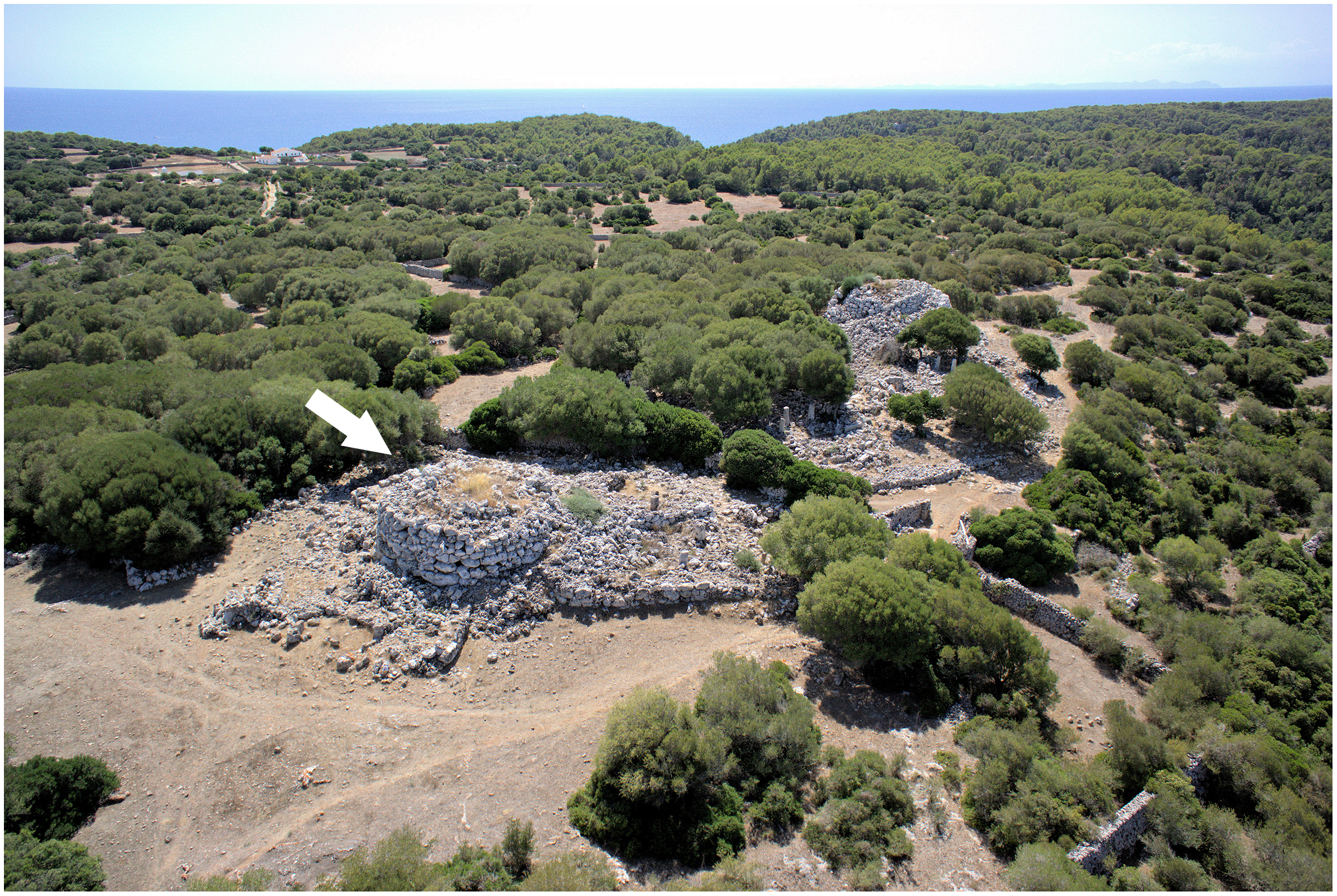
It contains a series of very well conserved structures (Figure 2): two talayots with attached buildings, the remains of a possible taula area, the remains of houses with a central courtyard, as well as five cisterns in a row on the northern side of Talayot 2. Several funerary hypogea are conserved near the settlement.
Aerial photograph of the northern zone of the Sant Agustí Vell settlement taken from the northeast. The arrow points to Talayot 1 (Image: Aeroview.es/Island Council of Menorca).

Figure 2 Long description
An aerial photograph captures the northern zone of the Sant Agust Vell settlement from the northeast. The image showcases a landscape dotted with dense green vegetation and scattered ruins. An arrow points to a specific structure labeled Talayot 1, highlighting its significance among the well-preserved ancient buildings. The surrounding area features a mix of rocky terrain and lush greenery, with the vast blue sea visible in the background.
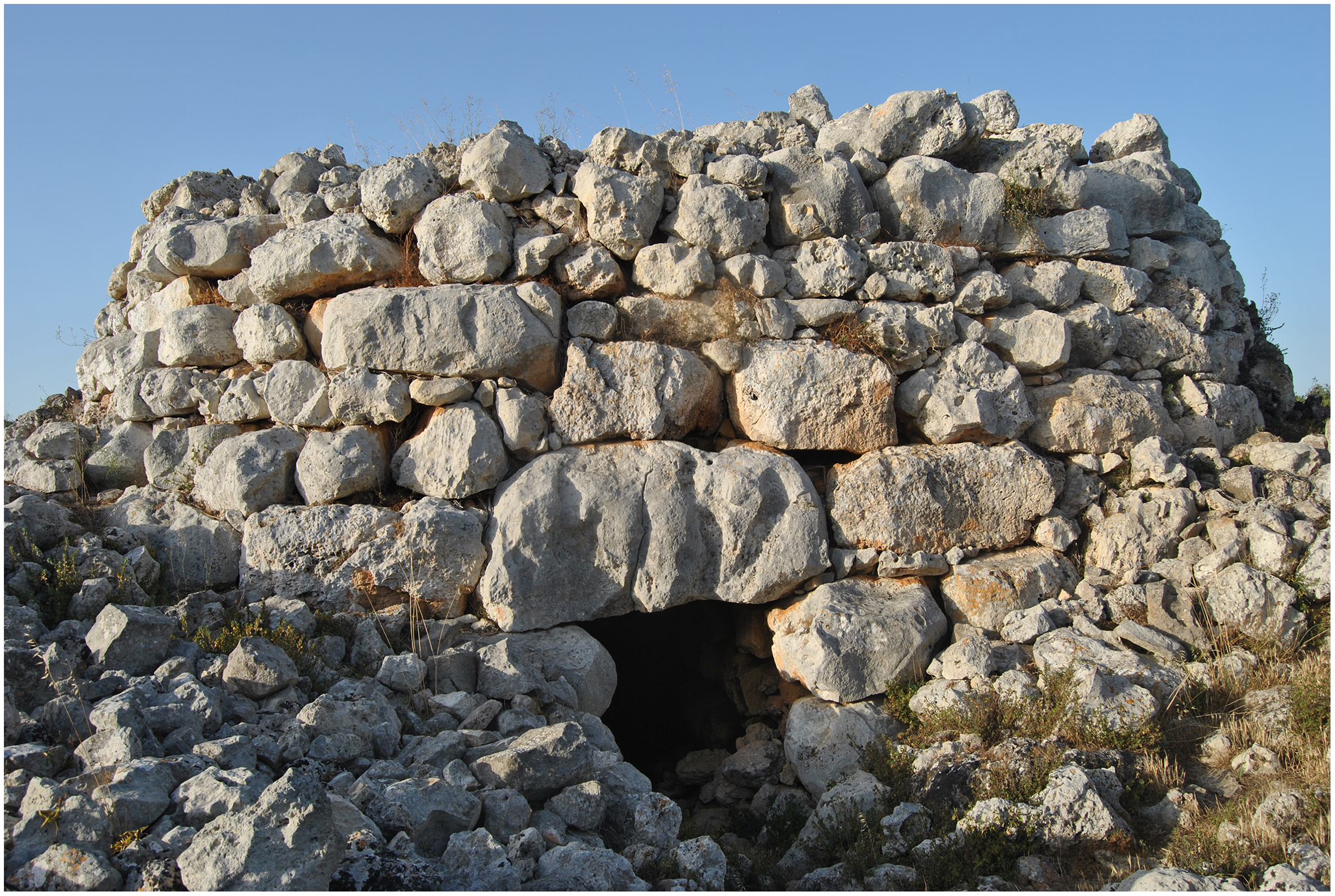
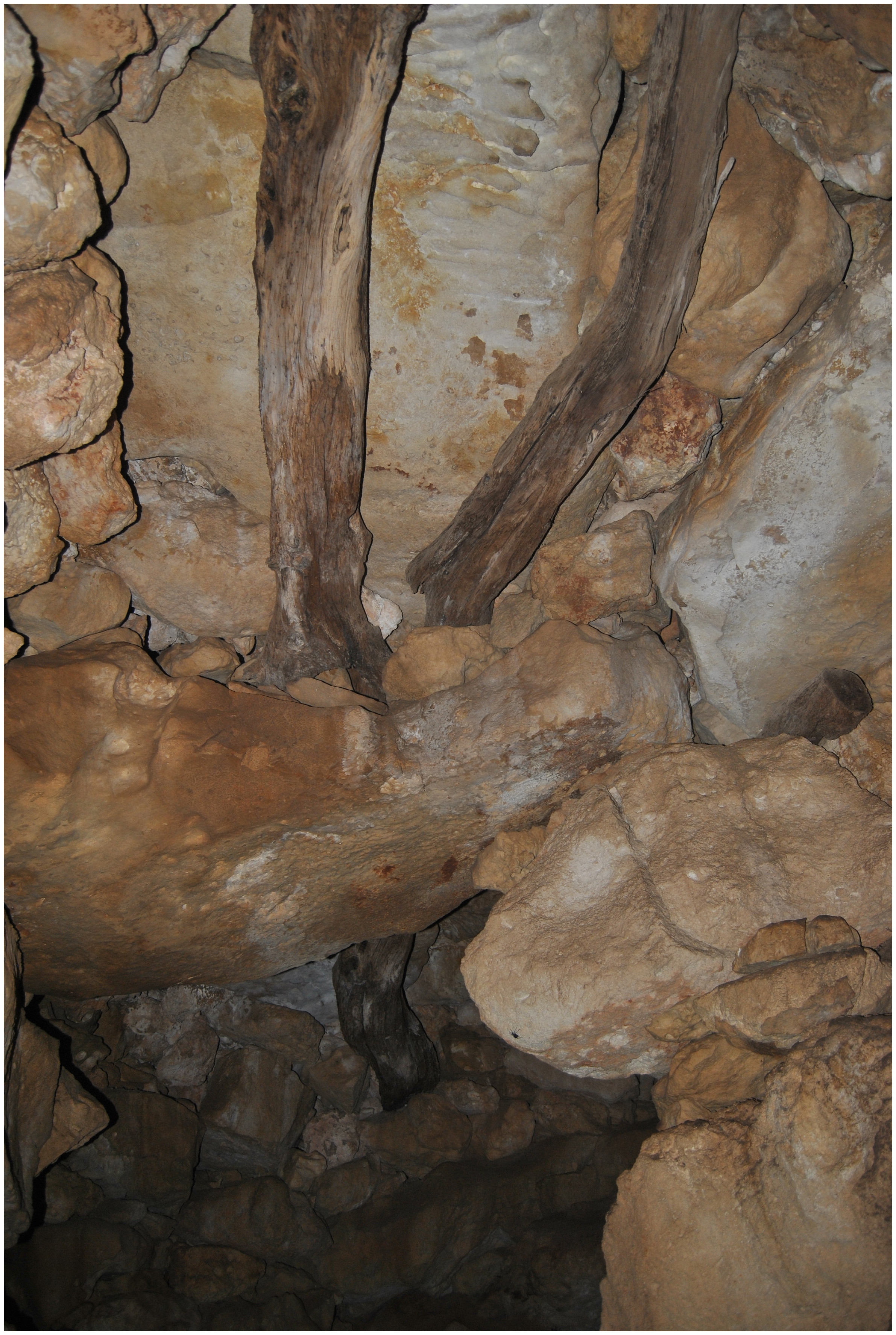
Talayot 1 (39°55’42”N; 4°02’07”E), also known as the “Talaiot de ses bigues de mata” (Figure 3), is examined in this case study. It has an almost circular layout and is built with large very roughly hewn stone blocks. The entrance facing SW leads to a small hallway which, in turn, leads to a large almost circular chamber with a diameter of ca. 4 m. The ceiling is made of flat slabs arranged radially and held up by a pilaster and two Mediterranean-type columns, one of them located in the center and the other on the side. The unique feature of this talayot is that it still conserves some of the wooden beams that were part of the roof’s inner structure (Figure 4). Three whole beams are conserved, as well as the remains of the ends of two others. They are trunks without bark, although they show no evidence of having been hewn.
Talayot 1 in Sant Agustí Vell.

Figure 3 Long description
The image features an ancient stone structure known as Talayot 1, located in Sant Agust Vell. The structure is composed of large, irregularly shaped stones stacked on top of each other to form a robust, dome-like shape. The entrance is a small, dark opening at the base of the structure, surrounded by smaller rocks and some sparse vegetation. The sky is clear and blue, providing a stark contrast to the weathered, light-colored stones.
Beams inside Talayot 1.

Figure 4 Long description
The image presents an interior view of Talayot 1, an ancient structure. Prominent in the scene are large, vertical stone beams that appear to support the ceiling. The walls are rough and textured, composed of large, irregular stones. The beams and walls exhibit a natural, earthy color palette, with shades of brown and beige dominating the scene. The overall impression is one of ancient, rustic architecture, highlighting the robust construction techniques used in the past.
Earlier research proposed that the used wood came either from the mastic tree (Pistacia lentiscus L.) or from the olive tree (Olea europea L.) (Plantalamor Reference Plantalamor1991, Reference Plantalamor1996). This proposal was based on a macroscopic assessment.
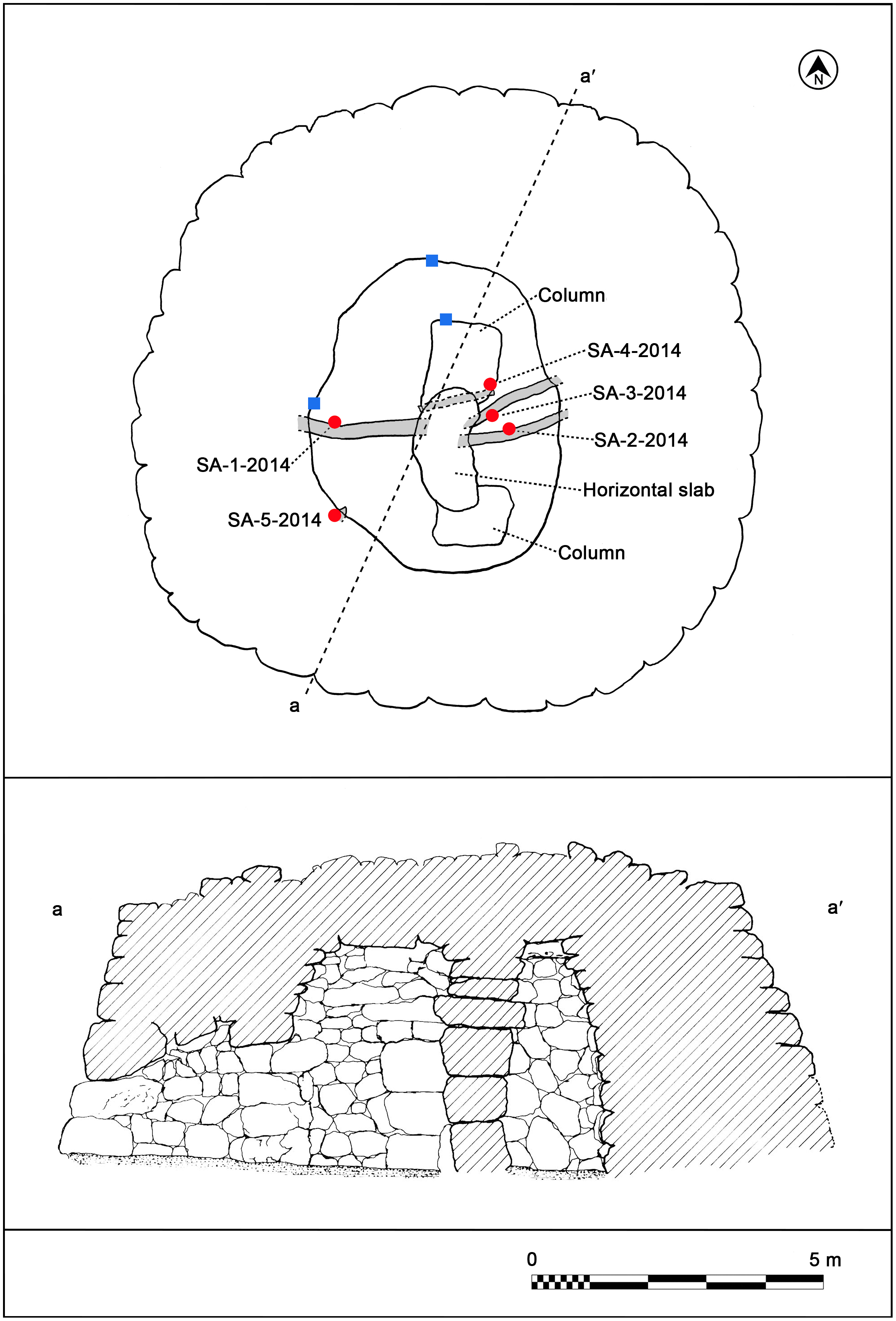
A radiocarbon date made on a sample from one of these beams yielded a date between 1006 and 810 cal BC (2σ) (Mestres and De Nicolás Reference Mestres and De Nicolás1999). It was proposed that the beams were installed to support the structure when the building was already in use and not when it was built (Plantalamor Reference Plantalamor1991). Other authors, however, believed that they dated from the construction of the building (Micó Reference Micó2005). The beams are laid out in the same direction as the stone slabs comprising the roof and do not seem to play a noteworthy structural role, so we cannot discard the possibility that they were temporary elements used while building the talayot but ultimately never removed. Nor can we discard the possibility that they are auxiliary structures for the functions carried out inside the talayot, perhaps used to hang up certain objects. It is even possible that both explanations are compatible. In any case, the way the ends of the beams fit into the building’s internal wall makes it difficult to maintain the hypothesis that they were installed after the talayot was built. In the internal wall of the talayot, we can see openings next to the roof that may be the places where the ends of other beams, which have since disappeared, fitted in (Figure 5).
Planimetry of the internal part of the roof and cross-section of Talayot 1 (based on Plantalamor Reference Plantalamor1991). The red circles show the sampling points. The blue squares mark the location of gaps where other beams, which have since disappeared, may have been fitted.

Figure 5 Long description
The image displays a detailed planimetry of the internal part of the roof and a cross-section of Talayot 1. Red circles indicate the sampling points where samples were taken. Blue squares mark the locations of gaps where other beams, which have since disappeared, may have been fitted. The cross-section provides a view of the structural layout, including the horizontal slab and columns.
In the building, in addition to the main entrance, two entrances are found that are currently covered by collapses: one on the eastern exterior and one on the eastern interior near the ceiling. It is not currently possible to determine where these two entrances led to or whether they were connected.
The purpose of this building, just like for the other Menorcan talayots, is not very clear. The fact that it has such a spacious internal chamber distinguishes it from the majority of the talayots on Menorca. In fact, it resembles the Mallorcan talayots, which also tend to have generous internal spaces with a central column.
The exceptional degree of conservation of a perishable archaeological material like the wooden beams on the roof of the chamber in Talayot 1 of Sant Agustí Vell made it possible to perform the analysis presented here. The project has a twofold objective. On the one hand, it seeks to conduct a taxonomic study of the wood to learn more about the building techniques and materials used during the Talayotic period on Menorca. To date, there has been no clear taxonomic identification of the wood used to manufacture these building elements on the island. This information will enable us to better assess the physical characteristics of the beams and can guide future interventions to conserve them. Likewise, the taxonomic identification will enable us to associate the wood chosen to craft these elements with the prehistorical paleo-landscape and the dynamics of the use of forest resources in Menorca’s prehistory. Secondly, given the fact that no construction dates of Menorcan talayots are available, except the ones discussed in this article, the radiocarbon analysis of the samples will help to perform a more comprehensive, chronological study of the Menorcan talayots.
Methodology
Wood sampling and taxonomic identification
The procedure to obtain the samples consisted in mechanically extracting a small sample (a small cylinder measuring approximately 1 cm3) from the outer part of each of the beams, both those that remain whole and those that survive in part (Figure 5). In this way, we are certain that the last rings conserved have been sampled, as none of the trunks were carved and the samples were taken from their outer part.
For the taxonomic identification in the laboratory, these samples were observed in a reflected light optical microscope with a bright/dark field and a magnification range between 50× and 500× (Olympus BX60). This observation required no previous treatment of the samples, which were observed directly under the microscope. Likewise, part of the sample was analyzed with a scanning electron microscope (SEM, HITACHI S-3400N, Microscopy Service of the University of the Balearic Islands).
The taxonomic identification of the wood was performed based on the microscopic study of the wood’s anatomy. Observing the three anatomical planes of wood (carbonized or not), namely transverse/cross section, longitudinal radial and longitudinal tangential, the presence/absence, shape, morphology, size and arrangement of each of the different anatomical elements was analyzed (vessels, rays, resin ducts, perforation plates, etc.). Based on this observation, as well as on a comparative anatomy using the wood anatomy atlas (Schweingruber Reference Schweingruber1990; Vernet et al. Reference Vernet, Ogerau, Figueiral, Machado and Uzquiano2001) and the reference collection of current Mediterranean woody plants from the University of the Balearic Islands, the taxonomy of each of the examined remains was determined.
Radiocarbon dating and infrared analysis
Part of the samples was used to conduct 14C dating analysis. These samples had not been subjected to any physical or chemical treatment prior to the treatment in the radiocarbon lab. The five samples, one from each beam, came from the outer wood of each trunk.
In total six wood samples from the beams of Sant Agustí Vell have been dated. Those identified with the laboratory code RICH were dated by AMS at the Royal Institute for Cultural Heritage (Brussels). The sample with the code CSIC was previously dated using the beta decay method at the Geochronology Laboratory of the CSIC (Madrid).
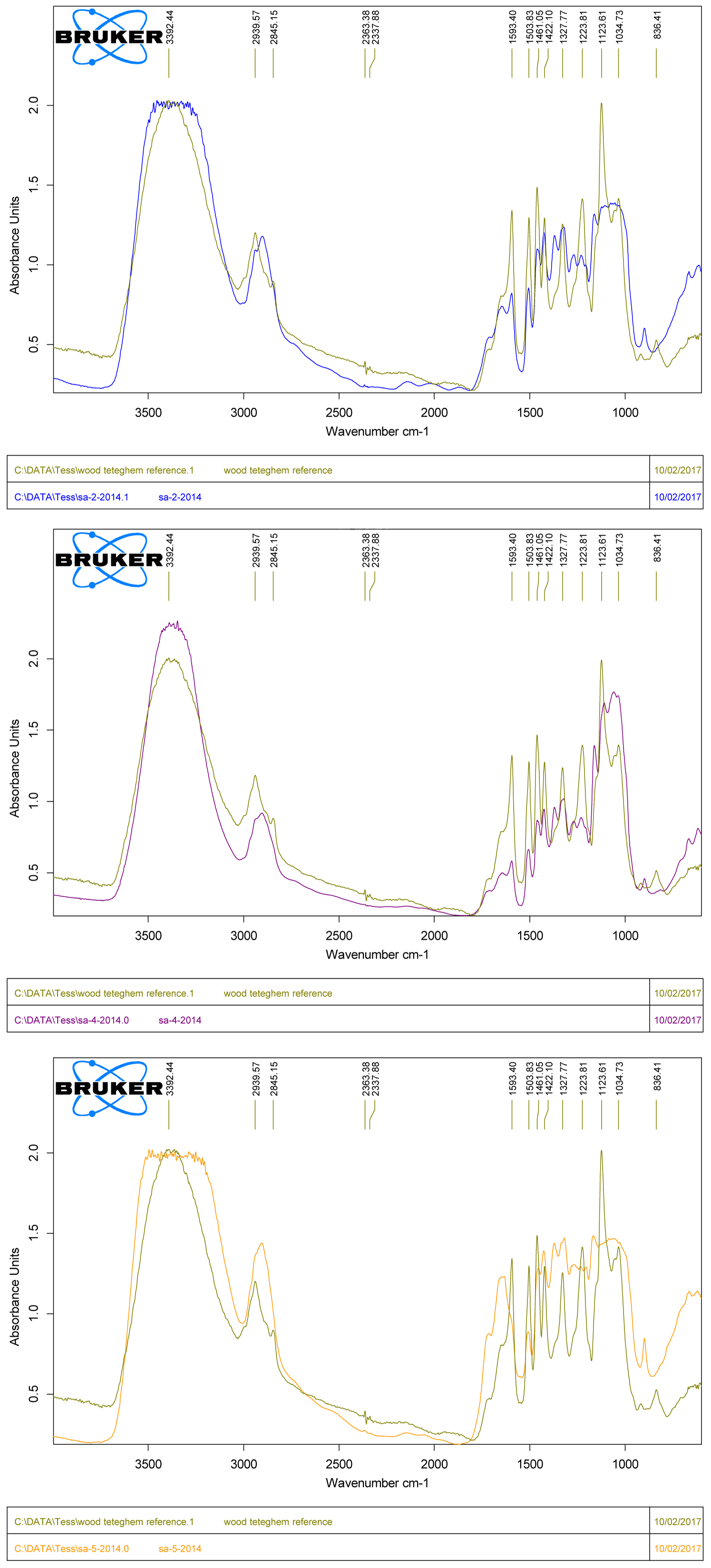
The RICH samples were treated using the ABA (acid–base–acid) method (Wojcieszak et al. Reference Wojcieszak, Van den Brande, Ligovich and Boudin2020). The beams from the talayot in Sant Agustí Vell were never covered by soil, so the possibility of contamination by humic acids or carbonates is insignificant. A much greater problem could be the presence of consolidants to prevent the beams’ deterioration, perhaps from an undocumented intervention. To evaluate the presence of these products, an infrared (IR) analysis of three of the samples was conducted (Figure 6). Each sample was compressed between two diamond windows of a compression cell (SpectraTech®) to yield a thin transparent layer. The spectra were recorded in transmission mode using a Vertex 70 spectrometer equipped with a Hyperion 3000 microscope (Bruker® spectrometer and microscope).
IR-Spectrum showing that the wood has been neither treated nor consolidated.

Figure 6 Long description
The image contains three line graphs, each representing the infrared (IR) spectra of wood samples. The x-axis of each graph is labeled 'Wavenumber cm inverse' and ranges from approximately 4000 to 500 centimeters inverse. The y-axis is labeled 'Absorbance Units' and ranges from 0 to 2.5. Each graph shows a distinct line color: blue, purple, and orange. The lines exhibit multiple peaks and troughs, indicating the absorbance of the wood samples at different wavenumbers. The peaks are particularly prominent around 3500, 2900, 1500, and 1000 centimeters inverse. The graphs suggest that the wood samples have not been treated or consolidated, as indicated by the IR analysis. The data points are marked with small vertical lines at specific wavenumbers, and the graphs are labeled with file paths and dates at the bottom. The overall trend in each graph shows a decrease in absorbance from left to right, with notable peaks at specific intervals.
The samples were burned and reduced to graphite using the AGE system. The measurements were performed by AMS on a MICADAS machine (Boudin et al. Reference Boudin, Van Strydonck, Van den Brande, Synal and Wacker2015). The quality assessment of the data was made by the analysis of samples of known age, which had been pre-treated and prepared in the same way as the samples of unknown age. The results were calibrated via the OxCal program using the IntCal 20 curve (Reimer et al. Reference Reimer, Austin, Bard, Bayliss, Blackwell, Bronk Ramsey, Butzin, Cheng, Edwards, Friedrich, Grootes, Guilderson, Hajdas, Heaton, Hogg, Hughen, Kromer, Manning, Muscheler, Palmer, Pearson, van der Plicht, Reimer, Richards, Scott, Southon, Turney, Wacker, Adolphi, Büntgen, Capano, Fahrni, Fogtmann-Schulz, Friedrich, Köhler, Kudsk, Miyake, Olsen, Reinig, Sakamoto, Sookdeo and Talamo2020).
Concerning the sample previously published by Mestres and de Nicolás (Reference Mestres and De Nicolás1999), the CSIC laboratory report contains no information about either the extraction method of the wood or the treatment of the sample in the radiocarbon laboratory.
Results
The macroscopic analysis of the beams showed that they were debarked but not “worked,” the shape of the beams is the unmodified shape of the trunks.
Figure 6 shows the results of the infrared analysis of samples SA-2-2014, SA-4-2014 and SA-5-2014 compared to the spectrum of a sample of modern wood. The spectra show no extra absorption, but instead just a bit of distortion due to the age of the wood. Consequently, the samples can be considered unpolluted.
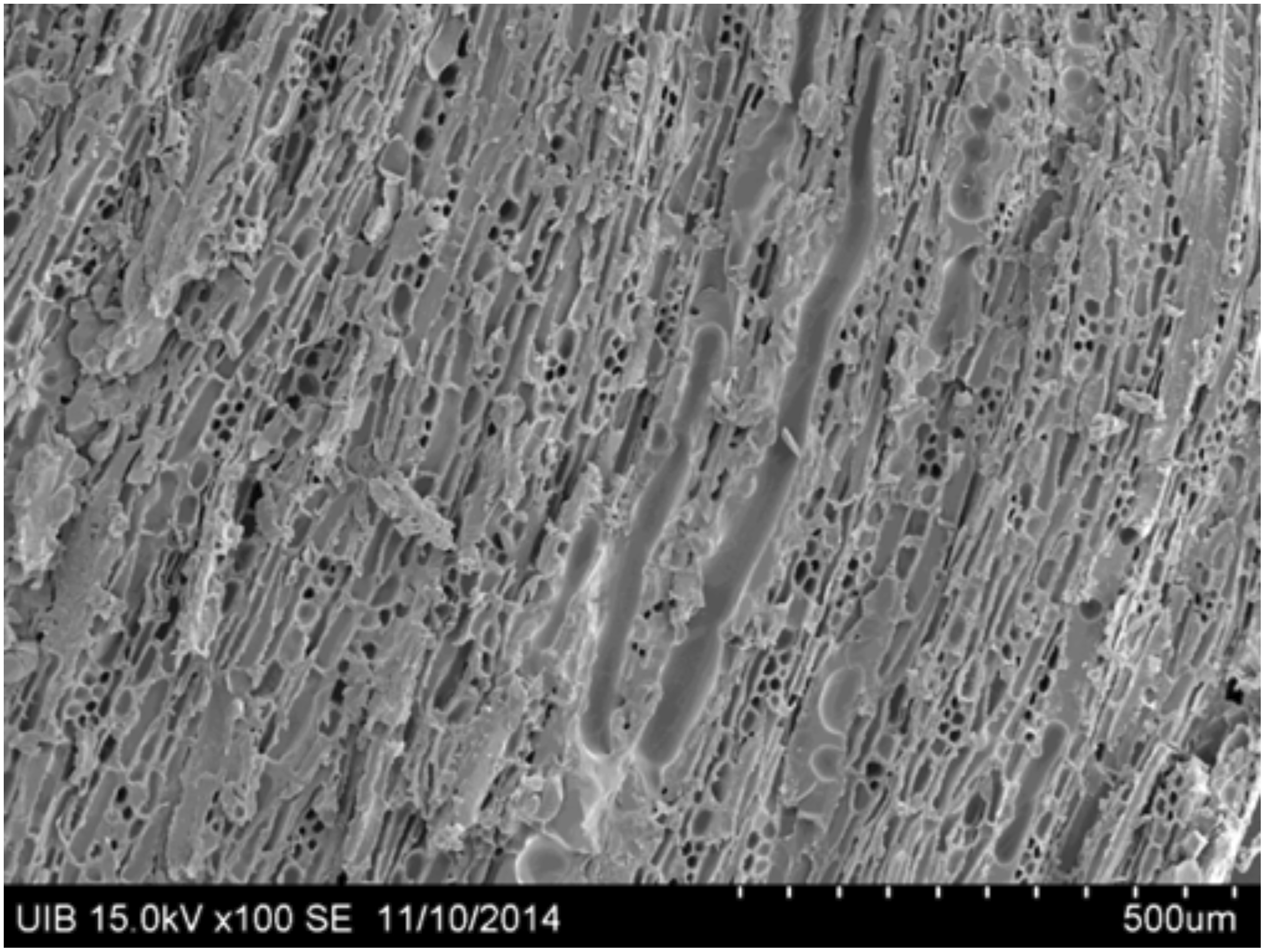
Taxonomic identification of the wood showed that it originated from the wild/domestic olive (Olea europaea L.) (Figure 7). In the transverse section, a diffuse-porous organization was observed, with pores rarely solitary and normally in radial groups of 2–4. Parenchyma was mostly paratracheal. In the longitudinal sections, the observed rays were bi- to triseriate and heterogeneous (with square and upright cells). The intervessel and ray-vessel pits were numerous and small. Perforation plates were all simple. However, it was not possible to distinguish between the domesticated and the wild variety. In order to establish the distinction between these two varieties, quantitative eco-anatomical analyses must be carried out (Terral and Arnold-Simard Reference Terral and Arnold-Simard1996). This is impossible given the small number of samples available in this study.
SEM images of the longitudinal tangential plane of Olea europea sample SA-1-2014, where we can observe the following diagnostic features: biseriate heterogeneous rays and intervessel pitting formed by small abundant pits.

Figure 7 Long description
A scanning electron microscope image of the longitudinal tangential plane of an Olea europea sample. The image reveals biseriate heterogeneous rays and intervessel pitting formed by small, abundant pits. The surface appears textured with a mix of smooth and rough areas, indicating the structural features of the sample.
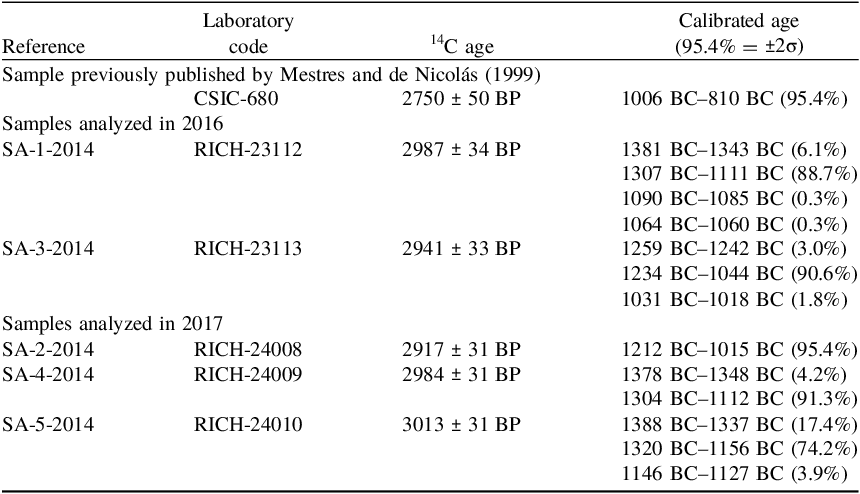
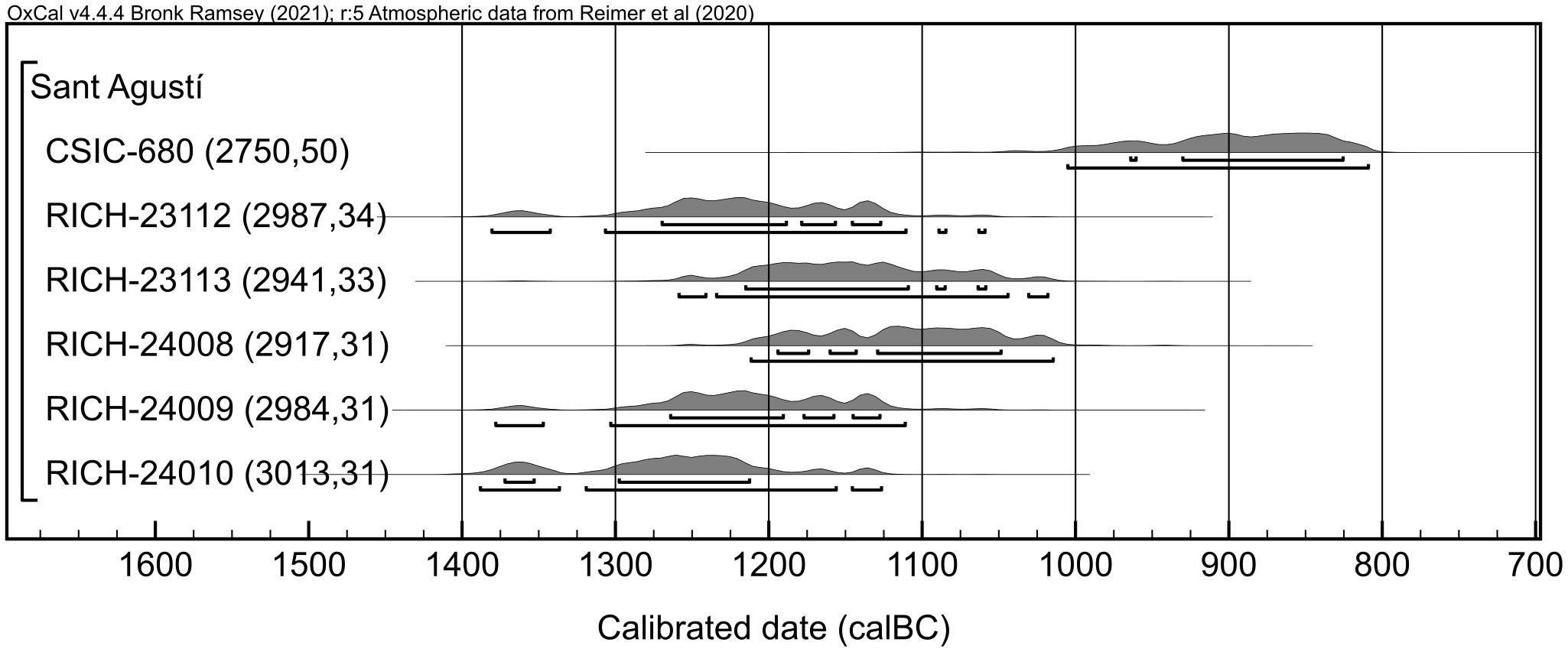
Table 1 and Figure 8 represent the 14C dates of the five beams conserved inside the talayot and the CSIC date reported in Mestres and de Nicolás (Reference Mestres and De Nicolás1999).
Radiocarbon dating results of the sample initially dated in the Madrid laboratory (CSIC) and of the five samples subsequently analyzed in Brussels (RICH)

Table 1 Long description
The table presents radiocarbon dating results for samples analyzed in different years. It includes a reference to a sample previously published by Mestres and de Nicolas in 1999, with the laboratory code CSIC-680, a carbon 14 age of 2750 plus or minus 50 before present, and a calibrated age ranging from 1006 before common era to 810 before common era with a 95.4 percentage confidence interval. The table also lists samples analyzed in 2016 and 2017, with their respective laboratory codes, carbon 14 ages, and calibrated ages. For instance, sample SA-1-2014 has a carbon 14 age of 2987 plus or minus 34 before present and calibrated ages ranging from 1381 before common era to 1343 before common era with varying percentage confidence intervals. Similarly, sample SA-3-2014 has a carbon 14 age of 2941 plus or minus 33 before present and calibrated ages ranging from 1259 before common era to 1242 before common era with a 3 percentage confidence interval. The samples analyzed in 2017 include SA-2-2014, SA-4-2014, and SA-5-2014, with their respective carbon 14 ages and calibrated ages. The table provides a comprehensive overview of the radiocarbon dating results, highlighting the differences in ages and calibrated dates across the samples.
Calibrated results of the radiocarbon dating analysis conducted on the beams from Talayot 1 in Sant Agustí Vell.

Figure 8 Long description
A line graph displays calibrated dates for samples from Sant Agustí. The x-axis represents calibrated dates in years before present (calBC), ranging from 1600 to 700. The y-axis lists sample identifiers: CSIC-680, RICH-23112, RICH-23113, RICH-24008, RICH-24009, and RICH-24010. Each sample has a corresponding horizontal line with shaded probability distributions indicating the range of possible calibrated dates. The graph shows overlapping date ranges for different samples, suggesting a timeline of events or activities. All values are approximated.
Discussion and conclusions
The results of the wood anatomy analysis of the 5 wood samples obtained at Sant Agustí showed that in all cases trunks of Olea europaea were used. This was a very common wood used as fuel and timber by prehistoric populations of Mallorca and Menorca and one of the most recurrent and relevant trees of their forests (Picornell-Gelabert Reference Picornell-Gelabert2012; Picornell-Gelabert and Carrión Reference Picornell-Gelabert and Carrión Marco2017; Picornell-Gelabert and Servera-Vives Reference Picornell-Gelabert and Servera-Vives2017; Picornell-Gelabert and Dufraisse Reference Picornell-Gelabert and Dufraisse2021; Piqué Reference Piqué, Lull, Micó, Rihuete and Risch1999a, Reference Piqué, Lull, Micó, Rihuete and Risch1999b). The former identification of the wood used in the wooden elements of Sant Agustí was based in the macroscopic observation of the external part of the wood, which was not diagnostic, and stablished that the wood used was of mastic tree (Pistacia lentiscus L.; Plantalamor Reference Plantalamor1991, Reference Plantalamor1996). The present wood anatomy analysis, then, determines that the tree used in the five cases was the olive tree.
The results of the five new radiocarbon dates cover approximately the same time interval (Figure 8). This makes it difficult to assert that all five results are affected by the same old wood effect. This effect can also be ruled out due to the fact that all the samples come from the youngest rings of the trees, just before felling. Therefore, it is almost certain that all wood samples come from the same chronological event, in other words, the simultaneously felling of the trees to make the beams.
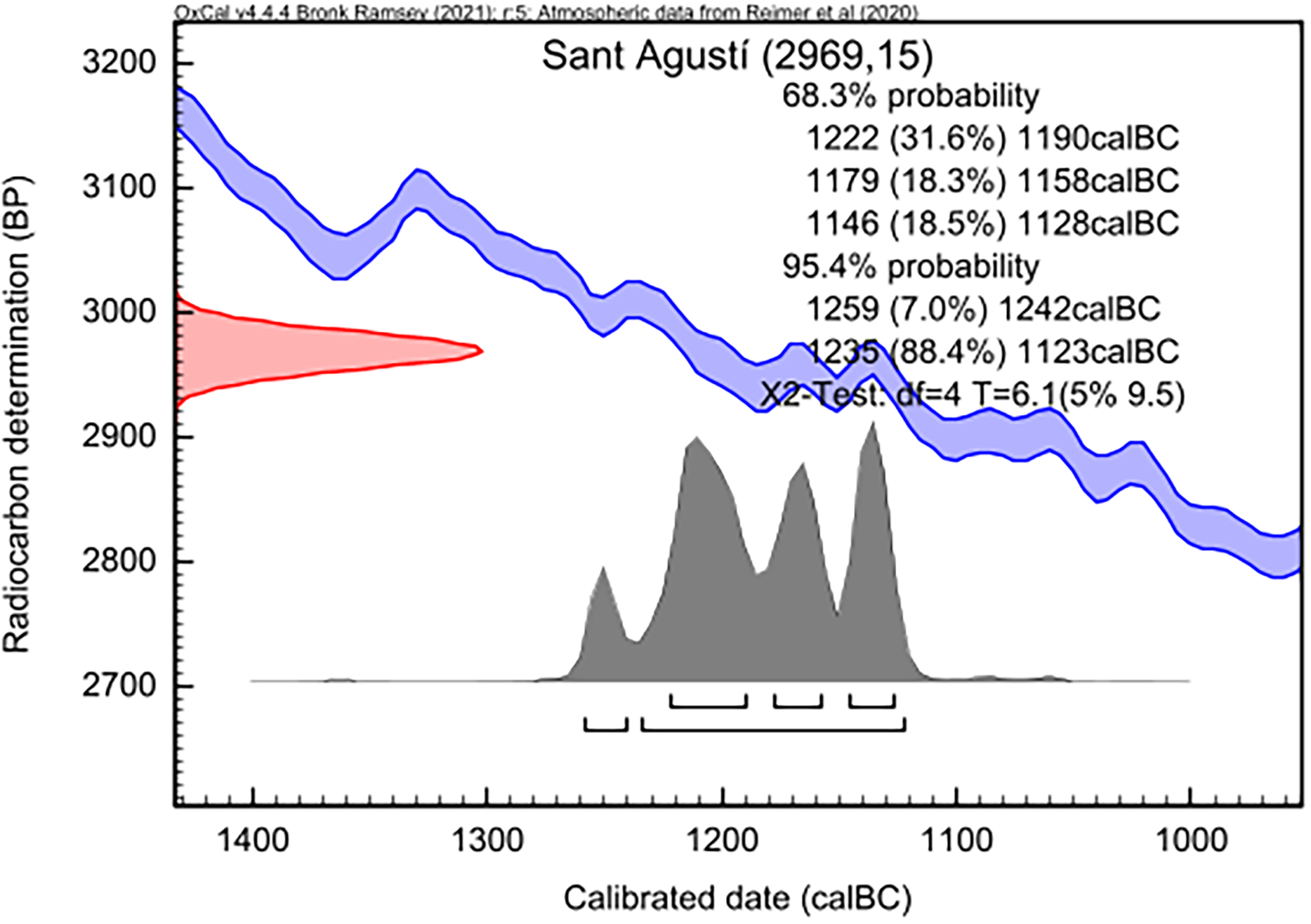
The samples analyzed in 2016 and 2017 provided similar results. This excludes the possibility of a random error in any of the sets of dates measured. A χ2 test shows that the five dates may represent the same real age [χ2: df = 4, T = 6.1 (Tmax. 5% = 9.5)]. This age would be: 2969 ± 15 BP (Table 2 and Figure 9). After the calibration, the age of the beams is situated within a narrow range between 1259 BC and 1123 BC.
Pooled mean of the five dates performed at RICH

Mean value of the 5 dates. χ2 - Test: df=4 T=6.1 (5%=9.5).

Figure 9 Long description
The line graph titled Sant Agusti displays radiocarbon determination on the y axis ranging from 2700 to 3200 B P and calibrated date on the x axis ranging from 1000 to 1400 cal B C. The graph includes a blue line with shaded areas representing probability distributions and a red shaded area indicating a specific range. Key data points include 1222 with a 31.6 percentage probability at 1190 cal B C, 1179 with an 18.3 percentage probability at 1158 cal B C, 1146 with an 18.5 percentage probability at 1128 cal B C, 1259 with a 7 percentage probability at 1242 cal B C, and 1235 with an 88.4 percentage probability at 1123 cal B C. The graph also includes a chi-squared test result with df equals 4 and T equals 6.1. All values are approximated.
The sample analyzed in Madrid (CSIC) and published by Mestres and De Nicolás (Reference Mestres and De Nicolás1999) is approximately 200 radiocarbon years younger. Statistically, it is impossible that it represents the same real age as the other samples. Regarding the CSIC date it should be noted that no information is available about the exact provenance and size of the sample, the cleaning procedure, the chemical treatment or the measurement conditions used in the laboratory. However, it should be noted that 4 CSIC dates (CSIC-529, 530, 438, 439) performed at that time on charcoal from the Son Fornés site (Mallorca) had to be discarded due to laboratory errors (Micó Reference Micó2005). They were too young compared to the rest of the available dates and not consistent with the stratigraphic data. It is therefore reasonable to assume that in those days there were problems in the CSIC laboratory that also affected the result of Sant Agustí Vell.
From an archaeological point of view, the difference between the CSIC date and the RICH dates is important and crucial in the interpretation of the construction date of the talayot of Sant Agustí Vell and, in general, of the chronology of the emergence of this kind of monuments in the Balearic Islands. The proposal of a time window of ∼850–550/500 cal BC for the construction and use of the talayots (Lull et al. Reference Lull, Micó, Rihuete and Risch1999; Micó Reference Micó2005, Reference Micó2006) had been the most followed in the archaeological literature during the last years. However, this short chronology relied only on dates from Mallorcan talayots and the problematic CSIC date of Sant Agustí Vell. The new evidence from the wooden beams of Sant Agustí Vell shows that the talayot is much older than this interval.
This is also in agreement with dates obtained in recent years from Talayotic contexts of Cornia Nou and Torralba d’en Salort, both in Menorca. In Cornia Nou, excavations were carried out in the area of the West Talayot. An important part of this research was focused on the so-called South Building, a younger monument attached to this talayot (Anglada et al. Reference Anglada, Ferrer, Plantalamor, Ramis, Van Strydonck and De Mulder2014). The moment of construction of this structure, as well as two later architectural phases, could not be dated because of the lack of sedimentary layers related to them. The first occupation contexts recorded in the South Building belong to the so-called phase 4 and gave the radiocarbon results of KIA-41895: 2835 ± 30 BP and KIA-45769: 2825 ± 30 BP, based on domestic herbivore bone samples, showing that it was in use at least since a date around 1000 BC. In Torralba d’en Salort, the Talayot B, which had been previously excavated (e.g. Fernández-Miranda Reference Fernández-Miranda2009), was later the objective of a specific sampling survey (Van Strydonck et al. Reference Van Strydonck, De Mulder, Borms, Andreu, Ferrando and Pons2015). An animal bone sample from the base of the partially dismantled perimetral wall of the talayot, which was probably part of the original inner fill of this wall, gave a date of 2870 ± 30 BP (KIA-43026).
Recent research points that the first Talayotic tower-like buildings in Mallorca, the so-called stepped monuments, also have an earlier origin than assumed, being dated between the 11th and 10th century cal BC (Gelabert et al. Reference Gelabert, Hernández-Gasch and Puig2018), but without reaching the 12th century cal BC chronology, here proposed, for talayots in Menorca. This asynchronous start of Talayotic monuments in both islands fits well with the chronology of the end of the naveta (boat shaped) villages, the characteristic settlements of previous period (Ramis and Salas Reference Ramis and Salas2014). The dwelling naveta structures are abandoned around 1200 cal BC in Menorca, while some of the Mallorcan ones show a late occupation reaching even the 10th century cal BC. This indicates without any doubt that the Menorcan talayots are older than the Mallorcan ones.
Acknowledgments
The help from Miguel Riudavets Ferrà and Elena Sintes Olives in taking the samples is acknowledged. The work of Ll. Picornell-Gelabert has been carried out within the framework of a Ramón y Cajal contract (RYC2020-030621-I/AEI/10.13039/501100011033) and co-financing by the Agencia Estatal de Investigación and by the European Social Fund and the Universitat de les Illes Balears. This work has been also supported by the project PID2020-118033GB-I00 of the Spanish Ministerio de Ciencia e Innovación. Ferran Hierro Riu, senior technician in the Microscopy Service of the Scientific-Technical Services at the UIB, made it possible to observe the wood samples with a scanning electron microscope. Part of the work was carried out within the framework of studies commissioned by the Consell Insular de Menorca to Tragsa and Mediterraneum for the elaboration of the candidature of Talayotic Menorca as a UNESCO World Heritage Site.