


Introduction
Web-based interventions for depression have burgeoned over the past 10 years as researchers and health professionals aim to harness the reach and cost-effectiveness that the internet promises. Often grouped under the general term computerized cognitive behaviour therapy (CBT), a web-based intervention can be more explicitly defined as:
a primarily self-guided intervention program that is executed by means of a prescriptive online program operated through a website and used by consumers seeking health- and mental-health related assistance. The intervention program itself attempts to create positive change and or improve/enhance knowledge, awareness, and understanding via the provision of sound health-related material and use of interactive web-based components (Barak et al. Reference Barak, Klein and Proudfoot2009).
Web-based interventions are distinct from other therapeutic uses of the internet, such as online therapy, therapeutic software that can support assessment and monitoring, and other online activities, such as therapeutic blogging (see Barak et al. Reference Barak, Klein and Proudfoot2009 for helpful overview). However, within the field of web-based interventions there is also a substantial amount of heterogeneity. While most web-based interventions for common mental health problems are based on principles of CBT, the level of interactivity and human support varies with the design.
The Beacon directory, a comprehensive portal of web resources for mental health with evidence assessment, lists over 40 web-based interventions for depression alone and many more for other common mental health conditions. Many of these have shown good clinical effectiveness in trial settings, demonstrated through large trials of single systems (Christensen et al. Reference Christensen, Griffiths and Jorm2004; Proudfoot et al. Reference Proudfoot, Ryden, Everitt, Shapiro, Goldberg, Mann, Tylee, Marks and Gray2004) as well as a systematic review (Kaltenthaler et al. Reference Kaltenthaler, Parry, Beverley and Ferriter2008a) and several meta-analyses and reviews that cover multiple systems (Spek et al. Reference Spek, Cuijpers, Nyklícek, Riper, Keyzer and Pop2007; Andersson & Cuijpers, Reference Andersson and Cuijpers2009; Foroushani et al. Reference Foroushani, Schneider and Assareh2011). However, slow uptake in practice points to translation gaps between concept and clinical practice (Whitfield & Williams, Reference Whitfield and Williams2004).
One of the early weaknesses of web-based interventions for depression was the high rate of non-completion (Christensen et al. Reference Christensen, Griffiths and Farrer2009; Donkin et al. Reference Donkin, Christensen, Naismith, Neal, Hickie and Glozier2011). Researchers have addressed this through devising various engagement strategies. One of these is to make content interactive through the use of multimedia (e.g. videos) and responsive interaction (e.g. data visualization). Another strategy has been to introduce human support, such as via follow-up telephone calls or online reviews. Studies show that interactivity and human support increase adherence and clinical effectiveness (Ritterband et al. Reference Ritterband, Cox, Gordon, Borowitz, Kovatchev, Walker and Sutphen2006; Spek et al. Reference Spek, Cuijpers, Nyklícek, Riper, Keyzer and Pop2007; Resnicow et al. Reference Resnicow, Strecher, Couper, Chua, Little, Nair, Polk and Atienza2010). This research addresses what is often referred to as the Type 1 translation gap (see the Cooksey Review, Reference Cooksey2006), i.e. that between the science of CBT and an appropriate technology (e.g. web-based intervention).
Nonetheless, web-based interventions have not become widely used in practice despite policy support (Layard, Reference Layard2006; Department of Health, 2011) and their potential for addressing the cost-effectiveness challenge of providing high throughput talking therapies (Parry et al. Reference Parry, Barkham, Brazier, Dent, Hardy, Kendrick, Rick, Chambers, Chan, Connell, Hutten, De, Mukuria, Saxon and Bower2011). The developing Improving Access to Psychological Therapies (IAPT) service model, which includes guided self-management, could be an appropriate access point for web-based interventions for depression. This suggests that there is also a Type 2 translation gap, namely that between clinically effective interventions and their common use in practice (the Cooksey Review, Reference Cooksey2006).
We would argue that greater understanding is needed of the issues that arise when implementing a web-based intervention into a realistic primary-care setting. We report an implementation pilot in three IAPT services of MindBalance, a web-based intervention for depression built on the SilverCloud platform (Sharry et al. Reference Sharry, Davidson, McLoughlin and Doherty2013). We pose the following questions: (1) Who chooses to use MindBalance? (2) Is MindBalance effective for these clients? (3) How do clients use MindBalance? We use this data to reflect more generally on implementation of a web-based intervention into IAPT services.
Intervention description
The SilverCloud platform
SilverCloud is a media-rich, web 2.0 platform on which interactive web-based interventions for common mental health problems can be rapidly constructed. It was specifically designed to improve engagement through a number of design strategies drawn from research in human–computer interaction. These are described below and illustrated in Figure 1.
Screenshots of MindBalance illustrating its main design concepts. (a) Personal; (b) Interactive; (c) Supportive; (d) Social.

Personal. Users are encouraged to draw together all strands of the intervention and build their own plan or ‘toolbox’ for staying well and managing current and future mood difficulties. While users can navigate through the pages one after the other, they can also choose to jump to particular sections to suit their needs.
Interactive. Users can engage with the range of media, such as interactive quizzes, video presentations, online exercises and activities, homework, and mobile diary-keeping. These are meant to encourage reflection and personalization of the information offered in the intervention.
Supportive. Although mainly self-directed, each user is assigned a supporter who provides feedback at specified intervals throughout the intervention on the activities that the user has chosen to share.
Social. Users can gain a sense of other people using the system by seeing how many people liked an activity, or by sharing answers to an activity that are visible to all after moderation.
Each module is structured in an identical way and incorporates introductory quizzes, videos, informational content, interactive activities, as well as homework suggestions and summaries. In addition, personal stories and accounts from other clients are incorporated into the presentation of the material. The design attempts to encourage engagement in a cost-effective manner through combining personal support with a highly interactive online intervention. Initial studies have demonstrated that SilverCloud has achieved clinical effectiveness with high rates of engagement and minimal therapist time in a university setting. A more detailed description, with multimedia appendix, is available in Sharry et al. (Reference Sharry, Davidson, McLoughlin and Doherty2013).
MindBalance
MindBalance is a seven-module intervention built on the SilverCloud platform, incorporating psycho-educational and therapeutic elements of managing difficulties with low mood and depression. The intervention draws primarily on the principles of CBT and incorporates elements of mindfulness.
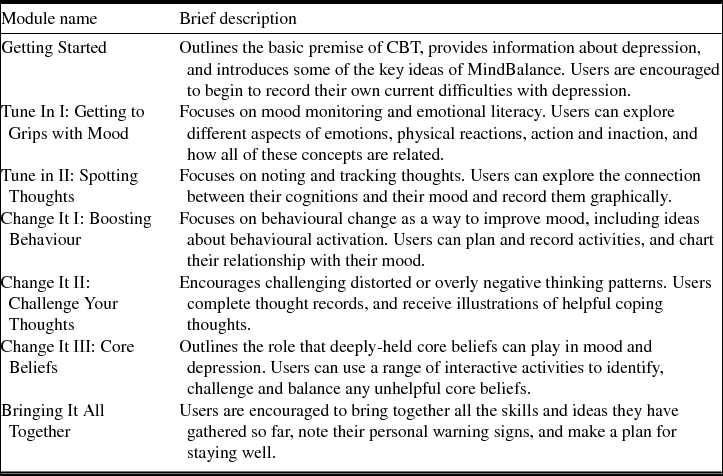
The first two modules encourage the user to ‘tune in’ to their mood, behaviour and thought patterns and build their own feelings, thoughts and behaviour cycles. The remaining modules focus on supporting the user to challenge behavioural (physiological feelings) and cognitive (thoughts, memories, images, attention) aspects of any unhelpful cycles which they have identified for themselves. A module examining core beliefs can be made available to users who have completed the basic content. A more detailed description of module content is available in Table 1.
Description of MindBalance modules
MindBalance was developed as part of the Technology Enhanced Therapy project funded via the National Digital Research Centre in Ireland and has been developed in partnership between the Mater Community Adolescent Mental Health Service, Parents Plus and Department of Computer Science at Trinity College Dublin.
Service-based use
The MindBalance intervention was used as part of three IAPT services in the East of England. The IAPT service model provides high throughput talking therapies at two levels of intensity to the adult population. The high-intensity level provides therapy with a clinical psychologist or cognitive behavioural therapist and the low-intensity level provides guided self-help with a trained psychological wellbeing practitioner (PWP). The MindBalance intervention was offered as an option at the lower level of intensity as an alternative to manual-based guided self-help, and in some cases, group support.
Participants who chose to use MindBalance were given a log-in and a link to an introductory video familiarizing them with the intervention. Each participant received up to eight reviews on a weekly or fortnightly basis as agreed with the supporting PWP. The intervention did not run for more than 3 months. PWPs based their reviews on the shared support page which both participant and PWP could see in exactly the same form. Participants could share any activity that they engaged in, such as a thoughts-feeling-behaviours cycle, as well as their journal entries. Activities were shared automatically, but participants could click a button to keep any particular activity private. Participants could also leave messages for their PWP.
PWPs reviewed each participant on a specified day listed on the shared page. They were encourage to spend about 10 min reviewing a participant, giving them encouragement and if necessary pointing them towards specific parts of the intervention. They also responded to participants’ questions. PWPs were discouraged from offering therapy online. Participants had continued use of MindBalance without PWP support for a further 4 months.
Those who chose manual-based guided self-help were provided a self-help manual and received up to six face-to-face or telephone appointments lasting 30 min.
Method
The study was designed by university researchers in concert with a Steering Group of senior managers and clinicians from the IAPT services involved. The aim was to explore the Type 2 translation gap using an implementation research approach (Peters et al. Reference Peters, Adam, Alonge, Agyepong and Tran2013). Specifically, we did not want to make any modifications to current service practices to accommodate the study that would not be a feasible permanent change. An important implication of this decision was to conceive of a web-based intervention as an additional offering that provided choice to service users rather than as a replacement of any existing service. A key component of the research then was to understand who would chose the web-based intervention and how service users would use it to help themselves.
Participants
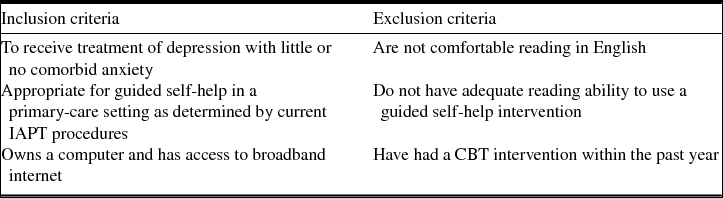
Participants were initially identified as suitable to receive a low-intensity intervention for depression or low mood through triage of a patient's self-assessment form by team leaders, all of whom were qualified CBT therapists. Patients then had an initial assessment with a PWP who considered a person's suitability for MindBalance in reference to the patient's identified difficulties, goals and the studies inclusion and exclusion criteria (shown in Table 2). If the patient satisfied these criteria, they were given a choice between the MindBalance web-based intervention and the currently used paper manual for guided self-help.
Inclusion and exclusion criteria for study participation
IAPT, Improving Access to Psychological Therapies.
The study aimed to include 30 participants from a population of 4500 individuals referred to three IAPT services in the East of England from February to July 2012. Of those, only 29 people, or 0.6%, were offered MindBalance. Seventeen individuals chose to use it and 12 actually used it.
Data collection
Three types of data are reported in this paper: outcome measures, log-data of application use, and interview data. The outcome measures included:
Beck Depression Inventory (BDI). The 21-item self-report instrument is intended to assess the existence of the severity of symptoms of depression according to DM-IV criteria. The Inventory is a 4-point scale ranging from 0 to 3. The BDI scores are analysed using the BDI score breakdown: 0–13 minimal depression, 14–19 mild depression, 20–28 moderate depression, 29–63 severe depression (Beck et al. Reference Beck, Ward, Mendelson, Mock and Erbaugh1961, Reference Beck, Steer and Carbin1988).
Patient Health Questionnaire (PHQ-9): The 9-item self-report instrument is used to consider symptoms and functional impairment from depression, make a tentative diagnosis, and derive a severity score to help select and monitor treatment. The scale ranges from 0 to 27 (0–4 no depression, 5–9 mild depression, 10–14 moderate depression, 15–19 moderately severe depression, 20–27 severe depression) (Gilbody et al. Reference Gilbody, Richards and Barkham2007). It is a measure stipulated by the Department of Health for all IAPT services.
Work and Social Adjustment Scale (WSAS): The 5-item scale measures general social impairment and is used in this pilot study to consider wellbeing in addition to level of depression (Mundt, Reference Mundt2002). The scale has a maximum score of 40 (0–9 sub-clinical, 10–19 significant impact, 20–40 severe impact). It is a stipulated measure by the Department of Health for all IAPT services.
The BDI measures were collected pre- and post-intervention through an electronic questionnaire. The PHQ-9 and WSAS data were collected before the start of the intervention as well as after every review as stipulated by the Department of Health through electronic questionnaires. The first and final measures collected were used for the data analysis. An automated email prompted participants to complete the measures 2 days before their scheduled review.
Log-data was collected for each participant, capturing the time-stamp and URL of each page or component used. All participants were invited to interview, including those who did not complete the intervention.
Data analysis
Numeric comparisons were used to capture who chose to use MindBalance. They focused on age, gender, ethnicity, and severity of condition as these measures are thought to affect service utilization (Parry et al. Reference Parry, Barkham, Brazier, Dent, Hardy, Kendrick, Rick, Chambers, Chan, Connell, Hutten, De, Mukuria, Saxon and Bower2011). The data are reported but no comparative tests were carried out given the small sample size.
Clinical outcome data and mean changes for BDI, PHQ-9, and WSAS are reported as indicative measures of feasibility. Repeated-measures t tests are used as non-parametric tests would be inappropriate given the universal improvement coupled with the small sample size. By the nature of the non-parametric analysis required, it would provide a significant result that may suggest more than can be conservatively concluded. In line with current approaches to measurement in IAPT, we also report levels of ‘caseness’. Caseness for PHQ-9 refers to a person reporting scores of ≥10 on the PHQ-9. A person is said to have moved to non-caseness if this score decreases to <10 at the final session. Reliable change was analysed using the Reliable Change Index Calculator (Evans et al. Reference Evans, Margison and Barkham1998).
Usage was explored through the number of participants still using MindBalance at the last review. We define active usage as the viewing of a content page or using an app. Any usage includes reading a review posted by the supporter or using the journal function. This dual measure incorporates multiple possible approaches to the log-data outlined in the literature (Danaher & Seeley, Reference Danaher and Seeley2009). We also present two contrasting vignettes of MindBalance usage taken from the log-data and interviews to highlight different approaches users took to the intervention. They are not intended to encapsulate general user views.
Results
Who chooses to use MindBalance?
MindBalance was offered in three IAPT services in the East of England from February to July 2012. Of the 4500 people referred for guided self-help, 29 people, or 0.6%, were triaged as appropriate to the study.
More than half of those offered MindBalance chose to try it (n = 17/29). Of those who declined, more than half (n = 7/12) wanted to be seen face-to-face as a preferred mode of interaction or for a perceived sense of motivation. The remainder did not want, or were unable, to use computers. A number of people initially chose to use MindBalance but did not use it past the first log-in or respond a follow-up letter about an alternative therapy (n = 5/17). The majority of these (n = 4/5) were recruited from the waiting list. These participants were withdrawn from the study according to the policy of IAPT services for those who do not attend.
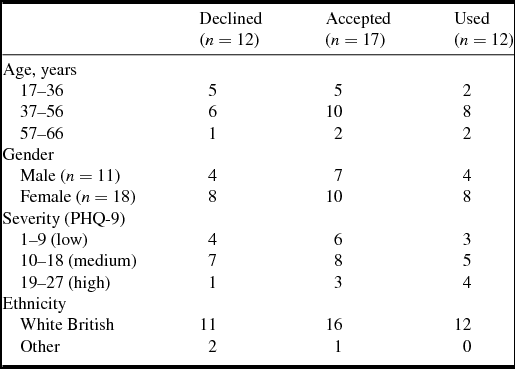
Comparing those who accepted, declined, or completed MindBalance, our data do not show any discernible trends in terms of age, gender, PHQ-9, or ethnicity as shown in Table 3.
The age, gender, severity level (PHQ-9), and ethnicity of those who accepted, declined, and used MindBalance
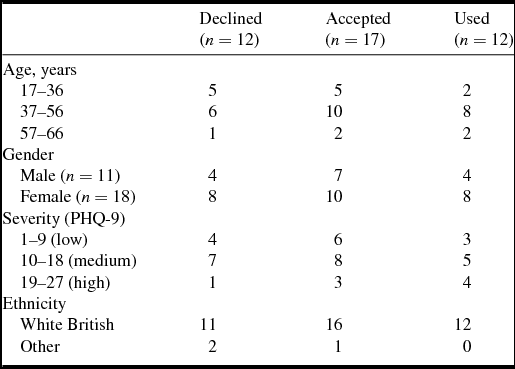
PHQ-9, Patient Health Questionnaire.
Is MindBalance effective for these clients?
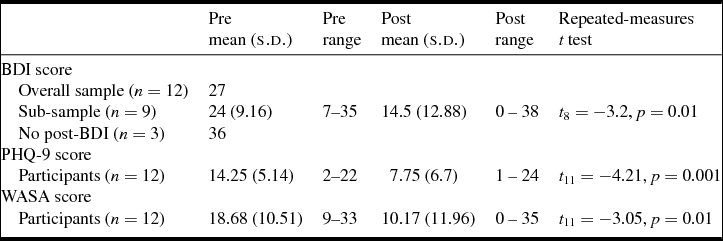
All outcome measures showed a decrease, indicating improved self-reported depression symptomatology and decreased social impairment as shown in Table 4. Nine out of 12 completed the BDI at the start and end of the intervention. Eight out of nine reported a decrease in the BDI measure, with a mean decrease of 9.5 for the cohort. The pre-mean of 24 can be classified as moderate depression while the post-mean of 14.5 is classified as mild depression.
Statistics of the pre- and post-BDI, PHQ-9, and WSAS scores of those who used MindBalance
BDI, Beck Depression Inventory; PHQ-9, Patient Health Questionnaire; WSAS, Work and Social Adjustment Scale.
Similarly with the PHQ-9, 10/12 participants showed a decrease in their scores, with a mean drop of 6.5. Using IAPT's measure ‘caseness’ for the PHQ-9, 10/12 met ‘caseness’ at the beginning of the intervention with 7/10 moving to ‘non-caseness,’ achieving reliable change.
Social impairment was measured by the WSAS with 9/12 reporting a decreased score, with a mean decline of 8.4. Of the nine patients who indicated substantial functional impairment, seven reported a decrease in their WSAS scores.
How do clients use MindBalance?
We first calculate adherence as the most common measure of usage. Mirroring how adherence is calculated in a face-to-face intervention, we define this as participant usage before each review produced by the PWP. Five out of 10 participants used MindBalance before all eight reviews, while 2/10 did so actively. We also calculated adherence as participation in the final review, reflecting the flexible nature of web-based interventions. When considered in this way, the numbers look quite different. Eight out of 10 participants were using the intervention at the final review, 7/10 actively. These are visualized in Figure 2. Two out of 12 participants had interventions of fewer than eight sessions after agreeing with their PWPs that they felt well enough to be discharged early. While this fits with the flexible nature of web-based interventions, they could not be included in the visualizations.
Percentage of participants that: (a) used MindBalance before n number of reviews; (b) used MindBalance before the nth review.
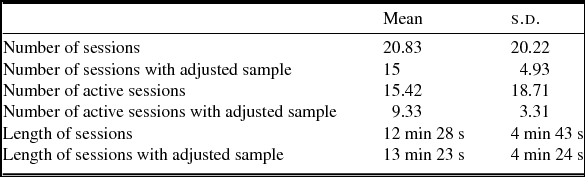
As an alternative measure of usage, we looked at time spent using the intervention. This data shows that the nature of a ‘session’ in a web-based intervention is very different than a face-to-face or telephone session. Even if we class the two most active users as outliers, web-based sessions were greater in number than face-to-face sessions in the same service (any: 15 vs. 6; active 9.3 vs. 6), but half as long (13 min vs. 30 min). Interestingly, the outlying extreme users (58 sessions each) used the intervention more frequently, but not for longer periods of time in one sitting (see Table 5 for all data).
Volume of MindBalance usage. An adjusted sample is also reported that excludes the two heaviest users and is more representative of normal usage
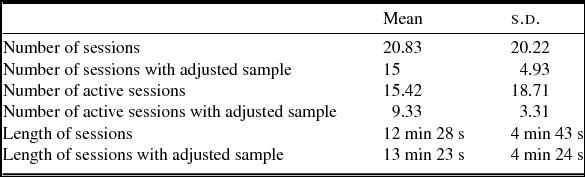
Data in Table 5 also show that there is high variation in session length. The mean standard deviation of session lengths is 17.5 min, longer than the average session length. The mean of participants’ longest session is close to 1 hour. This data underscores what we found in the log-data. Most participants spent some longer sessions focused on content, but had many shorter sessions practising skills through the apps, such as mindfulness. More than half of all sessions were devoted exclusively to app use. Session timing was also irregular. Some participants took breaks, while others used it at night or at weekends. It was clear that participants took advantage of the flexibility offered by the web-based intervention.
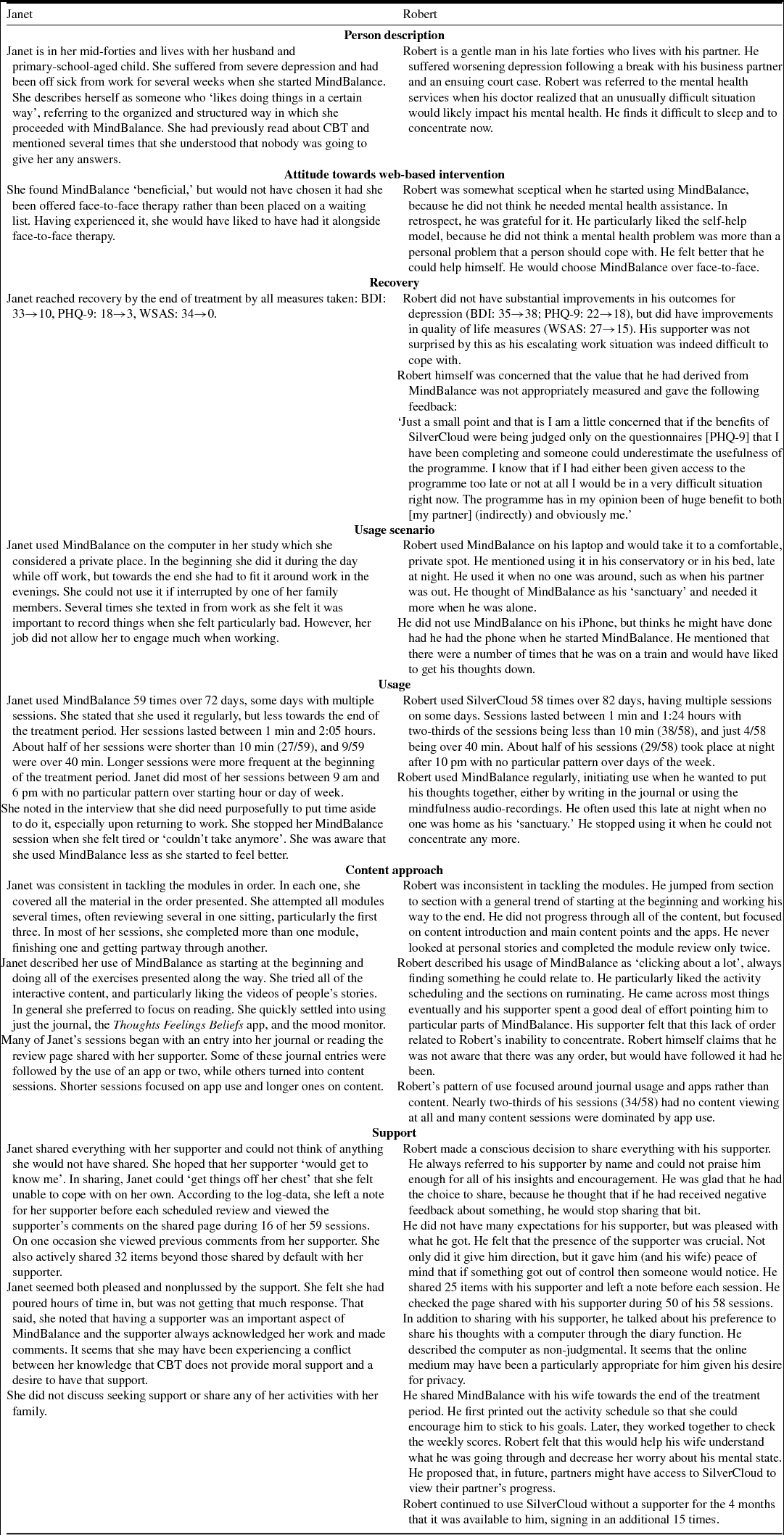
To further elucidate how people engage with web-based interventions, we captured patterns of use derived from the log-data and qualitative interviews. All participants were invited to interview and four of these accepted. Three of the four found the intervention useful and the fourth did not use it as she wanted to be seen face-to-face. It is unfortunate that we were unable to recruit those who ceased using the intervention, but this is not surprising given the sensitive nature of mental health. For illustrative purposes, we compare the patterns of use of two participants, Janet and Robert, who both gained benefit from MindBalance but achieved it differently. The data is captured in more detail in Table 6 and summarized in the following paragraphs.
Patterns of use of two contrasting participants, Janet and Robert
BDI, Beck Depression Inventory; PHQ-9, Patient Health Questionnaire; WSAS, Work and Social Adjustment Scale.
Both Janet and Robert experimented with different features in the first 2 weeks before quickly falling into distinctive patterns of use. Janet focused on moving through, and reviewing content in a regular manner, and repeatedly using a single app. Robert focused on apps, particularly the nindfulness ones, reviewing content on an ad hoc basis or when pointed to it by his supporter. Each of these patterns matched the motivation of use – for Janet, a step-by-step approach to help her get better and for Robert, a sanctuary to calm the mind. Engagement came in this case from the creation of a personalized path through the intervention that matched the participant's motivation of use. These patterns of use are graphically depicted in Figure 3.
MindBalance module usage for case studies: (a) Janet; (b) Robert.
Human support played an important, but different, role for each person. Janet was confident in navigating the content of MindBalance, but desired a bit more moral support that she may have received if seen face-to-face. She would have liked to use this intervention in combination with face-to-face sessions. By contrast, Robert did not want to be seen face-to-face, preferring to focus on MindBalance as a way in which he could help himself. Nonetheless, he visited his shared support page nearly every session and relied heavily on the guidance provided to view particular parts of the intervention. Interestingly, Robert started using parts of MindBalance with this wife; first the print-outs and then joint working in order to help her understand how to help him. Janet, on the other hand, chose not to share anything that she did in MindBalance with her family and felt disturbed if they entered the room when she was using it.
Discussion
We have presented an implementation pilot of the web-based intervention for depression and low mood, MindBalance, in a realistic primary-care mental health setting, three IAPT services. The aim of the study was to raise issues that might contribute to a persisting Type 2 translation gap with web-based interventions, keeping a treatment effective in clinical trials from widespread use in clinical practice. We discuss the results of the study in terms of three key concepts encapsulated in the research questions: patient acceptability, clinical effectiveness, and usage patterns. We then reflect in more depth on the most surprising result of the study, that very few people were offered MindBalance, raising substantial unexpected implementation issues.
Patient acceptability
Patient acceptance of web-based interventions has been raised as a potential barrier to implementation (Waller & Gilbody, Reference Waller and Gilbody2009), prompting us to consider who chose to use MindBalance in our pilot. Of those offered MindBalance, 59% chose to use it. This is higher than the 3–25% rates in a systematic review of patient acceptability of web-based interventions for depression and anxiety (Kaltenthaler et al. Reference Kaltenthaler, Sutcliffe, Parry, Beverley, Rees and Ferriter2008b), although these numbers may also differ due to different measures of acceptability. It is also higher than the results of a survey of those seeking behavioural treatments in which 48% would agree to use of a web-based intervention, with desires lowest for those seeking mental health treatment (Mohr et al. Reference Mohr, Siddique, Ho, Duffecy, Jin and Fokuo2010). Our data are in line with findings of several systematic reviews that those who use a web-based intervention are positive about the experience (Christensen et al. Reference Christensen, Griffiths, Mackinnon and Brittliffe2006; Kaltenthaler et al. Reference Kaltenthaler, Parry, Beverley and Ferriter2008a).
Studies of patient acceptability have not previously differentiated between potentially different groups of participants (e.g. men vs. women). The study Steering Group hypothesized that those who are either younger or male would be more likely to choose a web-based intervention over face-to-face treatment. Younger people are comfortable with the style of technology and men indicate greater confidence with technology and may want to receive help more anonymously. Our data did not indicate any differences between patient groups. If anything, those who withdrew were younger and male. This question needs to be examined again in a study with a larger number of participants, but our data indicates that differences may not be as prevalent as we suspected.
Interviews conducted with the PWPs who offered MindBalance to participants suggested that the manner of offer may sway a participant's willingness to try a web-based intervention. One PWP, who had very few refusals, took a very positive approach in describing MindBalance, emphasizing how the benefits matched the desires of the participant. For example, the PWP described MindBalance as guided self-help that was conveniently accessed through the internet rather than describing it as a web-based intervention. At the beginning of the pilot, we did not fully appreciate the attention needed to refine the language of presentation. We recommend that services put substantial effort into convincing those offering a web-based intervention of its benefits, ensuring they understand how clients might benefit. A series of scripted statements might further encourage uptake.
Clinical effectiveness
The results of this study indicate that MindBalance is likely to be clinically effective, with outcomes commensurate with larger studies (Proudfoot et al. Reference Proudfoot, Ryden, Everitt, Shapiro, Goldberg, Mann, Tylee, Marks and Gray2004) and MindBalance usage in other settings (Sharry et al. Reference Sharry, Davidson, McLoughlin and Doherty2013). This finding is not surprising and is in line with the clinical effectiveness of web-based interventions for depression (e.g. Spek et al. Reference Spek, Cuijpers, Nyklícek, Riper, Keyzer and Pop2007). However, the data should be treated cautiously given the low number of participants.
Usage patterns
Engagement with MindBalance was high, with 70% of participants actively using it at their last review. This exceeds the 50% level common to many studies as discussed in a large meta-review (Christensen et al. Reference Christensen, Griffiths and Farrer2009). The qualitative data suggested that support played a crucial role in engagement, a clearly emerging theme in web-based interventions (Andersson, Reference Andersson2010). Looking more deeply, engagement looked very different from face-to-face treatment. Participants’ usage was more frequent but for shorter periods of time than face-to-face treatment. There was a substantial focus across participants on using tools, such as the Mindfulness apps, and not just reading the content of the intervention.
Most interesting was the variation in usage across participants as highlighted by the contrasting case-studies and the extreme users removed from the analysis of session numbers. Time of usage (day vs. night), purpose of usage (information vs. sanctuary), and activities completed (content engagement vs. app usage), as well as amount of usage, differed markedly. As personalized and stratified medicine become more pronounced strategies in health services, this variation should be further explored and exploited to understand who best benefits from web-based interventions and whether this can be predicted during early usage (Ruggeri et al. Reference Ruggeri, Farrington and Brayne2013).
We might conclude that web-based interventions are not cheaper replacements for therapists conducting manualized guided self-help, but rather a different, and potentially more flexible way, for participants to engage with CBT concepts.
Implementation issues
The data collected on patient acceptance, usage, and clinical effectiveness suggest that for those who used MindBalance it met the necessary criteria. However, finding eligible participants was a substantial problem. Of the 4500 referrals for guided self-help in the pilot period, only 29 people were approached, even though about 30% (1350) would have been expected to receive an intervention for low mood or depression. We drew on the reflections of the clinical team members involved from a post-pilot focus group to understand the implementation issues that occurred.
The low number of offers stemmed in part from perception that very few people were suitable for the study. One explanation provided was that very few people would receive only support for depression. Twenty-nine percent of the referrals to IAPT are recorded as being treated for both depression and anxiety, although this number is thought to be higher in practice as therapists draw on appropriate material from both manuals. This highlights that, while most interventions are designed for and tested with a single population, in practice they need to accommodate more than one condition to be practical when used by services.
We also suspect that finding participants may have been affected by therapists’ perceptions of MindBalance. Those involved with the pilot commented that other PWPs did not refer to MindBalance on a regular basis because they viewed the intervention as too restrictive. While MindBalance covered the core CBT interventions for depression that would be used in the manuals, it allows for less discretion on part of the PWP to incorporate additional material. The desire to mix and match may be particularly relevant to the IAPT cohort which has a substantial number of clients who have elements of both depression and anxiety. However, it is not clear whether this is a problem of the intervention or represents ‘therapist drift’ (Waller, Reference Waller2009). Greater therapist familiarity with, and belief in, MindBalance by therapists outside the pilot may have increased the number of times clients were referred.
The process of identifying participants may have contributed to the low numbers who met eligibility criteria. One service screened participants with a questionnaire that required agreement to contact by email and provision of an email address before becoming eligible for the pilot. It is very likely that many clients ticked ‘No’ to this question for reasons other than not wanting to use a web-based intervention.
Discussion also suggested that high levels of presenting complexity and suicide risk dissuaded therapists from referring to the web-based intervention. While there were measures in place to detect suicide risk, a web-basevvd intervention decreases the therapist's ability to manage complexity and keep an eye on developing risk. Understanding that some populations, even in primary care, may need greater support than a web-based intervention is intended to offer encourages thought about alternative usage. The Steering Group discussed two other ways they might implement a web-based intervention in future: as an adjunct to face-to-face therapy, or through client initiation via a website. These approaches could address resource constraints for those who want or need face-to-face sessions and make self-help available to those who do not want to be seen face-to-face.
Summary
We have presented an implementation pilot of the web-based intervention for depression, MindBalance, in a realistic primary-care mental health setting, three IAPT services. The aim of the study was to raise issues that might contribute to a persisting Type 2 translation gap with web-based interventions, keeping a treatment effective in clinical trials from widespread use in clinical practice. The implementation issues that arose suggest that to achieve the promise of the internet to increase the reach of treatment and decrease the cost, substantial thought is needed to plan the integration of web-based interventions into existing services.
• Web-based interventions for depression are acceptable to patients and clinically effective. MindBalance is also likely to be clinically effective but further validation is needed with a larger trial.
• MindBalance was used in highly individualized ways. The data indicated that a web-based intervention may provide benefit to patients beyond the commonly assumed benefits of reduced waiting times and service cost reduction.
• All therapists who are offering, or referring to, a web-based intervention should be very familiar with how it works and confident in its outcomes. Reflections on the problem of finding participants in this study raised salient issues about the important role therapists play in making an intervention a success.
• The language used to present a web-based intervention should be refined to encourage uptake. Reflection on the success of some PWPs to encourage uptake suggests the importance of how the intervention is described and related to the participant.
• Services may want to consider models of integration of a web-based intervention other than stand-alone use. Web-based intervention may be best used in existing services as support for face-to-face sessions or as an access point without referral, rather than as a replacement for an existing offering.
Acknowledgements
The authors thank all staff from the NHS Cambridgeshire and Peterborough Foundation Trust who oversaw the project and were involved in the implementation. The authors specifically thank Dr Tina Rothi and Dr Martin Liebenberg for being members of the Steering Group for the project, and also Emma Lightning and Clair Wraight who delivered the programme.
This article presents independent research commissioned by the National Institute for Health Research (NIHR) under the Collaboration for Leadership in Applied Health Research and Care (CLAHRC) Programme for Cambridge and Peterborough. The views expressed are those of the authors and not necessarily those of the NHS, the NIHR or the Department of Health.
Declaration of Interest
None.
(1) Gain a broader knowledge of web-based interventions mental health and depression specifically.
(2) Become familiar with SilverCloud, a new platform that supports the rapid development of online interventions for common mental health problems, that addresses client engagement.
(3) Understand key issues of implementing a web-based intervention into an existing primary care mental health service.




Comments
No Comments have been published for this article.